On Colonial Knowledge, Africa, and Imperial Russia

On Colonial Knowledge, Africa, and Imperial Russia

By Anita Frison

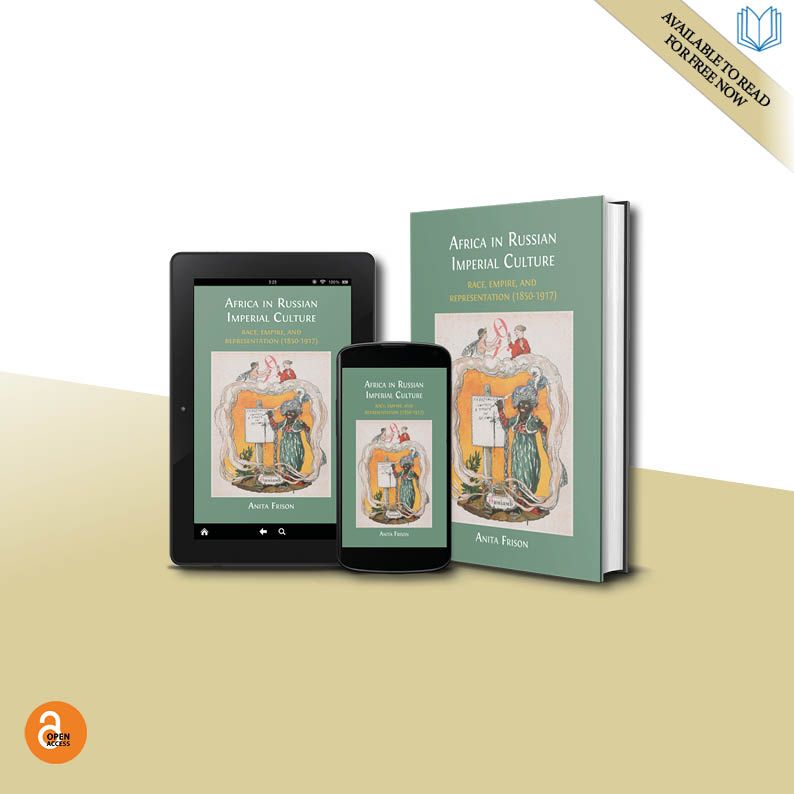
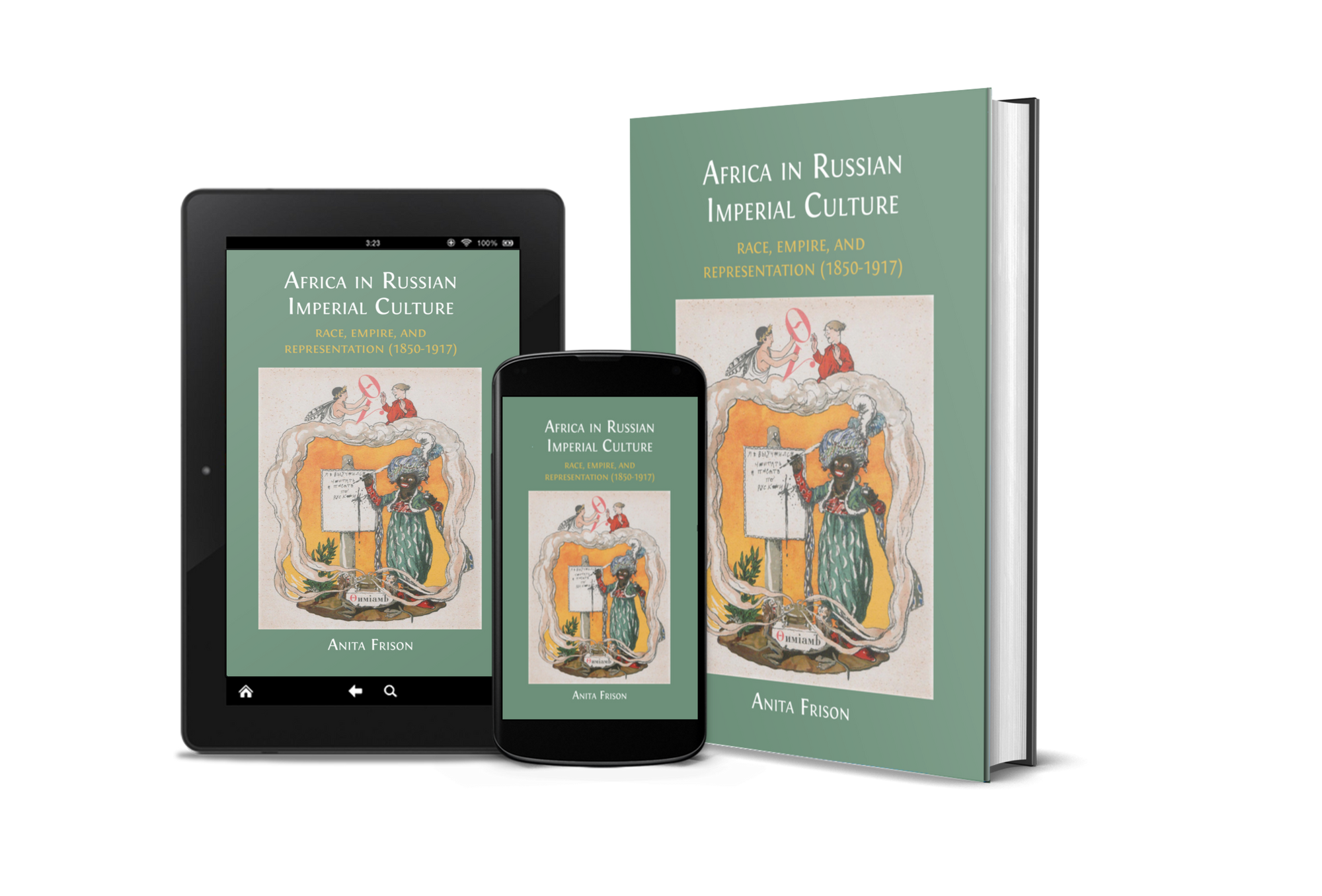
When I started working on Africa in Russian Imperial Culture: Race, Empire, and Representation (1850-1917), I only had a general understanding of a phenomenon – that of the (re-)construction and reshaping of sub-Saharan Africa in late tsarist culture – which seemed to be largely associated with marginal, peripheral individuals united by scientific curiosity and a penchant for exoticism. Even the poet Nikolai Gumilev, arguably the most famous Russian writer commonly associated with Africa, seemed an anomaly in his extensive and layered work on this continent.

However, I quickly realised that their efforts were by no means marginal, either in the context of fin-de-siècle Russia or within the parameters of European colonial knowledge production. In fact, the discourses, rhetoric and practices of Russian subjects in relation to Africa were deeply embedded in Western colonial culture, not least because, as emerges most vividly in the fourth chapter (Collectors), there was a direct and fruitful collaboration between them. In this regard, examining imperial Russia’s cultural and political attitudes towards Africa supports the ‘colonialism without colonies’ paradigm, as it vividly illustrates how colonial discourse transcended actual colonial ties and was adopted, perpetuated, and promoted by nations lacking colonies (in this case, African ones). Consequently, the notion of Russian exceptionalism, which was most prominent in Soviet anti-colonial rhetoric but was actually rooted in late 19th-century writings, is largely subverted.

The second most notable feature to emerge was that the construction of knowledge about Africa in late imperial Russia was relevant to both highbrow and lowbrow circles. This is reflected throughout the volume, from the first chapter, which introduces figures from various social backgrounds who were associated with Africa, to the subsequent analysis of their works, including travelogues, maps, anthropological studies, encyclopaedia entries, museum collections, and literary efforts. Sub-Saharan Africa was shaped for a wide audience which included highly educated people such as scholars and highbrow artists, as well as commoners. Indeed, it featured prominently in cultural products aimed at the lower classes and played a significant role in the late 19th-century effort to democratise knowledge for the masses. Thus, through dubious literary works, second-rate essays and social novelties such as the opening of museums to the public, a certain rhetoric of race – mirroring its no less unfounded highbrow counterpart – began to permeate the people’s understanding of Africa, indelibly shaping their perception of the continent.

The five chapters of the book, presenting an array of figures and analysing their work, all convey these two perspectives, which act as a red thread throughout: Russia’s participation in the Western system of knowledge about Africa, and the pervasiveness of the ensuing racial discourse in various media and social classes. In this respect, I believe it is important (and even crucial) to always put cultural and political phenomena occurring in Russia – often victim of the exceptionalist rhetoric (on the Russian side) or of othering (on the Western side) – into a wider, global context. As we live in an interconnected and complex world, it is essential to remember that discourses and practices are largely shared and developed in unison – for better or worse.

Africa in Russian Imperial Culture: Race, Empire, and Representation (1850-1917) by Anita Frison can be freely read or bought on the Open Book Publishers website.

Choose Your Own Adventure

Choose Your Own Adventure

By Anna Beresin

Choose Your Own Adventure

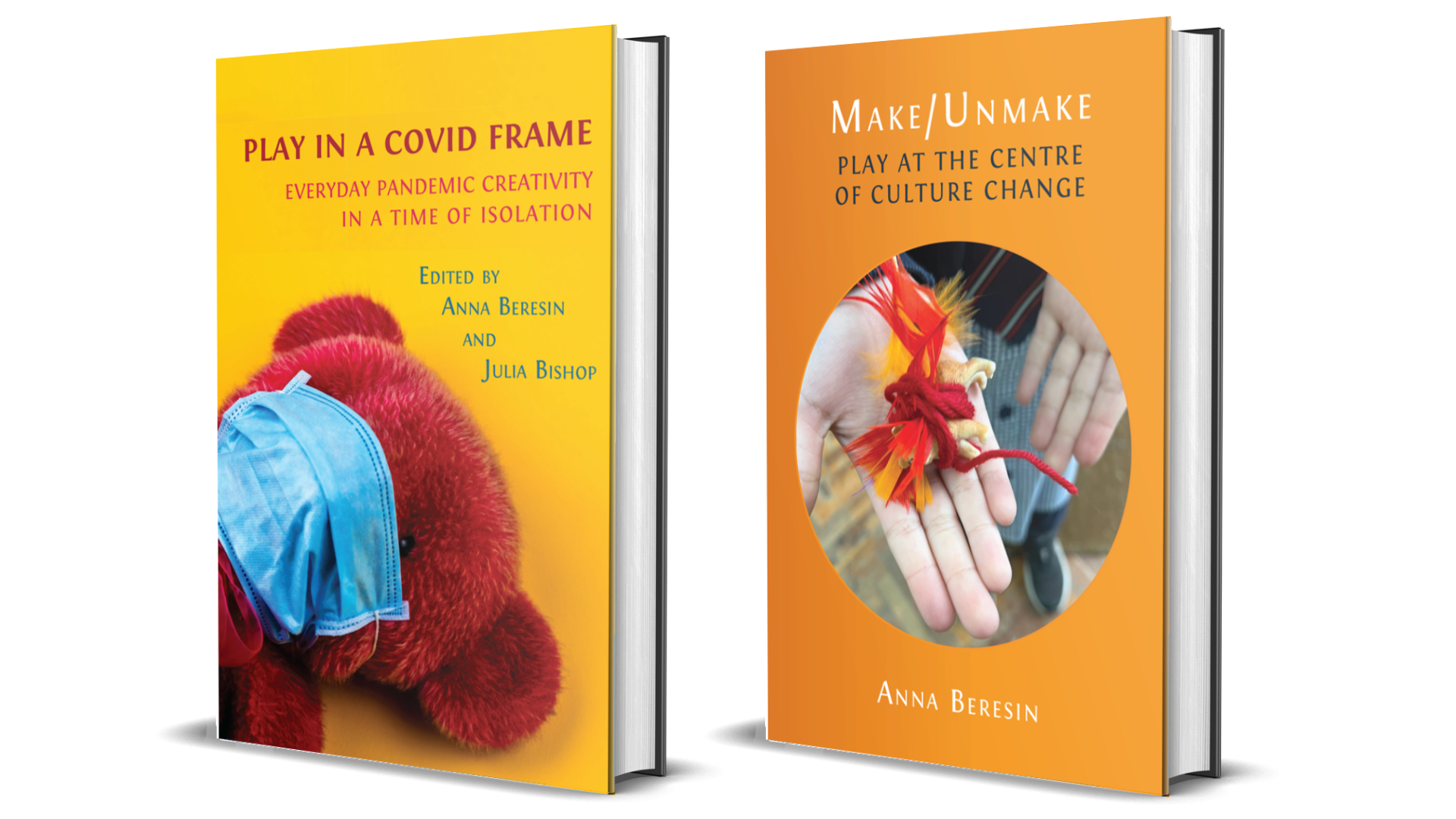
As an ethnographer, psychologist, and folklorist, I have spent forty years studying children’s play and childlore, often the only adult outsider on a children’s playground, paper or sound recorder in hand. The field of play and culture studies places the objects and motifs of childhood within their own contexts, balancing at the intersection of the social sciences and the humanities. I have written about play after the Rodney King Case, and after 9/11 in the United States, and with Julia Bishop edited a global volume about play during the Covid-19 pandemic. These books include songs sung, games crafted, and objects and drawings made. Thanks to this gracious publisher, Play in a Covid Frame is available for purchase and free download.

My new book Make/Unmake: Play at the Centre of Culture Change examines what UNICEF calls the three greatest challenges currently facing children globally, now and into the future: migration, the climate crisis, and changing forms of work.  Make/Unmakeoffers what I hope to be two different poetic paths of engaging with the material presented as three different communities wrestled with immigration, recycled materials, and their own future work ambivalence. The physical book and free download offer images, original photographs of children’s sculptural play with those children’s identities masked. There is also an audio book, but that has no images, yet it reflects the rhythm of the poetic narration offered by the adults who cared for these children and for their creations. Both the written book and the audiobook honor the verbatim words of named adults in the communities studied: The Pitsmoor Adventure Playground and the Maker{Futures} Mobile Makerspace of Sheffield, England, and the GLUE Collective of nearby Birmingham. As is traditional in ethnographic practice, the author gives equal weight to the words of living participants in these communities as it does to respected scholars in the field of play. Both the audiobook and the physical book can be found here (the audiobook is available as a free MP3 download).

Why mask the children’s identities, but not the adults’ identities in this book, you might ask? These three programs serve children in vulnerable communities, and masking children’s identities keeps them safe.  All of the children in the study gave verbal and written permission to be photographed and filmed, as did their parents, and each child’s face was covered in a variety of methods ranging from blurring the children’s faces to just photographing the children’s hands. In order to honor the poetry of children’s physicality connected to their object play, I experimented with placing images of children’s homemade objects on their faces as digital masks- both in the still photography and in the short research film made. The adults agreed that the methods sufficiently protected the children, and this assured the research review boards that the priority of protection came first. The adults in the three communities studied rightly wished to get credit for their hard work, for their roles as leaders in their communities and so, they are proudly named. Each program has read drafts of the book before publication, satisfied with their work and mine, a multi-layered process of editing, revoicing, and reclaiming. I imagine further discussions emerging about the social sciences’ desire to protect people’s identities as the humanities holler to give people credit where credit is due for their creations.

I was influenced by the field of ethnopoetics in folklore and conversation analysis, and also by the work in sociolinguistics about the poetry of everyday speech. One of my practices is to repeat powerful excerpts from the chapters as a form of book summary, and to link them by theme at the book’s end, a natural found poem, a printed form of spontaneous spoken word as spoken by the people studied. Listen for the rhythm, the rhyme, the subtle repetition in this excerpt from the conclusion:

That much freedom? Really? Really?
Sometimes parents say, ‘Where’s the activity?’
I just point to the all the materials.
Don’t they see?

‘Well, they’re just playing’.
But you’ve not watched.
You may have observed,
But you’ve just not seen what other people are seeing. . .

The words are poetry. The objects are poetry. Will you be led by your ears or by your eyes?

Make/Unmake: Play at the Centre of Culture Change by Anna Beresin can be freely read or bought online.

The EU Energy Transition: Doing More with More

The EU Energy Transition: Doing More with More

By Floriana Cerniglia and Francesco Saraceno

In a context marked by economic and geopolitical tensions, the European Union is called upon to make energy a pillar of its strategic autonomy. Accelerating on the adoption of renewables is essential not only to meet environmental commitments, but also to address the productivity gap with the United States and reduce dependence on fossil fuels, which exposes the EU to supply shocks and geopolitical blackmailing. Lower reliance on fossil fuel means lower energy costs and less import dependency, with positive effects not only on the environment but also on productivity and economic security: the transition is not just an environmental choice, but a lever for economic sovereignty and strategic autonomy.

According to this perspective, energy policy cannot be separated from the new industrial policy invoked by the Draghi Report. Leaving the structural transformation of the EU economy to markets alone is not enough: it is necessary to facilitate it by reshaping and shortening supply chains, eliminating bottlenecks in strategic sectors, shifting resources toward high-value-added activities, and developing active labor market policies.

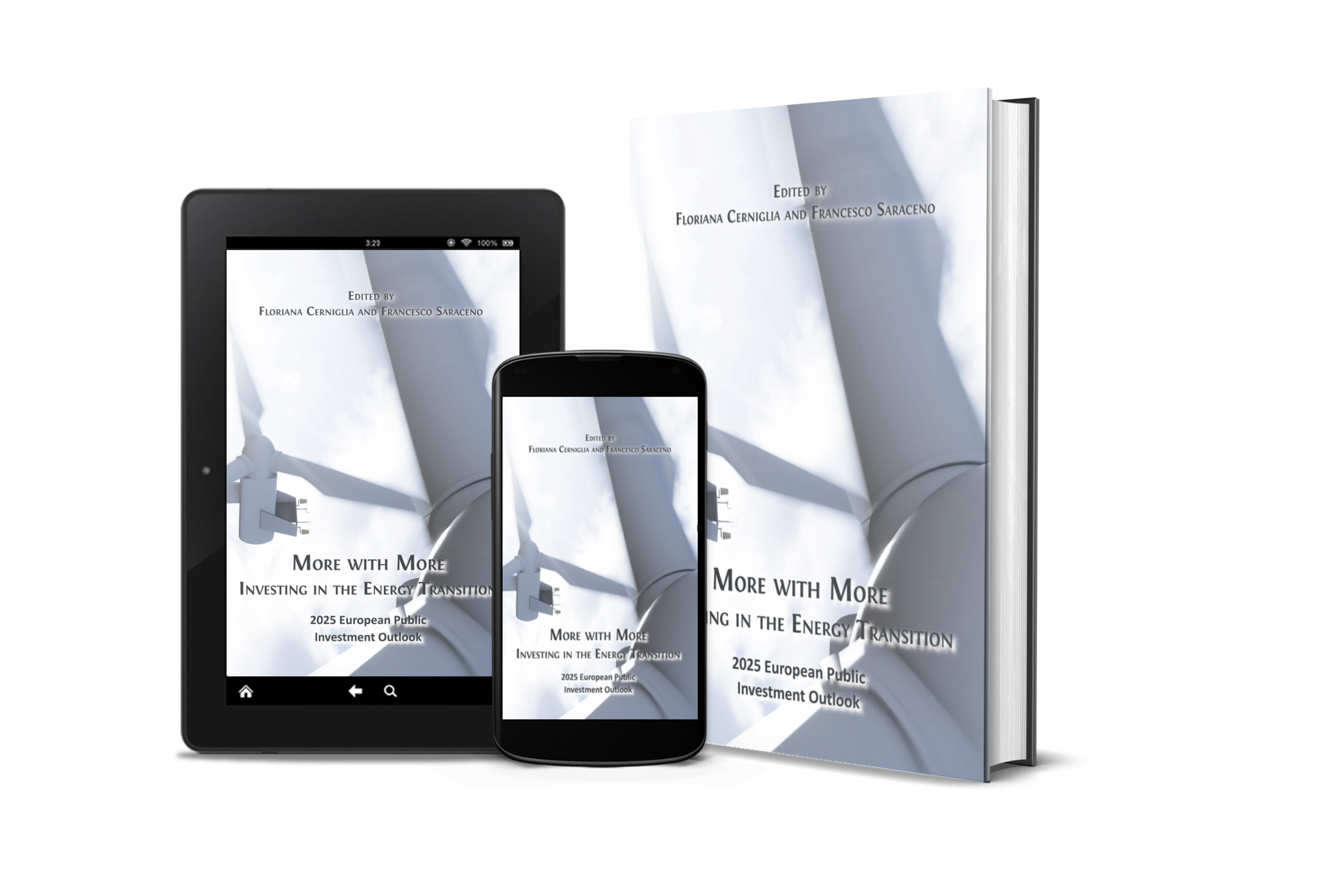
These themes are the focus of the sixth Outlook on Public Investment in Europe (More with More: Investing in the Energy Transition. 2025 European Public Investment Outlook). The Outlook highlights, on the one hand, how the EU continues to move in a scattered way; on the other hand, more fundamentally, both public and private investment is insufficient. EU Member states have different sources of energy and often have divergent interests, stemming from specific industrial histories and unequal resource endowments. Consequently – as noted in the first part of the Outlook – the decarbonization is certainly progressing in France, Germany, Italy, and Spain, but with strong differences in industrial policies, regulatory frameworks, and incentives. The difficulty of building a truly common and adequately financed energy policy emerges, for example, in the chapter written by our colleagues from the EIB.

In the few years since the introduction of the Green Deal in 2019, the context has become significantly more complicated. The Green Deal's main objective was reducing emissions, with an eye on the consequences for distribution and welfare. Today, the EU must juggle several, at times competing, objectives: decarbonizing; reviving an industry that has moved late and is now under pressure from the green transition and from competition from the United States and China; ensuring supply- and value-chain security in an unstable geopolitical environment; and mitigating the distributional impact of industrial restructuring. The second part of the Outlook links the energy transition to horizontal themes such as mission-orientedpolicies for industrial competitiveness, research and innovation, and vertical policies on green hydrogen, grid infrastructure, and access to critical raw materials. In a situation of tighter budget constraints and new spending priorities (particularly defence), and without proactive policies for fair distribution of costs and benefits, public consensus for the transition risks weakening; to avoid this, focus on local energy communities and equitable use of carbon resources are of paramount importance.

The Outlook's chapters are written by authors from different backgrounds and institutions, but the thread that links them is clear: without strong European coordination and stable public investment, the energy transition risks slowing down and weighing on the economy precisely when it should instead accelerate and act as a driver for sustained and sustainable growth.

European institutions do not seem equipped to support a genuine common energy and industrial policy. Following the short COVID-19-related parenthesis of Next Generation EU, the return to "frugal" positions by several EU actors and the limited ambition of the new Multiannual Financial Framework make an EU-wide push for industrial and energy policy unlikely. The necessary investments will therefore have to be carried out by Member States, which, however, are constrained by the Stability and Growth Pact.

For this reason, in our introduction, we propose an Augmented Golden Rule that would exclude investment, both tangible and intangible, from the 3% deficit limit of the Stability Pact. The logic would not be very different from the recent decision to exempt defence spending from the Pact's limits, in the framework of the SAFE initiative. However, unlike that measure, it would be institutionalized, to become the outcome of a democratic process regarding the EU’s investment priorities: the Council and Parliament would periodically (for example when approving the EU budget) reach an agreement on priority sectors in which there is the need to increase the stock of (tangible and/or intangible) capital; national governments could then finance these priorities through debt, in exemption from the Pact.

To prevent market pressure on individual countries, the Augmented Golden Rule should be accompanied by a European Debt Agency that would issue Eurobonds and lend to national countries to finance the commonly agreed investment priorities. The modulation of interest rates on these loans would ensure fiscal discipline, while protecting governments from undue market pressure.

Without a rethinking of the EU economic governance, a strategy that integrates the energy transition, competitiveness, and security will inevitably remain incomplete.

Access this book and others in the series.

The “Charm” of Objectivity

The “Charm” of Objectivity

By Tricia De Souza

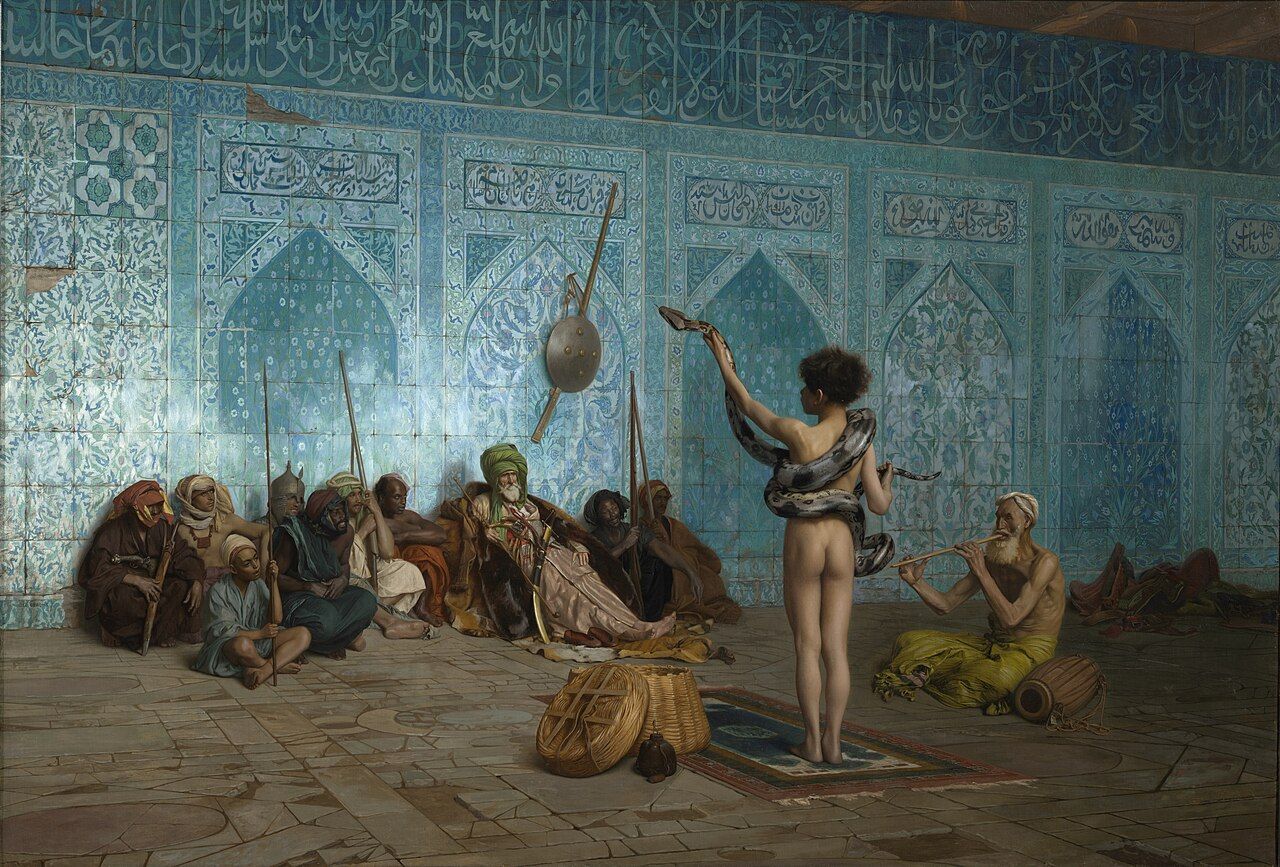
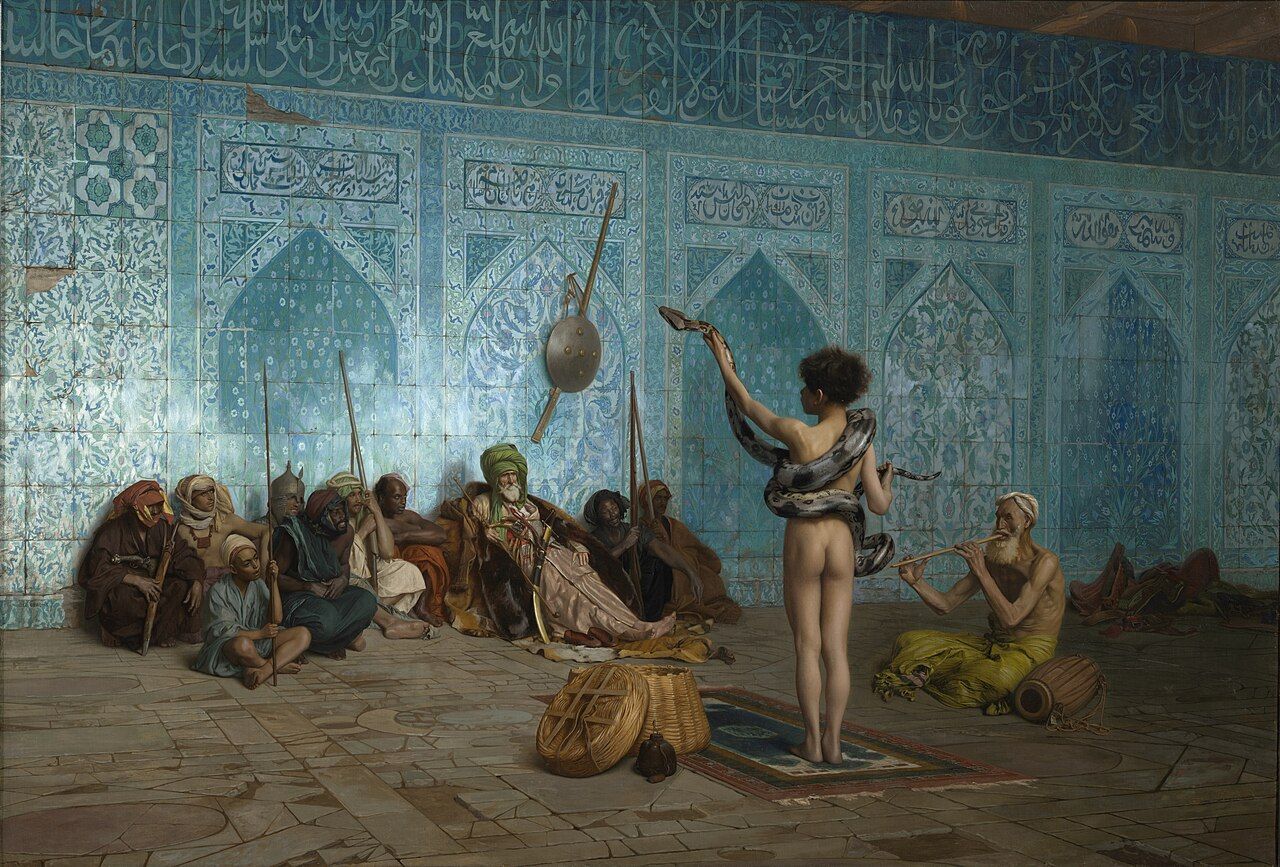
A child stands upright, arm extended with his hand holding gently but firmly to the neck of a snake coiled around his naked body. Beside him, an elderly man has brought his lips to a flute-like instrument, playing before an ensemble of men leant against a tiled wall composed of blues so remarkable it is hard to look away.

Through its vivid artistry, Jean-Léon Gérôme’s 1879 painting “The Snake Charmer” presented European and American audiences with a captivating but entirely contrived image of a region many of its viewers would most likely never visit: an amorphous Middle East steeped in exoticism, sensuality and exploitation.

The “Charm” of Objectivity
The Snake Charmer (c. 1879). Oil on canvas, 83.8 x 122.1 cm (32.9 x 48 in). Clark Art Institute, Williamstown, Massachusetts. This painting was used as the cover of Edward W. Said's influential 1978 book "Orientalism". Public domain.

Today, Gérôme’s painting has now been squarely placed within the genre of ‘orientalism’, a term coined by Palestinian and American scholar Edward Said in 1978 that refers to the ways in which European (and American) colonial powers have sought authority to define through imagery, literature and scholarship what “the Orient” is, and markedly, what it is not: the West.

While countries like France, Spain and England have been more steeply inculcated in this unequal production of power, Anita Frison’s open access book Africa in Russian Imperial Culture: Race, Empire, and Representation (1850–1917) unmasks how pre-Soviet Russia produced similarly exotifying portrayals of Sub-Saharan Africa all the while distinguishing itself as a benevolent actor– merely an explorer– in contrast to its violent and colonial counterparts in the West. Through a careful analysis of travelogues, literature, maps and museum collections, Frison begs to differ.

_____

“Abyssinia is a fairytale,” wrote the Russian military officer Petr Krasnov in his travelogue, Kazaki v Abissinii (1900). While documenting his time in Ethiopia, Krasnov spoke in detail of the world around him: the striking heat of the sun soothed only by the coolness of the night, far off blue mountains that enticed his curiosities, the domineering light of a full moon that was unlike anything he had witnessed before. Written in a euphoric state, he reiterated, “you feel that you are in a magical fairytale” (qtd. in Frison, 78).

Krasnov’s Kazaki v Abissinii was one of a plethora of writings on Africa by Russian travelers in the late 19th and early 20th centuries. Another was a memoir by writer and diplomat Egor Kovalevskii who described the interior of this expansive continent as a place akin to the garden of Eden, where a multitude of unknown fruits seemed to spring forth from the ground without “need for ploughing or sowing” (qtd. in Frison 79). Like Krasnov’s depictions, Africa was a place of dreams.

These Russian explorers of Africa did not stop at writing about their experiences; they also transcribed them onto maps. Just like their reflections, these geographical renderings flattened cultural and political complexities.

Vladimir  Troitskii, a graduate of the Moscow Faculty of Natural Sciences, almost entirely erased Central Africa from his map; instead, he only provided details of his specific routes. Eduard Petri, vice-president of the Russian Anthropological Society, designed a school atlas that divided the African population into four ethno-racial groups all with their own “sub-species” (qtd. in Frison 63).  Petri, however, had never stepped foot into Africa. This did not stop him from requesting state funding to further his projects on the study of the “‘uncultured’ people” (qtd. in Frison 64)

In a country largely affected by high rates of illiteracy, cartography allowed everyday Russians to also engage in this “science of colonialism”  (qtd. in Frison 65). For example, The School Atlas of General Geography, published in 1859 by zoologist Iulian Simashko, was intended to be used in schools and gymnasiums. Simashko blended botany, geography and zoology by randomly placing colorful images of the native flora and fauna throughout the atlas. The geography of Africa remained obscure, divided primarily by European colonies. With swathes of land left empty, Russian pupils were encouraged to fill these spaces with their own imagination rather than engaging with accurate depictions of African nations and tribes (Frison 68). Thus, without even needing formal colonies, Russian explorers utilized maps to re-produce their colonial aspirations onto Africa.

This phenomenon is best represented through the words of Kovalevskii. Upon naming a region, “the Land of Nicholas,” he then went on to call a river “the Nevka,” a name “which would point to a European traveler having reached this place” (qtd. in Frison 57). Thus, Russian imperial actors not only saw themselves as individuals, they also understood that they were contributing to a larger project of nation-building and European expansion.

_____

By probing an oftentimes uncontested educational resource like maps, Africa in Russian Imperial Culture acts as an important reminder that stereotyping and dehumanization can be embedded in seemingly innocuous tools of knowledge.

It is through this revelation that one can better understand Said’s underlying argument, that “everyone who writes about the Orient must locate himself vis-à-vis the Orient; translated into … the kinds of images, themes, motifs that circulate in his text” that “add up to deliberate ways of addressing the reader, containing the Orient, and finally, representing it or speaking in its behalf” (Said, 28).

By incorporating this critical thinking into the information we both create and are given, we can begin to accept and interrogate the subjectivity of the objective.

The “Charm” of Objectivity

Anita Frison's book Africa in Russian Imperial Culture: Race, Empire, and Representation (1850–1917) can be read freely online, or you can buy a copy: https://doi.org/10.11647/OBP.0504

Open Book Publishers – Annual Report 2025

Open Book Publishers - Annual Report 2025

Welcome to our Annual Report!

We hope this newsletter finds you well as the festive month of December begins. We write with a big announcement about our new individual membership programme, news of recent publications, and a review of some of the highlights of our year.


Open Book Publishers - Annual Report 2025

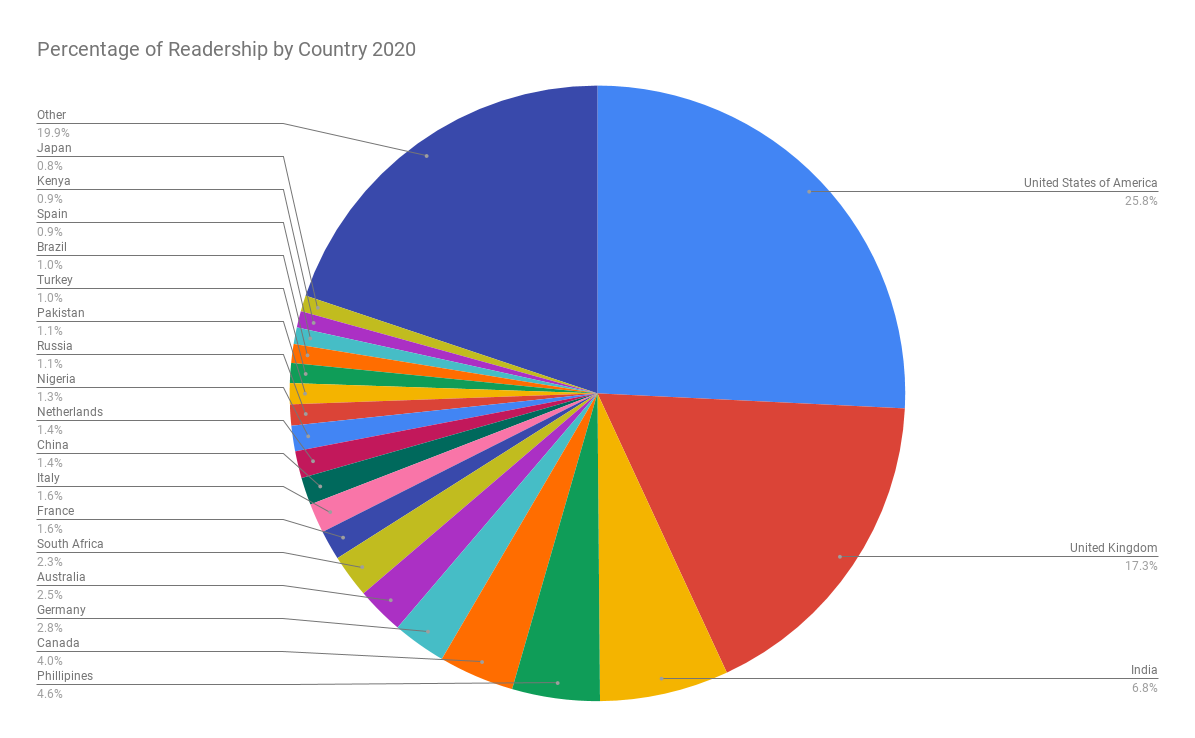
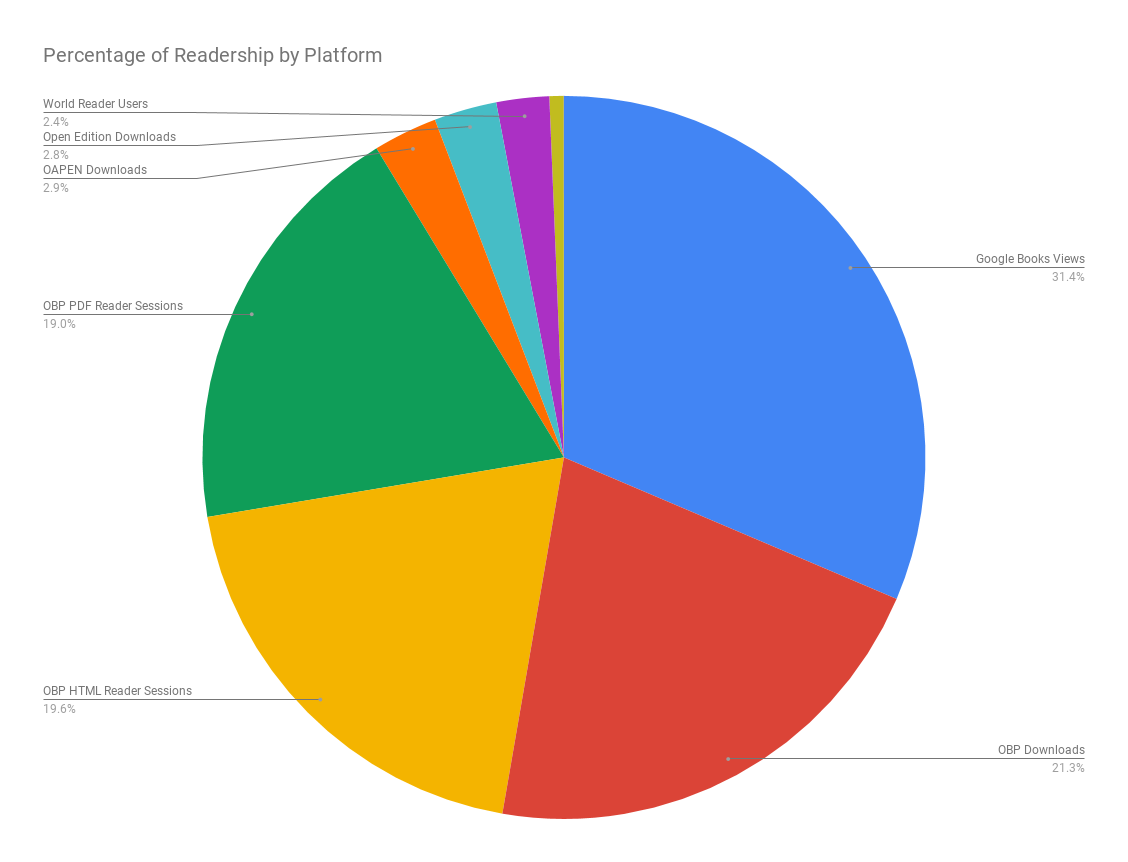
Global Geographical Statistics & Annual Readership by Measure Report

Global Geographical Readership Statistics

We collect and display detailed readership statistics—also known as usage data or metrics—on each book’s home page. There, you can see how often a book has been downloaded or read online across multiple platforms, including our website, the OAPEN Library, and Google Books. Some geographical data is also available, showing where books have been accessed. Further down this page, you can find more information on how we collect and aggregate this data for each title.

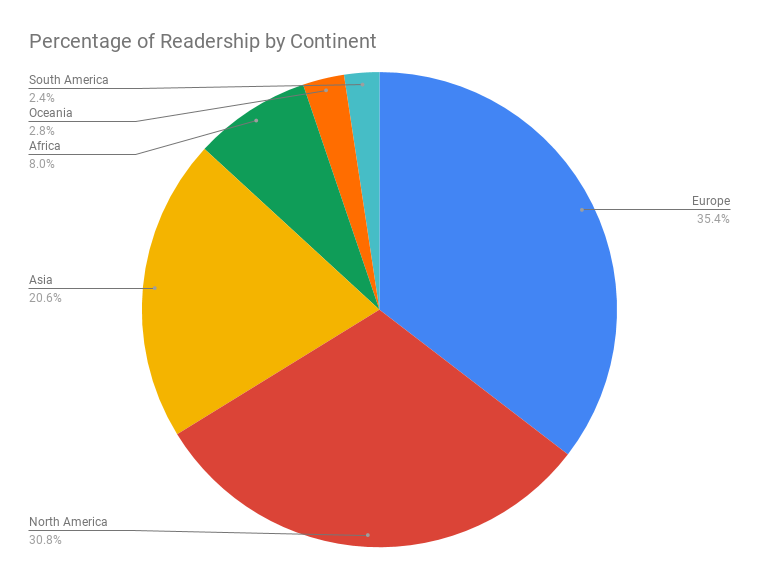
Below are our global readership statistics for 2025, highlighting engagement with our titles across countries, states, and territories worldwide—a testament to the truly global reach of our publications.

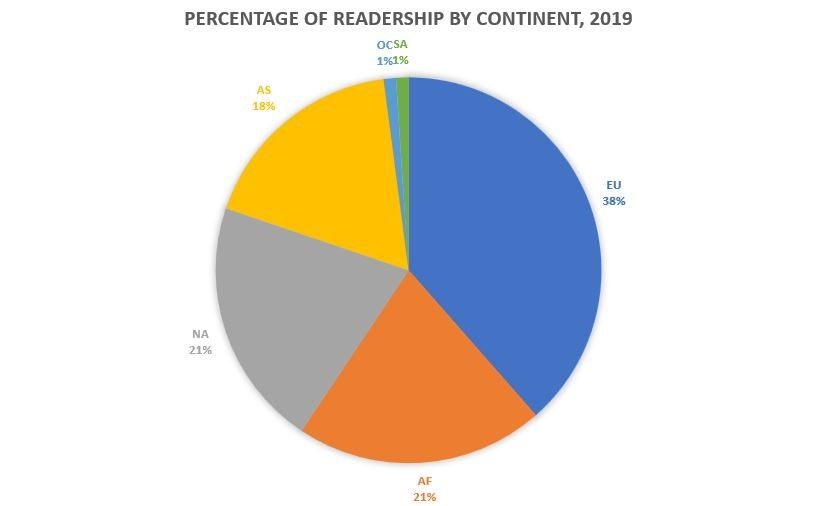
In 2025, readership was distributed across continents as follows:

  • North America: 41.17%
  • Europe: 30.95%
  • Asia: 17.91%
  • Africa: 6.06%
  • Latin America and the Caribbean: 2%
  • Oceania: 1.90%

Annual Readership by Measure Report

This year, our books have been accessed 3,984,028 times across various platforms. Below are the top 10 countries by readership:

  • United States of America 51.52%
  • United Kingdom of Great Britain and Northern Ireland 7.82%
  • Singapore 3.96%
  • Italy 3.51%
  • China 3.40%
  • Spain 2.35%
  • Germany 2.31%
  • France 2.14%
  • India 2.09%
  • Brazil 1.55%
  • Others 19.35%

Please note that access to our books in HTML format was tracked only until July 2023, as the platform previously used is no longer available. Our developers at OBP are actively working on new solutions. We continue to record usage across some platforms, tracking metrics such as:

  • Access frequency and format
  • Geographic distribution (where available)
  • Specific domains (helpful for Library Members monitoring student and staff engagement)

These data are partial. Many hosting platforms do not provide usage information, and geographic data may be limited by platform restrictions or user privacy settings. Once a file is downloaded, we cannot track its further use or sharing—similar to print or ebook sales figures.

For more information on how we collect and process readership statistics, please visit Our Reach.

Thank you for reading, sharing, and supporting our publications. With the help of our readers, member libraries, and authors, we continue working toward a fairer and more accessible publishing landscape.


Open Book Publishers - Annual Report 2025

Support OBP: new membership programme!

We’re excited to share that our new individual membership programme is now live on Patreon—and we’d love for you to join us! Making high-quality, peer-reviewed academic research freely available has never mattered more. This year alone, we’ve released more than sixty open access books without charging authors mandatory fees.

If you’d like to support our work, you can now join one of our five new monthly membership tiers—ranging from £1 to £50. Members enjoy great perks: including free EPUBs of our latest books, discounts on print editions, access to our annual online conference, updates on open access developments, and invitations to exclusive conversations with our publishing team.

Most importantly, you’ll be helping to fuel our open access mission—just like the libraries in our library membership programme—making high-quality scholarly research freely available to readers everywhere.

Find out more and join our individual membership programme.


Open Book Publishers - Annual Report 2025

Thank you: to our peer reviewers and our volunteers

Every year, our publications are made possible thanks to the committed and generous work of the referees who review the manuscripts we receive. This includes those manuscripts we ultimately do not publish, as well as those whose release is announced in these newsletters. This year, an incredible 150 experts peer-reviewed our book manuscripts, and we thank all of our referees for their invaluable contributions. Some of our referees choose to be named, and we then share their names with the relevant author and include them in the published book. Since May of this year, we have begun recording their names on our website and you can view them there.

We also sincerely thank the five volunteers who have helped us with a range of editorial, production and marketing tasks in 2025: Hannah Bergin, Sophia Bursey; Tricia De Souza; Lila Fierek; and Elisabeth Pitts. We are very grateful to them for their work. You can view their names on our website along with those of volunteers from previous years.

Warm thanks to them all!


Open Book Publishers - Annual Report 2025

Three new series partnerships!

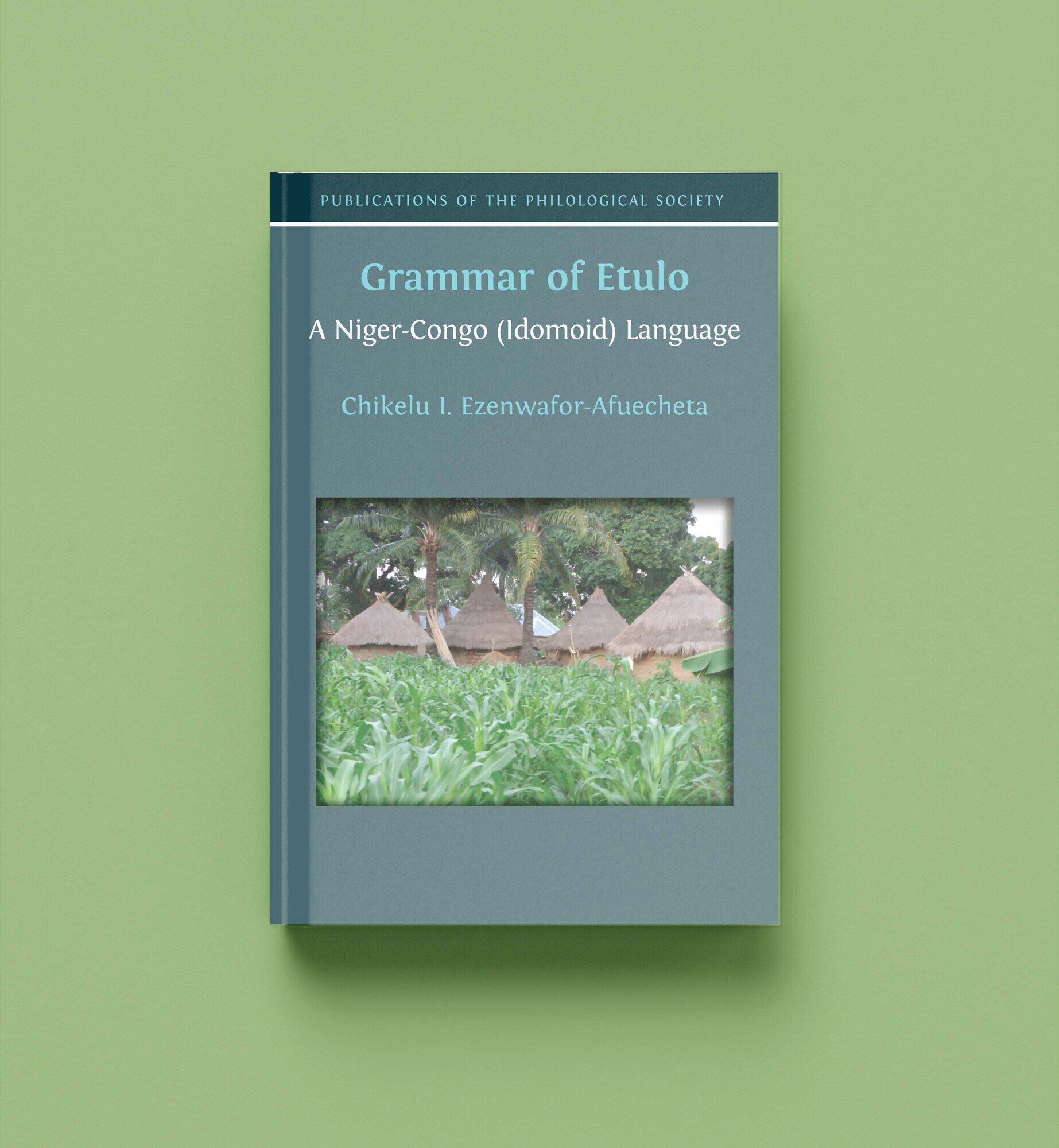
The recently published Grammar of Etulo: A Niger-Congo (Idomoid) Language by Chikelu I. Ezenwafor-Afuecheta is the first book in our Publications of the Philological Society series, published in partnership with the Philological Society (PhilSoc), the oldest learned society in Great Britain devoted to the scholarly study of language and languages.

This is one of three new series partnerships we announced this year: the other two are Papers of the British School at Rome in partnership with the British School at Rome, which will showcase original research and creative work on Italy from prehistory to the present; and Politics & Fiction in partnership with the CAPONEU Consortium, a multilingual series that will explore what ‘politics’ and the ‘political’ mean in relation to fictions as found in literature, theatre, performance, poetry, film and visual art, and cultural production as a whole.

We are immensely proud to begin bringing this work to a global audience via open access. If you want to know more about partnering with us to publish a series, you can find out more on our website or contact our Managing Director, Dr Alessandra Tosi.


Open Book Publishers - Annual Report 2025

Prize awards & nominations for our books

Kayvan Tahmasebian and Rebecca Ruth Gould were awarded the 2025 Nineteenth-Century Studies Association Article Prize for their chapter, 'The Translatability of Love: The Romance Genre and the Prismatic Reception of Jane Eyre in Twentieth-Century Iran' in Prismatic Jane Eyre, edited by Matthew Reynolds, which shows how Iranian readers incorporated Bronte's novel into their understandings of love.

This year, three of our authors were shortlisted for the ACLS Open Access Book Prizes and Arcadia Open Access Publishing Awards in the Environmental Humanities and Literary Studies categories. They were:

Kathryn M. Rudy, Image, Knife, and Gluepot: Early Assemblage in Manuscript and Print traces the birth, life and afterlife of a Netherlandish book of hours made in 1500, dismembered in the nineteenth century & now reconstructed via Rudy's research.

Joanna Page, Decolonial Ecologies: The Reinvention of Natural History in Latin American Art shows how contemporary artists in Latin America reinvent older methods of collecting and displaying nature to create new aesthetic and political perspectives.

Jan M. Ziolkowski, The Juggler of Notre Dame and the Medievalizing of Modernity, a 6-volume study exploring a single, electrifying story from its first incarnation in a medieval French poem to its prolific rebirth in the nineteenth and twentieth centuries.

Michael Hughes was shortlisted for the James Tait Black Biography prize for his book, Feliks Volkhovskii: A Revolutionary Life, a biography of a hitherto neglected Russian revolutionary figure.

Luke Clossey received an honourable mention from the judges of the Phyllis Goodheart Gordon book prize for the best book in Renaissance Studies for his work, Jesus and the Making of the Modern Mind, 1380-1520, a sweeping and unconventional investigation of Jesus across one hundred forty years of social, cultural, and intellectual history.

And finally Sandra Abegglen and her co-editors were nominated for an OEGlobal Open Education Award for Stories of Hope: Reimagining Education, a collection of essays that challenge the status quo and offer glimpses of a more humane and inspiring educational future.

Enormous congratulations to these authors for this recognition of their fine research and writing. We are proud to publish and celebrate their work, and we are also delighted that through these awards and nominations we could fly the flag for independent open access presses: we are honoured to represent this growing community.


Open Book Publishers - Annual Report 2025

Building open access networks & infrastructures in 2025

Highlights from the Open Access Books Network (OABN), which we coordinate in partnership with OAPEN, Sparc Europe and OPERAS, included:

  • The OABN published an FAQ and blog post based on an expert webinar that focused on including third-party materials in open access books;

Highlights from the Copim Open Book Futures project, building non-commercial infrastructure to develop open access book publishing, included:

  • Thoth Open Metadata was nominated for the 2025 ALPSP Innovation Award and is set to release a significant upgrade early next year;
  • Copim Compass was released, drawing together a comprehensive suite of resources to support open access book publishing;

Other highlights:

  • We have also given various talks this year, on topics including AI in open access publishing and fostering a culture of open access book publishing beyond mandates.
Open Book Publishers - Annual Report 2025

Open Book Publishers is now on Instagram! Follow us!


If you are too, please follow us there! We'll be sharing information about new books, conversations with authors, and glimpses 'behind the curtain' at the publishing process...


Open Book Publishers - Annual Report 2025

OBP is a 'Top 100 UK social enterprise' for the fifth year in a row!

We are thrilled to announce that we are once again on this year's SE100 list! For more information, and to see the other excellent organisations who have been selected, see this webpage.

July 2025 Newsletter

July 2025 Newsletter
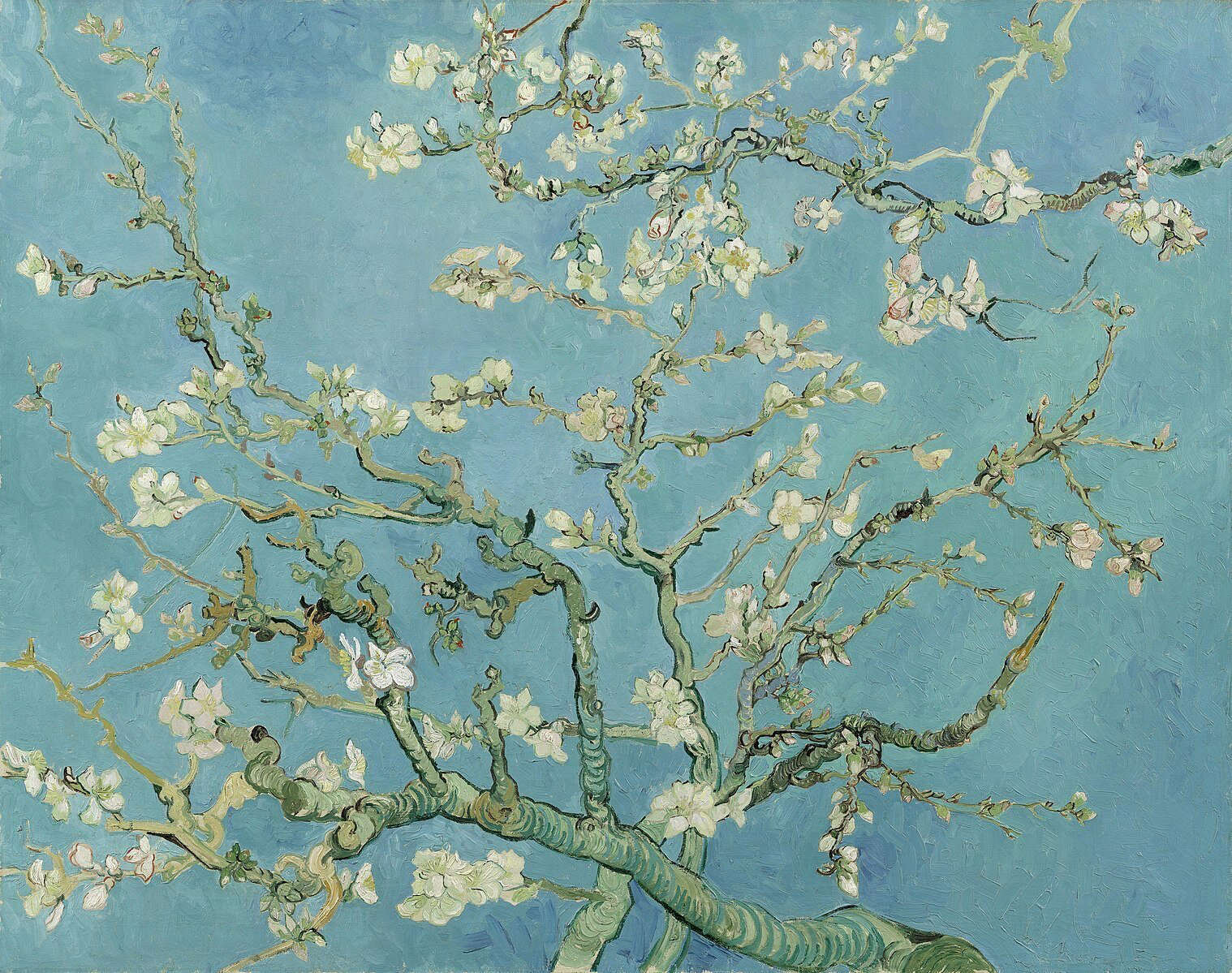
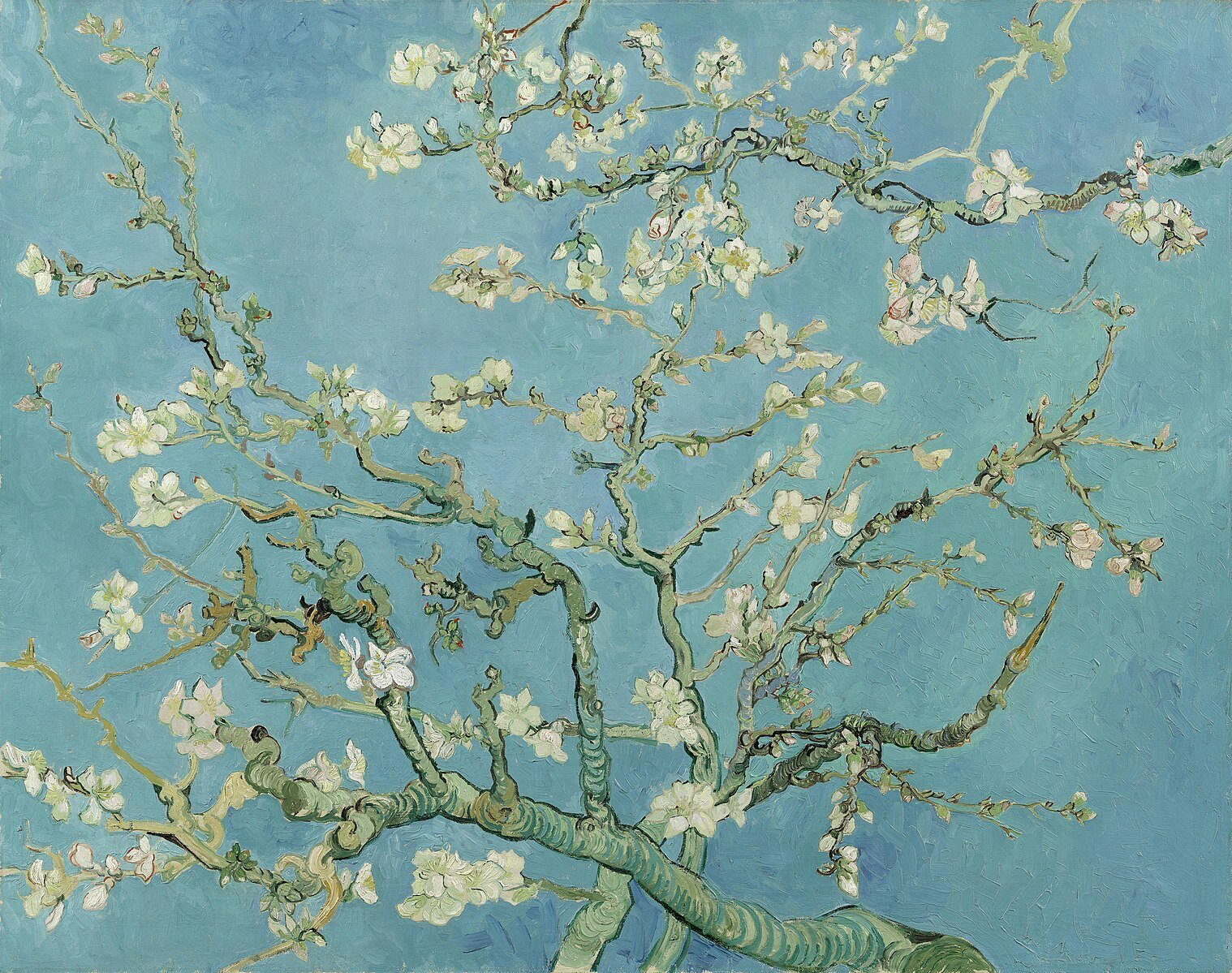
Vincent van Gogh, Almond Blossom, 1890, public domain.

Welcome to our July Newsletter!

July 2025 Newsletter

We hope this newsletter finds you well and that you have enjoyed a lovely July. We write with news of recent publications, the launch of a new series, and much more.


Here's what happened this month:

July 2025 Newsletter

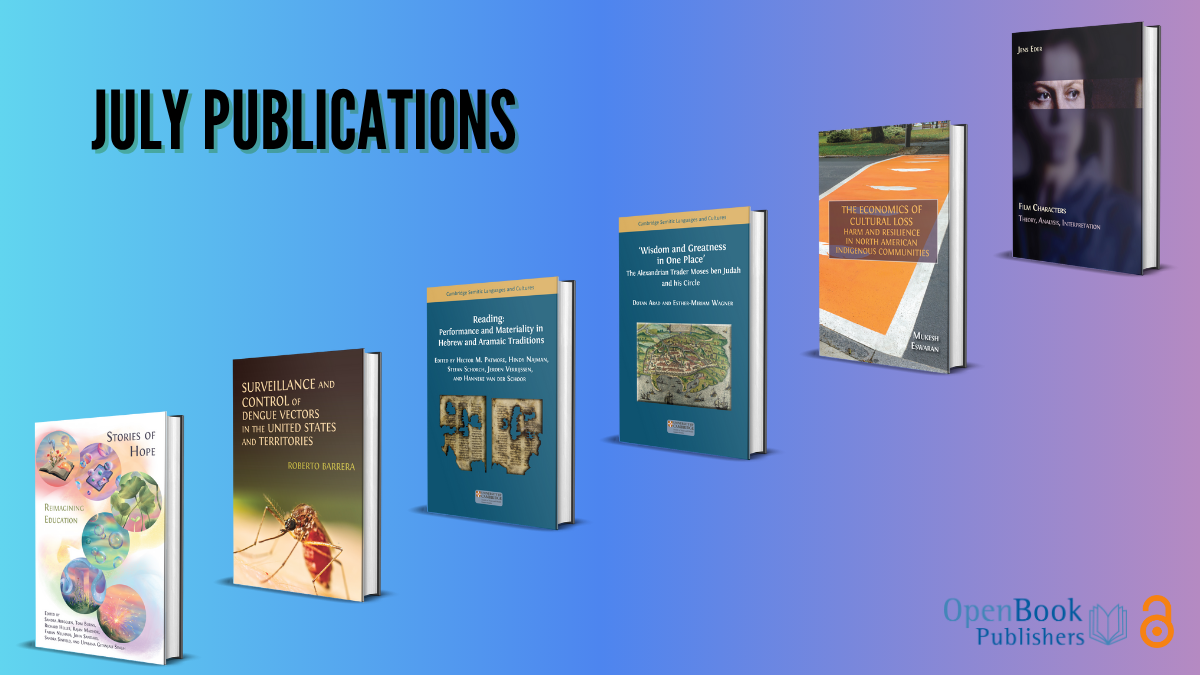
We published six new books

All of our titles are free to read and download. Explore our complete catalogue.


July 2025 Newsletter

We launched a new series

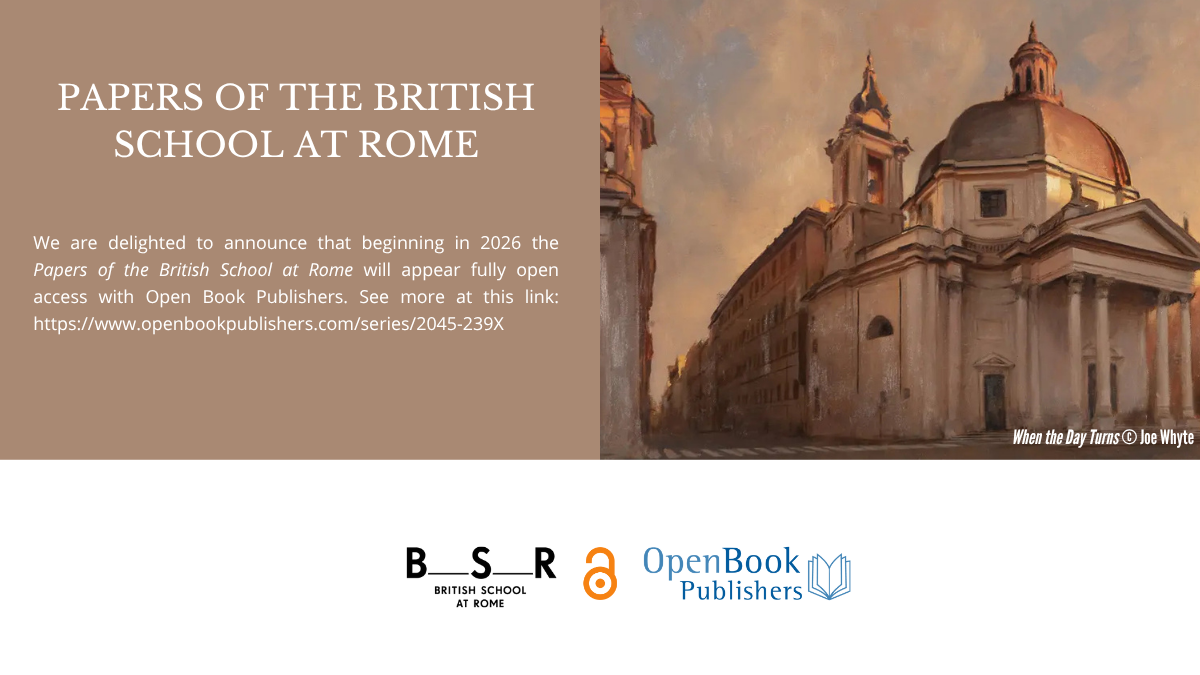
We are delighted to announce that, beginning in 2026, the Papers of the British School at Rome will appear fully open access with Open Book Publishers.

For more information, visit the series page here.


July 2025 Newsletter

We are on the 2025 'Top 100 UK social enterprises' list

We are thrilled to announce that we are, for the fifth year in a row, on this year's SE100 list!

For more information, and to see the other excellent organisations who have been selected, see this webpage.


July 2025 Newsletter

News from the wider Open Access community

We are delighted to be able to share some news from within the wider OA community.

Open Access Books Network Article: 'How Should Diamond Open Access Work for Books?'.


NEW BOOK DISCOUNT: Enjoy 10% off when you spend £100 and 20% off when you spend £200 (or the equivalent in supported currencies) at OBP! The discount will be applied automatically at checkout.


That's all for this month!


June 2025 Newsletter

June 2025 Newsletter


June 2025 Newsletter
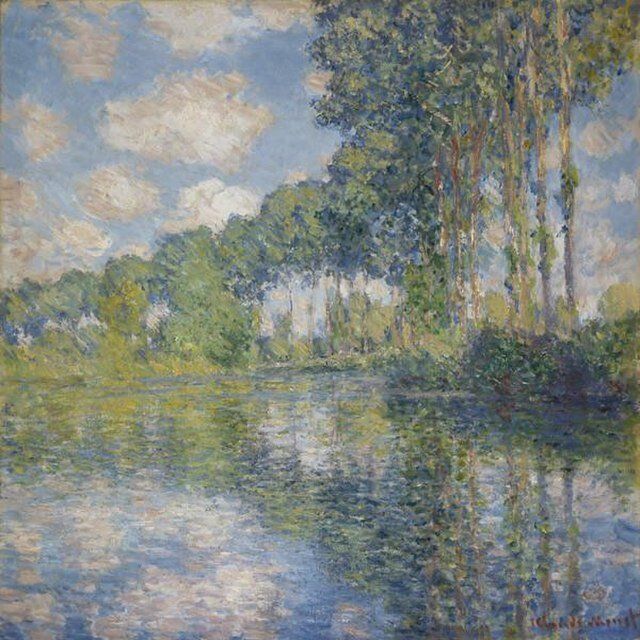
Claude Monet, Poplars on the Epte, 1891, public domain.

Welcome to our June Newsletter!

We hope this newsletter finds you well and that you have had a restful June. We write with news of recent publications, updates from the wider Open Access community, and a spotlight on some of our exciting forthcoming titles.


Here's what happened this month:

June 2025 Newsletter

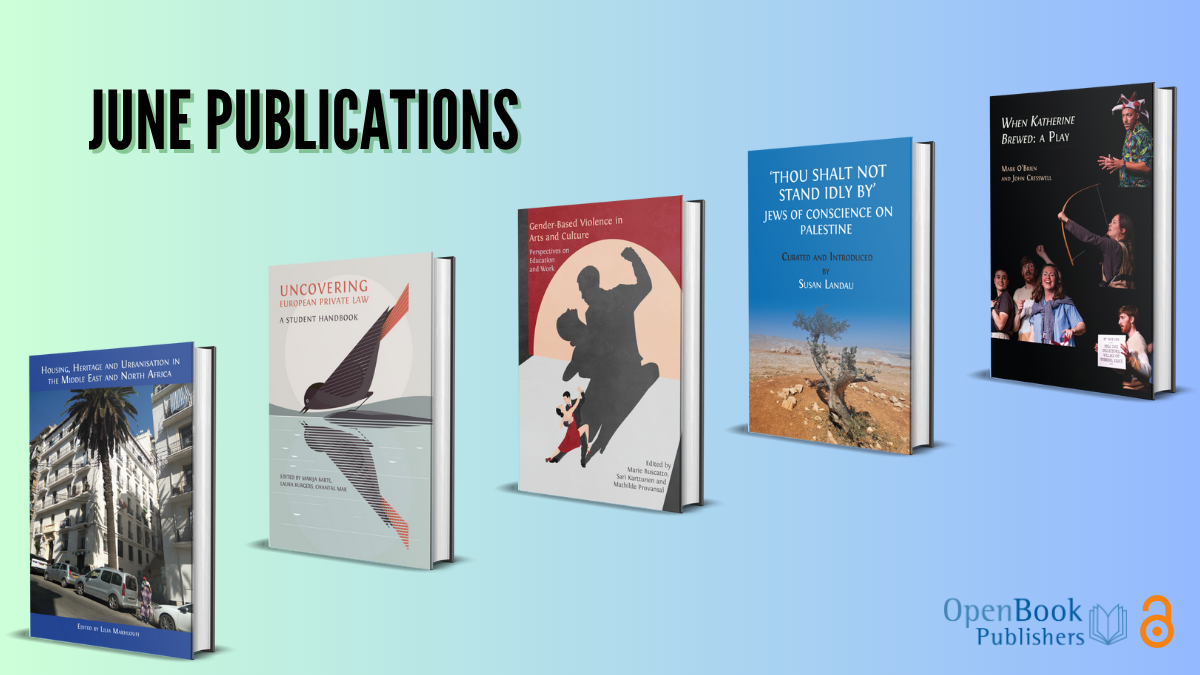
We published five new books

All of our titles are free to read and download. Explore our complete catalogue.


June 2025 Newsletter

Spotlight on...

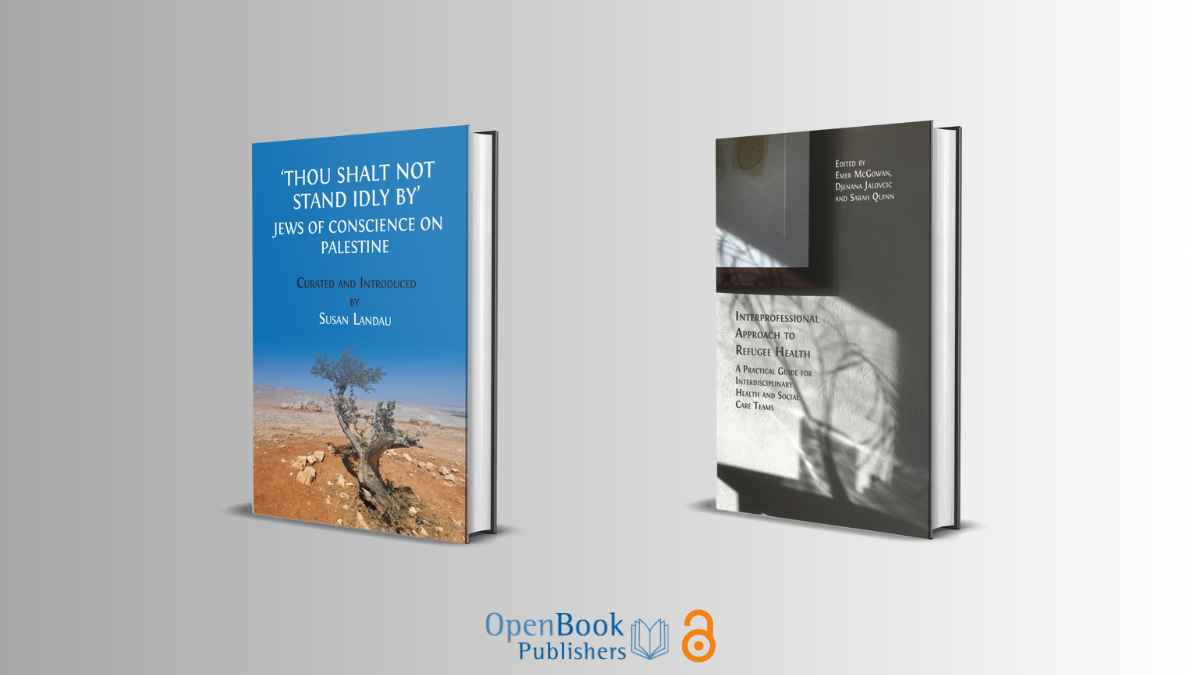
Earlier this month (16-22 June) Refugee Week took place. At this time of this extreme humanitarian crisis, we are proud to publish two books that address humanitarian issues:

'Thou Shalt Not Stand Idly By': Jews of Conscience on Palestine by Susan Landau (ed.) is a searing commentary on the impact of Israeli statehood on the indigenous Palestinian population, written as a powerful collection of Jewish dissent against Zionism. This title is particularly important at a time when violence escalates in Gaza and misinformation clouds public understanding.

The forthcoming Interprofessional Approach to Refugee Health: A Practical Guide for Interdisciplinary Health and Social Care Teams by Emer McGowan, Djenana Jalovcic and Sarah Quinn (eds.) focusses on equally pressing issues. As global displacement reaches unprecedented levels, health and social care professionals increasingly find themselves supporting people with refugee experience whose health and wellbeing needs are complex, urgent, and often unmet. This timely and practical book provides essential guidance for professionals on how to deliver compassionate, culturally responsive, and effective care to forcibly displaced individuals and communities.


June 2025 Newsletter

News from the wider Open Access community

We are delighted to be able to share some of the exciting new developments from within the wider OA community.

Open Access Books Network Blog post: 'From Permission to Publication: Managing Third-Party Materials in Open Access Books'.

Open Access Books Network Blog post: 'Services for OA book policy making'.

OA week 2025 has announced that the theme will be 'Who Owns Our Knowledge?'

There have been new developments with Copim; the new accessibility component is live but still under development. Find out more information about Copim Compass here and also in this fantastic blog post.


NEW BOOK DISCOUNT: Enjoy 10% off when you spend £100 and 20% off when you spend £200 (or the equivalent in supported currencies) at OBP! The discount will be applied automatically at checkout.


That's all for this month!


May 2025 Newsletter

May 2025 Newsletter
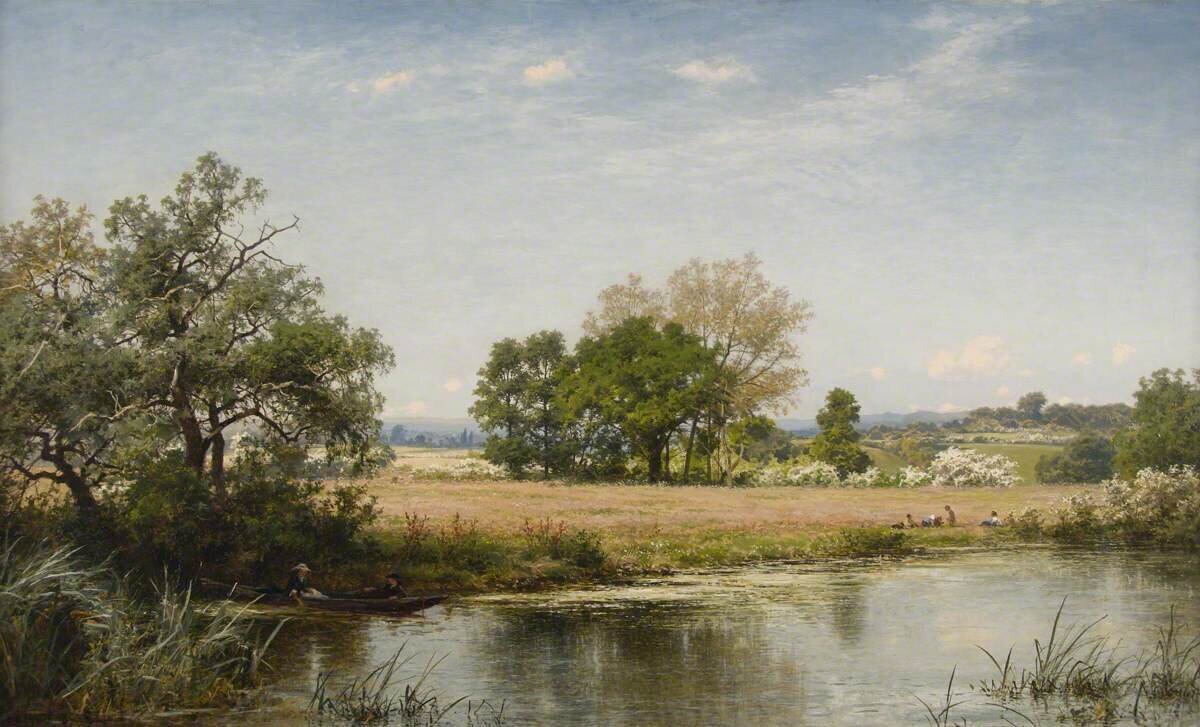
Benjamin Williams Leader, The Merry Month of May, 1890, public domain.

Welcome to our May Newsletter!

May 2025 Newsletter

We hope this newsletter finds you well and that you have been enjoying some May sunshine. We write with publication announcements, several exciting prize nominations, author blog posts and a listing in the European Diamond Capacity Hub.


Here's what happened this month:

May 2025 Newsletter

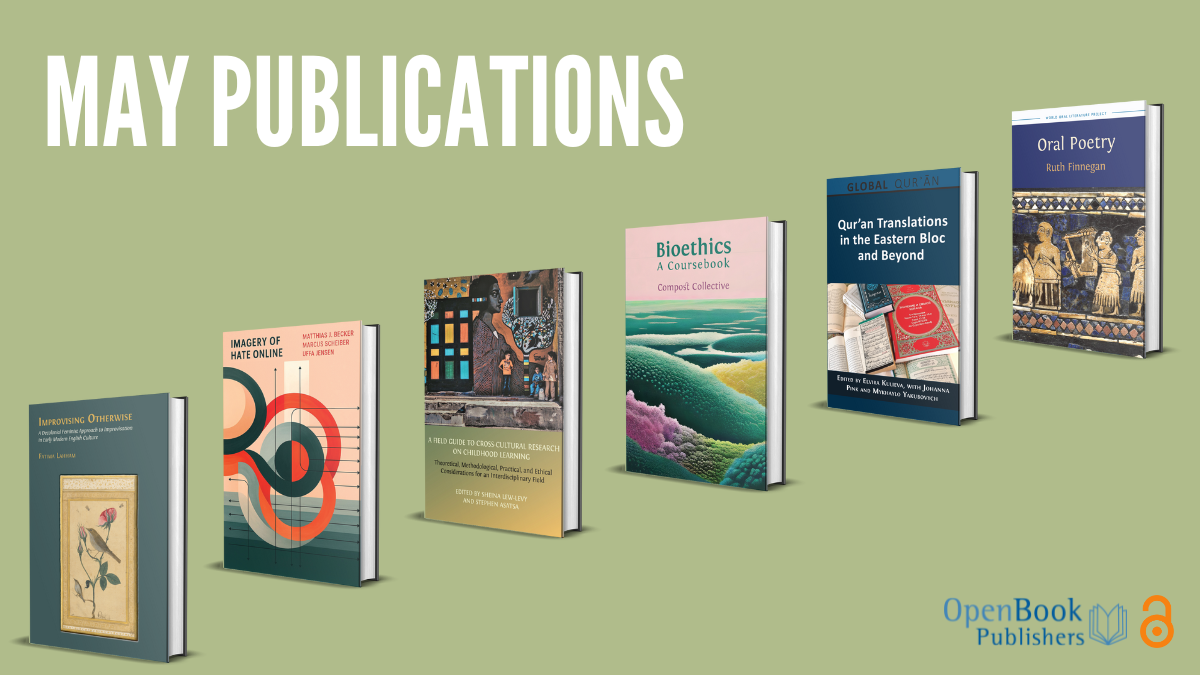
We published six new books

All of our titles are free to read and download. Explore our complete catalogue.


May 2025 Newsletter

Three of our authors were shortlisted for the 2025 ACLS Open Access Book Prizes and Arcadia Open Access Publishing Awards

We're thrilled that three of our authors have been shortlisted for the 2025 ACLS Open Access Book Prizes and Arcadia Open Access Publishing Awards in the Environmental Humanities and Literary Studies categories!

This is a fantastic acknowledgement of their work and their decision to publish open access. The shortlisted authors are:

Enormous congratulations to them and to the other nominees for this wonderful recognition of their fine research and writing. We're also delighted that through these nominations we're flying the flag for independent open access presses: we're hugely proud to represent this growing community.

Find out more about the awards and the other nominees.


May 2025 Newsletter

Our author Michael Hughes is shortlisted for the James Tait Black Memorial Prize

We're delighted that our author, Michael Hughes, has been shortlisted for the James Tait Black Memorial Prize in the Biography category for his book, Feliks Volkhovskii: A Revolutionary Life.

Huge congratulations to Michael and to the other nominees!

Find out more about these awards and the other shortlisted books.


May 2025 Newsletter

Etosha Pan to the Skeleton Coast: download milestone and an updated blog post

Etosha Pan to the Skeleton Coast: Conservation Histories, Policies and Practices in North-West Namibia, edited by Sian Sullivan, Ute Dieckmann and Selma Lendelvo has now received over 2,000 full-text downloads! Congratulations to the editors and all of the contributors.

You can also read a highly informative blog post packed full of images and photographs about the book and featuring many of the contributors.


May 2025 Newsletter

We are now listed in the European Diamond Capacity Hub

OBP now appears in the European Diamond Capacity Hub registry: a dynamic, free and comprehensive resource designed to foster collaborations within the Diamond Open Access landscape in the European Research Area.


NEW BOOK DISCOUNT:Enjoy 10% off when you spend £100 and 20% off when you spend £200 (or the equivalent in supported currencies) at OBP! The discount will be applied automatically at checkout.


That's all for this month!


On ‘A Handbook and Reader of Ottoman Arabic’

On 'A Handbook and Reader of Ottoman Arabic'

by Esther-Miriam Wagner

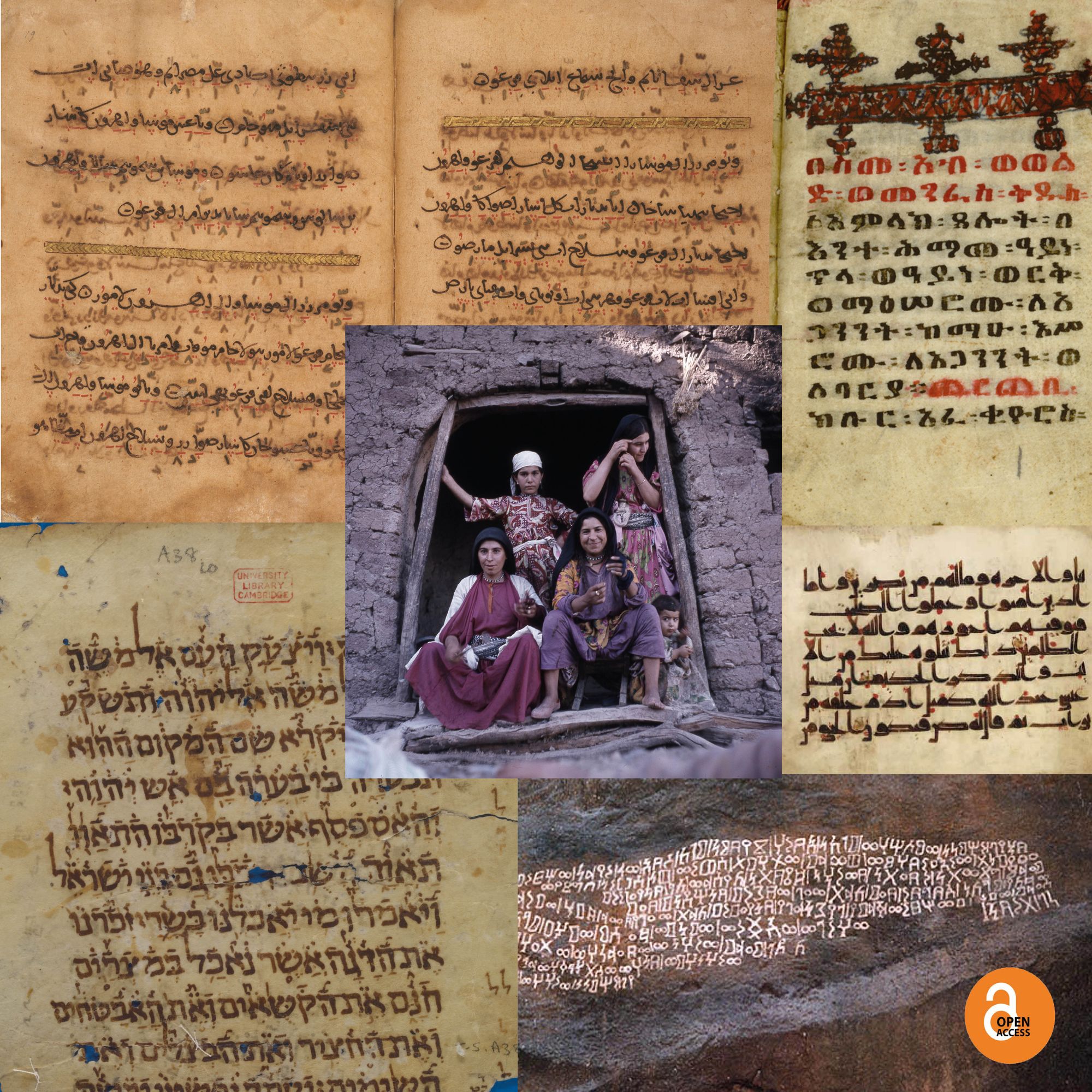
The Arabic of the Ottoman Empire presents an immensely fruitful linguistic topic. Extant texts display a proximity to the vernacular that cannot be encountered in any other surviving historical Arabic material, and thus provide unprecedented access to Arabic language history.

This rich material remains very little explored. Traditionally, scholarship on Arabic has focussed overwhelmingly on the literature of the various Golden Ages between the 8th and 13th centuries, whereas texts from the 15th century onwards have often been viewed as corrupted and not worthy of study. The lack of interest in Ottoman Arabic culture and literacy left these sources almost completely neglected in university courses.

To remedy this lack of attention to these fascinating texts, multi-national network of scholars got together at a seed conference in at the University of Cambridge in 2016, and discussed ways forward to focus attention on This network was then extended in subsequent workshops at Rutgers University in 2017 and at Cambridge in 2019, and after an AIMA gathering in Strasbourg in 2017. The contributors hail from various European countries, Turkey, Israel, Morocco and the USA.

The edited work is the first linguistic volume to focus exclusively on varieties of Christian, Jewish and Muslim Arabic in the Ottoman Empire, and make available a wide range of 15th to early 20th century Arabic sources, written in various alphabets. Transliterating sources originally composed in other alphabets into Arabic script opens up previously inaccessible materials to students of Arabic, and allows linguistic comparison between the different text genres and confessional varieties.  The book aims to be an easily usable source for course work for teachers and students in universities and other higher education facilities. In turn, it is hoped that this will stimulate interest among students and university teachers, and lead to an increase in research on the subject.

The Ottoman Arabic materials are presented in a didactic and easily accessible way. Split into a Handbook and a Reader section, the book provides a historical introduction to Ottoman literacy, translation studies, vernacularisation processes, language policy and linguistic pluralism. The second part contain excerpts from more than thirty sources, edited and translated by the diverse network of scholars.

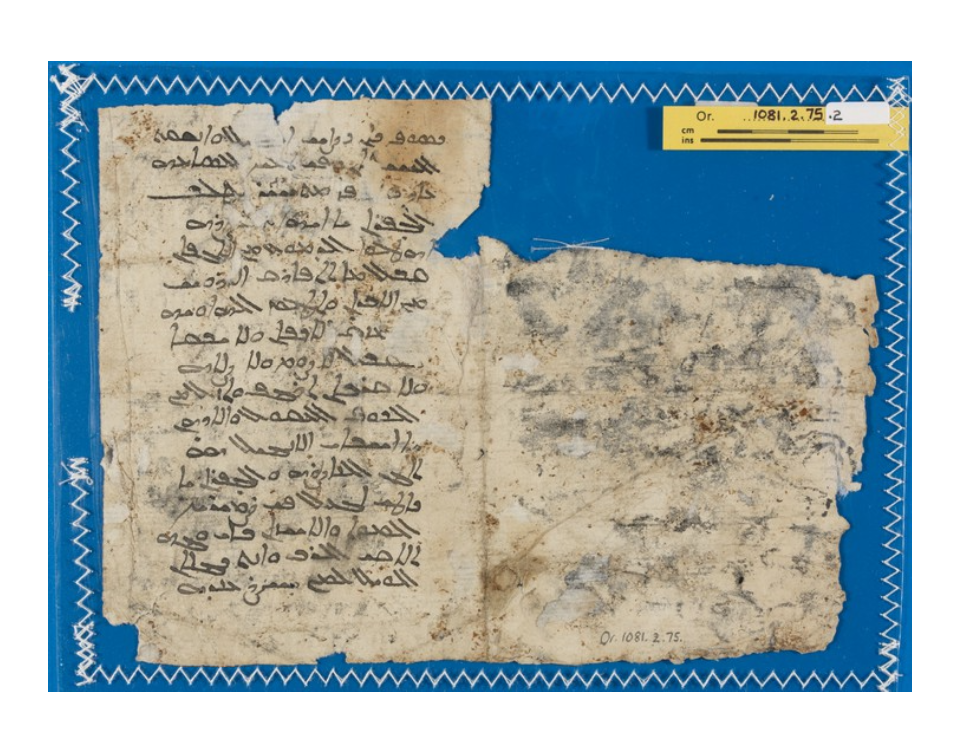
The material presented includes recently discovered yet unedited texts, such as Christian Arabic letters from the Prize Paper collections, mercantile correspondence and notebooks found in the Library of Gotha, and Garshuni texts from archives of Syriac patriarchs.

A Handbook and Reader of Ottoman Arabic by Esther-Miriam Wagner (ed.) is now freely available to read and download here.

OBP Summer Newsletter 2021

OBP Summer Newsletter 2021

Welcome to our Summer Newsletter!

We have information on our open CFPs, the most recent updates, new and forthcoming publications and latest reviews. Also, the latest set of MARC records containing all our new and past titles is now available here. There’s lots to explore below, so dive in to find out more about our plans for the months ahead...

Announcements

  • In memoriam: William St Clair
  • NatWest SE100 2021
  • Reader Survey
  • Ask an OBP Author
  • OABN: new recordings from Plan S workshops
  • COPIM: reports and updates
  • OAPEN Toolkit: a resource for authors

Books, Readership and Content

  • New Open Access Publications
  • Discussing OA Books: OBP & EIFL
  • Call for Proposals
  • New Blog Posts and Videos
  • Latest Reviews
  • Our Library Scheme
OBP Summer Newsletter 2021

We are immensely saddened to say that our Chairman, William St Clair, died on the evening of Wednesday 30th June.

In this post we share tributes that have been given in his honour, including by family and friends during his memorial at The Athenaeum on 23 July 2021, and by scholars whom he influenced with his pioneering work. Rest in peace William; you will be greatly missed.

William St Clair (1937-2021) was the Chairman of the Board of Directors. William was a Fellow of the British Academy and held fellowships at All Souls College, Oxford and Trinity College, Cambridge. He was also a Senior Research Fellow at the Institute of English Studies, School of Advanced Study, University of London and the Centre for History and Economics, Cambridge and Harvard. His publications include That Greece Might Still Be Free: The Philhellenes in the War for Independence (rev. ed. 2008) and historical studies of literary dissemination.

OBP Summer Newsletter 2021

We’re thrilled to have made it on this year’s NatWest SE100 Index highlighting the UK’s most outstanding in Social Enterprises.

We achieved a 9/10 social impact score in the SE100 Rankings 2019 and were also among the top 100 social enterprises in the NatWest SE100 2020. See the full list at https://immersives.pioneerspost.com/natwest-se100-.

OBP Summer Newsletter 2021

Help Open Book Publishers make the case for open access books!

Please answer a few questions about how you use our books. This will only take a couple of minutes, and it will help us to demonstrate the importance of making books freely available. Please share the questionnaire with your networks too.

Complete the questionnaire to be entered into a prize draw to win a free book of your choice!
Link: https://www.smartsurvey.co.uk/s/SPJM8K/

OBP Summer Newsletter 2021

If you want to find out more about what it’s like to publish with us, email Professor Caroline Warman (caroline.warman@Jesus.ox.ac.uk), author of The Atheist's Bible: Diderot's ‘Éléments de physiologie’ (2020) and translator of Denis Diderot 'Rameau's Nephew' – 'Le Neveu de Rameau': A Multi-Media Bilingual Edition (2nd ed., 2016) and Tolerance: The Beacon of the Enlightenment (2016).

OBP Summer Newsletter 2021

The Open Access Books Networks has recently released the Voices from the OA Books Community Summary: The Great Polyphony.

The draft document summarizing the sessions and an introduction highlighting key takeaways, are available here and will remain open until 12 August 2021. After that time, SPARC Europe will prepare the final version of the document, which will be presented to cOAlition S in early September 2021.

You can access this and other resources from the Open Access Books Network at https://openaccessbooksnetwork.hcommons.org/about-us/.

OBP Summer Newsletter 2021

Access the latest COPIM reports:

Exploring Models for Community Governance by Sam Moore

Jisc subscriptions manager is now live for Opening the Future and CEU Press by Tom Grady, Martin Paul Eve, and Work Package

Liverpool University Press join Opening the Future by Tom Grady and Martin Paul Eve

COPIM Newsflash! #3 Project Update May 2021 by Tobias Steiner and Lucy Barnes

COPIM/CEU Press Opening the Future initiative announced as a finalist in ALPSP Award for Innovation in Publishing by Tom Grady, Martin Paul Eve, and WP3

Experimental Publishing collaboration with POP, the Politics of Patents project by Julien McHardy.

OBP Summer Newsletter 2021

The Open Access Books Toolkit, hosted by OAPEN, aims to help book authors better understand their options in relation to open access book publishing, and to increase trust in open access books. You will  find relevant articles on all aspects of open access book publishing at different stages of the research lifecycle, along with an extensive FAQ section and a keyword search. Our Editor and Outreach Coordinator, Lucy Barnes, helped to create the Toolkit, so it comes highly recommended!

OBP Summer Newsletter 2021

OBP Summer Newsletter 2021


Shaping the Digital Dissertation: Knowledge Production in the Arts and Humanities
by Virginia Kuhn and Anke Finger (eds)


OBP Summer Newsletter 2021


On the Literature and Thought of the German Classical Era: Collected Essays 
by Hugh Barr Nisbet


OBP Summer Newsletter 2021


Technology, Media Literacy, and the Human Subject: A Posthuman Approach

by Richard S. Lewis


OBP Summer Newsletter 2021


Towards an Ethics of Autism: A Philosophical Exploration
 by Kristien Hens


OBP Summer Newsletter 2021


Politics and the Environment in Eastern Europe
 by Eszter Krasznai Kovacs (ed.)


OBP Summer Newsletter 2021


From Goethe to Gundolf: Essays on German Literature and Culture
 by Roger Paulin


OBP Summer Newsletter 2021

We have various Open Access series all of which are open for proposals, so feel free to get in touch if you or someone you know is interested in submitting a proposal!

Global Communications
Global Communications is a new book series that looks beyond national borders to examine current transformations in public communication, journalism and media. Special focus is given on regions other than Western Europe and North America, which have received the bulk of scholarly attention until now.

St Andrews Studies in French History and Culture
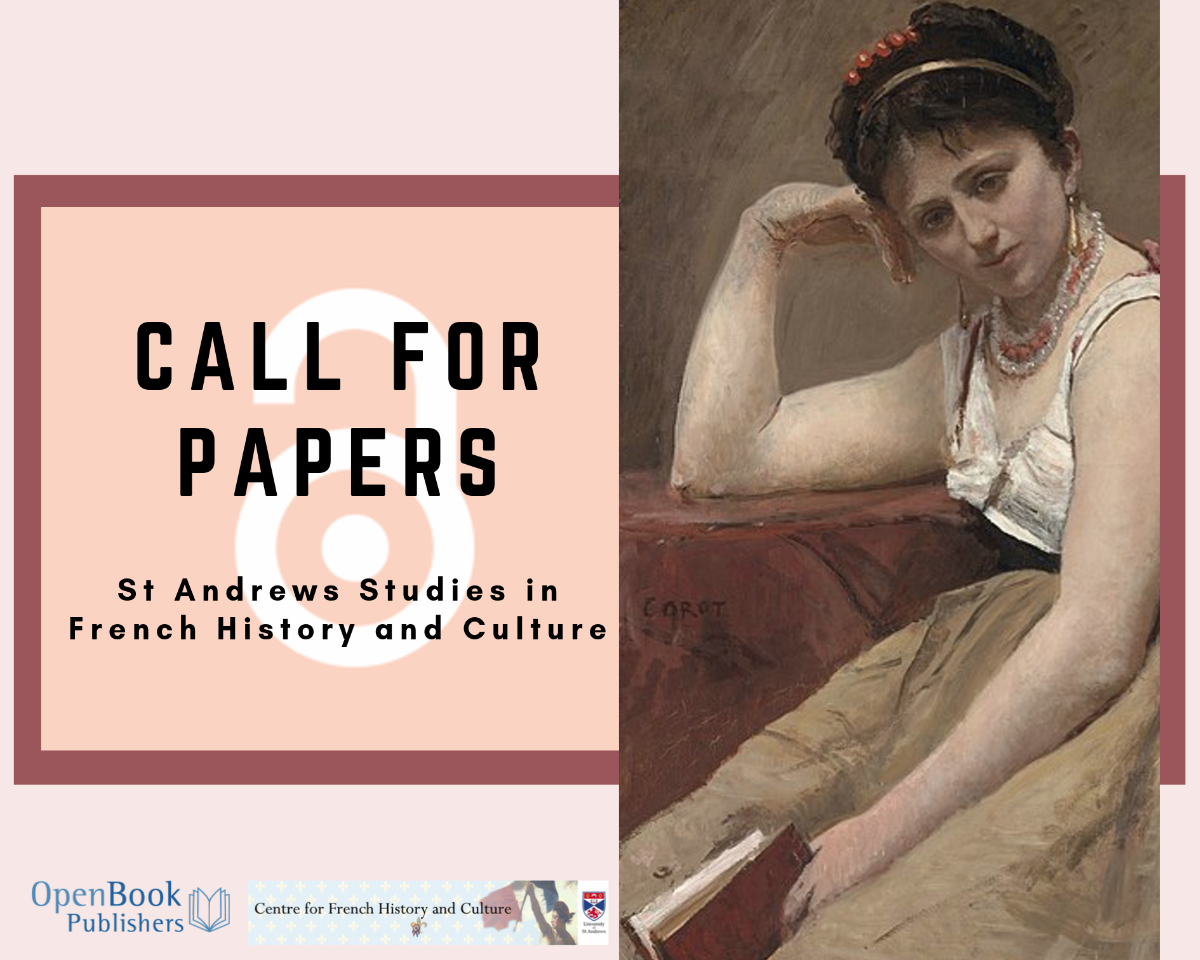
St Andrews Studies in French History and Culture, a successful series published by the Centre for French History and Culture at the University of St Andrews since 2010 and now in collaboration with Open Book Publishers, aims to enhance scholarly understanding of the historical culture of the French-speaking world. This series covers the full span of historical themes relating to France: from political history, through military/naval, diplomatic, religious, social, financial, cultural and intellectual history, art and architectural history, to literary culture.

Studies on Mathematics Education and Society
This book series publishes high-quality monographs, edited volumes, handbooks and formally innovative books which explore the relationships between mathematics education and society. The series advances scholarship in mathematics education by bringing multiple disciplinary perspectives to the study of contemporary predicaments of the cultural, social, political, economic and ethical contexts of mathematics education in a range of different contexts around the globe.

The Global Qur'an
The Global Qur’an is a new book series that looks at Muslim engagement with the Qur’an in a global perspective. Scholars interested in publishing work in this series and submitting their monographs and/or edited collections should contact the General Editor, Johanna Pink. If you wish to submit a contribution, please read and download the submission guidelines here.

The Medieval Text Consortium Series
The Series is created by an association of leading scholars aimed at making works of medieval philosophy available to a wider audience. The Series' goal is to publish peer-reviewed texts across all of Western thought between antiquity and modernity, both in their original languages and in English translation. Find out more here.

Applied Theatre Praxis
This series publishes works of practitioner-researchers who use their rehearsal rooms as "labs”; spaces in which theories are generated and experimented with before being implemented in vulnerable contexts. Find out more here.

Digital Humanities
Overseen by an international board of experts, our Digital Humanities Series: Knowledge, Thought and Practice is dedicated to the exploration of these changes by scholars across disciplines. Books in this Series present cutting-edge research that investigate the links between the digital and other disciplines paving the ways for further investigations and applications that take advantage of new digital media to present knowledge in new ways. Proposals in any area of the Digital Humanities are invited. We welcome proposals for new books in this series. Please do not hesitate to contact us (a.tosi@openbookpublishers.com) if you would like to discuss a publishing proposal and ways we might work together to best realise it.

OBP Summer Newsletter 2021


How To Read Russian Literature Backwards by Muireann Maguire  

Autism and Ethics: The Stories We Tell by Flora Kann Szpirglas

The Middle is Marching: Adam Roberts, on reading George Eliot’s 'Middlemarch' by Adam Roberts

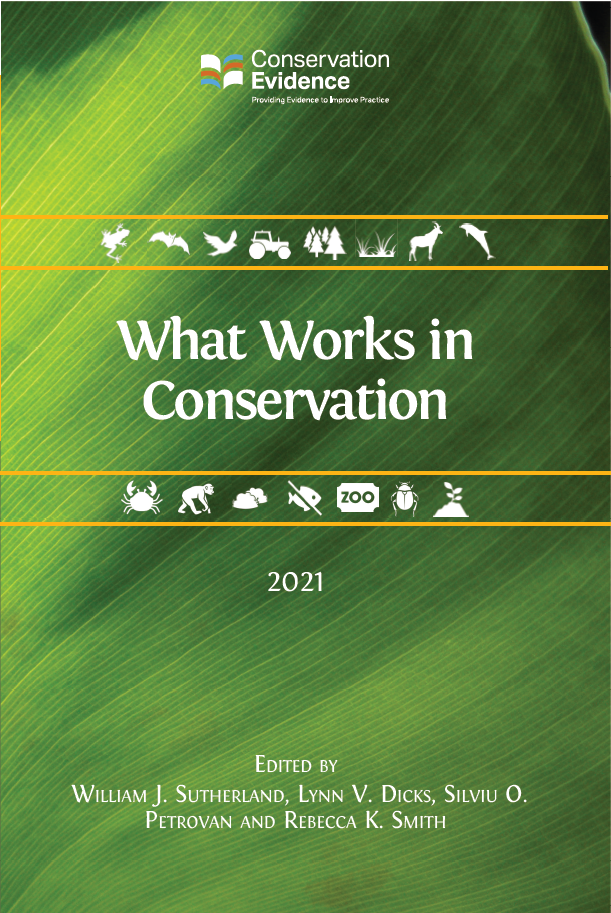
1,000 pages of evidence for conservation actions by the Conservation Evidence Team

A View From under The Horse’s Tail. New Perspectives on Literature? by Roger Paulin

OBP Summer Newsletter 2021

Lucy Barnes, Editor and Outreach Coordinator, and Laura Rodriguez, Marketing and Library Relations Officer at Open Book Publishers discuss the creation and usage of open access books with librarians and researchers in a webinar hosted by EIFL in May 2021.

You can access the discussion at https://www.youtube.com/watch?v=4FyrFctVTjA&feature=youtu.be

OBP Summer Newsletter 2021

Chronicles from Kashmir: An Annotated, Multimedia Script by Nandita Dinesh

At  the  end  of  each  performance,  [audiences]  learn  something  very  special about  the  lived  experience  of  the  Kashmiris,  and  this  sinks  heavy  in  their consciousness. They become wiser about Kashmir than they had ever been. The  multimedia  script is very innovative  and  highly  experimental  in nature […] The  scenes  are  designed effectively  with  potent  symbols, and  the  sensitive  issues  are  presented  in  a balanced  way.  This  play  on "conflict  tourism” will  undoubtedly  create  ripples among theatregoers and people engaged in the politics of representation.

— Himadri Lahiri, Netaji Subhas Open University, India, Asiatic, Vol. 15, No. 1, June 2021, available online.

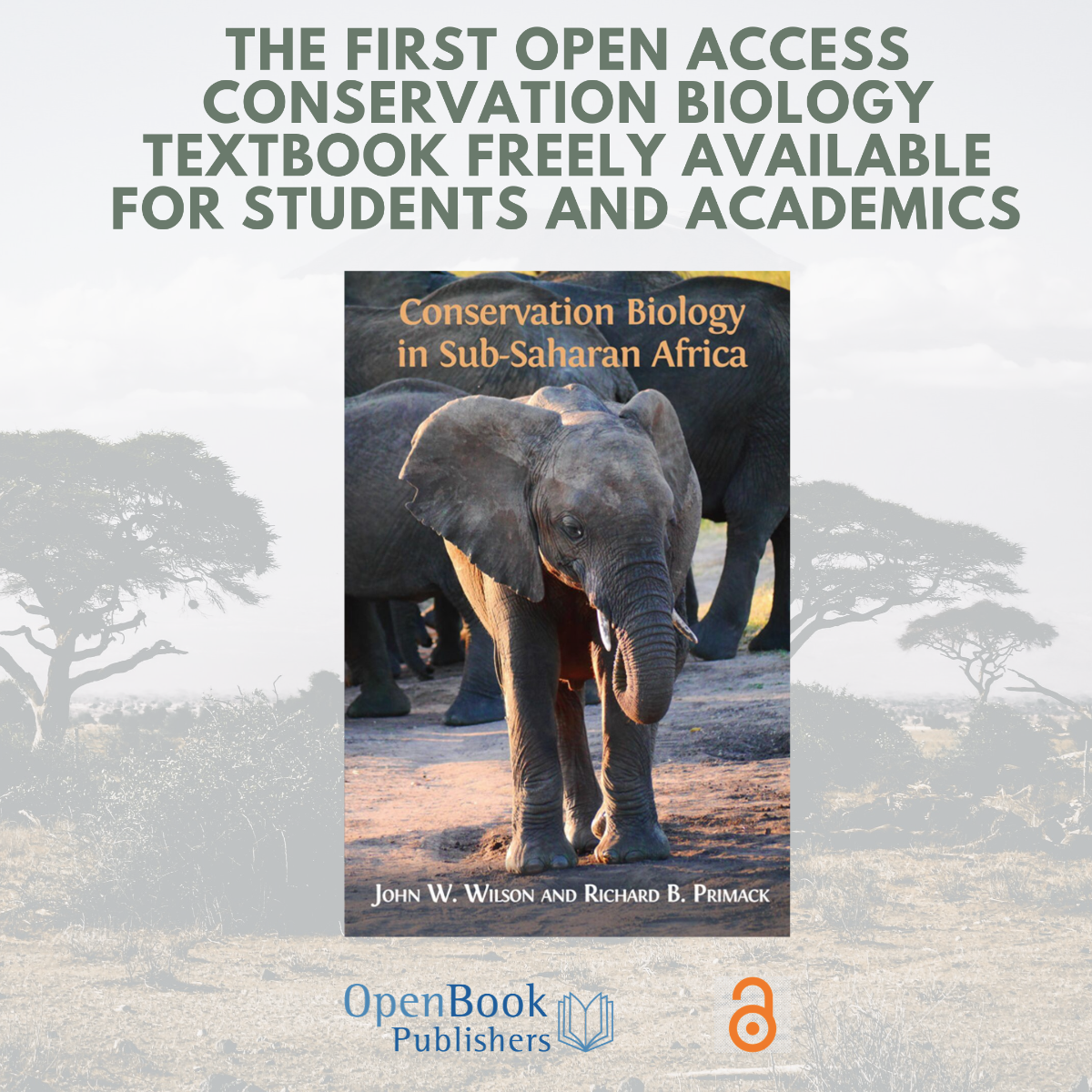
Conservation Biology in Sub-Saharan Africa by John W. Wilson and Richard B. Primack

The authors are to be congratulated on publishing an open-access book brimming with examples relevant to Africa. My fervent hope is that it will assist in some way in the training of a cohort of passionate and persistent leaders among the next generation of conservation biologists. We are going to need them.

—Van Wilgen BW. 'A valuable resource for African conservation students'. South African Journal of Science. 2021;117(5/6), Art. #9310. https://doi.org/10.17159/sajs.2021/9310

Text Genetics in Literary Modernism and Other Essays by Hans Walter Gabler

Gabler’s collection is a masterful lesson in textual genetics and scholarly editing by one of the field’s great masters. With examples from Joyce, Woolf, Shakespeare, and Bach, the essays present deep insights into textual scholarship and genetic criticism. The passion and sense of wonder that underlie them is contagious. Gabler’s argument for the future of scholarly editing and criticism takes us to a place where we can see the immense potential in what lies ahead. The collection will certainly, both in part and as a whole, become essential reading in the fields of Joyce studies, textual scholarship, and genetic criticism.

— Barry Devine, Heidelberg University, James Joyce Literary Supplement, Spring 2021

Introducing Vigilant Audiences by Daniel Trottier, Rashid Gabdulhakov and Qian Huang

A topical collection of works, 'Introducing Vigilant Audiences' is a useful collection to scholars within media and communication, social sciences, law, politics, and philosophy The accessibility provided by empirical studies and the depth of qualitative sources ensures that this book would also be of interest to those who are new to the academic study of digilantism more broadly.

— Amy L. Gainford (2021), International Review of Law, Computers & Technology, DOI: 10.1080/13600869.2021.1949826

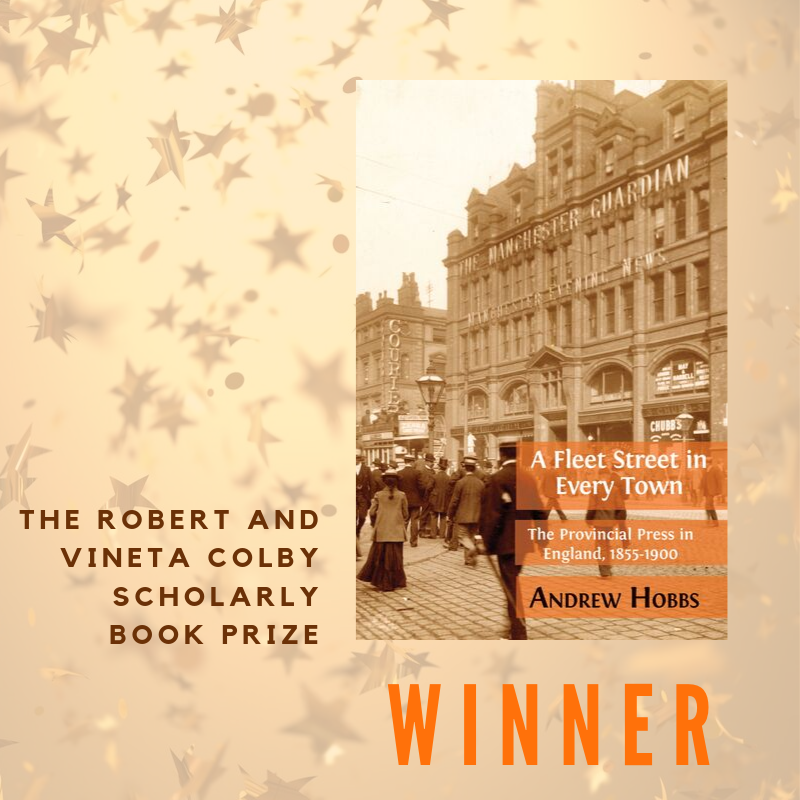
A Fleet Street in Every Town: The Provincial Press in England, 1855-1900  by Andrew Hobbs

This book is not only rich in its arguments but extraordinarily generous in its methodological transparency [...] Coupled with the book’s open access format and Hobbs’s candid sharing of the limitations of his sources, this approach really feels like research sharing [...] Starting with the reader and understanding the local press as a national phenomenon, this book persuasively negates the idea that we can never really know how readers responded to the local press, providing compelling and well-substantiated answers to precisely this question.

— Holdway, Katie. 2021. Victorian Popular Fictions, 3.1 (Spring):  155-7.  DOI: https://doi.org/10.46911/JWWZ9478

OBP Summer Newsletter 2021

The Open Book Publishers' Library Membership Programme supports our award-winning Open Access monograph publishing programme. By joining the Programme for an annual fee of £300/$500/€400, libraries and their users both support and benefit from OA publishing. We would be delighted to hear from libraries considering joining the Library Membership Programme or interested in further information. You can find the list of benefits here. We are delighted to offer a special 10% discount to members of SPARC and JISC Collections - just mention your membership when you contact us!

Free membership for libraries in economically developing countries: For institutions based in economically developing nations some fees may not apply. If you are a librarian at a university or library in such a country, and would be interested in receiving more information on how to become a member, please contact our Marketing and Library Relations Officer Laura Rodriguez at laura@openbookpublishers.com.

A View From under The Horse’s Tail. New Perspectives on Literature?

A View From under The Horse’s Tail. New Perspectives on Literature?

by Roger Paulin

This collection of essays is in the fullest sense occasional. Some chapters were originally written as reactions to stages of my career. Thus when I left Cambridge in 1987 I decided to write a tribute to Trinity’s Hare collection of books. On my return in 1989, the Education Reform Act prompted me to deliver an inaugural lecture on academic freedom. Some, such as my essay on Kleist,  were stimulated by others’ ideas, in this case Charles Tomlinson’s Clark Lectures on metamorphosis. Another (on the Schillerfeier) was a contribution to a Festschrift; the chapter on Wilhelm Müller grew out of a review article. Yet others were originally given in public lecture series (Landmarks) in Cambridge and still carry something of their oral delivery. Our Cambridge readings of Rilke’s Duino Elegies produced another. One or two, such as the chapters on August Wilhelm Schlegel and on public momuments (‘Under the Horse’s Tail’)  were first given as occasional papers and were only later reworked for publication.

In choosing the title ‘From Goethe to Gundolf’ I wish to emphasise the wide chronological scope of the collection, from the mid-eighteenth century to the early twentieth. This period, give or take, has also been the main area of my teaching. The title also expresses my firm conviction, based  on the study of texts,  that individual figures or works from different periods of German literary history can and indeed should be seen in interrelation to each other.  In addition, nearly all of the seemingly disparate literary events or manifestations that form my collection also relate to the two major topics on which I have worked for over 40 years: German Romanticism (my biographies of Ludwig Tieck [1985]  and August Wilhelm Schlegel [2016]) and the reception of Shakespeare in Germany (my monograph of 2003). Underlying all of these is however their relation to the history of style, of literary forms, in short, of poetry.

I have always believed that literary studies should be interdisciplinary, in that they reflect the historical, biographical and cultural events of their times. Two examples from the collection may illustrate this: the centenary of Schiller’s birth in 1859 also has political overtones, while the unveiling of a public statue can be an artistic and literary endeavour as well as an act of political will.  These sociologial interconnections inform several of the essays.  Their chief focus of the volume is however poetry  in it fullest sense , poetic language as expressed in the novel, the drama and in lyrical forms. Poetry is subject to renewals as well as innovations, and I trace these in well-known poets: Klopstock’s boldly experimental poem ‘Der  Zürchersee’, Goethe’s sensational best-selling novel Die leiden des jungen Werthers, Schiller’s Wallenstein, his crowning achievement as a dramatist,  and Rilke’s late Duino Elegies, balanced between despair and hope. I also draw on poets hardly received outside Germany, such as the fine woman poet Annette von Droste-Hülshoff, or Wilhelm Müller, who is otherwise only known as Schubert’s librettist.  Hand in hand with literary studies and the love of poetry goes my love of books and their history. They are the foundation on which literary studies are ultimately built. Hence books feature on the cover of my collection and in its final chapter.

From Goethe to Gundolf: Essays on German Literature and Culture by Roger Paulin is now freely available to read and download here.

In Memoriam: William St Clair

In Memoriam: William St Clair

Our Chairman, William St Clair, died on the evening of 30th June 2021. In this post we share tributes that have been given in his honour, including by family and friends during his memorial at The Athenaeum on 23 July 2021, and by scholars whom he influenced with his pioneering work. Rest in peace William; you will be greatly missed.

A tribute to William St Clair by Professor Anthony Snodgrass

At times, William St Clair seemed to have lived more than one life. Even in our supposedly 'globalised' age, it came as a revelation to many of his fellow campaigners for the reunification of the Parthenon Marbles, to learn that he was also an acclaimed literary and historical authority on the Romantic Era -- to the point where, on the strength of this, he had been elected a Fellow of the British Academy back in 1992. The same may have been partly true in reverse; and to both parties, it was surprising to find that he had served for years as a senior civil servant in the Treasury, whose research was at first a side-line. His later academic appointments are too numerous to list in detail here, but they covered Trinity College, Cambridge, All Souls at Oxford, the School of Advanced Study in London, Harvard and the Huntington Library in California.

With such a record, William must have seemed a 'safe' figure to the less progressive wing of the British Establishment (from which the Trustees of the British Museum were then often drawn): a scholarly, objective authority who could be relied on not to upset apple-carts. It must have come as a nasty shock to them when in 1998, to the third edition of his now thirty-year-old book Lord Elgin and the Marbles, he now added the explosive Chapter 24, entitled 'The Damage is Obvious and Cannot be Exaggerated' -- a quotation from the secret internal Board of Enquiry, set up by the Trustees in 1938 to investigate reports that over-zealous cleaning of the Marbles had seriously damaged them. What William had uncovered (but only after repeated requests under the Thirty Year Rule of the Public Record Act) was the full record of that near-forgotten scandal. He ended his chapter with an appeal for an honest, international inquiry into the events of 1938-39.

It is a reflection of his standing and influence that a version of such an inquiry was indeed set up within a year or so, but by the Museum itself, at the (creditable) instigation of its then Director, Robert Anderson. Attending this violently controversial event myself, I could hardly believe my ears when we heard one of the Museum's own Deputy Keepers, the late Ian Jenkins, say that 'the cleaning [of 1938] was a scandal, and its cover-up was another scandal'. It was William's victory that such words could now be openly uttered.

There are collections of plaster casts of the Parthenon Marbles all over Britain, and a few of them contain casts originally commissioned by Elgin himself, before any further effects of deterioration or damage could occur. One small such set was held by the University of Edinburgh, where I was then a Lecturer, and in the early 1960s I showed these to William.   It was absolutely characteristic of his generosity and long memory that, when he published his third edition in 1998, he sent me -- otherwise still a stranger -- a signed copy in gratitude. After that, we quickly became friends; when I invited him to talk in Cambridge, it was a tribute of a different kind that the then Keeper of Greek and Roman, Dyfri Williams, travelled up from London especially to challenge him.

Eulogy of William St Clair by his brother David St Clair at The Athenaeum, 23rd July 2021

So good afternoon and thanks very much for coming. I’m going to say a few words about William. I don’t think he would have wanted just some hagiography or some recitation of his CV, which you can get on Wikipedia. So I thought I might try and suggest that there was quite a lot about William’s character and biography that resonated with the people whose biography he either wrote about or tried to.

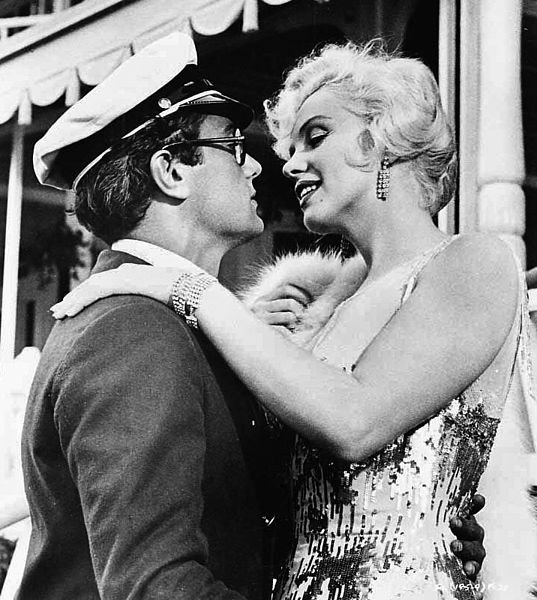
Lord Byron; romanticist, rebel, immensely witty, but touched with melancholy. Shelley; revolutionary, atheist, unacknowledged legislator of the universe. Godwin; massive intellect, whose life rose and then fell, and then rose again. And then his good friend Arthur Miller, who was not only a very influential person in the twentieth century, but who was tinged with guilt, Jewish guilt, which is quite similar to Scottish Presbyterian guilt, having left his wife and two children for the glamour of Marilyn Monroe. But I am aware there is quite a lot of biographical expertise and creative writing expertise in the audience. One of William’s favourite quotes however was ‘if a job’s worth doing it’s worth doing badly’.

So William was born on the 7th of December 1937, a date that was very easy to remember because four years later the Japanese bombed Pearl Harbour and brought the United States into World War Two. He was born in London. His mother was an English teacher who had to give up work when she got married which is what you had to do in those days. She was a graduate of the University of Glasgow, avid reader, played the piano, sang contralto in choir. And our father who came from five brothers was, at the time, London representative of a group of Scottish foundries.

So he was one of five brothers (the one on the left was him). Trained as a draughtsman and very interested in pictures. And this one, anyone that’s been into William’s bedroom will have seen this one by Harlamoff. So it wasn’t just the usual Scottish dead pheasants, and highland cattle. And he was also very keen on the ballet. The Ballets Russes was in London at the time that they lived there. He went almost every night to watch the great and the good perform. But his biggest interest was mountaineering. Long before William was born he was keen on Lord Byron. “And ye mountains, why are you beautiful?” And this picture of Lord Byron was our father’s picture, not one that William bought. Again it was hung in William’s bedroom.They, both William and his father, were keen on mountains and hills. They weren’t so keen on the rustic, English countryside, which William used to say was so boring; cold houses, spiders in the bath.

William spent the first two years in London and then was evacuated back to Scotland. He nearly went to America with my mother, and it was all lined up, but they had cold feet and decided to stick it out. Happy childhood. He was very interested in magic. And this was part of his character; he loved mystery, suspense, trickery, bluff and counter-bluff and with his horn-rimmed round spectacles, you might even have thought he was Harry Potter.

And then when he was ten and a half his life was interrupted by John and myself arriving on the scene, which you can see from the pictures, changed his life. And it was a happy family, until our father died, when we were about five, from cancer. This I think had a profound effect on William’s life, because he was asked, along with my mother, to keep the diagnosis concealed from our father. And that bond between him and his mother, I think was too intense at that time. And I don’t think he wanted that degree of closeness to happen again.

So he went to Edinburgh Academy, a school that was actually set up during the Greek War of Independence to teach Greek, because you couldn’t get on in those days unless you knew Greek as well as Latin. And he was dux of the school, that’s academically top. And went to Oxford, St John’s, I think there are several St John’s people in the audience; well-known Oxford college. And he rowed in the first VIII and he was very proud of the fact that four years in a row they got four bumps, which meant you got an oar. And, yes, this is just him larking around. These oars, again, were in his bedroom; I’m assuming that not many people did go into his bedroom.

The other thing he did during his time at Oxford was go, with the help of a little local Scottish charity, on his first journey to Greece, where he went round all the famous classical sites and then actually went to Crete and saw the Mycenaean and Minoan remains.

And then when he graduated he joined the Admiralty. At that time when he was a civil servant, we had still a huge navy. And he got on well with the officers in Portsmouth, and they, as a prank, and I haven’t got the picture of William, allowed him to go on a breeches buoy between two destroyers, dressed in a bowler hat and umbrella.

When he was there he answered an advert in the Times, from a Mrs Longland in Abingdon, saying that I’ve got a lot of papers from my great grand uncle, Dr Hunt, who was on Lord Elgin’s first expedition to Greece, anyone interested and he answered it and said, yeah I’m very interested. And before we knew it he was married and he had produced this book, Lord Elgin and the Marbles, remarkably fast. And it happened to be just at the time that I was dux of Edinburgh Academy myself, and I got it as a prize. You can imagine from the picture on the left-hand side, which is rather contrived, John made to admire my medal, and he’s got a couple of books, whereas I’ve got a stack of books.

And then he went on to have a nice happy family. Anna came along, and then Elizabeth. And then with a great deal of help from Heidi, who did all the translation from German, he produced this groundbreaking book called That Greece Might Still Be Free, which I should think many people in this room may have read.

And then the marriage broke up, and it’s not clear why the marriage broke up. Heidi said William found her boring, and my mother was more direct and said that literary fame had gone to his head, and he had been tempted to stray. Anyway he left Heidi but still had a long and wonderful relationship with the two children. He saw them every weekend and loved to go to their concerts where Anna played the violin, and Elizabeth the cello. And he was so proud when they both got into the University of Oxford and then this lovely picture of Anna in 1989 graduating.

His time at the Treasury was not as great as you might think. His career was stymied, and one of the reasons was that, like Sir Humphrey, he was looked upon when Margaret Thatcher came along as an amateur. Sir Humphrey had a degree from, Drummond is it…Balliol College Oxford?, with a first in Classics [Drummond Bone responds, ‘The tie makes it clear unfortunately yes’]. And it wasn’t just that William had a degree in Classics that defined him as an amateur, but a worse crime was that he wrote books, and he wrote for the Financial Times, so was a dilettante, as well as an amateur, and these sorts of types the Thatcher regime didn’t want.

He did make good friends with Douglas Hurd, Foreign Secretary, and they used to swap stories because he wrote about Lord Elgin’s son and about how he had sacked the Old Summer Palace in Beijing. And William and I actually visited the Old Summer Palace about fifteen years ago. We both happened to be in Beijing at the time, as these things happen. And we reckoned he’d done a really good job, it’s been a ruin and it’s part of the century of humiliation that the Chinese have held against the West.

While he was at the Treasury, he did produce this little book called Policy Evaluation, a critical look at the objectives and how they are being met. And it has these little bits of humour; Napoleon checking his objectives; Moscow, Trafalgar, Waterloo. And inside, assumptions, you can’t make an assumption if you’ve got a donkey being pushed from the back side and the front side, and carrots. And this book was translated into French, Turkish and Arabic. It did actually make an impact on civil servants across a large part of the world, and he was immensely proud of it.

This is just a letter from Amartya Sen to him whilst at the treasury, which if Dominic Cummings had met him the time, it would confirm that he needed to be sacked, because he mentions the Financial Times, reviewing his book, looking forward to reading his new book etc.

And his next book was The Godwins and the Shelleys and it was a massive book about one of the most remarkable families in the history of ideas. It reinforced a lot of people’s view that it was a remarkable family. It reinforced in my mother’s mind that the Bloomsbury set were over-rated lightweights. This picture of Mary Wollstonecraft used to be on William’s mantlepiece.

And then when he was in his early fifties, he developed severe coronary angina. He was just about to go to Turkey and I said don’t go to Turkey, see a doctor; he hated seeing doctors. And in fact he required quadruple coronary bypass surgery: the prognosis of someone at that time getting that, I think was about ten years and I think that’s what made him want to get on ever more with life and shortly after that he retired from the Treasury on a pension that most of us would like to have as a salary.

He went to All Souls College in Oxford, and became very, very involved politically. He became involved in PEN; I think he may have even been the president of PEN in Britain. Got to know lots of other PEN writers including Harold Pinter and Arthur Miller; who he wrote to shortly after the Godwin and Shelleys book and wrote saying ‘I’d like to write your biography, how’s about it?’, and Arthur said ‘Well I’m not going to say yes until I get to know you a bit better’. And they became very good friends, and met up with one another multiple times on both sides of the Atlantic. And he was at the filming of The Crucible when Arthur was by then quite an old man, eighty. That’s Daniel Day Lewis who played John Proctor, his [Miller's] son-in-law.

Around the same time, 1992, Elisabeth got married, and after that he jumped ship from Oxford to Cambridge, Trinity College. And then not long after that he produced the third edition of Lord Elgin and the Marbles, and this included the explosive chapter 24 where he revealed, after sixty years of secrecy, that Lord Duveen had brought his labourers in to give the Marbles a good scrubbing to make them nice and white before they went into his new gallery.

And at the time the minutes of the Trustees said ‘The damage is obvious and cannot be exaggerated’ - but the message to the public was that there had been some minor innovations about how they were cleaned but no-one, apart from experts, would notice the difference. And then, I think this is one of William’s biggest best put-downs.

Far from admitting that anything had gone badly wrong, the Trustees now tried to take credit for the firmness and speed of their response. By describing as ‘innovations’, methods of cleaning marble which would have disgraced a municipal cemetery, they gave the impression that they were solid, reliable, old-fashioned, conservatives who could be safely trusted not to be seduced from their duty by the wizardry of modern science’.

You can understand why he wasn’t liked. Around that time Mary Beard said ‘I’ve been asked to edit a series of books on the Wonders of the World, buildings and monuments and I’d like William for you to write a book. Not about the Parthenon, because I’m doing that, not about the Colosseum, because I’m doing that’. But Frances, who is in this room, can comment on how, eventually, he arrived at doing a book about Cape Coast Castle.

These are pictures showing how the family was growing up; and now he had four delightful grandchildren, all of which are here? No.

Then he produced this other massive book (The Reading Nation in the Romantic Period), and academics wrote to him saying ‘you know it’s not fair of you to write these big books, us professional academics can’t churn out big books like that’.

And around the same period Arthur Miller died. Inge his wife had actually predeceased him. All his diaries William had access to and were promised to him, and he was expecting to use them as the basis of a very innovative biography. But Andrew ‘the Jackal’ Wylie, who is a notorious literary executor, moved into the family and said don’t let William get near this stuff. And he turned Rebecca and Daniel Day Lewis against William. And that whole opportunity that I’m sure William would have done a fantastic job of, was cawed from his feet by the Jackal.

But he went on to do again a very innovative book about Cape Coast Castle, the home for one hundred and fifty years of the headquarters of the British slave trade in west Africa. That’s not William in the picture, that’s Barack Obama. What he managed to find was that all the records of those one hundred and fifty years were in the National Records Office in Kew that almost no-one had ever looked at.

So his life was rising like Godwin's a second time, and from there it never stopped. He founded this book publishers, because he was very against intellectual property, especially in the book trade, where every form of gouging and what have you, had been going on for hundreds of years. They’ve now got two hundred and fifty books on their catalogue. Not again liked by a lot of the establishment, people like Cambridge University Press who loved charging ninety quid for this that and the next thing.

And this is a nice picture of Alessandra and Rupert with William at Trinity where the publishers is based. And then around the same time he joined the School of Advanced Study and again made some wonderful friends where he stayed for many years. He also got involved, after the Elgin Marble scandal was revealed and became a fervent member of the committee for the restitution of the Marbles to Greece. These are some of the people that just a few years ago, were on the committee. Some of them you may know, Tom Flynn, Alexei Kaye Campbell and Janet Suzzman.

The grandchildren were growing up. And this is taken on William’s eightieth birthday. This is him with his two monozygotic twins with his nephews included.

I met him just about five weeks ago in this crowded room which never looked anything like a living room. We get Homes and Gardens and I’ve never seen a room like that in there. And then sadly on the 30th of June just a week after Paulina and William went to the celebration of the 450th anniversary of the founding of Jesus College he died. Paulina told me that William had said he was arm candy at the event.

But his legacy will live on. He’s got this massive book coming out later in the year. Drummond was going to introduce William at a key meeting in Edinburgh in November. And then William planned a book launch in Trinity… Not to be.

Thanks.

Dedication to William St Clair by Paulina Kewes at The Athenaeum, 23rd July 2021

Back in 1994, my age-old friend Don McKenzie, who was a professor of bibliography and textual criticism at Oxford, said that I ought to meet a Mr William St Clair, who was then a visiting fellow at All Souls and was giving a series of lectures that were related to the topic of my doctorate. And he introduced me to William who was incredibly helpful and lovely, and since I had a JRF (Junior Research Fellow) interview coming up, he asked if I would like a mock interview. So I turned up at All Souls and William opened the door wearing his gown, and pretended that he was introducing me to the whole panel. I was supposed to give a five- or seven-minute presentation of my research and I started talking, I may have even been reading, and he said ‘No no no it’s all wrong, you can’t do it like that. Stop!’ And I was incredibly upset, and he said ‘You can only say three things; and you have to be looking at the people, you can’t be reading’. So I scuttled back to my Jesus College digs and I started practicing, crouching in front of the mirror on the wardrobe. Then I cycled back to All Souls because he had agreed to give me another interview. And it obviously worked because I got the JRF and after the interview I returned All Souls to tell him how it had gone, and we drank a bottle or two of wine, and by the time I got back to my digs and the Master rang I was completely sloshed.

And that was really William, he never really pulled any punches. When you were wrong he always told you that you were wrong, that you should do it completely differently, that you should be more ambitious, that you shouldn’t settle for the little things, that you should be more expansive. And sometimes its difficult to take when you’re feeling a little insecure. I felt I was just a Polish student who might not have a future in this country, Poland was not part of the EU, and if someone tells you ‘go outside your patch and do something inter-disciplinary’, ‘think outside the box’, ‘what were they doing in Europe or elsewhere in the world?’, it is sometimes difficult but that is something that William has really taught me. And he was someone who could be a bit of a bear, he was unbelievably stubborn, and there were some things you just couldn’t get him to change, but at the same time he was incredibly kind and mild and generous.

Even in the last few months he was seeing one of my students to help her with her undergraduate dissertation. He was always incredibly generous to younger scholars, to students, and would spend hours helping them. And he was a mine of fascinating stories. David was speaking earlier about William’s time in the Civil Service, and one of his prize stories from when he was working at the Treasury was when he needed to find out something about the Treaty of Utrecht of 1731. He asked for a copy of it and his PA brought him the real damn thing!

Or when he was working for the OECD and went to Turkey; the idea was for him and the other experts to tell the people of Turkey how to Europeanise and do things properly, and one member of the delegation, I think from France, said she might be late and miss a flight, so the minister in charge stopped all proceedings and gave her a police cavalcade and rang the airport and got them to stop the flight so that she could get on. And that was completely contrary to what they were trying to teach people in Turkey. And William was always telling people what he thought; for example he fell out with the OECD; because he was trying to tell people in Portugal what they should really be doing and that didn’t go down terribly well. I think he fell out with people at All Souls because of what he said to them, and at Trinity he probably would have loved to have stayed longer but he was really very scathing about how they were running their accounts and fell out with the Bursar. But he always stood his ground.

And of course the prize exhibit was what he did about the Marbles, and the cleaning of the frieze that David was talking about. And his work was just so remarkably diverse, sorry I should not say work, whenever I asked him ‘What are you working on today?’, whether it was when he was in London or when he was staying with me in Oxford, he would say ‘I’m not working, I’m not working’. I would ask him ‘When are you going to finish your Parthenon book?’ and he would say ‘I’m not writing to anyone else’s deadlines. I’m going to finish when I want to finish, it’s my own schedule.’

Whenever he was doing research and scholarship he was pushing against boundaries. He was on the one hand incredibly bold, ambitious and completely unfettered by disciplinary boundaries, but at the same time he could be incredibly humble. He would go to seminars; Classics seminars in London, Archeology seminars with students, and he was a very humble member of the group. But on the other hand he went to some at the Institute of English Studies and somebody was basically telling porkies, talking tosh, and he would probe and question, and then could never understand why they were a bit livid at the end, that he questioned what they said, but he didn’t mean to be hostile, he wasn’t going to be a bulldog, he was just going to ask the question that was fundamental to whatever they were doing.

In absolutely personal terms he was hugely generous, he was kind, he could be really really lovely and when I was ill, I got ill when I was in America, he said ‘Oh why don’t you just come and stay with me when you are on chemo at the Royal Marsden?’. He sat with me through all my chemo sessions and all my consultations, and he would be sitting with me on this little plastic seat and tapping away on his computer as I was sleeping away. But he could also get fed up. Obviously I was kind of depressed, I had lost my hair, my eyebrows, and I was whinging. And there was one time when we were coming back from the theatre the day before chemo and I was just whinging and he said ‘you know it’s not really pleasant to be with you when you are like that?’ And that sort of taught me to zip up and stop complaining. He didn’t like when you complained and he didn’t like when you said anything critical about anyone. So when I was whinging about colleagues, you could see his face sort of contract. He wasn’t going to sympathise with you if you were complaining about other people because I think that in his mind it reflected badly upon you that you felt that someone wasn’t nice or good.

And he was also an absolutely wonderful and intrepid traveller. We started travelling after I was ill and he offered if I would like to come to central Athens for a few days. Basically the deal was he told me what he wanted to see and where he wanted to go, and I booked the tickets and the hotel and did all the sort of menial stuff. When we went to places it was quite a struggle to convince him that the first thing we needed to do was get some food and water so that when we went off for the day and were in the middle of nowhere we could actually get some lunch. And when the lunch came he quite enjoyed it.

He knew exactly what he wanted to do and where he wanted to be. When we were in Sparta and had gone to Mystras it was quite a long trip, and we walked all the way down and I was completely exhausted and just wanted to go back to the hotel. But ‘no no no I need to see what the course of the river is, and this is significant for my book’. And that was that. I had to scurry back to the hotel on my own because William wanted to see where the damn river went.

But it proved a point that would be vital for the book, and the book will be absolutely magnificent. He was working so hard on it until the very last day and he made so many discoveries. David mentioned his discoveries about the Elgin Marbles and the archive in Kew for the Grand Slave Emporium. Well you will be amazed when you see how much he has discovered for the book about the Parthenon. It’s not just about how the Marbles were saved, but how the Parthenon was saved. It was because one of the British ambassadors had written to his Ottoman counterpart to say ‘If you don’t fire at the Acropolis you’re going to have a seat at the table of the civilised nations’. And they didn’t. He also discovered there was going to be a replica Parthenon in Trafalgar Square; I don’t know whether it’s a good or bad thing that it hasn’t been built.

Just a few days before he died, he loved the word scoop or scooplet, he had another scooplet. He was talking about the orations of ancient Greece, and the Pericles funeral oration, and the way Pericles looked at the head. All the iconic images of Pericles have the head elongated, and there is the helmet, and William had a hunch that it was to do with the swaddling of male babies in ancient Greece, and the swaddling of the head. He had a hunch he would find something in Hippocrates, and so off he went to Blackwells, and came back with the relevant book of Hippocrates, the one he said was not apocryphal, the one he said was actually written by Hippocrates. And there it was, they did swaddle babies’ heads.

And when we traveled, on the one hand you might think he was completely otherworldly, that you had to make sure there was food and there was drink. But there were other moments in Greece where you would think that he was absolutely indispensable. When we were in Sparta and wanted to go to Olympia, you have to take a bus to Tripoli first, so we rock up at the bus station and I go to the ticket counter and ask for two tickets on the 8am bus to Tripoli. And the woman says ‘Sold outWhen is the next bus?…9am….Can I get two tickets to that?…Sold out’ and I’m tearing my hair out, and at the taxi stand all the taxi drivers are in on it and they quote you some absolutely crazy sum of money to take you to Olympia. Well William was completely calm and said let’s just stand here, and I said ‘What do you mean just stand here? We need to do something!’ So we stand for about twenty-five minutes, and the 8am comes and has loaded up all the luggage and everything and is completely full. And then the driver looks up and says ‘do you want to go but you’ll have to stand?’. So of course we say yes we want to go. And we went on the 8am bus. And this was just the way it was with William. He always knew what to do or what to say to people. Similar when we went to Epidaurus, everyone just wanted to see the theatre and William really wanted to see the ruins of a Byzantine basilica. There were brambles and rubbish but we did get there and that was the most important thing, not the sort of beaten tourist path.

And his work on the book was being appreciated just a few days before he died. He told me ‘I have some news, I’ve been awarded a medal by the Greeks’. He told me it’s going to be ten thousand dollars and he will be able to decide who to give the money to, and so we had this long discussion about whether he should give it to the Classics Library in London or the British School in Athens or to split it. And later in the day when we caught up at lunch, he said actually he had misread the email and was just getting a medal. The three people who are getting the ten thousand dollars to give out are John Kerry from America and somebody else. But he was still very happy to get the Byron medal.

Similarly there was somebody called Constantine, a Greek from Switzerland, who asked William whether he could see William’s little card where William had prepared a list of all the Philhellenes who were involved in the War of Independence. And William enabled him to get all of this photographed for Constantine’s book. And the book was published, based on William’s records, and arrived and William was a bit miffed; there was nothing in the acknowledgements or in the title page acknowledging him. Then he looked in the preface and there it was, he was being described as the Nestor of Greek Studies. And he really loved this idea of being the Nestor of Greek Studies and was really dining out on this recently.

And he was working and working and working, and talking and thinking and writing till the very last moment. Another book that he ordered, arrived at my house just yesterday; he was buying things and was going to libraries and one day when he was in London for a check-up, he said he needed a book from the top shelf, he knew exactly where it was on the top shelf, and knew better than to go on the ladder, so he was poking with a broomstick and it came down and he got it but the lamp next to it broke as well; but that wasn’t really a problem for William.

And until the last minute he was just so completely caught up in the book. I think it was just the day before he died, and I don’t think many of you will know, but one of the chapters in the book is written in the form of a Thucydidean speech, as if it were something like a Periclean oration, where the speaker addresses the Athenians. And William said, ‘Well I was going to open the Thucydidean speech saying "Oh men of Athens" but I’ve now come across some source which is later and I think that I’ll now say "Oh fellow citizens"’. And I said ‘no that’s not quite right, men of Athens is better’ because firstly they were all men (women were excluded from any governance, as were slaves), but also because Athens identifies the place. And William didn’t like being criticised and he said ‘no no no it should be fellow citizens’. When we met later for lunch he said ‘okay I’ve put back "oh men of Athens"’. And that was the end of the story.

David already mentioned that William came to the Jesus College anniversary service, and although neither of us were religious, I wanted to go because I was heavily involved in organising the celebrations. And it was really lovely of him to come, and he said to Anna on the phone ‘Well Paulina wants me to come to the service, she obviously needs some arm candy.’ And he was the best arm candy that one could possibly imagine. The picture you see here is the 30th of June when we went to dinner at my friend’s, and this is just a typical William pose. He dressed up and I didn’t even know that he was going to dress up like this. Because there was a Zoom conference, and when I came out I said ‘Hey William are you ready to go?’, and there he was in this beautiful silk tie and white shirt. And I said ‘we’re just going round the corner to friends’, and he insisted ‘no no no I want to be dressed like this’.

And it was really wonderful because we had a great time and we were talking about the trip to Greece that we were planning to go on in late August, and then again in October. I wanted to do some beach holiday and William wanted to do sightseeing and to go to Paphos. And I hope he had a really lovely last day. He collapsed as we were walking back from the dinner and was apologising all the way for being a bit slow.

I want to conclude by reading out a poem which William recited, and he always had tears in his eyes when he recited it, especially when his dear dear friend John Stallworthy had passed.

They told me Heraclitus, they told me you were dead,
They brought me bitter news to hear and bitter tears to shed.
I wept as I remember’d how often you and I
Had tired the sun with talking and sent him down the sky.
And now that thou art lying, my dear old Carian guest,
A handful of grey ashes, long, long ago at rest,
Still are thy pleasant voices, the nightingales, awake;
For Death, he taketh all away but them he cannot take.

In Memoriam: William St Clair

Dedication to William St Clair from his brother John St Clair at The Athenaeum, 23rd July 2021

I could never compete with my brothers and I don’t think I can compete with David’s wonderful talk. I was just going to read, although Paulina’s already beaten me to it, a few passages from Thucydides, his speech attributed to Pericles, lamenting the dead in the Peloponnesian war. William admired it, and I think it encapsulates quite a lot of his public ideals and his private ideals, that he aspired to. Didn’t always succeed but he aspired to them and that is what ideals are for.

But before I go there I should mention first, there is a reason I have chosen that passage. The last time that I was in The Athenaeum, William organised a book launch for a book that we had written as an act of piety for my uncle that had fought in the First World War. And during that time, we had long discussions about the best way to memorialise people. And we saw all these pictures of this huge building programme, post-war, that took place on the Western Front, and we thought that this was really just a waste of time. Stop building monuments. And we thought of Odysseus shouting at Polyphemus, remember the name, remember the name. If your name can only carry on, some of you lasts. And we thought that was idolatry. And then Rudyard Kipling chooses from the book of Ecclesiasticus, their name liveth forever more. Again we thought that was rubbish.

And it just happened that around that time, we went to the war memorial in Edinburgh Castle, and came across the most, what we thought, moving inscription. And I’m going to just quote what they say in this book about the memorial; the most moving one is the one for the Royal Scots Fusiliers and this was the regiment that Churchill was exiled to when he left the cabinet in 1916, when the results of the Gallipoli campaign came out. And we think he was probably behind this war memorial. I wrote to the keeper of the memorial shortly after, asking about this but, typical archivist, there was no reply.

So I didn’t pursue it any further, but we know that Churchill was given a copy of Thucydides by Lloyd George just before he went to the Western Front. And this book says that perhaps the outstanding achievement of the regiment of the Royal Scots Fusiliers during these years was the defence by the Second Battalion for ten whole days against overwhelming odds in the first battle of Ypres. But for this the whole line could have crumbled and the enemy could have broken through and got to the channel ports. The most notable feature of this memorial, perhaps the most beautiful memorial of them all, is a space in the centre surrounded by a carved wreath of laurel devoted to a passage from Pericles historic oration, quoted by Thucydides, upon the Athenians who had perished in the Peloponnesian War.

And this is the inscription:

"the whole earth is the tomb of heroic men, and their stories not graven in stone over their claim, but abides everywhere without visible symbol, woven into the stuff of other men’s lives."

It was this expression, woven into the stuff of other men’s lives, that was coined by Alfred Zimmerman, who was the Professor of International Relations at Oxford between the wars. I think he was actually at New College, but that’s not really relevant to this. But woven into the stuff of other men’s lives; this expression is now standard in all translations of Thucydides.

And it just happened that shortly after we had visited and seen this memorial, (David has already mentioned William’s friend Arthur Miller) Arthur Miller’s wife, Inge Morath died and Arthur Miller was asking William is there any consolation and, William being a good god fearing atheist, said ‘no’. And then he hesitated and said ‘Well there is some consolation. She had a very wonderful and meaningful life’ and then this passage from Pericles came back, ‘but she does live on woven into the stuff of other men’s lives’, and that seems to have struck a chord with Arthur Miller because he kept mentioning it years afterwards, and that’s one of the reasons I’ve chosen this particular bit from Pericles.

I had three or four passages, but I think you’re probably getting bored with this St Clair double act - we’re not technically a double act - but it may come across as that.

So I’ll maybe give you two of them, the first is about respect for people’s private lives, of which David told you all about, quite how important this principle was. So Pericles says:

let me say that our system of government doesn’t copy the institutions of our neighbours; it’s more the case of ours being a model to others than of our imitating anyone else. Our constitution is called a democracy because powers are in the hands not of a minority but the whole people. When it is a matter of settling private disputes, everybody is equal before the law, when it is a question of putting one person before another in positions of public responsibility, what counts is not membership of a particular class, but the actual ability a man possesses.”

I’m not sure if the Tory party has been reading this recently.

“No one so long as he has it in him to be of service to the state, is kept in political obscurity because of poverty, and just as our political life is free and open , so is our day to day life and in our relationships with each other, we don’t get into a state with our next door neighbour if he enjoys himself in his own way. Nor do we give him the sort of black looks, which though they may not do him any real harm still do hurt people’s feelings. We are free and tolerant in our private lives. But in public there is a need keep to the law. This is because it commands our deep respect.”

So that is the ideal that the private life is meant to be private. I know that it is posthumous that my brother shed some life on William’s private life, but that was more an honour to the dead. And there is another passage in this address where he compares Athens to Sparta -- we don’t go in for military training. The Edinburgh Academy never had a CCF until you couldn’t get into the army unless you’d been in the CCF. It didn’t believe in military training the way that Sparta did. It believed in courage and elan and breeding and a liberal education.

So I think I’ll just end with the passage about woven into the stuff of other men’s lives. What he says is:

what I would prefer is that you fix your eyes on the greatness of Athens as she really is, and should fall in love with her, (this is addressing the people who are widows or orphans of soldiers who have been killed). So think of the city and that will help you take your attention away from your bereavement. When you realise her greatness, then reflect that what made her great was men with a spirit of adventure. Men who knew their duty. Men who were ashamed to fall below a certain standard. If they ever failed in an enterprise they made up their minds that at any rate the city shouldn’t find the courage lacking to her. And they gave to her the best contributions to her they could. They gave her their lives. To her and to all of us and for their own selves they won praises, that never grow old, the most splendid of sepulchres, not the sepulchre in which their bodies are laid but where their glory remains, eternal in men’s minds.”

And then he goes on to say that monuments all over are to heroic men, but their monument is not made of bronze or clay but it is that they are woven into the stuff of other men’s lives.

And the very final, and then you can get back to carousing or whatever you do in your private lives, I’m going to quote this book William had as a teenager. It is a book of the Roman poet Catullus’s poems and I came across this poem of Catullus, and it moved me. And I hoped I would never have to quote it. But Catullus wrote a poem, 101, to his dead brother.

And it says that

Multās per gentēs et multa per aequora vectus

I’ve travelled through many nations and over many seas to come to my brother’s funeral.

But he ends it by saying

accipe frāternō, multum mānantia flētū,

which means receive fraternal,

And then by saying

Atque in perpetuum, frāter, avē atque valē.

And for those that are not so quick off the old Latin as you used to be, that means…

please my brother, receive these rites, drenched in your brother’s tears, and forever my brother, hail and farewell.

——

For reference

Catullus’s poem 101

Multās per gentēs et multa per aequora vectus
adveniō hās miserās, frāter, ad īnferiās,
ut tē postrēmō dōnārem mūnere mortis
et mūtam nequīquam alloquerer cinerem
quandōquidem fortūna mihi tētē abstulit ipsum
heu miser indignē frāter adempte mihi
nunc tamen intereā haec, prīscō quae mōre parentum
trādita sunt tristī mūnere ad īnferiās,
accipe frāternō multum mānantia flētū.
Atque in perpetuum, frāter, avē atque valē.

Carried through many nations and over many seas,
I arrive, brother, for these wretched funeral rites
so that I might present you with the last tribute of death
and speak in vain to silent ash,
since Fortune has carried you, yourself, away from me.1
Alas, poor brother, unfairly taken away from me,
now in the meantime, nevertheless, these things which in the ancient custom of ancestors
are handed over as a sad tribute to the rites,
receive, dripping much with brotherly weeping.
And forever, brother, hail and farewell.

1,000 pages of evidence for conservation actions

1,000 pages of evidence for conservation actions

This week, the sixth edition of Conservation Evidence’s flagship publication, What Works in Conservation, is published. What Works provides a freely-available, comprehensive overview of the expert assessment of evidence for the effectiveness (or not) of management actions collated within Conservation Evidence synopses. It is a freely-available resource for conservation managers, practitioners and policy-makers who want to incorporate evidence into their management decisions.

The exciting addition to What Works in Conservation 2021 is the inclusion of evidence for all mammals, with the addition of the Terrestrial Mammal Conservation and Marine and Freshwater Mammal Conservation synopses, as well as the 2021 update of the Bat Conservation synopsis (the Primate Conservation synopsis was added in 2017). This means that decision-makers working in mammal conservation across the world now have access to a free resource to help inform their work to conserve threatened species.

1,000 pages of evidence for conservation actions

What’s included?

Flying high - expanding the evidence-base for Bat Conservation

The 2021 edition of What Works includes the results from the assessment of the third annual update of the Bat Conservation synopsis. With new evidence published each year, and summarised in each edition of the synopsis, our revised assessments highlight the value of continually updating the evidence base for conservation. What Works 2021 includes new evidence for 29 conservation actions, 16 of which have changed effectiveness category from What Works 2020 as a result of the newly summarised evidence. This includes 11 actions, ranging from “Use non-lethal measures to prevent bats from accessing fruit in orchards” to “Prevent turbine blades from turning at low wind speeds”, where experts are more certain than previously that the action is beneficial for bats, and two actions where the new evidence remains too limited for a conclusion to be drawn. However, three actions are a little more complex. The use of prescribed burning had previously been assessed as “Likely to be beneficial”, but three new studies have highlighted potential harms, leading to the new assessment concluding there is a trade-off between the benefits and harms to bats of this action. For two other actions, “Deter bats from turbines using ultrasound” and “Breed bats in captivity”, the addition of new studies with mixed results has increased the uncertainty in their effectiveness, changing their assessment category to “Unknown effectiveness” (from “Likely to be beneficial” and “Unlikely to be beneficial”, respectively). This demonstrates the importance of continually building upon a comprehensive, global evidence base, which captures the variation inherent in biological responses to conservation actions.

1,000 pages of evidence for conservation actions

Deep dive - mixed results for Marine and Freshwater Mammal Conservation

Despite the popularity of whales, dolphins and seals, the Marine and Freshwater Mammal synopsis found a paucity of evidence for many proposed conservation actions. Where evidence does exist, the overall effectiveness of commonly used actions varied. For example, rescuing and releasing stranded or trapped marine and freshwater mammals, and installing exclusion or escape devices for mammals on fishing nets, were found to be beneficial, or likely to be beneficial, respectively. Other actions such as using acoustic devices on fishing gear and hand-rearing orphaned young of marine and freshwater mammals were found to have trade-offs between benefits and harms. Meanwhile, the translocation of marine mammals away from aquaculture systems, with the aim of reducing human-wildlife conflict, was actually found to be ineffective or harmful. This demonstrates the importance of gathering and assessing the available evidence, to improve the effectiveness and cost efficiency of future conservation efforts.

1,000 pages of evidence for conservation actions

Back on dry land - training marsupials for Terrestrial Mammal Conservation

Reading studies from around the world, and from over 70 years of conservation, we love coming across ingenious tests of conservation actions, as well as ingenious actions themselves. In the Terrestrial Mammal synopsis, we discovered that conservationists in Australia have tested whether naive native mammals can be trained to avoid non-native predators, such as cats and foxes. By comparing “trained” bilbies, which were exposed to a ‘mock attack’ by thrusting a dead cat at them and spraying them with cat urine, with “untrained” bilbies not exposed to an attack, researchers found that despite some evidence for changes in behaviour, there was no increase in long-term survival in the trained group. Our assessment concluded that the evidence for that action was too limited to determine its effectiveness, as there were only two studies and ideally this would be tested on a wider range of target species. The assessment was similar for evidence for training captive-bred mammals.

1,000 pages of evidence for conservation actions

Bringing it home - conservation in your back garden

Although many conservation actions included in What Works are likely to be carried out by practitioners or policy-makers, some can be implemented by the general public. In the Terrestrial Mammal synopsis, five studies tested the effectiveness of using collar-mounted devices (such as bells and neoprene flaps) to reduce the predation of wild mammals by cats, and the assessment found that overall, this was beneficial. Similar results were found for the same action in the Bird Conservation synopsis, but with only two studies, the evidence was assessed as being too limited to draw conclusions. The ongoing update to the Bird Conservation synopsis may provide more information for future assessments.

What Works in numbers

The additive nature of What Works in Conservation means that this new sixth edition is the largest that we have ever produced - for the first time, we have tipped over 1,000 pages. It provides an assessment of the effectiveness of 2,426 conservation actions, covering the results from 15 Conservation Evidence synopses (six synopses have not yet been assessed). The underlying evidence comes from 5,131 individual scientific papers, reports and book chapters, which have reported the results of their tests of conservation actions. And this isn’t just the result of work by the team at Conservation Evidence: 215 experts, practitioners and academics from all over the world have helped to assess the evidence in What Works in Conservation 2021, and we are enormously grateful to all of them for their extraordinarily valuable contribution to the project.

The first five editions of What Works in Conservation have been read online, downloaded (for free) or purchased as a book from the publisher’s website over 67,000 times. We hope that this sixth edition will generate thousands more reads, as conservationists around the world work to incorporate the evidence for what works in conservation into their decision-making, with the ultimate goal of enabling more effective conservation for the benefit of biodiversity and society.

The Middle is Marching: Adam Roberts, on reading George Eliot’s ‘Middlemarch’

The Middle is Marching: Adam Roberts, on reading George Eliot’s 'Middlemarch'

by Adam Roberts

In a recent article in the Guardian, MA Sieghart records the lamentable disengagement of male readers where female-authored fiction is concerned. ‘MA’ stands for Mary Anne, but Sieghart is making a specific point in using the ungendered initials for her byline. ‘Female authors through the centuries,’ she notes, ‘from the Brontë sisters to George Eliot to JK Rowling, have felt obliged to disguise their gender to persuade boys and men to read their books. But now? Is it really still necessary?’ Her answer, sadly, is: ‘yes.’

For the top 10 bestselling female authors (who include Jane Austen and Margaret Atwood, as well as Danielle Steel and Jojo Moyes), only 19% of their readers are men and 81%, women. But for the top 10 bestselling male authors (who include Charles Dickens and JRR Tolkien, as well as Lee Child and Stephen King), the split is much more even: 55% men and 45% women. In other words, women are prepared to read books by men, but many fewer men are prepared to read books by women.

It's an arresting observation. I don’t mean to come across as merely boastful if I say that I happen to be in the 19%.  After all: I am a university professor (at Royal Holloway, University of London) specialising in the 19th-century and it would be a dereliction of professional duty if I ignored the women writers of that period. There might be a case to be made that the most significant English writers of poetry across that period were male, from Byron, Shelley and Keats through to Arnold, Tennyson and Browning—though there were some very interesting female poets writing in this period too of course—but it would be perverse to deny that the most important English writers of fiction were women: setting Dickens aside for a moment, the 19th-century novel is dominated by Jane Austen, Elizabeth Gaskell, the Brontë sisters and above all by George Eliot, one of the greatest of all novelists.

It’s an interesting question, assuming you accept my premise that 19th-C poetry was largely male, and the 19th-C novel predominantly female, as to why this might be. I think it has something to do with form. In a continuous tradition of Western culture and art from The Epic of Gilgamesh, through Homer, Virgil and Beowulf, and into medieval and Renaissance literature, what it means to be manly was front and centre. There’s really no shortage of art about manliness. But one of the things that the novel innovates is, precisely, the womanly. In opening the domestic, interiorised, femininized spaces to art, novels brought not just a diversity of topic but a focus on diversity as such into our collective cultural life. This centripetal, heterogenous and metaphorical (as opposed to metonymic) cultural logic continues to inform the novel in its manifold manifestations, which is why, even in an age of TV and cinema and video games, the novel continues to live and thrive.

I’m writing this blog because I, though a man, recently wrote a book about George Eliot—Marian Evans in her real-life—and her greatest novel, Middlemarch.

How did this come about? The proximate cause was that in 2019 I joined a collective reading-blog set up by Professor Gail Marshall of the University of Reading to mark the bicentenary of Eliot’s birth. Our group was partly comprised of academics and partly of ‘general readers’, and we worked through each of the novel’s eight books in turn, one per month. It was thoroughly enjoyable, but it was also an opportunity for me to refresh my sense of the novel—to get, in fact, properly close to it, to immerse myself in it. It really is as good as people say: Virginia Woolf in 1919 called it ‘the magnificent book’ and ‘one of the few English novels written for grown-up people’. F. R. Leavis praised Eliot’s ‘sheer informedness about society, its mechanisms, the ways in which people of different classes live’ and called her ‘a novelist whose genius manifests itself in a profound analysis of the individual.’ Why would any man deprive himself of such a treasure, just because it was written by a woman? Truly, too many of my sex have a problem.

Working through the novel this way I came to realise that one seemingly trivial thing—that many of the specific quotations and allusions Eliot makes in this deeply allusive, quote-filled novel, have not been properly identified by scholars—opened the book to a number of more profound things. But the first of these things prompted that reaction in me that many people assume is characteristic of university professors: a pedantic, academical desire to track down all the references, allusions and epigraphs in the novel. So that’s what I did.

For a novel like Middlemarch this runs the risk, almost, of self-parody. One of the novel’s main storylines concerns Casaubon, the elderly scholar, formal, arid, ‘dead from the waist down’ (as Browning put it), obsessed with developing and writing ‘The Key to All Mythologies’—a huge scholarly project that he, small-minded pedant and pettifogger, will never finish. The novel’s heroine, the beautiful and intelligent Dorothea decides she wishes to marry him. Perhaps she really does fall in love with him—love is strange, after all; but more readers, I think, see her as overcome by her own idealism. She admires rather than loves Casaubon, and fools herself into thinking that she could help him achieve his great, scholarly goal. It doesn’t work out that way. After they are married, she comes to see that Casaubon’s project is hopeless, unfinishable, and Casaubon himself not a great man but an emotionally-withered husk, bitter, prone to jealousy. She has also come to know handsome young Will Ladislaw—a much more attractive proposition: passionate about changing the world through journalism and politics, not about dead civilisations and dusty libraries. But though the attraction between Dorothea and Will is manifest, it’s too late: Dorothea is a married woman now. There’s a third man: young, energetic, passionate about his project like Will—this is Lydgate, who comes to Middlemarch to work as a doctor, and who has grand ambitions for scientific and medical research and advances.

You can see my position. I’m neither young nor handsome, and my work on this book looks rather more like Casaubon’s desiccated pedantry than Ladislaw or Lydgate’s more commendable engaged pursuits. Still: I hope I was able to do something a little less Casaubonic with the material I uncovered, and to put together a more interesting reading of this magnificent novel.

As I was working through it, I began thinking about ‘allusiveness’ in a wider sense. Eliot was an unusually well-read and cultured person, surely the single most intelligent writer of the century. When she writes a novel that is studded and threaded with literary quotation and allusion, how do we read that? Do these things add richness and context, or do they merely baffle us? When Eliot cites Sappho and Pascal, Homer and Lucretius, perhaps the intertexts are offered in the tacit belief that readers will recognise and understand without the need of a prompt from an editorial footnote. Perhaps Eliot assumes an audience sufficiently well-read as to be able to walk with her, hand in hand, through her own richly informed allusiveness. This seems unlikely, and not only because Eliot’s own reading was capacious beyond most people’s. So how do such allusions figure?

The argument I developed in Middlemarch: Epigraphs and Mirrors is that these quotations disclose, rather than enclose. That just as Lydgate uses lenses and mirrors to anatomise the medical reality of the world, so Eliot’s epigraphs are textual mirrors, reflecting and magnifying certain key elements in the fine-grained, beautifully written and observed textual reality Eliot creates. This in turn reflects back upon her mimesis, her mode of realism—the way she sets out to reproduce the world in her art. Verisimilitude reflects the world back to us (as opposed to, say, science fiction or fantasy, which invent their own worlds, augmenting or embroidering the baseline reality) but those reflections are not simple reproductions of how things ‘really’ are: the mirrors of art have their own shapes, put their own emphases on what they portray for us. And in Eliot’s case, as I argue in this book, she works not only with textual ‘mirrors’ but lenses, magnifying and bringing into view beautiful details of human life and love, of personal growth and social embeddedness.

Middlemarch: Epigraphs and Mirrors argues for Eliot's distinctive and powerful realism, reading the mirror-like and lens-like effects of her complex allusiveness in terms of her mimesis. There are chapters on the novel's intertextualities via George Sand and Pascal, Sappho, 19th-century Science, Tolstoy and Zola, Rousseau, Homer and Sophocles, Goethe and Guizot, bits and bobs on paintings and music and bells, Brownian motion and Herodotus. But most of all it is a work of homage to a great novel, one everybody—man or woman—should read.

Middlemarch: Epigraphs and Mirrors by Adam Roberts is an open access title available to read and download for free here.

Autism and Ethics: The Stories We Tell

Autism and Ethics: The Stories We Tell

By Flora Kann Szpirglas

Nowadays, when people are asked about autism, many of them could tell you that it is an innate and lifelong neurological condition that affects how a person lives in the world today, because it involves a number of sensory and developmental issues. Due to the greater diversity in representation of autism, for instance in TV shows such as Josh Thomas’ Everything’s Gonna Be Okay, or Netflix’s Atypical, it should be easier for most of society to understand autism. However, what people often might not be able to see from a distance is that autism also involves many ethical questions. Indeed, since autism has often been perceived as a disease that people should be cured of, or which should be prevented, autistic people have also been dehumanized or mistreated and misrepresented in the past. This is also why shows such as Everything’s Gonna Be Okay, or Atypical, which both have an autistic cast, are beneficial to our understanding of autism, as they both depict autistic people leaving successful and fulfilling lives.

Towards an Ethics of Autism explores these ethical issues through a range of methodological approaches, including history and psychiatry, neurology and biology, but also philosophy and therefore bioethics. What matters today to our understanding of autism is not simply to figure out what causes the condition and how to prevent it, but if we actually should do this. Should we try to prevent autism using prenatal screening and termination of pregnancy? Should we try at all costs to ‘cure’ or ‘improve’ autistic children when we know the condition is innate and will never go away? Should we give a diagnosis of autism to children in order to provide clarity? Should we diagnose adults with autism when they have already managed to live their lives successfully by learning various coping mechanisms and strategies, and might then see the tables turn by the stigma of their newly diagnosed condition, especially in the workplace? At the same time, autistic adults do appreciate this new identity and it helps them move forward.

One of the many ethical issue that is tackled in the book is that of language. Challenges related to communication and language are something people often associate with autism, for instance due to popular representation such as Pete, the brother of one of the main characters of the American novel series Gone (2008-2019), who is autistic and does not talk. After discussing previous theories about the speech issues experienced by people with autism, Towards an Ethics of Autism gives an insight into modern theories such as that of Laurent Mottron, a French psychiatrist, who suggests that autistic people could be hyperlexic and more interested in text and image. In their 2007 video In My Language Mel Baggs showed that autistic people have a different, perhaps more  direct way of communicating rather than a complete refusal to communicate, and this also appears in Life, Animated, a 2016 movie in which an autistic child and his parents managed to communicate through Disney characters.

After over ten years of research, Kristien Hens, a bioethicist from Belgium focusing on pediatric care, offers a new take on an ethics of autism. While previous researchers argued, based on questionable assumptions regarding autistic people’s presumed lack of empathy,that autistic people are ‘among’ us but not truly ‘of’ us, Towards an Ethics of Autism provides us with an inclusive approach that will give anyone the tools to approach autism not merely as a detached concept, but as an identity shared by many people throughout the world.

Towards an Ethics of Autism: A Philosophical Exploration by Kristien Hens is an open access title available to read and download for free here.

How To Read Russian Literature Backwards

How To Read Russian Literature Backwards

By Muireann Maguire

In June 2018, three years ago to the day as I write, a conference called ‘Plagiarizing Posterity: Reading the Nineteenth Century Backwards’ took place at the University of Exeter with financial support from the Nineteenth- and Twentieth-Century Study Groups of the British Association for Slavonic and East European Studies (BASEES), and the College of Humanities at the University of Exeter. The keynote speakers were Ilya Vinitsky (Princeton University) and Timothy Langen (University of Missouri). Delegates attended from Cambridge, Leeds, London, and St Andrews, joining many curious students and colleagues from Exeter. We were united by our diligent, often erudite, and unfailingly humorous exploration of an idea first limned by the French Oulipo: that past writers might have stolen ideas, topics, and even characters from their literary posterity. Pierre Bayard calls this idea ‘anticipatory plagiarism’, and his monograph on the topic identifies several distinguished precedents. Did you know that Voltaire plagiarized Conan Doyle? Or that Maupassant anticipated Proust, or that Shakespeare nicked T.S. Eliot’s best ideas? Plagiarism by anticipation is both quaintly ludicrous and unexpectedly fecund, overturning familiar notions of literary adaptation (and anxiety of influence). As a character in David Lodge’s novel Small World points out, ‘“…[W]ho can read Hamlet today without thinking of Prufrock? [Or]… Ferdinand in The Tempest without being reminded of ‘The Fire Sermon’ section of The Waste Land?”’

Taking a leaf out of Lodge (or possibly taking back notions he anticipated from us in the first place), we dedicated our day to re-reading the Russian nineteenth-century classics through a reverse prism. When the Universities of Exeter and Missouri later allowed Tim Langen and me funding to publish selected ‘Plagiarizing Posterity’ conference proceedings as an Open Access volume with OBP, we jumped at the opportunity. That was how Reading Backwards: An Advance Retrospective on Russian Literature took shape. To cohere our approach, we asked our contributors to focus on just three canonical authors, Gogol, Dostoevsky, and Tolstoy, to be analysed as alternately (or, sometimes, simultaneously) perpetrators and victims of advance plagiarism. How would we read Gogol differently, Tim Langen speculated, if we knew he had appropriated his ontology of absurdity from early twentieth-century author Sigizmund Krzhizhanovsky, who snaffled his own aesthetic from Irish satirist Flann O’Brien? What if Dostoevsky had borrowed the ethical tensions of The Brothers Karamazov from both J.M. Coetzee’s prose and Kurt Vonnegut’s Slaughterhouse-Five, as Michael Bowden suggested? Or if Tolstoy’s Andrei Bolkonskii, one of the troubled heroes of War and Peace, was stolen by Homer to serve as a prototype for the Iliad’s Achilles, as Svetlana Yefimenko plausibly contends?

As playful as anticipatory plagiarism may seem, it is also strikingly useful. As Eric Naiman writes (in his wry and wise Afterword to our volume, ranging from Pushkin to Proust), anticipatory plagiarism works best as ‘a heuristic conceit’, rebuffing the rigid systematism of many contemporary academic methodologies, while lending scholars the confidence to develop unexpected yet richly revealing comparisons between genres, eras, authors and artists. What if, Ilya Vinitsky asks, Gogol had recognized his own image in Raphael’s Transfiguration? Ilya’s essay argues for the interdependence of Gogol’s inspirations (including the famous mute scene from The Government Inspector, and his much-reviled Selected Passages from Correspondence with Friends) with famous Russian and European artworks. Steven Shankman makes the case that the ‘philosophical poet’ Tolstoy anticipated the teachings of the ‘poetic philosopher’ Levinas. Two of the essays in Reading Backwards explore the Bayardian notion of ‘reciprocal’, or two-way, plagiarism. Inna Tigountsova’s essay explores the self-plagiarism committed by a composite being called Petroevsky (a mix of Dostoevsky and contemporary author Liudmila Petrushevskaia), which perpetuates and feminizes the frustration experienced by Dostoevsky’s iconic Underground Man. My own contribution reveals the history of reciprocal theft (as well as sadly one-sided admiration) between Tolstoy and the now-neglected Victorian novelist Hall Caine. None of our contributors ever suggest that anticipatory plagiarism is ever other than logically impossible. David Gillespie and Marina Korneeva do not seriously allege that Dostoevsky stole the material for Notes from the House of the Dead from Guzel’ Yakhina’s contemporary bestseller Zuleikha, a novel set in Stalin’s camps for political exiles. But by juxtaposing these books and throwing their common elements into sharp relief, they show us something new about Dostoevsky and Yakhina – and their writings. As Svetlana Yefimenko argues, anticipatory plagiarism ‘serves to illuminate latent tendencies’ in plagiarist and plagiarized alike, tendencies which help us to understand both authors better – demonstrating the underlying continuity of fictional themes, and the undying relevance of great writing.

Childhood’s End, a 1953 science fiction classic by Arthur C. Clarke, provides a useful allegory for conceptualizing anticipatory plagiarism (between Vonnegut’s Tralfamadorians and Flann O’Brien’s omnium, Reading Backwards is already fertile ground for scientific fantasy). In Clarke’s narrative, Earth is visited by a technologically superior alien species, the so-called Overlords. At first reluctant to appear in person, they eventually reveal their true form: tall, winged, and horned beings long-familiar from the global iconography of demons. One befuddled human character asks, logically enough, whether the aliens had made a previous, unfortunate visit to our planet – thus leaving their image in our race memory. But, as the Overlords explain, ‘“[…] that memory was not of the past, but of the future”’ (a phrase, no doubt coincidentally, appropriated more than twenty years earlier by one of the writers discussed in our volume, Sigizmund Krzhizhanovsky, for the title of his 1929 novella, ‘Memories of the Future’). Because these aliens are destined to be present at the end of the human race, humanity has somehow retained an advance impression of their appearance – long before they ever physically appeared. ‘“It was as if a distorted echo had reverberated round the closed circle of time, from the future to the past. Call it not a memory, but a premonition.”’[1] Whether or not we can remember our future, the concept of literature as an achronological continuum – where ideas can migrate backwards and forwards between authors long-dead and not-yet-born – is at the heart of our book. Each of the essays in the present volume can be read independently, but taken together, they sparkle with the creative energy and originality unlocked by scholarly ‘reading backwards’.

Muireann Maguire, University of Exeter
June 2021


[1]Arthur C. Clarke, Childhood’s End (London and Sydney: Pan Books, 1974), p. 180.

OBP Spring Newsletter 2021

OBP Spring Newsletter 2021

Welcome to our Spring Newsletter!

We have exciting news about upcoming events, new publications, an interview with our developer Ross Higman and information on our open CFPs. Also, the latest set of MARC records containing all our new and past titles is now available here. There’s lots to explore below, so dive in to find out more about our plans for the months ahead...  

Announcements

  • Reader survey: help us make the case for OA books
  • Ask an OBP author
  • OABN: new recordings from Plan S workshops
  • COPIM: reports and a vacancy
  • OAPEN Toolkit: a resource for authors

Books, Readership and Content

  • New Open Access publications
  • New resources
  • Call for proposals
  • Events
  • New blog posts and videos
  • Latest reviews
  • Our library scheme


People

  • About us: An interview with Ross Higman
                                                                                                                                                     
OBP Spring Newsletter 2021

Help Open Book Publishers make the case for open access books!
Please answer a few questions about how you use our books. This will only take a couple of minutes, and it will help us to demonstrate the importance of making books freely available. Please share the questionnaire with your networks too.  Complete the questionnaire to be entered into a prize draw to win a free book of your choice!


Link: https://www.smartsurvey.co.uk/s/SPJM8K/

OBP Spring Newsletter 2021

If you want to find out more about what it’s like to publish with us, email Professor Caroline Warman (caroline.warman@Jesus.ox.ac.uk), author of The Atheist's Bible: Diderot's ‘Éléments de physiologie’ (2020) and translator of Denis Diderot 'Rameau's Nephew' – 'Le Neveu de Rameau': A Multi-Media Bilingual Edition (2nd ed., 2016) and Tolerance: The Beacon of the Enlightenment (2016).

OBP Spring Newsletter 2021

​The Open Access Books Networks has recently released the VIDEO RECORDINGS and NOTES from their first three 'Voices from the OA Books Community' sessions. These recordings are available here, along with open notepads for more contributions -- add your thoughts! You can also find more information about these sessions here.
You can sign up for the next session on the links below:

Session 5: May 25th 2-4pm BST/3-5PM CEST: Rights retention and licensing (lead: Vanessa Proudman) (sign up here)

OBP Spring Newsletter 2021

Access the latest COPIM reports:

CEU Press announces first OA book funded entirely by our library membership programme by Tom Grady and Martin Paul Eve

Combinatorial Books - Gathering Flowers - Part III by Janneke Adema, Gary Hall, and Gabriela Méndez Cota.

Combinatorial Books - Gathering Flowers - Part II by by Janneke Adema, Gary Hall, and Gabriela Méndez Cota.


Combinatorial Books - Gathering Flowers - Part I by by Janneke Adema, Gary Hall, and Gabriela Méndez Cota.


WP5 Scoping Report: Building an Open Dissemination System by Graham Stone, Rupert Gatti, Vincent W.J. van Gerven Oei, Javier Arias, Tobias Steiner, and Eelco Ferwerda: Mapping the minimal metadata requirements for the interaction of open access (OA) presses with the scholarly communications supply chain.


OPEN POSITION

COPIM Research Associate in Archiving and Preserving Open Access Books @ Loughborough University
The Community-led Open Publication Infrastructures for Monographs (COPIM) project are seeking a Research Associate in Archiving and Preserving Open Access Books.

If you or anyone you know is interested in this position please, visit https://tinyurl.com/3je3c7z6

OBP Spring Newsletter 2021

The Open Access Books Toolkit, hosted by OAPEN, aims to help book authors better understand their options in relation to open access book publishing, and to increase trust in open access books. You will  find relevant articles on all aspects of open access book publishing at different stages of the research lifecycle, along with an extensive FAQ section and a keyword search. Our Editor and Outreach Coordinator, Lucy Barnes, helped to create the Toolkit, so it comes highly recommended!

OBP Spring Newsletter 2021
Click Here to Read and Download‌‌


OBP Spring Newsletter 2021
Click Here to Read and Download
OBP Spring Newsletter 2021
Click Here to Read and Download
OBP Spring Newsletter 2021
Click Here to Read and Download
OBP Spring Newsletter 2021
Click Here to Read and Download
OBP Spring Newsletter 2021
Click Here to Read and Download
OBP Spring Newsletter 2021
Click Here to Read and Download
OBP Spring Newsletter 2021
Click Here to Read and Download
OBP Spring Newsletter 2021
Click Here to Read and Download
OBP Spring Newsletter 2021
Click Here to Read and Download
OBP Spring Newsletter 2021
Click Here to Read and Download
OBP Spring Newsletter 2021
Click Here to Read and Download
OBP Spring Newsletter 2021

Tracy T. Dooley, co-editor of Simplified Signs: A Manual Sign-Communications System for Special Populations, has made available a transcript of the Online Book Launch of Simplified Signs: A Manual Sign-Communication System for Special Populations here.

The editors have also released the official website for this book at http://www.simplifiedsigns.net to access tutorials designed to help people, especially parents and teachers, learn to use the signs.

OBP Spring Newsletter 2021

​We have various Open Access series all of which are open for proposals, so feel free to get in touch if you or someone you know is interested in submitting a proposal!

Global Communications
Global Communications is a new book series that looks beyond national borders to examine current transformations in public communication, journalism and media. Special focus is given on regions other than Western Europe and North America, which have received the bulk of scholarly attention until now.

St Andrews Studies in French History and Culture
St Andrews Studies in French History and Culture, a successful series published by the Centre for French History and Culture at the University of St Andrews since 2010 and now in collaboration with Open Book Publishers, aims to enhance scholarly understanding of the historical culture of the French-speaking world. This series covers the full span of historical themes relating to France: from political history, through military/naval, diplomatic, religious, social, financial, cultural and intellectual history, art and architectural history, to literary culture.

Studies on Mathematics Education and Society
This book series publishes high-quality monographs, edited volumes, handbooks and formally innovative books which explore the relationships between mathematics education and society. The series advances scholarship in mathematics education by bringing multiple disciplinary perspectives to the study of contemporary predicaments of the cultural, social, political, economic and ethical contexts of mathematics education in a range of different contexts around the globe.

The Global Qur'an
The Global Qur’an is a new book series that looks at Muslim engagement with the Qur’an in a global perspective. Scholars interested in publishing work in this series and submitting their monographs and/or edited collections should contact the General Editor, Johanna Pink. If you wish to submit a contribution, please read and download the submission guidelines here.

The Medieval Text Consortium Series
The Series is created by an association of leading scholars aimed at making works of medieval philosophy available to a wider audience. The Series' goal is to publish peer-reviewed texts across all of Western thought between antiquity and modernity, both in their original languages and in English translation. Find out more here.

Applied Theatre Praxis
This series publishes works of practitioner-researchers who use their rehearsal rooms as "labs”; spaces in which theories are generated and experimented with before being implemented in vulnerable contexts. Find out more here.

Digital Humanities
Overseen by an international board of experts, our Digital Humanities Series: Knowledge, Thought and Practice is dedicated to the exploration of these changes by scholars across disciplines. Books in this Series present cutting-edge research that investigate the links between the digital and other disciplines paving the ways for further investigations and applications that take advantage of new digital media to present knowledge in new ways. Proposals in any area of the Digital Humanities are invited. We welcome proposals for new books in this series. Please do not hesitate to contact us (a.tosi@openbookpublishers.com) if you would like to discuss a publishing proposal and ways we might work together to best realise it.​

OBP Spring Newsletter 2021

Calling librarians and researchers !  Don't miss this online discussion about the creation and usage of #openaccess books with  @EIFLnet and @OpenBookPublish.

When: 20 May at 09:00 UTC

RSVP: http://bit.ly/EIFLOABDis

OBP Spring Newsletter 2021

Translating Les Philosophes: A Collaborative Challenge by Felicity Gush and Rosie Rigby

Earth Day and the Beauty We Love by Sam Mickey

In praise of conflict by Geoffrey Baker

Out now: "Rethinking Social Action Through Music” by Geoffrey Baker.

An Interview with Giulia Raboni, co-editor of What is Authorial Philology?  

Promotional Video for Arab Media Systems by Carola Richter and Claudia Kozman (eds)

An Interview with Jessica Goodman, editor of 'The Philosophes' by Charles Palissot

An Interview with the contributors of Introducing Vigilant Audiences by Daniel Trottier, Rashid Gabdulhakov and Qian Huang

OBP Spring Newsletter 2021

Living Earth Community: Multiple Ways of Being and Knowing by Sam Mickey, Mary Evelyn Tucker, and John Grim (eds).

This book makes essential connections for understanding how humans may interact with all of life on Earth, especially in the face of rapid global climate change.

—  J. B. Richardson III, emeritus, University of Pittsburgh, CHOICE connect, April 2021 Vol. 58 No. 8


History of International Relations: A Non-European Perspective by Erik Ringmar.

The book is a rich mine of historical narratives that give an interesting, objective and enlightening account of crucial stages of the world history. Without its comprehensive study, one cannot better understand the complexity of today’s world. It is a must read for graduate students, faculty and researchers. The book is highly recommended for all those who are keen enough to have an access to the world history through objective lenses.

— B.M. Jain, Editor-in-Chief, Indian Journal of Asian Affairs, Vol. 33, June-Dec 2020.


B C, Before Computers: On Information Technology from Writing to the Age of Digital Data by Stephen Robertson.

This reviewer found the book an absorbing read… should … appeal to general readers interested in the modern information environment.

— R. Bharath, emeritus, Northern Michigan University, CHOICE connect, May 2021 Vol. 58 No. 9.


The Waning Sword: Conversion Imagery and Celestial Myth in 'Beowulf' by Edward Pettit.


This book’s strength is its wealth of [...] comparanda—interesting, worthy, often compelling analogues to the central monster-fight of Beowulf. They reveal the likelihood of an archaic mythic substrate embedded in the narrative tradition the poet inherited [...]. Pettit’s study is well worth the effort he has put into it, gathering in one place a compendium of the solar imagery that once appealed so strongly to the Beowulf poet [...].

— Craig R. Davis, Speculum 96/2 (April 2021), 545-47.


Annunciations: Sacred Music for the Twenty-First Century by George Corbett (ed.)

‘In this book we have a highly creative response [to (post-?) secular society], one which is not just a book, but a multimedia work […] It is the fruit of a remarkable, indeed unique collaboration between theologians and composers […] the resultant “alchemy” has produced some rather wonderful music as well as developing theological understanding, and raising sometimes awkward new questions. […] Annunciations makes a decisive shift from the now-common Historically Informed Performance model (i.e. how would Palestrina’s music have sounded in its historical context?) to Theologically Informed Programming and Performance: “to show how an appreciation of the theological engagement or profound spirituality of composers can influence their music’s performance and reception”’. — Dominic White, OP, New Blackfriars, (May 2021)


Sailing from Polis to Empire: Ships in the Eastern Mediterranean during the Hellenistic Period by Emmanuel Nantet (ed.)

This work is a worthy and innovative contribution to its field. The visual component is a valuable asset towards the understanding of the subject, and the inclusion of different themes, explored through varied approaches, allows for a greater understanding of the most recent work in nautical studies of the ancient Mediterranean, bringing important input into a subject that has been growing in visibility during the past few years, due to new technologies and the irreplaceable role of underwater archaeological surveys. The bibliographies of the different chapters provide a valuable collection of both early ship studies, updated and very recent publications, and ancient sources, in which researchers can find passages for further consideration. The illustration list, which includes ancient iconography, also contributes to this purpose. Even though the nature of the various chapters seems, at first, rather different, readers will soon realise that they are connected by the same approach and purpose, marking the work’s methodological position and serving as a practical guide to researchers who may wish to further their knowledge and future investigation into these matters. Its proposed timeframe, albeit focusing on the Hellenistic era, often ends up transposing towards the more remote period of the Homeric tales and occasionally extends into the Roman imperial period, especially as regards iconographic surveys, due to the scarcity of material. This allows the work to go beyond its initial scope and to consider matters such as technological capacities, shipbuilding techniques, harbour characteristics and mental and socio-economical influence of ship trade with a long-term view, another mark of its multidisciplinary approach.

— Daniela Dantas, Centre for History of the University of Lisbon, The Classical Review 71.1 190–193, 2021.


Making up Numbers: A History of Invention in Mathematics by Ekkehard Kopp.

This book examines the theoretical growth of mathematics from a historical perspective. Kopp (Univ. of Hull) offers a fascinating and enlightening presentation in which basic notions are evolved into advanced mathematical concepts. As shown here, abstraction becomes a natural result of mathematical development.

—  D. P. Turner, Faulkner University, CHOICE Connects, June 2021 Vol. 58 No. 10


Information and Empire: Mechanisms of Communication in Russia, 1600-1850 by Simon Franklin and Katherine Bowers (eds)

Wegen dieser guten Verfügbarkeit des Bandes, seiner klaren Struktur und der Bedeutung des Themas kann das Buch sowohl dem Spezialisten als auch für die universitäre Lehre empfohlen werden. Die kontroversen, aber auch komplementären Thesen im Buch werden zu fruchtbaren Diskussionen in Kursen und Seminaren anregen.

—Arkadi Miller, Jahrbücher für Geschichte Osteuropas in our review supplement jgo.e-reviews 9 (2019), no. 2


Earth 2020: An Insider’s Guide to a Rapidly Changing Planet by Philippe Tortell (ed.).

Conceived before Covid-19, 'Earth 2020: An Insider’s Guide to a Rapidly Changing Planet' is an attempt to review various environmental topics from climate change to biodiversity and pollution crises in a series of testimonies by "insiders,” specialists in their respective disciplines. It begins with a solid introduction by Philippe Tortell explaining his journey into the preparation of these essays. As he explains in the introduction the idea for this book came to him as a way "to focus public attention (if only for a short while) on topics of significant importance.”[5] Tortell explains the book as a way of assessing the human footprint on the "Earth system” since the first celebration of Earth Day in 1970.

— Loys Maingon, The Ormsby Review, April 17, 2021.


OBP Spring Newsletter 2021

The Open Book Publishers' Library Membership Programme supports our award-winning Open Access monograph publishing programme. By joining the Programme for an annual fee of £300/$500/€400, libraries and their users both support and benefit from OA publishing. We would be delighted to hear from libraries considering joining the Library Membership Programme or interested in further information. You can find the list of benefits here. We are delighted to offer a special 10% discount to members of SPARC and JISC Collections - just mention your membership when you contact us!
Free membership for libraries in economically developing countries: For institutions based in economically developing nations some fees may not apply. If you are a librarian at a university or library in such a country, and would be interested in receiving more information on how to become a member, please contact our Marketing and Library Relations Officer Laura Rodriguez at laura@openbookpublishers.com.


OBP Spring Newsletter 2021

Ross Higman is a software engineer working on the Open Dissemination System for the COPIM project. He has previously developed software for telecommunications networking and air pollution modelling, and worked as an editorial assistant. He holds an MPhil in Linguistics from the University of Cambridge.


Could you give us a glimpse of how you first became involved with open access?


I've been aware of open access for a while, as many of my friends are in academia or librarianship. Like many people, I became much more conscious of the issues that can arise from closed access publishing early in the coronavirus pandemic! Working at OBP has been my first direct involvement with open access, and it's exciting to work on at this time of growing interest and engagement from the scholarly community.


What drew you to work at OBP?


I've always sought out roles where I can use my skills to the benefit of society, and as a software developer with an earlier background in publishing admin, I found the opportunity to create open source software supporting smaller OA publishers very appealing.


Could you briefly describe what your role involves?


I work full-time on the COPIM project developing the web-based metadata management system Thoth. There are two of us on the development team, and between us we work on extending and improving all aspects of the software, from the publicly-visible web interface to the database that holds all the metadata under the covers. We're adding new functionality all the time, as well as learning what works best for the editorial staff who use it and adapting the system to their needs, and it's great to have that sense that we're constantly making progress.


What do you think is the most challenging aspect of your work? And the most exciting?


There's lots to learn, and it's constantly changing - which is both challenging and exciting. Thoth is written entirely in the programming language Rust, which I hadn't worked with before, and has some unusual features compared to languages I've used previously. Like Thoth itself, it's quite new, and still developing, but that allows it to learn from and improve on what's gone before! It's also the first time I've been involved in developing every level of a web application, which is a lot to master, but really satisfying when you see it all working together.

Translating ‘Les Philosophes’: A Collaborative Challenge

Translating 'Les Philosophes': A Collaborative Challenge

by Felicity Gush and Rosie Rigby

We embarked on the project to translate Palissot’s Les Philosophes as a class in our second year at Oxford. Many of us were in the process of working on our 17th- and 18th-century French period papers for finals guided by Jess. Theatre in a variety of forms made up a large part of our studies for this paper. We not only read the texts, but also learnt about the theatres themselves as social, physical and political spaces. This context and understanding of the period helped to inform our decisions and thinking around how best to translate Palissot’s play.

After having read the play ourselves in French, we sat down in a translation class in Jess’ office in Catz and looked over an existing English translation of the text by Frank J. Morlock. This was a springboard for us; it allowed us to discuss what we’d do differently, what we liked and disliked about its style, word choice or sense of the meaning and ultimately what a good translation looks like in our eyes. The key goals we took out of this were to capture the sense of the French, capture the period and use as idiomatic English as possible. Obviously this project was different to our experience of translation thus far, as we were translating as a group, rather than as individuals. For every other task at university we are encouraged to develop our own, unique writing style, however this project was not about us as individuals, but as a team. It was important for us to make sure that the reader could not identify where one translator started and another stopped, and so we worked hard together in order to create a style in which we could all feel comfortable writing, and which reflected the collaborative nature of the project.

Early on in the process, we realised that to ensure a smooth reading experience, we would have to ensure the style and approach was consistent across the whole piece. An example of this would be our decision to treat certain key terms, such as philosophe, in the same way throughout. As philosophecarries with it a certain weight that philosopher does not in the English, we decided to leave the term untranslated for the majority of the play.

Typical of a play of its time, Les Philosophesis written in the alexandrine form. This 12 syllable form does not exist in the English language, and so we chose something that was equally classic: iambic pentameter. It quickly became clear that when translating we could either have rhythm or we could have rhyme, but it would be very difficult to ensure we had both. This choice, although integral to maintaining a sense of authenticity, posed a real challenge to idiomatic translation.

There were also further details to consider, such as what might be necessarily untranslatable. There are frequent uses of cultural references that are deeply rooted in the philosophesociety of the late 17th century. Many of the scenes, specifically Act 2:3, rely heavily on references to works and authors as Cydalise, Valère and Théophraste attempt to prove their wits. We discussed whether or not to translate these titles into English or leave them in French, concluding to leave them; whilst leaving them in the French might hinder the reader’s understanding, it certainly helped maintain the air of intellectualism for intellectualism’s sake. Take for example, in Act 2 scene 3, the reference to Diderot’s,Le Fils naturel. Translated into English, this title has the same rhythm and number of syllables, but loses some of its aloofness and almost unapproachable nature. Keeping the French titles makes them contrast the rest of the text, and holds the English speaking reader at a distance from the characters who think their intellect makes them superior.

We translated the very first scene together in class, throwing ideas around and bouncing off each other. Working on an online document meant that we could all edit in real time, leave notes and comments and build up the translation collaboratively. From then on, we translated scenes and sections individually adding them to the online document and coming together fortnightly to discuss our progress, the potential stumbling blocks and how to overcome them. Every session we worked in pairs with different people on our versions and edited the translations, cutting out the forced rhymes or misunderstandings and putting our brains together for the right word, idiom or sense.

Avoiding anachronisms was a challenge; when translating, we decided early on that it was important to ensure the text was clearly from the 18th century, because the play embodied the cultural and intellectual issues of its time. However, we also wanted to make sure that the text was approachable to a modern day audience. This was where translating as a group really became an asset: we could bring our suggestions to the group and workshop them, to make sure that they did not sound too antiquated, or have an air of forced theatrics. Being able to work as a team like this was a privilege, and was definitely an approach to work that is rarely experienced at Oxford. It was great to understand the different ways to tackle a translation and to see how our collaborative, real-time editing process ultimately produced a more successful final product than if we had each worked alone. This project taught us so many skills about how to shape a project effectively as a team, how to communicate and criticise sensitively and constructively and even gave us a taste of remote working as we worked on the drafts on our year abroad dotted across the world! These skills have all proved invaluable, some in more unexpected ways than others. The pivot to open book translation exams for our finals meant we could draw on our experience of this different style of translation more readily and, as we entered the newly-remote working world, we’ve found ourselves more at ease and confident to tackle collaborative projects.

We must end on a huge thank you to Jess, not only for giving us the opportunity to take part in this project, but also for her enthusiasm and expertise and the enormous amount of time she invested in the project and in us.

'The Philosophes' by Charles Palissot is an open access title available to read and download for free here.

Earth Day and the Beauty We Love

Earth Day and the Beauty We Love

by Sam Mickey

Beginning with photographs taken in the 1940s, space exploration made possible numerous pictures of Earth taken from outside of the planet’s atmosphere, of which one of the most famous is the 1968 photograph of Earth taken from the moon, “Earthrise.” Seen from the vantage point of the moon, Earth puts humankind in context, conveying a sense of the unity of the Earth community. There are many important differences that distinguish humans from one another and from the more-than-human inhabitants and habitats of Earth. Yet, as pictures of the whole Earth indicate, those differences take place in one planetary context. No matter how different we are, whether human or nonhuman, we are earthlings. Common ground for cultural interactions and political negotiations is right here in our literally common ground, our singular homeland—Earth.

At around the same time that pictures of Earth began circulating widely, a science of the whole Earth began to emerge—Gaia theory, more commonly known today as Earth systems science. There is much to celebrate about this increasingly clear view of Earth, but any such celebration comes with a poignant irony. At the same time scientists were becoming aware of the evolutionary and ecological dynamics of Earth, they were becoming increasingly aware that the life, land, air, and water of Earth are in critical condition due to the rapacious growth of industrial societies fueled by ancient lifeforms fossilized in coal, oil, and natural gas. Celebrations of our planetary home must reckon with grief and mourning for all that has been lost, and they must face the challenge of protecting and regenerating all that remains. That was the impetus for the inaugural Earth Day in 1970, which continues to be celebrated worldwide every year on April 22.

Earth Day garners more participation than any other secular holiday. It is a day for joyous attention to the wonders of the planet, and it is also a day for personal and political transformation. This is not to say that Earth Day has been a miraculous success in slowing the pace of environmental destruction. 51 years since its inception, Earth Day has not solved the global ecological crisis. However, that is not its purpose. It is not supposed to solve the existential threat of ecological collapse. It is a reminder that the solutions we need are right under our feet, in our common ground. Solutions do not come from a holiday celebrated once a year. They come from communities connecting with their place on the planet. There are many ways of cultivating those connections, many ways of thinking, feeling, and acting in service of our common home, many ways of preserving the resplendent beauty of the living Earth community. Consider the words of the 13th-century Sufi mystic and poet, Rumi. “Let the beauty we love be what we do. There are hundreds of ways to kneel and kiss the ground.”1

1 Maulana Jalāl ad-Dīn Rumi, The Essential Rumi: New Expanded Edition, translated by Coleman Barks (New York: HarperCollins, 1995), p. 36.

Sam Mickey, PhD, is an Adjunct Professor in the Theology and Religious Studies department and the Environmental Studies program at the University of San Francisco. He has worked for several years at the Forum on Religion and Ecology at Yale. His teaching, writing, and research are oriented around the ethics and ontologies of nonhumans, and the intersection of religious, scientific, and philosophical perspectives on human-Earth relations. He is an author of several books, including Whole Earth Thinking and Planetary Coexistence (2015), Coexistentialism and the Unbearable Intimacy of Ecological Emergency (2016), and On the Verge of a Planetary Civilization: A Philosophy of Integral Ecology (2014). He is co-editor (with Sean Kelly and Adam Robbert) of The Variety of Integral Ecologies: Nature, Culture, and Knowledge in the Planetary Era (2017). He is also co-editor of Living Earth Community: Multiple Ways of Being and Knowing, an open access title available to read and download for free here.

Photo by Elena Mozhvilo on Unsplash

OBP Winter Newsletter

OBP Winter Newsletter

Welcome to our first newsletter of the year!

We have exciting news about awards,  upcoming events, new and forthcoming publications, an interview with our  Editor Melissa Purkiss and a conversation with our recent volunteer  Marie Palmer. Also, the latest set of MARC records containing all our  new and past titles is now available here.

There’s lots to explore below, so dive in to find out more about our plans for the months ahead...

Announcements

  • CHOICE Outstanding Academic Title Award
  • 200 Books
  • Ask an OBP Author
  • OABN
  • COPIM

Books, Readership and Content

  • Landing Page Accesses
  • New Open Access Publications
  • Call for Proposals
  • Events
  • New Blog Posts
  • Call for Reviewers
  • Latest Reviews

People

  • About us: An Interview with Melissa Purkiss
  • Our Volunteers: An Interview with Marie Kate Palmer

OBP Winter Newsletter


We're delighted to announce that Conservation Biology in Sub-Saharan Africa by John W. Wilson and Richard B. Primack and Lifestyle in Siberia and the Russian North edited by Joachim Otto Habeck have been selected as Choice Reviews' Outstanding Academic Titles for 2020!  
 
These  outstanding works have been selected for their excellence in  scholarship and presentation, the significance of their contribution to  the field, and their value as an important -often the first- treatment  of their subject. Constituting about fifteen percent of the titles  reviewed by Choice during the past year, and four percent of the more  than 11,600 titles submitted to Choice during this same period, Outstanding Academic titles are truly the 'best of the best'.

                                                                                                   - Mark Cunnings, Choice


OBP Winter Newsletter

Photography in the Third Reich: Art, Physiognomy and Propaganda edited by Christopher Webster was our 200th book!

OBP  provides permanent and free access to our open access books for readers  with no BPCs (book processing charges) for the author. All our  books are published in hardback, paperback and ebook editions; we also  publish free online editions of every title in PDF, HTML and XML formats  that can be read via our website, downloaded, reused or embedded  anywhere.

We wish to thank all our authors, contributors, editors, volunteers and  readers for your support all these years - it is thanks to you that we  can celebrate milestones like this!


OBP Winter Newsletter

If you want to find out more about what it’s like to publish with us, email Professor Caroline Warman (caroline.warman@Jesus.ox.ac.uk), author of The Atheist's Bible: Diderot's ‘Éléments de physiologie’ (2020) and translator of Denis Diderot 'Rameau's Nephew' – 'Le Neveu de Rameau': A Multi-Media Bilingual Edition (2nd ed., 2016) and Tolerance: The Beacon of the Enlightenment (2016).


OBP Winter Newsletter

The Open Access Books Networks has recently released 'Open Access books and [in]discoverability: a library perspective' a blog post by two librarians at Cambridge University Library, Jayne Kelly (Ebooks  Administrator, Collections and Academic Liaison Department) and Clara  Panozzo (Latin American & Iberian Collections, Collections and  Academic Liaison Department) where they discuss the various issues they  have encountered when trying to flag Open Access content in their  institutional catalogues.

You can read this blog post at https://tinyurl.com/e5b4xyi9.

We provide our library members with MARC records on a quarterly basis  but we also understand some institutions don't have the means to deal  with the ingestion of this metadata manually, so if you have any  thoughts or comments on how we can work together to avoid the issues  highlighted in this post, please contact Laura Rodriguez at laura@openbookpublishers.com.


OBP Winter Newsletter

Access the latest joint OPERAS-P & COPIM report 'Academic Libraries and Open Access Books in Europe: a Landscape Study' written by our own Agata Morka and Rupert Gatti where they explore the role these institutions play in providing and promoting Open Access content and innitiatives in a number of Europan countries.


Other reports:


Prioritizing Metadata Output Formats for Thoth by Vincent W.J. van Gerven Oei.

New COPIM WP6 Report Released Today: "Books Contain Multitudes: Exploring Experimental Publishing" by Janneke Adema and Tobias Steiner

COPIM  releases free code for Open Access project sign up system: Making  software freely available for any publisher to adapt and use themselves by WP3 and Tom Grady


OBP Winter Newsletter

A significant increase in traffic to our website in the year 2020 reflects how  the COVID-19 situation has increased the need for openly licensed, free  educational resources and textbooks, at a time when most institutions,  academics, researchers and users everywhere depended on remote access to academic publications as a consequence of the inability to access their libraries and faculties. Our top five most-visited pages were:

For more analysis of the usage of our books in 2020, read this post by our Editor and Outreach Coordinator, Lucy Barnes: 'Open Access book usage in 2020: measurement and value.'


OBP Winter Newsletter

The Image of Africa in Ghana’s Press: The Influence of Global News Organisations by Michael Serwornoo

OBP Winter Newsletter

Photography in the Third Reich: Art, Physiognomy and Propaganda Christopher Webster (ed.)

OBP Winter Newsletter

Studies in the Grammar and Lexicon of Neo-Aramaic Geoffrey Khan and Paul M. Noorlander (eds)

OBP Winter Newsletter

Acoustemologies in Contact: Sounding Subjects and Modes of Listening in Early Modernity Emily Wilbourne and Suzanne G. Cusick (eds)

OBP Winter Newsletter

'The Philosophes' by Charles Palissot ed. and transl. Jessica Goodman et al.

OBP Winter Newsletter

The Marvels Found in the Great Cities and in the Seas and on the Islands: A Representative of ‘Aǧā’ib Literature in Syriac Sergey Minov

OBP Winter Newsletter

Jane Austen: Reflections of a Reader By Nora Bartlett. Edited by Jane Stabler

OBP Winter Newsletter

Like Nobody's Business: An Insider's Guide to How US University Finances Really Work By Andrew C. Comrie


OBP Winter Newsletter

We have various Open Access series all of which are open for proposals, so feel free to get in touch if you or someone you know is interested in submitting a proposal!

Global Communications

Global Communications is a new book series that looks beyond national borders to examine  current transformations in public communication, journalism and media. Special focus is given on regions other than Western Europe and North  America, which have received the bulk of scholarly attention until now.


St Andrews Studies in French History and Culture

St Andrews Studies in French History and Culture,  a successful series published by the Centre for French History and  Culture at the University of St Andrews since 2010 and now in  collaboration with Open Book Publishers, aims to enhance scholarly  understanding of the historical culture of the French-speaking world.  This series covers the full span of historical themes relating to  France: from political history, through military/naval, diplomatic,  religious, social, financial, cultural and intellectual history, art and  architectural history, to literary culture.

Studies on Mathematics Education and Society


This book series publishes  high-quality monographs, edited volumes, handbooks and formally  innovative books which explore the relationships between mathematics education and society. The series advances scholarship in mathematics  education by bringing multiple disciplinary perspectives to the study of  contemporary predicaments of the cultural, social, political, economic  and ethical contexts of mathematics education in a range of different  contexts around the globe.

The Global Qur'an

The Global Qur’an is a new book series that looks at Muslim engagement with the Qur’an in a global perspective. Scholars interested in publishing work in this series and submitting  their monographs and/or edited collections should contact the General  Editor, Johanna Pink. If you wish to submit a contribution, please read and download the submission guidelines here.
 
The Medieval Text Consortium Series

The  Series is created by an association of leading scholars aimed at making  works of medieval philosophy available to a wider audience. The Series'  goal is to publish peer-reviewed texts across all of Western thought  between antiquity and modernity, both in their original languages and in  English translation. Find out more here.
What do we care about? A Cross-Cultural Textbook for Undergraduate Students of Philosophical Ethics

Texts in ethics designed primarily for students should have four main  focal points: exposing students to normative moral theories, the history  of ethics and ethicists, the nature and major contents of applied  ethics, and exposing students to the analysis of moral terms and  questions of moral validation in meta-ethics. However, what is currently  available in this regard are texts that provide a one-sided and narrow  narrative of these focal points: the Western narrative. As it is  becoming more obvious in academic philosophy such hegemony of knowledge  in any area of philosophy is not only a fraud and disservice to humanity  – deliberately or non-deliberately – but also results in the poverty of  knowledge. This book is a bold attempt to remedy this and provide a  comprehensive and broad perspective of ethics to undergraduate students.  The book will indeed provide information on the four focal points  mentioned above, but it will also:

  • incorporate  in a non-eurocentric, non-biased way of presenting traditions from  Asia, Africa, North-America, South-America, Australia and Europe.
  • have  a recurring section at the end of every chapter that will attempt to  embed the respective ethical traditions into lived experience by asking  (as reflected in the title): 'What, exponent of tradition X, do you care  about? What is an ethical issue dear to you? And what do you do to  address it? What do you do to promote that which you care about?' Find out more here.


Applied Theatre Praxis

This  series publishes works of practitioner-researchers who use their  rehearsal rooms as "labs”; spaces in which theories are generated and  experimented with before being implemented in vulnerable contexts. Find  out more here.


Digital Humanities

Overseen  by an international board of experts, our Digital Humanities Series: Knowledge, Thought and Practice is dedicated to the exploration of these  changes by scholars across disciplines. Books in this Series present  cutting-edge research that investigate the links between the digital and  other disciplines paving the ways for further investigations and  applications that take advantage of new digital media to present  knowledge in new ways.  Proposals  in any area of the Digital Humanities are invited. We welcome proposals  for new books in this series. Please do not hesitate to contact us (a.tosi@openbookpublishers.com) if you would like to discuss a publishing proposal and ways we might work together to best realise it.


OBP Winter Newsletter

Findable,  accessible, interoperable, reusable: Why open or FAIR data is crucial  to support scientific research in academia and industry.


About the event
This event is FREE.

When
4 March 2021, 3 PM UK Time

SPEAKERS

  • Marta Teperek, Head of research data services at TU Delft, Netherlands
  • Liz Bal, Director of open research services, Jisc
  • Ian Harrow, FAIR Implementation project manager, Pistoia Alliance

Webcast hosted by Tim Gillett, editor, Research Information; and Robert Roe, editor, Scientific Computing World

RSVP: Click here.


OBP Winter Newsletter

Africa’s Image in Ghana’s Press: The influences of global news organisations by Michael Serwornoo.

Professor Lionel Gossman: In Memoriam by Dr Alessandra Tosi, Managing Director and co-Founder of OBP.

Framing the Third Reich: A new approach to National Socialist Photography by Yinuo Meng.

Jane Austen in Covid by Jane Stabler.

Open Access book usage in 2020: measurement and value by Lucy Barnes.

To check out all of our blogs please visit https://blogs.openbookpublishers.com/.


OBP Winter Newsletter

Social Identities: Journal for the Study of Race, Nation and Culture is currently looking for a reviewer for one of our latest Open Access title Photography in the Third Reich: Art, Physiognomy and Propaganda edited by Christopher Webster.

Submission Guidelines

Book reviews should be up to 2000 words in length and include the following aspects:

  1. A  summary of the book’s information - details of the author(s) and  editor(s), title of the book, year of publication, name of the  publisher, and total page numbers
  2. A concise overview of the book’s primary themes
  3. Original  and insightful composition, including detailed synopses and critical  evaluations of the book and giving an account of the aims and remits
  4. References

Reviewers will be provided with electronic or print copies of the book. Prospective reviewers should get in touch with the Managing Editor, Poonam Devi at poonam.devi@usp.ac.fj.


OBP Winter Newsletter

Image, Knife, and Gluepot: Early Assemblage in Manuscript and Print by Kathryn M. Rudy

This  book is a history of collections, as well as of nascent hybrid  manuscript production, and also elaborates on Rudy’s own research  methods, offering a case study on the difficulty of conducting and  publishing discipline-melding research on such a grand scale. Her  methodological introduction situates the work within the burgeoning  field of material, or rather, functional print history, and touches on  themes she addressed in her August 2019 Times Higher Education article  on the hidden costs of art history. This serves in part to explain her  striking use of the first person, and the many years of travel and  hundreds of reference photos required to research this book.


 —Suzanne Karr Schmidt, Newberry Library, Speculum 96/1, January 2021, 250–252.

Liminal Spaces: Migration and Women of the Guyanese Diaspora
by Grace Aneiza Ali (ed.)

['Liminal  Spaces: Migration and Women of the Guyanese Diaspora'] is one of the  most comprehensive overviews on the Guyanese diaspora ever published.  Being the only South American nation in which English is the official  language, Guyana is considered part of the Anglophone Caribbean, and  many Guyanese migrate to North America. The majority of the population,  however, speak Guyanese Creole as a first language. The photographs,  letters, installations, video stills and digital collages interspersed  among the narratives allow a glimpse into biographies and artistic  practise, while providing crucial information about the life-courses of  Guyanese women from different generations. Conceived as a visual  exhibition on the page, 'Liminal Spaces' brings incredibly timely  insights on the Guyanese diaspora to the fore. Through artworks, it is able  to cover more ground than a classic scholarly analysis would be able  to, while making it accessible to different audiences. As one of the  only contributions of its kind, its importance cannot be overstressed.

— Eric Otieno, 'How artists from Guyana are thinking through the "Liminal Spaces” of Migration', GRIOT Magazine, December 17, 2020, available online.

Mobilities, Boundaries, and Travelling Ideas: Rethinking Translocality Beyond Central Asia and the Caucasus by Manja Stephan-Emmrich and Philipp Schröder (eds)

It  is precisely how the editors use the idea of translocality when  engaging with the issues of identity, the state, informal economies,  Islam, new technologies, and so on, that allows the reader to appreciate  the volume’s theoretical contribution.

—Elena Borisova, University of Manchester, Journal of the Royal Anthropological Institute (N.S.) 26, 872-918

Vertical Readings in Dante's Comedy: Volume 3 by George Corbett and Heather Webb (eds)

[...]  This is an interesting and well-conceived edited volume that contains  some original conceptual as well as methodological contributions...the  book is recommended to all migration scholars and others wishing to  learn more about translocal (im)mobilities and how these play out in  Central Asia and the Caucasus (and beyond).

—Noel B Salazar, Migration Studies, Volume 8, Issue 2, Pages 275–277, available online

L’inchiesta  miscellanea (frutto finale delle trentatré "public lectures” tenutesi  tra il 2012 ed il 2016 all’università di Cambridge nel Regno Unito)  chiude il cerchio iniziato con la pubblicazione dei precedenti due tomi,  apparsi rispettivamente nel 2015 e nel 2016, e incentrati sulla lettura  "verticale” della Commedia. […] Strumento imprescindibile e prezioso,  Vertical Readings 3, assieme agli altri due volumi, si pone […] come  tappa obbligata, proficua e stimolante per chi voglia addentrarsi, con  efficaci supporti epistemologici, nel complesso e multiforme universo  della poesia escatologica dantesca.

—Olimpia Pelosi, Annali d’Italianistica 38 (2020), 470-476).  

Perhaps  the example that best encapsulates this collaborative impulse, which  both invites participation and innovates within the ‘literary’ field of  Dante Studies, and speaks to the general themes adumbrated thus far, is  the three-volume publication of the Cambridge Vertical Readings in  Dante’s "Comedy”. The volumes had their origin in a series of  thirty-three public lectures held at the University of Cambridge between  2012 and 2016. Each speaker was asked to shake off previously held  critical positions and invited to read the Commedia vertically: that is,  to consider the three parts of the poem in parallel with one another  under the umbrella of ‘connumeration’. Many of the authors in the  volumes, somewhat humorously, stated their disapproval with the method,  and yet went on to offer original readings which enhance our  understanding of Dante’s poem. Other pieces are decidedly enriched by  the vertical constraints put upon them – see, for example, Kenneth  Clarke’s reading of the 10s, in which he demonstrates the rich and  allusive intratexuality of the rhyming of ‘arte’ and ‘parte’ across the  three canticles. The result of the vertical readings is a surprising  admixture of novelty, nuance, and critical acumen. Above all, it is the  result of true collaboration.  

—Daragh O’Connell and Beatrice Sica, Italian Studies, 75:2, 129

The Politics of Language Contact in the Himalaya by Selma K. Sonntag and Mark Turin (eds)

All  the chapters in the edited volume are scholarly and are supported by  proper theoretical frameworks. It is a very valuable addition to the  area of cultural knowledge of the Himalayan region.

—Himadri Lahiri, Netaji Subhas Open University, Kolkata, India, Asiatic, Vol. 14, No. 1, June 2020


An  essential read and a valuable resource for all those concerned with  matters of linguistic contact and politics, especially within  educational settings.

—Ram Ashish Giri (2020), Journal of Multilingual and Multicultural Development, 41:10, 899-900, DOI: 10.1080/01434632.2020.1749770


OBP Winter Newsletter

Could you give us a glimpse of how you first became involved with open access?


I  first became aware of open access as a university student and got to  know a bit more about it later, during my PhD, when I was lucky to have  an article I wrote published in open access format.

What drew you to work at OBP?


I  was aware of OBP before I ended up working here thanks to some of their  excellent French and Russian literature publications. Having previously  done a combination of academic research and teaching, I was excited to  be involved in their work and learn more.


Could you briefly describe what your role involves?


My  role varies from project to project, but it will often involve a  combination of editorial work with authors and contributors (which  includes proofreading, copy-editing, and sometimes indexing of  manuscripts), and production work (making the manuscript into an actual  book!). This means I get to see some projects through the various stages  of publication, which is fun and makes it exciting to see them being  read and discussed afterwards.


What do you think is the most challenging aspect of your work? And the most exciting?


Although  focussed on Humanities and Social Sciences, OBP publishes titles on a wide range of subjects, so I suppose one challenging aspect of my work  is the need to adapt quickly to different formats or styles of book, and  to the conventions and language of different academic disciplines.  Learning about whole new fields or debates and getting to work closely  with such a wide range of authors as their work takes shape are  undoubtedly two of the more enjoyable and rewarding aspects of the job!

OBP Winter Newsletter

Can you tell us a bit more about yourself?

I  graduated from Cambridge with an MPhil in Film and Screen Studies in  the Autumn of 2019 and prior to that I obtained my undergraduate degree  in English Literature. I have such a love of books and films and the  academic texts and theories surrounding both. As a graduate student I  was interested in considering how memory and landscape can be entwined  in film. This interest influenced much of my research throughout,  whether it was considering representations of the American desert on  film, Italian Cinema of the early 1960’s, or Beyonce’s gothic  ‘southscapes’ in her visual album Lemonade.

Since graduating I began obtaining experience in different creative  fields. I am currently undertaking some freelance work for Modern Films,  which is a London-based film production, distribution and events  company. In this work I coordinate publicity outreach, collaborations  and events for new film releases. I also undertook a journalism  internship with the digital publication, Air Mail, and now do some freelance work for their London editor. Much of what I love in these  roles is connecting audiences to the material we’re working on and  coming up with creative and unique ways to publicise what we’re  promoting. Publicity and marketing within the creative industry has  always been fascinating to me – I was so pleased to join Open Book  Publishers to establish a sense of how these work in the book industry,  particularly for academic texts.

What drew you to volunteer at OBP? Are you interested in Open Access publishing?

I  was so intrigued by your stance on Open Access publishing. I think  OBP’s vision of accessible research and freely available knowledge is  very innovative in the field. Sometimes the academic world exists in its  own bubble, this model enables more readers and more accessibility from  a wider variety of backgrounds. That definitely caught my attention  when applying. I think the democratization of knowledge and educational  resources is so important.

Another thing that drew me to OBP was the opportunity to work with  multiple people in a smaller team to get a sense of how each department  collaborates. It has been so valuable joining the meeting and switching  between marketing and editorial work. Everyone has been extremely lovely  to work with!

How has been working in the various departments?

It  has been really valuable to work with different team members and get a  sense of the many roles and tasks that make up a publishing house. I  have enjoyed the variation of editorial and marketing projects. There’s a  strong sense of how much time and care OBP staff put into looking at  each manuscript and making sure all the details are perfect, it was  wonderful to contribute to that. There’s an intricacy to the process of  those tasks that is really satisfying. I also really enjoyed the  marketing tasks. It was great to research all the relevant academics,  blogs and journals and gather all the information on how to connect the  book to the right audience before publication.

What is, in your opinion, the most challenging or interesting task you have dealt with?

I  think the most interesting piece to work on was creating the contact  list for an upcoming publication. So much thought goes into every aspect  of where the right audience and readers are, and it was so wonderful to  put that together. I often do similar outreach tasks or media lists in  my freelance work but it was so valuable to do this for a book  publication and see what type of contacts are required for an academic  text.

How has your academic experience helped you in your work or vice versa?

I  think my academic background definitely contributed in lots of ways.  Many of the tasks required really adept research skills as well as a  knowledge of academic journals and how to navigate those spaces. I think  having a keen eye for detail when going over manuscripts and papers is  also helpful. A knowledge of referencing styles also came up a few times  but I think the most important experience is being able to research  really thoroughly. Researching key terms, phrases, names and other relevant or related texts was so helpful when working on the marketing  tasks.

If there are any thoughts you would like to share with us, please email laura@openbookpublishers.com or contact us on Twitter or Facebook.

Open Access book usage in 2020: measurement and value

Open Access book usage in 2020: measurement and value

Since March 2020, students and researchers have found themselves without easy physical access to library collections for prolonged periods as libraries have closed due to COVID-19. Even when libraries have been open, precautionary measures to limit the spread of coronavirus—and the desire to keep ourselves and everyone else as safe as possible—have made it more difficult to use physical resources.

While many closed-access publishers initially made their digital book content freely available to institutions as the global scale of the pandemic became clear in March, this generosity typically lasted for around three months before access was closed again and the gesture was not repeated when lockdowns resumed in the UK and elsewhere later in the year. On the whole, digital editions of books have often proven unavailable or unaffordable, as highlighted by high-profile statements and campaigns by librarians in the United Kingdom, the Republic of Ireland and Canada. The campaign in the UK, in particular, has garnered widespread support and significant media attention, with coverage in the BBC, the Guardian, WonkHE and Times Higher Education.

Our books are all Open Access, freely available to read and download in perpetuity. We were curious: given that the need for remotely accessible resources has risen so significantly in the last year, how has the usage of our books changed? We found that overall usage has risen significantly—but at a comparable rate to previous years, which suggests sustained growth in the use of OA books. However, we have also seen a significant drop in the usage recorded via university-registered IP addresses. This is unsurprising in a year when physical access to universities has been extremely restricted, but it highlights an issue we have raised previously: that traditional university-focused usage reports are a poor and potentially misleading measure of the usage of Open Access books.

Here’s some detail about what we observed.

Changes in usage on different platforms over time

Our books are hosted on various platforms and shared via many different channels, some of which we can track and many of which we can’t. This post will consider usage on three different platforms: our own website, Open Edition, and Google Books. It won't cover the usage data we receive from OAPEN or World Reader, because in 2020 we have some gaps for the provision of data from these platforms. We have also not covered platforms such as Unglue.it or the Classics Library, where only a small number of our books are available, and we have not included data from JSTOR, as this is collected per chapter rather than per book, making it more difficult to analyse and discuss alongside book-level data.

Across these three platforms, usage of our books in 2020 increased compared to the previous year, often significantly—as you might expect. But if you look at the increase in 2019 compared to 2018 the picture becomes more interesting, because usage of our books also increased significantly across these platforms in 2019.

It’s important to emphasise that the graph below is not intended to compare usage between platforms, but to look at the change in usage on each platform over time. As we have discussed before, different platforms have different ways of measuring usage, and comparing between them is therefore of limited use (apples and oranges) but comparing usage on a single platform across time is more meaningful (apples and apples). The y axis in the graph below therefore represents whatever unit of measurement each platform uses to calculate usage, whether that is views, downloads, or sessions.

Open Access book usage in 2020: measurement and value

From the graph we can see that the percentage increase in downloads from the Open Edition platform was much greater in 2019 than it was in 2020 (+115% in 2019, +15.4% in 2020) while the percentage increase in views on Open Edition (meaning, people who read the book on the site rather than downloading it) stayed broadly the same (+28.9% in 2019 and +29.6% in 2020). However, the number of downloads is much smaller than the number of views, reflecting the fact that many of our books are not available to download on Open Edition1—so the steady increase in online views is arguably much more significant.

Likewise on Google Books, the percentage increase in readership was similar and substantial in both years (+40% in 2019 and +45.5% in 2020).

When we look at usage on our own website, there were significant increases in usage in 2020 compared to 2019. Our HTML reader sessions (meaning, people who read our HTML editions on our website) grew by 96.6% in 2020, much greater than the 23.8% increase in 2019. Likewise the usage of our PDF reader (which allows you to read the PDF online, rather than downloading it) increased by 25.1% in 2020 compared to an 8.6% increase in 2019. Meanwhile book downloads on our site were up 53.6% in 2020 compared to 2019, a very significant difference – although that is dwarfed by the 169% increase in 2019 compared to 2018.2

As you might expect from these figures, traffic to our website was much higher in 2020: our books’ product pages (meaning the page that has all the details about the title, as well as its freely accessible PDF, HTML and XML editions and the buttons to buy paperback, hardback, EPUB and MOBI editions) saw a level of traffic in 2020 that was 78.2% greater than 2019, compared to a 2019-on-2018 uptick of 29.2%.

Open Access book usage in 2020: measurement and value

Delving deeper

What explains this increased traffic to our site in 2020? For one thing, we published significantly more books in 2020 than in 2019 (38 titles compared to 25, a 52% increase). New title announcements always drive traffic to our site—9 of our top 20 most visited product pages in 2020 were new titles, and 7 the year before—so it seems likely that an increase in site visits to explore our new titles will be at least partly responsible for this increased activity.

However, the greater number of publications in 2020 cannot account on its own for the substantial increase in usage that we have seen across all three platforms.3 If we look at our most accessed titles across all platforms, as opposed to the most visited product pages on our website, we see that of our top 20 most accessed titles in 2020, only 2 were also published in 2020. The others range between 2011 to 2019 with a fairly even spread (the top five were published in 2017, 2011, 2017, 2012 and 2015 respectively). The most viewed overall was a textbook (Ethics for A-Level by Mark Dimmock and Andrew Fisher), the second a book by one of the most well-known authors on our list (Peace and Democratic Society, edited by Amartya Sen) and the third a title that discusses some of the greatest and most widely known works of literature in history (Love and its Critics: From the Song of Songs to Shakespeare and Milton’s Eden by Michael Bryson and Arpi Movsesian).

So while some of the people visiting our website may have been driven to the product pages of books we had just published and were heavily marketing, the actual usage of our books ranged across our backlist and was not driven by a publicity flurry but presumably by what people actually wanted to read—whether that was a textbook to help them learn, a book by an eminent academic, or a study of some of the most famous works of literature ever written—and this usage is growing substantially year-on-year.

Library usage

As we have previously noted, library usage metrics for our books might not reflect the actual usage by all library patrons. This is because closed-access material has to be accessed by one easily measured gate—the paywall—whereas Open Access books can be accessed via multiple routes, many of which are not measured. This situation was exacerbated by the widespread closure of library and university buildings in 2020. Even when closed-access books were made temporarily freely available at the outset of the pandemic, usage was carefully controlled via institutional access points, and freely downloading and sharing the content was not intended or encouraged. By contrast, our books are available via multiple platforms, accessible both on campus and outside it, and we do all we can to ensure that they can be shared freely. Nobody has to log in to our site using institutional credentials that we can track. In fact, we measure institutional usage of our books using the institution’s IP addresses – and comparatively few people were using their institution’s facilities in 2020.

As a result, it will look to libraries as though Open Access resources were used less this year, precisely because they can be easily accessed off campus and without logging into an institutional account. Indeed, we have spot-checked the library usage of our books in 2020, and the statistics all show a drop-off compared to 2019. But this is not because our books suddenly became less valuable to staff and students – in fact, as our overall usage statistics show, our books were used more than ever in 2020.

Usage and value

The fact that there were notable increases in usage across every platform in 2019 as well as 2020 suggests that Open Access books are becoming more widely used year-on-year regardless of the pandemic. In other words, while we have seen significantly increased demand for OA books in 2020, we aren’t seeing a pandemic-driven ‘bubble’ that might collapse once libraries are more easily accessible and our lives go back to something like normality.

The COVID-19 crisis has, however, highlighted exactly why openly available, high-quality, peer-reviewed academic resources are increasingly used: because closed-access resources leave behind very large numbers of people, including researchers and students at less wealthy universities with smaller collections and budgets, those without any institutional affiliation, those for whom physical access to the library is made difficult at all times (because of disability or chronic illness, for example), and readers across the world who are not professional academics, but who want to participate in intellectual life for other professional reasons or for their own intellectual development. A broadening of access to academic research—particularly at a time when misinformation circulates so freely—is a necessary public good, as well as vital for the exchange of ideas within academia.

But perversely, library metrics actually reward limited usage—they are designed for closed-access systems and therefore struggle to assign value to content that is freely, widely, and perpetually available.4

This issue of valuation poses a problem that has been well-rehearsed in discussions about Open Access (and is tackled in different ways in the practical work of developing BPC-free models to support OA): how do you persuade libraries to pay for resources that their students and researchers can access outside institutional channels? The answer (one of them, at least) lies in the understanding that Open Access is a collective good that requires collective support, not a one-to-one transaction whose value can be measured and paid for as one does with closed-access resources. Currently however, whether or not this understanding is widely shared depends in large part on librarians who can make this argument persuasively and on institutions that will listen and respond (an issue Demmy Verbeke, Head of Artes at KU Leuven Libraries, explored in depth in a recent discussion about his advocacy for the Fair OA Fund at KU Leuven).

Library support underpins our work at Open Book Publishers: our Library Membership Programme provided almost a quarter of our revenue in the year ending 30th September 2019, and library support is vital for non-legacy Open Access more generally (see for example the consortial library funding programmes run by punctum books and Open Humanities Press, and the work currently being done by COPIM to foster community-led library funding for Open Access books). It is therefore vital to us and to everyone who uses our books that libraries understand the limitations of closed-access metrics for evaluating open access content. This is part of a shift in thinking about how to fund research dissemination, as well as broader issues of collection management, the complexities of which are far beyond the scope of this post.


1. This is because Open Edition freely releases EPUB editions along with PDFs on their site, but we charge a small fee (£5.99) for most of our EPUB editions, while releasing the PDF, XML and HTML editions freely. We cannot release our PDFs via Open Edition without also releasing the EPUBs, so most of our books are only available on Open Edition in HTML format (which can be read on the platform but not downloaded).

2. The relatively large increase in HTML usage in 2020 compared to downloads is interesting. It may indicate more users on mobile phones who preferred to read the book on the site rather than incurring the higher data costs of downloading, but this is only speculation. We also discontinued the use of our PDF reader early in 2020, which might have encouraged more readers to use the HTML edition instead—although the use of our PDF readers still increased in 2020, indicating increased usage of our backlist books relative to 2019. The high increase in downloads in 2019 is not something we can easily explain.

3. For one thing, we published 26 books in 2018 compared to only 25 in 2019, yet we still saw a substantial increase in book usage across all platforms in 2019.

4. For a thoughtful post on the different types of value that books possess, and how OA can unlock this value, see the recent post by Eric Hellman, ‘Creating Value with Open Access Books’.

Jane Austen in Covid

Jane Austen in Covid

by Jane Stabler


Jane Austen has kept a lot of people company during the lockdowns of 2020-2021; Nora Bartlett’s book, Jane Austen: Reflections of a Reader, explains why. The book is a posthumous publication; Nora Bartlett died from a cancer of the oesophagus at the age of only sixty-seven. Editing her talks during lockdown, I was acutely aware—like everyone—of daily freedoms suddenly withdrawn: walking outdoors; travelling anywhere beyond the immediate locality; meeting friends and family members; face-to-face communication; shared meals; unmasked smiles; ungloved touch. Our newly circumscribed existence forced me to reappraise those aspects of Jane Austen’s world which used to govern the lives of her female characters alone. Jane Austen’s fiction recreates the claustrophobia and the long vistas of enforced waiting which defined the daily experience of nineteenth-century women. Covid has made all of us suddenly aware of a new set of social expectations and rules for conduct, together with a depressing sense of diminished expectations. For months now, many of us have been plunged into the listlessness of Catherine Morland when she is sent back to Fullerton at the end of Northanger Abbey before Henry Tilney unexpectedly arrives or we have felt our spirits quail along with Emma Woodhouse’s as she faces the challenge of how to get ‘tolerably through the evening’ at the beginning of Emma or we have experienced Fanny Price’s desperate wish in Mansfield Park to escape to read in peace in the spare room, despite its lack of heating.

Nora Bartlett first read Jane Austen when she was six years old and continued to read and re-read the novels for the next six decades. She discusses the way one’s reading experience of Austen changes over time, the way we never step into the same river or the same novel twice (although people watching re-runs of the 1995 Andrew Davies Pride and Prejudice probably are stepping into the same river twice). The paperback copy of Pride and Prejudice accompanied Nora to palliative chemotherapy sessions and a few days before she died, she fought through the fog of morphine to send an email: ‘Jane, this is idle in the extreme, but when you are back could you send me the quote from Maria Edgeworth about touch in ch. 9 in Persuasion—the letter to the friend saying something like, “could you not feel it?” I am sure it must be in X’s book, but weirdly I can't find that–penalty for lumping together books by size and not alphabetically by author, grrr (to self) wonder if it is in the Norton, hmmm....’. ‘Hmmm’ was one of Nora’s characteristic shorthand expressions for ‘this is worth pondering further’. All the things she singled out for attention were worth pondering further, and this was no exception: Edgeworth’s sentence moves by steps into the feelings of Anne Elliot: ‘Don’t you see Captain Wentworth, or rather don’t you in her place feel him taking the boisterous child off her back as she kneels by the sick boy on the sofa?’ ‘Don’t you in her place feel?’ goes to the heart of why Austen has been such a great escape through lockdown—her novels remind us of what it is to crave and finally to be granted the contact with the rest of the physical world.

‘Jane Austen’s novels are very often treated’, Nora Bartlett writes laughingly, ‘as though they were written by a brainy middle-aged spinster who was not much interested in bodies […] but even her later novels, concern themselves with the workings of the body—sick or well’. This new book highlights the deft touches with which Austen conveys our dependence on the tactile. Here, Nora illuminates, for example, Austen’s capture of the thrilling shock when Marianne Dashwood is lifted up by Willoughby in Sense and Sensibility:

He lifts her without hesitating (‘without farther delay’), despite her maidenly protests, and ‘doesn’t let go’ until he sees her safe. Here he shows a readiness to touch, to act, both strength and tenderness. He is going to turn out to be a cad in Volume II, but before we are distracted by that, we ought to note how much male nursing he seems capable of giving. The key seems to be the capacity for gentle, but unhesitating, action.

This extract is from ‘Courting and Nursing in Jane Austen’s novels’. It was written a long time before the pandemic, but with the timeless relevance of all really good literary criticism, Nora Bartlett goes on to show how Austen relays the physical actuality of the sickbed, the mental stamina required for nursing, and those steely, compassionate feats of repetition before which we all now stand in awe. Penetrating analysis tracks the crisis of Marianne’s fever, alert to the way that one long chapter watches Marianne, hour by hour, through Elinor’s eyes, and through the interventions of Mrs Jennings:

It is beautifully staged: Mrs. Jennings thinks that
Marianne will die and surely her expectation, withheld from Elinor
through an uncharacteristic tact, but communicated in her more usual
incontinent fashion to her maid, is part of the brilliant presentation of
Marianne’s illness, in which the steep rise of her suffering and delirium,
the depiction of Elinor’s terror when Marianne becomes irrational
and babbles incoherently about their mother and London all has to be
attended to closely by the reader, for whom after however many readings
Marianne’s recovery is always an achievement and a relief. And surely a
part of the technical production of that suspense, that uncertainty about
these events, even for the re-reader who has long known the outcome, is
the weight of Mrs. Jennings’s pessimism, Mrs. Jennings who has nursed
her husband in his last illness and perhaps has sat by many deathbeds.
This pessimism adds substance to the undeniable drama of this
episode, as the old lady’s unwise communication to the maidservant is
brought home to the waiting and exhausted Elinor through her second
sleepless night: ‘the servant […] tortured her more, with hints of what
her mistress had always thought’.

The insight about how indirectly information about a patient is often delivered is strikingly original, as is Nora Bartlett’s sensitivity to the way Austen’s prose recreates the hesitant perception that a very sick patient might have turned a corner:

This scene is so beautifully constructed that, though I have read
the novel many times and I know Marianne gets better, I cannot stop
reading until the night is over and the apothecary had made his second
visit in twelve hours (those were the days) and ‘About noon […] she
began—but with a caution—a dread of disappointment, which for some
time kept her silent, even to her friend—to fancy, to hope she could
perceive a slight amendment in her sister’s pulse’.

Nora Bartlett’s book casts new light on Austen’s ability to make touch come alive; she shows us exactly why Anne’s response to Captain Wentworth’s assistance with the clinging child is so tumultuous. Calling it a ‘whirling moment’ of physical intensity, Nora Bartlett traces Austen’s skill in building up Anne’s long years of sensory deprivation, the flickering hope that her self-imposed sentence is at an end, the agony of suspense before the pulse of her life begins again after an almost unbearable postponement. All these insights and more make this warm, funny, compelling book a remarkable companion to the companionship of Austen’s fiction.

Jane Austen: Reflections of a Reader by Nora Bartlett, edited by Jane Stabler is an Open Access title available to read and download for free or to purchase in paperback, hardback and various eBook formats here.

Framing the Third Reich: A new approach to National Socialist photography

Framing the Third Reich: A new approach to National Socialist photography

by Yinuo Meng

Can scholars take the Third Reich’s artistic legacy as a serious object of investigation, without losing sight of its sensitive and problematic origin?

For a long time, the answer seemed to be no. Tainted by their celebration of National Socialism’s racist ideology, Third Reich arts have been either glossed over or discussed solely pejoratively by art historians. However, 75 years after the collapse of Nazi Germany, OBP’s new Open Access essay collection seeks to offer a different answer. Photography in the Third Reich: Art, Physiognomy and Propaganda invites us to revisit this question by zooming in on Third Reich photography with an inter-disciplinary approach.

This book takes a deep dive into the works of prominent photographers who embraced National Socialism during the Third Reich, such as Erna Lendvai-Dircksen and Erich Retzlaff. The contributors treat their photographs not only as historical documents, but also as artworks with styles and self-expressions that deserve formalist and aesthetic readings. Instead of shying away from photographs that celebrate National Socialism, they actively engage with them through a critical gaze.

Andrés Mario Zervigón’s discussion of Lendvai-Dircksen’s peasant portraits epitomises this methodology. Lendvai-Dircksen was a German photographer whose career flourished during the Third Reich. She was also a staunch believer in physiognomy, a pseudoscience preaching that ‘the face and body could be read like a book to reveal nature and character.’ It is easy to see why physiognomy was well-suited for the racial purity eugenics of National Socialism. Indeed, Lendvai-Dircksen’s portraits of German peasants symbolised this dangerous partnership. Zervigón brilliantly demonstrates how Lendvai-Dircksen exploited various modern photographic techniques to present peasants as the physiognomic embodiment of a pure ‘Germanic’ race. She removed her subjects from their everyday settings and placed them in front of professional photographic backgrounds to emphasise their timeless ‘Germanic’ qualities. She also believed that ‘...like an old tree that shows the peculiarity of its nature most precisely, so too the old human, who becomes the most pronounced type, who becomes the life history of his line.’ To this end, she highlighted her elderly subjects’ weathered features by combining an uncomfortably close lens with a sharp film stock and high print values. By scrutinising Lendvai-Dircksen’s formalist sophistication in detail, this chapter provides valuable insights into how she conveyed her racial and nationalistic messages.

A formalist reading of the works of German photographer Erich Retzlaff reveals similar proximity between National Socialism and physiognomy. Christopher Webster van Tonder examines Retzlaff’s application of physiognomy to portraits of German elites, most notably in his 1944 publication Das Gesicht des Geistes (The Face of the Spirit). Retzlaff’s use of colour accentuated his subjects’ ‘Aryan’ eye colours, hair colours and skin tones, thus their supposed racial purity. Due to the images’ ‘almost uncomfortable cinematic proximity’ and larger-than-life size, they are assertive and relentless in projecting the apparent superiority of the German leadership. Together, these chapters prove a powerful point that lies at the very centre of this book: reading Third Reich photographs as art reveals, rather obscures, their social and ideological functions in history.

On top of breaking new academic ground, Photography in the Third Reich urges readers from all backgrounds to question popular historical myths. In particular, the essays challenge a common misconception that Nazi Germany represented a sharp break with everything that came before and after. For instance, in chapter 1, Rolf Sachsse vividly illustrates the Weimar photography trends that continued to play a crucial role in National Socialist propaganda. One of the trends was the picture series, a format that became popular after the introduction of 35mm roll film to Germany around 1925. Far from sidelining the picture series, the National Socialist state enthusiastically employed it to make propaganda that personalised political content.

Neither did the photographs of the Third Reich vanish overnight in May 1945. In fact, many surviving images adapted surprisingly well to the postwar climate. The once ideologically charged photos of the ‘Germanic’ people were recontextualized for the tourist market. They now showcase the ‘a gemütlich(cosy) and nostalgic image of German life’ for visitors. This is the case for Hans Retzlaff’s photograph of a peasant woman in traditional German costume, which was reprinted after the war for a tourism publication Niedersachsen (1961). As the conclusion eloquently states, Third Reich photography ‘remainsa continuing manifestation of a political, ideological, esoteric, and Romantic mélange unique to its time.’

The significance of Photography in the Third Reich lies in both what it has achieved and what is yet to be achieved. Undoubtedly, it has the potential to inspire the next generation of researchers to study Third Reich photography seriously. Its pioneering approach is not only of interest to historians, but to anyone who seeks new reflections on the well-studied period of the Third Reich. Hopefully, this essay collection will mark the start of a burgeoning field.

Photography in the Third Reich: Art, Physiognomy and Propaganda by Christopher Webster (ed.) is an Open Access title available to read and download for free as well as to purchase in paperback, hardback and in various e-Book editions at doi.org/10.11647/OBP.0202

Professor Lionel Gossman: In Memoriam

Professor Lionel Gossman: In Memoriam

By Dr Alessandra Tosi, Managing Director and co-Founder of OBP

I never met Lionel in person, but I considered him a friend from the very start. We began corresponding over ten years ago when I, an academic in the throes of establishing an independent Open Access publishing initiative with no funding and from a borrowed desk, contacted Lionel to ask whether we could republish one of his well-known books on eighteenth-century French culture. At the time I was trying to kick-start our press by convincing a number of well-known scholars to allow us to reissue their work in free-to-read digital format, thus shattering the usual price and geographical barriers to knowledge. Lionel, with his trademark generosity and intellectual courage, offered this unknown academic, representing a press which hadn’t yet produced a single book, not one but two of his brand-new scholarly works. The first, Brownshirt Princess: A Study of the 'Nazi Conscience' was published in April 2009 as our first original monograph, followed closely by The Red Countess: Select Autobiographical and Fictional Writing of Hermynia Zur Mühlen (1883-1951), to which Lionel added new material for a revised edition in 2018.

It soon came out that Lionel was himself an early supporter of Open Access, having perceived how the digital age could finally free knowledge for all and bring academia down from its ivory tower. It emerged in our first email exchange that Lionel himself had seriously considered setting up a publishing venue for Open Access academic works when OA was still a ‘fringe’ concept, especially in the humanities.

2009 thus marked the beginning of a long-term collaboration, with two more books by Lionel coming out in 2013 – The Passion of Max von Oppenheim: Archaeology and Intrigue in the Middle East from Wilhelm II to Hitler, and On History, a collaborative translation of Jules Michelet – and, in 2015, Thomas Annan of Glasgow: Pioneer of the Documentary Photograph. Together with the earlier two books, they have been accessed over 110,000 times worldwide.

More than anything, however, that first exchange sparked a warm friendship. Lionel’s kind-hearted messages, full of wit, modesty and, above all, an intellectual enthusiasm and a truly unique openness of mind, represented a steady source of encouragement and a much-needed injection of optimism over the years. I’ll miss him more than I can say.

Professor Lionel Gossman, M. Taylor Pyne Professor of Romance Languages and Literatures (Emeritus) at Princeton University, died 11 January 2021. A memorial page for Professor Gossman, set up by Princeton University, is available to view here.

Africa’s Image in Ghana’s Press: The influences of global news organisations

Africa’s Image in Ghana’s Press: The influences of global news organisations

by Michael Serwornoo

I have done very little in my entire life except to follow, practice and teach journalism. From my early days in the practice of journalism until today, many things remain clear and incontestable to me and yet these same things are the subject of massive global debates. I will give you one example. Our news (ATL FM news) on the hour captures but a figment of the struggles and triumphs of the people of Cape Coast, the first capital city of Ghana. It is clear to me that we could not and we will never individually or together with all media houses capture the true image of the people of Cape Coast in our broadcast or printed pages or social media posts. Several reasons account for this.

First, journalists are guided fundamentally by mechanistic rules that knowingly or unknowingly evade what we call objective selection of the top events of the day which we will either write about or speak about.  Second, beyond these mechanistic rules of journalism, other very important criteria relating to ownership, society and cultural milieu in which we operate significantly influence further selection. It is just impossible to see the news of the day as an objective assessment of the day’s events. Journalists and media practitioners who make such objective claims are just idealistically untrue to themselves. Write it down!

As journalists, we are involved in a very special translation of events into stories. We attempt to render events visibly to our audiences to the best of our knowledge. This translation hardly accommodates the pre-event circumstances which significantly determine why the events are occurring and with which severity. Our translations, with their weaknesses, are received by the audiences from a different lens. The reception process is something we cannot control but we can also not refute to have influenced it with our choice of words and images. In the nutshell, we are involved in a complicate practice that is far from been described as our objective assessment of the day.

But when it comes to Africa and her predominantly negative reportage around the world, a debate ensues which makes useless my previous understanding of the journalism practice. How could it be that the global journalists’ reliance on objective reportage of cultural milieus exonerates them from such complex journalistic translations I have explained? In any case, their form of translation is even more complex because they are highly incapable of understanding what they see because of the newness to the new culture. Why have we found pleasure in casting doubts about previous and continuous empirical evidence that continues to be adduced against the leading global press and their visible negative agenda? Could it be that representation in itself remains flawed as a concept and more so evident when one culture takes the centre stage in describing other cultures? Erik Bleich and his colleagues, earlier this year, have published research that has answered the empiricist calls. In fact, I was not surprised because I found several calls for empirical evidence far-fetched and I evaluated such calls as a form of rationalisation that promotes the establishment of a world order. A world order that keeps Africa under-reported and even the few reported stories must continue to be negative.

The Africa rising discourse leads a new wave of optimism about the continent’s image in the Northern press.  A few books dealing with this topic over the years remain insightful, to a certain extent, but they equally created a gap by concentrating their empirical research largely on Western media.

In this book, I answer the question of how Africa’s so-called improved image has been mirrored around the world, particularly in one important country on the continent itself. First, a theoretical synergy that accounts for all the elements that make up the foreign news selection process. Second, analysing the African press to demonstrate the gravity of the rippling effects of centuries of Afro-pessimistic international communication order and ambivalences it has created when it comes to the continent’s reportage. I used Ghana as a case for the exploration of these topics. Third, accounting for details through a methodological fluidity with applications of Spradley’s ethnographic interview and David Altheide’s ethnographic content analysis (ECA) have cleared my doubts that empirical flaws have an account for previous research that concluded that Africa was negatively reported.

I have demonstrated in this book that Africa’s media image in Ghana is dominated by themes of war, crime, killings, crises, and terrorism. The African story is narrated with a negative tone and with significant reliance on global news organisations from the Northern hemisphere as sources. For the Ghanaian journalists and editors, harsh economic conditions and their cost-cutting rationale in the media business, plus proximity in journalistic ideology and the uneven power encounter in the colonial experience have aggravated the kind of coverage Africa gets even from her own continent.

You can find out more about the book here.

Photo by Bank Phrom on Unsplash

Annual Report 2020

Annual Report 2020
Annual Report 2020

As we come to the end of this year, it is with great pride that we look  back at the many exciting things that have happened here at OBP in 2020!

From great new open access titles, to innovative publications, new  series and exciting projects, this has been a remarkable year for us.

Keep reading to find out more about all we have been doing this year!

Announcements

  • Proud to be in SE's top 100
  • COPIM project update
  • Open Access Books Network
  • Global usage statistics

Books, libraries and content

  • New OA publications
  • Our 2020 OA series
  • New Library Members
  • Interviews and videos
  • New blog posts

People

  • Our team members
  • Our volunteers
  • What our authors say about us
Annual Report 2020

This year we have been listed once again among the top 100 social enterprises in the NatWest SE100! This award celebrates the growth, impact and resilience of social  ventures in the UK by recognising the most impressive 100 social  enterprises of the year. You can read more about this here.

Annual Report 2020

The  COPIM (Community-led Open Publication Infrastructures for Monographs)  project, in which OBP has a key role, has made great strides in its  first year, with highlights including the creation of an Open Dissemination System, called Thoth, to improve the discoverability of Open Access books, and a new business model, called Opening the Future, which is being put into practice with the Central European University  Press, along with a wealth of scoping reports and workshop interviews  that have informed the work of the project on multiple fronts. A  detailed summary of COPIM's first year is available here.

Take a look at COPIM's website and their Open Documentation site for more information on this project.

Annual Report 2020

Our major outreach project this year has been the development of the Open Access Books Network,  which began life last year at the ElPub conference. This year Lucy  Barnes and Agata Morka, in collaboration with Tom Mosterd at OAPEN, have  developed a group on Humanities Commons as a focal point for the Network (including discussion boards, a blog, a  community event calendar and a repository of documents on OA books) and  held a number of online events.

If you are not already a member, we warmly invite you to join the group!

Annual Report 2020

Our  Open Access titles are available on a number of different platforms,  and readers have multiple ways of accessing them. Collecting and  collating usage statistics for our books is challenging, and clearly any  data reported will be at the lower end of ‘true’ usage, as we are  unable to obtain data from all platforms.

However, here at OBP we bring you one more year our global report on readership organised by continent, country and platform. As  always, we have collected book-level usage data from the following  sources: OBP’s Free Online PDF Reader; OBP’s Free HTML Reader; free  ebook downloads from OBP; Google Play; and visitors to our titles hosted  on Google Books, OpenEdition, WorldReader, OAPEN and the Classics  Library. To find out more about the data we have been collecting and how  the process of retrieving this information works, please visit our page  on how we collect our readership statistics.

Annual Report 2020

This  2020, when the access to OER was key to most institutions, academics,  researchers and users everywhere, we welcomed readers from 234 different  countries, states and territories (15 countries more than in 2019!),  confirming that our titles have worldwide reach. The United States,  United Kingdom, India, Phillipines and Canada are on the top 5 this  year, followed by Germany, Australia, South Africa, France, Italy and  China. We look forward to having an even bigger global impact in the  years ahead.

Annual Report 2020

In our percentage of readership by continent, Europe is in first place  with 35.4% of our total readership, followed by North America with a  30.8% and Asia with a 20.6% (2.6% more accesses than the ones registered  for this continent in 2019). We have also noticed an increase of a 1.8%  in the accesses from Oceania since 2019 as well as in the ones from  South America that have grown a 1.4% in comparison with the data  collected for 2019.

Annual Report 2020

Finally,  we're happy to report that 60% of the total readership we receive comes  trough our own website, followed by other platforms to which we  distribute our Open Access titles such as Google Books, OAPEN, Open  Edition and Worldreader.

Thank you so much for accessing, reading and sharing our titles. It is  thanks to the support shown by our readers, our member libraries and our  authors that we can keep working towards a fairer publishing landscape!

Annual Report 2020

This  year we have published a total of 37 books, which exceeds any previous  year! We have not only released fantastic new titles both from  first-time and returning authors but also four new textbooks and a number of enhanced editions of previously published books.

This  year we have published a total of 37 books, which exceeds any previous  year! We have not only released fantastic new titles both from  first-time and returning authors but also four new textbooks and a number of enhanced editions of previously published books.

Anthropology, Archaeology and Religion


Gallucci's Commentary on Dürer’s 'Four Books on Human Proportion': Renaissance Proportion Theory James Hutson

Lifestyle in Siberia and the Russian North Joachim Otto Habeck (ed.)

Art and Music  

Waltzing Through Europe: Attitudes towards Couple Dances in the Long Nineteenth Century Egil Bakka, Theresa Jill Buckland, Helena Saarikoski and Anne von Bibra Wharton (eds)  

Digital Humanities  

Digital Technology and the Practices of Humanities Research Jennifer Edmond

Economics, Politics and Sociology  

Introducing Vigilant Audiences Daniel Trottier, Rashid Gabdulhakov and Qian Huang


Liminal Spaces: Migration and Women of the Guyanese Diaspora Grace Aneiza Ali (ed.)


Discourses We Live By: Narratives of Educational and Social Endeavour Hazel R. Wright and Marianne Høyen (eds)


A European Public Investment Outlook Floriana Cerniglia and Francesco Saraceno (eds)

Education  

Simplified Signs: A Manual Sign-Communication System for Special Populations, Volume 1 John D. Bonvillian, Nicole Kissane Lee, Tracy T. Dooley and Filip T. Loncke    

Simplified Signs: A Manual Sign-Communication System for Special Populations, Volume 2 John D. Bonvillian, Nicole Kissane Lee, Tracy T. Dooley and Filip T. Loncke  


Environmental Studies  

Living Earth Community: Multiple Ways of Being and Knowing Sam Mickey, Mary Evelyn Tucker, and John Grim (eds.)

Earth 2020: An Insider’s Guide to a Rapidly Changing Planet Philippe Tortell (ed.)

Terrestrial  Mammal Conservation: Global Evidence for the Effects of Interventions  for Terrestrial Mammals Excluding Bats and Primates N.A. Littlewood, R. Rocha, R.K. Smith, W.J. Sutherland et al.

What Works in Conservation 2020William J. Sutherland, Lynn V. Dicks, Silviu O. Petrovan and Rebecca K. Smith (eds)

Health  

Margery Spring Rice: Pioneer of Women’s Health in the Early Twentieth Century Lucy Pollard

History and Biography


Mendl Mann’s 'The Fall of Berlin' Translated and with an Introduction by Maurice Wolfthal    

Sailing from Polis to Empire: Ships in the Eastern Mediterranean during the Hellenistic Period Emmanuel Nantet (ed.)


The Life and Letters of William Sharp and "Fiona Macleod". Volume 2: 1895-1899 William F. Halloran  


The Life and Letters of William Sharp and "Fiona Macleod". Volume 3: 1900-1905 William F. Halloran

Law  

A Lexicon of Medieval Nordic Law Jeffrey Love, Inger Larsson, Ulrika Djärv, Christine Peel, and Erik Simensen

Literature, Language and Culture  

Maria Stuart Friedrich Schiller. Translated by Flora Kimmich. With an Introduction by Roger Paulin


The Bavarian Commentary and Ovid: Clm 4610, The Earliest Documented Commentary on the 'Metamorphoses' Robin Wahlsten Böckerman

The Life and Letters of William Sharp and "Fiona Macleod". Volume 3: 1900-1905 William F. Halloran


Jewish-Muslim Intellectual History Entangled: Textual Materials from the Firkovitch Collection, Saint Petersburg Camilla Adang, Bruno Chiesa, Omar Hamdan, Wilferd Madelung, Sabine Schmidtke and Jan Thiele (eds)


Studies in Semitic Vocalisation and Reading Traditions Aaron Hornkohl and Geoffrey Khan (eds.)


Creative Multilingualism: A Manifesto Katrin Kohl, Rajinder Dudrah, Andrew Gosler, Suzanne Graham, Martin Maiden, Wen-chin Ouyang and Matthew Reynolds (eds.)


Studies in Rabbinic Hebrew Shai Heijmans (ed.)


The Tiberian Pronunciation Tradition of Biblical Hebrew, Volume 1 Geoffrey Khan
The Tiberian Pronunciation Tradition of Biblical Hebrew, Volume 2 Geoffrey Khan


The Waning Sword: Conversion Imagery and Celestial Myth in 'Beowulf' Edward Pettit

Media Studies and Journalism  

B C, Before Computers: On Information Technology from Writing to the Age of Digital Data Stephen Robertson

Global Warming in Local Discourses: How Communities around the World Make Sense of Climate ChangeMichael Brüggemann and Simone Rödder (eds)

Philosophy  

Agency: Moral Identity and Free Will David Weissman


Plato's 'Republic': An Introduction Sean McAleer

The Atheist's Bible: Diderot's 'Éléments de physiologie' Caroline Warman


 Textbooks

Making up Numbers: A History of Invention in Mathematics Ekkehard Kopp


Plato's 'Republic': An Introduction Sean McAleer


Models in Microeconomic Theory ('He' Edition) Martin J. Osborne and Ariel Rubinstein


Models in Microeconomic Theory ('She' Edition) Martin J. Osborne and Ariel Rubinstein

Theatre  

Chronicles from Kashmir: An Annotated, Multimedia Script Nandita Dinesh
 

Annual Report 2020

In 2020, we have announced a number of new series all of which are open for proposals, so feel free to get in touch if you or someone you know is interested in submitting a proposal!

Cambridge Semitic Languages and Cultures

Cambridge Semitic Language and Cultures is a  new book series in collaboration with the Faculty of Asian and Middle  Eastern Studies at the University of Cambridge. This series includes  philological and linguistic studies of Semitic languages, editions of  Semitic texts and works relating to the cultures of Semitic-speaking  peoples. Titles in the series will cover all periods, traditions and  methodological approaches to the field. The editorial board comprises  Geoffrey Khan, Aaron Hornkohl, and Esther-Miriam Wagner.

The Global Qur'an

The Global Qur'an is a new  book series that looks at Muslim engagement with the Qur’an in a global  perspective. We publish studies that focus on the translation and  interpretation of the Qur’an or on the social, cultural, pedagogical,  aesthetic, and devotional place of the Qur’an in Muslim societies  worldwide. We particularly encourage comparative studies, investigations  of transregional dynamics, and interactions between local and global  contexts. Contributions from scholars outside Western Europe and North  America are especially welcome.

Studies on Mathematics Education and Society

This book series publishes high-quality  monographs, edited volumes, handbooks and formally innovative books  which explore the relationships between mathematics education and  society. The series advances scholarship in mathematics education by  bringing multiple disciplinary perspectives to the study of contemporary  predicaments of the cultural, social, political, economic and ethical  contexts of mathematics education in a range of different contexts  around the globe.

Global Communications

Global Communications is a new book series  that looks beyond national borders to examine current transformations in  public communication, journalism and media. Books in this series will  focus on the role of communication in the context of global ecological,  social, political, economic, and technological challenges in order to  help us understand the rapidly changing media environment. We encourage  comparative studies but we also welcome single case studies, especially  if they focus on regions other than Western Europe and North America,  which have received the bulk of scholarly attention until now.

What do we care about? A Cross-Cultural Textbook for Undergraduate Students of Philosophical Ethics

A textbook in ethics designed primarily for  students should have four main focal points: exposing students to  normative moral theories, the history of ethics and ethicists, the  nature and major contents of applied ethics, and exposing students to  the analysis of moral terms and questions of moral validation in  meta-ethics. However, what is currently available in this regard are  texts that provide a one-sided and narrow narrative of these focal  points: the Western narrative. As it is becoming more obvious in  academic philosophy such hegemony of knowledge in any area of philosophy  is not only a fraud and disservice to humanity – deliberately or  non-deliberately – but also results in the poverty of knowledge. This  book is a bold attempt to remedy this and provide a comprehensive and  broad perspective of ethics to undergraduate students.


The Medieval Text Consortium Series

The Medieval Text Consortium is an  association of leading scholars aimed at making works of medieval  philosophy available to a wide audience. Our goal is to publish  peer-reviewed texts across all of Western thought between antiquity and  modernity, both in their original languages and in English translation.

Annual Report 2020

Since  January 2020, 39 libraries from all around the world have joined our  membership scheme and in so doing they have supported our Open Access  publications and helped us in our quest towards making academic research  available to everyone, everywhere in the world. We wholeheartedly thank  all the institutions who have decided to become a member as well as  those who have renewed their membership from previous years -  the  support we receive from libraries is vital to help us continue our work!

These are the libraries that joined our membership scheme in 2020:


University of Graz
Gothenburg University
University of Jyväskylä
University of Adelaide
University of Arizona
McMaster University
Tilburg University
Canterbury Christ Church University
TU Berlin
Rollins College
Harvard University
Open Universiteit Nederlands
University of Kentucky
The University of British Columbia Library
University of Central Lancashire
University of Eastern Finland
Liverpool John Moores University
York St John University
University of Salford
Queensland University of Technology
Humboldt-Universität zu Berlin
Mount Royal University
George Washington University
The National Library of Finland
UiT The Arctic University of Norway
La Universidad Latinoamericana de Ciencia y Tecnología
University of Bielefeld
Royal Danish Library
Georg-August-Universität Göttingen
Prifysgol Bangor University
Heinrich-Heine-University (HHU) of Dusseldorf
Universitäts- und Landesbibliothek Bonn
Middlesex University
Universitetet i Agder
Catholic University of Zimbabwe
African Institute for Mathematical Sciences (AIMS)
Johns Hopkins University
York University

You can find the full list of current members here and the list of benefits here. Free membership for libraries in Economically Developing Countries.  If you are a librarian at a university or library in a such a country,  and would be interested in receiving more information on how to become a  member, please contact us at libraries@openbookpublishers.com

Annual Report 2020

VLOG SERIES

Vlog Series: 'Living Earth Community: Multiple Ways of Being and Knowing'

OPEN ACCESS

What is Open Access? An Introduction by Open Book Publishers

Publishing Open Access Monographs - Information for Authors

Innovative Publication Techniques: Changing the Nature of the Academic Book.

INTERVIEWS

Prose Fiction: An Introduction to the Semiotics of Narrative / An Interview with Ignasi Ribó

'Simplified Signs': An Interview with William B. Bonvillian.

'The DARPA Model for Transformative Technologies': An Interview with the Authors.

Open Book Publishers in Conversation with the Open Access Books Network

Stephen Robertson talks about his book 'B C, Before Computers'

The Atheist's Bible: Diderot's 'Éléments de physiologie' - An Interview with Caroline Warman

ONLINE BOOK LAUNCHES

'Liminal Spaces: Migration and Women of the Guyanese Diaspora'

'Simplified Signs: A Manual Sign-Communication System for Special Population'

Annual Report 2020

This year we have release a wealth of new blog posts on topics like  metrics, Open Access academic publishing, the cost of Open Access Books, open educational resources , as well as a more than 25 posts written by authors and volunteers where they introduce our latest Open Access publications to our readers.

To check out all of our blogs please visit https://blogs.openbookpublishers.com/.

Annual Report 2020

Editor and Outreach Coordinator


Lucy Barnes  is responsible for copy-editing, proof-reading and indexing. She undertakes outreach work for OBP (speaking at universities, conducting  webinars, writing blogs and articles, presenting at conferences and  recording podcasts) and for the COPIM project. She is a lead member of the Open Access Books Network.  She is also (slowly) completing her PhD at the University of Cambridge,  studying nineteenth-century theatrical adaptations of novels and  poetry.

Editors

Adèle  Kreager is undertaking a PhD in Anglo-Saxon, Norse and Celtic at the  University of Cambridge, studying identity and transformations (corporal  and mental) in Norse literature. Her research interests include the  mobility and agency of ‘inanimate’ objects in Old Norse and Old English  literature; landscape as text; and the legibility of bodies in the  medieval imagination.

Melissa Purkiss holds a PhD in Medieval and Modern Languages from the University of Oxford, where she completed her thesis on French and Russian influence in the works of the émigré writer Gaito Gazdanov and lectured on nineteenth- and twentieth-century Russian literature. She is responsible for editorial and production tasks at OBP.

Book Production, Digital Product Development and Illustration Manager


Luca Baffa received an MLitt in Publishing  Studies in 2013 from the University of Stirling. He is responsible for  producing the various editions of our titles, including typesetting and  generating the files for print and digital editions.


Book Production, Digital Product Development and Illustration


Bianca Gualandi received an MA in Digital  Humanities in 2013 from King's College London. She develops digital  publishing workflows for us, and specialises in print and digital book  production. Bianca works independently and assists OBP on selected  projects.

Francesca Giovannetti received an MA in  Digital Humanities from King's College London in 2015. She specialises  in print and digital book production, digital scholarly editing and  digital text technologies. Francesca works independently and assists OBP  on selected projects.

Cover Designer

Anna  Gatti, a free-lance artist and photographer, currently studying towards  a BA in History, Politics and Economics at UCL, University of London.

Software Development

Javier Arias is a software engineer developing open source software at OBP. He is currently leading the development of Thoth, the Open Dissemination System funded by the COPIM project. He has previously worked on the HIRMEOS project,  the open usage metrics collection system that powers our readership  stats, funded by Horizon 2020, the EU Framework Programme for Research  and Innovation. He is undertaking an MSc in Software Engineering at the  University of Oxford.


Ross  Higman is a software engineer working on the Open Dissemination System  for the COPIM project. He has previously developed software for  telecommunications networking and air pollution modelling, and worked as  an editorial assistant. He holds an MPhil in Linguistics from the  University of Cambridge.

Marketing and Library Relations


Laura Rodríguez holds an MPhil in  Medieval Literature at the University of Cambridge. Her research  interests include medieval pastoral care, women's studies, religious  history, and cycle drama. Laura is in charge of marketing, library  relations and distribution.

European Co-ordinator for Open Access Books


Agata  Morka holds a PhD in Architectural History from the University of  Washington, where she completed her dissertation on contemporary French  train stations. For the past nine years she has been working with OA  books. She is responsible for coordinating efforts between two European  projects focusing on OA monographs: the OPERAS-P and the COPIM projects. She is a lead member of the Open Access Books Network.

Annual Report 2020

At  OBP, we offer direct training placements in all aspects of Open Access  publishing, free of charge. We provide placements to individuals, as  part of university courses such as the MSt in Creative Writing at the  University of Oxford, and to other Open Access publishers such as UGA Editions and Firenze University Press.  However, we also welcome volunteers of different levels of skill and  experience who want to work with us either at our Cambridge office or  remotely.

This 2020 we have had the pleasure of working along some great  volunteers and we would like to take this opportunity to thank them for  all their help and hard work - we strongly appreciated their support and  assistance!

Jung Ying Mach
Christopher Hubbard
Domenic Rotundo
Tabitha Bardsley
Tamara Prieto
Anna Mullock
Marie Hawkins
Sarah Jay
Yinuo Meng
Hannah Godfrey
Laken Brooks
Natalie Ansell
Ravita Luther
Rosalyn Sword


If you or someone you know would like to have the opportunity to try a  range of key publishing aspects, including marketing, editorial and  text-formatting tasks in a non-corporate environment, please contact Alessandra Tosi.

Annual Report 2020

You  have a wonderful staff at OBP: everyone I've dealt with has been  supportive, friendly, efficient, and helpful. You all have managed to  make what could be a nerve wracking experience into a remarkably  pleasant and stress-free one.  It's been a real treat working with you.


 —Sean McAleer, professor of Philosophy, University of Wisconsin-Eau Claire,  and author of Plato's 'Republic': An Introduction


OBP  turns out beautiful volumes, beautiful with respect to both typography  and illustrations. And it works swiftly. Production takes place in  maximum consultation and cooperation with the author. I have found the  editors knowledgeable, skillful, and forbearing. And finally, working  with Roger Paulin has been a privilege and a gift. In effect, OBP has  offered invaluable support to my efforts.


—Flora Kimmich, independent scholar and translator of Maria Stuart

On  behalf of the Creative Multilingualism Team, I should like to thank you  very much indeed for all your expertise, advice, flexibility,  responsiveness and hard work on our volume! We’re delighted with it. It  constitutes an ideal embodiment of our 4-year research project, and  we’re enormously grateful to you for having enabled us to bring it to  fruition in this beautiful form.

—Katrin Kohl, professor at the University of Oxford and author of The Atheist's Bible: Diderot's 'Éléments de physiologie'

In  the last 50 years, academic publishing has been invaded by for-profit  businesses.  Academics donate their research and their refereeing  services to these companies, who then lock up the research and sell it  back to the academy at prices that are usually high and sometimes  stratospheric.  Appalled by this invasion, in the mid-2000s I was a  member of a group of economic theorists that founded an Open Access  journal, Theoretical Economics, and I served as the editor of that  journal for several years.  I remain devoted to the principle that  academic research should be freely available, and am delighted that Open  Book Publishers has published Models in Microeconomic Theory.

  —Martin J. Osborne, professor at the University of Toronto and co-author of Models in Microeconomic Theory


  I'm  convinced that open access is the future of academic publishing.  I  hadn't expected that the process would be as disciplined or that the  product would be as elegant. I wish all my previous books had been  published this way.  


 —David Weissman, professor at the City College of New York and author of Agency: Moral Identity and Free Will

And finally...

May the holiday season end the present year on a cheerful note and make way for a fresh and bright New Year!


If there are any thoughts you would like to share with us, please email laura@openbookpublishers.com or contact us on Twitter or Facebook.

On ‘Global Warming in Local Discourses: How Communities around the World Make Sense of Climate Change’

On ‘Global Warming in Local Discourses: How Communities around the World Make Sense of Climate Change’

By Domenic Rotundo

What we hear about climate change is influenced by science, politics, the media, and NGOs—but what about local communities, where its effects might arguably be observed most clearly, not least during the past year, when we have all travelled far less? Global Warming in Local Discourses: How Communities around the World Make Sense of Climate Changeexamines an impressive range of case studies from across the globe, granting great insight into the processes by which we make sense of climate change, and challenging certain expectations or assumptions. In taking a multi-pronged approach to this topic, we gain a varied perspective on the means by which climate change and its effects are transmitted and interpreted in local communities.

The first chapter, “We are Climate Change: Climate Debates Between Transnational and Local Discourses” (Michael Brüggemann and Simone Rödder), includes a concise description of what you will find in this thought-provoking book: “Local discourses around the world draw on multiple resources to make sense of a ‘travelling idea’ such as climate change, including direct experiences of extreme weather, mediated reports, educational NGO activities, and pre-existing values and belief systems.” Chapter One discusses the link between humans (society) and ‘nature’, including anthropogenic global warming (how the physical environment influences social realities), which affects how people perceive their physical surroundings and live (which, in turn, impacts the climate). The question  of whyit is important to study how local communities make sense of climate change is also answered: “Interpretations of climate change, such as those that stress individual and collective efficacy (the belief that ‘we can make a difference’), may motivate people to change their lifestyles and, more importantly, mobilize political action, while feelings of fear and shock may overwhelm, paralyze actions or lead to risk denial (O'Neill and Nicholson-Cole 2009; Feldman and Hart 2015).” The chapter considers key factors, such as transnational and local discourses or scientific and other ways of sense-making. Three dimensions of climate change discourse are also examined: “patterns of communicationrelated to climate change”; “patterns of interpretationabout climate change that emerge from the different flows of communication”; and “entanglement of meaningsoriginating at the local or transnational level including how the scientific and other framings of climate change speak to each other.”

In Chapter Two, “The Case of ‘Costa del Nuuk’: Greenlanders Make Sense of Global Climate Change”, Freja C. Eriksen analyzes social representations theory and the views (mostly ignored by the media) of fifteen Greenlanders on the subject of climate change, taking into account their media exposure and personal experiences. Findings show that these individuals do not self-identify as victims of climate change, contrary to what is largely represented in the media (e.g. through frequent images of meltingicebergs). There is also a more positive outlook for a warmer Greenland, including possible political independence and development, and media coverage is criticized by both young and old. ‘Professional background’ influenced whether the interviewees emphasized potential economic benefits (e.g. ice melt: greater accessibility to oil, gas, mining, and hydrocarbon development) or environmental risks of climate change. Older people were less likely to believe that climate change is anthropogenic, and more likely to believe that climate change is exaggerated by the media. On the other hand, the younger interviewees felt that the media underestimates anthropogenic global warming. In closing this chapter, Eriksen explains how sense-making (of climate change) involves six factors: natural/unnatural, certainty/uncertainty, self/other, local/global, positive/negative, and environment/economy, and concludes that personal experience played a critical role.

In Chapter Three, “Communication and Knowledge Transfer on Climate Change in the Philippines”, Thomas Friedrich uses multi-method ethnography to investigate the  views of residents of the island of Palawan (which often experiences extreme weather) about the fact that it is  ‘carbon negative’. Personal experiences, pre-existing knowledge of nature, and cultural practices—such as strong environmentalism—are examined. This chapter explores the top-down direction of communicating the idea of climate change: “from global  IPCC [Intergovernmental Panel on Climate Change] knowledge via networks of media and politics to local people with diverse cultural backgrounds and epistemologies” (Brüggemann and Rödder); the contrast between knowledge and meaning of climate change is also considered. The notion of climate change as a “travelling idea” is analyzed, and it is revealed that local educational theatre productions link natural disasters to immoral environmental actions. In Palawan, therefore, climate change is viewed as being real, but this strong environmentalism is due to “pre-existing beliefs, values, and practices” (Brüggemann and Rödder). Sense-making “is a multi-layered process, in which discourses and narratives, cultural models of human-environment relationships, interpersonal communications, personal experiences, and other sources of information (including the media) play a decisive role in how climate change is eventually comprehended and communicated” (Friedrich).

In Chapter Four, “Sense-Making of COP 21 among Rural and City Residents: The Role of Space in Media Reception”, authors Imke Hoppe, Fenja De Silva-Schmidt, Michael Brüggemann, and Dorothee Arlt delve into views regarding the COP 21 climate summit, which ultimately led to the 2015 Paris Agreement. Participants in the study came from both urban (Hamburg) and rural (Otterndorf) locations in Northern Germany. The chapter examines “how space, both as a physical and a social context, influences interpretations of climate change, with a focus on the role media reception plays in the process” (Brüggemann and Rödder). Focus groups, media diaries, and an online panel survey were used; in both locations, media use (local media was criticized by participants) and climate change interpretations were comparable. Personal concern over climate change was higher among rural participants, who were worried about the coastal protection and the future possibility of floods. This study showed that “the longer an individual lives in a place and the more connected he or she feels to it, the more relevant spatial factors become for her or his experience of climate change” (Brüggemann and Rödder). This makes much logical sense, and might indicate that long-term residents of a place will make a greater effort to combat climate change. This idea is certainly echoed by a recent poll (conducted by Opinium in the United Kingdom), whose findings suggest that, contrary to popular belief that millennials are more active in their practical response to climate change than their elders, in fact half of those over 55 shop locally, buy fewer clothes, and make an effort to avoid single-use plastics, whilst just a quarter of those aged between 18 and 34 do the same.

In Chapter Five, “What Does Climate Change Mean to Us, the Maasai? How Climate Change Discourse is Translated in Maasailand, Northern Tanzania”, Sara de Wit, through a multi-sited fourteen-month research project, “studies the ways in which climate change discourse is translated, communicated and received in a rural village in Northern Tanzania, exploring how villagers who have no experience with Western life and whose culture is shaped by religion translate the story of climate change” (Brüggemann and Rödder). Climate change information, which is acquired via mass media (such as the local radio station), NGOs, and the Christian church, conflicts with the culture and religion of the Maasai. For instance, an educational movie clip (Climate Conscious Program), created by a few NGOs, shows that drought is caused by anthropogenic climate change, whereas the Maasai believe that God is responsible for droughts and rain. The people distrust scientists and are unwilling to talk about the future (since they believe that only God knows the future). The Maasai consequently believe that what is viewed as climate change is simply the “normal conditions of life” (Brüggemann and Rödder).

In Chapter Six, “Living on the Frontier: Laypeople’s Perceptions and Communication of Climate Change in the Coastal Region of Bangladesh”, Shameem Mahmud considers the principal sources of information on climate change for the local community, and examines “how it understands climate change in the context of constant exposure to regional geo-hazards such as tropical cyclones, floods, salinity in the water and soil, storms, and coastal erosion” (Brüggemann and Rödder). Interviews of thirty-eight citizens (over half of whom were literate) revealed that they received climate change information from radio, television, NGOs (of which there are 250 in the region), and local leaders. Their processes of sense-making followed two key patterns: the “regional geo-hazard pattern” and “weather and seasonal variance” (which involves personal experiences of changing weather). Interviewees accept that climate change has some responsibility for local problems, such as increased salinity or rising tidal surges, but they also saw local causes, including shrimp aquaculture, as a source of increased salinization.

In the volume’s final chapter, “Extreme Weather Events and Local Impacts of Climate Change: The Scientific Perspective”, Friederike E. L. Otto explains present local climate changes and probable future ones, including newly-advanced research (and limitations) on the connection between extreme weather and climate change: “The chapter translates the question of links between climate change and extreme weather into the scientific language [using world-wide data] of changing probabilities” (Brüggemann and Rödder). The impact of media and public debates on climate science is also conveyed: increased public attention to climate change has led to further development of climate-change science (such as greater methods for estimating changing hazards), as well as a greater volume of critical examinations of scientific studies. Otto discusses attribution science, the effects of a warming climate, and the fact that “a heightened understanding of regional changes in individual types of extreme weather events facilitates preparation for all types of extreme weather.”

For those interested in climate science and how the wide array of information sources (media, politics, NGOs, and science) impact people's opinions and understanding of climate change, and indeed the means by which the idea itself ‘travels’ between global and local contexts, this insightful book will be a great asset.

Global Warming in Local Discourses: How Communities around the World Make Sense of Climate Change, by Michael Brüggemann and Simone Rödder (eds) is an Open Access title available to read and download for free or to purchase in paperback, hardback and various eBook formats here.

Photo by Markus Spiske on Unsplash

On Mendl Mann’s ‘The Fall of Berlin’

On Mendl Mann’s 'The Fall of Berlin'

by Hannah Godfrey

It is estimated that between 490,000 and 520,000 Jews served in the Soviet Red Army during the Second World War. Indeed, the USSR’s highest military honour – ‘Hero of the Soviet Union’ – was awarded to 154 Jews over the course of the War.1While many of these soldiers may have been motivated initially to fight against the destruction of the Jews by the Nazis and to combat anti-Semitism, it soon became apparent that Germany was not the only place that harboured such attitudes. Anti-Semitism persisted at all levels of the Soviet Union. From1943 in particular, as the tide of war shifted, many soldiers perceived a clear change in policy whereby Jews were discriminated against in awards and recognition and new draftees were more likely to be anti-Semitic.2This conflict of interests; namely fighting against Nazism while experiencing rampant anti-Semitism in the country they were fighting for, made many such Jewish soldiers experience of war – and sense of victory – a tainted one.

Despite such a large amount of Jewish soldiers – and such an abundance of Second World War novels – the experience of Jews fighting in the Red Army against the Nazis is one that is rarely seen in literature and popular media. Mendl Mann’s The Fall of Berlin is one such rare example.

The Fall of Berlin is an autobiographical look at the Second World War from the perspective of a Jewish soldier. Menakhem Isaacovich, a Polish Jew, flees the Germans and finds refuge in the Soviet Union.The book follows Menakhem as he fights in Stalin’s Red Army, inspired both to defend the country that has taken him in and to seek revenge on the Germans destroying his homeland of Poland and exterminating the Jews. The third book in a trilogy, The Fall of Berlin focuses on Menakhem’s dilemma regarding where it is that he will settle as the end of the War comes within sight. He knows that he cannot stay in the USSR after experiencing rampant anti-Semitism at the hands of its population, but he also cannot return home to Poland as his entire family has perished in the Holocaust.

Mann’s The Fall of Berlindetails the anti-Semitism that Menakhem faces at the front. “Dirty Jews”, “draft-dodgers” and “I do not talk to Jews” are all such examples of the hostility and antagonism directed towards the Jewish community by various characters throughout the novel. While the impact of such incessant anti-Semitic rhetoric upon the reader is at times distressing and uncomfortable, it is an important reminder of the prejudice faced by so many during the Second World War. Not only is the perspective of a Jewish solider fighting in the Red Army a unique one, but it is also an insightful and painful one.

Mendl Mann himself was born in Plonsk, Poland, in 1916. A keen poet and artist, he studied at the Academy of Fine Arts before joining the Red Army in 1941, after being forced to leave Poland following the German invasion. During his time as a soldier, Mann witnessed the siege of Moscow and the occupation of Berlin, as well as helping to create various propaganda materials for the USSR’s war effort. It was Mann’s experience as a solider that informed this trilogy of war novels. A Yiddish language enthusiast, he was heavily involved in the literary movement to keep Yiddish alive, and his two prior books – At the Gates of Moscow and At the Vistula – were originally written in Yiddish before being translated into various languages. Despite this, The Fall of Berlin was never translated into English – until now. Maurice Wolfthal’s vivid and skilful translation truly brings Mann’s tale to life, examining the experience of war in an original and compelling way.

1 Arad, Yitzhak, In the Shadow of the Red Banner: Soviet Jews in the War Against Nazi Germany (Jerusalem, 2010) p. 24.

2 Gitelman, Zvi, Why They Fought: What Soviet Jewish Saw and How it is Remembered (University of Michigan, 2011) p. 1.

Mendl Mann’s 'The Fall of Berlin', translated and with an introduction by Maurice Wolfthal, is an Open Access title available to read and download for free or to purchase in paperback, hardback and various eBook formats here.

Vigilantes in the Digital Age

Vigilantes in the Digital Age

by Christopher Hubbard

Click. That’s how easy it is for social media users to upload information to public platforms, whether as text, pictures, or videos. This simple capability has transformed the public from an audience of passive observers into a crowd that can take collective action, and thus have an impact on social and political life. Social media platforms allow their users to engage with others on topics ranging from the trivial to issues of life and death.

With the advent of social media came the inevitable rise of digital platforms being used for the purposes of vigilantism. Introducing Vigilant Audiences, edited by Daniel Trottier, Rashid Gabdulhakov and Qian Huang, explores the groups and audiences that behave in this way. As the introduction notes, vigilantes can be organized either individually or collectively and are oriented about a target that has allegedly violated a “social order” via criminal activity or an action or utterance considered “morally offensive”. Vigilantism itself is characterized by acts that seek to right some wrong, where law enforcement has failed and others feel compelled to take the law into their hands. Besides motivations that might align with justice, vigilantes might engage in such acts for financial gain, such as revenue from YouTube videos.

The book takes a case-study approach, diving into particular examples of vigilantism: actions and discourses of fandoms; select groups in Russia who claim to act on behalf of society, such as Lev Protiv, who compels smokers and drinkers to respect the law; and the 2017 white supremacist rallies in Charlottesville which prompted Twitter users to post pictures of participants and asked followers to identify those people, to name a few. The societal and cultural backdrop of vigilantism comes under scrutiny, and the connections between digital media platforms and those activists who utilize them is considered through the lens of performativity and technical mediation.

Aside from the various aspects of vigilantism mentioned above, this text also factors in the role of the audience and how digitally oriented groups might differ from more conventional, non-digital groups.

Backlash

Vigilante-esque actions are easy enough to find on social media, with so-called ‘cancel culture’ often explicitly targeting someone’s reputation or their job. This is explored in Introducing Vigilant Audiences, which notes the backlash faced by high-profile figures such as Amy Poehler and Daniel O’Reilly, whose comedy has resulted in negative consequences for the creators themselves. A character in the show Difficult People, produced by Poehler, made a joke about R. Kelly urinating on Blue Ivy when she turns 18. O’Reilly, through his character Dapper Laughs, utilized offensive comedy that, albeit that is what originally attracted his audience, resulted in the cancellation of his show.

Recently on social media, I came across instances of vigilantism on both Reddit and Twitter that stuck out to me. On Reddit, someone had exposed racist and anti-immigrant comments that blamed Asians for the current Covid-19 pandemic. Not only were the comments, which originally came from Facebook, relayed to other Reddit users, but so was the identity of the person responsible for the comments (an act that actually contravenes the rules for posting). The person who reposted the comments also revealed the original commentor’s work address and urged others to call her workplace to file complaints against her.

Similarly on Twitter, one often finds a hashtag including a show or famous person’s name alongside “isover,” calling for that show or person to be cancelled and boycotted. A few recent instances include a short clip of Billie Eilish forcefully throwing a bottle into the crowd and liking a meme that implied that Louis Tomlinsin was uglier than a former band member, both of which caused #BillieEilishIsOverParty to trend. A few people on Twitter expressed frustrations over cancel culture and how insidious it has become. Last year, #CamillaCabelloIsOverParty was posted by a few, with some citing the reason as her Tumblr account with racist posts years prior.

It is worth noting that the consequences of acts of digital vigilantism can be startling, unintended, and call into question the proportionality of this form of ‘justice’. A case explored in the book involves a 68-year-old woman who pocketed another person’s wallet; footage of the incident circulated online and went viral. Following a slew of hateful comments against her, the woman ended up taking her own life.

Introducing Vigilant Audiences offers a vast array of such case studies from around the world. Given how prevalent and pervasive instances of digital vigilantism is, this open access book will give both scholars and social media users alike the tools to recognize acts of digital vigilantism and their origins and motivations

On ‘Making Up Numbers’

On 'Making Up Numbers'

by Ekkehard Kopp, Professor Emeritus in Mathematics, University of Hull, UK.

When people meet at social events, their first question often mirrors that of the Queen: 'And what do you do?'  Mathematicians tend to dread this moment, since, more often than not, the answer 'I am a mathematician' will elicit an embarrassed silence, or (worse) the response 'Oh!  I was never any good at maths' or 'I always hated maths at school'.

This phenomenon might be universal, but in my experience it seems especially acute in the anglophone world.  I have often wondered why this is so and how we might counteract it.

This book does not address that question directly. Instead, it presents episodes in the development of number, that most basic of mathematical concepts, in a historical framework. The thinking of mathematicians is presented in terms of their everyday reality.  My purpose is to illustrate how practical considerations, as well as problem-solving, necessitated the extension of the number concept at various times, and how this was achieved.

Mathematics has a very long history.  Very little of it features in traditional school or university mathematics curricula.  The pressure to teach standard methods and techniques in diverse areas of the subject leaves little time for reflection on how these areas are linked or what motivates it all.  Today, it is quite possible to be a successful researcher in mathematics while knowing very little of its history.

During my 37 years of teaching mathematics at university, which began in 1970, undergraduate options dealing with the history of the subject were few and far between in university mathematics departments. And, if anything, time pressures are felt even more acutely in A-level courses, I suspect.

I recall the sceptical looks of my colleagues at Hull when I proposed such a course in the 1980s. I persuaded them to indulge me.  Student feedback was positive—at times more so than students' understanding of the topics we covered. It was not an 'easy option'. Participants who had sought an escape from 'technical' mathematics did not last long. Students who persevered frequently commented that the experience had led them to appreciate the links between their other modules more clearly.

This book is aimed at a somewhat different audience, one with perhaps less (or less recent) experience of abstract mathematical ideas.  While I hope to persuade aspiring students of the unity of the subject, I concentrate on the conceptual development of the more familiar number systems in use today. This requires discursions into simple geometry and number theory along the way. The last three chapters deal more directly with the evolution of the axiomatic method, the foundational crisis in 'naive' set theory of a century ago, and modern attitudes to the nature of mathematical statements.

For all this, a substantial 'Mathematical Miscellany' resource is provided on the OBP website for those wishing to refresh their basic knowledge and find out more on specific points.  'Making up Numbers' should not be mistaken for an academic treatise or  textbook.  It is aimed at classroom practice as a resourcefor teachers. It also aims to encourage interested A-level pupils and new undergraduates looking for a more holistic approach to their subject.

So the question 'why add to the literature?' (other than 'to fill a much-needed gap', as the saying goes) perhaps has three answers. My intentions can be summarised as follows:

  • to bring together in one place the various extensions of the familiar 'whole numbers' that we need in many areas of science and commerce today, and to do this in a detailed but sufficiently relaxed way for the newcomer to follow;
  • to highlight conceptual hurdles that were overcome (in the distant past as well as within living memory) in the creation of ever more comprehensive number systems, by giving unambiguous meaning to previously nebulous entities—including counting 'beyond the finite' and handling the elusive concept of 'infinity';
  • to illustrate how the meanings that we attach to mathematical objects can change over time, leading to modern re-assessments of what is permissible, what is achievable and what might constitute mathematical 'truth' today.

I contend that we do'make it all up'.  We should do it collectively, critically, rigorously and systematically, and with sufficient humility. So far, this has mostly been the case.

This is an open access title available to read and download for free or to purchase in paperback, hardback or in various e-book editions here.

Stephen Robertson on the Pre-history of the Digital Age

Stephen Robertson on the Pre-history of the Digital Age

At just around the time I was born, just after the second world war, the first working digital computers were being put together in a handful of laboratories in Britain and the United States. During my lifetime, computers and computing, and more broadly, the information and communication technologies, have pervaded vast areas of our lives.

Should we see that point in history as a revolutionary moment?  as a hiatus?  Was it the beginning of a fundamental change in human existence?  Certainly there is much about the world today that would have seemed like pure fantasy to my parents at the time I was born.   The world of email, the internet, online shopping and payment, online management of bank accounts, mobile phones doubling as cameras, digital radio and television, downloaded recorded sound and films, satellite navigation, ebooks, Google, Wikipedia, and social media — all science fiction of the most way-out kind.  There is an SF novel by James Blish, written in the late fifties but set in the far future, in which the young protagonist asks a complex question of the City Librarian (a computer).  The response sounds like nothing so much as a Wikipedia article.

All those now-familiar elements listed above have been made possible by computers and digital information technologies, and have been brought into existence by means of the same — and this might speak to the idea of a revolution.  Nevertheless, such sea-changes do not happen without precursors, and the roots of this particular sea-change go way back.  The aim of my book is to unravel this pre-history — all the things we had to learn, to understand, all the ways we had to adapt our thinking, in order to reach this point.  Some of these ideas arose during the industrial revolution and the immensely inventive Victorian period that followed it, but many of them go back much further.

The book starts right back at the beginning — the invention of writing.  It then follows a number of separate strands of ideas and ways of doing things — not as a linear narrative, but rather in a thematic arrangement.  It tries to show how the concept of data has emerged from a multitude of disparate sources to gain an all-pervasive status in the twenty-first century — absorbing along the way numbers, text, images and sounds.

For text, the crucial first step was the invention of the alphabet, around three millennia ago. That was a necessary precursor for many things, including Gutenberg-style printing and, later, the typewriter — and also for developments in writing such as word-spacing and punctuation. The typewriter and its keyboard were central to the process of turning text into data.  For numbers, we first had to develop the so-called Arabic numbering system, before we could think about mechanical or electric calculators.  But all of this takes place in the context of human communication.  Books, libraries, postal systems, pulpits, posters on walls, political rallies — and later, the telegraph and telephone, radio, cinema, television — all these not only preceded but also informed the development of communication systems in my lifetime, including the proliferation of such systems on the web and through the mobile phone network.

The storage, retrieval and transmission of information is central to human communication in all its forms.  However, the mechanical processing of information is something else.  We see the seeds in ideas about calculators, from the seventeenth century, and in much more ambitious form in the experiments of Charles Babbage in the nineteenth.  The first practical machinery emerges at the very end of the nineteenth century, largely due to the work of Herman Hollerith on the US census.  A substantial data processing industry arises directly out of Hollerith's ideas in the first half of the twentieth, and then morphs into the computing industry in the second half.

The inclusion of images in the scope of digital communication systems depends not only on the development of photography and the later technology of digitisation, but also on much earlier ideas about how we see the three-dimensional world.  We owe a great deal to the Renaissance artists who formulated our idea of perspective, as well as the artists and scientists who got to grips with colour.  In the contexts of colour, of 3D images, and of sound, we can think about either the physics of the situation, or the physiology of perception.  It was necessary to call upon our understanding of both these domains in order to bring these phenomena into the digital world.

These are the kinds of connections which I seek to bring out in my book.

Stephen Robertson is the author of 'B C, Before Computers: On Information Technology from Writing to the Age of Digital Data'. This is an Open Access title available to read and download for free or to purchase in all available print and ebook formats here.

On Open Access: Thoughts from our Authors

On Open Access: Thoughts from our Authors

For Open Access Week 2020 we invited our authors to share their thoughts on the topics of equity, accessibility, open knowledge and open access publishing. Continue reading to find out what they had to say.

The small, specialized audiences characteristic of academic publishing are all the more restricted  when book prices escalate.  Authors reconcile themselves to poor sales by reciting the names of their distinguished publishers.  But is that compensation for burying one's work?   Traditional publishing risks becoming vanity publishing. Open access is the liberating alternative:   making books available freely to everyone,  it enables ideas to circulate.  This is  the promise of the web.  Let's see what difference it makes.  


David Weissman, author of 'Agency: Moral Identity and Free Will'.

On Open Access: Thoughts from our Authors
An inclusive approach to knowledge is crucial for the empowerment and enfranchisement of people everywhere. Inclusivity facilitates the accessibility of knowledge while also affirming the diversity of knowledge. This is a key factor in the book 'Living Earth Community: Multiple Ways of Being and Knowing', edited by myself, Mary Evelyn Tucker, and John Grim. Based on a unique workshop that took place at the Oak Spring Garden Foundation in Virginia in October of 2018, the book includes a diverse array of perspectives on human-Earth relations, traversing Indigenous languages, contemplative awareness of nature, evolutionary complexity, Confucianism, Shamanism, Hinduism, storytelling, imagination, and more. Coordination and collaboration across different ways of knowing is crucial for humans to learn how to live together peacefully, justly, and sustainably, as one species inhabiting one planet. When the time came to find a publisher for this eclectic and inclusive collection of essays, one of our contributors (Mark Turin) suggested working with an open access model, which seemed entirely appropriate, especially considering the subject matter of our book. After all, what use is writing about inclusivity if the book itself is not inclusive in its accessibility? We wanted a publisher with high standards for academic integrity and book design, and we happily went with the initial suggestion from our colleague to contact Open Book Publishers. With their approach to open access publishing, we were able to produce a book that enacts the very inclusivity that it expresses, celebrating the diversity of knowledge as it is distributed across the living Earth community.


Sam Mickey, co-editor of 'Living Earth Community: Multiple Ways of Being and Knowing'.

On Open Access: Thoughts from our Authors
Lindenwood University is committed to Equity and Inclusion and the use of open access resources is central to that strategy. We have seen that financial and physical barriers exist in preventing underrepresented populations in higher education from successfully  matriculating. Traditional and non-traditional students that work full-time, have families and obligations are limited by their circumstances with regards to attending traditional on-campus classes and are conscious of the rising costs of education. Open access  resources allow those in rural or urban areas to have a quality education and access the same information as those students who are able to gain access to physical resources on college campuses.

James Hutson, author of 'Gallucci's Commentary on Dürer’s 'Four Books on Human Proportion': Renaissance Proportion Theory'.

On Open Access: Thoughts from our Authors

Open Book Publishers has been a wonderful Open Access venue for me to share my work globally.  Commercial publishers have shown little interest in translations from Yiddish.  This is unfortunate, because there are literally hundreds of books - fiction and nonfiction - that would interest a wide reading audience.  I am delighted that two of my translations, Bernard Weinstein's  The Jewish Unions in America: Pages of History and Memories of 1924, and Nokhem Shtif's The Pogroms in Ukraine, 1918-1919: Prelude to the Holocaust of 1923, are now available on the web and have found homes in hundreds of libraries.

Maurice Wolfthal, translator of 'The Pogroms in Ukraine, 1918-19: Prelude to the Holocaust' and 'The Jewish Unions in America: Pages of History and Memories'.

On Open Access: Thoughts from our Authors

In the world of open access (or its opposite), there is one constituency that I feel is poorly served: the community of freelance researchers. There are resources that are only available through institutions and that are therefore difficult to access for those who have no institutional affiliation. In some cases, this is reasonably easy to overcome: many public libraries subscribe to the Oxford Dictionary of National Biography, for example, although even then, it depends where you live. Other resources are simply impossible to use: for example, some years ago I was researching seventeenth-century travellers, and needed to make constant use of Early English Books Online, which is a wonderful collection. However, there is no facility for an individual to access it – even if you are prepared to pay: it is only available through academic libraries. It is available in the British Library, of course, but that may be very inconvenient for people who live a long way from London. I found this hugely frustrating. Surely it would not be beyond the bounds of possibility for the publishers of such resources to put in place a subscription system for individuals, or even a ‘pay per view’ arrangement? In the case of Early English Books Online I have raised this, but was met with a non-negotiable no.

Lucy Pollard, author of 'Margery Spring Rice: Pioneer of Women’s Health in the Early Twentieth Century'.

On Open Access: Thoughts from our Authors

Photo by Kelly Sikkema on Unsplash

Simplified Signs: My brother’s gift, delivered by Open Book Publishers

Simplified Signs:  My brother’s gift, delivered by Open Book Publishers

by William B. Bonvillian

When my brother, John Bonvillian, an emeritus faculty member at the University of Virginia, died in 2018, he had just put the finishing touches on the capstone project of his academic career in psychology and linguistics – the Simplified Signs Project.   Simplified Signs are a manual sign communication system for individuals with special needs.  It is designed to be particularly simple – far easier to learn and use than a traditional sign language.   It was my brother John’s wish that his lifelong project be made available to the world in a form that would allow his new sign system to be used freely and creatively by anyone who needed or wanted it.

My brother’s wish seemed like a bit of a pipe dream at the time of his death, but I promised him I would do my best.  At that dark moment I couldn’t imagine that I would find such a competent and enthusiastic partner in Open Book Publishers to share my brother’s vision of free and open access to his work.  In August of 2020, together with my brother’s stalwart co-authors Nicole Kissane Lee, Tracy Dooley and Filip Loncke, Open Book Publishers published Simplified Signs:  A manual sign-communication system for special populations.

The Simplified Signs Project, which occupied my brother and a small army of dedicated students and faculty at the University of Virginia for the previous twenty years, involved the development of a sign communication system that was truly simple:  simple to use because the signs represent concepts that can signify multiple words, simple to formbecause the signs do not require sophisticated hand shapes or movements and simple to remember because the signs look like what they mean. My brother began the project with the idea of helping individuals with special needs who have difficulty mastering speech or a traditional sign language, but over time interest in the project expanded to include many other uses such as communication across language barriers, in medical settings, in foreign language study programs and even communicating with babies.

The Simplified Signs Project consists of two parts:  a scholarly volume on the history, uses and research about signing and sign language, and a lexicon of approximately one thousand signs presented as drawings accompanied by descriptive text.  I wanted to honor my brother’s scholarship by publishing with the imprimatur of peer review and a solid academic reputation, but I also wanted the lexicon to be presented to the public promptly and for free (or at least for a very affordable price.)

While I easily found a traditional academic publisher that was enthusiastic about publishing my brother’s work, after many months there were still no peer reviewers identified and the publisher could give no firm time commitment about a publication date.  Perhaps more importantly, the traditional academic publisher wanted to hold the copyright in the published work and to charge an undefined but predictably hefty price for access to the material.

When I found and began working with Open Book Publishers fresh air and sunshine enveloped the project.  Open Book promptly found two very rigorous academic reviewers, it edited well and expeditiously, it designed and typeset a beautiful pair of volumes and it published them in less than 12 months.  And most importantly, Open Book made Simplified Signs available to the public for free under a Creative Commons license that allows users to share, copy, distribute and transmit the text; to adapt the text and even to make commercial use of the text provided appropriate attribution is given to the authors. This, we felt, would greatly help in spreading the simplified signs.

Already others are making tutorials to teach the Simplified Signs and videos are in the works.  Open Book has fulfilled my brother’s wish beyond his dreams, and it has delivered his gift to the world.  Open Book made it possible to give you John’s signs.

Simplified Signs:  My brother’s gift, delivered by Open Book Publishers

This is an Open Access title available to read and download for free. Please, click here to access Vol. 1 and here for Vol.2.

Open Access: the Start, not the End of the Equity Journey

Open Access: the Start, not the End of the Equity Journey

by Dr Louise Bezuidenhout and Dr Sara de Wit, Institute for Science, Innovation and Society (InSIS), School of Anthropology and Museum Ethnography (SAME), University of Oxford.

As the world continues to deal with the COVID-19 pandemic, the importance of Open Access resources is becoming increasingly visible. As research and lecturing move online, access to free electronic resources has proven key for both students and researchers. The ability to access these open resources has been supplemented by the considerable innovations in digital teaching, research and communication tools. These tools have enabled academia to move traditional academic interpersonal interactions online and to use the virtual environment as a means of connecting geographically distanced colleagues and learners.

As social scientists working in different areas in the Global South and exploring local-global entanglements, we recognise that Open Access is indispensable in the road towards equity in sharing data, information and knowledge. Particularly an edited volume that deals with the communication of climate change in different contexts around the world requires Open Access to take the multi-directionality of knowledge communication seriously. This means that knowledge about climate change should not just flow from science to ‘lay-audiences’ but local communities and experts all over the globe need to be part of the global conversation. Providing Open Access publications is thus not just crucial for accessing knowledge and information equally, but also to allow knowledge creation and input from an array of different contexts to speak to each other.

While the evidence supporting Open Access as a key academic resource is compelling, it is often too easy to forget that any open resource is embedded within complex infrastructural, technological and social networks. To access any open resource one must have access to a computer, a stable connection to the internet and power, bandwidth and data to support uploads/downloads, and a social system that supports online activity. When considering open resources from this socio-technical perspective it becomes apparent that Open Access is the start, not the solution to the problem.

In order to demonstrate the challenges of access to open resources post Open Access, it is helpful to consider the difficulties of online teaching in low/middle-income countries during the COVID-19 pandemic. A recent study of the cost of 1GB of data revealed the incredible variability across the world. India had the cheapest data costs, at 9c, while Malawi topped the list at $27.41. At a time when most students are working off-campus and reliant on their own data purchases it is easy to see that the usability of Open Access resources in Malawi will be very different to India. This raises important questions about hidden divides and marginalizations that persist within the Open Science landscape.

Zimbabwe has experienced extensive power outages for the last few years, and the situation has not resolved during the pandemic. Rolling power outages often last throughout the day, leaving a small window late at night for citizens to make use of a stable power supply. These power outages not only affect working routines by forcing individuals to work out of hours, they also curtail the ability to work during the outages. Lack of battery power for computers and internet shutdowns make it difficult - if not at times impossible - to work effectively during the outages. Understanding this infrastructural breakdown makes one question how effective Open Access resources are in the face of such challenges.

We are, of course, not arguing against the importance of Open Access resources or suggesting that the Open Access community has the responsibility to address complex socio-technical challenges. Rather, we are suggesting that being mindful of these situations necessitates that we do not “rest on our laurels”. There is much that can be done within the Open Access milieu to make resource access easier for our colleagues working in these challenging circumstances. We need to think about how to diversify file formats to create downloads possible in expensive data/limited bandwidth settings. We need to think about bundling, zipping and sharing in different venues. Most important, however, we need to recognize that there is no “one size that fits all” when it comes to providing effective Open Access for low/middle-income countries. Situations can vary as much within countries as between countries and we need reliable feedback from multiple in-country actors so as to provide a suite of options that suit the varying needs. Instead of just providing open resources, we need to start engaging with in-country Open Access champions to find out how these resources can really start to make a difference.


Photo by Nick Fewings on Unsplash

News Flash: R. O. Blechman Turns Ninety!

News Flash: R. O. Blechman Turns Ninety!

By Jan M. Ziolkowski

The Brooklyn-born R. O. Blechman, Bob to his intimates, qualifies officially as a nonagenarian on October 1, 2020. This blog post, despite being candleless and cakefree, celebrates the occasion, with more than enough social distancing to satisfy the strictest epidemiologist.

News Flash: R. O. Blechman Turns Ninety!
Photo © Bruce Guthrie, November 3, 2018, Founders Room, Dumbarton Oaks: Juggler Christian Kloc performs on left as R. O. Blechman enjoys on right.

It fêtes the birthday boy by putting a little of his genius before a new generation, while simultaneously refreshing the memories of preceding ones about some of his achievements that may have slipped their minds.

In nine decades, this artist has produced an oeuvre in which the slim book entitled The Juggler of Our Lady stands out as the first and foundational masterpiece—"surely the ground plan for everything that came after,” in the words of Maurice Sendak. Its creator has innovated at every step, while at the same time evidencing consistently a less-is-more minimalism that stamps his work immediately as both typically mid-century modern and unmistakably Blechmannian.

The volume was brought out in 1953, a year after Blechman graduated from Oberlin College. Through a schoolmate, he received an introduction to an art director at the trade press Henry Holt & Company. Among other items in his portfolio he displayed a graphic story from his undergraduate years. In response, he was urged to devise something suitable for the Christmas market. A friend of his suggested Anatole France’s The Juggler of Our Lady, with which Blechman immediately familiarized himself. For context he consulted Will Durant’s bestselling Age of Faith, then a mainstay of popular history on the Middle Ages. He roughed out a draft in one night and delivered the completed form a few days later to the publishing house.

In Blechman, the hero has the new name of Cantalbert. After failing to impress the world through his juggling, the charmingly hapless performer enters a monastery in search of spiritual fulfillment. Yet his simplicity and lack of education make him a fish out of water. A series of crises reaches a head when the monks offer the gifts of their talents before a statue of Mary. In a Merry Christmas miracle, Cantalbert elicits from the Mother of God positive acknowledgment for his juggling.

The latest reprint, published in 2015, bears the subtitle The Classic Christmas Story. Those four words are not as straightforward as they appear. For starters, the subtitle of the first edition and its reissue in 1997 was A Medieval Legend. Sure, the next page identifies it as “A sort-of Christmas story.” Yet the narrative did not originally have its seasonality baked into it, not in its medieval original and not in Anatole France’s short story either.

To complicate matters even more, we could consider that its author is Jewish by background. If the book is a Christmas tree, its trimmings are wonderfully odd: a foreword by Jules Feiffer, who calls it a “miniature masterpiece,” leads into an introduction by Maurice Sendak. This triumvirate points not to England of ye olde or Europe of yore, but to Manhattan in the full swing of the American century.

To tack back to the subtitle, The Juggler of Our Lady has a much harder time passing muster as a classic in the changing cultural canon of the twenty-first century than it did from the fin de siècle through the first half of the twentieth. When Blechman composed his proto-graphic novel, Anatole France’s story belonged the bedrock for French instruction in the U.S. Adapted for American audiences, the tale was performed on the radio each December in multiple versions.

Now that nearly seventy years have passed, French has long lost the prestige and preeminence that it formerly possessed among foreign languages, Anatole France’s literary stature and Nobel prize have gone forgotten, and the holiday broadcasts have become a thing of the past. The story shows its greatest vitality in children’s literature, but the best-known iteration by the late Tomie dePaola dispensed with the formerly familiar title in favor of The Clown of God.

For all the hurdles that have been raised, my bet is confident that Blechman’s The Juggler of Our Lady will live on. For one thing, his creation helped to bring into being a thriving genre. A graphic novel, by its very nature, depends upon relating a series of events in a text that can sustain and be sustained by illustration. In this case, the storyline has at its heart the importance of following a passion—and an urgent need to stand out and accomplish something. The juggler is at once sublimely humble and supremely ambitious, and the drawing is complex in its simplicity, just as the calligraphy is rock-steady in its waviness.

Another factor favoring the book is the marvelous nine-minute animated short that was released in 1957, likewise entitled The Juggler of Our Lady. It fills out the story by alluding to the Cold War, the Korean War, and McCathyism; it takes cartoon art to altogether new heights; and, to boot, it benefits from voiceover by Boris Karloff, after his heyday in horror films but before the animation of Dr. Seuss’s How the Grinch Stole Christmas. Though not often viewable with the wide-screen or color quality of early prints, it richly rewards those who can find it online or otherwise. Go, YouTube!

The same return for effort holds true for every bit of Blechmania that can be found in print or in animation.

News Flash: R. O. Blechman Turns Ninety!
Photo © Bruce Guthrie, November 3, 2018, Founders Room, Dumbarton Oaks: Jan Ziolkowski shows copies of (from bottom up) R. O. Blechman’s Behind the Lines, Talking Lines, The Juggler of Our Lady, Dear James, and The Life of Saint Nicholas.

Anyone who watched television in 1967 will recall with a smile or even a laugh the commercial in which to advertise Alka-Seltzer a stomach was interviewed about its digestive suffering. From around the same time were interstitials for CBS and the 1966 Christmas message for the same television network. Turning from TV broadcasts to magazines and newspapers, those old enough will remember our artist’s lines across later decades to the present. Think for instance with joy of the twin towers of the World Trade Center on the cover of The New Yorker of April 29, 1974, with grief of them in The New York Times op-ed page of September 14, 2001.

Now is not the time nor this the place to embark upon a catalogue raisonné of everything Bob Blechman has given us, but instead to express best wishes for continued productivity—so that at least for him we can consider the third decade of the twenty-first century the nifty nineties. More than ever, the world needs his fierce integrity, along with his relentless care about words and images.

News Flash: R. O. Blechman Turns Ninety!
Photo © Bruce Guthrie, November 3, 2018, Founders Room, Dumbarton Oaks: Two covers of Story magazine. Courtesy of R. O. Blechman. All rights reserved.

Smiles and wisdom will not fix all ills in this time of pandemic—but they do the soul good.

Photos free so long as attributed: see http://www.bguthriephotos.com/graphlib.nsf/keys/2018_DC_Blechman_181103

Read Jan Ziolkowski's six-volume set, The Juggler of Notre Dame and the Medievalizing of Modernity (2018), freely accessible to read and available to buy at Open Book Publishers.

On ‘Waltzing Through Europe: Attitudes towards Couple Dances in the Long Nineteenth Century’

On 'Waltzing Through Europe: Attitudes towards Couple Dances in the Long Nineteenth Century'

by Emma Frost.

Waltzing Through Europe: Attitudes towards Couple Dances in the Long Nineteenth Century – the brainchild of an international group of ethnochoreology scholars and dance historians belonging to the International Council on Traditional Music’s Study Group on Ethnochoreology – is an impressive, far-reaching and expertly crafted resource for those with a keen interest in the history of dance. This text explores the European phenomenon of rotating couple dances, which – for much of the nineteenth century – were collectively known as round dances. Launched in 2002 in Hungary, the project skilfully focuses on the social, historical and choreological history of round dances within Europe, featuring a plethora of country-specific case studies that offer extraordinary insight into these themes.

Ambitious in its aims, the book attempts to analyse and classify round dance movement patterns (including musical parameters), explore the material of the dancing masters, and discuss the existing political, ideological and socio-cultural discourses on round dances. Innovative in its formatting, the book utilises scannable QR codes to embed visual and audio material within the fabric of the text – such as videos of dance performances – and further includes a multitude of dance-focused artwork for the reader’s immediate benefit. The unique inclusion of these materials provides some excellent perspective and strengthens the reader’s grasp on the discussions at hand.

Particularly fascinating is the sharp examination of the links between nationalism and dancing that feature in multiple chapters of the book. Throughout history, nations have embraced dances as symbols of national identity or otherwise have outright rejected them as emblems of unwanted foreign influence. When the Waltz was introduced to Slovenia at the end of the eighteenth century, it was initially considered immoral in towns and cities, representing an appealingly modern dance whose German roots associated it with the ethnic issues of the time, and the struggle for the cultural and political autonomy of the Slovenian people. Yet after the introduction of the African-influenced Tango, the Waltz was consciously refashioned as a traditional, elegant and moral dance more in line with (perceived) Slovenian values. When faced with such intriguing historical examples, the reader is encouraged to ponder on the often-overlooked position of dance in intersectional discussions of race and cross-cultural interactions.

Interesting, too, is the unsettled debate over the origin of the Polka dance, which the Czech Republic, France and Poland each claim as their own. In the 1830s, the Polka became a Czech symbol of patriotism in small rural towns as well as a demonstration of a newly developing town society with democratic principles. Never attempting to resolve this dispute, the book instead asks: What makes a dance ‘Czech’? Why would a nation seek to claim a dance? And, most importantly, how do dances become entwined with notions of nationality in the first place?

Finally, Waltzing Through Europe perceptively touches on the connection between dancing, ‘folk devils’ – a thing held to be a bad influence on society – and ‘moral panic’. In his chapter ‘Dance and “Folk Devils”’, Mats Nilsson expands on British sociologist Stanley Cohen’s work, suggesting that society’s negative responses to certain round dances – which placed male and female bodies in close contact with one another – were a direct result of this panic. He draws on evidence from contemporary newspapers that described the Waltz as a ‘dance deserving persecution’ and a ‘dance of sensuality’, a dance which would cause ‘certain damnation for the Christian soul’. New dances, especially when danced by young people, tend to be perceived as a negative and even evil influence by elder members of society. The forty-year ban placed on dancing by the Norwegian Liberal Youth Movement from 1917–1957 is one such example within the book that demonstrates how social reactions create folk devils out of new dance forms, which appear to symbolise the internal collapse of a society.

Dance histories have, to a large extent, been written on the basis of material from the large, prestigious centres of Europe, written in the dominant languages. The contributions in this book present sources from a much larger selection of languages, and thus the book broadens perspectives on how round dances were received throughout other, often overlooked parts of Europe. Undoubtedly a significant and fascinating contribution to the discipline of dance history, Waltzing Through Europe can be enjoyed by those interested in the history of dance and those who are specifically captivated by round dances themselves.


'Waltzing Through Europe: Attitudes towards Couple Dances in the Long Nineteenth Century' by Egil Bakka, Theresa Jill Buckland, Helena Saarikoski and Anne von Bibra Wharton (eds) is now available to read & download for free here.

Image: People Dancing The Cotillion by Mary Evans Picture Library.

Simplified Signs: A Sleeping Giant

Simplified Signs: A Sleeping Giant

by Janis Sposato (Bonvillian)

For over twenty years, the development and eventual publication of the Simplified Sign System was the one and only goal.  Last month, with the assistance of Open Book Publishers and the perseverance of the authors, family and friends, the Simplified Signs project crossed the publication finish line.  And it did so with aplomb – a beautifully crafted two-volume set of research and signs available worldwide, online and for free for anyone to use.

So now what?

Now it is time to use the signs, to play with them and to explore the reaches of this rich new communication tool.

The Simplified Sign System is not unlike a sleeping giant.  It is big to begin with.  There are approximately one thousand signs illustrated in the Volume 2 lexicon.  But when it is awakened, those one thousand signs can be used to signify many thousands more ideas, concepts and words.   The Sign Index and your own creativity are the only tools you need to waken the giant and unlock the full richness of the Simplified Sign System.

Here is an example.  Suppose you want to sign the word “symphony.”  If you look through Volume 2 and find the “S” signs, you will not see a unique sign listed for “symphony.”  But there is a way to sign “symphony.”   It is by making the sign for MUSIC.  The sign for MUSIC is reminiscent of a conductor directing the musical performance of an orchestra.  Taking it a step further, you can focus on a different meaning of the sign for MUSIC to connote “sing, singer, or choir” by simply opening your mouth while making the MUSIC sign.  The key is to know that MUSIC is the main concept under which related ideas are listed.  This is where the Sign Index is such a useful tool.

The Sign Index contains references to all the signs as well as to their synonyms, antonyms and related concepts.  In the case above, MUSIC is the sign or “main gloss” (think glossary) or concept and “symphony” is a related word or concept.  Both words are alphabetized in the Sign Index.  The related word “symphony” is in ordinary typeface and if you look it up, the index gives you a cross-reference to the main gloss word, MUSIC.  The main gloss is in all capital letters and boldface print, and it is followed by a page number where you will find the sign.  If you click on the page number in an electronic version of the Sign Index, a link will take you directly to the page that illustrates and explains the main gloss concept or sign as well as its synonyms, antonyms and related concepts.

Most main gloss words are intended to be used broadly.   You can find them easily using the Sign Index.  We encourage you to search them out and to use them creatively.  If you do this, you will greatly expand your communication possibilities and add to the sheer pleasure of using Simplified Signs.

Simplified Signs: A Sleeping Giant
MUSIC

Also the sign for Conductor, Conduct Music, Orchestra, and Symphony. If this sign is made with the mouth open, it means Choir, Sing, and/or Singer.

This book is now available to read and download for free. Please, click here to access Vol. 1 and here for Vol.2.


An Open Essay on the Personal and Profound Relevance of Simplified Signs

An Open Essay on the Personal and Profound Relevance of Simplified Signs

By Jessica Davis

When called upon to recount my experience working with Professor John Bonvillian on the Simplified Sign project, I am reminded of Hamlet beseeching the Players:

Speak the speech, I pray you, as I pronounced it to
you, trippingly on the tongue: …
...Nor do not saw the air
too much with your hand, thus, but use all gently;
for in the very torrent, tempest, and, as I may say,
the whirlwind of passion, you must acquire and beget
a temperance that may give it smoothness.

(III.II. 1-8).

With the same desperate urgency with which young Hamlet implored his audience to grasp the dire importance of attention to how we conduct an exchange of ideas, I would ask our readers to note that we must learn to mind not only our “tripping” tongues, but also our “tempestuously passionate” gestures.

John and his colleagues recognized from the beginning the unquestionable importance of “listening” to the gestures, facial expressions, and body movements of others. Bonvillian’s methodology compassionately acknowledged the needs of those he observed by individually crafting a response to such persons in their native hand. In 2012, I, a late-deafened 22-year-old woman who had recently transferred to her dream school, stumbled into his office seeking permission to learn more about the sign language research he was doing at the University of Virginia. That afternoon, John Bonvillian became the first person in my life to immediately adapt his communication with me by supporting his speech with signs and gestures, facing me when speaking, enunciating his words, and never hesitating to repeat himself should I ask for clarification. More importantly, in that same moment, he became the first clinician to explicitly define and validate my previously unacknowledged communicative needs, which forever changed how I interacted with myself and those around me.

Like thousands of students before me, I had the privilege of learning from the pulpit of a psychosocial pioneer of multimodal “tempered smoothness” who had a gift for effortlessly incorporating gestures with his trademark pentameter-esque cadence of spoken English. Unlike most of his other students, however, I experienced chronic kidney disease, moderate-severe deafness, language deprivation, social isolation, PTSD, and many of the psychosocial misgivings of being a nontraditional working “Townie” at the prestigious UVA. None of these “abnormalities” phased Dr. Bonvillian, who worked with me as he would any other student, eventually bringing me into the Simplified Sign project and honoring me with the role of a Principal Investigator.

It was at UVA, and especially in John’s classes, that I would first come to understand the implications of a lifetime spent being underestimated as a valuable and contributing member of society. I would also come to learn from both a personal and academic perspective the amazing power of signs and gestures for making social connections. I couldn’t possibly articulate the innumerable benefits that I have gained from learning Simplified Signs, but I can attest to the noticeable communicative progress in both my English-spoken and ASL-signed interactions over the last 8 years of my life. Moreover, I am living proof that sign language education does not impede spoken language usage; on the contrary, my experience has taught me the statistically significant benefits of integrating linguistic modalities.

Imagining a new sociocultural norm that fully supports linguistic diversity does not sound easy. However, teaching what I’ve learned about the intentional integration of signed and spoken language for the purposes of optimal perception and shared understanding might be a simple enough idea to see a shift in the status quo, and I embrace that idea wholeheartedly. Thanks to Open Book Publishers, Simplified Signs Volumes I & II are available for free for everyone to use worldwide. We are now all endowed with the tools to communicate meaningfully from a distance, and/or while wearing face masks, and/or through glass windows, and/or across language barriers, and/or with one’s culturally diverse or differently-abled child, sibling, friend, family member, client, colleague, teacher, weary traveler, or wounded warrior. As we move forward in our lives in the days and years that follow this publication, I beseech you in the spirit of the Bard:

Sign the speech, we pray you, as we have pronounced it to
you. And with this, our system, beget
a temperance that may give it smoothness.

Jessica Davis was a research assistant on the Simplified Sign project for a year and then served as a principal investigator for two years. Her research focused on expanding the lexicon for use with a broader population of individuals. She continues to be involved in the project and, in coordination with the authors, hopes to produce an app and educational materials for persons learning Simplified Signs. Ms. Davis counts herself among the neurodiverse populations that Dr. Bonvillian aimed to most directly serve.

This book is now available to read and download for free. Please, click here to access Vol. 1 and here for Vol.2.

Photo by Shoeib Abolhassani on Unsplash

Simplified Signs and Psycholinguistics

Simplified Signs and Psycholinguistics

by Filip T. Loncke

For me, the publication of John Bonvillian’s Simplified Sign System is significant for multiple reasons. These reasons are partially personal for me as John was a friend, and a like-minded colleague, thinker and academic.  But I believe they are also significant for science, and for its application, from which many can and certainly will benefit.

Let me start with the personal: I had met John in 1981 at a conference in Bristol, England at the second international symposium on sign language research, a gathering of scholars – mainly linguists – who had started to study the sign languages of the deaf communities (American Sign Language, British Sign Language, etc.). It was one of a series of scientific meetings that we both attended, where researchers reported on how linguistic theories could be applied to sign languages – or, more interesting, how sign language data sometimes challenged existing opinions. John and I were among a few who were not “pure” linguists, i.e. not just interested in the structure of sign language as a system. We wanted to know how signs were processed in the heads of the people who used them.  Manual signs and spoken words are both linguistic symbols – that makes them similar – but there are also differences. Manual signs are processed visually. Manual signs sometimes look like something they represent (think of the sign for EATING), and manual signs do not rely on speech articulation (one of the most complicated human actions). John and a few others thought that this opened up possibilities: here we have linguistic symbols (with all the richness that comes with it) that are in a different modality: gestural, visual, and sometimes pictorial. Can we put this finding to some good use? Yes, starting in the 1970s, several educators had explored possibilities to reach out to children (and later adults) with limited access to speech by introducing signing. John was not the only one, but he was the one who approached this challenge in the most methodical, and systematic way. So, I felt John Bonvillian had an interest that I shared. John had also a dedication to turn this interest into something that can be beneficial for many. And that was something that I could admire.

But there is much more than the personal. The discovery and the recognition that the sign languages used in deaf communities were genuine linguistic systems with a syntax, morphology, and a phonology, was a breakthrough in the 1960s and 1970s. The late Professor Tervoort of the University of Amsterdam, who would be one of my PhD mentors in 1990, still felt the need to publish an article in 1973 under the title “Could there be a human sign language” – answering the sceptics in the linguistic and psycholinguistic fields who were convinced that language had to be mediated through speech in order to be linguistic. Tervoort and many of the first sign language researchers clearly demonstrated that language does not have to go through the speech channel. John Bonvillian’s work is taking all this a step further.

The development of the Simplified Signs is, in my modest opinion, of great importance for our general understanding of the human capacity to use linguistic symbols. Sign language research had taught us that deaf communities have their own full-fledged languages, but how about others? There was no reason to believe that individuals who are deaf would have less linguistic potential – hence, the expectation that sign languages are fully linguistic should not be surprising. But what about individuals who may have a less evident access to language? Individuals who are diagnosed as being on the Autism Spectrum, or individuals who have an intellectual or cognitive impairment? Bonvillian’s undertaking is essentially the creation of a set of symbols that can be linguistic and that may be more accessible because of the system’s gestural, iconic (pictorial) and motor characteristics. Maybe that is all it is – it may not sound like much, but it is an indication that the human capacity to learn and to use communicative symbols has fewer limitations than thought before. The project is an attempt to open doors to communication a little wider for those who find it difficult to establish a linguistic contact with others, and to learn through symbols. To us, it is a brilliantly logical culmination of decades worth of creative work in psycholinguistics and selfless service to the community.

This book is now available to read and download for free. Please, click here to access Vol. 1 and here for Vol.2.

We will be hosting an Online Book Launch for this title on the 3rd September 2020 at 4 p.m. BST/ 11 a.m. EST. You can RSVP here.

OBP Summer Newsletter

OBP Summer Newsletter


Welcome to our Summer newsletter!

Dive in to discover our:

  • ANNOUNCEMENTS
  • NEW AND FORTHCOMING BOOKS
  • CALLS FOR PROPOSALS
  • A CLOSER LOOK: BLOGS, VLOGS, EVENTS & INTERVIEWS

Also, remember our latest MARC records are now available here.

ANNOUNCEMENTS

Open Educational Resources list: As we get closer to the beginning of the academic year, and specially in a time when remote learning is the 'new normal', make sure to take advantage of this list of high-quality, Open Access books and textbooks we have curated for you. Everything on this list is freely accessible with no log-in, fees or subscriptions required; it's collated by us but we welcome contributions. You can email your suggestions to Laura Rodriguez at laura@openbookpublishers.com

Open Access Book Network (OABN) With colleagues at OAPEN, OPERAS and Sparc Europe, we are launching a new network to discuss and share information about developments in OA books!  

OBP has made it to the Top 100 of the NatWest SE100 Index 2020! Once again OBP has made it to the SE100 Index. This award celebrates the growth, impact and resilience of social ventures in the UK by recognising the most impressive 100 social enterprises of the year. You can find the full list containing the top 100 here.

NEW AND FORTHCOMING PUBLICATIONS

This summer we have seen the release of exciting and innovative new titles:

Environmental Studies:

Living Earth Community: Multiple Ways of Being and Knowing, by Sam Mickey, Mary Evelyn Tucker, and John Grim (eds.). Click here to access.

Semitic Languages and Cultures:

Studies in Rabbinic Hebrew, by Shai Heijmans (ed.). Click here to access.

Studies in Semitic Vocalisation and Reading Traditions, by Aaron Hornkohl and Geoffrey Khan (eds.). Click here to access.  

Jewish-Muslim Intellectual History Entangled: Textual Materials from the Firkovitch Collection, Saint Petersburg, by Camilla Adang, Bruno Chiesa, Omar Hamdan, Wilferd Madelung, Sabine Schmidtke and Jan Thiele (eds). Click here to access.

Languages and Linguistics:

Creative Multilingualism: A Manifesto, by Katrin Kohl, Rajinder Dudrah, Andrew Gosler, Suzanne Graham, Martin Maiden, Wen-chin Ouyang and Matthew Reynolds (eds.). Click here to access.

A Lexicon of Medieval Nordic Law, by Jeffrey Love, Inger Larsson, Ulrika Djärv, Christine Peel, and Erik Simensen. Click here to access.

Simplified Signs: A Manual Sign-Communication System for Special Populations, Volume 1 & Volume 2, by John D. Bonvillian, Nicole Kissane Lee, Tracy T. Dooley and Filip T. Loncke. Click here to access.
Archeology and Classical Studies:

Sailing from Polis to Empire: Ships in the Eastern Mediterranean during the Hellenistic Period  by Emmanuel Nantet (ed.). Click here to access.
Economics, Politics and Sociology:

A European Public Investment Outlook, by Floriana Cerniglia and Francesco Saraceno (eds). Click here to access.

Discourses We Live By: Narratives of Educational and Social Endeavour by Hazel R. Wright and Marianne Høyen (eds). Click here to access.

Forthcoming publications: Click here to visit our forthcoming titles section and find out more about the upcoming titles on topics like vigilantism, war, theatre, lexicography, photography, literature and more!

CALL FOR PROPOSALS

Studies on Mathematics Education and Society: This book series publishes high-quality monographs, edited volumes, handbooks and formally innovative books which explore the relationships between mathematics education and society. Click here to find out more about the series and the submission process.                                                  

What do we care about? A Cross-Cultural Textbook for Undergraduate Students of Philosophical Ethics: This book is a bold attempt to remedy the one-sided and narrow narrative textbooks in philosophy have by focusing exclusively on a Western narrative and provides a comprehensive and broad perspective of ethics to undergraduate students.Click hereto find out more about the submission process.


St Andrews Studies in French History and Culture: This series covers the full span of historical themes relating to France: from political history, through military/naval, diplomatic, religious, social, financial, cultural and intellectual history, art and architectural history, to literary culture. Click here for more details.

Global Communications: Global Communications series looks beyond national borders to examine current transformations in public communication, journalism and media. We are currently accepting proposals for this series. Click here if you wish to know more.

A CLOSER LOOK: BLOGS, VLOGS, EVENTS & INTERVIEWS


New Blog Posts:

The Possibility of Signs: This is the first of a series of blog post on one of our latest titles Simplified Signs: A Manual Sign-Communication System for Special Populations. Read William B. Bonvillian's reflections on the Simplified Signs project.

‘Thieves’ marks’ and ‘tinder-wolves’: The Lexicon of Medieval Nordic Law: Read Adèle Kreager's take on our new title A Lexicon of Medieval Nordic Law.

On 'Liminal Spaces: Migration and Women of the Guyanese Diaspora' by Grace Aneiza Ali (ed.): Read Domenic Rotundo's reflections on our forthcoming book Liminal Spaces: Migration and Women of the Guyanese Diaspora by Grace Aneiza Ali (ed.).

Photography and Protest: Deborah Willis, Chair of Photography & Imaging at Tisch New York University and co-editor of Women and Migration, shares her powerful reflections about photography, history and protest in the context of the BLM movement.

A Kids’ Book about Plague from a Bygone Century:Author Jan M. Ziolkowski considers the relationships between sickness, stories and sweetness in this discussion of children's book 'The Acrobat and the Angel' and its relationship to The Juggler of Notre Dame.

A Charred Cathedral in Paris and A Modern Masterpiece in Glass: Le Jongleur de Notre Dame: Author Jan M. Ziokowski meditates on the relationship between glass, storytelling and hope.

The key to cracking down on climate change? Cracking out the books: Claudia Griffiths discusses Conservation Biology in Sub-Saharan Africa, a groundbreaking Open Access textbook aiming to inspire a future generation of conservationists to reverse detrimental ecological damage.

Margery Spring Rice: A Life Retold: Read Wendy Mach's reflections on how Lucy Pollard’s biography brings to life one of the great personalities behind the birth control movement.

Margery Spring Rice: Pioneer of Women’s Health in the Early Twentieth Century: In this new blog Dr Lucy Pollard, author of Margery Spring Rice: Pioneer of Women’s Health in the Early Twentieth Century, reflects on her new title and her role as a biographer.

The cost of Open Access books: a publisher writes: OBP lays out our costs and revenue for the last financial year (2018 - 2019), to add some numbers to discussions about funding OA books.

Library Support for OA Books Workshop: the German perspective: this report by Agata Morka offers fascinating insights into the Open Access landscape in Germany.

OBP's draft response to the UKRI Open Access consultation: Here we share our draft response to UKRI's Open Access consultation.

Vlog Series:

In this Vlog series, Mary Evelyn Tucker takes the readers on a journey through one of our latest Open Access titles: Living Earth Community: Multiple Ways of Being and Knowing (edited by Sam Mickey, Mary Evelyn Tucker, and John Grim) by interviewing the contributors of each chapter and exploring the ideas behind the project. Watch the complete series here.
Events and Interviews:

View this interview with William B. Bonvillian (Lecturer at MIT, Senior Director at MIT Open Learning) which introduces Simplified Signs: A Manual Sign-Communication System for Special Populations, which was co-written by William's late brother, John Bonvillian. William chats with us about the Simplified Signs project, how it came about, who was involved and what it seeks to achieve. You can watch the full interview here.

Online Book Launch: Join us for the online book launch of our new OA title Simplified Signs: A Manual Sign-Communication System for Special Populations by John Bonvillian, Nicole K. Lee, Tracy T. Dooley and Filip T. Loncke.
When: Thursday 3rd September 2020 at 4 p.m. BST / 11 a.m. EST
How: Via Zoom
We encourage attendants to register to the event at https://tinyurl.com/SignsOBL and to leave their questions before the online launch here.

Get to Know Us - An Interview with Adèle Kreager: Find out more about our Editor, Adèle Kreager. Click here to know more about her career, her editorial role and the most challenging aspects of her work.

Chat with us! Chat with our team at our open drop-in sessions on Mondays at 5pm UK time. Find out more about publishing with us and the work we do!
When: Monday 7th September at 5pm (UK time).
How: click here to connect to our Zoom channel.

If there are any thoughts you would like to share with us about this newsletter or our work in general, please email laura@openbookpublishers.com or contact us on Twitter or Facebook.

Get to Know Us: An Interview with Adèle Kreager

Get to Know Us: An Interview with Adèle Kreager

Adèle Kreager is undertaking a PhD in Anglo-Saxon, Norse and Celtic at the University of Cambridge, studying identity and transformations (corporal and mental) in Norse literature. Her research interests include the mobility and agency of ‘inanimate’ objects in Old Norse and Old English literature; landscape as text; and the legibility of bodies in the medieval imagination.

What drew you to work at Open Book Publishers?

I was first drawn to Open Book Publishers (OBP) while I was finishing my MPhil in Anglo-Saxon, Norse and Celtic at Cambridge. As part of the course, I studied Palaeography and Codicology, and Textual Criticism – two fields which explore, in different but complimentary ways, the construction and transmission of texts and manuscripts, and which raise some interesting issues where editing medieval texts is concerned. As it happens, much of the medieval literature I work with (especially the Old Norse stuff) has an immensely fluid textual tradition: this means that there is no single, ‘authoritative’ version of a given text, since creative retelling and recasting of material during oral and written transmission seems to have been a central component in these textual traditions. This poses a major problem for editors and students of these texts: how can we produce an edition of a text that accurately reflects the evolving, multifaceted nature of that text, as it was consumed by a medieval audience? The answer, I believe, can be found in digital publishing and the possibilities this medium can offer for scholars to realise their research. So, it was OBP’s innovative, digital publishing model that sparked my interest, on account of the opportunities it affords for developing more interactive texts that challenge the nature of the traditional academic book, and the impact this can have on quality and clarity of research. This, coupled with their commitment to the democratization of knowledge through open access publishing, prompted me to volunteer as an editorial intern last September, and I haven’t looked back since!

Could you briefly describe what your role involves?

As an editor, I work closely with authors and contributors chiefly in the earlier stages of the publishing process, preparing the manuscript for production. This involves drafting blurbs for books, and proofreading and copy-editing manuscripts, working closely with the authors throughout this process. I also produce indexes for some of our books once they have been typeset. At the same time, I coordinate with our wonderful volunteers and (newly remote!) interns, setting them up with tasks to gain a range of editorial experience, and offering them guidance and feedback throughout their time with us.

What do you think are the most challenging aspects of your work?

Because OBP publishes books from all fields (though with a particular focus on the Humanities and Social Sciences) I come into contact with a wide range of disciplines and book-types – one month, I’ll be editing a dictionary of medieval Nordic legal texts; the next, I’m working on a collection of essays on European public investment; and the next, I’m in Renaissance Italy, editing a translation of an Italian commentary on Dürer’s Four Books on Human Proportion. While this movement from field to field is one of the most challenging aspects of my work (as it demands adaptation to different styles and subject areas), it also happens to be one of the most rewarding, since it prompts close engagement with the aims, methodology and interests of an author’s research, and introduces me to whole worlds of work that I was previously unaware of.

We know you'll be soon starting your PhD (exciting!) can you tell us a bit more about your research and your future goals?

Old Norse literature (the vernacular literature of the Scandinavian peoples up until around the late fourteenth century) abounds with physical transformations, from shapeshifting and body-swapping, to the acute limb-loss and mutilation that afflicts (exclusively) the male gods of the Norse pantheon. Alongside investigating this narrative penchant for transformation and limb-loss, I’m exploring the extension of the body by various prosthetics and appendages in the medieval world – from the more mundane peg-legs, to a bizarre sword-prosthesis crafted to replace a lost hand. What do these stories tell us about how the people creating and consuming these texts thought about the mental, physical and ontological boundaries of the ‘human’, and about how they considered the ‘human’ in relation to an agentive material world? The research links up partly to my previous research interests in how objects encode narratives, and the more general role of transformation, embodiment and permeability in medieval narratives. I thoroughly enjoy academic research – both conducting my own, and reading and editing other peoples’ – and my goal is to keep doing this as long as I can!

Banner image by Fabio Santaniello Bruun on Unsplash

Tackling Simplified Sign System Handshapes: Five Basics to Get You Started

Tackling Simplified Sign System Handshapes: Five Basics to Get You Started

by Tracy T. Dooley

Signing can seem like a daunting task for hearing people who have never before tried to communicate using a sign language. The full and genuine sign languages of Deaf persons that are used around the world have their own distinct handshapes, vocabularies, grammars, and rules for usage within their societies. Studying one or more of the natural sign languages of Deaf persons can provide a fascinating look into the many fruitful and creative means of expression used by people from diverse sociocultural perspectives and life experiences.

My academic mentor, colleague, and beloved friend, John Bonvillian, spent his life dedicated to learning more about the sign languages of Deaf people and the ways in which manually produced signs could benefit the many individuals who struggle to communicate verbally and/or exist within a world dominated by speech. When John heard Gail Mayfield’s heartfelt entreaty to create a sign-communication system comprised of signs that would be easier to learn and form, he enthusiastically dedicated himself to that task with a joyful heart (see his brother William’s blogpost on The Possibility of Signs).

John’s linguistic research with Ted Siedlecki, Jr. in the 1990s regarding the formational parameters of American Sign Language  (ASL) signs and how they are learned by the typically developing hearing and deaf children of Deaf parents (see Simplified Signs, Volume 1, Chapter 3) provided a sound foundation for the development of a sign system comprised mostly of easier-to-form handshapes. Their analysis found that forming correct handshapes was the most difficult task for young signing children to master.  This was because the children’s ability to produce the more complex handshapes often present in Deaf sign languages frequently lagged behind the children’s ability to control the fine motor skills of their hands necessary to produce such complex handshapes.

Since many non-speaking or minimally verbal individuals may also have difficulties with fine motor control, particularly with the oromotor skills necessary for fluent speech and the manual motor skills necessary to produce recognizable signs, it is vital that signs used by such persons be relatively easy to form. In addition to noting the specific ASL handshapes that were more difficult to form by young signing children, Bonvillian and Siedlecki’s investigations found that certain handshapes were produced easily and accurately from a relatively young age.  These handshapes included such basic handshapes as the flat-hand, the pointing-hand, the fist, and the spread- or 5-hand.

Not surprisingly, then, a preliminary analysis that I performed in 2015 of the handshapes used in the Simplified Sign System (SSS) showed that these four handshapes, along with the tapered- or O-hand, were the most prevalent handshapes in the first 1000 signs of the system. The flat-hand alone accounts for nearly 26% of the handshape usage. The pointing-hand, fist, and spread- or 5-hand account for roughly another 38.5%, and the tapered- or O-hand for 6.50%.  These five handshapes together make up nearly 71% of all of the handshape usage in the initial lexicon. Thus, the majority of the signs available in Simplified Signs, Volume 2, Chapter 11 should be highly accessible to persons experiencing temporary or chronic difficulties with their motor skills.

In keeping with the ethos of universal design (see Simplified Signs, Volume 1, Preface and Acknowledgments), in which the development of a product, service, or environment takes into account the needs of people with a range of abilities, the Simplified Sign System should also be easy to use not only by non-speaking persons with motor impairments, but also by their family members, friends, work colleagues, and people in their communities. Indeed, we all benefit from such things as elevators, ramps, and other modifications to our environments, even if we forget the origins of these inventions in civil rights movements. In fact, one can argue that it is the presence of persons with various abilities and disabilities that helps to drive innovation, technological advancement, and positive societal changes that benefit everyone.

Plus, signing is not as daunting a task as you might think. In fact, accompanying our speech with manual gestures, facial expressions, and other bodily movements is something that many people do on a regular basis. Furthermore, such incorporation of communicative gestures with speech may be so prevalent that we do it without even thinking about it or being consciously aware of it. Try this fun experiment with someone you know and trust: when in the middle of a typical conversation with that person, stop moving your body, your arms, your hands, and your head. Also, stop using facial expressions—no eyebrow raises, no pursed lips, no smiles, no frowns, no rolls of the eyes, no gazing at anything or anyone except the person with whom you’re talking—and see how long you can keep it up. If the two of you aren’t laughing within minutes (or even seconds) of the switch, then you have truly overlooked the many ways in which our bodies and the parts of our bodies speak for us. Indeed, it can be extremely difficult to NOT use some form of communicative gesturing when speaking with others, especially with people you do not know.

As a result, many of you out there already have the basics of gestural communication in your skill set, even if you’re not consciously aware of it. So, do yourself a favor—let go of your fears, flex your fingers, and try to produce the following five most frequently used handshapes in the Simplified Sign System. If you don’t do it “right” the first time, try again! There’s no judgment here and no deadlines to meet.  There is, however, quite a bit of room for laughter, fun, and the joy and satisfaction that come from learning to communicate with your hands.

Tackling Simplified Sign System Handshapes: Five Basics to Get You Started
FLAT-HAND 
Tackling Simplified Sign System Handshapes: Five Basics to Get You Started
POINTING-HAND
Tackling Simplified Sign System Handshapes: Five Basics to Get You Started
FIST

Tackling Simplified Sign System Handshapes: Five Basics to Get You Started
SPREAD- OR 5-HAND 
Tackling Simplified Sign System Handshapes: Five Basics to Get You Started
TAPERED- OR O-HAND

Illustrations by Val Nelson-Metlay.

This book is now available to read and download for free. Please, click here to access Vol. 1 and here for Vol.2.

We will be hosting an Online Book Launch for this title on the 3rd September 2020 at 4 p.m. BST/ 11 a.m. EST. You can RSVP here.

The Possibility of Signs

The Possibility of Signs

by William B. Bonvillian

Would it be possible?

With this question, Gail Mayfield, the director of an autism program in rural Virginia, inspired a project that would absorb the talents and passions of a virtual army of students and some faculty at the University of Virginia for over two decades. The project, called Simplified Signs, created an easy-to-learn sign-communication system that could “quite possibly” change the lives of the millions of people who face challenges with spoken communication, as well as their parents, teachers, caregivers, and friends.

In the late 1980’s, when Gail Mayfield first posed her question, some of the best special education programs in the United States for non-speaking children with autism used and taught American Sign Language (ASL) for communication. The late John Bonvillian was a professor of Psychology and Linguistics at the University of Virginia doing research on the use of signs by some of Mayfield’s students.  Bonvillian had been at the forefront of a movement to use sign language in special education programs and his research with Mayfield’s students with autism was part of his ongoing professional interest in sign language usage.

Bonvillian heard Mayfield’s simple and well-placed query and took it to heart.   Her students could learn and benefit from the use of signs, but they often had difficulty with some of the ASL handshapes, and their communicative progress was limited.  Mayfield felt that her students would be able to communicate more fluently if they had signs that were easier to form and to remember.   Would it be possible to develop such signs?

Bonvillian was, by nature, a careful academic, so he approached the question first by investigating the sign language acquisition of the typically developing children of Deaf parents.  He then could compare those findings against the signing difficulties encountered by Mayfield’s students and by other persons with motor and memory problems.   He found that such individuals often struggled with certain hand formations and with signs that required multiple movements.  He also found that many parents and caregivers had not become fluent signers themselves; as a result, the students did not experience the substantial benefit of living in an environment where signs were used and understood by everyone.

Working with a talented undergraduate student named Nicole Kissane, who later became one of his three coauthors, Bonvillian conceived of the Simplified Sign System project.  Together, Bonvillian and his research group took the first step toward the possibility of easier signs.  The project goals were to identify a modest working vocabulary of signs that were 1) easy to form because they did not include complex handshapes or movements and 2) easy to remember because they looked like what they  represented (that is, they were iconic).  Bonvillian and his team found many such signs in the dictionaries of Native American signs, previously developed sign systems, and the sign languages of Deaf persons.  When they couldn’t find pre-existing signs that met their criteria, they created some signs on their own.  They then tested each and every one of the potential signs on students at the University of Virginia to ensure that the signs met the project criteria for formation and recall.  The resulting product, which has been more than twenty years in the making, is Simplified Signs: A Manual Sign-Communication System for Special Populations.   It is a two-volume set consisting of a compendium of the research on signing (Volume 1) and a lexicon of signs (Volume 2).

Simplified Signs has proven that with dedication and persistence, what was once barely conceivable may indeed be possible.  Literally hundreds of people have participated in making Simplified Signs possible.  While John Bonvillian did not live to see the publication of his work, it survives as a living tribute to his talents, dedication, and generosity, as well as that of his coauthors and the many others who brought this project to completion.  It is published through Open Book Publishers and available online free of charge so that everyone may have access to the signs and use them.

Today the answer to Mayfield’s question “Would it be possible?” is an unqualified yes.  Simplified Signs are not only possible; they are here.

Let’s use some now!

The Possibility of Signs
HELPING
The Possibility of Signs
FRIENDS
The Possibility of Signs
SUCCEED

Written by William B. Bonvillian on behalf of his brother, John. Illustrations used on  banner and body text by Val Nelson-Metlay.

‘Thieves’ marks’ and ‘tinder-wolves’: The Lexicon of Medieval Nordic Law

‘Thieves’ marks’ and ‘tinder-wolves’: The Lexicon of Medieval Nordic Law

The Lexicon of Medieval Nordic Law – a project created within the department of Swedish Language and Multilingualism at Stockholm University, and which is part of the wider ‘Medieval Nordic Laws (MNL)’ project based at the University of Aberdeen – is an ambitious, vibrant and indispensable resource for scholars and students of medieval Scandinavia. The dictionary correlates and juxtaposes legal terminologies that span the various languages and geographies of medieval Scandinavia (drawing on material composed in Old Swedish, Old Icelandic, Old Norwegian, Old Danish, Old Gutnish and Old Faroese), thereby offering its reader a fascinating, comprehensive window into the legal milieu of medieval Scandinavia as a unified whole.

Here, we encounter such vivid and idiosyncratic lexical constructions as the ‘slímusetr’ (Old Norse) (literally, a ‘slime-sitter’) – a term found in Old Icelandic and Old Norwegian texts, applied to somebody who overstayed their welcome as a guest in another’s house. This abuse of hospitality could be dealt with through forcible ejection of the slime-sitter, and the ejector would be immune to any legal penalties for the assault. Elsewhere in Iceland, you might be liable to pay a ‘snápsgjald’ (Old Norse) (literally, a ‘snob-fine’) if you were convicted of being a ‘snápr’ – someone who has falsely boasted of having slept with a woman. The negative term ‘snápr’ has no direct English translation, although it is cognate with our term ‘snob’. The term appears to be a distinctly Icelandic concept (with no attestations in texts from the other Scandinavian areas), and features not only in legal texts but also in poetic contexts: it appears in the anonymous collection of Norse-Icelandic mythological and heroic poetry known as the Poetic Edda, where it is listed as a poetic synonym for an ‘unwise man’.

The lexicon also affords us somewhat darker glimpses into the quotidian realities of crime in medieval Scandinavia, as well as the laws which sought to regulate such crime. For example, in medieval Sweden, you would have to pay a ‘torvogæld’ (Old Swedish) (literally, ‘turf payment’) if you had buried someone alive between stone and turf – that is, if they were discovered and rescued alive. Meanwhile, in Denmark, a thief might receive a ‘thjuvsmærke’ (Old Danish) (literally, ‘thief’s mark’) for his theft – the loss of his nose or an ear, or being branded or flogged – a physical marking which would allow for the identification of repeat offenders. While the word is unique to Old Danish, the concept appears in other Old Icelandic, Old Norwegian and Old Swedish laws.

Furthermore, the semantic analysis of certain legal terms in the Lexicon yields insight into not only the practical and social dimensions of legal processes in medieval Scandinavia, but also certain ontological dimensions: the term ‘vargher’ (Old Swedish) or ‘vargr’ (Old Norse) – etymologically ‘strangler’ – is used of both wolves and humans in Old Swedish legal texts, while in Old Icelandic it applies specifically to outlawed criminals. This double valency suggests how a human’s violent actions might compromise their status as a human being, moving them out of the category of the human and into that of the animal, at least lexically. This potential correlation between animality and crime in the medieval Scandinavian mentality is further supported by the appearance of ‘vargr’ in a number of other compounded legal terms: an arsonist might be dubbed a ‘brennuvargr’ (Old Norse) (literally, ‘fire-wolf’) in Old Icelandic and Old Norwegian, a ‘kasnavargher’ in Old Swedish (literally, ‘tinder-wolf’) or the cognate ‘kasnavargr’ in Old Gutnish. A murderer might be called a ‘morðvargr’ (Old Norse) (literally, ‘murder-wolf’) in Old Norwegian and Old Icelandic, while in Iceland, ‘vargdropi’ (Old Norse) (literally, ‘wolf-droppings’) constituted a derogatory term for a child conceived during the father’s outlawry. Such children would be excluded from any inheritance. This is striking, since it suggests that the legacy of outlawry – which at times frames an outlaw in bestial terms – could be passed on to such children congenitally.

Legal texts constitute an unparalleled – and often untapped – source of information for those studying Old Norse literature and linguistics, and medieval and Viking Age Scandinavian history, society and culture. This polyglot dictionary makes accessible a wealth of historical documents for an English-speaking audience. It contains over 6000 Nordic headwords, and, for around a quarter of these, provides detailed information and analysis on the textual and/or historical contexts within which a term might appear (including common expressions and idioms), often providing cross-references to aid readers in locating synonyms or cognate terms within the lexicon.

It is thus designed to provide its readers not only with succinct single definitions of Norse legal terms and the concepts underlying these terms, but with a sense of the wider Scandinavian legal landscape and worldview within which these concepts were used and developed. It is in this respect that the Lexicon of Medieval Nordic Law differs from the other major lexica that came before it (e.g. the Norse-English dictionaries produced by Geir Zoega; and Richard Cleasby and Gúðbrandur Vigfússon): where relevant, it gathers closely related terms from multiple languages beneath single headwords within single entries. This approach illuminates the differences (and similarities) in usage of specific lexical items and legal concepts across geographic areas and through time.

The Lexicon is laid out as a standard reference work, and is easily navigable, with a clear and consistent structure to each entry that provides headword forms across the relevant languages; explanatory text describing and defining terms and their contexts (where relevant); English equivalents; textual references (divided by language grouping); phrases in which headwords frequently appear; a ‘See also’ section in which cross-references are provided; and references to published works discussing the headword. The print version of the lexicon also has a digital counterpart , developed as a collaboration between the lexicon’s editors and the ‘Digital Humanities Institute’ at the University of Sheffield. This digital version is searchable by Nordic headword and through an English > Nordic section, which enables readers to peruse the range of medieval terms encompassed by an individual English equivalent.

This dictionary constitutes an important contribution to the study of medieval Scandinavia, not only as a user-friendly reference book which makes medieval Nordic legal terminology accessible to a wider English-speaking audience, but in the further academic research and discussion it will no doubt stimulate and inform.

A Lexicon of Medieval Nordic Law is a new open access title available to read and download for free here.

On ‘Liminal Spaces: Migration and Women of the Guyanese Diaspora’ by Grace Aneiza Ali (ed.).

Written by Domenic Rotundo

On 'Liminal Spaces: Migration and Women of the Guyanese Diaspora' by Grace Aneiza Ali (ed.).

Liminal Spaces: Migration and Women of the Guyanese Diaspora, offers the reader an intimate and insightful experience. In the Introduction to her edited volume, Grace Aneiza Ali asks, “when we have more Guyanese living outside the country than within its borders, what becomes of our homeland?” This question and much more is addressed in this selection of thought-provoking essays, poems, photography, and artwork from fifteen women of Guyanese ethnicity. This book examines the implications and experiences of migration: from the separation of family (and friends), and the great hardships faced in a different country (including anti-immigrant hate), to the mindset of those women that left Guyana (as well as the impact their movements had on their children). Personal narratives are explored against the backdrop of wider issues—Guyana's poverty, corruption, racial violence, and the potential impacts of offshore oil. The age-range of the contributors is wide, and the stories cover seven decades (1950s to present) of Guyana's history; as Ali states in the Introduction, “Liminal Spaces centers the narratives of grandmothers, mothers and daughters, immigrants, and citizens—women who have labored for their country, women who are in service to a vision of what Guyanese women can and ought to be in the world.” Their emotional journeys are explored, and their relationships with Guyana dissected: as Ali puts it, “remaining connected to a homeland is at once beautiful, fraught, disruptive, and evolving.”

On 'Liminal Spaces: Migration and Women of the Guyanese Diaspora' by Grace Aneiza Ali (ed.).
Erika DeFreitas’s grandmother in Georgetown, Guyana poses with a wedding cake she made and decorated, circa late 1960s. © DeFreitas Family Collection, Courtesy of Erika DeFreitas. CC BY-NC-ND.

Beginning with affecting epigraphs and informative “curatorial notes,” the four parts of this book are all-encompassing: (I) Mothering Lands, (II) The Ones Who Leave. . . The Ones Who Are Left, (III) Transitions, and (IV) Returns, Reunions, and Rituals. In Part I, Ali states:

Mothering Lands engages the tensions between our place of birth (motherland) and the space of othering (otherland). For artists Keisha Scarville (United States), Erika DeFreitas (Canada), and journalist Natalie Hopkinson (Canada/United States), all first-generation daughters, their relationships with their Guyanese-born mothers serve as a metaphor for their relationship with Guyana—a space frequently wrestled with as a mythical motherland.

The importance of photography, documentation, and memory is clear, as is the pain of loss: as DeFreitas notes, “when I look at that photograph, I see my grandmother as my mother as myself.” In “Surrogate Skin: Portrait of Mother (Land),” Keisha Scarville states, “the death of my mother left me with a sense of displacement and an internal fracturing.” By photographing herself in her mother's clothes (from the series: Mama's Clothes, 2015), Scarville pays homage to her and eases “the anxiety of separation by conjuring her presence within the photographic realm.” Along with the moving photographs, Scarville brings powerful description: “beneath the weight of her clothes, I exist as beneath a veil. I breathe my mother into me and feel her presence in my body.” This first part of the book also includes engrossing letters between Natalie and her mother Serena Hopkinson.

On 'Liminal Spaces: Migration and Women of the Guyanese Diaspora' by Grace Aneiza Ali (ed.).
Anastacia Winters (b. 1947), lives in Lethem, Upper Takutu-Upper Essequibo (Region Nine), Guyana. Khadija Benn, Anastacia Winters from the series Those Who Remain: Portraits of Amerindian Women,2017, digital photography. © Khadija Benn. Courtesy of the artist. CC BY-NC-ND.

Part II deals with those leaving (including their feelings of guilt)—and especially those left behind. Ali's “The Geography of Separation” is a travelogue of four vignettes, each focused on a woman or girl encountered in distinct geographic spaces, and as Ali notes, “I find myself weaving the stories of these places and the people I’ve encountered with those of Guyana.” The generations-old karahi is special; it carries memories of Ali's grandmother, as we see in Ali's description of her mother's packing: “in her suitcase bound for America, there was no prized jewelry, no priceless antiques, no precious silk saris. There was only the karahi—the sole possession she had after her mother died. It was not going to be left behind.” Objects like the karahi connect the past with the present, homeland with new land. Dominique Hunter speaks of each of us [immigrants] as being, “a body and a tree, flexible and fixed,” shapeshifting, uprooting and transplanting, and, in this vein, provides an insightful, “guide to surviving transplantation and other traumas.” Khadija Benn provides impressive black-and-white photography of elder Amerindian women living in Guyana's remote villages; in interviewing these women, Benn shows that they are essential to Guyana's history and its migration stories. In their stories we hear the negative consequences of migration: loss of traditional cultures, languages, and communal ways of life; we also see the important role of matriarchs, as well as the pride and resilience of those who stay. Ingrid Griffith reveals the pain for those leaving: “my mother tilted her head up at us; tears filled her eyes. ‘Mammy loves you,’ she said.” We are shown the feelings of a child left behind, including Ingrid's heartbreaking letter to her parents, that was never sent.

On 'Liminal Spaces: Migration and Women of the Guyanese Diaspora' by Grace Aneiza Ali (ed.).
Christie Neptune, Memories From Yonder, 2015, diptych of archival inkjet prints. © Christie Neptune. Courtesy of the artist. CC BY-NC-ND.

Part III focuses on the space between departure and arrival—the acts of processing life in a past land and constructing life in a new land. We see how women leaving their homeland is a matter of necessity, not desire—as expressed by poet Grace Nichols. Artist Suchitra Mattai targets colonial power and its consequences, producing artistic acts of “appropriation.” Landscapes and symbolism are also central to her work; as Ali observes, “Mattai’s landscapes, used to explore her relationship to the idea of homelands in transition, teem with texture, materiality and laborious detail.” Christie Neptune's art essay deals with memories of her mother and crocheting (popular among Guyanese women): as Ali points out, “for Neptune, the art of crocheting becomes a metaphor for the necessary acts of unfurling a life in a past land to construct a new life in a new land.” We see the heartbreaking impact of migration for Ebora Calder, an elder who, like Neptune's mother, migrated to New York in the late 1950s. Artist Sandra Brewster brings to the forefront the voices of the matriarchs in her family, with memories, telling photographs, key questions, and stories: Brewster observes, “they want us to experience what they experienced by flying us there, on the backs of their words.” Brewster records the process of migration and shows, as Ali states, “it takes the driving force of women to get to a place of not merely surviving and adapting but thriving.”

On 'Liminal Spaces: Migration and Women of the Guyanese Diaspora' by Grace Aneiza Ali (ed.).
Maya Mackrandilal,Keeping Wake I, 2014, mixed media with found images on artboard. © Maya Mackrandilal. Courtesy of the artist. CC BY-NC-ND.

Part IV deals with returning to Guyana, reuniting with relatives, and learning deeply about their homeland—as well as keeping a strong connection to it. As Ali explains, “collectively, the essays in Returns, Reunions, and Rituals explore how daughters of immigrants like Michelle Joan Wilkinson, Maria del Pilar Kaladeen, and Maya Mackrandilal have rekindled, restored, and repaired frayed bonds. They illuminate, for those in the diaspora still estranged from Guyana, how to rediscover a place once lost.” Michelle Joan Wilkinson's curatorial essay discusses the objects bound up in migration; she explores two very personal, contrasting objects (a concrete house; and filigree jewelry), one left behind and one taken. Wilkinson also speaks of lost language and lost space. In her memoir-essay, Maria del Pilar Kaladeen focuses on the relationship between father and daughter, and unpacks the complexities surrounding cultural identity and migration: “this was a time when every institution that carried authority attempted to convince immigrant parents that a sense of cultural identity was an obstacle, rather than a lifeline and a necessity.” Maya Mackrandilal deals with loss and death in her art essay, “Keeping Wake.” Here, water is an important symbol; as Ali notes, “Mackrandilal connects generations of those who ventured into the kal pani two centuries ago with those who embark on symbolic crossings of their own twenty-first century dark waters.” This book concludes with, “A Brief History of Migration from Guyana.”

The rich variety of contributors, methods, and styles that coalesces in this book brings a powerful experience for the reader. These fifteen talented women of Guyanese ethnicity express themselves in their own unique and authentic ways, giving us a genuine look at their stories. In Liminal Spaces, we encounter visual storytelling and multimodal creativity in the photography; great depth and symbolism in the artwork; and stimulating essays and poems. In addition, there are telling official documents, expressive memoirs, as well as family letters and snatches of dialogue. This deeply personal and sensitive look at the full migratory experience of generations of women from Guyana is truly revealing. For those interested in the migration of women, Guyanese diaspora, or diaspora in general, this creative and informative book is a must-read.

Works Cited

Ali, Grace A., editor. Liminal Spaces: Migration and Women of the Guyanese Diaspora. Cambridge, UK: Open Book Publishers, 2020.

Baddour, Dylan. "Massive Guyana Oil Find Continues to Grow with Fresh Exxon Discovery." Forbes, Jan 27, 2020, forbes.com/sites/dylanbaddour/2020/01/27/massive-guyana-oil-find-continues-to-grow-with-fresh-exxon-discovery/#54d2ba272781. Accessed 11 June 2020.

* Cover image:  Grace Aneiza Ali, The SeaWall, Georgetown, Guyana (2014). Digital photo by Candace Ali-Lindsay. Courtesy of the artist, CC BY-NC-ND. Cover design: Anna Gatti

About the Editor

On 'Liminal Spaces: Migration and Women of the Guyanese Diaspora' by Grace Aneiza Ali (ed.).

Grace Aneiza Ali is Curator and an Assistant Professor and Provost Fellow in the Department of Art & Public Policy at the Tisch School of the Arts at New York University in New York City. Ali’s curatorial research practice centers on socially engaged art practices, global contemporary art, and art of the Caribbean Diaspora, with a focus on her homeland Guyana. She serves as Curator-at-Large for the Caribbean Cultural Center African Diaspora Institute in New York. She is Founder and Curator of Guyana Modern, an online platform for contemporary arts and culture of Guyana and founder and editorial director of OF NOTE Magazine—an award-winning nonprofit arts journalism initiative reporting on the intersection of art and activism. Her awards and fellowships include NYU Provost Faculty Fellow, Andy Warhol Foundation Curatorial Fellow, and Fulbright Scholar. She has been named a World Economic Forum ‘Global Shaper.’ Ali was born in Guyana and migrated to the Unites States with her family when she was fourteen years old.

Photography and Protest

Photography and Protest
Photographs (banner and image above) courtesy of Eric Hart Jr., all rights reserved. Click here to visit Love Hart.
I find it difficult to look at these photographs without flinching from the memories and from the anger they invoke. But I must look. I must remember, as you must. For this was history in the making. Like it or not, you cannot hide from the camera’s eye. - Myrlie Evers-Williams                            
Photography and Protest

As I reflect on photography and protest, I see it as my life in America from a lived experience to an act of memory. I am troubled by the images I’ve seen this week, and I have been asked—by various people—what these images mean to me. Black death has been photographed, broadcasted, painted, recorded, tweeted, and exhibited for the past 90 days. It has been one week since a teenager posted footage of George Floyd’s murder. It has been one week of collectively watching George Floyd’s last moments of life, seeing a man struggling and crying while a white police officer digs his knee deeper into Floyd’s neck, the officer’s left hand slipped casually into his pocket. I watched in horror as the other police officer stood guard protecting his fellow officer while the person behind the camera screamed and pleaded with the officers to stop. I heard others begging for his life as George Floyd pleaded “I can’t breathe” over and over again.

The video went viral! Each time I watched the news my heart cried — it is recorded thanks to cell phone imaging and surveillance cameras; and, because of the camera we see history repeating itself. Just this past March Breonna Taylor was killed in Kentucky; in February Ahmaud Arbery’s death was recorded in Georgia and not until weeks later did the national news media report his tragic death. Covid 19 killed 100,000 Americans and their names appeared on the local news and some of their portraits were published in the newspapers. Activists, community members, students, first responders, essential workers, government and city officials, family members and others have used the images to make change happen because of a history of injustices.

I started thinking about Black death well before the global pandemic and global lockdowns and measures of combating and coping that have become our everyday reality. I will never forget the photograph of the brutally beaten and swollen body of the young Emmett Till published in Jet magazine in 1955. Many young people experienced episodes of hostile confrontation with the police that intensified over the years because of social protests. Blacks were being killed, hosed, jailed, and subjected to unjust laws throughout the American landscape. Photographers witnessing both brutal and social assaults created a new visual consciousness for the American public, establishing a visual language of ‘testifying’ about their individual and collective experience. On April 27, 1962, there was a shootout between the Los Angeles police and members of the Nation of Islam; Ronald Stokes, a member of the Nation of Islam, was killed. Fourteen  Muslims were arrested; one was charged with assault with intent to kill and the others with assault and interference with police officers. A year later, Malcolm X investigated the incident and the trial. Noted photographer Gordon Parks remembered his photograph of Malcolm X holding the brutally beaten NOI member in this way:

I recall the night Malcolm spoke after this brother Stokes was killed in Los Angeles, and he was holding up a huge photo showing the autopsy with a bullet hole at [the] back of the head. He was angry then; he was dead angry. It was a huge rally. But he was never out of control. The press tried to project his militancy as wild, unthoughtful, and out of control. But Malcolm was always controlled, always thinking what to do in political arenas.

I share this history as I am always mindful of the past because of visual culture. I value, even though distressed by this history and even more so because the Gordon Parks High School was destroyed by fire in St. Paul this week. History!!

James Baldwin said, "One's past, one's history is not the same thing as value. It's learning how to use it." The last few months have confounded me for a variety of reasons but perhaps most because Baldwin was meticulous as a writer, and did not spare words, thus his use of the verbs "learn" and "use" in the above are clear iterations of this, of functionality. Learn to use art (image). And make history right. In 1989, Toni Morrison wrote in Beloved “. . . And O my people, out yonder, hear me they do not love your neck unnoosed and straight. So love your neck; put a hand on it, grace it, stroke it and hold it up.”

Collectively we must continue to remember that photography and images can be both empowering and ominous; and they can help us make changes to the laws as we struggle to find words for this painful moment. I am encouraged by our students’ activism as they photograph this charged moment and at the same time make photographs of the causes of inequities. I urge everyone to use this incredible energy to vote; to document injustices and be encouraged by the voices of the people around this country telling this story globally and depicting the faces of Breonna Taylor, Ahmaud Arbery and George Floyd on their face masks, t-shirts, signs and murals to ensure that this will be the last time.

Further Recommendations:

An Antiracist Reading List by Joan Wong.

Blackout Tuesday sees Instagram users not posting in solidarity with Black Lives Matter by ITV Report.

The Story Behind the Photograph of Protesters Outside of Trump Tower That Resonated Around the World by Mark Clennon.

ASK YOURSELF: When did my baby become a threat to you? by Lauryn Whitney

Check in on Your Black Employees, Now by Tonya Russell.

Make America Safe Again, film directed by Caran Hartsfield and Rosa White.

Some Stuff To Do and Some Stuff to Share

Your Black Colleagues May Look Like They’re Okay — Chances Are They’re Not by Danielle Cadet

Gordon Parks’s 1960s Protest Photos Reflect the Long History of Police Brutality in the U.S. by Daria Harper.

About the Author:

Deborah Willis is Chair of Photography & Imaging, Tisch New York University. Her research examines photography’s multifaceted histories, visual culture, the photographic history of Slavery and Emancipation, contemporary women photographers and beauty. She received the John D. and Catherine T. MacArthur Fellowship and was a Richard D. Cohen Fellow in African and African American Art, Hutchins Center, Harvard University and a John Simon Guggenheim Fellow. Professor Willis received the NAACP Image Award in 2014 for her co-authored book Envisioning Emancipation. Other notable projects include Reflections in Black: A History of Black Photographers – 1840 to the Present, Posing Beauty: African American Images from the 1890s to the Present, Michelle Obama: The First Lady in Photographs, an NAACP Image Award Literature Winner. Deborah Willis is co-editor of Women and Migration: Responses in Art and History, an Open Access title published by Open Book Publishers which is available to read and download for free here.


The cost of Open Access books: a publisher writes

The cost of Open Access books: a publisher writes

The cost of Open Access (OA) book publishing has been the topic of some discussion in the UK due to UKRI’s consultation on its Open Access policy, which proposes that all UKRI-funded research published in book or chapter form should be Open Access from 2024.

One of the biggest objections to the plan is that it will be too expensive to fund the OA publication of academic books—some of the more breathless coverage has speculated that this policy might herald the end of the monograph as a viable format for scholarly work.

At Open Book Publishers (OBP) we have published all our books Open Access since our founding in 2008—so we disagree. Our books are rigorously peer-reviewed, award-winning, innovative, and available in multiple Open Access editions (PDF, HTML and XML) as well as physical and ebook editions. We do not charge authors ‘Book Processing Charges’ (BPCs) to publish with us—quality is the only factor that determines whether or not we publish a book.

It can be done.

But many of the conversations about the financial viability of Open Access book publishing are predicated on a single business model—that of the BPC—and they assume there will be no revenue when a book is published OA.

The debate is usually held on these terms because up-to-date, detailed information about how much it costs to publish an OA book, and the revenue streams that are available to meet these costs, is sorely lacking. Such information is rarely made public, in part because commercial presses are reluctant to do so on the basis that it will put them at a competitive disadvantage. Recent estimates have therefore tended to be drawn from the charges some well-known publishers levy to produce an OA book—but price is not the same as cost.

As Elizabeth Gadd has recently pointed out, the purpose of research dissemination is not to prop up broken publishing systems. Open Access is much more effective at communicating knowledge than a non-OA system, as the current pandemic is starkly demonstrating (and as was obvious before to those without access to a well-stocked academic library, with the funds to pay for expensive monographs and to cover hefty journal subscription costs).

Therefore, if a BPC model cannot support Open Access for books in a fair and sustainable way, it isn’t Open Access that should be thrown out—it’s the BPC model.

We decided it would be useful to lay out our own costs and revenue for the last financial year (1 October 2018 - 30 September 2019), to provide some of the numbers that are currently missing and to counter some of the prevailing assumptions about funding OA books. We explain our business model in some detail to demonstrate that there are alternatives to the BPC approach, and that they can produce high-quality, Open Access academic books.

The post is set out as follows:

About OBP

OBP has published award-winning Open Access books (including monographs, edited collections and textbooks) since 2008. In that time, our output has grown to over 170 titles, at a current rate of between 24-30 books per year. Our books mostly cover subjects in the Humanities and Social Sciences.

We are an independent, not-for-profit social enterprise, run by and for academics, based in Cambridge, UK. The press’s founders and Directors are researchers in the Humanities and Social Sciences, as are several of our team. We are committed to making academic books freely available for everyone.

The cost of Open Access books: a publisher writes

All our books are available in high-quality Open Access editions (PDF, HTML and XML), and reasonably priced paperback, hardback and ebook editions (EPUB and MOBI), all created from the same master file and published on the same date with no embargo period.

We do not charge authors to publish with us. We believe that charging authors is an unsustainable and inequitable way to fund Open Access.

Our titles are accessed by millions of people around the world. A monograph typically sells 200 copies over its entire lifetime, but our books are viewed an average of 400 times per title every month. In total, we have received over 3 million book visits, and this is only from those sources we can measure: actual usage of our books will be far in excess of these figures.

Quality

All our books are rigorously peer reviewed: first an author’s proposal is assessed internally by our Board of Directors and members of the Editorial Board and Advisory Panel, and then, if judged of sufficient quality, the full manuscript is sent for review by at least two experts in the relevant field. Based on these reports, our Board of Directors makes a final decision.

Our titles have been submitted for scrutiny as part of the UK REF assessment exercise and they are reviewed by academic publications including The Times Literary Supplement, Times Higher Education, Choice Review, Essays in Criticism, Modern Language Review, and many more. They have received prizes in recognition of their excellence, and we are particularly proud that our authors often commend the quality of our editorial and marketing work, comparing it favourably with that of larger presses.

The cost of Open Access books: a publisher writes

Our publications often include multiple full-colour images, embedded sound and video, and other innovative features to enhance the reader’s understanding of a subject. With the use of URLs and QR codes in paperback and hardback editions, our titles make good use of the digital medium without abandoning the printed book.

Each book is marketed to researchers, journals and libraries, and thanks to our Library Membership programme our titles are listed in the catalogues of academic libraries all over the world. We work in partnership with organisations such as Worldreader, who make our books accessible for people who only have basic mobile phones, and the RNIB (Royal National Institute for the Blind) who create editions for those with visual impairments.

Our printed editions are available via print-on-demand and all our books are preserved in the UK legal deposit libraries at the British Library, OpenEdition, Google Books and the Internet Archive.

All this is to say: we don’t get away without charging BPCs because our work is sub-standard; it is of high quality.

Costs

Studies of Open Access business models often focus heavily on revenue (as have some discussions of the UKRI OA policy, with their emphasis on the author-fee model when discussing the funding of Open Access books). But this is the wrong place to start: more revenue is required if costs are bloated.

Conversely, if costs can be managed, revenue does not need to be as high. As detailed above, our cost efficiency is neither at the expense of the work we publish nor the experience of publishing with us. High costs are not in themselves an indicator of quality.

We are a non-profit publisher, so we do not need to make additional revenue for shareholders. Our operations are entirely structured around our key objective: making high-quality research as widely accessible as possible. Financial sustainability is obviously important, but any profits are reinvested so we can publish more titles. Our full financial statements are publicly available online at Companies House.

During the last financial year (ending 30 September 2019) we had two operational centres within OBP: a publishing centre (the core of our work, publishing OA books) and a software development centre (developing open source software to support OA book workflows and infrastructure). The latter was funded entirely from research and development grants received for that purpose, and had no direct impact on the funding model of the publishing centre. So here we separate out the costs and revenue of our publishing operation.

The cost of Open Access books: a publisher writes
OBP costs and revenue, 2018-2019

During this period, we published 25 new titles.

For comparison with other studies, it might be informative to consider the average ‘first copy’ cost of production for our titles. This can be obtained by considering Total Costs less Printing Costs & Royalties (which are associated entirely with costs incurred after the first copy) and dividing by total number of titles published

Average ‘first copy’ cost of production = £5266  per title

For complete transparency, we should note that our offices in King’s College, Cambridge are kindly provided to us on favourable terms. If we were to be renting office space in Cambridge at commercial rates our rent would be approximately £12,500 pa higher than we are presently paying -- so for comparison with some other studies it may be reasonable to add an additional £500 per title to the first copy production costs to reflect that. Even then our first copy production costs come in at under £5,800 per title.

By comparison, the Ithaka report into publishing costs at university presses in the US (2016) estimated average first copy costs of production at around $30,000-$50,000. So why the huge difference in these production estimates?

We provide a more detailed breakdown of our estimated costs of production on our website:

The cost of Open Access books: a publisher writes
OBP standard publishing costs

In informal discussions with some traditional university presses it appears that our costs of copyediting/proofreading and typesetting are comparable to, if not a little higher than, many other presses -- but that the largest difference is in expenditure on acquisitions. Other presses invest a lot of resources in “acquiring content, an area closely tied to the character and reputation of the press [...] selecting and developing the most promising authors and topics to the press.” However, we would suggest it is unfair to pass this cost onto the author (or funder) in the form of a BPC -- a cost that is invested essentially to burnish the reputation of the press and to make it stand out compared to its competitors, rather than directly to support the publication of an author’s work.

Another aspect of costs worth highlighting is distribution. The costs detailed above, and included in most studies of publisher costs, exclude the cost of distribution, as these are typically taken out of sales revenue prior to receipt of that revenue by the publisher. Most distributors, of both printed editions and ebooks, take a margin of 30-60% of the sale price of the title. Given that our printed titles typically retail at less than £15-£30, and ‘legacy’ publications typically retail at prices in excess of £60-£120, it seems likely that distribution costs associated with our printed titles are, at most, half of those for legacy publishers. Of course the comparison of distribution costs for digital editions are considerably more striking -- with the vast majority of people accessing our digital titles at no cost (with the hosting costs for that incorporated into our ‘Overheads’ cost).

Revenue

There are four strands to our revenue:

The cost of Open Access books: a publisher writes
OBP revenue model

The largest is sales—an aspect often completely ignored in discussions about how to fund Open Access books. As previously mentioned, our books are freely available in OA editions from the date of publication as well as in reasonably priced paperback, hardback and ebook editions. Generating significant income from sales of Open Access books is by no means unusual, as studies have shown—and as other presses have noted.

Grants and donations: we do not impose charges to publish with us, but we do encourage authors if they can to apply for grants to defray production costs—this enables us to take on more books that do not have any grant income attached. The availability or otherwise of grant money has no impact on our publication decisions, which are entirely dependent on the outcome of the peer-review process detailed above. We have also included donations given directly to OBP to facilitate our work (i.e. not associated with any particular title).

Library Membership programme: our Library Members pay an annual fee of £300 to support our work, in return for a range of reader-targeted benefits for members of the university. This innovative programme has been in place since 2015 and it has proven popular—we currently have over 170 member libraries from all over the world, and other presses are beginning to create similar programmes. Many libraries see their membership as an investment in the future of Open Access and as part of the transition away from expensive, closed-access models of research dissemination. We are proud to have their support in making research freely available for everyone.

Title production charges: While we do not impose publishing costs on authors, we are sometimes asked by authors to provide additional services such as image-processing and indexing, which we charge for separately.

But how does it scale?

This is a common rejoinder to discussions about our business model. An obvious answer might be: we could increase our revenue via our Library Membership programme and by hiring more staff to publish more books, thus boosting our sales income. But we want to facilitate a more powerful expansion of OA book publishing—by facilitating the growth of more presses like ourselves, which publish OA books without charging authors.

Despite the habitual focus on a small group of large legacy presses, there is huge diversity in the Arts and Humanities publishing landscape. Simon Tanner has noted that, for REF2014, 1,180 publishers were associated with the books submitted to Panel D (Arts and Humanities). Many of these were small and/or specialist presses, with the top ten publishers accounting for less than 50% of submissions.

We believe the scholarly ecosystem is best served by this diversity among publishers, producing a rich variety of books. The best way to ‘scale’ what we do is therefore not to grow bigger ourselves, but to facilitate OA publishing among multiple presses by developing the systems and infrastructures that will enable other publishers to produce Open Access books without needing to charge authors BPCs.

The cost of Open Access books: a publisher writes

We are a key partner in the £3.5 million COPIM (Community-led Open Publication Infrastructures for Monographs) project, an international partnership between researchers, universities, librarians, OA publishers and infrastructure providers, which is building community-governed, open systems and infrastructures to develop and strengthen OA book publishing. (COPIM is substantially funded by Research England and is mentioned in para. 112 of the UKRI consultation as a ‘supporting action’ for the OA monographs policy.) It is exploring alternative business models to enable non-OA presses to flip to Open Access, as well as building systems to facilitate better funding, dissemination and archiving for OA books. Everything it creates will be community-owned and open, so that it serves the dissemination of research in a sustainable and equitable way.

The cost of Open Access books: a publisher writes

We also participate in groups such as the Radical Open Access Collective and ScholarLed (which we co-founded), developing practical ways for OA presses to mutually support each other. The five not-for-profit, academic-led Open Access presses of ScholarLed have between us published over 500 books, and expect to publish over 80 new titles in the coming year. What would the publishing landscape look like if, rather than 5 presses, we were 25, 50, or 100 in number?

In conclusion

We believe that public discussions about the future of Open Access books, which have intensified thanks to UKRI’s policy review, urgently need to broaden their scope. Rather than taking costs of around £10,000 as a given and focusing on author charges as the only possible revenue stream, there needs to be much more awareness of the diversity of presses operating in Arts and Humanities book publishing today—particularly those presses that are already Open Access—and the range of business models and strategies they adopt.

How might we imagine the future of scholarly book publishing if we consider its whole landscape, rather than focusing on the practices of a few big publishers whose approach to Open Access is so inadequate it is inspiring fears of the death of the monograph?

What can be learned if we widen our perspective, and how might that guide our progress?

We hope this post will contribute to fostering that broader and more informed debate about the future of Open Access book publishing.

A Kids’ Book about Plague from a Bygone Century

A Kids’ Book about Plague from a Bygone Century

By Jan M. Ziolkowski

A Kids’ Book about Plague from a Bygone Century
Figure 1

Sick-Lit

Grown-ups grappling with the current global crisis have sought guidance from human experience of past pandemics. For want of hot-off-the-press novel coronovirus novels, those attracted to fiction have immersed themselves in Giovanni Boccaccio’s Decameron with its backdrop of Tuscany during the Black Death of 1347–1351, Daniel Defoe’s A Journal of the Plague Year about the Great Plague of London in 1665, and Albert Camus’s The Plague set in Algeria during the 1940s. People who prefer streaming films have turned to post-apocalyptic thrillers about viruses from The Andromeda Strain (1971) through I Am Legend (2007).

All well and good, but what can we offer the junior set? In these dismal days, would it make the slightest sense to nestle into a comfortable sofa and read aloud a children’s book in which an epidemic plays a central role, or should we avoid such literature (ahem) like the plague? According to the proverb, what’s good for the goose is good for the gander—but who’s to say what’s good for the gosling? Youths cover as wide a range in their personalities as do individual adults, and in addition they vary enormously in their psychological responses according to their age cohorts. From toddlers to teenagers, the young too struggle in coming to terms with COVID-19-induced anxieties. Should we shield them from hearing more? Parents and caregivers may wish to shelter their protégés from exposure to death and suffering in the arts. Yet in doing so they may underestimate the often astounding capacity of little ones not merely to tolerate but even to embrace grimness that their elders have greater trouble facing.

English-speaking children worldwide, now especially pre-schoolers, join hands, dance in a circle, and drop down after singing variations on the lyrics “Ring around the rosie / A pocketful of posies / Ashes, ashes / We all fall down.” The text is widely taken as a fossil of folk wisdom from the bubonic plague era. In this interpretation, a rosy rash was an early symptom, a posy of herbs or flowers a common preventative, sneezing a late indicator, and dying a dreaded consequence. Alas, the nursery rhyme likely has not even the faintest connection with the Middle Ages: nothing close to this wording is attested before the end of the eighteenth century. Yet whatever we make of the ring-song, the pestilence is one aspect of the medieval period that seizes childish imaginations. The Black Death occupies a place of macabre honor alongside castles, cathedrals, and Crusades.

The Acrobat & the Angel and the Juggler of Notre Dame

…. which brings us to an illustrated book, pitched at an audience aged 4–8, that was published in 1999. In it, the hero is a child orphaned when a contagion strikes his village. For a short spell his kindly grandmother cares for him, but then she dies and leaves him to fend for himself by performing as a street acrobat. To make matters worse, the mass illness breaks out again. Cold and hungry, the homeless waif collapses by a roadside cross and is taken into a monastery. There he antagonizes the abbot by doing his routine before a statue of an angel. Eventually the celestial messenger turns animate and carries the boy to heaven, but only after he has shown kindness to a baby who is thus saved from the plague.

The volume is one of two staged in the Middle Ages that the brothers David and Mark Shannon produced in collaboration. The first, printed in 1994, reworks the Arthurian romance Gawain and the Green Knight. This second likewise retells a literary work from Europe of old. The writer Mark Shannon (b. 1958) has maintained his passion across the decades, even setting a recent novel in the Middle Ages. While taking the protagonist’s name Péquelé from what purports to be a twentieth-century French folktale by Henri Pourrat, he knows full that the story can be traced back to the thirteenth century or earlier. The tale captivated me personally enough to produce the six-volume The Juggler of Notre Dame and, more important, seized the imaginations of past children’s book authors such as Barbara Cooney and Tomie dePaola.

The illustrator of The Acrobat & the Angel is Mark’s younger brother David Shannon (b. 1959), a prolific writer and illustrator. Of his picture books, the most relevant to the present post may be the semi-autobiographical No, David!, which offers fictionalized glimpses of Shannon family life and fraternal love in the 1960s. Some of their childhood infiltrated The Acrobat & the Angel, if we accept the stern abbot in the book to be a fond caricature of their father. The artwork of their joint production is crisp and clear, in incandescent acrylics.

David lives in Los Angeles, Mark in Barcelona. On December 15, 2018, the brothers traversed a combined distance of six thousand air miles to deliver as a team their first ever live reading and art demonstration. The event arose from teamwork between a private and a public institution: Dumbarton Oaks, then hosting the Juggling the Middle Ages exhibition, sponsored the hour, which took place in the Georgetown Branch of the DC Public Library.

A Kids’ Book about Plague from a Bygone Century
Figure 2

Watching Mark and David Shannon (Fig. 2) in action was a joy, the one with a winningly gentle and softspoken contemplativeness, the other with a irresistibly boisterous mischievousness (embodied in an arched left eyebrow that leads a rascally life of its own when its owner recounts anecdotes). They have traveled far in geographically opposite directions, with distinct characters and talents, but to this day they share a background that makes their brotherliness ever apparent.

The Acrobat & the Angel is an odd window on mass illness of the kind we are experiencing today, and even with the replacement of the Madonna and Virgin Mary by a family keepsake and an equally angelic sculpture, it remains deeply Christian. The religion is baked into the story of the Juggler of Notre Dame, and it contributes to the sweetness of the narrative that makes such harshnesses as plague and parental death endurable. Right now we can use uplifting transcendence wherever we can find it.

A Kids’ Book about Plague from a Bygone Century
Figure 3

The Juggler of Notre Dame and the Medievalizing of Modernity, six volumes by Jan M. Ziolkowski, are freely available to read and download online.

Margery Spring Rice: A Life Retold

Margery Spring Rice: A Life Retold

By Wendy Mach

Since the introduction of the birth control pill in 1960— widely considered the “turning point in humankind’s struggle to control fertility”— there has not yet been any milestone in the field that has impacted society of the same degree. However, in the last year, press interest has grown around research into new and long-anticipated forms of male contraception, and together with the arrival of the world’s first contraceptive app, Natural Cycles, conversations about contraception are being thrown back into public discourse. We may yet be seeing another ‘turning point’ along the horizon.

Historically, birth control had been limited to abstinence, coitus interruptus and barrier methods for males and females, in the forms of animal intestines and sponges soaked in fruit acids. Attempts at oral contraceptives included willow shoots, bees, and the scrapings of stag horns; when all else failed, many resorted to crude methods of abortion in the form of self-harm and visits to dubious back-street alleys. Unlike today, birth control used to be a topic subject to taboo and shame. The introduction of the pill was therefore monumental in liberating women because, for the first time in history, it meant that women now had a greater degree of control over the sexual reproductive functions of their bodies – allowing them greater choice over when they are ready to have children, how many they would like, and how far apart to space their births. With the normalisation of the pill gradually lifting the veil of taboo and shame surrounding birth control, long-overdue conversations about women’s sexual health and well-being could finally emerge and be brought to public attention. This was the vision Margery Spring Rice (1887 – 1970), suffragist and women’s health pioneer, dedicated her life to achieving.

Gathering old family archives, letters and personal anecdotes, our recently published biography of Spring Rice, Margery Spring Rice, Pioneer of Women’s Health in the Early Twentieth Century, is not only the first biography of its influential subject, but also a uniquely intimate peek into the life and work of the British social reformer by Spring Rice’s own grand-daughter, Lucy Pollard. From her happy childhood years spent between London and Aldeburgh, taking up studies in Moral Sciences at Girton College, Cambridge, to the setting up and running of her North Kensington birth control clinic, the book covers, with great sensitivity and insight, the highs and lows of Spring Rice’s colourful life. From beyond the limited attentions of historiography and the overshadowing merits of her public achievements, Pollard reveals the people and ideas that shaped her, and presents to us the many faces of this extraordinary figure. We see Spring Rice as the daughter with a strained relationship with her mother, as the young widow of a war officer, as the distant mother who worked tirelessly for social causes to escape her own grief, and as the grandmother who spent the rest of her life bringing joy to many children, friends and family.

In a letter to Spring Rice, dated 18 August 1910, one of her oldest friends, Eileen Power, wrote: ‘I thought it possible that your habitual opinion that valour is the better part of discretion might seize upon you…’ Spring Rice certainly did dedicate her life courageously and feverishly to the championing of the ‘lost causes’ she was passionate about. Aside from advocating for women’s suffrage, women’s health and the use of birth control; Spring Rice was also involved with the League of Nations Society and the Women’s National Federation; opened up her home to child evacuees during World War II; and went on to establish the Suffolk Rural Music School during the last few months of the war. Pollard’s biography truly brings to life one of the great, and yet lesser-known, personalities behind the birth control movement— introducing her to us as, first and foremost: a woman, a mother, and a friend. This book will be of great interest to those interested in the history of medicine as well as the climate of shifting views towards gynaecology, feminism, birth control, and women’s health during the inter-war period, helping to recontextualise existing androcentric histography.

As much as the pill liberated women socially and enabled greater awareness and discussion of women’s health and family planning, over time, it arguably shifted the responsibility of birth control onto women. It is striking that, even with all the innovative developments taking place in the field of male contraception today, the excitement and anticipation for upcoming products (such as the contraceptive gel, the male pill and the contraceptive injection) are mostly generated by the thought of relieving women of this burden, rather than increasing choice for men. This demonstrates that dialogues in contraception and sexual health today are starting to implicitly value the sexual health and well-being of women, not just as an afterthought but as a given priority — a development that would have made Margery Spring Rice, and her whole team at North Kensington birth control clinic, leap for joy.

A Charred Cathedral in Paris and A Modern Masterpiece in Glass: Le Jongleur de Notre Dame

A Charred Cathedral in Paris and A Modern Masterpiece in Glass: Le Jongleur de Notre Dame

by Jan M. Ziolkowski

On April 15, 2019, dismayed millions around the planet stared at phones, televisions, and computers as smoke billowed and flames engulfed Notre Dame de Paris.

A Charred Cathedral in Paris and A Modern Masterpiece in Glass: Le Jongleur de Notre Dame
FIGURE 1. By LeLaisserPasserA38 - File:Incendie Notre Dame de Paris.jpg, CC BY-SA 4.0, https://commons.wikimedia.org/w/index.php?curid=78291544

For anyone who holds Gothic art and architecture dear, merely recollecting the image is painful. But the hurt affected far more than just lovers of the Middle Ages and its multiple cultures: for everyone who cares about cultural heritage and civilization, the blaze risked harming the very essence of France itself. Since the late nineteenth century, the Gallic heart has had two ventricles, with the Eiffel Tower embodying the country’s cutting-edge modernity and the cathedral exemplifying its ancestral cultural heritage.

Like many Gothic churches, the gem of medieval stonework in the French capital weds distinctive architecture with equally characteristic art. Among other things, it exists courtesy of structures such as pointed arches and flying buttresses that permits its weight-bearing walls to be penetrated by windows. In turn, the apertures are filled with pane after pane of colored glass. Consolingly, its three famed roses and other lesser lights weathered the firestorm.

Many present lives play out in postmodern cities where spikes of steel sheathed in glass fence in human inhabitants.

Today such transparency surrounds us, whether looking out of openings or in through them, though we seldom stop to contemplate the meanings and mysteries of our vitreous environs, let alone to ponder what is bygone. But churches and their closest relatives can serve as time machines. The stained glass of medieval and medievalesque edifices transports us back to imagined pasts. The windows have qualities all their own, in blues and reds, shapes and thicknesses, and figurative scenes from forgotten stories, that force us to stop and think: glassy-eyed takes on new implications.

This blog post takes its title from the first letter of Paul to the Corinthians. To quote from the King James Bible:

For now we see through a glass, darkly; but then face to face: now I know in part; but then shall I know even as also I am known.  And now abideth faith, hope, charity, these three; but the greatest of these is charity (1 Corinthians 13: 12-13).

In the first of these two verses, seeing “through a glass” means peering into a reflecting surface.

The vision takes place “darkly” because here and now the substance allows only an obscure and imperfect perspective on reality, whereas at the end of time it will grant a clear sight.

The Apostle could not have had stained glass in mind. When he wrote, its use in houses of prayer lay more than a thousand years ahead. Furthermore, panes of the medieval medium have little in common with mirrors. Those who view panes from the Middle Ages are meant not to seek out their own reflections but to attain enlightenment by apprehending people and actions that help in decoding the correspondences between God’s macrocosm and man’s microcosm.

The stained glass in Gothic churches lent itself especially well to representation of foundational beliefs held by worshipers who performed devotions there. Medieval artisans often depict the theologically foundational moment of the annunciation with the Holy Ghost as a beam of light that emits from heaven through a window and often through a pane into the Virgin.

The underlying conception holds that as light penetrates glass without touching it, so the Holy Spirit renders Mary with child while leaving her virginity intact. The glass is equated to a hymen. Whatever stand we take on this doctrine, stained glass confronts us with the reality of a medium that, like cinematic film, requires the passage of photons through it to become animate.

A Translucent Triumph: Le Jongleur de Notre Dame

A year ago fire enveloped one nation’s cultural monument. The current conflagration of the COVID-19 pandemic threatens an entire species. Much of the developed world has been driven into high-tech hiding. Global jetsetters of a few months ago have morphed into computer cavemen, fearful of the novel coronavirus that invisibly infects the environment and fellow human beings alike. People huddle in homes, waiting for the disease’s undetectable droplets to dissipate. Though the situation could encourage despondency, we would do better to focus on creation and not contagion, on hope and not horror. What new Decameronwill we tell to entertain and edify one another? What scenes will we daub on walls around us?

And so we arrive at the second topic of these paragraphs, a single beautiful work of stained glass that was crafted in 2018. The maker was the Atelier Miller in Chartrettes, a commune about fifty miles southeast of Paris.

The artwork now resides across the Atlantic in Dumbarton Oaks, where it has featured on covers of an exhibition catalogue and of an annual report. The glass depicts the culmination of a story called Le Jongleur de Notre Dame. In this episode, a juggler presents the Virgin the only offering he can, by juggling before a Madonna. In a miracle, Mary materializes to soothe him when he collapses after his performance. The narrative was put into French poetry early in the thirteenth century, distilled into Latin prose a few decades later, and forgotten from the early modern period until the late nineteenth century. After its rediscovery a remarkable French scholar named Gaston Paris helped to popularize it, the Nobel Prize-winner Anatole France transformed it into a beloved classic of short fiction, and the celebrated composer Jules Massenet brought it onto the opera stage. Though its heyday was the Gilded Age, it remained vibrantly living throughout the twentieth century in many retellings. Nowadays it thrives in children’s books, as the recent death of Tomie dePaola reminded us.

My six-volume exploration The Juggler of Notre Dame tracks the story from its beginnings down into the twenty-first century, while simultaneously investigating our ever-changing attraction to the Middle Ages. Though my study trawls deep and broad, the stained glass from 2018 eluded my catch for the simple reason that it was made too late. The incompleteness deserves celebration: a theme truly lives on when it continues to be reconceived and recreated, and nothing will benefit the tale more than if artists of all sorts persist in engaging with it.

The glasswork was produced specifically for the exhibit “Juggling the Middle Ages” that ran from October 15, 2018 through March 3, 2019. Why? The museum installation afforded an opportunity to correct an omission through a commission. Extra effort was required to insure that the show, based on literature, would not overfocus on the two-dimensionality of print culture. The medieval story had infiltrated many media: short story, novel, opera, dance, radio, television, cartoon, film, painting, sculpture, and more. The medievalizing artists of the twentieth century who illustrated Le Jongleur de Notre Dame in books often drew inspiration from stained glass, and in fact they even made the form a backdrop in their expressions of the story. But the juggler, however beloved, had never been memorialized in stained glass. The closest approach had been a lamp, a work in the round by a Franco-American sculptor, Armand.

By background I was predisposed, even if largely unconsciously, to glass. I had been exposed to it first in Marc Chagall’s “Peace Window,” both at the United Nations in New York and on postage stamps

The tour de force was dedicated in 1964 as a memorial to the late Dag Hammarskjøld, second Secretary-General of the United Nations. The glass teems with biblical imagery, such as elements of paradise and motifs of peace, a central tree with a snake at its roots, the ten commandments, and a couple with a child. Alongside the Bible is symbolism of music and dance, relating to Beethoven’s Ninth. The ensemble is at once seething and soothing. The apparent paradox between those two attributes makes good sense, since it relates to the very nature of stained glass.

The material befits an organization devoted to peace, and not just because the substance is found so often within churches. My own attraction to the stuff owes partly to its intermediate nature. A common misapprehension holds it to be not a solid but a supercooled liquid. In antique windows the panes are often thick-bottomed, and the explanation goes that they slowly ooze downward. On the contrary, glass is an amorphous solid that exists in a strange state between liquid and its opposite. That intermediate condition offers a middle way. In today’s partisan world people are expected to be either/or. Glass is the slash.

In the late 1960s and 1970s, my casual exposure to the genre expanded. During those years Tiffany & Co.-style glass lamps became chic in American popular culture. Originals were few and far between, but replicas abounded. The oeuvre of John La Farge was not so well known, since it had not been factory-produced. Then there was the stained glass of Europe, considered by many the only real thing, which mass tourism brought to the attention of ever more travelers.

A couple of decades into the twenty-first century, I had the idea of adding glass to the exhibit. But who could fabricate it? Eventually I realized eventually that the person with the right combination of an artist’s creativity and a businessman’s can-do-ism was an old but intermittent friend, Jeffrey Miller. In 1985 he had started a stained glass studio in Paris, which led eventually to the establishment of Atelier Miller. The glass resulted from his collaboration with his daughter, the Paris-based artist Sarah Navasse, and the master craftsman Jeremy Bourdois. In a future piece I will interview Jeff about the creative thought behind the design and the practical demands of the making.

The key to cracking down on climate change? Cracking out the books

The key to cracking down on climate change? Cracking out the books

By Claudia Griffiths

Conservation Biology in Sub-Saharan Africa, a groundbreaking Open Access textbook, will inspire a future generation of conservationists who will be vital in reversing detrimental ecological damage.

The ‘Climate Chance Summit’ took place in Ghana towards the end of last year. It was attended by many of Africa’s leading environmental players: local governments, businesses, trade unions and NGOs. They faced a grim prospect: Sub-Saharan Africa, one of the most biodiverse areas on the planet, could see 30-50% of its species extinct by mid-century. What’s more, the region, which is already home to over one billion people, is predicted to see its population double over the next forty years. The United Cities and Local Governments of Africa (UCLG Africa) published a declaration after the summit, reflecting that ‘life is from now on at risk on our Planet, in which environment, biodiversity and ecosystems are, more than ever, endangered by our collective incapacity to act and transform our model of development in order to protect and restore nature’.

OBP’s Open Access textbook, Conservation Biology in Sub-Saharan Africa, tackles these hard-hitting issues. It stands as the first open access textbook on this subject, representing a momentous step forward for the Sub-Saharan conservation effort. This is particularly significant since Open Access can play a key role in those areas where poor library facilities, or lack of funds for books, could otherwise be a barrier to the dissemination of crucial information.

The authors, John W. Wilson and Richard B. Primack , are both steadfastly committed to combatting the threats that face our natural world. As accomplished conservationists, with years of experience spanning across Africa and the wider world, they have an unrivalled combined expertise in the discipline. In their textbook, they document, with meticulous factual detail, the region’s colourful biodiversity. This varies from arid scrublands and deserts, to tropical forests and mangroves, which together house over 45,000 species of plants. Thousands of these are still to be discovered and catalogued. Wilson and Primack have selected specialised experts in respective fields to focus in on specific, fascinating examples of species undergoing conservation projects. These range from the Maloti minnow in Lesotho, to the pygmy hippopotamus in Liberia, to the African golden mole and honeybee.

The work offers a wealth of conservation-based strategies to minimise and combat the threats to the Sub-Saharan environment, ranging from the historically distant past, to the present day, and addresses them in both an engaging and accessible manner. The authors emphasise the importance of adopting a forward-thinking attitude, in order to rapidly tackle our uncertain environmental future. This is essential to achieve advancements in the realm of conservation, a field which the authors refer to as a crisis discipline.

‘Perhaps nowhere in the world is this issue as dramatic as in Africa with its rich and spectacular wildlife, but also its significant socio-economic challenges such as a rapidly increasing human population, persistent poverty, and weak governance structures’

Illustrating the hard-hitting nature of the situation, Conservation Biology in Sub-Saharan Africa demonstrates the sheer scale of these environmental barbarities, whose negative consequences are even  felt in human welfare in direct and indirect ways. Over the years, corrupt African political leadersvarious politicianshave wreaked havoc on the natural balance of ecosystems and biodiversity by fuelling the illegal wildlife trade, most notably the poaching of elephants for their ivory tusks. The profits from these illicit enterprises often contribute to the proliferation of human rights atrocities.

Interestingly, the authors point out in their chapter ‘History of Conservation in Sub-Saharan Africa’,that exploitation of the biosphere is, if anything, foreign to the region’s ancestors, who historically lived in a kind of symbiosis with their natural environment.

‘Traditional African communities have long shared the belief that humans are physically and spiritually connected to nature’

In a time preceding the seventeenth century, Sub-Saharan Africa upheld a philosophy that communal needs outweighed individual desires. This belief, coupled with a tradition of worship of animal and plant forms, meant that the communities fostered an ethos not only of sustainability, but also of harmony with nature. Unfortunately, this all changed on the eve of colonisation, when the lands were brutally exploited by colonists, setting in motion an environmental crisis that would devastate the African ecological system for hundreds of years. It is against this turbulent background, that, across the years, steps towards sustainability were painstakingly taken.

However, it is now a matter of urgency: The 2018 UN Summit proclaimed that we are the last generation that can stop climate change. Not only is ourHumanaccountability is stressed throughout the textbook, but also so is our responsibility, and capability, to liberate the world from this crisis. Knowledge will be a key tool in this struggle. Wilson and Primack’s comprehensive open access resource is invaluable in its potential to inspire students the world over to cultivate a harmonious relationship with the natural world. It is an essential contribution towards combatting the global ecological crisis.

OBP’s draft response to the UKRI Open Access consultation

OBP's draft response to the UKRI Open Access consultation

Here we share our draft response to the UKRI Open Access consultation. We will answer the questions that pertain to books and chapters, since that is our area of expertise.

Please annotate this post with any thoughts or relevant evidence you wish to share (we have integrated Hypothes.is to make this easy to do). Please also feel free to draw on our answers when writing your own response, if you are submitting one.

If you would like to express support for the arguments made here, you can sign this Google doc, which will be submitted as part of our response. If we make any changes to this draft response, they will be posted on this blog by noon on Thursday 28 May (24 hours before UKRI's deadline) in case you wish to see the final version before signing.

Section B: Monographs, Book Chapters and Edited Collections

Q33. To what extent do you agree or disagree that the types of monograph, book chapter and edited collection defined as in-scope and out-of-scope of UKRI’s proposed OA policy (see paragraphs 96-98 of the consultation document) are clear?

Strongly agree / Agree / Neither agree nor disagree / Disagree / Strongly disagree / Don’t know / No opinion.

If you disagree, please explain your view (2,000 characters maximum, approximately 300 words).

The definitions as given are often subjective and loosely phrased.

  • A trade book ‘has a broad public audience’: for this to be established, we strongly suggest specific thresholds for the ‘higher print runs’ and ‘changes in the price point’. We believe that an author or publisher who want to make use of this (or any) exception should be obliged to provide the data – in this case: title, price point, proposed print run – so that UKRI can monitor and review the exceptions after a certain period, to see how much they are used. (See Q58 for more on exceptions.) A trade exception is presumably based on a fear of publishers losing revenue – although this fear is not well substantiated (see Q40). We welcome the stipulation on p.27 that if a trade book is the only output from UKRI-funded research it will fall within the policy’s scope. We believe this will help to discourage use of the exception as a means to avoid the OA requirement.
  • Books that ‘require significant reuse of third-party material and where alternative arrangements are not a viable option’ – how will it be established whether a book ‘requires’ significant reuse of third-party content?  What would it mean for ‘alternative arrangements’ to be ‘viable’ or not in practice? (See Q44-46 for more on whether reuse of third-party material is a barrier to OA publication.)
  • Where ‘the only suitable publisher in the field does not have an OA programme’ – how will ‘only suitable’ be established? What is to stop an author claiming that a publisher is the ‘only suitable’ outlet for reasons of prestige?
  • For scholarly editions – could the introductory essay be published OA, if the edition itself is not? These might be valuable resources at GCSE or A-Level, for example, especially at a time when many secondary-school budgets are under pressure.

Q34. Should the following outputs be in-scope of UKRI’s OA policy when based on UKRI-funded doctoral research?

a.Academic monographs Yes / No / Don’t know / No opinion
b.Book chapters Yes / No / Don’t know / No opinion
c.Edited collections Yes / No / Don’t know / No opinion

Please explain your view (1,350 characters maximum, approximately 200 words).

Yes to all – in theory. But support is needed: if the author no longer has access to an institutional repository they need a suitable place to deposit the accepted MS (if Green OA is the route – see Q41, 42, 55 & 61). They should also be granted funding to cover the costs of publication for Gold, if this is necessary (see Q42, 53 and 61 on BPCs) or supported in finding a suitable publisher that does not levy such charges.

The language is loose again here: what does ‘based on’ mean precisely? Anything that draws on doctoral research in any way?

There is a significant benefit to this stipulation: at the moment, many people post-PhD are anxious about whether they should embargo their thesis, in the belief that an openly available thesis might hamper their chances of getting a book contract. This perverse incentive to restrict access to research should be addressed urgently. If people are aware that any outputs from their UKRI-funded thesis will have to be published OA, and if they are supported in doing so, this anxiety ought to be allayed and more theses stored OA in institutional repositories with no embargo.

Q35. To what extent do you agree or disagree that UKRI’s OA policy should include an exception for in-scope monographs, book chapters and edited collections where the only suitable publisher in the field does not have an OA programme?

Strongly agree / Agree / Neither agree nor disagree / Disagree / Strongly disagree / Don’t know / No opinion.

Please explain and, where possible, evidence your view (1,350 characters maximum, approximately 200 words).

This provision is highly subjective and open to abuse. What does the ‘only suitable publisher’ mean and how is this to be established? Can an example be given of any press that is the ‘only suitable’ publisher for any academic book? As it stands, this appears to be a significant loophole for authors who might wish to be unencumbered by the OA requirement when choosing their publisher.

In terms of the ability to take on more demanding projects, Open Access presses are often highly innovative and open to proposals that are more unusual and technically adventurous than the standard academic monograph – see for example our own track record of innovative publications.

They are also often able to respond more nimbly to requests for speed and volume – see for example our series The Juggler of Notre Dame and the Medievalizing of Modernity by Jan M. Ziolkowski, six books published over seven months that also included over a thousand images.

Further: why should access to UKRI-funded research be held back because a particular publisher doesn’t offer Open Access? We believe this exemption should be scrapped entirely.

Q36. Are there any other considerations that the UK HE funding bodies should take into account when defining academic monographs, book chapters and edited collections in-scope of the OA policy for the REF-after-REF 2021?

Yes / No / Don’t know / No opinion.

Q37. Regarding monographs in-scope of UKRI’s proposed OA policy, which statement best reflects your view on the maximum embargo requirement of 12 months?

a.12 months is appropriate
b. A longer embargo period should be allowed
c. A shorter embargo period should be required
d. Different maximum embargo periods should be required for different discipline areas
e. Don’t know
f. No opinion

Please explain and, where possible, evidence your answer. If you answered b, c or d please also state what you consider to be (an) appropriate embargo period(s) (1,350 characters maximum, approximately 200 words).

Our view, as an OA book publisher that has never imposed an embargo, is that an embargo of any length is an unnecessary restriction on access.

There should be a very good and well-evidenced argument for embedding restrictions on access into an Open Access policy. But on the contrary, in the field of journal publishing, SAGE has argued there is no evidence that zero embargo hurts subscriptions, while Emerald have scrapped embargoes and reported positive outcomes. See Q40 for further evidence that an embargo is unnecessary.

Without evidence for both the need and effectiveness of an embargo of a given length, it is an arbitrary restriction imposed in an attempt to placate worried publishers. If allowed, this must be subject to review after a certain period of time, when the impact of the OA policy is better known (see Q58).

Further: if an OA book is released only after an embargo, a publisher should be obliged to raise awareness of the OA version at the time of its release, and link to it prominently on their website. Otherwise embargoed OA risks being invisible OA.

Q38. Regarding book chapters in-scope of UKRI’s proposed OA policy, which statement best reflects your view on the maximum embargo requirement of 12 months?

a.12 months is appropriate
b. A longer maximum embargo period should be allowed
c. A shorter maximum embargo period should be required
d. Different maximum embargo periods should be required for different discipline areas
e. Don’t know
f. No opinion

Please explain and, where possible, evidence your answer. If you answered b, c or d please also state what you consider to be (an) appropriate embargo period(s) (1,350 characters maximum, approximately 200 words).

As for Q37: we advocate zero embargo. There is no strong argument for embedding this restriction on access into an Open Access policy.

Q39. Regarding edited collections in-scope of UKRI’s proposed OA policy, which statement best reflects your view on the maximum embargo requirement of 12 months?

a.12 months is appropriate
b. A longer embargo period should be allowed
c. A shorter embargo period should be required
d. Different maximum embargo periods should be required for different discipline areas
e. Don’t know
f. No opinion

Please explain and, where possible, evidence your answer. If you answered b, c or d please also state what you consider to be (an) appropriate embargo period(s) (1,350 characters maximum, approximately 200 words).

As for Q37 and 38: we advocate zero embargo. There is no strong argument for embedding this restriction on access into an Open Access policy.

Q40. Do you have any specific views and/or evidence regarding different funding implications of publishing monographs, book chapters or edited collections with no embargo, a 12-month embargo or any longer embargo period?

Yes / No.

If yes, please expand (2,000 characters maximum, approximately 300 words). Please note that funding is further considered under paragraph 110 of the consultation document (question 53).

The sources cited below conclude that Open Access publication does not significantly harm sales – even with no embargo.

Ronald Snijder, “The Deliverance of Open Access Books: Examining Usage and Dissemination” (doctoral thesis, Leiden University, 2019), https://openaccess.leidenuniv.nl/handle/1887/68465
‘open access did not have a large effect on monograph sales, positive nor negative.’ (p.200)

Eelco Ferwerda, Ronald Snijder, and Janneke Adema, “OAPEN-NL. A Project Exploring Open Access Monograph Publishing in the Netherlands: Final Report” (The Hague: OAPEN Foundation, October 2013), http://apo.org.au/sites/default/files/docs/OAPEN-NL-final-report.pdf. Retrieved from https://www.researchgate.net/publication/273450141_OAPEN-NL_-_A_project_exploring_Open_Access_monograph_publishing_in_the_Netherlands_Final_Report
‘OAPEN-NL found no evidence of an effect of Open Access on sales.’ (p.4)

Eelco Ferwerda, Ronald Snijder, Brigitte Arpagaus, Regula Graf, Daniel Krämer, Eva Moser, ‘The impact of open access on scientific monographs in Switzerland. A project conducted by the Swiss National Science Foundation (SNSF)’ (OAPEN-CH) DOI: https://www.doi.org/10.5281/zenodo.1220607
‘Statistically, open access did not have a negative influence on the sales figures for printed books.’ (p. 7)

Rupert Gatti, ‘Introducing data to the open access debate: OBP’s business model (part three)’ 15 October 2015, https://blogs.openbookpublishers.com/introducing-data-to-the-open-access-debate-obps-business-model-part-three/
‘Overall it seems that we are selling roughly the same number of books as legacy publishers.’

Ronald Snijder, ‘The profits of free books: an experiment to measure the impact of open access publishing,’ Learned Publishing, 23:293–301, https://doi.org/10.1087/20100403

Rachel Pells, ‘Open access: “no evidence” that zero embargo periods harm publishers’, Times Higher Education, 23 April 2019, https://www.timeshighereducation.com/news/open-access-no-evidence-zero-embargo-periods-harm-publishers

We have never imposed an embargo on the publication of any of our books, and yet sales are still our largest income stream, and the greatest volume of sales still occurs in the first year of a book’s publication. Our experience, as a successful OA book publisher of twelve years’ standing, demonstrates that embargoes are unnecessary.

Q41. To what extent do you agree that self-archiving the post-peer-review author’s accepted manuscript should meet the policy requirement?

Strongly agree / Agree / Neither agree nor disagree / Disagree / Strongly disagree / Don’t know / No opinion.

Please explain your view (1,350 characters maximum, approximately 200 words).

Books are complex objects, involving significantly more editorial and production work than an article. For many of our books, the 'author's accepted manuscript' would be a poor substitute, particularly:

  • books requiring significant editorial work, e.g. edited collections with a mix of authors of varying ability in English;
  • books such as Kate Rudy's Image, Knife, and Gluepot (2019) in which the argument depends on high-quality images, not reproduced in the MS.

Will the MS be cited, especially if it is without page numbers? How discoverable is it, stored in a repository? (See Q54.) Not all publishers review the entire MS: will it then be deposited in its entirety?

Green OA risks being poor quality, hard to find, and little used: bluntly, inadequate. If sanctioned, these problems must be mitigated as far as possible:

  • The MS must include author edits made after peer-review and it must be the entire MS: this should be explicit. It must include page numbers.
  • The Green version must be linked from the publisher’s website and have a DOI. See Q42, 54 and 55 for further ways to enhance discoverability.

Publishers have an obligation to support their author, including with Green OA. This route must not permit the publisher to do nothing.

Q42. Regarding monographs, book chapters and edited collections, are there any additional considerations relating to OA routes, deposit requirements and delayed OA that the UK HE funding bodies should take into account when developing the OA policy for the REF-after-REF 2021?

Yes / No / Don’t know / No opinion.

If yes, please expand (2,650 characters maximum, approximately 400 words). Please see paragraphs 29-31 of the consultation document before answering this question.

Since there are many times more books included in the REF than are funded by UKRI, the impact of an OA policy for these books will have a proportionally greater impact and benefit; the challenges will likewise increase.

As we see it, there are two key hurdles to be overcome: 1) that neither the UKRI nor REF policies should be the means of diverting large amounts of public money to pay Book Processing Charges for individual books (see Q53), and 2) a low-quality, undiscoverable Green route should not be enabled as a low-cost, low-effort alternative.

We therefore propose ways UKRI could help to support the growth of BPC-free Gold OA, and how it could improve the quality and discoverability of Green OA books and chapters.

Ways to enhance BPC-free Gold are detailed in Qs 42, 53 and 61. Broadly, they involve supporting projects such as COPIM to create open, community-governed infrastructures and systems that bring down the costs of OA publishing for all, and help to build alternative funding systems, such as support from libraries that will no longer be paying for access to so much closed content. We recommend UKRI asks for transparency from publishers who charge BPCs about what costs they cover and why revenue is insufficient to meet them. We suggest UKRI emphasises it is not willing to support BPCs as a means of funding OA long-term, and that it should consider seriously the ‘scaling small’ model proposed and exemplified by the ScholarLed publishers as a means to build capacity (see Q66).

If Green OA is in scope, see Qs 41, 54 & 55 for details of how its quality and discoverability could be improved. Discoverability is a serious problem for institutional repositories. Deposited work is generally not catalogued in academic libraries apart from the institution’s own (and not always effectively then). It is doubtful the general public is widely aware of it.

Broadly, we recommend: provide page numbers to enable clear citations, and a full text with author edits made in the light of peer-review feedback; ensure that each Green OA MS has a DOI and is stored and shared on a central UKRI platform, with metadata sent to all UK academic libraries; and mandate that publishers must provide a prominent link to the OA version on the book’s home page, and publicise its release if an embargo is applied.

Q43. To what extent do you agree or disagree with CC BY-ND being the minimum licensing requirement for monographs, book chapters and edited collections in-scope of UKRI’s proposed OA policy?

Strongly agree / Agree / Neither agree nor disagree / Disagree / Don’t know / No opinion.

Please explain and, where possible, evidence your view (1,350 characters maximum, approximately 200 words).

Reuse is an important component of Open Access. We support minimal restrictions wherever this is appropriate: CC BY is the licence for most of our books.

CC BY-ND excludes the reuse and remixing of content, which lies at the heart of various groundbreaking OA experimental publishing projects such as Open Humanities Press’s Jisc-funded Living Books about Life or its European-Commision-funded Photomediations: An Open Book.

CC BY-ND would also hinder translation (e.g. Economic Fables by Ariel Rubinstein has been successfully translated into Chinese thanks to its CC BY licence) and the extraction of chapters for use in course packs. (See also https://creativecommons.org/2020/04/21/academic-publications-under-no-derivatives-licenses-is-misguided/)

However, there are occasions when ND or another licence is suitable, including CC BY-NC: e.g. when a book reproduces culturally sensitive content (as is common in Anthropology, for example), which it would be inappropriate to see commercialised. See https://blog.scholarled.org/ownership-control-access-possession-in-oa-humanities-publishing/

We argue that the full range of CC licences should be in scope: CC BY the default, with the ability to make the case for a more restrictive licence. The author or publisher should have to justify to UKRI in writing the use of a more restrictive licence.

Q44. To what extent do you agree or disagree that UKRI’s OA policy should include an exception for in-scope monographs, book chapters and edited collections requiring significant reuse of third-party materials?

Strongly agree / Agree / Neither agree nor disagree / Disagree / Strongly disagree / Don’t know / No opinion.

Please explain your view (1,350 characters maximum, approximately 200 words).

We do not believe an exception is necessary. If any such exception were granted, it would need to be tightly defined and subject to monitoring as outlined in Q58.

There is a prevailing myth that third-party materials create an insurmountable problem for Open Access. We believe our catalogue of OA books demonstrates otherwise. E.g.:

Modernism and the Spiritual in Russian Art: New Perspectives edited by Louise Hardiman and Nicola Kozicharow (2017) (89 images reproduced in the book)

Image, Knife, and Gluepot: Early Assemblage in Manuscript and Print by Kathryn M. Rudy (2019) (137 images reproduced in the book)

Piety in Pieces: How Medieval Readers Customized their Manuscripts by Kathryn M. Rudy (2016) (209 images reproduced in the book)

The Juggler of Notre Dame and the Medievalizing of Modernity by Jan M. Ziolkowski (6 vols.) (2018) (1,467 images reproduced across the six volumes)

Essays on Paula Rego: Smile When You Think about Hell (2019) by Maria Manuel Lisboa (181 images reproduced in the book)

Dickens’s Working Notes for Dombey and Son by Tony Laing (2017)
(includes facsimile images of every page of Charles Dickens’ notes for his novel Dombey and Son, from the Forster Collection in the National Art Library in the V&A Museum).

Questions 45-46 concern how ‘significant reuse’ may be defined.

Strongly agree / Agree / Neither agree nor disagree / Disagree / Strongly disagree / Don’t know / No opinion.

Please explain your view (1,350 characters maximum, approximately 200 words).

We have done this with two of our books by Kathryn Rudy, Piety in Pieces (2016) and Image, Knife, and Gluepot (2019) with great success. In both, permanent links were given to images that were freely available on the web, rather than paying to reproduce them in the books (in addition to the many images that were reproduced in the book). This practice was part of Rudy’s argument, which called attention to the difficulty of manuscript study when institutions have restrictive policies around image reproduction. It was commended in reviews (e.g. see Elizabeth Savage, The Library, 19:2 (2018), 230-31).

Rudy used funding to make many more images freely available online and then linked to them, rather than using the money to publish them. She thus made these resources freely available online for others. This is a practice that might be taken up more widely.

Rudy’s books are highly valued by readers. Piety in Pieces has been accessed over 10,000 times and Image, Knife and Gluepot has been accessed over 2,000 times. They have been extremely well reviewed and Piety in Pieces won the 2017 Choice Review’s Outstanding Academic Title.

We have since taken this approach with other books.

Q46. Do you have a view on how UKRI should define ‘significant use of third-party materials’ if it includes a relevant exception in its policy?

Yes / No / Don’t know / No opinion.

If yes, please expand (2,000 characters maximum, approximately 300 words).

As demonstrated in Q44, a large amount of third-party material does not necessarily present a barrier to OA publication—so a definition by volume would be inadequate.

The premise that third-party material is automatically a hindrance is flawed. The issue therefore is not how ‘significant’ or otherwise the usage is, but whether the necessary material can be sourced and licensed for use in an OA book, or not. This depends on a number of factors, including the stipulations of the copyright holder, the funds available (sometimes), and the extent to which the publisher is prepared to assist the author in successfully sourcing appropriate images.

There is a wealth of openly available material, increasing all the time (see p.34 of our Author’s Guide for a list) and there are steps UKRI could take to swell these stores (see Q47).

Sometimes, third-party material can be acquired for an OA book in the same way as for a closed-access book. The fact that the book will be Open Access can make it easier, because one can argue that the book is being disseminated for the benefit of all, rather than simply for profit. Sometimes it is possible to find appropriate alternatives that are openly licensed, and sometimes the required material is already openly available.

Successfully acquiring third-party material requires the publisher to work closely with the author, and to support them in liaising with copyright holders or searching open repositories to obtain suitable material. It would be much easier to invoke a ‘significant use’ exception and not do so.

We would therefore argue against an exception of this nature. Instead, if third-party material is genuinely an insuperable obstacle to OA publication, the author or publisher should have to seek an exception in writing from UKRI.

Q47. Do you have any other comments relating to licensing requirements and/or the use of third-party materials, in relation to UKRI’s proposed OA policy for academic monographs, book chapters and edited collections?

Yes / No.

If yes, please expand (1,350 characters maximum, approximately 200 words).

There are two ways UKRI could support authors and publishers with third-party material.

UKRI has an opportunity to take a lead in growing open image repositories. This OA policy demonstrates that Open Access to research has government support. UKRI is therefore uniquely positioned to have influential conversations with national institutions—our museums, libraries, galleries—about openly licencing the material in their collections for the benefit of academic research. UKRI could also collaborate with other funders, e.g. Wellcome Trust and Coalition S, towards the same goal. Access to third-party material is an international problem—there should be collective solutions and UKRI could help to bring them about. This data from OpenGLAM demonstrates the possibilities: https://docs.google.com/spreadsheets/d/1WPS-KJptUJ-o8SXtg00llcxq0IKJu8eO6Ege_GrLaNc/edit#gid=1216556120

The other area is fair practice. Legal precedents support the argument that the ‘quotation exception’ to copyright infringement can apply to any media, as long as the ‘quotation’ is made with the intention of ‘entering into a dialogue’ with the relevant material. Cover images or decoration would be out of scope, but anything crucial to the argument (we might call it ‘significant use’) would fall within it. Fair practice has been limited by cautious publisher behaviour. UKRI could help to support a change here.

Q48. Regarding monographs, book chapters and edited collections, are there any additional considerations relating to licensing requirements and/or third-party materials that you think that the UK HE funding bodies should take into account when developing the OA policy for the REF-after-REF 2021?

Yes / No / Don’t know / No opinion.

If yes, please expand (2,650 characters maximum, approximately 400 words). Please refer to paragraphs 29-31 of the consultation document before answering this question.

As mentioned, the REF will involve dealing with a greater volume of books to be made OA. This strengthens arguments that might be made to national cultural institutions about the importance of making third-party material related to their collections openly available to academic researchers for OA publication. It should be noted that a much wider use of their collections in this way could result in greater awareness of what these institutions have to offer to visitors and visiting scholars, as well as the broader cultural contribution it would make.

a. UKRI should require an author or their institution to retain copyright and not exclusively tree ansfer this to a publisher
b. UKRI should require an author or their institution to retain specific reuse rights, including rights to deposit the author’s accepted manuscript in a repository in line with the deposit and licensing requirements of UKRI’s OA policy
c. UKRI should require an author or their institution to retain copyright AND specific reuse rights, including rights to deposit the author’s accepted manuscript in a repository in line with the deposit and licensing requirements of UKRI’s OA policy
d. UKRI’s OA policy should not have a requirement for copyright or rights retention
e. Don’t know
f. No opinion

Please explain and, where possible, evidence your answer. If you selected answer b or c, please state what reuse rights you think UKRI’s OA policy should require to be retained (2,000 characters maximum, approximately 300 words). It is not necessary to repeat here, in full, information provided in response to question 12. Please note that views are not sought on whether institutions should hold the copyright to work produced by their employees as this is subject to Section 11 of the Copyright, Designs and Patents Act 1988 and institutional copyright policies.

We believe authors should retain control of their work. It should not be up to a publisher to mandate how an author's work is reused (or not). There is no need for an author to give up copyright or any reuse rights for a publisher to distribute their research.

We have a non-exclusive licence to publish an author’s work in several formats (usually paperback, hardback, EPUB, MOBI, PDF, HTML and XML, with the latter three editions being Open Access). We do not ask for copyright or reuse rights from the author. We have published over 170 academic books, and this has worked perfectly well. No author has abused it.

Q50. Regarding the timing of implementation of UKRI’s OA policy for monographs, book chapters and edited collections, which statement best reflects your view?

a. The policy should apply from 1 January 2024
b. The policy should apply earlier than 1 January 2024
c. The policy should apply later than 1 January 2024
d. Don’t know
e. No opinion

Please explain and, where possible, evidence your answer. If you selected b or c, please also state what you consider to be a feasible implementation date (2,000 characters maximum, approximately 300 words).

As the consultation notes (p.5), the government adopted the position that publicly funded research should be made OA (with a preference for immediate OA) after the Finch report in 2012. By 2024, twelve years will have elapsed since then. Publishers should have been long preparing for a policy of this nature, and many have. There is no argument for further delay except ‘we haven’t taken this seriously until now’ and there is no sound reason to indulge negligence with further postponement.

We believe the proposal that the policy should apply to books contracted after 1 January 2024 is misguided. Instead, it should apply to books published after that date. (See Q52 for more on this.) It can take a number of years for books to progress from contract to publication. We are over three-and-a-half years from 1 January 2024 – time to react to an OA mandate – but if the policy only applies to books contracted after 1 January 2024, it would probably be two or three years later before we see any OA books published as a result of UKRI research. We will then be fourteen or fifteen years after the government adopted the position that publicly funded work should be published OA.

Most major publishers already have an OA programme, and many smaller publishers, such as the ScholarLed presses, are showing that this can be done now. Projects such as COPIM, due to finish late 2022, are putting in place the infrastructure and knowledge to assist smaller publishers to flip to OA.

The COVID-19 crisis is starkly revealing that open access to knowledge – to learn, to teach, to research – is imperative, and that our current systems of dissemination are piecemeal and inadequate. (See e.g. https://blogs.ifla.org/lpa/2020/04/30/2147/) Both ethically and financially, we cannot afford to keep waiting.

Q51. In order to support authors and institutions with policy implementation UKRI will consider whether advice and guidance can be provided. Do you have suggestions regarding the type of advice and guidance that might be helpful?

Yes / No.

If yes, please expand (2,000 characters maximum, approximately 300 words).

Any guidance should not neglect the reasons for this policy. Too frequently, Open Access is discussed in terms of compliance and becomes tedious bureaucracy, resented by researchers rather than embraced. The benefits of OA in terms of impact, engagement and global access should be highlighted.

Information about a wide range of publishers’ OA policies – particularly peer-review processes, the type and quality of OA editions they offer, and whether they charge a fee – should be provided. Sites like OAPEN and the DOAB are useful sources.

Advice should be given to help authors spot when they are being offered a sub-standard or desultory form of Open Access. They might consider:

  • Are you able to retain your copyright and reuse rights?
  • Are you able to choose from a range of CC licences, and are their implications explained clearly to you?
  • Will your book be available in HTML or XML Open Access versions, as well as PDF?
  • How will any non-OA editions of your book be priced? Has expected sales revenue been factored into any fees the publisher is charging?
  • Does the publisher insist on an embargo period? If so, what distribution is permitted afterwards?
  • What is the distribution strategy? Will the OA edition be accessible prominently on the publisher’s website? Will it be distributed to platforms like OAPEN, the DOAB and Google Books?
  • Does the publisher provide usage statistics and if so, are they transparent about how these are obtained?
  • What is the publisher’s policy on third-party content? Are they willing to support you in including this wherever possible?
  • Will your book or chapter be issued with a DOI?

Resources should include information as in this guide we published in 2018, with aids such as a glossary of jargon, information about copyright and CC licences and a set of questions to ask publishers.

Q52. Regarding monographs, book chapters and edited collections, are there any other considerations that UKRI and the UK HE funding bodies need to take into account when considering the interplay between the implementation dates for the UKRI OA policy and the OA policy for the REF-after-REF 2021 OA?

Yes / No / Don’t know / No opinion.

If yes, please expand (2,650 characters maximum, approximately 400 words).

As mentioned in Q50, an implementation date that takes the signing of the contract as its marker is unsatisfactory – because of the delay it would create, as previously argued, but also for monitoring purposes. This problem is exacerbated when all books submitted to the REF are the subject of the policy.

The date of the signing of the contract is not a piece of information that is made publicly available. It is not searchable in metadata. It is all but impossible for UKRI to monitor and for people to use when searching for books and chapters that they might reasonably expect to be Open Access. The date of publication, by contrast, is a standard piece of metadata and commonly used in book or chapter searches. It is a much more practical and useful marker of in-scope works.

Q53. Do you have any views regarding funding levels, mechanisms and eligible costs to inform UKRI’s considerations about the provision of funding for OA monographs, book chapters and edited collections in-scope of its proposed policy?

Yes / No.

If yes, please expand (2,650 characters maximum, approximately 400 words).

We believe this policy should not simply funnel public money to pay Book Processing Charges for individual books. We have long argued that the BPC is an inequitable and unsustainable way to fund OA. It transforms a barrier to access into a barrier to participation and, if normalised, would restrict OA publication to the wealthy.

BPCs represent a price, not necessarily a cost. Our own activities demonstrate that it is possible to publish books that are available in multiple, high-quality OA editions from the date of publication, at a cost to us of around £5,000 a book, and without charging authors. Our biggest revenue stream to meet this cost is sales, despite the fact that we publish all our books simultaneously in OA editions. That significant income can be generated from the sale of OA books is also demonstrated by the research cited in Q40, and other presses have noted it too (e.g. see https://twitter.com/DrMammon/status/1179400555086716935).

We have published all our costs and revenues for the last financial year in a blog post [forthcoming: to be published prior to the 29 May deadline], along with a detailed breakdown of our business model, to demonstrate how other approaches than the BPC can be effective.

BPCs are a high price to achieve a limited outcome: one OA book per BPC. UKRI money would be much better invested developing systems and structures that render the BPC unnecessary. See e.g. COPIM, which is building open, community-governed infrastructures to bring down the costs of OA publishing and enable alternative funding streams. COPIM is also exploring alternative business models to support OA, and examining how to help non-OA publishers transition to OA. (For more on infrastructures, see Q54.)

Investments like this, which approach the dissemination of research as a complex ecosystem, rather than a series of fixed transactions, are a much more powerful and sustainable way to manage a major transition to Open Access.

If BPCs are to be paid out of UKRI funding, there should be transparency between publisher and funder about what the costs are, and why existing revenues cannot meet them. But in our view, UKRI should make clear to authors and publishers that UKRI is not prepared to support BPCs in the long term.

There might be a case for allocating funds to help authors cover the costs of reproducing third-party material, although see Q45, 46 and 47 for arguments about a better way UKRI could invest resources here.

Q54. To support the implementation of UKRI’s OA policy, are there any actions (including funding) that you think UKRI and/or other stakeholders should take to maintain and/or develop existing or new infrastructure services for OA monographs, book chapters and edited collections?

Yes / No / Don’t know / No opinion.

If yes, please state what these are and, where relevant, explain why UKRI should provide support (2,650 characters maximum, approximately 400 words).

UKRI should develop a platform where it can host and share the OA outputs it has funded.

  • The content will be in one place, not scattered across publishers’ websites or institutional repositories with varying standards of discoverability.
  • UKRI would thus support and enhance the discoverability of its OA research and showcase the work it has funded.
  • It should therefore be a condition of UKRI funding that UKRI has the right to host a copy of each funded work, and the publisher must allow UKRI to collect metadata sufficient for this purpose.

This is particularly important if a Green OA route for books is deemed to be in scope. Institutional repositories are not sufficient for the effective dissemination of OA works – a Green OA paper in a repository in Cambridge will not appear in a library catalogue in Leeds, and vice-versa. Tools such as Unpaywall can help people find OA versions of academic works, but readers should not be dependent on tools designed to mitigate an initial failure of discoverability.

A UKRI platform could host both Gold and Green OA outputs. It could ensure all its OA works have a DOI, and deliver metadata to (at least) all UK academic libraries (this is another area where COPIM is doing good work). Such a platform would also provide a repository for scholars who have left their institution, but are publishing work based on a UKRI-funded PhD.

One option is to host a UKRI collection on the non-profit platform OAPEN, as the Wellcome Trust has done. OAPEN can host OA books, record reliable usage metrics and deliver metadata.

There are a number of other organisations with whom UKRI might liaise to explore the development of infrastructure in fruitful ways, such as SCOSS and Invest in Open Infrastructure as well as initiatives like OPERAS-P. The COPIM project is a valuable source of expertise that UKRI could consult.

SCOSS aims to facilitate the security and sustainability of a global network of community-governed infrastructure projects, while Invest in Open Infrastructure is making the case for higher-education institutions to help support the systems that disseminate the research they produce, in ways other than paying publishers for content. These are organisations with which UKRI could forge relationships in order to support its OA strategy.

Q55. Are there any technical standards that UKRI should consider requiring and/or encouraging in its OA policy to facilitate access, discoverability and re use of OA monographs, book chapters and edited collections?

Yes / No / Don’t know / No opinion.

Please expand (2,000 characters maximum, approximately 300 words).

As previously argued, UKRI must make sure that it isn’t possible for an OA version of a book or chapter to be buried in a repository. There should be minimum standards of discovery and presentation:

  • metadata sufficient for readers to discover the work;
  • use of Crossref DOIs that point to the OA version;
  • a UKRI platform where funded OA works can be hosted (see Q54),
  • standards for display on publishers’ websites, including
    • OA versions clearly marked and linked to on a publisher’s website (for Green as well as Gold OA),
    • filters on publishers’ websites enabling a search for OA publications.

Full-text URLs for content mining should be encouraged.

UKRI should also be thinking long-term about supporting a move away from the PDF format. PDFs are difficult to search and reuse. They put digital content into the format of a printed book, when it could and should go beyond that. We believe that readers will always value printed works, and our business model depends in part on their sale, but we also do not believe that digital content should necessarily be formatted in the same way as a print book. We believe UKRI should be supporting the development of machine-readable, XML-based content (see for example the freely available, open source tools and workflow we have developed to enable other publishers to convert EPUB editions into XML files, as we do). This might not be something that can realistically be demanded in the short term, but UKRI should be actively investigating how it can be made possible in the future.

Q56. Do you have any other suggestions regarding UKRI’s proposed OA policy and/or supporting actions to facilitate access, discoverability and reuse of OA monographs, book chapters and edited collections?

Yes / No / Don’t know / No opinion.

Section C: Monitoring Compliance

Q57. Could the manual reporting process currently used for UKRI OA block grants be improved?

Yes / No / Don’t know / No opinion.

Q58. Except for those relating to OA block grant funding assurance, UKRI has in practice not yet applied sanctions for non-compliance with the RCUK Policy on Open Access.Should UKRI apply further sanctions and/or other measures to address non-compliance with its proposed OA policy?

Yes / No / Don’t know / No opinion.

Please explain your answer (2,000 characters maximum, approximately 300 words).

Withholding funding from the institution seems a reasonable measure if faced with repeated breaches of the policy, but UKRI should support institutions to equip their researchers with the tools to navigate the publishing landscape and successfully comply.

UKRI could also reward institutions. As mentioned in Q51, OA policies too often focus on compliance and sanctions at the expense of communicating the reasons why the policy is a good idea. Could an institution’s openness be assessed with the intention of rewarding good practice and celebrating high-quality, open work?

Throughout this response we have emphasised that, rather than allowing broad exemptions, UKRI should instead allow particular exceptions if reasonable, and monitor the extent of their use. We suggest these exceptions should be held in a publicly accessible database, so that anyone can see why this research is not made openly available. The use of exceptions should be monitored by UKRI, both to see if they continue to be necessary, and to consider whether they highlight particular areas of difficulty in complying with the OA policy that might be mitigated.

Q59. To what extent do you agree or disagree with the example proposed measures to address non-compliance with the proposed UKRI OA policy (see paragraph 119 of the consultation document)?

Strongly agree / Agree / Neither agree nor disagree / Disagree / Strongly disagree / Don’t know / No opinion.

Section D: Policy Implications and Supporting Actions

Q60. Do you foresee any benefits for you, your organisation or your community arising from UKRI’s proposed OA policy?

Yes / No / Don’t know / No opinion.

Please expand (2,650 characters maximum, approximately 400 words).

The most direct benefit to OBP, as an OA book publisher, would be if there were more authors looking to publish an Open Access book. More than this, however, we believe the UKRI OA policy could have significant benefits in helping to facilitate a cultural shift in academic book publishing in the UK.

The current incentives in terms of hiring and promotion in UK universities do not encourage the prioritisation of access when authors are making publishing decisions. The UKRI OA policy will make access a much higher priority for both academics and publishers, and there is an opportunity here to hugely strengthen access to research undertaken in the UK.

As a scholar-led publisher, we are also members of the research and teaching communities. More books openly available to read will benefit us all (see this recent IFLA interview with academic librarian Johanna Anderson about the barriers and expense involved in trying to arrange access to academic books during the COVID-19 crisis). The problem of access is particularly noticeable now that members of wealthy institutions in the Global North are unable to use their libraries, and it is multiplied globally many times over for people who never have access to such libraries. This policy will be a huge benefit to students and researchers at institutions without means, to independent scholars without easy access to academic libraries, to people with disabilities who struggle to access physical material, and to any reader who faces difficulties obtaining academic books.

More support for community-owned, open infrastructure for OA publishing will be a benefit for the publishing community as a whole. Projects such as COPIM will support an increase in capacity of OA book publishers (see Q66), creating a more diverse publishing landscape with greater capacity for equitably funded Open Access.

Ultimately, the open availability of more AHSS research will provide evidence of the necessity of these disciplines. An economic crisis is looming that will hurt universities particularly hard. We might see more AHSS courses threatened in the belief that these subjects are not economically worthwhile. But the reading figures for our books (see Q68) demonstrate that open AHSS research is read in great numbers all over the world. OA books could offer powerful evidence that research in the Arts, Humanities and Social Sciences is necessary and worthy of support, and OA has the potential to create opportunities to build on that work in new ways.

Q61. Do you foresee UKRI’s proposed OA policy causing and/or contributing to any disadvantages or inequalities?

Yes / No / Don’t know / No opinion.

If yes, please expand, referencing specific policy elements and including any comments on how UKRI could address any issues identified (2,650 characters maximum, approximately 400 words).

As explained in Q42 and 53, we are concerned that this policy should not entrench the BPC model of funding OA books, which replaces a barrier to read with a barrier to publish, and thus creates a whole new set of inequalities. We believe this would narrow participation in scholarly publishing, and be a misallocation of funds that could be spent in more effective ways, as argued in Q42 and 53.

We are also concerned that this problem might be exacerbated by a poor-quality Green OA system being widely used as a cheap alternative for those researchers who can’t afford a BPC, or for those publishers who don’t wish to develop an OA programme. This would create a two-tier system for OA work, in which those who can’t afford to pay lose out. See Q41, 42, 54 and 55 for more on this, including ways to improve the quality and discoverability of Green OA work. Finally, as mentioned in Q34, UKRI-funded PhD students could be disadvantaged if they are expected to publish work based on their thesis via an OA route without support in doing so. We believe the creation of a UKRI platform for its funded work would be a solution to this.

We would also like to follow Prof. Martin Eve’s lead here and rebut a common (and we believe, faulty) argument about OA and disadvantages.

  • ‘This policy will disadvantage ECRs and academics seeking promotion.’ This argument disingenuously implies that academics themselves are not in control of the systems of career development and promotion. Further, the proposed REF mandate for OA books will greatly increase the number of authors publishing in this way, making it less of a ‘risky’ proposition. We would also suggest that the career of a scholar like Prof. Eve is itself a counterpoint to the claim that OA publishing damages an academic’s prospects.
  • We also strongly echo Prof. Eve’s point that this argument about career prospects neglects the disadvantages that the present system confers on others, including people with disabilities – indeed all those whom we identified as potential beneficiaries of this OA policy in Q60.

Q62. Do you foresee any positive and/or negative implications of UKRI’s proposed OA policy for the research and innovation and scholarly communication sectors in low-and-middle-income countries?

Yes / No / Don’t know / No opinion.

If yes, please expand, referencing specific policy elements and including any comments on how UKRI could address any issues identified (2,650 characters maximum, approximately 400 words).

Here we would like to echo the response of our colleagues in COPIM.

Benefits: increased open access to HSS and book research for scholars and the general public.

Drawbacks: If funding is provided for scholars in the UK to publish in OA by paying for BPCs, this will create further inequalities in access to publishing for scholars in the so-called Global South. This is why we are arguing for further investment in open infrastructure for books, and for the promotion of non-BPC business models for OA books.

We also caution against framing OA in terms of mere benefits for low- and middle-income countries, rather than an opportunity to learn from them. It is vital to recognise that countries outside the Global North have much to teach us for their approaches to open access monographs (see the Radical Open Access Collective for examples of this, https://radicaloa.org/), particularly as many of these are funded by public money. This means that the UKRI policy poses both an opportunity and a threat to low- and middle-income countries in how it could either widen the gap between our approaches to knowledge creation or allow us to learn from their innovation here. We would encourage UKRI to invite Global South monograph publishers to discuss how the policy framework can learn from their expertise.

Q63. Do you anticipate any barriers or challenges (not identified in previous answers) to you, your organisation or your community practising and/or supporting OA in line with UKRI’s proposed policy?

Yes / No / Don’t know / No opinion.

Q64. Are there any other supporting actions (not identified in previous answers) that you think UKRI could undertake to incentivise OA?

Yes / No / Don’t know / No opinion.

Q65. Do you foresee any other implications (not identified in previous answers) for you, your organisation or your community arising from UKRI’s proposed OA policy?

Yes / No / Don’t know / No opinion.

Section E: Further Comments

Q66. Do you have any further comments relating to UKRI’s proposed OA policy?

Yes / No.

If yes, please expand (2,650 characters maximum, approximately 400 words).

Here we would like to say a little more about the ‘scaling small’ model, which informs the thinking behind ScholarLed and COPIM (in which the ScholarLed presses, of which OBP is one, are key partners).

Despite the habitual focus on a small group of large legacy presses, there is huge diversity in the Arts and Humanities publishing landscape. Simon Tanner has noted that, for REF2014, 1,180 publishers were associated with the books submitted to Panel D (Arts and Humanities). Many of these were small and/or specialist presses, with the top ten publishers accounting for less than 50% of submissions.

We believe the scholarly ecosystem is best served by this diversity among publishers, producing a rich variety of books. The best way to ‘scale’ what OBP does is therefore not to grow bigger ourselves, but to facilitate OA publishing among multiple presses by developing the systems and infrastructures that will enable other publishers to produce Open Access books without needing to charge authors BPCs. In other words, we would be able to scale capacity while supporting smaller presses and projects, rather than relying on a small number of large organisations that can attempt to set the terms of scholarly publishing.

‘Scaling small’ has the potential to build capacity for OA book publishing in a significant way. The five not-for-profit, academic-led Open Access presses of ScholarLed (of which OBP is one) have between us published over 500 books, and expect to publish over 80 new titles in the coming year. Our collection is already the second-largest on OAPEN (see http://library.oapen.org/browse?type=collection).

We have been contacted by a number of small-to-medium-sized presses and publishing projects who are interested in ScholarLed and COPIM and how our work can help to develop and strengthen their own activities. What would the publishing landscape look like if, rather than 5 presses, ScholarLed was 25, 50, or 100 in number?

For more on ‘scaling small’, see Janneke Adema's presentation at the OpenAire 'Beyond APCs' workshop at the Hague on 5 April 2017, and ‘Bibliodiversity in Practice: Developing Community-Owned, Open Infrastructures to Unleash Open Access Publishing’ by Lucy Barnes and Rupert Gatti, ELPUB 2019 23rd edition of the International Conference on Electronic Publishing, Jun 2019, Marseille, France, www.doi.org/10.4000/proceedings.elpub.2019.21.

Q67. Do you have any further comments relating to commonality between UKRI’s proposed OA policy for outputs acknowledging UKRI funding and the OA policy for the REF-after-REF 2021?

Yes / No.

Q68. Do you have any further thoughts and/or case studies on costs and/or benefits of OA?

Yes / No.

If yes, please expand (2,650 characters maximum, approximately 400 words).

Our metrics API, which allows access to all our book usage data, is open and available for anyone to use. Here you can access the usage data for all of our books, and see the amount these books are being used and shared (with the caveat that what we can measure will be only a subset of their actual use). For information about how to do this, see: https://www.openbookpublishers.com/section/84/1

Please find a list of successful, fully open access scholar-led book presses that have provided transparent information about their business models and costing structures here (as provided by our COPIM colleagues in their response, and highlighted again here):

Martin Eve, ‘How much does it cost to run a small scholarly publisher?’ (2017), https://www.martineve.com/2017/02/13/how-much-does-it-cost-to-run-a-small-scholarly-publisher/

Rupert Gatti, ‘Introducing Some Data to the Open Access Debate: OBP’s Business Model’ (2015), https://blogs.openbookpublishers.com/introducing-some-data-to-the-open-access-debate-obps-business-model-part-one/

Gary Hall, ‘Open Humanities Press: Funding and Organisation’ (2015), http://garyhall.squarespace.com/journal/2015/6/13/open-humanities-press-funding-and-organisation.html

Sebastian Nordhoff, ‘Calculating the costs of a community-driven publisher’ (2016), https://userblogs.fu-berlin.de/langsci-press/2016/04/18/calculating-the-costs-of-a-community-driven-publisher/

Sebastian Nordhoff, ‘What’s the cost of an open access book?’ (2015), https://userblogs.fu-berlin.de/langsci-press/2015/09/29/whats-the-cost-of-an-open-access-book

OBP Spring Newsletter 2020

OBP Spring Newsletter 2020

Welcome to our Spring newsletter!

Amid all the uncertainties surrounding the COVID19 pandemic, at Open Book Publishers we remain committed to making knowledge accessible and we are still working —albeit from our separate homes— to bring you the latest news and open access academic books. In this newsletter we have curated a list of blog posts on e-conferencing and open resources, a wealth of freely available new academic titles, and articles on our most recent publications, which we hope you find useful in a time when accessibility and open content is of prime importance! Below you will also find updates on the UKRI consultation and a fantastic interview with our most recent addition to the team, Agata Morka, who joins us as part of OPERAS-P and the COPIM project as European Co-ordinator for Open Access Books. Finally, our new set of MARC records is now available here.


Thank you so much for being part of our global community and we hope you and yours stay safe!

UKRI Consultation: We are working on our response to UKRI's Open Access policy consultation: the deadline is noon on 29 May. Please consider sending in your own response in support of Open Access books. We will be making our response public on our blog next week -- please use it to help compile your own response, if you wish.

Get to Know Us - An Interview with Agata Morka: Our new European Co-ordinator for Open Access Books, Agata Morka, holds a PhD in Architectural History from the University of Washington, where she completed her dissertation on contemporary French train stations. For the past nine years she has been working with OA books. She is responsible for coordinating efforts between two European projects focusing on OA monographs: the OPERAS-P and the COPIM projects. Click here to find out about her career, her new role and the most challenging aspects of her work.

Chat with us! We would like to invite anyone interested in Open Access book publishing to chat with our team. We are launching a series of drop-in sessions where anyone interested in the different aspects of our work can ask questions and share thoughts. The first session is for researchers interested in our submission and selection process: log on and chat with our director and commissioning editor Dr Alessandra Tosi about how to submit a book proposal, our peer review process, what we look for when selecting books for publication, and more. When: Monday 11th May at 5pm (UK time). How: click here to connect to our Zoom channel. If you are unable to attend this meeting but would like to know more, please feel free to contact Alessandra by email at any time.
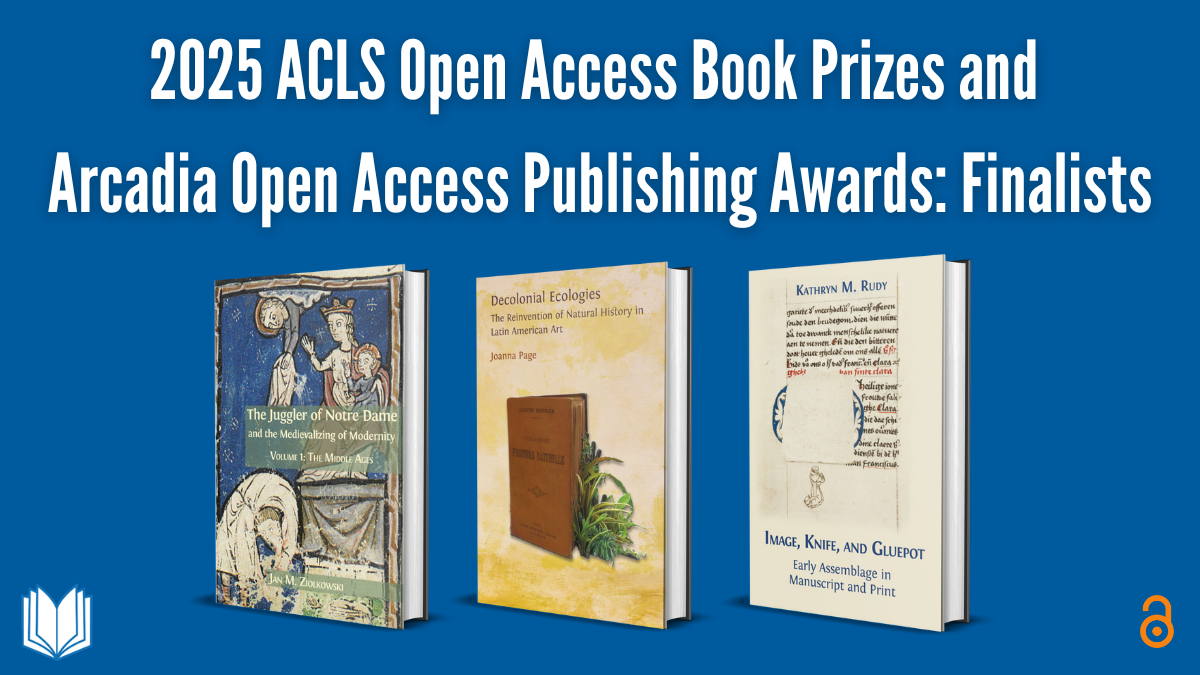
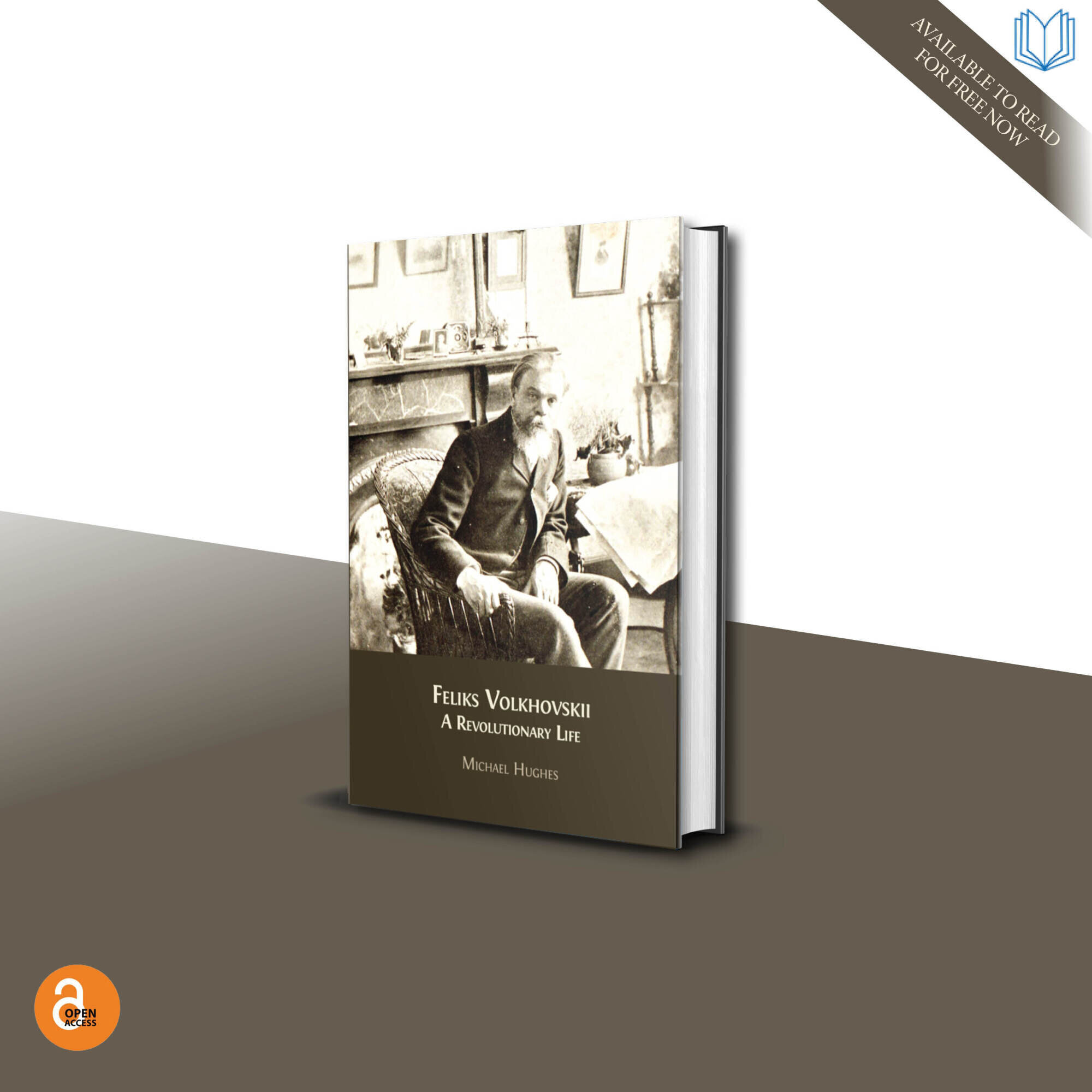
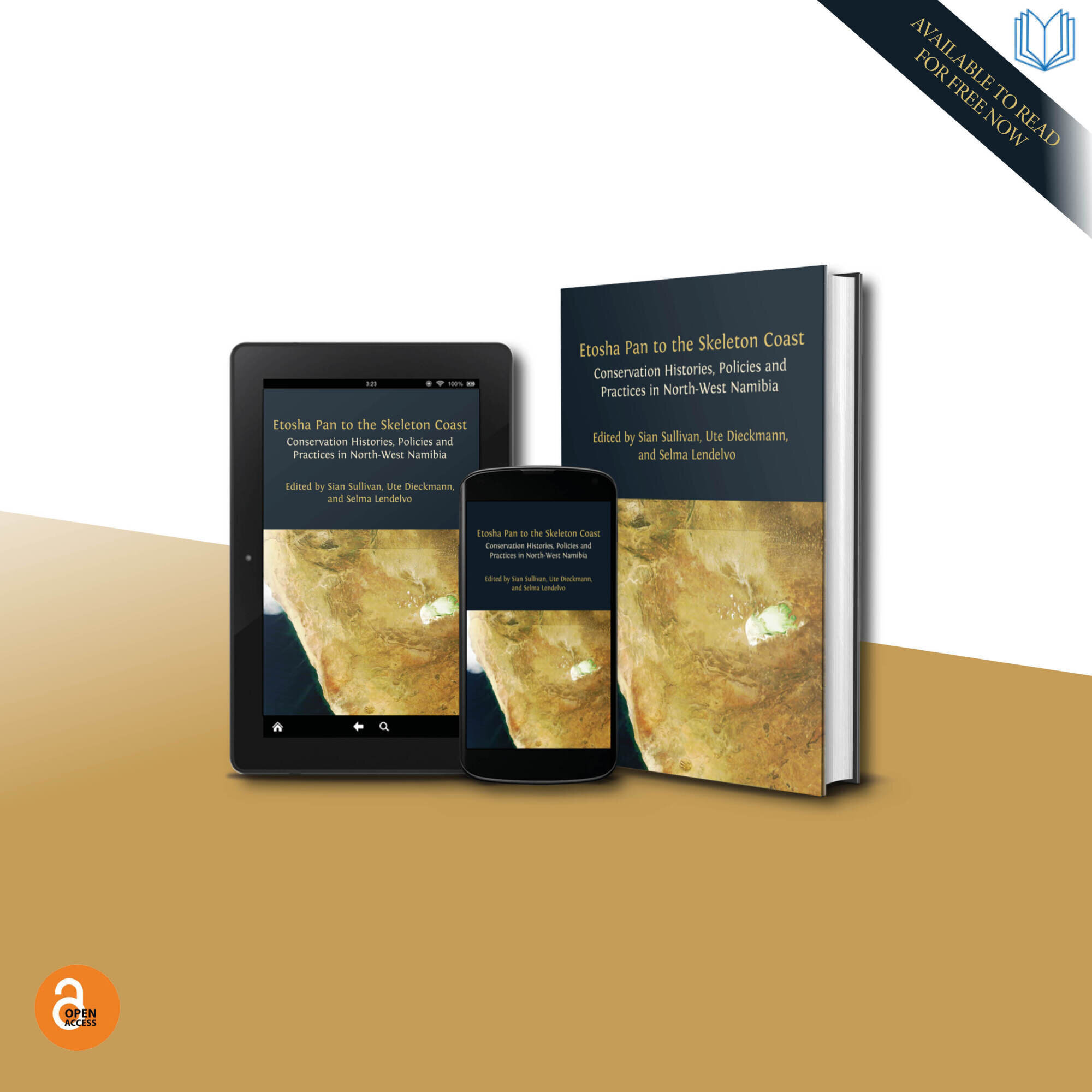
NEW VLOG SERIES ON ENVIRONMENTAL STUDIES:

We will soon be launching a fantastic new vlog series on one of our forthcoming titles, Living Earth Community: Multiple Ways of Being and Knowing edited by Sam Mickey, Mary Evelyn Tucker, and John Grim. In this new series, which will run from the 11th May to the 1st June, Mary Evelyn Tucker will take the reader on a journey through the book and explore why it matters. She will interview the contributors about the ideas behind the project, and tease out the key arguments in each chapter. Download the schedule here.  
We have also released the first online panel discussion on one of our latest OA books Earth 2020: An Insider's Guide to a Rapidly Changing Planet. On Monday, May 4, at 12 p.m. EDT the Arthur L. Irving Institute for Energy and Society at Dartmouth hosted an online panel discussions with four contributors of Earth 2020: An Insider's Guide to a Rapidly Changing Planet. This panel was co-moderated by Philippe Tortell, editor of the title and professor at the University of British Columbia and Elizabeth Wilson, director of the Irving Institute and professor of environmental studies at Dartmouth College. In this panel the following authors participated:

Sally N. Aitken, University of British Columbia
Douglas G. MacMartin, Cornell University
Roland Geyer, University of California, Santa Barbara
U. Rashid Sumaila, University of British Columbia
You can now watch this online panel here.
COVID 19: Information, resources and author posts:
COVID19: Information and Resources from OBP: An update on our activities during the Coronavirus crisis, and a collection of freely available and downloadable resources that might be useful during this time.

Coronavirus, inequality and the ‘tipping point’: Mark O'Brien draws on the lessons from his book, Just Managing? What it Means for the Families of Austerity Britain to discuss the very different experiences of the Coronavirus emergency at either end of the UK’s social spectrum.

Vigilant audiences and stay-at-home justice: Author Daniel Trottier reflects on the roles of online vigilance and vigilantism during the Coronavirus pandemic.

Models in Microeconomic Theory - A Blog Post: Martin J. Osborne discusses the importance of writing OA textbooks, especially during periods of crisis, when the urgent need for accessible resources becomes obvious to all.

The End of the World: ten years later: Maria Manuel Lisboa reflects on her book, The End of the World: Apocalypse and its Aftermath in Western Culture ten years after its publication, and considers what it has to tell us today.

The World Dislocated: Author Ellyn Toscano draws on her book, Women and Migration, to consider the impact of Coronavirus on the plight of migrants huddled closely in detention centers, migrant camps and prisons.
A thank-you note to my publisher and readers: One year after its publication, R. H. Winnick, author of Tennyson’s Poems: New Textual Parallels reflects on the importance of modern technology and of OA publishing in keeping reading, learning, & scholarship alive during the current pandemic.

Open Books from OBP - A Showcase

A showcase of freely accessible academic books - from anthologies to philosophical tracts to books on film and quotation - all introduced by their authors.

The Environmental Impact of Open Book Publishers: At Open Book Publishers, we are working to minimise our environmental impact. Find out more in this post.


Open Education:

Is prestige a problem? Considering the usefulness of prestige in academic book publishing: A reliance on prestige in academic publishing limits the choice of authors and the accessibility of research, and it deadens innovation. What might we replace it with?
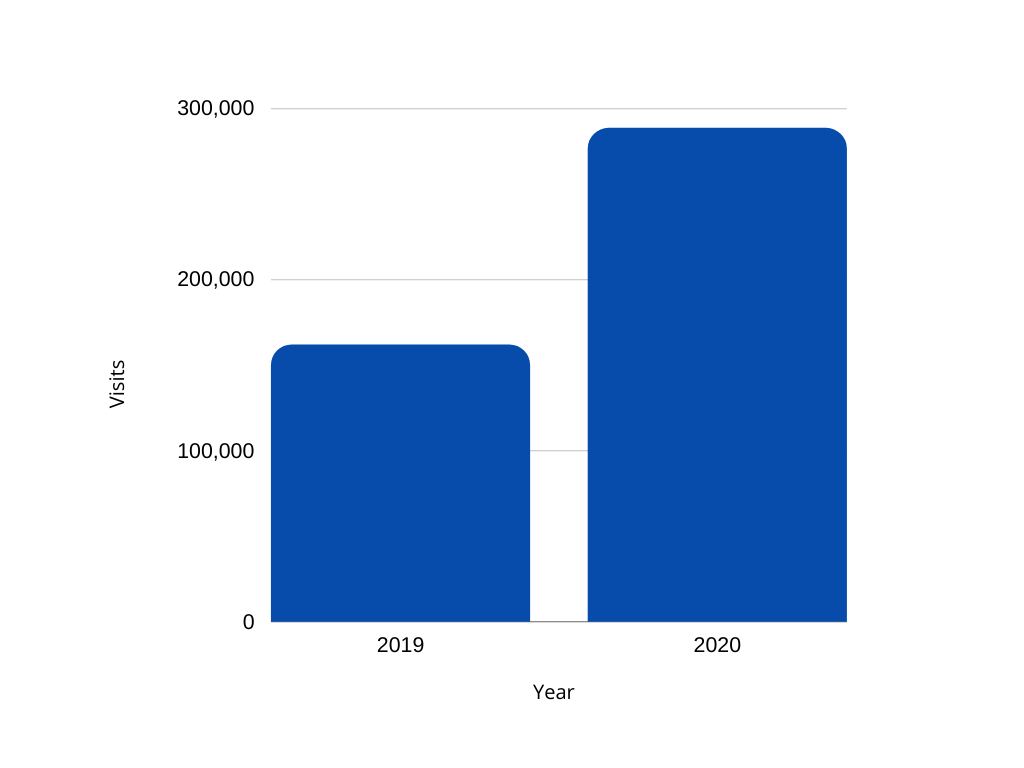
Why is open education resource creation, management and publishing important? Reflections for Open Book Publishers on Open Education Week 2020: Read our authors and contributors as they consider OER creation, management and publishing.

Publishing an Open Access Textbook on Environmental Sciences: Conservation Biology in Sub-Saharan Africa: Richard Primack and John Wilson discuss the idea behind their OER project and the importance of making this knowledge openly accessible.

Open education is key to the future of learning: Read Patrick Blessinger's blog on the importance of open education for human development and learning.

Econferences: why and how? A blog series

We are all having to learn how to do more remotely, now and for the foreseeable future. This series of blog posts, drawn from our forthcoming title Right Research: Modelling Sustainable Research Practices in the Anthropocene, deals with the why, the what, and the how of online conferences.

What do conferences do—and can econferences replace them? Why do we have academic conferences at all, and what are the affordances and constraints of online conferences in meeting these needs?

Are virtual conferences good enough? Socially constructed obstacles to virtual conference adoption are large, but fragile. Change will be driven by improvements in technology, increased networked literacy and pressure to restrain costs – both financial and ecological.

Time management and Continuous Partial Attention: The simultaneous focus on multiple technologies and social contexts in conferences settings creates opportunities as well as problems for researchers.

Successful econferences: examples and case studies: This post presents some examples and in-depth case studies of successful online conferences.

Authors' Posts:

Agency: Moral Identity and Free Will - A blog post: Read David Weissman's new blog on his book in which he discusses the concepts of determination, autonomy and choice.

In Gallucci's Commentary on Dürer’s 'Four Books on Human Proportion': Renaissance Proportion Theory, James Hutson explores the ideas and intention behind his new OA title.

The Classic Short Story, 1870-1925: Theory of a Genre: Read Florence Goyet's incisive introduction to her global study of the classic short story, including works by Maupassant, Chekhov, Verga, James and Akutagawa.

From Darkness to Light, Writers in Museums 1798-1898 presents essays that explore, for the first time, the reaction of writers and artists to museums and galleries that were not yet lit by electric light.

Tony Curtis, “The Young Juggler”: Jan M. Ziolkowski explores the connections between Hollywood star Tony Curtis and the fable of the Juggler of Notre Dame.

The Death of Tomie dePaola and the Juggler of Notre Dame: Jan Ziolkowski reflects on the life and work of American author and illustrator Tomie dePaola, particularly his affinity for the tale of the Juggler of Notre Dame.
Our books elsewhere:

Forgotten letters tell the inspiring story of a Suffolk pioneer by Andrew Clarke: Published in the East Anglian Daily Times, this article focuses on Lucy Pollard's new title Margery Spring Rice: Pioneer of Women’s Health in the Early Twentieth Century.

Earth Day 2020 — the 50th anniversary will be the weirdest Earth Day ever: A fantastic interview with CBC Quirks & Quarks where host Bob McDonald speaks with Philippe Tortell, author of Earth 2020: An Insider's Guide to a Rapidly Changing Planet, about his new book. The podcast features an excerpt from the Earth Symphony.

Earth Day at 50: A look to the past offers hope for the planet's future: Read Philippe Tortell's latest article for The Conversation Canada, in which he talks about the history of Earth Day and the actions that have been implemented since its first celebration in 1970.

Call for Papers:

Applied Theatre Praxis: This series focuses on Applied Theatre practitioner-researchers who use their rehearsal rooms as "labs”; spaces in which theories are generated and experimented with before being implemented in vulnerable contexts. Click here to find out more about the submission process.

St Andrews Studies in French History and Culture: This series covers the full span of historical themes relating to France: from political history, through military/naval, diplomatic, religious, social, financial, cultural and intellectual history, art and architectural history, to literary culture. Click here for more details.

Global Communications: Global Communications series looks beyond national borders to examine current transformations in public communication, journalism and media. We are currently accepting proposals for this series. Click here if you wish to know more.

New Publications: These past few months we have released fantastic new titles on the fields of environmental sciences, literary studies, philosophy, economics and art. The Tiberian Pronunciation Tradition of Biblical Hebrew, written by Geoffrey Khan, is the first title of our Cambridge Semitic Languages and Culture series. In this book, Professor Khan presents the current state of knowledge of the Tiberian pronunciation tradition of Biblical Hebrew and a full edition of one of the key medieval sources, Hidāyat al-Qāriʾ ‘The Guide for the Reader’, by ʾAbū al-Faraj Hārūn. You can read the first volume here and access the second volume here. March saw the publication of Gallucci's Commentary on Dürer’s 'Four Books on Human Proportion': Renaissance Proportion Theory by James Hutson and Models in Microeconomic Theory by Martin J. Osborne and Ariel Rubinstein. Finally, in April a wealth of new titles hit the press: Agency: Moral Identity and Free Will by David Weissman was published earlier this month, as well as the second volume of The Life and Letters of William Sharp and "Fiona Macleod". Volume 2: 1895-1899 by William F. Halloran which is now available to read and download here. On Earth Day we published Earth 2020: An Insider's Guide to a Rapidly Changing Planet, edited by Philippe Tortell. Written by world-leading thinkers on the front lines of global change research and policy, this multi-disciplinary collection maintains a dual focus: some essays investigate specific facets of the physical Earth system, while others explore the social, legal, and political dimensions shaping the human environmental footprint. Finally, on 24th April 2020, a date chosen to commemorate the second anniversary of the unveiling of Millicent Fawcett's statue in Parliament Square, we published a biography of her niece: Margery Spring Rice: Pioneer of Women’s Health in the Early Twentieth Century. This biography presents readers with the story of Margery Spring Rice, an instrumental figure in the movements of women’s health and family planning in the first half of the twentieth century. Spring Rice was born into a family of formidable female trailblazers – niece of physician and suffragist Elizabeth Garrett Anderson, and of Millicent Fawcett, a leading suffragist and campaigner for equal rights for women, and she continued this legacy with her co-founding of the North Kensington birth control clinic in 1924, three years after Marie Stopes founded the first clinic in Britain. You can now read and download this title for free here.

Forthcoming publications: Do you want to know more about the interplay between nature and culture in the setting of our current age of ecological crisis? Or about the grammatical aspects of Rabinnic Hebrew? If so, click here to visit our forthcoming titles section and find out more about the upcoming titles on these and many other topics that will soon be  available!

If there are any thoughts you would like to share with us about this newsletter or our work in general, please email laura@openbookpublishers.com or contact us on Twitter or Facebook.


Get to Know Us: An Interview with Agata Morka

Get to Know Us: An Interview with Agata Morka

My name is Agata, I am an art historian and a culture manager by training: my focus, back in my Academia days, was modern and contemporary architecture and I have written a dissertation about contemporary French train stations, which I have defended at the University of Washington, in a very rainy city of Seattle. I have also completed a Masters degree in culture management in an even more rainy city of Lille, in northern France.

I am an avid reader and I love doing things with my hands: from knitting to window displays for a coffee shop at the corner of my street. I like summer storms, cheese and I feel best when there is an ocean, or a sea, or a lake somewhere close to where I live. I have moved a lot in my life, so I guess you can call me a bit of a nomad. For the past five years now though, my home has been Berlin, where I am privileged enough to live in a far too charming apartment on top floor of an Altbau. It is a good spot to look at the stars.

Could you give us a glimpse of how you first became involved with open access? What interests you the most about it?

After graduating in the States, I came back to Poland (where I am originally from), a bit tired of being a researcher, yet eager to still remain within the academic life, but perhaps in a different role than a professor. I was looking for something that would catch my attention and I saw a job ad from an academic publisher that was looking for a person to launch an open access books programme from scratch for them.
I have felt quite passionate about open access for quite a while back then: coming from an Eastern European university with an under-financed library I could only dream about accessing some of the publications I needed for my Master’s thesis. Later, when already in the States, taking advantage of interlibrary loans and library systems that seemed  almost unbearably functional compared to what I knew from back home, the question of access to knowledge has become even closer to my heart. So the opportunity to work on a programme for academic books that would be made open for anyone with the internet access really started a fire inside of me. I applied for the job. By the time I was leaving de Gruyter after 4 years of working there, we had one of  the biggest OA portfolio of all commercial publishers.
What interests me most about open access, to put it in very bombastic, yet at the same time very simple terms is the question of finding ways of making research equally available, no matter what the economic or geographical circumstances of the potential researcher/reader might be. It is important to me.

What drew you to work at COPIM and at OPERAS-P?


I think that now that OA has been around for quite some time, it is high time to make it blossom for books and think about alternative business models that would challenge the usual BPC-based models. We have already seen that this can be done, with funding schemes introduced by the Open Book Publishers or the Open Library of Humanities (for journals). People engaged in the COPIM and OPERAS-P projects are among the avant-grade of the movement towards different ways of thinking about making OA possible for books, especially in humanities, which is where my interests lie. COPIM and OPERAS-P are both very complex and difficult projects that require one to think wildly, to push the boundaries and imagine what could be. And you get to do it with colleagues who you admire. Who would say no to that?

Could you briefly describe what your role involves?


My role: the European Coordinator of Open Access Books Publishing evolves around reviewing what the current situation in the publishing, funding and library ecosystems is in Europe when it comes to OA books, identify where the challenges are and what we could do better, how we can work together to create alternative environment that would help OA books in humanities gain the momentum they deserve.

What do you think will be the most challenging aspects of your side of the project?

The hardest aspect will be to come up with alternative business models for OA books, and I am talking about models that actually work, that could be sustainable and potentially change the status quo of the gold OA dominance. I suppose that really tangibly changing the game will be the most difficult and, for this very difficulty, also the most exciting and hopefully rewarding part of the project.

Margery Spring Rice: Pioneer of Women’s Health in the Early Twentieth Century

Margery Spring Rice: Pioneer of Women’s Health in the Early Twentieth Century

As a first-time biographer, I thought a lot during my research about the relationship between the biographer and her/his subject. There must be many issues that other biographers have reflected on before me, but perhaps the one that exercised me most is not so common: my subject, Margery Spring Rice, played a large part in my personal life in my childhood and youth. I am one of her grandchildren, and as a child I had a huge admiration for her, although as I grew up I realised that her high-handedness could also be a cause of embarrassment. She had a fund of stories about her life with which she regaled us, so when I came to write about her there were some pieces of the jigsaw that were very familiar: I knew about her commitment, and that of her family, particularly her aunts Elizabeth Garrett Anderson and Millicent Fawcett, to women’s rights, and I had learnt from a very early age that suffragists and suffragettes were not the same. I also knew something about the tragedies that had marked Spring Rice’s personal life: born in 1887, she was of a generation that lost people they loved in both world wars, in her case a husband and a brother in the first, and a son in the second. As I got older, I learnt something too about her colourful love life. I began to understand that the people she encountered tended to fall into two categories, those who adored her and those who loathed her. I recognised that my mother, her daughter, had had a miserable childhood, something that had a huge effect on the way she brought up her own children.

I was lucky enough to find that several members of the family had kept extensive hoards of letters and other papers, so that with the addition of the material in public archives the resources for a biography were not lacking. But as I worked my way through it all, I found myself facing up to Spring Rice’s faults – her selfishness, her inability to enter into the interior world of her children in particular – in a way that I had not quite expected. Though I still loved her dearly, I found myself liking her less. At the same time, I came to enormously admire her public achievements, in particular the founding of, and unstinting thirty-year support for, one of the earliest women’s health and contraceptive clinics in London, the North Kensington Women’s Welfare Centre (not far from where the devastated Grenfell Tower is now). When Spring Rice decided that something needed doing, she would worry at it like a terrier, absolutely refusing to let it go. Had her personal life been smoother or less eventful, I suspect her public life would have been less impressive.

Like every one of us, Spring Rice was a complex character: in my book I aspired to dispassionately convey that complexity at the same time as telling a good story.

Lucy Pollard is the writer of Margery Spring Rice: Pioneer of Women’s Health in the Early Twentieth Century. You can now read & download this title for free here.

The Death of Tomie dePaola and the Juggler of Notre Dame

The Death of Tomie dePaola and the Juggler of Notre Dame

By Jan M. Ziolkowski

On March 30, 2020 the American author and illustrator Tomie dePaola passed away at the age of 85 in New Hampshire. After a bad spill in the barn that served as his studio, he suffered complications that led soon to death. Losing him in these dark days of pandemic brought back two consolingly bright memories, both connected with a legend that seized both of our imaginations.

First, roll the clock back a year and a half. On November 10, 2019, Tomie did me the honor of appearing at Dumbarton Oaks, the outpost of Harvard University that I head in Washington, DC. The occasion was a show in our museum called “Juggling the Middle Ages,” which examined a medieval miracle tale about an entertainer who performed for the Virgin Mary.

Like a late-career sports star who digs deep and summons up his best for one last championship win, Tomie stood up and delivered a rousing reading that held the audience rapt.

The Death of Tomie dePaola and the Juggler of Notre Dame
Tomie dePaola reads The Clown of God, as Jewell Stoddard watches.

The text was his 1978 The Clown of God, which after the ten award-winning Strega Nona volumes may be his most beloved children’s book. It recounts, in distinctively dePaola-ized fashion, a version of the story that motivated the exhibition. Afterward he participated in a Q&A session. Finally he devoted more than an hour to exchanging pleasantries with admirers as he personalized their copies of his book.

The event took place in the Music Room, a splendidly formal setting better known for formal academic lectures and chamber music concerts. Since being built in the 1920s, the space never accommodated as many children as on this occasion. As Tomie read, they sat in their seats—no fidgeting to be seen.

The Death of Tomie dePaola and the Juggler of Notre Dame
The audience, young and old, listens intently. In the background, Tilman Riemenschneider’s sculpture “Virgin and Child on the Crescent Moon.”

Later they formed a neat queue that coiled around the hall. Time rolled by, but the line gave no sign of shortening. For every happy person who walked off with a dedication, another wanting a signature appeared at the back with a fresh copy from the gift shop. With a stamina that left me (a quarter century his junior) marveling, Tomie, rockstar of the booksigning, responded generously and kindly to all his fans, both young and not so young.

The Death of Tomie dePaola and the Juggler of Notre Dame
Tomie dePaola at center of booksigning.

The juggler of Notre Dame, as the narrative has often been called, has attracted a wide range of artists and scholars, from the anonymous French poet of the early thirteenth century who left us the earliest version through the short-story writer Anatole France and the opera composer Jules Massenet down through a troop of distinguished children’s book authors.

At the outset I mentioned two memories. My second dates to a half decade earlier. In January of 2014, Tomie dePaola did me the great favor of granting a telephone interview in which he walked me through the backstory to The Clown of God in his own biography. Tomie, thank heaven, was not a scholar intent on tracking down every last reference to the story. But like many notable artists he possessed both an exhaustive grasp of his own lived experiences and a passion for exploring the contexts of themes that inspired him. He encountered our tale first as a child during the golden age of radio in the 1940s, when it was often dramatized on air.  As a young student at the Pratt Institute in New York in the 1950s he came across Blechman’s masterpiece, which encouraged him to choreograph his own dance piece with music. Although the appearance of Barbara Cooney’s The Little Juggler in 1961 blocked him from publishing his own take on the story in the late 1960s and early 1970s, he went ahead after a while with his own distinctive adaptation in 1978.

One appeal of Tomie’s The Clown of God is that the protagonist is a small orphan boy with whom young listeners can identify. Yet nearly half of the book depicts the performer as an old man who loses his ability to juggle and must retire. In the closing episode, the clown achieves a final outpouring of his talent that prompts a wondrous response. After he drops dead, the Madonna and Child come to life. The story told here portrays two miracles, the human one of the juggler’s last hurrah and the divine one of the animated statue. Tomie dePaola has died, but his art juggles on—as does the story that spurred him.

The Juggler of Notre Dame and the Medievalizing of Modernity. Volume 5: Tumbling into the Twentieth Century (2018) by Jan M. Ziolkowski is freely available to read and download. The other five volumes are likewise freely available.

The Classic Short Story, 1870-1925: Theory of a Genre

The Classic Short Story, 1870-1925: Theory of a Genre

By Florence Goyet

In the Anglophone world, two major works gave birth and shape to a revival of short story criticism in the late 1960s and 1970s. Mary Rohrberger’s book on Nathaniel Hawthorne defined the short story as an epiphany, revealing to the reader that “there is more to the world than which can be discovered through the senses”.[1] Ten years later, Charles E. May put together a collection of essays that made him a powerful advocate of a genre that he described as “mythic and spiritual […] intuitive and lyrical”.[2] In these works, critics of the contemporary story found a description of what they saw and appreciated in late twentieth century stories. The scholars had what seemed to be a complete view of the form: stretching back from Frederick Barthelme and Alice Munro to Virginia Woolf, James Joyce, Sherwood Anderson and Anton Chekhov, and rooted in Hawthorne’s “invention” of the genre at the beginning of the nineteenth century.

This apparently comprehensive view of the genre, however, left a crucial missing link: critics tend to ignore the end of nineteenth century, despite the fact that this period has a strong claim as a major stage — if not the major stage — of the form. There is of course nothing ground-breaking in such an assertion: it is well documented that the short story was enormously popular at this time, and that innumerable periodicals were publishing countless stories. It was also the time when more masters of the form were active than perhaps at any other time: Chekhov, Guy de Maupassant, Luigi Pirandello, Henry James, Mori Ōgai and Akutagawa Ryūnosuke, to name just a few. The particular form of the genre has also been recognised. In 1985, Clare Hanson reminded us with force that not only was the short story of that time important, but also that it had initiated a whole tradition in itself: the “short story”, as opposed to “short fiction”.[3]

Yet compared to the wealth and importance of these stories in their time, critical appraisals of this form have been very few. The classic short story tradition is often dismissed, in one word, as pertaining only to the “naturalistic” story — or as being, in Rohrberger’s words, only “simple narrative”.[4] Only a few writers have had their stories studied in any detail, while the short stories of Naturalists like Émile Zola, Gerhart Hauptmann and Giovanni Verga — so influential across Europe — have been largely ignored, as have Leonid Andreyev, Nikolai Leskov and Mikhail Saltykov-Shchedrin. Even Pirandello and Maupassant’s short stories have been paid only cursory glances. And even for the authors that are the focus of short story studies, only a handful of their stories are analysed. To take Chekhov as an example, only a few of his stories, especially from the later period of his career, from Dama s sobachkoi (Lady with Lapdog, 1899) to Nevesta (The Bride, 1903, his last story), are widely cited, even though he wrote a hundred or so stories in his “major” period alone — these “epiphanic” stories have become the focus of analysis rather than his “classic” stories.

As a global study of the classic form was still missing, I undertook to concentrate on the short story at this time of its greatest efflorescence, across a number of different countries and languages, working with a corpus of more than a thousand stories. This research led me to see that this “classic” short story, albeit with infinitely various surface features, was built on a constant structure, had a characteristic relationship with its readers, and a generic outlook on its subject. This was nearly universal. It was not a question of giving a definition of the short story: many critics have stressed that this would not be very interesting, even if it were possible. It was a question of describing the tools of brevity in this particular form, and the relationship between the reader, the author, and the spectacle that one puts before the other. This survey showed that Chekhov and James, even in their greatest stories, used the same tools as Maupassant or Verga. Chekhov’s Lady with Lapdog is making a particularly powerful use of the antithetic structure common to classic short stories; James’s The Figure in the Carpet is particularly representative of the paroxystic representation of short story characters.

To test my hypothesis, and disengage the in-depth characteristics of this form, the first requirement seemed to me to survey in detail an international selection of the “greatest” short story authors. I chose to look at the entire body of stories of five major authors, one in each of the languages with which I was familiar (French, Russian, Italian, English and Japanese): Maupassant, Chekhov, Verga, James and Akutagawa. Maupassant was an obvious choice as he has largely been figured by critics as the master of the “classic” short story, as well as Chekhov, who is seen to embody “short fiction” (or the “modern” short story as I call it).[5] Verga was also an obvious choice, because he is such a popular author in his home country and because, unlike many classic short story writers, his work has been analysed by great critics from Luigi Russo to Leo Spitzer and the progressive Marxists. James was not only central to the discussion of the form by Anglophone critics, but also made what is maybe the most exquisite use of the form. In Japan, Mori Ōgai was my first choice, since he was one of the greatest authors of the time; but instead I decided to focus on Akutagawa because, like Maupassant and Chekhov, he wrote both “classic” stories and “short fiction”.[6]

The second step was to place these great authors in the context of their time: to read Maupassant along with Alphonse Daudet, and James along with Rudyard Kipling. More importantly, I decided to read them in the same place as the audience of the time: in the newspapers and the intellectual journals of the late nineteenth and early twentieth centuries. This was more fruitful than I could have imagined. First, it allowed me to see these stories in the vicinity of the other genres of the newspapers (chronicles, reports, anecdotes, etc), with which they have interesting resemblances and differences. Secondly, it explained what is maybe the essential feature of the “classic” short story: its exoticism. Most of these stories deal with characters that are in some ways removed from the reader (either by place, time, race or class).

“Modern” short stories that follow less generic conventions may very well be more satisfying for twenty-first-century readers than the classic form. Throughout this book, I do not shy away from acknowledging the classic short story’s limitations: these stories can be extraordinarily powerful, but the form is also somewhat stifling. However, the very fact that the greatest authors of the time abundantly and continuously produced classic short stories should draw our attention to the possibilities of the form. They did great things with potentially restrictive structural “laws”. In doing so, they were part of a democratisation of literature: this was a form that could be read, like the serial, by a large number of readers — but which could also give quick, swift pleasure to readers accustomed to more demanding writing.

The authors that I focus on in this book participated in the Naturalist period’s criticism of what they perceived to be the backward state of their countries. Verga and Chekhov published throughout their lives in intellectual journals (tolstye zhurnaly or “thick journals” as they were called in Russia) where their stories were side-by-side with austere articles about science and statistics, and their possible application to ease the nation’s poverty. Maupassant and the French Naturalists, from Paul Alexis to Zola, published in newspapers that sometimes bore the very title of Le Progrès (The Progress), and the transformation of the nation was paramount in their minds. The short story gave them a powerful tool for denunciation of a state of society they felt was unbearable.

Yet paradoxically these stories often played the role of reinforcing the social — and sometimes racial — prejudices of the reader. It was precisely this drawback that led to the form’s deconstruction in the twentieth century. The greatness of the authors studied in this book lies in their having become sensible to this stifling effect of the classic form, and having opened new avenues to the genre. Maupassant, for example, experimented with the form in his tales of madness and Chekhov wrote stories based on a dilemma, thus putting into question the very idea of a stable, affirmative self and the superiority of one “voice” over the others. But this should not lead us to forget that this was only one part of their work, and that they also led long and admirable careers as “classic” short story writers.

The Classic Short Story, 1870-1925: Theory of a Genre (2014) by Florence Goyet is freely available to read and download.


[1] Mary Rohrberger, Hawthorne and the Modern Short Story: A Study in Genre (The Hague: Mouton, 1966), p. 11.

[2] Charles E. May (ed.), Short Story Theories (Athens, OH: Ohio University Press, 1976). The quote is from Charles E. May, “The Nature of Knowledge in Short Fiction”, in The New Short Story Theories, ed. by Charles E. May (Athens, OH: Ohio University Press, 1994), pp. 131-43 (p. 133).

[3] Clare Hanson, Short Stories and Short Fictions, 1880-1980 (New York: St. Martin’s Press, 1985).

[4] Mary Rohrberger, “Origins, Development, Substance, and Design of the Short Story: How I Got Hooked on the Short Story and Where It Led Me”, in The Art of Brevity (2004), pp. 1-13 (p. 5).

[5] It is difficult in English to find a word to specify this type of short story without entering into the debate on “modernism/postmodernism”. What I mean by “modern” is a story that renounces the anecdote, and thus, the “classic” format. I discuss this in detail in the book’s epilogue.

[6] Akutagawa’s career began a little later than the others: his first texts date from 1914.

Tony Curtis, “The Young Juggler”

Tony Curtis, “The Young Juggler”

By Jan M. Ziolkowski

Tony Curtis, “The Young Juggler”
Tony Curtis, 1958, Wikimedia Commons (public domain)

What a difference the passage of six decades can make! On March 29, 1960 “The Young Juggler” was broadcast, in the heyday of national television, for the first and only occasion in the United States. The only later screening of the 49-minute installment took place in the museum of Dumbarton Oaks on January 23, 2019, in tandem with the exhibition “Juggling the Middle Ages”.

The lead, the movie idol Tony Curtis, was born on June 3, 1925 and died on September 29, 2010. If alive today in 2020, Curtis would be nearing 95. The story of his involvement with the jongleur de Notre Dameof a very secular Jew caught up in a legend of Christian devotion to the Virgin Mary, of a film star who at that point had his pick of roles in the biggest motion pictures but who chose to self-fund the reenactment of a tale that is now nearly forgotten—merits attention before the facts have vanished into the mists of oblivion. In his last memoir, the production had disappeared from his filmography.[1]

New-York-born, the future actor spoke Hungarian for his first six years. In all his movies, his pronunciation immediately betrays, often with unintentional and anachronistic humor, the indelible accent that he picked up from living on the East Side of the City. This trait led to his being teasingly nicknamed “Boinie” for his pronunciation of his own first name: before taking on his consummately WASP nom de théâtre, he went by the un-Hollywood-ish birth name of Bernard Schwartz.

In popular culture Curtis’s fame may be waning, but he remains known for the standouts in his oeuvre, for being the father of the actress Jamie Lee Curtis, and for the tabloid-worthiness of his private life, starting with the fact that he was married six times and finishing with a very public dispute about alleged golddigging in the handling of his estate between his final wife and surviving children.

But let’s put aside this century’s gossip and travel back sixty years or so to the 1950s, Tony Curtis’s heyday as a heart throb. With his thick black hair and oft-bared chest, he made his reputation in costume dramas of Hollywood’s so-called Israeli period, especially the sword-and-sandal blockbuster from 1960, “Spartacus.” A personal favorite of mine among such historical fictions, requiring slightly warmer footgear, was the swashbuckler of historical fiction, “The Vikings.” In this cinematic sizzler from 1958, the leading roles belonged (as those in “Spartacus” would again two years later) to Kirk Douglas and Tony Curtis. In response, the stand-up comedian Lenny Bruce (1925–1966) commented “Even the Vikings are Jewish.”[2] Beyond these peplum movies, Curtis’s most memorable role was his comedic turn as co-star with the consummate “blonde bombshell” Marilyn Monroe in “Some Like It Hot,” from 1959.

Tony Curtis, “The Young Juggler”
Tony Curtis and Marilyn Monroe in Some Like It Hot (1959), Wikimedia Commons (public domain)

How does Tony Curtis tie in with the jongleur de Notre Dame? On that fateful date in 1960, NBC-TV ran, in a program called Startime, his production. The telefilm was originally to be billed simply as “The Juggler,” but the title picked up the adjective “Young” to avoid confusion and copyright quibbles with a feature-length picture from 1953 with Kirk Douglas.[3] When the network segment screened, Tony Curtis was thirty-four years old. As the chronology of all the preceding films suggests, his career stood at its height. Though his marquee value declined steeply from then on, he starred later in the decade as serial killer Albert DeSalvo in the 1968 thriller of “The Boston Strangler.”

“The Young Juggler” is based loosely on the short story by Anatole France.[4] This version steers the tale in a weird direction. The performer is set upon by a mob of husbands because of his womanizing with their wives. The cuckolds, although they do not employ the word explicitly, want to castrate him. Before being cut short in this way, the entertainer escapes, but only by betraying his best friend who dies after suffering near-crucifixion. In connection with the last motif, it is worth relating that the showtime episode was televised not in May, which in Catholicism is labeled the month of Mary, or December, when Christmas would make Marianism more plausible, but in Lent: in 1960, Easter Sunday, fell on April 17.

To wrap up this quick recapitulation of the plot, the wounded juggler seeks refuge from his enemies inside an unidentified European monastery. Nursed back to health, he realizes that he has lost use of one arm and can no longer practice his profession. In despair, he goes so far as to ask why God did not end his life instead of his juggling. Through therapy and faith, the injured man experiences an unexpected recovery. In return, he offers the Madonna—the statue of the Virgin Mary—the only gift he has: his juggling act. He is rewarded with a miracle.

Curtis claimed to be conflicted about the pluses and minuses of television. At one stage he professed to be happy to make money while gaining acting experience. But on other instances he criticized the crass commercialism of the medium. The weekly TV Guide headlined “The Short TV Career of Tony Curtis.”[5] In the article, he indicated that “the Young Juggler” would likely be his last appearance on the small screen. That prediction proved to be anything but true.[6]

In one of his autobiographies, Curtis ascribed credit for “The Young Juggler” to two factors, the influence of actor Cary Grant and his own interest in circus skills.[7] He described the film as dramatizing “the story of St. Barnaby, the patron saint of variety acts.”[8] No such holy man will be found in serious works on hagiography, but he has been included in popular works on saints. Why? Because Anatole France gave the name to the central figure of his short story about “Le jongleur de Notre Dame,” or “The Juggler of Our Lady.” On the same basis, Barnaby has been used as a stage name by professional jugglers.[9] From this the protagonist achieved, if only popularly, sanctification.

When invited to take a crack at producing a Startime feature, Curtleigh Productions came up with the idea of “The Young Juggler.”[10] Curtis was adamant that the episode was not a television program, but a film shown first on television. He judged it “a good picture.” In his much later autobiography, he indicated that he had intended to add footage and to release the telefilm as a conventional feature-length movie.[11]

His understanding of the story was idiosyncratic, to put it mildly. In an interview he characterized the show as being a period piece, set in 16th-century France, an adaptation of the legend of St. Barnaby. St. Barnaby was a bumbler who became crippled and got back his talents through a miracle while tumbling to entertain a statue of the Virgin.

He regarded “The Young Juggler” as “therapy,” one among other “miracles happening from within.” To him, the preeeminent theme was of “a man’s conquering his fears.” He summed up: “I’m a firm believer in the old saying, God helps those who help themselves.”

The Juggler of Notre Dame and the Medievalizing of Modernity. Volume 6: War and Peace, Sex and Violence (2018), written by Jan M. Ziolkowski, is freely available to read and download. The first five volumes are also freely available.


[1] Tony Curtis, with Peter Golenbock, American Prince: A Memoir (New York: Harmony Books, 2008), 340–341.

[2] Nathan Abrams, Stanley Kubrick: New York Jewish Intellectual (New Brunswick, NJ: Rutgers University Press, 2018).

[3] More recently had come the animated short “The Juggler of Our Lady” from 1958.

[4] The narrative had been treated already in “The Greatest Gift,” a short that premiered in 1941.

[5] Bob Johnson, “The Short TV Career of Tony Curtis,” TV Guide Vol. 8, no. 13, issue 365 (March 26), 17–19.

[6] He played in the action-comedy series “The Persuaders” with Roger Moore (1927–2017) that aired in 1971. Later he returned in “McCoy” in 1975 and “Vegas” in the late 1970s, as well as a frequent guest star on other programs. He did a voiceover as a character named Stony Curtis once in the animated sitcom “The Flintstones” (1960–1966).

[7] Tony Curtis and Barry Paris, Tony Curtis: The Autobiography (New York: William Morrow and Company, Inc., 1993), 178.

[8] Curtis and Paris, Tony Curtis, 178, 341.

[9] Thus a man born Dan Jeffery called himself Barnaby after he abandoned college English teaching to become a juggler: https://www.juggle.org/obituary-barnaby-dan-jeffery/

[10] The name of the production company fused the first syllable of Curtis’s last name with that of his then wife Janet Leigh (1927–2004).

[11] Curtis and Paris, Tony Curtis, 178.

From Darkness to Light: Writers in Museums 1798-1898

From Darkness to Light: Writers in Museums 1798-1898

By Rosella Mamoli Zorzi

From Darkness to Light, Writers in Museums 1798-1898 (2019) presents essays that explore, for the first time, the reaction of writers and artists to museums and galleries that were not yet lit by electric light.

It is well-known that most visitors in the Venice Scuola Grande di San Rocco – including John Ruskin and, later, Henry James – complained because there was not enough light for them to see the great Tintoretto teleri. But is darkness a way to allow a special reading of paintings? Is the LED-bright lighting, which we find in most museums and galleries today, the way in which painters wanted their works to be seen? Why did museums not use gaslight, as was done in theatres and in the streets? Why did museums use electric light much later than homes, not until well into the 1920s and 1930s?

This volume aims to explain the answers to these and many more questions, through the contributions of writers, scholars, and artists. One of the great experts on artificial light, David E. Nye, describes the time it takes before discoveries in electric lighting are actually part of everyday life; the great Italan writer, Melania G. Mazzucco, analyzes the inner or transcendental light of Tintoretto’s work; Burton K. Kummerow  shows how gaslight was used in the Peale Museum in the USA, much earlier than in the Victoria and Albert Museum, which claimed to be the first to have used it. Cristina Acidini discusses the excess of light in the Florence Uffizi, a situation that was quite different from most museums and presented a whole new set of challenges.

Read this bookfreely available to read and download online – and you’ll find these and many other responses to the gradual introduction of electric light in museums and galleries.

From Darkness to Light, Writers in Museums 1798-1898 (2019) edited by Rosella Mamoli Zorzi and Katherine Manthorne, is an Open Access book.

A thank-you note to my publisher and readers

A thank-you note to my publisher and readers

Three days ago, with so much going on—and not going on—in my own country and around the world, a small anniversary slipped by: the one-year mark since Open Book Publishers issued my third book and first open-access title, Tennyson’s Poems: New Textual Parallels.

Two months ago, I wrote to OBP Marketing and Library Relations Officer Laura Rodriguez—whose enthusiasm for her titles is benignly contagious—that the book had ‘just blasted past 2,000’. As of this morning, online readership stands at 1,800 and free downloads at 883, for a total of just under 2,700. The three-thousand mark can’t be too far away.

Of course, the spike in ‘sales’ is partly based on tragedy. Tennyson scholars in the US, the UK, and around the world—like me and like millions of other scholars literary and otherwise, academic and independent—are holed up at home waiting for the current plague to pass, hoping it will spare them and their loved ones, hoping—and trying—to get on with their lives.

So the seven-hundred jump in readers of my book over the past two months is at least partly attributable to a lot of folks suddenly having, against their wishes and through no fault of their own, a lot of time on their hands.

Be that as it may, a reader is a reader, and is very welcome. It is heartening that so many scholars and students of literature are, like me, doing their best to put their captivity to good use, to read something new, learn something new, perhaps write something new. We may never become modern-day prisoners of Chillon, learning to love our chains. But our unexpected and unwelcome abundance of free time need not also be unproductive.

After publishing my Tennyson book last year, I turned to the poetry of Elizabeth Barrett Browning, found much of it (to be perfectly frank) forgettable, but fell in love with Aurora Leigh. A half-dozen readings of that verse-novel and related criticism later, I wrote an article-length study of the unidentified and misidentified textual parallels—allusions and echoes—it contains, submitted it to a leading literary journal which sent it out for review, and am now waiting to hear back. All that before the new coronavirus hit.

Since it hit, I’ve returned to the study of Emily Dickinson, who in the 1860s also fell in love with Aurora Leigh, and whose letters, I’ve been finding, are also filled with undocumented textual parallels. Her poetry as well? That remains to be seen, but I wouldn’t be a bit surprised.

One of the miracles of modern technology is, I’ve discovered, how much literary research one can do at home. Without password and without charge, one can access virtually all of pre-twentieth century world literature and criticism, and much of more recent origin.

One can search for words, phrases, lines, and passages in the works of one or more poets, novelists, dramatists and others authors, as well as in scripture, that recognizably recur, for a variety of thematic and other valid reasons, in the works of other, later writers.

One can do meaningful scholarship without having already read everything there is to read and remembered verbatim everything one has read.

Open Book Publishers and other enterprises like it (if any such exist) are also miracles of modern technology, making peer-reviewed, well-edited, well-produced scholarly works widely and immediately available without charge to any and all would-be readers.

By helping scholars and students get through these difficult times and learn something of value along the way, they are performing a valuable public service, deserving and earning the gratitude of authors and readers alike.

R. H. Winnick is the author of Tennyson's Poems: New Textual Parallels. You can read & download this book for free or get your own hard copy here. You can also read Winnick's previous blog post Allusion/Echo and Plagiarism: Walking the Fine Line here and follow him at @rhwinnick.

The World Dislocated

The World Dislocated

By Ellyn Toscano

We are living through a moment  of profound disorientation,  dispossession, dislocation. How the pandemic will end – and it will – and how we return to social, political and commercial life is uncertain and almost too difficult to anticipate. With no direct experience on which to call for guidance, most of us find it hard to anticipate or plan our future.

Millions of people are sheltering in their homes, isolated from each other and incited by fear to suspect others of bringing this threat into their world. Those nationalist movements that have been slowly gaining adherents to the view that globalization represents an incursion on safe, secure and homogeneous cultures are triumphant in the work that the pandemic is doing to close borders, incite xenophobia and restrict liberty. With so many ill and vulnerable, the attention of the paralyzed public to the plight of migrants huddled perilously closely in detention centers or migrant camps or prisons is diverted.

Not everybody has a safe home into which to retreat and resources on which to rely when work is lost. What will happen to people already displaced by war, famine, globalized climate change and nationalist governments? The world’s 25.9 million refugees already are in situations of conflict, often with no or rudimentary health care. In the US, 37,000 people were detained, unsafely, in government facilities; 6,300 migrants  on its Mexico border were expelled using emergency powers to curb coronavirus spread. In one of Greece’s 30 migrant centers on the mainland, 23 migrants tested positive for coronavirus and residents, including 252 unaccompanied children, were  advised to remain in their rudimentary temporary dwellings. Migrant workers, who travel long distances for work, including across borders, already precarious and marginal, are losing jobs. With borders slamming shut, people can neither stay put, nor return to the places from which they have fled.

The numbers by which we define this pandemic are staggering and hard to comprehend. Hundreds of thousands of people are sick and dying from COVID-19. Millions have lost their livelihood. Billions of dollars are lost and billions are appropriated to save the economy.

As always, the numbers have unstable meaning and elide the lived experiences of people. It is not that the statistics are unimportant: they tell us one truth. But, as always, truth is ambiguous. And ambiguity is the space of artists.

The work in Women and Migration: Responses in Art and History reminds us of the beauty and complexity of the lived experience. Art holds a space for the human story. These essays are an historical offering, helping us to think about home and loss, family and belonging, isolation, borders and identity – issues salient both in experiences of migration and in the epochal times in which we find ourselves today.

Women and Migration contains stories of trauma and fear, to be sure, but also the strength, perseverance, hope and even joy of women surviving their own moments of disorientation and dislocation.

Ellyn Toscano is co-editor of Women and Migration: Responses in Art and History (2019). The book is Open Access (free to read and download).

Vigilant audiences and stay-at-home justice

Vigilant audiences and stay-at-home justice

By Daniel Trottier

Our lives are profoundly upset by the COVID-19 pandemic, and many of us are confined to our homes. We are anxiously fixed on our screens for news of the world. New rules of conduct are established before our eyes. Our media consumption includes viewing, sharing and commenting on stories about price gougers and people coughing on food. These may be picked up by news media, but invariably spread through social networks.

In terms of enforcing social distancing, people are watching over their neighbours. Some are denouncing them to local police, but also to a global audience. Moreover, this audience plays an active role in contributing to the shaming of others, be it through vitriolic comments, doxing or harassment.

Denouncing others through digital media is not exclusive to pandemic shaming. Recent examples also include shaming reckless parking, as well combatting hate speech and sexual abuse. Denunciation is not a new phenomena, yet what we consider socially acceptable is subject to revision. Surviving COVID-19 depends on strictly enforcing new norms, and a similar urgency can be felt as when denouncing torch-bearing white supremacists in 2017.

In addition to a changing social landscape, we are still coming to terms with social platforms that increasingly monopolise how we interact with others. By design, digital content is easy to share, but impossible to contain when uploaded. This presents a steep learning curve, and many in the public eye have deleted old tweets that would reflect poorly upon them. Even then, they may still be held accountable by an audience that retain and circulate incriminating content.

Exposing misdeeds by politicians and others in power may seem appropriate, but should this guide the way we denounce and shame private citizens? And at what point does a social media following make someone a public figure, and therefore subject to this level of audience scrutiny?

From our research, vigilant audiences appear to seek criminal and social justice, but are often also driven by a desire for entertainment. This concern cuts across scholarly disciplines, including criminology and media studies. Performing as a citizen overlaps considerably with activities we would otherwise frame as audiences engaging with media content. This overlap is especially felt as we practice social distancing on a global scale.

We can also approach these interventions as forms of vigilantism, which invokes a lengthy history of citizen-based violence. New forms of denouncing may be seen as necessary because of poor government response. The label ‘vigilante’ in particular directs attention to the troubled relation between citizens and a state that may be unable or unwilling to maintain social order.

Our forthcoming edited collection, Introducing Vigilant Audiences, looks at emerging and established forms of scrutiny and denunciation as practices that combine entertainment and justice-seeking. We argue that audiences are actively mobilised against what they perceive as unjust. This may involve combatting racist, sexist and otherwise antisocial actions. Vigilant audiences can also amplify existing harms, as seen in the targeted harassment of marginalised and otherwise vulnerable communities. Mediated denunciation is made possible through platforms and devices that are global in reach; yet it is shaped and understood through local contexts, as well as steps taken by governments to assert control over their digital landscape.

The book covers a range of cases that are organised in four general themes. The first set of chapters addresses entertainment. This includes denunciation as diversion, but also calls for justice against actors, musicians and comedians. In exploring the overlap between audiences and citizens, a second theme considers how national identities are mobilised in mediated vigilantism. While this may fuel violence against minorities, a third set of chapters addresses the backlash against these harms through the denunciation of hate speech. The final contributions to this book consider how police agencies cope with and capitalise on active citizens. While it may seem that legal frameworks struggle to keep up with online vigilantism, some jurisdictions are willing to trial new forms of engaging the public, for justice and for amusement.

Introducing Vigilant Audiences by Daniel Trottier, Rashid Gabdulhakov and Qian Huang will be published in the summer. As with all books released by Open Book Publishers it will be available Open Access, as well as in affordably-priced paperback, hardback and digital editions.

The End of the World: ten years later

The End of the World: ten years later

By Maria Manuel Lisboa

Who would have thought that a book about the end of the world would feel of such relevance some ten years down the line?

The answer to this question is, who wouldn’t? Fear of widespread calamity has been part of the human psyche ever since whatever the human psyche is came into being, through the tortuous pathways of evolution. And the urge to articulate that fear is at the heart of our most ancient narratives, from the Flood in the Old Testament to the squabble between Aesir and Loki in Ragnarok, to the Kali Yuga in Hindu mysticism. Without that fear, would anyone believe in God? In the beginning we were all atheists.

When I published The End of the World: Apocalypse and its Aftermath in Western Culture in 2011, I looked at the many instances in which literature, art and more recently (comparatively speaking) film have returned to the idea and fear of global annihilation. A bit like repeatedly probing a loose tooth with one’s tongue: it doesn’t help and it hurts a bit, but we can’t help ourselves.

In my book I looked at instances of imagined planetary destruction originating from many causes, from human recklessness to environmental calamity to sheer bad luck. The reassurance to be drawn from the fact that, in the original ancient Greek, the term ‘apocalypse’ signals a necessary clearing of the decks before a new beginning is of the cold comfort variety. In the global wipe-out that supposedly opens the way for a better world, most people die. In a nuclear age, in which the power of science in its negative permutations (weapons of mass destruction, biological warfare, etc.) combines with world travel seen as a both a necessity and an entitlement (where would we be without our professional networking and our regular holidays in the sun?), the conditions for triggering calamity are firmly in place.

There are always, of course, two or more sides to every equation: from the point of view of a travel-averse person, I observe the often unnecessary globe-trotting of academics and the obsession with foreign holidays that now crosses social-class boundaries like nothing else, and I purse my lips sanctimoniously at the self-indulgent burning of fossil fuels, environmental harm and the facilitation of pandemics triggered by unnecessary air travel. On the other hand, with any luck, the more we see of the world and get to know others (or Others), the less inclined we might be to destroy it and them, and instead help out if the need arises.

When Pandora’s box was opened, unleashing havoc upon the world, the only thing left inside it was hope. Long may that thought endure.

The End of the World: Apocalypse and its Aftermath in Western Culture by Maria Manuel Lisboa can be read and downloaded freely here.

The End of the World: ten years later

Open books from OBP: A showcase

Open books from OBP: A showcase

The importance of freely available, openly accessible academic books is more evident now than ever. During the current crisis, we have been looking for ways to let people know about the availability of open resources: free to access, with no institutional membership required, now and always.

As part of this effort, we asked our authors to send us a few lines about the Open Access books they have written and published with us. The brief was very wide: authors could write whatever they liked about their book and why a reader might want to (digitally) pick it up. The posts below are their generous responses to this request.

***

Open books from OBP: A showcase

Alessandra Capodacqua

As a professor of photography at NYU Florence, since the late 90s, I have had the privilege to research the Acton Photograph Archive collection housed at the campus, which is a 37-acre estate, with olive groves and gardens, five villas that provide a home to the university and include Villa La Pietra with its house museum, and formal gardens. In more recent years I have become more involved and interested in the rich presence of photographs of women in the above-mentioned Archive, and how these photographs convey not only interesting sub-textual information about the period - the property was acquired by the Acton-Mitchell family in 1907 - but also social, political and cultural contexts: the fashion, lifestyle and influences. This interest lead me to research the Archive in more depth, and this resulted in a lecture and my contribution to the publication Women and Migration.

Women and Migration: Responses in Art and History, ed. by Deborah Willis, Ellyn Toscano and Kalia Brooks Nelson (2019) is free to read and download.


***

Open books from OBP: A showcase

J. David Velleman

As of next month, almost all of my life’s work will be available in open access volumes — two volumes originally published in OA format by Open Book Publishers, and two converted from print to OA by MPublishing at the University of Michigan. I also co-founded and co-edit Philosophers’ Imprint, the first open-access journal in philosophy. Why do I believe in the open-access movement?

The movement has two main aims: (1) to make academic research available to a wider audience and (2) to spare academic institutions from having to pay additional charges for research they have already paid to produce, referee, and edit. Unfortunately, for-profit publishers have succeeded in co-opting the term ‘open access” for online publication that serves the first goal but not the second, because they levy excessive charges on authors — or, more precisely, their funders -- to make their work openly accessible online. In a world where the very existence of higher-education is threatened by lack of funds, this ploy is a direct attack on the academy.

To authors who have not yet switched to publishing in genuinely open-access form, I would point out that my open-access publications have garnered far more readers, from far more countries, than anything I have published in print, and they have done so at minimal or no cost to me or my institution.

J David Velleman's books,Beyond Price: Essays on Birth and Death (2015), and Foundations for Moral Relativism: Second Expanded Edition (2015) are free to read and download.

***

Open books from OBP: A showcase

Robert Kolker

This is a good time (if this time can be called ‘good’) to catch up on films you’ve been wanting to see. The Altering Eye is an excellent guide to the golden age of postwar international cinema from Italian neorealism to Brazilian cinema novo. Many of the films discussed in the book are available for streaming, especially on the Criterion Channel in the U.S.

The Altering Eye: Contemporary International Cinema by Robert Kolker (2009) is free to read and download.


***

Open books from OBP: A showcase

Andrew Fisher

Ethics for A-Level does what it says on the tin. The expense and lumpy quality of introductory books on ethics is astounding. We wanted to give a student/teacher/academic/parent assurance and confidence that all the key material needed to tackle the Ethics A-Level was of the highest quality, in one place, and free. The book is split into discrete sections, includes loads of examples, and so isn't overly demanding. It has useful questions to guide study and links to further resources. If people want to revise, learn, prepare lessons, or are just interested in ethics then we believe this is the best gateway to the debates - and did we mention, it's free?

Ethics for A-Level by Mark Dimmock and Andrew Fisher (2017) is free to read and download.


***

Open books from OBP: A showcase

Maurice Wolfthal

I chose to translate Bernard Weinstein's Di yidishe yunyons in amerike; bleter geshikhte un erinerungn [The Jewish Unions in America: Pages of History and Memories] because labor history has largely vanished from American schools and universities, and it is vitally important to remember the history of those who work for a living, including Jewish workers.

I translated Nokhem Shtif's Pogromen in Ukrayne: did tsayt fun der frayviliger armey [The Pogroms in Ukraine 1918-19: Prelude to the Holocaust] because it sheds light on the vicious antisemitic stereotypes that fueled those atrocities, inspired the rise of Nazism, and are fueling the resurgence of antisemitic violence in Europe and the United States today.

The Jewish Unions in America: Pages of History and Memories by Bernard Weinstein, and The Pogroms in Ukraine 1918-19: Prelude to the Holocaust by Nokhem Shtif, both translated by Maurice Wolfthal (2018 and 2019), are free to read and download.

***

Open books from OBP: A showcase

Agner Fog

This book explores how our collective response to fears and dangers has deep evolutionary roots - and how it has a profound influence on politics. It draws on many different fields of both the social sciences and the natural sciences, and examines issues of war and peace, the rise and fall of empires, the mass media, economic instability, ecological crisis, and much more.

Warlike and Peaceful Societies: The Interaction of Genes and Culture by Agner Fog (2017) is free to read and download.


***

Open books from OBP: A showcase

David Weissman

The coronavirus disrupts and destroys many things. It also inverts ordinary relations. Cooperation is one of those. It usually requires partnerships that satisfy shared interests or needs, in work or friendship. Each partner has a role, all the roles need be satisfied if the task at hand (raising children, driving safely in traffic) is to be accomplished. Managing the virus alters this paradigm. For now, we cooperate by cutting our relations to other people, staying home to avert sickening others or ourselves.

This is autonomy as it enables cooperation. The trees of a copse or wood are an analogue. Each tree is a node; it has effects on the many things dependent on it when living in or under its branches and foliage. Yet each tree depends in turn on the ecosystem established by the array of trees. Do we emphasize individual trees or the system they form when speaking of a copse? An adequate account requires both. So does our isolation imply the greater good of the society we work to preserve.

Agency: Moral Identity and Free Will by David Weissman (2020) is free to read and download.

***

Open books from OBP: A showcase

Ruth Finnegan

“Shall I quote you?

N-no ...

I’d rather YOU quoted ME.

But you’ll only do it with full understanding if you look first at this

and this:

Why Do We Quote? The Culture and History of Quotation by Ruth Finnegan (2011) is free to read and download.”

***

Open books from OBP: A showcase

Catrione Seth and Rotraud von Kulessa

Faced with the current pandemic, borders are being reinforced all over Europe. Rather than thinking of a common strategy to fight the virus which threatens us all in the same manner, countries are retreating behind the banner of national sovereignty; threats are seen as located outside one’s own territory; a post-pandemic return to the Schengen area seems unthinkable at this stage. More than ever it is worth reflecting on the European project as envisaged by Enlightenment thinkers. See for instance ‘Europe without frontiers’ by Masson de Pezay (extract 74 in the book).

Face à la pandémie actuelle, nous pouvons observer le retour aux frontières à l’intérieur de l’Europe. Au lieu de penser à une stratégie commune pour combattre le virus qui nous menace tous de la même manière, chaque pays se retranche derrière la souveraineté nationale; on définit des zones à risques en dehors du propre pays, et un retour à l’espace Schengen semble désormais hors de portée. En ces temps-ci, il nous semble d’autant plus important de rappeler à tous l’importance du projet européen, déjà reconnue par les penseur(e)s du 18e siècle. Article recommandé 74. L’Europe sans frontières (Alexandre-Frédéric- Jacques de Masson de Pezay, Les soirées Helvétiennes, Alsaciennes et Franc-Comtoises, 1771), p. 142.

Angesichts der aktuellen Bedrohung durch die Pandemie lässt sich in Europa eine Rückkehr zu den Grenzen beobachten. Anstatt an einer gemeinsamen Strategie zu arbeiten, um das Virus und seine Folgen zu bekämpfen, bzw. gemeinsame Ausstiegsstrategien aus dem Shutdown zu entwickeln, verschanzen sich die Länder Europas hinter ihrer nationalen Souveränität, und eine Rückkehr zu Schengen scheint erst einmal nicht in Aussicht. Deshalb ist es umso wichtiger an die Bedeutung des europäischen Projektes zu erinnern, wie es nicht zuletzt von den Gelehrten der Aufklärung anerkannt war. S. Artikel 74 : Europa ohne Grenzen.

The Idea of Europe: Enlightenment Perspectives (2017), L’idée de l’Europe au Siècle des Lumières (2017) and Die Europaidee im Zeitalter der Aufklärung (2017), all edited by Catrione Seth and Rotraud von Kulessa, are all free to read and download.


For a list of other platforms and presses that publish Open Access books (and a few resources for journals too) click here.

Coronavirus, inequality and the ‘tipping point’

Coronavirus, inequality and the ‘tipping point’

T.S. Eliot, in his high modernist poem The Wasteland, declared April to be ‘the cruellest month’. In April 2020, as the Covid-19 crisis unfolds across the UK, the cruelty of social inequality is indeed exposed more than ever. Some who are having to self-isolate and quarantine themselves will do so in houses that are a pleasure to reside in, with feelings of security and warmth. Millions however will do so in circumstances that are quite different.

After more than a decade of ‘austerity’ in government spending, and even after it is supposed to have ended as the dominant mode of government fiscal policy, savage inequalities cut deep into British society.

Putting to one side for a moment the threat to life that the coronavirus has brought, we can imagine the quite different experiences of the emergency at either end of the UK’s social spectrum. The already affluent, who have done so well over this last decade, occupy themselves during this pandemic in comfortable homes with baking, gardening, ‘Zoom-socialising’ with friends and family and catching up with reading. However, those who have over this same time struggled to make ends meet and to support their families on low incomes, are pushed into various kinds of family and personal crisis.

In Just Managing: What it Means for the Families of Austerity Britain, families talked about their sub-standard housing conditions and homes that were cold, damp and otherwise poorly maintained by negligent landlords. They talked about lack of amenities and outlets for their children, and the difficulties caused by overcrowded living spaces. For all of these families, representative of millions in their position, the fact of having to rent in the private sector because of the impossibility of accessing social housing, meant living with constant worries about eviction and homelessness. Now, for these types of families, coronavirus has made already stressful and precarious lives even more stressful and precarious. New languages will not be learnt, classics will not be read and new interests will not be discovered. Rather the struggle to survive will become more intense than ever.

In the context of this public health emergency, ‘survival’ now of course has a direct and literal meaning. Here we do come to the matter of the threat to life, and here we are not ‘all in this together’. For workers on the lowest wages and with the most insecure types of employment, the risks of encountering this deadly virus are inordinately greater than they are for the better-off in society. Many have come under pressure to continue to go to work in workplaces that make proper social-distancing simply impossible, despite being in ‘non-essential’ occupations. They are more likely also to have to use public transport to get to those places of work with long commutes. These working people are school staff, health workers, agency cleaners, transport workers, logistics workers, supermarket workers, postal workers, etc. Amongst the poorest, pre-existing poor health is also more likely to be a concern. This virus was not created by social inequality; however, social inequality is now its ‘sinister aid’, helping it to take lives as it cuts its vicious and deadly path through communities.

Our book ended with these words:

The merchants of austerity should take note. It is not just family stability that can be ‘tipped’. So too can the willingness of those who are just managing to put up with it all.

When we wrote these words, we could not have imagined they would become a matter of life and death for thousands of working people living in the most compromised of circumstances. However, they have become more relevant than ever – and brutally so.

Mark O'Brien and Paul Kyprianou's Just Managing? What it Means for the Families of Austerity Britain can be read and downloaded freely here.

Coronavirus, inequality and the ‘tipping point’

Agency: Moral Identity and Free Will

Agency: Moral Identity and Free Will

by David Weissman

Agency is fundamental to everything we are and do. Thinking, doing, and making—Aristotle’s triad of generic activities—imply it.  Yet two reasons thwart inquiries that would make it the focus of inquiry. One is the difficulty of understanding a condition presupposed by the activity of specifying it: we examine ourselves while considering this fundamental aspect of our being.  Another is a complex of disputes that obscure this elementary issue.

Agency: Free Will and Moral Identity reduces confusion by emphasizing five principal oppositions.  The first—Cartesian subjectivism, or the Aristotelian idea that we live and move amidst other people and things—determines one’s reading of the other four: what are the bases for personal autonomy; how is autonomy constrained by socialization;  do we have free will;  are choice and action  perpetually inhibited by self-appraisal; how is moral identity anchored in free will? Agency’s responses are clarifying:

Are we agents engaged by other people and things, or is consciousness of them the occasion for thinking of ourselves?

Descartes emphasized that nothing is better known to minds than minds inspecting and appraising themselves. Aristotle emphasized the thinking, doing, and making of agents engaging other people and things.  Agency’s perspective is the one of Aristotle and C.S. Peirce.

Do we have autonomy sufficient to determine the manner and trajectory of our actions; or is each of us the creature of his or her social conditions, hence the clone of every person shaped by them?

Autonomy is socialized. We live and act among others while constrained by a common language, practices, loyalties, and laws.  Free will satisfies a discipline: we usually make ourselves responsible for choices that satisfy those limits.

Does each person have free will, or is every choice and action determined by a lineage of causes that reaches back to the origins of time?  There is no responsibility for one’s actions and effects if free choice is illusory because a causal tide has determined one’s every response.

Agency without free will implies that each of us is a vessel for the causal energies and vectors of one’s antecedents.  Arguments for and against this view are hundreds of years old, but they embody a nest of assumptions that are usually unexamined.  Is nature to be construed holistically so everything is related, directly or mediately, to everything else? Assume their independence, then imagine that Jack and Jill surprise one another as each accommodates the other, experimenting as they test one another.  We‘re surprised by situations for which we have no prior experience; we’re altered by information that changes old values or assumptions.  The discussion is often conceptual, though determining variables in the case of free will are Darwinian, empirical, and evolutionary.

Does one sometimes act freely and responsibly because of his or her character, calculations, and aims, or is appraisal a steady brake on action because imagination and choice are perpetually inhibited by the fear of violating personal or social scruples?

Autonomy is situated. Everything we do has constraining norms  and causes sufficient to produce it , but some of norms ae one’s own: we freely satisfy and sometimes violate or exceed them. This isn’t freedom without limits; it is a permission like Mill’s no-harm principle: do as you like and can up to the point of harming others.  There is also this essential corollary:  control yourself when you are close to that line.

Is moral identity founded in the personal evolution of one’s character, sensibility, and choices? Or is it the conceit of people who reliably behave as the privilege of their class or caste enables?

Moral identity is the achievement of agents who acquire a distinctive moral voice while satisfying the opposition that pits autonomy against socialization.

The book’s argument is historical and dialectical.  Emphasizing interiority,  sensibility, and initiative, but also collaborationand duty, it redeems our naïve  impression that freedom is more than an illusion.

Agency: Moral Identity and Free Will is an Open Access title. Click here to read and download this title for free.

‘Models in Microeconomic Theory’

'Models in Microeconomic Theory'

by Martin J. Osborne

As an undergraduate, I was fortunate not to learn microeconomic theory from a textbook. Instead, I was privileged to have two wonderful teachers, Frank Hahn and Partha Dasgupta. Frank taught consumer, producer, and general equilibrium theory (our Chapters 4-6 and 10-12), and Partha, in small group tutorials, covered the new developments in economic theory of the early 1970s (including the material in our Section 13.2 and Chapter 14).  Both of them refrained from drawing sweeping policy conclusions from the simple models, sparing me from one of the sins of many "Intermediate Micro'' textbooks, where the policy conclusions generally follow from the author's political views, not from any model.  They also insisted on precision and rigor in the formulation and analysis of models.  Models in Microeconomic Theory embraces these features; if it matches the rigor of Frank's lecture notes and the freshness and energy of Partha's tutorials, I consider it a success.

Terminology colors readers' interpretations of formal statements.  To take one example, allocations of resources with the property that no other allocation exists in which everyone is better off used to be called "Pareto optimal".  That made it possible for economists to state the result "Every competitive equilibrium is Pareto optimal", which sounds very much like saying that the outcome generated by a market is good as far as human welfare is concerned.  In fact, the formal result that underlies this statement has no such implication.  Frank Hahn recognized that the term "Pareto optimal" is misleading, writing in his book "General Competitive Analysis" (with Kenneth Arrow) that it "conveys more commendation than the concept should bear" (p. 91) because in some "Pareto optimal" allocations some individuals are very badly off.  Indeed, in one Pareto optimal allocation all the resources in the economy are owned by a single individual.  (Only an economist would think that the word "optimal" is appropriate for such an allocation.)  Arrow and Hahn use the term "Pareto efficient".  That is better than "Pareto optimal", but still misleading: the sense in which a competitive equilibrium allocation is "efficient" is very different from the everyday sense of the word.  Instead we use the term "Pareto stable": stable, because the set of all individuals cannot collectively deviate to another allocation in which they are all better off.  "Every competitive equilibrium is Pareto stable" conveys the content of the result much more accurately than "Every competitive equilibrium is Pareto optimal".

I would like to go further.  The model that generates the formal result assumes, importantly, that if the actions of an individual or firm negatively affect someone else then the agent taking the action pays a price for her action, and if the effect is positive then the person on the receiving end of the action pays the perpetrator.  That is, all interactions between individuals are mediated by markets.  That assumption does not of course fit the world.  If you build an ugly house next to mine, you don't pay me for the discomfort it causes me; when a firm pollutes the atmosphere it doesn't compensate consumers for the effects on their health; if I drive on the highway, I don't (generally) compensate you for the delay I add to your trip.  In the absence of markets for such interactions, a competitive equilibrium is generally _not_ Pareto stable.  Thus my preference is to state the main result of general equilibrium theory as "For almost any economy, no competitive equilibrium is Pareto stable".  A subsidiary result is that in the (strange) case of no "external effects", a competitive equilibrium is Pareto stable.  I did not succeed in persuading my coauthor to state the results in this way, but in my view those statements accurately encapsulate the main content of the theory.

No engineer bases the design a vehicle on a model of the world without friction. Economists are sometimes more cavalier about drawing conclusions concerning economic policy from simple models.  The analysis of formal models may help us understand social and economic phenomena, and even suggest policies that might be helpful.  But simple models based on simple assumptions --- like all the models of microeconomic theory --- are far from the real world, and do not support sweeping policy conclusions.  We make no claims about the implications of the theories for policies, sweeping or otherwise.

In the last 50 years, academic publishing has been invaded by for-profit businesses.  Academics donate their research and their refereeing services to these companies, who then lock up the research and sell it back to the academy at prices that are usually high and sometimes stratospheric.  Since 2003 I have opted out of that racket; with one small exception, I have submitted work only to nonprofit publishers and have refereed papers and books only for nonprofit organizations.  (In the single exception --- which was a mistake --- I insisted that I would be able to make the final version of my paper freely available.)  In the mid-2000s I was a member of a group of economic theorists that founded an Open Access journal, Theoretical Economics, and I served as the editor of that journal for several years.  I remain devoted to the principle that academic research should be freely available, and am delighted that Open Book Publishers is publishing Models in Microeconomic Theory.

'Models in Microeconomic Theory ('She' Edition)' is an Open Access title available to read and download for free here. You can also read and download the 'He' Edition at https://www.openbookpublishers.com/product/1159.

Gallucci’s Commentary on Dürer’s ‘Four Books on Human Proportion’: Renaissance Proportion Theory

Gallucci's Commentary on Dürer’s 'Four Books on Human Proportion': Renaissance Proportion Theory

by James Hutson

Ever since the seminal publication on human proportion by the German Renaissance artist Albrecht Dürer, the relevance to such studies to other areas was rarely in question. Writers on poetry, natural philosophy, astronomy and astrology, and the visual arts all found a useful interpretative schema readymade in the human form and used it to explain complex ideas to a diverse audience. Yet the 1591 translation and commentary by a Venetian pedagogue, Giovan Paolo Gallucci would prove one of the most lasting for the education of the youth of his republic, artists, collectors, and art theorists for centuries. His his Della simmetria dei corpi humaniwould be published in 1591 and was an Italian translation Dürer’s work. While Dürer’s proportion studies were translated into French (1557) and Latin (1532), the Italian version (reprinted in 1594) greatly expanded the artistic discourse and availability of information on human anatomy in Italy and remained the version most often cited in later baroque treatises.

In order to expand the educational potential of his treatise, Gallucci added his own Preface, Life of Dürer, and Fifth Book, wherein he elaborated on the interdisciplinary knowledge painters must possess in order to effectively produce history paintings that illustrate the “affectations of the soul” (affetti del animo). This required drawing upon the sister art of poetry, as well as physiognomics, the discipline concerned with the judgment of human character from individual features, as well as pathognomics, a theory of how the expressive movements of figures reveal the passions. In his Fifth Book, following over two-hundred sets of proportions recorded by Dürer of various body types, Gallucci elaborates on these various passions in fifty-seven chapters. As a reference guide for painters who wished to show, for instance, an insolent or humble man, he provides not only a description of the desired figure, but bolsters his assertions with appropriate passages from epic poetry, especially Ariosto’s Orlando Furioso (1532) and Tasso’s Gerusalemme Liberata (1581), and ancient philosophers, above all Aristotle.

This translation and commentary includes an introduction that contextualizes the treatise and sets it within the dialectic of arts education in an era of institutionalization. The volume would complement (and even become more popular than) the encyclopedic Trattato (1584) of Lomazzo and his philosophical apologia the Idea del Tempio (1590). Like Lomazzo, Gallucci knew that the usefulness of the text as a reference guide for artists needed to be supplemented with a broader understanding of the natural sciences. The attempts made to categorize and map the human body were understood by art-theorists, astrologers and cosmologists as an attempt to reveal the macrocosm of the universe, and thus reveal its “divinely” ordered beauty in the microcosm of man. Such information concerning the structure of the universe was seen as necessary for artists to understand in order to reveal the beauty buried in imperfect material existence. In newly formed educational institutions, such as the Accademia del Disegno and Accademia di San Luca, later in the century, treatises such as Gallucci’s were considered necessary for the training of young artists. Moreover, the ideological underpinnings of his argument would be influential for the axioms of Nicholas Poussin, who, in turn, formed the formal and theoretical basis for the French Academy and academic art until the nineteenth century.

It has been my intent with this commentary and translation to make available for the first time in English the complete and original chapter of Gallucci, which seeks to show how Dürer’s proportion studies could and should be used by artists. In describing all manner of men and women, and the various emotional states they may find themselves in, we have not only an easy-to-reference manual for working artists, but an invaluable insight into the intellectual milieu of the day and how they viewed the world. Expectations of different genders, classes, and more are all laid bare for the modern reader. Thus, I believe the work is a valued addition to any undergraduate art history course on early modern art, but also of great interest to those in the history of science, as well as early modern history and literature.


‘Gallucci's Commentary on Dürer’s Four Books on Human Proportion’ Renaissance Proportion Theory is an Open Access title. Click here to read and download this title for free.

COVID19: Information and Resources from OBP

COVID19: Information and Resources from OBP

The coronavirus pandemic is challenging us all. At Open Book Publishers, we are continuing with our work—albeit from our separate homes, rather than our office in central Cambridge—publishing academic books that are freely available online to read, download and share.

Readers: please continue to enjoy and share our books. They are are available online with no paywall: you can read, download and reuse them in PDF, HTML and XML formats without charge, as always and for always.

Authors: please continue to submit your proposals to us, if you have them.

We are also still taking orders for our paperback, hardback, EPUB and MOBI editions, if you prefer a physical copy or would like to support our work with a purchase. (You can also support us with a donation if you wish.)

We wish safety and good health to our readers, our authors, and to everyone who is caught up in the current situation.

COVID19 and Open Access

During this period of crisis, the need for Open Access resources has become obvious to all. Most evidently, people need access to medical information, and those attempting to treat the virus and halt its spread need access to the relevant research (both the most recent work and the long tail on all relevant topics).

As well as this, people need easy and free access to high-quality content in a range of subject areas: to educate their children at home, to fill their time meaningfully and pleasurably in isolation, to continue with research projects, to take their minds off the whirl of news, to help them learn or write or think or plan.

The open availability of high-quality academic work—open to read, to share, to reuse and to build on in perpetuity, not simply free to read for a limited time at a publisher's discretion—is necessary at all times. This need is particularly obvious now.

So we will continue, as best as we can and with as much care as we can, to do our work: to publish brilliantly written, beautifully formatted books that are completely free to access online, to share and to reuse. We hope that they will do some good during this difficult and challenging period—and beyond it.

Curated resources: disease control, remote conferencing and more

Here we offer links to a number of resources that we hope will be particularly useful at this time. This list will be updated with new resources as they arise.

Successful econferences: examples and case studies

Successful econferences: examples and case studies

By Geoffrey Rockwell, Oliver Rossier, Chelsea Miya, Terry Anderson and Nick Byrd; edited by Lucy Barnes

Nearly Carbon Neutral conferences

The Nearly Carbon Neutral (NCN) econference concept was created by Ken Hiltner as a part of a response to a sustainability audit at UCSB, which found that nearly 30% (55,000,000 lbs.) of the CO2 footprint of its entire campus in 2014 came from air travel (UCSB Climate Action Plan, 2014).

Hiltner and his colleagues used this stark finding as a motivation to explore alternative methods of conferences with a lighter environmental footprint.

The NCN econference has three phases:

1) Speakers [pre]record their own talks.

2) Talks are viewed on the conference website.

3) Participants contribute to online Q&A sessions.

The core goals of this NCN were ‘to encourage the cross pollination of ideas across a broad range of disciplines’ and ‘help establish relationships and to build a community.

The econference featured 4 keynote speakers and 50 research presentations from 8 countries. The online question and answer sessions are still available and provide insight into some of the successes and shortcomings of this format. Hiltner’s opening remarks and corresponding discussion section have a particularly rich discussion of both the NCN application techniques and the philosophical underpinnings of the econference.

Most significantly, the NCN econference model provides opportunities for several layers of cognitive and social presence among the presenters and participants by hosting both the presentations and the discussion online in three formats.

In terms of cognitive presence, NCN presenters disseminate their research through video via Vimeo, voice via SoundCloud, and text via conference website comments. Social presence was also augmented by some presenters’ use of social media. The NCN econferences created access to research detailing climate change constraints and specific techniques for hosting similar econferences.

HackSummit 2016

Perhaps the largest virtual conference to date was the 2016 HackSummit that attracted over 30,000 participants over 4 days to a conference hosted on CrowdCast streaming video platform enhanced with Twitter and other technologies. This example demonstrates the potential for scalability of virtual conferences that far exceeds that of face-to-face conferences. However, in practice many virtual conferences seem to attract audiences measured in hundreds – not tens of thousands!

Bangkok Project

The formation of the Internet set the stage for text-based conferences, which represent an important phase in the evolution of econferences. The first international econference was likely the 1992 Bangkok Project, organized by Terry Anderson. This conference was an extension of the XVI World Congress of the International Council for Distance Education (ICDE) and used carefully coordinated email relays to make a major f2f conference available to virtual participants.

This conference also serves as an early model for exploring dual presence, as there were contributors who sent email messages as well as making in-person presentations. In this way the Bangkok Project also prototyped hybrid methods of engaging a distributed audience in the dialogue of a f2f conference.

The Bangkok Project ran as an asynchronous set of interactive sessions over a longer period than most traditional conferences: it ran for three weeks.

Terry writes:

Beginning my PhD program in 1990 meant curtailing the perks I had enjoyed as a director of a distance education network in northern Ontario. There was no money for trips to exotic lands to participate in education research conferences.

I was stuck, in pre-Internet times, in Canada, while my ex-colleagues enjoyed the learning, each other and the intercultural experience of other lands while attending international conferences. However, as the International Council of Distance Education Congress approached in Bangkok I began to wonder if I, and potentially hundreds of others could participate in the conference - without actually travelling there.

Thus, the inspiration for the world’s first networked supported virtual conference.

In 1990 we didn’t think much about carbon footprints and time on airplanes, but we did worry about the high costs of travel and hotels. And of course, the irony of distance educators, having to physically travel for their professional development while preaching the benefits of mediated learning, unnerved not just a few of us.  So how could we have meaningful and productive professional learning and networking while remaining in our homes?

To set the context, one must remember that in 1992 there was no Internet – or at least any Internet that ordinary teachers could access.  However email was becoming more popular supported on networks such as BITNet, FidoNet, NetNorth , UseNet and 18 other mail distribution lists that participated in the conference.

The learning design for the conference consisted of soliciting text talks/papers from six leading experts who would be attending the conference and distributed these “first speaker inputs”. We invited participants to respond (using email) to the paper, first speakers and other participants. Each topic ran for two weeks of asynchronous discussion, with two topics running simultaneously using listserv and other early email support services.

To expand access, we needed to bridge networks by using human ‘porters’ – ‘unsung heros of the computer revolution’, who manually cut and pasted text messages between various network distributors.

In those early days it was quite easy to solicit “first speakers” as most had no idea what a virtual conference was and many were willing to give it a try. A participant survey of the Bangkok Project gleamed the following comments:

●       For me this virtual conference means that I can attend—I would be unable to get the funding to attend the “real” conference.

●       It means that I have a permanent record of all dialogue, to which I can easily refer at a later date.

●       It means that I can choose when, during the day, I want to “attend” a session.

●       It means that I can listen to practitioners and experts in my field discussing the new developments that I am interested in and hope eventually to implement myself.

There have been hundreds of virtual conferences held online since 1992. Now in addition to asynchronous text, live and recorded video, immersive environments, blogging, live and asynchronous video, microblogging and other technologies have been used to bring learning and networking to professionals around the world – without the fiscal and environmental costs of physical attendance.

Case studies

Here we present two chapters from the forthcoming Right Research: Modelling Sustainable Research Practices in the Anthropocene edited by Geoffrey Rockwell, Chelsea Miya and Oliver Rossier, which offer in-depth case studies of particular online conferences. Below are links to the peer-reviewed manuscript versions of these chapters, stored in the University of Alberta online repository.

  • ‘Greening’ Academic Gatherings: A Case for Econferences by Geoffrey Rockwell and Oliver Rossier.
    Traditional academic conferences that require participants to physically travel between locations have a large environmental footprint. That is why a growing number of researchers believe it is imperative to seek out more sustainable alternatives. This econference case study looks at the “Around the World” virtual conferences organized at the University of Alberta as a model or ‘greenprint’ for hosting successful and sustainable research gatherings without the carbon cost of flying. The success of this online event, with its diverse range of topics and presentation formats (live, pre-recorded, hybrid), shows that the econference format can be adapted to a wide range of needs. Our results show that econferencing, while not without its challenges, is a viable alternative to face-to-face conferencing that can replicate its benefits without the environmental cost. (DOI: https://doi.org/10.7939/r3-g2rw-3n59)
  • Online Philosophy Conferences: Their History, Methods, and Benefits by Nick Byrd.
    Philosophers have probably been organizing conferences since at least the time of Plato’s academy. More recently, philosophers have brought some of their conferences online. However, the adoption of online philosophy conferences is limited. One might wonder if the reason is that traditional conference models provide goods that online conferences cannot. While this may be true, online conferences outshine traditional conferences in various ways, and at a significantly lower cost. So, one might wonder if the advantages of traditional conferences are outweighed by their significantly higher costs. This paper shares the methods and results the Minds Online conferences of 2015, 2016, and 2017. The evidence suggests that the online philosophy conference model can help philosophers better understand their profession, share the workload of conference organizing, increase representation for underrepresented groups, and reduce their carbon footprint. So, the advantages of traditional conferences might be outweighed by their higher costs after all. (DOI: https://doi.org/10.7939/r3-q6mq-0004)
This series of blog posts is drawn from Right Research: Modelling Sustainable Research Practices in the Anthropocene edited by Geoffrey Rockwell, Chelsea Miya and Oliver Rossier, forthcoming with Open Book Publishers. Explore the other posts here.

Time management and Continuous Partial Attention

Time management and Continuous Partial Attention

By Terry Anderson; edited by Lucy Barnes

One of the often overlooked advantages of the virtual conference is the ease with which a participant can control the amount of time and mental energy they give to the conference.

Likely all of us have found ourselves sitting through conference sessions when our time and potential activities are totally controlled by others—regardless of our interest in being present at that time.

In a virtual conference I can exit any time I wish and return as easily. Of course, this license gives rise to abuse—and I just might not come back!  We observe the same phenomena in virtual conferences as in MOOCs, where significant numbers of registrants attend rarely and some not at all. However, this challenge is not unique to virtual conferences and has challenged distance educators using any medium.

An interesting development in professional development conferences is the increasing use of online media by delegates while attending the conference (virtually or face-to-face).  It is now possible for anyone to subscribe to the microblogging feeds and social media reactions of delegates, in addition to the audio/video from keynote or other speakers.  Thus, we see pressure from both the online and the face-to-face delegates to harness the affordances of online technology to enhance their professional development.

However, this simultaneous focus on multiple technologies and social contexts has created problems and cautionary warnings from researchers.

The speakers in virtual conferences often have challenges understanding the nature, the number and the reactions of their audience. Many systems provide means by which audience can share various emoticons, expressing laughter, applause etc. However, these are typically used only by a minority of the attendees. What of the majority?

It is likely that many participants are giving only partial attention to the conference while they are simultaneously engaged in other activities. Linda Stone labels this behavior “continuous partial attention” (CPA). Stone differentiates CPA from multitasking in that CPA goes beyond the efficiency of trying to accomplish more than one task at a time. CPA seeks to maintain connectivity at all times, thus making oneself open to opportunity, entertainment or whatever other potential benefits available within the (networked) environment.

CPA is just one of the manifestations of networked culture and economy in the post information age. Michael H. Goldhaber argues that “the economy of attention not information is the natural economy of cyberspace.” Organizers and presenters in virtual organizers must then design interfaces and produce content that knowingly competes with the audience for their attention. Ironically, presenters in face-to-face conferences face a similar challenge as large percentages of their audience typically are using their smartphones for a variety of tasks and entertainment while sitting in the physical presence of the presenters.

This series of blog posts is drawn from Right Research: Modelling Sustainable Research Practices in the Anthropocene edited by Geoffrey Rockwell, Chelsea Miya and Oliver Rossier, forthcoming with Open Book Publishers. Explore the other posts here.

Are virtual conferences good enough?

Are virtual conferences good enough?

By Terry Anderson; edited by Lucy Barnes

In this post I discuss the challenges and the opportunities associated with virtual conferences.  Despite the attempts to make parallel experiences both on site and online, it is obvious to almost all attendees that a virtual conference is not the same as attending in person—and often not the first choice.

But is it good enough?

Does it meet needs that cannot be met face-to-face?  Does it allow exposure to online technologies that themselves become meaningful learning experiences?  And of course, the driving question for distance educators is: does it expand and make easier access to learning for everyone?

The costs of in-person conferences

The costs of travel are considerable: not only the environmental costs of airplane travel, ground transportation to conference venues, the cost of heating and servicing hotels and conference meeting rooms—but the economic cost too.

In 2010, we attempted to quantify these costs for a medium-sized conference by noting the distances that would be travelled by the 194 delegates to a scholarly conference headquartered in London, England. Having obtained the locations of each delegate we calculated the air and ground transportation for all participants and estimated the hotel and conference facility costs.

The average delegate saved $2,162 (US) and delegates who would have come by airplane saved 2.21 tonnes CO2 of carbon emissions.

To put this into perspective the global average consumption in 2005 was 4.51 tonnes. Thus a single conference would have consumed nearly half of the global annual consumption and much higher than the average annual consumption in many developing countries.  The cost for attendees to the virtual conference was $69 (US), a 3000% reduction in cost of attending face-to-face.

There is no question that virtual conferences save on the production of greenhouse gases and save delegates thousands of dollars.

Successful econference techniques

One of the challenges of virtual conferences is to engender the type of informal and often spontaneous interactions that can and do occur at face-to-face conferences – most often before or after scheduled presentations. For many, these networking opportunities are as valuable as the formal sessions themselves.

In an attempt to gain some of these informal benefits, Fraser, et al. (2017) presented a model for regional hubs at which delegates gather to attend both online and face-to-face sessions.[1] This can drastically reduce travel costs, with only a slight reduction in the diversity of potential contacts and of course also decreases the appeal of tourist, family or other personal benefits of expensive travel.

Tools

In recent years, as online communication becomes ubiquitous, delegates have considerable experience with types of tools normally used to host virtual conferences, through social media, email, video conferencing, immersive environments or other mediated communications. Thus, the potential for valued spontaneous and planned communications increases with the population’s network literacy.

Virtual conferences have tried a variety of mediated techniques to engender this type of spontaneous networking. These often include profiles, “liking” and other techniques used on social networks, and non-programmed virtual spaces that support real time interaction. Participation in conferences also builds technological competence among participants.

Timescales

A virtual conference is distinguished from ongoing, online communities of practice because it is time limited. Typically, a virtual conference runs over 2-3 days, but unlike its face-to-face comparator, participants are unlikely to all be in the same time zone. Thus, organizers have experimented with 24-hour conferences and of course the asynchronous components of most conferences allow participation around the clock.

Rather than merely attempting to mimic face-to-face conferences, organizers are experimenting with digital tools that promise to enhance communication beyond that supported face-to-face. One of the most obvious benefits is the digital record that remains, enabling the conference – or sections of it – to be repurposed for future events, either face-to-face or virtual.  Besides the recording of presentations, conference organizers have used threaded audio discussions allowing for asynchronous voice and video sharing.

The virtual conference also supports the intervention of technologies such as translation, automatic transcription, visual and audio enhancement and other technologies that are emerging in the online world.

More recently, we have seen conferences that are housed in virtual worlds providing opportunities for simultaneous experience of a variety of virtual environments and technologies designed to increase participants’ telepresence. Julie Santy, Mary Beadle and Yvonne Needhamhave noted the positive impact of conferences that bring together professionals from related, but often siloed knowledge bases and limited inter-professional interactions.

As these advantages grow, we may yet see a day when face-to-face seems a too ineffective way to communicate – in addition to being environmentally unsustainable.

Uptake

So, what holds adoption up?

As a graduate student I undertook a small study among medical doctors working in small communities in Northern Ontario. My intent was to determine the demand and the barriers to the compulsory professional development for medical doctors that could be delivered at a distance.

When I queried these doctors about the disadvantages associated with attending professional development activities in large urban centres that are located in some cases thousands of kilometers from their homes, I heard a variety of concerns. Doctors would have to leave their families and their practices, arrange for substitutes, travel by car to airports, stay in strange hotel rooms, listen to potentially boring talks and eat restaurant food for days.

When I asked about the contrasting advantages, I heard that the doctors looked forward to getting away from their family and patients, travelling to far away cities, staying in hotel rooms, eating fine restaurant food, and listening to inspiring talks. These same characterises are both positive and negative: the same reasons both encourage and discourage adoption of virtual conferences.

Conferences have become an established and often subsidized means for participants to travel, to extend their visit with tourist activities, to bring family members along on a holiday and to enjoy social networking activities with persons of kindred interest.  Virtual conferences are limited in their support of any of these characteristics. Thus, until established social, employment and taxation practices are changed (for example tax write offs and employer subsidy of face-to-face conference attendance), we will continue to see virtual conferences play a secondary role to their face-to-face cousins.

But just as these socially constructed obstacles to virtual conference adoption are large, they are fragile. We can expect improvements in the technologies used to support conferences, increase networked literacy amongst both participants and presenters and increasing pressure to restrain professional development costs – both financial and ecological.

Virtual conferences are not the same as face-to-face conferences. In many ways they are far more cost-effective and environmentally efficient. Moreover, in many ways they are good enough to ensure quality learning, professional development and network exposure. We should remember as Voltaire said in 1770, the “best is the enemy of the good.”

This series of blog posts is drawn from Right Research: Modelling Sustainable Research Practices in the Anthropocene edited by Geoffrey Rockwell, Chelsea Miya and Oliver Rossier, forthcoming with Open Book Publishers. Explore the other posts here.

[1] Hannah Fraser, and others., ‘The Value of Virtual Conferencing for Ecology and Conservation’, Conservation Biology, 31.3 (2017), 540-546.

What do conferences do—and can econferences replace them?

What do conferences do—and can econferences replace them?

By Geoffrey Rockwell, Oliver Rossier and Chelsea Miya; edited by Lucy Barnes

Motivations: why do we have academic conferences?

Universities and colleges are complex environments with a range of stakeholders who influence aspects of academic conferences. This includes how they are organized, conducted, and located, and whether the conferences happens at all. While there are some major overlaps, the motivations for organizing and hosting conferences can be quite different for different groups.

Early career academics, like graduate students and pre-tenure professors, might need to build their research networks, to establish their place in the field and to enable access to leading researchers in their fields. Many mid-career professors seek to broaden their research networks, build on their reputations, and take leadership roles in journals and society conferences.

Some researchers have described the key motivations for academics to attend conferences to be: opportunities for social networking, keeping current in research areas, pressure to participate in an internationalized workforce, and building social capital.

University administrators might see conferences as venues for recruiting potential students and staff, building capacity in current students and staff, fostering research collaborations, building prestige for the host institution, and generating conference tourism revenue. Similarly, external stakeholders like business and political leaders, organizations and governments (civic, regional and national), might see conferences as venues for fostering research collaborations, building prestige for their jurisdiction, generating tourism revenue, and building capacity in current staff.

Universities must also attend to financial and reputational issues related to conferences. Over the last several decades, with more financial pressure on core funding based on traditional teaching and research activities, universities in North America have turned more to auxiliary service activities like conference hosting to bolster financial resources.

Meanwhile academic reputation—which can be boosted by hosting conferences—is the largest single factor in the overall ranking metrics for universities. The importance of conferences at an organizational level is illustrated by the fact that even universities facing financial challenges will often offer funding for academic staff to participate in conferences.

The importance of presence

Looking at the core reasons why academics participate in conferences, it is evident that the focus is on presence. On an individual level, conferences serve a diverse range of uses for academics because knowledge work “involves communication among loosely structured networks and communities of people, and understanding it involves identifying the social practices and relationships that are operative in a particular context.”[1] International travel has become an important aspect of building and maintaining social capital for academics.

A very pragmatic reason for academics to attend conferences is knowledge mobilization. Conferences can serve as spaces where relevant knowledge can be surveyed through shared presence in a scholarly community environment. Likewise, conferences are a way to promote new research and to connect it with what others are doing.

Ultimately, the key motivations for academic conferences include the creation of spaces for social presence, cognitive presence, and access to leadership presence. Conferences are also important spaces where the agenda of research fields are negotiated.

Econferences: Affordances and Constraints

Technological

The speed of travel and flow of information have been among the most important technological affordances supporting research conferences. In particular, aviation has created opportunities for academics in wealthier countries with access to travel funds from research grants and institutional professional development funds.

For individuals in other parts of the world the cost of travelling to distant conferences is often prohibitive, as the cost of airfare to a major conference in Europe or North America can be greater than the average annual income in developing countries. This has created a situation where researchers who have the funds to travel, which usually means researchers in the Global North, have disproportionate international visibility.

The rich travel more and those without funding struggle to be heard.

Accessibility

There are physical, political, and social constraints to participating in traditional f2f conferences which rely on physically moving all the individuals to a single location. Physical barriers include issues like disability; political constraints are, for example, situations where a conference is hosted in a country which restricts visas for visitors from other parts of the world; social barriers might include issues like family care.

Over the last 50 years, there has been an exponential growth in technologies that accelerate the movement of information while simultaneously reducing the financial cost of using those technologies. However, there are significant populations in all parts of the world who have very limited access to computing devices and infrastructure, as well as important technological constraints and challenges for econferencing, including maintaining acceptable levels of video and audio stream quality.

Temporal

Time limits give an ephemeral immediacy to conferences. Conferences are designed to focus attention, and have people examine something together for a limited period of time. In the academic milieu, this distinguishes conferences from research groupings, online email lists, and other longer-term working collaborations.

Trade-offs are embedded in time constraints. For example, if a researcher wants to attend a conference, they might have to travel for a day or more to get there. In the same way, when a group of academics are brought together to focus on a particular issue at a conference, they are by definition not focusing on other areas of their own research.

A constraint of traditional f2f conferences is that participants must return to their home institutions, therefore ending the conference dialogue (and spending time travelling). Many scholars agree that online conferencing has an immediate affordance of allowing asynchronous dialogue relatively unconstrained by time.

Environmental

Mitigating climate change is one of the greatest challenges of the current era. Air travel is a significant contributor to climate change, and one of the largest discretionary aspects of an individual’s CO2 footprint.

As discussed above, academics can influence change at many levels of conference culture, as participants, attendees, keynote speakers, funders and conference organizers. In short, academics have both an opportunity and a responsibility to make personal and organizational choices that make sustainable conferencing more broadly available.

In the following posts, Terry Anderson, Nick Byrd and Geoffrey Rockwell et al. share concrete examples of how to create and run econferences across a range of disciplines. These studies highlight the benefits and challenges of moving academic gatherings online, and it is the authors’ hope that the academic community can learn from their findings to build capacity for future econferencing initiatives.

Econferences can improve accessibility, lower cost, and significantly reduce carbon emissions. At the same time, it can prove difficult for virtual gatherings to replicate the benefits of face-to-face interaction. Will we find that hybrid conferences, which combine face-to-face and virtual conferencing, help us bridge this gap?

This series of blog posts is drawn from Right Research: Modelling Sustainable Research Practices in the Anthropocene edited by Geoffrey Rockwell, Chelsea Miya and Oliver Rossier, forthcoming with Open Book Publishers. Explore the other posts here.

[1] J. C. Thomas, Kellogg, W. A., and Erickson, T., ‘The knowledge management puzzle: Human and social factors in knowledge management’, IBM Systems Journal, 40.4 (2001), p. 868.

Econferences: why and how? A blog series

This series of blog posts are drawn from Right Research: Modelling Sustainable Research Practices in the Anthropocene edited by Geoffrey Rockwell, Chelsea Miya and Oliver Rossier, forthcoming with Open Book Publishers.
Econferences: why and how? A blog series

Right Research: Modelling Sustainable Research Practices in the Anthropocene asks what it means to 'do research' sustainably, and one of the book’s central topics is how to stage successful conferences online. One consequence of the global pandemic we are all currently facing has been a wave of cancellations of academic conferences, and we are all having to learn how to do more remotely, now and for the foreseeable future. Because of this urgent new situation, the authors wanted to make relevant chapters publicly available immediately. This series of blog posts is based on some of those chapters, and the peer-reviewed manuscript versions of two case-study chapters can be freely accessed via the University of Alberta repository, here and here.


By Geoffrey Rockwell, Oliver Rossier and Chelsea Miya; edited by Lucy Barnes

In 2019, a record number of private jets landed in Davos, Switzerland for a climate talk hosted by the World Economic Forum. The scale of the event, with an estimated 1,500 jets used to transport participants there and back, was unusual. Yet, it speaks to a wider problem within the research community. Even as colleges and universities take steps to green their campuses, the amount of air travel that academics engage in continues to rise.

Our flying is unsustainable—all the more so in the current COVID19 era, which has made travel all but impossible for the foreseeable future—and yet research depends on open and timely communication of ideas, methods and results. How then can we adapt our conferencing practices to preserve their communicative value while reducing the need to fly so often?

To answer this question, we need to understand more about the attraction of traditional academic conferences: how do they function, and what do they offer researchers?

Terminology

Econference

We will use the term econference to describe the act of conferencing via digital media.[1] It seems very possible that the term econference will evolve into common use at some point in the near future, similar to the evolution of terms like e-books, email, e-transfer and e-research.

It’s also more nuanced: the “e” invokes the dual electronic and environmental dynamics of the medium.

Our definition of econference is adapted from the one put forth by Anderson and Anderson to describe ‘online conference’ and reads as follows:

An [econference] is a structured, time-delineated […] event that is organized and attended on the Internet by a distributed population of presenters and participants who interact synchronously and/or asynchronously by using online communication and collaboration tools.

Hybrid conference

A hybrid conference combines online and face-to-face (f2f) communication and collaboration. As will be discussed in the AtW case study, the hybrid model may provide a key opportunity for conference organizers to strategically balance the core motivations of f2f social networking with the mitigation of environmental impact by using digital platforms to replace travel where possible.

Posts in this series

[1] There are several other terms currently used: web conference, online conference, virtual conference. The problem with the phrase web conference is that it is also often used to describe one-to-one discussions online, or face-to-face (f2f) conferences that take the internet for their subject. Both online conference and virtual conference are somewhat cumbersome when used as search terms and in metadata.

Publishing an Open Access Textbook on Environmental Sciences: Conservation Biology in Sub-Saharan Africa

Publishing an Open Access Textbook on Environmental Sciences: Conservation Biology in Sub-Saharan Africa

By Richard B. Primack and John W. Wilson.

Publishing an Open Access Textbook on Environmental Sciences: Conservation Biology in Sub-Saharan Africa
The book contains hundreds of photographs from Africa, such as this cheetah family, which are published as CC BY 4.0. Photograph by Markus Lilje, CC BY 4.0.

For the past six years we have been working to produce the first conservation biology textbook dedicated entirely to an African audience. The need for this work has never been more pressing. Africa has some of the world’s fastest growing human populations. This growth, together with a much-needed push for economic development, exerts unsustainable pressure on the region’s rich and unique biological treasures. Consequently, Africa is rapidly losing its natural heritage; without action, there is a real chance that the world’s children may never have the opportunity to see gorillas, rhinoceros, or elephants in the wild.

To address this alarming loss of Africa’s natural heritage, there is an urgent need to produce the next cohort of well-trained conservation, wildlife, and environmental leaders, able to confront challenges head-on. To facilitate this capacity building, we aimed to write a comprehensive textbook, designed for conservation biology courses across Sub-Saharan Africa, and as a supplemental text for related courses in ecology, environmental sciences, and wildlife management. Our aim was to strike a balance between theory, empirical data, and practical guidelines to make the book a valuable resource not only for students, but also for conservation professionals working in the region.

Publishing an Open Access Textbook on Environmental Sciences: Conservation Biology in Sub-Saharan Africa
To help in its teaching mission, the book provides numerous examples of conservation in action, such as this biologist from Guinea instructing citizen scientists on wildlife monitoring. Photograph by Guinea Ecology, CC BY 4.0. 

But we faced a major challenge: how can we effectively reach our target audience, even in the most isolated corners of Sub-Saharan Africa? Print publishers would be unable to produce and distribute this type of book across dozens of African countries. At 694 pages and with hundreds of color photos, most African students would also not be able to buy such a substantial book, so the project would neither be profitable nor feasible for a print publisher.  For this reason, we concluded that the textbook would reach the widest audience and have the greatest impact if it was produced under an Open Access license, which guarantees free distribution rights to anyone who may benefit from the work.

The textbook, eventually published under a Creative Commons (CC BY) license by Open Book Publishers, was a resounding success. As evidence of how much the work was needed, the book was viewed nearly 7,000 times within six months of publication.  There is no question: this remarkable reach, and the impact this book is having in making conservation training more accessible, could only have been achieved through Open Access publishing.

Conservation Biology for Sub-Saharan Africa was recently published as Open Access. Click here to read and download this title for free. You can also follow @ConsBioAfrica or join the textbook discussion forum here.

Why is open education resource creation, management and publishing important? Reflections for Open Book Publishers on Open Education Week 2020

Why is open education resource creation, management and publishing important?                                                
  Reflections for Open Book Publishers on Open Education Week 2020

Photo by Leyre Labarga on Unsplash

The suggested subject for this reflection was "why it is important to publish educational resources in Open Access," but I'm not happy with that emphasis on the end point. It's important that learning resources are not static once published, rather on publication a resource enters an iterative cycle of revision-reuse-evaluation-reflection.

My starting point for sharing educational resources was that high quality teaching and learning resources are difficult and time consuming to create; and like anything that is difficult and time consuming they are costly in terms of money or, more frequently, unpaid effort. To me, OER made sense as a means of sharing the effort of creating learning resources, dividing work between partners with different skills and viewpoints. It also made sense to get input from a wider range of contributors in such a way that the result is of use to a wider audience, providing a greater return for this effort.

This view has consequences not just for publishing, but for authoring and resource management during an extended lifecycle. Key among these are the need for collaborative authoring processes, tools that support these processes, and publication in formats that are interoperable with these tools. So, it is important to publish educational resources in open access because this supports a sustainable approach to the creation and widespread use of quality educational resources.

Phil Barker, Cetis LLP, http://people.pjjk.net/phil. Contributor of Open Education: International Perspectives in Higher Education, edited by Patrick Blessinger and TJ Bliss. To read/download this title or read Phil Barker's co-authored chapter Technology Strategies for Open Educational Resource Dissemination', visit https://www.openbookpublishers.com/product/531


The first problem with traditional textbooks is that they are too heavy. They are lumps in your school bag and impossible to read on your phone. The second problem is that they are too expensive. Thirty, forty pounds or more. The third problem is that traditional textbooks turn our common knowledge into private profits. They tell you that "2+2=4" and charge money for it. Open source books, on the other hand, are light, free and for everyone's benefit. Insist that your teachers use them.

Professor Erik Ringmar, author of History of International Relations: A Non-European Perspective. Click here to read and/or download this book for free and visit http://irhistory.info/ to access the author's research blog,


After publishing a textbook with Open Book Publishers, I have become even more convinced that educational materials, more than any other text, need to be made available to everyone as Open Access resources.

There is still a certain stigma associated with “free” books and open publication, as if texts that are made freely available should have less value or quality than the books printed by large publishing houses for a profit. But Open Book Publishers’ publication model, which is founded, as I have personally witnessed, on a very rigorous review and a highly professional editorial process, shows that it is possible to offer high quality textbooks and other educational materials at no cost for students.

Being a strong believer in the need for society to provide free and open education to everyone, not just in terms of access to learning materials, but also to classes, teachers and institutional support, I was naturally inclined to distribute my textbook under an Open Access license. My very positive experience working with the editorial team at Open Book Publishers has reaffirmed my commitment to this model. I will certainly try to make freely accessible any other educational materials that I produce in the future.

I just wish that educational authorities and institutions, as well as private donors, would increase their support for small but very professional editorial projects like OPB. It would be a way to ensure that good education is not the privilege of wealth, but the gift of intellectual curiosity.


Professor Ignasi Ribó, author of Prose Fiction: An Introduction to the Semiotics of Narrative. Click here to read and/or download this book for free. You can also watch an interview with the author in which he discusses the background of this project at https://www.youtube.com/watch?v=nyGidolHPWg&feature=emb_title.


The development of Open Educational Resources, which includes Open Access publications, is growing in popularity as more faculty realize the benefits in not only the use of OER in their own teaching, but also the benefits of developing and sharing of these resources for peers. In addition to the obvious cost savings to students when incorporating OERs, revising and developing OERs allows a faculty member to create a highly targeted resource that speaks specifically to the content they want students to have that is relevant, flexible, and adaptable.

The biggest hurdle we have to face in the Open Education area is the time and resources it takes to develop and distribute these resources. As Open Education is a newer trend in the field and divergences from the typical pathways of faculty publishing and presenting, some faculty and institutions have been slow to support and recognize Open Education as a viable and rigorous form of academic publishing.

If many faculty in a field all started developing complementary resources and sharing them, then it could drastically reduce the current needed individual investment for each individual faculty member. We need to create a culture shift in education focused on openness and sharing of resources in order to distribute the workload of this OER production and open published materials across many people in the field thereby creating a diverse and rich network of easily adaptable content that is relevant, targeted, and best of affordable to the students who need it!.

Nathan Whitley-Grassi, Ph.D, Associate Director for Educational Technologies, State University of New York, Empire State College. Contributor of Open Education: International Perspectives in Higher Education, edited by Patrick Blessinger and TJ Bliss. To read/download this title or read Dr Whitley-Grassi's chapter 'Expanding Access to Science Field-Based Research Techniques for Students at a Distance through Open Educational Resources', visit https://www.openbookpublishers.com/product/531. https://www.linkedin.com/in/nathanwhitleygrassi/


The UN’s Sustainable Development Goal 4 sets out several  ambitions. One is to extend learning opportunities to everyone at all  levels of education. The challenge of educating everyone appropriately  at all levels is massive. Sir John Daniel, former President and CEO of  the Commonwealth of Learning, calculated that to bring all countries up  to the higher-education participation levels of the best-performing  countries would require opening a new university  campus every day for the foreseeable future. The economic and social   impacts of doing that alone appear enormous, let alone deal with  schools and lifelong learning. A considerable expansion of open  education in the form of open educational resources with  an open license attached seems an obvious way to limit the economic  impacts, but the social impacts depend on how inclusive and accessible  the educational opportunities are. Unfortunately, openness and  digitalisation do not, in themselves, make it easier to  access, afford or find the educational opportunities that open  education can offer; these aspects all depend on who is deciding what is  open, when and for whom, whether an open license is used, and how  digital technologies and infrastructure are implemented  and managed. Several issues can arise for potential learners: local  bandwidth may mean the resources are difficult to study; the costs of  using Internet or mobile data networks may be prohibitive; the materials  may not be formatted for the learner’s digital  device; or the resources may be in a learner’s second or third  language, to name but a few challenges. Eliminating inequalities in  access to education requires systemic changes in how education is  organised at all levels more than systematic changes in the  way we currently do things. Thus the open access publication of  educational resources is a necessary but not sufficient response to  extend learning opportunities to all.

Andy Lane, Professor of Environmental Systems, The Open University. Contributor of Open Education: International Perspectives in Higher Education, edited by Patrick Blessinger and TJ Bliss. To read/download this title or read Andy Lane's chapter 'Emancipation through Open Education: Rhetoric or Reality?', visit https://www.openbookpublishers.com/product/531.

The Environmental Impact of Open Book Publishers

The Environmental Impact of Open Book Publishers

At Open Book Publishers, we are working to minimise our environmental impact. In 2020 we have undertaken to shrink our carbon footprint using various methods, including not travelling by plane and making our offices more energy efficient. (See here for more information.)

All the paperback and hardback copies of our books are printed using Print on Demand (PoD) services. This cuts down on energy and material waste since books are only printed after a purchase has been made—there is no excess stock.

Lightning Source UK Ltd runs our PoD printing. They print and ship from the UK, US and Australia, and they also have printer partners who print for them globally. Individual copies of our books might be printed by Lightning Source or by one of these printer partners.

Information about Lightning Source UK Ltd's environmental commitments and their certifications can be found here: https://www.ingramspark.com/environmental-responsibility

Open Book Publishers would like to be able to give more concrete information about the environmental impact of our book production, and we remain in dialogue with Lightning Source about this issue.

Is prestige a problem? Considering the usefulness of prestige in academic book publishing

Is prestige a problem? Considering the usefulness of prestige in academic book publishing

This is the full draft of an article published in Research Europe's 05 March 2020 issue. The edited article is free to read on Research Europe's website, and they kindly agreed that we could post the full version here under our blog's CC BY licence.

At the 14th Munin Conference in November last year, prestige was raised on multiple occasions as a drag on progress in Open Access (OA) publishing. Traditional legacy publishing—the model by which academic books and journals are published in print or closed-access digital formats at high cost and low volume—plainly does not take full advantage of digital developments that enable us to distribute content much more efficiently and effectively to many more readers. But authors, by and large, value these more prestigious legacy outlets extremely highly, particularly when it comes to books–those presses with the longest histories, the most stellar backlists, and the highest rejection rates.

Although such publishers have made gestures towards Open Access, they tend to be highly conservative in their approach: slow to adjust their business and production models to embrace OA, offering only a limited version (e.g. a PDF of a book designed for print), and imposing exorbitant charges on authors (prices vary, but between £10,000-£15,000 is common for an academic monograph to be published Open Access under a Book Processing Charge model).

While authors continue to flock to the legacy presses, there is little incentive for them to change their approach, regardless of its effectiveness.

There is, though, an alternative ecosystem of non-profit, scholar-led and university presses who have embraced Open Access for books (in fact they are often born-OA publishers). Adema & Stone (2017) note the existence of four Open Access university presses and thirteen scholar-led Open Access publishers operating in the UK or publishing for the UK market.

These are presses invested in getting high-quality research to as many readers as possible, and in developing business models such that cost is not a barrier either for readers to read, or for authors to publish. Examples include Open Book Publishers and punctum books, who have a growing reputation for innovative processes and publications (whether in terms of business model, content, or format), high standards in research and production quality, and a focus on the wide dissemination of academic work in the service of the scholarly community.

This non-profit and collaborative approach has led easily to cooperation, and therefore to the creation of partnerships like ScholarLed—a consortium of five academic-led, non-profit OA book publishers developing powerful ways for small-scale OA presses to flourish—and the COPIM project, a major £3.5 million international partnership of researchers, libraries, the ScholarLed presses and infrastructure providers, which is building  open, non-profit, community-governed infrastructure that can support a wide range of publishers of different sizes to create a resilient and diverse ecosystem for OA book publishing.

Notwithstanding these encouraging developments, publisher prestige continues to act as a powerful restriction on author choice. Many researchers who might otherwise wish to publish with an OA press think twice because of a concern that they or their work will be judged negatively in consequence—that their CV won’t look as gilded in comparison to colleagues; that they will be overlooked for prizes and promotion.

What do we mean when we talk about prestige?

There are several threads woven through the concept of prestige. One is quality: a prestigious publisher will have published research of distinction in the past, and their books might have high production values. Another is reputation: they are known for their previous good work, and they have attracted more talented authors as a result. Prestigious presses are often attached to renowned universities, with acclaimed academics participating in their peer-review processes. Their reputation has grown to such a degree that they are taken as a byword for excellence.

The problem with prestige, however, is that it has the capacity to overwhelm continued critical engagement. Prestige is a kind of currency, with transferable value for others—for those authors, say, whose work is published by a prestigious press and therefore judged more favourably in a competitive research environment.

It also sets the conditions of its own value. A press might have a record of past distinction, but is it continuing to maintain that record in the present—or has it, by virtue of the prestigious reputation it has acquired, created the conditions for its activities to be seen as the best or only proper way of proceeding?

Prestige is necessarily restrictive; it dilutes as it is shared. In signalling to the overburdened academic community what is supposedly the ‘best’ work in the field, it performs a winnowing function—but in a research environment in which more and more monographs are being published (indeed in an environment that incentivises this activity, thanks to the emphasis universities place on the monograph when hiring) how much work is not being given its due because it is published by a less prestigious press, or, worse, not published at all?

Of equal concern, particularly given that most legacy publishers are so unsatisfactory when it comes to Open Access and other innovations in publishing, is the imposition of artificial scarcity when it comes to the author’s choice of publisher: I feel I must publish with a more prestigious outlet, even if my work will be much less widely read or appropriately presented. There is a kind of ‘Matthew effect’ in action as authors choose the more prestigious press, even if it dissatisfies them.

The veneration of prestige in academic publishing therefore limits the choice of authors and the accessibility of research; in signalling that a publisher will be valued today on what it achieved in the past, it deadens innovation. What might we replace it with?

Borrowing the term from Moore, Neylon, Eve, O’Donnell and Pattinson (2017) in their discussion of the fetishisation of excellence in higher education, I wonder if we might do better to think about the ‘soundness’ of a publisher—to focus on practices, rather than prestige. How is research chosen for publication by the press? What are its editorial and production standards? How does it engage with new developments in book production? How widely are its works disseminated, and is its business model sustained by hefty charges levied on authors or readers?

These are all valid ways to begin to think about the qualities of a press—although each one might be contentious to evaluate. But the point is precisely that they should be up for debate—that we are critically engaging with the terms on which research is distributed and assessed, rather than embracing the inertia engendered by a reliance on prestige.

Open education is key to the future of learning

Open education is key to the future of learning

Photo by Nathan Dumlao on Unsplash

Education is the key to human development and social mobility. Education is also the engine that drives economic growth and social development. Thus, education is essential for human progress. Education, and the knowledge that it produces, builds on itself from one generation to the next, making the human knowledge base ever-expanding and self-reinforcing. However, fast changes in technology have created increasingly complex and uncertain social orders. All these factors, in turn, have put a premium on lifelong and lifewide learning and on the ability to respond to fast-moving economic and social conditions, such as rapidly changing career fields and labor markets.

Because lifelong and lifewide learning have become a reality of the modern era, news types of education have become available in recent decades, including open education. Open education operates along a spectrum with open universities (i.e., formal learning) at one end of the spectrum and open courseware (i.e., semiformal learning) in the middle of the spectrum and open education materials at the other end of the spectrum (non-formal learning). Examples of open education include Open University in Great Britain, MIT’s OpenCourseWare, and Khan Academy. Thus, today there exists many types of open education to address the diverse needs of learners.

Open education platforms and practices are based on a philosophy that every person has a right to learn throughout their lives. The driving force behind open educational practices is the democratization of knowledge, which, in turn, is based on the principles of equity and inclusion.

Thus, open education is based on the notion that educational materials should be freely accessible to the public without onerous copyright or reuse restrictions. These ideas are discussed in the book, Open Education: International Perspectives in Higher Education.

Open education provides learning beyond that provided by traditional time and place-based education systems. Because digital technology helps to eliminate time and place constraints, e-learning and distance learning is typically the provisioning mode of choice for open education. The key point is that educational systems should be more flexible in how they address the needs of learners. Since all learners have a right to learn during all phases of their lives, learning in the modern era needs to be flexible, accessible, and personalized.

Professor Blessinger's two previous posts on open education, visit: 'Enabling lifelong learning through open education' https://blogs.openbookpublishers.com/enabling-lifelong-learning-through-open-education/ & 'Strengthening Democracy Through Open Education': https://blogs.openbookpublishers.com/strengthening-democracy-through-open-education/


‘The Tiberian pronunciation tradition of Biblical Hebrew’

'The Tiberian pronunciation tradition of Biblical Hebrew'


The term ‘Biblical Hebrew’ is generally used to refer to the form of the  language that appears in the printed editions of the Hebrew Bible and  it is this form that it is presented to students in grammatical  textbooks and reference grammars. The form of Biblical Hebrew that is  presented in printed editions, with vocalization and accent signs, has  its origin in medieval manuscripts of the Bible. The vocalization and  accent signs are notation systems that were created in Tiberias in the  early Islamic period by scholars known as the Tiberian Masoretes. The  text of the Bible that appears in the medieval Tiberian manuscripts and  has been reproduced in modern printed editions is known as the Tiberian  Masoretic Text or simply the Masoretic Text.

The opening sections of modern textbooks and grammars describe the  pronunciation of the consonants and the vocalization signs in a  matter-of-fact way. The grammatical textbooks and reference grammars in  use today are heirs to centuries of tradition of grammatical works on  Biblical Hebrew in Europe, which can be traced back to the Middle Ages.  The paradox is that this European tradition of Biblical Hebrew grammar,  even in its earliest stages in eleventh-century Spain, did not have  direct access to the way the Tiberian Masoretes were pronouncing  Biblical Hebrew. The descriptions of the pronun¬ciation that we find in  textbooks and grammars, therefore, do not correspond to the  pronunciation of the Tiberian Masoretes, neither their pronunciation of  the consonants nor their pronun¬ciation of the vowels, which the  vocalization sign system originally represented. Rather, they are  descriptions of other traditions of pronouncing Hebrew, which originate  in traditions existing in Jewish communities, academic traditions of  Christian Hebraists, or a combination of the two.

In the last few decades, research of a variety of manuscript sources  from the medieval Middle East, some of them only recently discovered,  has made it possible to reconstruct with considerable accuracy the  pronunciation of the Tiberian Masoretes, which has come to be known as  the ‘Tiberian pronunciation tradition’ or the ‘Tiberian reading  tradition’. It has emerged from this research that the pronunciation of  the Tiberian Masoretes differed in numerous ways from the pronunciation  of Biblical Hebrew that is described in modern textbooks and reference  grammars.

In this book, my intention is to present the current state of knowledge of the Tiberian pronunciation tradition of Biblical Hebrew based on the extant medieval sources. It is hoped that this will help to break the mould of current grammatical descriptions of Biblical Hebrew and form a bridge between modern traditions of grammar and the school of the Masoretes of Tiberias.

The book is divided into two volumes. The first volume contains a description of the Tiberian pronunciation. The final chapter includes reconstructed phonetic transcriptions of sample passages from the Hebrew Bible, with links to oral performances of these by Alex Foreman. The second volume presents a critical edition and English translation of the sections on consonants and vowels in the Judaeo-Arabic Masoretic treatise Hidāyat al-Qāriʾ (‘Guide for the Reader’) by the Karaite grammarian ʾAbū al-Faraj Hārūn (eleventh century C.E.). Hidāyat al-Qāriʾ is one of the key medieval sources for our knowledge of the Tiberian pronunciation tradition and constant reference is made to it in the various chapters of this book. Since no complete edition and English translation of the sections on the consonants and vowels so far exists, it was decided to prepare such an edition and translation as a complement to the descriptive and analytical chapters of volume one.

You can find out more about the Cambridge Semitic Languages and Cultures Series and/or download and read these volumes for free at https://www.openbookpublishers.com/section/107/1. Click here to purchase the two volumes of The Tiberian Pronunciation Tradition of Biblical Hebrew at a discounted rate.

OBP Winter Newsletter 2020

OBP Winter Newsletter 2020

Welcome to our first newsletter of the year!

We're celebrating the beginning of 2020 with fantastic news about the start of the COPIM project, our new and forthcoming titles and a warm welcome to all the libraries that have decided to support our OA initiative. Check out our blog post about the problems with COUNTER metrics for OA books, as well as an interview with our hardworking Production Manager Luca Baffa, who turns the author's manuscript into a book (in multiple formats)!


There’s lots to explore below, so dive in to find out more about our plans for this year...

OBP Winter Newsletter 2020

COUNTER Metrics: An Unsatisfactory Measurement of a University's Usage of Open Access Books: 'The COUNTER data libraries get for OA content and the COUNTER data they get for closed-access content are not directly comparable, and there is a risk that the OA resources are seen as less popular with users simply because those users are not being efficiently funnelled by a paywall.'

Shrinking Our Carbon Footprint: In December, we announced our intention to reduce our carbon footprint in 2020. This post includes more detail about our plans and an update about what we’ve achieved thus far.

You can check out more posts at www.blog.openbookpublishers.com

OBP Winter Newsletter 2020

2020 opened with the publication of The Waning Sword: Conversion Imagery and Celestial Myth in 'Beowulf', in which Edward Pettit investigates the nature and significance of the image of the giant melting sword that stands at the structural and thematic heart of this Old English poem. As Pettit highlights in his introduction, this book 'swims against the tide of modern academic literary studies' and aims to provide a more interdisciplinary approach to the poem's major episodes and themes.

Also newly published is Digital Technology and the Practices of Humanities Research, a fascinating collection that addresses themes such as the changing nature of scholarly publishing in a digital age, the different kinds of ‘gate-keepers’ for scholarship, and the difficulties of effectively assessing the impact of digital resources. This timely volume illuminates the different forces underlying the shifting practices in humanities research today, with especial focus on how humanists take ownership of, and are empowered by, technology in unexpected ways.

We are excited to publish The Tiberian Pronunciation Tradition of Biblical Hebrew (Volumes 1 & 2), by Geoffrey Khan and Studies in Rabbinic Hebrew, by Shai Heijmans (ed.). These are the first titles in the new Cambridge Semitic Languages and Cultures, a series created in collaboration with the Faculty of Asian and Middle Eastern Studies at the University of Cambridge.

Other forthcoming titles include a number of books tackling the environment and the climate crisis (detailed elsewhere in this newsletter) as well as Emmanuel Nantet's Sailing from Polis to Empire: Ships in the Eastern Mediterranean during the Hellenistic Period; David Weissman's Agency: Moral Identity and Free Will; William F. Halloran's The Life and Letters of William Sharp and "Fiona Macleod". Volume 2: 1895-1899; Andrew Dunning's Two Priors and a Princess: St Frideswide in Twelfth-Century Oxford; Jeffrey Love, Inger Larsson, Ulrika Djärv, Christine Peel, and Erik Simensen's A Lexicon of Medieval Nordic Law.  

OBP Winter Newsletter 2020

On 10 January 2020, the first meeting of the COPIM project took place in the Centre for Postdigital Cultures at Coventry University. This was the first opportunity for all members of this international partnership to meet and discuss their core objectives and immediate plans, before zooming out to an overview of the project as a whole. You can read more about the key points discussed, the objectives, and the outcome of this meeting at https://copim.pubpub.org/pub/kickoff. You can also follow the COPIM project's official Twitter for more information.

We are really excited about what the future holds and we will keep you posted with future developments!

OBP Winter Newsletter 2020

Ignasi Ribó, author of our latest OA textbook Prose Fiction: An Introduction to the Semiotics of Narrative, has joined us for an interview in which he explains the idea behind the book and gives more insight of this fantastic project he embarked upon. Ignasi has been teaching Literary Theory and Semiotics at university level for more than ten years and currently works as a Lecturer in the School of Liberal Arts at Mae Fah Luang University (Chiang Rai, Thailand). He is the author of books and articles, including several novels, as well as academic essays on literary theory, comparative literature, ecocriticism, biosemiotics, cultural ecology, and environmental philosophy.

You can now watch the full interview at https://www.youtube.com/watch?v=nyGidolHPWg&feature=youtu.be

OBP Winter Newsletter 2020

Last December we announced our decision to shrink our carbon footprint and to aim at reducing environmental impact. Lucy Barnes, our Editor and Outreach Coordinator, has written a new blog post in which she talks about the steps we have already taken as a company.

This year we will also be releasing three innovative titles within the field of environmental studies: essential reading for everyone seeking a deeper understanding of the state of our planet and the role we have in shaping it.

Living Earth Community: Multiple Ways of Being and Knowing, edited by Sam Mickey, Mary Evelyn Tucker, and John Grim. This book will examine the interplay between Nature and Culture in the setting of our current age of ecological crisis, stressing the importance of addressing these ecological crises occurring around the planet through multiple perspectives.

Earth 2020: An Insider’s Guide to a Rapidly Changing Planet, edited by Philippe D. Tortell. Written by world-leading thinkers on the frontlines of global change research and policy, this multi-disciplinary collection maintains a dual focus: some essays investigate specific facets of the physical Earth system, while others explore the social, legal and political dimensions shaping the human environmental footprint. In doing so, the essays collectively highlight the urgent need for collaboration across diverse domains of expertise in addressing one of the most significant challenges facing us today.

What Works in Conservation 2020, edited by William J. Sutherland, Lynn V. Dicks, Silviu O. Petrovan and Rebecca K. Smith: The 2020 edition will contain new material and will aim at covering practical aspects of global conservation. As with previous editions, it will also contain as key results from the summarized evidence for each conservation intervention and an assessment of the effectiveness of each by international expert panels.

As with all our books, these titles will be freely available to read and download in our website upon publication. Grab and/or download your copy and join us in our quest towards a better planet!

OBP Winter Newsletter 2020

We would like to welcome the new universities that have joined our membership scheme during the first months of 2020:

University of Graz - Austria
University of Gothenburg - Sweden
The University of Adelaide - Australia
Jyväskylä University - Finland
Tilburg University - Netherlands
University of Arizona - United States
McMaster University - Canada
TU Berlin - Germany
Canterbury Christ Church University - England
Rollins College - United States
Harvard University - United States
Open Universiteit Nederlands - The Netherlands
University of Kentucky - United States
The University of British Columbia - Canada


Thank you so much for your support!


If you'd like to find out more about the benefits of membership for staff & students, visit http://bit.ly/2mXOfJY

OBP Winter Newsletter 2020

Luca Baffa received an MLitt in Publishing Studies in 2013 from the University of Stirling. He is responsible for producing the various editions of our titles, including typesetting and generating the files for print and digital editions.

What drew you to work at OBP?

There is something fascinating (and at times revelatory) in the internal debate we go through before we take a decision that would affect us in the long term. 'What is it that I am looking for', 'what is in there for me' and 'how do these two things relate to each other'. For OBP this process was a particularly interesting! Since first contact, I had the feeling that:

  • The result of the work did not look trivial and it mattered to people;
  • Learn something new every day - the bar looked fairly high, and the only way to cope with it seemed to be learning and getting better every day;
  • Colleagues and clients - the people who I would be working with come from all sort of backgrounds! Interesting insights both within and outside the job were guaranteed.
    So! I decided to file my job application.

    What interests you about OA publishing?

    I was always drawn by the 'sharing' component of OA, specifically as it unleash potential to get and build upon contents. This has very interesting implications for production! Content is treated as data, and it can be accessed and used for all sort of aims (from text analysis to publication).

    Why did you choose production as your career path?

    It was a very unconscious decision (then maybe not a decision at all!).

    I had a fantastic lecturer for my Book Design class, the type that keeps the class engaged offering real case examples and drops here and there names of books to check out at the library. This was the beginning of a long process which involved many more books, many more people I learned from, workshops, projects... and this is how I got into production.

    What has been the more challenging yet interesting book that you had to work on?

    Most definitely my first professional project. It was a quarterly anthology of fiction, for which I took care of the book and promotional material production. It was a bit like when you are eighteen and you borrow father's car: you know what to do, you have never really done it before and there is a whole exciting world in front of you to explore.

    What would you say to people interested in a future in production?

    Talk to people.

    Books and classes can get you started, but real understanding of the process and practices comes from the people you work with. I know that printing online can be cheaper and faster (heck!), but the kind of insights you get when you pop in a print shop, take a good look at the machines and talk to the print personnel is invaluable (and fun!).


    If there are any thoughts you would like to share with us, please email laura@openbookpublishers.com or contact us on Twitter or Facebook.

Shrinking Our Carbon Footprint: Update One

Shrinking Our Carbon Footprint: Update One

In December, we announced our intention to reduce our carbon footprint in 2020. This post includes more detail about our plans and an update about what we’ve achieved thus far.

We have looked at a number of carbon calculators, not yet with the purpose of producing a number to describe our carbon footprint (since the accuracy and reliability of these calculators appears to vary) but to understand the categories we need to be considering, and the various energy-consuming elements within these. The three key categories we have identified are: our office activities, our travel, and the printing and delivery of the physical editions of our books.

Office

Heating and cooling homes and offices account for a significant proportion of overall carbon emissions. We have negotiated with King’s College (where we have our office space) to install more energy-efficient radiators, which have significantly improved our ability to control the temperature—thus preventing overheating (and making us all more comfortable!) and reducing wasted energy.

Shrinking Our Carbon Footprint: Update One
The old (and old-school!) radiators.
Shrinking Our Carbon Footprint: Update One
The new and more energy-efficient model.

We have also spoken with King’s about installing LED lights, which use considerably less electricity—but this is something the college is already doing across all of its buildings over a period of time, and we are not able to accelerate the process in our office. This is one of the challenges of making changes in a space we don’t own: we don’t have complete autonomy and we therefore have to do what we can within certain constraints. With that in mind we are making smaller changes, such as being mindful of switching lights off in rarely-used areas.

Travel

We have made the decision not to fly at all this year, and we have been exploring remote participation at events to cut down on this and other types of travel. For example, in January at the kickoff meeting for the COPIM project, one of us stayed in the office rather than travelling to Coventry and participated remotely via Skype. The success of this attempt (after hurdling a couple of technological obstacles) demonstrated to us that such participation is workable, and it will now be a viable option as the project progresses—which is particularly significant given that the COPIM partners are located in America and in continental Europe, as well as in the UK.

We are also giving more webinars and remote presentations at universities and university libraries rather than travelling to speak, where this is appropriate. So far, this has met with mixed success—sometimes it has worked well, but on other occasions the opportunity for discussion has been limited by patchy audio or by other technical issues inhibiting interaction. Success has depended to a large degree on the technical infrastructure of the ‘host’ institution, and the extent to which they are practiced in facilitating remote participation.

How our members of staff get to work is also worth mentioning when discussing travel. The mode of transport each individual uses is, of course, a personal choice, but we are fortunate that Cambridge is a very friendly city for cyclists and the majority of our staff already commute by bicycle, with the remainder using public transport. Had this not been the case, we might have had conversations about car-pooling or other ways OBP could facilitate a greener commute for any staff members who might have wanted to try this.

Next Steps

We have thus had some success with our initial steps in attempting to reduce our carbon footprint, concentrating on our office environment and our work-related travel. The next post in this series will examine the environmental impact of the production and shipping of the printed editions of our books, and the trade-offs involved when making choices about this aspect of our business.

COUNTER Metrics: An Unsatisfactory Measurement of a University’s Usage of Open Access Books

COUNTER Metrics: An Unsatisfactory Measurement of a University’s Usage of Open Access Books

Many libraries in the UK and around the world use COUNTER statistics to measure the usage of their digital resources (including databases, online journals, ebooks and Open Access books) by members of their university. Because we know that libraries value COUNTER statistics, we offer our Library Members COUNTER-consistent metrics to measure their usage of our books, as one of several benefits of membership (which also include free ebooks available to all patrons to be kept permanently, discounts on printed copies for all patrons, MARC records, resources to discuss Open Access with students and staff, and more).[1]

But we are concerned about COUNTER statistics as a measure of the usage of Open Access digital resources by members of a specific university—and particularly when they are compared with similar statistics for ‘closed access’ and paywalled content.

COUNTER statistics are a reasonable measure of the use of commercial content, because the paywall acts as a ‘funnel’ guiding users to the publisher’s site to access the content (where, because the library has already paid for institutional access, it is toll-free to the individual user). Even when patrons are off campus they have an incentive to log in and access the digital resources via their remote-access credentials—or indeed, to delay accessing the content until they are within a university’s IP domain. The COUNTER metrics can therefore track the actual usage of commercial content with a relatively high degree of accuracy.

But there are problems with using COUNTER metrics to measure the usage of OA books by library patrons. Precisely because the books are Open Access, users are able to access the OA editions (PDF and, often, HTML and XML too) from any number of places, including Google Books, JSTOR, OAPEN, an author’s university repository—in fact, from anywhere they are shared online. That is the beauty of Open Access! But the lack of a paywall also means that the users are not ‘funnelled’ to access the content via one route that is easy to measure.

We are not currently able to provide university-specific usage data from any sites other than our own. So the COUNTER-consistent statistics we provide are only for actions recorded on the OBP website from an IP address registered to the university—necessarily a much lower number than the actual usage of our books by Library Members.

From conversations with some of our Library Members, we know that the library catalogues themselves often send people to other platforms, for example OAPEN, rather than to our website. We are not currently able to provide COUNTER-consistent metrics for usage of our books on these platforms—and more importantly, readers will not be able to access all of the benefits of the Library Membership there, some of which can only be accessed from our website. Other platforms typically offer only the PDF edition of our books—which is free to everyone—while our own site offers an array of different formats, including the ebook editions (free to Library Member users), the Open Access HTML and XML editions, and the paperback and hardback editions (discounted for Library Member users).

To get the most out of Library Membership, as well as to obtain a more accurate measurement of the usage of our books, libraries should therefore direct patrons to our website wherever possible. We aim to assist in this by providing MARC records as one of the benefits of Library Membership, in which the only URL included is the DOI—which directs to the book’s page on our website.

If readers were directed to our website, the COUNTER-consistent metrics would be more reflective of actual use—but they will still not be a complete measurement. The COUNTER data libraries get for OA content and the COUNTER data they get for closed-access content are not directly comparable, and there is a risk that the OA resources are seen as less popular with users simply because those users are not being efficiently funnelled by a paywall. We hope that librarians will bear this in mind when considering the usage patterns for the resources they support.

If you’re interested to find out more about metrics and OA books:

  • This post (written for the general reader) is a deep dive into what book usage data really tells us.
  • And this webpage explains the work we have done on book usage data with the HIRMEOS project, creating open source software and databases to collectively collect and host usage data from alternative platforms for multiple publishers. This work has significantly contributed to the development of the OPERAS Metrics Portal.
  • Finally, keep an eye on the activities of COPIM and particularly the ‘Building an Open Dissemination System’ project. OBP is taking a leading role in this project, which will develop technical protocols and infrastructure to better integrate OA books into institutional library, digital learning and repository systems. Everything COPIM creates will be openly available and community-governed for libraries, publishers and anybody else to adopt as they see fit. Follow the COPIM Twitter feed for updates!

[1] COUNTER-consistent metrics are collected using COUNTER’s specifications. The reason our data is not officially COUNTER compliant (meaning that COUNTER has officially recognised that our metrics are collected using their specifications) is because COUNTER charges a substantial fee to become COUNTER compliant, which, for a non-profit organisation like ours, is a significant barrier.


Annual Report 2019

Annual Report 2019

As we come to the end of this year, it is with great pride that we look back at the many exciting things that have happened here at OBP in 2019!

From great new open access titles like Conservation Biology in Sub-Saharan Africa and Non-Communicable Disease Prevention, innovative publications like Annunciations: Sacred Music for the Twenty-First Century or Image, Knife, and Gluepot: Early Assemblage in Manuscript and Print to prize-winning books, new series and exciting projects, this has been a remarkable year for us.

As you prepare to celebrate the holiday season, don’t miss out on our  last 2019 newsletter to find out more about all our achievements, future plans and interesting news!

Annual Report 2019

New Open Access Publications in 2019

This year we have published a total of 30 books, which exceeds any previous year! We have not only released fantastic new titles both from first-time and returning authors but also four new textbooks and a number of enhanced editions of previously published books.

2019 opened with the publication of Life Histories of Etnos Theory in Russia and Beyond and of Delivering on the Promise of Democracy. Returning author George Corbett edited Annunciations: Sacred Music for the Twenty-First Century a collection of essays interrogating the theme of annunciations through music, which includes embedded recordings and sheet music of new choral pieces written as part of the research for the book; Image, Knife, and Gluepot: Early Assemblage in Manuscript and Print by Kathryn M. Rudy is a valuable text for any scholar in the fields of medieval studies, the history of early books and publishing, cultural history or material culture; Essays on Paula Rego by Maria Manuel Lisboa is an important collection of writings on one of the leading artists of our time.

We have added two new titles to our  OBP Series in Mathematics: the second edition of  Advanced Problems in Mathematics: Preparing for University by Stephen Siklos and The Essence of Mathematics Through Elementary Problems by Alexandre Borovik and Tony Gardiner, a textbook that consists of a sequence of 270 problems with commentary and full solutions. There have also been new additions to our OBP Classics Series from the pen of Flora Kimmich, who skilfully translated Schillers' Kabale und Liebe, and by Howard Gaskill, who has translated Hölderlin’s only novel, Hyperion.

New and very innovative titles on history, biology, linguistics and sociology approached from a non-European perspective hit the press this year! The Politics of Language Contact in the Himalaya edited by Selma K. Sonntag and Mark Turin offered readers a nuanced insight into language and its relation to power in this geopolitically complex region; History of International Relations: A Non-European Perspective by Erik Ringmar pioneered a new approach by explicitly focusing on non-European cases, debates and issues. Finally, Conservation Biology in Sub-Saharan Africa by John W. Wilson and Richard B. Primack - the first OA conservation biology textbook for Africa -  has proved an essential resource for students, as well as a handy guide for professionals working to stop the rapid loss of biodiversity in Sub-Saharan Africa and elsewhere.

This year we have also successfully published a wealth of books by many more authors, both new and returning: R. H. Winnick's Tennyson’s Poems: New Textual Parallels, Rosella Mamoli Zorzi and Katherine Manthorne's From Darkness to Light: Writers in Museums 1798-1898, Janis Jefferies and Sarah Kember's Whose Book is it Anyway? A View From Elsewhere on Publishing, Copyright and Creativity, Deborah Willis, Ellyn Toscano and Kalia Brooks Nelson's Women and Migration: Responses in Art and History, Chris Rowell's Social Media in Higher Education: Case Studies, Reflections and Analysis, The Pogroms in Ukraine, 1918-19: Prelude to the Holocaust by Nokhem Shtif, translated by Maurice Wolfthal, Make We Merry More and Less: An Anthology of Medieval English Popular Literature, edited by Douglas Gray and Jane Bliss, Infrastructure Investment in Indonesia: A Focus on Ports, edited by Colin Duffield, Felix Kin Peng Hui and Sally Wilson, Ernesto Screpanti's Labour and Value: Rethinking Marx’s Theory of Exploitation, Engaging Researchers with Data Management: The Cookbook and Joachim Otto Habeck's Lifestyle in Siberia and the Russian North. Finally, the 2019 edition of What Works in Conservation came out this summer and has since then been read more than 1500 times!

We are closing 2019 with three exciting hot-off-the-press titles: Non-Communicable Disease Prevention: Best Buys, Wasted Buys and Contestable Buys, a book commissioned by the Prince Mahidol Award Conference (PMAC), an annual international conference centered on policy of global significance related to public health and written for the benefit of the global health community; Prose Fiction: An Introduction to the Semiotics of Narrative, a textbook that equips its readers with the necessary tools to embark on further study of literature, literary theory and creative writing; and The DARPA Model for Transformative Technologies: Perspectives on the U.S. Defense Advanced Research Projects Agency, a remarkable collection of leading academic research on DARPA from a wide range of perspectives, combining to chart an important story from the Agency’s founding in the wake of Sputnik, to the current attempts to adapt it to use by other federal agencies.

We would like to thank our authors for their extraordinary work and our readers for their continued support!

Annual Report 2019

Our 2019 Open Access Series

In 2019, we have announced a number of new series all of which are open for proposals, so feel free to get in touch if you or someone you know is interested in submitting a manuscript!

The St Andrews Studies in French History and Culture Series,  previously published by the Centre for French History and Culture at the University of St Andrews, aims to enhance scholarly understanding of the historical culture of the French-speaking world and it covers the full span of historical themes relating to France: from political history, through military/naval, diplomatic, religious, social, financial, cultural and intellectual history, art and architectural history, to literary culture.
We relaunched our 2018 series Applied Theatre Praxis (ATP) which focuses on Applied Theatre practitioner-researchers who use their rehearsal rooms as "labs”; spaces in which theories are generated, explored and/or experimented with before being implemented in contentious and/or vulnerable contexts.  ATP invites writing that draws from the author’s praxis to generate theory for diverse manifestations of Applied Theatre. We would like to take this opportunity to welcome Natasha Oxley, our new member of the ATP editorial board!
 We will soon be launching the first title of our Cambridge Semitic Language and Cultures series created in collaboration with the Faculty of Asian and Middle Eastern Studies at the University of Cambridge. This series includes philological and linguistic studies of Semitic languages and editions of Semitic texts. Titles in the series will cover all periods, traditions and methodological approaches to the field.

Finally, we are also welcoming chapter proposals for the book What Do We Care About? A Cross-Cultural Textbook for Undergraduate Students of Philosophical Ethics. This book is a bold attempt to provide a comprehensive and broad perspective on ethics to undergraduate students by incorporating a non-Eurocentric, non-biased way of presenting traditions from Asia, Africa, North-America, South-America, Australia and Europe. If you'd like to submit a proposal and/or find out more about the submission process for this title, please visit https://www.openbookpublishers.com/section/114/1.

For other inquiries regarding these series, you can contact our director Dr Alessandra Tosi here.

Annual Report 2019

Our Award-Winning Open Access Titles

In 2019, some of our books have been recognised with prizes for the quality of their scholarship and the innovation of their presentation:

Literature Against Criticism: University English and Contemporary Fiction in Conflict by Martin Paul Eve

Martin Eve was awarded the prestigious Philip Leverhulme Prize in 2019, and we are particularly proud that Literature Against Criticism formed a substantial part of his submission portfolio for the award. The Philip Leverhulme Prize recognises the achievement of outstanding researchers at an early stage of their careers, whose work has already attracted international recognition and whose future career is exceptionally promising. We are delighted that Martin and Literature Against Criticism have been recognised in this way.

A Fleet Street in Every Town: The Provincial Press in England, 1855-1900 by Andrew Hobbs

Winner of the 2019 Robert and Vineta Colby Scholarly Book Prize for best book on Victorian newspapers and periodicals – awarded annually by the Research Society for Victorian Periodicals.

The selection committee described the book as 'field-defining'; a title that 'convincingly challenges enduring assumptions that London newspapers acted as the national press in the Victorian period.' They exalted its 'meticulous research, originality, and significance for future scholars' of the provincial press in Britain, whilst also noting that it is 'written with imagination, flair and infectious enthusiasm', bringing 'the nineteenth century press to full, vibrant, pulsating life'.

The Jewish Unions in America: Pages of History and Memories by Bernard Weinstein, translated and annotated by Maurice Wolfthal

Winner of the 2018 Choice Review's Outstanding Academic Title.

Every year in the January issue, in print and online, Choice publishes a list of Outstanding Academic Titles that were reviewed during the previous calendar year. This prestigious list reflects the best in scholarly titles reviewed by Choice and brings with it the extraordinary recognition of the academic library community. Wolfthal's excellent title has been awarded for its overall excellence in presentation and scholarship, its importance within the field, its value to graduate students and its uniqueness of treatment.

Congratulations to the winners!

Annual Report 2019

OBP: A Top Social Enterprise

2019 has not only been a successful year for our authors but also for us since we made it to the Top 100 of the NatWest SE100 Index 2019!

This award celebrates the growth, impact and resilience of social ventures in the UK by recognising the most impressive 100 social enterprises of the year.

You can read more about this here.

Annual Report 2019

Community-led Open Publication Infrastructures for Monographs

On 14th June this year, Research England announced the award of a £2.2 million grant to the Community-led Open Publication Infrastructures for Monographs (COPIM) project, which is designed to build much-needed community-controlled, open systems and infrastructures that will develop and strengthen open access book publishing. This was followed in October by the announcement of an £800,000 grant from the Arcadia fund. Open Book Publishers is a key partner in the COPIM project, with our fellow ScholarLed presses and leading universities, libraries and infrastructure providers from the UK and around the world. COPIM will transform open access book publishing by moving away from a model of competing commercial service operations to a more horizontal and cooperative, knowledge-sharing approach.

Read more about this promising project in Lucy Barnes’s blog post and in this announcement by ScholarLed.

Annual Report 2019

New Library Members 2019

We wholeheartedly thank all the universities that have joined our membership programme in 2019 and who have decided to help us in providing academic monographs that can be read for free worldwide. The support we receive from libraries is vital to help us continue our work!

These are the libraries that joined our membership scheme in 2019:

Villanova University - United States
Earth University - Costa Rica
Universitat Oberta de Catalunya - Spain
Universidad Autónoma de Centro América - Costa Rica
Universidad de Granada - Spain
Universitat D'Alacant - Spain
University of North Alabama - United States
Universität Hamburg - Germany
Åbo Akademi University Library - Finland
Portland State University Library - United States
University of North Carolina Greensboro - United States
San Diego State University Library - United States
Edge Hill - United Kingdom
University of Derby - United Kingdom
Iowa State University Library - United States
Michigan State University  - United States
Academy of Fine Arts Vienna - Austria
BULAC (Bibliothèque universitaire des langues et civilisations) - France
Freie Universität Berlin - Germany
Turku University Library - Finland
Rowan University Libraries - United States

If you'd like to find out more about the benefits of membership for staff & students, visit http://bit.ly/2mXOfJY

Annual Report 2019

OBP Global Statistics 2019

As Open Access works, our titles are available on a multitude of different platforms, and readers have multiple means of accessing them. Collecting and collating usage statistics for our books is challenging, and clearly any data reported will be at the lower end of ‘true’ usage, as we are unable to obtain data from all platforms.

During the year, we have collected book level usage data from the following sources: OBP’s Free Online PDF Reader; OBP’s Free HTML Reader; free ebook downloads from OBP; Google Play; and visitors to our titles hosted on Google Books, OpenEdition, WorldReader, OAPEN and the Classics Library. We are pleased to have introduced on our website detailed readership reports across these platforms at the level of individual titles. To find out more about the data we have been collecting, please visit our page on how we collect our readership statistics and if you'd like to know more about what we mean by usage data, you can read Lucy Barnes' latest blog post What We Talk About When We Talk About… Book Usage Data.

Annual Report 2019

Our Global Reach

This year we welcomed readers from 219 different countries and states confirming that our titles have worldwide reach. The United States, United Kingdom, India, Nigeria and South Africa are the top 5, followed by the Phillippines, Ethiopia, Ghana, Tanzania, Zambia and Pakistan. We look forward to having an even bigger global impact in the years ahead.

Annual Report 2019

In our percentage of readership by continent, Europe is in first place with 38% of our total readership, followed by Africa and North America with 21% each and Asia with 18%.

Annual Report 2019

We would like to thank our readers for engaging with our books this year!

Annual Report 2019

New-Look Blog

All things must come to an end...and be replaced with something better!

This last month we have launched our new blog with a new and more user-friendly design where you can find all our previous posts, including posts this year on metrics, Open Access academic publishing, English and German Literature, international relations and language politics that we'd like to invite you to read!

To check out our new blog and all our new content, visit https://blogs.openbookpublishers.com/.

Annual Report 2019

OBP to Shrink our Carbon Footprint in 2020

In the forthcoming year we will publish a number of books about climate change, its impact on our world and the importance of sustainability – these include Earth 2020: An Insider’s Guide to a Rapidly Changing Planet (ed. Philippe D. Tortell); Living Earth Community: Multiple Ways of Being and Knowing (eds. Sam Mickey, Mary Evelyn Tucker, and John Grim) and What Works in Conservation 2020 (eds. William J. Sutherland, Lynn V. Dicks, Nancy Ockendon, Silviu O. Petrovan and Rebecca K. Smith).

Inspired by the work of our authors, next year we will be taking steps to shrink our carbon footprint and we will be blogging about it along the way, so keep an eye on our blog to find out more about what we learn and all we achieve throughout 2020!

Annual Report 2019

Thanks to Our Volunteers!

At OBP, we offer direct training placements in all aspects of Open Access publishing, free of charge. We provide placements to individuals, as part of university courses such as the MSt in Creative Writing at the University of Oxford, and to other Open Access publishers such as UGA Editions and Firenze University Press. However, we also welcome volunteers of different levels of skill and experience who want to work with us either at our Cambridge office or remotely.

This year we have had the pleasure of working along some great volunteers and we would like to take this opportunity to thank them for all their help and hard work - we strongly appreciated their support and assistance!

Elena Prat
Naveed Ashraf
Maddie Janjo
Annalena Lorenz
Robert Wilding
Theodore Martin
Natalie Ansell
Claudia Griffiths
Ryan Norman
Julie Linden
Elizabeth Lowe
Edwin Rosta
Ammara Naveed

If you or someone you know would like to have the opportunity to try a range of key publishing aspects, including marketing, editorial and text-formatting tasks in a non-corporate environment, please contact Alessandra Tosi.

Annual Report 2019

We Want to Hear from You!

We are very grateful for the support our member libraries give us, and we are keen to find out what more we could be doing in return. For this reason, we would like to invite you to take part in a short survey which will provide an opportunity for us to find out more about what you would like us to be doing for you. Your participation in this survey is completely voluntary and all of your responses are anonymous.

If you have any questions about this survey, or difficulty in accessing the site or completing the survey, please contact laura@openbookpublishers.com.

We would love to hear from all our librarians and know more about the ways they think we can improve!

And finally...

May the holiday season end the present year on a cheerful note and make way for a fresh and bright New Year!

OBP to Shrink our Carbon Footprint in 2020

‘What’s your argument, that we shouldn’t bother?’
OBP to Shrink our Carbon Footprint in 2020

This was the response of the UK's Green Party leader, Sian Berry, to a recent question from political journalist Andrew Neil: since China continues to pump carbon into the atmosphere, what is the point of people in the UK making changes to mitigate their impact on the climate?

Berry’s interview comes at the end of a year that has seen increasing amounts of noise about the issue of climate change. Protests by Extinction Rebellion, the skyrocketing profile of climate activist Greta Thunberg and increasingly dire headlines about melting polar ice and rising sea levels – we are hearing, louder and louder, a message of imminent catastrophe.

But at OBP we have been galvanised into action by something else. Next year we have the privilege of publishing a number of books about climate change, its impact on our world and the importance of sustainability – these include Earth 2020: An Insider’s Guide to a Rapidly Changing Planet (ed. Philippe D. Tortell); Living Earth Community: Multiple Ways of Being and Knowing (eds. Sam Mickey, Mary Evelyn Tucker, and John Grim) and What Works in Conservation 2020 (eds. William J. Sutherland, Lynn V. Dicks, Nancy Ockendon, Silviu O. Petrovan and Rebecca K. Smith). (These will, of course, all be freely available in Open Access editions.) Calm, measured and full of expert knowledge, they lay out very starkly the impact that humans are currently having on the world around us – but also the things we can do to avert disaster.

Climate change is happening. The data is only going in one direction. So what should we do?

Since we are a small company, it’s easy to think that we can’t make much difference – but this has never been OBP’s philosophy. Because we are small, we can be nimble, inventive and responsive to the circumstances around us: we can be an example by experimenting with different methods and showing others what can be achieved.

This has been our approach to Open Access publishing and this will be our approach to our environmental impact. Inspired by the work of our authors, in 2020 we will be taking steps to shrink our carbon footprint and we will be blogging about it along the way – sharing the difficulties we encounter and the solutions we discover to change our effect on the world around us.

It’s time to make a start. Watch this space.

What We Talk About When We Talk About… Book Usage Data

What We Talk About When We Talk About… Book Usage Data

You might have noticed that the way we present our readership figures has changed. We used to include a line on a book’s home page that said ‘Since publication, this book has been viewed for free [X] times’ with a link to a more detailed statistical breakdown. It looked like this:

What We Talk About When We Talk About… Book Usage Data

If you clicked on the ‘details’ link, you would be taken to a page that broke down the number of views and downloads for the book by platform and year, along with a map and pie charts that showed the geographical data we had about where people were accessing the book.[1]

Now, the line on the book’s home page has changed. It looks like this:

What We Talk About When We Talk About… Book Usage Data

If you ‘click here’ you are taken to the same detailed breakdown of the figures, and to a newer, snazzier map and data visualisation tool. But the total number of ‘views’ on the book’s home page is missing.

Why have we removed it? After all, a simple total is an easy way to communicate the number of times a book has been accessed, right?

The Fruit-Salad Model of Data Collection

Well… not really. It’s a fruit salad.

Over the last two-and-a-half years, we have been working as part of the EU-funded HIRMEOS (High Integration of Research Monographs in the European Open Science Infrastructure) project to create open source software and databases to collectively gather and host usage data from alternative platforms for multiple publishers. As part of this work, we have been thinking deeply about what the data we collect actually means. Open Access books are read on, and downloaded from, many different platforms – this availability is one of the benefits of making work available Open Access, after all – but each platform has a different way of counting up the number of times a book has been viewed or downloaded.

Some platforms count a group of visits made to a book by the same user within a continuous time frame (known as a session) as one ‘view’ – we measure usage in this way ourselves on our own website – but the length of a session might vary from platform to platform. For example, on our website we use Google Analytics, according to which one session (or ‘view’) lasts until there is thirty minutes of inactivity. But platforms that use COUNTER-compliant figures (the standard that libraries prefer) have a much shorter time-frame for a single session – and such a platform would record more ‘views’ than a platform that uses Google Analytics, even if it was measuring the exact same pattern of use.[2]

Other platforms simply count each time a book is accessed (known as a visit) as one ‘view’. There might be multiple visits by the same user within a short time frame – which our site would count as one session, or one ‘view’ – but which a platform counting visits rather than sessions would record as multiple ‘views’.

Downloads (which we also used to include in the number of ‘views’) also present problems. For example, many sites only allow chapter downloads (e.g. JSTOR), others only whole book downloads (e.g. OAPEN), and some allow both (e.g. our own website). How do you combine these different types of data? Somebody who wants to read the whole book would need only one download from OAPEN, but as many downloads as there are chapters from JSTOR – thus inflating the number of downloads for a book that has many chapters.

So aggregating this data into a single figure for ‘views’ isn’t only comparing apples with oranges – it’s mixing apples, oranges, grapes, kiwi fruit and pears. It’s a fruit salad.

It’s not a meaningless figure – the size of the fruit salad gives an indication of the amount of fruit that’s been used to make it, after all – but the act of providing a number gives an impression of specificity that is belied by the various methods of data collection that feed into it.

However, the breakdown of the data – which we have retained online – is extremely useful, because when you know you are looking only at apples, or only at oranges, you can start to draw some conclusions. For example, we can track levels of engagement with a particular book on a particular platform; we can examine the popularity of different formats (is the online PDF edition more popular than HTML edition, the PDF download, or the XML edition, for example); we can look at the levels of engagement with a book on a platform over time; the geographic reach of a book (where geographic data is available); whether a book is used more in term time or in a particular country or countries. We have always had a page on our website that explains how we collect our usage data, so that anybody who is interested can dig into our figures and understand more about how each category is collected and what it means.

A Number, Not A Badge

There is another issue with presenting a single number of ‘views’ for a book. A number is not an indication of quality – but there is a temptation to use it as such. If a book of ours is read online or downloaded hundreds of thousands of times, that is fantastic and we want to celebrate it; one of the major arguments for Open Access publishing, after all, is that it allows research to be read by orders of magnitude more people than traditional publishing models, which slap a paywall or a high price on academic work. But if another book has been read a much smaller number of times, that says nothing about its quality or usefulness in comparison to the more widely accessed book; it simply means that it has a more niche audience – and another of the benefits of Open Access is that it makes a book more likely to reach its readership, however small. Whether a book will sell a certain number of copies, or reach a certain number of readers, is not a consideration of ours when deciding whether to publish – the quality of the work, as assessed by expert peers in the field, is our only concern, and publishing work that is highly valued by a small number of people is as important as disseminating a book that has been accessed hundreds of thousands of times.

The system of publishing and evaluating academic work is being damaged by an over-reliance on metrics such as the notorious ‘impact factor’, which can be self-referential, self-serving, and maintained with business interests in mind, rather than the interests of scholarship.[3] As I have written before, there is a danger in assuming that metrics – or a more nebulous ranking such as the ‘prestige’ of a publisher – are a proxy for excellence, and we have no desire to provide another number that can be easily used as a ‘badge’ in this way.

Furthermore, if undue weight is placed on the usage data (by the author, the publisher, or the academy as a whole) there would be incentives to try to ‘game’ the statistics. For example, you could redefine the length of a session to count more ‘views’; you could discourage the sharing of books on sites that don’t collect usage data; you could decide not to wipe the activity of ‘bots’ – which would artificially inflate usage numbers if counted – from your data; you could even create bots precisely to augment this artificial inflation. Rather than imbuing a number with a value it does not deserve, it is important to be honest and transparent about how data is collected and not to treat it as a simple proxy for anything else – be it quality, value, or poorly-defined concepts like ‘impact’ or ‘prestige’.

So – What Are We Talking About When We Talk About Book Usage Data?

We are able to record different types of usage across certain platforms, which can tell us, for each platform: how much a book is being used there (according to the platform’s own choice of measurement); in which formats; over time; where in the world it is being accessed from (in some cases); and to what extent it is being accessed from particular domains (which is valuable to our Library Members wishing to see how much their students and staff are taking advantage of the Membership).

But this is by no means a complete picture. Our books can be downloaded from many sites where we don’t receive any usage reports (author websites, Academia.edu, ResearchGate, university repositories, and more) and our geographical data is limited by certain platforms or individuals choosing to block the collection of such information (we specify on our maps the percentage of the book’s total statistics for which we have geographical data). Once a book has been downloaded, we don’t track how that file is used and shared (in this respect, download figures are similar to sales figures for hard copies and ebook editions).

As long as the data we share is presented and recognised for what it is – an incomplete picture that gives us some idea of the many ways our books are being used – it is worth having. This is why we are transparent about what we measure, and why we have chosen not to display a total figure for the number of ‘views’ a book has received.

Finally, in writing about this process, we aim to make public our thinking and to set out our approach as we contribute to the development of a different, and more open, system of publishing.

If you want to know more about our open source data collection tools…

Our work with HIRMEOS has resulted in the creation of open source software and databases that can collect and host book usage data from a large number of platforms, for multiple publishers. We use these ourselves to collect our book usage data, and they are freely available to other publishers and to anyone else who wants to use them. They have been designed to dovetail with citation and social-media-referral metrics developed by Ubiquity Press, and both are available via the OPERAS Metrics Portal, which documents in detail how the software and databases operate, the principles that underlie the project, and how you can implement the code in your platform.

[1] We also have a page on our website that explains how all this data was gathered.

[2] We collect COUNTER-compliant data for book usage on our own website to give to our Library Members, since this is their preferred standard, although we do not display this number ourselves (because we prefer the Google Analytics measure). Since we record both, we can see that if we take the data for one of our books over the course of a year – for example, Oral Literature in Africa by Ruth Finnegan – COUNTER records a total of ‘views’ that is 25% higher than our Google Analytics data for the same usage.

[3] For example, Kirsten Bell has pointed out that Web of Science (a trusted journal-ranking system that indexes journals based on their impact factor, which they can only achieve by being indexed in Web of Science) is owned by Clarivate Analytics, a profit-making company. Bell points to a 2016 study in which, although researchers challenged the rationale behind the metrics that underlie Web of Science, its owners ‘“did not want to change anything that would collapse journal rankings, as they see this as their key business asset”’. See Kirsten Bell, ‘“Misleading Metrics” and the Ecology of Scholarly Publishing’, in punctum books (ed.), Predatory Publishing (Coventry: Post Office Press, Rope Press and punctum books, 2018), pp. 26-34, http://dx.doi.org/10.17613/M6N58CK3D

OBP Autumn Newsletter

OBP Autumn Newsletter

Welcome to our recent news and releases! We're celebrating the autumn with preparations for OA Week on 21-25 October (please access our Open Access Pack here!); new and award-winning titles, calls for proposals for our Applied Theatre Praxis series and the St Andrews Studies in French History and Culture, and the release of the first OA texbook on conservation biology among many other exciting news items.

Also, our Autumn Catalogue is now available! Please visit here for our latest titles.

OBP Autumn Newsletter

Open Access Week 2019

Open Access Week has now finished, but we have updated the pack described below so that it can be of use all year round.

Open Access Week is coming soon! We have created an Open Access Pack for you which you can access here and which includes:

  • A guide to Open Access.
  • Informative flyers: tailored to researchers and students to raise awareness about how they can take advantage of OA and of the OBP publishing model, both as        readers and as potential authors.
  • Social Media: a series of tweets/email copy for OA week and beyond. These tweets include information about our work at OBP, about the ScholarLed OA publishers' coalition and broader OA issues. Please choose what information you’d like to share in your social media accounts!
  • Slides that can be included in any presentation about Open Access.
  • Blogs: last year we released a series of blog post for OA Week: An Academic's Guide to Open Access. This year the ScholarLed blog will be posting        throughout the week, with a broad range of contributors discussing Open        Infrastructure and its importance for OA publishing.

Please tag us on any of your posts (Twitter @openbookpublish / Facebook @openbookpublish) and share any feedback or comments you'd like by emailing lucy@openbookpublishers.com.

OBP Autumn Newsletter

OBP Releases New Metrics Standard

Reliable and accurate metrics about the number of readers we receive are essential to make the case for the value of Open Access books. In 2017, OBP received funding from the European Commission to develop open source tools and standards for everyone that could allow the collection of usage metrics from various Open Access distribution platforms. This project, called HIRMEOS (High Integration of Research Monographs in the European Open Science Infrastructure), has allowed us to rethink, streamline, and expand our previous stats system in order to allow its uptake by the wider publishing community.

Some of OBP’s contributions to the project include a common standard to record and store metrics, and a database that implements standard and modular tools to collect data from the major distributing platforms. As a result of our efforts with the other members of HIRMEOS, we have been able to deploy a shared database containing data for all books published by the project partners.

Although HIRMEOS has now ended, OBP, alongside the OPERAS consortium, are working towards a sustainability plan for the whole metrics suite to be included in the European Open Science Cloud (EOSC).

More information: https://www.openbookpublishers.com/section/92/1

OBP Autumn Newsletter

A Fleet Street in Every Town: Prizewinner!

Congratulations to Andrew Hobbs, whose book 'A Fleet Street in Every Town: The Provincial Press in England, 1855-1900' has received the  Robert and Vineta Colby Scholarly Book Prize for the best book on Victorian newspapers and periodicals, awarded by the Research Society for Victorian Periodicals.

The selection committee described the book as 'field-defining'; a title that 'convincingly challenges enduring assumptions that London newspapers acted as the national press in the Victorian period.' They exalted its 'meticulous research, originality, and significance for future scholars' of the provincial press in Britain, whilst also noting that it is 'written with imagination, flair and infectious enthusiasm', bringing 'the nineteenth century press to full, vibrant, pulsating life'.

The University of Central Lancashire and the Marc Fitch Fund generously contributed to this Open Access publication.

OBP Autumn Newsletter

Conservation Biology In Sub-Saharan Africa

In September we released the first open access textbook on conservation biology in Sub-Saharan Africa, freely available for students and academics working in this region.

Conservation Biology in Sub-Saharan Africa,  written by John W. Wilson and Richard Primack, is a textbook created specifically for readers on the continent. It has already been read and downloaded over 3,800 times since publication: this up-to-date study is an essential resource for both undergraduate and graduate students, as well as for professionals and policy makers working to stop the rapid loss of biodiversity in Sub-Saharan Africa and elsewhere. The book explores the challenges and potential solutions to key conservation issues in Sub-Saharan Africa. It includes boxes covering specific themes written by scientists who live and work throughout the region, together with recommended readings, suggested discussion topics and an extensive bibliography. Furthermore, a wealth of accompanying resources aimed at academics, students and people interested in the field of conservation biology are available, including:

Individual images and chapters:
You can download individual chapters and images here.

Teaching resources:
We will soon be launching a teaching platform on which you will be able to share your notes, lesson plans and presentations with other teachers and academics in the field of conservation biology. If you are interested in uploading your teaching material to this platform, you can do so here. Please notify John W. Wilson here after uploading your content.

Discussion forum:
You can report updates, corrections or add your comments by joining the discussion forum for 'Conservation Biology in Sub-Saharan Africa' here.

This has been a fantastic project to work on and we are wholeheartedly thankful to everyone who made it possible, with a special mention to the authors John W. Wilsonand Richard B. Primackand to The Lounsbery Foundation, which financed its publication.

The PDF, HTML, and XML editions are free to read and download; the EPUB, MOBI, paperback and hardback editions are available from the book's homepage: doi.org/10.11647/OBP.0177.

OBP Autumn Newsletter

Our Latest Titles

Over the last three months we have released a range of exciting Open Access titles. Written by Kathryn M. Rudy, one of our returning authors, Image, Knife, and Gluepot: Early Assemblage in Manuscript and Print painstakingly reconstructs the process by which a Netherlandish Book of Hours was created, and discusses its significance as a text at the forefront of fifteenth-century book production. We have developed our own image zooming function to display this book's beautiful illustrations to their best advantage, using open source software that allows the reader to zoom in and view the manuscripts in detail.

Another returning author, Jane Bliss, has published the collection left unfinished upon the death of its original author, Douglas Gray: Make We Merry More and Less: An Anthology of Medieval English Popular Literature.

We're also delighted to announce the publication of a new Open Access textbook History of International Relations: A Non-European Perspective by Erik Ringmar, which pioneers a new approach by explicitly focusing on non-European cases, debates and issues. It is a unique textbook for undergraduate and graduate students of international relations, and anybody interested in international relations theory, history, and contemporary politics.

Our virtual journey through the world continues and our next stop is Asia, and more particularly the Himalayan region, with Selma K. Sonntag and Mark Turin's The Politics of Language Contact in the Himalaya.

Finally, we finish our travels in Lisbon, Portugal, with Maria Manuel Lisboa's latest study Essays on Paula Rego: Smile When You Think about Hell, an incisive monograph containing powerful essays on the major contemporary Portuguese artist.

Some other new interesting titles to browse include Engaging Researchers with Data Management: The Cookbook, an invaluable collection of 24 case studies from across the globe; Labour and Value: Rethinking Marx’s Theory of Exploitation, a provocative study in which Ernesto Screpanti provides a rigorous examination of Marx’s seminal theory of exploitation. We are also excited about the forthcoming publication of Studies in Rabbinic Hebrew, edited by Shai Heijmans and the first title in the new Cambridge Semitic Languages and Cultures, a series created in collaboration with the Faculty of Asian and Middle Eastern Studies at the University of Cambridge. Finally, a new edition of the late Professor Stephen SiklosAdvanced Problems in Mathematics: Preparing for University will be available for candidates preparing for entrance examinations in mathematics and scientific subjects, including STEP (Sixth Term Examination Paper) in the following months.

To browse any of our latest release or have a look at our forthcoming titles, visit https://www.openbookpublishers.com/.

OBP Autumn Newsletter

Open Book Publishers and the RNIB

Did you know that OBP works in partnership with the Royal National Institute for the Blind?

We have made all of our books available in PDF and EPUB on the RNIB Bookshare platform, which provides education resources for print-disabled learners, including those with dyslexia or who are blind or partially sighted. Using the EPUB file, the RNIB can make the book available in all accessible download formats, including Braille-ready and DAISY, while the PDFs are available as an accessible PDF.

To find out more about our partnerships visit https://www.openbookpublishers.com/section/23/1.

OBP Autumn Newsletter

Applied Theatre Praxis Series

Applied Theatre Praxis(ATP) is an OBP series that focuses on Applied Theatre practitioner-researchers who use their rehearsal rooms as "labs”: spaces in which theories are generated, explored and/or experimented with before being implemented in contentious and/or vulnerable contexts.  As Helen Nicholson comments (in Etherton and Prentki, 2006:143), "for those of us engaged in research and dramatic practice which take place in community, educational and institutional settings, there is a need to submit our work to critical questioning as part of a continual process of negotiating and renegotiating our ethical positioning”. In this vein, ATP invites writing that is focussed on "theory building” (Hughes and Wilson, 2004:71) ― writing that draws from the author/s’ praxis to generate theory for diverse manifestations of Applied Theatre.

Given OBPs flexible publishing format, this series welcomes both traditional-length and short-form monographs – the latter being applicable to works that fall between a traditional monograph (80,000 words) and a journal article (5,000 words). Furthermore, since OBP supports the integration of multimedia, books in the ATP series could contain audio-visual documentation that explicitly showcases the dynamism involved in theatrical research.

We welcome proposals for new titles in this series. Those interested should contact Dr Alessandra Tosi.

Editorial Board: Nandita Dinesh and Sruti Bala.

Please click here to view and download the leaflet for this series.

OBP Autumn Newsletter

St Andrews Studies in French History and Culture Series

St Andrews Studies in French History and Culture, a successful series published by the Centre for French History and Culture at the University of St Andrews since 2010 and now produced in collaboration with OBP, aims to enhance scholarly understanding of the historical culture of the French-speaking world. This series covers the full span of historical themes relating to France: from political history, through military/naval, diplomatic, religious, social, financial, cultural and intellectual history, art and architectural history, to literary culture. The purpose of this series is to publish a range of shorter monographs and studies, between 25,000 and 50,000 words long, which illuminate the history of this community of peoples between the end of the Middle Ages and the late twentieth century. Titles are rigorously peer-reviewed by the editorial board and by external assessors, and they are available both in digital format and hard copies.

This is the first Open Access book series in the field to combine the high editorial standards of professional publishing with the fair Open Access model offered by OBP. You can read more about this series here. You can also get in touch with the Centre for French History and Culture here.

We welcome proposals for new titles in this series. Interested scholars should contact Dr Alessandra Tosi or, if preferred, Dr Justine Firnhaber-Baker, the series' editor-in-chief.

OBP Autumn Newsletter

About Us: An Interview with Lucy Barnes

Lucy began working for OBP as an editor in 2016. She has recently taken on a new role as our Outreach Co-ordinator, spreading the word about OA far and wide!

Could you give us a glimpse of how you first became involved with open access?
It was actually when I was submitting my own article for publication; it had to be made openly accessible due to funder requirements. To me this was entirely a matter of compliance with policyit was an administrative hassleand the 'Green' OA version of the article seemed very uninspiring, since it was simply my own Word document tucked away in a repository.

It wasn't until I came to work at OBP that I realised the enormous potential of OA: it shouldn't be about compliance, but about the best version of the work being made available to as many readers as possible. Seeing our brilliant books being read by large numbers of people is hugely exciting.

Who should be promoting open access—other than OA publishing houses such as OBP?
Anybody who cares about research! But there's a particular onus on senior academics to blaze a trail: to understand the changes in the publishing landscape that are being driven by OA; to advocate for fair models of access without expensive charges for authors; and to support publishers that are providing such models.

How should OA advocates deal with resistance to OA within institutions and among researchers and faculty?
By engaging in conversation and providing information. There are a lot of myths and misconceptions about open accesssunlight is a great disinfectant as far as these are concernedand a number of powerful intellectual and ethical arguments in its favour. A key question for researchers opposed to OA is: why publish if not for your work to be read as widely as possible? Arguments that the readership for monographs is specialised, limited and, conveniently, already in the privileged position of being able to access university libraries (or to pay £100 for a book) seem to me to be self-defeatingif the audience for your discipline is really so small, why should the work be publicly funded? Open Access publishing shows us that the audience for monographs in the HSS is broad and deep: just look at our readership statistics! People are hungry to read this work, and this is a really positive indication for the future of HSS disciplines.

Do you think there is enough information available about OA publishing, especially for early career researchers?
There is a wealth of information available; the problem is that it's very diffuse. Researchers have a lot of demands on their time and they don't necessarily want to spend it getting to grips with what is currently a complex and fast-developing area. Part of my job will be to find ways of communicating clearly and concisely with academics about the benefits OA can bring to their research and teaching.

What are your upcoming projects and/or future plans?
Understanding the scope of the challenge I've taken on, and figuring out how to tackle it! In the near future I'm particularly looking forward to our plans for Open Access Week, especially the Open Access pack we're producing and the ScholarLed blog posts we'll be publishing; I'm also excited about heading to the Arctic Circle in November for the Munin Conference!

OBP Autumn Newsletter

And finally...

We would welcome any comments or suggestions about our initiatives or about further services we could be providing. If there are any thoughts you would like to share with us, please email laura@openbookpublishers.com or contact us on Twitter or Facebook.

Why political scientists and linguists are now talking about language politics in the Himalaya

Why political scientists and linguists are now talking about language politics in the Himalaya

Why a book on The Politics of Language Contact in the Himalaya and why now? The title of the book might provide some answers. As the title indicates, the contributions to the book address: 1) politics, 2) language contact, and 3) the Himalaya region. Most important are the connections between the three.

Let’s start with the connection between politics and language. It was George Orwell with his novel 1984 who made us all aware of the connection between politics and language. But there’s another way to think about politics and language, namely, despite the ubiquity of the Western European nation-state model as a political ideal, most states in the globe are multinational, multicultural and multilingual.

“Multiculturalism” became a politically preferred global buzzword, with intellectuals and academicians engaging with its linguistic aspect. The Canadian political theorist, Will Kymlicka, connected with applied linguists with his seminal 2003 article entitled “Language Rights and Political Theory.” Significantly, this article wasn’t in a political theory journal but instead in the Annual Review of Applied Linguistics. This intervention in the field of Language Policy and Planning (LPP) had such an impact that many applied linguists assume that political theory and the study of politics are synonymous—that is, they assume that political theory is the whole of political science.

While The Politics of Language Contact in the Himalaya, particularly the first chapter, titled “Language Contact and the Politics of Recognition Amongst Tibetans in the People’s Republic of China,” offers a distinct political theory take on Tibetan languages, the book as a whole focuses on the politics of language not just theoretically but in the real-world context of the Himalaya—making it an important and timely expansion of the academic discourse on the politics of language of the past decade or so.

Moreover, the book focuses not just on the politics of language but rather on the politics of language contact. Language contact is both a socio-political and linguistic phenomenon by which speakers of different languages (or different dialects of the same language) interact with one another, leading to a transfer or shift of linguistic features and potentially language itself. This added focus on linguistic features is a much needed contribution to studies of the politics of language—one reason being that non-linguists, particularly political scientists including political theorists, rarely have an understanding of linguistic phenomena. While there have been more recent attempts by applied linguists to explain language to political theorists—witness Tom Ricento’s 2014 article in the journal Language Policy titled “Thinking about language: what political theorists need to know about language in the real world”, the focus on language contact in this volume brings linguists into the dialogue, and not just applied linguists and sociolinguists working in the LPP field.

Let me offer but one example of the type of dialogue that the book has generated, drawing on my own research. In my chapter, entitled “What Happened to the Ahom Language? The Politics of Language Contact in Assam,” I focus on the politics of the language shift from a Tai-Kadai language to an Indo-Aryan language—the shift occurring on account of language contact—in the pre-colonial Ahom kingdom of the 17th-18th century in what is now the state of Assam in Northeast India. I explain the shift in political terms and argue that the state traditions of the Ahom kingdom were transforming from a non-territorial concept of the state to a territorial one and that the rigid, steep sociopolitical hierarchy of the kingdom’s nobility was flattening out. One of the contributing authors to our volume, Gerald Roche, put me in touch with a linguist, Stephen Morey, who is one of the very few experts on the Ahom language. Here follows some of our recent email exchange about my chapter:

I wrote to Stephen: “I’m a political scientist, so have a different take on language issues than you, as a linguist, has. So I’m always a bit nervous—and curious—about what linguists have to say about my work. But I think it’s an important conversation to have, one reason being that most political scientists writing about language politics know nothing about language(s). So any feedback you may have would be greatly appreciated.”

Stephen responded: “You’re right that your work is a very different sphere from mine; after 23 trips to Assam I try to steer clear of politics as much as possible although as various articles in the book indicate, language is an inherently political matter and it’s clearly necessary to understand the political aspect.” He then made some comments about the phonology and script of the Ahom language which I’m still pondering, without fully comprehending the linguistics!

This brings me to the third element in the book’s title, the Himalaya, and its significance for the politics of language contact. The Himalaya is a trans-border area of immense linguistic diversity that is undergoing rapid sociopolitical change—making the area a timely context for the study of the politics of language contact—and the perfect context for a dialogue on the politics of language outside of the usual Western European milieu. As Rémi Léger, a Francophone Canadian political theorist, noted in his comments on The Politics of Language Contact in the Himalaya at the book’s launch, the Himalayan context of our book is a critical intervention in the dialogue.

Equally important, scholars working on and in the Himalaya have constituted it, in recent decades, as a field of area studies, providing a forum for interdisciplinary exchange of the type exemplified by our edited volume. Himalayan studies is a smaller forum than other area studies, but and a very active one as exemplified by the UBC Himalaya Program, the Tibet Himalaya Initiative at the University of Colorado Boulder and the Himalayan Studies Conferences sponsored by the Association of Nepal and Himalayan Studies. All of these platforms, programs and intellectual spaces played a significant role in the conception and realization of the book, bringing together in creative and interdisciplinary dialogue scholars such as the contributors to this book and those who joined in the conversation through its launch.

Bio

Selma K. (“Sam”) Sonntag is Professor Emerita of Politics at Humboldt State University in California and Affiliate Professor at the University of Colorado, Boulder. Her extensive research and publications focus on the politics of language, primarily in South Asia, but also in the United States, Europe and South Africa.

You can now read ‘The Politics of Language Contact in the Himalaya’ by Selma K. Sonntag and Mark Turin here. You can also read the first post of this series ‘Why the politics of language needs examples from beyond the Global North’ by Rémi Léger here and the second post ‘The Shifting Politics of Representations of the Himalaya: From Colonial Authority to Open Access’ by Mark Turin here.

Photo: Himalayan Mountains

The Shifting Politics of Representations of the Himalaya: From Colonial Authority to Open Access

The Shifting Politics of Representations of the Himalaya: From Colonial Authority to Open Access

On an uncharacteristically sunny afternoon in late September, 50 students, staff and faculty gathered at the Peter Wall Institute for Advanced Studies in Vancouver to celebrate the launch of The Politics of Language Contact in the Himalaya.

Since the event, I have been asking myself what it means to launch a book in the digital age, in particular when the entire volume is already—and intentionally—freely available online for all to read and download. The unveiling of this open access volume has afforded me an opportunity to reflect on our goals and the choices we made as editors.

Continue reading "The Shifting Politics of Representations of the Himalaya: From Colonial Authority to Open Access"

Why the politics of language needs examples from beyond the Global North

Why the politics of language needs examples from beyond the Global North

I was invited to reflect on and situate The Politics of Language Contact in the Himalaya in the broader multidisciplinary debate on the politics of language. Let me preface my thoughts and comments with two important caveats. The first is that I am a political scientist, particularly a political theorist, whereas most of the authors involved in this book project are anthropologists, linguists and sociolinguists. My training in contemporary political theory and theories of linguistic justice necessarily influences my reading of the broader debates and of the chapters in this edited volume.

The second caveat is that most of my research has focused on the politics of language in Canada. I have studied the political claims of linguistic minorities, as well as the language policies enacted by the federal government and the provinces. To put the matter more directly, I have never studied the politics of language in the Himalaya region, and I will not dare in these comments to speak to the specific languages and linguistic identities that are covered in this edited volume.

I divide my thoughts and comments on The Politics of Language Contact in the Himalaya into two main parts. The first is about how, in many ways, the edited volume fits seamlessly into ongoing debates on the politics of language. The second set of comments will focus on what I have learned from the project, particularly what I believe it contributes to the broader debates on the politics of language.

From the perspective of political science, the politics of language encompasses political action from below, that is, individuals and groups organizing and mobilizing to demand recognition or rights or support to ensure that their language survives and even flourishes, as well as political action from above, which takes the form of laws, policies, measures and decisions where government seeks to impact language use and linguistic identities.

I see these two processes at work in this edited volume. The chapters detail how nation-building efforts, language standardization efforts, but also a globalized market that promises economic benefits, have impacted linguistic identities and produced language shifts. These impacts are unequal across language communities, non-elite communities are generally the ones who bear the burden of the responsibility to learn a new language or to switch their register to access public services.

At the same time, the chapters also detail processes from below, that is, how local actors are working to revitalize their language, to contest processes of social exclusion and political disenfranchisement, and to affirm, and, in some cases, redefine their belonging to language and language community.

In other words, the edited volume participates in broader conversations about the politics of language and adds exciting cases from a region that is far too absent in the literature.

Let me turn to a few theories and concepts that are original and that would travel well in the broader debates. First, I see several applications and implications for Tunzhi, Suzuki and Roche’s conceptual distinction between the horizontal and vertical dimensions of language politics. For example, in studies on the French language in Canada, the horizontal dimension could help better theorize the variation in language contact—the contact with English is not the same in BC as it is in Saint-Boniface, Manitoba as it is in Québec City—and the vertical dimension would help problematize the recognition of some language practices (higher status French) and the non- or mis-recognition of other language practices (lower status French).

Second, Bendi Tso and Turin’s theoretical framework founded on linguistic hegemony, coercion and consent has many affinities with Selma Sonntag and Linda Cardinal’s recent work on language regimes and state traditions. One the one hand, the concept of state traditions may help illuminate and explain why some language ideologies become dominant and not others, and on the other hand, Bendi Tso and Turin’s dual concepts of coercion and consent may help further theorize language regimes and their effects on populations and linguistic identities.

Finally, in reading this collection, especially Pradhan’s chapter on the reshaping of the Dangaura Tharu language system and Daurio’s chapter on the Tarali, I could not help but think of a book that was published about 7-8 years ago, one that has been extremely influential in the debates on linguistic justice. This is Philippe Van Parijs’ Linguistic Justice for Europe and for the World. The two basic arguments of that book are first, that English will become the lingua franca of Europe and of the world, and that this is inevitable and desirable, and second, that to survive, language groups must ‘grab a territory’ and impose their language on that territory.

I thought of this book because when confronted with the rich and localized cases featured in The Politics of Language Contact in the Himalaya, these two arguments are out of touch, and frankly, absurd. Many before me have remarked how normative theories of equality and justice, including theories of linguistic justice, are centered on Global North experiences, and are inadequate to guide policymakers in the Global South. Reading about languages and linguistic communities in Tibet, Nepal and Northern India really hit that point home for me.

In their preface, the editors write: “the detailed introduction and concluding commentary make the collection accessible to all social scientists concerned with questions of language, and we anticipate that the book as a whole will be of interest to scholars in anthropology, sociolinguistics, political science and Asian studies” (xi-xii). I can indeed confirm that this political scientist found the edited volume of great interest, and I hope that many of my colleagues in political science and beyond will read and digest this collection.

Rémi Léger is an Associate Professor in the Department of Political Science at Simon Fraser University, Canada. His research examines the recognition and empowerment of linguistic minorities in comparative perspective. He currently serves as Editor of the journal Francophonies d’Amérique, as well as Chair of the research committee on The Politics of Language at the International Political Science Association. He tweets @ReLeger.

You can now read ‘The Politics of Language Contact in the Himalaya’ by Selma K. Sonntag and Mark Turin here. You can also read the second post of this series ‘The Shifting Politics of Representations of the Himalaya: From Colonial Authority to Open Access’ by Mark Turin here.

Photo: Eastern Himalaya: white-on-red patchwork between rivers in south-western China

History of International Relations: A Non-European Perspective – Erik Ringmar

History of International Relations: A Non-European Perspective – Erik Ringmar

International Relations (IR) can be defined as the study of the interconnectedness of nations on a global level, merging the disciplines of economics, history, political science and law to examine such topics as human rights, globalisation, security and the environment. Primarily, IR seeks to understand the origins of war, the maintenance of peace, the nature and exercise of power within the global system and the changeability of each participant in international decision-making.  

Continue reading "History of International Relations: A Non-European Perspective – Erik Ringmar"

OBP to Take a Leading Role in £2.2 Million Project to Develop Open Access Book Publishing

OBP to Take a Leading Role in £2.2 Million Project to Develop Open Access Book Publishing

On 14th June, Research England announced the award of a £2.2 million grant to the COPIM (Community-led Open Publication Infrastructures for Monographs) project, which is designed to build much-needed community-controlled, open systems and infrastructures that will develop and strengthen open access book publishing. As a founder member of ScholarLed, one of the COPIM partners, we will be taking a key role in this project and our co-Director Rupert Gatti will be leading work packages on the dissemination and archiving of open access scholarly books. (For more details about the COPIM project and the aims of the various interlinked work packages, see the ScholarLed statement released on 17th June, or the ScholarLed website, which lays out the Work Packages in detail.)

Continue reading "OBP to Take a Leading Role in £2.2 Million Project to Develop Open Access Book Publishing"

Open Book Publishers’ statement on Knowledge Unlatched and the Open Research Library

On 16 May 2019, Knowledge Unlatched announced the beta launch of a new hosting platform for Open Access books, the Open Research Library (ORL). Our books are a prominent part of this nascent project, both on the website and in the marketing associated with the launch, and this, together with Knowledge Unlatched’s claim that they are ‘working with publishers and libraries worldwide’, might give the impression that we are actively participating in and endorsing the platform. However this is not the case: we were not informed or consulted about this project at any stage; we were not told that our books would feature on this platform; and we do not support ORL. In fact we have grave concerns about its approach and business model, and those of Knowledge Unlatched (KU), which we will set out here.

Continue reading "Open Book Publishers’ statement on Knowledge Unlatched and the Open Research Library"

Allusion/Echo and Plagiarism: Walking the Fine Line

In the three-volume second edition (1987) of Tennyson’s complete poems, editor Christopher Ricks cites more than twelve hundred instances where phrases and short passages are similar or identical to those occurring in prior works by other hands. These similarities are sometimes as minimal as two or three words, but in some cases extend to several words in the poems. My own work on Tennyson’s textual parallels, benefiting from the proliferation of digitized texts and the related development of powerful search tools over the three decades since that edition was produced, has identified hundreds more. Like those previously identified, each of these new instances may be deemed an allusion (meant to be recognized as such and pointing, for definable purposes, to a particular antecedent text), an echo (conscious or not, deliberate or not, meant to be noticed or not, meaningful or not), or merely accidental. Unless accidental, these new textual parallels tell us more about Tennyson’s reading and shed further light on his thematic intentions and artistic technique. But do they also tell us that Tennyson, for all his talent as a poet, was also a plagiarist on a grand scale? Continue reading

Allusion/Echo and Plagiarism: Walking the Fine Line

Allusion/Echo and Plagiarism: Walking the Fine Line

In the three-volume second edition (1987) of Tennyson’s complete poems, editor Christopher Ricks cites more than twelve hundred instances where phrases and short passages are similar or identical to those occurring in prior works by other hands. These similarities are sometimes as minimal as two or three words, but in some cases extend to several words in the poems.  My own work on Tennyson’s textual parallels, benefiting from the proliferation of digitized texts and the related development of powerful search tools over the three decades since that edition was produced, has identified hundreds more.  Like those previously identified, each of these new instances may be deemed an allusion (meant to be recognized as such and pointing, for definable purposes, to a particular antecedent text), an echo (conscious or not, deliberate or not, meant to be noticed or not, meaningful or not), or merely accidental.  Unless accidental, these new textual parallels tell us more about Tennyson’s reading and shed further light on his thematic intentions and artistic technique.  But do they also tell us that Tennyson, for all his talent as a poet, was also a plagiarist on a grand scale?

Questions about Tennyson’s originality were first raised early in his career, with an unsigned review of his Poems (1833) in the New Monthly Magazine accusing him of having ‘filled half his pages with the most glaring imitations’.  Thirteen years later, in The New Timon, Edward Bulwer‑Lytton referred scornfully to the ‘borrowed notes’ and ‘purloin’d conceits’ of ‘School‑Miss Alfred’.  The most galling attack, however, and the one that prompted Tennyson’s most intense and sustained response, came late in his life. It was long after he was named Poet Laureate, long after his verse had won him fame, fortune and all but universal admiration, and came, ironically, from a scholar‑critic who claimed to hold him and his poetry in high regard.

When John Churton Collins published the first of three installments of ‘A New Study of Tennyson’in the January 1880 issue of The Cornhill Magazine—including in it, based on his wide reading and prodigious if imperfect memory, nearly a hundred instances in which Tennyson seemed to him to have derived phrases, lines, passages, even whole poems from an assortment of earlier, mostly classical authors—Tennyson filled the margins of his copy with comments generally ranging from denial to outrage.  Alongside two lines from his Mariana, said by Collins to have been adapted from two lines ‘scarcely less beautiful’ of the Latin poet Cinna, Tennyson wrote: ‘I read this for the first time’. Alongside five others, ‘not known to me’. Alongside six, ‘nonsense’. Alongside three, ‘no’, or ‘no, close as it seems’. Alongside five, ‘!!’ or ‘!!!’ and so on.  In three instances, it should be noted, Tennyson’s marginal comment was ‘possibly’.  If, as seems unlikely, he took the trouble to both read and mark up parts two and three of Collins’s Cornhill pieces—later collected with other purported instances of the poet’s borrowings in Collins’s Illustrations of Tennyson (1891)—his copies and any marginal comments they contained seem not to have survived.  Tennyson’s annoyance with Collins and insistence on the originality of his poems found further expression in his subsequent correspondence and conversation, with one scholar, Edmund Gosse, whose latest critical study Collins had panned in print, reporting—or claiming—that Tennyson had consoled him by calling Collins ‘a louse on the locks of literature’.

            Was Tennyson, then, despite his denials, a serial plagiarist?  What can, I think, be said is that Tennyson’s repeated insistence that he only rarely consciously and deliberately borrowed anything from anyone is as questionable as Collins’s repeated insistence that he believed the same thing.  Based on the enormous number of textual parallels to prior works to be found in Tennyson’s poems—those previously (and credibly) identified, plus those first reported in my study—a fundamental and lifelong aspect of Tennyson’s art would seem to have been his habit of echoing any work ancient or modern he had read and at least half-consciously recalled, that his creative intelligence told him would enhance the resonance or deepen the meaning of his poems. 

            These textual parallels do not, in my view, reflect a lack of imagination or a want of originality, but an imagination of enormous range and power that regarded everything he had ever read, as well as the world around him, the people he knew, the people he loved (or didn’t), and his own personal and emotional experience, as the raw material of his art.  If Tennyson’s lifelong practice of crafting poems in this manner—a practice adopted, to varying degrees, by countless other poets both ancient and modern—left and leaves him susceptible, however unjustly, to the charge of plagiarism, then so be it.  The fact remains that in doing so, Tennyson masterfully created some of the most memorable and original poems ever written in the English language.  

Tennyson’s Poems: New Textual Parallels (https://doi.org/10.11647/OBP.0161, OBP, 2019)

Women and Migration; a vital contribution to the narrative of migration

Women and Migration; a vital contribution to the narrative of migration

Migration has been intertwined with human life from its very beginnings. The nomadic spirit of our ancestors led them from Africa to Asia between 80,000 and 60,000 years ago, and today, human beings populate all corners of the globe. Yet the impulse to leave behind one’s homeland can also be triggered by devastation, a familiar picture in recent decades. In June 2018, the UN High Commissioner for Refugees reported that a shocking 68.5 million had been ‘forcibly displaced’ from their homes since the Second World War. Global refugee numbers have reached nearly 25.4 million as a result of conflict in Rwanda, Kosovo, Somalia and Iraq, to name but a few. But while women make up almost half of these refugee numbers, only 4% of the UN’s inter-agency appeals have been targeted at women and girls. Their perspectives have remained notoriously neglected. OBP’s forthcoming Open Access title, Women and Migration: Responses in Art and History, tries to rectify just that.

A collection of experiences both hopeful and harrowing, Women and Migration weaves together an artistic and film studies approach with social history and personal testimonials in its broad account of movement and displacement. This edited eight-part volume features authors spanning many different nations, covering the interdisciplinary themes of war, politics, love and indigeneity. The book leaves no stone unturned, daring to address the most uncomfortable realities of female migration. Jennifer L. Morgan, for example, draws attention to the horrors of pregnancy and birth-giving on board the slave ships of the seventeenth century. Meanwhile, Kellie Jones forces us to face human trafficking incidents both spatially and temporally closer to home in her treatment of the 1940s Bronx Slave Market. Hard-hitting as they may be, these accounts must be acknowledged and remembered.

Awareness of the most unsavoury aspects of migration is crucial, as is the focus on its traditionally forgotten female narratives. The beauty of the book, however, lies in its juxtaposition of pain and struggle with the strength, persistence and victories of migrating women. It is above all a celebration and showcasing of tenacity in the face of adversity, offering valuable lessons for every reader. Moreover, it breaks away from Western-centric examples to encompass regions perhaps less familiar, fostering empathy among women the world over.

Let me discuss two such chapters in more detail, both of which make extensive use of visual art. Kenyan-American artist Wangechi Mutu illuminates the violent legacies of colonialism and environmental destruction through her video piece, ‘The End of Carrying it All’. Walking through an African savannah, a woman balances a basket on her head that increasingly fills up and causes her to bend under its weight. Having fled abroad herself, Mutu’s video powerfully depicts the burdens placed on African women in times of unrest and distress. The piece is therefore a compelling accompaniment to Mutu’s entry in Women and Migration, which recounts her family’s personal tale.

Turning to the northernmost tip of the continent, Sama Alshaibi’s chapter is dedicated to the migratory challenges facing women in the Middle East and North Africa (MENA). Alshabi’s photographic series, ‘Silsila,’ addresses the much-overlooked perspectives of Islamic women, and is inspired by the 75,000-mile journey of Moroccan scholar Ibn Battuta. Alshaibi demonstrates the perseverance of Muslim travellers, and shows another side to a region depicted as desolate, brutal, and oppressive in mass media.

Certainly, the stories told by the book’s contributors have made me reflect on my own experience, having moved thousands of kilometres between Hungary, France and the UK by age 10. But the positivity and relative ease of my movements, opening countless linguistic and educational doors, contrasts with the infinitely more painful paths of many. Evicted from their home by Russian troops, my Hungarian relatives either suffered under socialism or desperately fled to North America. The difficult decision – or indeed, compulsion – to migrate is shared by asylum seekers today, forced to leave behind war-torn homelands. In 2017, over 700,000 individuals applied for asylum in any one of the EU Member States. Women make up around one in five refugees from Syria, Iraq and Afghanistan, and they are highly vulnerable to gender-based violence, exploitation, and general risks in transit and family separation. Borders, to be sure, cannot simply be left open, and migration is likely to remain a delicate issue. Nonetheless, we must find better solutions to support those most affected by disasters.

Women and Migration; a vital contribution to the narrative of migration
By Zsofia Hesket

Nobody is untouched by migration, whether desired or forced. This book, with its much-needed documentation of women’s positions, is bound to resonate with readers from all backgrounds.


Photos by Zsofia Hesket

Hölderlin, Gaskill, and the art of translation

Among scholars and enthusiasts of romantic literature, Hölderlin is certainly best known for his beautiful lyric poetry. Engaging themes of exile, divinity and the natural world, his poems ingeniously incorporated classical Greek syntax and mythology. He married both Greek and German linguistic traditions to create a language “foreign to, yet complicit in both”.[1] Clearly, this idiosyncrasy makes Hölderlin notoriously difficult to translate into English, and likely contributed to his other writings remaining quite unknown. With his new translation of Hyperion or The Hermit in Greece, available in Open Access, Howard Gaskill hopes to bolster interest in Hölderlin’s prose. A masterpiece of the romantic era, the novel deserves far greater recognition in the Anglophone world. Continue reading

Hölderlin, Gaskill, and the art of translation

Hölderlin, Gaskill, and the art of translation

Among scholars and enthusiasts of romantic literature, Hölderlin is certainly best known for his beautiful lyric poetry. Engaging themes of exile, divinity and the natural world, his poems ingeniously incorporated classical Greek syntax and mythology. He married both Greek and German linguistic traditions to create a language “foreign to, yet complicit in both”.[1] Clearly, this idiosyncrasy makes Hölderlin notoriously difficult to translate into English, and likely contributed to his other writings remaining quite unknown. With his new translation of Hyperion or The Hermit in Greece, available in Open Access, Howard Gaskill hopes to bolster interest in Hölderlin’s prose. A masterpiece of the romantic era, the novel deserves far greater recognition in the Anglophone world.  

Hyperion consists of a one-way correspondence addressed to a friend of whom we know virtually nothing. In this sense it is similar to Goethe’s Werther, another romantic classic. Yet, Hölderlin’s novel is a personal narration of events deep in the protagonist’s past, rather than a telling of present happenings. It is also set apart by its use of critical reflection, in which the character of Hyperion evaluates the experiences that have shaped his life. Returning to Greece after German exile, he takes up a hermitic existence that is peppered with remarkable relationships and encounters. Confronting and commenting on his past, Hyperion undergoes an evolution in consciousness that culminates in the realisation of his poetic vocation. Notice the characteristic theme running through Hölderlin works – in some way or other, linguistically or in the plot, he links the two countries of Greece and Germany. This ‘trademark’ unites the author’s poetry and prose, and fully appreciating his writing requires attention to the latter, too. Gaskill’s elegant translation is bound to encourage this, as it transports English-speaking readers directly into Hyperion’s mind.

With these many aspects to bear in mind, the translator is much like a juggler, performing a complex routine of mental gymnastics with each successive sentence. Gaskill does not shy away from this task. His meticulous rendition of Hyperion dares to replicate the contractions, colloquialisms and Swabianisms of Hölderlin, staying true to the rhythm of the original German. A concession to the modern reader, Gaskill introduces inverted commas to clarify which character is speaking. Hölderlin’s punctuation style is otherwise retained, leaving intact a unique characteristic of his writing. An accessible text with the charm of its native German, this translation is bound to appeal to those unfamiliar with Hyperion’s story.

Gaskill’s efforts to popularise Hyperion deeply resonate with me. Reading more foreign literature, I believe, is valuable to everyone. Not only does it expose us to a wealth of exciting stories, but it sheds light on the circumstances and perspectives of people in other countries. I have myself considered translating – and converting into plays – the works of renowned yet globally-overlooked Hungarian authors and poets, like Petőfi Sándor, József Attila, or Karinthy Frigyes. Addressing topics as universal as family, these writers also illuminate specific historical incidents, like Hungary’s revolt against the Habsburgs and its condition after the World Wars. Much like Hölderlin’s German, however, the complexities and intricacies of Hungarian are a great barrier to effective translation. This is the eternal vice of translation, and it can never be fully solved. Ultimately, it appears that all texts are destined to retain some degree of mystery for all but their native speakers.


[1] Guevara, F., Words Without Borders, August 2009, https://www.wordswithoutborders.org/book-review/friedrich-holderlins-selected-poems-and-odes-and-elegies

OBP blogs on tour

We have recently contributed to two other blogs to talk about ScholarLed, the new OA consortium we have joined; and about the importance of Open Access publishing and what it can offer to authors. Catch up with those posts here! … Continue reading

OBP blogs on tour

We have recently contributed to two other blogs to talk about ScholarLed, the new OA consortium we have joined; and about the importance of Open Access publishing and what it can offer to authors. Catch up with those posts here!

Further Reading

An excellent Open Access quiz that covers many of the key issues https://www.lepublikateur.de/2018/08/27/open-access-quiz/ A recently-released film about Open Access in academia, ‘Paywall: The Business of Scholarship’ https://paywallthemovie.com/ An introduction to Open Access by Peter Suber http://legacy.earlham.edu/~peters/fos/overview.htm A set of Open … Continue reading

Further Reading

Further Reading

This blog post is part of a series for academics who want to find out more about Open Access. Click here for the other posts.

Photo by William on Unsplash

Reputation, reputation, reputation – quality control and reward systems

Reputation, reputation, reputation – quality control and reward systems

In the past, Open Access publishing has been accused of being akin to vanity publishing or self-publishing, while the term ‘predatory publishing’ describes a phenomenon in which a publisher charges expensive fees for guaranteed publication while failing to provide peer review or even basic editing.[1]

Reputable Open Access publishers clearly advertise their quality-control systems. For example at OBP we emphasise our rigorous peer-review system, as well as the high standard of our editing and production work – and this is evident in our publications, which are easy to check precisely because they are Open Access. Meanwhile the well-established publishers who produce Open Access work, such as Cambridge University Press, do not throw their quality control out of the window when they publish books or articles on an Open Access basis.[2] Continue reading "Reputation, reputation, reputation – quality control and reward systems"

Copyright and licensing – what do I need to know?

Copyright and licensing – what do I need to know?

When you create original work, you possess the copyright.[1] When you wish to publish that work, some publishers might ask you to sign the copyright over to them as a condition of publication, so that they can disseminate the work exclusively and therefore maximise its profitability. However, you do not have to agree to this – you can ask to retain copyright, or to transfer only a limited number of your rights to the publisher.

Pay attention to the contract the publisher is asking you to sign, make sure you understand it, and negotiate if you are unhappy with any of the terms. Be aware that signing away exclusive rights to the publisher might mean that you are not able to republish the work yourself in future, if for example you wish to republish a journal article as a chapter in a book. Continue reading "Copyright and licensing – what do I need to know?"

What should I ask a publisher about Open Access?

There are many academic publishers who publish Open Access work, including some of the most well-known such as Cambridge University Press, Harvard University Press, Oxford University Press, The MIT Press, Palgrave Macmillan, Springer, Elsevier, and so on. There are also … Continue reading

A Director Writes: The First Ten Years of OBP

When Alessandra and Rupert invited me to join them in establishing Open Publishers as a Community Interest Company, I was delighted to accept. Having been a senior manager in the British Treasury I had experience of economic and financial matters, … Continue reading

Just Managing? and the articulation of Austerity

The Independent has recently reported that in autumn this year, the UN Human Rights Investigator Professor Philip Alston will be researching the impact of Tory austerity measures in Britain.[1] The need for such an investigation will come as no surprise … Continue reading

Soso Tham and the Wisdom of Language

Tales of Darkness and Light: Soso Tham’s The Old Days of the Khasis is one of the least accessed titles in the Open Book online catalogue; there is not even a Wikipedia entry for Soso Tham (1873-1940), despite his being … Continue reading

Knowledge is for Sharing: Support Us!

We’re a not-for-profit Open Access academic press, and we’re dedicated to making outstanding books that are free for everybody to read. We don’t charge authors to publish with us. We don’t put our content behind paywalls. If you believe in … Continue reading

Open Access in Russia – a point of connection?

Since the success of Information and Empire: Mechanisms of Communication in Russia 1600-1850 edited by Simon Franklin and Katherine Bowers, and our growing number of titles that focus on Russia-related topics, we have become interested in the growing use of … Continue reading

Enabling lifelong learning through open education

Broadly speaking, open education (OE) is the widening of access to high quality educational resources in order to promote lifelong learning and greater participation in higher learning and training. One of the driving principles of OE is that lifelong learning … Continue reading

The Role of the Well-Timed Question

My chapter in Information and Empire is something that I never really expected to write. It came about because of a simple question from Katia Bowers about what I might have to contribute to the conference where the volume began. … Continue reading

Expect the Unexpected

Underlying my contributions to Information and Empire is academic work extending back several decades over much of my academic career (with many breaks for other projects). I have had the satisfaction of seeing conclusions based on imperfect evidence confirmed by … Continue reading

Of Roots and Scrolls

Or, How the Bible, Witchcraft, and Botany Were Brought Together By Bureaucracy In A Completely Everyday Fashion That Was Totally Normal At The Time, No, Really, Stay With Me On This One You Guys. Because I can explain. This is … Continue reading

How do people know things?

  “How do people know things?” – the title of this blog post – seems like a simple question, but as our new publication, Information and Empire: Mechanisms of Communication in Russia, 1600-1850 demonstrates, the answer is complex. The volume focuses … Continue reading

Open Textbook Network: The Power of Community

Open education means providing greater access to knowledge and learning. It also means significant institutional change, something that takes time and concerted effort to be successful. The Open Textbook Network (OTN) is a community of higher education leaders dedicated to … Continue reading

Tolerance: Student Perspectives

“We produced translations for Tolerance in a small group, made up of the 2nd year students in my college. We were given the French copies of two texts, produced our own translations, and then all met with our tutor to … Continue reading

Open Access Week 2017: Tolerance

  It has been exciting to see how much interest our Tolerance volume has provoked since its publication. We initially took up the project in order to show support for our colleagues in France and to help the anthology of … Continue reading

One Hundred Books: How Far Have We Come? (Part One)

Open Book Publishers was born in 2008, sparked into life by co-founder and managing editor Alessandra Tosi’s first-hand experience of the frustrations of academic publishing. The thrill of seeing her book in print was dampened by the realisation that, thanks … Continue reading

OBP Nominated for Education Award

We are delighted to announce that we are 2017 WISE Awards Finalists! The World Innovation Summit for Education (WISE) rewards organisations for their innovative and impactful approaches to today’s most urgent education challenges, and we are thrilled to be recognised … Continue reading