This series listens to the political, gendered, queer(ed), racial engagements and class entanglements involved in proclaiming out loud: La-TIN-x. ChI-ca-NA. La-TI-ne. ChI-ca-n-@. Xi-can-x. Funded by an Andrew W. Mellon Foundation as part of the Crossing Latinidades Humanities Research Initiative, the Latinx Sound Cultures Studies Working Group critically considers the role of sound and listening in our formation as political subjects. Through both a comparative and cross-regional lens, we invite Latinx Sound Scholars to join us as we dialogue about our place within the larger fields of Chicanx/Latinx Studies and Sound Studies. We are delighted to publish our initial musings with Sounding Out!, a forum that has long prioritized sound from a queered, racial, working-class and “always-from-below” epistemological standpoint. —Ed. Dolores Inés Casillas
—
In the past year, we, Esther, a first-generation profesora in Latinx culture and feminist studies in Chicago and Kristian, an L.A-raised Xicano de letras pursuing a doctoral degree in Santa Barbara, engaged in a multi-synchronous dialogue on the life-giving sonics of our critical consciousness. This Xicanacimiento, as theorized in Kristian’s current writing and in conversation with Irene Vasquez and an emerging generation of Chicana/o scholar-educators, refers to the incomplete process and life-giving knowledge forged in the socio-political and pedagogical activities of Chicanx worldmaking.
SO! writers note music listening as a powerful site for critical thinking. Erika Giselda Abad, for instance, teaches the Hamilton Mixtape so her Latinx students may “hear [their stories] from people who look and sound like them.” We reflected on the pedagogical implications of our music listening that informed our coming-into-critical consciousness. In this diálogo, we developed a playlist through experimenting with our sonic memories through the poetics of ourrasquachesensibilities. Gloria Anzaldúa suggests something similar with notes from Los Tigres, Silvio Rodriguez, and others inLa Frontera. Our auditory imaginary echoes our evolvingconocimientotoward spiritual activism.
Here, we offer our musical resonances as shaped by our gendered, place-based, and generational Xicanx experiences as a pathway to hear the auditory dimensions of Xicanacimiento. Our listening is thus counter-hegemonic or a “brown form of listening” as suggested by D. Inés Casillas, “a form of radical self-love, a sonic eff-you, and a means of taking up uninvited (white) space,” when this listening evolves critical anti-imperialist and feminist consciousness that hears 500 years of opresión y resistencia.
Diverging from the mixtape genre, our Xicanacimiento playlist seeks to convey something beyond connection and emotion towards a sustained affective state. Instead of a sonic moment, we hear a sonic stream; a subaltern auditory repertoire that is multi-directional and open to expansion by any and all interpellated Xicanx ears.
Kristian: Tuning-in to Xicanacimientois a symbiosis of feeling and listening to La Chicanada from Califas to all corners of Aztlán unearthed. I was raised to the sounds of my father’s rancheras played in his truck and the hip-thumping rhythms of bachata and reggaetón played in my mother’s kitchen after a workday.
Yet, my love for UK anarcho-punk and US hardcore punk developed in defiance of public schooling and of a disaffected civil society. As a youth during the Great Recession, a future without higher education meant prison, the military, death by overdose, or the eternal damnation of working the Los Angeles service industry. I thrashed in sound; numbing my ears with noise, bruising in the mosh pit; bearing witness to minors as mota and alcohol addicts; pierced by the cries of police sirens breaking up our communion.
I found refuge in Xicanacimiento as a community college student and as a transfer at UC Los Angeles. I came into Xicanx consciousness by studying Mexican anarchists and Chicanx organizing. As a MEChistA, I came to listen to the ways local elders, youth, organizers, and agents of social transformation in Los Angeles identified their struggle with land, life, and spirit. My primer to social movements gave me language, and it was MEChistAs who offered me a new soundtrack against the escapism of the Los Angeles punk scene. The resonances of marchas, fiestas, and the songs of danza azteca oriented me into a new modality of listening. Xicanacimiento was the sonic web of these social and cultural practices, rooted in my auditory encounters with the verses of Quetzal, the biting guitars of Subsistencia, the rhythms of Quinto Sol, and the lyrical narratives of Aztlán Underground. The life-giving sonics of Xicanacimiento grazed against my wounded sonics of broken glass, nos tanks, drunk noise, and the cacophonous affair of a raided gig as intoxicated Latinx youth disperse into the discordant symphonies of the urban soundscape.
Esther: I listen as a campesina migrante translocada from Jalisco to California, Texas, and Illinois. Some twenty years ago, while attending Cal State en el Valle Central, I heard Xicanacimiento as concientización; an evolving awareness about la lucha obrera, the open veins of Latinoamerica and my place within the interlocked hierarchies of race, class, and gender in US society. With Chicanx and brigadista musics I felt connected to la lucha and acquired the language to name capitalist imperialism rooted in white supremacy as the enemy of humanity and Pachamama.
My early sonic memories include the sequence of my Alien number, the urging tones of radio hablada discussing Prop 187 (insisting we were aliens), Prop 227 (banning our language), and reports of Minuteman harassing la raza. I was immersed in listening; my mother’s sobremesa, my sister’s Temerarios at 5 am, Selena on the school bus, and 90s hits-from Chalino to Morrissey-on Columbia House CDs I traded with my older brother. Among other norteñas, La Jaula de Oro, the theme song of the diaspora of papásmexicanos, played at random-at the marketa, en los files, in passing cars, and so on…- to remind us of my father’s sacrificio en el norte caring for 500 dairy cows, six days a week, in two 5-hour shifts, to provide us el sueño americano.
I studied music in college, playing jazz and orchestral bass until the racist and sexual harassment targeting my young Latina body turned me away. I left the scene but continued my communion with music through library loans, traveling vendors, and trips to Amoeba. In reggae and canción nueva I found otros mundos posibles in the upbeat, cariño in 2 over 3, and the poetics of black and brown history; manos abiertas, muchas manos.
In 2002, “El Rasquache Rudo” a poet from the Rudo Revolutionary Front brought me sounds from Azltán; the UFW unity clap rallying in Modesto, a recitation by José Montoya in Sacramento, and brigadista music synergizing the 1492 quincentennial resistance with the uprising of the Ejército Zapatista de Liberación Nacional (EZLN). As Omar Marquez argues, the Zapatista uprising shifted Chicano ideology to speak from the position of a living indigenous present; still loud in the work of Xicanx activists like Flor Martinez. Into the 21st century, Aztlán Underground, Manu Chao, and Todos Tus Muertos, among others, soundtracked our protests against the invasions of Afghanistan and Iraq.
Julieta Venegas’s distinctly vulnerable voice over the controlled chaos of ska and Martha Gonzalez’s tension over the wall of sound that is Quetzal, was transformative as I heard In Lak’ech; hearing in their voices possibilities for my Chicana existence.
Some of these selections anchor my first-year lectures at the University of Illinois in Chicago, where most of my students are working-class Latinx and Black. I do this with the intention of “opening affective pathways toward Xicanacimiento” as Kristian offered, and to insist on the point that Latina/o/x Studies is to be a critical, anti-hegemonic, subaltern field of study that hears a history from el mundo zurdo.
Outro:
In a gesture to deconstruct the term Xicanacimiento, one might think of the words “renacimiento”and “conocimiento.” What might emerge is a “regenerative force” and “collective knowledges” in consideration to how we listen, what resonances are made, and what sounds we inhabit when Xicanacimiento is invoked or felt as sound. Tuning into this auditory imagination guides the listener to a myriad and select decisions of what constitutes the Xicanx resonance for the local sonic geographies and the soundscapes which emerge from music. This curated sonic experience is one where voice, instrument, memory, and affect intersect.
—
Featured Image by Jennifer Lynn Stoever
—
Esther Díaz Martín is a researcher and educator in the Latin American and Latino Studies and the Gender and Women’s Studies program at the University of Illinois in Chicago. At present, she is working towards finishing her manuscript Latina Radiophonic Feminism(s) which seeks to amplify the acoustic work of popular feminism in contemporary Spanish-language radio and Latina podcasting.
Kristian E. Vasquez is a Xicano writer, poet, and zinester born and raised in Los Angeles, California currently pursuing a doctoral degree in Chicana and Chicano Studies at UC Santa Barbara. His research on the affects, sounds, and semiotics of La Xicanada expands the concept of Xicanacimiento, centering the affective force of expressive culture.
This series listens to the political, gendered, queer(ed), racial engagements and class entanglements involved in proclaiming out loud: La-TIN-x. ChI-ca-NA. La-TI-ne. ChI-ca-n-@. Xi-can-x. Funded by an Andrew W. Mellon Foundation as part of the Crossing Latinidades Humanities Research Initiative, the Latinx Sound Cultures Studies Working Group critically considers the role of sound and listening in our formation as political subjects. Through both a comparative and cross-regional lens, we invite Latinx Sound Scholars to join us as we dialogue about our place within the larger fields of Chicanx/Latinx Studies and Sound Studies. We are delighted to publish our initial musings with Sounding Out!, a forum that has long prioritized sound from a queered, racial, working-class and “always-from-below” epistemological standpoint. —Ed. Dolores Inés Casillas
—
My Puerto Rican grandmother used to sing Pedro Infante’s “Las mañanitas” to all the women in the family on their birthdays, so naturally I grew up thinking this was a Puerto Rican song. Not quite – it’s Mexican. When my family came to New York City from Puerto Rico in the 1950s, they were starved of warm waters, mountains, and family members, but they were not starved of Spanish-language music and media thanks in large part to Mexico’s Golden Age of Cinema. In the Bronx, Puerto Ricans would go the theaters to watch movies like Nosotros los Pobres (1948),which popularized boleros like “Las Mañanitas.” This movie-going ritual in the wake of relocation and diaspora has provided the birthday soundtrack to my life.
My mother grew up listening to her father sing boleros, and she would later sing with the Florida Grand Opera Chorus when I was a child. My early knowledge of opera came from her. Growing up in Miami Beach, I would also listen to reggaetón and hip-hop in afterschool programs. The Parks & Recreation department would host dances for us, and that was where I first learned to dance perreo. My early musical surroundings represent what it means to be a colonial subject, to hear the Italianate vocal legacies of opera mixed with the Afro-Diasporic and Indigenous rhythms of reggaetón. This post contextualizes my experience within bolero’s colonial history and legacy particularly its operatic disciplining of brown and Black bodies and voices. Reggaetóneras provide models for sonic subversion by being ronca, raspy, or breathy, and thus overriding internalized Eurocentric dichotomies of feminine and masculine vocal timbres.
When I began my own operatic training in college, I was constantly told to “purify” my voice, to resist vocal “fry,” and to handle my acid reflux by avoiding spicy foods. I was steered away from singing the pop songs I had grown up with, and kept many musical activities secret, like when I soloed for the tango ensemble and my a cappella group. In graduate school, thanks to my Latina roommates, I began listening to reggaetón again. I reunited with the voices that raised me and was reassured that their teachings of resistance would always present themselves when I needed them.
After 20 years of listening to Ivy, I have located the descriptor that most closely encapsulates the way her voice sounds to me: ronca. This is Spanish for hoarse, and in my experience, it’s been used colloquially, mostly by women, to describe moments when their throats might feel sore, and their voices sound raspy, or masculine, even. Ronca has been articulated as an epistemology of vocal sounding in the artistry of lower-class Black reggaetón creators like Don Omar and more recently, Ozuna. Sounding ronca is a signifier of realness, of truly knowing the struggle of race and class oppression. It is a vocalization of full-body rage fueled by poverty and colonization.
Ivy’s voice is so special to me because she sounds like my aunt when she’s had a long day, my mom when she’s yelling, and my grandma after years of having long days and yelling at people. She sounds like the raw, unfiltered power that comes from exhaustion. She sounds like inner will and justified fury. She sounds like yelling at landlords and ex-husbands for hot water and child support. She sounds like age. And she always has, even when she was “young.” And this sound is even more beautiful and life-giving to me after 4+ years in a classical voice program that told me it was bad to sound hoarse or raspy, surveilled my eating, and perpetuated the colonization of Native and Black peoples through musical subjugation.
Ivy Queen performing at Calibash 2012 in Los Angeles, California by Flickr User ElNene2k13 (CC BY 2.0)
Operatic training utilizes mechanisms that are opposite of what is “natural” for me as a poor Latina from the barrio. It asks me to lift my voice, clarify it, and feminize it. This, to me, is antithetical to the girl who laughs really loudly, gets raspy often from yelling and eating too many Takis, and loves to sing from her chest. Ivy’s voice empowers my place as the antithesis. Even as I sang classically in college, my voice was still often described as “soulful,” “hoarse,” “raspy,” “throaty.” My voice, although in a moment of attempted cleanup in college, was read as having previously engaged in genres that disrupt colonial dichotomies of “art” and “noise.” The sonic Blackness– in particular the exoticized and tropicalized Blackness of Latinidad in the U.S.- of my timbre was legible, and perhaps even hyper-audible, in moments when I was trying to adapt to European art forms. Raquel Z. Rivera asserts in New York Ricans from the Hip Hop Zone(2003) that Latinidad doesn’t take away from Blackness but adds an element of exoticism to the Blackness. Thus, I have come to understand ronca voices as representative of a Latina/e liberatory sonic and embodied praxis that resists the derogatory discourse around racialized voices predicated on European ideals of cleanliness.
The ronca voice is negotiating suciedad, Deborah Vargas’ analytic for how queers of color may reclaim their abject bodies and social spaces. Readings of my voice in predominantly white spaces were contextualized by my queer ambiguously-brown body, which in direct opposition to whitening regimes, was sounding suciedad. This is what ronca voices do, and what I conceptualize as “ronca realness”: the tendency of Latinas/es to not hide behind the voice but rather keep it realwith the audience via their vocal timbre. Ronca voices sound another option to Barthes’ hegemonic article “The Grain of the Voice,” which has been applied to Ivy Queen and Don Omar in Jennifer Domino Rudolph’s “‘Roncamos Porque Podemos,’” and Dara Goldman’s “Walk like a Woman, Talk like a Man: Ivy Queen’s Troubling of Gender.” I intend ronca realness to be understood as a queer of color vocal analytic born from community and lived experience.
RaiNao’s Queer Suiciedad in San Juan, Still image by SO! from “Tentretiene”
Ronca voices reflect emotional states, flip colonial gendered vocal scripts, reveal if the singer had coffee that morning and Hot Cheetos the night before, and navigate tough musical contours with strain and stress; most importantly, they refuse to be white(ned). In college, my ronca realness was not always a choice. Keeping it real, in general, is sometimes undecided upon prior to the act of realness; it is an additional and deeply engrained responsibility that queer people of color have in white spaces to sound their dissent, or else face the continued exploitation of their communities. Further, these acts of realness may not even be legible as such but are often coded as bad behavior or an attitude problem.
Within communities of color and (im)migrant communities, it’s important to recognize that Ivy Queen’s ronca timbre was permissible because she was light-skinned, thin, and usually took on the masculine role of the rapper, rather than the feminine role of the dancer, in several of her videos. These privileges have left Afro-Latina ronca reggaetóneras like La Sista in the shadows.
La Sista has veered away from sounding ronca in recent years, but in her debut album, Majestad Negroide(2006), she praised Yoruba goddess Yemaya and Taino cacique Anacaona with a hoarse, raspy, bold sound. She is the Afro-Indigenous Latina many of us needed growing up, and her absence speaks to the ways in which Black ronca voices are policed and erased within Latinx culture and elsewhere. Let us praise her now.
Cloe Gentile Reyes (she/her) is a queer Boricua scholar, poet, and performer from Miami Beach. She is a soon-to-be Faculty Fellow in NYU’s Department of Music and earned her PhD in Musicology from UC Santa Barbara. Her writing explores how Caribbean femmes navigate intergenerational trauma and healing through decolonial sound, fashion, and dance. Cloe’s poems have been featured in the womanist magazine, Brown Sugar Lit, and she has presented and performed at PopCon, Society for American Music, International Association for the Study of Popular Music-US Branch, among several others.
Still from artist’s mock-up of The Cyborg’s Prosody(2022-present), copyright Dorothy R. Santos
In summer 2021, sound artist, engineer, musician, and educatorJohann Diedrick convened a panel at the intersection of racial bias, listening, and AI technology at Pioneerworks in Brooklyn, NY. Diedrick, 2021 Mozilla Creative Media award recipient and creator of such works as Dark Matters, is currently working on identifying the origins of racial bias in voice interface systems. Dark Matters, according to Squeaky Wheel, “exposes the absence of Black speech in the datasets used to train voice interface systems in consumer artificial intelligence products such as Alexa and Siri. Utilizing 3D modeling, sound, and storytelling, the project challenges our communities to grapple with racism and inequity through speech and the spoken word, and how AI systems underserve Black communities.” And now, he’s working with SO! as guest editor for this series (along with ed-in-chief JS!). It kicked off with AminaAbbas-Nazari’s post, helping us to understand how Speech AI systems operate from a very limiting set of assumptions about the human voice. Then, Golden Owenstook a deep historical dive into the racialized sound of servitude in America and how this impacts Intelligent Virtual Assistants. Last week, Michelle Pfeifer explored how some nations are attempting to draw sonic borders, despite the fact that voices are not passports. Today, Dorothy R. Santos wraps up the series with a meditation on what we lose due to the intensified surveilling, tracking, and modulation of our voices. [To read the full series, click here] –JS
—
Still from artist’s mock-up of The Cyborg’s Prosody(2022-present), copyright Dorothy R. Santos
In 2010, science fiction writer Charles Yu wrote a story titled “Standard Loneliness Package,” where emotions are outsourced to another human being. While Yu’s story is a literal depiction, albeit fictitious, of what might be entailed and the considerations that need to be made of emotional labor, it was published a year prior to Apple introducing Siri as its official voice assistant for the iPhone. Humans are not meant to be viewed as a type of technology, yet capitalist and neoliberal logics continue to turn to technology as a solution to erase or filter what is least desirable even if that means the literal modification of voice, accent, and language. What do these actions do to the body at risk of severe fragmentation and compartmentalization?
I weep.
I wail.
I gnash my teeth.
Underneath it all, I am smiling. I am giggling.
I am at a funeral. My client’s heart aches, and inside of it is my heart, not aching, the opposite of aching—doing that, whatever it is.
Yu sets the scene by providing specific examples of feelings of pain and loss that might be handed off to an agent who absorbs the feelings. He shows us, in one way, what a world might look and feel like if we were to go to the extreme of eradicating and off loading our most vulnerable moments to an agent or technician meant to take on this labor. Although written well over a decade ago, its prescient take on the future of feelings wasn’t too far off from where we find ourselves in 2023. How does the voice play into these connections between Yu’s story and what we’re facing in the technological age of voice recognition, speech synthesis, and assistive technologies? How might we re-imagine having the choice to displace our burdens onto another being or entity? Taking a cue from Yu’s story, technologies are being created that pull at the heartstrings of our memories and nostalgia. Yet what happens when we are thrust into a perpetual state of grieving and loss?
Humans are made to forget. Unlike a computer, we are fed information required for our survival. When it comes to language and expression, it is often a stochastic process of figuring out for whom we speak and who is on the receiving end of our communication and speech. Artist and scholar Fabiola Hanna believes polyvocality necessitates an active and engaged listener, which then produces our memories. Machines have become the listeners to our sonic landscapes as well as capturers, surveyors, and documents of our utterances.
The past few years may have been a remarkable advancement in voice tech with companies such as Amazon and Sanas AI, a voice recognition platform that allows a user to apply a vocal filter onto any human voice, with a discernible accent, that transforms the speech into Standard American English. Yet their hopes for accent elimination and voice mimicry foreshadow a future of design without justice and software development sans cultural and societal considerations, something I work through in my artwork in progress, The Cyborg’s Prosody (2022-present).
The Cyborg’s Prosody is an interactive web-based artwork (optimized for mobile) that requires participants to read five vignettes that increasingly incorporate Tagalog words and phrases that must be repeated by the player. The work serves as a type of parody, as an “accent induction school” — providing a decolonial method of exploring how language and accents are learned and preserved. The work is a response to the creation of accent reduction schools and coaches in the Philippines. Originally, the work was meant to be a satire and parody of these types of services, but shifted into a docu-poetic work of my mother’s immigration story and learning and becoming fluent in American English.
Still from artist’s mock-up of The Cyborg’s Prosody(2022-present), copyright Dorothy R. Santos
Even though English is a compulsory language in the Philippines, it is a language learned within the parameters of an educational institution and not common speech outside of schools and businesses. From the call center agents hired at Vox Elite, a BPO company based in the Philippines, to a Filipino immigrant navigating her way through a new environment, the embodiment of language became apparent throughout the stages of research and the creative interventions of the past few years.
In Fall 2022, I gave an artist talk about The Cyborg’s Prosody to a room of predominantly older, white, cisgender male engineers and computer scientists. Apparently, my work caused a stir in one of the conversations between a small group of attendees. A couple of the engineers chose to not address me directly, but I overheard a debate between guests with one of the engineers asking, “What is her project supposed to teach me about prosody? What does mimicking her mom teach me?” He became offended by the prospect of a work that de-centered his language, accent, and what was most familiar to him.The Cyborg’s Prosody is a reversal of what is perceived as a foreign accented voice in the United States into a performance for both the cyborg and the player. I introduce the term western vocal drag to convey the caricature of gender through drag performance, which is apropos and akin to the vocal affect many non-western speakers effectuate in their speech.
The concept of western vocal drag became a way for me to understand and contemplate the ways that language becomes performative through its embodiment. Whether it is learning American vernacular to the complex tenses that give meaning to speech acts, there is always a failure or queering of language when a particular affect and accent is emphasized in one’s speech. The delivery of speech acts is contingent upon setting, cultural context, and whether or not there is a type of transaction occurring between the speaker and listener. In terms of enhancement of speech and accent to conform to a dominant language in the workplace and in relation to global linguistic capitalism, scholar Vijay A. Ramjattan states in that there is no such thing as accent elimination or even reduction. Rather, an accent is modified. The stakes are high when taking into consideration the marketing and branding of software such as Sanas AI that proposes an erasure of non-dominant foreign accented voices.
The biggest fear related to the use of artificial intelligence within voice recognition and speech technologies is the return to a Standard American English (and accent) preferred by a general public that ceases to address, acknowledge, and care about linguistic diversity and inclusion. The technology itself has been marketed as a way for corporations and the BPO companies they hire to mind the mental health of the call center agents subjected to racism and xenophobia just by the mere sound of their voice and accent. The challenge, moving forward, is reversing the need to serve the western world.
A transorality or vocality presents itself when thinking about scholar April Baker-Bell’s work Black Linguistic Consciousness. When Black youth are taught and required to speak with what is considered Standard American English, this presents a type of disciplining that perpetuates raciolinguistic ideologies of what is acceptable speech. Baker-Bell focuses on an antiracist linguistic pedagogy where Black youth are encouraged to express themselves as a shift towards understanding linguistic bias. Deeply inspired by her scholarship, I started to wonder about the process for working on how to begin framing language learning in terms of a multi-consciousness that includes cultural context and affect as a way to bridge gaps in understanding.
Still from artist’s mock-up of The Cyborg’s Prosody(2022-present), copyright Dorothy R. Santos
Or, let’s re-think this concept or idea that a bad version of English exists. As Cathy Park Hong brilliantly states, “Bad English is my heritage…To other English is to make audible the imperial power sewn into the language, to slit English open so its dark histories slide out.” It is necessary for us all to reconfigure our perceptions of how we listen and communicate that perpetuates seeking familiarity and agreement, but encourages respecting and honoring our differences.
—
Featured Image: Still from artist’s mock-up of The Cyborg’s Prosody(2022-present), copyright Dorothy R. Santos
—
Dorothy R. Santos, Ph.D. (she/they) is a Filipino American storyteller, poet, artist, and scholar whose academic and research interests include feminist media histories, critical medical anthropology, computational media, technology, race, and ethics. She has her Ph.D. in Film and Digital Media with a designated emphasis in Computational Media from the University of California, Santa Cruz and was a Eugene V. Cota-Robles fellow. She received her Master’s degree in Visual and Critical Studies at the California College of the Arts and holds Bachelor’s degrees in Philosophy and Psychology from the University of San Francisco. Her work has been exhibited at Ars Electronica, Rewire Festival, Fort Mason Center for Arts & Culture, Yerba Buena Center for the Arts, and the GLBT Historical Society.
Her writing appears in art21, Art in America, Ars Technica, Hyperallergic, Rhizome, Slate, and Vice Motherboard. Her essay “Materiality to Machines: Manufacturing the Organic and Hypotheses for Future Imaginings,” was published in The Routledge Companion to Biology in Art and Architecture. She is a co-founder of REFRESH, a politically-engaged art and curatorial collective and serves as a member of the Board of Directors for the Processing Foundation. In 2022, she received the Mozilla Creative Media Award for her interactive, docu-poetics work The Cyborg’s Prosody (2022). She serves as an advisory board member for POWRPLNT, slash arts, and House of Alegria.
—
REWIND! . . .If you liked this post, you may also dig:
In summer 2021, sound artist, engineer, musician, and educatorJohann Diedrick convened a panel at the intersection of racial bias, listening, and AI technology at Pioneerworks in Brooklyn, NY. Diedrick, 2021 Mozilla Creative Media award recipient and creator of such works as Dark Matters, is currently working on identifying the origins of racial bias in voice interface systems. Dark Matters, according to Squeaky Wheel, “exposes the absence of Black speech in the datasets used to train voice interface systems in consumer artificial intelligence products such as Alexa and Siri. Utilizing 3D modeling, sound, and storytelling, the project challenges our communities to grapple with racism and inequity through speech and the spoken word, and how AI systems underserve Black communities.” And now, he’s working with SO! as guest editor for this series (along with ed-in-chief JS!). It kicked off with AminaAbbas-Nazari’s post, helping us to understand how Speech AI systems operate from a very limiting set of assumptions about the human voice. Last week, Golden Owenstook a deep historical dive into the racialized sound of servitude in America and how this impacts Intelligent Virtual Assistants. Today, Michelle Pfeifer explores how some nations are attempting to draw sonic borders, despite the fact that voices are not passports.–JS
—
In the 1992 Hollywood film Sneakers, depicting a group of hackers led by Robert Redford performing a heist, one of the central security architectures the group needs to get around is a voice verification system. A computer screen asks for verification by voice and Robert Redford uses a “faked” tape recording that says “Hi, my name is Werner Brandes. My voice is my passport. Verify me.” The hack is successful and Redford can pass through the securely locked door to continue the heist. Looking back at the scene today it is a striking early representation of the phenomenon we now call a “deep fake” but also, to get directly at the topic of this post, the utter ubiquity of voice ID for security purposes in this 30-year-old imagined future.
“Collect Calls From Prison” by Flickr User Cobalt123 (CC BY-NC-SA 2.0)
What strikes me most about these vocal identification and recognition technologies is how their appeal seems to lie, for advertisers, surveillers, and policers alike that voice is an attractive method to access someone’s identity. Supposedly there are less possibilities to evade or obfuscate identification when it is performed via the voice. It “is seen as a solution that makes it nearly impossible for people to hide their feelings or evade their identities.” The voice here works as an identification document, as a passport. While passports can be lost or forged, accent supposedly gives access to the identity of a person that is innate, unchanging, and tied to the body. But passports are not only identification documents. They are also media of mobility, globally unequally distributed, that allow or inhibit movement across borders. States want to know who crosses their borders, who enters and leaves their territory, increasingly so in the name of security.
What, then, when the voice becomes a passport? Voice recognition systems used in asylum administration in the Global North show what is at stake when the voice, and more specifically language and dialect, come to stand in for a person’s official national identity. Several states including Denmark, the Netherlands, the United Kingdom, Switzerland, Sweden, as well as Australia and Canada have been experimenting with establishing the voice, or more precisely language and dialect, to take on the passport’s role of identifying and excluding people.
In the 1990s—not too far from the time of Sneakers release—they started to use a crude form of linguistic analysis, later termed Language Analysis for the Determination of Origin (LADO), as part of the administration of claims to asylum. In cases where people could not provide a form of identity documentation or when those documents would be considered fraudulent or inauthentic, caseworkers would look for this national identity in the languages and dialects of people. LADO analyzes acoustic and phonetic features of recorded speech samples in relation to phonetics, morphology, syntax, and lexicon, as well as intonation and pronunciation.
The problems and assumptions of this linguistic analysis are multiple as pointed out and critiqued by linguists. 1) it falsely ties language to territorial and geopolitical boundaries and assumes that language is intimately tied to a place of origin according to a language ideology that maps linguistic boundaries onto geographical boundaries. Nation-state borders on the African continent and in the Middle East were drawn by colonial powers without considerations of linguistic communities. 2) LADO thinks of language and dialect as static, monoglossic and a stable index of identity. These assumptions produce the idea of a linguistic passport in which language is supposed to function as a form of official state identification that distributes possibilities and impossibilities of movement and mobility. As a result, the voice becomes a passport and it simultaneously functions as a border, by inscribing language into territoriality. As Lawrence Abu Hamdan has written and shown through his sound art work The Freedom of Speech itself, LADO functions to control territory, produce national space, and attempts to establish a correlation between voice and citizenship.
Language Analysis is the Second Step in Claiming Asylum in the UK (Home Office Science: Migration Border Analysis, 2012 p.37), see also K. Wilson’s LADO: An Investigative Study
I’ll add that the very idea of a passport has a history rooted in forms of colonial governance and population control and the modern nation-state and territorial borders. The body is intimately tied to the history of passports and biometrics. For example, German colonial administrators in South-West Africa, present day Namibia, and German overseas colony from 1884 to 1919 instituted a pass batch system to control the mobility of Indigenous people, create an exploitable labor force, and institute and reinforce white supremacy and colonial exploitation. Media and Black Studies scholar Simone Browne describes biometrics as “digital epidermalization,” to describe how surveillance becomes inscribed and encoded on the skin. Now, it’s coming for the voice too.
In 2016 the German government took LADO a step further and started to use what they call a voice biometric software that supposedly identifies the place of origin of people who are seeking asylum. Someone’s spoken dialect is supposedly recognized and verified on the basis of speech recordings with an average lengths of 25,7 seconds by a software employed by the German Ministry for Migration and Refugees (in German abbreviated as BAMF). The now used dialect recognition software used by German asylum administrators distinguishes between 4 large Arabic dialect groups: Levantine, Maghreb, Iraqi, Egyptian, and Gulf dialect. Just recently this was expanded with language models for Farsi, Dari and Pashto. There are plans to expand this software usage to other European countries, evidenced by BAMF traveling to other countries to demonstrate their software.
This “branding” of BAMF’s software stands in stark contradiction to its functionality. The software’s error rate is 20 percent. It is based on a speech sample as short as 26 seconds. People are asked to describe pictures while their speech is recorded, the software then indicates a percentage of probability of the spoken dialect and produces a score sheet that could indicate the following: 74% Egyptian, 13% Levantine, 8% Gulf Arabic, 5 % Other. The interpretation of results is left to the caseworkers without clear instructions on how to weigh those percentages against each other. The discretion left to caseworkers makes it more difficult to appeal asylum decisions. According to the Ministry, the results are supposed to give indications and clues about someone’s origin and are not a decision-making tool. However, as I have argued elsewhere, algorithmic or so-called “intelligent” bordering practices assume neutrality and objectivity and thereby conceal forms of discrimination embedded in technologies. In the case of dialect recognition the score sheet’s indicated probabilities produce a seeming objectivity that might sway case-workers in one direction or another. Moreover, the software encodes distinctions between who is deserving of protection and who is not; a feature of asylum and refugee protection regimes critiqued by many working in the field.
The consequences of the software’s poor functionality can have drastic consequences for asylum decisions. Vice reported in 2018 the story of Hajar, whose name was changed to protect his identity. Hajar’s asylum application in Germany was denied on the basis of a dialect recognition software that supposedly indicated that he was a Turkish speaker and, thus, could not be from the Autonomous Region Kurdistan as he claimed. Hajar who speaks the Kurdish dialect Sorani had been instructed by BAMF to speak into a telephone receiver and describe an image in his first language. The software’s results indicated a 63% probability that Hajar speaks Turkish and the caseworker concluded that Hajar had lied in his asylum hearings about his origin and his reasons to seek asylum in Germany who continued to appeal the asylum decision. The software is not equipped to verify Sorani and should not have been used on Hajar in the first place.
Biometric Island, Gdansk University of Technology 2021, Image by Dawid Weber (CC BY 3.0)
Why the voice? It seems that bureaucrats and caseworkers saw it as a way to identify people with ease and scale language analysis more easily. It is also important to consider the context in which this so-called voice biometry is used. Many people who seek asylum in Germany cannot provide identity documents like passports, birth certificates, or identification cards. This is the case because people cannot take them with them as they flee, they are lost or stolen on people’s journeys, or they are confiscated by traffickers. Many forms of documentation are also not accepted as legitimate by state authorities. Generally, language analysis is used in a hostile political context in which claims to asylum are increasingly treated with suspicion.
The voice as a part of the body was supposed to provide an answer to this administrative problem of states. In response to the long summer of migration in 2015 Germany hired McKinsey to overhaul their administrative processes, save money, accelerate asylum procedures, and make them more “efficient.” In July 2017, the head of the Department for Infrastructure and Information Technology of the German Federal Office for Migration and Refugees hailed the office’s new voice and dialect recognition software as “unrivaled world-wide” in its capacity to determine the region of origin of asylum seekers and to “detect inconsistencies” in narratives about their need for protection. More than identification documents, personal narratives, or other features of the body, the voice, the BAMF expert suggests is the medium that allows for the indisputable verification of migrants’ claims to asylum, ostensibly pinpointing their place of origin.
Voice and dialect recognition technology are established by policy makers and security industries as particularly successful tools to produce authentic evidence about the origin of asylum seekers. Asylum seekers have to sound like being from a region that warrants their claims to asylum: requiring the translation of voices into geographical locations. As a result, automated dialect recognition becomes more valuable than someone’s testimony. In other words, the voice, abstracted into a percentage, becomes the testimony. Here, the software, similarly to other biometric security systems, is framed as more objective, neutral, and efficient way of identifying the country of origin of people as compared to human decision-makers. As the German Migration agency argued in 2017: “The IT supported, automated voice biometric analysis provides an independent, objective and large-scale method for the verification of the indicated origin.”
“Soundwave and Spectrogram of “CIRCLE” by Lena Zipp, University of Zurich (CC BY-NC-ND 2.0)
The use of dialect recognition puts forth an understanding of the voice and language that pinpoints someone’s origin to a certain place, without a doubt and without considering how someone’s movement or history. In this sense, the software inscribes a vision of a sedentary, ahistorical, static, fixed, and abstracted human into its operations. As a result, geographical borders become reinforced and policed as fixed boundaries of territorial sovereignty. This vision of the voice ignores multiple mobilities and (post)colonial histories and reinscribes the borders of nation-states that reproduce racial violence globally. Dialect recognition reproduces precarity for people seeking asylum. As I have shown elsewhere, in the absence of other forms of identification and the presence of generalized suspicion of asylum claims, accent accumulates value while the content of testimony becomes devalued. Asylum applicants are placed in a double bind, simultaneously being incited to speak during asylum procedures and having their testimony scrutinized and placed under general suspicion.
Similar to conventional passports, the linguistic passport also represents a structurally unequal and discriminatory regime that needs to be abolished. The software was framed as providing a technical solution to a political problem that intensifies the violence of borders. We need to shift to pose other questions as well. What do we want to listen to? How could we listen differently? How could we build a world in which nation-states and passports are abolished and the voice is not a passport but can be appreciated in its multiplicity, heteroglossia, and malleability? How do we want to live together on a planet increasingly becoming uninhabitable?
—
Featured Image:Voice Print Sample–Image from US NIST
—
Michelle Pfeifer is postdoctoral fellow in Artificial Intelligence, Emerging Technologies, and Social Change at Technische Universität Dresden in the Chair of Digital Cultures and Societal Change. Their research is located at the intersections of (digital) media technology, migration and border studies, and gender and sexuality studies and explores the role of media technology in the production of legal and political knowledge amidst struggles over mobility and movement(s) in postcolonial Europe. Michelleis writing a book titled Data on the Move Voice, Algorithms, and Asylum in Digital Borderlands that analyses how state classifications of race, origin, and population are reformulated through the digital policing of constant global displacement.
—
REWIND! . . .If you liked this post, you may also dig:
In summer 2021, sound artist, engineer, musician, and educatorJohann Diedrick convened a panel at the intersection of racial bias, listening, and AI technology at Pioneerworks in Brooklyn, NY. Diedrick, 2021 Mozilla Creative Media award recipient and creator of such works as Dark Matters, is currently working on identifying the origins of racial bias in voice interface systems. Dark Matters, according to Squeaky Wheel, “exposes the absence of Black speech in the datasets used to train voice interface systems in consumer artificial intelligence products such as Alexa and Siri. Utilizing 3D modeling, sound, and storytelling, the project challenges our communities to grapple with racism and inequity through speech and the spoken word, and how AI systems underserve Black communities.” And now, he’s working with SO! as guest editor for this series (along with ed-in-chief JS!). It kicked off with AminaAbbas-Nazari’s post, helping us to understand how Speech AI systems operate from a very limiting set of assumptions about the human voice. Today Golden Owens explored what happens when companies sell Black voices along with their Intelligent Virtual Assistants. Tune in for a deep historical dive into the racialized sound of servitude in America. Even though corporations aren’t trying to hear this absolutely critical information–or Black users in general–they better listen up. –JS
— In October 2019, Google released an ad for their Google Assistant (GA), an intelligent virtual assistant (IVA) that initially debuted in 2016. As revealed by onscreen text and the video’s caption, the ad’s announced that the GA would soon have a new celebrity voice. The ten-second promotion includes a soundbite from this unseen celebrity—who states: “You can still call me your Google Assistant. Now I just sound extra fly”— followed by audio of the speaker’s laughter, a white screen, the GA logo, and a written question: “Can you guess who it is?”
Consumers quickly speculated about the person behind the voice, with many posting their guesses on Reddit. The earliest comments named Tiffany Haddish, Lizzo, and Issa Rae as prospects, with other users affirming these guesses. These women were considered the most popular contenders: two articles written about the new GA voice cited the Reddit post, with one calling these women Redditors’ most popular guesses and the other naming only them as users’ desired choices. Those who guessed Rae were proven correct. One day after the ad, Google released a longer promo revealing her as the GA’s new voice, including footage of Rae recording responses for the assistant. The ad ends with Rae repeating the “extra fly” line from the initial promo, smiling into the camera.
Google’s addition of Rae as an IVA voice option is one of several recent examples of Black people’s voices employed in this manner. Importantly, this trend toward Black-voiced IVAs deviates from the pre-established standard of these digital aides. While there are many voice options available, the default voices for IVAs are white female voices with flat dialects. This shift toward Black American voices is notable not only because of conversations about inclusion—with some Black users saying they feel more representedby these new voices—but because this influx of Black voices marks a spiritual return to the historical employment of Black people as service-providing, labor-performing entities in the United States, thus subliminally reinforcing historical biases about Black people as uniquely suited for performing this type of work.
Marketed as labor-saving devices, IVAs are programmed to assist with cooking and grocery shopping, transmit messages and reminders, and provide entertainment, among other tasks. Since the late 2010s they have also been able to operate other technologies within users’ homes: Alexa, for example, can control Roomba robotic vacuums; IVA-compatible smart plugs or smart home devices enable IVAs to control lights, locks, thermostats, and other such apparatuses. Behaviorally, IVAs are designed and expected to be on-call at all times, but not to speak or act out of turn—with programmers often directed to ensure these aides are relatable, reliable, trustworthy, and unobtrusive.
Round Grey Speaker On Brown Board, gadget, google assistant, google home (public domain)
Far from operating in a vacuum, IVAs eerily evoke the presence of and parameters set for enslaved workers and domestic servants in the U.S.—many of whom have historically been Black American women. Like IVAs, Black women servants cooked, cleaned, entertained children, and otherwise served their (predominantly white) employers, themselves operating as labor-saving devices through their performance of these labors. Employers similarly expected these women to be ever-available, occupy specific areas of the home, and obey all requests and demands—and were unsettled if not infuriated when maids did not behave according to their expectations.
White women being the default voices of IVAs has somewhat obfuscated the degree to which these aides have re-embodied and replaced the Black servants who once predominantly executed this work, but incorporating Black voices into these roles removes this veil, symbolically re-implementing Black people as labor-performing entities by having them operate as the virtual assistants who now perform much of the labor Black workers historically performed. Enabling Black people to be used as IVAs thus re-aligns Black beings with the performance of service and labor.
While Black women were far from the only demographic conscripted into domestic labor, by the 1920s they comprised a “permanent pool of servants” throughout the country, due largely to the egress of white American and immigrant women from domestic service into fields that excluded Black women (183). Black women’s prominence in domestic service was heavily reflected in early U.S. media, which overwhelmingly portrayed domestic servants not just as Black women, but as Black Mammies—domestic servant archetypes originally created to promote the myth that Black women “were contented, even happy as slaves.” Characters like Gone with the Wind’s “Mammy” pulled both from then-current associations of Black women with domestic labor and from white nostalgia for the Antebellum era, and specifically for the archetypal Mammy—marking Black women as idealized labor-performing domestics operating in service of white employers. These on-screen servants were “always around when the boss needed them…[and] always ready to lend a helping hand when times were tough” (36). Historian Donald Bogle dubbed this era of Hollywood the “Age of the Negro Servant,” referenced in this reel from the New York Times.
—-
.
—–
Cinema and television merely built from years of audible racism on the radio—America’s most prominent form of in-home entertainment in the first half of the 20th century—where Black actors also played largely servant and maid roles that demanded they speak in “distorted dialect, exaggerated intonation, rhythmic speech cadences, and particular musical instruments” in order to appear at all (143). This white-contrived portrayal of Black people is known as “Blackvoice,” and essentially functions as “the minstrel show boiled down to pure aurality” (14). These performances allowed familiar ideals of and narratives about Blackness to be communicated and recirculated on a national scale, even without the presence of Black bodies. Labor-performing Black characters like Beulah, Molasses and January, Aunt Jemima, and Amos and Andy were prominent in the Golden Age of Radio, all initially voiced by white actors. In fact, Aunt Jemima’s print advertising was just as dependent on stereotypical representations of her voice as it was on visual “Mammy” imagery.
Close up of Aunt Jemima advertising appearing in Woman’s Day in 1948.
When Black actors broke through white exclusion on the airwaves, many took over roles once voiced by white men and/or were forced by white radio producers and scriptwriters to “‘talk as white people believed Negroes talked’” so that white audiences could discern them as Black (371). This continuous realignment undoubtedly informs contemporary ideas of labor, labor performance, and laboring bodies, further promoted by the sudden influx of Black voice assistants in 2019.
Specifically, these similarities demonstrate that contemporary IVAs are intrinsically haunted by Black women slaves and servants: built in accordance with and thus inevitably evoking these laborers in their positioning, programming, and task performance. Further facilitating this alignment is the fact that advertisements for Black-voiced IVAs purposefully link well-known Black bodies in conjunction with their Black voices. Excepting Apple’s Black-sounding voice options for Siri, all of the Black IVA voice options since 2019 have belonged to prominent Black American celebrities. Prior to Issa Rae, GA users could employ John Legend as their digital aide (April 2019 until March 2020). Samuel L. Jackson became the first celebrity voice option for Amazon’s Alexa in December 2019, followed by Shaquille O’Neal in July 2021.
The ads for Black-voiced IVAs thus link these disembodied aides not just to Black bodies, but to specific Black bodies as a sales tactic—bodies which signify particular images and embodiments of Blackness. The Samuel L. Jackson Alexa ad utilizes close-ups of Jackson recording lines for the IVA and of Echo speakers with Jackson’s voice emitting from them in response to users. John Legend is physically absent from the ad announcing him as the GA; however, his celebrity wife directs the GA to sing for her instead, after which she states that it is “just like the real John”—thus linking Legend’s body to the GA even without his onscreen presence. Amazon has even explicitly explored the connection between the Black-voiced IVA and the Black body, releasing a 2021 commercial called “Alexa’s Body” that saw Alexa voiced and physically embodied by Michael B. Jordan—with the main character in the commercial insinuating that he is the ideal vessel for Alexa.
By aligning these bodies with, and having them act as, labor-performing devices in service of consumers, these advertisements both re-align Blackness with labor and illuminate how these devices were always already haunted by laboring Black bodies—and especially, given the demographics of the bodies who most performed the types of labors IVAs now execute, laboring Black women’s bodies. That the majority of the Black celebrities employed as Black IVA voices are men suggests some awareness of and attempt to distance from this history and implicit haunting—an effort which itself exposes and illuminates the degree to which this haunting exists.
In some cases, the Black people lending their voices to these IVAs also speak in a way that sonically suggests Blackness: Issa Rae’s “Now I’m just extra fly,” for example, incorporates Black American slang through the use of the word “fly. As part of African American Vernacular English (AAVE), the term “fly” dates back to the 1970s and denotes coolness, attractiveness, and fashionableness. Because of its inclusion in Hip Hop, which has become the dominant music genre in the United States, the term, its meaning, and its racial origins are widely known amongst consumers. By using the word “fly,” Rae nods not only at these qualities but also at her own Blackness in a manner that is recognizable to a mainstream American audience. Due in part to Hip Hop’s popularity, U.S.-based media outlets, corporations, and individuals of varying races and ethnicities regularly appropriate AAVE and Black slang terms, often without regard for the culture that created them or the vernacular they stem from. The ad preceding Issa Rae’s revelation as the GA specifically invited users to align the voice with a celebrity body, and users’ predominant claims that the voice was a Black woman’s suggest that something about the voice conjured Blackness and the Black female body.
This racial marking was also likely facilitated by how people naturally listen and respond to voices. As Nina Sun Eidsheim notes in The Race of Sound, “voices heard are ultimately identified, recognized, and named by listeners at large. In hearing a voice, one also brings forth a series of assumptions about the nature of voice” (12). This series of assumptions, Eidsheim asserts in “The Voice as Action,” is inflected by the “multisensory context” surrounding a given voice, i.e., “a composite of visual, textural, discursive, and other kinds of information” (9). While we imagine our impressions of voices as uniquely meaningful, “we cannot but perceive [them] through filters generated by our own preconceptions” (10). As a result, listening is never a neutral or truly objective practice.
For many consumers, these filters are informed by what Jennifer Lynn Stoever terms the sonic color line, “a socially constructed boundary that racially codes sonic phenomena such as vocal timbre, accents, and musical tones” (11). Where the racial color line allows white people to separate themselves from Black people on the basis of visual and behavioral differences, the sonic color line allows people “to construct and discern racial identities based on voices, sounds, and particular soundscapes” and to assign nonwhite voices with “differential cultural, social, and political value” (11). In the U.S., the sonic color line operates in tandem with the American listening ear, which “normalizes the aural tastes and standards of white elite masculinity as the singular way to interpret sonic information” (13) and therefore marks-as-Other not only the voices and bodies of Black people, but also those of non-males and the non-elite.
Voice bubble from 1940’s print ad for Aunt Jemima Pancake mix: the sonic color line in sight and sound.
Ironically, the very listening practices which make consumers register particular voices and vocal qualities as Black also make Black voices inaccessible to Alexa and other IVAs. Scholarship on Automated Speech Recognition (ASR) systems and Speech AI observes that many Black users find it necessary to code-switch when speaking to IVAs, as the devices fail to comprehend their linguistic specificities. A study by Christina N. Harrington et al. in which Black elders used the Google Home to seek health information discovered that “participants felt that Google Home struggles to understand their communication style (e.g., diction or accent) and language (e.g., dialect) specifically due to the device being based on Standard English” (15). To address these struggles, participants switched to Standard American English (SAE), eliminating informal contractions and changing their tone and verbiage so that the GA would understand them. As one of the study’s participants states,
You do have to change your words. Yes. You do have to change your diction and yes, you have to use… It cannot be an exotic name or a name that’s out of the Caucasian round. …You have to be very clear with the English language. No ebonic (15).
This incomprehension extends to Black Americans of all ages, and to other IVAs. A study by Allison Koenecke et al. on ASR systems produced by Amazon, Google, IBM, Microsoft and Apple discovered that these entities had a harder time accurately transcribing Black speech than white speech, producing “an average word error rate (WER) of 0.35 for black speakers compared with 0.19 for white speakers.” (7684). A study by Zion Mengesha et al. on the impact of these errors on Black Americans—which included participants from different regions with a range of ages, genders, socioeconomic backgrounds and education-levels—discovered that many felt frustrated and othered by these mistakes, and felt further pressure to code-switch so that they would not be misunderstood. Koenecke et al. concluded that ASR systems could not understand the “phonological, phonetic, or prosodic characteristics of” AAVE (7687), and that this ignorance would make the use of these technologies more difficult for Black users—a sentiment that was echoed by participants in the study conducted by Mengesha et al., most of whom marked the technology as working better for white and/or SAE speakers (5).
The speech recognition errors these technologies demonstrate—which also extend to speakers in other racial and ethnic groups—illuminate the reality that despite including Black voices as IVAs, these assistant technologies are not truly built for Black people, or for any person that does not speak Standard American English. And where AAVE is largely associated with Blackness, SAE is predominantly associated with whiteness: as a dialect widely perceived to be “lacking any distinctly regional, ethnic, or socioeconomic characteristics,” it is recognized as being “spoken by the majority group or the socially advantaged group” in the United States—both groups which are solely or primarily composed of white people. SAE is so identified with whiteness that Black people who only speak Standard English are often told that they sound and/or “talk” white, and Black people who deliberately invoke SAE in professional and/or interracial settings (i.e., code switching) are described as “talking white” or using their “white voice” when doing so. That IVAs and other ASR systems have such trouble understanding AAVE and other non-standard English dialects suggests that these technologies were not designed to understand any dialect other than SAE—and thus, given SAE’s strong identification with whiteness, were designed specifically to assist, understand, and speak to white users.
Writing on this phenomena as a woman with a non-standard accent, Sinduja Rangarajan highlights in “Hey Siri—Why Don’t You Understand More People Like Me?” that none of the IVAs currently on the market offer any American dialect that is not SAE. And while users can change their IVA’s accents, they are limited to Standard American, British, Irish, Australian, Indian, and South African—which Rangarajan rightly highlights as revealing who the IVAs think they are talking to, rather than who their user actually is. That most of these accents belong to Western, predominantly white countries (or to countries once colonized by white imperialists) strongly suggests that these devices are programmed to speak to—and perform labor for—white consumers specifically.
“Voice is Already Big”: Adobe Sayspring Founder Mark Christopher Webster Presents At Entrepreneurs Roundtable Accelerator Demo Day in April 2017 (CC BY-SA 4.0)
When considering the primary imagined and target users of IVAs, the sudden influx of Black-voiced IVAs becomes particularly insidious. Though they may indeed make some Black users feel more represented, cultivating this representation is merely a byproduct of their actual purpose. Because these technologies are not built for Black consumers, Black-voiced IVAs are meant to appeal not to Black users, but to white ones. Rae, Jackson, and the other Black celebrity voices may provide a much-needed variety in the types of voices applied to IVAs, but they primarily operate as “further examples of technology companies using Black voices to entertain white consumers while ignoring Black consumers.” Black-voiced assistants, after all, no better understand Black vernacular English than any of the other voice options for IVAs, a reality marking Black speech patterns as enjoyable but not legitimate.
By excluding Black consumers, the companies behind these IVAs insinuate that Blackness is only acceptable and worthy of consideration when operating in service of whiteness. Where Black people as consumers have been delegitimized and disregarded, Black voices as labor-saving assistants have been welcomed and deemed profitable—a reality which further emphasizes how historical constructions of Black people as labor-performing devices haunts these contemporary technologies. Tech companies reinforce historical positionings of white people as ideal consumers and Black people as consumable products—repeating historical demarcations of Blackness and whiteness in the present.
In imagining the futures of IVAs, the companies behind them would need to reconsider how they interact—or fail to interact—with Black users. Both Samuel L. Jackson and Shaquille O’Neal, the last of the Black-celebrity-voiced IVAs still currently available to users, will be removed as Alexa voice options by September 2023, presenting an opportunity for these companies to divest. Whether or not the brands behind these IVAs take this initiative, consumers themselves can be critical of how AI technologies continue to reestablish hierarchical systems, of their own interactions with these devices, and of who these technologies are truly made for. In being critical, we can perhaps begin to envision alternative, reparative modes of AI technology—modes that serve and support more than one kind of user.
—
Featured Image: Issa Rae gif from the 2017 Golden Globes
—
Golden Marie Owens is a PhD candidate in the Screen Cultures program at Northwestern University. Her research interests include representations of race and gender in American media and popular culture, artificial intelligence, and racialized sounds. Her doctoral dissertation, “Mechanical Maids: Digital Assistants, Domestic Spaces, and the Spectre(s) of Black Women’s Labor,” examines how intelligent virtual assistants such as Apple’s Siri and Amazon’s Alexa evoke and are haunted by Black women slaves, servants, and houseworkers in the United States. In her time at Northwestern, she has had internal fellowships through the Office of Fellowships and the Alice Kaplan Institute for the Humanities. She currently holds an MMUF Dissertation Grant through the Institute for Citizens and Scholars and Ford Dissertation Fellowship through the National Academy for Sciences, Engineering, and Medicine.
—
REWIND! . . .If you liked this post, you may also dig:
In summer 2021, sound artist, engineer, musician, and educator Johann Diedrick convened a panel at the intersection of racial bias, listening, and AI technology at Pioneerworks in Brooklyn, NY. Diedrick, 2021 Mozilla Creative Media award recipient and creator of such works as Dark Matters, is currently working on identifying the origins of racial bias in voice interface systems. Dark Matters, according to Squeaky Wheel, “exposes the absence of Black speech in the datasets used to train voice interface systems in consumer artificial intelligence products such as Alexa and Siri. Utilizing 3D modeling, sound, and storytelling, the project challenges our communities to grapple with racism and inequity through speech and the spoken word, and how AI systems underserve Black communities.” And now, he’s working with SO! as guest editor for this series for Sounding Out! (along with ed-in-chief JS!). It starts today, with AminaAbbas-Nazari, helping us to understand how Speech AI systems operate from a very limiting set of assumptions about the human voice– are we training it, or is it actually training us?
—
Hi, good morning. I’m calling in from Bangalore, India.” I’m talking on speakerphone to a man with an obvious Indian accent. He pauses. “Now I have enabled the accent translation,” he says. It’s the same person, but he sounds completely different: loud and slightly nasal, impossible to distinguish from the accents of my friends in Brooklyn.
The AI startup erasing call center worker accents: is it fighting bias – or perpetuating it? (Wilfred Chan, 24 August 2022)
This telephone interaction was recounted in The Guardianreporting on a Silicon Valley tech start-up called Sanas. The company provides AI enabled technology for real-time voice modification for call centre workers voices to sound more “Western”. The company describes this venture as a solution to improve communication between typically American callers and call centre workers, who might be based in countries such as Philippines and India. Meanwhile, research has found that major companies’ AI interactive speech systems exhibit considerable racial imbalance when trying to recognise Black voices compared to white speakers. As a result, in the hopes of being better heard and understood, Google smart speaker users with regional or ethnic American accents relay that they find themselves contorting their mouths to imitate Midwestern American accents.
These instances describe racial biases present in voice interactions with AI enabled and mediated communication systems, whereby sounding ‘Western’ entitles one to more efficient communication, better usability, or increased access to services. This is not a problem specific to AI though. Linguistics researcher John Baugh, writing in 2002, describes how linguistic profiling is known to have resulted in housing being denied to people of colour in the US via telephone interactions. Jennifer Stoever‘s The Sonic Color Line (2016) presents a cultural and political history of the racialized body and how it both informed and was informed by emergent sound technologies. AI mediated communication repeats and reinforces biases that pre-exist the technology itself, but also helping it become even more widely pervasive.
Mozilla’s commendable Common Voice project aims to ‘teach machines how real people speak’ by building an open source, multi-language dataset of voices to improve usability for non-Western speaking or sounding voices. But singer and musicologist, Nina Sun Eidsheim describes how ’a specific voice’s sonic potentiality [in] its execution can exceed imagination’ (7), and voices as having ‘an infinity of unrealised manifestations’ (8) in The Race of Sound (2019). Eidsheim’s sentiments describe a vocal potential, through musicality, that exists beyond ideas of accents and dialects, and vocal markers of categorised identity. As a practicing vocal performer, I recognise and resonate with Eidsheim’s ideas I have a particular interest in extended and experimental vocality, especially gained through my time singing with Musarc Choir and working with artist Fani Parali. In these instances, I have experienced the pleasurable challenge of being asked to vocalise the mythical, animal, imagined, alien and otherworldly edges of the sonic sphere, to explore complex relations between bodies, ecologies, space and time, illuminated through vocal expression.
Joy by Flickr user François Karm, cropped by SO! (CC BY-NC 2.0)
Following from Eidsheim, and through my own vocal practice, I believe AI’s prerequisite of voices as “fixed, extractable, and measurable ‘sound object[s]’ located within the body” is over-simplistic and reductive. Voices, within systems of AI, are made to seem only as computable delineations of person, personality and identity, constrained to standardised stereotypes. By highlighting vocal potential, I offer a unique critique of the way voices are currently comprehended in AI recognition systems. When we appreciate the voice beyond the homogenous, we give it authority and autonomy, ultimately leading to a fuller understanding of the voice and its sounding capabilities.
My current PhD research, Speculative Voicing, applies thinking about the voice from a musical perspective to the sound and sounding of voices in artificially intelligent conversational systems. Herby the voice becomes an instrument of the body to explore its sonic materiality, vocal potential and extremities of expression, rather than being comprehended in conjunction to vocal markers of identity aligning to categories of race, gender, age, etc. In turn, this opens space for the voice to be understood as a shapeshifting, morphing and malleable entity, with immense sounding potential beyond what might be considered ordinary or everyday speech. Over the long term this provides discussion of how experimenting with vocal potential may illuminate more diverse perspectives about our sense of self and being in relation to vocal sounding.
Vocal and movement artist Elaine Mitchener exhibits the disillusion of the voice as ‘fixed’ perfectly in her performance of Christian Marclay’s No!, which I attended one hot summer’s evening at the London Contemporary Music Festival in 2022. Marclay’s graphic score uses cut outs from comic book strips to direct the performer to vocalise a myriad of ‘No”s.
In connection with Fraenkel Gallery’s 2021 exhibition, experimental vocalist Elaine Mitchener performs Christian Marclay’s graphic score, “No!” Image by author.
Mitchener’s rendering of the piece involved the cooperation and coordination of her entire body, carefully crafting lips, teeth, tongue, muscles and ligaments to construct each iteration of ‘No.’ Each transmutation of Mitchener’s ‘No’s’ came with a distinct meaning, context, and significance, contained within the vocalisation of this one simple syllable. Every utterance explored a new vocal potential, enabled by her body alone. In the context of AI mediated communication, we can see this way of working with the voice renders the idea of the voice as ‘fixed’ as redundant. Mitchener’s vocal potential demonstrates that voices can and do exist beyond AI’s prescribed comprehension of vocal sounding.
In order to further understand how AI transcribes understandings of voice onto notions of identity, and vocal potential, I produced the practice project Polyphonic Embodiment(s) as part of my PhD research, in collaboration with Nestor Pestana, with AI development by Sitraka Rakotoniaina. The AI we created for this project is based upon a speech-to-face recognition AI that aims to be able to tell what your face looks like from the sound of your voice. The prospective impact of this AI is deeply unsettling, as its intended applications are wide-ranging – from entertainment to security, and as previously described AI recognition systems are inherently biased.
Still from project video for Polyphonic Embodiment(s). Image by author.
This multi-modal form of comprehending voice is also a hot topic of research being conducted by major research institutions including Oxford University and Massachusetts Institute of Technology. We wanted to explore this AI recognition programme in conjunction with an understanding of vocal potential and the voice as a sonic material shaped by the body. As the project title suggests, the work invites people to consider the multi-dimensional nature of voice and vocal identity from an embodied standpoint. Additionally, it calls for contemplation of the relationships between voice and identity, and individuals having multiple or evolving versions of identity. The collaboration with the custom-made AI software creates a feedback loop to reflect on how peoples’ vocal sounding is “seen” by AI, to contest the way voices are currently heard, comprehended and utilised by AI, and indeed the AI industry.
The video documentation for this project shows ‘facial’ images produced by the voice-to-face recognition AI, when activated by my voice, modified with simple DIY voice devices. Each new voice variation, created by each device, produces a different outputted face image. Some images perhaps resemble my face? (e.g. Device #8) some might be considered more masculine? (e.g. Device #10) and some are just disconcerting (e.g. Device #4). The speculative nature of Polyphonic Embodiment(s) is not to suggest that people should modify their voices in interaction with AI communication systems. Rather the simple devices work with bodily architecture and exaggerate its materiality, considering it as a flexible instrument to explore vocal potential. In turn this sheds light on the normative assumptions contained within AI’s readings of voice and its relationships to facial image and identity construction.
Through this artistic, practice-led research I hope to evolve and augment discussion around how the sounding of voices is comprehended by different disciplines of research. Taking a standpoint from music and design practice, I believe this can contest ways of working in the realms of AI mediated communication and shape the ways we understand notions of (vocal) identity: as complex, fluid, malleable, and ultimately not reducible to Western logics of sounding.
—
Featured Image: Still image from Polyphonic Embodiments, courtesy of author.
—
Amina Abbas-Nazari is a practicing speculative designer, researcher, and vocal performer. Amina has researched the voice in conjunction with emerging technology, through practice, since 2008 and is now completing a PhD in the School of Communication at the Royal College of Art, focusing on the sound and sounding of voices in artificially intelligent conversational systems. She has presented her work at the London Design Festival, Design Museum, Barbican Centre, V&A, Milan Furniture Fair, Venice Architecture Biennial, Critical Media Lab, Switzerland, Litost Gallery, Prague and Harvard University, America. She has performed internationally with choirs and regularly collaborates with artists as an experimental vocalist
—
REWIND! . . .If you liked this post, you may also dig:
“When I wake up, I can’t even stay up/I slept through the day, fuck/I’m not getting younger,” laments Willow Smith of The Anxiety on “Meet Me at Our Spot,” a track released through MSFTSMusic and Roc Nation in March of 2020. Despite the song’s nature as a “sludgy alternative track with emo undertones that hits at the zeitgeist,” “Meet Me at Our Spot” received very little attention after its initial release and did not chart until the summer of 2021, when it went viral on TikTok as part of a dance trend. The short-form video app which exploded in popularity during the COVID-19 pandemic, catalyzed the track’s latent rise to success where it reached no. 21 on the US Billboard Hot 100, becoming Willow’s highest charting song since her 2010 hit, “Whip My Hair”.
The app currently known as TikTok began as Musical.ly, which was shuttered in 2017 and then rebranded in 2018. By March of 2021, the app boasted one billion worldwide monthly users, indicative of a growth rate of about 180%. This explosion was in many ways catalyzed by successive lockdowns during the first waves of the COVID-19 pandemic. Despite the relaxation and subsequent abandonment of COVID mitigation measures, the app has retained a large volume of its users, remaining one of the highest grossing apps in the iOS environment. TikTok’s viral success (both as noun and adjective) has worked to create a kind of vibe economy in which artists are now subject to producing a particular type of sound in order to be rendered legible to the pop charts.
For anyone who has yet to succumb to the TikTok trap, allow me to offer you a brief summary of how it functions. Upon opening it, you are instantly fed content. Devoid of any obvious internal operating logic, it is the media equivalent of drinking from a fire hose. Immersive and fast-paced, users vertically scroll through videos that take up their entire screen. Within five minutes of swiping, you can–if your algorithm is anything like mine–see: cute pet videos, protests against police brutality, HypeHouse dance trends, thirst traps, contemporary music, therapy tips, attractive men chopping wood, attractive women lifting weights, and anything else you can fathom. Since its shift from Musical.ly, the app has also been a staging ground for popular music hits such as Lil Nas X’s’ “Old Town Road”, Lizzo’s “Good As Hell”, and, recently, Harry Styles’ “As It Was.”
The app, which is the perfect–if chaotic–fusion of both radio and video is enmeshed in a wider media ecosystem where social networking and platform capitalism converge, and as a result, it seems that TikTok is changing the music industry in at least three distinct ways:
First, it affects our music consumption habits. After hearing a snippet of a song used for a TikTok, users are more likely to queue it up on their streaming platform of choice for another, more complete listen. Unlike those platforms, where algorithms work to feed a listener more of what they’ve already heard, TikTok feeds a listener new content. As a result, there’s no definitive likelihood that you’ve previously heard the track being used as a sound. Therefore, TikTok works the way that Spotify used to: as a mechanism for discovery.
Second, TikTok is changing the nature of the single. Rather than relying upon a label as the engine behind a song’s success, TikTok disseminates tracks–or sounds as they’re referred to in the app–widely, determining a song’s success or role as a debut within a series of clicks. Particularly during the pandemic, when musicians were unable to tour, TikTok’s relationship to the industry became even more salient. Artists sought new ways to share and promote their music, taking to TikTok to release singles, livestream concerts, and engage with fans. Moreover, Spotify’s increasingly capacious playlist archive began to boast a variety of tracklists with titles such as, “Best TikTok Songs 2019-2022”, “TikTok Songs You Can’t Get Out Of Your Head”, and “TikTok Songs that Are Actually Good” among others. The creation and maintenance of this feedback loop between TikTok and Spotify demonstrates not only the centrality of social media ecosystems as driving current popular music success, but also the way that these technologies work in harmony to promote, sustain, or suppress interest in a particular tune.
Most notoriously, the bridge of Olivia Rodrigo’s “drivers license”, went viral as a sound on TikTok in January 2021 and subsequently almost broke the internet. Critics have praised this 24-second section as the highlight of the song, underscoring Rodrigo’s pleading soprano vocals layered over moody, syncopated digital drums. Shortly after it was released, the song shattered Spotify’s record for single-day streams for a non-holiday song. New York Times writer Joe Coscarelli notes of Rodrigo’s success, “TikTok videos led to social media posts, which led to streams, which led to news articles , and back around again, generating an unbeatable feedback loop.”
And third, where songwriting was once oriented towards the creation of a narrative, TikTok’s influence has led artists to a songwriting practice that centers on producing a mood. For The New Yorker, Kyle Chayka argues that vibes are “a rebuke to the truism that people want narratives,” suggesting that the era of the vibe indicates a shift in online culture. He argues that what brings people online is the search for “moments of audiovisual eloquence,” not narrative. Thus, on the one hand, media have become more immersive in order to take us out of our daily preoccupations. On the other, media have taken on a distinct shape so that they can be engaged while doing something else. In other words, media have adapted to an environment wherein the dominant mode of consumption is keyed toward distraction via atmosphere.
“Vibes graffiti, Leake Street,” Image by Flickr user Duncan Cumming (CC BY-NC 2.0)
Despite their relatively recent resurgence in contemporary discourse, vibes have a rich conceptual history in the United States. Once a shorthand for “vibration” endemic to West Coast hippie vernacular, “vibes” have now come to mean almost anything. In his work on machine learning and the novel form, Peli Grietzer theorizes the vibe by drawing on musician Ezra Koenig’s early aughts blog, “Internet Vibes.” Koenig writes, “A vibe turns out to be something like “local colour,” with a historical dimension. What gives a vibe “authenticity” is its ability to evoke–using a small number of disparate elements–a certain time, place, and milieu, a certain nexus of historic, geographic, and cultural forces.” In his work for Real Life, software engineer Ludwig Yeetgenstein defines the vibe as “something that’s difficult to pin down precisely in words but that’s evoked by a loose collection of ideas, concepts, and things that can be identified by intuition rather than logic.” Where Mitch Thereiau argues that the vibe might just merely be a vocabulary tick of the present moment, Robin James suggests that vibes are not only here to stay, but have in fact been known by many other names before. Black diasporic cultures, in particular, have long believed sound and its “vibrations had the power to produce new possibilities of social attunement and new modes of living,” as Gayle Wald’s “Soul Vibrations: Black Music and Black Freedom in Sound and Space,” attests (674). We might then consider TikTok a key method of dissemination for a maximalist, digital variant of something like Martin Heidegger’s concept of mood (stimmung), or Karen Tongson’s “remote intimacy.” The vibe is both indeterminate and multiple, a status to be achieved and the mood that produces it; vibes seek to promote and diffuse feelings through time and space.
Much current discourse around vibes insists that they interfere with, or even discourage academic interpretation. While some people are able to experience and identify the vibe—perform a vibe check, if you will—vibes defy traditional forms of academic analysis. As Vanessa Valdés points out, “In a post-Enlightenment world that places emphasis on logic and reason, there exists a demand that everything be explained, be made legible.” That the vibe works with a certain degree of strategic nebulousness might in fact be one of its greatest assets.
“Vibes, Shoreditch” by Flickr User Duncan Cumming, (CC BY-NC 2.0)
Vibes resist tidy classification and can thus be named across a variety of circumstances and conditions. Although we might think of the action of ‘vibing’ as embodied, and the term vibration quite literally refers to the physical properties of sound waves and their travel through various mediums, the vibe through which those actions are produced does not itself have to be material. Sometimes, they name a genre of feeling or energy: cursed vibes or cottagecore vibes. Sometimes, they function as a statement of identification: I vibe with that, or in the case of 2 Chainz’s 2016 hit, “it’s a vibe.” Sometimes, vibes are exchanged: you can give one, you can catch one, you can check one, So, while things like energy and mood—which are often taken as cognates for vibes—work to imagine, name, and evoke emotions, vibes are instead invitations.
Not only do vibes serve as a prompt for an attempt at articulating experience, they are also invitations to co-presently experience what seems inarticulable. By capturing patterns in media and culture in order to produce a coherent image/sound assemblage, the production of a vibe is predicated upon the ability to draw upon large swathes of visual, aural, and environmental data. Take for example, the story of Nathan Apodaca, known by his TikTok handle as: 420doggface208. After posting a video of himself listening to Fleetwood Mac’s “Dreams” while drinking cranberry juice and riding a longboard, Apodaca went viral, amassing something like 30 million views in mere hours. This subsequently sparked a trend in which TikTok users posted videos of themselves doing the same thing, using “Dreams” as the sound. According to Billboard, this sparked the largest ever streaming week for Fleetwood Mac’s 1977 hit with over 8.47 million streams. Of his overnight success, Apodaca says, “it’s just a video that everyone felt a vibe with.” To invoke a vibe is thus to make a particular atmosphere more comprehensible to someone else, producing a resonant effect that draws people together.
As both an extension and tool of culture, vibes are produced by and imbricated within broader social, political, and economic matrices. Recorded music has always been confined—for better and worse—to the technologies, formats, and mediums through which it has been produced for commercial sale. On a platform like TikTok, wherein the emphasis is on potentially quirky microsections of songs, artists are invited to key their work towards those parameters in order to maximize commercial success. Nowadays, pop songs are produced with an eye towards their ability to go viral, be remixed, re-released with a feature verse, meme’d, or included in a mashup. As such, when an artist ‘blows up’ on TikTok, it does not necessarily mean that the sound of the song is good (whatever that might mean). Rather, it might instead be the case that a hybrid assemblage of sound, performance, narrative, and image has coalesced successfully into an atmosphere or texture – that we recognize as a/the vibe – something that not only resonates but also sells well. As TikTok’s success continues to proliferate, the app is continually being developed in ways that make it an indispensable part of the popular music industry’s ecosystem. Whether by exposing users to new musical content through the circulation of sounds, or capitalizing upon the speed at which the app moves to brand a song a ‘single’ before it’s even released, TikTok leverages the vibe to get users to listen differently.
We might indeed consider vibes to be conceptual, affective algorithms created in the interstice between lived experience and new media. “Meet Me At Our Spot,” the track through which I’ve framed this article, is full of allusions to youth culture: drunk texts, anxiety over aging, and late-night drives on the 405. It is buoyed by a propulsive bass line that thumps with a restless energy and evokes a mood of escapism. Willow Smith’s intriguing timbre and the pleasing harmonies she achieves with Tyler Cole invite listeners to ride shotgun. For the two minutes and twenty-two seconds of the song, we are immersed within their world. In the final measures the pop of the snare recedes into the background and Tyler’s voice fades away. The vibe of the track – both sonically and thematically – is predicated on the experience of a few, fleeting moments. Willow leaves us with a final provocation, one that resonates with popular music’s current mode: “Caught a vibe, baby are you coming for the ride?”
—
Featured Image: Screencap of Nathan Apodaca’s viral TikTok post, courtesy of SO! eds.
—
Jay Jolles is a PhD candidate in American Studies at the College of William and Mary currently at work on a dissertation tentatively titled “Man, Music, and Machine: Audio Culture in a/the Digital Age.” He is an interdisciplinary scholar with interests in a wide range of fields including 20th and 21st century literature and culture, critical theory, comparative media studies, and musicology. Jay’s scholarly work has appeared in or is forthcoming from The Los Angeles Review of Books, U.S. Studies Online, and Comparative American Studies. His essays can be found in Per Contra, The Atticus Review, and Pidgeonholes, among others. Prior to his time at William and Mary, he was an adjunct professor of English at Drexel University and Rutgers University-Camden.
—
REWIND! . . .If you liked this post, you may also dig:
Sound has a peculiar relationship to mindfulness; zoning in and out, active and passive forms of listening while we situate our listening practices alongside other daily activities. Especially when it comes to driving, listening to something or someone or just singing aloud by myself, I have realized, helps me drown out other noises of alertness. Over the years I have come to value background music or chatter and especially radio programming that takes the burden of curation and scheduling off my back, in all sorts of tasks that require deep concentration. Enough and more has been said about the visual-bias in various forms of ethnographic inquiry (see Andrew C. Sparkes’s “Ethnography and the senses” for a good example). Without belaboring these arguments, I also find that knowing through listening and listening as a mode of non-haptic yet immersive and intimate engagement can also prove to be a fruitful method of inquiry, especially in our post-pandemic worlds, where it feels a lot harder to establish intimacy. The United Nations noted that radio, in particular, “provided solace” during that period of physical distancing and social isolation.
For me, radio sparked my accidental realization and foregrounding of sonic methods as an itinerant means of getting to know new things, people and surroundings in life and research when I moved from New York to the San Francisco Bay Area in mid-2022 to start a new position as a postdoctoral researcher. Knowing that I would continue living in California for the near future, after eight long years of having deferred driving in America, I decided to learn driving and buy a car. I was also especially excited to be moving to Sunnyvale, a city in the Southern Peninsula, located between more known places like Palo Alto and San Jose. Sunnyvale is often jokingly called the desi capital, perhaps the most Indian of any ‘Little India’ you could find in America. As shorthand, desi, a Hindi word,refers to anyone and everything with ties to the South Asian subcontinent. In more recent years, the term has gained currency especially among South Asian diasporic communities to self-refer to culture, music, food, often to signify the presence and strength of transnational ties (between India and their countries of settlement).
What I hadn’t anticipated was that driving brought about a new connection to the medium of radio, as I started tuning in to take my mind off the jitters that come with the new sounds of an automobile-dependent region: fast moving rubber hitting the freeway tarmac and the lane changes and the scalar adjustments that demand driving tens of miles to ensure you still have a social life stitched together across the vastness of California. I began to find the act of tuning in and out of stations fascinating, especially how the radio as a device holds the parallel realities of so many people with different interests, languages and politics together but separate. Scholarship and even casual listening shows that non-English radio stations catering to various immigrant and other communities have existed for a long time in the US and elsewhere (I wish pondering the sonic geographies of Radio Garden, a web-based map interface that allows listeners to access any free-to-air radio stations across the world, wasn’t beyond the scope of this post!). Both as an ethnographer and as an insider-outsider within the larger Indian immigrant and diaspora community (but a newcomer to the Bay Area), tuning into the local desi radio station while driving offered me a good way to enter the desi community of the Bay Area, to know what it means to be desi and perform Indianness in 2022, in a place where I regularly see so many Indians and South Asians every single day.
As a friend who recently visited me in Sunnyvale remarked as we waited for our table at the always-busy Madras Cafe, Sunnyvale feelsso much like India! And I felt it too; what she was referring to was not only the very visible presence of Indian people all around town or the abundance of restaurants catering to various sub-regional cuisines from India. What felt different to me here was how relaxed everyone looked in grocery stores, restaurants and elsewhere, how utterly remade Sunnyvale is as a pan-Asian but mostly Indian space that even the smallest performances of fitting in feel unnecessary. In fact, shopping her reminded me of a point Purnima Mankekar’s Indian narrators made in her iconic essay on Indian grocery shopping in the San Francisco Bay Area (2010), that Indian stores in Sunnyvale and Milpitas as places where “white people look out of place” as compared to the ones in Berkeley.
The juxtaposition of the non-performances and the weight of being comfortably in place in a community like Sunnyvale only settles on the mind and body very slowly, like a faint but familiar smell from home. Words and demands often stumble out of my mouth at the grocery store, as if I am allowed and I will be completely understood. Immigrant life in America is steeped in language acrobatics, balancing being understood with becoming deliberately opaquely incomprehensible, using one accent for the ones from home, one for those who make you feel at home, and then the American accent for the Americans outside. The contrast of places like Sunnyvale, Fremont, Milpitas and other similar Northern California cities that have been transformed by immigrant presence is not just one of tangible and observable things, but sonic markers too, like Bolly 92.3FM.
Bolly 92.3FM is the default desiradio station that services the entire San Francisco Bay Area. As the name suggests, for the most part the station plays popular Bollywood songs from recently released movies and albums, but just as other stations do in India, Bolly92.3FM leverages its listener demographics at different times of the day to also play classics and hits from older Hindi films during late night slots. Interestingly, as the presenters repeat the station name and jingle time and again, they also remind you that you are listening to Bay Area’s Bollywood station owned by the Silicon Valley Asian media network. The name Bolly92.3FM is a play on the broad familiarity with Bollywood in the US even as Indian audiences globally have moved away from the older connotations of Bollywood as North Indian cinema with song, dance and people dressed in flashy clothes. Much like the hyper-authentic Indian restaurants that serve regional cuisines such as Andhra, Tamil, Gujarati, Rajasthani and Marathi food to their loyal and affording immigrant patrons, Bolly92.3FM has also configured its programming to cater to different regional and linguistic communities from India in the Bay Area. For instance, Saturday morning and afternoon slots are dedicated to Telugu programs—everything is in Telugu (language) from the hosts discussions to the songs being played as well as the actual topics being discussed—as if the station turns into a different station with the implicit acknowledgement of the substantial cultural presence and possibly the sonic and financial power of Telugu listeners among the wider Indian community here. There are similar slots dedicated to Gujarati language programming.
In addition to language and topical interests, listening to Bolly92.3FM has been instructive in getting a feel for communal desires, aspirations and anxieties through its advertisement. There are fellow desi real estate agents, tax planners, dentists, travel agencies and coaching centers, each signaling to why they are trustworthy. Some remind their audiences of their shared cultural background as key to them being able to understand their customers’ needs, others also indicate their familiarity with America: one realtor is the only Indian-origin person to feature in a top realtor list, another tax planner’s family has been in the US for three generations and thus he is well aware of the nitty-gritties of transnational estate planning. A known Indian-origin realtor in the area even sponsors his own radio show on the weekends where he takes questions from prospective home buyers and sellers. Before and beyond giving them financial advice, he often explains how fellow Indian immigrants think about financial opportunities, investments, how they might seek social validation from fellow Indians who might see their home and so on. He weaves in such exposition before talking dry financial facts about mortgages. The same tax planner and his co-host occasionally offer historical accounts of changing real estate trends, how certain places used to be affordable for Indian immigrant buyers and how new places are becoming of interest as vacation homes for more affluent Indian immigrants.
image by author
Hearing the tax planners and real estate agents plot these dynamic and speculative maps of South Asian financial, cultural and political futures week-after-week felt like witnessing what many historical texts on migration within the Bay Area have described as waves in the past. As I mentioned earlier, Sunnyvale is not the only ‘Little India’ in the Bay Area, let alone in California, but rather, is a more recent iconic place in the Indian and South Asian diaspora map where the younger and newer immigrants are finding homes. Fremont, Milpitas, and Hayward in the East Bay closer to Oakland, and San Jose in the South Bay, saw similar waves of Indian immigrant settlements in the past, many of whom now far more affluent than their younger counterparts. In my short time since moving here, I learned both from conversations with friends who grew up in the area as well as from communication scholar Anne Marie Todd’s work on the past and present of Santa Clara Valley, this region has not only seen waves of migration from settlers across the world but with each incoming wave and turn in occupational trends from farming to railroads to IT work. Multiple communities have remade cities in the Bay Area over the decades.
I also find advertisements as well as talk shows interesting because they offer a more proximate and concentrated triangulation of otherwise scattered, overheard communal talk – I’ve heard things about Indian immigrants and real estate, their aspirations for their children to get into Ivy league colleges. I have also been asked at the grocery store if I know people looking to get married; I’ve overheard aunties at the grocery store consulting each other about dealing with death, financial loss, planetary alignments and more. But it is through the radio that these private interests, anxieties and futures take more collective and articulate forms.
To speak, to be heard, and to be understood as intended are as important as visual representation to allow for feeling in place in the world and for feeling at home in the United States. Very simply put, in the American context, while Black and Brown vocal expression and volume or the stereotype of loudness have been historically stigmatized as a part of the larger racist depiction of ‘unruly’ bodies, various forms of Asian speech, languages and expression including loudness but also silence and the absence of vocality, have also been racialized against the backdrop of white socio-linguistic normativity. Specifically, Indian and South Asian immigrants have been repeatedly represented in popular American culture as muted characters whose interiority is either irrelevant to the plot or cannot be accessed. Think of Raj Koothrappali from the show The Big Bang Theory, an accomplished scientist at the prestigious Caltech university who loses his voice around women. In accounts of Indian tech workers in the US from the Y2K era, one finds multiple articles casting them as the back-office worker – good at laborious and boring work but not presentation material. Some of these stereotypes have changed and splintered as more South Asians technologists have gone on to become successful executives and leaders in US companies, but vocality as a form of publicity can be crucial to sonic forms of belonging.
When I arrived in the Bay Area, I was still trying to figure out how to form a community and how to immerse myself in the desi community here, somewhat selfishly to get a glimpse of how Indian presence is remaking the Valley, not only through IT work but also through cultural and political performances. But I also wanted to get to know people, be known by people around. Olakhita means “people known to us” in Gujarati, my mother tongue; in Hindi jaan-pehchaan means to be in each other’s knowing that gives you some claim and affiliation over others without deep intimacy, not quite acquaintances or neighbors like in the American context. Apart from the numerous Whatsapp and Facebook groups aimed at desifolks living in the same neighborhood or city, Bolly92.3FM acts as a beacon for Indians and South Asians spread across San Francisco, the East Bay and the South Bay areas, offering a medium for the various Indian associations and event organizers to reach out to thousands and invite them to Diwali, Dussehra and other festival celebrations as well as any major concerts by visiting Indian artists in the area.
Image by author
This is the far from the first or only time that a radio station has facilitated the forging of affective ties and social and material connections in diaspora. Rather this post recounts how active and passive listening to and through the station revealed over time how much South Asian presence has transformed the Bay Area. I attended the massive Diwali and Dussehra events advertised on 92.3, and once there, I could recognize so many of the organizers and sponsors’ names – some of them were the same tax planners and realtors that also run ads and sponsored segments on the station. One week in late September, an ad played on the radio, announcing that a famous hotel in downtown San Jose was now able to accommodate more than a thousand guests and offer a special entryway for the baraat procession (when the groom’s party of a few hundred comes dancing up to the wedding venue). The ad ended with the contact details of a South Asian representative of the hotel who could handle all queries related to Indian wedding arrangements! Bolly92.3FM mediates and shapes the collective desi identity through its programming and advertising, in turn also stitching, materializing and rendering visible a map of the Indian community spread across dozens of non-contiguous cities and neighborhoods in the Bay Area.
image by author
It bears noting, however, that the idea of Indianness or desi-ness (an imagined brotherhood among all the expats here) advanced through the radio programs, advertisements as well as the cultural celebrations, is very much a nationalistic and Hindu-dominant one. Although India is an ethnically, linguistically and culturally diverse country and not all people of Indian origin in the Bay Area are Hindu, the radio announcers never really celebrate or discuss Eid, Christmas, or Thanksgiving as events of possible interest. Just based on what is said and what is left unsaid, the dominant self-imagination of the Bay Area desi community as advanced through the radio station feels like it quietly aligns with the dominant religious and political imagination of India as Hindu, middle-class, post-religious and post-caste.
In the process of seeing this map render in my own imagination through regular listening, I also realized how this form of distant listening replicated the mode of jaan-pehchan (getting to know) for the itinerant immigrant-ethnographer. There is always the pre-fieldwork moment, the slightly promiscuous exploratory moment of getting to know and immersing oneself before one can articulate stakes and research questions. It is also often a period of deep uncertainty and ambivalence, since, as ethnographers, responsibility for and towards our field, communities, and interlocutors is always at the center of every project. We are always reminded not to be extractive and to think deeply about power relations even as we attempt to forge meaningful ties with those whom we want to observe and learn from and write about. Much like other visa-workers and international scholars in US academia, being a non-citizen ethnographer engenders multiple kinds of precarities—there is no straightforward or replicable guidebook on how to establish rapport, gain access, build trust and more with a community. More importantly, the itinerant-immigrant ethnographer’s relationships are also always interrupted, prone to arbitrary border restrictions and chronic deracination.
In the early days of digital ethnography, Kate Crawford powerfully argued to reframe acts of lurking (silently and passively hanging out in online communities) as forms of listening and by extension, listening as a concomitant and constitutive practice when we consider participation as speaking or having a voice. In the case of diasporic radio, as I realized, not only is the act of listening quite literal but it also affords and reinforces the vitality of different modes of agentic power and participation, those marked by ambivalence, yet-to-be gained legitimacy; forms of minor participation if you will. Via Crawford, listening and/as lurking also emerges as specifically racially inflected modes of agentic participation against the backdrop of media policy and the emphasis on free expression and speech as the ultimate realization of democratic power.
Among diasporic communities and further among itinerant immigrants within those communities, listening, overhearing and eavesdropping become the de facto modes of democratic and communitarian participation. Listening to the radio as a way of immersion is not a solution to these enduring dilemmas of ethical ethnography but to borrow from the analogy of Californian driving, listening to the radio, just like other forms of digital and analog lurking, allowed me an ‘on-ramp’ to gradually merge and embed myself in the larger South Asian diasporic community.
Noopur Raval is an interdisciplinary researcher interested in understanding global futures of work, the life and work decisions made by immigrant workers in tech companies, changing values and moral norms and projects of personhood especially in postcolonial settings. Noopur received a PhD in Informatics from University of California Irvine (UCI) in September 2020 and, through July 2022 was a postdoc researcher at the AI Now Institute at New York University. Noopur is currently a postdoctoral researcher at UC Santa Cruz – Silicon Valley Extension in the Computational Media department, working with Dr Norman Su. In Fall 2023, Noopur will join the Department of Information Studies at UCLA as an assistant professor.
—
REWIND! . . .If you liked this post, you may also dig:
Histories of technology have politics. The way we discuss the emergence and development of media technologies implicates the priorities and interests of those telling the story, and how we understand a technology’s meaning and potential.
Among podcasters familiar with the history of the medium, Dave Winer– the developer behind the RSS feed –is usually credited as the progenitor of the form. This past summer, however, this narrative was challenged by Podnews editor James Cridland–(good naturedly, I presume)–who suggested that the comedian Robin Williams may actually have been the first podcaster, predating Winer’s RSS (“Rich Site Summary,” or “Really Simple Syndication”) distribution model by a few months. These origin stories have important technical differences that lead to political repercussions: the Winer narrative envisions podcasting as open and decentralized, and therefore theoretically an inherently emancipatory technology. The Williams narrative, in contrast, locates the birth of the medium within a closed, corporate-controlled platform – which just might mean there’s nothing inherrently open or democratic about internet-distributed audio content at all.
Though both perspectives are undoubtedly “great white man” visions of the medium’s history–or more precisely versions of Susan Douglas’s “inventor-hero”–what’s particularly interesting here is how both views implicate a politics of what podcasts are and what they ought to be. Although this quarrel was a dispute between colleagues that was ultimately abandoned, I argue it’s well worth a deeper examination, as the ideological conflict at its center isn’t just about the past, but rather competing visions of podcasting’s future – over the continued flourishing or gradual eclipse of RSS.
Indeed, debates over the technical definition of a podcast, and over who was—and who was not–the first podcaster based on that definition, reveal anxieties among long-time podcasters and developers about corporate consolidation in the industry as well as the apparent irrelevance of technical distinctions to listeners and creators who may not appreciate the way in which walled gardens negate the very thing that makes podcasting so special. Likewise, to suggest that podcasting may have first emerged as a proprietary form may retroactively justify corporate platform enclosures in the present. And, though I’m just as suspicious of corporate hegemony as the next person, nuancing the early history of the medium can help us think through the distinctions between technology and cultural form.
In the consensus version of podcasting’s history, the emergence of the medium is typically traced to software developer Dave Winer’s publication – with significant contribution from the former MTV VJ and Internet entrepreneur Adam Curry– of RSS (“Rich Site Summary,” or “Really Simple Syndication”) version 0.92 in December 2000, which allowed for the distribution of digital audio files. The first podcast feed followed in January 2001, and, with the launch of Curry’s iPodder podcast aggregator and his program Daily Source Code in 2004, podcasting began to coalesce as both technology and cultural form. In the 20-odd years since, the medium’s technical infrastructure has remained essentially unchanged: RSS continues to be the predominant format of podcast syndication.
Adam Curry. Photo Credit Kris Krug CC BY-SA 2.0
So this past July, when Podnews editor James Cridland cheekily suggested that it was not Dave Winer, nor “the podfather” Adam Curry, but comedian Robin Williams who had actually been the world’s first podcaster, industry graybeards were quick to push back on his claim.
Cridland’s argument went like this: As an early investor in Audible.com, Williams launched a bi-weekly talk show called RobinWilliams@Audible in early 2000 (several months before Winer’s pioneering RSS), which listeners could download onto their mp3 players. Subscribers who owned an Audible Mobile Player could even have RobinWilliams@Audible automatically pushed to their device. “Of course, that’s what the first podcast was, too,” Cridland noted, “something you downloaded to your computer, then synched to your mp3 player.”
The crucial distinction, however, was that RobinWilliams@Audible was not distributed via RSS. For some, this meant that the show was definitively not a podcast – and Cridland’s claim patently absurd.
On The New Media Show, for instance, Todd Cochrane, founder-CEO of Blubrry, and Rob Greenlee, VP of Libsyn, spent nearly eighteen minutes on the subject, recounting the early history of online file sharing and concluding that a podcast could only be a podcast if it used RSS. For Audible to suggest that they had been the first in podcasting (Cridland’s post relied in part on Audible founder Don Katz as a source) was ego-driven revisionism.
On Twitter (an ancient social media app where people used to go to eviscerate each other), Cridland’s article provoked a squall of exceptions, which generally argued that downloadable audio without RSS does not a podcast make; and though Audible’s platform may have been innovative, and even shared some characteristics with podcasting, the fact that its programs were limited to the company’s proprietary platform meant that they were definitively not podcasts.
Rob Greenlee, for example, replied to Cridland’s article by clarifying that Audible was a precursor platform for RSS, but that its audio programs were definitively not podcasting. When Cridland pushed back, noting the automatic download feature on Audible, Greenlee’s co-host Todd Cochrane replied that this feature still did not make RobinWilliams@Audiblea podcast; and he insisted that he wasn’t going to budge on this point. A minor flap ensued, which ended with Cridland resignedly saying that he wished he had never written the article in the first place.In the end, even Dave Winer got involved, arguing that a piece of downloadable audio media had to have an RSS feed and be open to anyone, using any client, to qualify as a podcast.
To get a sense of the response to Cridland’s article on Twitter, and to let participants speak for themselves, I have selected a sampling of replies to Cridland’s original tweet teasing the article and reproduced them below. The conversation is arranged roughly in chronological order.
Admittedly, this was a very niche dispute – a handful of predominantly white tech dudes arguing over which white dude(s) had been the first podcaster. After a day or two, they all moved on.
To better understand, however, let’s back up a bit.
By the fall of 2000, Dave Winer had earned a reputation as a pioneer of web syndication – he had been credited with launching the first blog – and someone who, according to the podcaster and author Eric Nuzum, “believed in making systems open, democratic, and easily accessible,” pushing back against the trend toward centralization and proprietary control of Internet infrastructures.
David Winer. Photcredit: Joi Ito CC BY 2.0
On a trip to New York that October, Winer met up with Adam Curry, who had been closely following his work. Over several hours in Curry’s hotel room, the entrepreneur attempted to convince Winer that web syndication technologies could be leveraged to distribute audio and video files – a vision of the Internet as “Everyman’s broadcast medium” – if only the so-called “last yard” problem of slow DSL connections could be resolved. By his own admission, Winer at first didn’t quite understand what Curry had in mind, but he was open experimenting with using RSS as “virtual bandwidth” that could deliver large media files during off-peak hours. In January 2001, Winer successfully used an RSS enclosure tag to distribute a single Grateful Dead song (it was U.S. Blues), inaugurating the first podcast feed – though what he had created wouldn’t become known as a “podcast” for some time.
Though interest in RSS-delivered audio files was slow to develop (indeed, even Winer and Curry pursued other projects for a time), “it was not lost on … early adopters,” as Andrew Bottomley has observed, adding “that the technology shifted power to the audience and also opened up opportunities for more democratized radio production” (111-112). The days of corporate gatekeepers exercising oligopolistic control over the production and distribution of audio content seemed numbered; no longer would broadcasting be subject to an economy of scarcity. Theoretically anyone with web hosting, a microphone, and an RSS feed could set themselves up in the radio business.
Since those early days, RSS has become “the currency of podcasting,” to borrow a phrase from Dave Jones, Adam Curry’s Podcasting 2.0 collaborator. Indeed, as Cridland himself wrote in his primer, “What is a Podcast?,” technically speaking, a “podcast” is comprised of an audio file, without DRM restrictions, that is available to download, and is “distributed via an RSS feed using an <enclosure> tag.”
But RSS is not without its detractors. Last July, for instance, Anchor.fm co-founder Michael Mignano argued that while technical standards like RSS (or HTTP, or SMTP, or SMS) provide a “common language” that allows for the rapid spread of new technologies, standardization inevitably stifles growth. “The tradeoff,” he wrote, “is that a lower barrier to entry means more products get created in a category, causing market fragmentation and ultimately, a slow pace of innovation.” The consequence of this “Standards Innovation Paradox” is that even as podcast listening apps proliferate, because they must conform to the RSS standard, the differences between them are superficial. Proprietary systems, Mignano argued, offer an alternative, allowing developers the flexibility to build – and rapidly improve – dynamic user experiences.
Naturally, Mignano pointed to Spotify – which acquired Anchor in 2019 – as an example of how closed systems could break the “curse” of standardization: When the company began to expand from music to other forms of audio content, he wrote, there was some speculation that the company would launch a dedicated podcast app. But, “if they had done so, they’d have to contend with the aforementioned ocean of podcast listening apps which were all offering users roughly the same features that were limited by the standard.” Instead, “Spotify used their existing music user base inside of the existing Spotify app to distribute podcasts to hundreds of millions of users.”
Image used for purposes of critique.
But this framing soft pedals Spotify’s aggressive attempts to steer podcasting away from RSS and toward platform enclosure. As John L. Sullivan argued in a 2019 paper, Spotify’s emphasis on exclusive releases (which has included the removal of content previously available via RSS, like The Joe Budden Podcast), and its $340 million acquisitions of Anchor and Gimlet are all part of an effort to control distribution and “maximize the ‘winner take all’ functions of platforms.” More recently, Anchor has stopped automatically generating an RSS feed at the time of publication, making it an opt-in function (meaning that creators have to know what RSS is to have their podcast distributed to directories otherthan Spotify). “We’ve been able to replace RSS for on-platform distribution,” noted one Spotify executive at a recent investor event, “which means that podcasts created on our platform are no longer held back by this outdated technology.”
Image used for purposes of critique.
Given the challenges that platform enclosure poses to RSS, its defenders’ insistence that “it’s not a podcast if it doesn’t have an RSS feed, and it’s not a podcast app if you can’t add your own RSS feeds,” as an episode title of Curry and Jones’s Podcasting 2.0 puts it, is understandable. Or, as Cochrane declaredon The New Media Show, “until you tear my RSS feed through my dead hands, podcasts technically are podcasts that are delivered via RSS.”
And understandable, too, is the prickly reaction to Cridland’s alternate history: To claim that RobinWilliams@Audible may have been the first podcast is to suggest that RSS – and the open and democratic values which it represents – are inessential; and more troubling, that proprietary systems are deeply rooted in the history of the medium.
Image used for purposes of critique.
Of course, there’s also the sticky fact that RobinWilliams@Audible premiered before the word “podcast” entered the lexicon. But even this history is messy. In his original coinage, the technologist Ben Hammersley applied the term to a variety of different forms of downloadable audio media, including Audible originals like In Bed with Susie Bright. According to this early conception, in other words, podcasting described a cultural practice rather than a specific distribution infrastructure.
It is likely, too, that technological distinctions are irrelevant to listeners. Citing data from Edison Research showing that a significant percentage of listeners use Spotify and YouTube to access podcasts (even though content on these platforms don’t meet the strict technical definition of a “podcast”), Cridland has suggested that, for most people, podcasting is simply “on-demand audio. Like a radio show, but on-demand.”
Likewise, the question of whom the first podcaster was is of narrow interest. “Who cares?” an exasperated Cochrane finally concluded.
But reviewing the pre-2004 history of downloadable audio media can open up questions of the interpretive flexibility of technology (how technological artifacts come to have different meanings for different groups of users) and rhetorical closure (when the need for alternative designs diminish) that the late Trevor Pinch and Wiebe Bijker identified as key concepts in the Social Construction of Technology.
And so, rather than arguing about whether RobinWilliams@Audible – or, for that matter, Cochrane’s audio file sharing on FidoNet in the early 1990s – was the “first” podcast, further examination of this complex genealogy suggests the more interesting questions of how and why online distribution of audio files was such a desirable goal that there were severalpaths to its development.
The flap over Robin Williams and the question of the first podcaster also gives us much needed insight into current discourse about corporate influence in the podcasting space. Also It provided a way for proponents of the decentralized Podcasting 2.0 movement to make a technological distinction between a desire for freedom and a desire for control. While the scuffle itself was short-lived, its dust is far from settling.
—
Featured Image of Robin Williams (2008) by Flickr User Shameek (CC BY-NC-ND 2.0)
—
Andrew J. Salvati is an adjunct professor in the Media and Communications program at Drew University, where he teaches courses on podcasting and television studies. His research interests include media and cultural memory, television history, and mediated masculinity. He is the co-founder and occasional co-host of Inside the Box: The TV History Podcast, and Drew Archives in 10.
—
REWIND! . . .If you liked this post, you may also dig:
It’s baaaaack! For your end-of-the year reading pleasure, here are the Top Ten Posts published within the last three years (totals as of 12/8/22). Read and re-read this brilliance today–and often! And please do listen out for us in 2023– our Racial Bias in Speech AI series co-edited with Johann Diedrick is already in the works for May 2023 and a new CFP related to a print edition (!!) of Sounding Out! just launched! Please take good care, stay safe and well, and we’ll see you in January. Thank you for your readership and continued support. We’re here because you are here. –JS
. . .Over the past decade, Stoicism, which teaches that self-discipline, moderation, and emotional equanimity are key to overcoming hardship and living a good life, has had something of a revival as a self-help paradigm – and Holiday has been one of its most energetic evangelists. Articles in Vice, the New York Times, the Atlantic, the New Yorker, the Guardian, Forbes, Wired, and Sports Illustrated have all taken note of his influence among Silicon Valley tech workers, corporate executives, professional athletes, military personnel, and celebrities to whom he markets the philosophy as a “life-hack”; his six best-selling books on the subject, meanwhile, have positioned him as perhaps the most commercially successful author in a mushrooming genre of Stoic literature; and The Daily Stoic’s A-level guest list, which has included Malcom Gladwell, Camilla Cabello, Matthew McConaughey, and Charlamagne Tha God, has established Stoicism’s cultural cachet as a practical guide for living, and positioned Holiday as its authoritative interpreter. . . [Click here to read the full post!]
I first heard about voice donation while listening to “Being Siri,” an experimental audio piece about Erin Anderson donating her voice to Boston-based voice donation company, VocaliD. Like a digital blood bank of sorts, VocaliD provides a platform for donating one’s voice via digital audio recordings. These recordings are used to help technicians create a custom digital voice for a voiceless individual, providing an alternative to the predominately white, male, mechanical-sounding assistive technologies used by people who cannot vocalize for themselves (think Stephen Hawking). VocaliD manufactures voices that better match a person’s race, gender, ethnicity, age, and unique personality. To me, VocaliD encapsulates the promise, complexity, and problematic nature of our current speech AI landscape and serves as an example of why we need to think critically about sound technologies, even when they appear to be wholly beneficial. . . [Click here to read the full post!]
On January 23, 1973, Jean-Claude Duvalier, only 18 months into his life-long appointment, received a call that threatened to profoundly destabilize his nascent presidency. On the other end was Clinton E. Knox, a close political ally and advisor, who also happened to be the US Ambassador to Haiti. Knox, Jean-Claude was informed, along with US consul general Ward Christensen were being held hostage at a residence just outside of Port-au-Prince. To secure the safe return of two high-ranking US officials, the captors demanded the release of political prisoners, a hefty ransom, and a plane to facilitate their escape. The kidnappers “meant business,” reported The Washington Post, Times Herald on Jan 26, 1973, and during the call, Knox warned Jean-Claude of the severity of the situation, that they ”threatened to blow my head off, if they didn’t get what they wanted” . . . [Click here to read the full post!]
‘A lot of these stations, especially the Haitian stations, they have such an extensive music library that a song will come on the radio and all of a sudden my mom is like, ‘Oh my God! Your grandma used to have this record and she played it every Saturday!’ says Joan Martinez, a young Haitian-American born in the US and a former program host on some of the unlicensed Kreyol language stations. “Now she’s transported back to being on the island, with the big radio that’s a piece of furniture in the living room. People are chatting, little drinks are flowing about, my grandmother milling about in a gorgeous dress. It’s kind of like that whole nostalgia era that unfortunately was probably lost because of the political turmoil in Haiti. So it’s harkening back to a good time, to a simpler time, a better time, a more carefree era.” . . . [Click here to read the full post!]
On May 5, 2018, the C-ville Weekly, a newspaper based out of Charlottesville, Virginia, published an article titled “Sex, drugs and rock ’n’ roll: new apartment complex promises at least one of those.” The headline referred to the complex being built at 600 West Main St. in Charlottesville. The complex has since been completed and studio bedrooms currently cost more than $1000 a month. As the C-ville Weekly headline shows, the developers were using the term and connotations of “rock ’n’ roll” to sell exclusive – and in many ways unaffordable – housing.
After reading this headline, I began to develop an idea for a summer course at my institution, the University of Virginia (UVA). I ultimately titled that course “Black Music and Corporate America” which I offered online during the summer of 2021 (syllabus available for download via the link above). Although the course discussed varied content – from the multi-ethnic, multi-racial, and multi-gendered histories of rock and roll to the endorsement of conspicuous forms of consumption in hip hop – I wanted to spend one unit focusing on the interrelationship between music, corporate America, and gentrification. I strove to solidify this connection by assigning two related articles. The first article, by geographer and sociologist Brandi Thomson Summers, argues that black residents in Washington D.C. adopt go-go music as a form of reclamation aesthetics to combat their city’s increasingly rampant gentrification. In the second article, ethnomusicologist Allie Martin conducts a soundwalk of D.C.’s Shaw District to forefront the experience of a black woman in the city and help displace white hearing as the default standard of interpreting sound (see Sounding Out!’s Soundwalking While POC series from Fall 2019). These two articles served as a foundation for one of the assignments the students had to complete in class: conducting a soundwalk of their own in which they had to walk around a field site of their choosing and think critically about the sounds they were hearing. . .[Click here to read the full post!]
For four years, I spent forty hours a week in a cubicle in a converted tobacco warehouse with noise-cancelling headphones over my ears, listening to and describing the entire audio archive of Haiti’s first independent radio station, Radio Haïti-Inter. Though my title was “project archivist,” I am not an archivist by training. But I am compelled to compile, assemble, and preserve stories from lost people and lost worlds. Sound is more intimate than printed words or video. With sound, voices are inside your head, as close as another person can be. As I processed the Radio Haiti collection, I would forget that many of the voices I heard every day belonged to people I never knew in life. Sometimes in my dreams I would see the station’s director, Jean Dominique, alive and laughing. . . [Click here to read the full post!]
If you could listen to your DNA, what would it sound like? A few answers, at random: In 1986, the biologist and amateur musician Susumo Ohno assigned pitches to the nucleotides that make up the DNA sequence of the protein immunoglobulin, and played them in order. The gene, to his surprise, sounded like Chopin.
With the advent of personalized DNA sequencing, a British composition studio will do one better, offering a bespoke three-minute suite based on your DNA’s unique signature, recorded by professional soloists—for a 300GBP basic package; or 399GBP for a full orchestral arrangement.
But the most recent answer to this question comes from the genealogy website Ancestry.com, which in Fall 2018 partnered with Spotify to offer personalized playlists built from your DNA’s regional makeup. For a comparatively meager $99 (and a small bottle’s worth of saliva) you can now not only know your heritage, but, in the words of Ancestry executive Vineet Mehra, “experience” it. Music becomes you, and through music, you can become yourself. . . [Click here to read the full post!]
It’s understandable to resist reading or thinking about Covid in late-2021, even as the Delta variant’s new surges are making headlines around the world. Covid has surrounded and overwhelmed us for over a year, and many people’s reluctance to engage meaningfully with it at this time is fueled by feelings of fatigue, mental exhaustion, and frustration. However, I urge in this post that we have a continued responsibility to sustain our sonic engagement and listen to what the Covid-19 soundscape teaches us.
Covid-19, as most of us now know now, is a virus caused by the coronavirus strain SARS-CoV-2. While the symptoms of Covid-19 are many and varied, one symptom seemed most vital and censorious—a nagging and persistent dry cough that became referred to as the “Covid cough” in everyday vernacular. The Covid cough became an intrusive and yet all too familiar presence in the Covid soundscape—an isolated acoustic environment that allows us to study its characteristics. For instance, investigations within the Covid soundscape have studied the noise annoyances of traffic, neighbors, and personal dwellings; have recorded the quieting of the usually bustling streets of New York City; have researched whale stress hormones linked to less noise pollution in our ocean waters; and have analyzed the reception and aural imagery of sirens. I seek to add to this research by bringing the sounds of the Covid body (or a body perceived to have Covid) into the larger soundscape conversation . . . [Click here to read the full post!]
Fabrice Joseph is a mender, set up on a street corner in Cap Haïtien, Haiti’s second largest city. He shows me a red plastic toolbox filled with supplies — thread, wires, scraps of fabric—which he can use to fix a jammed zipper or stitch up a torn backpack strap. I stop because he’s cradling a radio set in his hands, tuned to the city’s most popular station: Radio Venus.
We meet on a quiet day; Fabrice has been sitting on the stoop for five hours already with no work. Another day he’s engrossed in assembling a large umbrella—the kind food vendors use for shade—but the radio is still on, now propped on a ledge just behind his head. He replaces the batteries almost weekly, because the radio is always on. In the morning Radio Venus plays news, Fabrice tells me, followed by music as the day heats up. Then in the afternoon he’ll hear sports or perhaps a religious program, before the station returns to music in the evening.
This arc Fabrice describes is designed to follow the arc of his day. In this post, I trace that link: between the rhythms of radio programming and the rhythms of daily life, to show how formatting choices create a heightened sense of ‘liveness’ on Haiti’s airwaves, with all content located in a specific moment: the present moment. . .[Click here to read the full post!]
—
Featured Image: “New Years, about to unfurl” by Flickr User Darwin Bell, Attribution-NonCommercial 2.0 Generic (CC BY-NC 2.0)
—
REWIND! . . .If you liked this post, you may also dig:
The beginning of this year witnessed a significant reportage on films inspired by the Kashmir conflict in India, occasioned by the release of Vivek Agnihotri’s The Kashmir Fileson March 11, 2022. The polarized reaction to the film, which single-mindedly focuses on the exodus of Kashmiri pandits from the valley and the violence they were subjected to at the hands of their Muslim counterparts, makes visible the complexity of the understanding of Kashmir’s political history in contemporary India. While Agnihotri’s film, whose propagandist agenda in favor of the state won approvals from the ruling political party in India, Vishal Bhardwaj’s 2014 film Haider, despite its extremely sensitive and responsible treatment of the problem of militancy in Kashmir was targeted for passing over the plight of Kashmiri pandits. But eight years after its release, Haider, which won five National Awards in 2015, still wields the power to move its audience regardless of their religious and communal bearings through its portrayal of a terrible human tragedy in the wake of Kashmir militancy in the 1990s.
Bharadwaj’s Haider completes his trilogy of cinematic adaptations of Shakespearian tragedies: Macbeth, Othello, and Hamlet translate as Maqbool(2004), Omkara (2006), and Haider (2014) respectively, in their Bollywood avatars. Bhardwaj, in his unique style, imports the original tragic plots into an identifiable and contemporary Indian context, through the assimilation of the plot material with the personal life stories he tells in his films. The plot of Haider centers around the disappearance and death of Haider’s father, which exposes the dark menagerie of political corruption and murders that Haider’s uncle is embroiled in. The pursuit of this traumatic truth sets the stage for Haider’s alienation from his mother and the motherland.
Integral to Bhardwaj’s style is the use of music in a typical Bollywood blockbuster formula, with song and dance sequences interrupting the linearity of cinematic storytelling. While certain film adaptations of Shakespeare operate simply as vehicles for the transmissions of ideology, Graham Holderness argues in “Radical Potentiality and Institutional Closure” (published in Political Shakespeare: New Essays in Cultural Materialism), others “block, deflect or otherwise work on ideology in order partially to disclose its mechanisms.” Holderness evaluates the possibility of the film form to be a radical medium to challenge dominant ideologies or value systems. Analyzing Akira Kurosawa’s film adaptation of Macbeth—Throne of Blood (1957)–he argues in favor of the film’s dynamism to be able to liberate the original text.
Holderness’ reading of Kurosawa raises important questions for the postcolonial film importing from the English literary canon to speak uniquely to a postcolonial audience. In Bhardwaj’s undertaking, this import is singularly anchored and strengthened in a powerful musical idiom. Instead of containing the meanings of the original text, Bhardwaj’s Haider expands and pluralizes the levels of signification that Hamlet produces. By making the stock Hamlet plot be the medium for staging the tragic history of Kashmir, Bhardwaj’s film is a direct address, on one level, to the former imperial master discourse. On a more immediate and radical level, the film hits back very strategically at the Indian state and the numerous killings that have been sanctioned in the name of controlling terrorism in the recent past. In this capacity, the film liberates the textual Hamlet, making its echoes reverberate in a new sound and a new linguistic register.
Through a strategic integration of dance and music–both diegetic (within the frame of the film) and non-diegetic (for the audience’s listening only)– Bhardwaj’s film not only succeeds in delivering its radical political message to a popular film audience, it also speaks back to the former imperial discourse. Non-musical sounds are also key to Haider (2014) as a careful sonic anchoring of the story. The abstract potential of musical and non-musical sounds open up new horizons of meaning in the film, exceeding the confines of the original verbal register of the literary text. The loud, blaring and constant sound of the army car’s horn, for example, signals the death of Hilal in the beginning scenes of the film triggering the tragic plot. The unsettling tones of despair, melancholia and death which open the film remain a haunting and pervasive presence throughout.
“Jhelum” the song that sings the lament of Hilal’s tragic loss, invokes the river that passes through the valley. The song describes the elemental quality of the river into whose womb-like depths Hilal’s body receded till it was posthumously discovered by villagers. The fading melancholic melody of the song seems to suggest the slow disintegration of Haider’s sanity, as he is seen staring into blankness in several shots as well as attempting to merge with the river in an act of suicide. The opening sounds evoke a song that comes later in the narrative, “Bismil,” that stands in place of the play within a play sequence in Hamlet and expands the affective reach of the themes of death, love and betrayal.
One of the most intriguing moments in the film is the musical rendition of the gravedigger scene, an archetypal commentary on human mortality in Shakespeare’s Hamlet. Performed by three old men in a snow-covered graveyard in conspicuously tired voices, the song “So Jao” (“Sleep!”) has a deceptively bare and sparse quality. The song opens with the rough, scratching of the gravedigger’s shovel scraping the cold hard ground, a sound that becomes the acoustic base for the bizarre lullaby-like deathsong. The choppy, staccato-like rhythmic impact of the metal on the resistant icy ground announcing “the final rest” is executed with a disturbing sonic clarity and certitude. This gritty foreground sound is supported by the reverberating sound of the rubab that transports the tune from an immediate closed verse recitation into an expanded musical interlude, as the vocals echo “Arey ao na…!” (O come…!) stretching the last syllable into a dying, falling note. “So Jao“‘s loaded simplicity dispassionately delivers this bare truth: that all life is inevitably moving towards its end, or as Freud says in Beyond the Pleasure Principle (1922) towards its inanimate origin.
While the men who perform “So Jao” are past their prime in life, they are far from being incidental characters in the film as they are in Shakespeare. They are woven into the narrative as militants who protect Haider and do not hesitate to wield heavy duty weapons when the time comes. It comes as no surprise that they are digging their own graves, even as the seriousness and fear of death are subsumed in the larger political cause they serve in the plot. The sound of the shovel overlaps with Gazala’s first phone call to Roohdaar, the embodied ghost who brings Hamlet’s father’s message to the son (the Urdu word rooh literally translates as soul or spirit), signifying an ominous anticipation in the narrative at this point. The grave, as the song says, is ultimately where you sleep your longest sleep. The scene is one of the three men lying supine each in his own hole, with one in the center housing the little boy who enters the frame perkily dancing into the gray and barren scene. His sprint-like entry walk carrying bread and sustenance for the gravediggers, the well-choreographed lifting of his body to the beat of the song heightened just very slightly by the clinking bell sound once every four beats is an unsettling reminder of the happy ignorance that we immerse ourselves in being simultaneously aware and oblivious of the inevitable imminent end. These stark juxtapositions in the gravedigger’s song works as a telling sonic metaphor for the state of hopelessness, confusion and despair that has historically assailed Kashmir for many, many decades. The song is also a commentary on the futility of violence instigated in the name of religion, when man must ultimately surrender to one common fate, one common remainder.
screen capture from Haider created by SO!
Haider’s presence in the graveyard song introduces the inevitable vectors of vengeance and death that awaits his fate following the knowledge of the truth of his father’s institutional murder. The further breakdown of his psyche and the increasing dissociation from his world is dramatized brilliantly in the song “Bismil” that publicly calls out Khurram on his crime (1.44.59). The song marries the allegorical with folk costumes, and incorporates exaggerated and physically intense dance steps to impose the serious weight and inescapable gravity of the accusation of murder that Haider ascribes to Khurram. The song and dance sequence are staged as a public performance, one that happens a few scenes before in the film too, when Haider is seen surrounded by a crowd in a new avatar with shaved head and grown beard (1.25.53). This distinct change in appearance along with the masques he uses later in Ghazala’s wedding (1.40.51) and the “Bismil” song are markers of Haider’s increasing dissociation from his absurd reality—one that he can only make sense of as a character in a play. Khurram’s crimes are not separate from the questionable workings of the Indian state, and Bhardwaj does a good job tapping into the folk idiom and the song-and-dance format to critique what Haider calls the state’s “chutzpah” (pronounced tʃəʊzpə, not ˈho͝otspə), the infamous Armed Forces Special Powers Act (AFSPA). The alteration of the first syllable is possibly to bring in an echo of a popular north Indian abuse word to take a jab at the impunity enjoyed by state officials for the crimes committed on the Kashmiri people.
Haider remains a brave directorial undertaking not only aesthetically but also politically, given that the issue of Kashmir’s independence (azadi) is still a burning issue in India 27 years since 1995, the year in which Haider is set, and 8 years since the film’s release. Bharadwaj’s self-composed music in the film is not simply a placeholder for the dazzling verbal exchanges of Shakespeare’s Hamlet. The music in Haider magnifies and intensifies the local mood of the scenes where they feature. This function is not only limited to the background soundtrack which, in its haunting atmospheric quality, renders a hollow despair and anguished hopelessness throughout. The songs additionally step in to carry the expression beyond the register of words and visuals to render a poetic and sonic intensity to the film, making it more memorable and impactful to a wider audience. In Haider, the formula of the Bollywood blockbuster film is effective not only as good entertainment, but also as a means to tie the story together in a haunting soundscape which refuses to fade long after the film ends.
Featured image: screen capture from Haider created by SO!
—
Abhipsa Chakrabortyis a PhD candidate in the English Department at SUNY Buffalo. She holds a BA, MA and MPhil from the Department of English, University of Delhi, and has worked as an Assistant Professor (Ad-hoc) at University of Delhi. Her research interests include Modernism, Sound Studies, Digital Humanities, and South Asian cultures. She is a trained vocalist in Hindustani Classical Music and hopes to integrate her musical knowledge with her academic research on aurality and narrative styles in 20th-century novels.
—
REWIND! . . .If you liked this post, you may also dig:
As you probably know—whether you want to or not—the jury reached a verdict earlier this summer in the trial between Amber Heard and Johnny Depp. The trial, in the Fairfax County Circuit Court in Virginia, involved defamation and counter-defamation claims by the two actors. Heard published a 2018 op-ed in The Washington Post in which she claimed to be “a public figure representing domestic abuse.” Depp sued her for defamation, she counter-sued, and a seven-week spectacle of celebrity, misogyny, and power followed, in which Depp substantially prevailed.
What does a close listening to Depp v. Heard tell us about this particular trial, as well as about sex and power in the courtroom more generally?
Depp v. Heard did not just randomly become a media circus. As Joanne Sweeny noted in Slate, the judge made two procedural rulings that led to the ensuing frenzy—and greatly tipped the scales toward the plaintiff. Firstly, the judge allowed cameras in the courtroom to broadcast the proceedings. The Code of Virginia leaves this decision largely up to the court’s discretion, but also stipulates that coverage of “proceedings concerning sexual offenses” is prohibited. Despite the content and high-profile nature of this case, Judge Penney Azcarate decided to proceed with the broadcast.
Untitled Image by Flickr user SethTippie
Azcarate’s decision is strikingly at odds with the court’s emphasis on silence and decorum. Court order CL-2019-2911 stated, for example, that “Quiet and order shall be maintained at all times. Audible comments of any kind during the court proceedings … will not be tolerated.” In fact, Azcarate interrupted proceedings during trial to tell courtroom spectators to keep their mouths shut. During trial, extraneous noise is heard not just as uncivil but as a threat to impartiality and fairness. However, according to the judge’s logic, this threat is only perceived within the courtroom.
This brings us to the second procedural ruling of consequence here. Despite the frenzy enveloping the case, Azcarate decided not to sequester the jury. Jury sequestration involves the members of the jury being isolated from public and press during a trial, in order to avoid accidental or deliberate exposure to outside influence or information. Video from the courtroom flooded the internet and, as commentators have argued, likely and unduly influenced the jury, who were not isolated and prevented from accessing TV or social media. As Depp’s legions of supporters raged online, social media effectively became part of his legal team. This work was done in great part through sound.
Social media online commentary forensically dissected Heard’s oral testimony, noting changes in her breathing patterns or her speech cadence. Often they would hone in on the fact that she “exhale[d] erratically,” or “can talk so fast,” as seen in this Entertainment Tonight compilation:
The online jury adjudicated on all these vocal elements as proof that she was lying. One internet article described her in audiotape evidence as “cackle[ing] like a witch” and alternating between “laugh[ing] hysterically” and using a “baby voice.” Heard’s detractors took her voice as proof that she was emotionless, robotic, calculated, too well-rehearsed—but also that she was chaotic, nervous, crazy.
In contrast, commentators described Depp’s voice as “calm,” “calming,” and “soothing,” with Tik Tok users hash-tagging ASMR to audio of him. One fan even posted a ninety-minute ASMR video of his testimony. Multiple Twitter users claimed that “you can hear the pain” in his voice, from an audiotape admitted during trial. At other times, he is applauded for “giggling” and laughing during the trial, with fans hearing it as evidence of his authenticity and “kind soul.” One YouTube commentator, Grandma WHOa, writes that they wish he would record an audiobook so they could “listen to his calming, sexy soothing man voice.”
So far, so predictable. These are well-established, recognizable patterns about how we hear men’s vs women’s voices in public life—e.g. critiques of Hilary Clinton’s shrill, whiny voice. But listening in to the trial also reveals that this isn’t just a case of online fan culture on overdrive. Instead, it shows how broader social dynamics around gender and power don’t just create outside noise, but are built into formal legal practice within the courtroom.
Much of the conflict here follows a common pattern in defamation cases involving sexual violence claims, with questions around who gets to be a victim (see in my forthcoming piece in HAU: Journal of Ethnographic Theory titled “The Tone of Justice: Voicing the Perpetrator-as-Victim in Sexual Assault Cases”). Depp claimed to have suffered through the defamatory statement and through a longer history of abuse by Heard. His fans framed him as a hero and a victim, using the social media hashtag #HeardIsAnAbuser. On the other hand, they refused to believe Heard’s claims of having suffered abuse. This determination was based at least in part on Heard’s vocal performance and courtroom testimony, with detractors hearing duplicity in her exhalations, her rapid pace, the occasional firmness and confidence of her tone. As one Depp supporter commented on a video of Heard’s testimony, “There’s no way a victim sounds like this.”
Yet in a key strategic move, Depp’s lawyers chose to make Heard sound precisely as sexual assault victims often do during trial. Seeking to dismantle her credibility, they looked to the toolkit of how to deal with a victim in court, mobilizing a well-worn set of legal techniques used to interrogate survivors of sexual violence. In one cross-examination, for example, the plaintiff’s counsel declares that Heard’s “lies have been exposed to the world multiple times.” This claim is then manifested through a series of vocal disciplinary tactics to undermine Heard’s testimony and depict her as a false witness.
For instance, the lawyer, Camille Vasquez, repeatedly employs a common interrogation technique of speaking over and cutting off Heard as she is replying to a question. As legal scholars and sociologists have shown, such techniques are often used in sexual assault cases to intimidate and shape perceptions of the complainant. In a pioneering study on courtroom talk during rape trials, Gregory Matoesian, in Reproducing rape: Domination through talk in the courtroom(1993) describes how lawyers reproduce patriarchal relations of dominance and subordination by “usurping” the witness’ ability to respond (186). As he notes, questions—wielded like weapons of attack by skillful lawyers—are more powerful than answers.
Vocal technique and dynamics are key here. In Vasquez’s cross-examinations, she repeatedly raises her voice to interrupt Heard, disciplining her before the jury and spectators. She laughs at her testimony and infantilizes Heard, at times speaking to her in calm tones before quickly shifting to a harsher timbre. At one point, Vasquez snaps her notes shut and walks back to her seat while Heard is still answering her question. Heard is forced into abrupt silence. Unable to respond to the question she was asked, she audibly loses control of the narrative being spun. Vasquez also frequently speaks over her and directly to the judge, objecting that Heard is being non-responsive. The lawyer performs for the judge and jury her refusal to listen to Heard.
At other moments, Vasquez’s voice and affect telegraph exasperation, as she audibly sighs while Heard attempts to answer a question. As Heard and Vasquez go back-and-forth over a line of questioning, Vasquez’s voice bristles with irritation as she speaks in clipped tones, with sharp inflection at the end of each line: “Yes?” “Right?” “Yes or no?” These interjections add an aural layer of interpretation to Heard’s testimony in real-time, guiding the jury to hear the witness as evasive and therefore unreliable. Vasquez’s expressions are all part of a careful vocal strategy, implicitly saying to the jury, “Can you believe this woman?”
Screenshot from NBC Today video, “Amber Heard Breaks Silence: I Don’t Blame The Jury”
Of course, the answer is no. Jessica Winter, writing in The New Yorker, points out that Heard lost in part because of her “tearless crying,” the fact that she appeared insincere. Winter acknowledges that successful testimony is about “affect and presentation”, a reality that is no secret. In fact, jury instructions in Depp v. Heard clearly state that determinations of witness credibility are based in part on witnesses’ “appearance and manner.” Jurors must use their “common sense” to “determine which witnesses are more believable.”
But how is “common sense” established? Listening closely to this trial reminds us that such understandings are constructed and regulated through sound as well as through determinants of “appearance and manner,” both in and out of the courtroom. Vasquez’s performance, Heard’s subordinated testimony, and the commentary of millions of avid consumers underline that Heard and Depp sound to many people exactly as common sense and conventional norms would dictate.
A woman claiming abuse and assault at the hands of a more powerful man is always subject to patriarchal ways of listening, even if she is rich, famous, straight, and white. These ways of listening are contradictory. Research shows that “masculine” voices are heard as more authoritative and dominant, while women are often heard as weak, uncertain, lacking confidence. The public ear hears other racialized and gendered voices through similar power inequities, including queer, nonbinary, and LGBT voices or voices of people of color. In the context of sexual assault adjudication, however, Heather Hlavka and Sameena Mulla show in their Law & Society Review article “That’s How She Talks”: Animating Text Message Evidence in the Sexual Assault Trial” “that a confident voice and calm performance can work against a victim-witness in court, by suggesting that she is not passive or meek enough to be a ‘real’ victim.” On the other hand, they note that a victim-witness who cries on the stand may give the impression of performing or acting. Lawyers audibly manipulate these perceptions, as the examples here show, and men (particularly heteronormative, white men in positions of power) reap huge benefits from them.
Many observers of Depp v. Heard have noted the toxic social media sludge around the case, as well as the danger that the verdict poses to survivors of domestic abuse and sexual assault. But listening closely to the proceedings shows us that these outcomes aren’t random and aren’t just part of informal processes like trial by Tik Tok.
Instead, formal court proceedings manipulate and mobilize social scripts around survivors of sexual assault and domestic violence, and around women and marginalized others, to reach their outcomes. We can hear how this strategy plays out through sound and voice, from sighing and interrupting to laughter and silence. The jury instructions in Depp v. Heard state that “Our system of law does not permit jurors to be governed by sympathy, prejudice, or public opinion.” But despite claims that the legal system is based on objectivity and impartiality, we can hear that the law never exists in a bubble – and lawyers often and successfully rely on this very fact.
—
Featured image: “Courtroom” by Flickr user Karen Neoh, CC BY 2.0
—
Nomi Dave is a former lawyer, interdisciplinary researcher, and co-director of the Sound Justice Lab at the University of Virginia, where she is Associate Professor of Music. She is currently co-writing and co-directing a documentary film, Big Mouth, on a defamation lawsuit connected to a sexual violence case in Guinea.
I first heard about voice donation while listening to “Being Siri,” an experimental audio piece about Erin Anderson donating her voice to Boston-based voice donation company, VocaliD. Like a digital blood bank of sorts, VocaliD provides a platform for donating one’s voice via digital audio recordings. These recordings are used to help technicians create a custom digital voice for a voiceless individual, providing an alternative to the predominately white, male, mechanical-sounding assistive technologies used by people who cannot vocalize for themselves (think Stephen Hawking). VocaliD manufactures voices that better match a person’s race, gender, ethnicity, age, and unique personality. To me, VocaliD encapsulates the promise, complexity, and problematic nature of our current speech AI landscape and serves as an example of why we need to think critically about sound technologies, even when they appear to be wholly beneficial.
Given the extreme lack of sonic diversity in vocal assistive technologies, VocaliD provides a critically important service. But a closer look at both the rhetoric used by the organization and the material process involved in voice donation also amplifies the limits of overly simplistic, human-centric conceptions of voice. For instance, VocaliD rhetorically frames their service by persistently linking voice to humanity—to self, authenticity, individuality. Consider the following statements made by Rupal Patel, CEO and founder of VocaliD, in which she emphasizes the need for voice donation technology:
“Here’s a way for us to acknowledge these individuals as unique human beings.” (Fast Company)
“I was talking to [a] girl we made a voice for. She told me that people are finally seeing her for who she really is.” (Medieros)
These are just a few examples from a larger discourse that reinforces the connection between voice and humanity. VocaliD’s repeated claims that their unique vocal identities humanize individuals imply that one is not fully human unless one’s voice sounds human. This rhetoric positions voiceless individuals as less than human (at least until they pay for a customized human-sounding voice).
VocaliD’s conflation of voice and humanity makes me wonder about the meaning of “human” in this context. For example, notions of humanity have been historically associated with Western whiteness—and deployed as a means of separating or distinguishing white people from Others—as Alexander Weheliye points out. Though VocaliD’s mission is to diversify manufactured voices, is a “human-sounding” voice still construed as a white voice? Does sounding human mean sounding white? Even if there is a bank of sonically diverse voices to choose from, does racial bias show up in the pacing, phrasing, or inflection caused by the vocal technology?
Photocredit: iphonedigital @Flickr CC BY-SA
I am also disturbed by the rhetoric of humanity and individuality used by VocaliD because the company adopts the same rhetoric to describe the AI voices they sell to brands for media and smart products. Here’s an example of this rhetoric from the VocaliD AI website: “When you need a voice that resonates, evokes audience empathy, and sounds like you, rather than your competitors, VocaliD’s AI-powered vocal persona is the solution. Your voice — always on, where you need it when you need it.” Using similar rhetorical strategies to describe both voiceless people and products is dehumanizing. And yet, having a more diverse AI vocal mediascape, especially in terms of race, is crucially important since voice-activated machines and products are designed largely by white men who end up reinforcing the sonic color line.
Interestingly, the processes VocaliD uses to create a custom voice reveal that these voices are not, in fact, unique markers of humanity or individuality. It’s hard to find a detailed account of how VocaliD voices are made due to the company’s patents, but here are the basics: VocaliD does not transfer a donated voice directly to a voiceless person’s assistive technology. VocaliD technicians instead blend and digitally manipulate the donated voice with recordings of the noises a voiceless person can make (a laugh, a hum) to create a distinct new voice for the recipient. In other words, donated voices are skillful remixes that wouldn’t be possible without extracting vocal data and manipulating it with digital tools. Despite perpetuating narratives about voice, humanity, and authenticity, VocaliD’s creative blending of vocal material reveals that donated voices are the result of compositional processes that involve much more than people.
Further, considering VocaliD voices from a material rather than human-centric perspective amplifies something important about voices in general. All voices are composed of and grounded in an ecology. That is, voices emerge and are developed through a mixture of: (1) biological makeup (or technological makeup in the case of machines with voices); (2) specific environments and contexts (geography may determine the kind of accents humans have; AI voices have distinct sounds for their brands); (3) technologies (phones, computers, digital recorders and editors, software, and assistive technologies preserve, circulate, and amplify voices); and (4) others (humans often emulate the vocal patterns of the people they interact with most; many machine voices also sound like other machine voices). Put simply, all voices are intentionally and unintentionally composed over time—shaped by ever-changing bodily (and/or technological) states and engagements with the world. Voices are dynamic compositions by nature. Examining voice from a material standpoint shows that voices are not static markers of humanity; voices are responsive and malleable because they are the result of a complex ecology that involves much more than a “unique” human being.
However, focusing solely on the material aspects of vocality leaves out people’s lived experiences of voice. And based on online videos of VocaliD recipients—like Delaney, a seventeen-year-old with cerebral palsy—VocaliD voices seem to live up to the company’s hype. Delaney appears delighted by her new voice, stating: “I was so excited to get my own voice. I used to have a computer voice and now I sound like a girl. I like that. And I talk more.” Delaney’s teachers also discuss how her new voice completely changed her demeanor. Whereas before Delaney was reluctant to use her assistive technology to speak, her new voice gives her confidence and a stronger sense of identity. As her teacher explains in the video, “she is really engaged in groups, she wants to share her answers, she’s excited to talk with friends. It’s been really nice to see.” For Delaney, a VocaliD voice represents a newfound sense of agency.
It’s important to recognize this video is not necessarily representative of every VocaliD recipient’s experience, or even Delaney’s full experience. As Meryl Alper notes in Giving Voice, these types of news stories “portray technology as allowing individuals to ‘overcome’ their disability as an individual limitation, and are intended to be uplifting and inspirational for able-bodied audiences” (27). While we should be wary of the technological determinism in the video, observing Delaney use her VocaliD voice—and listening to the emotional responses of her mom and teachers—makes it difficult to deny that donated voices make a positive impact. For me, this video also gets at a larger truth about humans and voice: the ways we hear and understand our own voices, and the ways others interpret the sounds of our voices, matter a great deal. Voices are integral to our identities—to the ways we understand and think about ourselves and others—and the sounds of our voices have social and material consequences, as the SO! Gendered Voices Forum illustrates so clearly.
An image VocaliD used to advertise themselves on Twitter. Image used for purposes of critique.
It’s worth repeating that VocaliD’s mission to diversify synthetic voices is incredibly important, especially given the restrictive vocal options available to voiceless individuals. It’s also necessary to acknowledge the company has limitations that end up reproducing the structural inequities it tries to address. As Alper observes, “In order to become a speech donor, one must have three to four hours of spare time to record their speech, access to a steady and strong Internet connection, and a quiet location in which to record” (162-63). With these obstacles to donating one’s voice in mind, it’s not surprising that all the VocaliD recipient videos I could find feature white people. Donating one’s voice is much easier for middle to upper class white people who have access to privacy, Internet, and leisure time.
This brief examination of VocaliD raises questions about what a more equitable future for vocal technologies might look/sound like. Though I don’t have the answer, I believe that to understand the fullness of voice, we can’t look at it from a single perspective. We need to account for the entire vocal ecology: the material (biological, technological, financial, etc.) conditions from which a voice emerges or is performed, and individual speakers’ understanding of their culture, race, ethnicity, gender, class, ability, sexuality, etc. An ecological approach to voice involves collaborating with people and their vocal needs and desires—something VocaliD models already. But it also involves accounting for material realities: How might we make the barriers preventing a more diverse voice ecosystem less difficult to navigate—especially for underrepresented groups? In short, we must treat voice holistically. Voices are more than people, more than technologies, more than contexts, more than sounds. Understanding voice means acknowledging the interconnectedness of these things and how that interconnectedness enables or precludes vocal possibilities.
—
Featured image: 366-350 You can’t shut me up, Jennifer Moo, CC BY-ND
—
Steph Ceraso is an associate professor of digital writing and rhetoric at the University of Virginia. Her 2018 book, Sounding Composition: Multimodal Pedagogies for Embodied Listening, proposes an expansive approach to teaching with sound in the composition classroom. She also published a digital book in 2019 called Sound Never Tasted So Good: ‘Teaching’ Sensory Rhetorics—an exploration of writing, sound, rhetoric, and food. She is currently working on a book project that examines sonic forms of invention in various contexts.
—
REWIND! . . .If you liked this post, you may also dig:
SO! Amplifies. . .a highly-curated, rolling mini-post series by which we editors hip you to cultural makers and organizations doing work we really really dig. You’re welcome!
—
Conceptualized at a time of rampant increase in anti-immigrant violence, Immigrants Wake America is a creative response to the growing bias and violence against immigrant women in the U.S., as seen in the Atlanta shootings, the rise in hate crimes since the onset of Covid-19, and the US-Mexico border crisis. We believe that storytelling allows us to find similarities and differences between ourselves and others, offering a humanizing counterpart to harmful media narratives. The podcast creates a living archive of stories not yet heard, serving as an audio intervention into how immigrant women’s (hi)stories are narrated and passed on.
Tenement Museum in New York’s Lower East Side. Image by Flickr User Cliff Dix (CC BY-NC-ND 2.0)
Immigrants Wake America is a public humanities, community-engaged project of digital storytelling through podcasts, in partnership with the Tenement Museum in New York. It features storytellers who share their family stories about migration and the centrality of women in their life histories. These storytellers have submitted stories to the Tenement Museum’s digital archive Your Story, Our Story (YSOS),
Founded in 1988, the Tenement Museum, focuses on immigration and immigrants to “foster a society that embraces and values the role of immigration in the evolving American identity.” YSOS cofounded by Annie Polland and Kathryn Lloyd,is a digital archive that houses stories associated with immigration, migration, and cultural identity. Some of the storytellers are first generation immigrants, while others are descendants of immigrants, born and raised in the US; their great-grandparents or grandparents migrated to the US ages ago. Through YSOS, the Tenement Museum invites people across the country to share their stories in the online digital storytelling exhibit. Each story reveals one individual’s experience. Together, the stories help us see how the unique histories shape the nation, and the patterns that bind us together.
Through exploring and curating stories from Your Story Our Story, we facilitate conversations that supplement and expand it. This makes possible the conception of an archive that is both dynamic and collaborative. Such an archive resists the colonization and appropriation of lives and narratives of our storytellers. We navigate through the ethical conundrums that one might structurally and personally face in this collaborative endeavor. In our engagement with the archives at the Tenement Museum, we believe that our podcasting project really opens up the possibilities for an expansion of the archive.
We released our first episode, the Introductory Episode on January 15th, 2022, and have since been consistently releasing one episode per month.
While our podcast does not claim to retrieve or lay out these microhistories in their entirety, at an early stage of its development, we came to realize the potential that the form of the podcast itself offers for a different kind of storytelling. In our podcast, we treat stories as primary documents instead of marginalia. Michelle Caswell (2014) uses the term “symbolic annihilation” to describe the absence or misrepresentation of marginalized communities in archives. She advocates the powerful forces of community archives in countering “symbolic annihilation.” In thinking about archives in The Archaeology of Knowledge, Michel Foucault is concerned with “the density of discursive practices” wherein he observes “systems that establish statements as events and things (145)” This system of statements (as events or things) is what contributes to the law of what can be said. Processes of digital communal archiving such as those done by South Asian American Digital Archive (SAADA) or the Tenement Museum attempt to extend or expand the systematic possibility of events and things. Caswell and her colleagues have demonstrated the importance and success of the SAADA project. They have also pointed to the impossibility of representation in a traditional archive which is built on violence committed on colonized and enslaved bodies, also eloquently pointed out by Saidiya Hartman’s scholarship.
Through our experience we’ve learnt that podcasts can serve as a transgressive-dynamic expansion of digital archiving, given their unique ability to cut across racial and gendered lines of preconceived sonic notions and their potential to expand the current techniques and media of digital archiving. We map this formal potential of the podcast in the way it intersects with digital archiving in the following ways:
First, narratorial voice.
We wanted our project to act as an intervention in the way in which immigrant women’s (hi)stories are consumed and passed on. We wanted to provide counter narratives. It was essential that the storytellers share their stories in their own voices, literally! The audio medium allows us to produce a space for listening to voices that are otherwise marginalized and/or demonized.
–Le Li and Shruti Jain
Among the several unique and inspiring stories of resilience that the Tenement Museum houses, one such is a story by an immigrant case manager at the American Civic Association in Binghamton, Goretti Mugambwa. The museum and our podcast make it possible for her story to be narrated by herself in her voice. With her experience of working with the refugee and immigrant community she also does not just remain an individual voice, but acts to further a collective assertion.
Next, sonic variations.
Our storytellers’ voices are not just “characteristics” of the story but are an essential part of the story itself. We believe that each immigrant and their descendent brings to the story their unique tonal texture. This diversity destabilizes what immigrants and their descendants are expected to sound like. The sounds we add in the editing process are minimal. We try not to impose emotional cues and responses upon our listeners.
–Shruti Jain and Le Li
The multiplicity of voices in our podcast–and therefore in the archive–are not just “characteristics” of the aural storytelling or listening process, but are as much an essential part of the story itself. In line with what The Sonic Color Linereminds us, our work also finds that, “sound frequently appears to be visuality’s doppelgänger in U.S. racial history” (Stoever 4). This leads to the coding of race as not just visual but aural too. We want to clarify that the white constructed ideas of how people of color must sound flatten out the complexities in how people within and across communities do sound. At the same time, these notions of white sonic normativity also create a strong sense of what one must or must not sound like in order to succeed in the racial capitalist world order. The storytellers of our podcast and we ourselves are of diverse backgrounds. This, for us, is a way to demonstrate the “complex range of sounds actually produced by people of color” (Stoever 43). As Nancy Morales argues in “Óyeme Voz: U.S. Latin@ & Immigrant Communities Re-Sound Citizenship and Belonging,” the sound of ‘everyday voices’ mobilized against—and remarking on—the nation-state’s attempts to mark immigrant communities as vulnerable exerts an impactful and profoundly material agency.” With its conversational and collaborative format, our podcast serves as a dynamic medium to represent (his)stories that complicate generic conventions in critical ways.
Then, collaboration.
We have also been personally deeply impacted by the process of working on this podcast. We have made lasting bonds with our colleagues and storytellers alike. The storytellers of our podcast act not just as guests, but as collaborators and stakeholders. Instead of interpreting the stories in our own way and retelling the stories, we collaborate with the storytellers, and facilitate the unfolding of hidden stories by the storytellers. Dr. Lisa Yun, Professor of English at Binghamton University, and Kathryn Lloyd, Senior Director of Programs, Tenement Museum, have been advisors and the executive producers of the podcast. Together with Lloyd and Yun, we built a project on the ethos of collaboration.
The editing process of IWA too, is different. Rather than making individual editorial decisions, we engage the storytellers directly in post-production. After finishing a first edit of an episode collaboratively between ourselves, we then send it to the storytellers for their feedback and approval before releasing it. Sometimes, the storytellers do suggest changes. Based on their feedback, we re-edit the episode and eventually release it after the storytellers approval. We have also innovated methods of community editing, where we edit in groups of as large as 15 people.
Finally, accessibility.
The podcast medium makes Immigrants Wake America an ideal project for the public humanities. As opposed to lengthier podcasts, each episode of our podcast is edited down to 15-20 minutes. These can be used by educators as an in-class resource to generate discussion and activities. Community listeners could tune in during lunch breaks, get-togethers, cooking, driving or doing chores. Our episodes can also serve as conversation starters and help facilitate affective bonds among immigrants and non-immigrants alike.
The final episode of our first season, “Finding Our Grandmother in the Records,” aired just last week, and a second season is in the works.
As a way to expand this project, our second season will feature storytellers from our local community in addition to Your Story, Our Story. We plan to have units within our project dedicated to translation, recording and editing, and creating teaching resources. We aim for meaningful and engaged conversations and try to blur the supposed boundaries between the university and the community. Join us!
—
The first season of Immigrants Wake America was sponsored through the Institute for Advanced Studies in the Humanities at Binghamton University and a Public Humanities Grant from Humanities New York. Dr. Lisa Yun, Professor of English at Binghamton University, and Kathryn Lloyd, Senior Director of Programs, Tenement Museum, have been our advisors and the executive producers of the podcast. IWA is available on major streaming platforms such as Spotify, Google Podcasts, Apple Podcasts, Amazon Music, Soundcloud, and Audible.
—
Le Li and Shruti Jain are pursuing their PhDs at Binghamton University in the Translation Research and Instruction Program and the English Department respectively. They were Humanities New York Public Humanities fellows (2021-22) and graduate fellows of the Institute for Advanced Studies in the Humanities (IASH) at Binghamton University (2021-22). Through their podcast project and their work with digital community archives, Le and Shruti are currently working on exploring intersection between podcasts and digital archiving. They try to capitalize on the unique ability that the form of the podcast offers to cut across racial and gendered lines of preconceived sonic notions, which makes possible the conception of an archive that can be both dynamic and collaborative. Le’s research interests include translation studies, cultural studies, diaspora studies, and public humanities. Shruti’s PhD focuses on the Enlightenment, British Empire and the relationalities between race and caste formations.
—
REWIND!…If you liked this post, you may also dig all this good stuff about sound studies pedagogy! Good luck with Fall semester, folks!:
“To this day I think about all the strange words I missed out on, all the losses I’m still carrying from faraway…I still think of the time when I spoke one language, and that language was whole.”
Language can be a site of loss, a wholeness with which one, due to migration, has never really known. In the above passage, artist, Jesse Chun, reflects on how her grandmother spoke words in a language she did not understand, but yearned to hear and feel those sounds after her passing. There is a sonic residue that sticks to diasporic experiences. There are sounds that can stir up a blend of affect and ideation that is comforting when whiteness is unsettling. It is this disjuncture between words, meaning, and their sounds, that drew me to Chun’s work, 술래 SULLAE (2020). This piece reminded me of how sound, in its most ambiguous and queer forms, can hold the contingencies of history, language, memory, family, and the genealogies of loss that mark these sites of colonial dispossession.
술래 SULLAE (2020) is a single channeled video that draws from ganggang sullae, a Korean seasonal harvest and fertility ritual that integrates song and dance and is typically performed by women under the glow of moonlight. The participants hold hands forming a circle that through their movement, expands, disassembles, and changes its form. The songs can be both impromptu or pre-determined and encourages the participants to express their feelings in chorus with one another.
Video made by the Cultural Heritage Administration of the Republic of Korea (2008) for UNESCO “intangible heritage” application
Diana Seo Hyung Lee (2020) suggests that historically ganggang sullae was meant to provide a forum for its participants to express emotions connected to living within patriarchal systems of power and oppression. She writes: “the women participating would not have been able to, in their everyday lives, sing, speak loudly, nor leave the house at night, in the patriarchal society of ancient Korea. This dance was a license for their one release.” In 술래 SULLAE, the dance proves to be a defiant presence. The women flash on screen as an unbreakable chain reinscribing a gendered history with new sounds and images that gesture to emancipatory possibilities.
술래 SULLAE combines archival clips of ganggang sullae, index pages from intonation books, images of Hangul and English consonants and audio splices from YouTube tutorials on how to pronounce English correctly. In the video, language becomes unhinged from expectation but at the same time, given form through history. The sound of the English language is disembodied and spliced into phonemic pulses. In 술래 SULLAE, Chun has created an encounter with the grammars of polyphony; a simultaneity of sounds that are both restrained by and resistant to the imposition of English on the Korean diaspora. Through what Chun has described as a form of “unlanguaging” following Rey Chow, her audience is witness to new meanings produced through the abstraction, manipulation, and redaction of sounds and symbols from the English language.
Still from 술래 SULLAE (2020), courtesy of the artist
Chun’s editing and manipulation of English sounds is intentional. In an interview with Art Forum, Chun shares: “Taking the sound apart but still keeping it within the conceptual framework of English made me think about what else is embedded in making a language. English is tied up with legacies of imperialism; there’s so much unseen violence that is part of how this language is institutionalized.” What remains after the edits is an inventory of sounds that disrupts the primacy of the vowel as central to English word construction and thus, central to colonial imagination.
Like Chun, I realize that my conceptualizing of language is within an English framework, but my hope is that when we turn to the affective and when we begin to pull language a part, something different, something resistant, is produced. I am neither an expert in English nor Korean linguistics, it was the sounds in this work that pulled me into it. In thinking with 술래 SULLAE, I’m interested in what becomes possible in the absence of the vowel. I turn to the interruptive potential of consonant sounds to affect and incite methods of communication outside of those steeped in colonial dominance. What does it mean to de-emphasize the function of vowel sounds in language and reorient our listening to the consonant? What do consonant sounds teach us about the sonics of race that underwrite hierarchies of language? What methods of communication become possible when we do away with words and are left with only their sonic substance?
술래 SULLAE 3-channel excerpt
Through her assemblage of consonant sounds in 술래 SULLAE, Chun is making a deliberate choice to describe and animate a politics of language through refusing its colonial enclosures and turning to the aesthetic in order hold the excesses of description. She refuses the vowel in this piece, not by denying its presence, but instead relegating it to the soundless and the unfamiliar, a space of, in her words, “untranslatability.” In this undoing, consonants become the emotive force where new meanings and orientations to the sounds that mark our words are forged.
술래 SULLAE opens with the sound ssshhh; a pairing of consonant sounds that is often associated with insisting on silence, a sound meant to reprimand. Chun extracts and emplaces this sound in a new aesthetic landscape that is independent and unregulated by colonial schemas of enunciation and translation. The prominent soundscapes of the video are consonant sounds and when removed from their phonetic relations to vowels these sounds undo the presumptive structuring or potential reprimand of English. In 술래 SULLAE, we are meant to experience the fullness of the consonants’ timbre…ssshhh, ppp, ddd, tttt, kkkk…these edited clips of sound originally meant to instruct and assimilate speech into English pronunciations now serve a different function. For me, they secure Chun’s political orientation: one that is about the crafting of a world that involves the careful consideration of the logistics, function, and embedded emotions of the sounds that inhabit it.
All languages contain their own unique set of vowels and consonants, but, Anne Carson reminds us that: “The importance of vowels to human speech has remained. There are words in English without consonants, but so central are vowels to word construction that there isn’t a word in English that doesn’t include a vowel.” In speech, consonants sounds are meant to break up the intended agenda of vowels. The ssshhh, ppp, ddd, tttt, kkkk, are antithetical to the circle or the rounded mouth needed to voice a vowel sound. Unlike the openness of a vowel, producing consonant sounds involves a narrowing of the vocal tract. This narrowing is referred to as constriction or the obstruction of breath whereby sound is produced by a form of corporeal tension. Consonant sounds also demand all the mechanics of the mouth: the lips, the teeth, the tongue, and the palette. Shhhh, requires the corners of the lips to lower and rather than rounding, the lips become pursed, and teeth become exposed. Parts of the mouth are drawn in. The soft palate is raised, and the tongue reaches upwards towards the roof of the mouth without touching it and then the tip of the tongue lowers behind the teeth.
Consonants emerge out of collectivity. Where a vowel is sounded without vocal constraint, consonants require more effort. Their sounds are produced through intricate bodily choreographies in the mouth that involve both constriction and collaboration. Ganggangsullae likewise relies on effort and interdependence. Participants collectively determine the speed and/or shape of their dance. They may even become serpentine or separate into smaller circles depending on what the group decides. The dance also provides an aesthetic space for its participants to voice frustration, anger, and tension through song with the hopes of producing reprieve from gendered hardships. Chun has decided to withhold these songs from her audience; we never hear the women singing. Through this erasure, Chun embeds the consonant sound with affective force whereby a politics of language and gendered presence is enunciated through and beyond a form of silencing. The dance redirects trajectories of dominance whereby the shushing takes on a new voice imbued with agency and hope. Because of how Chun isolates and amplifies its sound, ssshhhh is free to take on different meanings and associations. For me, I was reminded of rushing water or gusts of wind, or the sound used to lull my child to sleep. I was brought into another index of knowing and relating.
술래 SULLAE, 3-channel installation view, 2020, courtesy of the artist
The sounds of language hold erasures and layered histories often obfuscated by our mundane encounters with them. Largely understood as the most sonorous part of the syllable, vowels produce the loudest speech sounds and their capacity for holding larger amplitudes or louder volumes have been linked to the sonic expression of emotion. Consonant sounds are more pragmatic than vowels. They are known for their functionality, for the ways in which they assemble the semantic structure of words and for their capacities to hold vowels in place or as Anne Carson describes as “delineating meaning amid the flow of open vowel sounds.” Consonant and vowel sounds map out different functional trajectories by virtue of the shape of mouth and orientation of breath that these sounds demand. Like Chun, I’m interested in what political orientations become possible when we source emotion elsewhere, beyond the confines of spoken words imposed upon us.
The word consonant is a noun, a word used to identify or classify, a semantic enclosure that establishes a subject or object. But unlike the word vowel, consonant is also an adjective. A consonant possesses the capacity to describe, to name, to tell us more. Adjectives parcel out description on states of being, in this way, they are inherently phenomenological. In 술래 SULLAE, Chun empties vowels of their sonic substance leaving behind traces of fragmented characters and differently shaped circles in their wake. They are stripped of breath and their symbolic value forming a new method of communication that reroutes expectations of what language, as we know it, can do and sound like. Like, ganggang sullae, the vowel is premised on the shape of a circle, but in 술래 SULLAE, Chun provokes us to think about what becomes possible beyond the circular structuring device, what becomes possible beyond the purview of the violent embeddedness of English and its colonial exigencies.
new moons, 2020, graphite on wall, surveillance mirror, 18 x 6 inches each untitled (ㄷ), 2020, a functional concrete stool, courtesy of artist
Chun has noted that the moon that hovers above the ganggangsullae is yet another site of imperial conquest. In Art Forum, Chun states: “when I look up at it to feel comforted or to find solace, I’m reminded of colonial violence and an agenda that’s projected onto it. In that way, the moon also reflected how I see language.” Chun’s turn to consonants signals a reshaping of the colonial frame that does not disavow or idealize the legacies of imperialism on systems of communication, but instead highlights the tensions and obstructions produced in its shadows.
—
Featured image: 술래 SULLAE, 2020, single-channel version, courtesy of artist
—
Casey Mecija is an Assistant Professor in the Department of Communication & Media Studies at York University. Her current research examines sound as a mode of affective, psychic and social representation, specifically in relation to diasporic experience. Drawing on sound studies, queer diaspora studies and Filipinx Studies, her research considers how sensorial encounters are enmeshed and disciplined by social and psychic conditions. She is also a musician and filmmaker, whose work has received a number of accolades and has been presented internationally.
—
REWIND! . . .If you liked this post, you may also dig:
If you’re a country music fan, you might be aware of the genre’s central contradiction: for all the references to classic, traditional, “real” country music, most of this music has not been preserved. The genre’s history is disappearing. Many of country music’s best recordings will never make it to digital archives or streaming services, save for a few generous YouTubers who upload their personal record collections for public enjoyment. Just try to find Stoney Edwards’ 1971 classic Down Home in the Country or Patti Page’s 1951 collection Folk Song Favorites on the streaming platform of your choice. These albums didn’t even make it to CD.
Books about country music history are even more rare, and some of the most insightful publications are long out of print. If you’re lucky enough to score a copy of Philip Self’s Guitar Pull: Conversations with Country Music’s Legendary Songwriters, for instance, the book will set you back over $70. A search of the nation’s university libraries reveals just four copies available in the entire United Sates.
Within the academic world, though, a new generation of scholars is bringing country history to the forefront, all while complicating the inaccurate racialized mythos perpetuated by the industry. Among other exciting work, Amanda Marie Martinez recently published on the intersection of punk and country in Reagan-era Southern California, and Francesca Royster has an innovative piece of the power of country artist Valerie June (and dropping new book in October 2022 called Black Country Music: Listening for Revolutions!) . The recent essay collection The Honky Tonk on the Left brings together a diverse cast of professors to challenge the received wisdom that the genre is solely home to political conservatism.
Beyond traditional academic channels, podcasting offers a new way of studying music history. The medium is both popular with the general public and tailor-made for sonic analysis. One of the best examples comes from Cocaine and Rhinestones, a podcast about the history of twentieth century country music. Hosted by Tyler Mahan Coe, the show examines forgotten or misunderstood country history while placing this history within the structural contexts of gender, race and class. Episode 2 of Season 1 breaks down country radio’s sexist gatekeeping, for example. Episode 7 of the first season covers Linda Martell, the first black woman to perform on the Grand Ole Opry, along with the racist label head who kick started her career. In Episode 3 of Season 2, Coe bluntly explains how the “sounds we associate with country music came from poor people working out techniques to produce art on cheap, low quality, often damaged, sometimes straight-up broken instruments.”
The obvious advantage of podcasting as a medium for telling music history is that you can listen to a given song as it’s being discussed. Traditionally, a music fan had to read a book or article, then go track down whatever recordings were discussed. Prior to the internet, this could easily be a multi-year endeavor of parsing through record stores, flea markets and garage sales. Now a fan can search for a song right after they read about it, and with a podcast like Cocaine and Rhinestones that research is already done.
In his 2014 SO! piece, “DIY Histories: Podcasting the Past”, Andrew Salvati argues that “podcasting can help us conceptualize an alternate cultural model of history – one that invites reconsideration of what counts as historical knowledge and interpretation, and about who is empowered to construct and access historical discourse.” While this DIY approach does not overturn elite control over podcasting, it opens space for history as an oral tradition, one which is more intimate and more empowering to listeners than, say, a university lecture or a high-budget, corporately sponsored program. Cocaine and Rhinestones is as DIY as a podcast can be; Coe writes, records and edits every episode himself.
The show’s power is most evident when compared to other recent attempts to bring country music history to a general audience. These popular histories tend to avoid critical analysis of the genre, repeating official narratives without scrutinizing how these narratives became official in the first place.
Guitar against Marty Robbins Nudie suit North Hollywood, California, USA, 1982, Image by Flickr User Bill Vriesma, (CC BY-NC-ND 2.0)
One example is Ken Burns’s PBS series Country Music (2019). Working with some of the biggest stars in the business, the documentary is more or less a retelling of long-known stories. Despite its $30 million budget, the series doesn’t manage to break new ground, all while smoothing over more complicated portraits for the sake of narrative ease.
The documentary’s most glaring failure is its treatment of race. As Kimberly Mack observes in her article “She’s A Country Girl All Right,” the first episode focuses “exclusively on the black and white origins of country, instead of the racism that obscured this shared history.” Even though the documentary interviews Rhiannon Giddens, an acclaimed musician and expert on the racist obfuscation of country music’s black roots, the documentary employs selective editing and voice-over narration to avoid confronting how these black roots continue to be ignored. Acknowledging the importance of figures such as DeFord Bailey, for example, the first person to perform on the Grand Ole Opry and the first musician to ever record in Nashville, is important, but a simple acknowledgment does not explain how the contributions of such a crucial figure are suppressed through an inaccurate racialized conception of the genre’s history.
In the world of podcasting, Malcom Gladwell’s Revisionist History offers a disappointing rehash of country’s manufactured white southern roots. The episode “The King of Tears” (Season 2, Episode 6) seeks to reveal the secret behind country’s embrace of sad songwriting, but Gladwell ultimately fortifies an already whitewashed history.
Unlike Ken Burns, Gladwell does not approach country from within the industry. His episode is just one in a series of other, non-musical episodes. Like Ken Burns, though, Gladwell uses selectively edited interviews and voice-over narration to shoehorn a simplistic analysis of country music. Worse still, Gladwell doesn’t even acknowledge the genre’s multiracial origins. The episode presents a two-part theory. First, country music songwriting focuses on sad, autobiographically specific stories. Second, the only reason this sadness is communicable is because country music’s writers, performers and listeners are all part of the same social group. “It’s white, southern Protestants all the way down the line,” he says while discussing a list of critically acclaimed country performers.
The show is well edited and funded through corporate sponsorships. The podcast hops between Gladwell in the studio, on-sight interviews, and lush music clips. There is little discussion of the actual music, however. We hear next to nothing about instrumentation, production decisions or even singing style. When Gladwell wants explain why a particular song is sad, he just plays the song and talks over the recording. Take his analysis of “Golden Ring,” a 1976 duet from Tammy Wynette and George Jones. Gladwell introduces it as “a weeper,” but offers no explanation as to how the song conveys sadness.
A clip of the song starts playing at the 8:17 mark of the episode. The song fades but keeps playing in the background as Gladwell butts in to summarize the plot. He gives an anecdote from the songwriter, then the podcast cuts to an interview with the songwriter. The music stops while the songwriter speaks about a specific lyric, then comes back at full volume so the listener can hear the lyric in the final recording. We then go back to the interview sans music before hearing the final phrase of the song at full volume.
The transitions are smooth, and cutting between three sources of audio keeps the listener’s attention. Only later does the listener realize that very little was actually said about the song. In total, the section is just under a minute and a half, and barely thirty seconds is devoted to listening to the song. All we know is that it deals with divorce. We have no context for the recording and no explanation of why the song is uniquely sad.
Cocaine and Rhinestones offers the inverse––lower production quality with richer analysis. Compared to Coe’s better-funded peers, the show’s audio quality is sparse, especially in the first season. 128kps files in mono can only do so much sonic justice. Such limitations never hinder the historical message, though, and they might even enhance it. Cocaine and Rhinestones does not build a world with sweeping soundscapes and audio effects. It is Coe in his basement, more or less monologuing. There are no interviews. Music clips and the occasional radio or television broadcast are the only other thing you hear aside from Coe’s voice. For some, his voice takes getting used to, namely in the first few episodes of the series. You can hear Coe try to figure out how to talk within the context of a one-man show. His own family apparently chided him for the awkward initial performance, but he quickly found his groove, and by the mid-point of the first season he sounds clear and comfortable.
Coe was able to upgrade to stereo for the second season, allowing for more detailed sonic analysis. Just look at Episode 14 of Season 2, where Coe walks us through the writing and recording of George Jones’ 1970 hit “A Good Year for the Roses.” His analysis starts around the 1:23:28 mark.
R028/PH14 – DIVORCE/DEATH: HE STOPPED LOVING HER TODAY, THE GRAND TOUR & A GOOD YEAR FOR THE ROSES
As Coe explains, the record “opens with a rhythm section panned to the right and, in the left channel, a mysterious low-end swell, like a heavy dirigible lifting into flight, probably provided by a pedal steel player running their signal through a Jordan Boss Tone unit and a tape delay to mimic a cello.” Coe cuts out so we can hear the effect by itself. He then goes on to describe how those production choices pair with the lyrics to create one of the saddest recordings in Jones’s discography.
Whenever he discusses a moment in the song, he lets it play without voice-over. The transition between Coe’s voice and the song is less smooth than the transitions we hear in Gladwell’s podcast, but the comparatively abrupt cuts allow the listener to give their full attention to Coe, then to the song. By the end of the analysis, which runs significantly longer than Gladwell’s discussion of “Golden Ring,” we’ve listened to a combined minute and thirty seconds of “A Good Year for the Roses.” The setup takes longer, the observations are more detailed, and that patience lets the listener appreciate the devastating impact of specific artistic decisions.
Tammy Wynette and George Jones, Still by SO!
While Cocaine and Rhinestones tackles everything from minute production choices to centuries-long historical arcs, the format of the show is simple. The first season covers a different artist every episode, while the second season is devoted to the life of George Jones. Episodes typically start with a historical anecdote––this could be the origin of the word ballad or the history of drag––then Coe details a given artist’s life, showing where they came from, what they contributed to the genre, and how their work is embedded within larger historical structures. Coe displays an impressive command of a range of topics, not just related to music but to a variety of historical subjects.
This attention to detail is a testament to Coe’s ability to not only listen but to help others listen with him. Even when episodes cross the two-hour mark, the main takeaway is that you have only scratched the surface. Sources are discussed in the show’s unique closing section, known as the Liner Notes. Coe explains why he chose to tell one story but not another, how a given book is useful (or useless) in relation to other books, and sometimes he will include asides that would have disrupted the episode’s main narrative. This is my favorite part of the show. It’s one of the best examples of annotated citation in any discipline (see season 2’s library here).
By openly discussing sources, not just sharing the books he read but detailing why, for example, a commonly cited source is not as accurate as previously assumed, Coe takes the extra step that big budget country histories won’t take. He shines a light on a suppressed history and explains how that history was suppressed in the first place. Cocaine and Rhinestones doesn’t just cherry pick a few examples to make a point––the show offers a patient, detailed analysis of how we came to understand what we now think of as country music and how the genre can be understood in new ways.
Andrew Clark is a graduate of the University of North Carolina at Chapel Hill, where he studied physics and French. His undergraduate thesis, “Time, Space, and Capital: Walter Benjamin in Apollinaire’s ‘Zone’ and René Clair’s Paris qui dort,” examined utopian imagery in early twentieth century Paris. He currently lives in Cincinnati, OH and works at a local brewery. You can contact him at andrewclark.me.
—
REWIND!…If you liked this post, you may also dig this:
24.02. Boy playing piano in Kharkiv, still from wleaming‘s video by author
Note: To see these tweets and videos embedded on an interactive map, click here.
In the late morning of February 24th, 2022, an American journalist captured a young boy on the grand piano in Kharkiv Palace Hotel playing Philip Glass’s composition ‘Walk to School’. The city of Kharkiv was the first in Ukraine to wake up to missile strikes that very morning – the first day of Russia’s full invasion. It is a child’s peaceful reaction to violent intentions. The conflicting feelings evoked by this one scene alone, while the Russian army was advancing on the city, are powerful. It also became an example of a filmed musical event that gained viral international attention through social media and evoked an expression of solidarity from the song’s authors.
The city of Kharkiv was a key site of Stalin’s ‘brotherly terrors’ in the 1930s, most well-known of which is the Holodomor Famine Genocide of 1932-33, when approximately 4 million people died. As part of cultural ethnic cleansing, countless Ukrainian intellectuals in literature, theatre, arts, and music were killed. Soviet authorities exterminated hundreds of kobzars in Kharkiv, the wandering and often blind minstrels of Ukraine. Invited under the pretense of attending a musicians’ convention in 1932, notes Viktor Mishalow in his 2008 dissertation “Cultural and Artistic Aspects of the Origins and Development of the Kharkiv Bandura,” the kobzars and the ethnomusicologists who researched and documented their music, were executed.
Stalin’s violent transformation of the rural society essentially ended the kobzardom, and performing on the lute-like instrument kobza was replaced with performances of folk and classical music on the bandura – in an attempt to re-territorialise the tradition. As Ian Biddle and Vanessa Knights (2018) argue, ‘the re-territorialisation of local heterogeneous musics to nationalist ends has often signalled the death or near-fatal displacement of regional identities’ (12). These new performances consisted of censored versions of traditional kobzar repertoire and focused on stylised works that praised the Soviet system. As in all occupied regions, the Soviet authorities had identified a music which carried a strong national sentiment and attempted to change its meaning, an example of how musical styles can be made emblematic of national identities in contradictory ways (Stokes 2014).
In addition to being a centre for classical music, the multicultural city of Kharkiv is considered the country’s capital of hip hop, a genre that Helbig (2014) argues that in Ukraine ‘oscillates between the highly politicised and the farcical.’ Throughout the Russian Empire and the Soviet Union the Ukrainian language was suppressed, and the decision to rap in Russian or Ukrainian, continues to politicise the genre. The Russian language opens up a bigger market for artists, but Ukrainian carries a strong national sentiment, especially in light of progress by national leaders such as Yushchenko and Zelenskyy in bringing awareness to the violent events in the region’s history. Interestingly, the most famous Kharkiv group TNMK (Tanok na Maidani Kongo) rap in Ukrainian and interject their lyrics with surzhyk, a creole mix of Ukrainian and Russian typical of eastern Ukraine (Bilaniuk 2006).
Fierce political meanings in Ukrainian hip hop are exemplified by the song most associated with the Orange Revolution – rapper GreenJolly’s ‘Together we are many, we will not be defeated’. Ukrainian lyrics index the communal force of approximately half of the country’s population that opposed the fraudulent presidential election results Helbig (2014). Recorded in four hours, the song embodies the fight against lies, corruption and censorship. The Orange Revolution achieved its re-election goal through peaceful means, and musically it marked a victory for Ukrainian-language songs, especially rock and hip-hop, over Soviet-style and commercial Russian-language pop associated with the Yanukovych campaign, argues Klid (2007, 131).
It is no surprise then, that on February 25th, 2022, a day after Russian invasion, a video emerged of Kyiv university students hiding from shelling singing along to ’22’ by Ukrainian rapper Yarmak. This political hip hop song had soundtracked the later and more serious stage of the Euromaidan, with its title referring to the number of years Ukraine had been independent from the USSR at the time. The lyrics speak of an exploited and beaten 22-year-old girl whose name is ‘Ukraine’, poignant for the later stage of the uprising when police brutality had turned the peaceful protests into deadly street battles (Hansen 2019). Here, the language of music is directly informed by the metaphors of conflict, offering in turn a ‘lexical setting’ for understanding the place of music in it (O’Connell 2010).
Hip hop has gained popularity since the early 90s, a phenomenon which has been attributed to the wider embrace of Western musics and the English language, the ‘cool’ element of the genre as an identity marker for young people signalling connections to the West, and, in part, to how Black expressive culture has the ability to connect with other scenes of resistance, displacement and exclusion: Jewish and Asian, to name a few (Melnick 1999, Wong 2004). Hip hop in Ukraine has become a space in which to negotiate a cultural identity, the revival of the ‘local’ and the influence of the global, the Western cultural space and the lived Soviet history; the shift in the Ukrainian consciousness towards the West, and the long-term effects of Russification.
As such, hip hop in Ukraine takes on interesting aesthetic qualities, resulting in the ‘angry folk rap’ (Hansen 2019) of the Dakh Daughters, or The Kalush Orchestra, the folk rap group representing Ukraine in the 2022 Eurovision Song Contest. After taking up arms as part of the Territorial Defense of Kyiv or supporting humanitarian efforts during the first month of the war, The Kalush Orchestra were seen on the streets of Lviv again on April 2nd performing their winning entry ‘Stefania’.
The song – written for the frontman Oleh Psiuk’s mother – now an ode to all Ukrainian mothers – could be viewed as a utopian space in which regional, national and other ideological affiliations are levelled out ( Biddle and Knights, 2008). The group’s folk-rap song ‘Stefania’ utilises the Ukrainian woodwind instrument of the flute family called Sopilka, in a similar way that singer Ruslana featured the Trembitas – Ukrainian wooden alpine horns – in her winning entry back in 2004.
Ukraine’s music scene is a site of identity discourse to locate a certain kind of ‘rootedness’ in linguistics and folklore – a territorial, inward-looking sense of place (Nederveen Pieterse 1995: 61). The presence of folk elements in contemporary composition reflects a strong ethnomusicological revival, as students and scholars have travelled to rural areas to record the surviving musics. The relationship between musical materials and the sonic projection of territory is complex, and such mixed genres should not be articulated simply as examples of musical hybridity. In Ukraine, they seem to conjure up a liminal ‘interspace’ between a historicised imagination of Ukrainian folk and the hip hop sensibility, where the encounter between folk and hip hop is a meeting of the regional and the global, the latter always ready to absorb and redistribute the former (Biddle and Knights, 2008, 13).
For an oppressive power imposing cultural hegemony by force, a folk song with its deep histories and meanings is dangerous, best felt through this video of Katya Chilly performing ‘The Willow Board’ in Kyiv.
I saw Ukrainian folk music legend Katya Chilly today! Here she is, singing barefoot in Kyiv. Not besieged,not encircled Kyiv. Calm and polite Kyiv, waiting and getting ready for everything pic.twitter.com/4RI51DjlQY
This folk song was traditionally performed while playing a spring game and gained popularity through the Ukrainian film Shadows of Forgotten Ancestorsfrom 1965. The film is a masterpiece of Ukraine’s cinematic history and tells the story of Ukrainian Hutsul lovers in the Carpathian mountains. Back in the 60s, Soviet reviewers departed from international acclaim and criticised the film’s fascination with Ukrainian ancestry, as well as its departure from socialist realism – the official genre in the USSR (Boboshko, 1964). Ukrainian history is punctuated by such subversive cultural products, from the songs created by Ukrainian Sich Riflemen during WW1, or the performance of bard music as protest and dissent in the 60s and 70s. In the 1980s, Glasnost and the weakened state of the Soviet Union allowed for the Ukrainian bandura, and surviving kobzas, to be played in public again alongside Western genres, such as rock and electronic – music scenes that balanced themselves on the Westernmost margins of permitted Soviet culture (Smidchens 2014, 209).
One of the most circulated videos of the 2022 invasion is a video of Andriy Khlyvniuk, member of funk-rap group Boombox, performing a song written in 1914 in memory of Ukrainian Sich Riflemen.
‘The Red Viburnum In The Meadow’ represents the national kalyna fruit of Ukraine and implies a connection to blood roots and an ancestral homeland. First remixed by South African artist Kiffness, the video achieved its highest recognition after Pink Floyd featured Khlyvniuk’s vocals in their first release in thirty years, significant to those who remember the rock and roll resistance movements in Eastern Europe which, in the 1970s-80s, formulated a critique of society that ‘literally made the regime face the music’ (Risch 2014, 245).
Because music-making is associated strongly with celebratory occasions, many artists ceased performing and recording as usual, and either enlisted or applied their talents to humanitarian effort. Folk musician Taras Kompanichenko enlisted in the defence forces and was seen performing his kobza to fellow troops.
09.03, Taras Kompanichenko performing for soldiers, still from facebook live by author
Okean El’zy’s frontman Svyatoslav Vakarchuk continued to lift the spirits of people hiding in metro stations as these transformed into important sites of musical activity. After three days spent underground, violin student Masha Zhuravlyova picked up her instrument, and through personal expression, helped release stress in the people and pets around her. The thread here is of music as survival, and music as a resource for emotional solidarity in communities that have been subjected to extremes of violence (Stokes 2020). Masha inspired her teacher, violinist Vera Lytovchenko, to perform a 19th century folk song ‘What a Moonlit Night’ in what became a widely circulated video from a Kharkiv shelter. In this rare video from Mariupol where the Russian military hit hardest, newborn baby Nikitos was sang to by her mother in a shelter.
Imagine giving birth in sieged Mariupol, under constant bombardment. Imagine singing to your newborn like this in a bomb shelter. Imagine escaping the blockaded city with him in your arms, risking your life at every single step. Ukrainians don’t have to imagine. This is our life. pic.twitter.com/NqOsROwL2b
On the whole, the song that has appeared most in this resistance, is the Ukrainian anthem. It appeared in high numbers from the very first days of the invasion; in Kyiv, to help cope with the initial shock and violence of war; or in Mariupol, where a teenager prepared for what was to come.
While the Russians continue to advance on the strategic port city, of Mariupol, I end today‘s Twitter flood with this beautiful video of a teenager singing the anthem on the Freedom Square of Mariupol. He sang there during an air raid. The voice of freedom will prevail pic.twitter.com/LvJfo3gmlW
In Sumy, the anthem was played out of a window on trumpet after fierce street battles; an act of collective feeling that resulted in pro-Ukraine chants from neighbours, and example of how ’tuning in’ (Schütz 1977) through music can lead to a powerful affective experience that literally embodies social identity (Stokes 2014, 12). The anthem was performed on a daily basis by the Odesa opera singers while filling sand bags on the beach, and repeatedly used in radio warfare to jam Russian military communications.
Au yacht club d’Odessa, les chanteurs d’opéra Yuriy Dudar et Andrey Harlaov sont venus remplir des sacs de sable. Ils font de temps en temps des pauses pour chanter l’hymne national ukrainien pic.twitter.com/PJ76C0ndsZ
The Ukrainian anthem is called ‘Ukraine is Not Yet Dead’, composed in 1863 by Mykhailo Verbytsky to a patriotic poem by ethnographer Pavlo Chubynsky. It was the short-lived anthem of the Ukrainian National Republic in 1917 and restored as such after the restoration of independence in 1992. As it represents both national feeling and a long struggle for autonomy from Russia, it was significant to see it performed by an anti-war protester in Moscow, who was detained as a result.
#Russia More than 2000 people have been detained in Russia during anti-war protests. This is Moscow. This man is singing the state anthem of #Ukrainepic.twitter.com/4rndvpdK2v
Most interestingly, across Ukraine, the anthem was performed in collective singing sessions next to tanks or in attempts to stop them. Music became the means by which the community appeared as such to itself, and also the means by which it projected itself to the Russian soldiers (Stokes 2014, 12). In the region of Melitopol, one of the first to be captured by Russian forces, civilians gathered to protest the occupation, and, using the anthem as their weapon, successfully made a Russian convoy turn around. As the singing continued on a daily basis, there is a high number of video evidence online, including this clip which captures a protester’s conversation with a Russian soldier. In what some commentators have concluded as an ‘uncomfortable’ exchange for the soldier, the woman says: ’You see we are just regular people? We are not ‘banderas’. Some of my family lives near Moscow’. Near Energodar, one such confrontation turned violent. A group of civilians sang the anthem near a Russian column and the armed troops responded by throwing grenades (trigger warning: violence). In this instance, the music emanating from civilian bodies became a direct target in warfare.
Civilians in occupied towns kept coming together to sing in what Benedict Anderson calls a ‘unisonance,’ a ‘physical realisation of the imagined community’ (Smidchens 2014, 78; Anderson 1991). Signs of musical identity organise strategic, intersectional mobilisations of community around struggles for social and political justice, argues Stokes (2014). Of key interest is this battle of anthems in Kherson on March 20th. In a physical manifestation of the ‘patriotic myth’ (Sugarman 2010) that romanticises the Soviet Union and informs the violent effort to rebuild it, Russian soldiers blasted the USSR anthem from one side of the street, while local groups resisted by singing the Ukrainian anthem on the other.
A parallel could be drawn with an impromptu piano concert on the police barricades during the Euromaidan in February 2014, where a street piano had become a central location for protests. A group of artists, including singer and ethnomusicologist Ruslana, gathered to perform Western music, while the police on the other side attempted to drown the melodies with Russian pop – a confrontation between political alliances and musical genres that have come to signify the two sides of the conflict. It is an example of how music is used by social actors in specific local situations to erect boundaries, to maintain distinctions, and how terms such as authenticity or even ‘taste’ can be used to justify these boundaries (Stokes 2014).
The revolutionary status the Euromaidan piano came to embody was unforeseen by its creator Markiyan Maceh, who had gotten the idea from the street piano in Lviv. Throughout Euromaidan, the instrument welcomed many well-known and amateur musicians, and soon the idea of ‘the lonely pianist against a row of militia’ became a powerful symbol, proved so by Russian officials labelling it ‘piano extremism’. As a central symbol of the uprising, the piano was placed as close as possible to the police lines to make the police sympathise with the protesters, and, as a version of ‘external identity marketing’ (Brokaw 2001), to provide a striking image to the world’s media. Social performance is a practice in which meanings are generated, manipulated and even ironised (Stokes 2014, 12).
The Western city of Lviv, in Soviet times considered part of the ‘Soviet West’, became a key location where people fled to from the eastern region. The piano outside Lviv central station became a welcoming point for refugees, meeting point of musicians and an outlet for a range of emotions. Played every day, the piano witnessed Svyatoslav Vakarchuk perform his song ‘Hug me’ (‘The day will come when the war ends…’) through tears,a beautiful rendition of ‘What a Wonderful World’, and, perhaps the most powerful in my view, pianist Alex Pian’s performance alongside air raid sirens.
Music allows us to think of a time when there will be no war.
Hans Zimmer’s ‘Time’ took on a new meaning in this moment, described by Pian as his inner protest to ‘sirens, bombs, murders, and war’. Here, the violent conflict is literally inscribed within the life of music and recorded musical values, and provides an articulation of sonic dissonance in the social realm (O’Connell 2010). Three days later, Zimmer projected the video during his London concert as an act of solidarity. The sirens heard in this clip have become a daily soundtrack to urban life in Ukraine, and a key sound of the war, with field recordings going as far as calling it the true anthem of Russia.
An outdoor concert in Lviv on March 26th was cut short due to air raid sirens. The clip of the scene is astoundingly calm as the musicians and audience nod in acceptance and leave quietly to find cover before missile attacks. A month into the war, such activity had become part of everyday life, and outdoor concerts continued to take place on Kyiv’s Maidan Square, in Odesa and in Lviv. In addition to collective gatherings, more private and solo musical moments occured in homes and on the heavily bombed streets, as exemplified in this video of a musician playing ‘My Dear Mother’ by Maiboroda in Kharkiv.
Kharkiv, #Ukraine. Spring 2022. This video gives me goosebumps. The man is playing “My dear mother”, a song that every Ukrainian knows very well. pic.twitter.com/6iCoo5L7bF
In two instances of solo piano, we are privy to the different phases of the war. Before evacuating, a woman said goodbye to her bombed home in the town of Bila Tserkva, a moment that strikes a hopeful and resistant tone in comparison to this video of a soldier in Irpin almost a month later. From neighbouring Bucha, now synonymous with Russian war crimes, I have mapped only one video –this woman singing along to her music in the sun after spending 25 days in an underground shelter.
Natalia spent 25 days in the basement in #Bucha during the occupation. Now she finally gets to enjoy the warm sun and can sing aloud. The music of choice – a song about love of #Ukraine. pic.twitter.com/aoeBh35fRw
My analysis of the music collected in the mapping project is the first step towards understanding some of the ways in which music has appeared in–and is an integral part of–Ukrainian resistance. Each section of the map deserves individual attention, and there is potential for a more comprehensive project and documentary film in the growing numbers of footage (at 180 as of this posting).
I hope the project contributes to thought around music and conflict, specifically in Ukraine and Eastern Europe. While the map has been built from one person’s findings and so far only shows the moments filmed and shared publicly, the large number of entries already tells us much about the resistance, and the crucial role that media products can play in present-day military conflicts.
The focus of any applied ethnomusicology projects should be on Ukrainian war survivors for whom this research could prove beneficial. I also hope the map provides a sense of solidarity and a connection to Ukraine for those who have left and those who remain.
—
Merje Laiapea is a curator, artistic programmer and writer working across sound, music and film. She is completing her Master’s in Global Creative and Cultural Industries in the Music Department at SOAS, University of London. Within the broad realm of music and cultural identity, her research interests include the expressive power of the sound-image relationship, forms of frequency, and multimodal approaches to research itself. She assists with event production and community engagement at SOAS Concert Series and works as Submissions Advisor for the 2022 Film Africa festival. Merje also broadcasts the occasional radio show and DJ mix. To find out more about Merje’s motivation behind the project, click here to read an interview by the University of London.
REWIND! . . .If you liked this post, you may also dig:
This is a static image of the interactive map Merje Laiapea has created. Click the image or click the link below to use the map! https://maphub.net/merje/mm
SO! Amplifies. . .a highly-curated, rolling mini-post series by which we editors hip you to cultural makers and organizations doing work we really really dig. You’re welcome!
—
BONUS POST: Directly following Merje’s introduction to her music mapping project, SO! has also published is her analysis of the observational research she conducted during the first 55 days of the 2022 Russian invasion of Ukraine, drawing from the collection of videographic material from online sources she embedded on this public interactive map. To go directly to that post, click here.
As an Estonian national, I have a regional interest in the relationship between music and cultural identity in Eastern Europe. Popular music has been foundational in building and sustaining Estonian national identity, through the Song Festival tradition which started in 1869, and the Singing Revolution at the end of the 1980s. In the Baltic states, Poland and Ukraine, there are similarities in how music has facilitated resistance to an oppressive regime or invasion.
While other cultural forms can articulate and show off shared values, only music can offer the immediate experience of collective identity (Frith 2007, 264). Looking into the sensitive representation of music in conflict, therefore, is about exercising hapticity with the precarity and suffering in the videos, and ultimately a work of not only academic, but affective labour.
The map format helps visualise the video evidence as it continues to appear in different parts of Ukraine. For accurate analysis, understanding the context, region, and the phase of war in which a musical event originates, is vital. In different parts of the country on the same date, one city can embody a collective feeling of resistance, while the other grief. The map is useful in analysing regional differences in the types of songs performed, and in ‘placing’ the international cases of solidarity. I decided to map the solidarity mixes that directly engage with the musical footage from Ukraine, and to exclude the high number of global fundraising concerts. All map entries depict in some way the role of music in Ukrainian resistance.
“How can’t I love you, my #Kyiv?”, an anthem of the capital of #Ukraine. A very special song for everyone who has ever lived there and truly loves the city. pic.twitter.com/7Te6jtFHVm
The map function is made redundant in posts where the location should not be disclosed for safety reasons, such as this video of soldier Yuriy Gorodetsky performing ‘How Can’t I Love You, My Kyiv’ in a military camp. Additionally, I decided not to embed posts that could inform the Russian military of civilian and humanitarian targets, for example a video from Lviv showing the Philharmonic concert space being used for humanitarian storage.
The focus has been on mapping songs and music, rather than the wider soundscape of war, although sounds such as air raid sirens do appear in some videos. The map includes sections on recorded music, such as this wartime ska track by Mandry, field recordings, and ways in which music has been used in online warfare. Most map entries fall under the civilian resistance category, exploring the following questions:
What kind of music appears in this resistance? In terms of genre, is it folk, rock, hip hop, or national patriotic song? Is it Ukrainian or ‘Western’? How do the different examples embody national feeling and safeguarding of a culture?
What is the power of these musical moments, for the artists, for Ukrainians, and for the world? What can music achieve in a conflict environment, and how does it evoke moments of solidarity?
How does the music reflect the different phases and emotions of the war, from mobilisation, resistance, support, contemplation, to grief?
Similar research questions have been posed by Arve Hansen et al. in A War of Songs (2019) about the 2013-14 Euromaidan protests, in which music carried much of the revolutionary feeling. Adriana Helbig wrote about the Orange Revolution of 2004-05 in Hip Hop Ukraine: Music, Race, and African Migration when the Internet played a huge role in circulating political messages through music, especially as Ukraine’s media was controlled by president Yanukovich (2014). Maria Sonevytsky’s Wild Music (2019) looks at both revolutions and the vernacular Ukrainian discourses of ‘wildness’ as they manifested in popular music during this politically volatile decade.
When looking at Ukraine, we are studying a repeatedly colonised region, where, as part of the former Russian Empire, serfdom was abolished in 1861. Ethnographic research and promotion of a national culture in the decades that followed led to a brief window of independence for Ukraine in 1917, only to be occupied and incorporated into the Soviet Union as the Ukrainian Soviet Socialist Republic in the same year. Unlike Poland and the Baltic states, Ukraine was not independent between the two world wars, which adds depth to Soviet propaganda that permeated the region throughout the 20th century – important context to consider when analysing its struggle for autonomy.
Drawing from Parkes, the relationships of domination and subordination are particularly marked and articulated through music in colonised groups (Parkes 1994). Often, Ukraine is portrayed as a country of two opposing regions: the pro-European West and the pro-Russian East. While there have been two sides opposed to each other since the 2014 Crimean occupation, the linguistic, ethnic, historical and religious divisions in Ukraine cannot neatly fit into this East-West dichotomy. In addition to complicated ethnic boundaries that define and maintain the region’s cultural identities, Ukraine is dealing with a post-colonial struggle to protect its independence from imperialist Russia.
The ‘places’ constructed through Ukrainian music embody these complex issues, notions of difference and social boundaries – the very reason why music is socially meaningful: it provides means by which people recognise identities, places and the boundaries which separate them (Stokes 1994). In a war situation, beyond political and social alliances, we are also looking at music as survival (Stokes 2020).
—
Merje Laiapea is a curator, artistic programmer and writer working across sound, music and film. She is completing her Master’s in Global Creative and Cultural Industries in the Music Department at SOAS, University of London. Within the broad realm of music and cultural identity, her research interests include the expressive power of the sound-image relationship, forms of frequency, and multimodal approaches to research itself. She assists with event production and community engagement at SOAS Concert Series and works as Submissions Advisor for the 2022 Film Africa festival. Merje also broadcasts the occasional radio show and DJ mix. To find out more about Merje’s motivation behind the project, click here to read an interview by the University of London.
—
REWIND!…If you liked this post, you may also dig this:
In honor of International Podcast Day on 30 September, Sounding Out! brings you Pod-Tember (and Pod-Tober too, actually, now that we’re bi-weekly) a series of posts exploring different facets of the audio art of the podcast, which we have been putting into those earbuds since 2011. Enjoy! –JS
Zeno of Citium, the Hellenistic philosopher who founded the Stoic school at the turn of the third century BCE, once had this advice to give to a garrulous young man: “the reason why we have two ears and only one mouth is so that we might listen more and talk less.” The more we speak, Zeno was saying, the more self-absorbed and foolish we become; in learning to listen, we temper our own egos and attune ourselves to the truths of the world around us.
This piece of wisdom from a 2,300-year-old philosophy was a part of the marketer and best-selling author Ryan Holiday’s reflection on stillness and silence on the October 4 edition of his Daily Stoic podcast, a daily affirmational that brings listeners “a meditation inspired by the ancient Stoics illustrated with stories from history, current events, and literature to help you be better at what you do.” In citing Zeno, Holiday’s point was that while our highly mediated culture often rewards loudness, extroversion, and “hot takes,” we might do better to listen, and learn from others, rather than simply talk over them.
Over the past decade, Stoicism, which teaches that self-discipline, moderation, and emotional equanimity are key to overcoming hardship and living a good life, has had something of a revival as a self-help paradigm – and Holiday has been one of its most energetic evangelists. Articles in Vice, the New York Times, the Atlantic, the New Yorker, the Guardian, Forbes, Wired, and Sports Illustrated have all taken note of his influence among Silicon Valley tech workers, corporate executives, professional athletes, military personnel, and celebrities to whom he markets the philosophy as a “life-hack”; his six best-selling books on the subject, meanwhile, have positioned him as perhaps the most commercially successful author in a mushrooming genre of Stoic literature; and The Daily Stoic’s A-level guest list, which has included Malcom Gladwell, Camilla Cabello, Matthew McConaughey, and Charlamagne Tha God, has established Stoicism’s cultural cachet as a practical guide for living, and positioned Holiday as its authoritative interpreter.
Among the lessons Holiday draws from Stoicism, the practice of stillness (as his 2019 book puts it) is key: a way of quieting the mind, of “hear[ing] only what needs to be heard,” and really listening to the truth of the world in order to achieve the kind of tranquility (what the Greeks called apatheia) that will help us “think well, work well, and be well.”
Stoicism was named for the Stoa, or painted porch of the Agora where members of the school met. Photocredit: Wikimedia Commons CC BY-SA 3.0.
With this emphasis on stillness, silence, and listening, it would seem quite appropriate that Holiday would turn to the aural medium of podcasting to proclaim the ancient wisdoms of Zeno, Cleanthes, Seneca, Epictetus, and Marcus Aurelius. Indeed, for the Stoics, listening was a foundational skill through which one cultivated the habits of discipline, self-control, and self-reflection that are the heart of the Stoic way of life (askesis); for it is in quieting ourselves and listening that we begin to open ourselves to the teachings of the masters and think about their application in our own lives.
Elsewhere, Stoicism has been promoted by self-improvement podcasters like the tech investor and lifestyle guru Tim Ferriss,and retired Navy SEAL and leadership coach Jocko Willink; and – perhaps unsurprisingly, given that the ancient Stoics were white men who emphasized values like rationality and self-mastery, which are typically coded as male – it has been advocated as a tactic for modern living by masculinity podcasters like Brett McKay and Ryan Michler.
A full exploration of this network is outside my scope here. For now, I will consider the ways in which podcasting is particularly well-suited to Stoic askesis; and specifically, how the very act of listening – on our commutes, on long drives, at the gym, on hikes, and in moments of quiet meditation – constitutes what Michel Foucault (who himself drew upon Stoic texts in his later work on ethics) called a technology of the self: those techniques, “which permit individuals to effect by their own means or with the help of others a certain number of operations on their own bodies and souls, thoughts, conduct, and way of being, so as to transform themselves in order to attain a certain state of happiness, purity, wisdom, perfection, or immortality.”
Part of a larger project investigating the historical emergence of discourses of sex and sexuality in Western culture, Foucault in his later writings and lectures turned his attention away from the normative and disciplinary systems of subjectivation that had previously concerned him, and toward the study of ethical modalities by which individuals actively fashioned their own subjectivity. Focusing particularly on the ethical practices of the ancient world, he discovered a more autonomous framework for individual conduct, one that centered on self-imposed standards and daily habits rather than a prescribed moral code.
This precept of the “care of the self” (epimeleia heatou), Foucault maintained, could be traced from Alcibiades to the Imperial period, and had impelled individual Greeks and Romans (the free white men, at least) to embark upon their own stylized projects of self-transformation.
Among the practices that interested Foucault – and indeed, the one he understood to be essential to the “subjectivation of true discourse” – was the act of listening. In the first hour of his March 3, 1982 lecture at the Collège de France (published in English in The Hermeneutics of the Subject), for example, Foucault explained that listening is
the first move in as[k]esis … since listening, in a culture which you know was fundamentally oral, is what enables us to take in the logos, to take in what is said that is true. However, if conducted properly, listening also makes it possible for the individual to be convinced of the truth spoken to him, of the truth he encounters in the logos. And, finally, listening is the first moment of the process by which the truth which has been heard, listened to, and properly taken in, sinks into the subject so to speak, becomes embedded in him and begins to become suus (to become his own) and thus forms the matrix for ethos (p. 332).
This emphasis on listening, Foucault noted, is evident as far back as the Pythagoreans, who required initiates to spend five years in silence so as to be able to learn the community’s exercises, practices, and philosophical precepts. The themes of silence and listening were further developed in the culture dominated by Stoicism, Foucault noted, and emerged as a “new pedagogical game” that contrasted with the earlier dialogic model. Now, the master spoke, and the student listened.
But the nature of audition could be somewhat ambiguous for the ancients, Foucault explained, in that it was a passive (pathetikos) activity, yet it is the primary sense through which we receive the logos, the rational substance that the Stoics believed to govern the universe. In his treatise On Listening, for instance, Plutarch (46 CE – c. 116CE) wrote that it was imperative for young men cultivate the art of listening because they must learn to listen to the logos throughout adulthood, and so must learn to distinguish truth from the artifices of flattery or rhetoric. One must listen to the words of the master attentively, so that the logos might penetrate the soul. “The man who has the habit of listening with restraint and respect,” Plutarch wrote, “takes in and masters a useful discourse, and more readily sees through and detects a useless or false one, showing himself thus to be a lover of truth and not a lover of disputation” (On Listening, IV).
Stock image of a person listening stoically. Photocredit: Audio-Technica @Flickr CC BY-SA 2.0.
Perhaps the most striking of the texts Foucault discussed, however (see The Hermeneutics of the Subject, pp. 343-344), is Philo of Alexandria’s (20 BCE – c. 50 CE) description of the practices of the Therapeutae, a closed community of ascetics who renounced their earthly possessions in order to pursue “perfect happiness,” and the salvation of their soul (De Vita Contemplativa, §12). In his text, Philo takes specific note of the group’s elaborate banquet rituals, during which an elder comes to the fore and gives a discourse on philosophical doctrine or on sacred scripture (“teaching very slowly, lingering and emphasizing with repetitions, engraving the thoughts on the souls” [§76]). During these talks, the audience remained silent and motionless, adopting a precisely prescribed posture intended to fix their attention on the speaker, so that the discourse “does not stay on the tips of the ears, but comes through the hearing to the soul and there remains securely (§31).” In these feasts of silence, mastery of the body is the foundation of the care of the soul.
Though modern Stoic podcasting does not demand nearly this level of physical discipline of its listeners, we are nevertheless encouraged to incorporate podcasting into a daily ritual of silence and reflection – a new, digital feast of silence. As we listen through our headphones, in our cars, or in some other quiet personal space, we are joined in intimate connection with our hosts, who guide us in our contemplation of timeless Stoic wisdoms, engraving these thoughts in our minds so that we might have them ready at hand in order, as Holiday often says, to make them the principle of our actions.
It is this possibility of principled living that is perhaps at the heart of Stoicism’s twenty-first century appeal. As Elizabeth J. Peterson has written, in our age of seemingly perpetual crisis, Stoicism’s resurgence is undoubtedly due to its reputation as a practical guide for surviving difficult times. “Between President Trump, Brexit, the Middle East and the domestic issues in virtually every country,” she writes, “it’s not difficult to see why many people, across the world, need a source of clarity, calm, and fortitude.” (And that was before the pandemic, which occasioned a spateofarticlesexplaining how Stoicism might help us endure a moment of profound uncertainty).
But the headlines aren’t the only source of our anxieties; we have plenty of it in our own lives. At a time of deepening economic precarity, in which we are routinely urged to become self-reliant, self-enterprising subjects in order to maximize our value in the marketplace, Stoicism offers a ready-made coping mechanism with a pedigree of centuries: at once a framework for cultivating emotional resilience, and a self-help paradigm for transforming ourselves into more disciplined, effective, and successful individuals.
Some examples of self-help books. Photocredit: Angie @Flickr CC BY-NC 2.0.
When co-opted by late capitalist culture, when marketed as a “life-hack” and configured as an ethics of personal success, then, Stoic principles quite easily align with neoliberal imperatives that we endlessly labor on ourselves in order to better compete in an agonistic struggle for personal fulfillment and economic security. From this perspective, even the advice that we embrace stillness becomes a way of momentarily refreshing ourselves, only to return to work to “persevere” and “succeed.”
One of the most trenchant critiques of Stoicism is that by advising us not to concern ourselves with that which we cannot control (see Epictetus, The Discourses, 2.5.4-5), it is fundamentally a philosophy for living in the world as it exists, and not for challenging it (indeed, Stoicism’s popularity among the Roman elite indicates something of its congeniality with the established order). And while, as Sara Ahmed has written, “neoliberalism sweeps up too much when all forms of self-care become symptoms of neoliberalism,” it is nevertheless worth considering how an ostensibly self-directed ascetic practice is complicit in more hegemonic (neoliberal, patriarchal, and misogynistic) templates of subjectivity.
—
Featured Image: “Marcus Aurelius Headphone Stand!” by JM3is3D @Etsy. Image used for purposes of critique.
—
Andrew J. Salvati is an adjunct professor in the Media and Communications program at Drew University, where he teaches courses on podcasting and television studies. His research interests include media and cultural memory, television history, and mediated masculinity. He is the co-founder and occasional co-host of Inside the Box: The TV History Podcast, and Drew Archives in 10.
—
REWIND! . . .If you liked this post, you may also dig:
In honor of International Podcast Day on 30 September, Sounding Out! brings you Pod-Tember (and Pod-Tober too, actually, now that we’re bi-weekly) a series of posts exploring different facets of the audio art of the podcast, which we have been putting into those earbuds since 2011. Enjoy! –JS
I’ve listened to an inordinate about of podcasts in the past year and half; the number of hours would be shocking. I’ve written about this previously: how audio, friendly voices in my ears, was a more comforting medium than television or film. In early 2021, Vulture’s Nicholas Quah published findings about the continuing rise of podcasts, suggesting that American audiences are intensifying their interest in the medium. He writes, “The case began to be made that podcasting, more so than many other new media infrastructures, was uniquely suited to meeting the moment,” suggesting that the pandemic has buoyed the medium extensively. His findings also show that podcast audiences are engaging more directly and are growing in diversity. The running joke about the medium is that everyone has a podcast. I certainly do. Comedians do. Talk show hosts do. Politicians do. In a recent episode of Bitch Sesh: A Real Housewives Breakdown Podcast, hosts Casey Wilson and Danielle Schneider joke that now every Real Housewife feels the need to start her own podcast, too.
In this 2021 moment, the series The Complete Woman? has become more relevant than ever, particularly in relation to the rise of conversations about the “Karen,” and a particular kind of white woman who attempts to wield social and racialized power. The podcast is marked as a “Baby Boomer” parody – or a fictional show directed at a fictional Baby Boomer audience. It’s eviscerating that culture, however, in its caricaturing of Marabel May and her friends, interrogating contemporary conversations about whiteness and middleclass-ness; its dark humor lies not in outdated gender roles, but in how incredibly close to home it all hits. It’s not a distant past, but a current reality.
Record Vintage Record Player Music Edited 2020, Image courtesy of www.songsimian.com
The Complete Woman podcast directly destabilizes nostalgia, even as it draws on older audio formats. In the series, comedian Amanda Lund parodies real-life mid 20th-century marriage self-help author Marabel Morgan, who promoted women’s deference to their husbands through evangelical Christianity – her book is titled The Total Woman, as mentioned by Vulture writer Nathan Rabin, a critical enthusiast of Lund’s series. The fictional Marabel May (voiced by Lund) is a housewife living in 1960s America with her husband, Freck (Matt Gourley). The Complete Woman series is set up as audio companions – diegetically understood as vinyl records – to Marabel’s book of the same name, which she penned after successfully saving her “disaster” of a marriage. She claims, “I believe it’s possible for any woman to manipulate her husband into adoring her in matter of weeks.” Each episode of the series focuses on a different aspect of womanhood or features a “checking-in” with Marabel and her “neighborhood gal” friends, aggressive Joanie (Maria Blasucci), muddled Barbara (Stephanie Allynne), and jovial divorcee Rita (Angela Trimbur).
The segments featuring Marabel chatting with her neighborhood girlfriends are particularly insightful, as each woman expresses her own warped version of the mid-century American marriage. They also combine the outdated instructional segments with more modern casual conversations, highlighting The Complete Woman’s addressing of women’s emotional labor, as well conventional housework. These segments also illuminate the distinctly female-driven nature of the series, as these voice actresses tend to improvise the discussions at hand. The back-and-forth between these women is both satirical and demonstrative of a sense of fun in their parody, and, at times, sincere friendship behind-the-scenes. Though a harsh satire of women’s positions in American culture, the show reveals a sense of community as Lund features her friends, all working comedians and actresses based in Los Angeles who find creative outlets in podcasting.
Format here, is significant too. The podcast directly satirizes an older format–self-help vinyl records–and its usage – questioning the ideologies of the past and present. The series conceptual set-up is nostalgic, but the content is not. The Complete Woman is unique in its use of format to draw on nostalgia for these pedantic vinyl recordings; the specificity of the audio and structure of the series suggests Lund has some fondness for these bygone formats. But the formatting is also used to critique and comment on the historical sexism and patriarchalism of marriage. While this is done with humor, the satire presented by the series sounds shockingly grounded in reality.
To understand the concept of The Complete Woman series, let’s examine the opening episode’s introductory narration. The first episode begins with the show’s recurring “groovy” 60s-style music, signaling a move to the past. While the show is about women for women, a male narrator is the first voice heard – an immediate indicator of Marabel May’s deference to men, and thus the imaginary audience’s, as well. The narrator states, “Welcome to The Complete Woman, the audio-companion to the number one bestselling book of the same name, written by Marabel May. It’s 1963, divorce is on the rise, the tides are changing, and marriages are drowning.”
“Home is Where the Wife Is”–The Complete Woman, Episode One (2017)
The voices in the podcast sound echo-y and distant, reminiscent of listening to an old recording, which positions the listener as a participant – as if they are indeed in a struggle marriage and choosing to play this record and get advice from the fictional expert. Marabel then, in a deadpan manner, states, “Hi, I’m Marabel May, bestselling author, unaccredited marriage expert, and stay-at-home wife. Are you stuck in an unhappy marriage? Feel like there’s no hope in sight? You’re not alone. I receive millions of letters in the mail every day from sad people just like you. Here’s what they have to say.” Melancholic piano music starts playing as different voices – both male and female – express their unhappiness in their marriages: for example, “I mean how many nighttime headaches can one woman get?” Marabel comes back, after the sound of a record scratch, “But wait, there’s hope!” Again, the recording aspect pulls the audience into the fictional space of Marabel May and her dire need to save marriages.
The 60s-style music picks back up as the male narrator begins again, “Marabel May’s Complete Woman course is scientifically proven to improve your marriage – or your husband’s money back!” Marabel states, “But don’t take it from the faceless announcer guy. Take it from the countless, faceless, voices I’ve helped.” More voices of men and women are heard praising Marabel’s method: for example, “I used to get upset when dinner wasn’t on the table when I got home from work. Now, I know I’m right.” Marabel responds to these:
Thank you. Are you ready to take the next step toward marital bliss? You’ve read my bestselling book, now it’s time to jump into the audio companion. I suggest you listen to this record in a calm, quiet setting. Lock your children in their rooms and put your pets in a basket. Pour yourself an afternoon swizzle and settle in. You’re about to impart [sic] on a life-changing journey. Your husbands will thank you!
This exchange suggests both that the audience is enveloped into the diegesis of the podcast, but also the series’ dedication to a bygone format – though the dialog is humorous, the concept of The Complete Woman as a vinyl audio-companion never wavers.
The Complete Woman purposefully – and at times very uncomfortably – puts the listener in the position of someone who is genuinely interested in Marabel and her friends’ worldviews, who aligns with her outdated sexist and racist ideas: Marabel refers to “Oriental China,” and Barbara refers to “not being in Calcutta” when oral sex comes up in conversation. While lampooning these behaviors, the podcast is also forcing its listeners to reckon with them, to consider their own thinking as they are positioned as an audience who would agree with everything Marabel is saying.
What is additionally powerful about The Complete Woman is its reliance on authenticity in its sound. The doctrinaire voices of both the male announcer and Marabel May are so identifiable as typical affected self-help narration; their voices are upbeat but never hurry or seem too excitable – they maintain an evenness that is uncanny. Their tone and manners of speech undermine what the characters are actually saying, making this fictionalized companion album seem all the more legitimate, as if this series was found in a used record store – a kitschy yet forgotten audio self-help guide from the 60s. The intonation of the voices is overtly making fun of white voices assuming and exerting authority, no matter the absurdities that being spoken. The medium allows the audience to move in and out of positions: as genuine followers of Marabel May, as listeners of what might be a kitschy thrift store find, and as comedy fans. The sound maneuvers the audience constantly, suturing them to the aural space of the podcast in a myriad of ways.
The Complete Woman parodies albums like Folkways Records produced in the mid-twentieth century, not just in its material, but also the length of the podcast episodes – a little over twenty minutes, just enough to fit perfectly on a vinyl side. The 1963 Folkways produced Understanding of Sex is a symptomatic example of precisely what the podcast is trying to mock, a pedantic authoritative voice, with liner notes boasting backing by doctors. Important, too, is the Folkways record’s completely white, heteronormative take on sex – which is here discussed solely in the context of maintaining a happy marriage. The Complete Woman’s devotion to the medium is humorous, but also in how it brandishes its critique of modern womanhood: its commitment to authenticity betrays how much Marabel’s teachings disturbingly relate to the modern moment.
The original The Complete Woman was followed up by four more series including the most recent, The Complete Christmas. I, however, want to dissect an example of scenes from The Complete Wedding’s second episode “Bridal Colors” in order to demonstrate how the series utilizes the podcasting format to position the audience as both in and out of the joke.
“Bridal Colors,” The Complete Woman, Episode Two
This episode uses sound to highlights the absurdist, yet bitingly relevant, commentary on wedding planning, both then and now. “Bridal Colors,” with women’s discussion of picking the perfect dress and color scheme for their weddings, especially underlines not only the parody of mid-century culture, but contemporary obsession with wedding planning. With the internet and influencer culture as an endless source of consumption, advice, and color palettes, modern wedding planning does not seem so different from Marabel’s suggestions – particularly in how both exude whiteness, middleclass-ness, and heteronormativity. Those resonances suggest that, despite The Complete Woman parodying a mid-century mindset and the use of older sound technologies, the analog and the digital are applied in very similar ways to maintain a status quo.
After giving the audience a quick quiz to help them figure out their “seasonal” colors, Marabel gives some specific suggestions for planning the perfect wedding. It is important to quote her entire speech on wedding scenarios in its entirety to fully understand how the series uses voice in concert with content to create its cutting yet absurd nature. Marabel speaks, as she always does, in a clear, enthusiastic, pedantic, very raced and gendered voice:
It’s science! – but for ladies. I’ll walk you through a few likely scenarios. I suggest taking notes with a pencil and paper. If you don’t have access to pencils or paper, chocolate syrup on a large cutting board is your best bet. If you’re a Winter having a city hall wedding, try a tea-length going away dress or a handsome woolen ensemble in French white with a veil-less headdress. Your flowers may be carried as a sheath or as an old-fashioned nosegay, pinned to a prayer book. Muffs are encouraged but not required. If worn, they must be flame-retarded [sic] or pre-burned. If you’re a Spring having a formal church wedding, try a long-trained brocade dress in true white and carry an impressive bouquet of American beauty roses, along with an ivory rosary. Jewelry may be delicate and preferably real. No feathers! – unless of course it’s a live canary, pinned to a broach borrowed by your mother-in-law’s estranged secretary. If you’re a Summer having a semi-formal wedding at home, try an ankle-length silk organza garden dress in bridal blush. Shoes are optional, but if worn must be made of glass blown by your tallest male relative on your maternal side. Sarah Bernhardt peonies are appropriate but no more than a half-dozen lest you come off looking braggadocio… is a word I learned!
Marabel’s voice is very candid, and she speaks quickly, as if this ridiculous list of arbitrary rules is a reminder for the audience of concepts of which they’re already aware. This monologue is exemplary of the series’ style – twisting banal aspects of material culture into absurdity to highlight the pressures put on women to perform and perfect things like weddings, marriage, and motherhood. “It’s science! – but for ladies” focuses on this fictional ideal that there is a formula that can lead to the perfect marriage, or that any aspect of idealized womanhood can be perfected if you just follow these easy steps. Woman’s work is implied here to be banal, because it is something expected, and if one fails, the consequences are dire.
“Barbie_vs_Ali” by Flickr User RomitaGirl67 (CC BY 2.0)
While listening to Marabel go on is wildly absurd, it is also mocking a one-size-fits all mentality about weddings, and womanhood in general. The wedding comes to represent a particularly coded – white, middleclass, heteronormative – aspirational cultural practice that, in this midcentury moment of Marabel, is becoming solidified as something one is “supposed to do” and supposed to do in a certain way. It suggests to the audience, too, that these practices, while shifting, haven’t completely gone away. There are still expectations, traditions, and rituals that are widely expected to be performed by woman, relating not just to marriage, but work, sex, motherhood – the list goes on. This midcentury moment is still strongly felt in the contemporary moment, so as Marabel rattles off a list of what seem like insane rules – “Shoes are optional, but if worn must be made of glass blown by your tallest male relative on your maternal side” – they aren’t all that far off from today. These notions of perfected womanhood, too, are strongly structured by ideals held over from that time about race, class, and gender.
In “Bridal Colors,” the ladies of The Complete Woman also sit down to reminisce about their wedding themes – though Marabel is initially keen on having the ladies recall their roles in her own special day. When Marabel uncouthly mentions how much salve she used to clear up the many bug bites she received at Barbara’s backyard wedding, Rita sunnily jumps in with, “You know a little trick is you put toothpaste on ‘em.” Marabel, comically deadpan, replies (you can hear the massive eyeroll just from her voice), “Oh, Rita.” Heard on the recording, the voice actresses all burst out laughing at what sounds like an improvised moment. The absurdity of their conversation is brought to a halt by an honest suggestion, and it is quickly incorporated into the scene.
Angela Trimbur plays Rita
Voices shaking with a bit of laughter are heard throughout the series, but this stands out as particularly noticeable. It highlights the improvised nature of some of these group scenes by audibly breaking both the ‘60s narrative and the aesthetics of many contemporary hyper-edited studio podcasts. It would not be unheard in either moment to cut out the laughter or re-record the scene, but it is kept in, obvious to the audience. This laughter breaks the authenticity to the medium and works to successfully suture the podcast space to that of contemporary listeners. There is no frame to restrict, not only what can be heard, but what can be said. The diegesis spills into the space of the audience – they, too, are in the joke, for a moment no longer positioned as the fictional audience of Marabel May, but a comedy podcast audience. This builds a sense of community between listener and creator, as seemingly intimate moments of gaffes become integral to the both the diegesis of the podcast, but also the listening experience. In the case of The Complete Woman the format welcomes mistakes and improvisation as voices break out of characterization to comment on the reality behind the format – which is itself an important part of podcasting.
The comedy of The Complete Woman series is dark at times, as Lund notes both the limitations of women’s roles throughout the 20th century and highlights the ways in which things have not changed. While The Complete Woman is not directly calling on its audience to act, it is addressing the complexities of nostalgia for a previous moment by noting how, in some ways, it closely resembles the contemporary one. There is nostalgia found in the audio-companion concept of the series, but the content – while humorous – can be quite deep and painful. The Complete Woman does not succeed because it draws fondly on former sound technologies, but rather because it – often harshly – points out the pitfalls of nostalgia; Marabel May’s twisted world of the idealized straight white 1960s middle class housewife is often a direct commentary on the current position of women. The show suggests both that this kind of thinking hasn’t shifted much, but also, and more significantly in this moment, the conversation surrounding middle class white women’s complicity in upholding systemic racism. While the original The Complete Woman was released years before these conversations became widely prevalent, it holds up a satirical, yet bitingly revelatory mirror to the contemporary moment.
The podcast also amplifies the voices of the community of women behind it, who are looking critically at this moment in history by reframing and reengaging. It is worth noting Lund is a cofounder of the women-run Earios podcast network, that “strives to elevate the podcasting market with intelligent, diverse, subversive content BY WOMEN, FOR EVERYONE.” It is through comedy – ironically and inaccurately territorialized as a very “masculine domain” in the U.S. entertainment industry – and the genuineness of these scenes which break open the diegetic sound space of the podcast, that the audience can hear – and connect to – the very real women behind-the-scenes of the parody. Ultimately, through looking at series like The Complete Woman, it becomes clear that podcasting is more than a return to familiar formats (radio) – it is creating something new. Improvisation and comedy are particularly significant: the moments of improv and mistakes can create genuine connection.
—
Megan Fariello is a Chicago-based writer with a background in cultural studies. She is currently a contributor with Cine-File, and has recently published work in Film Cred and Dismantle. Megan is also a PhD graduate from the Cultural Studies program at George Mason University. This article draws and expands on work from her dissertation, titled The Techno-Historical Acoustic: The Reappearance of Older Sound Technologies in the Contemporary Media Landscape, which intervenes in the disciplines of cinema and media studies and sound studies, examining how the rise of aurally-focused narratives in contemporary media – including television and podcasting – are recasting processes of nostalgia.
—
REWIND! . . .If you liked this post, you may also dig:
In honor of International Podcast Day on 30 September, Sounding Out! brings you Pod-Tember (and Pod-Tober too, actually, now that we’re bi-weekly) a series of posts exploring different facets of the audio art of the podcast, which we have been putting into those earbuds since 2011. Enjoy! –JS
Last month, Gimlet media released the audio-feature length podcast The Final Chapters of Richard Brown Winters, starring Catherine Keener, Parker Posey, Bobby Cannavale, Sam Waterston, and Darrell Britt-Gibson, many of the same cast members from their critically-acclaimed podcast Homecoming, and also co-written by Eli Horowitz, Homecoming’s co-creator and co-showrunner. Along with the podcast’s famous move to Amazon TV in 2017, Gimlet’s podcast reunion prompted me to re-listen to Homecoming, trying to figure out how its signature use of audio—characterized by Horowitz as “letting the scenes and the conversation create the action instead of describing the action”—propelled the series to its success in the first place.
Homecoming concerns characters connected with afictional military rehabilitation facility in Tampa, Florida, that ostensibly prepares soldiers suffering PTSD for a return for civilian life. The soldiers are subjects of an experimental drug treatment program devised by the US Defence Department-affiliated Geist Group to erase traumatic memories of combat and eliminate resistance to re-deployment. Set in a specifically post-9/11 political milieu, the series plays out in the implied real world context of multiple and on-going US foreign military interventions. Homecoming foregrounds the sonic/auditory modes associated with war–in particular covert electronic surveillance–working to create an atmosphere infused with suspicion, secrecy and deception. In Homecoming’s dissonant sonic/narrative environment ‘home’ is as perilous as the frontline.
Dissonance and displacement inherent in the auditory experience are overarching themes in Homecoming and manifest in an atmosphere of uncertainty regarding temporality, memory, identity and ideas of “home” itself. The sonic world of Homecoming is infused with a sense of discord—recorded audio is subject to manipulation and misinterpretation—and the voice is a site of multiplicities that destabilise concepts of identity and reality. The podcast’s pervasive “out of tune-ness” produces a heightened state of listening – a hypervigilance – both in Homecoming’s characters as they attempt to decipher multiple conflicting aural “intel,” and in the podcast’s audience as we do likewise. It is this dissonance that compels Homecoming’s listeners to prick up our ears and listen more keenly.
GETTING “SITUATED”
The series’ distinctive non-linear, explicitly sound technology-mediated storytelling style takes the form of an “enigmatic collage” of sound artifacts: recorded therapy sessions between Heidi Bergman (Catherine Keener), a case worker/counsellor at the Homecoming facility, and Walter Cruz (Oscar Isaac), a soldier whose recovery she is monitoring; fraught phone conversations between Heidi and the heavily-compromised senior management at Geist; covert surveillance tapes of interaction at the facility between Walter and fellow soldier, Schrier (Babak Tafti), and between Walter and Heidi; and a series of voice messages ostensibly left by Walter on a mobile phone he has given to his mother.
In “Mandatory,” Homecoming’s opening episode, in a fragment of a recorded counselling session between Heidi and her client Walter Cruz, the second in a succession of these fragments that play out over Series One, Heidi tells Walter that her objective is to help to get him “situated” now that he’s back. Through abrupt temporal shifts between the recorded past and the present, the series reveals that this objective was always already thwarted and that Walter’s “situation” in the present is unfixed, unknown and potentially unknowable. Homecoming’s specific atmospheric aural/narrative mode conveys an unsettling sense of fractured selves in an ever-more fractured sonic landscape. Walter functions in this landscape as a reflexive site of multiple sonic presences. At once static and mutable, fixed and shifting he “exists” and is transmitted across a range of sound technologies. Though captured by these recordings, at the same time he evades capture by those seeking him out.
In Homecoming, Walter’s presence is constructed through absence, which positions him as a kind of acousmêtre, described by Michel Chion in The Voice in Cinema as “one who is not-yet-seen but is liable to appear at any moment” (21). Chion has described how “an entire story… can hang on the epiphany of the acousmêtre”…the quest to bring the acousmêtre into the light” (23). In considering the podcast form, being “seen” can be understood as the conveying of presence, that is, the technical and affective means through which a character is felt or experienced. In Homecoming’s specific reflexive use of sound technology to construct Walter as present yet “unseen,” Walter is everywhere and nowhere, always there but at the same time always not there. The series finds a means of achieving what Chion has suggested is unachievable in radio and, by inference, in the podcast – “playing with” presence, partial presence and absence (21). This affective ‘play with presence’ works too to challenge concepts of the ‘disembodied’ voice and speaks to Christine Ehrick’s call in “Gendered Soundscapes” for a more nuanced exploration of the voice/body relationship. As Ehrick puts it – “if the voice is not the body, what is it?”.
In “Mandatory,” Walter is specific about his willingness to adhere to the conditions of his treatment: “I want to be in compliance,” he tells Heidi. Yet Walter’s multiple itinerant sonic selves seem to resist compliance. Though his presence in Homecoming is constructed through a series of seemingly fixed recordings that might suggest change is precluded, Walter is, paradoxically, a site of radical change. In his technology-contingent presence in the series, Walter, having removed himself from circulation, becomes a ‘soldier-body’ in revolt, resisting placement, compliance and commodification. Goldberg and Willse have identified the “soldier-body” as a “temporary” conduit of “the networks of technoscience and capital [that allows] these networks to adapt and survive” in “Losses and Returns: the Soldier in Trauma” (266-267). It is an argument that manifests in Homecoming in Geist’s covert pharmacological strategies to remediate the psychological fragmentation of war trauma in order to render the ‘soldier-body’ utterly compliant and redeployable. Walter’s perpetually withheld presence revokes his soldier-body’s viability as bio-capital and is framed in the series as an existential threat to the military-industrial complex.
Ideas of place and presence, particularly in relation to the non-compliant soldier-body, are further problematized in Homecoming in the sole interaction we hear between Walter and Schrier, another returned soldier, in yet another mode of voice recording. In Episode 2, “Pineapple,” within an internet-based call, Heidi’s boss Colin plays her a surveillance recording from the Homecoming cafeteria, one of several instances in the series of the multiple-layering of sound technology. We listen in as Walter and Schrier eat the pineapple-based dessert they’ve been served and debate Schrier’s “pineapple-induced” doubts about their actual location. For an agitated Schrier, pineapple is pineapple-no-longer but a repository of a sinister excess of meaning – a sign that “they,” the military, are “really laying it on thick with this Florida shit.” Are they in Florida or not? Schrier demands evidence: “the only reason we think we’re in Florida is because that’s what they told us”. These duplications, both actual (the recording) and suspected (a fake Florida), produce an atmosphere layered with dissonance and uncertainty.
While Shrier’s suspicion of a fake Florida proves unfounded, this other duplication (the surveillance recording) has catastrophic consequences for him. In Episode 6, “Hysterical”, we learn that after being dropped from the Homecoming treatment programme, Schrier was abruptly taken off the medication that was being administered to him without his knowledge (via the pineapple, as it happens). In yet another fraught call with a distressed Heidi, Colin matter-of-factly recounts the disastrous aftermath for Schrier: “he bit off a chunk of his tongue, spit it at an orderly, then he tried to hang himself. They’ve got him in restraints.”
Not only do the Homecoming soldiers bring traces of war home with them – traumatic memories and symptoms of PTSD – but the place to which they return turns out to bear traces of a war zone. The America of Homecoming is a liminal space, an environment that harbours hidden dangers. While ostensibly home turf, America is a space that functions, in an orchestrated clandestine manner, as an outpost of war, or rather, encompassed within what Ben Anderson has identified as the borderlessness of “total war” (169-171). For Schrier, sonic capture within the Homecoming surveillance recordings pre-figures further physical capture. Ultimately, he ends up hospitalised and literally restrained.
“Declassification of Classified,” by Flickr User Bill Smith (CC BY 2.0)
“HEY MA, IT’S ME, IT’S WALTER…”
Though carceral, a place of enclosure that gestures toward the enclosure inherent in the idea of “total war,” the sonic space of the recorded voice artifact in Homecoming exists also as a site of resistance. Walter’s presence in Season Two manifests via a series of voicemail messages left on a cell phone he has given to his mother, Gloria (Mercedes Ruehl). In Episode 8, “Cipher,” Colin, masquerading as a lawyer taking a class action against the government on behalf of the soldiers maltreated at the Homecoming Facility (one of several fake identities he assumes), persuades Gloria to hand over this phone. As if also infected with Walter’s restlessness, the audio files of these messages migrate from Gloria’s phone to the Geist Server to Heidi’s laptop before we actually hear them. The messages provide a cartographic trace of Walter’s movements west, then north, then south and provide those tracking him, Colin and Heidi, with the first hard evidence of his possible whereabouts. Or at least they seem to.
Again Homecoming draws attention to technologies of reproduction and their influence in how we “conceptualise the voice and its powers” as Weidman states in her essay on “Voice” in Keywords in Sound (236). Walter’s phone is understood as an extension of his affective presence. When subsequent faked messages are left on the phone—the first constructed by Gloria to throw Walter’s trackers off the scent, the second by Heidi in order to entrap Colin—it is this aura of authenticity, the misplaced faith in the faithfulness of the sound recording that serves to legitimate the fakes. The messages, both real and faked, carry the aura of the original voice but their increasingly uncertain status signals “the ontological plasticity of the voice” that Nick Prior has articulated in “On Vocal Assemblages” (489), how “the voice sounds out in a social space comprised of a whole panoply of discourses, techniques and machines that objectify and posit it as a particular kind of object and information”(495). In this instance simulation is an act of ‘pushback’ against networks of power, against the seemingly-fixed borders of recording technology, it is an act that for Walter effects a kind of escape. He remains ‘un-situated.’ Perhaps the safest place for Walter, the only place like home, is in the ‘no place’ of the digital recordings in which he manifests.
Farokh Soltani describes the podcasting form as “the key transformative development in the history of audio drama” in “Inner Ears and Distant Worlds: Podcast Dramaturgy and the Theatre of the Mind” because of the way it “detaches drama from the economic, institutional and political requirements of the radio broadcast” (189). The vast trove of alternative, ‘unsanctioned’ voices podcasting has made audible can be said to resonate with the discernible hum of difference, the form itself can be understood as inherently dissonant. Its fundamental alterity imbues it with the affective essence of dissonance that Sean Gurd articulates in Dissonance: Auditory Aesthetics in Ancient Greece(2016) as “extra-audible information…[a kind of] roughness, a richer, grainier, less-polished sound” (11). The sense of palpable auditory/affective ‘roughness’ or dissonance permeates Homecoming sonic world, frequently in the foregrounded presence of sonic ‘dirtiness’ but always in its distinctive non-linear assemblage and in its inherent critique of the far-reaching and devastating impacts of war. Homecoming’s audio and structural strategies, shifting both temporally and between sonic modes, demand too that we, the listeners, like Walter and Heidi, are actively and continually engaged in the urgent process of attempting to find our bearings, to get ourselves ‘situated.’
—
Featured Image: “American Redaction,” by Jared Rodriguez / truthout (CC BY-NC-ND 2.0)
—
Miranda Wilsonis a Creative Practice Ph.D. Candidate in Film Studies at the University of Auckland, New Zealand. Her creative and scholarly thesis (Supervisor, Prof. Annie Goldson) interrogates and experiments with the ways in which voice/image positioning in documentary can and might invigorate screen space as a site of common space and counter-space. Her research encompasses strategies of indirect representation, in particular with regard to gender and voice/image relations; ensemble narratives that work to de-centre the protagonist; low/no budget filmmaking methods that democratize the means of production and documentary practice that is as much about interrogating the documentary form as it is about the subject it engages with. The research project seeks to detect and articulate documentary space in which individuals cohere as a citizenry and everyday practices of democracy are enlivened. Miranda also holds a BA Honours (First Class) from the University of Auckland. Her graduate studies have encompassed research into sound and dissonance; sound/image relations; documentary theory and practice; and representations of spatial transgressions in cinema space.
—
REWIND! . . .If you liked this post, you may also dig:
SO! Amplifies. . .a highly-curated, rolling mini-post series by which we editors hip you to cultural makers and organizations doing work we really really dig. You’re welcome!We are excited that today’s post on Wu Tsang’s Anthem, currently on view at the Guggenheim through September 6, 2021, is written by Freddie Cruz Nowell, co-author of the exhibition texts! He is related to the curator of the exhibition and cares deeply about the collaborative, creative endeavors of Wu Tsang & Moved by the Motion.
—
The artist and filmmaker Wu Tsang (b. 1982) creates atmospheric performances, video installations, and films that envelop audiences into spaces where narratives become sensually ambiguous, collective experiences. Tsang’s new site-specific installation, Anthem (2021), was conceived in collaboration with the singer, composer, and transgender activist Beverly Glenn-Copeland (b. 1944, Philadelphia) and harnesses the Guggenheim Museum’s cathedral-like acoustics to construct what the artist calls a “sonic sculptural space.”
Occupying the entire rotunda, Anthem revolves around an immense, eighty-four-foot curtain sculpture that flows down from the building’s glass oculus. Projected onto this luminous textile is a “film-portrait” Tsang created of Glenn-Copeland improvising and singing passages of his music, including a cappella descants and his rendition of the spiritual “Deep River.” Filmed during the COVID-19 pandemic, near Glenn-Copeland’s home in rural Nova Scotia, this non-linear video alternates between scenes of the musician performing with various instruments and stunning landscape shots of the eastern seaboard sky.
Instrument and Landscape View of Wu Tsang’s Anthem (2021), Images courtesy of The Guggenheim
Harnessing the generous sound-reflecting quality of the Guggenheim’s concrete walls, Anthem weaves Glenn-Copeland’s voice and body percussion into a larger tapestry of other voices and sounds placed along the museum’s circular ramp, building a soundscape that wraps around the space. When I asked the exhibition’s curator X Zhu-Nowell about the striking ethereal, translucent quality of the curtain sculpture, X remarked,
It was a collaboration with the textile company Kvadrat. Wu visited their showroom a few times to select textile from thousands of the samples. This particular textile called power is semi translucent (created almost a hologram feeling), but still able to capture the light from the projectors very well. Wu once said that ‘when there is a curtain in the space, it turns the space into a stage.’ Curtain is very important to Wu’s practice.
The installation’s dimmed light ambiance also veils the fourteen speakers that Tsang positioned along this darkened path, each of which plays a uniquely composed track that accompanies Glenn-Copeland’s music.
Working in collaboration with musician Kelsey Lu and the DJ, producer, and composer duo of Asma Maroof and Daniel Pineda, Tsang conceived this arrangement of sounds as a series of improvisatory responses inspired by the call of Glenn-Copeland’s voice. The musical responses created by this diverse group of musicians include ethereal string tremolos, dreamy whisper sequences, and impromptu drum patterns, among other ambient sounds that help cultivate an alluring and reverberant listening environment.
Harnessing the generous sound-reflecting quality of the Guggenheim’s concrete walls, Anthem weaves Glenn-Copeland’s voice and body percussion into a larger tapestry of other voices and sounds placed along the museum’s circular ramp, building a soundscape that wraps around the space. X Zhu-Nowell described the process for the exhibit’s speaker placement:
We had a few mock-up to test the speaker placement. The two loudspeakers are placed on the rotunda floor because it’s unique capacity to fill the entire rotunda. The 12 additional Bose speakers were placed throughout ramp 3 – 6. We evenly distributed them, 3 speakers for each ramp. Ultimately, the goal is to work with the unique acoustics of the building, and working with the decay, allowing the time and space for the sound to bound on the concrete walls. The piece is 18 mins long, and in a continuous loop. It was not designed to cultivate a single prime viewing location. Instead, the piece was built to be experienced as one move through the space, and 18 mins is around the pace of one walk from the bottom of the rotunda floor to the top of ramp 6.
Visitors are encouraged to traverse upward from the bottom of the museum to the top of the building, and vice versa, and explore how Anthem ascends and descends along the spiral path.
Alternative View of Ramp: Wu Tsang’s Anthem (2021)
The title of this exhibition, Anthem, draws from lesser-known histories of the word meaning antiphon, a style of call-and-response singing associated with music as a spiritual practice. Unlike a conventional anthem, which amplifies the power of a song through loudness and uniform sound, this installation enhances the call of Glenn-Copeland’s voice by combining it with ambiguous vocal timbres, changing tints of ambient sound, and other heterogeneous sonic and visual textures. Within this lush yet complicated auditory environment, Tsang’s Anthem also cultivates moments of quiet, rest, and reflection, reimagining the rotunda as a compassionate atmosphere for collective listening and looking.
In addition to the immersive video installation on view in the rotunda, this exhibition also includes a touching companion film, titled “∞,” which visitors can access behind a luxe pleated curtain that divides the first floor side gallery from the main space. This video is a short interview that Tsang shot during the filming of Anthem of Glenn-Copeland and his partner, Elizabeth Glenn-Copeland, a theater artist, storyteller, and arts educator.
Wu Tsang: Anthem part of the exhibition program Re/Projections: Video, Film, and Performance for the Rotunda March 19-September 6, 2021, image courtesy of The Guggenheim
This dialogue captures autobiographical aspects of the couple’s intertwined creative process and artistic development, reflecting on myriad meanings of love in relation to their lives and work. Within the context of the oppressive and exploitive conditions of transgender “visibility” in contemporary culture, Tsang’s seemingly conventional yet uncommon record of this elderly and interracial couple exists in tension with the normative frame of transgender representation. It also extends the conversation within Tsang’s artistic practice around the centrality of collaboration, specifically long-term and intimate collaboration.
Photo of Wu and Glenn on set in Nova Scotia, from Wu Tsang’s IG feed
Since 2016, Tsang has frequently worked with a “roving band” of interdisciplinary artists called Moved by the Motion, cofounded with the artist Tosh Basco. Core members of this revolving cast include Maroof, Pineda, the dancer Josh Johnson, the cellist Patrick Belaga, and the poet and scholar Fred Moten. Anthem exemplifies how she uses collaboration as an aesthetic strategy for undoing conventional modes of authorship and to make space for marginalized narratives. For Tsang, “making art is an excuse to collaborate.”
On View at the Guggenheim, New York City, July 23-September 6, 2021
—
Featured Image: Still of banner/ installation View of Wu Tsang’s Anthem (2021) at the Guggenheim, courtesy of curator X Zhu-Nowell
—
Frederick Cruz Nowell is a Ph.D. Candidate in Musicology at Cornell University. He is a scholar with a specialty in historical avant-gardes, and cross-disciplinary research into the history of music theory, contemporary art, and popular music. His dissertation research (Supervisor, Prof. Andrew Hicks) lies at the occult intersection of artistic experimentalism, Euro-American counterculture, and the history of music theory in the early twentieth century. It traces how speculative music-theoretical concepts (i.e., cosmic harmony, biological rhythms, color-harmony, and ontologies of sympathetic vibration) fused into the practices of European avant-garde artists via fashionable occult religious movements (i.e., Theosophy and Anthroposophy) and various cults of health and beauty (i.e., harmonic gymnastics, Eurythmics, free body culture (Freikörperkultur)). Intimately intertwined with one another, these social developments were integral to the larger infrastructure of the unwieldy “back to nature” Lebensreform (the reform of life) movement, which laid the foundations for progressive counterculture in the twentieth century.
Before pursuing graduate studies in musicology, Frederick was a University Fellow at Northwestern University in the Department of Art, Theory, & Practice, where he received an MFA. He also holds a BFA from SAIC (the School of the Art Institute of Chicago). Since 2018, he has co-curated exhibitions with X Zhu-Nowell under the moniker Passing Fancy.
—
REWIND!…If you liked this post, you may also dig this:
On May 5, 2018, the C-ville Weekly, a newspaper based out of Charlottesville, Virginia, published an article titled “Sex, drugs and rock ’n’ roll: new apartment complex promises at least one of those.” The headline referred to the complex being built at 600 West Main St. in Charlottesville. The complex has since been completed and studio bedrooms currently cost more than $1000 a month. As the C-ville Weekly headline shows, the developers were using the term and connotations of “rock ’n’ roll” to sell exclusive – and in many ways unaffordable – housing.
After reading this headline, I began to develop an idea for a summer course at my institution, the University of Virginia (UVA). I ultimately titled that course “Black Music and Corporate America” which I offered online during the summer of 2021 (syllabus available for download via the link above). Although the course discussed varied content – from the multi-ethnic, multi-racial, and multi-gendered histories of rock and roll to the endorsement of conspicuous forms of consumption in hip hop – I wanted to spend one unit focusing on the interrelationship between music, corporate America, and gentrification. I strove to solidify this connection by assigning two related articles. The first article, by geographer and sociologist Brandi Thomson Summers, argues that black residents in Washington D.C. adopt go-go music as a form of reclamation aesthetics to combat their city’s increasingly rampant gentrification. In the second article, ethnomusicologist Allie Martin conducts a soundwalk of D.C.’s Shaw District to forefront the experience of a black woman in the city and help displace white hearing as the default standard of interpreting sound (see Sounding Out!’s Soundwalking While POC series from Fall 2019). These two articles served as a foundation for one of the assignments the students had to complete in class: conducting a soundwalk of their own in which they had to walk around a field site of their choosing and think critically about the sounds they were hearing.
Throughout the summer sessions, students completed three main assignments related to the course topic. They had to think about marketing themselves and thus wrote a cover letter for a job or internship they were interested in pursuing in the future. We also, as a class, sent a suggestion to literary scholar John Patrick Leary, who has created a list of “keywords of capitalism:” buzzwords that get adopted in corporate lingo; we suggested “rockstar” as a term and offered him a brief explanation why:
Students also had to conduct a soundwalk. I asked them to model it after Martin’s and to also take into consideration Summers’ arguments about gentrification, white policing of black sound, and a community’s response to attempts to silence their music and culture.
Rainbow Rush 5K, Ix Art Park, Charlottesville, VA, Image by Bob Mical (CC BY-NC 2.0)
The soundwalks I received merit sharing with readers of Sounding Out for three primary reasons: 1) The assignment benefited from the online format, especially since students could conduct soundwalks in Charlottesville as well as in their homes across the country. 2) the students made compelling arguments that deserve recognition. 2) the students brought up issues that teachers interested in assigning soundwalks in the future might want to preemptively address.
Students who walked around Charlottesville focused mostly on The Corner, the portion of the city where most of UVA’s student body eats, shops, and drinks. As one student noted, during the regular semester, hundreds of students populating The Corner on any given day during the semester can silence out – literally – the concerns of the homeless and the panhandlers who make the area their home. However, over the summer, Charlottesville’s Corner becomes significantly less populated and, as this student noted, much more silent. As a result of this silence, pedestrians might be much more attuned to Charlottesville’s rampant inequality. This student, over the course of their summer soundwalk on The Corner, came to a radical conclusion: while communities might need moratoriums on evictions, or moratoriums on construction, maybe Charlottesville needs a moratorium on student noise as well.
“The Corner, Charlottesville, 2011” Image by Peyton Chung (CC BY 2.0)
In addition to focusing on inequality, many students’ soundwalks pointed out discrepancies between what they saw and what they heard while on their soundwalks. Another student writing about The Corner noted how, as a transfer student, the music that they heard emanating from a barbershop helped make them feel at home in Charlottesville. Businesses on The Corner have historically not been entirely welcoming to people of color. Additionally, most pedestrians and patrons of The Corner are white. However, this student remarked how comfortable they felt on The Corner because they could hear one of their favorite artists, Moneybagg Yo, playing from the sound system of the barbershop they were going to visit. Long before they could visually see the business, the soundscape let this student know they were welcome. In this way, this barbershop helped create a sense of community in a similar way that the broadcasting of go-go music from Shaw’s many businesses helps create in Washington D.C.
BLACK LIVES MATTER poster in the front window at Logan Circle in the 1800 block of 13th Street, NW, Washington DC on Tuesday afternoon, 20 October 2020 by Elvert Barnes Photography (CC BY-SA 2.0)
Another student focused specifically on the contradictions between the activism they “saw” demonstrated in their upper-class Boston suburb and the activism they “heard” while walking around their neighborhood. This student noted that residents of their neighborhood strove to create an inclusive atmosphere by putting up “Black Lives Matters” and “Immigrants Welcome” yard signs. However, they also cited Jennifer Lynn Stoever’s work – who we read in class – and noted the presence of what Stoever calls the “sonic color line.” As this students’ own field recordings of their neighborhood illuminated, most residents of this neighborhood valued silence. Harlemites during the 1940s and 1950s, as Stoever writes, certainly appreciated restful nights, but her scholarship also demonstrates how dominant narratives constructed black communities as “noisy,” “chaotic,” and “dangerous,” and white ones as “silent,” “efficient,” and “disciplined.” Although residents in this Boston suburb think of themselves as progressive and demonstrate their liberalism through visual signifiers such as yard signs, this student concluded that they still live in a community that privileges certain (silent) soundscapes. In doing so, such communities continue to perpetuate the sonic color line.
Admittedly, several students living in America’s suburbs struggled to conceive of the sounds they heard as worthy of discussion. For instance, the sounds of cars made frequent appearances in their writing but were often dismissed as inconsequential. Instead, students lamented that they were not experiencing a vibrant public sphere that resembled the setting of Spike Lee’s 1989 film, Do the Right Thing(a film we watched together in class), as if that representation wasn’t a very particular historicized and localized representation. On an individual basis, I tried to get students to think more critically about the sounds of cars in their neighborhood. We read about the role of automobile in the development of G-Funk during the early 1990s as well as the death of Jordan Davis, who was murdered in his car for playing rap too loudly. However, neither article resonated with students’ experience on their soundwalks since they were simply hearing cars passing by their houses or driving down the street. Most of the time, they could not tell what type of music was being listened to at all inside the car nor could they hear it emanate onto the street.
Therefore, teachers, depending on the living conditions of their students, might want to preemptively include discussions of car culture within American society. After all, more than go-go music broadcasted from storefronts, or second line parades, or music playing from boomboxes, or the noise of nature, (my) students typically hear cars in their day-to-day life. As a result, teachers assigning soundwalks may want to talk about the role of highway construction and the automobile industry on suburbanization and white flight. Discussions of automobiles within the context of environmental racism might also be useful for students to consider. Steph Ceraso’s Sounding Composition also discusses the immense time and energy corporations have devoted to car sounds and soundscapes within cars, buffering occupants from car noise as well as that of the neighborhoods outside.
Route 29 Solutions, 2011, Virginia Department of Transportation, (CC BY-NC-ND 2.0)
In addition, I found that students need a more robust historical understanding of suburbanization in the United States, particularly alongside an understanding of their own racial and ethnic histories. Some students living African American suburbs could have benefited from some contextualization about when and how they came to be. Talking about suburbanization in general, the development of White suburban liberalism in the 1970s and 1980s would have helped the student living in a Boston suburb make more sense of the politics of their neighborhood. Karen Tongson’s Relocationsalso provides context for shifts in America’s suburban landscape after sweeping changes in immigration law in 1965, as well as a rethinking of expressions of sexuality in the suburbs. These are just some topics I wish I had focused on more to help prepare my students for their soundwalks.
Future teachers may feel inclined to refer to the conclusions my students came to, as well as the literature I wish I had included in course, as they think about assigning soundwalks in their own classes. Both my students and I appreciated the soundwalk assignment and its invitations to listen differently. Teaching soundwalks in a course focusing on “Black music and marketing strategy” prompted my own necessary meditation as a non-Black scholar working in this field. Guided by Loren Kajikawa’s new research on “Music, Hip Hop and the Challenge of Significant Difference” that examines how the popularity of courses on black music help subsidize a university’s classical music offerings, I want to incorporate future discussions of Black music as sonic diversity marketing in contemporary higher ed, both at the microlevel of scholarship and the macro- institutional level, which remains far from equitable despite ongoing challenges to its status quo. For students, the soundwalks–in their words–allowed them to learn about themselves and think differently about the area in which they live. They also become more attuned to their surroundings–questioning what makes a neighborhood and for whom?–and how different cultures use their voices where they live, necessary skills for our moment that will help us envision a world beyond it.
—
Featured Image: Wall Mural right next to Bowerbird Bakeshop in Charlottesville, VA, image by Tom Mills, (CC BY-SA 2.0)
—
Rami Toubia Stucky is a PhD candidate at the University of Virginia and scholar of the music of the African diaspora, music of the Americas, commercial culture, intercultural exchange, and music and migration. Sometimes he composes/arranges jazz music and plays drums. He is currently writing a dissertation on the arrival of Brazilian bossa nova to the United States during the 1960s. He runs a personal and professional website dedicated mostly to talking about the songs his sister likes.
—
REWIND!…If you liked this post, you may also dig all this good stuff about sound studies pedagogy! Good luck with Fall semester, folks!:
It’s understandable to resist reading or thinking about Covid in late-2021, even as the Delta variant’s new surges are making headlines around the world. Covid has surrounded and overwhelmed us for over a year, and many people’s reluctance to engage meaningfully with it at this time is fueled by feelings of fatigue, mental exhaustion, and frustration. However, I urge in this post that we have a continued responsibility to sustain our sonic engagement and listen to what the Covid-19 soundscape teaches us.
Covid-19, as most of us now know now, is a virus caused by the coronavirus strain SARS-CoV-2. While the symptoms of Covid-19 are many and varied, one symptom seemed most vital and censorious—a nagging and persistent dry cough that became referred to as the “Covid cough” in everyday vernacular. The Covid cough became an intrusive and yet all too familiar presence in the Covid soundscape—an isolated acoustic environment that allows us to study its characteristics. For instance, investigations within the Covid soundscape have studied the noise annoyances of traffic, neighbors, and personal dwellings; have recorded the quieting of the usually bustling streets of New York City; have researched whale stress hormones linked to less noise pollution in our ocean waters; and have analyzed the reception and aural imagery of sirens. I seek to add to this research by bringing the sounds of the Covid body (or a body perceived to have Covid) into the larger soundscape conversation.
It is of vital importance to attend to the Covid soundscape while we are still in it because the Covid soundscape is bound by time and place and is ever-changing. Once Covid is eradicated, our access to the sounds surrounding it disappear as well. So, I dwell in the soundscape where the Covid cough is still an everyday reality. With the Covid cough present in approximately sixty percent of Covid cases according to WebMD, the cough quickly became the virus’s warning bell, identifying who might be infected with the virus. In the early days of the viruses’ rapid spread in the United States, coughing became an acoustic red flag—a sign that danger could be near. So much about the virus and its spread was unknown, and the uncertainty heightened desires for control and reassurance. Because of this, we attended to coughing in ourselves and others, consciously and unconsciously, in ways we probably never had before.
“MTA Installs Plexiglass and Vinyl Barriers to Protect Employees and Riders During COVID-19 Pandemic,” Photo: Jessie Mislavsky / MTA NYC Transit, April 21, 2020 (CC BY 2.0)
All of this auditory attention focused on coughing is a process of listening. Different from hearing—perceiving sounds—listening requires attentiveness and consideration. Listening to sounds, as Ceraso states, “influences our feelings and behaviors as we move through the world” (176). I, like Eckstein and other sound scholars, insist that sound is an argument and that sounds have persuasive power. Sounds can evoke different responses from different people—perhaps your favorite song elicits painful memories for someone else. Listening then, can be personal. However, sound studies scholars know, and Covid-19 has amplified, that listening is also shaped by social and cultural contexts (Rice, “Listening”). During the pandemic, people listened to bodies in ways that were shaped by the news, the medical community, the culture, and the environment. While listening as a medical practice is used to diagnose and treat, the listening I refer to here is not one of compassionate care, but rather a practice of fear, surveillance, and othering.
For many people—in the United States, particularly white, hetero, cis-gendered, able-bodied, people—their bodily sounds came under social and cultural scrutiny for the first time——bringing up issues of autonomy and self-control. “It’s just allergies,” folks muttered while passing someone in the grocery store, just as a cough that could no longer be suppressed escaped their lips. Suddenly, as suspicious eyes were cast every which way, people felt compelled to disclose their medical histories to complete strangers in order to have their coughs—their bodily sounds—be deemed socially acceptable and their public presence allowable. Shildrick reminds us that bodies are leaky, but Western medicine and practice reinforce European-descended cultural teachings that our bodily boundaries should be secure (i.e. not leaky) and that otherness should be excluded. The “Covid cough” taught many of us for the first time that our bodies are leaky, noisy, and permeable, and they are not always under our command. Listening to our bodies took on an all-new meaning as we attended to our bodily sounds in hyper-vigilant ways.
Coronavirus Traveller May 14, 2020 (COVID-19) Sheffield, UK, Image by Tim Dennell (CC BY-NC 2.0)
Attending to the leaky, noisy nature of bodies, however, was certainly not new to everyone. Stoever’s The Sonic Color Line details the hypervigilance and rigid compliance long demanded of Black and brown bodies—often violently—by the white listening ear’s norms regarding “propriety” and personhood. Ehrick’s concept of the “gendered soundscape” thinks through surveillance in regard to female-presenting bodies and vocal gender. Casillas’s notion of “listening loud(ly)” while Chicanx, Martin’s Black feminist soundwalk methodology , and Blake’s discussion of the “gas station voice” many trans people take on to protect themselves from attack reminds us that the stakes for surveillance are higher at the intersection of race, gender, class, sexuality, accent, and citizenship status, but that resistance can also be also quite powerful.
For individuals with health conditions, impairments, or disabilities, too, concerns about control and disclosure are not recent issues, as their bodies have long been listened to in ways non-disabled bodies simply have not. For example, for a time after my mother had emergency surgery for colon cancer, her body required the use of a colostomy bag. One day she and I were shopping in a department store when a sales clerk heard my mother’s body leak (i.e. make sounds that we’ve been taught to believe are only acceptable in private spaces and bathrooms). The sales associate listened to my mother’s body in a way that bordered on disgust and looked at her in a way that beckoned my mom to justify her leaky, fallible body.
This kind of listening—the surveillance of others’ bodies—is used to regulate and control bodies, and is a long-standing tradition in disability history. For instance, St. Pierre highlights the embodied act of stuttered speech that is not only constructed by cultural norms but that challenges our cultural fantasy of the body as an invisible channel for communication and disrupts the disabled/able-bodied binary. Mills’s research on deafness and hearing technologies explores the irony and paradox that hearing aids and cochlear implants were invented to “treat” the invisible disability of deafness, but yet visibly mark their wearers. And while not explicitly writing of disabled bodies, Booth and Spencer contend that non-vocal bodily sounds are rhetorical and therefore create rhetorical challenges and provoke us into attempted management of the sounds our body produces. Individuals with impairments, diseases, and disabilities have long been listened to, scrutinized, and surveilled in these ways. Such listening is culturally bound and rooted in the ableist myth that bodies should be self-contained and controlled at all times.
As the Covid-landscape meant that our ability to visually surveil bodies was diminished due to masks, barriers, and plexiglass partitions, our impulse to sonically surveil became heightened. Thus, many of us listened differently. Our fears of being surveilled were heightened by the fear of the Other—in this case, the fear of being othered as unwell. Our anxiety about the Covid cough was attached to ableism and the horror of being perceived as sick because, as Davis states, the “nightmare of the body is one that is deformed, maimed, mutilated, broken, diseased” (Normalcy: Link 7). The Covid cough reminded all of us that we are not as self-controlled and autonomous as we would like to think, and that we are all capable of being–or of becoming–a dissed (diseased or disabled), othered body, if we are not already.
“Lockdown LIfe -Coronavirus (COVID-19) Sheffield, UK,” Image by Tim Dennell (CC BY-NC 2.0)
But what if we could revisit the Covid cough and consciously listen to it in other, less fear-driven ways? If we move from listening to the cough as a surveillance practice and situate our listening as a critical rhetorical practice–a practice that examines the relationship of discourse and power and advocates for social change–then we can begin to think about what the Covid cough can teach us. Novak and Sakakeeny claim that sound only becomes known through its materiality. The Covid cough is indelibly material and embodied; it requires lungs and airways, breath and mucus. The Covid cough, distinguishable from other coughs, was described similarly by medical professionals around the world, reminding us that while listening is a highly cultured act, our sound bodies are comprised of blood, bones, and organs—substance that tethers our listening practices to a material body. We are, as Eidsheim claims in Sensing Sound, interconnected in material terms: “we cannot exist merely as singular individuals” (20). The stuff and guts of our material bodies reminds us of our connectivity, of our shared humanity, of our oneness.
The sound of the Covid cough, then, assures us of our vulnerability—a vulnerability precipitated by our lived, material body. It is important to note that not all individuals have been equally vulnerable. Individuals who are immunocompromised and essential workers, for instance, were much more susceptible to being exposed to the Covid-19 virus, as was anyone unable to work to home and many Black and brown Americans made more vulnerable by years of racist neglect by the nation’s health care system. But, still, no one is invincible. The sounds of the Covid-19 soundscape reify this truth and reinforce that through our material bodies, we are interconnected; we are all sound, and sounding, bodies.
“Lockdown LIfe -Coronavirus (COVID-19) Sheffield, UK,” Image by Tim Dennell (CC BY-NC 2.0)
Covid-19 brought, and is still bringing, daily horrors. The sounds of the Covid-19 soundscape are not yet absent from our consciousness or our communities. My hope is that by re-immersing ourselves into its soundscape, we can continue to remember that our fight against Covid-19 is a collective one and that we all have a shared responsibility toward our fellow humans. It is also important for sound studies to think critically and rhetorically about normalized listening practices and how those practices shape cultural understandings of what it means to be sick or disabled. Listening is not only an embodied practice; it also has bodily implications. While the Covid-19 soundscape heightened our awareness of our own vulnerability and, for some, their fears of “the other”—and (hopefully) some reflexivity on how one’s own listening can drive practices of othering—it also reassured many of our connectivity, for better or worse.
We remember those whose lives were lost to Covid-19. We listen to honor them and we listen to learn. . .and hopefully we can listen to one another with renewed empathy to build new collectivities that will forever change the Covid soundscape, along with the many other intersecting inequities that collectively brought us here too.
—
Featured Image: Coronavirus, Playground on Lockdown, Sheffield, UK, Image by Tim Dennell (CC BY-NC 2.0)
—
Sarah Mayberry Scott (Ph.D., University of Memphis) is Assistant Professor of Communication Studies at Arkansas State University in Jonesboro, Arkansas. Her research centers on representations and rhetorics of deafness. Scott is particularly interested in how sound impacts the Deaf community and how multi-modal literacies can be of particular interest and utility. She explores these issues in her works, “Re-Orienting Sound Studies’ Aural Fixation: Christine Sun Kim’s ‘Subjective Loudness,’” (2017), “Disability Gets Dissed: How Listening Rhetorically with Cultural Humility Amplifies the Concerns of Disability Culture,” (2021), and “Toward a More Just Rhetorical Criticism Through Situated Listening” (in press).
“A focus on listening [with technology] shifts the idea of freedom of speech from having a platform of expression to having the possibility of communication” (K. Lacey)
One of the biggest social media event of the past decade, #metoo stands out as a pivotal shift in the future of gender relations. Despite its persistence since October 2017, #metoo is still under-theorized, and since its permutations generate countless hashtag sub-categories each passing week, making sense of it presents a conceptual quagmire. Tracing its history, identifying key moments, mapping its pro- and counter-currents present equally tough challenges to both data science and feminist scholars.
Meta-communication about #metoo abounds. Infographics and visualizations attempt to contain its organic growth into perceivable maps and charts; pop news media constantly report on its evolution in likes, counts, and retweets, as well as—and increasingly—in number of convictions, lawsuits, and reports. At the same time, #metoo has arguably created a discernible listening public in the way that Kate Lacey (2013) argues emerged with national radio: women’s stories have never been listened to with such wide reach and rapt attention.
The project I discuss here takes ‘hearing’ #metoo a step further into the auditory realm in the form of data sonification so as to to re-imagine an audience compelled to earwitness not just the scope but the emotional impact of women’s stories. Data sonification is a growing field, which from its inception has crossed between art and science. It involves a conceptual or semantic translation of data into relevant sonic parameters in a way that utilizes perceptual gestalts to convey information through sound.
Brady Marks and I created the #metoo sonification you’ll hear below by drawing from a public dataset spanning October 2017 to the early Spring of 2018 obtained from data.world. Individual tweets using the hashtag are sonified using female battle cries from video games; the number of retweets and followers forms a sort of swelling and contracting background vocal texture to represent the reach of each message. The dataset is then sped up anywhere between 10x to 1000x in order to represent perceivable ebbs and flows of the hashtag’s life over time. The deliberate aim in this design was to convey a different sensibility of social media content, one that demands emotional and intellectual attention over a duration of time. Given Twitter’s visual zeitgeist whereby individual tweets are perceived at a glance and quickly become lost in the noise of the platform the affective attitude towards “contagious” events becomes arguably impersonal. A sonification such as this asks the listener to spend 30 minutes listening to 1 month of #metoo: something impossible to achieve on the actual platform, or in a single visualization. The aim, then, is to interrupt social media’s habitual and disposable engagements with pressing civic debates.
A critique of big data visualization
To date, there have been more than 19 million #MeToo tweets from over 85 countries; on Facebook more than 24 million people participated in the conversation by posting, reacting, and commenting over 77 million times since October 15, 2017. In a global information society ‘big data’ is translated into creative infographics in order to simultaneously educate an overwhelmed public and elicit urgency and accord for political action. Yet ideological and political considerations around the design of visual information have lagged behind enthusiasm for making data ‘easy to understand’. At the other end of the spectrum, social media delivers personalized micro-trends directly and in real time to always-mobile users, reinforcing their information silos (Rambukkana 2015). Between these extremes, the mechanisms by which relevant local, marginalized or emergent issues come to be communicated to the wider public are constrained.
Within the Western canon of sound studies “constitutive technicities” (Gallope 2011) or what Sterne calls “perceptual technics” embody historically situated ways of listening that center technology as a co-defining factor in our relationship with sound. Within this frame, media sociologist Kate Lacey traces the emergence of the modern listening public through the history of radio. Using the metaphor of ‘listening in” and “listening out,” Lacey reframes media citizenship by pointing out that listening is a cultural as well as a perceptual act with defined political dimensions:
Listening out is the practice of being open to the multiplicity of texts and voices and thinking of texts in the context of and in relation to a difference and how they resonate across time and in different spaces. But at the same time, it is the practice and experience of living in a media age that produces and heightens the requirement, the context, the responsibilities and the possibilities of listening out (198)
According to Lacey, a focus on listening instead of spectatorship challenges the implicit active/passive dualism of civic participation in Western contexts. More importantly, she argues, we need to move away from the notion of “giving voice” and instead create meaningful possibilities to listen, in a political sense. Data sonification doesn’t so much ‘give voice to the voiceless’ but creates a novel relationship to perceiving larger patterns and movements.
Our interactions with media, therefore, are always already presumptive of particular dialogical relations. Every speech act, every message implies a listening audience that will resonate understanding. In other words, how are we already listening in to #metoo? How and why might data sonification enable us to “listen out” for it instead? In order to get a different hearing, what should #metoo sound like?
Sonifying #metoo: the battle cries of gender-based violence
It is unrealistic to expect that your everyday person will read large archives of testimony on sexual harassment and gender-based violence. Because of their massive scale, archives of #metoo testimony pose a significant challenge to the possibility for meaningful communication around this issue. Essentially drowning each other out, individual voices remain unheard in the zeitgeist of media platforms that automates quantification while speeding up engagement with individual contributions. To reaffirm the importance of voice would mean to reaffirm inter-subjectivity and to recognize polyphony as an “existential position of humanity” (Ihde 2007, 178). This was the problem to sonify here: how to retain individual voices while creating the possibility for listening to the whole issue at hand. Inspired by the idea of listening out, myself and artist collaborator Brady Marks set out to sonify #metoo as a way of eliciting the possibility for a new listening public.
Sophitia Alexandra of the Soul Calibur franchise, close up from Flickr User Ngo Quang Minh‘s image from Soul Calibur III (CC BY-SA 2.0)
The #metoo sonification project intersected deeply with my work on the female voice in videogames. My choice to use a mixed selection of battle cry samples from Soul Calibur, an arcade fighting game, was intuitive. Battle cries are pre-recorded banks of combat sounds that video game characters perform in the course of the story. Instances of #metoo on Twitter presumably represent the experiences of individual women, pumping a virtual fist in the air, no longer silent about the realities of gender-based violence. So hearing #metoo posts as battle cries of powerful game heroines made sense to me. But it’s the meta layers of meaning that are even more intuitive: as I’ve discussed elsewhere, female battle cries are notoriously gendered and sexualized. Listening to a reel of sampled battle cries is almost indistinguishable from listening to a pornographic soundscape. Abstracted in this sonification, away from the cartoonish hyper-reality of a game world, these voices are even more eerie, giving almost physical substance to the subject matter of #metoo. Just as the female voice in media secretly fulfils the furtive desires of the “neglected erogenous zone” of the ear (Pettman 2017, 17), #metoo is an embodiment of the conflation of sex with consent: the basis of what we now call ‘rape culture.’
Sonifying real-time data such as Twitter presents not only semantic (how should it sound like) but also time-scale challenges. If we are to sonify a month – e.g. the month of November 2017 (just weeks after the explosion of #metoo) – but we don’t want to spend a month listening, then that involves some conceptual time-scaling. Time-scaling means speeding up instances that already happen multiple times a second on a platform as instantaneous and global as Twitter. Below are samples of three different sonifications of #metoo data, following different moments in the initial explosion of the hashtag and rendered at different time compressions. Listen to them one at a time and note your sensual and emotive experience of tweets closer to real-time playback, compared to the audible patterns that emerge from compressing longer periods of time inside the same length audio file. You might find that the density is different. Closer to real-time the battle cries are more distinctive, while at higher time compressions what emerges instead is an expanding and contracting polyphonic texture.
Vocalizations of female pleasure/affect, video game battle cries already have a special relationship to technologies of audio sampling and digital reproduction as Corbett & Kapsalis describe in “Aural sex: the female orgasm in popular sound.” This means that the perceptual technics involved in listening to recorded female voices are already coded with sexual connotations. Battle cries in games are purposely exaggerated so as to carry the bulk of emotional content in the game’s experiential matrix. Roland Barthes’ notion of the “grain of the voice”—the presence of the body in (singing) voice—is frequently evoked in describing the substantive role that game voices play in the construction of game world immersion and realism. In the #metoo sonification, I decontextualize the grain of the voice—there are no visual images, narrative, or gameplay; the battle cries are also acousmatic, in that there are no bodies visually represented from which these sounds emanate.
The battle cry in this #metoo sonification is the ultimate disembodied voice, resisting what Kaja Silverman (1988) calls the “norm of synchronization” with a female body in The Acoustic Mirror (83). As acousmatic voices, these battle cries could be said to exist on a different conceptual and perceptual plane, “disturbing the taxonomies upon which patriarchy depends,” to quote Dominic Pettman in Sonic Intimacy. (22). In other words, the sounds exist in a boundary space between combat sounds and orgasmic sounds highlighting for the listener the dissonance between the supposed empowerment of ‘speaking out’ within a culture that remains staunchly set up to sexualize women; something one can hardly ignore given the media’s reserved treatment of #metoo.
“Princess Zelda’s New Mouth” by Flickr UserMouthGuy2013, Public Domain
Liberated from the game world these voices now speak for themselves in the #metoo sonification, their sensuality all the more hyper-real. The player has no control here, as the battle cries are not linked to specific game actions, rather they are synchronized autonomously to instances of #metoo confessionals. In fact, the density of the sonification as time speeds up will overwhelm listeners with its boundlessness; echoing how contemporary media treats the sounds of the female orgasm as a renewable and inexhaustible resource, even as reports of sexual harassment and gender-based violence continue to pile on in 2021. Yet we intend that the subject matter resists pleasure, rendering the sonic experience traumatic as the chilling realization sets in that listeners are hailed to accountability by #metoo. The experience should instead be unsettling, impactful, grotesque, and deeply embodied.
Concluding remarks
Listening both metaphorically and literally goes to the very heart of questions to do with the politics and experience of living and communicating in the media age. In her paper on the sonic geographies of the voice, AM Kanngieser notes in “A Sonic Geography of Voice“: “The voice, in its expression of affective and ethico-political forces, creates worlds” (337). It is not just in the grain but in the enunciation that battle cries find their political significance in this sonification. As the hyper-real gasps and moans of game heroines animate individual moments of #metoo the codification of cartoonish voices resists being subconsciously “absorbed into the dialogic exchange” (342) of habitual media consumption. Listening to the sonification is instead an experience of re-coding the voice, reconfiguring the embedded meanings of game sound to a new and contradictory context: a space that challenges neoliberal appropriations of radical communication and discourse (348). This is not data sonification that delights the listener or simply grants them access to ‘information’ in a different format; rather it calls on the listener to de-normalize their received technicity and perceptions and to connect to the emotional inter-subjectivity of this call to action.
Most importantly, the #metoo sonification invites the auditeur to listen in, to take an active role in the reconfiguration of meanings and absorb their political dimensions. These are the stories of #metoo; these are the voices of women, of men, of marginalized peoples, emerging from the zeitgeist of Twitter to ask us to earwitness gender-based violence. We are a new listening public, wanting and needing to create new worlds. A critical bandwidth is the smallest perceivable unit of auditory change, in psychology terms. This sonification begs the question, how many battle cries will it take for us to end gender-based violence by fostering equitable worlds?
Milena Droumeva is an Assistant Professor and the Glenfraser Endowed Professor in Sound Studies at Simon Fraser University specializing in mobile media, sound studies, gender, and sensory ethnography. Milena has worked extensively in educational research on game-based learning and computational literacy, formerly as a post-doctoral fellow at the Institute for Research on Digital Learning at York University. Milena has a background in acoustic ecology and works across the fields of urban soundscape research, sonification for public engagement, as well as gender and sound in video games. Current research projects include sound ethnographies of the city (livable soundscapes), mobile curation, critical soundmapping, and sensory ethnography. Check out Milena’s Story Map, “Soundscapes of Productivity” about coffee shop soundscapes as the office ambience of the creative economy freelance workers.
Available for Android and iOS devices, OS claims to detectand be triggered by a woman’s (true) “panic scream,” and, after 20 seconds and unless the alarm is cancelled, it will send botha text message to the user’s chosen contacts and an automated call with the location to a nominated contact. The app is meant to help women in situations where dialing 999, (assumed to be the natural and preferred response to danger), is not viable for the user and, in the ideal embodiment, this nominated contact, “the helper,” is the police. OSdid automatically contact police (and required a paid subscription) in 2016, but it did not work out well and by 2018, was declared a work in progress: “What we really want is for the app to dial 999 when it detects a panic scream, but first, we need to prove how accurate it is. That’s where you come in. . .” OS is currently in beta and free (while in beta). It is unclear whether the developers have given up with that utmost expression of OS.
OS is based on the premise that men fight and women scream —“It is an innate response for females in danger to scream for help”—and its correct functioning requires its users to be ready to do so, even if such an innate and instinctive response doesn’t come naturally to them: “If you do not scream, the app will not be able to detect you.” However, there are two discriminations in terms of scream analysis, in how the app discriminates while listening for and to screams, and in failing to detect or respond to them. The first has to do with who can use the app (i.e., whose panicked screams are able to trigger it) in the first place. This is presented in terms of gender and age—for the moment, OS can listento “girls aged 14+ and women under 60,” where cisgender, as in anything OS, is taken for granted. It is, however, a matter of acoustic parameters set by the developers (notably, of reaching a certain high pitch and loudness threshold). Which is why the app was implemented to include a “screamometer” for potential users to scream, hard, figure out, and see whether they can reach “the intensity that is needed to set it off” (confetti means they do). The second one discriminates truepanicked screams from other types of screams (e.g., happiness, untrue panic). As presented by the developers, both discriminations are problematic and misleading, and so is“the science behind screaming” One Scream‘s website boasts of.
The app does not quite distinguish true from fake screams, nor joy from panic for that matter. Instead, One Scream listens for “roughness,” which a team of scream researchers—it truly is a “tiny science lesson” —has identified as scream’s “privileged acoustic niche” for communicating alarm. According to this 2015 study in Current Biology, “roughness” is the distinctive quality of effective, compelling human screams (and of artificial alarms) in terms of their ability to trigger listeners and in terms of perceived urgency. Abrupt increases in loudness and pitch are not unique to screams. The rougher the scream, then, the greater its perceived “alarmess” and its alarming effect. That’s why developers say OS “hears real distress,” essentially “just as your own ear.” However, other studies suggest your own ears might not be so great at distinguishing happiness from fear and scream research, and particularly the specific “bit” OS builds on, by and large assumes, relies on, and furthers the irrelevance of “real” on the scream vocalizer end.
In OS’s pledge to its users, the app’s fine-tuning to its scream niche—i.e., to rough temporal modulations between 30 and 150Hz—is as important, as is the developers (flawed) insistence on the irredeemably uniqueness of true panic’s scream vocalizations, which they posit are instinctive and can’t be plotted or counterfeit: “Experience has shown that it is difficult for women to fake their scream.” Yet, current scream analysis and research primarily and largely relies on screams delivered by human research subjects (often university students, ideally drama students) in response to prompts for the purposes of studying them as well as, especially, on screams extracted from commercial movies and sound effect libraries. The same applies to the other types of vocalizations (e.g., neutral and valenced speech, screamed sentences, laughter, etc.) produced or retrieved for the purposes of figuring out what it is that makes a scream a scream, and how to translate that into a set of quantifiable parameters to capitalize on that knowledge, regardless of the agenda.
Because of their interest for audio surveillance applications, screams are currently a contested object and a hot commodity. Much as is the case with other scream distinction/detection enterprises, the initial training of OS most likely involved that vast and available bank of crafted scream renditions—by professional actors, machines, combinations of those, by and for an industry otherwise partial to female non-speech sounds—conveniently the exact type of “thick with body” female voicings OS is also invested in. For some readers, myself included, this might come across as creepy and, science-wise, flimsy.
Screencap of ad for Chilla, a scream alert app developed in India
Scream research often relies on how human listeners recruited for the cause respond to audio samples. Apparently, whether the scream is “real,” acted, or post-produced is neither something study subjects necessarily distinguish nor a determining factor in how they rate and react. In terms of machines learning to scream-mine audio data, it is what it is: “natural corpora with extreme emotional manifestation and atypical sounds events for surveillance applications” are scarce, unreliable, and largely unavailable because of their private character. That is no longer the case for OS, which has been accruing, and machine-learning from, its beta-user screams as well as how users themselves monitor/rate their screams and the app’s sensibility. OS users’ screams might not be exactly ad lib, as users/vocalizers first practice with the “screamometer” to learn to scream for and as a means to interface with OS, but it’s as natural a corpora as it gets, and it’s free for the users of the screams. OS not only echoes “voice stress analysis” technologies invested in distinguishing true from fake or in ranking urgency, but, as part and parcel of a larger scream surveillance enterprise, also public surveillance technologies such as ShotSpotter, all of which Lawrence Abu Hamdan has brilliantly dissected in his essay on the recording of the police gunshots that killed Michael Brown in Ferguson, Missouri in 2014.
Chillais a strikingly similar app developed and available in India—although there’s a nuanced difference in the developer’s rationale for Chilla, which in its pursuance of scream-activated personal safety also aims to compensate for the fact that many girls and women don’t call “parents or police” for help when harassed or in danger. As presented, Chilla responds both to assaults and to women’s ambivalence towards their guardians. The latter is, too, a manifestation of the breadth of gender-based violence as a socio-cultural problem, one that Chilla is trained to fail to listen to and one that, because of OS’s particular niche user market, is simply out of the purview of its UK counterpart.
That problem–and that failure–is neither exclusive to India nor to scream-activated personal safety apps. Calling 999 in the UK, 911 in the US, or 091 in Spain, where I am writing, doesn’t come naturally to many targets of sexual and gender-based violence because they don’t conceive police as a help or because, directly, they see it as a risk—to themselves and/or to others. As Angela Ritchie has copiously documented in Invisible No More: Police Violence Against Black Women and Women of Color, women of color and Black women in particular are at extremely high risk for rape and sexual abuse by police officers, as high as 1 in 5 women in New York City alone.
OS, then, is framed as a pragmatic, partial answer to a problem it doesn’t solve: “We should never have to dress in a certain way…but we do.” The specifics of how OS would actually “save” or even has saved its users in particular scenarios go unexplained, because OS is meant to help with feeling safe; getting into the details, and the what ifs, compromises that service. This sense of safety has two components and is based on two promises: one, that OS will listen to your (panic) scream, and, two, as of now via the intermediacy of your contacts, the police will go save you. The second component and its assumed self-evidence speaks to the app’s whiteness and of its target market of white, securitized, cisgender female subjects.
Image of woman walking alone, entitled “Can You Hear Me Screaming?” by Flickr User Stefano Corso (CC BY-NC-ND 2.0)
Wearable or otherwise portable technologies to keep women “safe,” specifically from sexual assaults, are not new and are varied. These have been vigorously protested, particularly from feminist standpoints other than the white, securitized, capitalist brand OS professes—because, in (partly) delegating safety on technologies women then become personally responsible for, these technologies further “blame” women. For authorities and the patriarchy, this shift in blame is a relief. In discussing the racialized securitization of US university campuses, Kwame Holmes notes how despite “reactionary attacks” on campus feminism (e.g., so-called “snowflakes” complaining about bad sex) and authorities’ effective reluctance to acknowledge and challenge rape culture, anti-sexual assault technologies tend to be welcomed and accepted. As Holmes also notes, there’s no paradox in that. Those technologies flatten the discussion, deactivate more radical feminist critiques and potential strategies, and protect the status quo—not so much women and not those who, whenever an alarm sounds and especially when security forces respond, readily become insecure.
For some readers, OS might have a dystopian sci-fi movie feel. Filmmakers have come up with more radical, yet low-tech, “solutions” and uses of high-pitched triggers. In Born in Flames (Lizzie Borden, 1983), blowing whistles, the Women’s Army bicycle brigade confronts rapists and sexual assaulters. The WA members, too, confront sexual harassers on the New York City subway, which wasn’t imagined to be equipped with CCTV.
One Scream’s FAQs cover selected worries that users have or OS anticipates they might have. Among these, there are privacy concerns (i.e., does it listen to your conversations?) and the fear the alarm will activate “when it shouldn’t.” In the Apple Store user reviews, there’s a more popular type of concern: OS not responding to users’ screams. In other words, there’s simultaneously a worry about OS listening and detecting too much and about OS failing to listen “when it matters.” These anxieties around OS’s listening excesses and insufficiencies touch on (audio) surveillance paradoxical workings: does OS encroach on the everyday life of those within users’ cell phones’ earshot while not necessarily delivering on an otherwise modest promise of safety in highly specific scenarios? There’s a unified developer response to these concerns: OS “is trained to detect panic screams only.”
—
Featured Image: By Flicker User Dirk Haun. Image appears to be a woman screaming on a street corner, but is actually an advertisement on the window of a T-Mobile cell phone shop(CC BY 2.0)
—
María Edurne Zuazu works in music, sound, and media studies, and researches the intersections of material culture and sonic practices in relation to questions of cultural memory, social and environmental justice, and the production of knowledge (and of ignorance) in the West during the 20th and 21st centuries. María has presented on topics ranging from sound and multimedia art and obsolete musical instruments, to aircraft sound and popular music, and published articles on telenovela, weaponized uses of sound, music and historical memory, and music videos. She received her PhD in Music from The CUNY Graduate Center, and has been the recipient of Fulbright and Fundación La Caixa fellowships. She is a 2021-2022 Fellow at Cornell’s Society for the Humanities.
—
REWIND! . . .If you liked this post, you may also dig:
The mention of “air guitar” might conjure images of the Bill and Tedseries. Or Risky Business. Or maybe even Joe Cocker at Woodstock. You might think of air guitar as an embarrassing fan gesture. So when you hear there’s an annual U.S. Air Guitar competition, you might imagine an entirely superficial practice without any artistic merit. Maybe you just think of it as gimmicky. Or a celebration of the worst aspects of classic rock fandom and the white male guitar heroes that often populate its pantheon. In all honesty, I thought all of these things at first, until I began to take the competition seriously.
The title of this clipping from the Washington Post on November 28, 1983 reads: “Music to Their Airs!” Text appears alongside a large image of a man flying through the air with an invisible guitar in his arms.
I did not realize, for example, that air guitar competitions have an enduring history since the late 1970s, existing as an incredibly influential popular music pantomime practice that informs platforms like TikTok. I did not realize how invested contemporary competitors could be—dedicating years to learning the craft. And I did not realize how these reconstructions of guitar solos could creatively rupture the relationship between guitar virtuosity and privileged identities in popular music’s past.
The U.S. Air Guitar Championships began in 2003 as the national branch of the Air Guitar World Championships, which began in 1996 in Oulu, Finland. The competition emerged as a bit of a joke alongside the Oulu Music Video Festival. Eventually, two people—Cedric Devitt and Kriston Rucker—founded U.S. Air Guitar, which expanded across the country (thanks, in part, to the influential documentary Air Guitar Nation). Today, folks compete in order to advance from local to regional to the national competition, ultimately hoping to be crowned the best air guitarist in the nation and sent to Finland to represent the United States (think: Eurovision but air guitar). United States air guitarists do incredibly well in the international competition, although they face formidable air guitarists from Japan, France, Canada, Australia, Russia, and Germany (as well as less-formidable air guitarists from elsewhere).
In each competition, competitors perform as personas, such as Rockness Monster, AIRistotle, Agnes Young, and Mom Jeans Jeanie. They don elaborate costumes. They painstakingly practice elaborate choreographies and compete in some of the most famous musical venues in the country—from Bowery Ballroom to the Black Cat. Competitors stage routines that bring a particular 60-second rock solo to life, using their bodies to simulate playing the real guitar (what air guitarists call “there guitar”). Think of these as gestural interpretations of the affective power of guitar solos, rather than a mechanical reproduction of particular chords, frets, and licks. They use their bodies to draw out timbre, rhythm, and pitch, and they also play with the juxtaposition of their own identities and those of the original artists. Judges evaluate performances based on three criteria:
· Technical merit (does the pantomime more or less correspond to the guitar playing in the music?)
· Stage presence (is it entertaining?)
· ‘Airness’ (does the performance transcend the imitation of the real guitar to become an art form in and of itself?)
Scores are given on a figure skating scale, from 4 to 6. So a perfect score is 666 from the three judges. Winners in the first round advance to the second round, where they must improvise an air guitar routine to a surprise song selection.
As part of my ethnographic work on air guitar, I competed in a local competition, where I was crowned third best air guitarist in Boston in the year 2017 (a distinction that will likely never appear on my CV). I have also conducted fieldwork in Finland twice and attended countless competitions in the U.S. I judged the 2019 U.S. Air Guitar Championships in Nashville alongside Edward Snowden’s lawyer, which resulted in a three-way air off to crown a winner.
Competitions depend on recruiting new competitors, celebrity judges, and large crowds, all of which can be at odds with creating an inclusive community. Organizers have worked hard to eliminate racist, sexist, ableist, and other forms of discriminatory language from judges’ comments. Women within U.S. air guitar have formed advocacy groups. The proceeds of the most recent competitions have been donated to Alabama Appleseed Center for Law and Justice, which took up the case of a disabled Black veteran named Sean Worsley who was incarcerated for playing air guitar to music at a gas station. Both organizing bodies at the national and international level emphasize world peace as central to their mission.
Air guitar routines are themselves political statements too. These acts of musical interpretation enable women, BIPOC, and disabled performers to author sounds credited to guitar idols, like Eddie Van Halen or Slash. Performers make arguments about their access to popular music, using only their bodies. Sydney Hutchinson’s work examines how air guitar can challenge Asian American stereotypes and gendered conceptions of dance.
My current work revolves around disabled air guitarists. Andres SevogiAIR drew me in, as a result of his expressive flamenco-inspired seated style he called “chair guitar.” He passed away but left me with an enduring appreciation for air guitar’s ability to challenge conventional virtuosity, a term that can often reproduce an ableist link between physical ability and musical virtue. I came to appreciate how air guitarists could invent imaginary instruments that serve their particular bodies. I witnessed competitors coupling chronic illness and impairments with air guitar routines, as well as competitors using air guitar to fully amplify their struggles with cancer.
I also came to appreciate how air guitarists embrace stigma (e.g., madness, craziness, and gendered forms of listening), turning taboo into a source of creativity. This led to academic writing that traces the history of madness in relation to air guitar, showing how imaginary instrument playing has often been pathologized, and yet contemporary disabled air guitarists reclaim these accusations of insanity as a source of power.
* * *
A few weeks ago, I received a request from Lieutenant Facemelter to judge the Midwestern Online Regional U.S. Air Guitar Competition. I accepted. As with many things these days, the contemporary competition has morphed into a Twitch-hosted online spectacle, featuring combinations of live and pre-recorded elements. One woman gave birth between first- and second-round performances (made possible by a multi-day filming period for an asynchronous part of the online competition). One man’s air guitar performance evoked an exorcism in his basement. Another middle-aged competitor competed while suffering the side effects of his second shot of coronavirus vaccine, ultimately winning the competition with a pro-vaccination message. His parents appeared in the livestream when he accepted the award, and the host of the show–the Master of Airimonies–jokingly said to them: “You two must be so proud.”
I think of U.S. Air Guitar as a stained-glass window, through which prisms of popular music history shine through. The competition can bring troubling facets of that history to light, but the competition can also revise that history (or, at least, reimagine how that history can influence the future). Either way, performers celebrate the idea that rock solos live most powerfully in the embodied listening practices of everyday people. Listening becomes the subject of these performances–the source material for these persuasive displays of music reception. Indeed, air guitar can be one of the strangest things you’ll never see.
Featured Image: US Air Guitar National Finals, The Midland Theater, Kansas City, MO, August 9, 2014, by Flickr user Amber, (CC BY-NC-ND 2.0)
—
Byrd McDaniel | Byrd is a scholar who researches disability, digital cultures, and popular music. He currently works as a Postdoctoral Fellow in the Fox Center for Humanistic Inquiry at Emory University. His forthcoming book–Spectacular Listening— traces the rise of contemporary practices that treat listening as a performance, including air guitar, podcasts, reaction videos, and lip syncing apps. Byrd is enthusiastic about work that addresses any facet of air guitar, including global and historical approaches. He welcomes outreach from those who want to research these topics.
—
REWIND! . . .If you liked this post, you may also dig:
Learning from other scholars’ work on Haitian radio was, and still is, one of the greatest pleasures in the process of writing Isles of Noise: Sonic Media in the Caribbean (UNC 2016). People living in or from Haiti widely acknowledged and almost took for granted radio’s outsized role in public and political life. Edwidge Danticat and Jonathan Demme also understood this and paid tribute in Claire of the Sea Light and The Agronomistrespectively, but historians remained largely fixated, understandably, on pivotal moments in Haiti’s rich history. Radio is different. Not pivotal, but witnessing the pivotal. Less dramatic and more long lasting and adhering to the same format for days, years, decades. It speaks to people who wouldn’t read newspapers or books. It floods private and public space with the sounds of music, talking, ruling, dissenting, explaining, satirizing, creating, crying, testifying, lying. But it leaves few archival traces. This is why the work of the five scholars in this series is so important. They allow us to hear a little and honor the listeners who make the medium what it is.
To start the series, Ian Coss gave a finely tuned account of a “day in the life” of a radio station in Cap Haïtien that follows the programming rhythm of days and nights. Then, Jennifer Garcon recounted one of the pivotal points in the relationship—its near breakdown and ultimate survival—also a turning point for a 19-year-old Jean Claude Duvalier, newly proclaimed President for life. Last week, Laura Wagner, who listened to each recording Radio Haïti-Inter and its archive (now at Duke University) and wrote its archival descriptors, writes of the work itself, the emotional, financial and intellectual challenges involved, and the reason this archive is essential to anyone interested in Haiti, or radio, or racial justice.
We continue the series in Brooklyn this week, where amidst gentrification and millennials seeking upscale vegan quesadillas, the ‘culture of the transistor’ is alive and well. Pirate radio stations broadcasting music and news in Haitian Creole have loyal followings, mostly of an older generation for whom radio was the primary medium during their youth. Listening brings back memories of a prosperous 1940s and 50s Haiti that recent narratives centered on catastrophe tend to bury. David Goren, who has not just written about but also mapped Brooklyn’s pirate stations, reminds us that these aural communities connect past and present, and perhaps future as well.
‘A lot of these stations, especially the Haitian stations, they have such an extensive music library that a song will come on the radio and all of a sudden my mom is like, ‘Oh my God! Your grandma used to have this record and she played it every Saturday!’ says Joan Martinez, a young Haitian-American born in the US and a former program host on some of the unlicensed Kreyol language stations. “Now she’s transported back to being on the island, with the big radio that’s a piece of furniture in the living room. People are chatting, little drinks are flowing about, my grandmother milling about in a gorgeous dress. It’s kind of like that whole nostalgia era that unfortunately was probably lost because of the political turmoil in Haiti. So it’s harkening back to a good time, to a simpler time, a better time, a more carefree era.”
Every day, the skies of New York City fill up with unseen clouds of radio signals spreading over immigrant neighborhoods. These culturally charged clouds of radio energy burst with a flow of content that continually shifts and transforms, following the lifecycle and rhythm of the streets.
From clandestine studios tucked behind store fronts, DJs transform time and physical space with Konpa, Reggae and Soca music, mixing the sounds of ancestral homes with the thump and challenge of adapting to a new life in the United States. Jolted by electrified fingers of Signal, the old radio poetry of hiss and hum leaps from a scattered forest of antennas connected to transmitters hidden away inside rooftop sheds. In Brooklyn, the signals alight on Flatbush Avenue, blasting from radios in dollar vans, bakeries, churches and on street corners and kitchen tables. By accessing an analog technology that (outside of the radio itself) is essentially free for the listener, economically marginalized communities avoid the subscription and data fees built in to the conveniences of the digital life. Listeners, often the elders of the community, extend metal antennas and position the radios just so, trying to catch the elusive vibrations of crucial music, news and information that are seldom felt in New York City’s legal and mostly corporate owned media soundscape.
Others, like pirate radio historian John Anderson, see the Act as unfairly slanted towards commercial interests, awarding “the highest powers and clearest channels” to stations that sold advertising, tilting the medium away from serving specific communities. “By privileging commercial speech over non-commercial speech and by basically saying if you are a special interest, we will not award you a license.” Anderson says. “You create the conditions for there to be dissension over the media policy, which will lead people into radical actions, like putting stations on the air without permission.” In Flatbush, stations broadcast primarily to Haitians, Jamaicans, Trinidadians, Grenadians and Orthodox Jews. The Haitian stations are particularly active in East Flatbush with just under a dozen broadcasting daily in Kreyol to the largeHaitian community.
Jacques Dessaline Boulevard sign, courtesy of author
Joan Martinez, courtesy of author
“I came across it at a very young age. There was this really popular station back in the late 80s, Radio Guinee, and it was based in Brooklyn.” Joan Martinez says. “Nobody knows where it was, there are suspicions. But all I know is from Friday night all the way to Sunday night, you would just hear a series of these stations every weekend and it would be the place where you could listen to the latest in Haitian pop music, rap music. It was also the news, my parents and their friends would all sit around the radio and they would just be politicking in the living room getting really loud, you know, dancing, singing along that sort of thing. It was just like a meeting ground and the radio was guiding it.”
This phase of New York City pirate radio rose from the ashes of a previous scene dating to the late sixties: a dozen or so stations sporadically run mostly by white teenagers: a mix of hippies, radicals and electronically inclined misfits. By 1987, this loose collective of friends and rivals devolved into infighting after a short-lived attempt to broadcast from international waters off JonesBeach. This created room for new pirate radio voices from diverse communities that were increasingly being pushed off the legal airwaves by high costs, format consolidation, and “the low power desert”, an FCC-led phaseout of small community broadcasters. The local pirates joined a growing national wave of progressive pirate radio activity taking advantage of a new generation of cheap FM transmitters imported from China or homebrewed in makeshift workshops by free radio activists.
Radio La Voix Du Peuple Flyer, Image by Author
By the early 90’s, immigrant community-focused broadcasters In New York City flipped the unspoken rules of the earlier pirates who broadcast mainly late at night on a few pre-determined “safe” frequencies, instead filling the FM dial from bottom to top, day and night. In 2000, under pressure from a nationwide increase in pirate radio activity, the FCC introduced a new license class: Low Power FM (LPFM) but opposition from National Public Radio and the National Association of Broadcasters shut down the issuing of new licenses. That severely limited LPFM’s availability in major urban markets due to rules requiring LPFM’s to be “three click aways” from existing stations. Local pirates felt they had no alternative but to continue broadcasting and some stations in Flatbush have been on the air for decades. Despite the passage of the Local Community Radio Act in 2011, opening a new licensing window with relaxed spacing requirements, few new frequencies were available in NYC due to an already crowded dial. The continued pirate presence is enabled by a sort of safety in numbers, an FCC enforcement team hampered by a low budget and a bureaucratic process of enforcement.
Though the stations exist to serve their communities with news and culture and maybe make a little money for their owners and dj’s, they can and do cause interference for listeners of licensed stations, particularly low-powered non-commercial broadcasters like WFMU, a beloved freeform music station. Interference near their frequency has inspired theBrooklyn Pirate Watch Twitter group to keep a wary eye on pirate operations.
Storefont available, photo courtesy of author
Interference aside, FCC commissioners and staff publicly fume at the piratesfor a range of potential public safety violations, some more theoretical than othersand claim they are somehow harming their own communities, and wonder finally, why don’t they just stream on the internet. By viewing radio piracy purely from a legal perspective, critics miss the cultural and historic forces driving the Haitian pirates. During the Duvalier dictatorship (1957-1986) Haitians had access to only two stations broadcasting in Kreyol, rather than French, the language of the elite. One was Radio Lumiere, a religious station and the other Radio Haiti-Inter, a fiercely independent voice whose director Jean Dominque was assassinated in 1999.
“The peasant in Haiti, while he’s working on his farm you know he had a transistor.” Says Dr. Jean Eddy St. Paul, Director of the Haitian Studies Institute at the City University of New York. ‘And many peasants, they don’t have money to buy tobacco to smoke, but they will have money to buy the battery to put in the transistor. The first generation of migration, in the US, was during the 1960s and for many of those people the culture of transistor was part of their everyday life, so they’re still maintaining the culture of transistor. For them, having a radio station is very important.’
In July 2019, on a side street in East Flatbush, I met a man calling himself “Joseph” aka “Haitian” (“because I’m a pure Haitian!”), part of a group that keeps Radio Comedy FM on the air. “There’s no owners and committee. It’s a bunch of young guys”. Joseph says, “We have to do something positive for our community. Right now the Marines are in Haiti and we don’t know what’s next! CNN don’t show you this! BBC don’t show you this! So what we do, we have people in Haiti that call us and tell us what’s going on and will send us pictures. This is how we get our information. And bring it to the people…. I have family over there, my mother’s still there. So I have to know what’s going on.
At this point in the digital age, it’s an open question how long these analog pirate stations will remain relevant, as their audiences age, neighborhoods gentrifyand younger listeners gravitate to social media platforms. The answer seems to lie with their elderly and impoverished listeners. “They don’t have enough money to buy the newspapers understand?.” Joseph says.” For him that makes it worth it to keep Radio Comedy on the air despite a crackdown from the FCC backed by the PIRATE Act signed into law in 2020 that increases fines to $100,000 a day up to $2 million. But the legislation lacks funding to enforce the new regulations. With a federal statute still in place reducing fines down to the ability to pay, it’s unclear whether the PIRATE Act will be anything more than another in an escalating series of scare tactics.
“If they don’t want us to do it just make it easy for us. Let’s make a meeting with those guys [the FCC],” Joseph says. ‘We’re going to provide the air for you. A frequency. You’re going to pay for example, $500 a month even $1,000 a month.’ We will be more than happy to do it. “
Pirate Radio Activity Chart, Courtesy of Author
Though the FCC has recently suggested the possibility of a new round of LPFM licenses in the future, the already crowded nature of NYC’s FM band makes it unlikely that new frequencies will be made available to the current pirate stations. In addition the FCC doesn’t want to be seen as rewarding illegal activity by granting a license to former pirate broadcasters, which was a prohibition in LPFM’s earlier licensing periods. And for the moment, Joseph, who’s been running unlicensed stations since 1991 (‘it’s an addiction’) is equally unlikely to cede the airwaves. He sees Radio Comedy as not just a radio station, but a community lifeline.
“You know many children we save? There was a bunch of guys…Jamaican, Trinidadian, Haitian trying to form a gang. We talked to them, bring them to the station. Most of them have a diploma now. Without the radio, most of them probably get locked up or dead.”
Even with the PIRATE act on the books, the number of stations on the air in Brooklyn has remained steady with an average of about 25 per day and the advent of the Coronavirus pandemic has only sharpened their mission. In March 2020 as the spread of Covid-19 lead to NYC’s lockdown, the unlicensed Haitian broadcasters and the other West Indian stations in Brooklyn took a step closer to their listeners, increasing their air time and enhancing their formats to deliver information about the virus both in New York and in their countries of origin amid the heavy toll it took on the community.
Featured Image: Antenna in Flatbush, courtesy of David Goren
—
An award-winning radio producer, David Goren has created programming for the BBC, Jazz at Lincoln Center Radio, the Wall Street Journal Magazine, and NPR’s “Lost and Found Sound” series, as well as audio-based installations for Proteus Gowanus Radio Cona and the Ethnographic Terminalia Collective. In 2016, he was an artist-in residence at Wave Farm, a center for the transmission arts.
Learning from other scholars’ work on Haitian radio was, and still is, one of the greatest pleasures in the process of writing Isles of Noise: Sonic Media in the Caribbean (UNC 2016). People living in or from Haiti widely acknowledged and almost took for granted radio’s outsized role in public and political life. Edwidge Danticat and Jonathan Demme also understood this and paid tribute in Claire of the Sea Light and The Agronomistrespectively, but historians remained largely fixated, understandably, on pivotal moments in Haiti’s rich history. Radio is different. Not pivotal, but witnessing the pivotal. Less dramatic and more long lasting and adhering to the same format for days, years, decades. It speaks to people who wouldn’t read newspapers or books. It floods private and public space with the sounds of music, talking, ruling, dissenting, explaining, satirizing, creating, crying, testifying, lying. But it leaves few archival traces. This is why the work of the five scholars in this series is so important. They allow us to hear a little and honor the listeners who make the medium what it is.
To start the series, Ian Coss gave a finely tuned account of a “day in the life” of a radio station in Cap Haïtien that follows the programming rhythm of days and nights. Last week, Jennifer Garcon shows how the long marriage between Haitian politics and Haitian radio has endured, despite multiple and conflicting alliances, high drama, and attacks from all sides. The powerful and the powerless have even in their enmity presumed that if they could harness radio’s power they would ascend to political power. Her story recounts one of the pivotal points in the relationship—its near breakdown and ultimate survival—also a turning point for a 19-year-old Jean Claude Duvalier, newly proclaimed President for life.
The sweeping stories of Radio Haïti-Inter and its archive (now at Duke University), its more than 5300 recordings fully digitized and described in English, French and Haitian Creole) come together in this all too brief account. Laura Wagner, who listened to each recording and wrote the descriptors, writes of the work itself, the emotional, financial and intellectual challenges involved, and the reason this archive is essential to anyone interested in Haiti, or radio, or racial justice.
For four years, I spent forty hours a week in a cubicle in a converted tobacco warehouse with noise-cancelling headphones over my ears, listening to and describing the entire audio archive of Haiti’s first independent radio station, Radio Haïti-Inter. Though my title was “project archivist,” I am not an archivist by training. But I am compelled to compile, assemble, and preserve stories from lost people and lost worlds. Sound is more intimate than printed words or video. Video can easily feel dated. With sound, voices are inside your head, as close as another person can be. As I processed the Radio Haiti collection, I would forget that many of the voices I heard every day belonged to people I never knew in life. Sometimes in my dreams I would see the station’s director, Jean Dominique, alive and laughing.
Jean Dominique and Michèle Montas working in the studio in 1995, image courtesy of the author
Radio Haïti-Inter was inaugurated in 1972. Dominique, an agronomist by training, quickly became the most recognized journalist in Haiti. His professional partner and wife, Michèle Montas, Radio Haiti’s news editor, was a Columbia Journalism School graduate who trained several generations of Haitian journalists. Dominique was part Ida B. Wells, part Edward R. Murrow, part Sy Hersh, part Studs Terkel, part Hunter S. Thompson. He was an investigative journalist who uncovered human rights abuses, government corruption, and corporate malfeasance. He was an activist who possessed the charisma of a theater star, the crackling wit of a satirist, and the public intellectual’s gift for insight and analysis. When Dominique was assassinated on April 3, 2000, more than fifteen thousand mourners attended his funeral.
In 2013, Montas donated the archive of Radio Haïti-Inter — more than 1600 open-reel tapes, more than 2000 audio cassettes, and approximately 100 linear feet of paper records — to Duke University’s Rubenstein Rare Book & Manuscript Library, under the condition that it be digitized and made available to the widest possible public in Haiti. Today, the Radio Haiti Archive is a free, publicly accessible, trilingual digital collection. Its more than 5300 audio recordings represent the most comprehensive archive of late 20th-century Haitian history. Radio Haiti still speaks, despite government repression, multiple exiles, the assassination of Dominique, the attempted assassination of Montas in December 2002, the closure of the station in 2003, and the 2010 earthquake. That the archive exists is a miracle.
Flyer calling to “Revive Haiti-Inter,” ad for the solidarity campaign to reopen the station in 1986, image courtesy of the author
According to its mission statement, the Rubenstein Library “builds distinctive collections of original materials and preserves them for use on campus and around the world. In support of Duke University’s mission of ‘knowledge in service to society,’ we collect a diversity of voices in a wide range of formats… We invite students, scholars, and the general public to explore the world through our unique collections.” In other words, the library seeks to preserve the voices of marginalized people, and make various kinds of materials (including sonic media) available to audiences beyond Duke, the United States, and academia.
In Radio Haiti’s broadcasts, rural farmers, activists from poor urban neighborhoods, sex workers, marketwomen, Vodou patriarchs, and refugees narrate vivid stories of their lives and worlds. The aurality of radio allowed speakers and listeners who were not traditionally literate to participate in the political life of Haiti. Likewise, the aurality of the Radio Haiti collection makes it a trove of information that appears nowhere else. It is invaluable for academic researchers and ordinary audiences alike. It is a people’s history of Haiti, told through voices that are silenced in the written record.
While libraries in poor countries like Haiti lack the resources to process audiovisual materials, wealthy institutions in wealthy countries also deemphasize sonic archives. Audiovisual archives are expensive and difficult to preserve, digitize, and make discoverable; as a result, many projects, including Radio Haiti, depend on external grants. Unlike written records, audio is difficult to skim, and hard for researchers to use. The rights considerations are often fraught. And in the case of Radio Haiti, the audio is in Haitian Creole and French. All of these factors made Radio Haiti a complex project. But I believe the complexity of a project like Radio Haiti could be mitigated if institutions were to truly make custodianship of marginalized collections a priority.
Crowds of people mourning Jean Dominique, image from the Radio Haiti Archive Twitter page
Though the contents could be heavy, this project was difficult mainly because the current practices of US academic libraries are incompatible with a project like Radio Haiti. For the last year and a half of the project, there was no remaining grant money or internal funding for an intern fluent in Haitian Creole or French to earn a living wage. When I proposed seeking additional funding to support an intern, I was told it would be unfair to other staff who are likewise underpaid. I had to describe the collection alone. In order to finish before my own grant-funded salary ran out, I listened to and created multilingual narrative description for an average of ten recordings a day. Every day was a race against time. I was reprimanded for “overdescribing” the audio: “You are the archivist, not a researcher. Don’t do the researcher’s job for them.” Library leadership and I did not share the same objectives. Despite their mission statement and commitment to digitize Radio Haiti and make it available to the Haitian public, they still considered traditional academic researchers the target audience, while I was thinking of ordinary people in Haiti, trying to access the audio on a secondhand smartphone with a limited data plan.
Michelle Caswell and Marika Cifor ask, “what happens when we scratch beneath the surface of the veneer of detached professionalism and start to think of recordkeepers and archivists less as sentinels of accountability… and more as caregivers, bound to records creators, subjects, users, and communities through a web of mutual responsibility?” They call for empathy between the archivist and the creators, subjects, users, and audience of the archive. My sense of empathy was a source of strength, pushing me honor the voices in the archive. I believed that “slow processing” — providing detailed, trilingual description of each Radio Haiti recording — was a necessary act of empathy, and the only way to make the collection truly available to Haitian audiences. I feared that if I provided only “minimal description,” Radio Haiti’s audio would remain lost.
The work left me physically and emotionally exhausted. I began to have panic attacks. At a staff meeting, one of my colleagues wondered “if we are giving Laura the support she needs.” The meeting continued, as though she had not spoken. Months later, an administrator said I needed “strategies for self-care.” “Self-care,” which places the responsibility onto the individual worker, is not a solution to burnout. What I needed were more resources.
Employees broadcasting from Radio Haiti-Inter, Fritzson Orius in foreground, image courtesy of the author
Like everyone else in the neoliberal US university, archivists are bound by concrete considerations of political economy. They are being asked to do more with less: they must eliminate backlogs and process more collections more quickly, without improvements in salary, staffing, or workspace. Library work remains a feminized profession, one that downplays and erases the intellectual labor of those workers who simply “process” collections. The archivist is the invisible technician, while researchers make “discoveries.” And so my intent is not to impugn any individual. Rather, I point to the structural factors and cultural attitudes — including institutional white supremacy — that make traditional archives inhospitable to collections like Radio Haiti.
Former archivist Jarrett Drake contends that “the purpose of the archival profession is to curate the past, not confront it; to entrench inequality, not eradicate it; to erase black lives, not ennoble them.” I am a white American woman with a Ph.D. My personal experiences were not comparable to those of archivists and scholars of color who confront racism regularly. But this experience revealed how collections like Radio Haiti are subjected to racist violence. The Radio Haiti collection was created by and for Black people. It is a collection that centers the voices, perspectives, and experiences of Black people. It is a sonic archive, in a field that prioritizes traditional paper collections. It is a collection that is largely in Haitian Creole, a disparaged language spoken mostly by Black people. It is a collection from a country that has been colonized, exploited, invaded, occupied, vilified, pitied, embargoed, evangelized, and intervened upon for centuries. And finally, it is a collection whose primary audience is not anglophone academics, but Haitian people.
Part of a painting of the outside of Radio Haiti-Inter addressing the assassination of Jean Dominique, image from the Radio Haiti Archive Twitter page
Many library workers do extraordinary work to combat systemic white supremacy. But can low-level staff create change when the larger institution remains hidebound? Bringing Radio Haiti back to Haiti required relentless intellectual work, passion, and love. To represent diverse voices and make a collection like Radio Haiti truly accessible to a worldwide public, traditional archival institutions must undergo a radical transformation. They must confront assumptions about what makes a collection “difficult to process,” commit resources to collections that foreground the voices of marginalized people, and support the work of staff who give those collections the care they deserve.
—
Featured Image: Picture of a painting of Radio Haiti tied to a cross with the inscription (in translation): “The proverb goes: each firefly lights the way for itself [every man for himself]. We say: unity makes strength. Let’s help Radio Haiti-Inter lay its cross down so that it is not crucified.” Radio Haiti Collection, David M. Rubenstein Rare Book & Manuscript Library, Duke University CC BY-NC-SA 4.0
—
From 2015 to 2019, Laura Wagner was the project archivist for the Radio Haiti Archive at the David M. Rubenstein Rare Book & Manuscript Library at Duke University. She holds a PhD in cultural anthropology from UNC Chapel Hill, where her research focused on displacement, humanitarian aid, and everyday life in the aftermath of the 2010 earthquake in Haiti. Her writings on the earthquake and the Radio Haiti project have appeared in Slate, Salon, sx archipelagos, PRI’s The World, and other venues. She is also the author of Hold Tight, Don’t Let Go, a young adult novel about the earthquake and its aftermath, which was published by Abrams/Amulet in 2015. She is currently working on a book about Radio Haïti-Inter and its archive.
—
REWIND! . . .If you liked this post, you may also dig:
Learning from other scholars’ work on Haitian radio was, and still is, one of the greatest pleasures in the process of writing Isles of Noise: Sonic Media in the Caribbean (UNC 2016). People living in or from Haiti widely acknowledged and almost took for granted radio’s outsized role in public and political life. Edwidge Danticat and Jonathan Demme also understood this and paid tribute in Claire of the Sea Light and The Agronomistrespectively, but historians remained largely fixated, understandably, on pivotal moments in Haiti’s rich history. Radio is different. Not pivotal, but witnessing the pivotal. Less dramatic and more long lasting and adhering to the same format for days, years, decades. It speaks to people who wouldn’t read newspapers or books. It floods private and public space with the sounds of music, talking, ruling, dissenting, explaining, satirizing, creating, crying, testifying, lying. But it leaves few archival traces. This is why the work of the five scholars in this series is so important. They allow us to hear a little and honor the listeners who make the medium what it is.
Last week, Ian Coss gave a finely tuned account of a “day in the life” of a radio station in Cap Haïtien that follows the programming rhythm of days and nights. This week, Jennifer Garcon shows how the long marriage between Haitian politics and Haitian radio has endured, despite multiple and conflicting alliances, high drama, and attacks from all sides. The powerful and the powerless have even in their enmity presumed that if they could harness radio’s power they would ascend to political power. Her story recounts one of the pivotal points in the relationship—its near breakdown and ultimate survival—also a turning point for a 19-year-old Jean Claude Duvalier, newly proclaimed President for life. Guest Editor– Alejandra Bronfman
On January 23, 1973, Jean-Claude Duvalier, only 18 months into his life-long appointment, received a call that threatened to profoundly destabilize his nascent presidency. On the other end was Clinton E. Knox, a close political ally and advisor, who also happened to be the US Ambassador to Haiti. Knox, Jean-Claude was informed, along with US consul general Ward Christensen were being held hostage at a residence just outside of Port-au-Prince. To secure the safe return of two high-ranking US officials, the captors demanded the release of political prisoners, a hefty ransom, and a plane to facilitate their escape. The kidnappers “meant business,” reported The Washington Post, Times Herald on Jan 26, 1973, and during the call, Knox warned Jean-Claude of the severity of the situation, that they ”threatened to blow my head off, if they didn’t get what they wanted.”
Jean-Claude Duvalier, by Flickr user jsstokes10
Just hours before, Knox, boasting of Haiti’s improved political situation, told a Miami Herald reporter that, “everything [was] calm.” Since Francois Duvalier’s death in 1971, the new president had been aggressively courting international aid. In a marked departure from his father’s political rhetoric, Jean-Claude openly declared his intention to lessen authoritarian conditions in Haiti. He called for the organization of new political parties and the reestablishment of a “freer” press. Thanks to Knox, millions in international and humanitarian aid–previously suspended because of Francois’s long history of human rights abuses– began pouring into the country. In truth, Jean-Claude never intended to fully democratize Haitian society, he instead hoped that a few small concessions would help him to secure the benefits of appearing to do so. But soon, his new “liberal policies” allowed for the public expression of widespread discontent and opposition that had long festered just beneath the surface.
Since Francois Duvalier’s 1957 election, Haiti’s government had systematically and strategically cut off avenues of civic participation in political life. During his 14-year rule, Francois co-opted any existing institutions that could oppose his consolidation of power, including the church, the army, and the press. This was a stark contrast to the political campaign season that led to his election, wherein aspiring political figures frequently made impassioned radio speeches in the hopes of courting new supporters. Over the airwaves, presidential hopeful Daniel Fignole sometimes summoned his woulo konmpresè, a popular force of over 10,000 supporters to the street in protest. Duvalier shaped his Noirist ideology in part via public discourse over the airwaves. However, after taking power, he closed off these avenues of political engagement. By limiting the flow of information, the regime fostered social alienation and mistrust amongst different sectors of the population.
The vibrant political debates that characterized the 1940s and 1950s Haitian media were replaced with round-the-clock pro-government propaganda. Nearly all independent radio stations and newspapers were shuttered, leaving only pro-Duvalier stations, like La Voix de la Révolution Duvalieriste, and papers like newspapers Le Nouveau Monde and Panorama. When, in 1971, a gravely ill Francois announced the transfer of the presidency to his politically inexperienced 19-year-old son, Jean-Claude, there were no national outlets for citizens to register their resistance. However, many anticipated that the death of Papa Doc would create a political vacuum too large for his son to fill. This possibility inspired new anti-government efforts.
Radio Haiti Collection, David M. Rubenstein Rare Book & Manuscript Library, Duke University CC BY-NC-SA 4.0
At 4 pm on January 23, as he was leaving his office in Port-au-Prince, Ambassador Knox was accosted and forced into an unmarked sedan. He was driven to his home just outside the city. The kidnappers, brandishing a small arsenal, demanded an audience with the young president. Instead, and in a breach of protocol, Knox contacted the consul general and lured him to the residence, where he too was taken hostage. Two hours later, Jean-Claude Duvalier received the distressing call.
The young president found himself in a dire situation, given his long-regarded political disinterest. Both critics and supporters of the Duvalier regime believed he would be too weak and ineffectual to hold power. Up until then, Duvalier’s reliance on loyal old guard Duvalierists and his close relationship with Knox had sustained his presidency. Encouraged by the prospect of millions in international aid, Jean-Claude began distancing himself from the violence of his father’s regime. Jean-Claudisme would tolerate criticism, promote free speech, embrace dissent and welcome repatriating exiles. As Knox frequently argued, Jean-Claude had “embarked on a course diametrically opposed to the one [Francois Duvalier] pursued.”
The 1973 kidnapping would be the first public reckoning for the new regime; the first open challenge to Jean-Claude’s political legitimacy. The kidnappers, anti-government leftists, demanded the immediate release of 31 political prisoners, safe passage out of the country, and $100,000 ransom. A final demand would not materialize until the early morning on January 24. After hours of negotiations with Duvalier’s administration, the kidnappers tacked on one last demand; that the details of the kidnappers be shared with Haitian citizens via a national radio broadcast. In defiance of the advice of his father’s most trusted advisers, and to save Knox’s life, Jean-Claude acquiesced.
At approximately 10am on January 24, French Ambassador Bernard Dorin interrupted existing radio programming with a special announcement: Ambassador Clinton Knox had been kidnapped and held captive by three anti-government rebels. To secure his release the Haitian government had agreed to release 12 political prisoners, pay $70,000 US dollars in ransom, and charter an aircraft to transport the kidnappers and released prisoners to exile in Mexico.
By conceding, Jean-Claude acted outside of the existing political framework set in place by his father. The Haitian public had come to expect consistency in political culture; any and all opposition was to be immediately crushed. That morning the airwaves carried the news of the dictatorship’s fragility to listeners far and wide. On the heels of the unprecedented announcement, Radio Haïti-Inter began reporting on the kidnapping developments to audiences around the nation. When Jean L. Dominique, a former agronomist, went on-air, it was the first time since 1957 that domestic news was transmitted without censorship. Listeners were now given unfettered access. Dominique and co-anchor Marcus Garcia were the first reporters to arrive at the Knox’s residence, while he, Ward, and the kidnappers were still inside. Radio Haiti journalists described the surreal scene in detail, and conducted interviews with newly released political prisoners. When Knox finally emerged, listeners were privy to his fragile state, he appeared intoxicated and was clutching a bottle of rum; a stark contrast to his strongman image. When the kidnappers safely boarded an Air-Haiti plane bound for Mexico City, where they were promised (and granted) asylum, Dominique reported from the runway. For the listening public, the scene was simply remarkable.
Jean L. Dominique, Radio Haiti Collection, David M. Rubenstein Rare Book & Manuscript Library, Duke University CC BY-NC-SA 4.0
The broadcast would undoubtedly be the most politically consequential of the kidnappers’ demands. It would mean that, for the first time of Jean-Claude’s young presidency, and for the first time in decades, news of the dictatorship’s fragility and fallibility would reach the entire Haitian populace. Almost immediately, one journalist noted a change in the country, noting in “Haiti: Trouble Ahead in Latin America in February 1973 that, when Jean-Claude conceded to the kidnapper’s demands, “Haitians finally realized that Papa Doc was gone forever” (Special Collection and University Archives, Rutgers University, Robert J. Alexander Papers, [MC974.1 Box 3]).
Citizens awoke to find themselves now living in a Haiti where anti-government resistance could succeed. In Isle of Noise: Sonic Media in the Caribbean, Alejandra Bronfman argues that, “as listeners understood themselves to be listening along with others,” new possibilities for social and political life were revealed. For Haitian citizens living under the yoke of an authoritarian government, radio listening became a way to engage in politics and reclaim political agency in defiance of government overreach and repression. Widely accessible radio receivers could bridge areas otherwise geographically disconnected from urban, and often political, centers. Moreover, uncensored kidnapping coverage transformed Haiti’s political arena by radically changing popular ideas of what kinds of resistance were possible.
One of four photos taken during the return of Jean Dominique and Michèle Montas to Haiti in March 1986, after the fall of Jean-Claude Duvalier. Includes two black-and-white photos of Dominique on the runway, one color photo of Dominique, and a group in front of the old Radio Haiti station on Rue du Quai with a banner: “Kafou ak Matisan vle Radio Haïti-Inter.” Radio Haiti Collection, David M. Rubenstein Rare Book & Manuscript Library, Duke University CC BY-NC-SA 4.0
In the aftermath of the kidnapping, Jean-Claude moved quickly to plug the political vacuum that has emerged in the wake of the kidnapping. He was determined to change popular memory of the event. Haitian newspapers began to praise Duvalier’s political acumen in saving the life of two US officials. A mass rally was organized two days later to celebrate the President’s achievement. There, Jean-Claude gave his first ever public speech entirely in Haitian Kreyòl. “Little Duvalier,” he said, “would never hesitate to crush two or three vagabonds if he wanted to.” Addressing any would-be imitators, he warned, “I will be waiting for them with a big coco macaque.”
As the government tried to hold onto power, new journalists and broadcasters were increasingly singled out by the administration. In 1980, a press crackdown led to the arrest of over 100 independent print and radio journalists. Despite government repression, radio broadcasting has been credited with the eventual ouster of Jean-Claude in 1986. The Knox Kidnapping was an early moment that signaled the possibility of a political alternative to Duvalierism. Even Knox agreed. Years later, he’d describe the ordeal as “one the most amazing things to happen in [Haiti] [“Envoy Relates Haitian Rebel Death Threats.” The Washington Post, Times Herald, Jan 26, 1973].
—
Featured Image: Jean Dominique and Michèle Montas return to Haiti in from exile in 1986 after the fall of Jean-Claude Duvalier, met by 60,000 plus people. Radio Haiti Collection, David M. Rubenstein Rare Book & Manuscript Library, Duke University CC BY-NC-SA 4.0
—
Jennifer Garcon is the Digital Scholarship Librarian at the University of Pennsylvania Libraries’ Center for Research Data and Digital Scholarship. Garcon instructs on the use of digital tools, methods, and literacies via tutorials and one-on-one consultations and provides project management and infrastructural support that helps faculty, students, and staff build innovative and sustainable digital projects. She collaborates closely with Penn and Philadelphia-area partners to develop and expand sustainable models for the care of vulnerable collections of data. Garcon received her Ph.D. in History from the University of Miami, an MA in English and American Literatures from Hunter College, a BA in English Literature and Cultures from Brown University. Her academic research interests include radio broadcasting, populist political rhetoric, and grassroots social movement in the Cold War Caribbean. Since 2016, she’s been a research associate with the Library of Congress’s Radio Preservation Task Force.
—
REWIND! . . .If you liked this post, you may also dig:
Learning from other scholars’ work on Haitian radio was, and still is, one of the greatest pleasures in the process of writing Isles of Noise: Sonic Media in the Caribbean (UNC 2016). People living in or from Haiti widely acknowledged and almost took for granted radio’s outsized role in public and political life. Edwidge Danticat and Jonathan Demme also understood this and paid tribute in Claire of the Sea Light and The Agronomistrespectively, but historians remained largely fixated, understandably, on pivotal moments in Haiti’s rich history. Radio is different. Not pivotal, but witnessing the pivotal. Less dramatic and more long lasting and adhering to the same format for days, years, decades. It speaks to people who wouldn’t read newspapers or books. It floods private and public space with the sounds of music, talking, ruling, dissenting, explaining, satirizing, creating, crying, testifying, lying. But it leaves few archival traces. This is why the work of the five scholars in this series is so important. They allow us to hear a little and honor the listeners who make the medium what it is.
Liveness, and company: Ian Coss’s finely tuned account of a “day in the life” of a radio station follows the programming rhythm of days and nights, from rollicking to quiet and back again. Radio is a predictable presence, an intimate friend who anticipates your needs even before you do. Coss draws from his years of listening to the listeners as he marks radio time and space in Cap Haïtien. Guest Editor– Alejandra Bronfman
——-
Fabrice Joseph is a mender, set up on a street corner in Cap Haïtien, Haiti’s second largest city. He shows me a red plastic toolbox filled with supplies — thread, wires, scraps of fabric—which he can use to fix a jammed zipper or stitch up a torn backpack strap. I stop because he’s cradling a radio set in his hands, tuned to the city’s most popular station: Radio Venus.
We meet on a quiet day; Fabrice has been sitting on the stoop for five hours already with no work. Another day he’s engrossed in assembling a large umbrella—the kind food vendors use for shade—but the radio is still on, now propped on a ledge just behind his head. He replaces the batteries almost weekly, because the radio is always on. In the morning Radio Venus plays news, Fabrice tells me, followed by music as the day heats up. Then in the afternoon he’ll hear sports or perhaps a religious program, before the station returns to music in the evening.
This arc Fabrice describes is designed to follow the arc of his day. In this post, I trace that link: between the rhythms of radio programming and the rhythms of daily life, to show how formatting choices create a heightened sense of ‘liveness’ on Haiti’s airwaves, with all content located in a specific moment: the present moment.
The studio of Radio Venus, with its antenna projecting from the rooftop, photo by author
In a technical sense, terrestrial radio broadcasting has always been defined by real time or ‘live’ transmission (an dirèk in Creole), a characteristic that is often invoked in discussions of the medium’s capacity to create shared experiences or even ‘imagined communities.’ And yet where I live in the United States, the passage of time is barely discernible on most commercial stations. Where radio schedules once varied from hour to hour (often reflecting gendered and classed norms of listening), today market research has driven the rise of so-called “format stations” that target specific interest groups and demographics with an equally targeted form of programming: non-stop sports, news, top 40, easy listening, etc.
When I first visited Haiti in 2015, I was surprised to find a radio format unlike any I had grown up with, and not unlike those broadcast schedules of the 1920s and 1930s. While doing research in Cap Haïtien, I conducted a series of bandscans—systematic reviews of the entire radio dial—in order to identify the different types of programming heard on stations throughout the day there. I found the full range of talk and music-oriented shows you might expect, and yet of the 31 stations I picked up, only a handful carried the same type of programming all day. The vast majority carried every kind of program, including Fabrice’s favorite station, Radio Venus.
The Radio Venus studio sits on top of a three-story building, with a door leading straight out onto an open roof deck where the transmitter tower rises several more stories up in the air. That tower operates at 10 watts, just enough to relay the signal to a nearby mountain, where it’s then rebroadcast at roughly 450 watts, blanketing the country’s whole Northern Department. The person in charge of this whole system, as well as the overall flow of the day’s programs, is known as the opérateur. The station employs four operators—Molliere, Louis, Wilkonson and Simon—who work in shifts to cover the 24-hour schedule. This rotation provides stability as the hosts (or animateur) of different programs come and go—often showing up late, and sometimes not showing up at all. For long stretches of the day there is no host, so the operator just cues up a folder of songs in Windows Media Player, occasionally leaning over to trigger a station ID: a chesty voice that declares, “W’ap koute Radio Tele-Venus”—‘You are listening to Radio Tele-Venus.’
Simon Wilkenson operates the board at Radio Venus, photo by author
One day, while sitting behind the board of the cramped control room, Simon explains that the goal of the station’s format is to satisfy all of the listeners’ interests and to provide “stability” in their often unstable lives. That last descriptor, “estabilite,” strikes me as somewhat ironic, given that the station’s programming is constantly changing. But for Haitians like Fabrice, who listen all day while they work, the description fits: he never needs to touch the dial, and at the same time he knows exactly what he will hear. Indeed, most of the radio listeners I meet in Cap Haïtien praise the medium’s consistently variable nature; if they wanted to hear the same thing all day they could get a stereo that takes a kat memwa—a memory card—and load it up with their favorite mp3s. Radio should change with the hours of the day; that’s part of what makes it radio.
Many of the staff at Radio Venus describe the art of matching programming to the mood of the moment, in terms of ‘hotness’ (cho). For example, it’s important to have a lively host on the air between about 10am to noon, usually playing konpa music, so that the radio ‘heats up’ to give listeners more energy for their day. This shift takes place simultaneously across virtually every station on the dial, such that it’s literally audible on the street, from countless battery-powered radio sets. The timeliness of this ‘heating up’ is further emphasized by the host—at Venus, a local favorite named Don Lolo—who constantly reads the exact hour and minute off of a large analog clock on the studio wall. Lolo’s job is to make the music live in the moment; to make it ‘hot.’ By the same token, when I interview the overnight operator, Louis, he tells me that since many listeners keep the radio on all night, it’s important that he doesn’t play any music that’s ‘too hot,’ so as not to disturb their sleep. Everything in its right time.
The most dramatic shift in programming, however, begins on Friday evening. For the entire weekend, the station drops most of its talk-oriented shows and plays constant music—almost all of which is bootlegged recordings of live concerts. The idea is to convey the freewheeling mood of a night out on the town, even for those who won’t be at a bar or concert. To keep up this atmosphere, the station operators can choose from whole folders of “konpa live” tracks dating back decades—most of which run twelve to fifteen minutes long. Again, this programming convention of playing live recordings on weekends is ubiquitous across the dial, and indeed across Haiti. Turn on the radio on a Saturday night and you will be hard pressed to find any music that was recorded in a studio.
Ernst Beruovil shaves a customer at La Difference Salon De Coiffure, a barbershop in Cap Haïtien, Haiti, photo by author
My first weekend at Radio Venus, I step out of the studio at dusk, and find the station’s signal is suddenly all around me—far more present than just a few hours earlier. Around the corner from the station, an electronics store has set up a row of folding chairs in the street, and is blasting Radio Venus for a small audience. At the end of the same block is a barbershop; there too the stereo is tuned to Venus, with one cabinet speaker set in its arched entryway.
At this hour, both the street and the shop are definitively male spaces—save for some market women packing goods and a mother overseeing her son’s haircut, those listening in public are men. A cell card vendor is perched on top of the stereo speaker itself; a man with two live chickens—their heads poking out of the bottom of plastic shopping bags—stops by and quickly exchanges some money with one of the barbers, who plays some air guitar as the next customer takes his seat. One of the other remaining barbers is perched sideways in his stool, feet in the air and a bottle of Barbancourt rum in one hand. The energy is loose, encouraged by the radio announcer.
Back at the station, the small studio is lit only by a single fluorescent bulb, whose harsh light spills through the glass pane into the neighboring control room. Don Lolo is on the air once again, but his style is different. No more telling the time or giving long monologues. Instead he sings along in a full-throated voice, occasionally adding personal shout-outs. We learn that Gerald is celebrating a birthday today, just as Claire and Alex are marking their anniversary. When his phone then rings, instead of picking it up Lolo silences the call and responds by radio: “Sorry, I can’t talk now!”
It’s late when Don Lolo wraps up his show and we head out of the studio, leaving Louis alone to cool the music back down for the overnight shift. The evening operator, Simon, offers to walk me home. At this hour, we can stroll down the middle of the street side by side, the city’s elaborate facades cast in silhouette by the occasional streetlight. As we head up the hill towards my place, Simon cocks his head and gestures across the street. I turn just in time to catch the station ID—“W’ap koute Radio Tele Venus”—coming out of a barbershop. The radio is still on.
—
Featured Image: “An electronics vendor in Cap Haïtien, Haiti” by Ian Coss
—
Ian Coss is an audio producer, composer and sound designer whose work spans the worlds of podcasting and performance. He has produced several critically acclaimed series with the Radiotopia network, including Ways of Hearing, The Great God of Depression, and Over the Road. His audio work has been reviewed by the New Yorker and the Guardian; featured on NPR, Al Jazeera and the BBC; and recognized with an Edward R. Murrow Award for ‘excellence in sound.’ Additionally, Ian has premiered live sound works at the Boston Museum of Science and Harvard University, and collaborated on immersive audio tours for the Isabella Stewart Gardner Museum, Richmond ICA, and other major art institutions. Ian holds a PhD in ethnomusicology from Boston University, where he conducted research on Haitian radio broadcasting and Indonesian shadow-puppetry. He continues this work as musical director for The Brothers Čampur, an international puppetry collaborative that has performed at major festivals in Indonesia, and at universities throughout the eastern United States. More on all these projects at iancoss.com.
—
REWIND! . . .If you liked this post, you may also dig:
Sounding Out! stands with the RaceB4Race Executive Board and their recent public statement published via the Arizona Center for Medieval and Renaissance Studies at Arizona State University regarding racism and the institutional structures of peer review in academia. Here is an excerpt of their clarion call for deep, systemic change but please read their entire statement here.
All academic journals and presses need to think about what structures are limiting access and hindering the full participation of scholars of color. After all, how academic journals structure their practices reflects their values. Here are a few outdated structures and systems that deserve to be interrogated:
Editorial boards: How diverse is the journal/press’s editorial board? How inclusive is the journal/press’s editorial structure? How are board members selected? Are the qualifications for serving on the board made public? Can people apply to serve on the board? Can people be nominated to serve on the board? Are board members used equally (i.e., do they all review the same amount of submissions)? Who determines when they are used, and what is the criteria for that decision? In other words, how can the journal/press ward against tokenistic practices?
Double-blind review: Who or what is the journal/press protecting in the process of review? Why are the reviewers’ identities concealed? Who does this benefit? Why? What might be gained if reviewers had to reveal their identities? Can reviewers see each other’s reviews? Are reviewers notified of the final outcome of the review? In other words, how can the journal/press create a more ethical and informed review process?
Evaluative criteria: How does the journal/press articulate for its reviewers the qualities of “strong” scholarship for emerging fields? What assumptions underlie the definitions in that respect? And what politics inform those assumptions? In other words, how can the journal/press actively promote paradigm shifts?
We know that an overwhelming majority enthusiastically supports the development of premodern critical race studies. We know first-hand that our colleagues want to engage with more resources, more insights, and more cutting-edge scholarship from our field in their own research and teaching. But the current editorial practices of most academic journals hinder the production of the intellectual resources that are needed now more than ever: the publishing gatekeeping is hurting us all. —“It’s Time to End the Publishing Gatekeeping!,” Letter from RaceB4Race Executive Board, 2020.
This is precisely the atmosphere Sounding Out! formed within and against–for a PDF of our “origin story” click SO! Eds. The Pleasure (is) Principle–and over the last decade we have shown that different way is not only possible, but it is powerful. Join RaceB4Race to end academic gatekeeping practices that “disproportionately affect fields like critical race studies and BIPOC scholars.”
If you could listen to your DNA, what would it sound like? A few answers, at random: In 1986, the biologist and amateur musician Susumo Ohno assigned pitches to the nucleotides that make up the DNA sequence of the protein immunoglobulin, and played them in order. The gene, to his surprise, sounded like Chopin.
With the advent of personalized DNA sequencing, a British composition studio will do one better, offering a bespoke three-minute suite based on your DNA’s unique signature, recorded by professional soloists—for a 300GBP basic package; or 399GBP for a full orchestral arrangement.
But the most recent answer to this question comes from the genealogy website Ancestry.com, which in Fall 2018 partnered with Spotify to offer personalized playlists built from your DNA’s regional makeup. For a comparatively meager $99 (and a small bottle’s worth of saliva) you can now not only know your heritage, but, in the words of Ancestry executive Vineet Mehra, “experience” it. Music becomes you, and through music, you can become yourself.
screencap by SO! ed JS
As someone who researches for a living the history of connections between music and genetics I am perhaps not the target audience for this collaboration. My instinct is to look past the ways it might seem innocuous, or even comical—especially when cast against the troubling history of the use of music in the rhetoric of American eugenics, and the darker ways that the specter of debunked race science has recently returned to influence our contemporary politics.
During the launch window of the Spotify collaboration, the purchase of a DNA kit was not required, so in the spirit of due diligence I handed over to Spotify what I know of my background: English, Scottish, a little Swedish, a color chart of whites of various shade. (This trial period has since ended, so I have not been able to replicate these results—however, some sample “regional” playlists can be found on the collaboration homepage).
screen capture by SO! editor JLS
While I mentally prepared myself to experience the sounds of my own extreme whiteness, Ancestry and Spotify avoid the trap of overtly racialized categories. In my playlist, Grime artist Wiley is accorded the same Englishness as the Cure. And ‘Scottish-Irish’, still often a lazy shorthand for ‘White’, boasted more artists of color than any other category. Following how the genetic tests themselves work, geography, rather than ethnicity, guides the algorithm’s hand.
As might be expected, the playlists lean toward Spotify’s most popular sounds: “song machine” pop, and hip-hop. But in smaller regions with less music in Spotify’s catalog, the results were more eclectic—one of the few entries of Swedish music in my playlist was an album of Duke Ellington covers from a Stockholm-based big band, hardly a Swedish “national sound.” Instead, the music’s national identity is located outside of the sounding object, in the information surrounding it, namely the location tag associated with the recording. In other words: this is a nationalism of metadata.
One of the common responses to the Ancestry-Spotify partnership was, as, succinctly expressed by Sarah Zhang at The Atlantic: ‘Your DNA is not your culture’. But because of the muting of musical sound in favor of metadata, we might go further: in Spotify’s catalog, your culture is not even your culture. The collaboration works because of two abstractions—the first, from DNA, to a statistical expression of probable geographic origin; and second from musical sound and style characteristics, to metadata tags for a particular artist’s location. In both of these moves, traditional sites of social meaning—sounding music, and regional or familial cultural practice—are vacated.
Synthetic Memetic / Matthew Gardiner (AU): Gardiner composed a DNA sequence in such a way that the series of nucleotide bases in it correspond to the letters of the song title “Never Gonna Give You Up” by Rick Astley, and then integrated them symbolically into a pistol. Credit: Sergio Redruello / LABoral Attribution-NonCommercial-NoDerivs 2.0 Generic(CC BY-NC-ND 2.0)
There is a way in which this model could come across as subversive (which has not gone unnoticed by Ancestry’s advertising team). Hijacking the presumed whiteness of a Scotland or a Sweden to introduce new music by communities previously barred from the possibility of ‘Scotishness’ or ‘Swedishness’ could be a tremendously powerful way of building empathy. It could rebut the very possibility of an ethno-state. But the history of music and genetics suggests we might have less cause for optimism.
In the 1860s, Francis Galton, coiner of the word ‘eugenics’, turned to music to back up his nascent theory of ‘hereditary genius’—that artistic talent, alongside intelligence, madness, and other qualities were inherited, not acquired. In Galton’s view, musical ability was the surest proof that talents were inherited, not learned, for how else could child prodigies stir the soul in ways that seem beyond their years? The fact of music’s irreducibility, its romantic quality of transcendence, was for Galton what made it the surest form of scientific proof.
Galton’s ideas flourished in America in the first decades of the twentieth century. And while American eugenics is rightly remembered for its violence—from a sequence of forced sterilization laws beginning with Indiana in 1907, to ever-tightening restrictions on immigration, and scientific propaganda against “miscegenation” under Jim Crow—its impact was felt in every area of life, including music. The Eugenics Record Office, the country’s leading eugenic research institution, mounted multiple studies on the inheritance of musical talent, following Galton’s idea that musical ability offered an especially persuasive test-case for the broader theory of heritability. For 10 years the Eastman School of Music experimented on its newly admitted students using a newly-developed kind of “musical IQ test”, psychologist Carl Seashore’s “Measures of Musical Talent”, and Seashore himself presented results from his tests at the Second International Congress of Eugenics in New York in 1923, the largest gathering of the global eugenics movement ever to take place. His conclusion: that musical ability was innate and inherited—and if this was true for music, why not for criminality, or degeneracy, or any other social ill?
From “The Measurement of Musical Talent,” Carl E. Seashore, The Musical Quarterly Vol. 1, No. 1 (Jan., 1915), p. 125.
Next to the tragedy of the early twentieth century, Spotify and Ancestry teaming up seems more like a farce. But scientific racism is making a comeback. Bell Curve author Charles Murray’s career is enjoying a second wind. Border patrol agents hunt “fraudulent families” based on DNA swabs, and the FBI searches consumer DNA databases without customer’s knowledge. ‘Unite the Right’ rally organizer Jason Kessler ranked races by IQ, live on NPR.. And, while Ancestry sells itself on liberal values, many white supremacists have gone after ‘scientific’ confirmation for their sense of superiority, and consumer DNA testing has given them the answers they sought (though, often, not the answers they wanted.)
As consumer genetics gives new life to the assumptions of an earlier era of race science, the Spotify-Ancestry collaboration is at once a silly marketing trick, and a tie, whether witting or unwitting, to centuries of hereditarian thought. It reminds us that, where musical eugenics afforded a legitimizing glow to the violence of forced sterilization, the Immigration Acts, and Jim Crow, Spotify and Ancestry can be seen as sweeteners to modern-day race science: to DNA tests at the border, to algorithmic policing, and to “race realists” in political office. That the appeal of these abstractions—from music to metadata, from culture to geography, from human beings to genetic material—is also their danger. And finally, that if we really want to hear our heritage, listening, rather than spitting in a bottle, might be the best place to start.
—
Featured Image: “DNA MUSIC” Creative Commons Attribution-Share Alike 4.0 International
—
Alexander Cowan is a PhD candidate in Historical Musicology at Harvard University. He holds an MMus from King’s College, London, and a BA in Music from the University of Oxford. His dissertation, “Unsound: A Cultural History of Music and Eugenics,” explores how ideas about music and musicality were weaponized in British and US-American eugenics movements in the first half of the twentieth century, and how ideas from this period survive in both modern music science, and the rhetoric of the contemporary far right.
—
REWIND! . . .If you liked this post, you may also dig:
Nora Holt (c.1885 – 1974) was a leading voice in Black America’s classical music scene. Her activities as a composer, performer, critic, commentator, and more shaped the Harlem Renaissance and its Chicago counterpart. As the fervor of the Black Renaissance progressed into the Civil Rights era, the energy that drove Black women’s activism sought greater outlets, one of which was the male-dominated world of radio. In radio, Holt continued her mission to broadcast Black excellence and there, her voice found greater power.
Photograph of Nora Holt by Carl Van Vechten. Retrieved from the Library of Congress website.
As two classical pianists of African descent, we—Chelsea M. Daniel and Samantha Ege—were accustomed to Black women’s voices (as embodied in their compositions, performances, and criticism) being minimized, or muted all together in the Western art music narrative. Hearing Holt for the first time was powerful.
Chelsea never knew that someone who looked like her existed in classical music, especially someone who had as great of an impact as Holt. Starting her piano studies at five, Chelsea was consistently the only Black female pianist in both her high school and college programs and she felt very isolated. It was nearly impossible for her to find any representation of Black female pianists and she was only encouraged to play a “standard” repertoire, which is dominated by white male composers. In her sophomore year of college, Chelsea took a music history course that taught her about diverse musicians who were omitted from her textbook. This discovery and a meaningful partnership with friends who shared similar experiences to her prompted the beginnings of numerous projects dedicated to showcasing music by diverse musicians, one being her junior degree recital where she programmed Sonata in E minor by the groundbreaking African-American composer Florence Price (1887 – 1953). With few performances of the piece existing online, Chelsea found Samantha’s recording and decided to reach out asking for guidance with the music.
Samantha’s journey had been very similar to Chelsea’s, from looking to see some part of herself reflected in her studies to actively seeking a classical music history that celebrated the truth of its diversity. These similarities are what led them to Price, and eventually to this collaboration. At the time Chelsea reached out, Samantha was developing her research on Price’s network and its impact during the Chicago Black Renaissance. As Samantha began to piece Holt’s influence together, she couldn’t help but lament the radio silence around her life and legacy in the mainstream musical consciousness. The following tweet from the Red Bull Music Academy certainly rang true. Or so she thought.
Chelsea came across Holt’s literal voice during her internship at WQXR-Radio, to which Samantha’s reaction was: “Oh. My. God.” Chelsea had been trying to track down locations in New York where Price’s friend and collaborator composer-pianist Margaret Bonds (1913 – 1972) had performed. She was shocked to find a live recording of the artist on the American Negro Artist Program, something that does not even exist on YouTube. For us to hear Bonds on the piano and Holt’s actual voice, with the crisp mid-Atlantic elocution of a bygone era but a message of Black excellence for the ages, was to feel inspired, renewed, significant, and empowered (much like Holt’s listeners during her time).
***
Born Lena Douglas in Kansas City to a minister father and musically-inclined mother, Holt’s music education began with playing organ in the church. Her musical pursuits aligned with the Talented Tenth thinking that W.E.B. Du Bois promoted around the turn of the century; it was believed that the highly educated top ten percent of the African-American population would uplift the race and that the study of classical music would provide a tool for mobility. However, Holt also lived beyond the limits of early twentieth-century respectability. As a young adult, she challenged the archetype of the modern day Black woman. By the time she had graduated from Kansas’s Western University, a prestigious HBCU, she had been married three times while still managing to graduate at the top of her class.
In 1917, she married her fourth husband, George Holt, who was a rich hotel owner thirty years her senior. She changed her name to Nora Holt. Prior to meeting her husband, she moved to Chicago and earned her living as a cabaret performer while also actively performing, composing, and promoting classical music. In 1918, Holt became the first person African-American person in the United States to attain a Master of Music degree, which she earned at the Chicago Musical College. For her thesis composition, she presented an orchestral piece called Rhapsody on Negro Themes. The rhapsody was one of over 200 compositions that Holt wrote. Unfortunately, many of them were lost and have yet to be recovered. Holt had kept her manuscripts in storage during her time away in Europe, but returned to find that all had been stolen. The only surviving works were those that had appeared in her publication, Music and Poetry: the art song “The Sandman” and Negro Dance (1921) for solo piano.
Negro Dance with Samantha Ege, piano
Holt’s advocacy for Black artistic excellence became even more far-reaching with her work as a music critic for the Chicago Defender and the New York Amsterdam News. She reviewed all of the concerts with African-American performers and composers that she could find and made history as one of the first women to write for a major newspaper as the Chicago Defender’s first ever music critic.
Holt moved into radio during the 1940s. Her American Negro Artist Program on WNYC began in 1945 and spanned almost a decade. It was upon this platform that she used her voice to further amplify the work of Black classical practitioners.
Chelsea M. Daniel, Butler School of Music, University of Texas at Austin. Image courtesy of the authors.
Chelsea found that the NYPR Archive Collections had published Holt’s 1953 American Negro Artist Program. This half an hour segment aired on February 12 at 5pm and was part of WNYC’s 14th annual American Music Festival. Though the scope of the festival was far broader, Holt’s program specifically highlighted the classical artistry of African-descended practitioners. February 12 fell in the middle of Negro History Week–the forerunner of today’s Black History Month–which New York Governor Thomas E. Dewey had proclaimed from February 8 to 15 (a span selected by the Week’s founder, Dr. Carter G. Woodson, in the 1920s to encompass the birthdays of Abraham Lincoln and Frederick Douglass). With this program, Holt led her listeners through the multifarious layers of Black diasporic representation.
Samantha Ege, Preston Bradley Hall, Chicago Cultural Center. Images courtesy of the authors.
February 12 was also the commencement date of the festival, which was first announced in early February, in 1940. WNYC planned to broadcast an all-American series of concerts (forty in total) that would begin on February 12 and end on February 22, as marked by the dates of Abraham Lincoln’s and George Washington’s birthdays, respectively. Morris. S. Novik, WNYC director, told the New York Times (February 3, 1940) that the purpose of the festival was two-fold. He elaborated:
One purpose is to build the municipal radio station into an even greater force in the cultural life of the community, and the second is to promote the cause of good American music. American broadcasters have done a splendid job in developing appreciation of classical music. Radio must do still another important job by focusing attention on American music, and by demonstrating that Americans have written good–even great music.
The American Music Festival was the first of its kind to promote music that encompassed the nation’s musical past and present on such a scale, and with such stylistic variety. According to Novik, no other radio station had attempted to broadcast such a wide cross-section of American music with the same grand vision that he had. The New York Times reported on just how extensive this cross-section was (February 12, 1940):
The concerts will cover nearly all types of American composition. Simple ballads which the pioneer sang as he plodded his way Westward will be included, along with the professional orchestral works of today. Spirituals and blues, indigenous to American soil, will vie with compositions that incorporate the latest innovations. All types of compositions: mountain songs, barber-shop ballads, vaudeville melodies, marches and the more serious forms of composition which make up the musical life of America will be represented.
The festival offers an affirmative answer to the question, “Do we have American music?”
Holt’s program not only evidenced a resounding “yes,” it presented a pan-diasporic purview that affirmed the socio-sonic pluralities of Black artistry. Samantha uses the term “socio-sonic pluralities” to ground the musical developments of Black cultural creators in their environment and to recognize how various social conditions can shape artistic expression. She identifies this as a central component in Holt’s 1953 American Negro Artist Program, particularly as the programwent beyond the United States to embrace the Americas. With composers whose backgrounds encompassed Canada (R. Nathaniel Dett) and St. Kitts (Edward Margetson) and musical influences that merged different diasporic folk traditions with Romantic, neo-classicist, modernist, and Black Renaissance aesthetics, the American Negro Artist Program celebrated the interconnected, yet also distinct audiovisual histories of the African diaspora.
Program:
“The Breadth of a Rose”
William Grant Still, composer
Viola John, contralto and Margaret Bonds, piano
“I want Jesus to Walk With Me”
Negro Spiritual arranged by Edward Boatner
Viola John, contralto and Margaret Bonds, piano
“His Song” and “Juba Dance” from In the Bottoms
Nathaniel Dett, composer
Una Hadley, piano
“One” and “Genius Child,” based on poems by Langston Hughes
Edward Lee Tyler, composer
Edward Lee Tyler, bass-baritone and Norma Holmes, piano
“First Movement” from Fantasy on Caribbean Rhythms
Edward Margetson, composer
The American String Quartet: David Johnson, 1st violin; Frank Sanford, 2nd violin; Felix Baer, viola; and Marion Combo, cello
“By the Sea”
Julia Perry, composer
Adele Addison, soprano and Margaret Bonds, piano
“The Negro Speaks of Rivers,” based on a poem by Langston Hughes
Margaret Bonds, composer
Adele Addison, soprano and Margaret Bonds, piano
On a scholarly level, Holt’s American Negro Artist Program adds another dimension to the way Samantha interprets the socio-sonic pluralities of Black artistry in the post-war era. Accessing Holt’s voice in the context of radio reifies connections between growing technologies and Black classical propagation at this time. In the absence of Holt’s full composition catalogue, hearing Holt amplify the work of her esteemed peers gives an enhanced perspective on her musical developments—from composer to curator, off the score and onto the airwaves.
On a personal level, however, it is upsetting to not have learned about Holt sooner and, as Chelsea elaborates, to not have a face like Holt’s to look up to during the loneliest moments of our education. Holt’s work validates Chelsea’s own pursuits, particularly in radio. Holt successfully created her own space in classical music, and did so unapologetically. She provided opportunities for Black musicians to be at the forefront and challenged a system that was not built for first-person Black narratives. And so, we take a leaf from her book, recognizing that the (re)sounding of her story is also the celebration of our own.
Listen to Holt and the American Negro Artist Programhere.
—
Featured image:”Music stand (1)” by Flickr user Rachel Johnson, CC-BY-ND 2.0
—
Chelsea M. Daniel is a senior at the University of Texas, Austin, pursuing her Bachelor’s in Piano Performance. She is devoted to showcasing the stories and music of marginalized people and musicians. Daniel is the co-founder of the award-winning Exposure TV, which was created to highlight composers and musicians from underrepresented backgrounds.Daniel came across the American Negro Artist Program during her internship at WQXR-FM.
Samantha Egeis a scholar, pianist and educator. Her PhD (University of York) centres on the African-American composer Florence Price. Ege’s upcoming article on Price, Holt and the Chicago Black Renaissance women is called “Composing a Symphonist: Florence Price and the Hand of Black Women’s Fellowship” and appears in Volume 24 of Women and Music: A Journal of Gender and Culture. As a concert pianist and recording artist, Ege continues to amplify Black women composers in her repertoire.
—
REWIND! . . .If you liked this post, you may also dig:
In 2015 a video of a child in an Internet café in the Philippines began to trend on social media sites. Titled,Kanta ng isang Anak para sa kanyang inang OFW “Blank Space“ (“Song of a child for her overseas foreign worker mother”), the video shows a girl singing via Skype to her mother who is working in an unnamed location, presumably outside of the Philippines. “Ma kakantahan ulit kita ha?” (I’ll sing for you again mom), she says, and starts singing Taylor Swift’s “Blank Space”.Her mother attentively watches and listens to her song,soon beginning to cry in longing for a daughter she has not seen in a long time. The girl’s attention is divided between the screen that shows the lyrics, the camera that films her singing, and her mother who quietly observes. This video has over 110,000 views and is one of many archived messages from a child singing or speaking to their mother who labours transnationally. Despite the videos’ jittery framing and low quality, the intended message of shared longing across cyber and transnational borders is clear.
The Spanish-American war (1899-1902) resulted in the relinquishment of the colony of the Philippines from Spain to the United States. This transfer of power instituted the imperial specter that continues to grip the archipelago. The many performances of American pop music on Youtube and on stages throughout the Philippines are what Christine Bacareza Balance calls the “musical aftermath of US imperial cultures” (2016). Having amassed over 97 million YouTube views in the Philippines, Taylor Swift’s overwhelming popularity is evidence of this continued imperial presence. In the video, the young Filipinx girl sings lyrics written by Swift: “I’m dying to see how this one ends. Grab your passport and my hand.” When sung by this child these lyrics take on different meaning than Swift likely intended. Perhaps she is anticipating an end to the necessity of separation between mother and daughter.
Using song, the video provides evidence of what Hannah Dyer calls the ‘asymmetries of childhood innocence’ (2019), reminding its audience of the ways transnational labour and global capital impact children’s experiences of kinship and development. Dyer suggests that some children are withheld the protective hold of childhood innocence. She writes:
“Childhood innocence is a seemingly natural condition but its rhetorical maneuvers are permeated by its elisions and attempted disavowals along the lines of race, class, gender and sexuality. That is, despite the familiar rhetorical insistence that children are the future, some children are withheld the benefits of being assumed inculpable (2)”
Ascriptions of childhood innocence thus require a child to replicate social norms including the production of the nuclear family. In the Philippines, where the liberalization of international trade and high levels of unemployment have disproportionately impacted the labour migration of women, structures of the nuclear family are being re-organized (Parreñas 2005; Tungohan 2013). Women who work outside of the Philippines and away from their families are paradoxically celebrated for their “sacrifice” while also subject to disapproval over their absence (Tungohan 2013). When mothers leave the Philippines, the care-arrangements for children are shifted. There is a growing recognition of the changing nature of motherhood within transnational contexts and the concomitant emotional consequences of negotiating “long distance intimacy” (Parreñas 2005). The demands for transnational labour reconfigure Filipinx family formations and necessitate fraught intimacies between parent and child across borders. Cyber technologies like cell phones and the Internet initiate creative opportunities for children to be “virtually present” in the lives of their mothers and vice versa.
“Parenthood” by Flickr user Saúl Alejandro Preciado Farías, CC BY 2.0
Drawing from Dyer, we might think of children who live without the physical presence of their mothers as “queer” to normative theories of childhood development that affirm overwrought expectations of maternal presence. She suggests that discourses of childhood innocence intend to subjugate the queerness of childhood and that these elisions hold bio-political significance. Faced with social inequities, Dyer emphasizes the importance of a child’s symbolic expression. She argues that children express their psychic and social conflicts aesthetically. A child’s imagination elaborates resistances to the enclosure of childhood innocence as a barometer of value. In this way, this article suggests a child’s singing and dancing are aesthetic expressions that take notice of the entangled traces of colonialism and nation, while resisting hierarchal structures that deem some childhoods more valuable than others.
The child’s sonic performance in the YouTube video is a queer offering that creatively procures transnational connection. Her singing registers a queer frequency that destabilizes normative theories of child development that assume a mother’s physical presence as necessary to developmental success. The girl’s performance suggests that psychic and political reparations can occur in the sounds the child makes. The tactile, spatial and physical qualities of her voice forge a new relation to her mother. Her voice is affecting, seemingly moving her mother to tears and rousing the onlookers at the Internet café to reorganize their bodies and sing along. In this video, we are invited to witness a child whose world has been altered by globalization and the continued geo-political violence’s enacted by the American empire. Given these circumstances, her “creative re-interpretation[s] of kinship” serves as a reminder that the affective fortitude of her voice tests physical and emotional borders (Dyer 2019). The restraint of normative conceptions of family is ruptured when the child remakes her relation to her mother in ways that stir joy, collectivity, and pleasure.
Screenshot from “
By observing and listening to the child’s songmoreclosely, we can listen for its potential to re-sound and re-imagine the parent-child relationship across borders. The sounds of “OFW Blank Space” linger after the clip has ended. By listening for what is in excess of the video’s content, we can consider the affective registers that enunciate alternative understandings of migration, family and belonging. There is a humming that is ubiquitous in the video. Perhaps, it is the sound of the electric fans that run to combat the tropical heat of the Philippines. Maybe it is the collective buzzing from the computers that have been set up to provide the Internet to its cybercafé patrons. The acoustics of the space are at once mundane and haphazard, and at the same time, cogent indicators of the geopolitical truths echoing throughout the scene. With limited access to Internet in the home, the cybercafé has been a site that children frequent to communicate with family working in another country. The convergence of sound, technology and diasporic subjectivity becomes audible when the practice of listening is attuned to these methods of transnational connection.
While listening to the pedagogical potential of the cybercafé more broadly, a focus on the vocal performance of the child reveals my investment in what the sound of her voice tells us. The video starts with greetings spoken in Tagalog, the primary language of the Philippines. When the backing track begins, the child makes a seamless transition into singing in English. In her vocal performance of the lyrics, her Filipino accent is almost undetectable. She sings with a dulcet tone that is clear and appealing. Her voice sounds well-trained and confident. If not for the video, one might believe the child to be a professional American performer. In this scene, it is her voice that is marked and constituted by a narrative of American imperial conquest and Filipino assimilation. But in a creative adaptation of American cultural production, the child re-writes this racialized script and uses American pop songs as a mechanism of care for both herself and her mother.
“Mother and daughter at home” by Flickr user Dejan Krsmanovic, CC-BY-2.0
The economic instability in the Philippines has created a state instituted transnational workforce. Women have been disproportionately affected by the demand for work in care industries such as nursing, childcare and care for the elderly (Francisco-Menchavez 2018). These gendered and racialized structures of employment privilege the presence of Filipinx women in families other than their own. The child is withheld a future that assures her the presence of her mother and their physical proximity is denied as a result of the demand for labour and capital exchange between nation-states. However, despite these circumstances, the child uses her voice to summon a beautiful intimacy, one that does not disavow the imperial history that marks its possibility, but instead uses loss as a resource to creatively mourn their separation. For the child, the act of singing is a replacement for her lost object, her mother. In the video we witness a child who is full of joy and whose strength of voice quells, if not, temporarily, whatever longing for her mother she might have. Relatedly, the child is also perceptive of her mother’s needs and uses music as a method of offering her care. Her performance creatively re-routes the presumed directionalities of care (from mother to child) which globalization has fundamentally altered.
—
Featured image: “Children” by Flickr user Clive Varley, CC-BY-2.0
—
Casey Mecija is an accomplished multi-disciplinary artist, primarily working in the fields of music and film. She played in Ohbijou, the Canadian orchestral pop band, and released her first solo album, entitled Psychic Materials, in 2016. Casey is also an award winning filmmaker whose work has screened internationally. She is completing a PhD at The University of Toronto, where she researches sound, performance studies and Filipinx Studies as they relate to queer diaspora.
—
REWIND! . . .If you liked this post, you may also dig:
“Type in Sada Baby on the computer and let them hear the difference.”
Devante gives me this advice in the midst of an escalating back-and-forth among his peers about the difference between singing and rapping. Eighteen middle schoolers lounge around two picnic tables inside our local community center for this six-week summer program. We’re still in the first week, and each day they’ve name-checked Sada Baby, a charismatic rapper from the eastside of Detroit. I’m too occupied at the moment—trying to keep the conversation from spilling into an argument—to heed Devante’s advice, so he takes matters into his own voice.
“Rapping is like this,” he tells the group while starting to nod his head to an ear-magined beat. “Oh boy, I ain’t playing no games!” Devante raps the first half-bar of “Oh Boy,” Sada Baby’s 2017 track that narrates his street exploits and threatens his rivals — often with violence to the women they might or might not love. Devante not only raps this opening line but approximates the grain of Sada Baby’s voice, at least as much as he can since his adolescent tone hasn’t yet caught up to his linebacker build. My own ear—from over 20 years as hip-hop DJ, turntablist, and vinyl enthusiast—is more Sadat X than Sada Baby. But Sada’s playful allure is audible even to me, like while bending his cadence into indecipherable sounds over the track’s intro. And he covered “Return of the Mack” into a shirtless gunplay revenge track. So there’s that, too. I can understand the affective draw he has on the young people in the room. And even if couldn’t, this wouldn’t be the last I would hear of him in Yaktown Sounds that summer.
Yaktown Sounds is an emergent space of sound making I curate in and around Pontiac, Michigan. (Pon-ti-Yak = Yaktown, get it?) A postindustrial city halfway between Detroit and Flint, Pontiac is the home of jazz drummer Elvin Jones, hip-hop group Binary Star, and perhaps the most respected battle rapper on the national scene today: JC. Since 2015, I’ve organized an evolving network of artists—usually DJs and beat makers—to make space for youth and community members to play with sound. Of course, play and sound go well together. In Yaktown Sounds, sometimes it’s elementary-age youth at the public library hitting pads and twisting knobs on MIDI controllers until they like what they hear. Other times it’s daddies and daughters scratching a record under the needle to see what comes out. The summer of 2017, I lined up a different musical artist each week from Pontiac and Detroit to visit and share their skills.
Photo at Yaktown Sounds by James Easterly
My curatory approach to this space takes inspiration from Saving Our Lives Hear Our Truths (SOLHOT), a creative, visionary, performative Black girlhood practice. In part, SOLHOT generates from a particular stance on Black girlhood sound. In Hear Our Truths(2013), SOLHOT visionary Ruth Nicole Brown theorizes Black girlhood sound and the ways it resists and improvises around neoliberal youth programming constraints that are intended to “fix” youth. Riffing off Tricia Rose in Black Noise, Brown theorizes Black girlhood as a sound nobody can organize. It bounces off adult listenings that would compress it into binary identity positions like sass/silence or into white mainstream notions of politeness and civility. What follows from this stance are not constrained, prescribed “learning environments” for youth but open, performative, imaginative spaces not always under adults’ control. This is the type of environment I try to facilitate in Yaktown Sounds.
This stance toward space and environment means vulnerability to reverberations and their affects. Reverberation, of course, is a phenomenon and technique that plays a prominent role in Black diasporic sonic expression. As Michael E. Veal writes, its affect/effect is most pronounced through Jamaican dub music: the collisions among sounds through echo, delay, and reverb. Veal’s engagement with dub and reverberation is also conceptual. In Dub (2013),he considers its echoes and ruptures “a sonic metaphor for the condition of diaspora” (197). In Sound Curriculum (2018),Walter Gershon thinks with sound to make a similar argument for reverberation and other physical, metaphysical, and aural phenomena: “Because sounds are already in motion, they are always reverberating, bouncing off of objects from sinus cavities to walls to coral to brush to air to water to stone” (56). In these instances, Veal and Gershon take up reverberation in both aural and environmental settings. Yet these ideas also apply to the spaces where youth and adults co-create together. What collides, bounces, and stays in motion? What counts as a reverberation?
In that summer of Yaktown Sounds, I understand Sada Baby’s aural presence as a kind of reverberation. He stayed in motion, colliding with youth judgments about what counted as rap, how a rapper’s voice should sound, and even my own aspirations for the space. These collisions were most apparent while preparing each week for our visiting artist.
Before a visit from Mahogany Jones, we watched the video for her song “Blue Collar Logic.” Landon was the first to respond while leaning back against the table, feet kicked out in front of him, and retwisting his short bronze locks:
“Can we see another one? That one wasn’t good. I didn’t think it was good. Not as good as I thought it would be. It was too much of that, uh, old time. I just think she didn’t rap enough.”
For Landon, the standard for rapping enough and not sounding “old time” was—you guessed it—Sada Baby. “He actually raps,” Landon noted while explaining. If we consider music and song not only as art but as different organizations of sound (another point from Gershon), Landon has a point. To get specific, some of Sada Baby’s songs are continuous bars of rapping — no hooks, no chorus, no rest. In “Oh Boy,” Sada Baby raps for two minutes and 20 seconds of the song, and guest artist FMB DZ raps a 40 second verse. Straight bars over a trap beat. By comparison, “Blue Collar Logic” is also roughly 3-minutes long but has a fuller song structure. Mahogany Jones raps for 1 minute and 20 seconds across two verses. In the golden era template of DJ Premier, cuts from DJ Los make up the 30-second intro, the two choruses, and the instrumental outro that lasts approximately one minute. If we do the math, Sada Baby’s track has more than double the rapping compared to Mahogany’s.
My point here isn’t to judge which organization of sound is better; there is no wrong way to organize sound. Rather, these details illustrate two very different organizations and how Sada Baby’s made up the basis for Landon’s judgment.
If Landon’s directness that “she didn’t rap enough” rings a bit harsh to our polite adult listenings, then hear Kareem slice through the group conversation after listening to hometown artist Kodac aka M80, who had just returned from a European tour:
“He don’t know how to rap.”
Kareem’s judgment was based upon what he heard as singing and rapping happening in the same song, an organization of sound he classified as “old.” When I asked Kareem what Kodac needed to do to be a better rapper — “in your opinion,” the recommendation was equally direct: “Be more like Sada Baby.”
Photo at Yaktown Sounds by Emery Petchauer
These responses from Landon and Kareem show us something else about the movement of reverberations through this space. Sada Baby’s aural presence not only collided with youth preferences and claims about rap. As a reverberation, he was used to berate other artists whose sounds and configurations of sound were heard as “old” through youths’ generationally tuned ears.
Despite the youth-centric stance I take on spaces like Yaktown Sounds, I’m not gonna lie: the strikes and blows of these reverberations hit me too because of the relational ties I hold with these artists. They are part of my own creative community. I’ve DJed on stage for Kodac. I go to all of Mahogany’s shows. As a result, I remain vulnerable to the force of these reverberations. Owning up to that point, I am reminded of what Shakira Holt teaches us about adults and how we listen, particularly in education settings: sometimes we are not as open-eared to youth as we imagine ourselves to be — especially given the ways we have been socialized to censor and silence Black youth, even ones who live through our own cities, schools, and community centers. Though I’m two years removed from this particular iteration of Yaktown Sounds, Sada Baby continues to reverberate with/against me. He stays in motion even now, echoing through my writing as I toggle over to his Soundcloud page, press play on his songs, and wonder if I will hear something that makes me tune in differently to the young people around me.
Emery Marc Petchauer makes beats and DJs with kids in and around Pontiac, MI. A former high school English teacher, he works as an associate professor of English and Teacher Education at Michigan State University. His scholarship has addressed the aesthetic practices of hip-hop culture and their connections to teaching, learning, and living. He also studies the high stakes test educators must pass to become certified teachers. He is online at empetch.com and on Twitter at @emerypetchauer.
—
REWIND! . . .If you liked this post, you may also dig:
At the start of The Soprano’s sixth season, in the wake of being accidentally shot by his dementia-suffering uncle, New Jersey mob boss Tony Soprano enters a coma-induced dreamstate in which he reimagines his life as a successful precision optics salesman. A show interested in Freudian psychology, The Sopranos is full of dream sequences, but this one stands out as the longest and most frustrating, as first-time viewers must watch as the hour-long plotline follows Tony’s convoluted dream while his family waits in agony at his hospital bedside. Within the dream sequence, Tony awakens to find himself at a sales conference, where he has mistakenly taken someone else’s briefcase, and he attempts to find its rightful owner. Despite the frustrating circumstances, Tony has lost his tough, mob boss demeanor: instead, he’s professional, polite, and patient, qualities that the former Tony rarely exhibits throughout the show’s six seasons.
Screenshot from YouTube video “The Sopranos – Join The Club /When It’s Cold I’d Like to Die 720p”
But what immediately strikes me about this dream sequence is the sudden loss of Tony’s thick Jersey accent. Gone is the fast-paced speech filled with dropped ‘r’s’ and long ‘a’s’ and ‘o’s’. Instead, Tony’s way of speaking is relatively accentless, aligning with what is considered a neutral North American accent. By dreaming of himself as an upwardly mobile, white-collar worker, Tony has not only imagined a new career, he’s also imagined a new way of speaking, one that lacks any clear markers of region, class, or ethnicity. This transformation ultimately tethers Tony’s New Jersey accent to his identity as an Italian American mobster with working-class roots, and it reinforces the idea that speech is indicative of one’s class. The dream sequence is one instance in which television constructs the New Jersey accent as signifying a certain brand of whiteness—not quite white trash, but perhaps one step above it, a form of whiteness lacking sophistication, riddled with ignorance and superficial wealth.
Here I examine contemporary television’s construction and performance of the Jersey accent in order to understand what it confers about class status and ethnic identity. As others have argued, New Jersey dialects are actually quite eclectic, though contemporary television tends to represent the state’s accent as defined by long vowels and quick, poorly articulated speech:
I’m interested in how television shows such as The Sopranos, Jersey Shore, and Real Housewives of New Jersey, among others, construct the Jersey accent as a homogenous indicator of ethnicity and social class. Within these predominantly white shows, the Jersey accent is associated with whiteness, situating characters at a distance from dialects susceptible to scrutiny and violence, such as nonwhite immigrant accents or who embody what Nina Sun Eidsheim calls sonic blackness, but it also signifies that these characters do not come from respectable backgrounds or generational wealth.
Screenshot from Season 1 Episode 1 of MTV’s Jersey Shore
New Jersey has served as a popular setting for contemporary television, and reality television in particular has capitalized on the state’s materialistic and ostentatious reputation. As Alisha Gaines argues, reality television has a “full-blown crush” on the state, as its geography serves as “a stage for class and social passing, a late capital playground of ethnic representation.” MTV’s Jersey Shore is the most well-known reality TV show to emerge out of New Jersey. Although only a few of the show’s main characters originate from the state, they all embrace a stereotypical Jersey aesthetic: the big hair, the tanned bodies, and yes, the accent. Like The Sopranos, Jersey Shore’s Italian American characters claim to have a complicated relationship to whiteness. The characters attempt to reclaim the derogatory term “guido” (or “guidette,” in the case of the show’s female characters) and admit to not fully identifying as white: “I’m not white,” the show’s Nicole Polizzi (Snooki) says at one point. “I’m tan. That’s what I am.”
In Episode 7 of the show’s first season, Snooki meets Keith, a man she’s surprised to have hit it off with not only because he’s not Italian, but also because “he talks like a cowboy.” Yet Keith does not have a Southern accent, as one might expect, but instead speaks in a standard North American accent. Snooki’s assertion that he speaks “like a cowboy,” then, points to not only how accents are perceived (in the eye of the beholder), it also centers and normalizes the characters’ Jersey accents and calls into question how American television audiences have been trained to experience and think about accented subjects.
Predictably, within New Jersey shows, accents and “improper” ways of speaking often become the butt of the joke. For instance, in The Sopranos episode “Cold Stones,” Tony gifts his wife Carmela a Louis Vuitton wallet containing thirty grand in cash. “This is the real Louis Vee-toon,” he assures her, butchering the pronunciation of the French designer’s name. Tony may be able to afford the “real thing” (and then some), but his inability to sonically perform it gives him away: this is not a lifestyle he inherited or was born into; it does not come natural to him.
Here, these characters’ mispronunciations are intended to indicate their ignorance and lack of education, echoing the show’s hints that their female characters have mob affiliations and primarily live off their husbands’ money. Within the Real Housewives of New Jersey and other Jersey-based shows, commenting on the state’s accent often functions as a way of implying that their characters are not to be taken too seriously, thereby influencing how audiences perceive this way of speaking beyond these shows (see, for instance, this Reddit thread).
As it pertains to whiteness and class, the privilege that the Jersey accent does or does not confer is difficult to unpack. Scholars such as Jennifer Stoever and Shilpa Davé have shown how nonwhite accents are subject to surveillance and violence in ways that white accents are not. Similarly, Christie Zwahlen argues in her Sounding Out! post “Look Who’s Talking, Y’all” that “In contradistinction to ‘foreign’ sounding accents, Southern accents are a classic symbol of American cultural belonging, like apple pie for the ears.” But what version of whiteness, and more specifically, Americannes, does the Jersey accent connote? While within the shows examined here, the accent is spoken primarily by characters belonging to immigrant groups that have been encompassed within the category of whiteness (often Italian and Jewish Americans), the legitimacy of these characters’ social class and education level is often under scrutiny. These characters’ interest in flashy outfits, gold jewelry, and French Chateau style decor (you know it when you see it) is represented as trashy and artificial, a performance of wealth rather than the actual embodiment of it.
In many ways, the “improperness” of the Jersey accent becomes another way of indicating that these characters are not highly educated and therefore their words, thoughts, and even their wealth, are deserving of suspicion. And a show like The Sopranos, in which most characters have organized crime affiliations, confirms that this suspicion is well-warranted. Indeed, this is not the whiteness or social status assumed to accompany standard English or American accents.
“New Jersey” by Flickr user Doug Kerr, CC BY-SA 2.0
Unsurprisingly, these shows’ centering of middle-class whiteness and its sonic registers ignores the disparity that exists across New Jersey’s geographies. While the state is one of the nation’s wealthiest, it’s also home to poorer cities of color that continue to suffer from the effects of suburbanization and neoliberal urban development. For example, scholars such as Kevin Mumford and Ana Y. Ramos-Zayas show how a city like Newark (a frequent setting on The Sopranos) has been heavily shaped by inequitable and volatile racial politics. And yet, the shows examined here eschew these socioeconomic and racial differences, erasing New Jersey’s communities of color from the state’s cultural discourses.
In an episode of HBO’s Boardwalk Empire, set in Atlantic City during Prohibition, Irish immigrant Margaret Schroeder expresses her fear that her Irish accent makes her “sound like an immigrant,” to which city treasurer Nucky Thompson responds, “But we’re all immigrants, are we not?” While his response echoes the assimilationist myth of the U.S.-as-melting-pot, it hits on something precise about New Jersey: as the state with the third-largest immigrant population, the homogeneity of the region’s accent is largely a construct. While contemporary television presents audiences with an all-encompassing Jersey accent, in actuality, the state’s diversity makes it nearly impossible to pin down exactly what New Jersey “sounds like.” Examining New Jersey’s representations in popular television reveals how the accent has become one of the state’s most prominent and recognizable features, and shows how these representations have the potential to reductively categorize an entire population.
Shannon Mooney is a PhD student in English and American Studies at the University of Massachusetts Amherst. She received her M.A. in English from the University of Connecticut in 2018. Shannon studies contemporary multi-ethnic U.S. literature, television, and film, with a focus on cultural geography and critical race theory. Her work examines how multi-ethnic writers and artists from New Jersey engage with the state’s natural and industrial landscapes to make sense of their positions as political and historical subjects. Shannon is also the Creative Director of Paperbark Literary Magazine, a publication rooted in sustainability and environmental justice.
—
REWIND!. . .If you liked this post, you may also dig:
This week we are glad to share a podcast on intimacy and public feeling. Our host, Ana Pais looks at several performances which premiered in Portugal between 2017 and 2019: Happy Show, by Miguel Pereira; Tristeza in English from Spanish, by Sónia Baptista; Cinderella, by Lígia Soares; and Every Brilliant Thing, by Ivo Canelas. Pais examines the social, cultural and political dimensions of public feeling (or public affect) as well as how they influence our everyday experience using the format of a radio broadcast.
Formulated by Lauren Berlant (2011), the concept public feeling defines public spheres as collectively generated and negotiated words of affect. The private sphere where we experience our emotions and feelings most intimately is conditioned and shaped by economic, political and cultural forces. They fuel desires and fantasies that circulate in cultural narratives. This podcast questions why the Portuguese artists listed above chose to pick happiness, sadness, depression and romantic love as topics for development in the current Portuguese political and social situation? How do these affects reflect, reinforce and subvert a post-Troika context with a Left Wing coalition government and a President of the Republic called–even before he took office–the “president of affection”?
—
Featured image is of Miguel Pereira’s Happy Show. It is used with permission by the author.
— Ana Pais is a dramatuge, curator, and FCT Postdoctoral Fellow at CET – Centro de Estudos de Teatro at the School of Arts and Humanities of the University of Lisbon. She is currently undertaking the research project “Practices of Feeling” in which she approaches the affective dimensions of performance through embodied knowledge and sound knowledge. She is the author of Discourse of Complicité: Contemporary Dramaturgies (Colibri 2004), Affective Rhythms in the Performing Arts (Colibri 2018), and the editor of Performance na Esfera Pública (2017, Orfeu Negro) and its online version in English available at www.performativa.pt. From 2005 to 2010, she was an Assistant Professor at Escola Superior de Teatro e Cinema (Lisbon). As a dramaturge, she has worked with theatre and dance professionals in Portugal (João Brites, Tiago Rodrigues, Rui Horta and Miguel Pereira). She curated, coordinated and produced various discursive practice events, such as: Indirecções Generativas – baldio (co-curation; Espaço do Tempo, 2013), Conversas Domésticas (Temps d’Images festival, 2013 and 2014), O Poder dos Afectos Lecture Series (Culturgest, February 2015), Dirty Ear Forum artistic residency (co-curated with Brandon LaBelle, Lisbon, 30thSeptember – 5th October), and Projecto P! Performance na Esfera Pública (Lisbon, 10-14th April 2017).
—
REWIND! . . .If you liked this post, you may also dig:
For many, the audiobook is a source of pleasure and distraction, a way to get through the To Read Pile while washing dishes or commuting. Audiobooks have a stealthy way of rendering invisible the labor of creating this aural experience: the writer, the narrator, the producer, the technology…here at Sounding Out! we want to render that labor visible and, moreover, think of the sound as a focus of analysis in itself.
Over the next few weeks, we will host several authors who will make all of us think differently about the audiobook selections on our phone, in our car, and in our radios. Last week we listened to a book that listens to Dublin, in a post by Shantam Goyal. Today we have seven narrators telling us the story of an assassination attempt on Bob Marley. What will the audiobook whisper to us that the book cannot speak?
—Managing Editor Liana Silva
Reviews of A Brief History of Seven Killings, Marlon James’ 686-page rendering of the echoes of an assassination attempt on Bob Marley, almost invariably invoke the concept of polyphony to name its adroit use of multiple narrators. In The New York Times, Zachary Lazarmaintained that the “polyphony and scope” of the 2014 novel made it much more than a saga of drug and gang violence stretching from 1970s Kingston to 1990s New York. And the Booker Prize, which James was the first Jamaican to win, similarly praised it as a “rich, polyphonic study,” with chief judge Michael Wood calling attention to the impressive “range of voices and registers, running from the patois of the street posse to The Book of Revelation.” It was thus not only the sheer number of voices in a preliminary three-page “Cast of Characters” that critics so unanimously admired but also the variety and nuance evident within them. Norwegian publisher Mime Books even took these polyphonic features a step further by hiring not one but twelve translators in a casting process that auditioned prominent novelists, playwrights, and performers.
Cover of the book, under fair use
James recalls realizing early on that this novel would be one “driven only by voice” (687), which might make such enthusiastic responses to its plurality of perspectives seem unsurprising. But what happens when such polyphony leaves the page behind and actual material voices drive its delivery? If the audiobook is a format of the novel (and here I follow Jonathan Sterne’s definition of format in MP3: The Meaning of a Format as “a whole range of decisions that affect the look, feel, experience, and workings of a medium” [7]), what lessons can listeners learn that print cannot provide? As I argue, the 26-hour-long audiobook version of A Brief History, which Highbridge Audio produced with seven actors (Robertson Dean, Cherise Boothe, Dwight Bacquie, Ryan Anderson, Johnathan McClain, Robert Younis, Thom Rivera),allows us to engage with multivocality rather than polyphony, which is to say the multiple vocal performances of a single individual rather than the presence of many narrators within a print work. And just as this novel’s polyphonic structure destabilizes any attempt at a definitive account of the events it portrays, the multifaceted performances of its audio format work to untrain ears that have been conditioned to hear necessary ties between voices and bodies.
Of course, this effect is not one that most listeners consciously seek, as reviews of the audiobook articulating various reasons for turning to this format as well as diverging responses to it readily attest. Gayle, on Audible, began with the print version: “but as soon as I got to the first chapter that was written in Jamaican patois I knew that I was not able to do that in my head and I was going to miss a lot.” Sound here conveys sense more swiftly than the page, the ear apparently better suited than the eye to encounter difference. (Woodsy, another reviewer, even felt emboldened to ventriloquize in text that sonically distinctive speech: “I found that listening to the Audible version was helpful. Now all me need do is stop thinking in Jamaican.”) Yet it was Andre who offered by far the most memorable characterization of the audiobook and its affordances. As he explained, in James’ novel “the language is a thick, tropical forest of words. Audiobook is the machete that slices through this forest of words so I can enjoy the treasures inside.” The violence of this metaphor matches that of the novel’s most disturbing scenes, yet what is most striking is the way it reiterates once more how reviewers found it easier to access the work aurally rather than visually.
“Studio Microphone” by Richard Feliciano, CC BY-NC-ND 2.0
These reviews, and other similarly favorable appraisals, rarely consider the audiobook on its own terms, insisting instead on comparisons with the text. Negative ones, however, often note distinctively sonic features, with some reviewers echoing one of the Booker judges—who reportedly consulted a Jamaican poet about the accuracy of James’ ear for dialogue—by questioning the veracity of the Jamaican accents in a novel that also features American, Colombian, and Cuban ones. Tending to readily identify themselves as Jamaican, these writers and listeners rarely acknowledge that at least some of the actors were born on the island when asserting that the accents are off. In any case, such efforts to link sound and authenticity, as Liana Silva has argued with respect to the audiobook, wrongly suggest that those who belong to a group must conform to a single sound. James, too, distrusts discourses of the authentic, as characters repeatedly cast suspicion and scorn on anyone uttering the phrase “real Jamaica.”
If the polyphony in James’ novel prevents any one perspective from becoming either representative or definitive, the audiobook pushes this process even further by demonstrating how a single performer’s voice can possess such range that it seems to contain multiple ones. Each performer is responsible for all the voices within the sections narrated by their primary characters, which means that the same character can occasionally be voiced by different actors. In one section, a performer does the voices of a tough-talking Chicago-born hitman and the jittery Colombians he speaks with in Miami; in others, that same performer is both a white Rolling Stone journalist from Minnesota who’s attuned to racial difference and the black Jamaicans he converses with in Kingston. Continuity or strict one-to-one correspondences between performer and character ultimately matter less than the displays of vocal difference that allow the audiobook to contest essentialized notions of voice.
As a result, the audiobook articulates just how constructed vocal divisions based on race, gender, and class are by having its performers constantly cross them. It amplifies the very arbitrariness of such divisions and thereby reveals how, if the page is the space of polyphony, then what the audiobook stages is multivocality. Although they might seem like synonyms, these two terms can actually help us appreciate crucial differences and, in doing so, highlight the specificity of the audio format. On the one hand, –phony or phōnē, as Shane Butler reminds us in The Ancient Phonograph, ambiguously refers to both voice and the human capacity for speech (36), whereas –vocality centers the voice. On the other, the shift from the Greek poly- to the Latin multi- signals a contrast in what gets counted: while polyphony names the quantity of perspectives contributing to a narrative (when introducing it in Problems of Dostoevsky’s Poetics, Mikhail Bakhtin emphasized that polyphony consisted of “a plurality of independent and unmerged voices and consciousnesses” [6]), multivocality instead specifies how the number of voices can exceed the number of performers. In this way, the concept of multivocality outlined here with respect to the audiobook resonates with its use in another context by Katherine Meizel, who mobilizes it with reference to singing and the borders of identity. In both cases, voice names a multiplicity of practices rather than an immutable or inevitable expression, which in turn aligns with Nina Sun Eidsheim’s argument in The Race of Soundabout the voice being not singular but collective and not innate but cultural (9).
“Last Exit (Recording Studio)” by Flickr user Drew Ressler, CC BY-NC-ND 2.0
We can therefore say that where print-based polyphony works on the eye by placing various perspectives on a page without necessarily challenging visual perceptions of difference, multivocality in the audiobook can retrain an ear’s culturally ingrained ideas about voice. James himself has experience with these seemingly inescapable meanings assigned to vocal sounds. In a moving essay for The New York Times Magazine, he recounts how, even at the age of 28, “I was so convinced that my voice outed me as a fag that I had stopped speaking to people I didn’t know.” That was already long after high school, when, as he remembered in a New Yorker profile, he had begun “tape-recording his efforts to sound masculine, repeating words like ‘bredren’ and ‘boss.’” He was well aware of the links that listeners created between voice and identity and that could, as he suggests, prove risky in a place with overt homophobia like Jamaica. Writing, however, offered him a space to take on any voice and, at the same time, not be concerned with the sound of his own.
Yet if the page allowed James to effortlessly shift among narrative voices, the audiobook format exhibits voices that ostensibly shift without any effort. Perhaps the most compelling example emerges in the work of Cherise Boothe, whose performance of the novel’s sole female primary character presents the voices of other figures as well. Toward the end of the novel, this character, Dorcas Palmer, is a caretaker for a much older and wealthier white man with amnesia in New York. Boothe not only captures the changes as Palmer often eliminates her Jamaican accent and occasionally lets it loose but also registers the man’s moments of lucidity and confusion. Even if, as listeners, we understand that Boothe is the voice behind both of these characters, the two vocal performances are so distinct that they effectively erode the basis for any beliefs about how a certain body should sound.
Adopting different voices is certainly not unique to the audiobook, but it does provide one of the few forms of extended exposure to this practice. Yet it is worth noting that A Brief History markedly differs from the model of a more extensive cast like the one comprised of 166 voices that recorded George Saunders’ Lincoln in the Bardo. By assigning a performer to every character, such productions ultimately emphasize vocal uniqueness in roughly the same way that Adriana Cavarero conceives it, namely as an index of individuality. But there the voice remains something singular or somehow essential, for there is no opportunity to perform the plurality that appears across A Brief History. At the same time, the use of seven actors also offers a contrast with the opposite extreme: a single performer responsible for all the roles, which demonstrates multivocality but does so on such a small scale that it feels exceptional instead of ordinary. The middle ground, which is to say the model found in A Brief History, allows us to hear multiple instances of how the voice is entrained rather than essential, possibility rather than inevitability.
Screenshot from Youtube video “Marlon James: A Brief History of Seven Killings” by Chicago Humanities Festival
When briefly addressing audiobooks in an interview, James remarked that this format possesses a distinct advantage: “even something that is not necessarily plain can be translated because of tone and symbol and voice.” In other words, a voice can register its changing surroundings; conveying these subtle transformations on the page, however, is often far more difficult. This shortcoming is one that Edward Kamau Brathwaithe once memorably described when explaining why he insisted on using a tape recorder in a lecture on language in the Caribbean: “I want you to get the sound of it, rather than the sight of it.” The idiomatic familiarity of the first half, which clashes so sharply with the awkwardness of the second, suggests that the multivocality of an audiobook can open ears by accentuating how the voice is not fixed but in constant formation.
—
Featured Image: “Audiobook” by Flickr user ActuaLitte, CC-BY-SA-2.0
—
Sam Carter is a PhD Candidate in Romance Studies at Cornell University. His work on literature and sound in the Southern Cone has appeared inLatin American Textualities: History, Materiality, and Digital Media and is forthcoming in the Revista Hispánica Moderna.
—
REWIND!. . .If you liked this post, you may also dig:
For many, the audiobook is a source of pleasure and distraction, a way to get through the To Read Pile while washing dishes or commuting. Audiobooks have a stealthy way of rendering invisible the labor of creating this aural experience: the writer, the narrator, the producer, the technology…here at Sounding Out! we want to render that labor visible and, moreover, think of the sound as a focus of analysis in itself.
Over the next few weeks, we will host several authors who will make all of us think differently about the audiobook selections on our phone, in our car, and in our radios. Today we start things off with a close listen of the 1982 audiobook edition of James Joyce’s Ulysses. Watch out for the hoooooooooooooonk of the SO! train pulling into the station!
—Managing Editor Liana Silva
To think about James Joyce’s Ulysses is to think about the first instant when it truly seized your ears. Accordingly, my Ulysses begins in its final episode, “Penelope”: Molly Bloom is lying down or sitting up next to a passed-out Leopold Bloom when she hears the “frseeeeeeeefronnnng train somewhere whistling.” Her train does not go chug, choo, or chuff, but it rhymes with her “Loves old sweeeetsonnnng” (1669) with an infectious insouciance for the codes of language. Let us call this the Ulysses of 1922 (though the definitive edition of James Joyce’s book whose page numbers are cited here was produced in 1984 by Hans Walter Gabler).
The Ulysses of 1922 is what Jacques Derrida called gramophonic. It plays back to us something recorded without filtering out the noise and is to be heard more than it is to be read. We listen to the book, but we are second-in-line. The first listener is the book itself, which listens to Dublin and records everything with an odd sonic democracy, discriminating little amid its recording of all sounds vivid or vapid, giving equal importance to cats, carts, bells, machines, laughter, coughs, and language. The book saunters about the city, listening and recording, and we listen to the book like we would to a scratchy, static-filled recording of a concert the morning-after. It is a reminder of something Michel Serres once said in The Five Senses: “Meaning trails this long comet tail behind it. A certain kind of æsthetics… take as their object this brilliant trail” (120). Ulysses’ elusive modern city glows in this comet tail of noise and background static more than it pivots around conventionally meaningful language content. Eventually, industrial and technological modernity catches up with artistic modernism and in 1924, Joyce reads and records parts of the “Aeolus” episode of Ulysses, and later in 1929 he records a section of Finnegans Wake. Many years after, in 1982 – the centenary year of Joyce’s birth – Ulysses comes home to Dublin and is recorded in full by Irish national radio.
Ulysses 1982 broadcast CD cover, under fair use
The 1982 Ulysses Broadcast was an uninterrupted twenty-nine-and-a-half-hour reading of the entire unabridged text on Ireland’s RTÉ Radio on 16th June – Bloomsday – produced by Micheál Ó hAodha. Among this and the two film versions, one from 1967 and the other from 2003, and other recordings such as the ones by LibriVox volunteers and a more recent one by BBC Radio 4, the 1982 Ulysses Broadcast was the first complete recording of the text. Director William Styles called upon voice actors from the Radio Éireann Players to dramatize and act Ulysses out.
My Ulysses of 1982 seizes me differently from the book. From the first seconds of the 1982 Broadcast, I reacted to Buck Mulligan stepping down the stairs inside the Martello Tower with surprise, because the reading is somewhat copiously accompanied; the sounds of loud waves outside of the walls of the seaside tower were part of the soundscape I was thrown into:
Immersion was of the essence. Not that the Ulysses of 1922 is by any means a silent text, but this accompaniment was a simultaneous roar. Sounds in the written text take up space, and as these sounds are being “played” in the book, there is a length of text where nothing else is happening. Think, for instance, of the machinery in the “Aeolus” episode: “Almost human the way it sllt to call attention” (251). As the “sllt” is recorded by the book, it is not over or behind any other sound or voice. It takes up its own space, unlike in the Broadcast
The layering of Buck Mulligan’s voice over the sounds of the sea becomes possible in the move from the spatial-visual of the page to the temporal-aural of a recording. However, listening to the Broadcast prompts me to ask: Is the sonic democracy of recording the soundscape still there?
Most critical work on the audiobook focuses on readerly reception and pleasure, almost indicating that we can hear the Ulysses of 1922 but we must read the Broadcast of 1982; the book provides for more direct sensory engagement while with the Broadcast, we must focus on analyzing the mechanics of our reception. We also get terms like Reinhart Meyer-Kalkus’ “hear-reading” (179) or Matthew Rubery’s “ear contact” (72) which are concerned with the link between the playback of the recorded text and the reading ear. We hear-read when we listen to the voice in our heads recite aloud to us what we are reading, and we establish ear contact, much like eye contact, when we find our ears bound to voices instead of people. Both these concepts are concerned with reception. If we steer clear of our listening of the Broadcast and turn the focus to the Broadcast’s listening of Ulysses, what we find is a rich sonic world, but it is one which takes us away from the linguistic play of the text.
For instance, the book gives cues for the ambient sounds of Dublin clamor surrounding any voice which might be speaking at that moment. “Stream of life” (327) signals in the Broadcast the coming alive of the city soundscape. What is described as a “sudden screech of laughter” (255) in the book is layered upon loud laughter in the Broadcast, as is “a loud cough” (281) upon a loud cough, and a telephone which “whirred” (283) upon the sound of an actual ringing telephone. Later, in the “Circe” episode, a mention of whistling (1169) is also whistled out.
Trams, the clatter of plates and glasses, desks being rapped, coins and bells ringing and jingling, cannon-firing, all these sounds are played as accompaniments again and again as their descriptions are being voiced in the Broadcast. Like in bedtime storytelling, says Brigette Ouvry-Vial, sound effects as uncomplicated accompaniments are never in conflict with the voiced text. Think of pictures and illustrations alongside words in children’s literature (185). The background sound effects of the broadcast add nothing to the sonic democracy of the book even if they do not detract from it.
The Ulysses of 1922 is also rife with non-lexical, unpronounceable sounds, like the one’s Bloom’s cat makes. The many different cat sounds, for example “Mkgnao!” and “Mrkgnao!” and “Mrkrgnao!” (107-8), are not voiced at all in the broadcast, and are instead replaced by the mimicked sounds of a cat meowing, almost exactly the same each time:
“Miaow!” (133) and “Prr” (107), which are Bloom’s responses to his cat, are voiced by him. When the “door of Ruttledge’s office whispered: ee: cree” (243), there is no voicing – only the sound of a creaking door. Yet, when we are in Bloom’s thoughts, like when he remembers a glorious gust of wind which blew up Molly’s skirt, he voices the gust of wind in the Broadcast going “Brrfoo!” (329), pronouncing the non-lexical word with a close-approximation. Would not the non-lexical sounds in his head suggest that he is thinking in sound rather than in language, much like many of us who can hear sounds in our heads? Often but not always, environmental sounds are retained as actual sounds while the sounds in Bloom’s head are sublimated into pronounceable, phonetic language. But mostly there is an insistence on adding sound effects wherever possible.
“JAMES JOYCE [ST. STEPHEN’S GREEN] REF-1085622” by Flickr user William Murphy, CC BY-SA 2.0
Whether the book describes the sound or sounds it with a non-lexical string of words, the Broadcast attaches its effects. If we look at the book as a recorder, its movements are staggeringly complex as it moves in and out of multiple spaces. When it is in Bloom’s head, the environment is muted, and when it is inside a carriage, unless it is poked out an open window, it does not record the street. Ssave for a few instances, the Broadcast’s insistence on effects attests to its rich production, but not to its vitality. It therefore stands as an accompaniment to the book, not as a text in its own right given its compositional inconsistencies. So, the several variations on Bloom’s flatulence with “Rrrrrr” (625), “Fff. Oo. Rrpr,” and “Pprrpffrrppfff” are all erased and instead fart sounds are recorded.
On the same page, when Bloom tries to mask his own sounds of bodily release under the din of the passing tram, the “Krandlkrakran” (629) is both voiced by Bloom and recorded as the sound of a noisily ringing tram in the background. But only an actual train whistles in “Penelope,” with no voice in the Broadcast attempting to say “frseeeeeeeefronnnng” (1669).
For Charles Bernstein, the sound of a work of literature, much like the shape of poetry on the page, might be an element which is “extralexical but… not extrasemantic” (5). It is different from the written word but it is not a meaningless ornament. For the Broadcast, however, it might as well be the case that sound is made irrelevant to meaning. Or, we can argue that the meaning being made is in the realm of performance studies and not literature. The pure temporality of the Broadcast helps. We can stop reading the book to look, but we cannot stop the Broadcast and still listen. Moreover, when the Broadcast records, it is listening to the book’s listening of Dublin, removed by another degree from the soundscape of Dublin.
The Broadcast is not however without value. Bernstein echoes Serres when he aggrandizes the “sheer noise of language” (22) which must take precedence over the impulse to decode everything. The Broadcast answers this need to not immediately rationalize and sublimate in analysis everything that is heard, but to rather hear without listening. Cue the poet Robert Carleton Brown who once said that writing since the very beginning has been “bottled up” inside of books (23). And in 1982, the stopper on Joyce’s spuming prose was popped.
Shantam Goyal studies English Literature at the State University of New York at Buffalo for his PhD. He completed his M.Phil in 2018 from the University of Delhi with a dissertation titled “Listen Ulysses: Joyce and Sound.” He hopes to continue this thread for his doctoral research on Finnegans Wake and mishearing. Besides Joyce Studies and Sound Studies, he works on Poetics and Jazz Studies, and is also attempting to translate parts of Ulysses into Hindi as a personal project. His reviews, articles, and creative work have appeared in The Print, The Hindu Business Line, Vayavya, ColdNoon, Daath Voyage, and Café Dissensus among other publications. He prefers that any appellations for him such as academic, poet, or person be prefaced with “Delhi-based.”
—
REWIND!. . .If you liked this post, you may also dig:
SO! Amplifies. . .a highly-curated, rolling mini-post series by which we editors hip you to cultural makers and organizations doing work we really really dig. You’re welcome!
—
Marginalized Sound is an online radio station that will launch in late 2020. The mission of the station is to provide a 24/7 platform for underrepresented sound artists to broadcast their work. Marginalized Sound will host music hours with varying genres, poetry readings, live event broadcasts, and special programs such as “Mental Health and the Artistic Process” (see audio sample below).
The station plans to interview coding musicians, poets, singer/songwriters, and composers from across the globe, as well as commission new works with pending grants. Sound art here is defined quite broadly and the station is very excited to uncover what this means to different people. For now, the breadth of work to be played includes sound plays from the 60s as well as contemporary, Congolese rap (see sample below).
Marginalized Sound will indulge a space outside of whiteness. By using the internet to broadcast to the globe, the station endeavors to reclaim space for underrepresented folk. J Diaz, founder, states, “What I’ve never understood is that diversity is a choice and as a society we continue to choose whiteness.” It is because of this that Marginalized Sound will unapologetically and enthusiastically support underrepresented people only (interested collaborators please click here for the form).
In the coming years, J Diaz hopes to turn this into a full-time job instead of just a hobby. He sees potential for the station to provide paid internships in audio and marketing, collaborations with local and international organizations or festivals, and collaborations with university courses.
J Diaz is a Sound Artist currently based in Philadelphia, PA. He designs sound for a variety of mediums—including theatre, dance, and the concert stage. Over the past few years, J has collaborated on numerous projects with theatre and dance companies located across the continental United States and has even worked internationally. J holds a Bachelor of Musical Arts in piano from DePauw University (’13). He studied piano with Dr Phang and composition with Veronica Pejril and Dr Perkins. He holds an MFA in electroacoustic composition from the Vermont College of Fine Arts (’17) where he studied with Dr Mallia, Dr Early, and Dr Holland. In fall of 2018, J completed an MA in composition with distinction at The University of Sheffield under the supervision of Dr Ker.
Christmas pop songs tend to revolve around just a few basic topics: 1) Jesus, 2) Santa, 3) Did you notice it’s winter?, and 4) Love. These aren’t mutually exclusive categories, of course. For instance, the overlap between the second and fourth category produce a sub-genre I’d call Santa Kink, exemplified by “Santa Baby” and “I Saw Mommy Kissing Santa Claus.” And the overlap between the first and fourth categories—between Jesus songs and Love songs—is, I would argue, complete overlap. The dominance of Christian ideology in the United States means that even when Christmas pop songs don’t explicitly say anything about Christianity, they are reenforcing dominant Christian ideology all the same. That’s how hegemonies work: hegemonic ideas are always already implicit in a variety of discourses whether those discourses are closely or remotely related to that ideology. So while pop stars may shy away from Christmas songs about Jesus because they don’t want to seem too religious, any song with Christmas as its theme will inherently fold back onto Christian ideology regardless of an artist’s intentions.
“Last Christmas” by Flickr user Helgi Halldórsson, CC BY-SA 2.0
So, what does it mean when Love and Jesus overlap in Christmas songs? It’s quintessentially heteronormative: a man, a woman, and a baby who will rescue humanity’s future. But hegemonies aren’t totalizing, so while they dominate discourse, it is possible to craft ontologies that map out other ways of being. Here, I’m going to engage the queerness of “Last Christmas”—the original Wham! version (1984)—and a 2008 Benny Bennasi remix of the original song. What each have in common is a failure to achieve heteronormativity that, in turn, undermines the Love/Jesus trope of Christmas pop songs; this failure orients us toward queer relationalities that plot alternatives to Christian heteronorms.
Looking back at those four categories of Christmas pop songs, three of them make lots of sense for a Christmas song topic: Jesus, Santa, and winter. But why love? In part, it’s because most pop music boils down to love in some way. Beyond that, though, a love song in the context of Christian heteronormative ideology yields what Lee Edelman calls “reproductive futurity”:
terms that impose an ideological limit on political discourse as such, preserving in the process the absolute privilege of heteronormativity by rendering unthinkable, by casting outside the political domain, the possibility of a queer resistance to this organizing principle of communal relations.
In other words, the heteronormative imperative of reproducing and then protecting (white) Children is embedded so deeply in politics that it isn’t even up for debate. It is, instead, the societal framework within which debate happens, and anything outside that framework resonates as queer.
“Traditional Nativity Scene” by Flickr user Leonard J Matthews, CC BY-ND 2.0
Pivoting back to Christmas, it’s instructive to contemplate the nativity scene. It can be built with a variety of details, but at its center every time is Jesus, Mary, and Joseph—baby, mom, and dad. In a reproductive futurist society, recurring images like the nativity scene underscore the normalcy of the nuclear family, regardless of how utterly abnormal the details of the story surrounding the nativity scene might be. The heteronormativity of the nativity scene “impose[s] an ideological limit” on the discourse of Christmas love songs: every cuddle next to the fireplace, each spark under the mistletoe, all coercive “Baby, it’s cold outside”s are a reproduction of the christian Holy Family (baby, mom, and dad). What on the surface is simply Mariah Carey’s confession that all she wants for Christmas is you becomes miraculously pregnant with a dominant religio-political ideology that delimits queerness and manufactures White Children. That’s why pop stars sing Christmas love songs when they don’t want to sing about Jesus or Santa or winter; it’s because the love songs buttress a Christian ideology that squares comfortably with dominant political discourse even when they don’t explicitly mention religion.
The texture of my “Last Christmas” analysis is woven from a few theoretical strands. Jack Halberstam’s queer failure and Sara Ahmed’s queer phenomonology each orient us to queer relationalities that emerge from getting heteronormativity wrong. Hortense Spillers’ vestibular flesh and Jayna Brown’s utopian impulses tune us to the vibrations of alterity buzzing just beyond hegemony’s earshot. Taken together, these theories open space for hearing how a Christmas pop song about love might resonate queerly even in the midst of heteronormative dominance. Instead of rehearsing the nativity scene, a queer Christmas pop song might undo, sidestep, detonate, or otherwise fail to recreate the nativity. A queer analysis of Christmas pop songs looks and listens for moments of potential disruption in the norm.
Screenshot from official video from “Last Christmas”
In a reproductive futurist world, Wham!’s “Last Christmas” is a nightmare: heartbreak, disillusionment, and loneliness. Lyrically, the hook tells us that this year our singer has found someone special, but the verses betray the truth: he’s still hung up on last year’s heartbreak and has already started hoping that, actually, maybe next year will be the one that works out for him. I think we can push deeper than this lyrical message of hope (strained though it is) and find something a little Scroogier in the structure of the song, a denial of fulfilled desire that projects a queer, non-reproductive future:
Intro (8 measures) (0:00)
Chorus (16 measures) (0:15)
Post-Chorus (8 measures) (0:53)
Verse 1 (16 measures) (1:11)
Chorus (1:47)
Post-Chorus (2:23)
Verse 2 (2:41)
Chorus (3:17)
Post-Chorus (with partial lyrics from Verse 2) (3:53)
Post-Chorus (4:11)
There’s a reason we all know the chorus so well: it’s a double chorus that happens three times. That is, from “Last Christmas” to “someone special” is only 8 measures long, but that quatrain is repeated twice for a 16 measure chorus. So that’s six different times we hear George Michael summarize what happened last Christmas, and it becomes easy to recognize that this is less a celebration of having someone special than it is an attempt to convince oneself of something that isn’t true. When we compound the double chorus with the percussion part, which hits a syncopated turnaround every four measures (the turnaround signifies moving on to a new part; by repeating the same one every four measures in the middle of lyrical monotony, the song suggests a failure to really move on), the effect is one of extreme repetition. We rehearse, over and again, the failure of last Christmas, the failure to hetero-love, the failure to reproduce anything but, well, failure.
What I’ve labeled the Post-Chorus is a bit of an oddity here, a musical interlude played on festive bells that separates Chorus from Verse. The work it performs is best understood in conjunction with the music video. In the video, a group of friends meet to enjoy a getaway at a ski lodge; the character played by George Michael is here with this year’s girlfriend, and last Christmas’s girlfriend brings this year’s boyfriend. Intrigue! The visual narrative matches the song. In the same way the jolly instrumental seems largely unaware of Michael’s downer lyrics, the group of friends seem oblivious to the furtive, hurt glances between last Christmas’s lovers. This structural oddity, the Post-Chorus, proves key to the visual narrative. There’s a Scrooge in this story, and the Post-Chorus will visit him in the night.
The first Post-Chorus is the ghost of Christmas present. As the friends crowd into a ski lift that will take them to their lodging, the first bell hits right as last year’s girlfriend is center screen (0:53 in the video above), and we watch as the friends arrive at their getaway, the final two measures playing over a wide-angle shot of a ridiculously large cabin. The second Post-Chorus is the ghost of Christmas past. Here, as everyone gathers around a feast, all holly and jolly, the bells (2:23) strike at the moment Michael catches sight of the brooch he gave last Christmas’s girlfriend. He broods. The payoff comes in the second half of Verse 2 (2:59), when we see a flashback to the happy couple the year before, when they frolicked in the snow, lounged by the fire, and exchanged fabulous 80s jewelry. Finally, the third Post-Chorus is the ghost of Christmas future. This time the bells strike as the group is hiking back to the ski lift, returning to the point where they began. We hear the Post-Chorus twice this time, and the first instance (3:53) is accompanied by lyrics pulled from the flashback section of Verse 2, where Michael describes himself and the heartless way he’s been treated. This time, though, instead of finishing the line with “now I’ve found a real love, you’ll never fool me again,” Michael can only offer a breathy “maybe…next year.” In this third Post-Chorus, we have future (maybe next year) overlapping with past (the flashback lyrics) accompanied by visuals that close the narrative circle – a return on the same ski lift we see during the first Post-Chorus. In other words, Michael’s character can sing about someone special all he wants, but the song knows last year’s failure to reproduce will repeat again and again. The fourth Post-Chorus hammers this repetition home: as the friends debark from the lift and the screen fades, we hear this Christmas ghost haunting, lingering at the edges, reproducing heteronormative failure ad infinitum (the fade in the music suggests there’s no definitive ending point).
Screenshot from Wham’s “Last Christmas”
George Michael, of course, was publicly closeted for a long time. It’s unsurprising that we see some horror motifs in this heterofest. The wide-angle shot of the isolated cabin, the close up of a brooding, tortured hero…There may well be a queerness in the absence of gendered pronouns and in the visual aesthetic of the music video. But the real disruption, I think, comes in the structural repetition, the rehearsal of the singer’s failure to reproduce each year at the moment that reproduction is most central. If Christmas love songs circulate in a framework of reproductive futurity, “Last Christmas” Scrooges its way onto the airwaves every year and projects an utter failure of a future.
Most Christmas pop songs come and go. The drive to fill the airwaves with a genre of music that is only functional for 6-8 weeks of the year yields heaps of treacly sonic detritus. Christmas pop songs are, by nature, ephemeral. A few of these songs, though, become classics that artists return to and cover or remix over and again. “Last Christmas” is one of these classics, settling onto November and December playlists in its original form and the myriad cover versions that have piled up over the years. Benny Benassi’s “Last Christmas” remixes the Wham! song in a way that maintains the original’s queerness even as it flips the idea of looping failures.
Benassi’s “Last Christmas” revolves around two main sections: a driving techno beat (A) and a reworking of Wham!’s chorus (B).
A (48 measures)
B (48 measures) (1:25)
A’ (24 measures) (2:22)
B’ (56 measures) (3:04)
A” (32 measures) (4:15)
The A sections include a voiceover from a computerized voice affected so that it sounds like some dystopic transmission. “We would like to know if something does not sound quite right,” the voice starts, and then preps the entry of section B with “to guarantee safety to your perfect celebration, be sure – when playing this tune at maximum volume level – to chant around like everybody else is.” It’s hard to be more on-the-nose than this: an android voice instructing us how to fit in at our reproductive futurist holiday gatherings. “You know, just…I don’t know, just do what the others are doing?”
The B sections are each a sequence of three “Last Christmas” choruses (B’ includes an extra eight measures of the third in the sequence). The first is a sped-up but otherwise unaltered Michael singing about last Christmas. It’s a jarring entry, as the cool machinery of Benassi’s beat suddenly gives way to shimmery 80s pop. The second time through that familiar double chorus, we can hear Benassi’s groove faintly in the background and growing louder and fuller toward the end. It’s a straightforward remix technique: here’s the thing, here’s the thing mixed with my beat, and now here’s what I’m really getting at.
It’s the third sequence (1:53), then, where Benassi really crafts his own “Last Christmas.” Here, the beat we heard when the android told us how to fit in combines with Michael’s chorus as Benassi stutters and clips not only the lyrics but the instrumental, too: nothing is stable. Michael can’t finish a sentence (“La-a-as-a-ast, I gave you my gave you my hear-. Thiii-i-i-i-is year to save me from save me from, I’ll give it to someone, I’ll give it to someo-o-one.”), and the beat can’t get a firm start. While Wham!’s “Last Christmas” uses the Post-Chorus to form a closed loop where past and future circle back around to each other, Benassi’s “Last Christmas” denies reproductive futurity by chopping off the beginnings and ends of phrases. Built on a simple two-measure loop that otherwise motors smoothly through the song, Benassi’s “Last Christmas” can’t loop in the third sequence of the B section because there’s nothing to latch onto.
“last christmas” by Flickr user Dako Huang, CC BY 2.0
While Wham! loops queer failures in their overarching forms, Benassi’s version of the song queerly fails to loop. Both versions of “Last Christmas” bah and humbug at reproductive futurism. They’re Scroogey reminders each year to listen for disruptions of nativity, refusals of politically delimited desires that are queerly vibrating through our earbuds.
For your end-of-the year reading pleasure, here are the Top Ten Posts of 2019 (according to views as of 12/4/19). Visit this brilliance today–and often! Listen out for us in 2020!
Jazz composer and bassist Charles Mingus’s infamous protest song “Fables of Faubus,” (1959) channeled the anger and frustration of the Black community in response to the staunch racism of Orval Faubus, Governor of Arkansas, who refused to acknowledge the U.S. Supreme Court’s decision to support school integration in the 1954 case Brown v. Board of Education. Faubus infamously used the Arkansas National Guard to prevent Black students from attending Little Rock Central High School. The visual imagery of “The Little Rock Nine” walking to school, bombarded by riotous mobs and surrounded by cameras and military escorts, remains permanently seared into the American collective memory of the Civil Rights Movement.
What makes the imagery of “The Little Rock Nine” so sonically distinctive is the contrast between the silent procession of the students and the loud and intimidating screams from the white racist protestors. When images contain explicit visual references to particular sounds, there is an inescapable cognitive referent that allows one to experience that sound through the vehicle of one’s “sonic imagination”–or the mechanism that allows us to “hear” a song in our heads even when there is only silence. Listening involves an active–not passive–engagement with sounds real and imagined. In the same vein as comic books, which rely on visual sound-cues to enhance the experience of the text, the optical power of “The Little Rock Nine” invites viewers to process both the visual and aural data presented by the image. In other words, the image is empowered by its multimodality. When combined with related source material, such as “Fables,” we stand to gain a greater sense of its meanings and an awareness of why sound, especially music, is critical to the recording, or archiving of the kinds of lived experiences that exceed easy translation. [Click here to read the full piece!]
Flâneuse>La caminanta is a video soundwalk project, edited as a virtual reality (VR) interactive environment that I created using a 360-degree camera to document participants’ journeys. Its title emphasizes a missing word in the French and Spanish languages for women as wanderers, a gap that also represents the lack of inclusive public spaces that allow female-identifying and non-conforming bodies safe passage and co-existence. The VR environment exposes the perspective of four women of color who navigate urban landscapes in Mexico City, Abu Dhabi, Manhattan and Brooklyn. The participants selected their own locations, building from places that have a personal meaning or memory in their everyday journeys.
This post discusses Flâneuse>La caminanta, its influences, previous iterations, and use of the methodology of the soundwalk as an intervention exposing the dangers inherent in public space for women of color. To begin, Flâneuse>La caminanta is the virtual reality iteration of my previous film essay and photo series, Walking in Lightness. Walking in Lightness departs from my experience walking in the neighborhood of Sunset Park, Brooklyn. The soundscapes I recorded during soundwalks became a pivotal medium for offering subtle observations of a woman’s cultural identity, recording my interactions and tracing a psychogeographic path as the camera navigates urban spaces. [Click here to read the full piece!]
Definitions of the voice may be pragmatic: working titles that depend in part on their institutional basis within ethnomusicology, literature, or psychoacoustics, for example.
“
Or, to take another strategy, voice is given by an impartial biological framework, a respiratory-laryngeal-oral assembly line. Its product, an acoustic signal, is transmitted via material vibration to an ear, and then a brain. The mind of a listener is this system’s endpoint. Although this functional description may smack of scientific reductionism, the otolaryngeal voice often stands in for embodiment in humanist discourse. [Click here to read the full piece!]
Trap Latino has grown popular in Cuba over the past few years. Listen to the speakers blaring from a young passerby’s cellphone on Calle G, or scan through the latest digital edition of el paquete semanal (the weekly package), and you are bound to hear the genre’s trademark 808 bass boom in full effect. The style however, is almost entirely absent from state radio, television, and concert venues. To the Cuban state (and many Cubans), the supposed musical and lyrical values expressed in the music are unacceptable for public consumption. Like reggaetón a decade before, the reputation of Trap Latino (and especially the homegrown version, Trap Cubano) intersects with contemporary debates regarding the future of Cuba’s national project. For many of its fans however, the style’s ability to challenge the narratives of the Cuban state is precisely what makes Trap Latino so appealing.
In an article published last year by Granma (Cuba’s official, state-run media source), Havana-based journalist Guillermo Carmona positions Trap Latino artists like Bad Bunny and Bryant Myers as a negative influence on Cuba’s youth, claiming the music sneaks its way into the ears of unsuspecting Cuban youth via the illicit channels of Cuba’s underground internet. With lyrics that celebrate the drug trade and treat women as “slot machines,” coupled with a preponderance of sound effects instead of “music notes,” Carmona considers Trap Latino aggressive, dangerous, and perhaps most perniciously of all, irredeemably foreign. [Click here to read the full piece!]
“Ran down on that bitch twice” was all I heard in this tight, dark basement filled with black and brown bodies, sweat dripping everywhere from everyone. Girls danced all over, yelling and shouting lyrics as they clapped and pointed along to the fast, upbeat rhythm of the song, feeling their own sensations and pleasure from the vibe, and rapping with the catchiness of the repeated phrase, “Ran down on that bitch twice!” As everyone was jumping, the space around me shook because there was so much body movement and flow; it was lit. This wasn’t the first time I heard Cardi B, but dancing along to her song “Foreva” was definitely the first I remember hearing her. Since that dark basement party, I realized that the attitude and energy Cardi B invokes through her raps and lyrics is addicting.
Listening repeatedly to “Foreva,” and the rest of her debut mixtape Gangsta Bitch Music Vol.1, has attuned me to Cardi B as a stone cold, gangster bitch: someone who is fearless, tough on the outside and inside. She doesn’t hesitate; she doesn’t bluff. She gets straight to the point and lets you know that she will fuck you up if and when necessary. A ‘G’ she is, as some would say when describing a person who shows no fear and is always hustling—except that someone is imagined as a black male from the so-called ‘hood who affiliates with drugs, gangs, etc. The music itself reflects this gangster feel, through the hard trap sounds and beats in every track. Trap music as a style and subset of Hip-Hop, and arguably a genre on its own, originated in Atlanta, and has over time become mainstream all across the U.S. specifically within the Northeast region. Within Cardi’s performed, stone cold bitch lyrical persona, she embodies an aggressive femme sexuality, a racialized femme hunger for sex with black men, and an emotional depth that makes her endearing to listeners. Her embodiment of this multiplicity—stone cold attitude, femme sexual thirst, and emotional complexity—can be heard in her music, through the explosion of beats, rhythms, and lyrics that keep listeners hooked to the sound of her self-image. In other words, Cardi B’s sonic and lyrical movements work in tandem with her audio-visual construction of black, Caribbean, Bronx femme desire. [Read the full piece here!]
I see them in the streets and in the subway, at dollar stores, hospital rooms, and parties. I see them silently dangling from electrical cables and tethered to branches of trees. Balloons are ghost-like entities floating through the cracks of places and memories. They are part of our rituals of loss, celebration and apology. Yet, they are also part of larger systems, weather sciences, warfare and surveillance technologies, colonialist forces and the casual UFO conspiracy theory. For a child, the ephemeral life of the balloon contrasts with the joy of its bright colors and squeaky sounds. Psychologists encourage the use of the balloon as an analogy for death, while astronomers use it as a representation for the cosmological inflation of the universe. In between metaphors of beginning and end, the balloon enables dialogues about air, breath, levity, and vibration.
The philosopher Luce Irigaray argues that Western thought has forgotten air despite being founded on it. “Air does not show itself. As such, it escapes appearing as (a) being. It allows itself to be forgotten,” writes Irigaray. Air is confused with absence because it “never takes place in the mode of an ‘entry into presence.’” Gaston Bachelard, in Air and Dreams, calls for a philosophy of poetic imagination that grows out of air’s movement and fluidity. For Bachelard, an aerial imagination brings forth a sense of the sonorous, of transparency and mobility. In this article, I propose exploring the balloon as a sonic device that turns our attention to the element of air and opens space for musical practices outside classical traditions. Here, the balloon is defined broadly as an envelope for air, breath, and lighter-than-air gases, including toy balloons, weather balloons, hydrogen and hot-air balloons. [Read the full piece here!]
In July 2018 I visited Oxford, Mississippi for the first time, to attend a workshop on conducting oral histories. Upon walking with a friend back to our accommodations on the University of Mississippi campus, we heard a voice calling to us from far away, up a hill somewhere. It was a catcalling voice—that much I definitely recognized—but I also felt sure that I heard the word “nigger.” My friend, who is also a black woman, heard the taunting sounds of the voice but not that word specifically. Herein lies one of the difficulties of black womanhood: I was unable to distinguish which of my two most prominent identity markers (blackness and womanhood) the speaker was using to harm me in that moment. I found it ironic that I came to Mississippi to learn best practices for listening to people’s stories, but could not hear my own story, could not say for sure what had happened to me.
In the time since that visit, I have come to embrace the speculative sonic ephemerality of black womanhood and utilize it on my soundwalks. Soundwalks are a popular method for understanding the everyday sonic life of a place. Reminiscent of Michel de Certeau’s “Walking in the City,” soundwalks offer the kind of embodied experience missing from other more static soundscape recordings. I argue here that soundwalks can operate as black feminist method, precisely because they allow me to center the complex, incomplete sonorities of black womanhood, and they are enough in their incompleteness. One of our foremost thinkers on black feminism, Patricia Hill Collins, has argued that black women’s knowledge is subjugated (1990). I understand this to mean that my knowledge is tainted somehow, too specialized or not specialized enough, and not considered fit for application by a broader audience. Soundwalks as method, though, rely on my own subjugated knowledge. What did I hear? Black feminism centers and humanizes black women, and I utilize soundwalks to humanize myself in a soundscape that would otherwise disregard my sonic perceptions in favor of white hearing as the default standard of sound. [Read the full piece here!]
t’s been ten weeks now that we’ve all been kicking back in our Wranglers. allowing Lil Nas X’s infectious twang in “Old Town Road” to shower us in yeehaw goodness from its perch atop the Billboard Hot 100. Entrenched as it is on the pop chart, though, “Old Town Road”’s relationship to Billboard got off to a shaky start, first landing on the Hot Country Songs list only to be removed when the publication determined the hit “does not embrace enough elements of today’s country music to chart in its current version.” There’s a lot to unpack in a statement like that, andfolkshavebeenunpackingitquiteconsistently, especially in relation to notions of genre and race (in addition to Matthew Morrison’s recommended reads, I’d add Karl Hagstrom-Miller’s Segregating Sound, which traces the roots of segregated music markets). Using the context of that ongoing discussion about genre and race, I’m listening here to a specific moment in “Old Town Road”— the line “can’t nobody tell me nothin”—and the way it changes from the original version to the Billy Ray Cyrus remix. Lil Nas X uses the sound of his voice in this moment to savvily leverage his collaboration with a country music icon, and by doing so subtly drawing out the respectability politics underlying Billboard’s racialized genre categorization of his song. [Read the full piece here!]
As pundits increasingly speculate about the likelihood and character of another recession, I’m thinking about the one from which we’re still recovering. Specifically, I’m thinking about a certain strain of American pop music—or a certain sentiment within pop music—that it seems to me accelerated and concentrated just after the 2008 financial collapse. This strain, which obviously co-existed with many other developments in popular music at the time, takes party songs and adds to them two interconnected narrative elements: on the one hand, partying is cranked up, escalated in one or multiple ways, moving the music beyond a party anthem and into something new. On the other hand, the rationale for such a move consistently derives from an attitude of compulsory presentism, in which the future is characterized as unknown, irrelevant, or is otherwise disavowed.
In the American context, the popular (and, I argue, misguided) take on the music of the great recession is that we didn’t have any—in other words, because no one was directly singing about the crisis, there was no music that responded to it. But this is an extremely limited way of understanding how music and socio-political life interact. In this post, I consider specifically American notions of mainstream party culture to argue that the strain of party music described above and below is the music of the crash, not because it literally speaks about it but because it reflects a certain attitude expressed and experienced by those at the front of both popular music listening at the time and the collapse itself: the graduating classes of 2008-2012. [Click Here to read Full Piece!]
I am sorry that I interrupted your opening remarks at least year’s SEM Business meeting. In the moment that I chose to make my intervention, I underestimated the pain that it has clearly caused you. Furthermore, I have come to realize that it was unskillful of me to locate my frustration and anger with you as an individual. The affective release of my voice in that moment could have been better directed towards positive change in a time of great need for many of us. I fully intend to work towards doing better in the months to come, urging anyone who occupies the office of President of this organization to use the power and standing inherent in this position office to take direct steps to address the harms many of its members are experiencing.
Because my intervention arose so quickly and unpredictably—for readers outside of the Society for Ethnomusicology who may not know, I stood up and yelled “You’re a hypocrite!” then left the meeting—it seems worthwhile to explore my actions in a more thoughtful space of written discourse. I want to clarify that my sonic interruption was not premeditated; as I explain below, it arose out of a deep anger and longing for justice. As SEM 2019 convenes in November in Bloomington, Indiana on November 7th, I hope that my disruptive event can be better understood as a call to collective inquiry into the structural factors that constrain our Society from functioning in a healthy way. [Read the Full piece here!]
Featured Image: “Write on!” by J. Stoever
—
REWIND! . . .If you liked this post, you may also dig:
Welcome to Next Gen sound studies! Here, you will be treated to the future. . . today! In this series, we will share excellent work from undergraduates, along with the pedagogy that inspired them. You’ll read voice biographies (Kaitlyn Liu’s “My Voice, or On Not Staying Quiet,”) check out blog assignments (David Lee’s “Mukbang Cooks, Chews, and Heals”), listen to podcasts, and read detailed histories that will inspire and invigorate. Bet. –JS
Join hosts Amanda Patton, Ahmad Frahmand, Melvin Mora Rangel, and Brad Joseph as they interview local refugees and organizations in an attempt to learn what brings refugees seeking asylum to Charlottesville, Virginia. This podcast explores the personal experiences of refugees as they navigate the institutional realities of Charlottesville. It probes the experience of assimilation asking if it is easier to assimilate as a second generation refugee? And asks about the unique challenges that second generation refugees face. Finally, the podcast concludes by sharing resources available for refugees in Charlottesville and how listeners can aid the cause.
We are delighted to host this podcast at Sounding Out! and hope that you enjoy this excellent piece.
—
Amanda Patton, Ahmad Frahmand, Melvin Mora Rangel, and Brad Joseph authored this podcast series as a project in Steph Ceraso’s amazing “Writing With Sound” class.
—
REWIND! . . .If you liked this post, you may also dig:
Welcome to Next Gen sound studies! In the month of November, you will be treated to the future. . . today! In this series, we will share excellent work from undergraduates, along with the pedagogy that inspired them. You’ll read voice biographies (Kaitlyn Liu’s “My Voice, or On Not Staying Quiet,”) check out blog assignments (David Lee’s “Mukbang Cooks, Chews, and Heals”), listen to podcasts, and read detailed histories that will inspire and invigorate. Bet. –JS
We are thrilled to bring you today’s utter gift from Dr. Nic John Ramos (Drexel University) and Laura Garbes (Brown University) who team taught this tremendous course in the Department of Africana Studies at Brown University called African American Health Activism from Colonialism to AIDS that used podcasting as a critical venue of knowledge production and a pedagogical tool. The introductory paragraph of their syllabus explains the class as follows:
This historical survey course examines African American activism and social movements from Colonialism and Emancipation to the contemporary period through the lens of African American access to health resources. The course also explores how marginalized peoples and communities are using new digital technologies, such as podcasting, to represent and intervene on historical inequalities. Thus, the course aims to produce public historians who are well versed in the history of medicine from the perspective of African descended peoples AND can produce social justice-oriented digital content based on their knowledge of history and marginalized communities.
In other words– theirs wasn’t a radio or a podcasting themed course, but instead, Professors Ramos and Garbes introduced podcasting to students as a mode of critical thought and expression. As they reflect:
Like many educators, we see podcasting as an opportunity to enter students on the ground floor of an increasingly popular social medium that many conceive of as a potentially more democratic sound space. We firmly believe spaces of sound, such as podcasting, however, cannot truly be democratic unless more people have the knowledge and know-how to enter their voices and the voices of their communities into the fray. In these troubling times, we especially see podcasting as an opportunity to share and tell stories often misheard, untold, and unheard in history and on the radio. It was important to us that our students recognize that the voices of the communities they come from and/or the histories rarely hear elsewhere have a legitimate place in the academy and on the airwaves.
Today, via the form of a podcast, Ramos and Garbes go fantastically meta- on us, introducing one of the final projects from their course–an audio story entitled “Shadows in Harriet’s Dawn” by Brown Undergraduates Mali Dandridge, Sterling Stiger, and Amber Parson— giving us rare insight and commentary on the process. The student work understands Harriet Jacobs (activist and author of Incidents in the Life of a Slave Girl) in the context of enslavement and childhood trauma. The full transcript of their “Behind the Podcast” podcast follows this introduction. Here’s the students’ podcast description:
Through the re-telling of American author and former slave Harriet Jacobs’s girlhood from her autobiography Incidents in the Life of a Slave Girl there is an opportunity to learn about the adverse childhood experiences (ACEs) of children of American slavery. Harriet’s 19th-century trials of navigating complicated family dynamics, emotional abuse, and sexual harassment at a young age are analyzed in the lens of the modern science supporting the clinical ACEs questionnaire tool. This podcast will hopefully mark the beginning of creating more discussions that uncover the social determinants of well-being and trauma in a way that could be helpful even for the struggles of modern day youth.
Behind the Podcast: deconstructing scenes from AFRI0550, African American Health Activism
In this podcast, Dr. Nic John Ramos and Laura Garbes introduce Shadows in Harriet’s Dawn, a final audio project by Mali Dandridge, Sterling Stiger, and Amber Parson. They analyze the project in the context of the course, African American Health Activism, taught at Brown University in spring 2019. The two reflect on how beginner technical and ethical training come together within in the audio story. Resources mentioned within this podcast provided at the end of this transcript. Listeners are highly encouraged to listen to this as a piece of the larger course blog, written by Laura and Nic, and developed as a webpage by Leo Selvaggio, Instructional Media Specialist at the Brown MML.
Nic Ramos: Hi, this is Nic John Ramos.
Laura Garbes: Hi, this is Laura Garbes,
NR: and this is, Behind the Podcast…
LG: …deconstructing scenes from African American Health Activism.
NR: Laura, what are we doing in this podcast?
LG: Right, So first of all, we’re trying to display a really awesome audio story that our students made. That’s first and foremost. But we’re also using it as a teaching tool, right?
NR: Yeah, that’s right. For our class called African American Health Activism from Colonialism to AIDS, which is taught in the Department of Africana Studies here at Brown University. This historical survey course examines African American activism and social movements from colonialism and emancipation to the contemporary period, through the lens of African American access to health resources. The course also explores how marginalized people and communities are using new digital technologies such as podcasting to represent and intervene on historical inequalities. The course aims to produce public historians who are well versed in the history of medicine from the perspective of African-descended peoples and can produce social justice oriented digital content based on their knowledge of history and marginalized communities.
LG: Yeah. So part of this is really giving space to show the great work on this audio story on Harriet Jacobs and childhood trauma. Through doing so, we want to touch on a few things behind the process that will be good for educators looking to implement similar projects in their own classrooms.
NR: If you’re interested in learning more about podcasting as a pedagogical tool, check out our webpage.
LG: Well, check out our webpage, which will put it in the show notes later. Always with the show notes.. [laughs] Right, because there were going to put in a bunch of sound clips of this and sort of a step by step guide of how to replicate the process assigning a podcast. And, you know, there are other sources out there and we linked them at the end of that guide. But what we really wanted to emphasize was like… Okay, cool there is a lot of stuff on the technical recording and the technical interviewing pieces. And then there’s some scholarship, notably Dr. Jenny Lynn Stoever on the sonic color line, and the cultural politics of listening and how our listening ear has been conditioned. We weren’t really finding something that kind of weaves those two together, and we really think it’s important that when we’re teaching the technique, it not be divorced from that theory.
NR: The podcast we’re showcasing today is called Shadows in Harriet’s Dawn, on the childhood trauma of American slavery, through the retelling of American author and former slave Harriet Jacobs’ girlhood from her autobiography, Incidents in the Life of a Slave Girl. There’s this opportunity that our students saw to learn about the adverse childhood experiences of children of American slavery. This podcast will hopefully mark the beginning of creating more discussions that uncover the social determinants of well-being and trauma in a way that could be helpful even for the struggles of modern-day youth.
LG: Yes, okay, so this podcast was created by three students in your class. Amber, Sterling and Molly. So, let’s take a listen.
Upbeat, childlike music
Incidents in the Life of a Slave Girl Archive #1: I was born a slave; but I never knew it till six years of happy childhood had passed away. (Chapter I)
Children’s music box mixed in with the sound of children laughing
Archive #1: My father was a carpenter, and considered so intelligent and skilful in his trade, that, when buildings out of the common line were to be erected, he was sent for from long distances, to be head workman. On condition of paying his mistress two hundred dollars a year, and supporting himself, he was allowed to work at his trade, and manage his own affairs. His strongest wish was to purchase his children; but, though he several times offered his hard earnings for that purpose, he never succeeded. In complexion my parents were a light shade of brownish yellow, and were termed mulattoes. They lived together in a comfortable home; and, though we were all slaves, I was so fondly shielded that I never dreamed I was a piece of merchandise, trusted to them for safe keeping, and liable to be demanded of them at any moment. (Chapter I)
Loud thump
Silence
Mali: But, almost inevitably, the fond shielding around Harriet would cease to exist, profoundly changing her life for the worse.
Sterling: For Harriet, the context in which that happy childhood took place would be revealed to be one filled with abuse and trauma.
Amber: Trauma works to stay hidden and unexposed. It knows how and when to enter into the crawl space, and it is always on the run to move from generation to generation.
Amber: My name is Amber and I am here alongside my other fellow classmates
Pauses
Sterling: Hello, I’m Sterling.
Pauses
Mali: Hi, I’m Mali.
Amber: And we’re here today to explore Harriet Jacobs’ story in relation to childhood trauma.
LG: Ok Nic. I’m going to stop this right here, just to say two and a half minutes have passed. That’s it. And there’s already a collection here of kind of really rich sound clips. You hear from the archive an approximation of Harriet Jacobs’s voice straight from the very beginning. You hear different types of music. You hear their own voices that have to be cut out of different sound clips. It’s already getting pretty complex. And as we’ll kind of see as we go into it, they’ll go on to cut in all of the interviewees’ voices and introductions so that you’ve got a sort of sense of where we’re going.
NR: Yeah, what I really love about this is that they’ve really set the tone and mood, but also have given us a clue about where they want to take this podcast, what direction they want to take this podcast. What I really love about this is that we get already a very historical context, that they’re drawing out how they want to connect it to really present-day issues.
LG: And I think two things really made those possible. So first is the fact that we have trainings at the MML at Brown, which in that digital resource guide we mentioned there’s the stuff that is going to be available on arranging tracks. When you specifically focus on arranging tracks, it makes it possible for first-time podcasters to think a little bit more creatively instead of saying: we’re going to put the entire chunk of what we recorded from person A, the entire chunk from person B, and we’ll do our analysis in the end. You can see that they’re being creative. They’re interspersing these things like quotes in an academic essay or a historical essay.
NR: Yeah. What I love is that we’re going to hear in the next couple minutes all the people that they’re going to interview as experts to craft an argument and perspective on Harriet Jacobs.
LG: Let’s listen.
Sterling: Through the re-telling of this American author and former slave’s girlhood from her autobiography Incidents in the Life of a Slave Girl, there is an opportunity to learn about the adverse childhood experiences, or ACEs, of children in American slavery.
Mali: Harriet’s 19th-century trials of navigating slavery, complicated family dynamics, emotional abuse, and sexual harassment at a young age have a lot to reveal about trauma and the different ways it is able to manifest itself. We hope to offer both a lens of social and scientific understanding of these complexities using knowledge from the following expert sources, starting with our guest Anna Thomas.
Cheeky, academic music
Enter: Montage of guest speakers
Anna: I am a PhD candidate in the English Department at Brown. I am graduating this year, and I work on African American literature alongside Caribbean literature. I study the relationship between ethics and form in nineteenth and twentieth century African and Caribbean literature.
Ramos: I’m Nic John Ramos I’m the Mellon postdoctoral fellow in Race and Science and Medicine at Brown University.
Dima: My name is Dima Amso, and I am a professor in the Cognitive Linguistic and Psychological Sciences Department. I study brain and cognitive development.
Kevin: My name is Kevin Bath. I am a professor in Cognitive Linguistic and Psychological Sciences. My research focuses on using animal models to understand how real life adversity, especially during early post-neonatal, impact the development of the brain and may drive risk for negative outcomes.
Amber: Through the collective perspectives of us, our guests, and several archival sources, we now present to you the story of Harriet…that is a story that beautifully and remarkably demonstrates resilience towards the mobility of trauma.
19th century music
Archive #1: When I was six years old, my mother died; and then, for the first time, I learned, by the talk around me, that I was a slave. My mother’s mistress was the daughter of my grandmother’s mistress. She was the foster sister of my mother; they were both nourished at my grandmother’s breast. In fact, my mother had been weaned at three months old, that the babe of the mistress might obtain sufficient food. They played together as children; and, when they became women, my mother was a most faithful servant to her whiter foster sister. On her death-bed her mistress promised that her children should never suffer for anything; and during her lifetime she kept her word. They all spoke kindly of my dead mother, who had been a slave merely in name, but in nature was noble and womanly. I grieved for her, and my young mind was troubled with the thought who would now take care of me and my little brother. I was told that my home was now to be with her mistress; and I found it a happy one. No toilsome or disagreeable duties were imposed upon me. My mistress was so kind to me that I was always glad to do her bidding, and proud to labor for her as much as my young years would permit. (Chapter I) I would sit by her side for hours, sewing diligently, with a heart as free from care as that of any free-born white child. When she thought I was tired, she would send me out to run and jump; and away I bounded, to gather berries or flowers to decorate her room. Those were happy days—too happy to last. (Chapter I) The slave child had no thought for the morrow; but there came that blight, which too surely waits on every human being born to be a chattel. (Chapter I)
Science music
Dima: So, in general, some basic principles of brain development are that there’s tremendous amounts of change that happens very early on in postnatal life. So after like about three or four, the brain is sort of fine-tuning rather than showing huge amounts of organization. Even still, the way that the brain develops is that continually tries to adapt to its environment so both positive experiences are highly shaping and negative experiences are highly shaping, um and stress in particular has received a lot of attention in the developmental science community, both with respect to human stressors and animal models that try to recapitulate those and try to understand what’s under the hood so to speak and the idea is that what’s happening with stress and trauma especially early on in postnatal life is that it’s um shaping the system and ways that then get sort of set that sort of set up their brains to have long-term consequences of that stressor.
NR: So that was Dima Amso, one of the interviewees of this podcast. And what I like what the students are doing here is that they’re setting up an expert voice to provide context to what we just heard and we’re going to hear in the future. But as you can tell, they’re going to set up these experts in a way in which they’re able to speak for themselves, and the listener is going to be able to hopefully differentiate the different positions that some experts say without them having to directly say the differences between these experts… if that makes sense.
LG: Yeah, this was a conversation we had in that Q&A discussion. We went in and we talked through techniques with the students. But then we moved on to OK, actually, you’ll have to do a little field work log and then we’ll talk again, because there’s only so much you can do before you actually go out there and interview.
So I think what was great was building in time to actually discuss the interviews, because there were a few instances and a few groups were saying, OK, there some discrepancies here between either different interviewees’ perspectives. Or there were discrepancies between the interviewees’ perspectives and perhaps the main argument trying to be made. Allowing for those differences to kind of breathe, while weaving a cohesive narrative that’s fit for a podcast, is an art, and they sort of have to walk this tightrope. And that was definitely one of the skills of argumentation that could definitely be transferred over for them when they’re writing essays in the future.
NR: You know, the students had to edit, and they had to figure out what story they wanted to tell You can tell that some of these experts are giving a story that conflate animal studies with human behavior in a way that’s really popular in making comparisons today within science. But the students also had to make a decision about whether or not they wanted to go down the road of talking about the history of scientific racism and the conflation of some humans as animals. And while there’s room here is that I know that they had a lot of work to do around just talking about Harriet’s story alone.
You’ll find later that they’ve just left some of these opportunities to delve deeper, where it’s on the listener to think about, make their own conclusions about that.
Let me say a note on ethical interviewing is that when we say ethical interviewing, we’re allowing the experts to speak on their terms. And allowing them, allowing their positions and their thoughts to manifest through the other voices that you’re going to hear right? In the contrast of the comparisons that listeners are going to be able to hear in the different voices and positions they take.
LG: Right and coming up next, as we’ll see, they definitely contextualize all of the different interviewees’ comments, like Sterling here.
Sterling: According to Harriet from her narrative, she had an early childhood with “unusually fortunate circumstances” in comparison to other children of American slavery.
Mali: This understanding of her background is important to truly capture understanding of how events that would impact her later in life would vastly change herself perception regarding her quality of life. In particular, these events would occur after the death of her described “kind mistress” when the mistress’s sister and new husband Dr. Flint claimed ownership of Harriet.
Dima: You know, childhood development isn’t happening in a vacuum, it’s happening in a broader context and a good part of early child development is about the caregiving, no matter how. It’s really interesting to think about the animal models. I do these examples, so we study socioeconomic status in a lab and what they try to do is recapitulate what happens when a great parent gets their resources taken away, so for animals and the mouse studies, you can take away the bedding and make it really hard for them to keep their babies warm and they are just like working so hard to replace that to take care of that and that then stresses them out, which turns out to have consequences on the growing pup later, and then if you add an additional stressor you kind of see how this sort of balloons into multiple now stressors and formative times.
Loud thump
Archive #1: During the first years of my service in Dr. Flint’s family, I was accustomed to share some indulgences with the children of my mistress. Though this seemed to me no more than right, I was grateful for it, and tried to merit the kindness by the faithful discharge of my duties. (Chapter V)
Sound: opening of door…. assertive, domineering footsteps… heartbeat
But I now entered on my fifteenth year—a sad epoch in the life of a slave girl. My master began to whisper foul words in my ear. (Chapter V)
Enter old, southern man whispering
LG: So something I’m hearing here that is fantastic are the sound effects: something to keep our interest, that loud thump you hear before you hear Harriet Jacobs’s voice again.
NR: Just this science music they used…
LG: It’s so on point, right?
NR: Yeah, the science music, the loud thump, opening the door, footsteps, heartbeat, they’re really layering a lot of stuff to keep the listener interested, and many people wouldn’t think about doing that. You could imagine that if they didn’t have these elements in here, you would just be hearing one long monologue, that quite frankly you’d be just bored.
Figure 1: Final Audition Software File for “Shadows in Harriet’s Dawn”
LG: Yeah, kind of nodding off even if it’s really interesting content. You know, the mind can’t really hold onto that for very long. So finding those ways to vary it and each of the students in the class were actually very thoughtful about this. You noticed more and more as they were listening to podcasts throughout the semester, and they were analyzing using that story sheet, they started thinking about the sound effects. They also started thinking about the music that accompanied voices during the interview. So it wasn’t strictly just interviewing sound, and then music. You could see earlier on that Mali put in some music behind her voice, the mixing, and so the way that they’re layering these tracks is reflective of kind of this listening ear they condition throughout the course of the semester. And then the sound of the door opening and footsteps, and then a heartbeat… you can kind of get the emotions associated with it. And that technique was really key to teach in advance.
One thing you’d also hear in this, which is something that I think we talked about a little bit, Nic, is just a little bit of that p popping and noise leveling, right? This is something that had we had a 13 week-semester of something like we would have been able to do a post-production type of review that would have kind of caught all of these things. But as they are now, they are a fantastic final draft. And we really encourage people to play with those techniques in that way. And we also offered within the digital resource guide a tab specifically catering to the postproduction process. So, if we had more time in an ideal world, what would we have taught?
NR: Yeah, exactly. That makes sense.
Archive #1: He was a crafty man, and resorted to many means to accomplish his purposes. Sometimes he had stormy, terrific ways, that made his victims tremble; sometimes he assumed a gentleness that he thought must surely subdue. Of the two, I preferred his stormy moods, although they left me trembling. He tried his utmost to corrupt the pure principles my grandmother had instilled. He peopled my young mind with unclean images, such as only a vile monster could think of. I turned from him with disgust and hatred. But he was my master. I was compelled to live under the same roof with him—where I saw a man forty years my senior daily violating the most sacred commandments of nature. He told me I was his property; that I must be subject to his will in all things. My soul revolted against the mean tyranny. But where could I turn for protection? No matter whether the slave girl be as black as ebony or as fair as her mistress. In either case, there is no shadow of law to protect her from insult, from violence, or even from death; all these are inflicted by fiends who bear the shape of men. The mistress, who ought to protect the helpless victim, has no other feelings towards her but those of jealousy and rage. The degradation, the wrongs, the vices, that grow out of slavery, are more than I can describe. They are greater than you would willingly believe. (Chapter V)
NR: In the next couple clips, what you’ll hear is a moment where the students knew that they were going to take a pretty lengthy section from one of the experts, Anna. But they didn’t want to lose listener interest. And so they did a really interesting thing, which is that they edited in another sound clip just to add something new.
LG: And that’s that whisper that you’re going to hear. You’ll hear a little bit of a whisper in between that long passage in which Anna has a lot of really rich insights. But they wanted to make sure to parse it out by different argument so that you’re getting each part in a digestible way.
NR: Right, which essentially allows listeners to be able to absorb and think about what they’ve just heard.
Anna: In the structure of the narrative that’s really a turning point of the “difficult passage”- that’s what she calls it -when she in very adolescence begins to experience the sexual persecution and harassment of her master. It’s deeply formative, and she doesn’t know how to talk about it, but there is a perception that the fact that she would even repeat any of the things that he said to her makes her feel like she’s somehow complicit in what’s happening to her and she doesn’t feel like she has any recourse. It’s at that moment where she understands what it means to be owned. In contrast to her early childhood when she somewhat of a normative childhood where she’s in a stable home life, and then suddenly the danger of her passage into early adolescence and womanhood is marked by the fact that someone who owns her is exerting power over her.
Whispers again
Anna: It’s deeply formative when she goes on to the next years of her life, even before she escapes, intent upon trying to find a way to live outside of the fear of him raping her. The choice that she has in relation with him is to either be raped, a choice that is obviously not …, or to capitulate to a relationship into which consent can’t exist (i.e., she does not have a choice, this is not a meaningful choice in any sphere).
Ramos: It’s the idea that certain children, white children, inherently hold an idea of racial purity right or a sort of innocence an idea of who ought to have an innocent childhood or who has the ability to have an innocent childhood. But essentially what you can see is from the 19th century onwards is this idea of racial innocence being ascribed unevenly across the entities of race and gender.
Archive #1: Everywhere the years bring to all enough of sin and sorrow; but in slavery the very dawn of life is darkened by these shadows. Even the little child, who is accustomed to wait on her mistress and her children, will learn, before she is twelve years old, why it is that her mistress hates such and such a one among the slaves. Perhaps the child’s own mother is among those hated ones. She listens to violent outbreaks of jealous passion, and cannot help understanding what is the cause. She will become prematurely knowing in evil things. (Chapter V)
Heartbeats
Archive #1: Soon she will learn to tremble when she hears her master’s footfall. She will be compelled to realize that she is no longer a child. If God has bestowed beauty upon her, it will prove her greatest curse. (Chapter V)
Brief musical interlude
Amber: In order to understand the direct and intergenerational impacts of the adverse childhood experiences that Harriet faced, we have to dive deeper into her life starting with the years of her young adulthood in which she began her escape from slavery.
Sterling: A complicating series of events occurs as a direct result of Dr. Flint pressuring Harriet to have a sexual relationship with him. Rather than being raped by Flint, Harriet made the difficult decision to consent to an illicit relationship and have children with Samuel Tredwell Sawyer, a white attorney who was their neighbor.
Brief musical interlude
Anna: What she does in that context is to enter into a relationship with the man who becomes the father for her two children and part of how she’s thinking of that is that once her master knows he will want to discard her and that this man might be able to purchase her freedom. Thinking about questions of consent and thinking about questions of power, even within the narrative Harriet Jacobs does not have a way of naming that relationship that she has. She calls him the father of her children. She calls him a man who does not own her, she calls him a man that does not despise. You know any other words that we might want to say it like her lover, her partner, her any of these words are so impossible in on the context in which one party is enslaved. When she goes on to have two children and when she has her daughter, she is struck with the sorrow of imagining her daughter having the same exact experiences of childhood that she herself had.
Mali: As a result of Harriet’s strategy of coupling up with Sawyer to make Flint refrain himself from her, Flint became more frustrated with her. Flint’s frustration made Harriet wary of his potential to further abuse her and her children. In a complicated series of plans she made to escape slavery and protect her children, she ended up having to remain hidden in the crawlspace of a garret for seven years.
Somber music
Archive #1: A small shed had been added to my grandmother’s house years ago. Some boards were laid across the joists at the top, and between these boards and the roof was a very small garret, never occupied by anything but rats and mice. It was a pent roof, covered with nothing but shingles, according to the southern custom for such buildings. The garret was only nine feet long, and seven wide. The highest part was three feet high, and sloped down abruptly to the loose board floor. There was no admission for either light or air. My uncle Philip, who was a carpenter, had very skillfully made a concealed trap door, which communicated with the storeroom. He had been doing this while I was waiting in the swamp. The storeroom opened upon a piazza. To this hole I was conveyed as soon as I entered the house. (Chapter XXI)
Sounds of nightfall (crickets, owls etc)
The air was stifling; the darkness total. A bed had been spread on the floor. I could sleep quite comfortably on one side; but the slope was so sudden that I could not turn on the other without hitting the roof. The rats and mice ran over my bed; but I was weary, and I slept such sleep as the wretched may, when a tempest has passed over them. (Chapter XXI)
Morning came. I knew it only by the noises I heard; for in my small den day and night were all the same. I suffered for air even more than for light. But I was not comfortless. I heard the voices of my children. (Chapter XXI)
Audio of children laughing
Anna : I think one thing that she says in the narrative is she tells us about the injuries of enslavement and their continuities from her time in the garret that restricted space is marked by her body through chronic pain for the rest of life and she tells us that. There’s something very important to attend to in the way that she’s figuring pain and justice, and so that even as she’s moving… her freedom is eventually purchased which makes her very angry because she thinks that that purchase validates slavery in a way that she would not have chosen at that point in her life. But she also is telling us that there are continuities between enslavement and freedom and one of the places where that’s located is precisely about about pain and about chronic pain and it is not a metaphorical pain – her body was in the cramp position for seven years.
Moving and thinking more about the topic of your class, I think that the legacies of injustice are marked generationally and and it’s also about questions of access to healthcare, access to diagnoses, and access to all these things that Jacobs and the way that she is thinking about about justice and the sort of promises that justice doesn’t always keep even when you’re in freedom. I think she has a lot to say about what is sort of carried through and then structurally supported by a system that is only justice in name.
Kevin: You could also think about that and you can also think about intergenerational transmission of these kinds of experiences, so how they’re basically perpetuated again there been studies in the case of animal models where it’s looking at the quality of care that the animal has received from its mother or in the case of other models you can remove either the mother of the father. So it’s not unique to the mother, it’s about the quality of care they’re receiving per se. But if you change the quality of care and you give the pups high levels of care versus low levels of care, it can actually drive risk for developing behaviors that look like anxiety, like behaviors in those animals and then when they have their first litter of animals, they exhibit the type of care that they received when they were very young, basically showing that how mom treated you when you were young basically perpetuates how you are going to treat your children and then you look at the first generation of offspring of those and you cross fostered them, you could actually see the perpetuation of this through just the genetic information is provided from the father to the female offspring. The female offspring, when they have their first babies, they become mothers like their fathers’ mothers were.
Ramos: Yeah, a lot of people think about intergenerational trauma in very different ways. So, if I took Lewis Joylyn West’s idea of epigenetics you could think about some people coming along and saying well can my genetics be passed along. Meaning that my predisposition to violence: could that be genetically passed on to my children? And there is definitely some of that that you might say that Lewis Joylyn West was thinking about this is his idea that there is such thing as violent people. But I do think that the other way that most people think about it is, intergenerational trauma is a fact. It’s something that people grow up with.
NR: Wow. So there’s so much here to talk about.
LG: All these different voices. You see how they arrange that to have conversation back to back of Anna, then Kevin, and then Nic.
NR: Right, and I think that what you see here is that they’re allowing the listener to think things through. You know, if they had another pass at it, I would encourage them to think about how… you know, what some of these experts are bringing to the fore, and how to punctuate what each of the differences are. So, for instance, they used my voice
LG: Is it weird to listen to your own voice recording?
NR: It really is [laughs]
As a historian of psychiatry, to talk about epidemiology of violence theory, which becomes popularized in the seventies and eighties as a supposedly colorblind or race-neutral way of saying that neither Black or white people are inherently predisposed to violence as was previously believed, and that what we need to start looking at is how violence is passed along through exposure in childhood. And so you can definitely hear both of those ideas come to the fore, especially in the way in which… you know… the irony that Kevin and Demas narratives provide in this podcast is that now scientists are using animal studies to make arguments for the humanity of children exposed to trauma during their childhood. But for the longest time, these conflations with animal studies were used for the opposite sense to make, particularly people of color more animal-like. So one of those things is they read an article of mine that basically argued for “Why did we have this switch” And it was basically these ideas of that we now know and term epigenetics that were not used in the seventies in the same way that they’re being used today.
But epidemiology of violence theory is this theory that argues that it’s not about Black or white people. It’s not about race. It’s about exposure to violence, as we saw in the eighties and the nineties. How these ideas of who is violent gets played out means that communities of color being policed. And these are all points that I think could have been a little bit more attenuated at this moment of the podcast and could have been punctured with some sort of other material. I don’t know.
LG: Well, I think this kind of points to one of the challenges of teaching in a class, simultaneously teaching content and teaching techniques on how to communicate that content to the public. In an ideal world, it would be just so amazing if there were some two-semester sequence where we could really work with the material, work with the syllabus, well, learning the techniques and then move forward in the second semester, applying those techniques to create a narrative. But I think what’s quite challenging is it’s hard to distance yourself from materials that you have just learned, right? Because we’re in a learning community. We’re there twice a week, every week. And it’s very easy to start assuming that what you know is common knowledge. So, I think I’m happy that you unpack that a bit for us Nic. So even another pass through would have sort of given an explanatory comma to all of these different portions that can get sort of jargony. But again, it’s hard to step back when you’re in a class setting.
NR: Well, I think also what’s really surprising to me is that my students understand epidemiology violence as so normalized. You know, what they learned in my class is the first time they’re dealing with what we’re talking about here, sometimes it’s the first time they’re learning about these things. And so what’s interesting about this is that epidemiology of violence theory is so normalized in their generation, they felt like it doesn’t didn’t need to bear any comment. And that was really surprising to me.
LG: Yeah, that was really interesting. And then as we move along, they’re going to continue your voice here as they sort of draw out a different comparison that you’ve made or a different example.
So, for instance, when Art Spiegelman came out with Maus which is this graphic novel about a descendant of a Jewish family who is inquisitive about the what happened to his family during the Holocaust. You can see that there is trauma that even the descendants of those people who did not experience that traumatic event like the Holocaust they inherit some of that trauma just by the silences that their families keep. So you can imagine that there’s this big question around of all groups of people who survived some large social community trauma the Holocaust being one of them, slavery being another, genocide, war they are bound. I think there is more work to be done by that but obviously you can see that not all paths of inquiry necessarily lead to the same thing. Some psychiatrists would argue some of the idea of dealing with people’s trauma after the Holocaust led to epidemiology of violence theory. But the other way we can look at intergenerational trauma is it leads us to much more capacious ideas of reparations that are critiquing this the larger structural issues at hand when we’re talking about race, classism, capitalism, sexism, homophobia and so on and so forth that require a much more rigorous consideration for the transformation of society. Everything we know about society.
Mighty rider song
Mali: Yeah, in talking to Ramos, he really shed light on the fact that intergenerational trauma isn’t an isolated incident….
Sterling: Yeah, it’s occurred in multiple populations in multiple time periods and I think that points to the ways in which trauma moves
Amber: In resonance with the “Black Radical Tradition”, a concept explained in work by Black Studies and Political Science Professor Cedric Robinson, children of American slavery and their descendants were propelled through their adversities with various sharps and fragments of resilience. Harriet Jacobs is important because of her intersectional identity of being someone impacted by childhood trauma and of being someone in African American history that used the Black Radical Tradition to work against oppression in her life (i.e., childhood trauma) that resulted from the subjugating, hegemonic knowledges of the time. Harriet’s writing and account of her youth was a radical form of activism and resilience that challenged the people of her time to actually consider black people’s humanity as an extension of their mental and emotional well-being.
NR: I think that this is this is a really fantastic part of the podcast, and it’s easy to miss the argument that my students here are making, which is that what Harriet Jacobs did, you know, to stow away and try to find freedom for seven years in a garret, her ability to kind of try to figure out a way to have a different place for children or her ways in which is thinking about, you know, mental well-being, even though that people passed over this incident of her being they get as not being about health or not being about activism.
My students have positioned Harriet Jacobs work as a part of the Black Radical Tradition, and I think it’s fantastic! And it’s a really interesting way to think about what is the Black Radical Tradition, which my students were asked every week, “What is the Black Radical Tradition?” after reading a portion of Cedric Robinson’s work.
LG: I’ll just say that after week one, when we discussed the Black Radical Tradition, some of the posts that students do.. they post every week reflecting on it. Some of the main questions were around, “What is this Black Radical Tradition?” And also, “So what will we do with this? How will we reapply it? How do we use this to think through issues in the present, right? How do we look at historical cases and see this tradition present?” And I think they did a fantastic job doing exactly what was one of the main learning objective for the course, really just being critical historians and also people that create audio stories.
So through this audio story they’re drawing out that circle argument, and they’re reapplying what I think is a really complex are given a portable theory in the tradition.
NR: Yeah, and as we see in the rest of the podcast, I love is that they turned away from questions of violence and trauma that they could have just stayed with and made a decision to say, “Maybe we’re asking the wrong questions to figure out how to think about this situation, which is to think about resilience.” And I think that’s a really important move, which is not to ignore the violence and the trauma around them, but to show how they’re not going to allow that violence and trauma to define people as broken or damaged, as inherently predisposed to violence. People who are struggling to define their own humanity through resilience.
LG: And as they make this pivot here, which will listen to you in a second, it’s holding these two facts at the same time, holding these two experiences of trauma and resilience as inextricably linked.
Sterling: Just as trauma can be made to be mobile and transferred intergenerationally, resilience has some shared characteristics that are worthy of exploring within the context of Harriet’s story.
Anna: From page one she is still demonstrating extraordinary resilience, and I think one thing that’s very important about the way that she’s thinking about resilience is that she’s not establishing herself as the only resilient person in her world you know if you think about the way that she talks about her grandmother’s extraordinary resilience, her uncle’s extraordinary resilience, the efforts that her parents made before they passed and their extraordinary resilience, and she also in observing her children is seeing the ways that resilience is evidenced in them. I think what she really does is show how… the family structure which is very intent on demonstrating itself as vibrant even as it’s threatened constantly, even as there are family members who have died, even as family members who have been sold away from the family, even in those instances she still very intent on demonstrating the resilience of those relationships that remain and I think that does two things one it speaks to the strength of those ties and the ways that that the world making homemaking are happening throughout her life and also it’s to mark a particular form of loss which is look at this resilience relationship that I have with the uncle who remains to me.
Amber: Wow, I mean being exposed to this sort of loss and hardship from such a young age must have bred resilience within Harriet
Mali: Yeah, so with intergenerational trauma comes intergenerational resilience Anna: But I mean resilience is throughout the text. When her children are imprisoned and attempt to flesh her out of hiding her children are extraordinarily resilient and there’s a moment when one of them after the freed from the prison but not from slavery the master is is saying something to one of them.. ‘you know I want to go back to the jail because I’d rather be in jail than be near you,’ so the ways in which these children are thinking through really complex ideas of freedom and choice and deeply constrained circumstances I think also demonstrate the way that they are building resilience to existing structures that seek to imprison them in multiple registers. I mentioned that her listening and her watching her children I think that is a big source of resilience for her, it’s the one consolation that she has and very extreme physical and spatial circumstances
Brief musical interlude of uplifting music
Ramos: I mean part of it is what we’re missing out of all of this is how people of color, women, queer people of color pass on resiliency they pass on struggle they pass on hope they’d pass on different ideas of what it means to be human. Different ideas of what it means to have a childhood that don’t necessarily line up with all of these very like scientific, erudite definitions of what an innocent childhood should look like. We all know this. As humans we have the capacity to dream otherwise we have the capacity to take on a whole bunch of pain, but there’s so much joy. And that’s one of the difficult things when you’re a historian. You can show all of the pain that’s going on. But what’s more difficult to grasp is how there’s so much resiliency, so much joy, so much struggle in all of that. That is much more difficult.
Sterling: Yeah, it’s important to consider that people often think that there is no joy in black childhood, which simply isn’t true.
Amber: Black children cry, but they also laugh, they get sad, but they also experience bliss. There’s beauty in the struggle, just like any other human experience.
Ramos: Part of it is what is inspiring for me is it seems for Harriet Jacobs that the concept of freedom was not something that was actually here yet. It was in her mind. And that she could go to it in her mind. It’s a future past that is not here but that which people strive for. So, wow we’re getting really philosophical. But that’s all just to say that’s the irony and the contradiction of Harry Jacobs form of the black radical tradition. You can only see it by looking at how it’s been made into our crawl space. And that’s really profound. It’s a much more damning critique of modernity than it is of anything else, which is why I’m saying we need radical transformation of society. You know what does that mean for people’s everyday lives. Well I don’t know.
Dima: Resilience, I think, is really the million-dollar question right now in the science. That’s where we spend hours of our lives listening to talks and trying to understand because everybody wants to bottle resilience and it’s a very complicated issue because of the individual variability in resilience, so there are two ways to think of it: one is that there is some good evidence that there is a genetic predisposition to resilience and there’s this gentleman named Thomas Boyce who does really great work, and he’s written a book called Orchids and Dandelions and what that means is that some children are dandelions, they’re weeds– you can put them in any environment and they’re going to thrive. And some children are orchids– they will thrive but you have to have exactly the perfect environment. And a lot of that, he has been able to do good work to associate that in humans with genetic predispositions and there’s only one aspect of it. Other things that support resilience is, there’s a wonderful book by a woman named Ann Masten at the University of Minnesota and she calls it “ordinary magic,” where resilience isn’t coming with like anything fancy, but it’s coming from the basic, having your basic needs as a human met. Competence, confidence, as a child, feeling like you can do things, support, caregiving, positive interactions with your peers. All those things have been show to support resilience in the developing individual. So having really, you know, if you’re a house, having that house built on solid foundations with respect to the self, and the self as competent in the environment, capable, makes it such that when the world throws you a boulder, you’re more capable of overcoming that than if you didn’t have those things as part of your developing experience. If you were, if you didn’t have a supportive, caregiving environment or supportive peer relationships, if you were consistently told that you weren’t good enough to do things in a school setting, that person has been shaped to be less resilient, according to the ideas, according to their findings, in Maten’s findings and others, are based on populations that have been maltreated and abused, and they’ve been able to look for characteristics of individuals that have shown resilience. So resilience is complicated and like everything else, it’s got some nature, some nurture components to it.
Mali: It’s important to keep in mind that even though by the end of Incidents in the Life of a Slave Girl Harriet was not able to realize her dream of making a home for herself and her children to share, that in her life overall, she created a powerful legacy as an activist. Her insight to the social issues facing African Americans is demonstrated in her observations in comparing them to the conditions of people she encountered while traveling to England later in her life.
Archive #1: The people I saw around me were, many of them, among the poorest poor. But when I visited them in their little thatched cottages, I felt that the condition of even the meanest and most ignorant among them was vastly superior to the condition of the most favored slaves in America. They labored hard; but they were not ordered out to toil while the stars were in the sky, and driven and slashed by an overseer, through heat and cold, till the stars shone out again. Their homes were very humble; but they were protected by law. No insolent patrols could come, in the dead of night, and flog them at their pleasure. The father, when he closed his cottage door, felt safe with his family around him. No master or overseer could come and take from him his wife, or his daughter. They must separate to earn their living; but the parents knew where their children were going, and could communicate with them by letters. The relations of husband and wife, parent and child, were too sacred for the richest noble in the land to violate with impunity. Much was being done to enlighten these poor people. Schools were established among them, and benevolent societies were active in efforts to ameliorate their condition. There was no law forbidding them to learn to read and write; and if they helped each other in spelling out the Bible, they were in no danger of thirty-nine lashes, as was the case with myself and poor, pious, old uncle Fred. I repeat that the most ignorant and the most destitute of these peasants was a thousand fold better off than the most pampered American slave. (Chapter XXXVII)
Anna: Part of the way that the narrative is structured is that she wants to talk about the suffering that she and her family have experienced, but not figure that as destructive to family instant. I think that that’s something that generations of social scientists and scientists have talked about in terms of black family life is that there are there are fewer, shallower less important ties to family and this is part of the ways that people comforted themselves when they sold people’s children, for example that ‘this mother does not feel in the way that a white mother would.’ So what Jacobs does by chronicling her deep attachment to her children, her deep pain from the separation that they undergo, her deep fears about their fate.
Amber: It’s easy to understand the idea of Harriet having fear in regard to her fate and the fate of her children. But it is also important to consider how the fear of individuals and institutions in power has been used as a source of response.
Sterling: And this fear, as we later discuss, drives people to consider how much they should be protecting more vulnerable members of society
Anna: So I think that part of what that does is to say that part of what establishing herself within a lineage of family resilience it’s to say that this is the type of pain that each mother experiences. She’s not saying ‘I alone have felt this’ or that ‘I particularly have felt this.’ I think what she’s trying to do is to really allow us- us loosely -particularly an abolitionist audience also to see the way that trauma is registering in each generation. We know from her description of her grandmother that her grandmother had many children who were sold into slavery and that she was working to buy as many of her children back from slavery as she possibly could. Then we know that even that she was present in this attenuated way to her children that the structures of enslavement and space meant that she could not be present to her children in the ways that she would like to be. Even in freedom she cannot be present her children in the ways that she would like to be. So I think that while she’s always talking about suffering and she’s always talking about trauma she’s always pointing us to the ways in which that is being structurally enforced and it is structurally enforced in the south in slavery and it is structurally enforced differently and to different ends and with better resolution eventually also in the North.
Amber: In “Sick from Freedom: African American Illness and Suffering During the Civil War and Reconstruction” author Jim Downs described the role of abolitionists as health advocates and mentioned Harriet Jacobs to be associated with this in particular.
Sterling: Other reformers and abolitionists of the time learned about the conditions of the formerly enslaved due to the work of people like Harriet. Along with other former slaves, Harriet went on to become a benevolent reformer herself. She created orphanages and dedicated rest of life to teaching and providing health as social worker.
Mali: While reformers like Harriet were able to realize social determinants of health and contribute to efforts to improve the quality of life for black children and their families, it is important to also understand how some used these understandings and subjected them to further social stigmatization to create other questionable insutionsions of reform. Such institutions include those like the epidemiology of violence theory. Epidemiology of violence theory served to justify the policing and overregulation of black youth and people out of a supposed intent to protect them.
Ramos: Yeah, what’s difficult about all of this stuff around childhood studies is that it all comes out of people’s desire to protect members of society that we all want to protect. We want to protect children and provide them an atmosphere where they’re going to live there you know healthy, maximized lives. The unfortunate matter is that even these liberal conceptions is really productive really desirable things that people have asked to protect children end up having a dark edge to them which is why we need to protect them from something. And what we’re trying to pay attention to here is the idea that protecting children from something means what are we protecting them from. And I’m saying that when we say let’s protect the children, we should ask what are we protecting them from? Are we protecting them from people of color? Are we protecting them from crime? If we build up these fences to protect children, what also are we keeping in? You know does that make sense. Like what are we of actually upholding when we build up protections for children. And it just seems as if the contradiction of child protection is is totally unearthed when you look at what happens to black children particularly in all of these instances.
Amber: Overall, unhealed trauma of all kinds have the potential to lead to recurring “mobile” adversities that extend past their origin and can be integrated into larger systems of oppression for vulnerable populations- especially children. Harriet Jacobs’s life and legacy as an author discussing these themes that countered the narrow racialized practices of her time serve as a testament to the significance of understanding and intervening to improve the mental and emotional well being of children. Even as Harriet continued into adulthood, the effects of her childhood followed her in her later obstacles of being a fugitive slave woman and a mother whose children also faced serious adverse childhood experiences. However, by working to ensure that her reflections on the trauma she faced as an enslaved girl were accounted for, Harriet secured a contributing position to African American health activism that should be understood, celebrated, and never forgotten.
Triumphant yet somber music
Archive #1: Reader, my story ends with freedom; not in the usual way, with marriage. I and my children are now free! We are as free from the power of slaveholders as are the white people of the north; and though that, according to my ideas, is not saying a great deal, it is a vast improvement in my condition.
The dream of my life is not yet realized. I do not sit with my children in a home of my own. I still long for a hearthstone of my own, however humble. I wish it for my children’s sake far more than for my own. (Chapter XLI)
Archive #1: It has been painful to me, in many ways, to recall the dreary years I passed in bondage. I would gladly forget them if I could. Yet the retrospection is not altogether without solace; for with those gloomy recollections come tender memories of my good old grandmother, like light, fleecy clouds floating over a dark and troubled sea. (Chapter XLI)
NR: Wow, that was a great podcast!
LG: It was really awesome to get to listen to this semester’s worth of work, which we’ve been seeing them putting in.
NR: We hope that for all the educators out there that you consider using podcasts as a pedagogical tool, that you look to our website to be able to look for things. Before we close out, we just want to thank some of our partners out there.
LG: We’re lucky enough to work alongside and have some resources from, first and foremost, the Center for the Study of Slavery and Justice, particularly Johanna Obenda and Babette Thomas, who are working as fellows there.
Nic John Ramos is an Assistant Professor in the Department of History at Drexel University and held a Mellon Postdoctoral Fellowship of Race in Medicine and Science at Brown University from 2017-2019. His article “Poor Influences and Criminal Locations: Los Angeles’s Skid Row, Multicultural Identities, and Normal Homosexuality” was recently published in American Quarterly.
Laura Garbes is a PhD student in sociology at Brown University, where she studies racism, whiteness, and cultural organizations. Her research explores the racialization of sound in public broadcasting. She is also a fellow at Brown University’s Swearer Center for Public Service, and a member of the Du Boisian Scholar Network.
—
REWIND! . . .If you liked this post, you may also dig:
Welcome to Next Gen sound studies! In the month of November, you will be treated to the future. . . today! In this series, we will share excellent work from undergraduates, along with the pedagogy that inspired them. You’ll read voice biographies, check out blog assignments, listen to podcasts, and read detailed histories that will inspire and invigorate. Bet. –JS
Today’s post comes from Binghamton University junior David Lee, former student in SO! Editor-in-Chief J. Stoever’s English 380W “How We Listen,” an introductory, upper-division sound studies course at Binghamton University, with a typical enrollment of 45 students. This assignment asked students to
write one researched, multimedia blog post on our class WordPress in the style of Sounding Out! on a sound studies topic of interest to you (approximately 1500 words). Your post should involve an issue involving power and social identity, use our in-class readings as a springboard and quotes and analyzes at least 2 in the post, relate our course topic at hand to a contemporary event, conversation, or issue and includes evidence of research of that topic (3-5 quotations/links to credible online sources), include audio, visual, and/or audio-visual elements as a key part of your analysis (this can include recordings, still photos, you tube clips, videos, etc.) and follow SO!’s submission guidelines on form, style, tone, and content: (https://soundstudiesblog.com/to-blog-2/).
Mukbang is the newest wave in trends for ASMR; it is an online audiovisual broadcast in which the host enjoys his/her food while interacting with the audience. Adopted from Korea, Mukbang’s literal translation is a portmanteau—it is a combination of two Korean words: “mukja” (let’s eat) and “bangsong” (broadcast). The first time I watched these eating broadcasts was in 2018, before major surgery. Prior to the surgery, I could not eat for twenty-four hours. It came to the point where I was so hungry that I would chew up the meat and spit it out and I would make a mental list of foods that I wanted to eat after the surgery. In an effort to satisfy my hunger, I watched a lot of videos on the Tasty network and stumbled upon Mukbangs. I had heard of the term prior to that day but had never watched the videos myself. The experience could be expressed as an oxymoron: sweet torture. I remember salivating uncontrollably but at the same time watching someone eat began to ease my own stomach.
In recent years Mukbang has blown up on streaming sites like Youtube, and has been met with a subsequent huge audience growth. Mukbang was most notably referenced in the company’s Youtube Rewind 2018 video:
Interestingly, Mukbangs have only been considered ASMR once they were adopted by American content creators. According to journalist Matthew Sedacca, viewers explain that they experience what they call a “braingasm”, described as a tingling sensation down one’s spine from the sounds of cooking and eating. The sizzling sounds of the broth or the slurping sounds of noodles are what is said to relax the listeners. In Touch the Sound, Evelyn Glennie communicates that to hear is to also touch. Likewise, the viewers experience a sensation of touch from the audio and visual elements that the video stimulates. The sounds of food that many associate with tingling, pleasant sensation can also provide viewers with a sense of comfort and reassurance.
In today’s busy society, it is hard to have a formal meal with our family and friends, so oftentimes we are found eating alone. Watching Mukbangs can mitigate the feeling of loneliness through the presence of what Steve Connor calls the vocalic body, so while we are eating alone, the presence of another is real and felt. According to Connor, “[t]he principle of the vocalic body is simple. Voices are produced by bodies: but can also themselves produce bodies. The vocalic body is the idea—which can take the form of dream, fantasy, ideal, theological doctrine, or hallucination—of a surrogate or secondary body, a projection of a new way of having or being a body, formed and sustained out of the autonomous operations of the voice” (35). The voice in these videos takes the form of a body sitting next to us, eating and talking to us.
Simply put, viewers are watching another individual enjoy his/her meal, but Mukbangs have a greater social implication. The rise in popularity of Mukbangs coincide with the rapid technological advancements occurring in society and the shift in entertainment focus on streamable content. Eating is a routine and everyday experience, so Mukbangs portray a vital aspect of life where viewers can passively watch while experiencing the sensory feeling that sound evokes. When the host visually and audibly enjoys his/her meal the viewers can feel the presence of a body ,which accounts for the chills down one’s spine characteristic of ASMR videos. As this phenomenon demonstrates, sound can lessen feelings of loneliness by bringing the audience a sense of human comfort.
“the cook has to eat alone” by Flickr user Joseph Choi, CC BY 2.0
Mukbangs are also helpful to those who have restrictions in their diet. For someone who may be deadly allergic to shellfish, he/she can imagine that experience by watching another person enjoy the dish. While it is not the same as twisting off the claws of a lobster and eating the meat, watching and listening to another person do just that allows the viewer to be a part of that experience. Moreover, a deadly food allergy may keep someone from sharing a communal meal with friends; the sounds of a Mukbang video could recreate that experience. Lastly, and no less important, Mukbangs act in opposition to the unrealistic beauty standards of society; while society’s expectations push us to always keep our figure, a Mukbanger’s response is to eat senselessly. Therefore, Mukbangs embody our fantasies; we live vicariously through the broadcaster.
Mukbangs have introduced a new format for cooking shows. Rather than emphasizing cheesy background music and eccentric hosts on cable tv, Mukbangs strip all these effects away, so that viewers can truly appreciate the essence of cooking in the kitchen: it’s not just about what the dish tastes like in the end, but also the auditory experience. On cooking shows, a lot of the focus ends up on what the plate looks like, or what steps go in what order—it is a visual experience, in general. When it comes to Mukbangs, people watching the videos get to enjoy the relaxing sounds of cooking, and the focus is not on copying the recipe: Sedacca states, “with ASMR it becomes more about the sound than the taste.” The alternate format promotes cooking to a larger audience instead of gearing towards stay-at-home moms. Mukbang cooking videos tend to be more of a minimalist everyday perspective rather than displaying cooking as a luxurious commodity. Mukbangs show us that it is no longer about becoming the cook, but appreciating the cooking being done, and the sound adds to the intimacy of the event. With Mukbangs it is as if your mom were cooking in the kitchen.
In doing so, Mukbangs can also advocate for cultural awareness, as viewers are exposed to different foods that the host enjoys. By seeing a host they trust enjoy foreign food, it encourages the viewer to possibly try that food or visit that country in the future. A popular example of this would be when kpop idol Hwasa from group Mamamoo went on a South Korean tv show called I Live Alone and ate gopchang (cattle intestines) at a nearby restaurant. After the video went viral, the Korean BBQ restaurant industry exploded within a day, so much so, that the dish was reportedly sold out in all of Seoul, Korea.
As for me, nowadays I watch Mukbangs when I miss home. Now that I am away at college, many of my meals consist of dining hall food. Where I go to school, Korean restaurants are scarce and do not taste the same as home. There is something about a well-cooked Korean meal that Korean restaurants at school cannot replicate. So, when I am away at college, I often watch Korean Mukbangs to tap into the comfort of home, through sound and images.
Mukbang watchers have an array of audience members; people watch it to lose weight, for ASMR, or simply when they are eating alone. Mukbangs challenge social norms; although it may be rude to slurp spaghetti noodles in public, Mukbang is evidence that some people enjoy those exact sounds. Likewise, as more people begin to live individualistic lives, the eating broadcasts make up for this difference in human interaction. For those trying to lose weight, Mukbangs offer the option of seeing someone “eat their feelings” without you yourself having to overindulge or feel guilt.
More importantly, Mukbang is a relevant example that listening can be a tactile experience: through vibrations and also from sensations through the body. It challenges the listening audience to be present and appreciate the essence of food, and cooking as a sustaining artform. The aforementioned is especially true for cooking shows where the audience listens for the calming sounds that come with cooking instead of listening to what seems like a sales pitch to best copy the recipe. Mukbang makes cooking and, consequently, eating into healing activities instead of something that is reserved solely for those who have the time. Mukbangs are making a social difference by promoting Korean culture, spreading cultural awareness through food, and helping to lessen the feeling of loneliness. While Mukbangs were previously seen as fetishized or weird they are now challenging our preconceived notions on how, what, and with who we should enjoy food.
David Lee is a Korean American sophomore studying Finance and Marketing at Binghamton University. In his free time he likes to read, work out, or watch TV. He is an avid fan of Game of Thrones, Rick and Morty and Got7.
—
REWIND! . . .If you liked this post, you may also dig:
Welcome to Next Gen sound studies! In the month of November, you will be treated to the future. . . today! In this series, we will share excellent work from undergraduates, along with the pedagogy that inspired them. You’ll read voice biographies, check out blog assignments, listen to podcasts, and read detailed histories that will inspire and invigorate. Bet. –JS
Today’s post comes from Binghamton University sophomore Kaitlyn Liu, former SO! intern and student in SO! Editor-in-Chief J. Stoever’s English 380W “How We Listen,” an introductory, upper-division sound studies course at Binghamton University, with a typical enrollment of 45 students. This assignment asked students to
write a 3-page biography of your voice. You may choose to organize the paper and tell the story however you wish, as long as you consider your experience in light our classroom readings and conversations. . .Here are some questions to help you get started. You do not need to answer all of them, but they may lead you toward some important realizations that you can share through this paper: Have you thought critically about your voice before this class? Why or why not? If so, when did you first become conscious of your voice? Why?What do you love about your voice? Why? Who were your models for learning how to speak and style your voice? Have you ever wanted to change your voice? Why or why not? Have you? Have you liked or disliked your voice at some times in your life more than others?
While the course usually seats mainly juniors and seniors, Kaitlyn was only a freshman when she wrote this powerful piece!
—
The first joke I can recall took place in fourth grade; then again, I am unsure why it is easier to call it a joke rather than its true word, which I learned only three years ago. Perhaps, given the fact that an eight-year-old is typically still protected from most forms of racism, the fact that I could only categorize this statement as a joke back then is what propels me to do so again as a college student.
I remember that he hadn’t even formed words, he simply yelled out sounds. He pulled on the corner of his eyes and did his best impression of an Asian man’s accent from across the room, letting the whole class know his perception of my race. Ten years later, I realize that this incident was just the start of a lifelong endurance of misjudgment, bigotry, and the largely unwelcome narration of my life.
“Empty Chairs,” Image by Flickr user Renato Ganoza (CC BY 2.0)
In tenth grade, I applied for a student exchange program my high school had recently undertook called Community Wide Dialogue. The program involved my suburban school pairing up with an urban school nearby to discuss, and hopefully dismantle, racist ideals within our city. Although there is no explicit definition of the word “suburban” that details an overwhelming whiteness of its residents, this seems to be the case more often than not. After being accepted into the group, I attended our school’s first informative session about the program. Walking into the room, I quickly noticed that of nearly twenty-five students, I was the only minority they had accepted. I remember thinking to myself, Is this the best they can do? Am I a token minority here? My school had, albeit scarce, minority representation; why weren’t they included?
Being a minority in a program specifically designated for alleviating such ideals meant that I felt very discouraged from speaking in a setting where discussion, specifically from the point of view of minorities, was essential to the goal. I found it was often the white males of both groups speaking for minorities. One day, we studied vocabulary pertaining to racism; this is when I first learned that the term “color blindness” was actually quite racist, as opposed to its intended meaning. Additionally, this is when I first learned the word for what I had been hearing my entire life: microaggressions. My experience suddenly became real; what I had been calling “jokes” was racism.
I felt validated. Being Chinese-American, I am lucky to be protected from more extreme forms of racism that members of the African-American or Latinx population may face. Similarly, I am a minority, but in contrast, I am not perceived as a threat. I am not, as Sandra Bland was, a cause for a repulsive increase in the ease of extending an official white hand. I will never be the tragedy that causes Regina Bradley, a Black professor, to cautiously check herself in order to abide by her grandmother’s warning: “don’t attract attention to yourself.”
The most extreme racism I have endured lies in statements similar to: “Of course you did well on that test!” The only thing that surprised me is that these statements never came from strangers or acquaintances; instead, it was always my closest friends who felt comfortable enough to cause my own sense of discomfort. The most harmful thing about microaggressions is that it is socially unacceptable for the victim to verbalize their being affected by these hurtful phrases. When a victim acknowledges they are hurt, perpetrators are quick to cast their pain aside as hypersensitivity, working to further marginalize them while justifying their own discrimination.
Staying quiet had everything to do with who I was: a female and a minority. I let my intelligence show through my writing and my academic performance. Even if I wanted to speak, I was aware of the little relevance my voice had to others, particularly boys. As Kelly Baker remarks in “Listen to the Sound of My Voice,” “teenage girls were supposed to be seen, but when they spoke they had to master the right combination in order to be heard.” Of course, just like Baker, I, along with several other females, never could master this cultural puzzle.
I took after most girls when I say that I tended not to speak much in class so as not to make boys uncomfortable by letting them into a female’s darkest secret: I was smarter than most of them. My teachers knew, of course, but they rarely mandated that I spoke out loud. I developed an especially close relationship with my English teacher of two years; he was one of the teachers who had the most insight into my thoughts as written in formal assignments. In other words, he knew my capabilities.
In my second year of his class, he announced that there would be a slam poetry unit in which each student had to write a five-minute poem regarding something they felt strongly about. Most students were quick to write about their perception of the injustice of the school system. I assume this topic was popular due to it being deemed “safe,” meaning the majority of students had the exact same beliefs, and because, as I alluded to before with my deep, dark secret, who would want to make anyone uncomfortable by saying something meaningful?
I decided I would. I could have easily written a poem about a neutral subject that still would have been much more memorable than the others in the class, but my teacher had a faith in me that I decided I would not disobey by lowering my standards for the sake of my classmates’ comfort, so, I did it. I talked about being Asian.
“Poetry Slam,” Image by Flickr user Ländle Slam (CC BY 2.0)
I started the poem with quotes of microaggressions I have heard during my life. It’s said that opening with a joke can lighten the mood, and that was what these sayings were to them, right? I had judged their reactions rightfully; the crowd laughed at the pure absurdity of most of these quotes. When I turned the subject of the poem to how it made me feel, however, is when the class went silent. My voice shook until I reached the third page. I ended up winning the class award for that poem, but do not let that fool you into the amount of eyes that refused to meet mine when I finished speaking.
Their embarrassment is how I knew it had worked. People can cast away a few comments or corrections, but given a platform and five minutes of speech that can not be interrupted, people have to listen. More importantly, they have to listen to me. One of the rules the teacher had put in place regarding our poetry slam was that listeners had to ask each speaker questions after they read their poem in order to receive credit. Our school’s pride and joy, our white, male, three-sport athlete valedictorian, was the first to raise his hand.
“How often do you hear these jokes?”
“Three to five times a day,” I responded loudly, bluntly.
There were no follow up questions.
The word got around. I had people coming up to me and asking me about the poem they had heard about; they began to call it the “Asian poem.” I noticed immediately that the microaggressions stopped, and when a friend witnessed one of the very few I encountered afterwards, her mouth dropped, looking at me to say, “It’s just like the poem!”
My voice had officially become my own through… poetry? I had never considered the ability to find my voice and, in turn, myself through a writing form that I thought to be obsolete. I began writing poems about everything- immigration, love, mental illness, sexual assault- and what was most important is that I was praised. As a Chinese teenage girl, I was heard. I was heard by my classmates, by SUNY Oswego, by Ithaca College, by Scholastic. I realized that poetry could better consolidate and portray my thoughts on a topic than a simple speech. It was the art of speech, the cunning of rhyme scheme and line breaks that finally made what I had to say captivating to others because my skill was admirable. It was an acquired learning, figuring out what to cut, where to end, when to eliminate punctuation to portray certain emotions- it was a combination I actually enjoyed solving.
I ended up using this poem for my college application. I distinctly remember handing in a rough draft of what I thought to be the epitome of a college essay only to have my teacher promptly return it, saying, “You should use your poem instead. That is what is going to show your writing skills- not the typical college essay.” She gathered two other English teachers of mine to consult over the idea. Poetry was not the safest choice for a college application. One of the essay prompts on the application was very vague, simply claiming that the selection of this prompt would indicate that your writing was an explanation of something that the you felt was too important to leave missing from the rest of your application. The four of us easily came to a consensus: this was what colleges needed to see. Call it affirmative action, but I firmly believe it was the quality of my writing–the way it carries the sound and the force of my voice–rather than the subject that got me where I am today.
My secret was finally out; I have shit to say.
—
Featured Image: “Voice” by Flickr User Laurel Russwurm (CC BY 2.0)
—
Kaitlyn Liuis a sophomore at Binghamton University with an intended major of English Literature with a concentration in rhetoric. Kaitlyn takes interest in writing about gender and race along with other intersectional classification systems. She has a passion for nonprofit work, including her previous work with student writers to raise funds for Ophelia’s Place, a nonprofit that provides support for those impacted by body image. Kaitlyn has also been awarded two gold keys for her writing through the Scholastic Art & Writing regional contest. Outside of writing, Kaitlyn enjoys reading historical fiction and singing for Binghamton’s oldest co-ed a cappella group, the Binghamtonics.
I am sorry that I interrupted your opening remarks at least year’s SEM Business meeting. In the moment that I chose to make my intervention, I underestimated the pain that it has clearly caused you. Furthermore, I have come to realize that it was unskillful of me to locate my frustration and anger with you as an individual. The affective release of my voice in that moment could have been better directed towards positive change in a time of great need for many of us. I fully intend to work towards doing better in the months to come, urging anyone who occupies the office of President of this organization to use the power and standing inherent in this position office to take direct steps to address the harms many of its members are experiencing.
Because my intervention arose so quickly and unpredictably—for readers outside of the Society for Ethnomusicology who may not know, I stood up and yelled “You’re a hypocrite!” then left the meeting—it seems worthwhile to explore my actions in a more thoughtful space of written discourse. I want to clarify that my sonic interruption was not premeditated; as I explain below, it arose out of a deep anger and longing for justice. As SEM 2019 convenes in November in Bloomington, Indiana on November 7th, I hope that my disruptive event can be better understood as a call to collective inquiry into the structural factors that constrain our Society from functioning in a healthy way.
Indeed, I am already encouraged by steps that have been taken since the meeting—by President Barz and others—to address some of these concerns. And in the aftermath of this intervention, I have been heartened by the positive and supportive responses I have received from friends and colleagues. Although I had to leave the room in that moment, something meaningful remained just outside.
***
Some backstory: This was the first time I had attended a business meeting; at previous conferences, they had always seemed like a formality that did not concern me. Serving on the Committee for Academic Labor, the Ethics Committee, and as Chair of the Improvisation Section, however, helped me to understand the importance of these formal structures and rituals for the health of our Society. I attended in 2018, therefore, with a sense of curiosity and a longing for positive change, particularly in regard to some of the work coming out of the committees on which I was serving. This longing also arose from a sense of frustration at the lack of receptivity to new ideas by Board leadership—as experienced through a pattern of poor communication around implementation of this work between committees and Board—as well as what I perceived to be a lack of transparency and accountability among Board leadership.
Much of this frustration stemmed from the Board’s failure to implement a minor procedural proposal put forward by the Ethics committee nearly two years prior: that the committee be restructured to be elected rather than appointed. After the first deadline to put the amendment to the full membership passed without comment from the Board, we had to expend a great deal of energy even to receive acknowledgement that our proposals had been received. By the time the committee met again, we had been through over a year of exhausting back-and-forth by email with nothing actually getting done.
Then, in the weeks leading up to the 2018 meeting, a member publicly came forward about experiences of sexual abuse by a now-deceased ethnomusicologist who had served as a senior member of SEM during his lifetime. As a member of the Ethics Committee, I witnessed the email exchange in which her requests for space to address this at the 2018 meeting were first accommodated, then revoked at the last minute; she was finally allowed space to speak in a confusing, unmoderated, ad-hoc session to which the Board assented only after the conference was already underway.
So, when President Barz chose to begin his opening remarks with a paean to civility, lamenting how conflict over social media was causing us to lose our ability to engage in healthy discourse as a unified Society, I became concerned. Many in the audience were aware that both the sexual assault allegation and another credible allegation of ethical misconduct by SEM leadership had been circulating on Facebook in previous months. I heard President Barz’s remarks as a use of his prominent position in SEM to categorize these complaints as “noise.” As Mark Brantner points out in his thoughtful critique of John Stewart’s 2010 “Rally to Restore Sanity,” the idea that sanity operates through “indoor voices” is a deeply ingrained assumption for many.
But in the wake of recent upheavals in the status quo, catalyzed by movements like #blacklivesmatter and #metoo, many hear these “indoor voices” as signifiers of an oppressive status quo. Others have written about the problems inherent in invoking civility in the face of dissent: In a recent piece for The Atlantic, Vann Newkirk argues that in many cases, “the demands for civility function primarily to stifle the frustrations of those currently facing real harm” (2018). In Vox, Julia Azari points out that “Civility is not an end on its own if the practices and beliefs it upholds are unjust” (2018). In these cases, calls for civility came in response to calls by those whose voices are met with silence by the prevailing order.
And allow me to state in no uncertain terms: many of us in the field are currently facing real harm. Since earning my doctorate in Ethnomusicology just over a year ago, I spent eight months without health insurance and now qualify for the federal Supplemental Nutrition Assistance Program. I’ve strongly considered leaving the Society many times over the past year.
“snapped stick” by Flickr user masterbutler (CC BY 2.0)
I’m also aware that my personal experience is only the tip of the iceberg: so many peers and colleagues have left the Society altogether because of sexual harassment, abuse of power by senior members or advisors, and economic precarity, experienced alone or in horrific combination. These harms are also compounded for my peers who do not share my positionality as a heterosexual, cisgender, white-presenting man with a U.S. passport and a bourgeois class background.
As President Barz continued to speak, my concern—which had lodged itself as a feeling of discontent somewhere in my stomach area—began to rise into my chest as anger, particularly when President Barz began to invoke his authority as a champion of democratic practice within the Society to justify his call to civility. If he truly believed in consensus-building and democracy, I thought, certainly he wouldn’t have opposed an effort to increase democratic accountability on the Ethics Committee. This contradiction generated my experience of what woman of color feminist Sara Ahmed calls “feminist snap” in 2017’s Living a Feminist Life. She described “feminist snap” like this in a May 2017 blogpost:
It is only when you seem to lose it, when you shout, swear, spill, that you have their attention. And then you become a spectacle. And what you brought out means you have to get out. When we think of such moments of snap, those moments when you can’t take it anymore, when you just can’t take it anymore, we are thinking about worlds; how worlds are organised to enable some to breathe, how they leave less room for others. You have to leave because there is nothing left; when there is nothing left.
In other words, I noticed that I seemed to be losing it. In that moment, I drew on my background as an improvising musician to decide how to relate to this intense energy. After exchanging incredulous glances with two colleagues sitting nearby, I decided that I couldn’t sit quietly and let my toxic feeling fester throughout the meeting—I needed to leave, but I didn’t want to leave without registering to people in the room why I had to leave, and there was no space in the official meeting to do so. At the same time, I was aware of the risks inherent in this strategy—especially because I have witnessed how the sound of my voice—a man’s—snapping like this can itself be a trauma trigger for anyone who has been shouted down in a meeting, or otherwise. Thus, the material nature of the spectacle here was different from that described by Ahmed in that it carried with it a timbre of patriarchal violence. Oddly enough, the worlds that I felt were being organized to make it difficult to breathe still afforded me the air for this particular form of breathed expression: a fiery shout. And that sound brought unintended consequences.
I had wanted there to be no doubt that my departure was a response to President Barz’s remarks, but the power arrangement in the room meant that it would have been difficult to offer a lengthy articulation of my reasoning, given that any utterance would have been received as disruptive and that I did not have access to sound amplification in the large room. (I am reminded here of R. Murray Schafer’s point in The Soundscape : “A man with a loudspeaker is more imperialistic than one without because he can dominate more acoustic space” (1977:77). Schafer’s sexist assumption that only men speaking through loudspeakers is worth noting—as I see it, both men’s and women’s voices could transmit imperialistic sound in this way, but a “snap response” would also be gendered.)
Within a few seconds, I settled on the form my move would take: stand up, shout something concise, and leave the room. The words “You’re a hypocrite!” flowed spontaneously from there—words grounded in my direct experience of the disconnect between Dr. Barz’s present remarks and previous actions. Immediately upon leaving the room, an adrenaline rush flowed out of my body and I staggered towards a nearby bench, where I collapsed to catch my breath.
Again, I regret that these remarks focused on President Barz as an individual. Had I more time to think through what I would have stated, perhaps “This is unacceptable,” “These actions are hypocritical,” or “Please don’t ignore us” would have been what came out. And yet, by this point, the sound of this intervention had already been determined by the immediate constraints of the situation: had I chosen to sound in a way that was coded as “civil”, I literally would not have been heard by more than a few people in the room.
“broken cedar” Image by Flickr user Erik Maldre (CC BY 2.0)
Even after this intense incident, my experience of the conference in Albuquerque was very positive overall. SEM is full of brilliant emerging scholars asking extremely important questions; it was especially encouraging to see more attention being brought to the imperatives of decolonization and anti-racism. At the same time, in order for these inquiries to be truly productive, we still need to turn our analysis towards the ways in which the status quo of our governance practices unintentionally reproduce systems of oppression and create harm. Tamara Levitz, in her recent article “The Musicological Elite,” sheds light on how this has been the case within an adjacent academic organization, the American Musicological Society. She writes, “My premise is that musicologists need to know which actions were undertaken, and on what material basis, in building their elite, white, exclusionary, patriarchal profession before they can undo them.” (2018:43). Despite some evident wishful thinking to the contrary, SEM reproduces harm in similar ways and would benefit from similar institutional self-reflection.
By yoking itself to the project of the North American university system, the Society for Ethnomusicology has created strong incentives for members to go along with what Abigail Boggs, Eli Meyerhoff, Nick Mitchell, and Zach Schwartz-Weinstein call the “Modes of Accumulation” of these institutions. We must urgently turn towards critical institutional self-examination to consider how we can change our practices to resist complicity with these forms of professionalized domination and control.
In order to do so, we need better mechanisms for dissent and communication, especially when we have the rare opportunity for face-to-face communication. We must address what seems like an increasing tension between preserving the institutions of tenure-track music academia and the broader needs of the Society’s full membership. Crucially, Ahmed turns to listening as a key methodological practice for locating “feminist snap”:
To hear snap, one must thus slow down; we also listen for the slower times of wearing and tearing, of making do; we listen for the sounds of the costs of becoming attuned to the requirements of an existing system. To hear snap, to give that moment a history, we might have to learn to hear the sound of not snapping. Perhaps we are learning to hear exhaustion, the gradual sapping of energy when you have to struggle to exist in a world that negates your existence. Eventually something gives.
In this case, listening for the silences—and silencing—that preceded this instance of “snap”may be useful. To my ear, they index the “sound of not snapping”: the unanswered emails, averted eye contact, unreturned phone calls—these are the sounds of a snap to come. These silences are empowered by our collective reliance on a discourse of “civility,” propped up by formal procedures like Robert’s Rules of Order, that deems certain types of sounds and communication to be out of bounds. Indeed, as Hollis Robbins has observed, “Under Robert’s Rules, silence equals consent.” Listening for feminist snap would require a commitment to naming these silences—and allowing space for them to be spoken into.
I sincerely hope that my moment of becoming a spectacle can spark more productive conversations and deeper listening. Still, the magnitude of the challenges that we face to align our governance practices with shared institutional values will require creative solutions. I am confident that our experience and training as listeners can bring us to a fuller engagement with democratic processes—and that this can lead us towards productive solutions. This work is already being done by many groups and individuals within the Society, such as the Committee for Academic Labor, the Crossroads Committee, the Disability and Deaf Studies Special Interest Group, the Diversity Action Committee, the Ethics Committee, the Gender and Sexualities Task Force, the Gertrude Robinson Networking Group, the Section on the Status of Women, and many others. I am confident that members of these groups are actively working to build spaces that allow for us to listen into the structural and cultural changes we desperately need.
In the meantime, I remain committed to seeking out collaborative solutions to the challenges we face. Please feel free to reach out to me by email with any feedback you feel compelled to share. Furthermore, if you would like to contact the Ethics Committee about any issues of ethical import to the Society, you may do so here. Anonymous submissions are also possible through this portal.
I’d like to close this essay with an apology, as well—addressed to all of my peers who have experienced harm or abuse through their involvement with SEM: I am truly sorry that I have not done more to work towards redress for the harms that you have experienced. I am also deeply sorry that I have not done more to examine how my own desire to see projects through in this community has led me to ignore signs of harm taking place. I’ve had the good fortune of being able to express this to a few of you in person, and I am tremendously grateful for the opportunity. For anyone else who would like to reach out, I will commit to listening. For us to do better, I need to do better.
Thank you for taking the time to read this statement—I look forward to continuing our work together to create a sustainable future for the practice of ethnomusicology.
—
Featured Image: “I Broke a String” by Flickr User Rowan Peter (CC BY-SA 2.0)
—
Alex W. Rodriguez is a writer, improviser, organizer, and trombonist. He holds a PhD in Ethnomusicology from UCLA, where his research was based on fieldwork conducted in Los Angeles, California from 2012-2016, Santiago, Chile from 2015-2016, and Novosibirsk, Siberia in fall 2016. Alex is currently based in Easthampton, Massachusetts, USA.
—
REWIND! . . .If you liked this post, you may also dig:
SO! Amplifies. . .a highly-curated, rolling mini-post series by which we editors hip you to cultural makers and organizations doing work we really really dig. You’re welcome!
—
Die Jim Crow (DJC) is the first US record label dedicated to recording formerly and currently incarcerated musicians. The mission of DJC is to provide formerly and currently incarcerated musicians a high-quality platform for their voices to be heard. DJC sprang from Executive Director Fury Young’s communications with currently incarcerated individuals by letter and was originally slated to be a single concept album, inspired by Michelle Alexander’s The New Jim Crowand Pink Floyd’s The Wall. The project quickly grew into much more than that.
For me, death to Jim Crow means a death to stereotypes, to misconceptions of the ‘Other.’ There is no Other. The term ‘Jim Crow’ comes from a song which satirizes a slave. I see much parallel to the way our society views those incarcerated: that they are ‘lesser than;’ merely criminals. We are changing this narrative through music. – Fury Young
DJC records, produces, and releases music written and performed by formerly and currently incarcerated individuals. Prison staff and others working inside, such as volunteers or other program facilitators, refer incarcerated collaborators to DJC. Executive Director Young and Deputy Director BL Shirelle correspond by mail or digitally with these individuals to help prepare their musical contributions for in-prison recording sessions. Young, Shirelle, and other producers identify promising Project Managers inside each facility who help guide the music creation and recording process.
Music is recorded in prisons, homes of the formerly incarcerated, and Brooklyn studio revolutionsound, produced in the same studio, and then widely released through digital and physical channels. We currently have ongoing programming at 2 prisons in South Carolina and have recorded at a total of 5 prisons since 2015, 3 of which we are seeking to regain access to because of prison administration changes.
Our Board of Directors comprises 40% formerly and currently incarcerated individuals, ensuring that Die Jim Crow is steered by those who have direct lived experience with the issues informing our work. Deputy Director Shirelle is a formerly incarcerated musician acting as co-Label Manager with Young, bringing her unique set of experiences and talents to Die Jim Crow.
Over the past several years, Young has formed solid relationships built on trust with a number of formerly and currently incarcerated artists and has learned how to navigate the challenging process of gaining access to prisons to work with incarcerated individuals. As Fury told SO!’s Managing Editor Liana Silva,
Gaining access is tough. It can take months, even years to navigate through to the right people and get an Okay. Once you’re in, you’re in. But then you need to deal with censorship from the top brass and navigating through that. There are all types of unforeseen challenges that pop up when you least expect them to — but it really comes from above. In terms of recording on the inside, besides the typical band shit like “this guy’s ego is getting in the way” or “this guy won’t play with the band,” the making music part is the fun part.
Earlier this year–March 2019–Young took a trip to Louisiana, Mississippi, and South Carolina, the experience inspired a big shift In Die Jim Crow toward founding the non-profit label. The journey began in New Orleans with a home recording of Albert Woodfox, who lent his voice to music for the first time. Mr. Woodfox spent 43 years in solitary confinement in Louisiana, the longest of any solitary prisoner in US history. Fury also recorded a video interview with Albert about his experiences with music while inside.
From NOLA, Fury picked up co-producer and engineer Doc (aka Dr. Israel) in Mississippi–who has been part of the DJC team since 2015– where they spent two days recording four rappers at a juvenile prison — Central Mississippi CF Youthful Offender Unit. They spent the next 10 days in South Carolina recording a total of 22 artists at a men’s and a women’s prison: Allendale CI and Camille Griffin Graham CI. When they got home, Fury noted at a Board of Directors meeting: “This is becoming a record label.” He had already discussed it with Shirelle and senior advisor Maxwell Melvins, both DJC artists and board members, and the consensus was clear. A similar reaction was palpable at the board meeting. Stefanie Lindeman, a non-profit veteran and board member, brought up, “OK, we need to put together a three year strategic plan immediately.” And from there, Die Jim Crow Records was born.
And what will Die Jim Crow records sound like? Fury told SO! that
There’s a lot of hip hop and soul. Most of our artists are black and that is the music many of them grew up on. But as we transition into a record label and open up to new projects, we’re becoming more of a melting pot. All types of influences go into the stew. Right now we’re working on a straight hip hop EP at a women’s prison in South Carolina — kinda like a Lauren HIll/Rapsody vibe, and then a project called The Masses at a men’s SC prison — which has a full band and several emcees. They’re sorta like The Roots meets Wu Tang in a southern prison. But in other states we’ve recorded plenty of rock and even Native American chants. If you listen to the EP, you’ll get a sense of the sundry sounds.
Young has already recorded and released a high-quality EP with these musicians and recorded a significant library of unreleased music.
Over the next few years, DJC will continue to grow through re-releasing and repackaging existing content, cultivation of current and new artists, and development of new projects, as well as live shows, events, and tours. DJC will release 1 EP and 1 mixtape per year. The first release will be the Die Jim Crow LP, accompanied by a book and feature film documentary in 2022. By November 2020, DJC will release The Masses EP. On May 1, 2020, DJC will re-release the Die Jim CrowEP, release the “First Impressions” single and video from the EP, and begin the “Single of the Month” initiative, putting out both prerecorded songs and new works.
Die Jim Crow is currently engaged in a Kickstarter campaign for their project through 8 pm tonight, Monday 28, 2019– click here to donate to launch the label and/or read (and hear) more about the project!
—
Featured Image: Some of the artists Die Jim Crow has worked with in GA, OH, IN, CO, PA, CA, NY, NJ, MD, KS, AL, TX, and LA. (L-R each row): Johnnie Lindsey, Leon Benson, Malcolm Morris, Maxwell Melvins, Michael Austin, Dexter Nurse, Valerie Seeley, Spoon Jackson, Tameca Cole, Michael Tenneson, Mark Springer, Obadyah Ben-Yisrayl, Cedric “Versatile” Johnson, Lee Lee, Anthony “Big Ant” McKinney, Ezette Edouard, Pastor Anna Smith, BL Shirelle, Carl Dukes, Norman Whiteside, Sedrick Franklin, Charles “C-Will” Williams, Apostle Heloise
As pundits increasingly speculate about the likelihood and character of another recession, I’m thinking about the one from which we’re still recovering. Specifically, I’m thinking about a certain strain of American pop music—or a certain sentiment within pop music—that it seems to me accelerated and concentrated just after the 2008 financial collapse. This strain, which obviously co-existed with many other developments in popular music at the time, takes party songs and adds to them two interconnected narrative elements: on the one hand, partying is cranked up, escalated in one or multiple ways, moving the music beyond a party anthem and into something new. On the other hand, the rationale for such a move consistently derives from an attitude of compulsory presentism, in which the future is characterized as unknown, irrelevant, or is otherwise disavowed.
In the American context, the popular (and, I argue, misguided) take on the music of the great recession is that we didn’t have any—in other words, because no one was directly singing about the crisis, there was no music that responded to it. But this is an extremely limited way of understanding how music and socio-political life interact. In this post, I consider specifically American notions of mainstream party culture to argue that the strain of party music described above and below is the music of the crash, not because it literally speaks about it but because it reflects a certain attitude expressed and experienced by those at the front of both popular music listening at the time and the collapse itself: the graduating classes of 2008-2012.
By “party music” I do not mean (exclusively) music to which people party; rather, I am trying to trace what happens to music that is about partying during the crash. When I say that these songs transform from being party anthems into “something new,” what I mean is that in their extremeness, both the represented parties and the organizing affect of these parties reflect an urgency, a crisis, or a lack of choice condition. In short, what I’m calling “Post-Crash Party Music” (PCPP) responds to the 2008 financial collapse and the broader context of climate devastation by instituting a compulsory presentism that manifests through a frenetic, extreme, nihilistic celebration, a never-ending party that is also the last party (before the end of the world).
I’ll briefly mention two prime examples, both from what might be the peak year of this trend, 2010. First, Ke$ha’s single “(and #1 on Billboard’s Year-end Hot 100), “TiK ToK” sees Ke$ha brushing her teeth with a bottle of whiskey, while the last line in the chorus reveals why this is happening: Ke$ha sings, “The party don’t stop, no,” implying that the song’s narration picks up in a moment that could be any moment, an eternal present that is non-distinguishable from any other moment.
This line captures both of the defining characteristics of PCPP: 1) the party is extreme because 2) it never ends, or is always presently occurring. Although there are multiple ways of creating the eternal present that the party represents, each song in this category is invested in denying both past and future in a way that makes the presentist attitude of the partygoers a mandatory condition. This requirement is what makes PCPP more extreme, narratively, than party pop of previous eras.
As a second example, take The Black Eyed Peas’ quintessential party anthem “I Gotta Feeling.” Throughout most of the song, listeners are set up to experience what sounds like a fairly typical party jam: although the Black Eyed Peas render this joyous, optimistic track as perhaps more formally ‘perfect’ or effective than many of its competitors, it still follows a standard EDM format and a fairly conventional sentiment.
However, near the end of the track, as if responding to the pop-culture/post-crash landscape by afterthought, the Black Eyed Peas very casually disclose that the night that has all along been referenced as “tonight” is in fact every night: “Monday, Tuesday, Wednesday and Thursday/Friday, Saturday, Saturday to Sunday/Get, get, get, get, get with us, you know what we say, say/Party every day, p-p-p/Party every day, p-p-p [repeat 10x]…”
Party anthems of one kind or another have been with us for a long time. But I would argue that something else is going on here. The traditional ambition to party until the sun comes up or to party all night has been eclipsed by a more extreme goal, which is to never stop partying at all. In this new space, the time of day or the day of the week is irrelevant; time itself evaporates in the indistinguishable space of an everlasting present.
My argument here is that this music–specifically in its insistence on a party’s ceaselessness–represents almost the complete opposite of its expressed sentiments: that is, rather than rapturous or celebratory moods, PCPP reflects widespread existential and economic anxiety that is shared among the entire millennial generation, but which was acutely present for the classes that graduated college between 2008 and 2012. Its insistence on partying forever is indicative of this generation’s awareness that the future is bleak.
I am not arguing that PCPP harbors any ambitions to address any such anxieties; on the contrary, this music is, on its face, also an example of the much broader genre of neoliberal corporate pop music, a commodity that aims to utilize listener sentiments to maximize profit. That is why PCPP cuts across or includes such racial and gender diversity in its performers, and why it also corresponds to broader trends in pop that elevate and glamorize conspicuous, over-the-top consumption, the kinds of caricatured displays of spending-power that are hallmarks of PCPP as well as other mainstream genres. The discourse of an endless party is also a really good one in which to promote consumption―especially consumption that is taken to the extreme, or is justified through the logic of embracing “life” while we can.
No, from the perspective of the music industry, this music is not about anxiety but is, like all corporate music, still about including as many listener-customers as possible in the cross-branded spectacle of neoliberal pop. Instead, my claim is that this music, however inadvertently, resonates with listeners in a particular, affective way, and in the encounter between neoliberal pop music and a group of anxious American listeners, an accelerated sentiment emerges and spins itself out. We are still consuming, but endlessly so; and that very ceaselessness speaks to a deeper existential dread at the heart of our voracious appetites.
Emerging from this resonance between extreme party music and extreme anxiety are several traceable tropes, each expressing the ambition to party forever. For instance, the “don’t stop” imperative is often paired with the seemingly paradoxical sentiment that “we only have tonight”; but insofar as the end of that night heralds a return to reality (the post-crash landscape) one solution is to simply refuse to stop the party. In this way, the night can “last forever” within the space of the music. Taken together, the PCPP ethos can be summarized by the phrase, as a colleague recently put it, “right now forever.”
There is a specific construction at work here that allows PCPP to impose its presentist timespace: the forever-now is not extended out of joy, but rather out of necessity. By acknowledging that our time (out there) is limited, it constructs a space (in here) that resists normative flows of temporality. PCPP simply disallows temporality into its consciousness–it refuses to acknowledge the existence of a past and especially not a future. Here the “compulsory” element of its presentism emerges: it is compulsory both because within the affective space of the music, the rules do not allow temporality to exist, and because, when our futures have been irrevocably damaged, the present is, in effect, all that we will be allowed to experience.
There are many more examples from this period, all riffing on the same nihilistic affect: “Tomorrow doesn’t matter when you’re moving your feet” (Pixie Lott, “All About Tonight”); “This is how we live/every single night/take that bottle to the head and let me see you fly” (Far East Movement, “Like a G6”, 2010); “Still feelin’ myself I’m like outta control/Can’t stop now more shots let’s go” (Flo Rida, “Club Can’t Handle Me”, 2010). In this context, assurances from Lady Gaga that “It’s gonna be ok” if we “Just Dance” seem less hopeful and more ironic, as if born from denial.
Surely, some of these songs take up the “don’t stop” imperative simply by virtue of its ubiquitous circulation through a pop-culture economy (Junior Senior’s 2003 “Move Your Feet” comes to mind here). I am not arguing that any song that expresses such a generic utterance be considered a part of this post-crash formation; what it takes to qualify, it seems to me, is a distortion whereby the generic affect is pumped so full that it breaks something, a process that sometimes introduces a dark subtext into the music, but which no matter what displays elements of excess that go beyond the pale of a celebratory dance tune. Eddie Murphy’s “girl” wants to “Party All the Time”, but this alone doesn’t qualify the tune as an anxiety anthem because it is a source of hurt and stress for the speaker’s character—ceaseless partying here is sublimated into a narrative about a certain romantic relationship. What distinguishes PCPP, on the other hand, is the sense (however vague) that the “don’t stop” imperative is urgent, and meant to protect us from the world that is waiting outside the club.
PCPP differs in this way from other genres that consciously articulate a dissatisfaction (of whatever kind) with contemporary conditions. The millennial nihilism of an everlasting party is not the same as Gen X’s cynical malaise, which had more to do with resistance to meaningless corporate employment than it did the prospects of no employment at all. PCPP is not punk-rock anarchism nor grunge’s serious grappling with the consequences of capitalism on people’s mental health. PCPP is purely affective, a manic/cathartic punishment-therapy that does not need to denotatively speak of what’s happening in the world because that world is always already experienced in an extreme way. PCPP responds by dialing up the party to a degree of fervor that is correspondingly intense, able to drown out the noise, and it achieves this effect by turning parties into a paradox that is both time-limited and never-ending.
It is true that I have mostly focused on lyrics in this argument. But first of all, other factors also contribute to the sense of PCPP as existential: see for instance the music video for Britney Spears’ “Till the World Ends” (2011), which literalizes the argument I’m making by representing people dancing as the planet crumbles. Likewise, the music video for LMFAO’s “Party Rock Anthem” (2011) casts the band’s beat as a contagion that has afflicted the “whole world,” compelling them to dance ceaselessly in a way that resonates appropriately with post-apocalyptic genres.
Second of all, the “music itself” never exists in isolation from the lyrics or indeed from any other element of a tune. What I would argue that the sounds and formal elements of these songs contributes to the PCPP ethos is a sense of tension and paradox: namely, the paradox between the stated dream of an unending party, and the reality that underlies said dream. It is, physically and otherwise, impossible to keep dancing indefinitely, a fact reflected in the form of this music, which still follows EDM rules of build-up and release, those forms that give one’s body time to rest and appropriate places to feel the natural climax of a song. The tension between the music (which corresponds to the body) and the lyrics (which aim into the afterlife) is the central contradiction that makes PCPP so e/affective.
Thus, the PCPP genre or sentiment, which flashes brightly from 2009-2012, meets its death in and through the track that most comprehensively embodies it: Miley Cyrus’s “We Can’t Stop” (2013). In this deeply melancholic hit, PCPP is followed to its logical conclusion: those who at first refused to stop partying are now entirely incapable of doing so even if they wanted. This is the most extreme version of the PCPP worldview, so extreme that it spread into the music, inverting the entire affect from pumped-up party jam to down-tempo lament, a lament with almost no temporality even in its form.
Although my reading of “We Can’t Stop” differs from Robin James’s, her description perfectly captures the way that song’s form finally achieves the same presentism that PCPP’s lyrics always established, a closed world of “now”. In her 2015 book Resilience and Melancholy, James writes,
Just as the lyrics suggest that the ‘we’ is caught in a feedback loop it can’t stop, the music keeps spuriously cycling through verses and choruses without moving forward or backward…In other words, time isn’t a line, it’s Zeno’s paradox; not a pro- or re-gress but involution (177-178).
If anything, this formal stagnation or inverted affect brings “We Can’t Stop” into the space of the trap music it plays at, and constitutes one of the many ways in which the song cannot sustain its contradictions. As Kemi Adeyemi makes clear, trap music certainly has to do with partying; but its intersections with neoliberal capitalism are particular to Black lives in a way that is wholly different from Cyrus’ attempted deployment. Thus, reaching to trap for a PCPP affect has the devastating effect of exploding the entire sentiment.
In other words, “We Can’t Stop” exposes all the lies that PCPP, in its heyday, furthered: the idea that the party could continue indefinitely, and (by extension) so too could the “fairy tales of eternal economic growth” and the supposed post-racial utopia opened up by neoliberal capitalism. “We Can’t Stop” gives sound to these fictions, through its own form and in various ways: from its well-documented appropriation of Black culture, to the untenable contradiction at the heart of its sentiments. “We can do what we want” but we also “can’t stop.”
Rather than hearing this tune as “painfully dull” (180), this song has always been morbidly fascinating to me, a bleak statement about our inability to move past the moment in which we’re caught. In other words, our presentism is now also compulsory because we’ve gotten so used to it that we can no longer imagine a future at all, or at least not one in which catastrophe doesn’t occur; nor can we imagine the solutions that would help us when it does. Instead, we have the iPhone 11 and self-driving cars. Instead, we have an inverted yield curve and predictions of another (perpetually recurring) market crisis. Instead, we have billionaires doubling down, grabbing every last resource they can from the planet in order to insulate themselves from the effects they have created, a final and pathological shopping spree. Seen from that perspective, while it marked the end of PCPP as a trend, “We Can’t Stop” remains striking as both indictment and prophecy.
Dan DiPiero is a musician and Visiting Assistant Professor of American Studies at Miami University of Ohio, where he teaches American popular culture and music history. His current book project investigates the relationship between improvisation in music and in everyday life through a series of nested comparisons, including case studies on the music of Eric Dolphy, John Cage, and contemporary Norwegian free improvisers, Mr. K. His work has appeared in Critical Studies in Improvisation/Études critiques en improvisation, the collection Rancière and Music (forthcoming, Edinburgh University Press), and boundary 2 online. He plays the drums.
—
REWIND! . . .If you liked this post, you may also dig:
For a number of semesters, I invited composition students to explore the idea of using the mixtape as a lens for envisioning a writing assignment about themselves. Initially called “The Mixtape Project,” this auto-ethnographical assignment employed philosophies from various scholars, but focused on Jared Ball and his concept of the mixtape as “emancipatory journalism.” In I Mix What I Like!: A Mixtape Manifesto, Ball pushed readers to imagine the mixtape as a counter-systematic soundbombing, circumventing elements of traditional record industry copyright practices (2011).
Essentially, a DJ could use a myriad of songs from different artists and labels to curate a mixtape with a desired theme and overarching message, then distribute the mixtape as a “for promotional use only” artifact. Throughout the 1980s, but predominantly in the 1990s and early 2000s, many DJs used mixtapes as the medium to promote their DJ brands and generate income. It wasn’t long before labels began to give hip-hop DJs record deals to release “album-style” mixtapes where the DJs record original content from artists made specifically for the DJ album (see DJ Clue, Funkmaster Flex, Tony Touch). This idea evolved into producer-based compilation albums, best depicted today by global icon DJ Khalid. Rappers also hopped on the mixtape wave, using the medium to jump-start their careers, create a “street buzz” around their music, and ultimately gauge the success of certain songs to craft and promote upcoming albums.
Image by Flickr User Backpackerz: “K7 mixtape – Exposition Hip Hop, du Bronx aux rues arabes (Institut du monde arabe)” (CC BY-SA 2.0)
The assignment revolved around mixtape framework in the earlier portion of my teaching career. Most recently, I began to realize as my students evolve (and I simultaneously age), that the “mixtape” – a sonic artifact distributed on cassette tape or CD – is becoming more remote to students. This thinking led to revising the assignment with a more contemporary twist. Thus, “The Playlist Project” was born: the first in a set of four major writing projects in a first-year writing classroom. The ultimate goal of the assignment was to immediately disrupt students’ relationships with academic writing, and to help them (re)envision the ways they embrace some of the cultural capital they value in college classrooms. Be clear, this was a particular type of mental break for students, a shift that was welcomed yet also uncomfortable for them.
“I Get It How I Live It”: Framing and Foregrounding the Assignment Set-Up
The course started with readings on plagiarism, intertextuality, and the hip-hop DJ’s use of sampling, curating, and storytelling. Next were readings by hip-hop artists describing their creative process and detailing their artistic choices sonically. These early readings helped pivot students from their stereotypical notions of what college writing courses – and writing assignments – looked like, and how they could enter scholarly discourse around composing. This conversation was foregrounded in students’ knowledge that they bring with them into the new academic space in the college classroom. My goal was to really focus on student-centered learning and culturally relevant pedagogy; ideally, if you are immersed in hip-hop music and culture, I want you to share that knowledge with the class. This sharing begins to create a community of thinking peers instead of a classroom with an English professor and a bunch of students who have to take the course “cuz it’s required in the Gen Ed, so I can’t take anything else ‘til I pass this!”
My research is entrenched in both hip-hop pedagogy and culture, specifically looking at the DJ as 21st century new media reader and writer. I liken my role as instructor to that of the DJ: a tastemaker and curator for the ways we understand sonic sources we know, and couple them with new and necessary soundbites that become critical to the cutting edge of the learning we need. I’ve engaged in the craft of DJing for more than half of my life, and use DJ practices as pedagogical strategies in my classroom environments.
The outcome of this curatorial moment was “the Playlist Project.” Students were asked to create their own playlists, which served as mixtapes that either “described the writer as a person” or “depicted the soundtrack to the writer’s perfect day.” This assignment was due during Week 6 of a 16-week semester, and was the first major writing assignment within the course. The assignment called for two specific parts: an actual playlist of the songs and an essay which served as a meta-text, describing not only the songs, but also the reasons why the songs were chosen and sequenced in a specific order. As an example, the guiding text we used was a DJ mixtape I created called “Heavy Airplay, All Day.”
“Heavy Airplay, All Day with No Chorus”: DJ Mixtape by Todd Craig
My playlist was a DJ-crafted tribute to a family friend who passed away in the summer of 2017: Albert “Prodigy” Johnson, Jr. Hearing the news of his untimely death reverberated through my psyche on that warm June afternoon; I remember meeting Prodigy when I was 15 years old. Many avid hip-hop listeners not only know Prodigy as one of the signature vocalists of the 1990s New York hip-hop sound, but also as one of the premier lyricists responsible for a shift in sonic content from emcees in New York and globally. His voice is one of the most sampled in hip-hop music.
One of the most anticipated moments of the mid 1990’s was the release of Prodigy’s first solo album, H.N.I.C. P was already shaking the industry with his lethal and bone-chilling visuals in his verses. But everyone knew he was on his way to dominance upon hearing the single “Keep it Thoro.” On this Alchemist-produced record, P basically broke industry rules in regards to typical hip-hop song construction; his verses were longer than the traditional 16-bar count, and the song had no chorus.
He returned to hip-hop basics: hard-hitting rhymes with undeniable visuals served atop a sonic landscape that kept everyone’s head nodding. P ends the song with the classic line “and I don’t care about what you sold/ that shit is trash/ bang this – cuz I guarantee that you bought it/ heavy airplay all day with no chorus/ I keep it thoro” (Prodigy 2000).
It was only right for me to create a tribute mixtape for Prodigy. And it felt right to start the Fall 2017 semester with the Playlist Project that used a shared text that celebrated and honored his memory. It highlighted the soundtrack to my perfect day: having my friend back to rewind all the memories that come with every song.
Fan Memorial to Prodigy, Image by Flickr User Nick Normal (CC BY-NC-ND 2.0)
“I Got a New Flex and I Think I Like It”: (Re)inventing Mixtape Sensibilities in the Comp Classroom
The Playlist Project was aimed at achieving three different outcomes. The first goal was to invite students to use audio sources to envision a soundscape that explains a thread of logic. These sonic sources would hold as much value in our academic space as text-based sources, and would allow them to (re)envision what “evidence-based academic writing” looks like. Thus, students could utilize their own cultural capital to negotiate sound sources of their choosing.
The second was to get students to use DJ framework to think about sorting, sequencing and organization in writing. In our class discussions, one of the critical objectives was to get students to understand the sequencing of divergent sound sources could drastically alter the story one is trying to tell. Overall aspects of mood, tone, and pacing all become critical components of how a message is expressed in writing, but it becomes even more evident when thinking about the sonic sources used by a DJ. Each song – a source in and of itself – is a piece of a puzzle that constructs a picture and tells a story. Starting with one source can create a completely different effect if it is reconfigured to sit in the middle or the end. Explaining these sonic choices in text-based writing would be the second step in the assignment.
Finally, students would engage in editing by joining both sound and text based on a theme they have selected. Again, sequencing becomes a critical DJ tool translated into the comp classroom. Using this pedagogical strategy echoes the ideas of using DJ techniques such as “blends” and “drops” as viable teaching tools (see Jennings and Petchauer 2017). Students would need to critically think through an important question: in creating the playlist, how does one manipulate and (re)configure sound to create a sonic landscape that “writes” its own unique story?
DJ Sai by Flickr User Mixtribe (CC BY 2.0)
“But Does It Go In the Club?”: Outcomes and Initial Findings of The Playlist Project
The first iteration of the Playlist Project bore mixed results. Students found it difficult to think of this project as one whole assignment consisting of three different parts. Instead, they envisioned each of the three different pieces as isolated assignments. So the playlist was one part of the assignment. They picked the songs they liked, however ordering and sequencing to convey a logical theme or argument fell from the forefront of their composing. The essay then became its own piece divorced from the organic creation of the playlist. Thus, students weren’t “engaged in telling the story of the playlist.” Instead, students were making a playlist, then summarizing why their playlists contained certain songs.
For students who were more successful integrating the elements of the assignment, we were able to have rich and fruitful classroom conversations about both selection and sequencing. For example, one student chose the theme of “the Soundtrack to the Perfect Day.” Within that theme, the student chose the song “XO TOUR Llif3” by Lil Uzi Vert.
In the song’s hook, he croons “push me to the edge/ all my friends are dead/ push me to the edge/ all my friends are dead” (Vert 2017). When this song came up in class discussion, we were able to have a formative conversation around the idea that a perfect day entailed all of someone’s friends being “dead.” This also sparked a conversation about the double meaning of the quote; it didn’t stem from traditional print-based sources, but instead arose from a student-generated idea based in the cultural capital of the classroom community. In this moment, I was able to learn more from students about the meteoric rise in relevance of both the artist and the song which seemed to depict an extreme darkness.
“Big Big Tings a Gwaan”: Future Tweaks and Goals for The Playlist Project
Moving forward with this assignment, I have considered breaking the assignment up into three pieces for more introductory composition courses: constructing the playlist, sequencing the playlist, and writing the meta-text. In this configuration, the meta-text would truly become the afterthought (instead of the forethought) of the sonic creation. As well, more in-depth soundwriting could emanate from the playlist construction, manipulation, (re)sequencing and editing. I also plan to use the assignment with a more advanced-level composition course to gauge if the assignment unfolds differently. Using an upper-level course to attain the trajectory of the assignment may be helpful in walking backwards to calibrate the assignment for students in introductory-level classes.
Another objective will be to move away from just a “playlist” and back into a “digital mixtape” format, where the playlist songs and sequencing become the fodder for a one-track, “one-take” DJ-inspired mixtape. While students don’t have to be DJs, creating a singular sonic moment digitally may imbed students in marrying the idea of soundwriting to depicting that sonic work in a meta-text. This work may also engage students in constructing sonic meta-texts, thereby submersing themselves in soundwriting practices. This work can be done in Audacity, GarageBand and any other software students are familiar with and comfortable using.
—
Featured Image: By Flickr User Gemma Zoey (CC BY-NC-ND 2.0)
—
Dr. Todd Craigis a native of Queens, New York: a product of Ravenswood and Queensbridge Houses in Long Island City. He is a writer, educator and DJ whose career meshes his love of writing, teaching and music. Craig’s research examines the hip-hop DJ as twenty-first century new media reader and writer, and investigates the modes and practices of the DJ as creating the discursive elements of DJ rhetoric and literacy. Craig’s publications include the multimodal novel tor’cha, a short story in Staten Island Noir and essays in textbooks and scholarly journals including Across Cultures: A Reader for Writers, Fiction International, Radical Teacher and Modern Language Studies. He was guest editor of Changing English: Studies in Culture and Education for the special issue “Straight Outta English” (2017). Craig is currently working on his full-length manuscript entitled “K for the Way”: DJ Literacy and Rhetoric for Comp 2.0 and Beyond. Dr. Craig has taught English Composition within the City University of New York for over fifteen years. Presently, Craig is an Associate Professor of English at Medgar Evers College, where he serves as the Composition Coordinator and City University of New York Writing Discipline Council co-chair.
In his autobiography, Beneath the Underdog, jazz musician Charles Mingus recounts his hatred of being ignored during his bass solos. When it was finally his turn to enter the foreground, suddenly musicians and audience members alike found drinks, food, conversations, and everything else more important. However, this small, and somewhat ironic, anecdote of Mingus’s relationship with the jazz community has now become a foreshadowing of his current status in sound studies–but no longer! This series–featuring myself (Earl Brooks), Brittnay Proctor, Jessica Teague, and Nichole Rustin-Paschal— re/hears, re/sounds and re/mixes the contributions of Mingus for his ingenious approach to jazz performance and composition as well as his far-reaching theorizations of sound in relation to liberation and social equality, all in honor of the 60th anniversary of Mingus’s sublimely idiosyncratic album Mingus Ah Um this month. The final installment of this series presents Nichole Rustin-Paschal and her gripping reflection on jazz, death, and mourning. Her opening line requires no introduction: “There was a time when I believed that Mingus was haunting me.” You can catch up with the full series by clicking here.–Guest Editor Earl Brooks
Image courtesy of author
There was a time when I believed that Mingus was haunting me. In the small college town where I was then living, I would occasionally see a man with Mingus’s profile, wearing a black hat, leather vest, and sunglasses, in a wheelchair out and about. He was always alone. Mingus had spent the last year of his life increasingly dependent on a wheelchair as the ALS stripped him of his motility. There is a joyous photo of him in his wheelchair, hair in a riot of curls, mouth open in uproarious laughter with Joni Mitchell embracing him from behind, her face aglow with an open-mouthed smile. I can imagine the sound, caught perhaps during a break as they were collaborating on Mingus, his last effort and the album Mitchell said killed her career. Yes, God Must Be a Boogie Man, sending me messages to write and write some more through the sight of this man looking so much like Mingus. Never did I see him with anyone, he was always a solitary figure traveling the main streets. I do not know if he was real.
Listen to Mingus,and you can eavesdrop on his 53rd birthday party (though he thought he was actually 54), his end of life plan (to be buried in India), and his Midas touch, through sound clips from events and interviews happening years earlier, interspersed among the songs. In his quick, low rumbling of voice Mingus proclaimed that he “was lucky, man. Blessed by God.” Mingus was released after his death, the sounds of celebration, funerary plans, and gratitude leading to the final performance, Goodbye Pork Pie Hat.
Mitchell’s lyrics tell both the story of Mingus’s elegy for Lester Young and his own efforts to ward off death among the healers in Cuernavaca, Mexico. It is a story about the black musician as underdog, first reviled, then celebrated with dancing in the street. It is a story about the threat of interracial love and the promise of children. “Love is never easy street,” Mitchell writes, but still, we dance, make music, hope.
The only other time I have felt the dead come to me was some years later while I was rushing through Penn Station to catch my train. The sight of a man sitting cross-legged by one of the columns, surrounded by his belongings, nearly stopped me in my tracks. Surely, that couldn’t be my father, looking at me so calmly and certainly in the crush of Penn Station? A Hoodoo Hollerin’ Ghost he was not, but he was a haint sent to calm me, I’m sure of it. My father had died not too long before. I saw him there and he saw me. Every time I hear Horace Silver’s “Song for My Father,” cliche as it may seem, I think of him, the Mayor of Bum’s Square in Harlem.
Lithe and tall, brown-skinned and handsome, my father loved music and to dance, he dreamed of Egypt and having a son, loved his three daughters and shared his wisdom with them, found a soul mate to get clean with. In a frame by my desk I keep two pictures of us; in both we mirror each other’s expressions. In the first, I may be three and he twenty-two. We are both serious. In the second, he is about the age I am now and we are sitting side by side, smiling, at my baby brother’s first birthday party. They shared a birthday month. I had already given my father is own gift, Francis Paudras’s biography of Bud Powell, his favorite jazz musician. It was the last gift I gave him.
It strikes me that with both these haunting, despite their love of music, I felt closest to them through sightings of them–the clarity with which I could imagine them in settings so seemingly out of character–Mingus in Western Mass., my father south of 125th St.–resonated with me more than any particular piece of music that I could associate with them. For each, death came with physical decline and, for two vibrantly garrulous people, the loss of speech. Each had a way of speaking in tones that were intimate and confiding, even as they reveled in having an audience. For language and voice to fail as they came closer to death, must have been as unbearable for them as it was for we who loved them, and hoped to hear them utter our names, say they loved us, one last time. Buddy Collette speaks of seeing Mingus in his final days and the difficulty of looking at his eyes, which were expressive of pain, despair, and longing. He felt Mingus was imploring him to do something, but he did not know what. Helplessness. My father spent his last weeks in the hospital and with each visit, I could see him turn inward, chasing down memories only he could see. For both, a yearning for a golden age, time past; for we who remain, their absence remolding the shape of things to come.
How do artists teach us to mourn? We are accustomed to thinking about the Second Line, a New Orleans tradition, celebrating the passing on of a loved one. Mourning is public and communal, dancers and musicians moving together to escort the dead to their rest. We think of elegies penned by close friends of other artists, such as Dizzy Gillespie’s “I Remember Clifford,”Miles Davis’ “He Loved Him Madly,” Mingus’s “Goodbye Pork-Pie Hat”—the pain becoming a standard, its changes reimagined, its melody a constant. How do hauntings give color to the music and the memories?
“Ghost in the Machine,” close-up of jazz bass, image by Flickr User RubyT (CC BY-NC-ND 2.0)
The death that looms so heavily over jazz of the postwar era is that of Charlie “Bird” Parker’s in 1955. Shortly after his death, graffiti was seen remarking “Bird Lives.” Parker’s death hit Mingus, like so many others, quite hard. In the liner notes to the album Reincarnation of a Lovebird, Mingus explained how the composition originated. “I wouldn’t say I started out to write a piece about Bird. I knew it was a mournful thing when I was writing it. Suddenly, I realized, it was Bird.”
It is these moments of éclat that make me love Mingus even more. The movement between the conscious and the unconscious, the openness to revelations of the spirit.
In some ways this piece isn’t like him. It’s built on long lines and most of his pieces were short lines. But it’s my feeling about Bird. I felt like crying when I wrote it. If everybody could play it the way I felt it. The altoist (Curtis Porter) did, finally.
Here we see again, Mingus’s insistence that no matter the ostensible subject of the composition, it is he himself, his own feelings that determine his satisfaction with what he has written. Satisfaction, gradually given, with its performance by others, is another story.
Bird, recalls Mingus,
encouraged me about my writing. He never mentioned whether he thought my bass playing was good or bad, but he always thought I was a good writer. In California, in the mid-40s he heard a poem-with-music I’d written, “The Chill of Death.” He heard it in the studio, they never released it. He said that was the sort of thing I should keep on doing, and that I shouldn’t be discouraged.
For Mingus, to mourn Bird was to recognize his life as “a new beginning in jazz not a suspended ending for everyone else to go on copying from.” Jean-Michel Basquiat, born years after Bird’s death, felt haunted by him as well, I think. He memorialized Bird on canvas, recognizing him as a king, Charles the First, a god, an angel, done in by society. To make a visual record of Bird meant that he still lived among us, resurrected in sound; listen, Basquiat implores us to Cherokee.
Jean Michel Basquiat’s “CPRKR” (1982) Image by Author
Long before he died in 1979, Charles Mingus imagined meeting death in his 1939 poem “The Chill of Death.” Mingus depicts Death as a beautiful woman. Like a spurned lover, Death clutches at his hands and throws her arms around him, but he resists, not yet ready to succumb to her fatal embrace. She warns that he will not cheat her this time. Mingus put “The Chill of Death” to music on his Let My Children Hear Music (1974), heard by the public at last, and a debt he still had to pay. Soon, but not yet.
The figure of Death loomed over Mingus throughout his life. He begins Beneath the Underdog with his near death and resurrection as a toddler and ends it with the death of Fats Navarro. The cover of Hal Wilner’s 1992 tribute album, Weird Nightmare, depicts a young child facing down a bull in a ghostly field. It recalls that constant flux Mingus expressed between the conscious and unconscious, his fears and his strengths. The hardback cover of Beneath the Underdog features a picture of Mingus, a Taurus, as a child and one can imagine that the knock-kneed child whom we see from the back confronting the bull is one and the same. Mingus mourned by celebrating the deaths of other musicians in his compositions like the aforementioned “Goodbye Pork Pie Hat” for Lester Young and “So Long Eric” for Eric Dolphy.
He bemoaned the fate of musicians who did not receive accolades during their lifetimes and worried that the same fate would meet him. He understood his body as mortal but his music as evidence of his soul’s immortality. And here we are, celebrating his music, reflecting on the sounds he produced about the world he lived and loved in. Mingus was blessed, man. Mingus lives!
Nichole Rustin-Paschal earned a Ph.D. in American Studies from New York University and a J.D. from the University of Virginia. She is an Assistant Professor at the Rhode Island School of Design. Nichole is working on a new book project exploring how artists use the law as their medium and how law frames art. Her book,The Kind of Man I Am: Jazzmasculinity and the World of Charles Mingus Jr. (Wesleyan 2017) is a gendered cultural history of jazz in the postwar period. She draws on archival records, published memoirs, and previously conducted interviews to explore how Mingus’s ideas about music, racial identity, and masculinity—as well as those of other individuals in his circle, like Celia Mingus, Hazel Scott, and Joni Mitchell—challenged jazz itself as a model of freedom, inclusion, creativity, and emotional expressivity. Nichole is co-editor of Big Ears: Listening for Gender in Jazz Studies(Duke 2008), the first anthology of work in jazz and gender studies. She is co-editor of The Routledge Companion to Jazz Studies (Routledge 2019), an anthology of cross-disciplinary and transnational studies in jazz. In addition, her work has been published inCritical Sociology, JazzDebates/JazzDebatten, Radical History Review, Bill Traylor, William Edmondson, and the Modernist Impulse, William & Mary Bill of Rights Journal, South Atlantic Quarterly,andOrganizing Black America.She has taught at Kansas City Academy, the University of Illinois at Urbana-Champaign, Williams College, and New York University. In addition to her writing and teaching, Nichole is an advocate for the underserved in her education, First Amendment, and privacy law practice.
__
REWIND! . . .If you liked this post, you may also dig:
In his autobiography, Beneath the Underdog, jazz musician Charles Mingus recounts his hatred of being ignored during his bass solos. When it was finally his turn to enter the foreground, suddenly musicians and audience members alike found drinks, food, conversations, and everything else more important. However, this small, and somewhat ironic, anecdote of Mingus’s relationship with the jazz community has now become a foreshadowing of his current status in sound studies–but no longer! This series re/hears, re/sounds and re/mixes the contributions of Mingus for his ingenious approach to jazz performance and composition as well as his far-reaching theorizations of sound in relation to liberation and social equality, all in honor of the 60th anniversary of Mingus’s sublimely idiosyncratic album Mingus Ah Um this month. In the third piece of this series, Jessica Teague grapples with Mingus’s 1957 Atlantic recording of “The Clown.” Her analysis reveals one of Mingus’s most critical questions: Is the only way to escape exploitation to exploit another, or worse yet, yourself? You can catch up with the full series by clicking here. –Guest Editor Earl Brooks
When jazz bassist and composer Charles Mingus first set out to write his memoirs in the mid-1950s he told his wife Judy that he “wanted a chance to write about the true jazz scene that has made our masters millions and taken the most famed to their penniless graves as the only escape from the invisible chains on black jazz as an art” (Santoro 175). By the time Beneath the Underdog saw publication nearly two decades later in 1971, it was considerably slimmed down from the 800+ page manuscript Mingus had produced. Financially strained and evicted from his downtown loft, Mingus hoped that the book would be a best seller and offer economic freedom from the music industry.
But as many have noted, Beneath the Underdog is not your typical jazz autobiography (see Krin Gabbard, Nichole Rustin-Paschal, Gene Santoro, and Daniel Stein). Here, Mingus rejects standard notions of the self declaring in the first sentence of his book: “In other words, I am three.” By writing in a mode that wavers between the lurid world of popular pulp-heroes and psychological high-modernism, Mingus’s autobiography (like his music) treads a slender line between clowning and critique.
In one of the most infamous scenes from Beneath the Underdog, Mingus hyperbolically describes having intercourse with twenty-three prostitutes over the course of one night in Tijuana, Mexico. The incident follows the breakup of his marriage with his first wife Barbara and his affair with Nesa Morgan, the wife of a club owner. Recounting his superhuman exploits in the language of the comic book, Mingus turns what might have been a display of his sexual prowess into a clowning circus act, complete with zany sound effects and an off-kilter sense of rhythm. It’s a scene that simultaneously reinforces the stereotype of the African American male’s hypersexuality and deflates it with comedy:
There is a certain ambiguity to the poolside scene. Mingus the narrator is notably absent and the action proceeds without any visual clues—he gives the reader only fragments of dialogue that alternate between the prostitutes selling their wares and the side conversation between Mingus and his friend Hickey, who comments upon his sexual performance. What is more, the onomatopoetic sound effects employed are demonstrably silly and absurd. There are no moans or sighs of ecstasy here—each act is punctuated by a “BLAM! BLAM!” (178). Sex is transactional and performative for Mingus, but not pleasurable.
The pulpy, comic book quality of the Tijuana scene makes Mingus a superhuman like a character from The Fantastic Four, but it also makes him into a two-dimensional cartoon. This undercutting of the self and the performative body characterizes Mingus’s concept of the fractured self of the black jazz musician—a theme he takes up in his music as well as his writing (e.g. “Self-Portrait in Three Colors” from Mingus Ah Um). Interestingly, Mingus’s affinity for comics would surface again and in 1966 he collaborated with African American illustrator Gene Bilbrew to create a comic strip-style advertisement for the Charles Mingus Record Club that appeared in the Village Voice.
Biographers have argued that Mingus included these likely fictionalized sex scenes as a way to sell more books and evade the exploitative economics of the music industry. However, the comic book sound effects that render Mingus’s sexuality humorously exaggerated comes at the expense of Latinx women. Despite having grown up in a multi-ethnic community in Los Angeles, his representation of the voices of the Mexican prostitutes flattens their identities and plays upon ethnic stereotypes. With each “Sí señor,” the women are presented as both sexually promiscuous and submissive. Mingus’s relationships with women were fraught, and his anxieties about his own sexuality were inevitably tied up with race. His tendency to treat women as sex-objects is similarly on display in the comic strip above, in which a suggestively-attired white female hipster acts as a narc, exposing a bootleg record dealer. “Uh, you got anything by Charlie Mingus? Uh-h, y’know, like uh… under the counter?” she asks, dripping innuendo.
And yet, these cringe-inducing scenes are often complicated by Mingus’s use of pimping and prostitution as metaphors for exploitation throughout his Beneath the Underdog. At various points he portrays himself as both prostitute and pimp, both masculine and feminine. When his friend Hickey seems to question Mingus’s extreme behavior, he responds: “In this white man’s society what else have I got” (178). Even in moments that indulge in humor, such as the Tijuana scene, Beneath the Underdog darkly implies a pimp or be pimped world.
Mingus would become known for writing music with a political edge—one might think of “Fables of Faubus” from Mingus Ah Um (1959)—but perhaps the closest musical relative to the satirical Tijuana scene is Mingus’s 1957 Atlantic recording of “The Clown.” In the liner notes for the album, penned by Nat Hentoff, Mingus describes that as he wrote the tune, he realized that it had two parts, and started to imagine it as the story of the clown. He then told the story to radio celebrity Jean Shepherd and allowed Shepherd to improvise the telling of the story during the recording. As Mingus described it to Hentoff, the story was
…about a clown, who tried to please people like most jazz musicians do, but whom nobody liked until he was dead. My version of the story ended with his blowing his brains out with the people laughing and finally being pleased because they thought it was part of the act. I liked the way Jean changed the ending; leaves more up to the listener.
Like the Tijuana story, “The Clown” also incorporates sound effects, and it opens with the hollow laughter of men and women in a nightclub. As auditory phenomena, sound effects are especially interesting because of their artificiality—they are performances of sound. In a cinematic or radio context, sound effects typically amplify an action. Even when sounded, rather than written, they seem to act onomatopoetically. Thus, the addition of the laugh track on “The Clown” is both performance and commentary.
But part of the genius of Mingus’s composition is the way he incorporates the logic of the sound effect into the music itself. The vocal quality of his bass, the wah-wahs of the horns, and the rim shots on the drums are but one piece of this totalizing sonic landscape. “The Clown” borrows stylistic elements from other recognizable genres (like, circus music) to evoke the playfully comedic and absurd, but a second, more serious and ironic story of exploitation runs concurrently and undercuts the first narrative’s simplicity. On the one hand, we hear the more jaunty, carnivalesque melody of the trombone (Jimmy Knepper) and the tenor saxophone (Shafi Hadi) that lilts in 6/8, but that melody is punctuated by moments of dissonance and free playing under the narration—stretching the space between comedy and tragedy. The question he seems to ask in both the Tijuana story from Beneath the Underdog and in “The Clown” is essentially the same: Is the only way to escape exploitation to exploit another, or worse yet, yourself?
Close up from the cover of Charles Mingus – The Black Saint and the Sinner Lady (1963)
Black musicians who pushed back were often called “angry,” even as music didn’t always sound that way. One might think of the contrast between seemingly jaunty, upbeat rhythm of Nina Simone’s “Mississippi Goddam” and its devastating lyrics. It is the sound of political and existential crisis. Both “The Clown,” and the Tijuana scene indicate Mingus’s heightened awareness that, as much as he was known for his music, he was also known for his explosive behavior at performances—the “angry man of jazz.” As Eric Porter has pointed out, Mingus’s “irrational behavior appealed to audiences at a moment when many members of American society (of whom Beat writers were emblematic) were looking to the oppositional aspects of black culture for solutions to their dissatisfaction with consumerism, conservative politics, repressed sexuality, constrictive gender roles, and other social ills” (130-131). 1957, the year Mingus recorded The Clown, was the same year that Norman Mailer published his infamous essay “The White Negro” and Jack Kerouac published On the Road. It was also the year that Governor Faubus of Arkansas attempted to halt the integration of Central High School in Little Rock.
Subtle they may be, but the use of comic sound effects in works like Beneath the Underdog and “The Clown” highlight the absurdity of the roles black jazz musicians had come to play within American culture. In worrying the line between the comic and the tragic, the explosive and the reflective, Charles Mingus refused to concede to the identity that had been shaped by the music industry, by the press, and by institutionalized racism.
—
Featured Image: Charles Mingus 1976, Courtesy of the Wikimedia Commons, Colorized by SO!
—
Jessica Teague specializes in 20th and 21st-century American Literature and has taught courses on Jazz and American Literature, Modern American Drama, Modern American Novel, as well as surveys of American Literature, World Literature, and Theory. The intersections between literature, sound, and technology are the focus of her research, and she is currently working on a book titled Ears Taut to Hear: Listening to American Literature after the Phonograph. Her teaching and research is interdisciplinary and engages with modernism, sound studies, jazz, theatre and performance, new media, and African American studies. Her work has been published in American Quarterly and Sound Studies, and she has also been the recipient of research fellowships from the ACLS and the Harrison Institute at the University of Virginia.
—
REWIND! . . .If you liked this post, you may also dig:
Here at Sounding Out! we think that it’s best to learn from the experts. That’s why we sat in as a fly on a wall for a panel on ethics in podcasting put together by Laura Garbes at Brown University. Please join Laura as she discusses the politics of sound, podcasts, and more with SO! Editor-in-Chief Jennifer Lynn Stoever, storyteller Alex Hanesworth, and radio producer Babette Thomas.
If you want to learn more about Laura’s excellent work, check out
—
Featured image is “Podcast” by Aristocrat @Flickr CC BY-NC-ND.
—
Laura Garbes is a PhD student in sociology at Brown University, where she studies racism, whiteness, and cultural organizations. Her research explores the racialization of sound in public broadcasting. She is also a fellow at Brown University’s Swearer Center for Public Service, and a member of the Du Boisian Scholar Network.
Alex Hanesworth grew up listening to audiobooks in a nook somewhere on Fidalgo Island, WA and now spends her days studying, teaching, and making radio for Now Here This and the RISD Museum. She mostly makes stories about art, history, intimacies, and the intersection of the three.
Babette Thomas is a Black radio producer originally from Oakland, California and is also one of the current managing editors of Now Hear This. Her work is largely concerned with using sound and narrative to bring Black history in conversation with the present.
Jennifer Lynn Stoeverreceived her PhD in American Studies and Ethnicity from USC. She serves on the editorial boards of Sound Studies, Senses and Society, and Social Text. She has published in Social Text, Social Identities, Sound Effects, Modernist Cultures,American Quarterly and Radical History Review among others; her most recent research, “Crate Digging Begins at Home: Black and Latinx Women Collecting and Selecting Records in the 1960s and 1970s Bronx” was published in The Oxford Handbook of Hip Hop Studies (and is FREE to download as of this bio revision in March 2019).
Currently Associate Professor at SUNY Binghamton, Jennifer teaches courses on African American literature and race and gender representation in popular music. During 2011-2012, she was a fellow at The Society for the Humanities at Cornell University, participating in the research group on Sound: Culture, Theory, Politics. In 2016, she published her first book, The Sonic Color Line: Race and the Cultural Politics of Listening (NYU Press).
—
REWIND! . . .If you liked this post, you may also dig:
In his autobiography, Beneath the Underdog, jazz musician Charles Mingus recounts his hatred of being ignored during his bass solos. When it was finally his turn to enter the foreground, suddenly musicians and audience members alike found drinks, food, conversations, and everything else more important. However, this small, and somewhat ironic, anecdote of Mingus’s relationship with the jazz community has now become a foreshadowing of his current status in sound studies–but no longer! This series–featuring myself (Earl Brooks), Brittnay Proctor, Jessica Teague, and Nichole Rustin-Paschal— re/hears, re/sounds and re/mixes the contributions of Mingus for his ingenious approach to jazz performance and composition as well as his far-reaching theorizations of sound in relation to liberation and social equality, all in honor of the 60th anniversary of Mingus’s sublimely idiosyncratic album Mingus Ah Um this month. In the second installment of this series, Brittnay Proctor challenges us to view Mingus through the discourse of ethical care. She argues that we have often “confused Mingus’s care for the future of jazz music and black jazz artists for an ornery and grouchy disposition.” You can catch up with the full series by clicking here.–Guest Editor Earl Brooks
One thing I’d like to clear up a little more in case I haven’t is the fact that all those eras in the history of jazz, like Dixieland, Chicago, Moten swing, all those styles, man, are the same and as important as classical music styles are. —Charles Mingus, “Avant-Garde and Tradition” in Mingus Speaks (2013)
My present working methods use very little written material. I ‘write’ compositions on mental score paper, then I lay out the composition part by part to the musicians. I play them the ‘framework’ on piano so that they are all familiar with my interpretation and feeling and with the scale and chord progressions to be used…I can keep my own compositional flavor in the pieces and yet allow the musicians more individual freedom in the creation of their group lines and solos. –Charles Mingus quoted by Diane Dorr-Dorynek, Original Liner Notes, Mingus Ah Um (1959)
Released in 1959 in the same orbit as Miles Davis’s Kind of Blue (August 1959) and Ornette Coleman’s The Shape of Jazz to Come (October 1959), Charles Mingus’s Mingus Ah Um(September 1959) showcased Mingus’s range both as a composer and bassist. Intimate both in its sound and session composition (only seven sessions players worked on the album), the album provides a purview into Mingus’s commitment to the idiomatic (“interconnected”) and collaborative nature of the black jazz tradition and the stakes of/for black art and artists. His investment in jazz’s black idiomatic structure stood at odds with the increasing importance of the singular jazz man to the marketing of jazz music.
Works like Mingus Ah Um prompt listeners to listen attentively to collaboration and collaborative efforts, both in the setting of a jazz ensemble/collective and in the historicity of black (jazz) men caring for one another. While the imposition of white gender prerogatives sometimes foreclosed intimate, homosocial (same-gender, social) relationships between black jazz men that revolved around what Christina Sharpe terms in In the Wake: On Blackness and Beingas an “ethics of care,” Mingus Ah Um is not only an ode to black jazz ancestors and elders, but performative of Mingus’s deep care about the black jazz tradition and its futurity. (131)
In histories of jazz, Charles Mingus is often characterized as volatile and dismissive of young black jazz artists. His purported critique of neo-jazz movements of the late 1950s and early 1960s, like the free jazz (“The New Thing”)/avant-garde jazz movement, narratively put him at odds with emerging jazz artists like Ornette Coleman and Miles Davis. But as demonstrated by Mingus Ah Um, Mingus profoundly cared about black jazz men and the future of black jazz music. Given these histories, what would it mean for listeners to not dismiss Mingus altogether, but hold in tension his anxieties, deemed dogmatic and peremptory, with his often careful and honorific sonic confabulation with black jazz men? How does re-listening to Mingus Ah Um make us empathetic to Mingus’s pursuit in preserving a waning black jazz tradition that was ever increasingly ridiculed and mocked (by way of anti-blackness) for its presumed anti-intellectualism and placation to whiteness? The undercurrent of Mingus’s care is not always expressed in histories or interviews, which begs the question: what is rooted in, yet exceeds the autobiographical, when we listen?
When listening to Mingus Ah Um the album’s ethics of care might be heard most explicitly on tracks like “Fables of Faubus,” a protest song in the most righteous sense, aimed at Orval Faubus, the former Arkansas governor who deployed the state’s national guard to barricade Central High School in Little Rock from the threat of integration (which is also to say the threat of miscegenation). A tune steeped in dissent and once with lyrics that made Columbia ask Mingus to re-record the tune: “Boo! Nazi Fascist supremists!/Boo! Ku Klux Klan (With your Jim Crow plan).” (“Original Faubus Fables,” Charles Mingus Presents Charles Mingus, 1960)
Listening to the cluster of “Goodbye Pork Pie Hat,” “Open Letter to Duke,” and “Jelly Roll” (it has been written that “Bird Calls” was composed in honor of Charlie Parker, but Mingus composed the song to sound like birds) you realize these tracks are his oeuvre to the “eras in the history of jazz, like Dixieland, Chicago, Moten swing.” (See first epigraph) The tracks are less about mimicry and reproducing the exact sound of Lester Young, Jelly Roll Morton, or Duke Ellington, but are rooted in Mingus’s ethics of care. With these works, he demonstrates how black jazz men enabled him to invent and play his own idiom of jazz. But most importantly, Mingus uses these compositions to argue that Young, Morton, and Ellington should not be treated as disposable or as an obstruction to “harder” or more radical avant-garde jazz sounds and forms. For Mingus, without Duke, Jelly Roll, or Lester, there is no Mingus, or jazz for that matter.
“Goodbye Pork Pie Hat,” a tribute to tenor saxophonist Lester Young, the oft cited creator of “cool jazz,” is somber in tone, but masterfully weds mournful playing by way of saxophonists Booker Ervin, Shafi Hadi, and John Handy with Young’s confident, melodic, and smooth style of play. A buoyant, bouncy encomium is forgone for a tranquil, cool, serenade. The song does not reference Young in name but is deeply personal; Young was slated to play on Mingus Ah Um but died shortly before recording sessions started. The song narrates the kinship between Mingus and Young, as well as, the devastating loss to Mingus and black jazz communitas. Sensually euphonious, listeners feel spatially close, nearly inside of the track. The physically intimate resonances of the song make it undoubtedly, a Lester Young track on a Mingus album.
“Jelly Roll” pays homage to Jelly Roll Morton, the founder of New Orleans Dixeland jazz. Embodying a slow drag emblematic of Jelly Roll Morton’s play and compositions, the song revolves around the bounce of the trombone and ragtime play of the piano. His version of “boogie-woogie” (“Boogie” = black rent parties of the twentieth century) is characterized by a lower register bassline (a left-hand bass figure) and leisurely tempo (appositional to hard bop). The dedication to Jelly Roll Morton is also honorific of jazz’s history as an “unacceptable” form of popular music; “Jelly Roll” both in name and sound alludes to the black sexual subcultures and vernacular that were once an integral part of jazz music.
“Open Letter to Duke” is a salute to Mingus’s greatest musical influence, Duke Ellington. The bounce and accelerated trot of the track reminds listeners that jazz music was once dance music. A piano solo that leads into woodwinds, marks flight and movement, while Mingus’s bass play resembles Ellington’s use of Afro-Latinx rhythm’s later in his career; an “ethnic” turn (“Spanish tinge”) in Ellington’s big band sound and an allusion to the diasporic connection between black music in the U.S. and the Caribbean. Similar to Duke Ellington’s body of work and composition, the sum of the track is greater than its parts.
We have often confused Mingus’s care for the future of jazz music and black jazz artists for an ornery and grouchy disposition. He was quite cognizant of the fraught relationship black jazz artists had with the financialization of black performance, writing in his autobiography Beneath the Underdog: His World as Composed by Mingus that the music industry was a “system those that own us use. They make us famous and give us names—the King of this, the Count of that, the Duke of what! We die broke anyhow—and sometimes I think I dig death more than I dig facing this white world.” (9)
still from Mingus Sextet live in Europe 1964, Eric Dolphy on alto sax, bass clarinet and flute, Johnny Coles on trumpet, Clifford Jordan on tenor sax, Jaki Byard on piano and Dannie Richmond on drums.
Likewise, Mingus’s “working methods” for the album were deeply embedded in an ethics of care. As a bandleader, his compositions were structural, but tailored to each players style of play. What does it mean for the bandleader to care about the ensemble as much as, if not more, than himself? For example, John Handy “met Mingus in December [1958] at a jam session at the Five Spot…the musicians on the stand thought he looked too square. Mingus asked them to give him a chance to play, and they did. A day later Mingus asked him to join his group.” (Original Liner Notes, Mingus Ah Um) How does care and assistance change how we understand Mingus and his relationship to young, black jazz men?
What Charles Mingus (maybe) understood most or at least more than his contemporaries, is that you cannot “think” or intellectualize away the conditions of black life, as Christina Sharpe reminds us, “all we have [is care]” (131). For each other, in the most intramural (situated or done within community.) Mingus’s compositions, especially on Mingus Ah Um, reflects this ethics. He composed pieces in a way that allowed young, passed over, and unacknowledged black jazz men to shine.
—
Featured Image: Still from Mingus 1959 by the BBC, colorized by SO!
—
Brittnay L. Proctor received her PhD in African American Studies from Northwestern University and is a Visiting Assistant Professor in the Department of Gender and Sexuality Studies at the University of California—Irvine. Her research interests include: Black Studies, Gender and Sexuality Studies; black feminist theory, black popular music, sound studies, visual culture(s), and performance. Her work has been published in the Journal of Popular Music Studies, The Journal of Popular Culture, American Literature and is forthcoming in Feminist Formations.
—
REWIND! . . .If you liked this post, you may also dig:
In his autobiography, Beneath the Underdog, jazz musician Charles Mingus recounts his hatred of being ignored during his bass solos. When it was finally his turn to enter the foreground, suddenly musicians and audience members alike found drinks, food, conversations, and everything else more important. However, this small, and somewhat ironic, anecdote of Mingus’s relationship with the jazz community has now become a foreshadowing of his current status in sound studies–but no longer! This series–featuring myself (Earl Brooks), Brittnay Proctor, Jessica Teague, and Nichole Rustin-Paschal— re/hears, re/sounds and re/mixes the contributions of Mingus for his ingenious approach to jazz performance and composition as well as his far-reaching theorizations of sound in relation to liberation and social equality, all in honor of the 60th anniversary of Mingus’s sublimely idiosyncratic album Mingus Ah Um this month. In the first piece of this series, I offer a meditation on the audible imagery of The Little Rock Nine and the potency of Mingus’s ideas for sound studies and beyond. — Guest Editor Earl Brooks
Jazz composer and bassist Charles Mingus’s infamous protest song “Fables of Faubus,” (1959) channeled the anger and frustration of the Black community in response to the staunch racism of Orval Faubus, Governor of Arkansas, who refused to acknowledge the U.S. Supreme Court’s decision to support school integration in the 1954 case Brown v. Board of Education. Faubus infamously used the Arkansas National Guard to prevent Black students from attending Little Rock Central High School. The visual imagery of “The Little Rock Nine” walking to school, bombarded by riotous mobs and surrounded by cameras and military escorts, remains permanently seared into the American collective memory of the Civil Rights Movement.
What makes the imagery of “The Little Rock Nine” so sonically distinctive is the contrast between the silent procession of the students and the loud and intimidating screams from the white racist protestors. When images contain explicit visual references to particular sounds, there is an inescapable cognitive referent that allows one to experience that sound through the vehicle of one’s “sonic imagination”–or the mechanism that allows us to “hear” a song in our heads even when there is only silence. Listening involves an active–not passive–engagement with sounds real and imagined. In the same vain as comic books, which rely on visual sound-cues to enhance the experience of the text, the optical power of “The Little Rock Nine” invites viewers to process both the visual and aural data presented by the image. In other words, the image is empowered by its multimodality. When combined with related source material, such as “Fables,” we stand to gain a greater sense of its meanings and an awareness of why sound, especially music, is critical to the recording, or archiving of the kinds of lived experiences that exceed easy translation.
“Fables,” as well as the album on which it appears, Mingus Ah Um, invites questions about the sonics of racism in public and private spheres. Racism oscillates between modes of silence and silencing (unjust systemic processes, othering, isolation), subtle vibrations (micro-aggressions), as well as piercing, cacophonous noise that is as disorienting as it is terrifying. In many ways, this moment made audible (and public) the noise of racism so often confined to the personal encounters of African Americans with white institutions and Jim Crow segregation.
“Fables” ridicules the defense of segregation through its caustic, satiric edge. Listeners hear an early articulation of Terrence T. Tucker’s notion of comic rage, a mixture of pain, frustration, and fear encapsulated by humor and a burgeoning militancy and articulated by comedians such as Richard Pryor. Black musicians, such as Mingus, were not only in tune with the magnitude of the historical moment they were witnessing but also attuned to its sonic dimensions.
Positioning Mingus within the evolving discussion of sonic studies opens productive inquiry into what it means to center musicians of color in relation to critical historical moments in the American soundscape. Mingus’s concept of “rotary perception,” mentioned in his autobiography Beneath the Underdog (1971), suggests one way this positioning can occur. Here’s how Mingus defines “rotary perception” and uses it to describe his musical evolution:
There once was a word used–swing. Swing went in one direction, it was linear, and everything had to be played with an obvious pulse and that’s very restrictive. If you get a mental picture of the beat existing within a circle, you’re more free to improvise. People used to think the notes had to fall on the center of the beats in the bar at intervals like a metronome, with three or four men in the rhythm section accenting the same pulse. That’s like parade music or dance music. But imagine a circle surrounding each beat–each guy can play his notes anywhere in that circle and it gives him a feeling he has more space. The notes fall anywhere inside the circle but the original feeling for the beat isn’t changed. (350)
The value of this “rotary”– or “circular”–orientation exceeds the technical, musical application discussed in the book. Mingus offered this explanation in response to claims that the music created by younger musicians was more innovative or distinctive than his generational counterparts. What the media and industry insiders were seeking to characterize as the “new” wave in jazz wasn’t all that new. In fact, as Mingus argued, one could hear the “avant garde” major sevenths over minor sevenths from Charlie Parker and free forms in Duke Ellington if they were paying attention.
However, “rotary perception” also correlates with the central ethos of Black cultural production Amiri Baraka referred to as “the changing same,” a phrase describing the cyclical return to the roots of Black music and culture as a source of futurity, innovation, and regeneration. Rotary perception, as a way of engaging experiential source material, is a useful tool for sound studies as it relates to centering the work of musicians, theorists, and scholars of color whose work contains untapped, or, in this case, unheard critical vistas from which to expand the enterprise of defeating the scourge of racism. The poetic disconsolance and biting jocularity of Mingus’s oeuvre challenges us all to do some soul searching.
Image by Flickr User Connor Lawless (CC BY 2.0)
As thematic motif, rotary perception renders Mingus Ah Um as a presentation of the sonics of Black life. The “head” or main melody of “Fables” is buttressed by bluesy, bebop, instrumental solos that–quite literally–translate the racism of those such as Governor Faubus into a canvas of rebellious, free expression. The gospel inflections of “Better Get It in Your Soul” emerge from Mingus’s exposure to the reservoir of traditional Black worship and performance styles preserved by the “Holiness” or “Sanctified” denominations within the Black church. What questions would emerge if current discussions of racism and political power in white evangelical communities began with such songs as hermeneutic tools to explore the relationship between theology and race?
As Mingus traces his roots, the musical themes on the album look back as much as their execution points toward a new era of soul-infused jazz through a series of homages paid to Lester Young (“Goodbye Pork Pie Hat”), Charlie Parker (“Bird Calls“), Jelly Roll Morton (“Jelly Roll“), and Duke Ellington (“Open Letter To Duke“). Mingus delineates the kind of fictive kinship Eric Pritchard theorizes as a mode of constructing community and resisting social isolation and historical erasure as a byproduct of the Black experience. While Mingus’s allegiance to continuity is clear, rotary perception encourages us to consider the expansive scope of heretofore unexplored frontiers of African diasporic subjectivities.
Sound is a unique and worthwhile vehicle to recover the lived experiences of black communities often marginalized or completely ignored by the archives. The value of such experiences lies with their potential transgression of ontological and phenomenological investments in conceptions of time, space, and identity that ultimately undergird the sterilized normativity of white supremacist thought. The idea that people of color contributed nothing to history and the march of progress, or that the lands of indigenous peoples hold no value outside of capitalist ends, form the foundations of white supremacy. Questions such as: Who owns time? How much is time worth? and Who has the power to grant or retain space? form the structures beneath structural racism. Yet, through black music, black musicians reclaim that time, (Maxine Waters reference intended) as responsive to the needs of the community and the occasion and also something powerful enough to be distributed equally. Such music creates space–ideologically, spiritually, mentally–for a broader humanity that accompanies differences, like a swinging rhythm section, instead of fearing them.
“Raided the new vinyl inventory” by Flickr User Magic Trax (CC BY-NC-ND 2.0
Although large portions are fictional, the authenticity of Mingus’s experience of racism as described in Beneath the Underdog illuminates the sonic qualities of the album including its innovative fusions of musical traditions. For example, Mingus characterized his father as a parent who preached racial prejudice and forbade him and his siblings from engaging children from his neighborhood with darker skin complexions. Additionally, Mingus’s youth was fraught with discriminatory incidents heightened by the irony of his light skin color: too dark to pass as white and too light to take any solidarity with his darker companions for granted. Mingus Ah Um represents an important waypoint on Mingus’s journey to political consciousness and Black identity. This was a journey constantly freighted by what would become a lifelong quest to reconcile the self he saw as fractured, or the “two-ness” that W.E.B. Du Bois famously described as the psychic consequences of life behind the “veil” within racially oppressive social order. Responding to this veil (or mask according to Paul Laurence Dunbar) became particularly complicated for Mingus. For musicians such as Louis Armstrong or Duke Ellington, the deference to white audiences belied a defensive posture and a recognition that the interiority of their lives would always remain—like Ralph Ellison’s proverbial protagonist–invisible.
However, the subversive “creative mockery,” that Mingus conjures in “Fables” coincided with the operationalization of Black Nationalist sentiment and discourse brewing within the Black community. What Mingus wanted more than money or fame from his music was to be taken seriously as an artist and for jazz to be seen as equal to classical music in terms of cultural stature. In many ways, Mingus’s music gave a sonority and texture to this tension. This search for artistic authenticity dovetails with the racial solidarity showcased on the album, expanding the scope of its introspection.
One of the great misconceptions of post-Civil-Rights-Era America is the assumption that the decline of such public and audible displays of racism includes a decline of such phenomena in private spheres. However, the recent barrage of viral videos depicting the weaponization of police toward Black bodies quickly dispels any such assumption. Rotary perception, beyond its use in sound studies, offers a critical tool useful for grounding current analyses of liberatory struggle against racial and social oppression. It reminds us of the value of returning to, and listening again, to songs like “Fables.” It also urges us to continue fingering what Ellison called “the jagged grain” of the “painful details and episodes of a brutal experience …” in order to squeeze from it a “near-tragic, near-comic” transcendence.
—
Featured Image: By Flicker user Matthew Venn, (CC BY-SA 2.0)
—
Earl H. Brooksis a saxophonist and Assistant Professor of English at the University of Maryland, Baltimore County. His research interests include jazz, rhetoric and composition, black popular culture, and media studies.
—
REWIND! . . .If you liked this post, you may also dig:
While most books are confined to the pages held within them, Tsitsi Jaji’s Africa in Stereo (2014) begins with a link to an aural space: the book’s companion site, hosted by Oxford University Press. There, readers find a range of images and recordings referenced in the text: an excerpt from Bob Marley’s 1979 “Zimbabwe,” a recording of Léopold Sedar Senghor’s speech on métissage, and scenes from John Akomfrah’s 1995 Last Angel of History, which was produced through Black Audio History Collective. This collection of primary sources signals Jaji’s commitment to not only foregrounding the sensory–and in particular the act of listening–but also to creating a sonic archive of the twentieth-century Black Atlantic.
The site’s own characteristics mirror the theoretical ambition and methodological innovation of the book itself, which, in simplest terms, considers how Africans heard (and “read”) African-American music in the twentieth century. While the focus on listeners, audiences, and consumers might–in different hands–tend toward a kind of passivity, for Jaji it becomes a rich heuristic for understanding how Africans navigated modern media. By centering Africans as listeners and consumers, Jaji not only challenges the “originary” or “native” status of Africans in the diaspora but moreover uncovers new strategies for understanding the dialogic and intermedial processes through pan-African politics and culture were formed. She does so through a wide range of sources–including recordings, transcriptions, film, literature, websites, and magazines–which become an unprecedented archive of what Jaji terms “stereomodernism,” a “heuristic for analyzing texts and cultural practices that are both political and expressive, activated by black music and operative within the logic of pan-African solidarity” (14). Located largely in Senegal, Ghana, and South Africa, the book thus explores how music in particular helped to define real (and imagined) relationships across the Black diaspora.
After detailing her scope and methodology in the first chapter, Jaji then moves into substantive analysis in the following five chapters, which are organized around different modes of listening and reading, but are nevertheless chronological. She begins with the early twentieth century and in particular the work of transcription, which describes the act of creating musical notations for a recording or a piece of music. Looking at a group of South African writers, including Solomon Plaatje, John and Nokutela Dube, and Charlotte Maxeke, Jaji argues that the medium of transcription was in fact a way of finding (and sharing) oppositional strategies from the African-American musical tradition. As this chapter suggests, the liberatory potential in the musical form was amplified by the act of transcription, which created new linkages among South African and African American writers.
Jaji next turns to what she terms Négritude musicology, which serves as a rubric for reassessing Léopold Sédar Senghor’s theorization of black culture from the 1930s through the 1960s, a period that encompassed the explosion of interest in African-American music in the Francophone world. Influenced by both African-American writers and French jazz critics, Senghor found in jazz (and blues) a potent metaphor for the essential beauty and power of Black cultural traditions. Reminding us of the extraordinary gift of this poet-statesman, Jaji’s analysis clarifies the sonic dimensions in his poetry and prose–the “fricative phonemes” (77) and “rhythmic tension” (77)–and connects it to African-American aural traditions, like Stephen Henderson’s “worrying the line” (76) or Samuel Floyd’s “repetition with a difference” (75). She ends this chapter by returning to the culmination of Senghorian négritude–the 1966 World Festival of Negro Arts in Dakar–and how it became a critical forum for debating the meaning of Black Atlantic music.
Image by Flickr User Jean-Pierre Dalbéra, Documents présentés dans l’exposition Dakar 1966, 1er festival mondial des Arts Nègres du 1er au 24 avril 1966, Site de l’exposition du Musée du quai Branly (CC BY 2.0).
In one of the most exciting chapters, Jaji focuses on two magazines–Zonk! (South Africa) and Bingo (Senegal and France)–not so much to mine evidence of authorial intention but instead as a means to consider African women envisioned their realities and futures. In these magazines, Jaji finds evidence for how women would have navigated the emergence of new media forms, including magazines, radio sets, LPs, and film. While the advertisements suggested that modernity needed to be “ratified through consumption” (111), Jaji instead argues that women engaged in what she terms “sheen reading,” which enabled them to read these new forms critically and to, in effect, become modern through their critical engagement of consumerism and the new “audiotechnological landscape.” While specific in many respects to postwar Africa, Jaji’s careful and clear analysis of gender, media, and sound could (and should) be a heuristic for scholars in other domains.
While focused on distinct media forms, the last two chapters together help clarify the work of memory and futurity in the late twentieth century Black Atlantic. Jaji first examines the recording and reproduction of narratives of the Middle Passage, moving from Ghanaian poetry to the 1971 documentary Soul to Soul to many diasporic memoirs set in Ghana. Building from this corpus, Jaji considers the possibilites and limits in these varied acts of memorialization, particularly in response to the immense loss of transatlantic slavery.
The final chapter begins by looking at the memorialization of older technology (or “technonostalgia”) in two Senegalese films, Ousmane Sembene’s Camp de Thiaroye and Moussa Sene Absa’s Ça Twiste à Popenguine. Both films include scenes of somewhat furtive, or secretive, listening to African-American music on record players, which thus takes on a new kind of political meaning not simply because of the sounds themselves but in fact because of the “sonic world” that each has disrupted by introducing the literal and metaphorical record scratch.
Building from this analysis, Jaji considers how piracy figures into Black Atlantic musical formations in the digital age, using a film, novel, and the internet radio project, the Pan-African Space Station, which creates a future claim to pan-African solidarity not only by rejecting the logic of colonial and apartheid radio, but also the disingenuous claims to openness peddled by multinational corporations. The site doesn’t feature “podcasts”—and their barely disguised endorsements of “pod” products—but instead shares its own “passcasts” to open up the truly liberatory potential in music.
This last illustration exemplifies the broader impact of Jaji’s work, which clarifies the centrality of Africa (and African people) to global flows of media and culture and provides a powerful model for placing race, pan-africanism, and Black cultural production at the center of sound studies.
Studio One, set up by Rita Marley, Bob Marley’s widow, between Accra and Kumasi, Image by Flickr User Carsten ten Brink, April 2012 (CC BY-NC-ND 2.0)
In this, Jaji joins an exciting conversation among scholars who have challenged the ways in which the history of sound and technology have, as Alexander Weheliye has described, been heretofore been read as a white, Western project. This intervention is audible in a range of recent scholarship, including recent work on sound and empire by Ronald Radano, Tejumola Olaniyan, Hisham Aidi, J. Griffith Rollefson, and Michael Denning; in analyses of race and sound by Josh Kun, Dolores Inés Casillas, Jennifer Stoever, and Nina Eidsheim; in studies of sound in Africa by David F. Garcia, Robin D.G. Kelley, and Eric Charry; and finally, in recent interdisciplinary work that has explored the varied soundscapes of the African diaspora, including work by Shana Redmond, Tina Campt, Louis Chude-Sokei, Vanessa Valdés, Ingrid Monson, Njelle Hamilton, and Edwin Hill. What distinguishes Jaji’s work is her profound re-reading of the act of listening, which becomes in her analysis a critical means of challenging the racist logic of consumerism and empire. Indeed, she ends her book by asking the reader to “Come, listen with me.” After reading Africa in Stereo, it becomes clear that this request—and admonition—to simply listen is neither passive nor deferential, but instead a liberatory act, and one that has the potential to change the field.
—
Featured Image: Screen capture from Moussa Sene Absa’s Ça Twiste à Popenguine.
—
Celeste Day Moore is assistant professor in the Department of History at Hamilton College and is a historian of African-American culture, media, and technology in the twentieth century. She is currently completing first book, Soundscapes of Liberation, which traces the history of African-American music across the Francophone world, wherein it took on new meaning, value, and political power alongside the decolonization of the French empire. Most recently, her work has appeared in American Quarterly and in the first edited volume of the African American Intellectual History Society (AAIHS). Follow her on twitter at @celestedaymoore.
—
REWIND! . . .If you liked this post, you may also dig:
Since its inception at the World Soundscape Project in the 1970s, soundwalking has emerged as a critical method for sound studies research and artistic practice. Although “soundwalking” now describes a diversity of activities and purposes, critical discussions and reading lists still rarely represent or consider the experiences of people of color (POC). As Locatora Radio hosts Diosa and Mala have argued in their 2018 podcast about womxn of color and the sound of sexual harassment in their everyday lives and neighborhoods, sound in public space is weaponized to create “sonic landscapes of unwelcome” for POC.
While we often think of soundwalks as engines of knowledge production, we must also consider that they may simultaneously silence divergent worldviews and perspectives of space and place. In “Black Joy: African Diasporic Religious Expression in Popular Culture,” Vanessa Valdés explored alternate conceptions of space held by practicioners of Regla de Ocha, epistemologies rarely, if ever, addressed via soundwalks. “Within African diasporic religions . . . including Palo Monte, Vodou, Obeah, Macumba, Candomblé – there is respect for the seemingly inexplicable,” Valdés remarks, “there is room for the miraculous, for that which can be found outside the realms of what has been deemed reasonable by systems of European thought. There is room for faith.” Does current soundwalk praxis—either as research method, public intervention, artistic medium, field recording subject, or pop culture phenomenon—impose dominant ideas about space and knowledge production as much as—if not more–they offer access to alternatives? Are there alternate historiographies for soundwalking that predate the 1970s? Can soundwalks provide such openings, disruptions, and opportunities without a radical rethinking? What would a decolonial/decolonizing soundwalk praxis look and sound like?
Soundwalking While POC explores these questions through the work of Allie Martin, Amanda Gutierrez, and Paola Cossermelli Messina. To read the series from the beginning click here. Today, Paola Cossermelli Messina revisits the Sao Paolo of her youth. —JS
When at home in São Paulo, Brazil, I rarely walk to where I’m going. In a city plagued by mobility issues,a private car is the most efficient way of getting around. Other factors in opting out of public transportation include the limited reach of the subway system, overcrowdedness on buses,sexual harassment of women on public transport going unpunished, and price hikes that lead to no infrastructural improvements. The 2013 protests in Brazil, the largest demonstration in two decades, were initially set off by increased ticket prices for the bus, train, and metro, and later encompassed additional concerns such as corruption and police brutality.
Having spent most of my childhood and all of my high school years (between 1987 and 2005) in São Paulo, I find myself looking back at my sensory experience of the city as one mediated by fear, segregation, and vigilance. I have become interested inVincent Adrisani’s (2015) idea of sonic citizenship—ordinary, everyday auditory interactions and experiences through which presence in and claim over public spaces is asserted. Consequently, I recorded the following soundwalks on two specific routes to engage with what were once-familiar surroundings as a “sonic citizen.” These soundwalks made me revisit fears and privileges from my life as a queer, white/POC, expatriate/immigrant on the edges of color, as I walked through a microcosm of São Paulo, recording the urban soundscapes that enveloped my day-to-day.
Looking up Rua Juquiá on December 29th, 2018. Images by author
The audio clips included in this essay were sampled from a morning walk between my former high school and home in the Zona Oeste (Western Region), and also from a brief walk on Avenida Paulista. This is a bustling, iconic avenue at the top of one of the steepest hills in the city, located at the crux of the Western, Central and Southern regions of São Paulo. Where one soundwalk ends is merely a ten minute walk from where the other begins. These are physically close, but sonically contrasting, public spaces, both of which are significant to my experiences in the city.
Rua Juquiá is a tree-lined street with walled-off houses and, in my memory, filled to the brim with cars as early as seven in the morning. My school was the only non-residential building on that street. During the day, personal security guards and drivers would find a place to park and nap until the final school bell rang. I recall making a bee line from my mother’s car to the school gate, motivated by word-of-mouth tales of “sequestros relâmpagos” (literally translated to “lightning kidnappings”). Young people going to private schools were said to be the focus of these kidnappings, in which they would be picked off the street by kidnappers and held for ransom. There was one occurrence of this while I was a student at that school.
With these stories in mind (and sometimes also in my dreams), a sensory engagement with my surroundings was often limited in time and scope, as I moved cautiously between interiors – private vehicles, school, thirty-story buildings towering high above the streets, and shopping centers patrolled by armed guards. At night as I laid down to sleep, the sounds of trucks straining to make their way up the steep slope of my street and motorcycle exhaust pipes blasting echoed in lively conversation with each other.
The relationship between my privilege and racial identity were, at that time, quite different from how it would come to be in the United States. Being of mixed Middle Eastern and European descent in Brazil is an identifier of whiteness and, more often than not, an indicator of a comfortable living situation. My school uniform with its red blazer and dark grey skirt, the uncommonly green neighborhood where most of my daily routines took place, and the double-gated apartment building I lived in, were all indicators of my status.
Identifying as queer is the only aspect that overlaps the boundaries between Brazil and the United States, where I currently reside. In both nations, the expression of this identifier is mediated by different levels of fear of violence—not of violence like the one I feared in Brazil, but violence nonetheless. Throughout my youth, it lurked beneath the surface of my consciousness, compounding the fear I already carried in my body. In the U.S., the compounding factors are my mixed racial features and immigration status (or as the USCIS dubs us ‘aliens’). In the eyes of all major institutions of this country, I am a person of color. As such, the soundwalk in São Paulo also became an experiment in juxtaposing these varying experiences at the intersection of privilege, queerness, and race.
In listening to the soundwalk clips below, I find that the absence of people’s voices and sounds, rather than the presence of supposed ‘dangerous people’, per se, is the most disconcerting thing. Though nature sounds predominate in the clips from this walk, they seem to exist in a cement vacuum.
The front entrance to my middle school and high school on Rua Juquiá.
On the morning of December 29th, 2018, there were only a few parked cars and hardly any people on the street. I looked up at the wall obstructing my school from view. These were initially put up at some point during my senior year in 2005, but have been given added height recently, with cameras like bulbous black eyes surveilling the streets from every one of its angles. On Rua Jacupiranga, perpendicular to Rua Juquiá, there is a new addition – a set of ‘city cameras’, curiously placed at eye level. This is hardly what Jane Jacobs meant by “eyes on the street” and their contribution to a feeling of safety in public spaces. In this case, the eyes are cameras and the listening experiences within these spaces are subsequently fractured into the reassured and criminalized. As Robin Sheriff (2000) observed, “silence demands collaboration” and is “both a consequence and an index of an unequal distribution of power.” Although Sheriff was referencing the silence around the discussion of racism in Brazil, I can see a connection with the street level silence.
The silence that this incredibly visible form of surveillance imposes, and the replacement of human bodies with vehicles warrants the question: who and where are the “sonic citizens” of these streets? The only other people outside, besides me, were a few construction workers, shoveling bits of cement into a bin and security guards standing outside walled-off houses. They watched me for a brief moment, concluding soon enough that I was no threat to the houses they were employed to protect. The heightened level of security on the street made me wonder if I was going to be questioned by them, but sure enough, I was deemed unthreatening.
City cameras at eye level on Rua Jacupiranga, perpendicular to Rua Juquiá
On Rua Juquiá and in the neighborhood of my childhood home, about a seven-minute drive away, the bem-te-vi is heard above everything else. The surrounding neighborhood, known as Jardins (‘gardens’), is one of the greenest in the city, yet only the birds seem to be voicing their presence and delight. The name of this species of bird (which translates to “I see you well”) is an onomatopoeia for what their cries sound like. I can’t help but think of them as true sonic citizens of these streets. That citizenship practices have to do with the less powerful establishing their presence in a public space is an idea echoed by Saskia Sassen (2006) and others quoted by Vincent Adrisani (2015). The bem-te-vi, the construction workers and I, as a listener, were momentarily engaged in this practice, though questions such as, “Why are you here?” and “Do you want to know why I am here?” remained between the human participants.
As I ventured further away from my school, the baseline hum of traffic slowly shifted into the background. Up until this point, I had my recording equipment – a Zoom H6 and Rode NTG 2 shotgun microphone – hidden in my bag in order to draw less attention to myself. This is certainly a decision informed by the same fear that would make me hurry from the car to the school gate. As a consequence of this, in the audio clips there may be a light, rhythmic thudding from the microphone hitting the inside of my tote bag.
(A map of my two soundwalk routes – in green, the path from my former school and home; in red, a brief walk on Avenida Paulista.
I decided to record a second soundwalk roughly twenty minutes from my school to present dichotomous soundscapes and ways of living, in proximity. Avenida Paulista is a nearly two mile long avenue with ample sidewalks, modelled on those in Manhattan. It used to be more of a dividing line between different sides of São Paulo. When I was growing up and even now, I know that if I take Rua Augusta towards Baixo Augusta (‘low’ Augusta), I’ll find LGBTQ friendly bars and clubs. I remember driving by them with my parents when I was a teenager; there was an implied danger there, too, though it was never uttered out loud like the kidnapping stories.
Though during the day it is a hub for office workers, on the night I recorded this soundwalk the air was buzzing with voices, live music, skateboard decks grating on cement, and street vendors announcing their wares. The abundance of human sounds is clearly in stark contrast to Rua Juquiá, but there is an increase in the sheer number and variety of sounds, too. The surveillance that before stood out like a sore thumb – at eye level and identified with signs – is quite inconspicuous on this soundwalk. Generally, police presence is high on Avenida Paulista – in contrast to the privately hired security on Rua Juquiá’s and that of other wealthy, residential streets.
As a walker and listener, it is clear that the second soundwalk presented a wealth of opportunities to engage as a sonic citizen, while the first – as it was in the past – remained complicated by fear, vigilance, and a vacuum of human activity. I contend that when sonic citizenship is articulated it is, in turn, reflected back to the listener. This exchange is what makes it so valuable on both the level of the community and individual. It made me wonder if having walked Avenida Paulista and its offshoots more often in my youth would have lessened fears and brought me closer to embracing certain aspects of my identity sooner.
Instead, I find parts of myself are sonically engaged in one part of the world and others someplace else. If future soundwalks bridge those gaps in the future, I will be able to listen back to these recordings as the first steps I took in that direction.
—
Featured image: “sao paolo” by Flickr user agnes lebeaupin, CC BY-NC-ND 2.0
—
Paola Cossermelli Messina is a sound designer and audio engineer with research interests that fall in the intersections between music, politics and gender. As Project Manager of Sound Thinking NYC, a program of the CUNY-Creative Arts Team, she has recently gained interest in ties between her work in music and technology to initiatives in education. She holds a B.A. in Music and Writing from Sarah Lawrence College and an M.A. in Media Studies from The New School, with a specialization in sound. Her Master’s thesis on the oral histories of Iranian women musicians received an award from the Middle East Studies Association and was later presented and published by Yale University. For the past 5 years, she has also worked as a Producer and Editor of the Arab Studies Institute podcast Status Hour.
—
REWIND! . . .If you liked this post, you may also dig:
Kawa is a reggae group from Yunnan’s Ximeng, an autonomous county for the Wa people in the southwest of China, bordering Myanmar. When I learned about Kawa’s story in 2016, I was first intrigued by the geographical similarities between Yunnan and Jamaica: both regions are characterized by tropical climates, lush vegetations, and perhaps most prominently, proximities to marijuana plantations. Outsiders often associate the musical style of reggae with a stereotypical “laidback” lifestyle projected onto these locales. Known as “Yunnan Reggae,” Kawa’s music indeed exhibits some of the most characteristic elements of reggae music—slower tempos, remixed vocals, and repetitive chords falling on the offbeat.
“Yunnan Reggae”–Kawa
Recently I realized this climate connection was simplistic and reductive, and what I failed to grasp in Kawa’s music was far more important—a notion of indigeneity manifested through reggae’s generic elements. In Steven Feld’s “From Schizophonia to Schismogenesis: The Discourses and Practices of World Music and World Beat” in 1995, he noted the affinity of many indigenous cultures for reggae music. “Its [reggae] perception by indigenous peoples outside the Caribbean as an oppositional roots ethnopop form has led to its local adoption by migrants and indigenes in places as diverse as Europe, Hawaii, Native North America, Aboriginal Australia, Papua New Guinea, South Africa, and Southeast Asia” (110). In the 1970s, “roots” reggae translated the everyday lives of Jamaicans as well as their Rastafarian spirituality into a stark resistance to racial oppression, economic inequality, and colonial capitalism that they had experienced in history. The music was deeply embedded in the Jamaican culture. Around the same time, however, engineers and producers in Jamaica–many of them Chinese and Chinese-Jamaican–began to experiment with remixing reggae songs, contributing to an adaptive style of pop music as well as its international popularity. Therefore, against the global market force for “a world music,” reggae was quickly adopted to preserve indigenous cultures, remixing a wide range of ethnomusical elements.
But note that Feld’s list did not include East Asia. In fact, indigeneity as a discourse has been largely absent in this region. Taiwan is perhaps the only exception, where the Austronesian peoples have claimed their indigenous status and political rights. Japan and the Koreas are often considered as the most ethnically homogeneous countries in the world. And China, while officially acknowledging its ethnic diversity, never thought its internal migration of the Han majority as a potential threat to its ethnic minorities and indigenous cultures. I grew up in the southwest of China in the 1990s, when the internal migration of ethnic groups was already a norm. I could not remember if “indigeneity” meant anything even remotely political. I could not remember if the cultural traditions of ethnic minorities were meant to be tied up to the land on which they are/were practiced. What I do remember is that there are regions where the ethnic minorities concentrate and in which they integrate.
This post examines how the Chinese reggae group Kawa introduces an indigenous discourse through the sonic elements of reggae. In their performances, Lao Han often opens with a statement about being an indigenous ethnic minority. Most members of the group have non-Han Chinese backgrounds—Wa, Hani, Aini, and Hui. And even the name Kawa refers to the Wa people in their own language.
Kawa always find the most innovative ways to incorporate ethnic elements into their interpretations of the genre. In “Yunnan Reggae,” for example, sampled vocals from Wa people, lyrics written in Wa language, and traditional Wa instrumentation all work together to portray living cultural traditions closely associated with the Wa ethnic identity. However, it is the intimacy with the land Kawa expresses in their music that foregrounds their indigenous sentiments.
Although the entirety of the lyrics consists of two lines, the song “Red Hair Tree” reveals an indigenous life dwelling on the land—in its neighborhood, locality, and proximity.
Such a huge red hair tree
Hitting the wooden drum sounding dong dong
“Red Hair Tree” resembles a labor song narrating the mundane activities of logging and drum crafting. The first line describes the tree’s size, invoking a reverence for its sublimity. The glistening red color contributes to the plant’s vibrant animacies. As Ai Yong explains, “If you have chatted with the elders on the A Wa Mountains about this land, you will see an extraordinary beam of light glistening in their eyes, carrying endless assurance and reverence” (translated by Meng Ren). The second line translates that reverence into a more intimate whispering. Due to the Wa people’s animist beliefs, the red hair tree’s spirit is reincarnated in the wooden drum. The “dong dong” sound then embodies an invocation of the natural spirits. “The Wa ancestors believe, where there is the red hair tree, there is god’s blessing. In the past, the tall and robust red hair trees surrounded all Wa villages.” As Ai Yong continues to explain, the natural spirits are called for protection in exchange for the people’s worship.
“Red Hair Tree” is not the first time when reggae prompted the Han Chinese to confront questions about migration and indigeneity, however. It is often forgotten that the Chinese diaspora in Jamaica contributed to the development of reggae. Stephen Cheng’s “Always Together (A Chinese Love Song)” in 1967 is a rare yet symptomatic example of how the Chinese imagined indigeneity through remixing reggae.
Despite its obvious rocksteady overtone, the song combines a wide range of Chinese elements. It opens with a pronounced bass line coupled by the guitar and then the accented drum beat. Although this rhythmic beat is reminiscent of typical reggae songs, the music flow is somehow disrupted by the sudden appearance of the male vocal. Stephen Cheng sings in Mandarin. His chest voice meanders across a wide range, registering a sonority that is more often heard in Chinese opera than in reggae songs (or pop music in general). His delivery accentuates on the extended vowels, exaggerating the dramatic ups and downs of the tonal language—Mandarin Chinese. In fact, the music is adapted from a well-known Taiwanese folk song “Green is the Mountain (Gao Shan Qing).” On the surface, it is a romantic love story. It depicts the scenic landscape of the mountains and waters of Alishan, which the Taiwanese indigenous Tsou people traditionally inhabit. Through a metaphorical parallel, the romantic love between a young Tsou couple is embodied in the companionship between the mountain and the water, which resonates with its English title “Always Together.”
Indeed, “Green is the Mountain” was written by the Han Chinese who fled to Taiwan during the Chinese Civil War, and it is often criticized for romanticizing the experience of the indigenous peoples who were forced to move into the mountain. When the song is rendered into reggae by Cheng, however, it re-contextualizes this imagined indigeneity as a diasporic yearning to restore the lost connections between land and culture. “Always Together” was produced by Byron Lee, a Chinese-Jamaican who founded the renowned ska band Byron Lee and the Dragonaires. As record producers, sound system owners, or band managers, numerous Chinese-Jamaicans like Lee contributed “Chinese elements” to reggae during its formative years. In return, reggae carries on the tradition of cultural remix, always opening itself up to local adaptions.
Reggae has always been an eclectic music form. As we have seen, both examples combine a wide range of musical elements from different cultures—from ethnic minorities in China to Chinese and African diaspora in Jamaica. Despite almost a half century apart, the two reggae songs foreground a discourse on indigeneity that is shaped by the migration of people and the mixing of culture. Despite the most generic “pop” elements, the local adoption of reggae reveals an attempt to comprehend the relationship between ethnic identity, cultural practice, and the land. Understood in this way, Kawa’s reggae music becomes an important voice in understanding ethnic differences and indigeneity in today’s China.
—
Featured Image: Screen Shot from “Kawa: Chinese Yunnan Reggae Band”
—
Junting Huang is a Ph.D. Candidate in the Department of Comparative Literature at Cornell University. His research areas include literary studies, film/media studies, and sound studies. His dissertation project “The Noise Decade: Intermedial Impulse in Chinese Sound Recording” examines the figure of noise in contemporary Chinese literature and new media art. It analyzes how noise is conceptualized through the recorded sound as a materializing force that indexes the shifting social relations in the 1990s.
—
REWIND! . . .If you liked this post, you may also dig:
Since its inception at the World Forum for Acoustic Ecology in the 1970s, soundwalking has emerged as a critical method for sound studies research and artistic practice. Although “soundwalking” now describes a diversity of activities and purposes, critical discussions and reading lists still rarely represent or consider the experiences of people of color (POC). As Locatora Radio hosts Diosa and Mala have argued in their 2018 podcast about womxn of color and the sound of sexual harassment in their everyday lives and neighborhoods, sound in public space is weaponized to create “sonic landscapes of unwelcome” for POC.
While we often think of soundwalks as engines of knowledge production, we must also consider that they may simultaneously silence divergent worldviews and perspectives of space and place. In “Black Joy: African Diasporic Religious Expression in Popular Culture,” Vanessa Valdés explored alternate conceptions of space held by practicioners of Regla de Ocha, epistemologies rarely, if ever, addressed via soundwalks. “Within African diasporic religions . . . including Palo Monte, Vodou, Obeah, Macumba, Candomblé – there is respect for the seemingly inexplicable,” Valdés remarks, “there is room for the miraculous, for that which can be found outside the realms of what has been deemed reasonable by systems of European thought. There is room for faith.” Does current soundwalk praxis—either as research method, public intervention, artistic medium, field recording subject, or pop culture phenomenon—impose dominant ideas about space and knowledge production as much as—if not more–they offer access to alternatives? Are there alternate historiographies for soundwalking that predate the 1970s? Can soundwalks provide such openings, disruptions, and opportunities without a radical rethinking? What would a decolonial/decolonizing soundwalk praxis look and sound like?
Soundwalking While POC explores these questions through the work of Allie Martin, Amanda Gutierrez, and Paola Cossermelli Messina. To read the series from the beginning click here: Today, Amanda Gutiérrez . —JS
Flâneuse>La caminanta is a video soundwalk project, edited as a virtual reality (VR) interactive environment that I created using a 360-degree camera to document participants’ journeys. Its title emphasizes a missing word in the French and Spanish languages for women as wanderers, a gap that also represents the lack of inclusive public spaces that allow female-identifying and non-conforming bodies safe passage and co-existence. The VR environment exposes the perspective of four women of color who navigate urban landscapes in Mexico City, Abu Dhabi, Manhattan and Brooklyn. The participants selected their own locations, building from places that have a personal meaning or memory in their everyday journeys.
Walking in Lightness
This post discusses Flâneuse>La caminanta, its influences, previous iterations, and use of the methodology of the soundwalk as an intervention exposing the dangers inherent in public space for women of color. To begin, Flâneuse>La caminanta is the virtual reality iteration of my previous film essay and photo series, Walking in Lightness. Walking in Lightness departs from my experience walking in the neighborhood of Sunset Park, Brooklyn. The soundscapes I recorded during soundwalks became a pivotal medium for offering subtle observations of a woman’s cultural identity, recording my interactions and tracing a psychogeographic path as the camera navigates urban spaces.
The sonic component of Walking in Lightness reflects my subjective experiences of recognizing sonic signifiers such as the Spanish language, music genres and what Barry Blesser and Linda-Ruth Salter call “auditory icons” (“Ancient Acoustic Spaces,” The Sound Studies Reader, 187). Auditory icons are sonic events that contain special symbolic meaning not present on the sound wave but reconstructed through cultural codes. While walking in these places, my recognition of the visibility and invisibility of cultural interpretations can be perceived inside the multicultural neighborhood of Sunset Park, where Muslim, Latino, and Chinese populations share the space.
.
Walking in Lightness’s soundwalks functioned as an anthropological tool where they indicated how my engagements with space are personal, often amplifying dissonances in the acoustic journeys when my embodied memories surfaced past associations with the sonic landscapes I traversed. I recorded each soundscape was recorded with binaural headphones. The sound was a vast fabric of cultural codes such as the popular music from the immigrant neighbors, the chants from a mosque, the voices of the men talking at us, which allowed me to reflect upon my embodied sound in the public space, through my conversations, breathing, and my disposable 35mm camera’s sounds.
I used the camera to compile images of placemaking marks such as stores using speakers in the sidewalk to attract their clientele, the sound of the paletas cart, adds of Mexican norteño bands, associating them with the sound landmarks that I found “readable” or familiar, such as conversations in Spanish, either by passing or my own interaction with street vendors, the radio tuned in a Latino station. While developing the project, I decided to use the images in the installation, so I learned the photo print process in the darkroom of the International Center of Photography, ultimately deciding on silver print techniques because of the indexical materiality and the elaborated manipulation of light in the 35 mm film printing process. This allowed me to have a meditative experience about the memory of sound and the connection with still images.
The long evenings and very exhausting printing process in the darkroom opened an introspective process confronting my role as an artist/ethnographer and challenging me to reckon with my own reasons for immigration to the United States. I had been living in Chicago, Illinois and currently in Brooklyn, New York since 2002, exploring the relationship of placemaking in the Mexican neighborhoods of Pilsen and Sunset Park. My reflections opened up for me the issue of the systematic gender violence present in Mexico as well in other countries, where women’s rights are still in an even more precarious condition than the U.S. I then used the photo prints as the materials of the cutout animations for the visual accompaniment to Walking in Lightness, and they symbolize my personal and intimate reflections of sensing the vulnerability—and the normalizing of—gender violence as a woman of color in U.S. public space.
Photo of the exhibition the of the solo exhibition, Walking in Lightness at The Camera Club of New York in Baxter Street Gallery, Manhattan, New York.
Where the Flâneuse walks
Flâneur: from the French noun flâneur, means “stroller,” “lounger,” “saunterer,” or “loafer.” The flâneur was, first of all, a literary type from 19th-century France, an imaginary character from the streets of Paris, which carried a set of rich associations such as the man of leisure, the idler, the urban explorer, the connoisseur of the street.
Paul Gavarni, Le Flâneur, 1842, Image via Wikipedia
The concept of the “flâneur” has been an essential figure in French writers’ novels such as Honoré de Balzac and Victor Fournel. However, Walter Benjamin defined Baudelaire as the ultimate flâneur in 1935, an individual poet that experiences and describes the modern city. Some consider Baudelaire the creator of modern poetry since his literature describes his personal experiences in the urban context while transiting and exploring the bohemian life of a male writer in salons and intellectual circles. Via Baudelaire, Benjamin cemented the image of the flaneûr as a bourgeois white male who can wander in the streets in late evenings and without much concern for his endless luscious time while on urban explorations.
Lauren Elkin widely explores this observation in her book, Flâneuse: Women Walk the City in Paris, New York, Tokyo, Venice, and London. Elkins begins by narrating her experience of spatial isolation living in suburban New York, unable to walk on the streets without seeming odd or calling suspicious attention; later she explores Paris as a writer who links her memories with other nineteenth-century female writers, whose practice of walking represented a primordial tool but also a constant struggle with danger.
The most pointed realization for me while reading Elkins was that in the French and Spanish vocabulary we do not define the concept of “the walker” /“flâneur” as a female subject (although these terms are supposed to be gendered neutral in both languages). However, there are other words in Spanish such as “pilgrim” that can be written as “peregrina” which functions as a referent to the female gender but also as an adjective. However the first pilgrims in the history of the Christian religion were women, such as the case of the noble Egeria, who embarked in the late 4th century in search of the Holly Places described by Saint Helene. From Mesopotamia to Syria, Constantinople to Jerusalem, Egeria narrated her impressions of her trips in the form of letters, titled Itinerarium Egeriae. She did not walk alone, however; as part of the imperial family, she walked with a court of people.
Nevertheless, Egeria’s trips were an early sign of independence and autonomy that would be taken away as women’s oppression increased with the rising power of Christian ideology. Although separated by centuries, Elkin and Egeria write from a perspective of privilege in societies where the concept of the women’s choice existed, allowing them to claim their autonomy by leaving their respective hometowns, and carrying with them the economic stability to secure their walks around the globe.
Feminicidio
In countries where gender equality remains elusive and all but nonexistent, however, it is difficult to imagine a woman wandering the streets during late evenings without being considered easy prey or a prostitute. Alternatively, an independent woman who walks alone on the streets in the late evenings in the contemporary moment represents a symbolic danger for the ruling patriarchy, a bold challenge to its power and domination. In countries like Mexico for example, walking and habituating in public space had been steadily becoming more dangerous, since women are being assaulted, kidnaped, and killed. These violent acts defined as femicides, which are turning into a profound issue that has risen alarmingly in the last few years, not only in Mexico City but also in all of Latin America. Femicide or “feminicidio” in Spanish is the term for a gender-based hate crime perpetrated against a female-identified subject, often with a clear sign of abuse and violence whether from the victim’s closest social circle or something like the intricate networking of human trafficking or the drug war conflict. In most cases, these homicides are gruesome and violent acts, ending in deaths that involve torture, rape, and sadism.
Image by Flickr User Encuentro de Feministas, “Alerta feminista,” Fotografía: Valentina Vaccotti (CC BY-SA 2.0)
According to the statistics and reports by the UN Women initiative, fourteen of the countries with the highest numbers are from Latin America, and femcide is considered as a systematic killing phenomenon. The main issue is that these crimes are not being persecuted or have a proper investigation perpetuating endless impunity. Many perpetrators do not receive any legal consequence of their acts, turning it as a consequence that normalizes gender violence by the “machista” denial of the woman’s autonomy and therefore misogynistic reactions ending in murderous acts. Machista, comes the Spanish word “Machismo” [maˈtʃizmo]; Portuguese: [maˈʃizmu] (from Spanish and Portuguese “macho,” male), and describes the gender construction of masculinity, either as superior or entitled of power over other non-male subjects.
In 2017 in “Take five: Fighting Femicide in Latin America,” Adriana Quiñones, UN Women´s Country Representative in Guatemala testified that “In Latin America, we have a culture of high tolerance towards violence against women and girls. You see it in the media all the time—crimes against women are exhibited with very crude images and nobody seems to care about it. Violence becomes normalized; it is seen as a part of life for women.” Images on the Internet and newspapers constantly mine the collective memory with alarmist news, turning the victim’s identity into images of bodies without a name and mundane numbers.
Mexican geophysics and activist Maria Salguero is actively searching for the name of these victims, searching for trustable newspaper sources reporting each case in order to create a dynamic map called Feminicidios en Mexico where she documents day-by-day cases of femicide. For each victim, Salguero creates data, highlighting the woman’s name, location, date, and circumstances of her death, as well as possible perpetrators reported by the local news. Salguero’s project creates awareness of the increasing problem, which the Mexican government is trying to ignore and publicly misinform not only its population by hiding the real numbers of these crimes, but international organizations as well.
Still photograph from the digital map, Feminicidios en México by Maria Salguero.
In her online platform, Salguero uses Google Maps toward the goal of having a comprehensive and visual database that highlights and traces each case that is not always documented on the local forensic center, and therefore not reported in the National System of Public Safety in Mexico. Salguero’s use of digital cartography provides crucial information about the increasing numbers, by tagging each year from 2016 to 2018 by color. Red crosses, for example, signify those murders committed in 2018, currently the vastest color in most states of Mexico. Created as a personal initiative of Salguero, Feminicidios en Mexico is exceptionally relevant to understanding the present and future trends of violence in each location, as well as the modus operandi of many of these femicides, exposing the general framework of the gender hate crime as an epidemic problem in Mexico.
My project Flâneuse>La caminanta departs from the acknowledgment of the vulnerability of the female body in the public sphere, employing technology to reflect and trace memories. It uses the concept of space and location as a reflective tool to expand the concept of “cartography” to include how women-identified subjects internalize the effects of violence against them. I use of mapping feeds to visualize the invisible, the forgotten, or the free customs that perpetuate gender violence. My artwork explores digital and analog cartography, from personal drawings of walker participants to metadata information displayed in an online map, which serves as subjective cartography.
When Buildings Speak
My work process building toward this new understanding of cartography can also be appreciated in When Buildings Speak, a piece I developed in 2016 at The Bolit Contemporary Art Center in Girona, in which residents (and myself as a guest artist) identified the relationship of tourism and displacement in the city. When Buildings Speak was embedded in a dynamic online map and displayed on the ETAC digital art catalog, which allows online users to listen to city residents’ interviews explaining their particular experiences of and critical views on the tourism culture industry. Using the most popular attraction in Girona–the the city’s medieval wall—I embedded these interviews and on-site soundscapes in an interactive map linked to personal residents’ opinions on concepts related to arts and education, urban design, city’s identity/memory, affordable housing, and culture industry.
Picture 4, left the side, Touristic Itinerary map published by the Girona City Council of the medieval section of the city.
Picture 5, on the right side, participant’s sketches of their soundwalks using the touristic maps to draw their sonic experiences.
The interviews and testimonials developed through collective soundwalks and drifts (dérives) with local participants: from middle school, high school, and college students, as well as the general public to the museum. The multiple perspectives helped the project to identify the complexity of the economic and social influence that the tourism industry has on the lives of Girona residents, as part of the Catalonia region.
Flâneuse>La caminanta
The project Flâneuse>La caminanta combines these mapping strategies, with the use of collective walks and subjective cartographies. Here, participants and I trace normative aspects of gender violence rendered in everyday life, but especially sited in public spaces where female bodies feel unsafe and vulnerable. Flâneuse>La caminanta’s development starts with soundwalks in public spaces and documenting conversations with self-identified female collaborators, using a 360 camera and lavalier microphones. The interviews will be part of a virtual reality documentary with interactive features. It starts with a menu located in a photo darkroom as an introduction and link to each participant’s journey. The virtual reality environment was developed and produced as part of the Harvestworks AIR 2018 program in New York City.
Flâneuse>La caminanta’s virtual journey takes the user to an individual interviewee’s walk in a public space where they feel sonically unwelcome or unsafe, making use of psychogeography as a tool to navigate and to listen to the soundscapes and urban features of the location. Then, a second link takes the users to the participant’s “inner space,” the wanderlust location where participants reflect about the concept of feeling safe. The virtual environment enhances the sensorial and cultural journey of the discursive and sonic embodiment of a non-conformative body in the public space. The VR challenges the familiarity and cultural accessibility experienced in the journey while walking through public spaces in particular times and locations in the cities of Brooklyn, Manhattan, and Mexico City. The virtual environment documentary reconstructs and documents it with 360 video and binaural sound. The piece’s soundtrack consists of the editing the binaural soundscapes with voice overs from the subjects.
Flâneuse>La caminanta’s representations of soundwalks amplifies the soundscape as an embodied medium of everyday life urban space that has a profound and uneven effect on our inner space. Artists and Podcasters Mala Muñoz and Diosa Femme describe this impact as “sonic landscapes of unwelcome” in a 2017 episode of their podcast series Locatora Radioproduced especially for Sounding Out!’s series “Chicana Soundscapes.” In their discussion, the hosts detailed some of the most common ways of sonic harassment that they regularly experience in the public spaces of Los Angeles, living as latinx dealing with the sexual harassment in the streets and the vulnerability and precarious safeness that the city conveys, especially for women of color. The phenomenon of sonic unwelcoming for women varies from specific contexts to cultures, and from time locations and specific individuals, which makes it complicated to identify the specificity of the harassment’s exposure, perpetrator, and victim.
Still image of the interview with Zelene Pineda. Soundwalk at the Lower East Side of Manhattan.
Flâneuse>La caminanta focuses on the soundscape of unwelcome, in the case of the non-conforming and self-identified female body transiting an environment designed, ruled, and surveilled by a patriarchal society. Female walkers frequently and repeatedly move through spaces where the male gaze perceives verbal harassment as a way of appreciation, a problem that turns into a cultural norm. In some Latin cultures, these forms of public speaking are accepted and normalized as communication, rather than verbal violence. Furthermore, when these behaviors are taken out of the context of their countries and perpetuated in foreign cultures where verbal harassment is a specific behavior of disrespect and political correctness, this behavior then stigmatizes the male immigrant as an ethnically-constructed threating figure for the white female body.
As an immigrant women of color I have experienced sexual harassment commonly and openly in both New York City and Chicago, in neighborhoods where culturally speaking this verbal communication remains accepted as part of the culture. However, in my listening it is unclear to me whether the men performing this form of harassment center their sexual expressions on women of color–to whom the cultural meaning of these words is acutely understood—or if these expressions prevail as part of the toxic masculinity that links the US to global spaces, modes of violence and oppression over all women in general, yet still most strikingly to women of color. The state disbelieves—with double doubt!–women of color, who are often punished after expressing their concerns or claiming their rights after they experience the trauma and transgression of a sexual assault. It is also evident that the human rights of people of color are of the lowest priority, with women of color being the most vulnerable. Racial targeting conveys negative connotations and signifiers.
It is essential to create an in-depth study of these female experiences of the language of harassment. We must use theories of intersectionality to understand the depth of the systematic patriarchy imposed in our social systems via political decisions. We should not center the issues of gender violence on one particular form and population, especially if they are male people of color and/or immigrants, who can quickly turn into an ethnic target and the face of the foreigner threat of the host nation. Furthermore, there are other ways women are harassed that are not necessarily related to being catcalled in the streets such as men presuming the privilege of addressing women who are alone in spaces such as bars, coffee shops, restaurants, assuming that they are always readily available to start a conversation with a stranger (and often to assume women must be gracious, kind, and even excited and perpetually “smiling” in return). While unsolicited conversations are equally a transgression of space—and an expression of male entitlement–many men in western cultures find intrusiveness socially acceptable and non-violent despite the fact that they can lead to coercion and other cases of violence in rape culture. Our interrogations of gender violence in public space, then, should be broad and open to understanding systematic methods of gender control and violence present in different contexts and cultures simultaneously.
Flâneuse>La caminanta. Walis Johnson in Clinton Hill, Brooklyn
This systematic oppression shaping the soundscapes of the unwelcome are also amplified by elements of industrial noise pollution from public housing of working-class families living near the most noise-polluted spaces: airports, for example, and aging infrastructures such as the elevated train system in New York City, which reaches high sound spectrum levels affecting the human ear permanently but also resulting in high blood pressure and body stress. In the gendered sonic realm, we layer into the unwelcoming soundscape the messages of unsolicited sexual gestures, police harassment, car honks, screams, angry drivers pointing out the masculine gender-entitlement to the space, and sounds that sonically cross the boundaries of female and non-conforming subjects in order to construct them as a weak, inferior, outcast, and/or sexualized pedestrian. Silence—or blocking the sound through headphones—Is a solution that many of us take as an option. Even if nothing is playing, just by the fact that our ears are not publicly exposed, protects us from the sonic violence polluting the public soundscapes.
Flâneuse>La caminanta, brings together multiple modalities and mediums of which the virtual reality is only one component. Since 2018, I collaborated with the artist Walis Johnson to create the multidisciplinary project, The Brooklyn League of Women Walkers with the goal of having an intersectional conversations with women of color from diverse ethnicities, ages, cultures, using the walk as analytical tool in a collective conversation. During the walks we approach ideas of how can we claim and adapt the public space as a safe place for everyone. First we develop a brief circle where participants can identify themselves, and then we bring a few questions of what being vulnerable and empowered in the public space means for each person. Then we embark the walk with the group, first tuning our ears, in which I make use of Deep Listening exercises from Pauline Oliveiros. Then we walk to key places that can highlight these facts and we embrace the conversation in the space.
My soundwalks embrace the conversations among participants, since the exercise of walking is also a vehicle of spontaneous reflections that emerge while we are experiencing the spatial navigation. After the walk we return to the space to create subjective maps of their personal experience, highlighting what could be done to improve those spaces, such as a pedestrian walk along a community garden, a school yard, a bike path instead of toll cars lots, a common place where you as a women walking in the night can shelter, etc. These ideas made us reflect that the sexual harassment can be tackled far more from call back to harassers, but develop a culture of common safeness where the city itself provides with spaces of shelter and mutual care. Developing a feminist city implies an inclusive conversation where multiple perspectives are taken in consideration through their own spatial experience.
.
The Flâneuse>La caminanta, is now exhibited as the Beta version of the VR documentary at The 2019 New York electronic Art Festival organized by Harvestworks and showcase in Governors Island in New York. The second iteration will take in consideration the performative aspects of the VR documentary. In this newer version, the sound and video montage explores the point of view of three women through the cinematic walk side conversations. The sound dialogue emphasizes their spatial memories and their experience of mobility in public and private spaces while speculative maps render a metaphor of their migratory path. The VR performance will incorporate a collaborative work of female artists working with sonic explorations and choreographic gestures, in collaboration with two female musicians who will explore the multiple possibilities of the interpretation of the meaning dialogue. The performance will be presented at the culture venue in Manhattan, La Nacional, as part of the Female Migrations art program, organized by Se Habla Español collective. Musician Cecilia Lopez will curate the second iteration to be presented at an experimental sound music festival at Roulette music venue in Brooklyn.
—
Featured Image: Still image from the Flâneuse>La caminanta, video teaser.
—
Born in Mexico City, Amanda Gutiérrez completed her graduate studies at The School of the Art Institute of Chicago, specializing in Performance and New Media. In Mexico, she completed her undergraduate studies in Stage Design at the INBA/ENAT. For twelve years, she has worked in the field of performance and sound art, fusing the two disciplines in installation projects. Among her video series is A brief history of fictions, which consists of four projects performed under the same methodology and work strategies from documentary and performance. This series has won two awards: The Fellowship Competition 2007 and CAAP 2008, and was selected as a finalist for the national award Artadia Art Chicago 2009. Gutiérrez has had artist residencies at CMM (Multimedia Center) in Mexico City, Mexico (2001), ZKM (Zentrum für Kunst und Medientechnologie) in Karlsruhe, Germany (2002), and Artist Village in Taipei, Taiwan (2009). She has also received scholarships from the Artist Residencies Program 2009 FONCA-BANFF Centre and the prize-EMARE EMAN at the residency FACT Liverpool.
—
REWIND! . . .If you liked this post, you may also dig:
Since its inception at the World Forum for Acoustic Ecology in the 1970s, soundwalking has emerged as a critical method for sound studies research and artistic practice. Although “soundwalking” now describes a diversity of activities and purposes, critical discussions and reading lists still rarely represent or consider the experiences of people of color (POC). As Locatora Radio hosts Diosa and Mala have argued in their 2018 podcast about womxn of color and the sound of sexual harassment in their everyday lives and neighborhoods, sound in public space is weaponized to create “sonic landscapes of unwelcome” for POC.
While we often think of soundwalks as engines of knowledge production, we must also consider that they may simultaneously silence divergent worldviews and perspectives of space and place. In “Black Joy: African Diasporic Religious Expression in Popular Culture,” Vanessa Valdés explored alternate conceptions of space held by practicioners of Regla de Ocha, epistemologies rarely, if ever, addressed via soundwalks. “Within African diasporic religions . . . including Palo Monte, Vodou, Obeah, Macumba, Candomblé – there is respect for the seemingly inexplicable,” Valdés remarks, “there is room for the miraculous, for that which can be found outside the realms of what has been deemed reasonable by systems of European thought. There is room for faith.” Does current soundwalk praxis—either as research method, public intervention, artistic medium, field recording subject, or pop culture phenomenon—impose dominant ideas about space and knowledge production as much as—if not more–they offer access to alternatives? Are there alternate historiographies for soundwalking that predate the 1970s? Can soundwalks provide such openings, disruptions, and opportunities without a radical rethinking? What would a decolonial/decolonizing soundwalk praxis look and sound like?
Soundwalking While POC explores these questions through the work of Allie Martin, Amanda Gutierrez, and Paola Cossermelli Messina. To read the series from the beginning click here: Today, Amanda Gutiérrez . —JS
Flâneuse>La caminanta is a video soundwalk project, edited as a virtual reality (VR) interactive environment that I created using a 360-degree camera to document participants’ journeys. Its title emphasizes a missing word in the French and Spanish languages for women as wanderers, a gap that also represents the lack of inclusive public spaces that allow female-identifying and non-conforming bodies safe passage and co-existence. The VR environment exposes the perspective of four women of color who navigate urban landscapes in Mexico City, Abu Dhabi, Manhattan and Brooklyn. The participants selected their own locations, building from places that have a personal meaning or memory in their everyday journeys.
Walking in Lightness
This post discusses Flâneuse>La caminanta, its influences, previous iterations, and use of the methodology of the soundwalk as an intervention exposing the dangers inherent in public space for women of color. To begin, Flâneuse>La caminanta is the virtual reality iteration of my previous film essay and photo series, Walking in Lightness. Walking in Lightness departs from my experience walking in the neighborhood of Sunset Park, Brooklyn. The soundscapes I recorded during soundwalks became a pivotal medium for offering subtle observations of a woman’s cultural identity, recording my interactions and tracing a psychogeographic path as the camera navigates urban spaces.
The sonic component of Walking in Lightness reflects my subjective experiences of recognizing sonic signifiers such as the Spanish language, music genres and what Barry Blesser and Linda-Ruth Salter call “auditory icons” (“Ancient Acoustic Spaces,” The Sound Studies Reader, 187). Auditory icons are sonic events that contain special symbolic meaning not present on the sound wave but reconstructed through cultural codes. While walking in these places, my recognition of the visibility and invisibility of cultural interpretations can be perceived inside the multicultural neighborhood of Sunset Park, where Muslim, Latino, and Chinese populations share the space.
.
Walking in Lightness’s soundwalks functioned as an anthropological tool where they indicated how my engagements with space are personal, often amplifying dissonances in the acoustic journeys when my embodied memories surfaced past associations with the sonic landscapes I traversed. I recorded each soundscape was recorded with binaural headphones. The sound was a vast fabric of cultural codes such as the popular music from the immigrant neighbors, the chants from a mosque, the voices of the men talking at us, which allowed me to reflect upon my embodied sound in the public space, through my conversations, breathing, and my disposable 35mm camera’s sounds.
I used the camera to compile images of placemaking marks such as stores using speakers in the sidewalk to attract their clientele, the sound of the paletas cart, adds of Mexican norteño bands, associating them with the sound landmarks that I found “readable” or familiar, such as conversations in Spanish, either by passing or my own interaction with street vendors, the radio tuned in a Latino station. While developing the project, I decided to use the images in the installation, so I learned the photo print process in the darkroom of the International Center of Photography, ultimately deciding on silver print techniques because of the indexical materiality and the elaborated manipulation of light in the 35 mm film printing process. This allowed me to have a meditative experience about the memory of sound and the connection with still images.
The long evenings and very exhausting printing process in the darkroom opened an introspective process confronting my role as an artist/ethnographer and challenging me to reckon with my own reasons for immigration to the United States. I had been living in Chicago, Illinois and currently in Brooklyn, New York since 2002, exploring the relationship of placemaking in the Mexican neighborhoods of Pilsen and Sunset Park. My reflections opened up for me the issue of the systematic gender violence present in Mexico as well in other countries, where women’s rights are still in an even more precarious condition than the U.S. I then used the photo prints as the materials of the cutout animations for the visual accompaniment to Walking in Lightness, and they symbolize my personal and intimate reflections of sensing the vulnerability—and the normalizing of—gender violence as a woman of color in U.S. public space.
Photo of the exhibition the of the solo exhibition, Walking in Lightness at The Camera Club of New York in Baxter Street Gallery, Manhattan, New York.
Where the Flâneuse walks
Flâneur: from the French noun flâneur, means “stroller,” “lounger,” “saunterer,” or “loafer.” The flâneur was, first of all, a literary type from 19th-century France, an imaginary character from the streets of Paris, which carried a set of rich associations such as the man of leisure, the idler, the urban explorer, the connoisseur of the street.
Paul Gavarni, Le Flâneur, 1842, Image via Wikipedia
The concept of the “flâneur” has been an essential figure in French writers’ novels such as Honoré de Balzac and Victor Fournel. However, Walter Benjamin defined Baudelaire as the ultimate flâneur in 1935, an individual poet that experiences and describes the modern city. Some consider Baudelaire the creator of modern poetry since his literature describes his personal experiences in the urban context while transiting and exploring the bohemian life of a male writer in salons and intellectual circles. Via Baudelaire, Benjamin cemented the image of the flaneûr as a bourgeois white male who can wander in the streets in late evenings and without much concern for his endless luscious time while on urban explorations.
Lauren Elkin widely explores this observation in her book, Flâneuse: Women Walk the City in Paris, New York, Tokyo, Venice, and London. Elkins begins by narrating her experience of spatial isolation living in suburban New York, unable to walk on the streets without seeming odd or calling suspicious attention; later she explores Paris as a writer who links her memories with other nineteenth-century female writers, whose practice of walking represented a primordial tool but also a constant struggle with danger.
The most pointed realization for me while reading Elkins was that in the French and Spanish vocabulary we do not define the concept of “the walker” /“flâneur” as a female subject (although these terms are supposed to be gendered neutral in both languages). However, there are other words in Spanish such as “pilgrim” that can be written as “peregrina” which functions as a referent to the female gender but also as an adjective. However the first pilgrims in the history of the Christian religion were women, such as the case of the noble Egeria, who embarked in the late 4th century in search of the Holly Places described by Saint Helene. From Mesopotamia to Syria, Constantinople to Jerusalem, Egeria narrated her impressions of her trips in the form of letters, titled Itinerarium Egeriae. She did not walk alone, however; as part of the imperial family, she walked with a court of people.
Nevertheless, Egeria’s trips were an early sign of independence and autonomy that would be taken away as women’s oppression increased with the rising power of Christian ideology. Although separated by centuries, Elkin and Egeria write from a perspective of privilege in societies where the concept of the women’s choice existed, allowing them to claim their autonomy by leaving their respective hometowns, and carrying with them the economic stability to secure their walks around the globe.
Feminicidio
In countries where gender equality remains elusive and all but nonexistent, however, it is difficult to imagine a woman wandering the streets during late evenings without being considered easy prey or a prostitute. Alternatively, an independent woman who walks alone on the streets in the late evenings in the contemporary moment represents a symbolic danger for the ruling patriarchy, a bold challenge to its power and domination. In countries like Mexico for example, walking and habituating in public space had been steadily becoming more dangerous, since women are being assaulted, kidnaped, and killed. These violent acts defined as femicides, which are turning into a profound issue that has risen alarmingly in the last few years, not only in Mexico City but also in all of Latin America. Femicide or “feminicidio” in Spanish is the term for a gender-based hate crime perpetrated against a female-identified subject, often with a clear sign of abuse and violence whether from the victim’s closest social circle or something like the intricate networking of human trafficking or the drug war conflict. In most cases, these homicides are gruesome and violent acts, ending in deaths that involve torture, rape, and sadism.
Image by Flickr User Encuentro de Feministas, “Alerta feminista,” Fotografía: Valentina Vaccotti (CC BY-SA 2.0)
According to the statistics and reports by the UN Women initiative, fourteen of the countries with the highest numbers are from Latin America, and femcide is considered as a systematic killing phenomenon. The main issue is that these crimes are not being persecuted or have a proper investigation perpetuating endless impunity. Many perpetrators do not receive any legal consequence of their acts, turning it as a consequence that normalizes gender violence by the “machista” denial of the woman’s autonomy and therefore misogynistic reactions ending in murderous acts. Machista, comes the Spanish word “Machismo” [maˈtʃizmo]; Portuguese: [maˈʃizmu] (from Spanish and Portuguese “macho,” male), and describes the gender construction of masculinity, either as superior or entitled of power over other non-male subjects.
In 2017 in “Take five: Fighting Femicide in Latin America,” Adriana Quiñones, UN Women´s Country Representative in Guatemala testified that “In Latin America, we have a culture of high tolerance towards violence against women and girls. You see it in the media all the time—crimes against women are exhibited with very crude images and nobody seems to care about it. Violence becomes normalized; it is seen as a part of life for women.” Images on the Internet and newspapers constantly mine the collective memory with alarmist news, turning the victim’s identity into images of bodies without a name and mundane numbers.
Mexican geophysics and activist Maria Salguero is actively searching for the name of these victims, searching for trustable newspaper sources reporting each case in order to create a dynamic map called Feminicidios en Mexico where she documents day-by-day cases of femicide. For each victim, Salguero creates data, highlighting the woman’s name, location, date, and circumstances of her death, as well as possible perpetrators reported by the local news. Salguero’s project creates awareness of the increasing problem, which the Mexican government is trying to ignore and publicly misinform not only its population by hiding the real numbers of these crimes, but international organizations as well.
Still photograph from the digital map, Feminicidios en México by Maria Salguero.
In her online platform, Salguero uses Google Maps toward the goal of having a comprehensive and visual database that highlights and traces each case that is not always documented on the local forensic center, and therefore not reported in the National System of Public Safety in Mexico. Salguero’s use of digital cartography provides crucial information about the increasing numbers, by tagging each year from 2016 to 2018 by color. Red crosses, for example, signify those murders committed in 2018, currently the vastest color in most states of Mexico. Created as a personal initiative of Salguero, Feminicidios en Mexico is exceptionally relevant to understanding the present and future trends of violence in each location, as well as the modus operandi of many of these femicides, exposing the general framework of the gender hate crime as an epidemic problem in Mexico.
My project Flâneuse>La caminanta departs from the acknowledgment of the vulnerability of the female body in the public sphere, employing technology to reflect and trace memories. It uses the concept of space and location as a reflective tool to expand the concept of “cartography” to include how women-identified subjects internalize the effects of violence against them. I use of mapping feeds to visualize the invisible, the forgotten, or the free customs that perpetuate gender violence. My artwork explores digital and analog cartography, from personal drawings of walker participants to metadata information displayed in an online map, which serves as subjective cartography.
When Buildings Speak
My work process building toward this new understanding of cartography can also be appreciated in When Buildings Speak, a piece I developed in 2016 at The Bolit Contemporary Art Center in Girona, in which residents (and myself as a guest artist) identified the relationship of tourism and displacement in the city. When Buildings Speak was embedded in a dynamic online map and displayed on the ETAC digital art catalog, which allows online users to listen to city residents’ interviews explaining their particular experiences of and critical views on the tourism culture industry. Using the most popular attraction in Girona–the the city’s medieval wall—I embedded these interviews and on-site soundscapes in an interactive map linked to personal residents’ opinions on concepts related to arts and education, urban design, city’s identity/memory, affordable housing, and culture industry.
Picture 4, left the side, Touristic Itinerary map published by the Girona City Council of the medieval section of the city.
Picture 5, on the right side, participant’s sketches of their soundwalks using the touristic maps to draw their sonic experiences.
The interviews and testimonials developed through collective soundwalks and drifts (dérives) with local participants: from middle school, high school, and college students, as well as the general public to the museum. The multiple perspectives helped the project to identify the complexity of the economic and social influence that the tourism industry has on the lives of Girona residents, as part of the Catalonia region.
Flâneuse>La caminanta
The project Flâneuse>La caminanta combines these mapping strategies, with the use of collective walks and subjective cartographies. Here, participants and I trace normative aspects of gender violence rendered in everyday life, but especially sited in public spaces where female bodies feel unsafe and vulnerable. Flâneuse>La caminanta’s development starts with soundwalks in public spaces and documenting conversations with self-identified female collaborators, using a 360 camera and lavalier microphones. The interviews will be part of a virtual reality documentary with interactive features. It starts with a menu located in a photo darkroom as an introduction and link to each participant’s journey. The virtual reality environment was developed and produced as part of the Harvestworks AIR 2018 program in New York City.
Flâneuse>La caminanta’s virtual journey takes the user to an individual interviewee’s walk in a public space where they feel sonically unwelcome or unsafe, making use of psychogeography as a tool to navigate and to listen to the soundscapes and urban features of the location. Then, a second link takes the users to the participant’s “inner space,” the wanderlust location where participants reflect about the concept of feeling safe. The virtual environment enhances the sensorial and cultural journey of the discursive and sonic embodiment of a non-conformative body in the public space. The VR challenges the familiarity and cultural accessibility experienced in the journey while walking through public spaces in particular times and locations in the cities of Brooklyn, Manhattan, and Mexico City. The virtual environment documentary reconstructs and documents it with 360 video and binaural sound. The piece’s soundtrack consists of the editing the binaural soundscapes with voice overs from the subjects.
Flâneuse>La caminanta’s representations of soundwalks amplifies the soundscape as an embodied medium of everyday life urban space that has a profound and uneven effect on our inner space. Artists and Podcasters Mala Muñoz and Diosa Femme describe this impact as “sonic landscapes of unwelcome” in a 2017 episode of their podcast series Locatora Radioproduced especially for Sounding Out!’s series “Chicana Soundscapes.” In their discussion, the hosts detailed some of the most common ways of sonic harassment that they regularly experience in the public spaces of Los Angeles, living as latinx dealing with the sexual harassment in the streets and the vulnerability and precarious safeness that the city conveys, especially for women of color. The phenomenon of sonic unwelcoming for women varies from specific contexts to cultures, and from time locations and specific individuals, which makes it complicated to identify the specificity of the harassment’s exposure, perpetrator, and victim.
Still image of the interview with Zelene Pineda. Soundwalk at the Lower East Side of Manhattan.
Flâneuse>La caminanta focuses on the soundscape of unwelcome, in the case of the non-conforming and self-identified female body transiting an environment designed, ruled, and surveilled by a patriarchal society. Female walkers frequently and repeatedly move through spaces where the male gaze perceives verbal harassment as a way of appreciation, a problem that turns into a cultural norm. In some Latin cultures, these forms of public speaking are accepted and normalized as communication, rather than verbal violence. Furthermore, when these behaviors are taken out of the context of their countries and perpetuated in foreign cultures where verbal harassment is a specific behavior of disrespect and political correctness, this behavior then stigmatizes the male immigrant as an ethnically-constructed threating figure for the white female body.
As an immigrant women of color I have experienced sexual harassment commonly and openly in both New York City and Chicago, in neighborhoods where culturally speaking this verbal communication remains accepted as part of the culture. However, in my listening it is unclear to me whether the men performing this form of harassment center their sexual expressions on women of color–to whom the cultural meaning of these words is acutely understood—or if these expressions prevail as part of the toxic masculinity that links the US to global spaces, modes of violence and oppression over all women in general, yet still most strikingly to women of color. The state disbelieves—with double doubt!–women of color, who are often punished after expressing their concerns or claiming their rights after they experience the trauma and transgression of a sexual assault. It is also evident that the human rights of people of color are of the lowest priority, with women of color being the most vulnerable. Racial targeting conveys negative connotations and signifiers.
It is essential to create an in-depth study of these female experiences of the language of harassment. We must use theories of intersectionality to understand the depth of the systematic patriarchy imposed in our social systems via political decisions. We should not center the issues of gender violence on one particular form and population, especially if they are male people of color and/or immigrants, who can quickly turn into an ethnic target and the face of the foreigner threat of the host nation. Furthermore, there are other ways women are harassed that are not necessarily related to being catcalled in the streets such as men presuming the privilege of addressing women who are alone in spaces such as bars, coffee shops, restaurants, assuming that they are always readily available to start a conversation with a stranger (and often to assume women must be gracious, kind, and even excited and perpetually “smiling” in return). While unsolicited conversations are equally a transgression of space—and an expression of male entitlement–many men in western cultures find intrusiveness socially acceptable and non-violent despite the fact that they can lead to coercion and other cases of violence in rape culture. Our interrogations of gender violence in public space, then, should be broad and open to understanding systematic methods of gender control and violence present in different contexts and cultures simultaneously.
Flâneuse>La caminanta. Walis Johnson in Clinton Hill, Brooklyn
This systematic oppression shaping the soundscapes of the unwelcome are also amplified by elements of industrial noise pollution from public housing of working-class families living near the most noise-polluted spaces: airports, for example, and aging infrastructures such as the elevated train system in New York City, which reaches high sound spectrum levels affecting the human ear permanently but also resulting in high blood pressure and body stress. In the gendered sonic realm, we layer into the unwelcoming soundscape the messages of unsolicited sexual gestures, police harassment, car honks, screams, angry drivers pointing out the masculine gender-entitlement to the space, and sounds that sonically cross the boundaries of female and non-conforming subjects in order to construct them as a weak, inferior, outcast, and/or sexualized pedestrian. Silence—or blocking the sound through headphones—Is a solution that many of us take as an option. Even if nothing is playing, just by the fact that our ears are not publicly exposed, protects us from the sonic violence polluting the public soundscapes.
Flâneuse>La caminanta, brings together multiple modalities and mediums of which the virtual reality is only one component. Since 2018, I collaborated with the artist Walis Johnson to create the multidisciplinary project, The Brooklyn League of Women Walkers with the goal of having an intersectional conversations with women of color from diverse ethnicities, ages, cultures, using the walk as analytical tool in a collective conversation. During the walks we approach ideas of how can we claim and adapt the public space as a safe place for everyone. First we develop a brief circle where participants can identify themselves, and then we bring a few questions of what being vulnerable and empowered in the public space means for each person. Then we embark the walk with the group, first tuning our ears, in which I make use of Deep Listening exercises from Pauline Oliveiros. Then we walk to key places that can highlight these facts and we embrace the conversation in the space.
My soundwalks embrace the conversations among participants, since the exercise of walking is also a vehicle of spontaneous reflections that emerge while we are experiencing the spatial navigation. After the walk we return to the space to create subjective maps of their personal experience, highlighting what could be done to improve those spaces, such as a pedestrian walk along a community garden, a school yard, a bike path instead of toll cars lots, a common place where you as a women walking in the night can shelter, etc. These ideas made us reflect that the sexual harassment can be tackled far more from call back to harassers, but develop a culture of common safeness where the city itself provides with spaces of shelter and mutual care. Developing a feminist city implies an inclusive conversation where multiple perspectives are taken in consideration through their own spatial experience.
.
The Flâneuse>La caminanta, is now exhibited as the Beta version of the VR documentary at The 2019 New York electronic Art Festival organized by Harvestworks and showcase in Governors Island in New York. The second iteration will take in consideration the performative aspects of the VR documentary. In this newer version, the sound and video montage explores the point of view of three women through the cinematic walk side conversations. The sound dialogue emphasizes their spatial memories and their experience of mobility in public and private spaces while speculative maps render a metaphor of their migratory path. The VR performance will incorporate a collaborative work of female artists working with sonic explorations and choreographic gestures, in collaboration with two female musicians who will explore the multiple possibilities of the interpretation of the meaning dialogue. The performance will be presented at the culture venue in Manhattan, La Nacional, as part of the Female Migrations art program, organized by Se Habla Español collective. Musician Cecilia Lopez will curate the second iteration to be presented at an experimental sound music festival at Roulette music venue in Brooklyn.
—
Featured Image: Still image from the Flâneuse>La caminanta, video teaser.
—
Born in Mexico City, Amanda Gutiérrez completed her graduate studies at The School of the Art Institute of Chicago, specializing in Performance and New Media. In Mexico, she completed her undergraduate studies in Stage Design at the INBA/ENAT. For twelve years, she has worked in the field of performance and sound art, fusing the two disciplines in installation projects. Among her video series is A brief history of fictions, which consists of four projects performed under the same methodology and work strategies from documentary and performance. This series has won two awards: The Fellowship Competition 2007 and CAAP 2008, and was selected as a finalist for the national award Artadia Art Chicago 2009. Gutiérrez has had artist residencies at CMM (Multimedia Center) in Mexico City, Mexico (2001), ZKM (Zentrum für Kunst und Medientechnologie) in Karlsruhe, Germany (2002), and Artist Village in Taipei, Taiwan (2009). She has also received scholarships from the Artist Residencies Program 2009 FONCA-BANFF Centre and the prize-EMARE EMAN at the residency FACT Liverpool.
—
REWIND! . . .If you liked this post, you may also dig:
Since its inception at the World Forum for Acoustic Ecology in the 1970s, soundwalking has emerged as a critical method for sound studies research and artistic practice. Although “soundwalking” now describes a diversity of activities and purposes, critical discussions and reading lists still rarely represent or consider the experiences of people of color (POC). As Locatora Radio hosts Diosa and Mala have argued in their 2018 podcast about womxn of color and the sound of sexual harassment in their everyday lives and neighborhoods, sound in public space is weaponized to create “sonic landscapes of unwelcome” for POC.
While we often think of soundwalks as engines of knowledge production, we must also consider that they may simultaneously silence divergent worldviews and perspectives of space and place. In “Black Joy: African Diasporic Religious Expression in Popular Culture,” Vanessa Valdés explored alternate conceptions of space held by practicioners of Regla de Ocha, epistemologies rarely, if ever, addressed via soundwalks. “Within African diasporic religions . . . including Palo Monte, Vodou, Obeah, Macumba, Candomblé – there is respect for the seemingly inexplicable,” Valdés remarks, “there is room for the miraculous, for that which can be found outside the realms of what has been deemed reasonable by systems of European thought. There is room for faith.” Does current soundwalk praxis—either as research method, public intervention, artistic medium, field recording subject, or pop culture phenomenon—impose dominant ideas about space and knowledge production as much as—if not more–they offer access to alternatives? Are there alternate historiographies for soundwalking that predate the 1970s? Can soundwalks provide such openings, disruptions, and opportunities without a radical rethinking? What would a decolonial/decolonizing soundwalk praxis look and sound like?
Soundwalking While POC explores these questions through the work of Allie Martin, Amanda Gutierrez, and Paola Cossermelli Messina. Today, Allie Martin kicks off the series with a powerful reframing of the soundwalk as a black feminist methodology. —JS
In July 2018 I visited Oxford, Mississippi for the first time, to attend a workshop on conducting oral histories. Upon walking with a friend back to our accommodations on the University of Mississippi campus, we heard a voice calling to us from far away, up a hill somewhere. It was a catcalling voice—that much I definitely recognized—but I also felt sure that I heard the word “nigger.” My friend, who is also a black woman, heard the taunting sounds of the voice but not that word specifically. Herein lies one of the difficulties of black womanhood: I was unable to distinguish which of my two most prominent identity markers (blackness and womanhood) the speaker was using to harm me in that moment. I found it ironic that I came to Mississippi to learn best practices for listening to people’s stories, but could not hear my own story, could not say for sure what had happened to me.
In the time since that visit, I have come to embrace the speculative sonic ephemerality of black womanhood and utilize it on my soundwalks. Soundwalks are a popular method for understanding the everyday sonic life of a place. Reminiscent of Michel de Certeau’s “Walking in the City,” soundwalks offer the kind of embodied experience missing from other more static soundscape recordings. I argue here that soundwalks can operate as black feminist method, precisely because they allow me to center the complex, incomplete sonorities of black womanhood, and they are enough in their incompleteness. One of our foremost thinkers on black feminism, Patricia Hill Collins, has argued that black women’s knowledge is subjugated (1990). I understand this to mean that my knowledge is tainted somehow, too specialized or not specialized enough, and not considered fit for application by a broader audience. Soundwalks as method, though, rely on my own subjugated knowledge. What did I hear? Black feminism centers and humanizes black women, and I utilize soundwalks to humanize myself in a soundscape that would otherwise disregard my sonic perceptions in favor of white hearing as the default standard of sound.
I began soundwalking in Washington, DC as a part of my dissertation project, which explores the musical and sonic dimensions of gentrification in the city. Gentrification is often considered in visual terms, meaning that a neighborhood is considered gentrified because new coffeeshops, bike lanes, and dog parks make it “look” different from what was once there. I recognize these new additions as important markers of gentrification, but what do they sound like? And what do these sonic markers reveal about the sonorities of race?
Rowhouses in the Shaw neighborhood, image by author
I have taken up the sonic exploration of gentrification, drawing inspiration from Jennifer Stoever’s Sonic Color Line and Regina Bradley’s exploration of the criminalization of black sound. As SO! writer and ethnic studies scholar Marlén Rios Hernandez has noted in her work on racial and spatial shifts in early punk in 1970s Los Angeles, it is crucial to work on “delinking gentrification as exclusively spatial and analyzing it as also a sonic force of expulsion.” Having spent time researching the auralities of gentrification in DC, I understand it to be a process that silences poor and marginalized populations while amplifying the concerns of those privileged enough to have the ear of the DC Council and developers. Gentrification displaces musicians and music genres, while increasing tensions around music and noise in “public” space. More than these changes, though, gentrification changes the soundscape of the city.
My soundwalks focus on the Shaw neighborhood in the Northwest quadrant of DC, part of the fastest gentrifying zip code in the country. Before the explosion of development, Shaw was a cultural hub of black DC, only blocks away from the U Street Corridor, formerly known as Black Broadway. From Pearl Bailey to James Brown, prominent black entertainers frequented the neighborhood because they were unable to perform in or have accommodations in other areas of the city. As the neighborhood shifts and transforms, the soundscapes grow louder with new nightclubs and quieter due to increased reporting of noise violations. The neighborhood diversifies in terms of languages, increases in siren whoops, and new sounds appear, such as the beep of a dockless scooter. Shaw has seen a concomitant increase in property values, community gardens, and bars; a Whole Foods is set to open in the neighborhood by 2020.
[The recording here is of a soundscape at 7th street and Florida Avenue NW, a busy intersection at the north edge of Shaw. Recorded on a mid-September afternoon, you can hear go-go music (DC’s indigenous subgenre of funk), engines idling, and the whoop of a siren. In the past two months, this intersection has become a battleground for cultural erasure, as artists, activists, and councilmembers attempt to legitimize the go-go music that has been playing in the area since 1995.]
During the day, Shaw oscillates between a quiet neighborhood and a busy city space. Traffic, horns, and sirens are frequent, yet so are the sounds of children at recess and old men chatting outside on their stoops or outside of corner stores.
Conducting soundwalks as a black woman in this gentrifying neighborhood is a curious space to tarry in. I am in some ways an outsider as a non-resident, mindful of who and what I record at any given moment because part of what makes gentrification such a tense and terrifying process is the lack of control that residents (particularly renters) have regarding their futures, and often their presence too. I am also an insider, a black woman in this space where being a black woman is not (yet) anything out of the ordinary. In fact, as the months went on, more of my recordings feature me speaking to people on the street, some I had come to know and some still strangers to me.
One of my favorite interactions on a soundwalk came early on, in late February of 2018. I was running late for an interview, listening intently to what was going around me, when I walked past a black man, seemingly in his 30s, on a narrow sidewalk. The exchange went something like this:
Man: Whoa, whoa, why you running up on people?
Me: My bad, my bad!
Man: It’s okay. Hey sis, you know how to make grits?
Me: [laughing], Nah, I don’t know how to make grits.
Man: What about pancakes?
Me: Yeah, I can make some pancakes.
Man: Ayyyee, I’m tryna get some breakfast!!
Me: I don’t know about all that!
The exchange, not quite a catcall but not quite comfortable either, consistently faded in volume, because during the entire time we spoke, I continued to walk away from him. I was in a position of wanting to speak, because I know the politics of being an outsider in a gentrifying neighborhood and not greeting folks as you walk by. However, I also know the dangers of being a black woman walking alone, and so I negotiated a lighthearted exchange while making my way to my destination. My soundwalks, then, act as a sonic record of gentrifying space as well as my attempts to keep myself safe.
Shaw from a rooftop perspective, Image by author
These moments also inform the contours of my dissertation project on hearing gentrification in DC. The larger project involves passive acoustic recording in the same neighborhood, a methodology that entails creating a large amount of short soundscape recordings over a long period of time. Understanding both my soundwalks and passive acoustic recording as black feminist method allows for the consideration of multiple sonic perspectives of the neighborhood, rather than one record. When once describing passive acoustic recording to a colleague at a digital humanities workshop, they celebrated the idea that I would be able to “objectively” hear what was occurring in the neighborhood, instead of relying only on pieced together accounts from community members.
However, just as black feminist thought amplifies my “tainted” knowledge, it also mutes the authoritative “objective” knowledge of a rooftop recorder. The sounds of the stationary recorder placed on a rooftop at 7th and Florida are as partial and positioned as the recordings of my footsteps as I move around the neighborhood. As I continue to walk, be it through the unfamiliarity of Mississippi or my hometown DC, I do so with the reassurance that what I hear is enough.
—
Featured Image: Shaw From Above, by author.
—
Allie Martin is a PhD Candidate at Indiana University in the Department of Folklore and Ethnomusicology. Her dissertation project explores the musical and sonic dimensions of gentrification in Washington, DC, using a combination of ethnographic fieldwork, archival research, and soundscape recordings. Originally from the Washington, DC, metropolitan area, she received her BAs in music performance and audio production from American University.
—
REWIND! . . .If you liked this post, you may also dig:
** Click here to head straight to our free, downloadable X! 10.0 Blog-O-Versary Mix! It’s okay, like Tupac, we ain’t mad at ya! It’s cool to come back here though and check this out. **
We didn’t have a clue where the blog was headed when we started out in 2009, packed into AT’s humid apartment on Seminary in Binghamton, alternately helping him pack, looking through his records, and making plans for this writing thing we were going to do together to stay in touch. I had a newborn baby strapped on my chest, Aaron was leaving BU to start a PhD program at Rutgers and Liana was embarking deeply into her dissertation (and just a year later for Kansas City. . .for the full origin story, catch our recent co-authored piece “The Pleasure [is] Principle: Sounding Out! and the Digitization of Community” in Digital Sound Studies). Our tight-knit research crew was facing so much change and uncertainty, that I’m pretty sure we decided to name the blog Sounding Out! as a form of echolocation. If talking and thinking about sound waves had brought us together in the first place, perhaps their resonance could stretch out to fill the unknown contours of the future that lay ahead.
And over the past decade, it has. Not just for us as friends, co-workers, and eventually shared hive-mind cells, but for the field of sound studies, which in the same decade went from “huh?” to “emerging,” then from academic hipster cred and to everybody’s tryna put “soundscape” in everything, to the New York Times magazine does a cover story on it AND you can now get a Masters in it at Northwestern University in Chicago [shout out to SO! special editor Neil Verma, who not only edited a media stream for us from 2013-2016 but—among many other awesome things—helped get this very program up and running]. It’s no coincidence that the field’s trajectory and reach has grown exponentially along with ours, and we are proud as hell of that.
Other things we are most proud of:
that, on separate occasions in the past year, two brilliant people have told us that reading SO! inspired them to go to grad school because our site hosted and valued research on sound by/about women of color (these stories are literally our favorite and inspire us to go even harder!).
growing deep, connected relationships among scholars and professionals in the field infused with fun and feeling amongst the brilliance and rigor.
surpassing one MILLION unique clicks (not that “metrics” has ever been our goal but holla!!).
getting on the podcast tip early (2010!!) and staying weird as hell with it (free format por vida!).
publishing a post on “Old Town Road.” IJS. Our regular writers always bring it. Thank you to Justin Burton and Robin James, our current roster, and to all of our past fam: Regina Bradley, Enongo Lumumba-Kasongo, Maile Colbert, Osvaldo Oyola, and Andreas Pape.
pushing so hard for our reach, readership, and coverage to become increasingly global (in the past year we hosted pieces from and/or about Argentina, Australia, Canada, China, Cuba, Mexico, New Zealand, Russia, and Ukraine).
developing a strong undergraduate internship program through Binghamton University that brings us literally the best interns in the WORLD . They bring us new ideas, excitement, and new social media accounts, and we entrust them with everything we know about editing and digital publishing. It’s been a blast, and we are so proud they’ve all gone on to do wonderful work in the world.
that our roster of writers more accurately represents the diversity of sound studies scholars than any other publication out there by leaps and bounds.
that SO! has continued to evolve in interesting ways while strengthening and refining our guiding mission over the years: to find, nurture, and share accessible top-notch scholarship/art/thought that investigates how power impacts how we sound and listen, while amplifying sound studies knowledge toward social justice.
AND MOST IMPORTANTLY, that so many readers have put their faith in us and so many amazing writers have thought of us as a home for their work. We take your trust so very seriously, and remain humbled by your generosity and confidence. Thank you, thank you, THANK YOU for being Sounding Out! along with us.
I’m trying to keep it short and cute today, not saying too TOO much because this post [our 624th!] is neither a retrospective nor a tribute, but a celebration. . .as Diddy once said, we ain’t going nowhere! [Editors’ Note: Other notables JS has referenced in the previous decade of Blog-o-Versary posts includes Bob Marley, LL Cool J, De La Soul, Schoolhouse Rock, Dionne Warwick, the Solid Gold Dancers, S.E. Hinton, Beyoncé, Langston Hughes, X-Ray Spex, A Tribe Called Quest, Fred Moten, Bill Withers, and . . . Taylor Swift. Oof.]. And bet, we have AMAZING things planned for next year, including forums on Soundwalking while POC (starts next week!), the 50th anniversary of Charles Mingus’s Ah Um (guest edited by Earl Brooks), audiobooks (edited by Liana Silva), and sound and climate change (guest edited by Anja Kanngieser), an undergraduate sound studies showcase, and . . . . . . . . . .
[]
we just finished a book proposal for a Sounding Out! anthology: working title Power in Listening: The Sounding Out! Reader.
[ insert airhorn sound here ]
YES! We couldn’t be more grateful for the last ten years, and we couldn’t be more excited for what’s coming up next. Even though we didn’t know where we were headed in 2009, we have arrived nonetheless, and all because we knew what we wanted—to create a community just like this one. Happy X! Blog-o-Versary to all of us, today!
–JLS, LMS, and AT
XXXXXXXXXX Highlight Reel XXXXXXXXXX
Enongo Lumumba-Kasongo successfully defended her dissertation, and had the chance to open for Bikini Kill in June, under her stage name Sammus. In fall of 2019 she will be starting a two-year postdoc at Brown University’s music department, and will be getting married to fiction writer Lance Akinsiku. She is presenting a Making/Doing session at this year’s 4S Conference in New Orleans in September.
John Melillo has a new essay on the French sound poet Henri Chopin in Ties: Journal of Text, Image, and Sound. His book, The Poetics of Noise, is under contract for Bloomsbury’s Sound Studies list.
In summer 2018 Kristin Moriah began a position as an Assistant Professor of African American Literary Studies at Queen’s University in Kingston, Ontario. “Where Are the Black Angels?” her review of Mickalene Thomas’s historic exhibition at the Art Gallery of Ontario is forthcoming in PAJ: A Journal of Performanceand Art 123, as is “A Greater Compass of Voice: Elizabeth Taylor Greenfield, Mary Ann Shadd Cary and Black Performance in Nineteenth-Century North America,” which will be published in Theatre Research in Canada. She is excited to attend the ASA annual meeting in Honolulu where she will present “Playing the Red Record: Black Feminist Recording Practices.”
Phillip Sinitiere published several pieces on W. E. B. Du Bois in The North Star. He also co-organized a forum on Shirley Graham Du Bois at Black Perspectives. He is the 2019-2020 W. E. B. Du Bois Visiting Scholar at UMass Amherst.
And remember, the “notes” on our Facebook page is *still the best place to hear about calls for art, calls for posts, and upcoming conferences, shows, and volumes in sound studies. “Like” us here and please continue to keep us in the loop regarding new projects. We love to signal boost, as you can probably tell by our very active Twitter feed!
Clic here for Sounding Out!‘s Blog-O-Versary “X!” mix 10.0 with track listing (and of course which writers suggested which songs)!
SO! Amplifies. . .a highly-curated, rolling mini-post series by which we editors hip you to cultural makers and organizations doing work we really really dig. You’re welcome!
—
On March 24th, 2019 the record release party for The Electric Golem’s 6th CD Golemology was held at the Loft in Ithaca, New York. The Electric Golem is an avant-garde synthesizer duo featuring Trevor Pinch and James Spitznagel, that has been in existence for about ten years.
Trevor Pinch is a local sound artist and professor at Cornell University. He is an STS (Science and Technology Studies) and Sound Studies scholar. As a key thinker of STS, Trevor is the coproducer of theories about Sociology of Scientific Knowledge, Social Construction of Technology (SCOT), and the role of users in technological history and innovation. However, Trevor’s interest in dates back much farther; he built his first modular synthesizer when he was a physics student in London in the 1970s.
The other half of The Electric Golem, James Spitznagel, is a multi-media artist who uses the iPad as a musical instrument and to create digital paintings. While he has played many roles in the music and culture industries—guitarist in a rock band, record store owner, art gallery and guitar shop investor, and even business manager for the Andy Warhol Museum—he moved to Ithaca to focus on producing abstract art: digital paintings and experimental, improvisational music. Being an energetic and enthusiastic person who has unrestrained fantasies, James finds that everything around him can be his inspiration.
Pinch and Spitznagel formed the group after Spitznagel read Analog Days:The Invention and Impact of the Moog Synthesizer (by Trevor Pinch and Frank Trocco) and realized Pinch also lived in Ithaca. Spitznagel simply looked his name up in the phone book and called him up: “I go, ‘is this Trevor Pinch?’ He said, ‘yes.’ I said, ‘well, you don’t know me, but I just read your book and I love it.’” And then they got together for a beer and have been best friends and collaborators ever since. Once Spitznagel heard about Pinch’s homemade synthesizer, he asked Trevor to try to make something together and it turned out to be a fascinating mixture of analog–Trevor’s synth, Moog Prodigy, and a Minimoog–and James’s digital instruments.
Building from this first moment of discovery, The Electric Golem’s music is electronic, experimental, and totally improvised. Typically, the pieces of music last twenty minutes to half an hour and expresses their interaction with the machines and with each other in the studio. James is much more controlling of the tone and rhythm, and patches the sound as he goes along, whereas Trevor is much more about making spontaneous weird sounds. They complement each other and the creation process is usually by random and spontaneous, as Spitznagel describes: “I didn’t tell Trevor what to do or what to play, but I said, here’s the piece of music I’ve written. He just instinctively knew what add to it.” Reciprocally, “he might just play something that I go, oh, I can weave in and out of the ambient sound he’s putting there.”
Trevor Pinch, Electric Golem at Elmira College, 2012
For the duo, the process of producing music becomes a shared experience with their listeners. The music is ever changing and evolving. In addition, unexpected drama adds vitality to the palette. “The iPad might freeze up or synthesizer might break somehow,” Spitznagel notes, “that’s happened to us, but we carry on. Like Trevor looks at me and says, it’s not working there. Or, I look at him and go, I have to reboot my computer, it’s not working. But, those times actually inspire us to try new things and go beyond what we are doing.” James explained. Their inspiration comes from the unknown, which just emerges from their practice. “Generally, this sort of music is completely unique to Electric Golem.” Trevor concluded.
The name “Electric Golem” comes from a series of books with Golem in the titles that Trevor collaborated on with his mentor Harry Collins. “The golem is a creature of Jewish mythology,” Pinch and Collins wrote in The Golem, What You Should Know about Science, “it is a humanoid made by man with clay and water, with incantations and spells. It is powerful, it grows a little more powerful every day. It will follow orders, do your work, and protect you from the ever threatening enemy. But it is clumsy and dangerous. Without control, a golem may destroy its masters with its flailing vigour” (1). Noting Trevor’s association with the concept of the Golem, Spitznagel added the “Electric” twist not just as a metaphor for their sound but also because “it’s kind of like a retro name.” The Electric Golem mushroomed from there, and in the past decade they have had many invitations and bookings to play out, receiving the first recording contract from the Ricochet Dream label, and have played with a bunch of notable musicians, such as Malcolm Cecil of Tonto’s Expanding Head Band, Simeon of Silver Apples, and “Future Man” (aka Roy Wooten), and they haven’t stopped there.
According to Pinch, the key feature of The Electric Golem’s music is its ability to encompass different moods. “I think Electric Golem has become good at one thing: its changing and transitioning from one sort of mood of music to another. And we have become quite good at those transitions. I think people would say that’s what they kind of like about us.” These sorts of slow transitions construct a unique texture of sound that can be quite cinematic, so much so that in 2012, the Electric Golem performed the accompaniment to the silent movie A Trip to the Moon, a special Cornell cinema event. Overall, as improvised experimental music, it is sometimes challenging to listen to, with no regular rhythm or reliable melody. Trevor produces warm, rich drones from the analog side that contrast with the sharper digital rhythms that James programs. In short, the Electric Golem varies between these two affects but the music goes far beyond the representation of emotional states; sometimes it conjures up the feeling of the vastness of space and time.
Experimental music, is a collaboration and negotiation process between instruments and their users. No matter if analog or digital, instruments have autonomy; they are non-human actors with their own agency to some extent. As Trevor Pinch intimates, “I understand the general sort of sound that can be produced, but the particular details of how it will work out, you don’t really know, that’s much more spontaneous, you have to react to that.” Instruments can often be uncontrollable–making their own sounds—so that Electric Golem must respond in kind. “So, it’s sort of like higher level meta-control versus actually doing what you’re doing in response to the instrument that combines together,” Trevor describes, “which I think is the secret to controlling these sorts of instruments.” It is incredible that Pinch and Spitznagel know each other so well—and each know their instruments so well–that they can improvise for long periods with no trouble. Trevor says: “Follow the use of these instruments! Follow the instruments! They are not essentialized. They are just stabilized temporarily.”
On the whole, The Electric Golem shows an artistic form which breaks the traditional paradigm, deconstructs and then reconstructs it, seeking to free sound from the instruments. Their music is beyond pure melody and rhythm, beyond the expression of existence, expressing more of an aesthetic state of transcendence. They challenge what music is, and what musical instruments are; they challenge divisions between the identities of engineer and musician. Electric Golem’s music co-constructs art and technology and binds them together; art, for them, is a mode of presenting technology, and vice versa, technology is a pathway through which art can flourish.
My favorite Electric Golem piece is called “Heart of the Golem.” What is the heart of the Golem? According to Pinch, “It is a mystery, a process of unfolding and discovery. It is somewhere where analog and digital sound meet, and an improvisation.” What the magic is remains unknown and unlimited, just like the future of the Electric Golem.
—
Featured Image: Courtesy of The Electric Golem
—
Qiushi Xi is a PhD candidate in the subject of Philosophy of Science and Technology in Tsinghua University, Beijing and in a joint PhD program in the Department of Science and Technology Studies in Cornell University, working with Prof. Trevor Pinch. Her research areas are Sound Studies, STS, Cultural Studies and Gender Studies. Her current research focuses on the sociology of piano sound and the negotiation and construction of piano sound in the recording studio (PhD dissertation), gender issues in recording industry, experimental music, auscultation and sound therapy. She holds an MA in Cultural and Creative Industries from King’s College London; a BA in Recording Arts and a BA in Journalism and Communication from the University of China, Beijing. She is also an amateur pianist, writer, and traditional Chinese painter. As a multiculturalist, she is am fascinated by different forms of art and culture in different cultural contexts.
It’s been ten weeks now that we’ve all been kicking back in our Wranglers. allowing Lil Nas X’s infectious twang in “Old Town Road” to shower us in yeehaw goodness from its perch atop the Billboard Hot 100. Entrenched as it is on the pop chart, though, “Old Town Road”’s relationship to Billboard got off to a shaky start, first landing on the Hot Country Songs list only to be removed when the publication determined the hit “does not embrace enough elements of today’s country music to chart in its current version.” There’s a lot to unpack in a statement like that, andfolkshavebeenunpackingitquiteconsistently, especially in relation to notions of genre and race (in addition to Matthew Morrison’s recommended reads, I’d add Karl Hagstrom-Miller’s Segregating Sound, which traces the roots of segregated music markets). Using the context of that ongoing discussion about genre and race, I’m listening here to a specific moment in “Old Town Road”— the line “can’t nobody tell me nothin”—and the way it changes from the original version to the Billy Ray Cyrus remix. Lil Nas X uses the sound of his voice in this moment to savvily leverage his collaboration with a country music icon, and by doing so subtly drawing out the respectability politics underlying Billboard’s racialized genre categorization of his song.
Screenshot, “Lil Nas X – Old Town Road (Official Movie) ft. Billy Ray Cyrus”
After each of Lil Nas X’s two verses in the original “Old Town Road,” we hear the refrain “can’t nobody tell me nothin.” The song’s texture is fairly sparse throughout, but the refrains feature some added elements. The 808-style kick drum and rattling hihats continue to dominate the soundscape, but they yield just enough room for the banjo sample to come through more clearly than in the verse, and it plucks out a double-time rhythm in the refrain. The vocals change, too, as Lil Nas X performs a call-and-response with himself. The call, “can’t nobody tell me nothin,” is center channel, just as his voice has been throughout the verse, but the response, “can’t tell me nothin,” moves into the left and right speaker, a chorus of Lil Nas X answering the call. Listen closely to these vocals, and you’ll also hear some pitch correction. Colloquially known as “autotune,” this is an effect purposely pushed to extreme limits to produce garbled or robotic vocals and is a technique most often associated with contemporary hip hop and R&B. Here, it’s applied to this melodic refrain, most noticeably on “nothin” in the call and “can’t” in the response,
After Billboard removed the song from the Hot Country chart in late March, country star Billy Ray Cyrus tweeted his support for “Old Town Road,” and by early April, Lil Nas X had pulled him onto the remix that would come to dominate the Hot 100. The Cyrus remix is straightforward: Cyrus takes the opening chorus, then Lil Nas X’s original version plays through from the first verse to the last chorus, at which point Cyrus tacks on one more verse and then sings the hook in tandem with Lil Nas X to close the song. Well, it’s straightforward except that, while Lil Nas X’s material sounds otherwise unaltered from the original version, the pitch correction is smoothed out so that the garble from the previous version is gone.
In order to figure out what happened to the pitch correction from the first to second “Old Town Road,” I’m bringing in a conceptual framework I’ve been tinkering with the last couple of years: the produced voice. Within this framework, all recorded voices are produced in two specific ways: 1) everyone performs their bodies in relation to gender, race, ability, sex, and class norms, and 2) everyone who sings on record has their voice altered or affected with various levels of technology. To think about a produced voice is to think about how voices are shaped by recording technologies and social technologies at the same time. Listening to the multiple versions of “Old Town Road” draws my attention specifically to the always collaborative nature of produced voices.
In performativity terms—and here Judith Butler’s idea in “Performative Acts and Gender Constitution: An Essay in Phenomenology and Feminist Theory” that “one is not simply a body, but, in some very key sense, one does one’s body” (521) is crucial—a collaboratively produced voice is a little nebulous, as it’s not always clear who I’m collaborating with to produce my voice. Sometimes I can (shamefully, I assure you) recognize myself changing the way my voice sounds to fit into some sort of, say, gendered norm that my surroundings expect. As a white man operating in a white supremacist, cisheteropatriarchal society, the deeper my voice sounds, the more authority adheres to me. (Well, only to a point, but that’s another essay). Whether I consciously or subconsciously make my voice deeper, I am definitely involved in a collaboration, as the frequency of my voice is initiated in my body but dictated outside my body. Who I’m collaborating with is harder to establish – maybe it’s the people in the room, or maybe my produced voice and your listening ears (read Jennifer Stoever’s The Sonic Color Line for more on the listening ear) are all working in collaboration with notions of white masculine authority that have long-since been baked into society by teams of chefs whose names we didn’t record.
“Tools in a Recording Studio” by Flickr user Carol VanHook (CC BY-SA 2.0)
In studio production terms, a voice’s collaborators are often hard to name, too, but for different reasons. For most major label releases, we could ask who applied the effects that shaped the solo artist’s voice, and while there’s a specific answer to that question, I’m willing to bet that very few people know for sure. Even where we can track down the engineers, producers, and mix and master artists who worked on any given song, the division of labor is such that probably multiple people (some who aren’t credited anywhere as having worked on the song) adjusted the settings of those vocal effects at some point in the process, masking the details of the collaboration. In the end, we attribute the voice to a singular recording artist because that’s the person who initiated the sound and because the voice circulates in an individualistic, capitalist economy that requires a focal point for our consumption. But my point here is that collaboratively produced voices are messy, with so many actors—social or technological—playing a role in the final outcome that we lose track of all the moving pieces.
Not everyone is comfortable with this mess. For instance, a few years ago long-time David Bowie producer Tony Visconti, while lamenting the role of technology in contemporary studio recordings, mentioned Adele as a singer whose voice may not be as great as it is made to sound on record. Adele responded by requesting that Visconti suck her dick. And though the two seemed at odds with each other, they were being equally disingenuous: Visconti knows that every voice he’s produced has been manipulated in some way, and Adele, too, knows that her voice is run through a variety of effects and algorithms that make her sound as epically Adele as possible. Visconti and Adele align in their desire to sidestep the fundamental collaboration at play in recorded voices, keeping invisible the social and political norms that act on the voice, keeping inaudible the many technologies that shape the voice.
Propping up this Adele-Visconti exchange is a broader relationship between those who benefit from social gender/race scripts and those who benefit from masking technological collaboration. That is, Adele and Visconti both benefit, to varying degrees, from their white femininity and white masculinity, respectively; they fit the molds of race and gender respectability. Similarly, they both benefit from discourses surrounding respectable music and voice performance; they are imbued with singular talent by those discourses. And on the flipside of that relationship, where we find artists who have cultivated a failure to comport with the standards of a respectable singing voice, we’ll also find artists whose bodies don’t benefit from social gender/race scripts: especially Black and Brown artists—non-binary, women, and men. Here I’m using “failure” in the same sense Jack Halberstam does in The Queer Art of Failure, where failing is purposeful, subversive. To fail queerly isn’t to fall short of a standard you’re trying to meet; it’s to fall short of a standard you think is bullshit to begin with. This kind of failure would be a performance of non-conformity that draws attention to the ways that systemic flaws – whether in social codes or technological music collaborations – privilege ways of being and sounding that conform with white feminine and white masculine aesthetic standards. To fail to meet those standards is to call the standards into question.
So, because respectably collaborating a voice into existence involves masking the collaboration, failing to collaborate a voice into existence would involve exposing the process. This would open up the opportunity for us to hear a singer like Ma$e, who always sings and never sings well, as highlighting a part of the collaborative vocal process (namely pitch correction, either through training or processing the voice) by leaving it out. To listen to Ma$e in terms of failed collaboration is to notice which collaborators didn’t do their work. In Princess Nokia’s doubled and tripled and quadrupled voice, spread carefully across the stereo field, we hear a fully exposed collaboration that fails to even attempt to meet any standards of respectable singing voices. In the case of the countless trap artists whose voices come out garbled through the purposeful misapplication of pitch correction algorithms, we can hear the failure of collaboration in the clumsy or over-eager use of the technology. This performed pitch correction failure is the sound I started with, Lil Nas X on the original lines “can’t nobody tell me nothin.” It’s one of the few times we can hear a trap aesthetic in “Old Town Road,” outside of its instrumental.
In each of these instances, the failure to collaborate results in the failure to achieve a respectably produced voice: a voice that can sing on pitch, a voice that can sing on pitch live, a voice that is trained, a voice that is controlled, a voice that requires no intervention to be perceived as “good” or “beautiful” or “capable.” And when respectable vocal collaboration further empowers white femininity or white masculinity, failure to collaborate right can mean failing in a system that was never going to let you pass in the first place. Or failing in a system that applies nebulous genre standards that happen to keep a song fronted by a Black artist off the country charts but allow a remix of the same song to place a white country artist on the hip hop charts.
The production shift on “can’t nobody tell me nothin” is subtle, but it brings the relationship between social race/gender scripts and technological musical collaboration into focus a bit. It isn’t hard to read “does not embrace enough elements of today’s country music” as “sounds too Black,” and enough people called bullshit on Billboard that the publication has had to explicitly deny that their decision had anything to do with race. Lil Nas X’s remix with Billy Ray Cyrus puts Billboard in a really tricky rhetorical position, though. Cyrus’s vocals—more pinched and nasally than Lil Nas X’s, with more vibrato on the hook (especially on “road” and “ride”), and framed without the hip hop-style drums for the first half of his verse—draw attention to the country elements already at play in the song and remove a good deal of doubt about whether “Old Town Road” broadly comports with the genre. But for Billboard to place the song back on the Country chart only after white Billy Ray Cyrus joined the show? Doing so would only intensify the belief that Billboard’s original decision was racially motivated. In order for Billboard to maintain its own colorblind respectability in this matter, in order to keep their name from being at the center of a controversy about race and genre, in order to avoid being the publication believed to still be divvying up genres primarily based on race in 2019, Billboard’s best move is to not move. Even when everyone else in the world knows “Old Town Road” is, among other things, a country song, Billboard’s country charts will chug along as if in a parallel universe where the song never existed.
As Lil Nas X shifted Billboard into a rhetorical checkmate with the release of the Billy Ray Cyrus remix, he also shifted his voice into a more respectable rendition of “can’t nobody tell me nothin,” removing the extreme application of pitch correction effects. This seems the opposite of what we might expect. The Billy Ray Cyrus remix is defiant, thumbing its nose at Billboard for not recognizing the countryness of the tune to begin with. Why, in a defiant moment, would Lil Nas X become more respectable in his vocal production? I hear the smoothed-out remix vocals as a palimpsest, a writing-over that, in the traces of its editing, points to the fact that something has been changed, therefore never fully erasing the original’s over-affected refrain. These more respectable vocals seem to comport with Billboard’s expectations for what a country song should be, showing up in more acceptable garb to request admittance to the country chart, even as the new vocals smuggle in the memory of the original’s more roboticized lines.
While the original vocals failed to achieve respectability by exposing the recording technologies of collaboration, the remix vocals fail to achieve respectability by exposing the social technologies of collaboration, feigning compliance and daring its arbiter to fail it all the same. The change in “Old Town Road”’s vocals from original to remix, then, stacks collaborative exposures on top of one another as Lil Nas X reminds the industry gatekeepers that can’t nobody tell him nothin, indeed.
In Personal Stereo, Rebecca Tuhus-Dubrow’s eminently readable history of the Walkman and its kind, it is telling to learn that Sony founders Masaru Ibuka and Akio Morita were prone to conversing in ‘something akin to a private shared language’ or idioglossia. “They would sit there,” recounts Morita’s eldest son, “and we would listen but we had no idea what they were saying” (21). In later life, following strokes, both lost the ability to speak; Ibuka’s son characterises their subsequent relationship as “communicating without words’.” Even the name Sony itself, notes Tuhus-Dubrow, with its origins in the Latin sonus and the English slang “sonny,” was ultimately “a word in no language’” (13). It is as though aural perception, delivered on an intimate scale, is somehow revelatory in a way that transcends the typical organising principles of language. The incorporation of the sonic into everyday life forever approaches a kind of affective intensity.
Personal Stereo tunes into this frequency and – by virtue of its array of research and skilful marshalling of social and cultural history – offers a compelling map of its coordinates. If, as part of Bloomsbury’s Object Lessons series, one of its central tasks is to apprehend the affective resonance of the inanimate, it is testament to Tuhus-Dubrow’s work that she is able to manage the breadth of her material into an adroit and concise narrative while at the same time allowing space for her writing to approach these contained moments of intensity. “When I think of [the Walkman] now, I think of joy,” she writes in the introduction (1). While acknowledging that undue celebration of the past can stymie the present, she offers a quietly persuasive case for an examination of nostalgia amid the anxiety of contemporary life, which almost serves as a rallying cry for a generation pinioned between the two: ‘The past, whatever its shortcomings, has the virtue of having already happened. And we survived it.’
The story of the Walkman begins in the bombed-out ruins of 1940s Tokyo, as Ibuka and Morita establish the foundations of the company that would become a consumer electronics giant as part of Japan’s ill-fated post-war boom. It is striking how much of the Walkman’s development was shaped by the ravages of warfare: Tuhus-Dubrow notes how its antecedent, the tape recorder, was first used in the German military, and early headphones were issued to fighter pilots. It is possible to read the subsequent commercial adoption of personal listening devices as an attempted refashioning of the domestic interior, transgressed so violently in acts of conflict. One of Ibuka’s founding principles for Sony was to “apply highly advanced technologies…developed in various sectors during the war to common households” (12). Tuhus-Dubrow also recounts the case of Andreas Pavel, a native of post-war Berlin, who emigrated with his family to São Paulo and developed what we might term a “counter-prototype” to the Walkman, partly inspired by the internal acoustics of his mother’s home – “a mecca of sound” – in Cidade Jardim. Object lessons are formed through disintegration and salvaged materials. Morita compares his formative partnership with the older Ibuka to a newly-established familial unit: “It was almost as though an adoption were taking place” (13).
Akio Morita (left) and Masaru Ibuka (right), 1961. Courtesy of Sony
This elides neatly with Tuhus-Dubrow’s central chapter, which is also the strongest. Here, she discusses the reception of private listening within the public domain, and how existing societal norms apprehended this new sonic phenomenon. It is intriguing, and at times hilarious, how much of the reaction operates as moral critique: from a 1923 article comparing the very act of solo listening to alcohol abuse or a drug habit, to rather more recent takes that foreshadow the current intergenerational culture wars. “The personal stereo,” harrumphs A.N. Wilson, ‘became the archetypal accessory of the me-generation” (68).
Tuhus-Dubrow’s research is smart and on point, not least because it leads to a productive consideration of how the cathartic element of the private soundtrack becomes something that society struggles to assimilate. She takes to time to weave in personal testimonies and reminiscences that are effective and somehow touching: “the Walkman,” she admits, “was a source of elation and comfort” (85). A friend recalls how “[my] inner world was enriched by the freedom to explore music on my own” (84). Pavel describes how the first use of his prototype, in the snows of St Moritz, evoked “a state of ecstasy,” in which life temporarily assumed a cinematic quality. “Suddenly,” he remembers, curiously switching to the present tense, “I’m inside a film” (27).
Darryl with a new Walkman, December 25, 1982, Image by Flickr User Kent Kanouse
Others speak of how musical accompaniment aids a more immersive interaction with the world around them, and it is here that perhaps the real strength of Tuhus-Dubrow’s work emerges: the generosity of an approach that permits mutual recognition; the summoning of an experiential quality that is elusive in its definition but vivid and immediate in its resonance. It is a mode of writing – and indeed a mode of listening – that is resolutely contemporary, formed in a firestorm of technological innovation that was both oppressive and liberatory, attuning us to new ways of being at the same time as it degrades and erodes old certainties.
It bears resemblance to what Tuhus-Dubrow recognises as “the logic of our own bodies, with organs and limbs whose motions are connected to their functions, and which are susceptible to injury and gradual breakdown” (102). Earlier she writes, “as one song neared its end, I would begin to hear the opening chords of the next in my head.”
What is it, this sense of auditory anticipation?
It is the forming of new waves. We have blood in our ears.
—
Featured Image: “Walkman through the cassette” by Flicker User Narisa (CC BY-NC-ND 2.0)
—
Lewis Jones just completed an MA in Literature & Theory at the University of Sussex, UK, with a particular interest in the affective quality of certain technological modes of representation and their repercussions within social consciousness. He is currently researching and writing on the impact of cinema on urban space.
—
REWIND! . . .If you liked this post, you may also dig:
In Personal Stereo, Rebecca Tuhus-Dubrow’s eminently readable history of the Walkman and its kind, it is telling to learn that Sony founders Masaru Ibuka and Akio Morita were prone to conversing in ‘something akin to a private shared language’ or idioglossia. “They would sit there,” recounts Morita’s eldest son, “and we would listen but we had no idea what they were saying” (21). In later life, following strokes, both lost the ability to speak; Ibuka’s son characterises their subsequent relationship as “communicating without words’.” Even the name Sony itself, notes Tuhus-Dubrow, with its origins in the Latin sonus and the English slang “sonny,” was ultimately “a word in no language’” (13). It is as though aural perception, delivered on an intimate scale, is somehow revelatory in a way that transcends the typical organising principles of language. The incorporation of the sonic into everyday life forever approaches a kind of affective intensity.
Personal Stereo tunes into this frequency and – by virtue of its array of research and skilful marshalling of social and cultural history – offers a compelling map of its coordinates. If, as part of Bloomsbury’s Object Lessons series, one of its central tasks is to apprehend the affective resonance of the inanimate, it is testament to Tuhus-Dubrow’s work that she is able to manage the breadth of her material into an adroit and concise narrative while at the same time allowing space for her writing to approach these contained moments of intensity. “When I think of [the Walkman] now, I think of joy,” she writes in the introduction (1). While acknowledging that undue celebration of the past can stymie the present, she offers a quietly persuasive case for an examination of nostalgia amid the anxiety of contemporary life, which almost serves as a rallying cry for a generation pinioned between the two: ‘The past, whatever its shortcomings, has the virtue of having already happened. And we survived it.’
The story of the Walkman begins in the bombed-out ruins of 1940s Tokyo, as Ibuka and Morita establish the foundations of the company that would become a consumer electronics giant as part of Japan’s ill-fated post-war boom. It is striking how much of the Walkman’s development was shaped by the ravages of warfare: Tuhus-Dubrow notes how its antecedent, the tape recorder, was first used in the German military, and early headphones were issued to fighter pilots. It is possible to read the subsequent commercial adoption of personal listening devices as an attempted refashioning of the domestic interior, transgressed so violently in acts of conflict. One of Ibuka’s founding principles for Sony was to “apply highly advanced technologies…developed in various sectors during the war to common households” (12). Tuhus-Dubrow also recounts the case of Andreas Pavel, a native of post-war Berlin, who emigrated with his family to São Paulo and developed what we might term a “counter-prototype” to the Walkman, partly inspired by the internal acoustics of his mother’s home – “a mecca of sound” – in Cidade Jardim. Object lessons are formed through disintegration and salvaged materials. Morita compares his formative partnership with the older Ibuka to a newly-established familial unit: “It was almost as though an adoption were taking place” (13).
Akio Morita (left) and Masaru Ibuka (right), 1961. Courtesy of Sony
This elides neatly with Tuhus-Dubrow’s central chapter, which is also the strongest. Here, she discusses the reception of private listening within the public domain, and how existing societal norms apprehended this new sonic phenomenon. It is intriguing, and at times hilarious, how much of the reaction operates as moral critique: from a 1923 article comparing the very act of solo listening to alcohol abuse or a drug habit, to rather more recent takes that foreshadow the current intergenerational culture wars. “The personal stereo,” harrumphs A.N. Wilson, ‘became the archetypal accessory of the me-generation” (68).
Tuhus-Dubrow’s research is smart and on point, not least because it leads to a productive consideration of how the cathartic element of the private soundtrack becomes something that society struggles to assimilate. She takes to time to weave in personal testimonies and reminiscences that are effective and somehow touching: “the Walkman,” she admits, “was a source of elation and comfort” (85). A friend recalls how “[my] inner world was enriched by the freedom to explore music on my own” (84). Pavel describes how the first use of his prototype, in the snows of St Moritz, evoked “a state of ecstasy,” in which life temporarily assumed a cinematic quality. “Suddenly,” he remembers, curiously switching to the present tense, “I’m inside a film” (27).
Darryl with a new Walkman, December 25, 1982, Image by Flickr User Kent Kanouse
Others speak of how musical accompaniment aids a more immersive interaction with the world around them, and it is here that perhaps the real strength of Tuhus-Dubrow’s work emerges: the generosity of an approach that permits mutual recognition; the summoning of an experiential quality that is elusive in its definition but vivid and immediate in its resonance. It is a mode of writing – and indeed a mode of listening – that is resolutely contemporary, formed in a firestorm of technological innovation that was both oppressive and liberatory, attuning us to new ways of being at the same time as it degrades and erodes old certainties.
It bears resemblance to what Tuhus-Dubrow recognises as “the logic of our own bodies, with organs and limbs whose motions are connected to their functions, and which are susceptible to injury and gradual breakdown” (102). Earlier she writes, “as one song neared its end, I would begin to hear the opening chords of the next in my head.”
What is it, this sense of auditory anticipation?
It is the forming of new waves. We have blood in our ears.
—
Featured Image: “Walkman through the cassette” by Flicker User Narisa (CC BY-NC-ND 2.0)
—
Lewis Jones just completed an MA in Literature & Theory at the University of Sussex, UK, with a particular interest in the affective quality of certain technological modes of representation and their repercussions within social consciousness. He is currently researching and writing on the impact of cinema on urban space.
—
REWIND! . . .If you liked this post, you may also dig:
In Personal Stereo, Rebecca Tuhus-Dubrow’s eminently readable history of the Walkman and its kind, it is telling to learn that Sony founders Masaru Ibuka and Akio Morita were prone to conversing in ‘something akin to a private shared language’ or idioglossia. “They would sit there,” recounts Morita’s eldest son, “and we would listen but we had no idea what they were saying” (21). In later life, following strokes, both lost the ability to speak; Ibuka’s son characterises their subsequent relationship as “communicating without words’.” Even the name Sony itself, notes Tuhus-Dubrow, with its origins in the Latin sonus and the English slang “sonny,” was ultimately “a word in no language’” (13). It is as though aural perception, delivered on an intimate scale, is somehow revelatory in a way that transcends the typical organising principles of language. The incorporation of the sonic into everyday life forever approaches a kind of affective intensity.
Personal Stereo tunes into this frequency and – by virtue of its array of research and skilful marshalling of social and cultural history – offers a compelling map of its coordinates. If, as part of Bloomsbury’s Object Lessons series, one of its central tasks is to apprehend the affective resonance of the inanimate, it is testament to Tuhus-Dubrow’s work that she is able to manage the breadth of her material into an adroit and concise narrative while at the same time allowing space for her writing to approach these contained moments of intensity. “When I think of [the Walkman] now, I think of joy,” she writes in the introduction (1). While acknowledging that undue celebration of the past can stymie the present, she offers a quietly persuasive case for an examination of nostalgia amid the anxiety of contemporary life, which almost serves as a rallying cry for a generation pinioned between the two: ‘The past, whatever its shortcomings, has the virtue of having already happened. And we survived it.’
The story of the Walkman begins in the bombed-out ruins of 1940s Tokyo, as Ibuka and Morita establish the foundations of the company that would become a consumer electronics giant as part of Japan’s ill-fated post-war boom. It is striking how much of the Walkman’s development was shaped by the ravages of warfare: Tuhus-Dubrow notes how its antecedent, the tape recorder, was first used in the German military, and early headphones were issued to fighter pilots. It is possible to read the subsequent commercial adoption of personal listening devices as an attempted refashioning of the domestic interior, transgressed so violently in acts of conflict. One of Ibuka’s founding principles for Sony was to “apply highly advanced technologies…developed in various sectors during the war to common households” (12). Tuhus-Dubrow also recounts the case of Andreas Pavel, a native of post-war Berlin, who emigrated with his family to São Paulo and developed what we might term a “counter-prototype” to the Walkman, partly inspired by the internal acoustics of his mother’s home – “a mecca of sound” – in Cidade Jardim. Object lessons are formed through disintegration and salvaged materials. Morita compares his formative partnership with the older Ibuka to a newly-established familial unit: “It was almost as though an adoption were taking place” (13).
Akio Morita (left) and Masaru Ibuka (right), 1961. Courtesy of Sony
This elides neatly with Tuhus-Dubrow’s central chapter, which is also the strongest. Here, she discusses the reception of private listening within the public domain, and how existing societal norms apprehended this new sonic phenomenon. It is intriguing, and at times hilarious, how much of the reaction operates as moral critique: from a 1923 article comparing the very act of solo listening to alcohol abuse or a drug habit, to rather more recent takes that foreshadow the current intergenerational culture wars. “The personal stereo,” harrumphs A.N. Wilson, ‘became the archetypal accessory of the me-generation” (68).
Tuhus-Dubrow’s research is smart and on point, not least because it leads to a productive consideration of how the cathartic element of the private soundtrack becomes something that society struggles to assimilate. She takes to time to weave in personal testimonies and reminiscences that are effective and somehow touching: “the Walkman,” she admits, “was a source of elation and comfort” (85). A friend recalls how “[my] inner world was enriched by the freedom to explore music on my own” (84). Pavel describes how the first use of his prototype, in the snows of St Moritz, evoked “a state of ecstasy,” in which life temporarily assumed a cinematic quality. “Suddenly,” he remembers, curiously switching to the present tense, “I’m inside a film” (27).
Darryl with a new Walkman, December 25, 1982, Image by Flickr User Kent Kanouse
Others speak of how musical accompaniment aids a more immersive interaction with the world around them, and it is here that perhaps the real strength of Tuhus-Dubrow’s work emerges: the generosity of an approach that permits mutual recognition; the summoning of an experiential quality that is elusive in its definition but vivid and immediate in its resonance. It is a mode of writing – and indeed a mode of listening – that is resolutely contemporary, formed in a firestorm of technological innovation that was both oppressive and liberatory, attuning us to new ways of being at the same time as it degrades and erodes old certainties.
It bears resemblance to what Tuhus-Dubrow recognises as “the logic of our own bodies, with organs and limbs whose motions are connected to their functions, and which are susceptible to injury and gradual breakdown” (102). Earlier she writes, “as one song neared its end, I would begin to hear the opening chords of the next in my head.”
What is it, this sense of auditory anticipation?
It is the forming of new waves. We have blood in our ears.
—
Featured Image: “Walkman through the cassette” by Flicker User Narisa (CC BY-NC-ND 2.0)
—
Lewis Jones just completed an MA in Literature & Theory at the University of Sussex, UK, with a particular interest in the affective quality of certain technological modes of representation and their repercussions within social consciousness. He is currently researching and writing on the impact of cinema on urban space.
—
REWIND! . . .If you liked this post, you may also dig:
Sounding Out! was naturally curious about the amazing UC Riverside Punk Con–organized by Marlen Rios-Hernandez and Susana Sepulveda–and so we asked if we could listen in on some of the amazing conversations happening there. Fortunately the wonderful Mikaela Elson volunteered to be our ears on the ground and recorded this excellent keynote presentation by femme and them punk band FUPU (Fuck U Pay Us).
Mikaela chose to feature this keynote because of how they discuss how the voice can be used as a tool to undermine the white male patriarchy. In this talk they discuss how their music is used to cure the sting of a society that is anti-black and which thrives off of using power to suppress black folk, people of color, lgbtq+, disabled, and otherwise marginalized folk. BOOM!!!!
—
Featured image of FUPU borrowed from the UCR PunkCon site.
—
Mikaela Elson is a media and culture scholar from the University of California, Riverside. She also has an associates degree in art. She creates and documents underground media that stands in opposition to the mass media. Her work focuses on helping to facilitate representation for folks from marginalized communities. She is the personal assistant for graphic novelist and artist John Jennings and host of “Hybrid Virtue” a college radio show on KUCR 88.3fm. To learn more about Mikaela follow her on Instagram @thisismik_
SO! Amplifies. . .a highly-curated, rolling mini-post series by which we editors hip you to cultural makers and organizations doing work we really really dig. You’re welcome!
—
Breaking down the paywalls of academia can take many forms, but lifelong learning collectives centered around a shared passion may perhaps be one of the most fun. The Blues and Jazz Dance Book Club is an international group of people connected by a love of blues and jazz culture, who read books together and tune in—free of charge—via Youtube Live to lectures and Q and As from experts and scholars from around the United States. Literature scholars such as Jessica Teague have discussed jazz poetry and August Wilson’s blues influence; dancer and scholar Dr. Fenella Kennedy has offered an online mini-workshop and discussion forum; and blues musician Tad Walters has played music and discussed the Delta Blues and its origins, among other lectures. All of these lectures are available on the Book Club’s website and on YouTube for anyone to enjoy.
An open-access scholarly project founded in 2014, The Blues and Jazz Dance Book Club (BJDBC) was the brainchild of Sara Cherny, Damon Stone, Devona Cartier, Brenda Russell, and Kelly Porter (no longer a participating member). This team envisioned a free online space where people could learn about and discuss the history of blues, jazz, and African American dances, enriching both their own knowledge and the knowledge of the blues and jazz groups in which they participated. The Book Club’s current administrator, Chelsea Adams—PhD candidate at the University of Nevada, Las Vegas with a specialty in blues and African American dances in literature—took over operations in 2016.
Since then, Adams has worked hard to create a space where all blues and jazz lovers could access new scholarship on both the music and the dances done to that music, building a website to better facilitate the growing global group. Adams even coordinates live lectures at times that work the best to connect audiences who regularly chime in or visit the BJDBC website from Australia, England, Korea, Spain, France, Canada, Brazil, Sweden, the Netherlands, Germany, China and Hong Kong, among other places.
A Blues and Jazz Book Club live lecture by Dr. Jessica Teague, UNLV English
Recently, the Book Club has expanded to include multiple offerings for both scholar and enthusiast. One addition is quarterly feature articles, interviews, and community spotlights on blues and jazz topics. International dance instructor Julie Brown recently wrote the article “A Landscape of Slow Drag,” cataloguing and exploring how scholars and dancers have described the partnered blues idiom dance. Also featured is a never-before-published interview with Joe McQueen, the Oklahoma Jazz Hall of Fame inductee and Ogden, Utah’s King of Jazz.
Furthermore, the group’s website is a hub that also offers new reading lists and watch lists, including ones on African American history (and soon to include updated lists for blues and jazz music, and African American dance) and a discussion questions archive, where readers can find past discussion questions for previous books and films that they can access for their own thought or to read and discuss these books with others. Our Facebook page not only has regular posts about not only the Book Club, but also shares other research, news and information on blues and jazz around the United States, as does our Facebook Group.
The JBDBC will be reading Moanin’ at Midnight this Fall!
“Open access groups like Book Club offer a friendly environment to learn how to approach academic literature,” Book Club Organizer Adams says, “while enjoying gaining more knowledge about their hobbies and interests. It’s a form of scholarly outreach that I think is vital if we truly believe in the idea that our research can make a difference outside of the academy.
Groups like this are important because they offer guided access to scholarship and literature to people who for one reason or another do not have the opportunity to learn in formal academic environments or other professional institutions. Scholarly literature is a specific and often intimidating genre to tackle alone, even if someone is interested in learning more about a topic.”
And the engagements the Book Club has are rich and multifaceted. “My favorite experience with a live lecture,” Adams remembers, “was with Dr. Kennedy, when they demonstrated dances out of Jean and Marshall Stearns’ diagrams from their book Jazz Dance. Watching the group actually learn how to dance some of these dances listed in the book was a joy.”
In April 2018, the Blues and Jazz Dance Book Club announced the goal to provide two yearly scholarships: a Community Learning Scholarship for blues and jazz events to bring out a scholar, musician, or practitioner to teach about blues or jazz culture and history, and another for an individual with financial need to attend an event with a blues or jazz history and culture focus or to perform research. To provide these scholarships, the Book Club relies solely on community donations. To date, they have been able to raise the money to fund one Community Learning Scholarship, which will be open for applications starting in August of 2019.
If you would like to participate in the Blues and Jazz Dance Book Club, please check out our website: bluesjazzbookclub.com. We accept abstract submissions for feature articles on a year-round basis, and have multiple volunteer positions available, from one-time positions like guest lecturer to rolling positions such as book discussion leader. If you would like to support the open-access project goals but do not have time to volunteer, we always welcome donations to the cause!
—
Featured Image from the Blues and Jazz Book Club, “A Landscape of Slow Drag,” 1925/Published 1961, Info Likely from Harlem, NY Dancers.
—
Currently a PhD candidate in English at UNLV, Chelsea Adams focuses her studies on African American literature, blues and jazz music, and African American dance. She writes about minority culture representation in literature, with a focus of representation of black musicians, dancers, and the art forms they produce. She also runs the Blues and Jazz Dance Book Club, an international online book club project, to offer the public open access information about the history of blues, jazz, and black dances. You can learn more about Chelsea and her work at cjuneadams.com.
SO! Amplifies. . .a highly-curated, rolling mini-post series by which we editors hip you to cultural makers and organizations doing work we really really dig. You’re welcome!
—
Breaking down the paywalls of academia can take many forms, but lifelong learning collectives centered around a shared passion may perhaps be one of the most fun. The Blues and Jazz Dance Book Club is an international group of people connected by a love of blues and jazz culture, who read books together and tune in—free of charge—via Youtube Live to lectures and Q and As from experts and scholars from around the United States. Literature scholars such as Jessica Teague have discussed jazz poetry and August Wilson’s blues influence; dancer and scholar Dr. Fenella Kennedy has offered an online mini-workshop and discussion forum; and blues musician Tad Walters has played music and discussed the Delta Blues and its origins, among other lectures. All of these lectures are available on the Book Club’s website and on YouTube for anyone to enjoy.
An open-access scholarly project founded in 2014, The Blues and Jazz Dance Book Club (BJDBC) was the brainchild of Sara Cherny, Damon Stone, Devona Cartier, Brenda Russell, and Kelly Porter (no longer a participating member). This team envisioned a free online space where people could learn about and discuss the history of blues, jazz, and African American dances, enriching both their own knowledge and the knowledge of the blues and jazz groups in which they participated. The Book Club’s current administrator, Chelsea Adams—PhD candidate at the University of Nevada, Las Vegas with a specialty in blues and African American dances in literature—took over operations in 2016.
Since then, Adams has worked hard to create a space where all blues and jazz lovers could access new scholarship on both the music and the dances done to that music, building a website to better facilitate the growing global group. Adams even coordinates live lectures at times that work the best to connect audiences who regularly chime in or visit the BJDBC website from Australia, England, Korea, Spain, France, Canada, Brazil, Sweden, the Netherlands, Germany, China and Hong Kong, among other places.
A Blues and Jazz Book Club live lecture by Dr. Jessica Teague, UNLV English
Recently, the Book Club has expanded to include multiple offerings for both scholar and enthusiast. One addition is quarterly feature articles, interviews, and community spotlights on blues and jazz topics. International dance instructor Julie Brown recently wrote the article “A Landscape of Slow Drag,” cataloguing and exploring how scholars and dancers have described the partnered blues idiom dance. Also featured is a never-before-published interview with Joe McQueen, the Oklahoma Jazz Hall of Fame inductee and Ogden, Utah’s King of Jazz.
Furthermore, the group’s website is a hub that also offers new reading lists and watch lists, including ones on African American history (and soon to include updated lists for blues and jazz music, and African American dance) and a discussion questions archive, where readers can find past discussion questions for previous books and films that they can access for their own thought or to read and discuss these books with others. Our Facebook page not only has regular posts about not only the Book Club, but also shares other research, news and information on blues and jazz around the United States, as does our Facebook Group.
The JBDBC will be reading Moanin’ at Midnight this Fall!
“Open access groups like Book Club offer a friendly environment to learn how to approach academic literature,” Book Club Organizer Adams says, “while enjoying gaining more knowledge about their hobbies and interests. It’s a form of scholarly outreach that I think is vital if we truly believe in the idea that our research can make a difference outside of the academy.
Groups like this are important because they offer guided access to scholarship and literature to people who for one reason or another do not have the opportunity to learn in formal academic environments or other professional institutions. Scholarly literature is a specific and often intimidating genre to tackle alone, even if someone is interested in learning more about a topic.”
And the engagements the Book Club has are rich and multifaceted. “My favorite experience with a live lecture,” Adams remembers, “was with Dr. Kennedy, when they demonstrated dances out of Jean and Marshall Stearns’ diagrams from their book Jazz Dance. Watching the group actually learn how to dance some of these dances listed in the book was a joy.”
In April 2018, the Blues and Jazz Dance Book Club announced the goal to provide two yearly scholarships: a Community Learning Scholarship for blues and jazz events to bring out a scholar, musician, or practitioner to teach about blues or jazz culture and history, and another for an individual with financial need to attend an event with a blues or jazz history and culture focus or to perform research. To provide these scholarships, the Book Club relies solely on community donations. To date, they have been able to raise the money to fund one Community Learning Scholarship, which will be open for applications starting in August of 2019.
If you would like to participate in the Blues and Jazz Dance Book Club, please check out our website: bluesjazzbookclub.com. We accept abstract submissions for feature articles on a year-round basis, and have multiple volunteer positions available, from one-time positions like guest lecturer to rolling positions such as book discussion leader. If you would like to support the open-access project goals but do not have time to volunteer, we always welcome donations to the cause!
—
Featured Image from the Blues and Jazz Book Club, “A Landscape of Slow Drag,” 1925/Published 1961, Info Likely from Harlem, NY Dancers.
—
Currently a PhD candidate in English at UNLV, Chelsea Adams focuses her studies on African American literature, blues and jazz music, and African American dance. She writes about minority culture representation in literature, with a focus of representation of black musicians, dancers, and the art forms they produce. She also runs the Blues and Jazz Dance Book Club, an international online book club project, to offer the public open access information about the history of blues, jazz, and black dances. You can learn more about Chelsea and her work at cjuneadams.com.
Pedagogy at the convergence of sound studies and rhetoric/composition seems to exist in a quantum state—both everywhere and nowhere at the same time. This realization simultaneously enlightens and frustrates. The first page of Google results for “sound studies” and “writing instruction” turns up tons of pedagogy; almost all of it is aimed at instructors, pedagogues, and theorists, or contextualized in the form of specific syllabi. The same is true for similar searches—such as “sound studies” + “rhetoric and composition”—but one thing that remains constant is that Steph Ceraso, and her new book Sounding Composition (University of Pittsburgh Press: 2018) are always the first responses. This is because Ceraso’s book is largely the first to look directly into the deep territorial expanses of both sound studies and rhet/comp, which in themselves are more of a set of lenses for ever-expanding knowledges than deeply codified practices, and she dares to bring them together, rather than just talking about it. This alone is an act of academic bravery, and it works well.
Ceraso established her name early in the academic discourse surrounding digital and multimodal literacy and composition, and her work has been nothing short of groundbreaking. Because of her scholarly endeavors and her absolute passion for the subject, it is no surprise that some of us have waited for her first book with anticipation. Sounding Composition is a multivalent, ambitious work informs the discipline on many fronts. It is an act of ongoing scholarship that summarizes the state of the fields of digital composition and sonic rhetorics, as well as a pedagogical guide for teachers and students alike.
Through rigorous scholarship and carefully considered writing, Ceraso manages to take many of the often-nervewracking buzzwords in the fields of digital composition and sonic rhetorics and breathe poetic life into them. Ceraso engages in the scholarship of her field by demystifying the its jargon, making accessible to a wide variety of audiences the scholar-specific language and concepts she sets forth and expands from previous scholarship (though it does occasionally feel trapped in the traditional alphabetic prison of academic communication).. Her passion as an educator and scholar infuses her work, and Ceraso’s ontology re-centers all experience–and thus the rhetoric and praxis of communicating that experience–back into the whole body. Furthermore, Ceraso’s writing makes the artificial distinctions between theory and practice dissolve into a mode of thought that is simultaneously conscious and affective, a difficult feat given her genre and medium of publication. Academic writing, especially in the form of a university press book, demands a sense of linearity and fixity that lacks the affordances of some digital formats in terms of envisioning a more organic flow between ideas. However, while the structure of her book broadly follows a standard academic structure, within that structure lies a carefully considered and deftly-organized substructure.
Sounding Composition begins with a theory-based introduction in which Ceraso lays the book’s framework in terms of theory and structure. Then proceeds the chapter on the affective relationship between sound and the whole body. The next chapter investigates the relation of sonic environments and the body, followed by a chapter on our affective relationship with consumer products, in particular the automobile, perhaps the most American of factory-engineered soundscapes. Nested in these chapters is a rhetorical structure that portrays a sense of movement, but rather than moving from the personal out into spatial and consumer rhetorics, Sounding Composition’s chapter structure moves from an illustrative example that clearly explains the point Ceraso makes, into the theories she espouses, into a “reverberation” or a pedagogical discussion of an assignment that helps students better grasp and respond to the concepts providing the basis for her theory. This practice affords Ceraso meditation on her own practices as well as her students’ responses to them, perfectly demonstrating the metacognitive reflection that so thoroughly informs rhet/comp theory and praxis.
Steph Ceraso and students share a “sonic meal.” Photo by Marlayna Demond, UMBC.
Chapter one, “Sounding Bodies, Sounding Experience: (Re)Educating the Senses,” decenters the ears as the sole site of bodily interaction with sound. Ceraso focuses on Dame Evelyn Glennie, a deaf percussionist, who Ceraso claims can “provide a valuable model for understanding listening as a multimodal event” (29) because these practices expand listening to faculties that many, especially the auditorially able, often ignore. Dame Glennie theorizes, and lives, sound from the tactile ways its vibrations work on the whole body. From the new, more comprehensive understanding of sound Dame Glennie’s deafness affords, we can then do the work of “unlearning” our ableist auditory and listening practices, allowing all a more thorough reckoning with the way sound enables us to understand our environments.
The ability to transmit, disrupt, and alter the vibrational aspects of sound are key to understanding how we interact with sound in the world, the focus of the second chapter in Sounding Composition. In “Sounding Space, Composing Experience: The Ecological Practice of Sound Composition,” Ceraso situates her discussion in the interior of the building where she actually composed the chapter. The Common Room in the Cathedral of Learning, on the University of Pittsburgh’s main campus, is vast, ornate, and possessed of a sense of quiet which “seems odd for a bustling university space”(69). As Ceraso discovered, the room itself was designed to be both vast and quiet, as the goal was to produce a space that both aesthetically and physically represented the solemnity of education.
Cathedral of Learning Ceiling and Columns, University of Pittsburgh, Pittsburgh, Pennsylvania, Image by Flickr User Matthew Paulson (CC BY-NC-ND 2.0)
To ensure a taciturn sense of stillness, the building was constructed with acoustic tiles disguised as stones. These tiles serve to not only hearken back to solemn architecture but also to absorb sound and lend a reverent air of stillness, despite the commotion. The deeply intertwined ways in which we interact with sound in our environment is crucial to further developing Ceraso’s affective sonic philosophy. This lens enables Ceraso to draw together the multisensory ways sound is part of an ecology of the material aspects of the environment with the affective ways we interact with these characteristics. Ceraso focuses on the practices of acoustic designers to illustrate that sound can be manipulated and revised, that sound itself is a composition, a key to the pedagogy she later develops.
Framing the discussion of sound as designable—a media manipulated for a desired impact and to a desired audience–serves well in introducing the fourth chapter, which examines products designed to enhance consumer experience. “Sounding Cars, Selling Experience: Sound Design in Consumer Products,” moves on to discuss the in-car experience as a technologically designed site of multisensory listening. Ceraso chose the automobile as the subject of this chapter because of the expansive popularity of the automobile, but also because the ecology of sound inside the car is the product of intensive engineering that is then open to further manipulation by the consumer. Whereas environmental sonic ecologies can be designed for a desired effect, car audio is subject to a range of intentional manipulations on the listener. Investigating and theorizing the consumer realm not only opens the possibilities for further theorization, but also enhances the possibility that we might be more informed in our consumer interactions. Understanding the material aspects of multimodal sound also further informs and shapes disciplinary knowledge at the academic level, framing the rhetorical aspect of sonic design as product design so that it focuses on, and caters to, particular audiences for desired effects.
Heading Up the Mountain, Image by Flickr User Macfarland Maclean,(CC BY-NC-ND 2.0)
Sounding Composition is a useful and important book because it describes a new rhetoric and because of how it frames all sound as part of an affective ontology. Ceraso is not the first to envision this ontology, but she is the first to provide carefully considered composition pedagogy that addresses what this ontology looks like in the classroom, which are expressed in the sections in Sounding Composition marked as “Reverberations.” To underscore the body as the site of lived experience following chapter two, Ceraso’s “reverberation” ask students to think of an experience in which sound had a noticeable effect on their bodies and to design a multimodal composition that translates this experience to an audience of varying abledness. Along with the assignment, students must write an artist statement describing the project, reflecting on the composition process, and explaining each composer’s choices.
To encourage students to think of sound and space and the affective relationship between the two following chapter three, Ceraso developed a digital soundmap on soundcities.com and had students upload sounds to it, while also producing an artist statement similar to the assignment in the preceding chapter. Finally, in considering the consumer-ready object in composition after the automobile chapter, students worked in groups to play with and analyze a sound object, and to report back on the object’s influence on them physically and emotionally. After they performed this analysis, students are then tasked with thinking of a particular audience and creating a new sonic object or making an existing sonic object better, and to prototype the product and present it to the class. Ceraso follows each of these assignment descriptions with careful metacognitive reflection and revision.
Steph Ceraso interviewed by Eric Detweiler in April 2016, host of Rhetoricity podcast. They talked sound, pedagogy, accessibility, food, senses, design, space, earbuds, and more. You can also read a transcript of this episode.
While Sounding Composition contributes to scholarship on many levels, it’s praxis feels the most compelling to me. Ceraso’s love for the theory and pedagogy is clear–and contagious—but when she describes the growth and evolution of her assignments in practice, we are able to see the care that she has for students and their individual growth via sound rhetoric. To Ceraso, the sonic realm is not easily separated from any of the other sensory realms, and it is an overlooked though vitally important part of the way we experience, navigate, and make sense of the world. Ceraso’s aim to decenter the primacy of alphabetic text in creating, presenting, and formulating knowledge might initially appear somewhat contradictory, but the old guard will not die without a fight. It could be argued that this work and the knowledge it uncovers might be better represented outside of an academic text, but that might actually be the point. Multimodal composition is not the rule of the day and though the digital is our current realm, text is still the lingua franca. Though it may seem like it will never arrive, Ceraso is preparing us for the many different attunements the future will require.
—
Featured Image: Dame Evelyn Glennie Performing in London in 2011, image by Flickr User PowderPhotography (CC BY-NC-ND 2.0)
—
Airek Beauchampis an Assistant Professor of English at Arkansas State University and Editor-at Large for Sounding Out! His research interests include sound and the AIDS crisis, as well as swift and brutal punishment for any of the ghouls responsible for the escalation of the crisis in favor of political or financial profit. He fell in love in Arkansas, which he feels lends undue credence to a certain Rhianna song.
—
REWIND! . . .If you liked this post, you may also dig:
Eurovision—that televisual song pageant where pop, camp, and geopolitics annually collide—started last week. This year’s competition is hosted in Tel Aviv, and continues a recent trend in the competition in which geopolitical controversy threatens to overshadow pop spectacle. Activists accuse the Israeli government of exploiting Eurovision as part of a longstanding government PR strategy of “pinkwashing”: championing Israel as a bastion of LGBT+ tolerance in order to muddle perceptions of its violent and dehumanizing policies towards Palestinians. The BDS movement mobilized a campaign to boycott Eurovision. Reigning Eurovision champion Netta Barzilai, echoing many pro-Israel voices (as well as celebrities concerned about “subverting the spirit of the contest”), referred to the boycott efforts as “spreading darkness.”
Protesters outside BBC Broadcasting House demonstrate against the 2019 Eurovision song contest being held in Israel. Photograph: Penelope Barritt/Rex/Shutterstock
While this year’s competition opened already mired in contention, I’m going to listen back to the controversial winning song of the 2016 contest, whose media frenzy peaked in its aftermath. That year’s champion, a pop singer of Crimean Tatar heritage who goes by the mononym Jamala, represented Ukraine with a song called “1944.” Just two years before, Crimea had been annexed from Ukraine by Russia following a dubious referendum. Some Crimean Tatars—the predominantly Sunni-Muslim Turkic-language minority group of Crimea—fled to mainland Ukraine following the Russian annexation, viewing the Ukrainian state as the lesser threat; many of those that stayed continue to endure a deteriorating human rights climate (though there are some Crimean Tatars who have bought into—and who reap benefits from—the new Russian administration of the peninsula.)
Screen capture from Stopfake.org
Jamala’s very presence in the contest inevitably evoked the hot geopolitics of the moment. Her victory angered many Russians, and the subject of Eurovision became fodder for conspiracy theories as well as a target of disinformation campaigns waged online and in Russian-influenced media in Ukraine. In much of the Western European and North American media, the song was breathlesslyinterpreted as an assertion of indigenous rights and a rebuke to the perceived cultural genocide enacted against Crimean Tatars by Russian state power.
In the wake of her victory, many commentators described Jamala as giving voice not only to the repressed group of Crimean Tatar indigenes living in the Russian-annexed territory of Crimea, but to threatened indigenous populations around the world (for better or worse). But indeed, it was not only her metaphorical voice but the sound of vocal anguish that intensified the song’s effectiveness in the contest and made it relevant well beyond the specific geopolitical bog shared by Crimean Tatars, Ukrainians, and Russians. Specifically, the timbre, breath, and dynamic force of Jamala’s voice communicated this anguish—particularly during the virtuosic non-lexical—wordless—bridge of the song. Despite her expertly controlled vocal performance during the dramatic bridge, Jamala’s voice muddies the boundaries of singing and crying, of wailing from despair and yelling in defiant anger. To pilfer from J.L. Austin’s famous formulation, what made Jamala’s performative utterance felicitous to some and infelicitous to others was as much the sound of her voice as the words that she uttered. Put simply, on the bridge of “1944,” Jamala offers a lesson in how to do things with sound.
“Netta from Israel Wins the Eurovision Song Contest” by Flickr User David Jones, CC BY 2.0
Some background: the world’s longest-running televised spectacle of song competition, the Eurovision Song Contest began in 1956 with the peaceful mandate of bringing greater harmony (sorry not sorry) to post-war Europe. Competitors—singers elected to represent a country with a single, three-minute song each—and voters come from the member countries of the European Broadcasting Union. The EBU is not geographically restricted to Europe. Currently, some fifty countries send contestants, including states such as Israel (last year’s winner), Azerbaijan, and Australia. Many of the rules that govern Eurovision have changed in its 62-year history, including restrictions governing which language singers may use. Today, it is common to hear a majority of songs with at least some text sung in English, including verses of “1944.” Some rules, though, have been immutable, including the following: songs must have words (although the words need not be sensical). All vocal sounds must be performed live, including background vocals. Voters, be they professional juries or the public—who can vote today by telephone, SMS, or app—cannot vote for their own nation’s competitor (though unproven conspiracy theories about fans crossing national borders in order to vote in defiance of this rule have, at times, flourished.) Finally, reaching back to its founding mandate defining Eurovision as a “non-political event,” songs are not permitted to contain political (or commercial) messages.
Both the title and lyrics of Jamala’s “1944” refer to the year that Crimean Tatars were brutally deported from Crimea under Stalinist edict. Indicted wholesale as “enemies of the Soviet people,” the NKVD rounded up the entire population of Crimean Tatars—estimated to be some 200,000 people—packed them into cattle cars, and transported them thousands of miles away, mostly to Uzbekistan and other regions of Central Asia. The Soviet regime cast this as a “humanitarian resettlement” intended to bring Crimean Tatars closer to other Muslim, Turkic-language populations. However, Crimean Tatars, who estimate that up to two-thirds of their population perished before arriving in Central Asia, consider this a genocidal act. They were not given the right to return to Crimea until the late 1980s. So, through clear reference to a twentieth-century political trauma with consequences that stretch into the present, “1944” was not the feel-good fluff of classic Eurovision.
“Coin in memory of the genocide of Crimean Tatar people” by Flickr User National Bank of Ukraine (CC BY-NC-ND 2.0)
Jamala’s performance of “1944” at Eurovision was also atypical in that it largely eschewed pizzazz and bombast. Little skin was shown, there were no open flames, no smoke machines befogged the scene. Instead, Jamala stood, mostly still and center stage, encircled by spotlight. Large projections of flowers framed the stage for the first two minutes of the song, as she sang verses (in English) and a chorus in (Crimean Tartar) that utilized lyrics from a well-known twentieth-century Crimean Tatar protest song called Ey, Güzel Qirim (Oh, My Beautiful Crimea). The groove of the song is spare and rather slow, and the singer’s voice meanders within a fairly narrow range on both verse and chorus.
But then comes the vocalise on the bridge: two minutes and fifteen seconds into the Eurovision performance, the song’s chilled-out but propulsive motion stops, leaving only a faint synthesizer drone. In the sudden quiet, Jamala mimes the act of rocking an infant. Beginning in the middle of her range, she elaborates a melismatic wail that recalls the snaking modal melody of the traditional Crimean Tatar song Arafat Daği. The bridge consists of two phrases interrupted by a forceful and nervous inhalation of breath. Her breath is loud and intentional, calling attention to the complex ornaments that she has already executed, and preparing us for more ornaments to come.
Over the course of eight seconds, Jamala’s voice soars upwards, increasing steadily in volume and intensifying timbrally from a more relaxed vocal sound to an anguished belt. At the apex of the bridge, the Eurovision camera soars above the stage just as the singer looks into the camera’s eye. Meanwhile, the screens framing the stage explode into visuals that suggest a phoenix rising from the ash. The crowd erupts into applause.
Other renditions of “1944” deliver a similar emotional payoff at the climax of the bridge. In the dystopian narrative of Jamala’s official music video, a tornado whips free, setting a field of immobilized human figures into chaotic motion (minute 2:35). In a reality TV song contest called Holos Kraïny (the Ukrainian Voice), a young singer’s powerful elaboration of the bridge propels a coach out of her seat as she wipes tears from her eyes (minute 3:42). In other covers, the bridge is too difficult to attempt: one British busker leaves the “amazing vocal bit in the middle” to “the good people of Ukraine to sing along.”
Timbrally and gesturally, I also hear the resonance between the plangent sound of the duduk—a double-reed wind instrument associated most closely with Armenia, and often called upon to perform in commemorations of the 1915 Armenian genocide—and Jamala’s voice on the vocalise. According to Jamala (who generously responded to my questions via email through her PR person), this was not intentional. But the prominence of the instrument in the arrangement, the lightly nasal quality that her voice adopts in the bridge, and the glottalized movements she uses between pitches suggest that this connection might have been audible to listeners. After all, the opening melodic gesture of “1944” is sounded by a duduk, and it re-enters spectacularly just after the peak of the bridge, where it doubles Jamala’s vocal line as it cascades downwards from the high note. Through sonic entanglement with the duduk, Jamala here communicates anguish on another register, without translation into words.
The performance of sonic anguish through the voice might be understood, in Greg Urban’s terms, as a “meta-affect.” Jamala delivers the emotion of anguish but also fosters sociality by interpellating listeners into the shared emotional state of communal grieving. I paraphrase from Urban’s well-known analysis of “ritual wailing” to argue that Jamala, through this performance of vocal anguish, makes both intelligible and acceptable the public sentiment of grief. This utterance of grief is a statement of “separation and loss that is canonically associated with death” (392) that included the Eurovision audience as co-participants in the experience of grieving, of experiencing anguish over loss. A popular fan reaction video by “Jake’s Face Reacts,” posted to YouTube, and the hundreds of comments responding to it, attest to this experience of co-participation in the experience of grief. Furthermore, the power of this meta-affect is almost certainly heightened through normative gendered associations with performative anguish. Lauren Ninoshvili (2012) identifies this in the “expressive labor” of mourning mothers’ wailing in the Republic of Georgia, while Farzaneh Hemmasi (2017) has recently elucidated how the voice of the exiled Iranian diva Googoosh became iconic of the suffering, feminized, victimized nation of Iran.
“Googoosh, collection du pasteur de l’église St Paul” by Flickr User Stéphane Gschwind (CC BY-NC-SA 2.0)
The sociologist of music Simon Frith once wrote that “in songs, words are the sign of the voice” (97). To put it in slightly banal terms, songs, as we generally define them, include words uttered by human voices. (Or if they don’t have words uttered by voices, this becomes the notable feature of the song, c.f. Mendelssohn Songs Without Words, Pete Drake’s talking guitar, Georgian vocable polyphony). But non-lexical vocalities also function as a sign of the voice, and, as scholars such as Ana Maria Ochoa (2014) and Jennifer Stoever (2016) have argued, expand our capacity to recover more complex personhoods from the subjugated vocalities of the past. In fact, often the most communicative, feelingful parts of songs occur during un-texted vocalizations. As generations of scholars have argued, timbre means a lot—Nina Eidsheim’s The Race of Sound: Listening, Timbre, and Vocality in African American Music (Duke University Press: 2019) presents a very recent example—and it is often overlooked when we take the key attributes of Western Art Music as our sole formal parameters for analysis: melody, rhythm, harmony, form. So as we watch the parade of aspiring Eurovision champions duke it out in the pop pageant of geopolitics, let’s attune ourselves to the vocal colors, the timbral gestures, the ululations and the growls, to the panoply of visual and auditory stimuli demanding our attention and, more important (depending on where we live), our vote.
_
Featured Image: “Jamala” by Flickr User Andrei Maximov, CC BY-NC-ND 2.0
_
Maria Sonevytsky is Assistant Professor of Ethnomusicology at the University of California, Berkeley. Her first book, Wild Music: Sound and Sovereignty in Ukraine, will be out in October 2019 with Wesleyan University Press.
_
REWIND! . . .If you liked this post, you may also dig:
SO! Amplifies. . .a highly-curated, rolling mini-post series by which we editors hip you to cultural makers and organizations doing work we really really dig. You’re welcome!
—
“The mashup of the two things we all love to talk about: ourselves & music”
Memoir Mixtapes is a nonprofit literary magazine that is entirely volunteer-run. Created bySamantha Lampf, the idea for the magazine came about on a commute home from Santa Monica to Koreatown in 2018. At the time, Lampf’s life was rapidly changing. After marrying, moving to Los Angeles and changing her career path, she felt as if something was still missing. When “Silver Springs,” by Fleetwood Mac, came on the radio — an artist her dad used to play constantly. Lampf was immediately transported to a specific time in her childhood where she experienced insomnia and depressive thoughts, saying “the music taunted me at all hours.” Soon after, she had the thought to write an essay about this song. She then began to think that many people had their own stories about songs, and Memoir Mixtapes was officially underway.
The first call for submissions was put out that night, and Lampf was unsure if she would receive more than five pieces. However, the first volume, titled “Origin Stories,” published 34 tracks. Since then, they have published eight volumes, with topics ranging from guilty pleasures to our personal anthems. Each volume consists of creative nonfiction submissions and a song (or two) to accompany each piece. The goal of the magazine is to use music as a natural provocation of emotion and memories, using music to connect with each other while reading about some of our most personal experiences.
Danny McLaren’s “Don’t Stop me Now // Queen” from Vol. 4 “Anthems”
While Memoir Mixtapes’ primary focus is their full volume works, they also support other literature about music or memoir that might not fit into their main magazine topics. Deep Cuts, a section created for these pieces, features recordings, visual art, playlists and more. Not a writer, but still interested in the project? Consider sharing a song recommendation! All you have to do is create an account on Medium and follow the steps listed on the website for a chance to have your song featured either Monday, Wednesday, or Friday.
Memoir Mixtape’s 2019 Playlist
Memoir Mixtapes is special because it gives us a way to discuss the impact of music on our lives. Music is an integral part of birthdays, weddings, religion and many other cultural practices, yet we often understand music as a separate entity from identity — one that is universal in its message rather than individualized and personal. However, writers at Memoir Mixtapes are allowing us to listen to music as they experience and hear it, providing us with a new method of listening to songs we have our own histories with.
If music and memoir sounds appealing to you, check out theMemoir Mixtapes magazine to read, listen or submit a piece of your own — they have rolling submissions, so submit anytime! For their tenth volume, Memoir Mixtapes is ready to talk about “Ballads & Breakups,” or the whimsical, disastrous search for love. As their page states, “if you felt it in your heart, we want to read it.” Calls for submissions are open now until June 30th!
_
Kaitlyn Liu is a freshman at Binghamton University majoring in English Literature with a concentration in rhetoric. Kaitlyn takes interest in writing about gender and race along with other intersectional classification systems. Kaitlyn currently writes for the opinions section for the student newspaper, Pipe Dream, as well as working as a copy editor. Outside of writing, Kaitlyn enjoys reading historical fiction and singing for Binghamton University’s oldest co-ed a cappella group, the Binghamtonics.
_
REWIND! . . .If you liked this post, you may also dig:
Last week, Carlo Patrão published “On the Poetics of Balloon Music: Sounding Air, Body, and Latex (Part One),” which examined the history of the association between balloon travel and experimentation and the idea of silence, along with a round up of conceptual artists who have used balloons in their work. Today’s post continues this exploration with an in-depth conversation between the author, producer Marina Koslock and sound artist Judy Dunaway.
Against Levity: Experimental Music and the Latex Balloon
The term balloon music gained some virality in 2011 after Finn, the protagonist of the animated series Adventure Time, rubbed a toy balloon and improvised a rap over its squeaky sounds. “Balloon music is the future,” says the character. This few second-long scene became an instant meme, inspiring many to share their own versions of the “futuristic sound of balloon music.”
Balloons themselves are viral objects. Designed to infect our moods, they are part of social rituals ranging from the deeply personal to collective (political) euphoria. They are cheap, amusing and awe-inducing. As resonant chambers, balloon membranes are sonically responsive to touch while, at the same time, highly tuned to the vibrations of the environment. To start playing a balloon, no prior experience is required. In this sense, the balloon is a democratic instrument whose sonic textures circumvent expensive music equipment.
The Jazz composer Anthony Braxton was once asked why he used balloons in his Composition 25 (1972). Braxton replied: “I didn’t have enough money for the electronic equipment that could make those kinds of sounds. I’m interested in the expanded reality of sound opened up by the post-Webern continuum, but I’m restricted to using cheap materials. So, you know, I was walking down the street one night and I thought, Hey! I gotta have balloons!”
Anthony Braxton, B-Xo/N-0-1-47a or Composition 6G, w/ Leroy Jenkins, Leo Smith and Steve McCall, with balloon sounds, 1969
“For me, that piece (Composition 25) really best demonstrates the full symbolic meaning of the balloon in the early avant-garde,” says balloon music composer Judy Dunaway. “I’ve discussed this with Braxton himself – the balloon replicated electronic equipment that he couldn’t afford at the time, but he also saw it as a way to open up the minds of the performers to get them to think differently about how they were improvising and how they were interacting in the piece.” Braxton’s Composition 25 is scored for 250 balloons and musicians are required to produce sound by squeezing, rubbing and popping balloons. “I like the idea that he breaks down the hierarchy,” adds Dunaway, “black musicians were discriminated against and they didn’t have the financial means that the white musicians had… and he was using this as a way to get beyond that and say: Here, I’m going to do electronic sounds without any electronics, I don’t need to go buy a Buchla or be associated with an academic institution that can give me access to equipment, right?”
Judy Dunaway, Mother of Balloon Music, Innova Recordings, 2006
Producer Marina Koslock and I met Judy Dunaway at MassArt in Boston to talk about her balloon-based sculptural sonic performances and the ready-made latex balloon as a sound producing instrument. For the past 25 years, Dunaway has been developing a singular specialization in the balloon as a medium for sound and music. You can keep just broadening out and do more things with a concept; or you can work in a particular parameter as an artist and keep digging deeper and deeper and deeper, and that for me as been more interesting, is to pursue that line”, explains Dunaway.
As a consequence, her balloon work has spanned out through several records (e.g. Balloon Music and Mother of Balloon Music), scores, sound sculptures, solo performances, ensembles, and numerous installations. The poetics of the latex balloon as a sound producing instrument contrast with the atmospheric balloon explored in part one of this article. The balloon, no longer buoyant, stays in close proximity to the body of the performer. The surface of the balloon is vibrated through rubbing, stroking, squeezing, pulling, popping and through the control of air releases. These sonic tactile acts bring forth dialogues between the performer’s body and the latex body of the balloon. “I limited my playing techniques to the balloons and my body,” says Judy Dunaway, “it was essential to be able to feel everything that was happening with the balloon in order to be able to fully explore all the sonic possibilities.”
The balloon functions as an external sensory organ, like a skin, that vibrates when sound passes through. In Deaf culture, balloons have a long history of being used as resonating chambers that amplify vibration and facilitate hearing. Deaf people use them at concerts, musicals, clubs and raves to hear the music through the vibration of the balloon’s membrane. David Toop writes about Alexander Bell in the 1870s encouraging students from a Boston school for deaf children to hold balloons in their hands while walking on the street as a safety measure in order to hear the vibrations from the cobblestones as fast horse-drawn wagons passed by. Vibrational information is processed in the same way as sound information. As the scholar Steph Ceraso proposes, the common definition of listening needs to be expanded to include the sensory, contextual, and material aspects of a sonic event. Dunaway’s sound installation Manual Eardrums invites participants to a different mode of listening through the vibration of the balloon. “You are given earplugs at the door and an inflated balloon, and you hold it between your hands as you walk around the space. There’s a low tone playing that sweeps between 100Hz and 150Hz and it causes different vibrational patterns in the room that you can feel and map them out,” explains Dunaway. “Your eardrum is the balloon that you’re holding.”
Judy Dunaway performing Amplified Twister Balloon, Photo by Mizuki Nakeshu
Judy Dunaway started to play balloon music in the late 1980s, first as a preparation for guitar string and soon after as a solo instrument. It was in the midst of the AIDS Crisis and Dunaway was part of the downtown improv scene in NYC. “Many of my friends were dying,” she recalls. “Everybody was saying what caused this? Nobody knew how the disease was being spread,” adds Dunaway. “Then, of course, there was this discovery that it was sexually transmitted and you could prevent transmission with latex condoms. Suddenly, they had this power,” she says, “latex had this power to save people’s lives, and I say that that is when balloons really began to speak to me. They were something beyond a mere mechanism to make sound.” Within the envelope of the balloon Dunaway found space for memory, life, and sensuality.
From the beginning, her balloon work has articulated tensions between explicit and implicit meaning around issues relating to social activism, environmentalism, and feminism. “In an era, which continues to be that a woman’s control of her own body is restricted or attempts are being made to restrict our bodies, I coupled myself to this instrument that expresses sensuality, sexuality, and humanity,” says Dunaway. The balloon, as a resonating chamber, bypasses western musical traditions that mechanize the body and gender stereotype musical expression. For Dunaway, the balloon generates a “non-judgmental somatic relationship.”
“Seeing my connection to the body of the balloon, that to me served as an unspoken rebellion against the patriarchy, against the power structures that have oppressed women and, ultimately, all humankind by severing the psyche and the body,” says Dunaway. Following the scholar Robin James, the patriarchy is not just a “relation among people” but is also a “relation among sounds” that are coded in a gender system of masculine absolute/feminine other. “The way I approach the balloon is not nailed or fixed or part of this history,” clarifies Dunaway. The balloon as an instrument has allowed Dunaway to develop a musical lexicon outside of a male-dominated classical heritage.
Judy Dunaway performing Piece for Tenor Balloon, written notation with improvisational passages, 2002
For example, this is her description of the round balloon as a sounding instrument:
Imagine a string, a string on a violin or guitar, and this string is held taut on either end by a knot and a bridge; now imagine that string suddenly melted and spawned out into an orb and it’s all held tight by a column of air. . .this is the palette that I have to access when I play the Tenor Balloon, I have all these harmonics on this curved shape, and I control it partially with my knees.
The Tenor Balloon is placed between both knees and Dunaway applies and releases pressure on the balloon producing microtonal changes on its surface. “And I also use water,” she adds, “copious amounts of water, warm water on the balloon and on my hands because that’s the way I get this stick and slip mechanism to work.” The hands gliding on the balloon’s surface act similar to a bow on a string reaching different nodes and moving through harmonic series.
Judy Dunaway performing “Hommage à Kenneth Noland”, for amplified giant balloon, vibrators, synthesized tones, and projected video, with Max/MSP/Jitter interface, 2017
Each balloon requires its own specific touch or sounding technique. On the piece Amplified Giant Balloon, vibrators are used to resonate the surface of a giant balloon creating a low drone sound. “It’s like vibrating a giant bass string”, says Dunaway, ”I tune my vibrators, I go to the sex shop and I listen to vibrators, and I tune the vibrators to each other so there’s a little beating pattern between them that I can control.”
Around 2015, Dunaway added a new balloon to her solo performances, the AmplifiedTwister Balloon. The twister balloon is equivalent to the long balloons used to make balloon-animals. Due to its string-like shape, the sounds produced through rubbing or gliding differ from the sounds of a round balloon. “The harmonic series isn’t so predictable,” she continues, “the tension is highest close to the navel of the balloon and that makes it microtonal different from one end to the other like an out-of-tune bugle.” Visually, the AmplifiedTwister Balloon performance delivers a feminist affirming statement. Defying the tradition of the male guitarist stroking the female form of the guitar, Dunaway finds musical material in a phallic-shaped balloon. “I sort of invert this”, she says, “now I have the penis form that I’m stroking and caressing and I’m taking this phallic power for myself in the Amplified Twister Balloon.”
To develop a practice around the accessibility of latex is to engage with politics of mass-production and exploitation of resources and labor. Dunaway mentions the connection between the air and breath that fills the balloon and the mass-extraction of latex from the lungs of the Earth. “[Balloons] are literally the blood from a tree in the Amazon,” says Dunaway, “and there’s a whole history of how the indigenous people there were and still are persecuted. Now, they are mostly farmed in Malaysia,” she adds.
Latex being collected from a tapped rubber tree, Wikimedia Commons
Between 1890 and 1920, a rubber fever led to a boom of extraction and exploitation of rubber-bearing plants in the Amazonian countries and to the forced displacement, slavery and mass killing of its indigenous people. The same happened in many African countries. As John Tully writes in his book The Devil’s Milk, “it is still true that where there is rubber there is often human suffering.” Ricardo Arias, a Columbian composer working with balloons (balloon kit) since 1987, has acknowledged this suffering through his balloon work. In Musica Global, Arias composed a series of 20 short balloon pieces called Caouchu: The Weeping Tree/El Árbol Que Llora in memory of the native Americans tortured and killed by the North American and European hunger for natural rubber latex.
These ontological relations between the balloon’s materiality and the environment inform Dunaway’s work. “I’m writing a piece for a large 30 to 35 person balloon ensemble. This piece is called Wind Ensemble and is all about the air going out of the balloon, and the sound of the mouthpiece being vibrated as the air comes out.” Dunaway shares a video recording of this work and the room is filled with high pitched sounds changing at different speeds. The experience is immersive; a meditation on air and vibration. “It’s rather minimal in the concept because I really want you to notice the small changes and nuances over time.” The performative element of the piece has balloon players squeezing the balloon’s mouthpiece and bending over large balloons to make them vibrate until the balloon’s last breath. “Ideally, I would like 60 balloon players, that would be great!” she exclaims. The embodied relationship that Dunaway has developed with the balloon over the past decades resulted in an artistic practice extremely tuned to the sonic proprieties of every inch of the latex balloon.
Still from Le Ballon Rouge by Albert Lamorisse, 1956
The poetics of balloon music bring forth alternative narratives that challenge dominant hierarchies of music production, bypassing expensive technology and expectations of gendered musical expression. The balloon as an object of childhood and of playfulness is charged with emotional resonance and invites the construction of meaning while offering an opportunity to build upon subversive themes. In this two-part article, the balloon was analyzed as an object that is able to generate a vertical dimension of self and the construction of a sense of Place within the silence of the upper air regions that informed the “listening ear” to perceive difference. As a Probe, the balloon navigates the irreversibly altered constitution of the airspace, sonifying masses of air and weather data. Filled with breath or air, in Play, the latex balloon is an extra ear attached to our bodies that vibrate in sympathy with the terrestrial agitations of the Earth. Maybe Finn from AdventureTime is on to something. “Balloon music is the future.”
—
Thanks to Judy Dunaway for the interview and records; Marina Koslock for co-producing the interview with Judy Dunaway; and Jennifer Stoever for your help and excellent editing.
—
Featured Image: Judy Dunaway, photo by Alice Bellati
—
Carlo Patrãois a Portuguese radio producer and independent researcher based in New York city.
—
REWIND! . . .If you liked this post, you may also dig:
Last week, Carlo Patrão published “On the Poetics of Balloon Music: Sounding Air, Body, and Latex (Part One),” which examined the history of the association between balloon travel and experimentation and the idea of silence, along with a round up of conceptual artists who have used balloons in their work. Today’s post continues this exploration with an in-depth conversation between the author, producer Marina Koslock and sound artist Judy Dunaway.
Against Levity: Experimental Music and the Latex Balloon
The term balloon music gained some virality in 2011 after Finn, the protagonist of the animated series Adventure Time, rubbed a toy balloon and improvised a rap over its squeaky sounds. “Balloon music is the future,” says the character. This few second-long scene became an instant meme, inspiring many to share their own versions of the “futuristic sound of balloon music.”
Balloons themselves are viral objects. Designed to infect our moods, they are part of social rituals ranging from the deeply personal to collective (political) euphoria. They are cheap, amusing and awe-inducing. As resonant chambers, balloon membranes are sonically responsive to touch while, at the same time, highly tuned to the vibrations of the environment. To start playing a balloon, no prior experience is required. In this sense, the balloon is a democratic instrument whose sonic textures circumvent expensive music equipment.
The Jazz composer Anthony Braxton was once asked why he used balloons in his Composition 25 (1972). Braxton replied: “I didn’t have enough money for the electronic equipment that could make those kinds of sounds. I’m interested in the expanded reality of sound opened up by the post-Webern continuum, but I’m restricted to using cheap materials. So, you know, I was walking down the street one night and I thought, Hey! I gotta have balloons!”
Anthony Braxton, B-Xo/N-0-1-47a or Composition 6G, w/ Leroy Jenkins, Leo Smith and Steve McCall, with balloon sounds, 1969
“For me, that piece (Composition 25) really best demonstrates the full symbolic meaning of the balloon in the early avant-garde,” says balloon music composer Judy Dunaway. “I’ve discussed this with Braxton himself – the balloon replicated electronic equipment that he couldn’t afford at the time, but he also saw it as a way to open up the minds of the performers to get them to think differently about how they were improvising and how they were interacting in the piece.” Braxton’s Composition 25 is scored for 250 balloons and musicians are required to produce sound by squeezing, rubbing and popping balloons. “I like the idea that he breaks down the hierarchy,” adds Dunaway, “black musicians were discriminated against and they didn’t have the financial means that the white musicians had… and he was using this as a way to get beyond that and say: Here, I’m going to do electronic sounds without any electronics, I don’t need to go buy a Buchla or be associated with an academic institution that can give me access to equipment, right?”
Judy Dunaway, Mother of Balloon Music, Innova Recordings, 2006
Producer Marina Koslock and I met Judy Dunaway at MassArt in Boston to talk about her balloon-based sculptural sonic performances and the ready-made latex balloon as a sound producing instrument. For the past 25 years, Dunaway has been developing a singular specialization in the balloon as a medium for sound and music. You can keep just broadening out and do more things with a concept; or you can work in a particular parameter as an artist and keep digging deeper and deeper and deeper, and that for me as been more interesting, is to pursue that line”, explains Dunaway.
As a consequence, her balloon work has spanned out through several records (e.g. Balloon Music and Mother of Balloon Music), scores, sound sculptures, solo performances, ensembles, and numerous installations. The poetics of the latex balloon as a sound producing instrument contrast with the atmospheric balloon explored in part one of this article. The balloon, no longer buoyant, stays in close proximity to the body of the performer. The surface of the balloon is vibrated through rubbing, stroking, squeezing, pulling, popping and through the control of air releases. These sonic tactile acts bring forth dialogues between the performer’s body and the latex body of the balloon. “I limited my playing techniques to the balloons and my body,” says Judy Dunaway, “it was essential to be able to feel everything that was happening with the balloon in order to be able to fully explore all the sonic possibilities.”
The balloon functions as an external sensory organ, like a skin, that vibrates when sound passes through. In Deaf culture, balloons have a long history of being used as resonating chambers that amplify vibration and facilitate hearing. Deaf people use them at concerts, musicals, clubs and raves to hear the music through the vibration of the balloon’s membrane. David Toop writes about Alexander Bell in the 1870s encouraging students from a Boston school for deaf children to hold balloons in their hands while walking on the street as a safety measure in order to hear the vibrations from the cobblestones as fast horse-drawn wagons passed by. Vibrational information is processed in the same way as sound information. As the scholar Steph Ceraso proposes, the common definition of listening needs to be expanded to include the sensory, contextual, and material aspects of a sonic event. Dunaway’s sound installation Manual Eardrums invites participants to a different mode of listening through the vibration of the balloon. “You are given earplugs at the door and an inflated balloon, and you hold it between your hands as you walk around the space. There’s a low tone playing that sweeps between 100Hz and 150Hz and it causes different vibrational patterns in the room that you can feel and map them out,” explains Dunaway. “Your eardrum is the balloon that you’re holding.”
Judy Dunaway performing Amplified Twister Balloon, Photo by Mizuki Nakeshu
Judy Dunaway started to play balloon music in the late 1980s, first as a preparation for guitar string and soon after as a solo instrument. It was in the midst of the AIDS Crisis and Dunaway was part of the downtown improv scene in NYC. “Many of my friends were dying,” she recalls. “Everybody was saying what caused this? Nobody knew how the disease was being spread,” adds Dunaway. “Then, of course, there was this discovery that it was sexually transmitted and you could prevent transmission with latex condoms. Suddenly, they had this power,” she says, “latex had this power to save people’s lives, and I say that that is when balloons really began to speak to me. They were something beyond a mere mechanism to make sound.” Within the envelope of the balloon Dunaway found space for memory, life, and sensuality.
From the beginning, her balloon work has articulated tensions between explicit and implicit meaning around issues relating to social activism, environmentalism, and feminism. “In an era, which continues to be that a woman’s control of her own body is restricted or attempts are being made to restrict our bodies, I coupled myself to this instrument that expresses sensuality, sexuality, and humanity,” says Dunaway. The balloon, as a resonating chamber, bypasses western musical traditions that mechanize the body and gender stereotype musical expression. For Dunaway, the balloon generates a “non-judgmental somatic relationship.”
“Seeing my connection to the body of the balloon, that to me served as an unspoken rebellion against the patriarchy, against the power structures that have oppressed women and, ultimately, all humankind by severing the psyche and the body,” says Dunaway. Following the scholar Robin James, the patriarchy is not just a “relation among people” but is also a “relation among sounds” that are coded in a gender system of masculine absolute/feminine other. “The way I approach the balloon is not nailed or fixed or part of this history,” clarifies Dunaway. The balloon as an instrument has allowed Dunaway to develop a musical lexicon outside of a male-dominated classical heritage.
Judy Dunaway performing Piece for Tenor Balloon, written notation with improvisational passages, 2002
For example, this is her description of the round balloon as a sounding instrument:
Imagine a string, a string on a violin or guitar, and this string is held taut on either end by a knot and a bridge; now imagine that string suddenly melted and spawned out into an orb and it’s all held tight by a column of air. . .this is the palette that I have to access when I play the Tenor Balloon, I have all these harmonics on this curved shape, and I control it partially with my knees.
The Tenor Balloon is placed between both knees and Dunaway applies and releases pressure on the balloon producing microtonal changes on its surface. “And I also use water,” she adds, “copious amounts of water, warm water on the balloon and on my hands because that’s the way I get this stick and slip mechanism to work.” The hands gliding on the balloon’s surface act similar to a bow on a string reaching different nodes and moving through harmonic series.
Judy Dunaway performing “Hommage à Kenneth Noland”, for amplified giant balloon, vibrators, synthesized tones, and projected video, with Max/MSP/Jitter interface, 2017
Each balloon requires its own specific touch or sounding technique. On the piece Amplified Giant Balloon, vibrators are used to resonate the surface of a giant balloon creating a low drone sound. “It’s like vibrating a giant bass string”, says Dunaway, ”I tune my vibrators, I go to the sex shop and I listen to vibrators, and I tune the vibrators to each other so there’s a little beating pattern between them that I can control.”
Around 2015, Dunaway added a new balloon to her solo performances, the AmplifiedTwister Balloon. The twister balloon is equivalent to the long balloons used to make balloon-animals. Due to its string-like shape, the sounds produced through rubbing or gliding differ from the sounds of a round balloon. “The harmonic series isn’t so predictable,” she continues, “the tension is highest close to the navel of the balloon and that makes it microtonal different from one end to the other like an out-of-tune bugle.” Visually, the AmplifiedTwister Balloon performance delivers a feminist affirming statement. Defying the tradition of the male guitarist stroking the female form of the guitar, Dunaway finds musical material in a phallic-shaped balloon. “I sort of invert this”, she says, “now I have the penis form that I’m stroking and caressing and I’m taking this phallic power for myself in the Amplified Twister Balloon.”
To develop a practice around the accessibility of latex is to engage with politics of mass-production and exploitation of resources and labor. Dunaway mentions the connection between the air and breath that fills the balloon and the mass-extraction of latex from the lungs of the Earth. “[Balloons] are literally the blood from a tree in the Amazon,” says Dunaway, “and there’s a whole history of how the indigenous people there were and still are persecuted. Now, they are mostly farmed in Malaysia,” she adds.
Latex being collected from a tapped rubber tree, Wikimedia Commons
Between 1890 and 1920, a rubber fever led to a boom of extraction and exploitation of rubber-bearing plants in the Amazonian countries and to the forced displacement, slavery and mass killing of its indigenous people. The same happened in many African countries. As John Tully writes in his book The Devil’s Milk, “it is still true that where there is rubber there is often human suffering.” Ricardo Arias, a Columbian composer working with balloons (balloon kit) since 1987, has acknowledged this suffering through his balloon work. In Musica Global, Arias composed a series of 20 short balloon pieces called Caouchu: The Weeping Tree/El Árbol Que Llora in memory of the native Americans tortured and killed by the North American and European hunger for natural rubber latex.
These ontological relations between the balloon’s materiality and the environment inform Dunaway’s work. “I’m writing a piece for a large 30 to 35 person balloon ensemble. This piece is called Wind Ensemble and is all about the air going out of the balloon, and the sound of the mouthpiece being vibrated as the air comes out.” Dunaway shares a video recording of this work and the room is filled with high pitched sounds changing at different speeds. The experience is immersive; a meditation on air and vibration. “It’s rather minimal in the concept because I really want you to notice the small changes and nuances over time.” The performative element of the piece has balloon players squeezing the balloon’s mouthpiece and bending over large balloons to make them vibrate until the balloon’s last breath. “Ideally, I would like 60 balloon players, that would be great!” she exclaims. The embodied relationship that Dunaway has developed with the balloon over the past decades resulted in an artistic practice extremely tuned to the sonic proprieties of every inch of the latex balloon.
Still from Le Ballon Rouge by Albert Lamorisse, 1956
The poetics of balloon music bring forth alternative narratives that challenge dominant hierarchies of music production, bypassing expensive technology and expectations of gendered musical expression. The balloon as an object of childhood and of playfulness is charged with emotional resonance and invites the construction of meaning while offering an opportunity to build upon subversive themes. In this two-part article, the balloon was analyzed as an object that is able to generate a vertical dimension of self and the construction of a sense of Place within the silence of the upper air regions that informed the “listening ear” to perceive difference. As a Probe, the balloon navigates the irreversibly altered constitution of the airspace, sonifying masses of air and weather data. Filled with breath or air, in Play, the latex balloon is an extra ear attached to our bodies that vibrate in sympathy with the terrestrial agitations of the Earth. Maybe Finn from AdventureTime is on to something. “Balloon music is the future.”
—
Thanks to Judy Dunaway for the interview and records; Marina Koslock for co-producing the interview with Judy Dunaway; and Jennifer Stoever for your help and excellent editing.
—
Featured Image: Judy Dunaway, photo by Alice Bellati
—
Carlo Patrãois a Portuguese radio producer and independent researcher based in New York city.
—
REWIND! . . .If you liked this post, you may also dig:
I see them in the streets and in the subway, at dollar stores, hospital rooms, and parties. I see them silently dangling from electrical cables and tethered to branches of trees. Balloons are ghost-like entities floating through the cracks of places and memories. They are part of our rituals of loss, celebration and apology. Yet, they are also part of larger systems, weather sciences, warfare and surveillance technologies, colonialist forces and the casual UFO conspiracy theory. For a child, the ephemeral life of the balloon contrasts with the joy of its bright colors and squeaky sounds. Psychologists encourage the use of the balloon as an analogy for death, while astronomers use it as a representation for the cosmological inflation of the universe. In between metaphors of beginning and end, the balloon enables dialogues about air, breath, levity, and vibration.
The philosopher Luce Irigaray argues that Western thought has forgotten air despite being founded on it. “Air does not show itself. As such, it escapes appearing as (a) being. It allows itself to be forgotten,” writes Irigaray. Air is confused with absence because it “never takes place in the mode of an ‘entry into presence.'” Gaston Bachelard, in Air and Dreams, calls for a philosophy of poetic imagination that grows out of air’s movement and fluidity. For Bachelard, an aerial imagination brings forth a sense of the sonorous, of transparency and mobility. In this article, I propose exploring the balloon as a sonic device that turns our attention to the element of air and opens space for musical practices outside classical traditions. Here, the balloon is defined broadly as an envelope for air, breath, and lighter-than-air gases, including toy balloons, weather balloons, hydrogen and hot-air balloons.
PLACE /
Vertical Dimension: Early Experiments in Ballooning, Sounding, and Silence
On September 1939, Jean-Paul Sartre was assigned to serve the French military in a meteorological station in Alsace behind the frontline. His duties consisted of launching weather balloons, monitoring them every two hours and radioing the meteorological observations to another station. Faced with the dread of war and an immediate geography that he compared to a “madmen’s delusion,” Sartre took his gaze upwards to the weather balloon and its surrounding atmosphere to find refuge. In Notebooks from a Phony War, Sartre describes the sky as “my vertical dimension, a vertical prolongation of myself, and also abode beyond my reach.” The balloon becomes a vessel for an affective relationship with the atmosphere that is mediated by the sounding of meteorological data. While gazing into the upper air, Sartre experiences a tension between the withdrawn”frozen blackness” of the atmosphere and the pull for feelings of oneness with it.
Falling Stars as Observed From the Balloon, Travels in Air by James Glaisher, 1871
The first balloonists to explore the atmosphere felt similar sensations of belonging by moving along masses of air, and at the same time, experiencing a deep sense of otherworldliness. Despite the dangerous enterprise, early balloon travelers repeatedly recounted expressions of the sublime associated with the acoustic qualities of the upper air. Late 18th and 19th-century balloon literature features countless textual soundscapes of balloon ascents that reveal how the experience of sound and silence helped frame early narratives of “being in air/being one with air.”
Ballooning developed in France and England among the emergent noise of industrialized urban life. The balloon prospect, as the author Jesse Taylor put it, spoke to “the Victorian fantasy of rising above the obscurity of urban experience.” Floating over the city, the English aeronaut Henry Coxwell describes hearing “the roar of London as one unceasing rich and deep sound.” In the same spirit, the balloonist James Glaisher compares the “deep sound of London” to the “roar of the sea,” whose “murmuring noise” is heard at great elevations. Ascending to higher altitudes, Coxwell hears the sounds from the earth become “fainter and fainter, until we were lost in the clouds when a solemn silence reigned.”
L’exploration de l’air, In Histoire des ballons et des aÇronauts cÇläbres, 1887
The balloon not only allowed access to a panoramic and surveilling gaze in the midst of boundless space but also a privileged access to a place of quietude and silence. In the memoir Aeronautica (1838), Thomas Monck Mason speaks to this point when he writes, “no human sound vibrated (…) a universal Silence reigned! An empyrean Calm! Unknown to Mortals upon ‘Earth.” According to Mason, when the balloonist goes “undisturbed by interferences of ordinary impressions,” like the sounds from terrestrial life, “his mind more readily admits the influence of those sublime ideas of extension and space.”
The experience of silence in the upper air brought forward in the Victorian white elite the longing for freedom, individuality, and assertion of social identity. Balloon flights provided a form of escapism from the confines of city walls reverberating with the aural manifestations of the Other. In Victorian Soundscapes, John Picker examines the struggles of London’s upper class of creatives (academics, doctors, artists and clergy) in finding spaces of silence away from the bustling noise of the urban environment. During the mid-19th century, the influx of immigration and the rise of commercial trade and street musicians altered the soundscape of the city. As Picker documents, the English elites rallied against this emergent aurality through racialized listening made evident by the use of sonic descriptors like invasion and containment that underlined anxieties related to the dilution of national identity, culture, class division and territory. For the elite, to physically ascend above the noise of the Other into the silent regions of the atmosphere via balloon, an instrument that dramatizes scientific prowess, validated an auditory construction of whiteness organized around ideals of order, rationality and harmony.
Circular View From the Balloon in Airopaidia by Thomas Baldwin, 1786
The descriptions of balloon ascents featured in James Glaisher’s book Travels in the Air (1871) are a vivid manifestation of these ideals. Experiences of floating at high altitudes were often met with poetic reports on the “sublime harmony of colors, light and silence,” the “perfect stillness,” and the “absolute silence” reigning “supreme in all its sad majesty.” The nineteenth century’s constructs of “harmony” and “quietude,” argues Jennifer Stoever, were markers of whiteness used to segregate and de-humanize those who embodied an alternative way of sounding. The Victorian balloon memoir echoes the construction of this sonic identity rooted in the white privilege of being lighter-than-air and claiming atmospheric silence. The balloonist Camille Flammarion, upon hearing “various noises” from the “dark earth” below, questions what prompts “the listening ear” to be sensitive to difference. “Is it the universal silence which causes our ears to be more attentive?” asks the aeronaut.
Balloon Prospect, In Airopaidia, Thomas Baldwin, 1786
Balloonist’s encounters with silence in the upper air and the sigh of “boundless planes” and “infinite expanse of sky” were accompanied by feelings of safeness and overwhelming serenity. Elaine Freedgood argues that the balloon with its silk folds and wicker baskets were a perfect container for states of regression and the suspension of the boundaries of the self into an oceanic feeling of at-oneness with the atmosphere. According to the author, the self and sublime become momentarily entangled originating a sense of heroic masculinity, power, and the rehearse of imperial and colonial ventures. This emotional state justified an unprecedented mobility and the sense of losing oneself to the whims of the wind with no preoccupations of where to land. However, in an image that contrasts the privileges of mobility, Frederick Douglass uses the metaphor of the balloon as the terrifying anxiety of uncertain landing – either in freedom or slavery. The novel Washington Black (2018) by Esi Edugyan, deals with similar issues by fictionalizing the balloon ascent and traveling of a young slave, whose hearing is tuned to the “ghostly sound“ of human suffering coming from beneath.
By late 1780s, thousands of people witnessed the European wave of balloon flights, but only a small fraction had access to them. Mi Gyung Kim, author of The Imagined Empire, draws attention to the silence imposed on the figure of the “balloon spectator” whose dissident voices were erased by the dominant colonial narrative of aerial empire. Mostly, the balloon spectator is featured in Victorian texts within a soundscape of affects characterized by “vociferations of joy, shrieks of fear” and “expressions of applause” that advanced the dominant colonial narrative.
Ascent of a Balloon in the Presence of the Court of Charles IV by Antonio Carnicero, 1783
Although explorations in sound were one of the many goals to legitimize the balloon as an instrument in modern natural philosophy, the scientific utility of the balloon succumbed to spectacle and entertainment. Early aeronauts tried to use their voices and speaking trumpets to sound the atmosphere and experiment with echo as a measurement of distance. Derek McCornack in his book Atmospheric Things, says that these balloonists were most of all “generating a sonorous affective-aesthetic experience” with the atmosphere. Along with scientific tools, balloonists often ascended with musical instruments and, in other instances, the balloon itself became the stage for operatic performances. More than a century before modern composers had transformative encounters with silence in anechoic chambers, aeronauts had already described its subjective qualities and effects in detail. In 1886, the photographer John Doughty and reluctant balloon traveler, while floating in a silent ocean of air, recalls hearing only two bodily sounds: “the blood is plainly heard as it pulses through the brain; while in moments of extra excitement the beating of the heart sounds so loud as almost to constitute an interruption to our thoughts.”
Travels in the Air, James Glaisher, 1871
PROBE /
I feel like a balloon going up into the atmosphere, looking, gathering information, and relaying it back. Rachel Rosenthal, 1985
The first untethered balloon ascents happened between 1783 and 1784. In current literature, this period is most cited for the patent of the steam engine, the beginning of the carbonification of the atmosphere by the burning of coal, and the start of the Anthropocene. In the industrialized society, the balloon floats through irreversibly modified atmospheres. “We are still rooted in air,” writes Philippopoulos-Mihalopoulos. However, this air is partitioned and engineered to facilitate consumerism, war, terror and pollution.
Contemporary art practices using the balloon address some of these concerns. The balloon functions as an atmospheric probe that reveals “invisible topographies” and “politics of air” such as human interference, air quality, air ownership, borders, surveillance and the privileges of buoyancy. As a playful, non-threatening object, the balloon can elicit practices of inclusivity (e.g. balloon mapping) and affect. The transmission and reception of sound and music through the balloon help manifest air’s qualities and warrants artistic and social encounters with weather systems.
“Travels in the Air” by James Glaisher, 1871
During the 6thAnnual Avant-Garde Festival parade going up Central Park West in 1968, the body of the cellist Charlotte Moorman rose a few feet above the floor attached to a bouquet of helium-filled balloons. This led the police to chase her and demand an FCC license for flying, to which Moorman replied: “I’m not flying – I’m floating.” Moorman was performing a piece called Sky Kiss, conceived by the visual artist Jim McWilliams that involved cello playing suspended by balloons.
In an interview for the book Topless Cellist by Joan Rothfuss, McWilliams explains that the original concept of Sky Kiss was to sever the connection between the cello’s endpin and the floor and expand the idea of kiss to an aerial experience. According to Rothfuss, McWilliams intended this piece to be an expression of the ethereal. But Moorman preferred the playfulness and the communal experience of the airspace. Instead of avant-garde music, she played popular tunes like “Up up and away” and “The Daring Young Man on the Flying Trapeze.” Dressed with a super-heroin satin cape, Moorman infused Sky Kiss with humor and visual spectacle, posing a challenge to the restrictive access to buoyancy.
Charlotte Moorman and Nam June Paik, Sky Kiss by Jim McWilliams, above the Sydney Opera House Forecourt, 1976, Kaldor Public Art Project 5, Photo by Karry Dundas
Furthermore, Charlotte Moorman collaborated with sky artist Otto Piene to establish the right quantities of lighter-than-air gas to reach higher altitudes. Otto Piene, was a figure of the postwar movement Zero and coined the term Sky Art to describe his flying sculptures, multimedia balloon operas, and kinetic installations. For Piene, a child growing up during World War II, “the blue sky had been a symbol of terror in the aerial war.” The balloon collaboration between Charlotte Moorman and Otto Piene was a form of acknowledging aerial space in a musical and peaceful way. In his manifesto Paths to Paradise (1961), Piene questions: why do we have no exhibitions in the sky?(…) up to now we have left it to war to dream up a naive light ballet for the night skies, we have left it up to war to light up the sky.
Phil Dadson’s work Breath of Wind (2008) lifts an entire brass band of 24 musicians into the sky with 17 hot-air balloons. Brass instruments, usually associated with moments of revelation in religious texts, serve here as a calling for an aesthetic experience of wind and air currents. Since 1970s, Dadson’s environmental activism has brought forward sonic tensions between the human subject and Aeolian forces, as in Hoop flags (1970), Flutter (2003) or Aerial Farm (2004).
Similarly, the artist Luke Jerram displaces the experience of a concert hall to the sky. His project Sky Orchestra comprises of seven hot-air balloons floating across a city with speakers playing a soundscapes design to induce peaceful dreams. The hot-air balloon orchestra ascends at dawn or dusk so the airborne music can reach people’s homes during sleep or while in states of semi-consciousness. The sound-targeting of residential areas during periods of dimmed awareness exposes the entangling capacities of airspace, and the vulnerability of the private space.
Artist and architect Usman Haquem utilizes a cloud of helium balloons as a platform to identify and sonify changes in the electromagnetic spectrum. This project, Sky Ear (2004), reveals our meddling with the urban Hertzian culture via mobile phones and other electronic devices. Andrea Polli’s environmental work features sonifications of data sets captured by weather balloons. These sonifications provide audiences an emotional window to frame complex climate data. In Sound Ship (descender 1) by Joyce Hinterding and David Haines, an Aelion harp is attached to a weather balloon that ascends into the edges of space. The result is a musical trace of the vertical volume of our atmosphere and the sonification of masses of air as the balloon journeys upwards.
Yoko Ono and John Lennon created similar exercise in sounding in the film Apotheosis (1970). A boom microphone and camera attached to a hydrogen balloon ascends over a small English town documenting a sonic geography of the upper air. The artists stay in the ground as the balloon rises. In a period of great media spectacle, the couple choses to stay with trouble while balloon records Earth’s utterances slowly fading into atmospheric silence.
It is important to note that these musical and sound based works that expose the physicality of air movements and assemble affective meanings with atmosphere and weather systems are not particular to contemporary practices. The scholar Jane Randerson draws attention to indigenous modes of knowing and sensing air and the weather that incorporate sounding instruments. In Weather as Medium, Randerson writes: “in Indigenous cosmologies, the sense of interconnectedness “discovered” in late modern meteorological science merely described what many cultures already sensed and encoded in social and environmental lore.”
The balloon has a lighter than air object mediates our relationship with the airspace and offers opportunities to expand our aerial imagination. By sensing changes in the atmosphere, the balloon is a platform that generates knowledge and can help us experiment with new forms of being-in-air some inclusive and empowering, others much more invested in exclusivity sounded through the rare air of silence and the silencing power dynamics fostered via the view from above.
—
I would like to express my immense gratitude to Jennifer Stoever for editing this paper and for sharing her scholarship and input on this article. Thank you to Phil Dadson for sharing his video.
—
Featured Image: Scientific Balloon of James Glaisher, 1862, Georges Naudet Collection, Creative Commons
—
Carlo Patrão is a Portuguese radio producer and independent researcher based in New York city.
—
REWIND! . . .If you liked this post, you may also dig:
October 2017: a week after a Las Vegas gunman killed 58 people at an outdoor festival during a Jason Aldean set, Aldean squared up to the Saturday Night Live mic and soldiered through then-recently deceased Tom Petty’s “I Won’t Back Down.” In a short statement before the song, Aldean mentioned that he was “strugglin to understand what happened that night,” and he reiterated this general sense of confusion about what to make of everything in ensuing interviews. It’s unsurprising that Aldean struggled to make sense of the shooting; traumatic experiences like the one he and his audience endured often don’t fit into any ready-made understanding we have about the world. But Aldean, who seemed uncomfortable publicly displaying the kind of emotional vulnerability the trauma produced in him, was eager to resolve the dissonance: with platitudes like “be louder than the bad guys,” with assurances that “when America is at its best, our bond and our spirit – it’s unbreakable,” with an admission of his own hurt only as an empathic response to others’ rather than as his own, and with a cover song borrowed from one of his idols. Here, I’m listening to the compensatory work the cover of “I Won’t Back Down” performs in the face of the kind of vulnerability Aldean wrestles with in the wake of violence. To hear this as clearly as possible, I’ll contextualize Aldean’s performance by comparing it to a similar use of the song by Tom Petty 16 years earlier, then contrast it with Ariana Grande’s performance of “One More Time” at her One Love Manchester benefit a few months before the Las Vegas shooting.
Screen capture from Cal Vid’s youtube video “Jason Aldean SNL Tom Petty I Won’t Back Down Live Tribute”
Though the song’s titular line, “I won’t back down,” is a fairly direct lyrical idea about maintaining one’s resolve, the rest of the song still manages to paint a rather vague picture. The singer isn’t backing down, sure, but beyond “a world that keeps on pushin [him] around,” there aren’t many specifics about what he’s not backing down from. This is a kind of pop genius: capture a core sentiment that registers with a large audience, then present it in ambiguous enough terms that listeners can fill in the blanks with their own very personal experiences. So, despitePetty’s own analysis that he “laid [the song] out, you know, with no ambiguity at all,” “I Won’t Back Down”’s lyrics are incredibly broad, leaving space for practically anyone to insert themselves into the role of protagonist. Your boss might be a jerk, but you won’t back down. Your employee might think you’re a jerk, but you won’t back down.
Moreover, the sound of the song undermines even its most resolute lyrics. When Petty sings “I won’t back down,” which he does often in the verses and the hook, he scoops all around the pitches of “won’t,” “back,” and “down” so that they sound more interrogative than declarative. Rhythmically, these words sit on weak beats and upbeats in the verses, and in the chorus, the final word, “down,” comes just before – not on – a strong downbeat (see figure below). The effect of the syncopation is similar to the effect of Petty’s pitch bends; lyrical resolve becomes musical uncertainty. Finally, George Harrison’s guitar solo – as George Harrison guitar solos tend to do – plays pensively with the song’s forward momentum, again reining in the lyrics’ more direct message. In all, “I Won’t Back Down” works in a good deal of uncertainty that makes it unclear exactly what the threat is and whether the singer really is as resolute as he’d like us to believe.
+
1
+
2
+
3
+
4
+
verse
I
won’t
back
down
hook
I
won’t
back
down
What a song means or how it works changes with the times, though, and the defiance lurking in the lyrics of “I Won’t Back Down” crystallized after the destruction of the Twin Towers on September 11, 2001. When Petty performed “I Won’t Back Down” at the benefit concert America: A Tribute to Heroes on September 21, the context of a nation rallying around itself to defeat some yet-unknown foreign enemy overwhelmed any of the sonic signifiers that might otherwise temper the song’s resolve. This concert, which was aired virtually on every channel to a country still reeling from a collective trauma, subsumed Petty’s vocal scoops, the lyrics’ offbeat kilter, and the guitar’s sanguine solo under the clarity of a lyrical sentiment that aligned neatly with the politics of the moment: the US won’t back down. The shift in focus in “I Won’t Back Down” just after September 11 is similar to a dolly zoom effect: the threat referenced by the song’s lyrics feels as if it comes nearer and into sharper focus even as the protagonist broadens from an individual to a collective identity.
This sort of shift in the song’s narrative tracks with Christine Muller’s account of the overarching changes in cultural narratives that happened in the wake of the Twin Towers’ destruction. In September 11, 2001 as Cultural Trauma (2017), Muller argues that the broad perception of the fracture of the “American Dream” – “good things happen to good people, and bad things happen to bad people…come to the United States, and you will have opportunity; work hard, and you will succeed; follow the rules, and you will be rewarded” – harkened the rise of cultural media focused on “no-win scenarios…a fascination with anti-heroes who do the wrong things for the right reasons” (9-10). In the case of “I Won’t Back Down,” a song that was once broadly resolute and unfocused on any particular foe, sung by an artist who sent a “Cease and Desist” letter to George W. Bush when the then-candidate used the song for his presidential campaign morphed into an anthem that became narrowly resolute in the face of a named threat (“terror”), woven into a larger political tapestry that aided in the demonization of Muslims and the Islamic countries targeted by the “global war on terror” – an interminable war fought for vaguely defined reasons started at multiple sites by the same Bush Petty had previously defied.
Aldean’s Saturday Night Live performance 16 years later would emulate Petty’s, as faithful a cover as Aldean and his band could do. Though his vocals lack Petty’s high-end nasal clarity, Aldean dutifully hits all the scoops, honors the syncopations, and even yields to a guitar solo that follows George Harrison’s lead from decades previous. For Aldean, who was 40 at the time, and many millennials, the SNL performance would likely resonate with Petty’s iconic Tribute performance. And in the space of those 16 years, another frequently repeated line in the song would take on a political life of its own, recognizable to younger listeners who may not have immediately registered the post-9/11 context of “I Won’t Back Down.” While “I’ll stand my ground” would’ve been as broadly meaningful as “I won’t back down” when Petty released the song in 1989, the 2012 murder of Trayvon Martin pushed the idea of Stand Your Ground laws into public consciousness. These laws nullify one’s “duty to retreat,” to avoid violence if a safe passage away from a threat is reasonably available, instead allowing a person who feels threatened to use violence against their perceived threat. Researchshows that Stand Your Ground laws tend to protect white people and endanger Black people, holding up long-standing social norms that cast Blacks as always already violent. So by the time Aldean sang “I’ll stand my ground, and I won’t back down” in 2017, the song had passed through social and political filters that gave its lyrics an anti-Muslim and anti-Black edge.
“Stand Your Ground” By Flickr User Seattle.roamer, CC BY-NC-ND 2.0
At first blush, all this context makes “I Won’t Back Down” a bizarre choice for Aldean to sing in response to the Las Vegas shooting. The identity of the gunman – a white man around retirement age – made him only a bit older than the demographic most responsible for mass shootings in the US. Instead of addressing the fact that mass shootings are a distinctly USAmerican problem, or that country music fosters a close and financial relationship with the NRA (which lobbies against the sorts of regulations that would curb mass shootings), Aldean remained unwilling to offer any thoughts on guns and gun control, even after experiencing the shooting firsthand. While we might reasonably excuse the singer’s lack of reflection on social and political problems in recognition that Aldean was surely traumatized himself, the singer’s performance of “I Won’t Back Down” still performs a specific kind of rhetorical work that relies on Petty’s performance at America: A Tribute to Heroes 16 years earlier. Specifically, Aldean’s rendition of “I Won’t Back Down” places the Vegas shooting in the same political arena used to demonize Muslims after September 11 and to criminalize Black people in political discourse surrounding Stand Your Ground laws. As I mentioned at the top of the essay, Aldean admitted and demonstrated his discomfort with the emotional vulnerability the shooting provoked in him, and I hear his performance of “I Won’t Back Down” as an effort to compensate for that public vulnerability by providing a retreat to a more familiar masculine pose: protective, resolute, stoic.
“Liverpool vigil for victims and families of MEN Manchester” by Flickr User James O’hanlon, CC BY-NC-ND 2.0
I published a piece that revolves around the idea of self-care with Sounding Out! in 2017, and one of the two central musical examples I consider there is Ariana Grande’s performance of “One More Time” at the One Love Manchester benefit concert just after the Manchester bombing. Grande’s circumstances run parallel to what Aldean would face a few months later: a traumatic act of violence that disrupted, injured, and killed the artist’s fans as the terror of the event rippled through the community. The two performances are gendered completely differently, however. Grande sings “One Last Time” surrounded by other musicians she invited to participate in the benefit concert. She frequently chokes up and relies on her fans to carry the song forward. She offers no answers or solutions beyond sentiments of love and the need to hold one another close in times of crisis. Grande’s is a performance of feminized care that contrasts sharply with Aldean’s masculinized resolve. Unwilling to publicly grapple with the emotional vulnerability created by the Vegas shooting, Aldean retreats from any public displays of grief and settles into an expression of care rooted in aggressive defense. His performance of “I Won’t Back Down” compensates for the feminized vulnerability triggered by the gunman and provides a masculine space for defiance that shifts attention away from white criminality and toward the US’s usual suspects: Black people and Muslims.
“#Ferguson protest in Memphis” by Flickr User Chris Wieland, CC BY-NC 2.0
Saturday Night Live has scrubbed the internet of any full videos of the performance (the single is available on Spotify), but we can see and hear Aldean running throughthe same rendition a couple weeks later at the Louisville Yum! Center. It’s worth noting how Aldean embodies the resolve of the song’s lyrics. While Petty always approached a microphone like he was going to whisper something in its ear, his shoulders slouched and knees bobbing to the beat, Aldean squares his shoulders, plants his feet to form a broad base, and confronts the mic straight on. Some of this boils down to style. Jason Aldean’s stage presence is different from Tom Petty’s. But it also captures the distance “I Won’t Back Down” has traveled since the late 1980s, from a largely empty signifier that listeners could fill with their own meaning to an anthem used for rallying listeners in the wake of mass violence. Here, feminized vulnerability and trauma are recast as masculinized aggression and resolve until the song fills with the politics of the moment: the US’s anti-Black, anti-Muslim refusal to back down from standing its ground.
_
Featured Image: “Tom Petty & The Heartbreakers, Oracle Appreciate Event “Legendary”, JavaOne 2011 San Francisco” by Flickr user Yuichi Sakuraba, CC BY-NC 2.0
This podcast commemorates the thirty-year anniversary of the first Wring Out Fairlea demonstration, which was organised by the Coalition Against Women’s Imprisonment to take place at the former Fairlea women’s prison in Melbourne on 26 June 1988. The Wring Out action was repeated three more times over the next eight years, bringing thousands of people to encircle Fairlea prison in protest and in solidarity with the women inside.
The podcast draws on original broadcasts of the Wring Outs and interviews with activists. It grows out of a collaborative research project conducted by Bree Carlton and Emma Russell on the history of an anti-carceral feminist movement in Melbourne, Australia.
The podcast is produced and narrated by Emma Russell at the studios of 3CR Community Radio in Naarm / Melbourne, on the land of the Wurundjeri people of the Kulin Nations.
—
Featured image used with permission by the author.
—
Emma Russell’s research centres on social movements, punishment and policing. It aims to interrogate punitive logics and the nature of carceral and securitised space. Emma is particularly interested in feminist and queer activist histories, theories of prison abolition, and sound as a tool for understanding carceral space and resistance.
When times are tough and people are feeling sad, they might need space to be calm, to reflect, and to heal. For example, in the United States following September 11, 2001, Clear Channel (now iHeartMedia) suggested keeping a number of “aggressive” artists, such as Rage Against the Machine and AC/DC, off the airwaves for a while to provide the nation with one group’s version of a calming sonic space. However, this suppression couldn’t hold; at a certain point, the pilot light re-ignited, and Americans wanted to turn the gas up high, to feel the heat, to extravagantly combust themselves out of the Clear Channel rut. Explosive tracks followed those tragic times in 2002–from Missy Elliott’s “Lose Control” to DJ Snake and Lil Jon’s “Turn Down for What” to Miley Cyrus’ “We Can’t Stop” to Daft Punk’s “Lose Yourself to Dance”–resonating over the airwaves and web browsers and dance floors. So whose idea of a healing sonic space prevails? For how long? Who decided what healing looks and sound like? And who decides the time for healing is finished?
Hiromu Nagahara is a historian who has examined how music was used during a transformative era in Japanese history. Nagahara’s book, Tokyo Boogie-Woogie: Japan’s Pop Era and Its Discontents (Harvard UP, 2017), focuses on the ryūkōka popular music produced “primarily between the 1920s and the 1950s” (3), which is different from the hayariuta music of the Meiji (1868-1912) and Taishō (1912-1926) periods or the kayōkyoku ballad songs post-1970. One of Nagahara’s central concerns with popular music is how it furthered the nation-building endeavor of the 1920s and 1930s. Another concern is how censorship was implemented and policed through the wartime era and beyond. Nagahara’s stance on censorship in Japan is that state powers such as the Japan Broadcasting Corporation (Nihon Hōsō Kyōkai, NHK), public powers such as music critics, and self-censorship are responsible for the limitations put on artistic productions. This stance is in concert with scholars such as Jonathan Abel and Noriko Manabe, although unfortunately Nagahara’s book doesn’t discuss Manabe’s work on the censorship of music addressing the Daiichi Fukushima disaster.
Nagahara greatly contributes to the English-language scholarship on Japanese music critics; those interested in how Theodor Adorno similarly addressed German sociopolitical issues through music criticism will find both the parallels and the divergences mapped in Nagahara’s work fascinating. The biggest takeaway for this reader, however, was the book’s tracing of Japan’s shifting class formations through these decades. Nagahara shows that Japan evolved from an infamously strict class-caste system into a middle-class society into a society that “increasingly saw itself to be classless” (212) all in the span of a century, and that music and the nation’s burgeoning media industry played pivotal roles in this transformation.
Specifically, Nagahara argues that the commercialization and industrialization of music in Japan were natural outcomes of the nation’s shift toward capitalism in the Meiji period. While the “gradual transformation of music, and art in general, into ‘consumer goods’” (64) in Germany signaled the “long-term decline of German middle-class culture” for Theodor Adorno, it actually signaled the opposite for Japan. Nagahara notes that, prior to the Meiji period, the Tokugawa shogunate (1603-1868) “idealized and mandated the separation of different status groups – in particular the division between members of the ruling samurai class and those who were deemed to be ‘commoners’” (21). Therefore, when the Japanese public bought an unprecedented 150,000 copies of “Tokyo March” (“Tokyo kōshinkyoku”) in 1929 and when records produced in 1937 were selling half a million, it became clear that “luxury goods” (18) such as phonographs and records were no longer simply for the ruling elites of Tokugawa-era wealth. Instead, Japan’s former commoners were marching toward capitalism with a middle-class cultural dream on the horizon.
As a period study, Nagahara doesn’t try to tie things up nicely – that’s not often how history works. As such, Nagahara concerns himself with the politicization of media in Japan, and he extends his discussion of pre-war popular music up through the 2000s with quick references to Pokémon and AKB48. However, there is a missed opportunity here in that Nagahara never references the Daiichi Fukushima disaster and the subsequent outpouring of popular music that responded to the public and private-sector management of the catastrophe.
This would have fit perfectly in the “The Television Regime” subsection of the book’s conclusion, and it would have added greatly to what Nagahara recognizes is a “significant dearth of scholarly analysis of the inner workings of popular song censorship in the last decades of the twentieth century” (218) and beyond. This reader would be excited to read more by Nagahara if he were to take up this task. I learned so much about the context and reception of pop music in Japan from Tokyo Boogie-Woogie, and this book would help any reader better understand one of the largest and most influential music and media scenes in the world today.
Shawn Higgins is the Academic Coordinator of the Undergraduate Bridge Program at Temple University’s Japan campus. His latest publication is “Orientalist Soundscapes, Barred Zones, and Irving Berlin’s China,” coming out in the 2018 volume of Chinese America: History and Perspectives.
—
REWIND! . . .If you liked this post, you may also dig:
Is literature truly a primarily visual entity? Do we only read books or are we actually actively “listening in print”(1)? These are the main questions that Nicole Brittingham Furlonge explores in Race Sounds: The Art of Listening in African American Literature (2018). As Black literature is often considered in terms of its attention to music, listening has therefore been limited to the musicality of stories, and many voices are left unheard. What Furlonge does in Race Sounds is go back to these unheard voices and focus our attention on them to see what we have been missing.
Furlonge wants to demonstrate how to “uncover the different ways of knowing that emerge from aural engagement” (3) such as exposed in Invisible Man, Their Eyes Were Watching God, and Sterling Brown’s “Ma Rainey.” She urges us to learn to “decode print differently” (4) by attuning the reader to the practice of listening, as well as to (black) sound(s) studies in more general terms, by referring to the essential scholars of the field: Tsitsi Jaji, Fred Moten, Kevin Quashie, Jennifer Stoever, and Alexander Weheliye – to name a few. Furlonge further “joins a collective effort to shift from a heavy emphasis on sounding to an attention to listening practices” (9). By redirecting the reader to listening practices, Furlonge leads us to reconsider our own “coexistence among humans.” (9)
Furlonge, previously chair of the English Department at the Princeston Day School, and new Director of Teacher’s College’s Klingenstein for Independent School Leadership is not only an experienced scholar, but a teacher experiencing first hand what it means to listen: in a classroom and in society. Race Sounds is a five chapter book, moving from a consideration of “Literary Audiences” (chapter one), to the “Silence of Sound” (chapter two), to various forms of Listening (chapters three-five). Her fifth chapter, as well as her epilogue, have an especially interesting approach to Sound Studies through her lens as an educator. Not only does Furlonge have extensive classroom experience and administrative expertise in curriculum development, diversity issues, faculty development and issues regarding equity and access, but she is in a good position, as an independent scholar, to reflect on listening practices in and out of academia. It is quite exceptional to consider pedagogy in a critical text, as it observes education in the classroom and citizenship, in addition to her critical analysis.
By guiding her reader to listening in new modes throughout the book, Furlonge demonstrates how to “read in a multimodal way” (109) in order to learn to listen. This multimodal method includes an attention drawn beyond the book to “sonic literacy,” “aural pedagogies,” as well as the full sensory process of listening (from hearing, to vibrations, to sensory immersion of many kinds, and so on). She insists that, “while hearing is a physiological form of reception, listening is interpretive, situated, and reflective” (83), and this is ultimately what she presents in Race Sounds.
Furlonge aims at an audience of readers and listeners ready to deepen their understanding of the importance of sounds through the multisensory experiences that she proposes, especially as she describes her experience of “Aural Listening in the English Classroom.” She “aim[s] to amplify listening as a creative, aesthetic, and interpretative practice in ways that provoke robust motivations to develop our capacities to listen” (15) and manages to do just that by guiding her readers to consider sounds, voices, vibrations, silences, and historical listening, such as (re)reading Zora Neale Hurston’s Their Eyes Were Watching God in a new light, pointing to protagonist Phoebe’s listening throughout the novel.
Image by Flickr User Adrian Sampson, from a series of three art pieces engaged with Ralph Ellison’s Invisible Man (CC BY 2.0)
By close reading, or listening, to many canonic texts such as Their Eyes Were Watching God, The Chaneysville Incident, and Invisible Man, Furlonge performs an in-depth understanding of sound and what it means to “unmute words in print” (109). She renews the ways to interpret the texts by teaching her readers how to hear sonic literature. After situating the texts in the literature, she depicts what sounds and silences in the narratives tell the reader. For instance, in the first chapter, “Our Literary Audience,” Furlonge distances herself from the often-times asked question of “whether or not Janie realizes her voice over the course of [Their Eyes Were Watching God]” and thinks about “Phoebe’s hungry listening” (25) and what it adds to the conversation. Rather than analysing the story’s narrator yet again, Furlonge turns the reader’s attention towards her friend, the listener. The reader is presented with the importance of listening with an analysis of the “storyhearer” (60) and the work that they accomplish by listening in proper ways, which allows the speaker to develop a voice they know is heard. In this sense, “storyhearers” are used to critique and bring the listening back into stories. As Furlonge considers the body a “living archive” (63), the intake of sounds and its use and reiterations transport the stories and transform the listener into an archive that will allow the story to live on and be transported.
Race Sounds, therefore, brings to the discussion ideas of what it means to listen and one’s responsibility of listening properly and carrying the story within one’s self. “Historical listening” (82) further defines the importance of the audiences in engaging with sounds. As one’s listening, in becoming knowledge, develops this importance, as well as a civic responsibility, to bring the story where it needs to be. Furlonge wonders about the same question Peter Szendy asks, “Can one make a listening listened to? Can I transmit my listening, as unique as it is?” (102). Through reading of The Chaneysville Incident, she demonstrates the carrying of such stories through sound, “a sound that contains memories” (117), and its historical as well as civic importance.
Furlonge also brings new insight to Ralph Ellison’s Invisible Man, a novel often studied in African American Sound Studies, such as in Weheliye’s Phonographies, because of its use of the phonographand its attention to the use of music. However, Furlonge diverges from the usual exploration of Ellison’s narrator with his phonograph and insists on vibrations and the experience of “tactile listening” (55), or the materiality that comes with the listening experience. In shifting the conversation, Furlonge presents the physicality of sound and voices, and does so throughout Race Sounds. Redirecting the reader’s attention to how listening practices affects the novel’s narration, Furlonge aims for the reader to rethink their own listening practices in turn.
Teagle F. Bourge in Oren Jacoby’s adaptation of Ralph Ellison’s INVISIBLE MAN. At the Huntington Theatre Company Jan. 4 – Feb. 3, 2013. Photo: Michael Brosilow (Court Theatre production), (CC BY 2.0)
By directly addressing our way of being in the world, Furlonge creates a text that speaks to the reader, and cannot leave one indifferent. In her last chapter, a walkthrough of her class on listening, Furlonge plunges with the reader into a sense of meaning; everything that one has just read comes together into her classroom. The result of Furlonge’s observations guide the reader into finding a new listener within themselves. Before concluding her book, she describes:
While I hoped students would grow as listeners, I did not anticipate that their perceptions of themselves as readers and writers would also shift. […] Helping students learn to listen, to be attentive to others, and to be discerning of all the talk that comes their way can lead to enduring understandings about themselves and the ways in which they want to engage with and change their world. (118)
As optimistic and ambitious as this statement is, I believe Furlonge manages to teach exactly this to the reader of Race Sounds. By concretely applying in her classroom what she presents in this book, not only does she prove how her work furthers the conversation of Sound Studies, she demonstrates how it belongs in larger conversations about our society’s listening practices and the role of every person in it.
“Students travel around the world with books” image by Flickr User Garrison Casey, (CC BY 2.0)
Furlonge’s book intends to speak to anyone interested in their own listening practices. By being conscious of one’s own body as a “living archive,” it may allow a story to live on by listening properly to it. Finally, “we are unaware of the conversations we miss when we speak” (120) concludes the book on a reflection unto the self to be a better listener, in order to allow our surroundings to teach us to listen differently, and maybe hear things we have not heard before.
Alexandrine Lacelleis mainly interested in Modernist literature, women’s writing, and Sound Studies (especially silences). She is pursuing her Master’s degree in English Literature at Queen’s University, where she will be starting her PhD in the fall of 2019, with a focus on the use of wordlessness and sounds in early 20th century literature by women. Originally from Montreal, she completed her BA in English Literature at Concordia University, where she was able to practice her background in French, English, and German.
By the age of six, I could circumscribe my world in song. I was not particularly precocious — my world was just small. Ultimately, it would be fractured by its own rebellious genesis.
Two genres of folk music marked out the poles of my preciously tiny planet. Heaven’s jubilee rang in one ear: a cappella gospel, sturdily founded upon the biblical injunction to make melody in the heart. In the other ear, however, was the music of the devil himself: alcohol-drenched, two-stepping, hell-raising honky-tonk, enticing one to sin not just in the heart, but with the entire body. Together, they formed an eternally reciprocal refrain: Saturday night sin prompted Sunday morning renewal. There was little room for anything else, particularly dissent.
Sunday morning resounded with four-part harmony based on a shape-note system of musical notation, widely referred to as Sacred Harp. We sang again at our Sunday evening and mid-week services. Throughout the year, we also hosted regional “singings,” bringing together folks from other congregations, swelling our own sound by double. It was an easy form of music to learn by design, with its origins in early 19th-century America. Its strongest base was in the American South, and I inherited at least two generations’ worth of experience. It set the tone for my interactions with the world for the first three decades of my life.
Taken at the Sacred Harp Museum by Flickr user Lance McCord, CC BY 2.0
Musicologists have documented and analyzed Sacred Harp thoroughly, with Alan Lomax having had a particular fascination for it. He considered it as not only an extension of four-square Anglo forms but also as the crossroads where the Reformation met the Democratic Experiment. In Lomax’s view—expressed in a 1982 interview at the Sacred Harp Convention at Holly Spring, Georgia—European migration to colonize America broke the established authority of the church, leaving every person to forge a singular relationship with God. This supposition harmonizes perfectly with the views of the congregational church I attended. We had no hierarchy, no choir, no piano. Every man, woman, and child added their voice, as best they knew how, to raise an egalitarian song of praise. Songs such as “This World is Not My Home,” “The Glory Land Way,” and “Blessed Assurance” exemplify the form: simple rhyme schemes; closely-yoked shifts in harmony and rhythm; and southern gospel’s initial shunning of poly-rhythms or syncopation.
For me, Sacred Harp music created an immersive and experiential soundscape; emotionally and spiritually motivating, it was the sound of temporal and eternal life. Like our singing style, our church service presented a model for our lives outside the sanctuary. “Trust and Obey” was a frequently sung hymn—and it summed up our approach to life in all matters. Obedience was expected, deviation discouraged.
Worlds away from my sheltered existence, leaders of the Civil Rights Movement embraced a cappella singing as a powerful means to encourage, motivate, and activate. In the 2009 documentary Soundtrack for a Revolution, U.S. Representative and civil rights icon John Lewis said, “It was the music that created a sense of solidarity.” His a cappella community was connected to the church and the streets, challenging the status quo, and seeking greater brotherhood. Mine was by the book, increasingly authoritarian, very narrow in scope and population.
Sacred Harp Singing, Bloomington, Indiana, Image by Flickr User Jennifer Jamison (CC BY-NC-ND 2.0)
To us, the New Testament authorized one and only one instrument for offering songs to God: the unaccompanied human voice. The root of this belief was a concise motto coined in the early 1800s by Alexander Campbell, a leader in the Second Great Awakening: “Where the Scriptures speak, we speak; where the Scriptures are silent, we are silent.” Applying this principle, then, the apostle Paul, in his epistles to the Ephesians and the Colossians, encouraged Christians to sing. But nowhere did he or another New Testament writer suggest using an instrument. This silence equals prohibition. It sets its own reality, ignoring abundant biblical evidence to the contrary: the Old Testament presents many examples of instruments used in worship, as does the New Testament’s Book of Revelations.
Our a cappella song service was, therefore, more than a sound—it was a belief system, a worldview in which other sounds or ideas were alien. We applied Campbell’s principle across-the-board, backing ourselves into corners: slaves were to obey their masters; wives were to submit to their husbands; children were to be fully subject to their parents. Questioning authority, let alone defying it, was strongly condemned by Paul in his letter to Christians in Rome: “Let every soul be subject unto the higher powers. For there is no power but of God: the powers that be are ordained of God. Whosoever therefore resisteth the power, resisteth the ordinance of God: and they that resist shall receive to themselves damnation.”
“The One and Only Lefty Frizzell” by Flickr user Thomas Hawk, CC BY-NC 2.0
Alternately, classic honky-tonk’s twangy resistance seemed to defy the innovations and complexity of modern life. As I was growing up, the sinful songs of Ray Price, Lefty Frizzell, Webb Pierce, and George Jones flowed like wine from my family’s record collection and radio settings. Songs of murder, drunkenness, alienation, revenge, adultery, and the workingman’s blues are staples of the honky-tonk catalog. Its celebrated ethic of “three chords and the truth” favored a rural do-it-yourself ethic. My church’s music was both challenged and validated by this unlikely and unruly roommate; honky-tonk was a matched bookend for Sacred Harp.
For in the background of many of those honky-tonk sounds, whether they were about larceny, war, or revenge on the boss, I heard the same harmony that filled my church. In the 1950s or so, southern gospel groups such as the Jordanaires, Blackwood Brothers, and the Statler Brothers, began backing country music artists including Johnny Cash, George Jones, Tammy Wynette, and Gary Stewart. Their sonic presence lent an almost holy sanction to the commission of sin, as if Jesus and Satan met after-hours to share a drink and balance the books.
This sonic emulsification of sin and salvation formed my youthful identity and bracketed a very small existence. My world consisted of very gendered personal struggles: man vs. temptation; man vs. alcohol; man vs. boss; woman vs. womanizer. The solution provided for these struggles was always the same: the efficacious grace of God. All failings and victories were personal, not structural or systemic. The fight against personal sin was the only fight.
Southern gospel music and honky-tonk have enjoyed an institutional relationship since the founding of the Grand Ole Opry in 1920s, sanctioning the blending of reprobation and redemption. Though initially politically ambivalent, the Opry listed towards social conservatism during the 1960s—Johnny Cash’s nascent social awareness notwithstanding. In 1970, however, the Opry and the industry it represented found itself an unlikely accessory to Richard Nixon’s “southern strategy.” He declared October 1970 to be Country Music Month, and a few years later blessed the Grand Ole Opry with its first presidential visit.
Screen capture from Billboard’s “Roy Acuff Teaches President Nixon the Yo-Yo at the Grand Ole Opry” (1974)
Politically conservative messages had entered country airwaves during the late 1960s, epitomized, if not pioneered, by Bakersfield stalwart Merle Haggard. His “Okie From Muskogee” ridiculed hippies, dope smokers, draft dodgers, long-hairs, flag burners, and college activists, all within a 3-minute single format. Though ostensibly written as a joke, it struck a chord among conservative, Christian, country music fans. Sensing a market, Haggard followed up with the flag-waving “Fightin’ Side of Me,” wherein he further shames pacifists.
These songs contained the truth as I believed it in grammar school: protestors, adulterers, and dope smokers were all in defiance of God. Haggard’s refrain in “Fightin’ Side”—“if you don’t love it, leave it”—made sense to me, and was safely non-challenging. Conveniently, the religious body of which I was a member had, a generation prior to me, actively opposed pacifism.
A world composed only of personal demons, however, leaves little room for social issues. Being so long accustomed to seeing the sin in man left me unable to recognize the sin in the system. Sam Cooke’s great risk in recording “A Change is Gonna Come,” for example, was lost on me, even though we both shared a battle between religious and secular personas.
I never heard his call to address greater systemic problems such as racism, audibly or socially. Even as I entered my 20s, my white patriarchal religious sonic defense system kept the freedom struggles of people of color at bay. Even if dissenting sounds managed to sneak through–Marvin Gaye’s struggles in “Inner City Blues” for example—I quickly dismissed them as exaggeration or the natural outcome of personal sin. I could not process a sound which conflicted with my God-given world view. I saw only men and women avoiding their duty and surrendering to temptation.
My mother frequently said that the lives portrayed in honky-tonk songs were not her life. But in another sense, those desperate lives, and the more hopeful ones portrayed in gospel music, were our lives collectively. We were part of a greater social identity: Southern, white, Fundamentalist, change-averse, full of latent conflicts. Those sounds, rich with heritage and lived-in context, formed us. In other words, our vernacular limited our hearing. Our world was formed within a fixed sonic boundary, and we ignored, resisted and sometimes even combatted discordant sounds.
Within this soundscape, I had never heard of any march from Selma to Montgomery, not from church, family, the radio, or, sadly, even school. The larger movement of which it was a part—perhaps the biggest social movement of the 20th century—was inaudible and therefore irrelevant to me. When I did begin to hear of protests against white racial violence, I could only condemn anyone who defied authority. I did not know what to say about authority which abused the people. Raised to function in a law-and-order world, I could only repeat the Apostle Paul’s instruction that we all must obey authority or incur the wrath of God.
“Selma Protesters Met By Police: 1965” by Flickr user Washington Area Spark, CC BY-NC 2.0
But thankfully, sound travels in subversive ways, such as through the transmitters of listener-supported community radio.
I found Dallas’ KNON completely by chance. Commuting to work through the city’s legendary rush hour, I’d get fidgety. While searching the dial, I heard a familiar song in an unfamiliar arrangement. I don’t recall the song now, but do remember its force: a honky-tonk classic played through a stack of Marshall amps, turned up to the proverbial ’11.’ Perhaps it was Leon Payne’s Lost Highway as rendered by Jason and the Scorchers—anarchistic, upending, challenging, it still carried enough familiarity to keep me listening. I stayed tuned in for the next song, then another. When the DJ, Nancy “Shaggy” Moore, signed off her show, I gave a listen to the next show—at least until they said something a bit too dissonant.
But the next day, I tuned in to Shaggy again. And I listened a bit longer when the next show came on. And even longer the day after that. Dallas at that time was wracked by racial strife, some of it focused on the politicized deaths of two police officers, one white and one black, in separate incidents. I had tuned out the duplicity, but KNON gave me reason to reconsider. City council member Diane Ragsdale, an African-American woman representing one of the city’s most trod-upon districts, refused to let the issue go. KNON provided the venue for her to express her outrage unmitigated, and to explain the inconsistencies in a way that an entitled white male suburbanite, such as I, could understand.
Tim Rice suggests that we are not free agents in the creation of our identities—but given the right stimuli, we will resist, to the point of rebellion, the personhood prepared for us. The latent heretical ethics of Sacred Harp and Honky-tonk finally responded to the sonic stimuli flowing through the breach, triggering an insatiable devil’s advocacy: “Prove yourself to me,” I said to everything I had once believed, religious faith included. St. John wrote in his First Epistle: “Beloved, believe not every spirit, but try the spirits whether they are of God.” This was to be the last biblical directive I would follow.
My radical shift in musical listening also greatly impacted my political, and cultural beliefs and listening practices, something which continued throughout my life. For example, I ended my professional career as well, having understood the devastating effects that high tech industries have on the environment and workforce. I traded a six-figure salary for minimum wage in foodservice. Not once have I looked back.
“Kitchen Music” by Flickr User David Blaine (CC BY 2.0)
Kitchen work comes with immersive sound: machines hum and sometimes roar; the radio blasts through the static; humans must shout to be heard. Working throughout the western US, in a variety of independent restaurants, I learned to understand and speak Spanish. I participated in defying a language ban placed on my colleagues by an overbearing owner: I noted that she forbade speaking in Spanish, but not singing in Spanish. So sing we did, about needing a potato peeler, taking out the trash, and what we were going to do over the weekend.
As I worked my way up the ranks and crossed the country from California to Manhattan, I listened to the stories told me by immigrants from Mexico, Guatemala, Dominica, Morocco, South Africa. They shared their music with me, via radio, iPod, cassette, or any object we could plug into an overcooked boom box. Every song and conversation has pulled me into greater participation in their lives and the systemic issues faced by most of the world around me.
Dismantling one’s identity, regardless of how deliberately it is done, happens amidst lots of noise: illusions shatter, idols crash to the ground, walls tumble into rubble. Dissent comes in myriad expressions, and for me, it has come via my own three-chords-and-the-truth and through a multimedia socially-progressive dining event which I call Peace Meal Supper Club. Its very raison d’etre is to illuminate dissonance on issues such as the right to sanctuary, our diminishing seed supply, the plight of the rural poor, and other devastating threads of intersectionality. Music is a critical component of each event, as Otis Taylor, Lila Downs, and Caetano Veloso share playlist space with Manecas Costa and Majida El Roumi Baradhy. Old favorites like “Sixteen Tons” get their say, as well—for behind that song’s well-earned swagger is a system of devastating intersectional oppression that demands our action.
_
Featured Image: Image of a Stained Glass Crosley Cathedral, Image by Tubular Bob
Kevin Archer is a multi-media artist who left corporate security for a DIY life as a farmer, activist, educator, and chef. He’s planted gardens coast-to-coast, and washed his own sauté pans from Denver to Mendocino, Santa Fe to NYC, and random locations in between. Kevin’s current project is Peace Meal Supper Club, a series of immersive dining events which explore ecojustice, human rights, the capitalistic conquest of the seed and soil, and the power of progressive movements. He has written for Civil Eats, No Depression, Secular Web, and the Museum of Animals & Society. He has spoken on the intersection of food and social issues at numerous conferences within the Eastern US.
_
REWIND! . . .If you liked this post, you may also dig:
Welcome to Voices Carry. . . a forum meditating on the material production of human voices the social, historical, and political material freighting our voices in various contexts. What are voices? Where do they come from and how are their expressions carried? What information can voices carry? Why, how, and to what end? In today’s post, Alexis Deighton MacIntyre explores society’s interpretations of voicing, sounding and listening. Inspired by Christine Sun Kim and Evelyn Glennie, Alexis advocates for understanding voicing as movement and rhythm instead of strictly articulated sound. – SO! Intern Kaitlyn Liu
Definitions of the voice may be pragmatic: working titles that depend in part on their institutional basis within ethnomusicology, literature, or psychoacoustics, for example.
“Autoscopy of the larynx and trachea” by Flickr user Medical Heritage Library Inc.
Or, to take another strategy, voice is given by an impartial biological framework, a respiratory-laryngeal-oral assembly line. Its product, an acoustic signal, is transmitted via material vibration to an ear, and then a brain. The mind of a listener is this system’s endpoint. Although this functional description may smack of scientific reductionism, the otolaryngeal voice often stands in for embodiment in humanist discourse.
For Adriana Cavarero, the voice means “sonorous articulation[s] that emit from the mouth” (Caverero 2005, 14), involving “breath” and “[w]et membranes and taste buds” (134). Quoting Italo Calvino, she affirms that “a voice involves the throat, saliva.” According to Brandon Labelle, the mouth is “wrapped up in the voice, and the voice in the mouth, so much so that to theorize the performativity of the spoken is to confront the tongue, the teeth, the lips, and the throat” (Labelle 2014, 1). In Labelle’s view, orality is in fact overlooked, “disappearing under the looming notions of vocality” (8), such that his contribution to voice studies is to “remind the voice of its oral chamber” (4). Conclusions such as these inform our subsequent theoretical, methodological, and political theories of both voicing and listening.
Cavarero and Labelle are right to address the erasure of speaking and listening in Western intellectual history. However, to take for granted that voice is always audible sound, always sounded by a certain system, is to make the case for a fragmented brand of vocal embodiment. Rosi Braidotti terms this “organs without bodies”, and her critique of “instrumental denaturalisation,” whereby biotechnology transforms the body “into a factory of detachable pieces,” could also apply to the implicit processes by which discourse delineates the voice (Braidotti 1994, 59).
“Intersectional Souls” by Flickr user Makoto Sasaki
Yet, a priori constructs like “voice is sound” or “sound is [audibly] heard” have not gone unchallenged. For instance, scholars, artists, and musicians who engage with disability or Deafness resist or redefine taxonomies that ignore or distance other ways of voicing, sounding, and listening. Sarah Mayberry Scott blogs in SO! about the work of Christine Sun Kim, for example, whose performative practice reimagines Western musical norms through a Deaf lens. Kim’s uses of subsonic frequencies and face markers are two of many interventions by which she “reclaims sound” from an aural-centric worldview—not just for herself and other Deaf people, but for all bodies. Indeed, Kim invites hearing people to see and feel familiar social and environmental sounds, to rediscover inaudible channels for themselves, a praxis Jeannette DiBernardo Jones calls the “multimodality of hearing deafly” (DiBernardo Jones 2016, 65)
For instance, spontaneous speech occurs with concurrent face, torso, arm, and hand movements. These voicing actions unfold in tight synchrony with words, sighs, and facial expressions. In the case of beat gestures, the “meaningless” strokes made with the hands, they are in fact temporally precedent to stressed syllables; that is, manual prosody is perceptually paired with vocal prosody, but materialises a fraction of a second earlier. When psychologists subtly perturb gestures in the hand, they record analogous effects in oral production. This hand-mouth network is even more evident in some non-Western hearing cultures that also use sign language, where distinguishing between spoken and gestured dialogue is both impractical and nonsensical. Taken together, it seems that the body distributes the voice, neither knowing nor caring for its own discursive fencings.
If gesture is a proprioception, or action-form, of vocality, haptic sensation is another way to hear. In her vibrational theory of music, Nina Sun Eidsheim argues that sound is not a static noun, but a process, such that the so-called musical object—or, indeed, any sonic figure—resists stable definition, but is rather contingent on the myriad ways of experiencing material pulsation. Via air, water, architecture, or people, the oscillatory basis of Eidsheim’s framework disrupts not only the divisions of labour amongst the Cartesian senses, but also those between sound, sound producer, and listener—unity from propagation. Such vibrations can be all-consuming, rendering the body, in Evelyn Glennie’s words, as “one huge ear.” They can also lurk, near the bass-end of traffic, or remain as a trace, as in dubstep, whose shuddering basslines connote tactility. Alluding to the scene’s origins in Jamaican sound system, the “wub” effect is the auditory fetishization of equipment failure, the resounding noise of a speaker pushed to uncontrolled, uncontainable movement.
In her TED Talk, Kim explains that “in Deaf culture, movement is equivalent to sound.” A feature common to most human movement is rhythm, the temporal patterns that emerge in speaking, walking, chewing, typing, weaving, hammering. As the banality of these actions suggests, rhythm permeates throughout everyday life. We join our rhythms in a process known to cognitive sciences as entrainment. Sunflowers entrain their circadian cycles to anticipate the path of the sun, fireflies entrain their flashes at a rate determined by species membership, and grebes, dolphins, and humans (among other animals) entrain their social actions. Neuroscientists theorize that even our neurons entrain to another’s speech, either spoken or signed. Simply put, entrainment is being together in time with someone, or some entity, sharing in a temporal perspective. So quotidian is the state of being entrained that we may not notice when we fall into step with a friend or anticipate our turn in a conversation. But it would not be possible without rhythm, which is both a shared construct through which we time our gestures sympathetically, and a sign of subjectivity, an identifier, a distinctive feature by which we can recognise ourselves or another.
Christine Sun Kim’s musical interpretation of the sign for the words “all night”
Rhythm could therefore form yet another (in)audible nexus within a relational definition of the voice, whose sites could include the larynx, face, hands, cochlea, and on and under the skin, in addition to various inorganic materials.In conversation with John Cage, the hearing composer Robert Ashley considered “time being uppermost as a definition of music,” music that “wouldn’t necessarily involve anything but the presence of people” (Reynolds, 1961). Although Ashley’s “radical redefinition” is stated in temporal terms, the concepts of time, rhythm, and movement are not easily disentangled. Plato explains rhythm as “an order of movement”, while for Jean Luc Nancy, rhythm is the “time of time, the vibration of time itself” (Nancy 2009, 17). As a cycle that is propagated through the medium of entrained bodies, rhythm may well be just another vibration, one suited to Eidsheim’s multisensory groundwork of tactile sound. As with music, the voice need not be “stable, knowable, and defined a priori” (Eidsheim 2015, 22), but dynamic, chimerical, and emergent. Speaking, slinking, signing, swaying—indeed, all our actions, gestures, and locomotions constitute us. Crucially, it is not what we move, but how we move, that is vocal.
_
Featured Image: “Vocal” by Flickr user ArrrRRT eDUarD
_
Alexis Deighton MacIntyre is a musician and PhD candidate in cognitive neuroscience at University College London, where she’s currently researching the control of respiration during rhythmic motor activities, like speech or music. Formerly, she studied cognitive science and music at University of Cambridge and Vancouver Island University. You can follow her on Twitter at @alexisdeighton or read her science blog at https://alexisdmacintyre.wordpress.com/
_
REWIND! . . .If you liked this post, you may also dig:
Welcome to Voices Carry. . . a forum meditating on the material production of human voices the social, historical, and political material freighting our voices in various contexts. What are voices? Where do they come from and how are their expressions carried? What information can voices carry? Why, how, and to what end? Today John Melillo offers us a multi-track rerecording of Bernadette Mayer reading from The Ethics of Sleep. He urges us to “value illegibility over legibility and the abstract over the figured. If we deemphasize voice, we acknowledge the ways in which voices can undo themselves in their production.” –SO! Ed. Jennifer Stoever
What separates voice from noise? At what point does a voice dissipate into the sounds that surround and, at times, threaten to overwhelm it? In “The Dream Life of Voice,” I draw special attention to the ways in which attending to voice—and its precarity—entails a heightened sensation of noise. Through my manipulation of recorded audio in this project, I argue that noise is not merely an unwanted or surprising sound: it is the material sonic trace of an unconscious listening that continues to work beneath, around, and within a conscious listening to voice.
In this audio recording, I have taken a selection from a reading by the poet Bernadette Mayer that I recorded for the Tucson-based poetry and arts organization, POG, on February 6, 2016. I used a standard SM58 microphone, a digital audio recording interface, and the software program Logic. Mayer is known as a poet who has tested the boundaries of poetic statement through poems that engage with the conscious and unconscious uses of language. In this selection, she reads a long poem from her book The Ethics of Sleep (Trembling Pillow Press, 2011) on the power of dreams and dream language. In the performance, the poem and her voice create a sense of continuous movement, with quick and unpredictable turns of phrase sutured together by a syntactic and rhythmic familiarity. In this audio project, I flatten the sonic space in this recording of Mayer in order to abstract the voice and place it within a wider frequency spectrum of noise. Just as Mayer’s words engage her book’s title, my audio project argues for the possibility of an unconscious but engaged listening to noise.
“Bernadette Mayer’s 1971 performance piece, Memory, for which she shot a roll of 35 mm film and composed a journal entry every day for a month, addresses issues of time, narrative, nostalgia, narcissism, and documentation, along with the possibilities of art and poetry in relation to perception and remembrance.” – Marcella Durand, Hyperallergic
Roland Barthes famously defined listening as “a psychological act” and hearing as a mere “physiological phenomenon” (Barthes 246). In a kind of doubling of listening’s action, the work of formulating or understanding a voice involves a selecting for sounds as a significant figure—the mark of a person or persona. Yopie Prins calls the recorded, mediated voice of 19th century poetry a “voice inverse,” a prosthetic figure composed out of its imprint by mechanical means, whether those means be metrical, print-based, or phonographic (48). Of such mechanical means—in particular, audio recording—Charles Bernstein argues, “the mechanical semblance of voice has become the signal in a medium whose material base is sonic, not vocal. In such a phonic economy, noise is sound that can’t be recuperated as voice” (110). In taking up this binary phonic economy, however, I want to hear how voice and noise interweave and interpenetrate, with the sonic figuration of voice as a threshold that opens out to other sounds not ostensibly included in its composition.
Press Play to hear “The Dream Life of Voice” by John Melillo, a rerecording of Bernadette Mayer reading from The Ethics of Sleep.
In this 12’43” audio recording, I have devised an analytic and synthetic method that allows listeners to reframe and refocus their hearing toward the trace of noise in voice, as well as the voice’s trace in noise. The final recording is composed of three simultaneous tracks, each of which represents a different “noise regime” in relation to the poet’s voice.
The first, original, track contains the “straight” recording of Mayer’s voice and speech: one hears her performance of the poem loud and clear. This is the imprint of voice on the recording mechanism in a phonic economy of voice and noise, in which voice seems to counteract and silence its opposite.
The second track contains a manipulated version of the original track, in which I have removed all the audio of Mayer’s voice and constructed a “background noise” track from what remains. In this method, I simply cut out Mayer’s voice from the audio file, keeping only the “silent” moments of the reading. I then combined and looped these fragments to create an amplified track of the background sounds—sounds of the people in the room, cars outside, a train passing, and the recording medium itself (hiss). In this way, I flip the binary toward that which is explicitly unheard in the recording.
For the third track, I manipulated the original recording by applying a Fast Fourier Transform with the software program Spear. This method breaks down the sounds into a collection of sine wave frequencies that can be graphically manipulated in the software program. I then removed the loudest frequencies (present mostly as Mayer’s voice) in order to emphasize the upper partials and continuous non-vocal frequencies masked by the force of the voice. This track marks a synthesis in which voice blends with and disappears into the frequency spectrum.
“Unsmoothed” by Flickr user Felix Morgner, CC BY-SA 2.0
I combined these three tracks and slowly adjusted the volume for each one. The track with Mayer’s voice starts off as the loudest of the three. Her comments on the noise from a train that has just passed begin the montage. This track then undergoes a long, slow diminuendo, and by the end of the piece, it is silenced. At the same time, the background noise track becomes louder and peaks in the middle, interfering with and working alongside the voice. The track of synthesized frequencies slowly crescendos so that it is loudest at the end of the piece.
By distributing the volumes in this chiasmatic way, I want to call attention to the layered listenings happening within the situation of Mayer’s reading. Just as the figure of voice arises out of the ground of noise, it also contains frequencies that are not so easily differentiated from their background. A voice is an acoustic entity figured by a body and a performance. However habitual and repetitive the action is, it takes effort to suture vocal sounds to the body, place, and apparatus that they emanate from. In this track I want to find a way to hear a drifting, unconscious meandering within that focused effort. I want to materialize listening’s paratactic wavering of attention to one thing after another.
In the production of this movement toward noise, I value illegibility over legibility and the abstract over the figured. If we deemphasize voice, we acknowledge the ways in which voices can undo themselves in their production—which is the ethics of dream life that Mayer argues for and illuminates within her poem. The outside within the voice is a frequency scatter that connects the dissipation of an emitted sound in space with all the other sounds that interfere or resonate with that sound. The strange whisper music that ends my audio project “flattens” the sonic space idealized by the division of figure and ground. By abstracting Bernadette Mayer’s performance, I seek a synthesis that brings the noisy dream life of voice into relief.
_
Featured Image: “Scream” by Flickr user Josh Otis CC BY-NC-ND 2.0
_
John Melillo is an assistant professor in the English Department at the University of Arizona. His book project, Outside In: The Poetics of Noise from Dada to Punk, examines the ways in which poetry and performance make noise during the twentieth century. He has written and presented work on empathy in sound poetry, folk-song utopianism, the post-punk band DNA, and tape noise in Charles Olson. John performs music and sound art as Algae & Tentacles.
_
REWIND! . . .If you liked this post, you may also dig:
Welcome to Voices Carry. . . a forum meditating on the material production of human voices the social, historical, and political material freighting our voices in various contexts. What is a voice? Where does it come from and how do its vibrations travel? What information do they carry? Why, how, and to what end? Artist Asa Mendelsohn opens the forum with their work on the voice as an instrument of power. We are also honored that they lent Voices Carry a still from their work for our icon!
important, critical, foundational
Can we all do something about language here, and the frames that we use? […] We need to…stop already pre-redacting ourselves so that we can be quote ‘heard’ by these jackasses! They’re never gonna listen to us! — Mariame Kaba
Instrumental is a body of work featuring a series of vocal performances by airport security workers I filmed at the San Diego International Airport. The work takes up Mariame Kaba’s provocation, that those currently in power are never going to listen. How might relations of power be reordered around a voice? If voices are instruments, operating at once through a body and as a body, what kind of instrument is a voice of authority?
T
In September 2017, my proposal to produce a version of this project is accepted as part of a yearlong program curated by and for the San Diego International Airport. In October I put out a call for participation to airport security workers, in search of singers to perform songs of their choosing in front of a camera. There are emails with curators and security managers, logistics, parameters. I film over the winter and install a version of the work as a public art project in the spring, the first year of my medical gender transition.
When we meet at the far end of Terminal 2 in January, T is a combination of nervous and enthusiastic I wasn’t expecting. He’s so jittery that I almost tell him to stop and rest. I link my sneaking feeling of shame to an assumed position of authority, having arrived like this, multiple cameras, my university affiliation.
But while nervous, T’s also brimming, lighting up. His name tag catches gold light, bouncing against his gray Air Traffic Officer uniform.
T proposes two songs. Neither are in languages that he speaks in his daily life and he keeps forgetting words.
T says he learned the song from a former partner. He says girlfriend. He says he always felt self-conscious he couldn’t speak more Spanish. I guess that his family are Afro-Caribbean Spanish-speakers. I’m wrong. He’s also wrong about where I’m from. San Francisco, right?
T likes to sing karaoke. A coworker heard him and the rumor started going around: T has a beautiful voice. T’s voice is a soft instrument. In the airport, it is easily swallowed by environmental noise.
I film with T a second time, again meeting the last two hours of his ten-hour shift. He starts tired, nervous: stopping and restarting a song. Slowly, he warms up, dancing a cumbia. I sing with him when he forgets a line. We allow ourselves to take up more space in this quiet zone beyond the Air Canada counters. T dances with a moving chair.
Where will your next adventure take you?
Men in construction vests come in and out of a door beneath a banner: “Go Somewhere.” Construction is in process to expand the space occupied by border security.
Working in security means exercising jurisdiction over how other people move, who can move where, and with what freedom. What kind of freedom or movement is possible between us while someone is watching (an institution, a camera)?
Artist Gregg Bordowitz writes that “posing for the camera in advance of anticipated capture by the lens is a form of self-defense in the age of surveillance. It’s an act of self-authorship.” I don’t feel I understand fully what calls someone forward to perform. Is it a feeling they have something to share, a will towards “self-authorship”? I’m interested in not knowing where a performance starts and ends, not knowing when we become performers or our own authors, when we become complicit, exploited, when we are on or off the job. Most people work and are watched most of the time, without being heard: a series of performances delivered and received with varying degrees of care.
The sterile zone
The post-9/11 commercial airport in the United States is one among other types of places designed to reinforce a culture of surveillance and fear, to remind travelers the state has a say in their freedom of movement. A place designed to instill one kind of horror while thinly concealing another.
Spending time at the airport with people who spend a lot of time at the airport, the intricacy of the place unfolds, resembling what theorist Simone Browne calls a “security theater.” At moments SAN blurs into every other airport in the U.S. I’ve moved through or seen on a screen: streams of moving walkways, escalators — travelers wheeling bags, waiting, scrolling for ticket information on smartphones, scanning, travel-themed advertisements and watery public art commissions — a fragmented, moving stage.
The voice of the overhead announcement is an instrument of the airport security theater, summoning the stress of being read and misread, abused, glibly entertained, and sold overpriced breakfasts, while you are also in fear of missing something: everything that makes airports ultimate theaters for the machinery of the security state. As I edit footage from the airport, I become preoccupied by moments of tension between a singer’s voice and the voice of the overhead security announcement, instructing us about checkpoint procedures, orienting us, interpellating. A singer pauses to wait, or they continue, enduring the interruption. For a security worker vocalizing in uniform, does the space of the airport become an extension of their body? (Does their uniform matter?) In these moments of tension, it becomes more clear that a security worker’s performance as an extension of the airport’s body is an uneven one.
While SAN seems like any other airport in the U.S., there are points of exceptionality. SAN is much smaller than other airports serving international commercial flights. It is located centrally, widely accessible from much of the city. Checkpoint lines are rarely very long. SAN is, of course, primarily the port of entry for travelers with valid state identification and the ability to buy an airline ticket. These factors do not make SAN an equitable place to work, but they do add up to an effect: airport as sanitized space, a clean space, that, in my subjective experience, other airports aspire to but rarely achieve. A small feat of whitewashing, eighteen miles by car from the border crossing at San Ysidro. Friends have suggested about this project: “you would not have been able to do that anywhere else.” I would not have been granted access.
As I prepare to film at SAN, I’m sent mixed messages. Initially, a curator tells me I’ll be granted access to shoot in post-checkpoint areas of the airport, areas I learn that security workers call “the sterile zone.” Shortly before my first shoot, I’m told that, actually, it’d be too much work to get me clearance. I’m restricted to what are called “public” spaces, pre-security, outside the sterile zone.
Throughout this process, I wonder how I’m seen by people at the airport. I do not doubt that being white, small-bodied, and soft-voiced make me seem non-threatening. I’m a patient director. I smile at my own perversity. Staff approach me cautiously while I’m setting up and ask if I have a permit to be there, but always eventually smile back. A curator overlooks or disregards my pronouns, misgendering me in email correspondences and later in the interpretive text about the work. They eventually apologize.
How are my interests as an artist read? While “speaking up,” or “using your voice,” is often understood as a political right and responsibility of democratic process, appropriating someone else’s is at particular stake in art and documentary ethics. At the airport, I am seeking a form through which to acknowledge the ways we use each other’s voices and labor, to acknowledge the multiple zones within which we work at once.
Instrumentalized: used
A voice is always a shape and product of its body, and, at the same time, something other. Theorist Freya Jarman-Ivens writes: “As my voice leaves me, it takes part of my body with it — the sound of its own production.” The voice in your head that you claim as your own is never, physically, the same voice as that which lands in the ear of another, that you also claim as your own, as when you claim on the phone “it’s me.” Jarman-Ivens names this paradoxical, “looped” quality of the voice its “queerness,” traveling between bodies and between language and non- language.
Increasingly, state terrorism marks the airport as a space in which people are alienated on the basis of identity. The anxiety that comes while waiting in line for your body to be scanned epitomizes that alienation. The invasive acts of being scanned, read and misread, are not one-way operations. Security personnel, particularly those whose classed, raced, and gendered bodies straddle multiple identifications and categories of oppression, occupy a tense space: at once agents of the security apparatus and subjects within it.
At the airport I am trying to represent realities in which a speaker’s voice changes and morphs with and through their body and environment. Through collaborations with non-professional actors — with people performing as versions of themselves — I am hoping to communicate the slip and stutter between performance and real life that José Esteban Muñoz might describe as “failure,” or an “active political refusal.” “Failure” is, as I understand Muñoz’s writing and legacy, an opening into another space of relating, a break from performative norms, from a performance of a norm, such as “real life,” or “gender.” Does the performance start when a security worker starts singing? When they become the airport? A worker? When they become a man?
Featured image still from Asa Mendelsohn’s Instrumental.
—
Asa Mendelsohn is from New York. He makes performances and media projects that develop through a process of recording, writing, and collaboration. His work combines observational and narrative storytelling practices, often focusing on personal relationships and desire as ways to navigate seemingly inaccessible infrastructures, histories, and systems of power.
—
REWIND! . . .If you liked this post, you may also dig:
On Sunday, February 21, Atlanta-based hip-hop photographer Gunner Stahl will be DJing at a raw space being built at 4317 Beverly Boulevard in Los Angeles’ Koreatown as part of the Red Bull Music Festival. Red Bull suggests that many of the photographer’s artistic subjects, such as Tyler the Creator, Playboi Carti, Lil Uzi Vert, Gucci Mane, and/or The Weeknd might make guest appearances during his set. This star-studded stage with financial backing from the drink that gives you wings will stand across the street from Vilma’s Thrift Store, DolEx Dollar Express, Gina’s Beauty Salon, and Botanica Y Joyeria El Milagro. Tickets are a modest $15. At first glance, the location choice might seem odd; why not the legendary Wiltern Theater just down the street on Western? Or why not set up a stage inside MacArthur Park? Those are definitely options, and many performers do grace the stage of The Wiltern for fans in Koreatown and the greater Los Angeles area. However, for those who know Los Angeles’ Koreatown gets down, discounted snacks and pedicures a stone skip away from millionaires sounds just about right.
Figuring out these connections between sound, capital, culture, ethnicity, and art in LA’s Koreatown has been a popular pursuit in recent years. The year was 2014. The place was The Park Plaza Hotel on the outskirts of Los Angeles’ Koreatown. The people performing were TOKiMONSTA (Jennifer Lee), Far East Movement (Kevin Nishimura, James Roh, Jae Choung, and Virman Coquia), Dumbfoundead (Jonathan Park), and others. The reporter was Erik Kristman for Vice Media’s Thump. In the article titled “SPAM N EGGS Festival Was a Window to LA’s Multiculturalist Underground Movement,” Kristman proclaims: “Koreatown’s spectrum of sound, a culture hidden beneath its mid-Wilshire scenery, is no doubt one of the few remaining jewels of the LA underground.”
In Club Cultures: Music, Media, and Subcultural Capital (1996), Sarah Thornton writes that DJs “play a key role in the enculturation of records for dancing, sometimes as an artist but always as a representative and respondent to the crowd. By orchestrating the event and anchoring the music in a particular place, the DJ became a guarantor of subcultural authenticity” (60). Asian American DJs performed in Koreatown, so the electronic music and hip hop they mixed was enculturated not only with a Los Angeles neighborhood flair but also with an ethnic twist.
Park Plaza Hotel, Taken by Flickr User Cathy Cole (CC BY-NC-SA 2.0)
The Park Plaza Hotel, now The MacArthur, has its own important history as a venue as well. Built in the 1920s by prominent Los Angeles-based architect Claud Beelman, the building has hosted the racially exclusive Benevolent and Protective Order of Elks, night clubs such as Power Tools with attendees such as Andy Warhol, and has been a site of numerous films and music videos such as Kendrick Lamar’s “Humble” (2017). It survived the demolishing of similar Art Deco buildings during the 1980s. It survived the 1992 Los Angeles riots following the acquittal of four police officers who beat Rodney King and the killing of 15-year-old Latasha Harlins by Soon Ja Du, the Korean-born convenience store owner of Empire Liquor on 91st Street and Figueroa Avenue. It survived, if not flourished, in the subsequent gentrification of the Wilshire Center area with eager real estate agents and endowed buyers who are made nostalgic by the building’s Art Deco façade. The right DJs playing in a prime spot such as The MacArthur could definitely guarantee a level of Los Angeles subcultural authenticity for attendees. But what kind of authentic? And was that something anyone was trying to go for?
Kristman’s caricaturization of Koreatown certainly reveals how this visage of authenticity affected him. In his words, Koreatown is a diamond waiting to be mined. Koreatown is hidden. Koreatown’s “spectrum of sound” takes the singular verb “is,” meaning it functions as a unified, indistinguishable whole. Kristman has “no doubt” about his analysis of his authentic trip to Koreatown.
The openers of Spam N Eggs that night were two techno DJs and producers named MALT (Andrew Seo) and Eat Paint (Vince Fierro). Together, they run the Los Angeles-based Leisure Sports Records. We met at the Seoul-based coffeehouse Caffé Bene in Los Angeles to share misugaru lattes and talk about Kristman’s statement.
“I definitely wouldn’t call ‘Koreatown’ very underground,” says Vince. “It’s certainly become a new social center to LA’s night life, and there was a time when there was a feeling of great potential for a solid underground movement. But sadly, there have not been any significantly artistic home-grown breakthroughs coming from K-Town.”
Vince continues: “Rather, it serves as a new landing pad for the very commercialized Korean hip-hop and EDM cultures in Los Angeles. These genres dominate the K-Town club landscape. Unfortunately [pause] to me, anyway [pause] it’s success not won with any kind of daring artistry or underground legitimacy but rather with familiar aesthetics and neon lights.”
“[Los Angeles] helps them, too,” adds Andrew. “They’ll close off streets and bring in vendors because it gets people out spending money. A lot of the Korean stars come out for these events, but the thing is [pause] what kinds of people are these events attracting? Obviously, Koreans, or people that are fans of Korean music. I think Korean people here have a lot of pride, and they see that there is a rise in the culture and the area’s popularity and they’re jumping on that. They’re trying to make it bigger and better. If you walk around Koreatown, you’ll see gentrification happening everywhere.” He references the Wilshire Grand Center, the Hanjin Group-owned skyscraper that stands taller than any other west of the Mississippi, and its surroundings as evidence.
Urban studies carried out by Kyonghwan Park and Youngmin Lee, Kyeyoung Park and Jessica Kim, and others on Koreatown’s fraught relationship with surges of capital have made similar acknowledgments in wonderful detail. These surges are not evenly distributed among clubs; there are many more “secret” dimly-lit rave spots that pop up throughout the district than there are widely advertised above-ground clubs in Koreatown. Even relatively established clubs such as Union at 4067 West Pico Boulevard or Feria at 682 Irolo Street were not glamorous (and both have closed since the time this recent interview was conducted); they are surrounded by predatory lending offices and abandoned shops. Andrew gave me the address of an upcoming rave spot in Koreatown; it was basically under an apartment complex.
“I think they just want to bring what they build in Korea over here because that’s how they do it over there,” adds Andrew. “They just have apartments and then clubs and restaurants underneath or underground. It’s kind of like how Tokyo is.”
If this “hidden, underground” Koreatown culture does exist, as Kristman suggests, then finding it requires ignoring the flashing lights of Spam N Eggs and seeking out the darker warehouse raves. It also requires a level of suspended disbelief that Koreatown is untouched by hipster gentrification and instead an embracing of a subcultural essence that goes beyond city architecture and real estate. The physical space of sections of Koreatown might not be as important as the potential for the production of space in terms of creating sonic contact zones.
sign in Koreatown, Los Angeles by Flickr User vince Lammin (CC BY-NC-ND 2.0)
The zones created by artists such as Malt and Eat Paint are mobile and fleeting as they pop up whenever and wherever these DJs perform. Like Josh Kun famously put forward in his book Audiotopia: Music, Race, and America (2005), the music these musicians produce and mix has the ability to create audiotopias “of cultural counter that may not be physical places but nevertheless exist in their own auditory some-where” (2-3). Electronic music, and perhaps similarly this “jewel-like” spectrum of Koreatown sound, has the ability to implant identity into the buildings and surrounding neighborhoods. What once was a Mexican restaurant and is now abandoned becomes a pulsating techno club attracting those Angelenos who shy away from the more commercial scenes.
Perhaps Kristman was focusing more on the Asian American DJs themselves than the types of music they were spinning or The Park Plaza Hotel and its situation in Koreatown. As Asian Americans, these DJs represent and are representative of an authentic subculture to which Kristman bears witness. However, many artists shy away from or sometimes outright deny any racial or ethnic connections being made between their art and their identities. Andrew and Vince shared personal and well-known examples of ambivalent attitudes toward such labeling. Jason Chung, also known as Nosaj Thing, is one of the best-booked electronic performers today, flying around the world sponsored by Adidas or playing huge shows with Flying Lotus. Vince, who worked very closely with Jason just as his career was taking off, reflects on Nosaj’s rise: “Everyone here in K-Town thinks Nosaj Thing is a god. But if you ask him about his pride in being Korean, he won’t say anything.”
Andrew adds: “It’s just like how Qbert is for the Filipino community – that’s who Nosaj Thing is for Koreans today. When I went to South Korea to perform, they would ask me how I was affiliated with him, although I’m not really. South Koreans are amazed to see a Korean guy make it in the music industry in America with a sense of originality, not having to sell out.”
Both Andrew and Vince shift the conversation suddenly to Keith Ape and his debut as a trap music artist. Keith Ape’s success was due in part to spectacle (as the genre demands), to the power of hallyu promotion, but more so to simple respect from established artists such as Gucci Mane and Waka Flocka Flame. In a Noisey documentary about his first U.S. performance at South by Southwest (SXSW) in 2015, Keith Ape is translated as saying: “You know, I’m Asian. And I heard stories of how Asians are still looked at as outsiders in the States. And I heard it’s even worse when it comes down to hip-hop.”
While his successful Atlanta trap-style set at SXSW ultimately assuaged those fears of acceptance, for many beginning and working Asian American DJs and performers, this perceived and sometimes enforced musical barrier is daunting. While Andrew seemed to have his criticisms about how Korean promoters of Korean artists seem to be strictly focused on the commercial payoff of such events, he did not condemn their tapping into the United States market. Furthermore, he never mentioned that performing in the electronic music genre was either assisted or hindered by his ethnicity. Rather, much like Nosaj Thing, Malt lets the music do its work and create an audiotopia in which race and ethnicity are not under the spotlight. Literally, most of the shows Malt performs at do not feature the performer; the DJ is often in the dark, putting the focus almost exclusively on the music.
MALT, courtesy of Leisure Sports Records
Vince adds: “Korean American artists like Nosaj Thing and TOKiMONSTA and David Choe – all these people are doing their own thing. They’ve got these ‘don’t see me as Asian’ mottos, these ‘just think I’m dope’ vibes.”
Instead of searching for authenticity in the racial or ethnic identities of performers, Andrew is more interested in breaking stereotypes about the dangers associated with techno music, raves, and drug use. Andrew concludes: “I think first impressions are very, very important to Korean people. Looks are everything. South Korea is like the biggest plastic surgery country in the world. I went to Korea to visit my grandma, who I hadn’t seen in a long time, and all she would ask me was like, ‘Are you eating well? Look at your hair!’ Just purely about my looks. I was telling her, ‘Grandma! I run a label back in LA! I’m trying to be a musician!’ At our events, random Korean people walk by, they’ll come in for five seconds, listen to the music, and label it as ‘drug music,’ like something you listen to when you’re messed up. The same thing could be said about trap or EDM, right? But they don’t associate it with that. Hopefully, if the right timing comes, we can change that somehow.”
—
Featured Image: TOKiMONSTA by Twitter User Henry Faber, 2011 (CC BY-NC 2.0)
—
Shawn Higgins is the Academic Coordinator of the Undergraduate Bridge Program at Temple University’s Japan campus. His latest publication is “Orientalist Soundscapes, Barred Zones, and Irving Berlin’s China,” coming out in the 2018 volume of Chinese America: History and Perspectives.
ADD OUR PODCASTS TO YOUR STITCHER FAVORITES PLAYLIST In “Asesina,” Darell opens the track shouting “Everybody go to the discotek,” a call for listeners to respond to the catchy beat and come dance. In this series on rap in Spanish and Sound Studies, we’re calling you out to the dance floor…and we have plenty to say about it. Your playlist will not sound the same after we’re through.
Throughout the forum, we explored what Spanish rap has to say on the dance floor, in our cars, and through our headsets. Michael Levine discussed trap in Cuba and el paquete semanal. Lucrecia Quintanilla mused about about Latinx identity in Australia. Ashley Luthers broke down femme sexuality in Cardi B’s music.
A forum on Spanish rap couldn’t be complete without a mixtape, and Lucrecia Quintanilla obliged. She has provided SO! readers with a free playlist that acts as a soundtrack to our series. Also? It’s hot. We wrap up No Pare, Sigue Sigue: Spanish Rap & Sound Studies with this bonus track.
Songs:
We will dance to the light of the moon – Lucreccia and Ruben Heller-Quintanilla
La Cumbia Modular – Galambo
Festividad – Funeral
6 De la Mañana – Kelman Duran
Daddy Yankee, DJ Playero Baby Yankee Rio Bamba Remix
In “Asesina,” Darell opens the track shouting “Everybody go to the discotek,” a call for listeners to respond to the catchy beat and come dance. In this series on rap in Spanish and Sound Studies, we’re calling you out to the dance floor…and we have plenty to say about it. Your playlist will not sound the same after we’re through.
Throughout January, we will explore what Spanish rap has to say on the dance floor, in our cars, and through our headsets. We’ll read about trap in Cuba and about Latinx identity in Australia. And because no forum on Spanish rap is complete without a mixtape, we’ll close out our forum on Thursday with a free playlist for our readers. Today we continue No Pare, Sigue Sigue: Spanish Rap & Sound Studies with Ashley Luthers’ essay on femme sexuality in Cardi B’s music.
Liana M. Silva, forum editor
—
“Ran down on that bitch twice” was all I heard in this tight, dark basement filled with black and brown bodies, sweat dripping everywhere from everyone. Girls danced all over, yelling and shouting lyrics as they clapped and pointed along to the fast, upbeat rhythm of the song, feeling their own sensations and pleasure from the vibe, and rapping with the catchiness of the repeated phrase, “Ran down on that bitch twice!” As everyone was jumping, the space around me shook because there was so much body movement and flow; it was lit. This wasn’t the first time I heard Cardi B, but dancing along to her song “Foreva” was definitely the first I remember hearing her. Since that dark basement party, I realized that the attitude and energy Cardi B invokes through her raps and lyrics is addicting.
Listening repeatedly to “Foreva,” and the rest of her debut mixtape Gangsta Bitch Music Vol.1, has attuned me to Cardi B as a stone cold, gangster bitch: someone who is fearless, tough on the outside and inside. She doesn’t hesitate; she doesn’t bluff. She gets straight to the point and lets you know that she will fuck you up if and when necessary. A ‘G’ she is, as some would say when describing a person who shows no fear and is always hustling—except that someone is imagined as a black male from the so-called ‘hood who affiliates with drugs, gangs, etc. The music itself reflects this gangster feel, through the hard trap sounds and beats in every track. Trap music as a style and subset of Hip-Hop, and arguably a genre on its own, originated in Atlanta, and has over time become mainstream all across the U.S. specifically within the Northeast region. Within Cardi’s performed, stone cold bitch lyrical persona, she embodies an aggressive femme sexuality, a racialized femme hunger for sex with black men, and an emotional depth that makes her endearing to listeners. Her embodiment of this multiplicity—stone cold attitude, femme sexual thirst, and emotional complexity—can be heard in her music, through the explosion of beats, rhythms, and lyrics that keep listeners hooked to the sound of her self-image. In other words, Cardi B’s sonic and lyrical movements work in tandem with her audio-visual construction of black, Caribbean, Bronx femme desire.
Nowadays this audio-visual construction is visible across her music and social media, but I want to focus on the image of her debut mixtape cover, Gangsta Bitch Music, Vol.1. This image hailed me and continues to hold me in thrall after lengthy meditations on it. In it, Cardi B sits in the backseat of a car, high-rise apartments peering through the back window, with her legs spread wide open. Between her legs, a big, black, faceless, tatted man gives her head as she casually drinks her Corona. The man’s back sprawls in the place where we might imagine Cardi B’s junk/pussy; he’s her bitch. The audacity of displaying her desire mid-sex-act intrigues me and does more than merely assert black femme sexual desire. The media blew up when Nicki Minaj did her lollipop photoshoot in which her legs are wide open, and her crotch is heavily exposed. But Cardi B’s mixtape cover has a different impact, because of the positioning of its vulgarity and audacity.
I’ve seen pictures of Nicki Minaj and Lil’ Kim where they’re half naked, open to giving men pleasure, and completely distorting the expectation of respectable black women to cover their bodies and assets. But what makes Cardi’s mixtape visual different even from Lil’ Kim’s and Minaj’s visual constructions is that it shouts power from the position often occupied by cis-male desire. Cardi B is seizing her own sexual power and gangster agency while she asserts her business hustle from the seated position of power that is often assumed by cis-male gangster rappers and performers. In the angle and composition of the mixtape image, we, as viewers, are positioned to look up at her as we witness her experiencing pleasure. She’s above us, and her chosen sexual object, who is a big black man, a figure whose masculinity is historically challenged by normative and respectability-obsessed society, and who is historically susceptible to being emasculated, is situated beneath her: there’s a troubling of power’s embodiment, specifically through sex, in this image. She’s visually insisting on getting play.
I connect Gangsta Bitch Mixtape Vol. 1’s cover image to the sounds, vibes, and lyrics of Cardi B’s tracks within the mixtape. In “Foreva,” for example, she raps, “Silly muthafucka who raised you/ a nigga with a pussy how disgraceful.” It’s at this point that we realize that the “bitch” that she “ran down on,” “twice,” is also a dude. In the lyrics, she alternates between beefing with trifling chicks and dudes; for Cardi, bitches breach a gender dyad. She raps from a masculine position as a femme, which ultimately illustrates her mixtape cover’s reversal of who is in the receptive and dominant position of sexual power. In “Foreva,” she’s talking down on black men the same way that most of these men speak on black women in the Hip-Hop industry. Cardi twists the normative misogyny and disrespect that is often demonstrated towards black women in Hip-Hop and instead uses that towards apostrophic black men. The lyrics of “Foreva” and the Gangsta Bitch mixtape cover both sustain this idea of Cardi B working within masculine tropes as a woman in the industry. On the mixtape cover, she is the one who is receiving pleasure, instead of giving it to a man. Lyrically and physically, she’s in a place where she’s on top, looking down on her subject/object of sexual desire, and inviting her audience to watch.
Sonically, “Foreva” and other tracks fits within the genre of trap music. Many of the songs in the mixtape have aggressive beats. The genre is characterized by a deep, hard mood created by the fast beat: Justin Burton describes it as “one of the most iconic sonic elements of trap is the rattling hihat, cruising through subdivisions of the beat at inhuman rates.” This is what we hear and feel from Cardi’s music itself. Specifically, the BPM for “Foreva” is 161 which fits into the range of typical Trap music. The way she sounds is what she embodies. The flow of “Foreva” tells us as listeners that Cardi B isn’t here to play and she damn sure won’t let anybody stop her from making her money. The rest of the music on the mixtape takes a similar route, in that these crisp rhythms speak to her power, her urban upbringing, coming from the Bronx, and her days as a stripper. She owns her sexuality and claims it through the music. The cover reflects this: she is poised and looking directly at us, her stone-cold persona manifested in how she also appears utterly unbothered by you, us, looking at her, looking at us.
Cardi B’s a freak. Clearly. (As if we didn’t know this.) But the way she visually and sonically expresses her sexual yearning is more complicated than the word freak can capture. The thing with Cardi B is, she’s not afraid. In fact, she doesn’t care about respectability. Even when she raps about making money or callin’ shots on someone, she never hesitates to slide in something sex-related because she knows she’s good at getting and giving play, both sexually and musically: “Fuck him so good he gonna want to spend all that/ Pussy got him on the jugg he gonna re-up and come right back.” If you read the lyrics from “With That,” you could think the lyrical subject is a male rapper, like trap’s Future or Gucci Mane. In fact, this song is a remake from Young Thug’s “With That,” which comes from his album Barter 6. Young Thug is one of the big faces in the Atlanta Trap music scene and his track “With That” reflects the life of a rapper like him. Poppin pills, stacking money tall, Thug knows he’s killing the game and shitting on these other rappers with his sounds–Cardi B echoes that bravado in her remake.
Drugs, sex, money, hustle: Cardi B, in a way, replicates the masculine attachment to these tropes. But we are not listening to an abstract, masculinist lyrical subject on her mixtape; we are listening to a black femme subject. So, this goes beyond ‘replication’, as we may wonder whether it has ever historically not been the case in the Americas that black women also had to hustle, grind, find stimulation to escape normative constraints, and take care of their sexual desires. Which is to say, black men are not the OG hustlers; arguably, black women are, and Cardi B channels that historical force in her audio-visual construction of a stone-cold bitch who knows how to get play, and still have feelings in a hatin’ ass world.
We’re introduced to this hard, stone cold Cardi B inside and outside of her music’s lyrics as she repeatedly performs that she is not at all ashamed of the fact that she used to be stripper, aka, someone who hustles hard. Her choice of the trap genre, as a black Latina, acknowledges the existence of that hustle theme within it—even honors it. Her refusal of shame and respectability affects that take a specific toll on black women in the Americas, circles me back to the welcoming aura she displays on the mixtape cover. She wants viewers to see her in her happy place; she wants us listeners to hear how good she is in bed; she wants the world to know she’s a freak. This is her way of fucking with the mythical construction of masculinity in Hip-Hop where cis-men are the most badass, aka, the “most political” subjects; she acts on her own urges and desires, which does a lot more than just show femme as “sexy.” She’s sexy and she’s cold and so is her music too: the kick drums, synth lines, and hihats make her sonically ominous and cold.
In one of Cardi B’s latest tracks, “Money,” I still hear echoes of “Foreva,” but I’m hearing so much more. I find myself paying as much attention to the audio as to the visual constructions that Cardi B’s generous yet cutting aesthetic offers: in the cover image for “Money,” we see her naked body, positioned in a way that shows off her peacock thigh tattoo, suggesting but keeping her junk from you. She’s wearing a plethora of gold watches, almost as if they’re long-sleeve gloves, and a gold hat, the shape of which channels both Beyoncé’s in “Formation” and Jeffery’s (aka, Young Thug) on the cover of Jeffery. Unlike the cover of the first mixtape, Cardi does not give us her hair in this image, and she does not give us her gaze; while she directs her face at the camera, the hat dripping with diamonds conceals her hair and her eyes from us—or, she is giving her gaze to herself, to the inward rewards of her hustle. The ice is cold, but the image is warm as a swarm of gold bling and golden light surrounds her.
Lyrically, on “Money,” she’s doing what she does best, rapping about her hustle, her money, and still managing to throw in a little something about her love for sex. Sonically, this is pure trap. We hear an orchestration of keyboards, brass, and drums. As for us, listening viewers, we not only consume her music, but also continue to take in everything Cardi B has to offer because it fascinates and pleases us. She returns our pleasure (in her pleasure) to us, and nothing less than that.
Ashley Luthers is currently a Senior at Wesleyan University studying English and Economics. She has spent the past year researching and studying Cardi B inside and outside of the classroom. Her final senior essay revolves around Cardi B as a black femme artist in Hip-Hop through an analysis of different theories surrounding the black female body.
—
REWIND! . . .If you liked this post, you may also dig:
In a recent profile, New Yorkmagazine’s Justin Davidson called the NYC High Line, a “tunnel through glass towers,” an urban beautification project that had been designed with local real estate prices in mind, which has since become a “cattle chute for tourists,” wending its way through Manhattan’s Lower West Side from Gansevoort Street to 34th, and lined on each side by newly sprouted luxury apartment towers designed by some of the world’s preeminent architects. Conceived in the mid-2000s and completed in several phases through 2018, the High Line has been an epicenter of gentrification: From the 10,000 square foot glass-and-steel wedge of 40 10th Avenue, to twisty twins of 76 Eleventh Avenue, to the massive Western Yard project, the sounds of the High Line – as I experienced them this past August – are redolent with the city’s rising inequality, and the remaking of working class neighborhoods and small businesses into stretches of upscale high rises and posh boutiques.
Having not visited the High Line for a year or so – and having never walked the route from end to end – I decided this past August to make this viaduct-turned-urban greenway the subject of a soundwalk. How, I wonder, might the soundof this space reveal its complex relationships and uses to the city surrounding it – its use as a public park, a tourist-trap, a space for small business, a featured attraction for builders and real estate agents marketing location? The whole walk is about a mile and a half, and I have about an hour to play with before heading up to midtown to make a research appointment, so I hoof down to the Meatpacking District to pick up the trail at its southwestern terminus.
Climbing up a set of stairs directly next to the Whitney museum, the shrill sounds of the streets gradually melt away and I emerge into a peaceful grove of birches and thick shrubs. It’s relatively quiet at the moment, and one gets the sense of being in a rooftop garden – an urban meadow at once removed from the city, yet still immersed in its ambient hum. As I walk the length of the route, these city sounds become the leitmotif of my journey: the din of traffic along the avenues and cross-streets; the distant car horns; the sirens; the weekday morning sounds of unseen trucks loading and unloading their wares at nearby businesses; the constant drone of rooftop air conditioners; the sounds of tourists conversing in myriad languages; the inescapable jingling of mobile phones. And it’s from these latter sounds that I can begin to see – particularly as I’m here at an off-hour – why some local residents are a bit ticklish about the High Line’s popularity with out-of-towners.
But overlaying all of this are the sounds of construction – the drills, circular saws, massive trucks, and heavy equipment of every description – that pierces the air on every block. Such sounds are not unusual in New York City, of course. But here, on each side of the High Line, the scale of such projects is enormous, and I can’t help but think of each pop of a nail gun, each hammer, each whirring crane, and creaking construction elevator making its sonic contribution to the glass and steel monstrosities piling up on the site of former slaughterhouses. Here, in this tumult, is the city-as-palimpsest: the writing-over of the industrial past with a plutocratic future.
–
Featured image by Moltkeplatz. It is in the public domain.
–
Andrew J. Salvatiis a PhD candidate in Journalism and Media Studies at the School of Communication and Information at Rutgers University. His research examines the ways in which American history is packaged in popular media forms including film, television, computer games, mash-ups, and podcasts. Andrew currently live in New Jersey with his wife and two cats.
—
REWIND! . . .If you liked this post, you may also dig:
Education is never politically neutral. Many of us advocate for social justice when we’re outside of the classroom but struggle to continue that work inside as well, especially with issues that appear on the surface largely unrelated to our disciplines. This inaction maintains the centering of the white experience, continuing to normalize and prioritize it at the expense of all others. Marginalized voices remain marginalized. We don’t need our own students to be directly impacted by policies to advocate on behalf of those who are. This is work we all must do.
“New Orleans Street Musicians …” by Flickr user sswj, CC BY-NC-ND 2.0
While social issues have made important inroads within musicology and ethnomusicology, they rarely make an appearance in music theory or composition, especially in a classroom setting. To begin these conversations, we must expand the scope beyond the purely technical and examine the ways in which music is a social and cultural phenomenon. Understanding how a triad functions, for example, is only part of the story. We must also recognize that any musical activity involves a network of people who might be engaged in any combination of producing, performing, buying, selling, listening, analyzing, teaching, institutionalizing, and so on. Discussing these networks means discussing their persistent systemic inequalities and power differentials, and understanding that these are social and not just musical issues. Cultivating this awareness is crucial in the development of our students as critical thinkers who can question the society in which they live, who can locate injustice and fight to advance social good. Abstract music theory is important, but music theory combined with a social awareness is vital.
Georgetown University hosts an annual Let Freedom Ring!initiative, a recurring project to honor the legacy of Dr. Martin Luther King. “Teach The Speech,” in particular, is a cross-campus curriculum project where interested faculty and staff incorporate that year’s selected work by Dr. King in our courses and workshops, sparking campus-wide conversations rooted in themes of social justice. The first time I joined the “Teach the Speech” efforts, I redesigned my basic theory class to include guiding principles from King’s entire body of work. In addition to covering the expected chords, scales, and other technical material, we discussed the disparity in representation faced by women and POC within music, viable modes of protest in music, and the possible roles of government sponsorship and censorship of artists. We rooted these issues in the real-life examples of the Grammy’s, the Women’s March, and the threats by the Trump administration to cut funding to the NEA and the NEH. Final projects based on these bigger-picture topics provided students further opportunity to reflect on the ways in which these and similar topics manifest in their own lives, transcending a preoccupation with “notes on a page.”
“Free at Last” by Flickr user Thomas Hawk, CC BY-NC 2.0
My second time participating in the “Teach the Speech” initiative, I used a recording of Dr. King delivering “I Have Been to The Mountaintop” as part of a module on sampling for my DJing and production class. Students had to create short tracks using this recording as the only permissible sound source. Anything resembling a kick, snare, hi-hat, melody, or harmony had to be constructed from a sample. Using something we don’t typically consider to be music as the sound source for creating music demonstrates the power of the studio and illustrates just how far creative slicing, dicing, and processing can take us. Beyond these important practical applications, though, the use of speech provides us with a framework for discussing why context matters. Do context and history always travel alongside the immediate acoustic phenomenon of sound? Can we identify something as “the music itself”? Through wrestling with these and related questions, students begin to understand sample-based composition as both a musical and a moral undertaking.
The process of sampling is largely a process of curation, involving a responsibility not just for the product but also for the source. If a student chooses to sample a large-enough portion of Dr. King’s speech, so that one can recognize words, phrases, even full sentences, then her choice includes the layers of extra-musical meaning attached to those words in addition to their musical qualities. “Violence,” for example, has a particular sonic profile and meaning that most listeners understand. How we actually interpret this word depends on many factors, including the context in which it is used in the original source, the identity of the speaker, and any audio processing that students might apply. The addition of distortion, for example, will influence the impact of that word on and its reception by the listener. The sampled word might be a fragment of a larger word, “violence” snipped from “nonviolence,” and never appear in its own right in the source. These and other complex issues involved in the process of sampling exist whether or not the student chooses to engage with them.
If the student samples an extremely small fragment of the Dr. King speech, obscuring the source and working with sound on an almost molecular level, then perhaps these questions go away. Can we still discuss the attendant connotations and denotations of indecipherable fractions of words or slices of the ambient hiss between the words? In this situation, is the origin of the sample still relevant for the work being done? When the ties connecting a heavily processed source to the finished product are untraceable, does it matter where we sampled from? Is white noise simply white noise?
“White noise on the Columbia” by Flickr user jaisril, CC BY-NC-ND 2.0
Arriving at these kinds of questions is largely the point of the exercise. With a little deliberation, students realize that there is a very clear distinction between sampling the word “violence” from a speech by Trump and from a speech by MLK. There is a context, a lineage, and a history to samples that lives outside the phenomenon of pure sound, and this holds true even at the molecular level. This is crucial for students to understand, and its implications extend far beyond a music class.
“Pride (In the Name of Love)” by Flickr user T, CC BY-NC-ND 2.0
We can, for example, ask students to consider the related question about whether or not it’s possible to separate art from the artist. Can we ever listen to pre-MAGA Kanye with the same ears? How do we interpret a post-MAGA Kanye song about uplift and resilience? What does it mean to watch a film where Harvey Weinstein had a major role in producing? A minor role? Moral dilemmas form a part of every media interaction we have, and similar questions comprise other aspects of our lives. Can we continue to allow the misappropriation of Dr. King’s “I have a dream that my four little children will one day live in a nation where they will not be judged by the color of their skin, but by the content of their character” without acknowledging the “radical” Dr. King? Can we reconcile a country built on expropriation, slavery, and genocide with one whose propaganda extolls the principles of equality and freedom? These are indeed crucial lines of moral inquiry, and our pretending otherwise enables current systems to remain in place. Sampling King’s speech enables my students to engage with those lines of inquiry from an angle they have not considered before: at the level of sound.
This is work we all must do. Within academia, we need to combat injustice inside the classroom as well as outside to bend the arc of the moral universe toward justice. One way we can engage is through careful attention both to the examples we choose and the way we contextualize them. Students and educators alike need to understand the political nature of education that is too often a means of upholding the power structures within society that position whites at the top, and white males at the very top. These largely invisible systems have very real impacts on our lives, and the only way we can evolve to a more just society is by questioning their seeming inevitability. We must foster dialogue that transcends the classroom. We must engage with social problems. We must look beyond the accumulation of knowledge as an end in itself. We must, in short, to do good. This is work we all must do.
Dave Molk teaches composition and theory at Georgetown University. He’s close friends with producer Olde Dirty Beathoven, a founding member of District New Music Coalition, and a board member of New Works for Percussion Project. Outside of music, Dave is a leader of CCON, an organization devoted to supporting undocumented communities in higher ed in the DMV. Find him online at https://www.molkmusic.com/ and @DaveMolkMusic.
In “Asesina,” Darell opens the track shouting “Everybody go to the discotek,” a call for listeners to respond to the catchy beat and come dance. In this series on rap in Spanish and Sound Studies, we’re calling you out to the dance floor…and we have plenty to say about it. Your playlist will not sound the same after we’re through.
Throughout January, we will explore what Spanish rap has to say on the dance floor, in our cars, and through our headsets. We’ll read about trap in Cuba and about femme sexuality in Cardi B’s music. And because no forum on Spanish rap is complete without a mixtape, we’ll close out our forum with a free playlist for our readers. Today we continue No Pare, Sigue Sigue: Spanish Rap & Sound Studies with Lucreccia Quintanilla’s essay on reggaetón and Latinx identity in Australia.
Liana M. Silva, forum editor
—
The first time I heard Cypress Hill was at my fellow Salvadoran friend’s house in the outer suburbs of Brisbane, Australia. She was wearing big baggy clothes and announced that we needed to go in her room the very minute I arrived. So, we left our parents to talk in the lounge room and we sat on her bed and listened. Latin rap had arrived in my life! In the world of pop and the Latin American classics we kept hearing at quinceañeras, here was something new and energetic for us. It was our language, our people: in this way it provided a much needed connection to the outside world for us who existed in what was then quite a small and freshly arrived Latinx community. The place we found ourselves in was particularly racist, and for a moment we felt acknowledged and could just be proud of being who we were. The trumpets and snippets of familiar sounds mixed in with hip hop activated the familiar. But these Latinxs did not even try to be “good” migrants like we did. This was so refreshing to me.
It has been a long time since I was a fifteen-year-old, freshly arrived in Australia, in a classic story that involved fleeing from the Salvadoran Civil War and a period of migration to New York before finally landing in Australia. Pretty soon after arriving, I realised that Australia was not the place that I had seen in the documentary back in El Salvador about Indigenous people here. The one where thousands of years of culture were acknowledged and respected. Slowly, I came to the understanding that I too was a settler on this land at the expense of its indigenous people. Colonisation remains a continual process, and the effects of The White Australia Policy, which excluded non-European migrants until the late 1970s, is still clearly evident in the current political climate, epitomised by the treatment of asylum seekers coming from mainly Afghanistan, Iran, and Sri Lanka to these shores.
Because of Australia’s geographical and cultural disconnect it seemed rather difficult to find a space that was not an over simplified version of “Latinness” because of the relatively small communities where they played the old classics and followed traditions nostalgically closer than our relatives back home. As for me, back in El Salvador, I listened to the live cumbias–which were mostly salsa and cumbias–playing in the party hall behind my house while I slept, which had an obvious and subliminal impact on me. I spent years humming Ivy Queen’s “Muchos Quieren Tumbarme” to myself until the day a decade later I sat down determined to find the original on Youtube. With all the might one has to muster to not be swept up by the broom of assimilation, I was exhausted and I had not found the time to listen to the music that was present in parts of my mind—and those parts were beginning to lose patience.
Until recently, World Music held Latin music as part of its domain at Multicultural events and festivals in mainstream Australia. Listen, there is nothing Latinxs love more than having our culture appreciated. We love it when non Latinxs also rush to the dance floor, liquid spilling out of their drink glasses, unable to keep up with the rush of the body that happens when Daddy Yankee’s “Gasolina” comes on. However, my focus here is to bring those who are ancestrally implicated in the music to the front. Music is where the multiplicity of Latinx cultural narratives converge, past, present and future all at once. This is what propelled me to finally take up DJing in my mid-twenties: I wanted to explore this way of telling stories at a time when I remembered how my body wanted to dance and I didn’t hear the right music for it around me. I spoke to some people who are engaging with and making space for themselves and others around reggaetón and Dembow. What follows are snippets of our online conversations.
“EDM / dance / festival” by Flickr user Patrick Savalle, CC BY-SA 2.0
In a place, haunted so actively by the cruelty of colonialism and so suspicious of difference it makes sense that music like reggaetón with its relentless beat becomes a disruption to a muffling veneer of politeness and civility. It is our punk! Peruvian– Australian writer, DJ and event producer Triana Hernandez aka Airhorn Mami sees a politics of disruption in the music she plays. In response to some questions I posed she writes:
Music has historically always been a healing and therapeutic experience, and this continues to be the case today. I think about how White Australia has a huge disease called National Amnesia, a mental illness mostly enforced by silencing and lacks of moments of self-expression I think perreo/dembow/etc. have a really Caribbean or sun-filled, upbeat mood and bass-heavy nature so it is somehow like feeding Vitamin D into people. It’s just really liberating and playful sounds.
For me, finding my own voice within the music of La Hill, Ivy Queen, and lately Tomasa del Real and Amara La Negra, amongst others has been a really exciting feminist moment. It is a feminism very far away from the offensive lyrics that have given the genre a bad name, but also from the prevailing privilege that infuses Western feminism here. Within a mainstream charged with expectations of emotional and sexual repression, music like reggaetón presents another possible way of existing as a woman: as one who tells it like it is, is proud of her sexuality and aware of her body, her community and her culture.
Argentinian/Australian community worker and DJ Rebeca Sacchero founder of Nuestro Planeta, a queer, feminist collective, describes her experience of navigating the contradictions that exist within reggaetón:
Eliza and I really wanted to make a femme-energy heavy party where people who are female, non-binary, trans, or queer would be able to feel welcome to enjoy music that isn’t always welcoming in its lyrical content or in the spaces it dominates. Being Latinx for me is fraught with contradictions, for example my staunch feminism and then deeply held cultural values which view gender and sexuality in ways which depart from western conditioning. I see these tensions and contradictions as beautiful yet difficult and I see the same things play out in the music I enjoy.
…That said, a lot of the music we love comes from unsafe spaces and is born from resilience and tension, so we appreciate and honour the magic that comes from having a diverse crowd and try to have patience and love for everyone and understand that knowledge about how to behave in a club space is a privilege. My work as a youth worker has also had a huge impact on Nuestro Planeta. I work in Fitzroy, running graffiti and djing programs mostly with young people from the housing estates in the city of Yarra and young people in and out of home care. Skating, graffiti, rap music, clubbing and art are all ways young people resist oppressive structures and I think that they are all beautiful and important, so my events need to be a space that offer an alternative to an oppressive structu not mimic one
On a more experimental front Galambo, the solo live project by Chilean-Australian Bryan Phillips who works with beats such as Dembow and Cumbia as well as experimental sound production, poetically describes the conversation that takes place as he performs:
Doing the Galambo is a process where composing and performing occur at the same time—specific to site, time and people. My joy is trying to join with people in an embodied experience—a sonic ritual—through electronic dance music. Electronica de raíz, embracing electronic music from its material roots.
Sound like river. Son las vertientes—the streams of altered states of consciousness, that meander and bifurcate and join waters. The main body being the sonido rajado—the torn sound of the Bailes Chinos of the southern Andes—el sonido originario. The loud and dissonant flutes or pifulcas that resonate through the valleys, from the highest altar¬—Andacollo. The Andean dissonance that resists and brings difference to the coloniser culture of taming the sound through equal tempered pitches and harmony itself. That performing involves everyone present, en el presente.
These are narratives articulated via sounds and fragments that activate memory while becoming new. Importantly, these sounds give voice to an ongoing mythology, to a landscape that has seen and interacted with generations of the artists’ ancestors to be transmitted via echoes across the ocean thousands of miles away and as Galambo puts it in the “present.”
There has been a surge of reggaetón and Latin trap on the mainstream charts all around the world; not only are these beats “spicy” and contagious but they are also a type of living cultural archive. Latinx people find ourselves there in the indigenous tempo, Africa via the Caribbean, the undeniable middle eastern presence via rhythms, and in there is also colonisation in the Spanish lyrics and the U.S. twangs amongst other things. We don’t need to read books for this. We know and feel these stories. There are more experimental artists working in the genre all over the world that want to highlight different aspects of this history, namely the indigenous and Afro-Latinx artists Kelman Duran and Resla, and Tayhana, and producers and DJs like Riobamba. Thank you, Soundcloud!
It has been hard over the years to imagine creatively generative discussions around reggaetón in Australia as community building that also acknowledges both its negative and productive aspects and that engage with ideas around gender and experimentation. Reggaetón is even entering the club scene being sprinkled over the techno sets of Melbourne. As an artist, it has been completely worth the wait because in an art world still largely focussed on an inclusion/exclusion binary, experiencing people creating space around culture via music is pretty exciting. By doing so, artists on the margins of a Western mainstream are not waiting to be let in but creating our own space on our own terms, outside of presenting generic stereotypes. Instead this is a dynamic alive and growing space. Bryan Phillips expands on his creative process and his role as creating music in Australia:
I converse in a process of embodiment of sound, en el presente, that allows for the voice to emerge, that sings in huaynos, punk rock and cantos a lo humano, somehow always in español. I speak with el Pueblo, through Violeta Parra and the lineages of poetas populares. La Nueva Poesía Chilena-La Nueva Canción. Cecilia Vicuña, shamana poeta, the songs that teach us so much. That teach us to care. That performing is a subversive political act in itself. That performing involves everyone present, en el presente. That it sings in a voice that is indígena and feminista.
Phillips is right, it is political and life-giving to play and dance to this music. Perhaps the misogynist ‘catch cry: ‘contra la pared’ – against the wall- can mean something new to the Latinx community in this far away diaspora. It can connote something of solidarity and identification with our siblings and cousins in Latin American and the U.S.A. who are enduring tougher times.
Editor’s note: tune in next week, when we will release a mixtape by Lucreccia Quintanilla to accompany this post.
—
Featured image: “DJ” by Flickr user Ray_LAC, CC BY 2.0
—
Lucreccia Quintanilla is an artist/DJ/writer and PhD candidate at Monash University in Naarm, Melbourne, Australia.
In “Asesina,” Darell opens the track shouting “Everybody go to the discotek,” a call for listeners to respond to the catchy beat and come dance. In this series on rap in Spanish and Sound Studies, we’re calling you out to the dance floor…and we have plenty to say about it. Your playlist will not sound the same after we’re through.
Throughout January, we will explore what Spanish rap has to say on the dance floor, in our cars, and through our headsets. We’ll read about Latinx beats in Australian clubs, and about femme sexuality in Cardi B’s music. And because no forum on Spanish rap is complete without a mixtape, we’ll close out our forum with a free playlist for our readers. Today we start No Pare, Sigue Sigue: Spanish Rap & sound Studies with Michael Levine’s essay on Trap cubano and el paquete semanal.
-Liana M. Silva, forum editor
—
Trap Latino has grown popular in Cuba over the past few years. Listen to the speakers blaring from a young passerby’s cellphone on Calle G, or scan through the latest digital edition of el paquete semanal (the weekly package), and you are bound to hear the genre’s trademark 808 bass boom in full effect. The style however, is almost entirely absent from state radio, television, and concert venues. To the Cuban state (and many Cubans), the supposed musical and lyrical values expressed in the music are unacceptable for public consumption. Like reggaetón a decade before, the reputation of Trap Latino (and especially the homegrown version, Trap Cubano) intersects with contemporary debates regarding the future of Cuba’s national project. For many of its fans however, the style’s ability to challenge the narratives of the Cuban state is precisely what makes Trap Latino so appealing.
In an article published last year by Granma (Cuba’s official, state-run media source), Havana-based journalist Guillermo Carmona positions Trap Latino artists like Bad Bunny and Bryant Myers as a negative influence on Cuba’s youth, claiming the music sneaks its way into the ears of unsuspecting Cuban youth via the illicit channels of Cuba’s underground internet. With lyrics that celebrate the drug trade and treat women as “slot machines,” coupled with a preponderance of sound effects instead of “music notes,” Carmona considers Trap Latino aggressive, dangerous, and perhaps most perniciously of all, irredeemably foreign.
Towards the end of the article, Carmona focuses on his biggest concern: the performance of Trap Latino in public spaces. Carmona writes of those who play Trap from sound systems that “…they use portable speakers and walk through the streets (dangerously), like a baby driving a car. The combat between the bands that narrate some of these songs gestures towards another battlefield: the public sound space.” For Carmona, this public battlefield is sonically marked by Trap Latino’s encroachment on Cuba’s hallowed musical turf. His complaints highlight the fact that this Afro-Latinx style largely exists in Cuba on one side of what Jennifer Lynn Stoever refers to as the sonic color line, an “interpretive and socially constructed practice conditioned by historically contingent and culturally specific value systems riven with power relations” (14).
In Cuba, historically constructed power relations are responsible for much of the public reception of Afro-Cuban popular music, including rumba, timba, and reggaetón. But Trap Latino’s growing presence on the digital devices of Cuban youth is reshaping the boundaries of Cuba’s sonic color line. While these traperos are generally unable to perform in public (due to strict laws governing uses of Cuba’s public spaces) their music is nonetheless found across Havana’s urban soundscape, thanks to the illicit, but widespread, distribution of the “Cuban Internet.”Historically marginalized Afro-Cuban artists, like Alex Duvall, are today using creative digital strategies to make their music heard in ways that were impossible just a decade ago.
The Cuban Internet
To get around the lack of an internet infrastructure either too costly, or too difficult to access, Cubans have developed a network for trading digital media referred to as “el paquete semanal,” contained on terabyte-sized USB memory sticks sold weekly to Cuban residents. These memory sticks contain plenty of content: movies, music, software applications, a “Craiglist”-styled bulletin board of local products for sale, and even an offline social network, among others. The device is traded surreptitiously, presumably without the knowledge of the state.
(There is some question surrounding the degree at which the state is unaware of the paquete trade. Robin Moore, in Music and Revolution, refers to the Cuban government’s propensity to selectively enforce certain illegalities as “lowered frequency”. Ex-president Raul Castro has publicly referred to the device as a ‘necessary evil,” suggesting knowledge, and tacit acceptance, of the device’s circulation.)
By providing a means for artists to circulate products outside of state-sanctioned channels of distribution, el paquete semanal greatly broadens the range of content available to the Cuban public. The importance of the paquete to Cuba’s youth cannot be overstated. According to Havana-based journalist José Raúl Concepción, over 40% of Cuban households consume the paquete on a weekly basis, and over 80% of citizens under the age of 21 consume the paquete daily. A high percentage of the music contained on these devices is not played on the radio or seen in live concerts. For many Cubans, it is only found in the folders contained on these devices. The paquete trade therefore, serves as an invaluable barometer of music trends, especially those of younger people who represent the largest number of consumers of the device.
A listing of folders on el paquete semanal from October 30, 2018.
Alex Duvall
There is a random-access, mix-tape quality to the paquete that encourages consumers to discover music by loading songs onto their cellphones, shuffling the contents, and pressing play (a practice as common in Cuba as it is in the US). This mode of consumption encourages listeners to discover music to which they otherwise would not be exposed. Reggaetón/Trap Latino artist Alex Duvall takes advantage of this organizing structure to promote his work in a unique manner: Duvall packages his reggaetón music separately from his Trap Latino releases. As a solo act, his reggaetón albums position catchy dembow rhythms alongside lyrics and videos that celebrate love of nation, Cuban women, and Havana’s historic landmarks. As a Trap Latino artist in the band “Trece,” his brand is positioned quite differently. Music videos like Trece’s “Mi Estilo de Vida” for instance, contain many of the markers that journalist Guillermo Carmona criticized in the aforementioned article: a range of women wear the band’s name on bandanas covering their faces, otherwise leaving the rest of their bodies exposed. US currency floats in mid-air, and lyrics address the pleasures of material comforts amid legally questionable ways of “making it.”
Especially as it becomes more and more common for Latinx artists to mix genres freely together in their music (as the catch-all genre format referred to as música urbana shows), it is significant that Alex Duvall prefers to keep these styles separate in his own work. The strategy reveals a musical divide between foreign and domestic elements. Duvall’s reggaetón releases emphasize percussive effects, and the Caribbean-based “dembow riddim” that many Cubans would quickly recognize. The synthesized elements in his Trap Latino work however, belong to an aesthetic foreign to historic representations of Cuban music, representing broader circulations of sound that now extend up to the US. Textures and rhythms originating from Atlanta (along with their attendant political and historical baggage) now share space in the sonic palette of a popular Cuban artist.
Going to the Rumba
These cultural circulations complicate narratives coming from the Cuban state that tend to minimize the cultural impact of music originating from the yankui neighbor to the north. These narratives exert powerful political pressure. Because of this, artists are careful when describing their involvement with Trap music. Duvall’s digital strategy allows for a degree of freedom in traveling back and forth across the sonic color line, but permits only so much mobility.
In an interview conducted by MiHabanaTV, Duvall distances himself from Trap Latino’s reputation, defending his project by appealing to the genre’s international popularity, and the need to bring it home to Cuba. But the 2017 song “Hasta La Mañana” documents one of his most concise explanations for his involvement in Trece, in the following lyrics:
“El tiempo va atando billetes a cien
Pero todos va para la rumba
Entonces yo quiero sumarme tambien.”
Time is tying hundred dollar bills together
Everyone is going to the rumba
And I also want to join.
He uses “rumba” here as shorthand to refer to the subversive actions that people take in order to succeed in difficult situations. Duvall needs to make money. If everyone else gets rich by going to “the rumba,” why can’t he? The reference is revealing. Rumba marks another Afro-Cuban tradition with a history of marginalized figures engaged in debates over appropriate aural uses of public space. Today, cellphone speakers and boom boxes sound Havana’s parks and streets. Historically, Afro-Cuban rumberos made these spaces audible through live performance, but similar issues of race animate both of these moments.
In the essay “Walking,” sociologist Lisa Maya Knauer explains that it was not uncommon for police to break up a rumba being performed in the streets or someone’s home throughout the twentieth century “on the grounds that it was too disruptive.” (153) Knauer states that rumba music is historically associated with “rowdiness, civil disorder, and unbridled sexuality, while simultaneously celebrated as an icon of national identity”. (131) The quote also reveals a contrast between the public receptions of rumba and Trap Latino. Duvall’s work, and Trap Latino more generally, is similarly fixed amid a complex web of racialized associations. But unlike rumba, refuses to appeal to state-sanctioned ideals of national identity.
Afro-Cuban musicians are often pressured to adopt nationally sanctioned modes of participation in order to acquire official recognition and state funding. The acceptable display of blackness in Cuba’s public spaces, especially while performing for the country’s growing number of tourists, is a process that anthropologist Marc D. Perry calls the “buenavistization” of Cuba in his work Negro Soy Yo. This phrase refers to the success of popular Son heritage group Buena Vista Social Club, and the revival of Afro-Cuban heritage musical styles that this group and its associated film popularized. Unlike Rumba and Son however, Trap Latino is considered irredeemably foreign (given its roots in both the US city of Atlanta and later, Puerto Rico), therefore presenting difficulties in assimilating the genre to dominant models of Cuban national identity. This tension, I believe, is also responsible for it’s success among Cuba’s youth.
Trap Cubano’s growing appeal stems instead from artists’ adoption of a radically counter-cultural positionality often avoided in popular contemporary styles like reggaetón. While it would be unfair to accuse reggaetón as being entirely co-opted (a point musicologist Geoff Baker makes convincingly in “Cuba Rebelión: Underground Music in Havana”), it is certainly true that as reggaetóneros achieve greater success in ever widening circles of international popularity, the amount of scandalized lyrics, eroticized imagery, and the sound of the original dembow riddim itself (with its well documented roots in homophobia and virulent masculinity) has diminished considerably. Trap Latino’s sonic subversions fill this gap. While the genre similarly praises the fulfillment of male, material fantasies, it troubles the narrative that increased access to money solves social, racial, and gender imbalances, while sonically acknowledging the role that the US shares in shaping it’s musical terrain.
This centering of materialism amid representations of marginalized Afro-Cuban artists is foreign to both historic and touristic representations of Cuba, but relevant to a younger generation increasingly confronted with the pressures of encroaching capitalism. Trap Cubano renders visible (and audible) an emerging culture managing life on the less privileged side of the sonic color line. From the speakers blaring from a young passerby’s cellphone on Calle G, to the USB stick plugged in to a blaring sound system, to the rumba where Alex Duvall is headed, Trap Latino broadcasts the concerns of a younger generation challenging what it means to be Cuban in the 21st century, and what that future sounds like.
—
Involving himself in the music scenes of Brooklyn, N.Y. over the past decade, Mike Levine has utilized a dual background in academic research and web-based application technologies to support sustainable local music scenes. His research now takes him to Cuba, where he studies the artists and fans circulating music in this vibrant and fast-changing space via Havana’s USB-based, ‘people-powered’ internet (el paquete semanal) amidst challenging political and economic circumstances.
SO! Amplifies. . .a highly-curated, rolling mini-post series by which we editors hip you to cultural makers and organizations doing work we really really dig. You’re welcome!
—
Phantom Power is an aural exploration of the sonic arts and humanities, that launched in March 2018 with Episode 1: Dead Air (John Biguenet and Rodrigo Toscano) Hosted by poet + media artist cris cheek and sound + media scholar Mack Hagood, this podcast explores the sounds and ideas of artists, technologists, producers, composers, ethnographers, historians, cultural scholars, philosophers, and others working in sound. Because Phantom Power is about to kick off its second season on February 1, 2019, we thought we’d dig a little deeper into who they are and who they’d like to reach with their good vibrations.
(1) diverse and interdisciplinary scholarly pursuits, taking place under the umbrella of “sound studies,” that analyze and critique the sonic entanglements and practices of human beings;
(2) experimental aesthetic practices that use sound as a medium and inspiration to expand the boundaries of art, music, and poetry;
and (3) the nascent use of podcasting as a mode of scholarship, intra-/interdisciplinary communication, and public outreach.
The public-facing podcast draws on the extensive radio experience of co-host cris cheek, creator of Music of Madagascar, made for BBC Radio 3 in 1994, which won the SONY GOLD AWARD, Specialist Music Program of the Year. In 1998 he made crowding, a three and a half hour live-streamed webcast of largely improvised speech and sound events, commissioned as part of Torkradio from by Junction Multimedia in Cambridge. In 2004, cheek was part of the BBC series Between the Ears, on the subject of speaking in tongues, in conversation with the artist and film-director Steve McQueen, exploring the boundaries of vocal expression with actress Billie Whitelaw, and linguistics professor William Samarin. cheek appears in the first episode talking about the many contradictory experiences of “dead air” in an age of changing media technologies.
Phantom Power also alchemizes the scholarship of co-host Mack Hagood (see Hush: Media and Sonic Self-Control forthcoming in March 2019 from Duke University Press and his 2012 SO! post “Listening to Tinnitus: Roles of Media When Hearing Breaks Down”) as well as his audio production background as a musician, producer, and radio DJ—skills he has long incorporated into his scholarship and teaching. At Indiana University, for example, he and his students and won the Indiana Society of Professional Journalists’ 2012 Best Radio Use of Sound award for our documentary series “I-69: Sounds and Stories in the Path of a Superhighway.” The first episode even featured music by Hagood and by Graeme Gibson, who was touring on drums with Michael Nau and the Mighty Thread at the time. Additional sound is by Cl0v3n.
“We spend a lot of time on the production aspects of this podcast,” says Hagood, “because we want it to be a sonic and affective experience, not just an intellectual one. Many of us in sound studies have complained that we always find ourselves writing about sound. Phantom Power is our attempt to treat sound not only as an object of study, but also a means of understanding and feeling sound scholarship. This makes our show very different from most academic podcasts, which are usually lo-fi discussions between scholars about recent books. We love that kind of podcast but we build upon it by using narrative, sound design, and music to tell a compelling story that we hope will appeal to the public and sound specialists alike.”
“I’m super excited about Season Two,” says Hagood. “Our opener stars one of my favorite sound scholars, NYU’s Mara Mills. It also uses one of my favorite formats that cris and I have developed, where one of us brings in some crazy sounds for the other to listen and react to, then we gradually develop the backstory to the sounds through our guest’s words, eventually landing on the sonic and cultural implications of it all. It’s like a fun mystery, where one co-host acts as guide and the other gets to stand in for the listener—reacting, laughing, and questioning.”
When Phantom Power returns next month, other new entries will feature cheek’s interviews with Charles Hayward of legendary experimental rock band This Heat and poet Caroline Bergvall, whose work has been commissioned by such institutions as MoMA and the Tate Modern. “I interview amazing sound scholars, but I’m a bit star struck by some of the musicians, sound artists, and poets cris interviews!” says Hagood.
I developed the text I recite in this post as the theoretical framework for an article I’m working on about audio compression. As I was working on the article, I wondered about the role of gender and race in the research on audio compression. Specifically, I was reminded of the central role Suzanne Vega’s “Tom’s Diner” played into research that led to the mp3. Karl-Heinz Brandenburg used the song to test the compression method he was developing for mp3s because it sounded “warm.” Sure, the track is very intimate and Vega’s voice is soft and vulnerable. But to what extent is its “warmth” the effect of a man’s perception of Vega addressing him as either/both an intimate partner or caregiver? Is its so-called warmth dependent upon the extent to which Vega’s voice performs idealized white hetero femininity, a role from which patriarchy definitely expects warmth (intimacy, care work) but can’t be bothered to hear anything beyond or other than that from (white) women?
In other words, I’m wondering about what ways our compression practices are shaped by white supremacist, patriarchal listening ears. Before anyone even runs an audio signal through a compressor, how do patriarchal gender systems already themselves act as a kind of epistemological and sensory compression that separates out essential from inessential signal, such that we let women’s warm, caring voices through while also demanding they discipline themselves into compressing their anger and rage away?
“Untitled” by Flickr user Charlotte Cooper, CC-BY-2.0
We also need to consider the ways frequencies get parsed into the structural positions that masculinity and femininity occupy in Western patriarchal gender systems. Patriarchy doesn’t just influence researchers, their preferences, their choices, and their judgments. How is the break between essential and inessential signal mapped onto the gendered break between what Beauvoir calls “Absolute” and “Other,” masculine and feminine? Patriarchy is not just a relation among people; it is also a relation among sounds. I don’t think this is inconsistent with the positions I cited earlier in this paragraph; rather, I am pursuing the concerns that motivate those positions a bit more emphatically. And this is perhaps because our objects of analysis are slightly different: I’m a political philosopher interested in political structures that shape epistemologies and ontologies—such as the patriarchal gender system organized by masculine absolute/feminine other—whereas most of the scholars I cited earlier have a more STS- and media-studies-approach that is interested in material culture.
As a way to address these questions, I made a short critical karaoke-style sound piece where I read a shortened version of the text below over the original version of “Tom’s Diner” from Vega’s album Solitude Standing (which, for what it’s worth, I first owned on cassette, not digitally). I recorded my voice reciting a condensed version of the framework I develop for a sonic cyberfeminist theory of oppression over a copy of the original, a cappella version of “Tom’s Diner.” If I were in philosopher mode, I would theorize the full implications of this aesthetic choice, but I’m offering this as a sound art piece, the material and sensory dimensions of which provide y’all the opportunity to think through those implications yourselves.
[Text from audio]
Perceptual coding and perceptual technics create breaks in the audio spectrum in the same way that neoliberalism and biopolitics create breaks in the spectrum of humanity. Perceptual coding refers to “those forms of audio coding that use a mathematical model of human hearing to actively remove sound in the audible part of the spectrum under the assumption that it will not be heard” (loc 547). Neoliberalism and biopolitics use a mathematical model of human life to actively remove people from eligibility for moral and political personhood on the assumption that they will not be missed. They each use the same basic set of techniques: a normalized model of hearing, the market, or life defines the parameters of what should be included and what should be disposed of, in order to maximize the accumulation of private property/personhood.
These parameters are not objective but grounded in what Jennifer Lynne Stoever calls a “listening ear”: “a socially constructed ideological system producing but also regulating cultural ideas about sound” (13). Perceptual coding uses white supremacist, capitalist presumptions about the limits of humanity to mark a break in what counts as sound and what counts as noise…such as presumptions about feminine voices like Suzanne Vega’s.
Perceptual coding subjects audio frequencies to the same techniques of government and management that neoliberalism and biopolitics subject people to. For this reason, it can serve as a specifically sonic cyberfeminist theory of oppression.
It shows us not just how oppression works under neoliberalism and biopolitics, but also its motivations and effects. The point is to increase the efficient accumulation of personhood as property by white supremacist capitalist patriarchal institutions. Privilege is the receipt of social investment and the ability to build on it by access to circulation. Oppression is the denial of this investment and access to circulation. For example, mass incarceration takes people of color out of circulation and subjects them to carceral logics…because this is the way such populations are most profitable for neoliberal and biopolitical white supremacist capitalist patriarchy.
Robin Jamesis Associate Professor of Philosophy at UNC Charlotte. She is author of two books: Resilience & Melancholy: pop music, feminism, and neoliberalism, published by Zer0 books last year,and The Conjectural Body: gender, race and the philosophy of music was published by Lexington Books in 2010. Her work on feminism, race, contemporary continental philosophy, pop music, and sound studies has appeared in The New Inquiry, Hypatia, differences, Contemporary Aesthetics, and the Journal of Popular Music Studies. She is also a digital sound artist and musician. She blogs atits-her-factory.comand is a regular contributor to Cyborgology.
—
REWIND! . . .If you liked this post, you may also dig:
For your end-of-the year reading pleasure, here are the Top Ten Posts of 2018 (according to views as of 12/4/18). Visit this brilliance today–and often!–and know more fire is coming in 2019!
In the early 1870s a talking machine, contrived by the aptly-named Joseph Faber appeared before audiences in the United States. Dubbed the “talking head” by its inventor, it did not merely record the spoken word and then reproduce it, but actually synthesized speech mechanically. It featured a fantastically complex pneumatic system in which air was pushed by a bellows through a replica of the human speech apparatus, which included a mouth cavity, tongue, palate, jaw and cheeks. To control the machine’s articulation, all of these components were hooked up to a keyboard with seventeen keys— sixteen for various phonemes and one to control the Euphonia’s artificial glottis. Interestingly, the machine’s handler had taken one more step in readying it for the stage, affixing to its front a mannequin. Its audiences in the 1870s found themselves in front of a machine disguised to look like a white European woman.[. . .Click here to read more!]
The term mixtape most commonly refers to homemade cassette compilations of music created by individuals for their own listening pleasure or that of friends and loved ones. The practice which rose to widespread prominence in the 1980s often has deeply personal connotations and is frequently associated with attempts to woo a prospective partner (romantic or otherwise). As Dean Wareham, of the band Galaxie 500 states, in Thurston Moore’s Mix-Tape: The Art of Cassette Culture, “it takes time and effort to put a mix tape together. The time spent implies an emotional connection with the recipient. It might be a desire to go to bed, or to share ideas. The message of the tape might be: I love you. I think about you all the time. Listen to how I feel about you” (28).
Alongside this ‘private’ history of the mixtape there exists a more public manifestation of the form where artists, most prominently within hip-hop, have utilised the mixtape format to the extent that it becomes a genre, akin to but distinct from the LP. As Andrew “Fig” Figueroa has previously noted here in SO!, the mixtape has remained a constant component of Hip Hop culture, frequently constituting, “a rapper’s first attempt to show the world their skills and who they are, more often than not, performing original lyrics over sampled/borrowed instrumentals that complement their style and vision.” From the early mixtapes of DJs such as Grandmaster Flash in the late ’70s and early ’80s, to those of DJ Screw in the ’90s and contemporary artists such as Kendrick Lamar, the hip-hop mixtape has morphed across media, from cassette to CDR to digital, but has remained a platform via which the sound and message of artists are recorded, copied, distributed and disseminated independent of the networks and mechanics of the music and entertainment industries. In this context mixtapes offer, as Paul Hegarty states in his essay, The Hallucinatory Life of Tapes (2007), “a way around the culture industry, a re-appropriation of the means of production.” [. . .Click here for more!]
Flashback to the second day of the recent Gender Diversity in Music Making Conference in Melbourne, Australia (6-8 July 2018). In a few hours, I will perform the first movement of the Sonata in E minor for piano by Florence Price(1887–1953). In the lead-up, I wonder whether Price’s music has ever been performed in Australia before, and feel honored to bring her voice to new audiences. I am immersed in the loop of my pre-performance mantra:
My music and message is powerful, my music and message is powerful.
Repeating this phrase helps me to center my purpose on amplifying the voice of a practitioner who, despite being the first African-American woman composer to achieve national and international success, faced discrimination throughout her life, and even posthumously in the recognition of her legacy.
In Price’s time, there were those in positions of privilege and power who listened to her music and gave her a platform. One such instance was Frederick Stock of the Chicago Symphony Orchestra and his 1933 premier of her Symphony in E minor. But there were times when her musical scores were met with silence. For example, when she wrote to Serge Koussevitzky of the Boston Symphony Orchestra requesting that he hear her music, the letter remained unanswered. There was a notable intermittency in how Price was heard, which continues today. It seems most natural for mainstream platforms to amplify her voice in months dedicated to women and Black history; any other time of the year appears to require more justification. And so, as I am repeating this mantra—my music and message is powerful—I am attempting to de-centre my anxieties, and center my service to amplifying Price’s voice through an assured performance . [. . .Click here for more!]
Upon completing a Ph.D. in history at Harvard in 1895, and thereafter working as a professor, author, and activist for the duration of his career until his death in 1963, Du Bois spent several months each year on lecture trips across the United States. As biographers and Du Bois scholars such as Nahum Chandler, David Levering Lewis, and Shawn Leigh Alexander document, international excursions to Japan in the 1930s included public speeches. Du Bois also lectured in China during a global tour he took in the late 1950s.
In his biographical writings, Lewis describes the “clipped tones” of Du Bois’s voice and the “clipped diction” in which he communicated, references to the accent acquired from his New England upbringing in Great Barrington, Massachusetts. Reporter Cedric Belfrage, editor of the National Guardian for which Du Bois wrote between the 1940s and 1960s, listened to the black scholar speak at numerous Guardian fundraisers. “On each occasion he said just what needed saying, without equivocation and with extraordinary eloquence,” Belfrage described. “The timbre of his public-address voice was as thrilling in its way as that of Robeson’s singing voice. He wrote and spoke like an Old Testament prophet.” George B. Murphy heard Du Bois speak when he was a high school student and later as a reporter in the 1950s; he recalled the “crisp, precise English of [Du Bois’s] finely modulated voice.” [. . .Click here for more]
For those familiar with modern media, there are a number of short musical phrases that immediately trigger a particular emotional response. Think, for example, of the two-note theme that denotes the shark in Jaws, and see if you become just a little more tense or nervous. So too with the stabbing shriek of the violins from Psycho, or even the whirling four-note theme from The Twilight Zone. In each of these cases, the musical theme is short, memorable, and unalterably linked to one specific feeling: fear.
The first few notes of the “Dies Irae” chant, perhaps as recognizable as any of the other themes I mentioned already, are often used to provoke that same emotion. [. . .Click here for more!]
According to sound studies scholar Jonathan Sterne in The Audible Past, many philosophers practice an “audiovisual litany,” which is a conceptual gesture that favorably opposes sound and sonic phenomena to a supposedly occularcentric status quo. He states, “the audiovisual litany…idealizes hearing (and, by extension, speech) as manifesting a kind of pure interiority. It alternately denigrates and elevates vision: as a fallen sense, vision takes us out of the world. But it also bathes us in the clear light of reason” (15). In other words, Western culture is occularcentric, but the gaze is bad, so luckily sound and listening fix all that’s bad about it. It can seem like the audiovisual litany is everywhere these days: from Adriana Cavarero’s politics of vocal resonance, to Karen Barad’s diffraction, to, well, a ton of Deleuze-inspired scholarship from thinkers as diverse as Elizabeth Grosz and Steve Goodman, philosophers use some variation on the idea of acoustic resonance (as in, oscillatory patterns of variable pressure that interact via phase relationships) to mark their departure from European philosophy’s traditional models of abstraction, which are visual and verbal, and to overcome the skeptical melancholy that results from them. The field of philosophy seems to argue that we need to replace traditional models of philosophical abstraction, which are usually based on words or images, with sound-based models, but this argument reproduces hegemonic ideas about sight and sound. [. . .Click here to read more!]
Recently, in a Harvard graduate seminar with visiting composer-scholar George Lewis, the eminent professor asked me pointedly if I considered myself a “sound artist.” Finding myself put on the spot in a room mostly populated with white male colleagues who were New Music composers, I paused and wondered whether I had the right to identify that way. Despite having exploded many conventions through my precarious membership in New York’s improvised/creative music scene, and through my shift from identifying as a “mrudangam artist” to calling myself an “improviser,” and even, begrudgingly, a “composer” — somehow “sound artist” seemed a bit far-fetched. As I sat in the seminar, buckling under the pressure of how my colleagues probably defined sound art, Prof. Lewis gently urged me to ask: How would it change things if I did call myself a sound artist? Rather than imposing the limitations of sound art as a genre, he was inviting me to reframe my existing aesthetic intentions, assumptions, and practices by focusing on sound.
Sound art and its offshoots have their own unspoken codes and politics of membership, which is partly what Prof. Lewis was trying to expose in that teaching moment. However, for now I’ll leave aside these pragmatic obstacles — while remaining keenly aware that the question of who gets to be a sound artist is not too distant from the question of who gets to be an artist, and what counts as art. For my own analytic and creative curiosity, I would like to strip sound art down to its fundamentals: an offering of resonance or vibration, in the context of a community that might find something familiar, of aesthetic value, or socially cohesive, in the gestures and sonorities presented. [. . .Click here for more!]
How Many Latinos are in this Motherfucking House? –DJ Irene
At the Arena Nightclub in Hollywood, California, the sounds of DJ Irene could be heard on any given Friday in the 1990s. Arena, a 4000-foot former ice factory, was a haven for club kids, ravers, rebels, kids from LA exurbs, youth of color, and drag queens throughout the 1990s and 2000s. The now-defunct nightclub was one of my hang outs when I was coming of age. Like other Latinx youth who came into their own at Arena, I remember fondly the fashion, the music, the drama, and the freedom. It was a home away from home. Many of us were underage, and this was one of the only clubs that would let us in.
Arena was a cacophony of sounds that were part of the multi-sensorial experience of going to the club. There would be deep house or hip-hop music blasting from the cars in the parking lot, and then, once inside: the stomping of feet, the sirens, the whistles, the Arena clap—when dancers would clap fast and in unison—and of course the remixes and the shout outs and laughter of DJ Irene, particularly her trademark call and response: “How Many Motherfucking Latinos are in this Motherfucking House?,” immortalized now on CDs and You-Tube videos.
Irene M. Gutierrez, famously known as DJ Irene, is one of the most successful queer Latina DJs and she was a staple at Arena. Growing up in Montebello, a city in the southeast region of LA county, Irene overcame a difficult childhood, homelessness, and addiction to break through a male-dominated industry and become an award-winning, internationally-known DJ. A single mother who started her career at Circus and then Arena, Irene was named as one of the “twenty greatest gay DJs of all time” by THUMP in 2014, along with Chicago house music godfather, Frankie Knuckles. Since her Arena days, DJ Irene has performed all over the world and has returned to school and received a master’s degree. In addition to continuing to DJ festivals and clubs, she is currently a music instructor at various colleges in Los Angeles. Speaking to her relevance, Nightclub&Bar music industry website reports, “her DJ and life dramas played out publicly on the dance floor and through her performing. This only made people love her more and helped her to see how she could give back by leading a positive life through music.” [. . .Click here for more!]
Last December, a renowned sound scholar unexpectedly trolled one of my Facebook posts. In this post I shared a link to my recently published article “Beyond Matter: Object-disoriented Sound Art (2017)”, an original piece rereading of sound art history. With an undocumented charge, the scholar attacked me personally and made a public accusation that I have misinterpreted his work in a few citations. I have followed this much-admired scholar’s work, but I never met him personally. As I closely read and investigated the concerned citations, I found that the three minor occasions when I have cited his work neither aimed at misrepresenting his work (there was little chance), nor were they part of the primary argument and discourse I was developing.
What made him react so abruptly? I have enjoyed reading his work during my research and my way of dealing with him has been respectful, but why couldn’t he respect me in return? Why couldn’t he engage with me in a scholarly manner within the context of a conversation rather than making a thoughtless comment in public aiming to hurt my reputation?
Consider the social positioning. This scholar is a well-established white male senior academic, while I am a young and relatively unknown researcher with a non-white, non-European background, entering an arena of sound studies which is yet closely guarded by the Western, predominantly white, male academics. This social divide cannot be ignored in finding reasons for his outburst. I immediately sensed condescension and entitlement in his behavior. [. . .Click here for more!]
Plants are the most abundant life form visible to us. Despite their ubiquitous presence, most of the times we still fail to notice them. The botanists James Wandersee and Elizabeth Schussler call it “plant blindness, an extremely prevalent condition characterized by the inability to see or notice the plants in one’s immediate environment. Mathew Hall, author of Plants as Persons, argues that our neglect towards plant life is partly influenced by the drive in Western thought towards separation, exclusion, and hierarchy. Our bias towards animals, or zoochauvinism–in particular toward large mammals with forward facing eyes–has been shown to have negative implications on funding towards plant conservation. Plants are as threatened as mammals according to Kew’s global assessment of the status of plant life known to science. Curriculum reforms to increase plant representation and engaging students in active learning and contact with local flora are some of the suggested measures to counter our plant blindness.
Participatory art including plants might help dissipate plants’ invisibility. Some authors argue that meaningful experiences involving a multiplicity of senses can potentially engage emotional responses and concern towards plants life. In this article, I map out a brief history of the different musical and sound art practices that incorporate plants and discuss the ethics of plant life as a performative participant. [. . .Click here for more!]
—
Featured Image: “SO! stamp” by j. Stoever
—
REWIND! . . .If you liked this post, you may also dig:
Pictured above are Raven VonScruptious (right) an Sepia Jewel (left), two burlesque dancers from San Diego, California. Raven and Sepia started “eye fucking” in burlesque classes with Coco L’Amour and later they transferred these gestures to the photo studio and the stage, gestures that as Juana Maria Rodriguez notes, “dance, flirt and fuck” (2014). “Eye fucking” is transmitting tease, a play with your audience that is coquettish. Eye fucking entails going beyond the gaze of the audience into a realm where you meet your inner erotic, your inner gaze. Eye fucking creates arousal, homosociality, agency, femme desire, confidence, and a queer space with a lot of glitter. As Smiley LaRose—the name I chose to take on as my student burlesque name—I have learned to “fuck the camera lens” from these two women and the burlesque community in San Diego, who encourage me to embrace what Celine Parreñas Shimizu calls “productive perversity.”
In this post, I reflect on the sonic intimacies between burlesque and boudoir photography. I am sharing part of a larger film project titled #GlitterBabes, where I tell a story of how burlesque as a recreational practice empowers women to engage their sensual selves. The film came about when I signed up for a Soloist Workshop and my burlesque stage persona Smiley LaRose was born. I tell this story through Glitter Tribe Studio, the first studio dedicated to the art of burlesque in San Diego.
In fact, both the dance and photography studios I write about here have an intimate relationship. The film starts with Smiley’s curiosity about how her classmates and teachers engaged the art of tease and navigated all the different aspects of it. As a fat performer, I was particularly interested in the way that my burlesque sisters and myself would navigate topics of body confidence, sensuality and stripping. As it turned out, these practices require a practice of listening to the details of our bodies and its engagement with musicality, the rhythm of our tease(s), and our awareness for how the camera can capture our corporeal erotic wavelengths both on and off stage.
In other words, I engage in ‘dirty listening’ to describe the sonics of boudoir photography and the erotic sounds that go into capturing sensuality in its most intimate ways. In their qualitative study of erotic photographers, Wentland and Muise found that in order to have a successful shoot it was crucial to create “relaxing and comfortable” spaces for femmes. A common practice among the photographers was to have “constant dialogue with their clients, both at the beginning and during the photo shoot, in order to help their clients relax.” They allowed femmes to have control over the shoot and explained every step along the way. In fact, as photo shoots progressed, several clients “requested shots that were more revealing than what they had initially discussed” (106). The findings by Wentland and Muise share many commonalities with the way photographers in San Diego also engage the practice of Boudoir, particularly the understanding that agency is experienced along a continuum and photographers support their clients by accommodating different techniques that can silence their negative self-talk.
At Bad Kitty Photography, where both Raven and Sepia had their shoots, a layer enabling femmes to get into an affective state of sensual comfort is music. To prepare for shoots, Bad Kitty asks their clients to think about their favorite music to set the mood. On their website, they list creating a music playlist as a recommendation to prepare for the shoot. This recommendation intrigued me and aroused an intellectual sonic orgasm. As a scholar of music, sound, and sexuality, their suggestion reminded me of a post by Robin James, where she argues that “we can understand the physical pleasures of listening to music, music making, and music performance as kinds of sexual pleasure.” In Modernity’s Ear: Listening to Race and Gender in World Music, Roshanak Khesti has described the erotic aspects of aurality, and has described the ear, as an ‘invaginated organ’ that penetrates the body with pleasure-in-listening. Here, music is consumed in a femme-centered space to get the model and its photographer to a state of intoxicating perversity.
Beyond the music recommendation, the photographer who worked with me also used sonic techniques to help me get relaxed and comfortable. Ashley Rae, aka “My Bomb Ass photographer,” no longer works at Bad Kitty, but her impact there particularly with other women of color clients is remembered. While we were choosing my outfits, I shared with Ashley, how nervous I was about not being able to make sexy faces. She looked at me and said, “It’s easy! All you have to do is pronounce ‘juice.’” She later asked me to look at the mirror while I practiced. The trick in the exercise was how slow I said “juice” the slowness and softness or my pronunciation created a shape in my lips that unconsciously also influenced the way my eyes moved. After juice she told me to pronounce “prune.” Ppppp-rrrr-uuuuuuu-nnnnnn—ee.
I look at my photos and I see the effect it created. “vocal utterances function as another kind of embodied gesture – opening the mouth and projecting sounds, words, and breath imprinted by the unique physical qualities of our inhabited bodily instruments,” as she points out in Sexual Futures, Queer Gestures, and other Latina Longings (124).
She spoke dirty to me and I liked it.
“Give me more bootyhole,” Ashley said.
Rodriguez asks, “what happens when I talk dirty to you? How does the address of speech transform the performative gesture of its utterance?” (125). Dirty talk– how my photographer engaged me in dialogue – contributed to my afloje (looseness) as the shoot progressed. The address of her speech, along with her gestures, made me get lost in her camera. Witnessing the way she touched herself–and the way she wanted me to touch my body–formed a collective vision of sensuality, one where all femmes of color could feel like goddesses. It was her dirty talk, the tone of her voice, and the power of her Black Femme gaze that helped me get there. Following Audre Lorde’s vision for the power of the erotics, we imaged a different world with her camera, a world where femmes eye fuck each other, and for each other, constantly displacing the male gaze. Her foreplay allowed me to listen to how my Eyes Talked, My Eyes Teased, My Eyes Fucked.
Beyond the shoot, the boudoir photos that she took of me would capture forever the fat perversity that she inspired in me. The energy we created inside that studio lingers in my skin. I remember her dirty talk and when we pose, my friends who have also gone through her spell also say, “give me more bootyhole” Like that, my remix yells “si, metete con mi Cucu!”
As a fat student of burlesque, my dirty talk, my dirty listening, is inspired by other women of color, fat performers, and porn stars. I gaze upon them for inspiration, guidance on eye fucking, and poses. On March 9, 2018, I participated in the second annual Plus Size Art Show at Meseeka Art studio in San Diego, California. I submitted 20 pieces of boudoir photography to the show that celebrated the bodies of five women of color plus-size burlesque performers from San Diego. They included Buttah Love, Raven VonScrumptious, Lucy May, Sepia Jewel and Smiley LaRose. The other art pieces in the show also centered fat perversity by presenting women in shibari, bikinis, nude, and boudoir.
Photographed by Ahnyung Nadine
The all-women DJ collective Chulita Vinyl Club de San Diego played at the show while people danced, drank, and viewed the live fat artwork in formation. Listening to the charlas in the room, you could hear fat women share the power they felt from seeing other fat women feeling sexy. One of the participants approached Sepia and Smiley to ask us if we were also exhibited in the artwork. We both pointed at our images, celebrating each other by complementing our sexy poses. She told us that it was her first time ever taking photos in lingerie, and that playing with the shoot was empowering. We both agreed, because as burlesque dancers and students, stripping to nakedness has had multiple effects on the way we viewed our bodies, and their sensuality. Can you listen to how we use boudoir, erotic art and burlesque to create a visual archive of fat-sex-positivity?
Although Raven was not able to attend the opening of the show, she saw it through Buttah’s Instagram story. When I texted Raven, she told me she almost cried from seeing her photos framed on the wall. Raven was art, a fat femme was art. But even though she was not there, her photos transmitted energy and a fat perversity: her fat eyes talked, her fat eyes teased, her fat eyes fucked us.
Prrruuuuuu-nnnnnnneeeeee
We moan.
—
All images courtesy of the author.
—
Yessica Garcia Hernandez is a doctoral candidate and filmmaker in the Department of Ethnic Studies at the University of California San Diego. Her scholarship bridges fan studies, sound studies, women of color feminisms, fat studies, girl studies, and sexuality/porn studies to think about intergenerational fans of Mexican regional music. Yessica earned her B.A. in Chicanx Studies from University of California, Riverside and an M.A. in Chicanx and Latinx Studies at California State University Los Angeles. She has published in the Journal of Popular Music, New American Notes Online, Imagining America, Journal of Ethnomusicology, and the Chicana/Latina Studies Journal. Her dissertation entitled, “Boobs and Booze: Jenni Rivera, the Erotics of Transnational Fandom, and Sonic Pedagogies” examines the ways in which Jenni Rivera fans reimagine age, gender, sexuality, motherhood, and class by listening to her music, engaging in fandom, and participating in web communities. She explores the social element of their gatherings, both inside and outside the concert space, and probe how these moments foreground transmissions of Latina power. Yessica’s broader research interests includes paisa party crews, Banda Sinaloense, Contestaciones, and Gordibuena/BBW erotics. She is a co-founder and member of the Rebel Quinceañera Collective, a project that utilizes art, music, photography, creative writing, filmmaking, and charlas to activate spaces for self-expression and radical education by and for youth of color in San Diego.
Not Your Muse is a podcast series that dissects the unique experience of being a woman in the music industry. Each episode features an interview with a different artist; we talk about their entry into music, and the struggles and triumphs that followed. The goal of this series is to bring attention to the sexism, both blatant and subtle, that women have to process as professionals.
Our debut episode features Hailey Niswanger, a 28-year-old experimental jazz artist based in Brooklyn, NY. From playing Saturday Night Live to touring with Esperanza Spalding, Hailey’s career has been nothing short of extraordinary. So what did she do when her former mentor, who helped shape her relationship with music, crossed a line? Listen in to learn more about her story.
Featured image used with permission by the author.
–
Allison Young is a Binghamton University graduate with a passion for media and its place in social activism and culture. Her positions as publisher of Free Press, Binghamton University’s only free-format arts and culture magazine, and music director of the Binghamtontincs, the campus’ oldest co-ed a cappella group, have fueled her support of the arts and its symbiotic relationship to success. She believes storytelling has the unique ability to connect and shape our society for the better–sometimes the best thing we can do is just listen.
—
REWIND! . . .If you liked this post, you may also dig:
How Many Latinos are in this Motherfucking House? –DJ Irene
At the Arena Nightclub in Hollywood, California, the sounds of DJ Irene could be heard on any given Friday in the 1990s. Arena, a 4000-foot former ice factory, was a haven for club kids, ravers, rebels, kids from LA exurbs, youth of color, and drag queens throughout the 1990s and 2000s. The now-defunct nightclub was one of my hang outs when I was coming of age. Like other Latinx youth who came into their own at Arena, I remember fondly the fashion, the music, the drama, and the freedom. It was a home away from home. Many of us were underage, and this was one of the only clubs that would let us in.
Arena was a cacophony of sounds that were part of the multi-sensorial experience of going to the club. There would be deep house or hip-hop music blasting from the cars in the parking lot, and then, once inside: the stomping of feet, the sirens, the whistles, the Arena clap—when dancers would clap fast and in unison—and of course the remixes and the shout outs and laughter of DJ Irene, particularly her trademark call and response: “How Many Motherfucking Latinos are in this Motherfucking House?,” immortalized now on CDs and You-Tube videos.
DJ Irene
Irene M. Gutierrez, famously known as DJ Irene, is one of the most successful queer Latina DJs and she was a staple at Arena. Growing up in Montebello, a city in the southeast region of LA county, Irene overcame a difficult childhood, homelessness, and addiction to break through a male-dominated industry and become an award-winning, internationally-known DJ. A single mother who started her career at Circus and then Arena, Irene was named as one of the “twenty greatest gay DJs of all time” by THUMP in 2014, along with Chicago house music godfather, Frankie Knuckles. Since her Arena days, DJ Irene has performed all over the world and has returned to school and received a master’s degree. In addition to continuing to DJ festivals and clubs, she is currently a music instructor at various colleges in Los Angeles. Speaking to her relevance, Nightclub&Bar music industry website reports, “her DJ and life dramas played out publicly on the dance floor and through her performing. This only made people love her more and helped her to see how she could give back by leading a positive life through music.”
DJ Irene’s shout-out– one of the most recognizable sounds from Arena–was a familiar Friday night hailing that interpellated us, a shout out that rallied the crowd, and a rhetorical question. The club-goers were usually and regularly predominately Latin@, although other kids of color and white kids also attended. We were celebrating queer brown life, desire, love in the midst of much suffering outside the walls of the club like anti-immigrant sentiment, conservative backlash against Latinos, HIV and AIDS, intertwined with teen depression and substance abuse.
From my vantage today, I hear the traces of Arena’s sounds as embodied forms of knowledge about a queer past which has become trivialized or erased in both mainstream narratives of Los Angeles and queer histories of the city. I argue that the sonic memories of Arena–in particular Irene’s sets and shout outs–provide a rich archive of queer Latinx life. After the physical site of memories are torn down (Arena was demolished in 2016), our senses serve as a conduit for memories.
As one former patron of Arena recalls, “I remember the lights, the smell, the loud music, and the most interesting people I had ever seen.” As her comment reveals, senses are archival, and they activate memories of transitory and liminal moments in queer LA Latinx histories. DJ Irene’s recognizable shout-out at the beginning of her sets– “How Many Latinos are in this House?”–allowed queer Latinx dancers to be seen and heard in an otherwise hostile historical moment of exclusion and demonization outside the walls of the club. The songs of Arena, in particular, function as a sonic epistemology, inviting readers (and dancers) into a specific world of memories and providing entry into corporeal sites of knowledge.
Both my recollections and the memories of Arena goers whom I have interviewed allow us to register the cultural and political relevance of these sonic epistemologies. Irene’s shout-outs function as what I call “dissident sonic interpolations”: sounds enabling us to be seen, heard, and celebrated in opposition to official narratives of queerness and Latinidad in the 1990s. Following José Anguiano, Dolores Inés Casillas, Yessica García Hernandez, Marci McMahon, Jennifer L. Stoever, Karen Tongson, Deborah R. Vargas, Yvon Bonenfant, and other sound and cultural studies scholars, I argue that the sounds surrounding youth at Arena shaped them as they “listened queerly” to race, gender and sexuality. Maria Chaves-Daza reminds us that “queer listening, takes seriously the power that bodies have to make sounds that reach out of the body to touch queer people and queer people’s ability to feel them.” At Arena, DJ Irene’s vocalic sounds reached us, touching our souls as we danced the night away.
Before you could even see the parade of styles in the parking lot, you could hear Arena and/or feel its pulse. The rhythmic stomping of feet, for example, an influence from African-American stepping, was a popular club movement that brought people together in a collective choreography of Latin@ comunitas and dissent. We felt, heard, and saw these embodied sounds in unison. The sounds of profanity–“motherfucking house”–from a Latina empowered us. Irene’s reference to “the house,” of course, makes spatial and cultural reference to Black culture, house music and drag ball scenes where “houses” were sites of community formation. Some songs that called out to “the house” that DJ Irene, or other DJs might have played were Frank Ski’s “There’s Some Whores in this House,”“In My House” by the Mary Jane Girls, and “In the House” by the LA Dream Team.
Then, the bold and profane language hit our ears and we felt pride hearing a “bad woman” (Alicia Gaspar de Alba) and one of “the girls our mothers warned us about” (Carla Trujillo). By being “bad” “like bad ass bitch,” DJ Irene through her language and corporeality, was refusing to cooperate with patriarchal dictates about what constitutes a “good woman.” Through her DJing and weekly performances at Arena, Irene contested heteronormative histories and “unframed” herself from patriarchal structures. Through her shout outs we too felt “unframed” (Gaspar de Alba).
Dissident sonic interpellation summons queer brown Latinx youth–demonized and made invisible and inaudible in the spatial and cultural politics of 1990s Los Angeles—and ensures they are seen and heard. Adopting Marie “Keta” Miranda’s use of the Althusserian concept of interpellation in her analysis of Chicana youth and mod culture of the 60s, I go beyond the notion that interpellation offers only subjugation through ideological state apparatus, arguing that DJ Irene’s shout-outs politicized the Latinx dancers or “bailadorxs” (Micaela Diaz-Sanchez) at Arena and offered them a collective identity, reassuring the Latinxs she is calling on of their visibility, audibility, and their community cohesiveness.
Perhaps this was the only time these communities heard themselves be named. As Casillas reminds us “sound has power to shape the lived experiences of Latina/o communities” and that for Latinos listening to the radio in Spanish for example, and talking about their situation, was critical. While DJ Irene’s hailing did not take place on the radio but in a club, a similar process was taking place. In my reading, supported by the memories of many who attended, the hailing was a “dissident interpolation” that served as recognition of community cohesiveness and perhaps was the only time these youth heard themselves publicly affirmed, especially due to the racial and political climate of 1990s Los Angeles.
Vintage photo of Arena, 1990s, Image by Julio Z
The 1990s were racially and politically tense time in Los Angeles and in California which were under conservative Republican leadership. At the start of the nineties George Deukmejian was finishing his last term from 1990-1991; Pete Wilson’s tenure was from 1991-1999. Richard Riordan was mayor of Los Angeles for the majority of the decade, from 1993- 2001. The riots that erupted in 1992 after the not guilty verdict for the police officers indicted in the Rodney King beating case and the polarizing effect of the OJ Simpson trial in 1995 were indicative of anti-black and anti-Latinx racism and its impacts across the city. In addition to these tensions, gang warfare and the 1994 earthquake brought on its own set of economic and political circumstances. Anti-immigrant sentiment had been building since the 1980s when economic and political refugees from Mexico and Central American entered the US in large numbers and with the passing of the Immigration Reform and Control Act in 1986, what is known as Reagan’s “Amnesty program.” On a national level, Bill Clinton ushered in the implementation of the “Don’t Ask, Don’t Tell” policy in the military, which barred openly LGB people from service. In 1991, Anita Hill testified against Clarence Thomas’s nomination to the United States Supreme Court due to his ongoing sexual harassment of her at work; the U.S. Senate ultimately browbeat Hill and ignored her testimony, confirming Thomas anyway.
In the midst of all this, queer and minoritized youth in LA tried to find a place for themselves, finding particular solace in “the motherfucking house”: musical and artistic scenes. The club served a “house” or home to many of us and the lyrical references to houses were invitations into temporary and ephemeral sonic homes. Counting mattered. Who did the counting mattered. How many of us were there mattered. An ongoing unofficial census was unfolding in the club through Irene’s question/shout-out, answered by our collective cheers, whistles, and claps in response. In this case, as Marci McMahon reminds us, “Sound demarcates whose lives matter” (2017, 211) or as the Depeche Mode song goes, “everything counts in large amounts.”
Numbers mattered at a time when anti-immigrant sentiment was rampant, spawning white conservative sponsored legislation such as Prop 187 the so-called “Save Our State” initiative (which banned “undocumented Immigrant Public Benefits”), Prop 209 (the ban on Affirmative Action), and Prop 227 “English in Public Schools” (the Bilingual Education ban). Through these propositions, legislators, business people, and politicians such as Pete Wilson and his ilk demonized our parents and our families. Many can remember Wilson’s virulently anti-immigrant 1994 re-election campaign advertisement depicting people running across the freeway as the voiceover says “They keep coming” and then Wilson saying “enough is enough.” This ad is an example of the images used to represent immigrants as animals, invaders and as dangerous (Otto Santa Ana). As Daniel Martinez HoSang reminds us, these “racial propositions” were a manifestation of race-based hierarchies and reinforced segregation and inequity (2010, 8).
While all of this was happening— attempts to make us invisible, state-sponsored refusals of the humanity of our families—the space of the club, Irene’s interpellation, and the sounds of Arena offered a way to be visible. To be seen and heard was, and remains, political. As Casillas, Stoever, and Anguiano and remind us in their work on the sounds of Spanish language radio, SB 1070 in Arizona, and janitorial laborers in Los Angeles, respectively, to be heard is a sign of being human and to listen collectively is powerful.
Listening collectively to Irene’s shout out was powerful as a proclamation of life and a celebratory interpellation into the space of community, a space where as one participant in my project remembers, “friendships were built.” For DJ Irene to ask how many Latinos were in the house mattered also because the AIDS prevalence among Latinos increased by 130% from 1993 to 2001. This meant our community was experiencing social and physical death. Who stood up, who showed up, and who danced at the club mattered; even though we were very young, some of us and some of the older folks around us were dying. Like the ball culture scene discussed in Marlon M. Bailey’s scholarship or represented in the new FX hit show Pose, the corporeal attendance at these sites was testament to survival but also to the possibility for fabulosity. While invisibility, stigma and death loomed outside of the club, Arena became a space where we mattered.
For Black, brown and other minoritized groups, the space of the queer nightclub provided solace and was an experiment in self-making and self-discovery despite the odds. Madison Moore reminds us that “Fabulousness is an embrace of yourself through style when the world around you is saying you don’t deserve to be here” (New York Times). As Louis Campos–club kid extraordinaire and one half of Arena’s fixtures the Fabulous Wonder Twins–remembers,
besides from the great exposure to dance music, it [Arena] allowed the real-life exposure to several others whom, sadly, became casualties of the AIDS epidemic. The very first people we knew who died of AIDS happened to be some of the people we socialized with at Arena. Those who made it a goal to survive the incurable epidemic continued dancing.
The Fabulous Wonder Twins
Collectively, scholarship by queer of color scholars on queer nightlife allows us entryway into gaps in these queer histories that have been erased or whitewashed by mainstream gay and lesbian historiography. Whether queering reggaetón (Ramón Rivera-Servera), the multi-Latin@ genders and dance moves at San Francisco’s Pan Dulce (Horacio Roque-Ramirez), Kemi Adeyemi’s research on Chicago nightlife and the “mobilization of black sound as a theory and method” in gentrifying neighborhoods, or Luis-Manuel García’s work on the tactility and embodied intimacy of electronic dance music events, these works provide context for Louis’ remark above about the knowledges and affective ties and kinships produced in these spaces, and the importance of nightlife for queer communities of color.
When I interview people about their memories, other Arena clubgoers from this time period recall a certain type of collective listening and response—as in “that’s us! Irene is talking about us! We are being seen and heard!” At Arena, we heard DJ Irene as making subversive aesthetic moves through fashion, sound and gestures; Irene was “misbehaving” unlike the respectable woman she was supposed to be. Another queer Latinx dancer asserts: “I could fuck with gender, wear whatever I wanted, be a puta and I didn’t feel judged.”
DJ Irene’s “How many motherfucking Latinos in the motherfucking house,” or other versions of it, is a sonic accompaniment to and a sign of, queer brown youth misbehaving, and the response of the crowd was an affirmation that we were being recognized as queer and Latin@ youth. For example, J, one queer Chicano whom I interviewed says:
We would be so excited when she would say “How Many Latinos in the Motherfucking House?” Latinidad wasn’t what it is now, you know? There was still shame around our identities. I came from a family and a generation that was shamed for speaking Spanish. We weren’t yet having the conversation about being the majority. Arena spoke to our identities.
For J, Arena was a place that spoke to first generation youth coming of age in LA, whose experiences were different than our parents and to the experiences of queer Latinxs before us. In her shout-outs, DJ Irene was calling into the house those like J and myself, people who felt deviant outside of Arena and/or were then able to more freely perform deviance or defiance within the walls of the club.
Our responses are dissident sonic interpellations in that they refuse the mainstream narrative. If to be a dissident is to be against official policy, then to be sonically dissident is to protest or refuse through the sounds we make or via our response to sounds. In my reading, dissident sonic interpellation is both about Irene’s shout out and about how it moved us towards and through visibility and resistance and about how we, the interpellated, responded kinetically through our dance moves and our own shout outs: screaming, enthusiastic “yeahhhhs,” clapping, and stomping. We were celebrating queer brown life, desire, love in the midst of much suffering outside the walls of the club. Arena enabled us to make sounds of resistance against these violences, sounds that not everyone hears, but as Stoever reminds us, even sounds we cannot all hear are essential, and how we hear them, even more so.
Even though many of us didn’t know Irene personally (although many of the club kids did!) we knew and felt her music and her laughter and the way she interpellated us sonically in all our complexity every Friday. Irene’s laughter and her interpellation of dissent were sounds of celebration and recognition, particularly in a city bent on our erasure, in a state trying to legislate us out of existence, on indigenous land that was first our ancestors.
In the present, listening to these sounds and remembering the way they interpellated us is urgent at a time when gentrification is eliminating physical traces of this queer history, when face-to face personal encounters and community building are being replaced by social media “likes,” and when we are engaging in a historical project that is “lacking in archival footage” to quote Juan Fernandez, who has also written about Arena. When lacking the evidence Fernandez writes, the sonic archive whether as audio recording or as a memory, importantly, becomes a form of footage. When queer life is dependent on what David Eng calls “queer liberalism” or “the empowerment of certain gay and lesbian U.S. citizens economically through an increasingly visible and mass-mediated consumer lifestyle, and politically through the legal protection of rights to privacy and intimacy,” spaces like Arena–accessed via the memories and the sonic archive that remains– becomes ever so critical.
Voice recordings can be echoes of a past that announce and heralds a future of possibility. In their Sounding Out! essay Chaves-Daza writes about her experience listening to a 1991 recording of Gloria Anzaldúa speaking at the University of Arizona, which they encountered in the archives at UT Austin. Reflecting on the impact of Anzaldúa’s recorded voice and laughter as she spoke to a room full of queer folks, Chaves-Daza notes the timbre and tone, the ways Anzaldúa’s voice makes space for queer brown possibility. “Listening to Anzaldúa at home, regenerates my belief in the impossible, in our ability to be in intimate spaces without homophobia,” they write.
Queer Latinxs coming across or queerly listening to Irene’s shout out is similar to Chaves-Daza’s affective connection to Anzaldúa’s recording. Such listening similarly invites us into the memory of the possibility, comfort, complexity we felt at Arena in the nineties, but also a collective futurity gestured in Chaves-Daza’s words:. “Her nervous, silly laugh–echoed in the laughs of her audience–reaches out to bring me into that space, that time. Her smooth, slow and raspy voice–her vocalic body–touches me as I listen.” She writes, “Her voice in the recording and in her writing sparks a recognition and validation of my being.” Here, Anzaldúa’s laughter, like Irene’s shout-out, is a vocal choreography and creates a “somatic bond,” one I also see in other aspects of dancers, bailadorxs, remembering about and through sound and listening to each other’s memories of Arena. Chaves-Daza writes, “sound builds affective connections between myself and other queers of color- strikes a chord in me that resonates without the need for language, across space and time.”
In unearthing these queer Latin@ sonic histories of the city, my hopes are that others listen intently before these spaces disappear but also that we collectively unearth others. At Arena we weren’t just dancing and stomping through history, but we were making history, our bodies sweaty and styled up and our feet in unison with the beats and the music of DJ Irene.“ How Many Latinos in the Mutherfucking House?”, then, as a practice of cultural citizenship, is about affective connections (and what Karen Tongson calls “remote intimacies”), “across, space and time.” The musics and sounds in the archive of Arena activates the refusals, connections, world-making, and embodied knowledge in our somatic archives, powerful fugitive affects that continue to call Latinx divas to the dancefloor, to cheer, stomp and be counted in the motherfucking house: right here, right now.
—
—
Featured Image: DJ Irene, Image by Flickr User Eric Hamilton (CC BY-NC 2.0)
—
Eddy Francisco Alvarez Jr. came of age in the 1990s, raised in North Hollywood, California by his Mexican mother and Cuban father. A a first generation college student, he received his a BA and MA in Spanish from California State University, Northridge and his PhD in Chicana and Chicano Studies from University of California, Santa Barbara. A former grade school teacher, after graduate school, he spent three years teaching Latinx Studies in upstate New York before moving to Oregon where he is an Assistant Professor in the Departments of Women, Gender, and Sexuality Studies and University Studies at Portland State University. His scholarly and creative works have been published in TSQ: Transgender Studies Quarterly, Aztlan: A Journal of Chicano Studies, Revista Bilingue/Bilingual Review, and Pedagogy Notebook among other journals, edited books, and blogs. Currently, he is working on a book manuscript titled Finding Sequins in the Rubble: Mapping Queer Latinx Los Angeles. He is on the board of the Association for Jotería Arts, Activism, and Scholarship (AJAAS) and Friends of AfroChicano Press.
In the early 1870s a talking machine, contrived by the aptly-named Joseph Faber appeared before audiences in the United States. Dubbed the “talking head” by its inventor, it did not merely record the spoken word and then reproduce it, but actually synthesized speech mechanically. It featured a fantastically complex pneumatic system in which air was pushed by a bellows through a replica of the human speech apparatus, which included a mouth cavity, tongue, palate, jaw and cheeks. To control the machine’s articulation, all of these components were hooked up to a keyboard with seventeen keys— sixteen for various phonemes and one to control the Euphonia’s artificial glottis. Interestingly, the machine’s handler had taken one more step in readying it for the stage, affixing to its front a mannequin. Its audiences in the 1870s found themselves in front of a machine disguised to look like a white European woman.
Unidentified image of Joseph Faber’s Euphonia, public domain. c. 1870
By the end of the decade, however, audiences in the United States and beyond crowded into auditoriums, churches and clubhouses to hear another kind of “talking machine” altogether. In late 1877 Thomas Edison announced his invention of the phonograph, a device capable of capturing the spoken words of subjects and then reproducing them at a later time. The next year the Edison Speaking Phonograph Company sent dozens of exhibitors out from their headquarters in New York to edify and amuse audiences with the new invention. Like Faber before them, the company and its exhibitors anthropomorphized their talking machines, and, while never giving their phonographs hair, clothing or faces, they did forge a remarkably concrete and unanimous understanding of “who” the phonograph was.It was “Mr. Phonograph.”
Why had the Euphonia become female and the phonograph male? In this post, I peel apart some of the entanglements of gender and speech that operated in the Faber Euphonia and the phonograph, paying particular attention to the technological and material circumstances of those entanglements. What I argue is that the materiality of these technologies must itself be taken into account in deciphering the gendered logics brought to bear on the problem of mechanical speech. Put another way, when Faber and Edison mechanically configured their talking machines, they also engineered their uses and their apparent relationships with users.By prescribing the types of relationships the machine would enact with users, they constructed its “ideal” gender in ways that also drew on and reinforced existing assumptions about race and class.
Of course, users could and did adapt talking machines to their own ends. They tinkered with its construction or simply disregarded manufacturers’ prescriptions. The physical design of talking machines as well as the weight of social-sanction threw up non-negligible obstacles to subversive tinkerers and imaginers.
Born in Freiburg, Germany around 1800, Joseph Faber worked as an astronomer at the Vienna Observatory until an infection damaged his eyesight. Forced to find other work, he settled on the unlikely occupation of “tinkerer” and sometime in the 1820s began his quest for perfected mechanical speech. The work was long and arduous, but by no later than 1843 Faber was exhibiting his talking machine on the continent. In 1844 he left Europe to exhibit it in the United States, but in 1846 headed back across the Atlantic for a run at London’s Egyptian Hall.
That Faber conceived of his invention in gendered terms from the outset is reflected in his name for it—“Euphonia”—a designation meaning “pleasant sounding” and whose Latin suffix conspicuously signals a female identity. Interestingly, however, the inventor had not originally designed the machine to look like a woman but, rather, as an exoticized male “Turk.”
“The Euphonia,” August 8, 1846, Illustrated London News, 96.
A writer for Chambers Edinburgh Journal characterized the mannequin’s original appearance in September of 1846:
The half figure of a man, the size known to artists as kit kat, dressed in Turkish costume, is seen resting, upon the side of a table, surrounded by crimson drapery, with its arms crossed upon its bosom. The body of the figure is dressed in blue merino, its head is surmounted by a Turkish cap, and the lower part of the face is covered with a dense flowing beard, which hangs down so as to conceal some portion of the mechanism contained in the throat.
What to make of Faber’s decision to present his machine as a “Turk?” One answer, though an unsatisfying one is “convention.” One of the most famous automata in history had been the chess-playing Turk constructed by Wolfgang von Kempelen in the eighteenth century. A close student of von Kempelen’s work on talking machines, Faber would almost certainly have been aware of the precedent. In presenting their machines as “Turks,” however, both Faber and Von Kempelen likely sought to harness particular racialized tropes to generate public interest in their machines. Mystery. Magic. Exoticism. Europeans had long attributed these qualities to the lands and peoples of the Near East and it so happened that these racist representations were also highly appealing qualities in a staged spectacle—particularly ones that purported to push the boundaries of science and engineering.
Mysteriousness, however, constituted only one part of a much larger complex of racialized ideas. As Edward Said famously argued in OrientalismWesterners have generally mobilized representations of “the East” in the service of a very specific political-cultural project of self- and other-definition—one in which the exoticized orient invariably absorbs the undesirable second half of a litany of binaries: civilization/barbarism, modernity/backwardness, humanitarianism/cruelty, rationality/irrationality. Salient for present purposes, however is the west’s self-understanding as masculine, in contradistinction to—in Said’s words—the East’s “feminine penetrability, its supine malleability.”
One possible reading of the Faber machine and its mannequin “Turk,” then, would position it as an ersatz woman. A depiction of the Euphonia and its creator, which appeared in the August 8, 1846 Illustrated London News would appear to lend credence to this reading. In it, the Turk, though bearded, features stereotypically “feminine” traits, including soft facial features, smooth complexion and full lips. Similarly, his billowing blouse and turban lend to the Turk a decidedly “un-masculine” air from the standpoint of Victorian sartorial norms. The effect is heightened by the stereotypically “male” depiction of Faber himself in the same illustration. He sits at the Euphonia’s controls, eyes cast down in rapt attention to his task. His brow is wrinkled and his cheeks appear to be covered in stubble. He appears in shirt and jacket—the uniform of the respectable middle-class white European man.
Importantly, the Euphonia’s speech acts did not take place as part of a conversation, but might have been compared to another kind of vocalization altogether. Faber’s manipulation of the Euphonia entailed a strenuous set of activities behind the automaton (though, in truth, off to one side.) Its keyboard kept both of the inventor’s hands occupied at the machine’s “back,” while its foot-operated bellows had to steadily be pumped to produce airflow. Though requiring some imagination, one could imagine Faber and his creation having sex. At least one observer, it seems, did. In an article originally printed in the New York Paper, the author recounted how he “suggested to Mr. F[aber] that the costume and figure had better have been female.” This course of action offered practical mechanical-semiotic advantages “as the bustle would have given a well-placed and ample concealment for all the machinery now disenchantingly placed outside.” To the foregoing the writer added a clause: “—the performer sitting down naturally behind and playing her like a piano.”
Unidentified image of Faber’s Euphonia, public domain. c. 1870. The Euphonia was apparently sometimes exhibited with only the mannequin’s face in place, its body having been dispensed with.
Around 1870 the Euphonia was recast as a woman. By this time Herr Faber had been dead several years and his talking machine had passed on to a relative, also called Joseph, who outsourced the staged operation of the machine to his wife—Maria Faber. The transition from a male mannequin to a female mannequin (as well as the transition from a male operator to a female operator) throws into relief certain wrinkles in the gendered story of the Euphonia. Given that the Euphonia’s vocalizations could be read through the lens of sexualized domination, why had Faber himself not designed the mannequin as a woman in the first place? There are no pat answers. Perhaps the older, bookish, inventor believed the Turk could serve as an object of Western scientific domination without eliciting embarrassing and prurient commentary. Clearly, he underestimated the degree to which the idea of technological mastery already contained sexual overtones.
Little can be said about Joseph Faber’s life and work beyond 1846 though an entry for the inventor in the Biographisches Lexikon des Kaiserthums Österreich claimed that he took his life about 1850. Whatever the truth of Herr Faber’s fate, the Euphonia itself disappeared from public life around this same time and did not resurface for nearly two-and-a-half decades.
On the other hand, the idea of a female-presenting Euphonia, suggested by the New York Paper contributor in 1845, came to fruition as the machine was handed over to a female operator. If audiences imagined the spectacle of Euphonia-operation as a kind of erotic coupling, this new pairing would have been as troubling in its own way as Faber’s relationship to his Turk. What explains, then, the impulse to transition the Euphonia from androgyne to woman? Again, there are no pat answers. One solution to the enigma lies in the counter-factual: Whatever discomfiting sexual possibilities were broached in the Victorian mind by a woman’s mastery over a female automaton would have been greatly amplified by a woman’s mastery over a male one.
H.H.H. von Ograph “The Song of Mr. Phonograph” (New York: G Shirmer, 1878).
In these early exhibitions, the phonograph became “Mr. Phonograph.” In Chicago, for example, an exhibitor exclaimed “Halloa! Halloa!” into the apparatus before asking “Mr. Phonograph are you there?” “This salutation,” perspicaciously noted an attending Daily Tribune reporter “might have been addressed with great propriety to the ghosts at a spiritual seance…” In San Francisco, an exhibitor opened his demonstration by recording the message “Good morning, Mr. Phonograph.” Taking the bait, a Chronicle reporter described the subsequent playback: “‘Good morning, Mr. Phonograph,’ yelled Mr. Phonograph.”
In Atlanta, the phonograph was summoned “Mr. Phonograph, will you talk?” Mr. Phonograph obliged [“Wonder Agape!,” The Phonograph Puzzling Atlanta’s Citizens.” The Daily Constitution. June 22, 1878, 4]. At some point in 1878 the Edison Speaking Phonograph Company commissioned the printing of a piece of promotional sheet music “The Song of Mr. Phonograph.” The cover art for the song sheet featured a bizarrely anthropomorphized phonograph. The machine’s iron cylinder has been transformed into a head with eyes, while the mouthpiece and recording stylus have migrated outward and are grasped by two human hands. Mr. Phonograph’s attire, however, leaves no doubt as to his gender: He wears a collared shirt, vest, and jacket with long tails above; and stirrupped pants and dress boots below.
[Animal noises–cat, chicken, rooster, cow bird, followed by announcement by unidentified male voice, From UCSB Cylinder Archive].Mr. Phonograph appealed not only to the professional exhibitors of the 1870s but to other members of the American public as well. One unnamed phonograph enthusiast recorded himself sometime before 1928 imitating the sounds of cats, hens, roosters and crows. Before signing off, he had his own conversation with “Mr. Phonograph.”
To understand the impulse to masculinize the phonograph, one must keep in mind the technology’s concrete mechanical capabilities. Unlike the Euphonia, the phonograph did not have a voice of its own, but could only repeat what was said to it. The men who exhibited the phonograph to a curious public were not able (like the Fabers before them) to sit in detached silence and manually prod their talking machines into talking. They were forced to speak to and with the phonograph. The machine faithfully addressed its handler with just as much (or as little) manly respect as that shown it, and the entire operation suggested to contemporaries the give-and-take of a conversation between equals. Not surprisingly, the phonograph became a man and a properly respectable one at that. Finally, the all-male contingent of exhibitors sent across the United States by the Edison Speaking Phonograph Company in 1878 invariably imparted to their phonographs their own male voices as they put the machine through its paces on stage. This, in itself, encouraged attribution of masculinity to the device.
The Euphonia and the phonograph both “talked.” The phonograph did so in a way mechanically-approximating the idealized bourgeois exchange of ideas and therefore “had” to be male. The Euphonia, on the other hand, spoke only as a function of its physical domination by its handler who wrung words from the instrument as if by torture. The Euphonia, then, “had” to be female.
The talking machines of the late nineteenth century as well as the media technologies that succeeded them emerged from a particular white, male, western and middle class culture.While changing in profound ways since the Victorian period, this culture has remained committed to the values of scientific mastery of nature; racial and gender hierarchies; and, especially, economic accumulation. But because the physical apparatus of talking machines has evolved so dramatically during this same period, it has been necessary to periodically renovate the ontology of mechanical speech in order to make it “safe” for the core values of the culture.
A fuller accounting of the politics of sound reproduction is possible but it depends on a more dynamic rendering of the interplay between practices, technologies and sonic understandings. It requires not only identifying speakers and listeners, but also placing them within the broader networks of people, things and ideas that impart to them moral content. It means attending—no less so than to texts and other representations—to the stories machines themselves tell when they enact the labor of speaking. We should listen to talking machines talking. But we should watch them as well.
J. Martin Vest holds Bachelors and Masters degrees in History from Virginia Commonwealth University and a PhD in American History from the University of Michigan. His research interests range across the nineteenth and twentieth centuries, and are heavily influenced by the eclecticism and curiosity of working class storytelling. Past projects have explored Southside Virginia’s plank roads; the trope of insanity in American popular music; slavs in the American South; radical individualist “egoism;” twentieth century anarchists and modern “enchantment.” My dissertation, “Vox Machinae: Phonographs and the Birth of Sonic Modernity, 1870-1930,” charts the peculiar evolution of modern ideas about recorded sound, paying particular attention to the role of capitalism and mechanical technology in shaping the things said and believed about the stuff “in the grooves.”
On an October evening in 1934, Clara Rockmore made her debut performance with the theremin, a then-new electronic instrument played without touch, in New York City’s historic Town Hall. Attended by critics from every major newspaper in the city, the performance not only marked the beginning of Rockmore’s illustrious career as a thereminist, it also featured the first known interracial collaboration in electronic music history. A sextet of Black male vocalists from the famous Hall Johnson choir performed a group of spirituals arranged by Johnson with Rockmore, whom the press—apparently unaware of her Jewish heritage—considered white. The collaboration was an anomaly: no other record exists of Black musicians performing with Rockmore (she toured with Paul Robeson in the 1940s, but no evidence has surfaced showing the two ever on stage together).
Though the Johnson Sextet’s performance with Rockmore is of intense interest to me as a historian, at the time the white press mostly ignored the collaboration. This is surprising given Johnson’s fame: his choir and work were critically acclaimed in productions including the 1930 Pulitzer-Prize-winning play The Green Pastures and the 1933 musical Run Little Chillun’. The Sextet’s spirituals were prominently featured in Rockmore’s debut, with four songs closing the program (“Stan’ Still Jordan,” “Swing Low, Sweet Chariot,” “Water Boy,” and “O Lord Have Mercy On Me”) and “Old Man River” likely serving as an encore. Yet only two writers—one Black, one white—discussed the spirituals in any detail. Though brief, these two reviews can help us understand why most critics ignored the spirituals at Rockmore’s debut, and illuminate the role that race played in the reception of Rockmore’s career, the theremin, and electronic musical sound.
One of these reviews was by an anonymous critic writing for the New York Amsterdam News, the city’s highly influential weekly African-American newspaper. Though unidentified, the author was likely Black, given the source.The critic described Rockmore and the Sextet’s rendition of the song “Water Boy” as “particularly effective,” ascribing the theremin’s expressive power to its sonority: “the deep ’cello tone of the instrument was more than faintly reminiscent of the throaty humming of a Negro singer.” The white critic who wrote about the collaboration—Paul Harrison, in his syndicated column, “In New York,” that ran in several newspapers across New York State—seemed to corroborate the Amsterdam reviewer’s hearing, writing that the theremin had been “improved so that it now can be made to sound like the choral humming of a hundred Negro voices.” Remarkably, Harrison made the comparison without so much as mentioning the presence of the Johnson Sextet or the spirituals, erasing the very real presence of Black musicians in the performance.
These reviewers agreed that the theremin sounded like a Black voice during the spirituals. Yet Harrison used the comparison to disparage. His use of the word “improved” was clearly ironic, and the overall tone of his review was mocking (he described twenty-three-year-old Rockmore as “a lovely and graceful girl, but too serious about her new art”). The Amsterdam critic, meanwhile, compared the theremin’s tone to that of a Black voice to communicate the instrument’s expressivity—its beauty, emotion, and humanity. They validated their own hearing of the powerful performance by noting that the capacity crowd “hailed Miss Rockmore’s mastery of the theremin and demanded several encores.” Despite the contrasts, these pieces share something absent from nearly every contemporary theremin review: an explicit discussion of race and the theremin’s timbre. These seemingly anomalous takes, when understood in the context of the theremin’s broader contemporary reception history among (mostly white, mostly male) critics, can amplify what Jennifer Stoever identified in The Sonic Color Line as the “inaudibility of whiteness” in the history of the theremin and electronic musical sound (12).
Clara Rockmore playing the theremin, publicity shot c. 1930s
When Rockmore performed as a soloist, critics tended to describe the theremin’s timbre in the context of western art music sonorities, making comparisons to the cello, violin, and classical voices. Reviewers frequently remarked on the instrument’s expressive powers, describing its tone as warm and rich, and writing of its “vivid expressiveness” and “clear, singing, almost mournful” tone. Many attributed the instrument’s expressivity to Rockmore’s skill as a trained classical performer, praising her repertory choices, musicianship, and technique.
Close-Up of “Figure 1109,” Image by Flickr User Theremin Player
Alongside celebrations of the theremin’s emotionally charged sonority was an opposing rhetoric of noisiness, one that critics employed to mark the theremin as sonically obnoxious. Early critics often complained about the “excessive” use of vibrato and portamento employed by thereminists, most of whom, like Rockmore, were (at least perceived as) white women. There is a practical explanation for this: if you’ve ever played a theremin, you know that without the use of these techniques, it is nearly impossible to locate pitches, or create even the impression of accurate intonation. Critics turned to identity politics to signal their displeasure with the instrument’s slippery chromaticism, taking a cue from the long history of linking copious chromaticism with bodies deemed sexually, racially, or otherwise aberrant. They compared the theremin’s timbre variously to that of a “feline whine,” a fictional Wagnerian soprano one critic dubbed “Mme. Wobble-eena”and “fifty mothers all singing lullabies to their children at the same time.” Such reviews used bodies and instruments assumed to be white and female as points of comparison: sopranos, violins, mothers (who were racially unmarked and thus by default white). To critics, the theremin was objectionable, was “other,” in a specifically white, specifically feminine way.
Critics were especially concerned with the theremin’s timbre, projecting onto it their hopes and anxieties about the potential impact of technology on their musical world. Since the theremin’s 1929 arrival in New York, critics had been assessing the instrument’s potential, treating it as a bellwether for technology’s impact on the future of music. Rockmore stoked this interest by claiming that her debut would “prove that the [theremin] may be a medium for musical expression.” Critics centered their hopes and anxieties about the promise and threat of electronic music in analyses of the theremin’s timbre, where the instrument could either be exposed as a fraud—a poor substitute for “authentic” “living” music—or celebrated as a breakthrough.
Paul Robeson and Clara Rockmore
Discussions among New York’s white critics about the theremin’s musical promise unfolded specifically and exclusively with regard to the white western classical tradition. Just as Toni Morrison noted in her book Playing in the Dark that “the readers of virtually all American fiction have been positioned as white,” whiteness was the default for writers and readers of music criticism on the theremin (xii). Though most white critics at Rockmore’s debut never mentioned race, their tacit dismissal of the spirituals she performed with the Johnson Sextet reveals that race was a central organizing force in their assessments of the instrument. The brief reception history of the spirituals Johnson arranged for voice and theremin, wherein writers—listening to the instrument perform with Black voices—clearly heard the theremin’s tone as Black, is the exception that proves the rule: white critics, by and large, heard the instrument as sounding white.
Just as Morrison asked: “how is ‘literary whiteness’ and ‘literary blackness’ made, and what is the consequence of that construction,” we must explore the ramifications of the assumptions we’ve made about whiteness and electronic musical sound (xii). For it is not only critics of the 1930s who heard the theremin’s sound as white: most current histories continue to focus on and reify a predominantly white academic and avant-garde electronic music history canon. The Amsterdam critic’s hearing opens new possibilities for understanding the history of electronic musical sound. While popular perceptions often frame electronic musical sound as “lifeless” or emotionally “flat,” the Amsterdam critic’scomparison of the theremin to the voice opens our ears to alternative hearings of electronic musical sound as expressive, affective, even human. When we hear this aspect of electronic music’s sound, we can begin to account for histories that go beyond the white western cannon that dominates our understanding of electronic music history. We can populate such accountings with performers like Rockmore and composers like Johnson who worked and lived outside the boundaries we have traditionally drawn around electronic music history.
Dr. Madd Vibe (aka Angelo Moore) plays theremin in his band The Brand New Step, covering “Brothers Gonna Work it Out” Angelo Moore been playing theremin for over 20 years.
—
Featured Image: “Theremins are Dreamy” by Flickr User Gina Pina, (CC BY 2.0)
—
Kelly Hiser is co-founder and CEO of Rabble, a startup dedicated to empowering libraries to support and sustain their local creative communities. Kelly holds a Ph.D. in music history from the University of Wisconsin-Madison and embraces work at the intersections of arts, humanities, and the public good. She talks and writes regularly about music, technology, identity, and power.
Inspired by the recent Black Perspectives“W.E.B. Du Bois @ 150” Online Forum, SO!’s “W.E.B. Du Bois at 150” amplifies the commemoration of the occasion of the 150th anniversary of Du Bois’s birth in 2018 by examining his all-too-often and all-too-long unacknowledged role in developing, furthering, challenging, and shaping what we now know as “sound studies.”
–
This soundwork resides somewhere between a podcast and academic scholarship. Using W.E.B. DuBois’ (1926) arguments about the centrality of aesthetics and the Arts to liberatory practices and justice in Criteria for Negro Art, this piece argues for the significance of Black joy at school as a powerful pathway for interrupting layers of oppression in schooling. It is a work that seeks to convey these understandings as much affectively as epistemologically, where getting a feel for the argument matters at least as much as grasping the points raised throughout.
Sounds for this work are drawn from a four-year longitudinal sonic ethnographic project that was first rendered as a piece of soundart, exhibited at the Akron Art Museum from March through July 2012. The purpose of this project was to examine how writing songs about science might help students of color and girls (of color) more deeply experience and otherwise engage academic content. Students and teachers serves as co-researchers, documenting students’ songwriting processes, gathering audio and video recordings of their work, interviewing one another and the like. Given the collaborative nature of this project, with proper layers of student assent and parental consent, participating first, fifth, seventh, and eighth graders and their teachers used their actual names to receive credit for their work. As the study was winding to a close, I also engaged in an extension activity with first graders to better get a sense of how they conceptualized the school. To these ends, I first took pairs of first graders then had them work with one-on-one with their fifth grade buddies to video and audio record their three favorite places in the school.
Bookending the piece are two slices of the same half hour recording of fifth graders in Mrs. Grindall’s 5th grade classroom, Taris, Gayle, Tia, and Ki-Auna as they negotiate one of their songs about planetary motion and phases of the moon. The piece continues with Colton’s recording of the spaces and places he likes most at school including the art room, followed by part of Lanaria’s recording of the cafetorium (period!), then Delante’s recording of his first grade teacher Mr. Bennett’s room where he spent most of his days (lockers is amazing!). The sounds at the end of the piece start with Najah’s talk at the library as she looks out the window and the school’s “wall of fame” located there, with Gayle helping along. The middle sounds are exactly what one might think, bunches of first graders and their fifth grade buddies passing each other along the hall, ending with the friends doing a take of their song, messing up, and keeping rolling for the joy of it.
Along with layering and assembling the above recordings, all other sounds, their composition and arrangement are played, edited, and recorded by the author (Instrumentation: shaker, chekere, guataca, vibratone, udu, and bass). A short reference list for scholarship supporting the arguments made can be found below.
–
Featured image by Jambox998 @Flickr CC BY-NC-ND.
–
Walter S. Gershon (Ph.D.) is an Associate Professor in the School of Teaching, Learning & Curriculum Studies, LGBTQ Affiliate Faculty, and served as Provost Associate Faculty for Diversity, Equity, and Inclusion (2014-2017) at Kent State University. His scholarly interests focus on questions of justice about the ways in which young people make sense, the sociocultural processes that inform their everyday sense-making, and the qualitative methods used to study those processes, especially in relation to sound and the sensory. Though his work most often attends to how continually marginalized youth negotiate schools and schooling, Walter is also interested in how people of all ages negotiate educational contexts and knowledges outside of institutions. Recent publications include serving as co-editor (with Peter Appelbaum, Arcadia University) for a special issue of Educational Studies: A Journal of the American Educational Studies Association, the first to focus on sound studies in education, and as editor of a forthcoming book titled, Sensuous Curriculum: Politics and the Senses in Education. He is the recipient of the 2018 Outstanding Book Award from Division B (Curriculum Studies) of the American Educational Research Association for his work, Sound Curriculum: Sonic Studies in Educational Theory, Method, and Practice(2017, Routledge).
—
REWIND! . . .If you liked this post, you may also dig:
Inspired by the recent Black Perspectives “W.E.B. Du Bois @ 150” Online Forum, SO!’s “W.E.B. Du Bois at 150” amplifies the commemoration of the occasion of the 150th anniversary of Du Bois’s birth in 2018 by examining his all-too-often and all-too-long unacknowledged role in developing, furthering, challenging, and shaping what we now know as “sound studies.”
It has been an abundant decade-plus (!!!) since Alexander Weheliye’s Phonographies “link[ed] the formal structure of W.E.B. Du Bois’s The Souls of Black Folk to the contemporary mixing practices of DJs” (13) and we want to know how folks have thought about and listened with Du Bois in their work in the intervening years. How does Du Bois as DJ remix both the historiography and the contemporary praxis of sound studies? How does attention to Du Bois’s theories of race and sound encourage us to challenge the ways in which white supremacy has historically shaped American institutions, sensory orientations, and fields of study? What new futures emerge when we listen to Du Bois as a thinker and agent of sound?
Over the last two months, we have shared work that reimagines sound studies with Du Bois at the center. Pieces by Phillip Luke Sinitiere, Kristin Moriah, Aaron Carter-Ényì, Austin Richey and JulieBethNapolin move us toward a decolonized understanding and history of sound studies, showing us how has Du Bois been urging us to attune ourselves to it. To start the series from the beginning, click here.
Readers, today’s post by Vanessa Valdés closes our series: she explores the limits of Du Bois’ echo chamber metaphor within the context of a Black diaspora that looks past the white gaze and within its spiritual practices for recognition.
–Jennifer Lynn Stoever and Liana Silva, Eds.
In “The Concept of Race,” the fifth chapter of his autobiography Dawn of Dusk(1940), W. E. B. Du Bois theorizes the psychological damage of caste segregation using the metaphor of the echo chamber. He writes of being imprisoned within a mountain, looking out, speaking “courteously” and yet remaining unnoticed: “the passing throng does not even turn its head, or if it does, glances curiously and walks on” (66). As per Du Bois’s imagery, white supremacist segregation renders Black subjects ultimately unintelligible, even to themselves, as they “may scream and hurl themselves against the barriers, hardly realizing in their bewilderment that they are screaming in a vacuum unheard and that their antics may actually seem funny to those outside looking in” (66). Du Bois railed against the irreparable harm that results from legal and cultural separation of people on the basis of race; he focuses on the interactions between Black communities and a dominant white supremacist society, highlighting the damage inflicted by Black peoples upon Black peoples themselves when they continually attempt to prove their humanity to a white supremacist capitalist heteropatriarchal imperialist population in control of socioeconomic political systems within the United States and in fact throughout the Americas.
What then? Du Bois presents a vision in which there is no room, literal or figurative, for resistance to this seemingly pervasive surveillance that, in the words of Jennifer Stoever in The Sonic Color Line: Race and the Cultural Politics of Listening (2016), renders peoples of African descent “soundproofed yet hypervisible, constantly on display for the curiosity of the white gaze” (260). If there continues to be a search for acceptance, for recognition and acknowledgement of one’s humanity on behalf of “the white gaze,” what happens when it does not come? This essay presents a select history of musicians who, irrespective of a white audience, and in the face of a seemingly flattened definition of Blackness that is limited to an adherence to the Black (Christian) Church here in the United States, instead channel their multiple identities by invoking the orishas of the religion of Regla de Ocha. In it are aspects of Black culture that remain, in the words of E. Patrick Johnson in “Black Performance Studies: Genealogies, Politics, Futures,” “illegible and unintelligible to the undiscerning eyes and ears, and perhaps minds, of some scholars.” These artists resist the urge to explain, defying an unspoken dictate that their art must be completely comprehensible to all who interact with it. They draw from source material that for millions internationally is a viable source of inspiration on its own terms, without elucidation.
“Diasporic Genius Apprenticeship Program (D-GAP)” by Flickr user Diasporic Genius, CC BY-NC-ND 2.0
Known alternately as Santería, Yoruba, Lucumí, and Ifa, this religion, like others of the African diaspora in the Americas, call for their practitioners—formal initiates or simply those who show respect and affinity—to achieve balance on the paths to their destiny. According to Regla de Ocha, human beings, like the nature that surrounds us, are sparks of the divine made manifest; practitioners interact with the environment in order to reach said equilibrium through intoned supplications. While associated primarily with Black populations of the Hispanic Caribbean, those who are faithful are found throughout the hemisphere and in fact, throughout the world.
In the anglophone world of Black music here in the United States, critics have written about the multiple influences of gospel on the development of rhythm and blues and other musical genres, as made patently evident in Aretha Franklin’s homegoing services as well as Peter Guralnick’s Sweet Soul Music: Rhythm and Blues and the Southern Dream of Freedom (1986). Within the luso-hispanophone audiences in this hemisphere, there has been a similar inclusion of African diasporic religious music within popular genres. Prayers and chants within popular music and literature reflect systems of knowledge that have undergirded communities of African descent for centuries on both sides of the Atlantic and throughout this hemisphere. Those who know, who can see and hear those resonances, for them, there is no regard for the understanding of a dominant white audience; it is simply not for them. And it is here, in the knowledge that these works invoke systems of being that are inaudible and unappetizing to mass consumption, where one can wrestle out of the echo chamber.
“Gospel singers” by Flickr user Elin B, CC BY 2.0
In this series for Sounding Out!, Aaron Carter-Ényì has written about Du Bois’s theories on sound; on his musical transcriptions in The Souls of Black Folk (1903); the African retentions of the Gullah-Geechee population (1903); and the resonance of the drum within African music itself The World and Africa (1947). However, Du Bois did not look to a growing Spanish-speaking population that had migrated from the Hispanic Caribbean, particularly Cuba and Puerto Rico, that would also provide him evidence of the continued African heritage. As historian Nancy Raquel Mirabal writes in Suspect Freedoms: The Racial and Sexual Politics of Cubanidad in New York, 1823-1957 (2017), these men and women were working-class economic migrants, the majority of whom were of African descent: Black Cubans and Puerto Ricans arrived in the 1920s, 1930s, and 1940s, immediately impacted the musical scene. This would give way to the explosion of musical forms popularized here, including conga, mambo, rumba, cha-cha-cha, and later, salsa. (See César Miguel Rondón, The Book of Salsa: A Chronicle of Urban Music from the Caribbean to New York City, 2008.) All of these musical forms grow out of religious African music; the rhythms of religious ceremonies provide the literal foundation out of which these genres flourish. Practitioners can parse out these inflections; those without this knowledge simply engage. Those who know, know; those who make the music do so without consideration for exposition.
A 1950s U.S. audience witnessed Lucy Ricardo visit her husband Ricky at the club and sing “Babalu”; backed by his orchestra, it was originally a hit for Desi Arnaz in 1947 on RCA Victor records. In a later episode, Ricky would be backed by his young son, in an effort to demonstrate the continued influence of his Cuban heritage. Hector Lavoe’s “Aguanile” (1978) remains a classic both within his catalog as well as the larger genre of Salsa’s golden era of the 1970s; his labelmate Celia Cruz’s “A Santa Barbara” is a remake of Celina González and Reutilio Jr.’s 1949 hit of the same name. In this century, Carlinhos Brown released “Aganjú” in 2003, a year after his compatriot, Bebel Gilberto found success with her version in Brazil. In the United States, a remix of Gilberto’s adaptation was featured on the soundtrack of the HBO show Six Feet Under. In the last minute of their first hit, “River” (2015), the Ibeyi break their allegorical ode to the Oshun by making plain the entity to which they sing. On the same release, they sing to the entity associated with transformation in a song of her name, “Oya.” Daymé Arocena begins her 2017 release, Cubafonía, with “Eleggua,” he of the crossroads. Beginning with their 2015 debut “3 Mujeres” Ìlé have consistently brought together religious music with current soul and hip hop to larger audiences.
As these examples attest, there is at play an ethics of representation that is often misunderstood by non-practitioners of these religions; it is one that privileges confidentiality over explication. In a post-Enlightenment world that places emphasis on logic and reason, there exists a demand that everything be explained, be made legible. And yet, not everything is for everybody. Matters of spirit do not easily co-exist within Cartesian epistemological systems that demand bifurcation between the head and the heart. Within African diasporic religions – not only the ones mentioned here but also others including Palo Monte, Vodou, Obeah, Macumba, Candomblé – there is respect for the seemingly inexplicable. There is room for the miraculous, for that which can be found outside the realms of what has been deemed reasonable by systems of European thought. There is room for faith. And it is this kind of faith that practitioners of these Black religions – artists and scholars alike – respect when they refuse to explain the source of their joy, a joy I like to call “Black joy.”
Beyoncé’s Lemonade (2016) fits into this oeuvre; here, the world’s biggest pop star produced a work of art grounded in Black experiences of the Caribbean basin, including her family’s U.S. Southern Black heritage in Texas and Louisiana. While notable for a great many features, for some the most invigorating part was the incorporation of visual allusions to sacred entities well-known to and easily recognized by practitioners of West African and African diasporic religions throughout the Americas. (For a sample of the analyses that emerged, see here, here, and here.) The inclusion of these markers situated Beyoncé firmly within this long tradition of the ability of Black artists in this hemisphere to employ imagery, particularly that related to religious traditions outside of orthodox Christianity, as a means by which to invoke more full, three-dimensional expressions of racial, gendered, and sexual identities. In Oshun’s Daughters: The Search for Womanhood in the Americas (2014), I wrote about how women writers from United States, Cuba, and Brazil, writers such as Audre Lorde, Ntozake Shange, Cristina García, Nancy Morejón, and Conceição Evaristo, among others, all reference entities from these religions as a means by which to include complex portraits of womanhood in their work.
“Gospel” by Flickr user Geoffrey Froment, CC BY-NC-ND 2.0
To return to Du Bois’s echo chamber, the invocation of these entities allows practitioners to leave the mountain; there is no gazing to a mainstream culture for whom these prayers may be unintelligible. There is little consideration of explaining every element; again, those who know, know. They recognize a greater significance of the images, and are able to acknowledge allusions to whole systems of thought that are foundational to Black expressive cultures. These artists move forward accordingly. In 1926, The Nation published Langston Hughes’s “The Negro Artist and the Racial Mountain,” and his words continue to resonate: “We younger Negro artists who create now intend to express our individual dark-skinned selves without fear to shame. If white people are pleased we are glad. If they are not, it doesn’t matter. [..] We build our temples for tomorrow, strong as we know how, and we stand on top of the mountain, free within ourselves.” The white gaze of which Du Bois writes has no power in this formulation; instead, there is a turn away from the dominant white supremacist culture toward the richness that Black cultures offer. There is no flinging up against the metaphorical glass, no exhaustion in continued attempts to get them to acknowledge our humanity. They simply do not matter.
In her first novel, Sassafrass, Cypress & Indigo (1982), Ntozake Shange writes: “Drums and chanting ran thru the lush backwoods of Louisiana. Sassafras liked to think the slaves would have been singing like that, if the white folks hadn’t stolen our gods. Made our gods foreign to us […]” (214). The work of these artists suggests that These gods open up so many other possibilities for Black lives in the United States. These entities remain with those who choose to see, hear, and feel their presence, and even with those who don’t. They tried to make our gods foreign to us: they failed.
“World Music,” both as a concept and as a convenient marketing label for the global music industry, has received a fair deal of deserved criticism over the last two decades, from scholars and musicians alike. In his famous 1999 op-ed, David Byrne wrote that the term is “a none too subtle way of reasserting the hegemony of Western pop culture. It ghettoizes most of the world’s music.” Ethnomusicologists have aldo challenged the othering power of this term, inviting us to listen to “worlds of music” and “soundscapes” as the culture of particular places and times, suggesting that these sonic encounters with difference might teach “us” (in “the West”) to consider how our own musical worlds are situated in social and historical processes.
While this has been an important move toward recognizing the multiplicity of musicking practices (rather than reinforcing a monolithic “Other” genre), the study of “musical cultures” runs the risk of territorializing musical “traditions.” Linking them to geographically delineated points of origin, nations or homelands that are made to seem natural, fixed, or timeless often overlooks the heterogeneity of places, essentializing the people who make and listen to music within, across, and in relation to their ever-changing borders. The challenge for music critics and scholars has been–and still is–to delegitimize the alienating broad brush of the “world music” label without resorting to a classification system that reifies music production and circulation into exotic genres or fetishized “local” traditions.
In her 2018 book, On Site, In Sound: Performance Geographies in América Latina(Duke University Press), Kirstie A. Dorr demonstrates a method for conceptualizing relations between music and space while avoiding the pitfalls of colonial and capitalist definitions of “culture” and “identity.” She takes the term “performance geography” from Sonjah Stanley Niaah, whose discussion of Jamaican dancehall employs this analytic as “a mapping of the material and spatial conditions of performance: entertainment and ritual in specific sites/venues, types and systems of use, politics of their location in relations to other sites and other practices, the character of events/rituals in particular locations, and the manner in which different performances/performers relate to each other within and across different cultures” (Stanley Niaah 2008: 344). Dorr looks at “musical transits” rather than musical cultures, focusing on the politics and relations within sound and performance across South America and its diasporas; one particular relation serves as the central argument of the book: “that sonic production and spatial formation are mutually animating processes” (3).
Three conceptual frames help Dorr follow the musical flows that push against national and regional boundaries sounded by the global music industry: listening, a form of attention toward the interplay of sensory content, form, and context; musicking, or conceptualizations of music-making in terms of relationships and creative practices, rather than the musical “works” they produce and commodify; and performance as “a technique of action/embodiment that. . .potentially reshapes social texts, relationships, and environments” (14-16). Through close listenings to performances in Peru, San Francisco, and less emplaced sites such as YouTube and the “Andean Music Industry,” Dorr makes a strong case for performance geographies as creative decolonial strategies, both for participants in musical transits and for scholars who imagine and invent the boundaries and trajectories of musicking practices.
***
Nearly a century after Peru won its independence from Spain, limeño playwright Julio Baudouin debuted El Cóndor Pasa, a two-act play promoting national unity through a tale of indigenous miners in a struggle against their foreign bosses. The play’s score, composed by musician and folklorist Daniel Alomía Robles, weaves Peruvian highland music into Western-style arrangements and instrumentation, and was widely received by its 1913 audience as the sound of what Peru was to become: a modern nation firmly rooted in the cultures of its indigenous peoples.
Daniel Alomía Robles
In the century that followed, the score’s homonymous ballad has been interpreted and recorded by countless artists around the world. Easily the most well-known rendition of this famous melody is Simon and Garfunkel’s “El Cóndor Pasa (If I Could),” (1970) which Dorr credits with catalyzing a Latin American music revival as well as spurring on a wave of Euro-American musicians and producers who collaborated with and brought into the international spotlight a number of groups who otherwise would have remained in relative obscurity. The tendency to see these projects as the work of (typically white) Westerners “discovering” and “saving” or paternalistically “curating” the dying musical cultures of the world, Dorr suggests, is part and parcel of a World Music concept that frames “primitive” traditions as fair game for extraction and appropriation into innovative sonic hybrids.
15 Nov 1991, Paris, France — Peruvian singer Yma Sumac
The “exotica” category follows the same logic, as the case of Yma Sumac illustrates. From the beginning of her career in the early 1940s with el Conjunto Folklórico Peruano to her 1971 psychedelic version of “El Cóndor Pasa,” Sumac’s vocal versatility and stylistic experimentations map out an experience of Andean indigeneity that Dorr hears in stark contrast to the narratives of the global music industry. While Capitol Records performed their own geography via their marketing of this sexualized “Incan princess,” the singer strategically composed her own sonic-spatial imaginary, not rejecting the difference suggested by “exotica,” but by synthesizing a “space-age” modern aesthetic with traditional songs. Dorr challenges us to listen to Sumac’s “El Cóndor Pasa” against Simon’s arrangement, thinking of her performative dissonances as disruptions of “the static geotemporal imaginaries of ‘authentic indigeneity’ that have most often informed the ballad’s deployment” (59).
If Chapter One makes a case for performance’s potential to shape notions of place and time, Chapter Two explores “spatial(ized) relations of musicking” (68) through a broader consideration of market strategies and the politics of sound in public space. Putumayo serves as another classic example of the global music industry’s pandering to multicultural idealism, promoting itself as “lifestyle company” that brings conscious capitalism into the curation of musical worlds. Dorr keeps her critique of Putumayo rather brief, but uses it as a convincing contrast for the focus of this chapter: the informal streams of economic activity and performance that she calls the “Andean music industry” (AMI). Among other examples from transnational and virtual “sites,” the Andean bands that performed in San Francisco’s Union Square throughout the 1990s demonstrate how performance geographies can challenge state and capitalist power while simultaneously running parallel to the marketing and distribution practices of the world music industry.
The AMI story is one of migration and the formation of a pan-Andean diaspora, of busking and bootlegging tactics that tested the boundaries of zoning and noise regulations as well as California’s immigration and labor policies, and of transposing music networks onto the internet when public performance became too precarious. It is also another case of dissonance, in which musicians willfully use their own cultural difference to their advantage, but not without consequences for poor musicians in South America; a telling example is the “Music of the Andes” CD, a mass-produced compilation used by various groups who, instead of having to record and press their own albums, could simply print their own covers for the Putumayoesque compilation and sell them to their none-the-wiser U.S. audiences (84).
But if the diasporic politics of the AMI came up short in challenging a monolithic representation of “Andean culture” or in highlighting the dynamic transits of Andean fusions such as chicha and Nueva Canción, the daily performances of street musicians in the race- and class-ordered Union Square support Dorr’s argument about the co-constitutive relationship between sound and space: “This unmediated display of embodied and sonic ‘otherness’ threatened the coherence of the square’s representational function by converting it into a spectacle of work and play for a population upon whose concealed labor the economic foundations of California’s wealth largely depend: undocumented migrant workers from the global South” (81).
Busking in Union Square, 2013, Image by Flickr User Dr. Bob Hall
Elsewhere in 1990s San Francisco, musicians, artists, and activists formed a collective that, like the busking Andean groups, challenged dominant notions of public and private space while performing its own transnational and migratory experiences of Latinidad. In Chapter 4, Dorr relates the story of La Peña del Sur, a grassroots organization in the Mission District and, like the many anti-imperialist peñas popular throughout Latin America since the 1960s, a space for artists to perform or display their work for local audiences. While this peña provided a community for undocumented immigrants and local residents threatened by gentrification, it also served as an unsettling force against the sort of geographies that separate “queer space” from “heterosexual space” without regard for how these neighborhoods are also classed and racialized.
The founder and director of La Peña del Sur, Chilean exile Alejandro Stuart, was among several queer community members whose efforts constituted their shared space as a challenge to normative boundaries, a site for musicking that engendered dialogue among a wide range of people with divergent visions and motivations. Community organizers and students of cultural sustainability would do well to read Dorr’s account of this decade-long experiment that “enabled the exploration of sound-based solidarities rooted in the identification of common historical and political ground through improvisation and participatory performance” (168).
Victoria Santa Cruz, Image courtesy of Flickr User “Traveling Man”
Between these two compelling tales of the dynamic relationship of sound and space in San Francisco, Chapter 3 explores the significance of race, nation, gender, and sexuality within the performance geographies of several Afro-Peruvian artists. Dorr traces the movements of performers and activists who challenged the colonial boundaries that framed blackness as “antithetical to the emergent nation” (111); unlike the indigenous traditions that could be appropriated for an imagining of Peru as modern yet firmly rooted in history, Afro-Peruvian bodies and sounds were treated as contaminants within the postcolonial order.
Listening to Black feminist performance geographies, from Peru’s Black Arts Revival in the ’60s and ’70s to the recent hemispheric collaborations of “global diva” Susana Baca, one can hear the formation of not only such racially imagined communities as “the coastal” and the “Afro-Latinx diaspora,” but also of “the body.” A powerful case of this latter sort of performance is heard in the lyrics and experiences of Victoria Santa Cruz, who, in her choreographed, cajón- and chorus-accompanied poem, “Me Gritaron Negra,” contests the ways in which “[t]he physical contours of her body – her lips and skin and hair – become a geography inscribed with social meaning, an ideological imposition intended to enact and legitimate her ongoing displacement” (121).
Santa Cruz’s pedagogical and performative practices, in particular, reveal why Dorr has chosen sound – and not only broader analytics of performance and musicking – as a central theme to explore in terms of its relation to places and bodies. While this book might leave a few sound studies scholars wanting more elaborate description of particular sonic phenomena or ethnographic consideration of how sound is imagined among Dorr’s interlocutors, a few examples in particular are keys to thinking about how sound signifies, and is signified by, racially mapped bodies and places.
Most intriguing here is a discussion of Santa Cruz’s 1971 book, Discovery and Development of a Sense of Rhythm, which outlines the artist’s approach to “listen[ing] with the body” and tuning in to “rhythm’s Afro-diasporic logics” (116). A pedagogy and practice developed well in advance of Henri Lefebvre’s theory of rhythmanalysis, Santa Cruz’s concept of ritmo–internal rhythm— deserves consideration alongside the work of Amiri Baraka, Jon Michael Spencer, Fred Moten, and Daphne Brooks as crucial for thinking about how Black aesthetics and diasporic sensibilities are cultivated through sound and capable of mobilizing new mappings of bodies and their worlds.
Victoria Santa Cruz, still from el programa de La Chola Chabuca. (Video: América TV)
On Site, In Sound also calls for renewed thinking on sonic-spatial relations and the meanings that emerge from within them – how the sounds of particular Latin American voices and instruments come to be understood as masculine or feminine, indigenous or modern, exotic or local. Although “sound” as a specific performative or sensory medium might seem, at times, only one among many phenomena examined within the book’s threefold conceptual framing – listening, musicking, and performance – Dorr weaves it throughout her own performance geography where it takes on multiple forms and scales, challenging even the very boundaries defining what sound “is.” More importantly, this is a geography that scholars of “the sonic” or “music worlds” should read (and hear) as a reminder of sound’s unique ability to create and transcend boundaries – but rarely without a great deal of dissonance.
—
Featured Image: “Gabriel Angelo, Union Square,” by Flickr User Brandon Doran
—
Benjamin Bean is a PhD student in sociocultural anthropology at The University of California, Davis. His research interests include Afro-Caribbean music and sound, food and the senses, Puerto Rico, religion and secularism, and the Rastafari movement. During his undergraduate studies at Penn State Brandywine and graduate studies in cultural sustainability at Goucher College, Ben’s fieldwork focused on reggae music, the performativity of Blackness, and the Rastafari concepts of Word, Sound, and Power and I-an-I. His current fieldwork in Puerto Rico examines flavor, taste, and marketing in the island’s growing craft beer movement. Ben was formerly a vocalist and bass guitarist with the Philadelphia-based roots reggae band, Steppin’ Razor.
Inspired by the recent Black Perspectives “W.E.B. Du Bois @ 150” Online Forum, SO!’s “W.E.B. Du Bois at 150” amplifies the commemoration of the occasion of the 150th anniversary of Du Bois’s birth in 2018 by examining his all-too-often and all-too-long unacknowledged role in developing, furthering, challenging, and shaping what we now know as “sound studies.”
It has been an abundant decade-plus (!!!) since Alexander Weheliye’s Phonographies “link[ed] the formal structure of W.E.B. Du Bois’s The Souls of Black Folk to the contemporary mixing practices of DJs” (13) and we want to know how folks have thought about and listened with Du Bois in their work in the intervening years. How does Du Bois as DJ remix both the historiography and the contemporary praxis of sound studies? How does attention to Du Bois’s theories of race and sound encourage us to challenge the ways in which white supremacy has historically shaped American institutions, sensory orientations, and fields of study? What new futures emerge when we listen to Du Bois as a thinker and agent of sound?
Over the next two months, we will be sharing work that reimagines sound studies with Du Bois at the center. Pieces by Phillip Luke Sinitiere, Kristin Moriah, Aaron Carter-Ényì, Austin Richey, Julie Beth Napolin, and Vanessa Valdés, move us toward a decolonized understanding and history of sound studies, showing us how has Du Bois been urging us to attune ourselves to it. To start the series from the beginning, click here.
Readers, today’s post by Julie Beth Napolin brings her trilogy to a close, exploring the echoes of black maternal sounding and listening she has amplified in Du Bois in Barry Jenkins’s Oscar-winning film Moonlight (2016).
The theory of the acousmatic—the idea of a sound whose source is unseen, as it comes to us from Barthes, Chion, and Dolar—rests upon the mother tongue and the Oedipal scene, the dyad of mother and father. There is in “Do ba – na co – ba”–his great- great- grandmother’s song Du Bois remembers hearing passed down through his family–a transmission from the mother, but what kind of transmission? “There is no one extant autobiographical narrative of a female captive who survived the Middle Passage,” Hartman writes in “Venus in Two Acts” (3). History becomes, she continues, a project of “listening for the unsaid, translating misconstrued words” (3-4). The word-sounds “Do ba-na co-ba” are not the translation of a misconstrued word and they bolster a song of survival, of living on. But there is a silence there. “Do ba-na co-ba,” in a manner of speaking, survives the Middle Passage, and re-opens it as a primary channel of listening and receiving.
The Bantu woman was Du Bois’ grandfather’s grandmother, so many generations removed.
Returning to the vestiges of black motherhood in recent black cinema (including Jordan Peele’s Get Outand Barry Jenkin’s Moonlight), Rizvana Bradley argues that the loss of the mother “in black life more generally, as it repeats through cycles of material loss, … encapsulates racial slavery’s gendered social afterlife” (51). Bradley’s essay is crucial in retrieving the figure of the lost mother even in moments when the mother is absolutely elided as a character, not to appear visually. Horror more generally owes its immersive quality to the womb (enclosed spaces), but Bradley turns to black film form in particular to find in its mise-en-scène (such as in the gravitational field of the “sunken place”) maternal flesh and form.
In the compositional and formal strategies of The Souls of Black Folk, in the punctuated silences that open each chapter, there is a trace of the elided black maternal. The Bantu woman is lost not because Du Bois did not know her (he could not have), but because something of her song transmits a loss and theft that were not symbolic, but literal—a stolen and kidnapped maternal, rather than simply destroyed, as in the Oedipal mandate. It is crucial that the song that is at the core of Du Bois’ memory is transmitted along the maternal line. This maternal voicing is the unspoken wound of Du Bois’ text.
Spillers begins “Mama’s Baby, Papa’s Maybe” from the premise of non-Oedipal psycho-biographies, and these include not only the single mother, but the kidnapped mother. The quotation marks that surround the figure of the “black woman” for Spillers are “so loaded with mythical prepossession” that the agents it conceals cannot be clarified. Spillers takes particular aim at the infamous conclusions of the Moynihan report of 1965 that trace the roots of African American poverty to the figure of the single mother, the underachievement of lower class black males being linked in the report to black women.
In this way, black culture is thought to operate in a matriarchal pattern essentially out of step with a majority culture where a child’s identity and name, by definition, cannot be determined by the maternal line (66). As Lacan insists, it is the Father who gives a child both the Name and the symbolic Law (language). According to this configuration, Spillers argues, the child of the black mother can only be left in a haunting dis-identity. The implications for psychoanalysis are radical: Spillers begins the essay with a “stunning reversal of the castration thematic,” one that displaces its structure “to the territory of the Mother and Daughter, [and] becomes an aspect of the African-American female’s misnaming” (66). Among these misnamings is that black women are often not seen as “women,” omitted from the category and its political inflections. She is left castrated, politically impotent. For in this displacement, the subject positions of “male” and “female” lose—or fail to adhere to—their traditionally conceived symbolic integrity, and this loss begins with the historical experience aboard ship.
“waves and shadows,” image by Flickr User Albatrail
For Spillers, then, it is essential to trace this misnaming and undifferentiation of black women to the physical and psychic conditions of the Middle Passage. When Freud begins Civilization and Its Discontents, he notes an “oceanic feeling” engendered by religion. The oceanic is the longing for return to a pre-subjective state where one is united with all that is, before the cut that is birth and then language (indeed, the oceanic feeling is often attributed to song). Spillers’ move is to read the oceanic literally and structurally at once: there is the Atlantic Ocean and its Middle Passage. The oceanic, in this way, is de-subjectivating; it casts the subject out of itself in a terror of undifferentiation that does not cease with landfall.
But Spillers also implies that, in that (sexual) undifferentiation, a radical political potential can be retrieved. It is not that black feminism retrieves for her a sexual differentiation after becoming an ambiguous thing. It would not be “woman” in any traditional sense, for that New World category rests upon the violence Spillers seeks to describe. Above all, it would not be easy to name.
Du Bois certainly takes up the Father in his poetic epigraphs. But in ending with the Bantu woman’s song—as it seems to anatomize all of the other songs he describes—Du Bois upholds himself as being named by the maternal line. He is unable or perhaps unwilling to make a clarified place for a black female political agent. If we listen with ear’s pricked, we find that she is the submerged, oceanic condition for his speech.
By way of an open-ended conclusion, we can recall the sound of the ocean that punctuates Jenkin’s stunningly lyrical and psychologically complex coming-of-age film, Moonlight. The ocean provides the anchoring location for the psychological action, but also its aesthetic locus, the beginnings of its cinematic language. The sound of the ocean continually marks a desire for “return” to maternal undifferentiation and oneness, and yet, it provides the space for two embodied memories that cannot be compassed by traumatic separation. In the first, a father-like figure, Juan, embraces a young boy, Little, to allow him to float in a nearly baptismal scene of second birth, and in a second scene at the shore, Little experiences with his friend, Kevin, sexual gratification, a coming into his body as a site of pleasure.
The conclusion of the film posits these moments as being in the past. We had experienced them as contemporary, but only later realize they are a well of memory for a now-adult subject who does not know himself. I want to focus, then, on the film’s conclusion, after Kevin and Little (now named Black, his adult re-renaming), meet again after many years. Kevin calls Little/Black on the phone, a defining gesture of reaching out erotically and acousmatically with voices. We later learn that he calls because Kevin has heard an old song that reminded of him of his lost friend. By this voice or call, Black is brought somewhere back to his moment of break to become Little again, as if something in the past must be recuperated for the present. As he drives down the open road to find Kevin, the music of Caetano Veloso soars.
We can’t be sure if this is extra-diegetic or diegetic music. To be sure, Black would never listen to such a song on his stereo. And yet, the song seems to emanate directly from its affective space. In the language of literature, it is a “free-indirect style,” part character and part author; the film is hearing Black/Little feel. He’s in a space of haunting melody, drenched in personal memory, whose principle scene had been the Florida shore, the ocean lapping providing a (maternal) containing motif for the film, now transmuted into song.
The oceanic, Spillers might remind us, is violent, echoing the passages that made it possible for these two black boys to be there. But the sound is also amniotic, a space of maternal longing, particularly for a character who, in Bradley’s estimation, is positioned as pathological, injured by the missing mother who is, in turn, indicted by the film’s imaginary. To some extent, Moonlight participates in the mother’s misnaming: it cannot see the structures that ensure her lostness. But the film does also push towards some mode of melancholia that, as Michael B. Gillespie argues of Jenkins’ earlier work, would cease to be depressive. Jenkins’ aesthetic practice is transformative, Gillespie suggesting that we use Flatley’s term, “antidepressive melancholia,” as it’s with a stake in the personal past but turned towards the collective future (106).
When the two boys, now men, meet again, several sounds punctuate the scene. They are not words or even phonemes, yet “speak” to provide a sonic geography of feeling that includes or “holds” the viewer, as Ashon Crawley might suggest. Among them is the sound of the bell on the door, which marks hello and goodbye, entry and exit, coming and going (or “fort-da” in Freud’s lexicon). When Black enters the diner, he is still “Black.” It is only when remembering what happened at the shore, then to say that no man has touched him since, that he becomes Little. He discloses this truth on behalf of a potential in present and a still-nascent future. Kevin cooks for Black, and Jenkins’ is careful to amplify the sound of the spoon stirring. He provides for Black, the film locating Kevin, a male, within the coordinates of maternal care. The sonic crux of the scene—no longer primal, no longer traumatic—is when Kevin plays the song on the jukebox that had drawn him to call to Little/Black in the first place. “Hello, stranger,” Barbara Lewis croons, “it seems like a mighty long time. Shoo bop shoo bop, my baby, ooooo.”
In listening to a song that is from our past, Newtonian time collapses, a shock running from past to present. The film never discloses whether these two had once heard this song together before. It is more likely that its affective map impacts Kevin, that he hears in its melancholic sound a nascence, and with it, a longing to retrieve his own past and repair. Lewis herself, singing in the sixties, is a recalling an already eclipsed fifties doo-wop. The phonemes circle back to their beginnings in “Do ba- na co-ba.” Such sounds are to be opposed to the shot of Little’s mother yelling at him (presumably a slur). There, the sound had cut out of the scene, which recurs for Little in a traumatic nightmare.
In contrast to that violent naming, the boys’ intimacy was defined by, to use Kevin Quashie’s term, “quiet,” a sense of interiority Michael Gillespie explores in his analysis of Jenkins’ first feature film, Medicine for Melancholy. Shakira Holt and Chris Chien called this dynamic in Chiron and Juan’s relationship “silence as a form of intimate conversance” in their 2017 post about Moonlight. There is a queer intimacy revived apart from trauma, triangulated by a black woman’s voice, paired with male harmonies, that resonate acousmatically from the jukebox to hold and contain the scene. For psychoanalytic theories of voice, containment is the essential maternal gesture of song.
We begin to wonder what might be possible for the feminine were it to be separated from the maternal dimension, a potential that Jenkins does not explore in this particular film in his oeuvre (as he does in Medicine for Melancholy, for example); each of the women in Moonlight “mother” to some extent. Nonetheless, he disperses the maternal function across male and female subjects, particularly in moments when the film resists depression. In listening with ears pricked, as with Du Bois’ epigraphs, the voices cease to belong to an individual, to be male voices or female voices, but become plural and pluralistic. It becomes possible to ground a politics of listening to the past for remaking in the present in that sound.
—
I would like to thank Michael B. Gillespie, Amanda Holmes, and Jennifer Stoever for their incredible scholarly assistance and comments in writing this essay trilogy.
—
Julie Beth Napolin is Assistant Professor of Literary Studies at The New School, a musician, and radio producer. She received a PhD in Rhetoric from the University of California, Berkeley. Her work participates in the fields of sound studies, literary modernism and aesthetic philosophy, asking what practices and philosophies of listening can tell us about the novel as form. She served as Associate Editor of Digital Yoknapatawpha and is writing a book manuscript on listening, race, and memory in the works of Conrad, Du Bois, and Faulkner titled The Fact of Resonance. Her work has appeared in qui parle, Fifty Years After Faulkner (ed. Jay Watson and Ann Abadie), and Vibratory Modernism (ed. Shelley Trower and Anthony Enns).
—
REWIND! . . .If you liked this post, you may also dig:
Inspired by the recent Black Perspectives “W.E.B. Du Bois @ 150” Online Forum, SO!’s “W.E.B. Du Bois at 150” amplifies the commemoration of the occasion of the 150th anniversary of Du Bois’s birth in 2018 by examining his all-too-often and all-too-long unacknowledged role in developing, furthering, challenging, and shaping what we now know as “sound studies.”
It has been an abundant decade-plus (!!!) since Alexander Weheliye’s Phonographies “link[ed] the formal structure of W.E.B. Du Bois’s The Souls of Black Folk to the contemporary mixing practices of DJs” (13) and we want to know how folks have thought about and listened with Du Bois in their work in the intervening years. How does Du Bois as DJ remix both the historiography and the contemporary praxis of sound studies? How does attention to Du Bois’s theories of race and sound encourage us to challenge the ways in which white supremacy has historically shaped American institutions, sensory orientations, and fields of study? What new futures emerge when we listen to Du Bois as a thinker and agent of sound?
Over the next two months, we will be sharing work that reimagines sound studies with Du Bois at the center. Pieces by Phillip Luke Sinitiere, Kristin Moriah, Aaron Carter-Ényì, Austin Richey, Julie Beth Napolin, and Vanessa Valdés, move us toward an decolonized understanding and history of sound studies, showing us how has Du Bois been urging us to attune ourselves to it. To start the series from the beginning, click here.
Readers, today’s post (the second of a three-part series) by Julie Beth Napolin continues to echolocate Du Bois and Freud as lived contemporaries, exploring entangled notions of melancholic listening across the Veil.
–Jennifer Lynn Stoever and Liana Silva, Eds.
In “Intimacy and Affliction,” Peter Coviello writes of W.E.B. Du Bois’ abiding, proto-psychoanalytic preoccupation with race’s “entanglements with virtually every aspect of intimate life” (4). Such entanglement demands, he suggests, a method both historical and psychoanalytic. Coviello recalls, for example, the work of Hortense Spillers who writes that Du Bois finds in the color line “radically different historical reasons” for such key psychoanalytic themes as the “look” than those to be discovered in the pages of Lacan (726).
While there’s much to say on this topic, I want to focus in particular on the contribution of Du Bois to a psychoanalytic theory of listening, showing how that contribution demands a renewed return of psychoanalysis, sexuality, and race to sound studies. Beginning to touch upon these questions, literary critic Joseph Flatley describes the intersection of politics and melancholia in Du Bois to argue for what he calls “affective mapping” in listening. For Du Bois, songs disclose the historicity of his feelings, bound to other people who feel and have felt like he does before (146), creating a transpersonal map. This disclosure, Flatley writes, “always beckons towards a potentially political effect,” an effect that is often “nascent and unrealized” (106). Such nascence, or what Sara Marcus calls “untimely feedback,” begins to explain why we listen to old songs in the present: old feelings are waiting for us to take them up in politically transformative ways. I will unfold this claim in this week’s post to conclude with an analysis of the politics of sound, gender, and sexuality in Barry Jenkins’ 2016 film, Moonlight.
Du Bois’ mode of presentation of word, sound, and melody in TheSouls of Black Folk has been theorized by Alexander Weheilye as being akin to DJ samples cutting and mixing history and by Eric Sundquist as the elevation of a uniquely African American culture. In an earlier post in this series, “More Ancient Than Words,” Aaron Carter-Ényì argues that, in including melodies, Du Bois “entered the songs into a new literary and scholarly canon,” changing the concept of “the book.”
vinyl loves water, image by Flickr User Georgios Kaleadis
Beyond this work of canonization, which turns upon the existence of what Gilroy names the “Black Atlantic,” the materiality of Du Bois’ text discloses much concerning the suppressed contours of both race and the feminine in psychoanalytic theories of listening. It is difficult to separate these theories (particularly Chion’s, as Kaja Silverman makes plain in The Acoustic Mirror: The Female Voice in Psychoanalysis and Cinema) from Freud’s premise of a universal, male subject. In Freud’s theory of the Oedipal phase, the male child desires to supplant the father, and the mother—who is culturally forbidden from being seen in any way as being akin to or “like” the boy—emerges as the model of the proper object for heterosexual desire. But the pre-Oedipal phase is the opposite, defined by a closeness with the mother, often revealed in the language of cooing sounds they share. In other words, masculinity is culturally founded on the rejection of the feminine. Despite Silverman’s major contribution, this structure still remains essential for sound studies to deconstruct, particularly as it obscures other kinds of historical determinations that give shape to listening and the psychic life of sound in Du Bois’ text.
Psychoanalysis had been largely abandoned by the various “historical turns” in media studies. But it can only be recuperated in a Du Boisian fashion, that is, by the modes of listening made available by his text. Above all, the psychobiography indicated by Du Boisian listening is neither “universal” nor Oedipally determined—shaped by the destruction of the maternal— but rather historically and politically wrought by the specificity and ubiquity of the Middle Passage, or what Christina Sharpe names “being in the wake.”
“In the Wake,” image by Flickr User Sharonius Maximus
Unfolding the gendered afterlife of the Middle Passage has proved crucial for black feminism. Saidiya Hartman’s lyrical memoir of her experience as an African American woman traveling along the former routes of the Atlantic slave trade, for example, is defined by the feeling of what it is to “lose your mother.” This phrase contains many melancholic resonances, including the ideal of Africa (as a place of imaginary “return”), its phantasmatic, lost mother tongues, and fantasies of reunited kin in the midst of longing for “a new naming of things” (39). At the same time, Hartman suggests, the African American subject—whose name is derived from the slave owner—is “born with a blank space where a father’s name should be.” This blank space, its attendant forms of de-gendering, makes an imputed maternal inheritance of the black subject in the American cultural imaginary nothing less than a “monstrosity” (81).
In tension with these revelations, Sundquist’s magisterial To Wake the Nations argues that Du Bois’ textual presentation and formal strategies of pairing word and melody indicate racial amalgamation. Such a notion, however, is largely fraternal in its connotation. Indeed, the poetic epigraphs Du Bois calls upon are from white men, as many have critiqued. Flatley has shown how the “echo of haunting melody” is both historically and melancholically charged in Du Bois. We in sound studies can go further to describe how it is an acousmatic sound object. Such a claim involves intervening in the racially neutral terrain of the sound object to insist that it emanates in Du Bois’ memory from a black maternal position. This position makes the epigraphic space not so much an otherworldly union, but a violently charged, historical space that listens for the traces of miscegenation. It desires a place for the black maternal that could be articulated without also being repressed.
Where there is amalgamation, there is sexuality. Du Bois’ formal strategies, both conscious and unconscious, are radical because they indicate potential for a theory for a listening derived from or animated by a black feminine position.
***
To listen for the black maternal in Du Bois, then, involves returning to its most traumatic memory of song, one carried by his unnamed grandfather’s grandmother in the book’s final chapter, “The Sorrow Songs.” Whereas the opening epigraphs of Du Bois’s text provide us with bars of melody offered without comment, his final chapter is a sustained and nearly musicological analysis of song. The one amplifies silence, heightening the gap between reading, hearing, and understanding, the other produces cultural knowledge. At the core of “The Sorrow Songs” is the autobiographical memory of a song first heard in childhood. It is perhaps his earliest memory of song, though we can’t be sure.
Do ba – na co – ba, ge – ne me, ge – ne me!
Do ba – na co – ba, ge – ne me, ge – ne me!
Ben d’ nu – li, nu – li, nu – li, nu – li, ben d’ le.
He recalls this melody, as sung by a Bantu woman seized by Dutch traders: “The child sang it to his children and they to their children’s children, and so two hundred years it has travelled down to us and we sing it to our children, knowing as little as our fathers what its words may mean, but knowing well the meaning of its music.” For Du Bois, the song remains a transmission that necessarily involves both a partial memory and a mode of overhearing, as if hearing from a distance. Du Bois “overhears” not because, like Freud’s Wolf Man, he stands at the threshold of a secret and clandestine threshold. Du Bois overhears because to receive the song in the New World is already to be traumatized, on the outside of some possibility of full transmission. Carter-Ényì describes how rhythms and “melodies may last longer than lyrics as cultural transmissions.” Melody in Du Bois provides “an alternate theory” of orality and literacy, one that privileges not a spoken oral tradition, but rather a survival of music, an aural tradition, as Carter-Ényì calls it, where melodies hold fast when language is “violently submerged.”
I want to fasten upon a different but related aural affect, not the one of immediate recognition (through which the song is passed down), but rather its attendant ambivalence and gaps. This gap—hearing without understanding— returns us to Souls as a displaced beginning of psychoanalytic modes of listening.
“Bubbles, Streams, and Waves.” Image by Flickr User Wolfgang Widener
According to Theodor Reik, Freud’s musically attuned student, Freud experienced an extreme distaste for music because an analytic trait bristled against something he couldn’t clearly theorize. When he did attend to the songs remembered by his patients, Freud suggested that only the words mattered. Bucking his master, Reik instead privileged the sound of a song, a tune and its affective valences, noting that “haunting melodies”—the same phrase used by Du Bois to describe sorrow songs as they echo on the other side of the Middle Passage—must be listened to with what Reik called a “third ear.” Insisting that two ears already too many, Jacques Lacan resists Reik’s emphasis upon listening for meaning to suggest that an analyst instead “listen for sounds and phonemes, words, locutions, and…not forgetting pauses, scansions, cuts” (394). Even transcriptions of patient speech, Lacan says, must include these as the basis of “analytic intuition.”
The way the analyst listens beyond meaning resonates with Du Bois who was already listening to, repeating, and writing down the Bantu song without knowing what the words mean, nevertheless “knowing,” as it were, the meaning, ascribing to it great psychological importance. In the language of sound studies, “Do ba – na co – ba” is a sound object. Something of it is acousmatic, arriving as a sound separated from source. But the acousmatic is largely apolitical in its orthodox, Schaefferian conception. Schaeffer deems the sound object to be separable from its ecology, which would include not only ideology and the social, but race and history. In contrast, we learn from Du Bois that an acousmatic situation can rest upon historically determined partial memory. “Do ba – na co – ba” is sung in a so-called “mother tongue,” but this tongue is unknowable, unretrievable by Du Bois (the words he remembers as sounds have yet to be translated by historians).
We can’t forget that, like Du Bois, Freud died in exile (the one in Ghana, American citizenship revoked, the other in London, escaping persecution). When Reik describes the haunting melody, he begins with the experience of mourning. What he doesn’t say is that he himself, writing in English in America, was in émigré from war. The émigré is not the captive, and immigration is not forced migration of the Middle Passage. My point is that the position of racialized listening that is submerged in Freud is the avowed place of beginning in Du Bois, allowing him to address head on the historical and political conditions of listening, even though he can’t totally compass their sexual charge. He is listening for a new kind of political subject whose dictum is “lose your mother.”
Coast off Accra, Ghana, Image by Flickr User Fellfromatree
Importantly, “Do ba – na co – ba” is not part of the pre-Oedipal maternal effluence of sound and rhythm that Julia Kristeva famously calls the “semiotic chora.” Part of the content of the song is defined by being missing, seized, and surviving (rather than simply coming and going). Nor is it structured by the Oedipal desire to supplant the father and have the desire mother. Above all, Du Bois turns to this intensely personal memory of song to posit an individual coming into formation through a memory of song that is collective. These songs are both his and belong to others. Hearing the song involves affective mapping, or understanding oneself as being more than oneself (which we will find in part three of this essay) is the crux of sound and music in Moonlight.
Du Bois doesn’t begin the book with this memory of a Bantu woman’s crooning, but rather ends with it. By relocating the (personal) primal scene to the end, he redefines the political possibility for its epistemological rupture. This beginning releases the reader back into the world as a listener whose ears are now pricked, that is, alert to the historical injuries that sustain subject formation. In this way, the formal elision of the song animates the autobiographical locus of the book, its subject and its self. In other words, it is a locus that has to be displaced in order to be represented. This displacement is not merely symbolic, owing to the structure of language as such, but to or the real displacement of exile, the forcible entry into an imperial or colonizing language while one’s mother tongue is extracted, stolen, or erased.
Door of No Return, Cape Coast Castle, Ghana, Image by Flickr User Greg Neate
Here, I point to black feminism and its transformative use of psychoanalysis. Spillers begins her intensely psychoanalytic essay, “Mama’s Baby, Papa’s Maybe: An American Grammar Book,” with Du Bois’ prediction for a 20th century that will be defined by “the problem of the color line.” But she argues the color line is a “spatiotemporal configuration” to which must be added another and weightier thematic: the revelation of the figure of the “black woman,” i.e. a “particular figuration of the split subject that psychoanalytic theory posits” (65). This split—between the “I” and the “me”—is defined for Lacan by the entry into language. The Freudian primal scene is triangulated by the threat of castration that underwrites the boy’s entry into language. Though imaginary, it was nonetheless literal, localized in genital fantasies. For Lacan, castration is instead a more a generalized cut between the signifier and signified, the conscious and the unconscious. No one, male or female, escapes this cut, and the formation of the “I,” the subject, is contingent upon the separations and losses that language first negotiates. The infant first learns words to articulate pleasure and pain, its separation from things. We forever have the word because we don’t have the thing.
When Spillers takes up psychoanalysis it is to make the radical claim that the New World is “written in blood.” There is not the fantasy of castration, but rather a history of “actual mutilation, dismemberment, and exile,” a “theft of the body” that severs it from its motive, will, and desire (67). Spillers insists not on crimes against the body (a more traditional category in psychoanalysis), but what she calls the “flesh” in its capacity to be harmed. Flesh forms the basis of a central distinction between captive and liberated subject-positions. By the primary narrative of flesh, she continues, “we mean its seared, divided, ripped-apartness, riveted to the ship’s hole, fallen, or ‘escaped’ overboard.”
Lacan’s move is de-literalize castration in favor of structure; Spillers (poststructuralist) move is to re-literalize it, but without losing the insight that the cut is language itself, the separation between word and thing. Spillers’ point, however, is that psychoanalysis is incomplete until it can think these transhistorical questions. By this same token, I would argue, sound studies remains incomplete if it cannot transform what we think we are listening for in language. Lacan insists that the word is an irremediable cut or severance from a thing that it nonetheless brings into being through naming. Sound studies misrecognizes itself if it thinks that sound isn’t precisely what is to be located and listened for through the cut between word and thing.
The memory of “Do ba – na co – ba” is both sung and heard from within that cut. These words (that are also not words) are the coming into being of a thing that cannot be named, or is sounded out rather than named. We are suddenly placed into a terrain—and mode of listening—not totally familiar to the origins of psychoanalysis, unless we include Du Bois. We enter into real implications for the primal scene. At the beginning of Souls, Du Bois elliptically notes “the red stain of bastardy,” which designates the rape of black women by white men. Is not the trauma of this stain indirectly registered by Du Bois when listening to “Do ba – na co – ba,” as the crooning of a kidnapped woman? The meaning of its sound is “well understood”—but never put into words. This unnamed Bantu woman’s crooning is a song of becoming violently undifferentiated, a thing, alienated, and forced out of language: it is a song of the flesh. In this way, Du Bois’ political subject position cannot be fully separated from the flesh of the past whose searing and ripping “transfers,” Spillers suggests, across generations. With Du Bois, then, we encounter a subject and bodily ego with memories that are not entirely personal, but rather transpersonal.
For Du Bois, the memory of listening is animated by the fantasy of belonging to a lost language out of which his authorial “voice” and with it, the sorrow songs, emerge. The place of the mother’s voice in psychoanalysis is often one that sweetly echoes back and repeats the self to itself. That is why we are drawn to lullabies; they sonically contain and affirm us. Barthes famously writes of the “grain of the voice.” “That is what the “grain” would be: the materiality of the body speaking its mother tongue . . . [Emphasis mine]” (270). But this body is not the flesh. The grain is the voluptuousness of a voice speaking its “mother tongue.”
“Foam” by Flickr User Melissa Emmons
It is not that Du Bois is without voluptuous memories of a mother’s voice, but rather that he elevates a different kind of auditory heritage of the self. He writes of the sorrow songs as “some echo of haunting melody.” There are two orders of remove in what is presupposed by Barthes to be a perfectly reflexive scene. It is not that Du Bois did not as an infant experience this conjectured scene, but that it is doubled by another that does not enter into psychoanalytic discourse without its completion by black feminism, postcolonialism, and other discourses that begin from the premise of historical trauma and stolen mother tongues.
Du Bois was able to listen for what Freud repressed. Du Bois writes down not only the melody as he remembers it, as it has been passed down to him, but also the sounds of her words in Romanized letters that approximate her phonemes. The melody has persisted in spite of the mystery of the words. But what becomes apparent in their approximation, as phonemes, is both retention and loss. The Bantu woman sings in a lost mother tongue; singing, she is in the midst of being forcibly taken away from language, and the song acts as a trace.
Next week, part three will further explore the psychoanalytic listening Du Bois enacted via The Souls of Black Folk through a reading of Barry Jenkins’“stunningly lyrical and psychologically complex coming-of-age film, Moonlight,” and its use of wave-sound aural imagery that “continually marks a desire for “return” to maternal undifferentiation and oneness, and yet. . .provides the space for two embodied memories that cannot be compassed by traumatic separation.”
—
Julie Beth Napolin is Assistant Professor of Literary Studies at The New School, a musician, and radio producer. She received a PhD in Rhetoric from the University of California, Berkeley. Her work participates in the fields of sound studies, literary modernism and aesthetic philosophy, asking what practices and philosophies of listening can tell us about the novel as form. She served as Associate Editor of Digital Yoknapatawpha and is writing a book manuscript on listening, race, and memory in the works of Conrad, Du Bois, and Faulkner titled The Fact of Resonance. Her work has appeared in qui parle, Fifty Years After Faulkner (ed. Jay Watson and Ann Abadie), and Vibratory Modernism (ed. Shelley Trower and Anthony Enns).
—
REWIND! . . .If you liked this post, you may also dig:
Join host James Tlsty in the second installment of his podcast miniseries–“Listening In with Sounding Out!” In this miniseries Tlsty and co-host Shauna Bahssin dig deep into the archives of Sounding Out! and interview authors to get a sense of what they were thinking as they wrote their essays. In their final episode Tlsty interviews Bahssin about her SO! piece from October 2017, “SO! Amplifies: Anne Le Troter’s ‘Bulleted List’.”
–
James Tlsty is a Junior studying English and Philosophy, Politics and Law (PPL) at Binghamton University. James draws from literature and philosophy for pragmatic applications in social policy and activism. James is an active champion of the arts, as evidenced by his work with on-campus art initiative OPEN, a hybrid art gallery and open mic. He is also the resident Pop Music Department Director and an E-Board member at WHRW, where he is a registered radio engineer and programmer.
Shauna Bahssin is a junior double-majoring in English and art history. She currently serves as the managing editor for Binghamton University’s student newspaper, Pipe Dream, after maintaining the position of copy desk chief for three semesters. Outside of the paper, she helps supervise student fundraising initiatives through the Binghamton Telefund, and she hopes to work within the field of arts advancement after she graduates.
—
REWIND! . . .If you liked this post, you may also dig:
Inspired by the recent Black Perspectives“W.E.B. Du Bois @ 150” Online Forum, SO!’s “W.E.B. Du Bois at 150” amplifies the commemoration of the occasion of the 150th anniversary of Du Bois’s birth in 2018 by examining his all-too-often and all-too-long unacknowledged role in developing, furthering, challenging, and shaping what we now know as “sound studies.”
It has been an abundant decade-plus (!!!) since Alexander Weheliye’s Phonographies “link[ed] the formal structure of W.E.B. Du Bois’s The Souls of Black Folk to the contemporary mixing practices of DJs” (13) and we want to know how folks have thought about and listened with Du Bois in their work in the intervening years. How does Du Bois as DJ remix both the historiography and the contemporary praxis of sound studies? How does attention to Du Bois’s theories of race and sound encourage us to challenge the ways in which white supremacy has historically shaped American institutions, sensory orientations, and fields of study? What new futures emerge when we listen to Du Bois as a thinker and agent of sound?
Over the next two months, we will be sharing work that reimagines sound studies with Du Bois at the center. Pieces by Phillip Luke Sinitiere, Kristin Moriah, Aaron Carter-Ényì, Austin Richey, Julie Beth Napolin, and Vanessa Valdés, move us toward an decolonized understanding and history of sound studies, showing us how has Du Bois been urging us to attune ourselves to it. To start the series from the beginning, click here.
Readers, today’s post (the first of a two-part series) by Julie Beth Napolin explores Du Bois and Freud as lived contemporaries exploring entangled notions of melancholic listening across the Veil.
–Jennifer Lynn Stoever and Liana Silva, Eds.
When W.E.B. Du Bois began the first essay of The Souls of Black Folk (1903) with a bar of melody from “Nobody Knows the Trouble I See,” he paired it with an epigraph taken from a poem by Arthur Symons, “The Crying of Water”:
O water, voice of my heart, crying in the sand,
All night long crying with a mournful cry,
As I lie and listen, and cannot understand
The voice of my heart in my side or the voice of the sea,
O water, crying for rest, is it I, is it I?
All night long the water is crying to me.
A listener, the poem’s speaker can’t be sure of the source of the sound, whether it is inward or outward. Something of its sound is exiled and resonates with Symons’ biographical position as a Welshman writing in English, an imperial tongue. At the heart of the poem is a meditation on language, communication, and listening. Personified, the water longs to be understood and sounds out the listener’s own interiority that struggles to be communicated. The poem’s speaker hears himself in the water, but he is nonetheless divided from it. If he could understand the source of the sound in a suppressed or otherwise unavailable memory, the speaker might be put back together. But listening all night long, that understanding does not come.
Démontée, Image by Flickr User Alain Bachellier
Together, the poem and song serve as a circuitous opening to Du Bois’ “Of Our Spiritual Strivings,” an essay that grounds itself in Du Bois’ training as a sociologist to detail “the color line,” which Du Bois takes to be the defining problem of 20th century America. The color line is not simply a social and economic problem of the failed projects of Emancipation and Reconstruction, but a psychological problem playing out in what Du Bois is quick to name “consciousness.” As the first African American to receive a PhD from Harvard in 1895, Du Bois had studied with psychologist William James, famous for coining the phrase “the stream of thought” in his modernist opus, The Principles of Psychology (1890). In her study of pragmatism and politics in Du Bois, Mary Zamberlin describes how James encouraged his students to listen to lectures passively, “as one would a song” (10). In his techniques of writing, Du Bois adopts and reinforces the paramount place of intuition and receptivity in James’ thought to conjoin otherwise opposed concepts. Demonstrated by the opening epigraphs themselves, Du Bois’ techniques often trade in a lyricism that stimulates the reader’s multiple senses.
I argue that Du Bois surpasses James by thinking through listening consciousness in its relationship to what we now call trauma. While I will remark upon the specific place of the melody in Du Bois’ propositions, I want to focus on the more generalized opening of his book in the sounds of suffering, crying, and what Jeff T. Johnson might call “trouble.” The contemporary understanding of trauma, as a belated series of memories attached to experiences that could not be fully grasped in their first instance, comes to us not from the scientific discipline of psychology, but rather psychoanalysis.
Among the field’s first progenitors, Sigmund Freud, was a contemporary of Du Bois. Though trained as a medical doctor, Freud sought to free the concept of the psyche from its anatomical moorings, focusing in particular on what in the human subject is irrational, unconscious, and least available to intellectual mastery. His thinking of trauma became most pronounced in the years following WWI, when he observed the consequences of shell-shock. Freud discovered a more generalizable tendency in the subject to go over and repeat painful experiences in nightmares. Traumatic repetition, he noted, is a subject struggling to remember and to understand something incredibly difficult to put into words. At the heart of Freud’s methods, of course, was listening and the observations it afforded, grounding his famous notion of the “talking cure.” Because trauma is so often with clear expression, Freud listened to language beyond meaning, beyond what can be offered up for scientific understanding.
Image by Flicker User Khuroshvili Ilya
The beginning of Souls, along with its final chapter on “sorrow songs,” slave song or spirituals, tells us that Du Bois’ project shared that same auditory core. Du Bois was listening to consciousness, that is, developing a theory of a listening (to) consciousness in attempt to understand the trauma of racism and the long, drawn-out historical repercussions of slavery. Importantly, however, Du Bois’ meditation on trauma precedes Freud’s. But Du Bois’ thinking also surpasses Freud in beginning from the premise that trauma is the sine qua non of theorizing racism, which makes itself felt not only outwardly in social and economic structures, but inwardly in consciousness and memory.
Du Bois claimed that he hadn’t been sufficiently Freudian in diagnosing white racism as a problem of irrationality. He didn’t mean by this that Freud himself made such a diagnosis, but rather that Freud was correct in refusing to underestimate what is least understandable about people. Freud’s thinking, however, remained mired in racist thinking of Africa. Though he claimed to discover a universal subject in the structure of the psyche—no one is free from the unconscious—racist thinking provided the language for the so-called “primitive” part of the human being in drives. This primitivism shaped Freud’s myopic thinking of female sexuality, famously remarking that female sexuality is the “Dark Continent,” i.e. unavailable to theory. Freud drew the phrase from the imperialist travelogues of Morgan Stanley in the same moment that Du Bois was turning to Africa to find what he called, both with and against Hegel, a “world-historical people” (#). As I argue, Du Bois found in the music descended from the slave trade not only a “gift” and “message” to the world, but the Ur-site for theorizing trauma.
Ranjana Khanna has shown how colonial thinking was the precondition for Freudian psychoanalysis. Anti-colonial psychoanalyst Frantz Fanon, for example, both took up and resisted Freud when he elaborated the effects of racism as the origin of black psychopathology, i.e. feelings of being split or divided. Du Bois, like Fanon after him, was hearing trauma politically as a structural event. The complex intellectual biography of Du Bois, which includes a time of studying (in German) at Berlin’s Humboldt University, mandated that he took from European philosophical interlocutors what he needed, creating a hybrid yet decidedly new theory of listening consciousness. That hybridity is exemplified by the opening of his book, an antiphony between two disparate sources bound to each other across the Atlantic through what I will call hearing without understanding. In this post, I ask what Du Bois can tell us about psychoanalytic listening and its ongoing potential for sound studies and why Freud had difficultly listening for race.
***
“Before the Storm,” Image by Flickr User Marina S.
“Psychoanalysis . . . , more than any twentieth-century movement,” writes Eli Zaretsky in Political Freud, “placed memory at center of all human strivings toward freedom” (41). He continues, “By memory I mean no so much objective knowledge of the past or history but rather the subjective process of mastering the past so that it becomes part of one’s identity.” In 1919, Freud gave a name to the experience resounding for Du Bois in Symons’ poem “The Crying of Water:” “melancholia.” Unlike mourning after the death of a loved one, whose aching and cries pass with time, melancholia is an ongoing, integral part of subjects who have lost more inchoate things, such as nation or an ideal. This loss, Freud contended, could in fact be constitutive of identity, or the “ego,” Latin for “I” (“is it I? Is it I?” Symons asks). In mourning, one knows what has been lost; in melancholia, one can’t totally circumscribe its contours.
Zaretsky details the way that Freudianism, particularly after its rapid expansion in the US after WWI, became a resource for the transformation of African American political and cultural consciousness, playing a pronounced role in the Harlem Renaissance, the Popular Front, and anti-imperialist struggles. Zaretsky rightly positions Du Bois and his 1903 text as the beginning of a political and cultural transformation, but it is an anachronism to suggest that Freudianism contributed to Du Bois’ early work. Not only does Du Bois’ analysis of “The Crying of Water” predate Freud’s “Mourning and Melancholia” by nearly two decades, the two thinkers were contemporaries. In the years that Freud was writing his letters to Wilhelm Fliess, which became the body of his first book, The Interpretation of Dreams (1900), Du Bois was compiling his previous publications for The Souls of Black Folk, along with writing a new essay to conclude it, “The Sorrow Songs,” a sustained reflection on melancholia and its cultural reverberations in song. 1903 is the year of Souls compilation, not composition.
Du Bois’ thinking of a racialized listening consciousness is not only contemporary to Freud, but also fulfills and outstrips him. To approach Du Bois and Freud as contemporaries involves positioning them as listeners on different, but not opposing sides of what Du Bois calls the “Veil.” It is psychological barrier traumatically instantiated by racialization, which Du Bois famously describes in the first chapter of Souls. The Veil, Jennifer Stoever describes, is both a visual and auditory figure, the barrier through which one both sees and hears others.
To better define the Veil, Du Bois—like Frederick Douglass before him—returns to a painful childhood scene that inscribed in his memory the violence of racial difference and social hierarchy. Early works of African American literature often turn to memoir, writing their elided subjectivity into history. But we miss something if we don’t recognize there a proto-psychoanalytic gesture. In the middle of a sociological, political essay, Du Bois writes of the painful memory of a little white girl rejecting his card, a gift. In this, we can recognize the essential psychoanalytic gesture of returning to the traumatic past of the individual as a forge for self-actualization in the present.
“Storm Coming Our Way” by Flickr User John
As Paul Gilroy has described, Du Bois’ absorption of Hegel’s thought while at Humboldt cannot be underestimated, particularly in terms of the famous master-slave dialectic. In this dialectic, the slave-consciousness emerges as victorious because the master depends on him for his own identity, a struggle that Hegel described as taking place within consciousness. Like Hegel, Zaretsky notes, Du Bois understood outward political struggle to be bound to “internal struggle against . . . psychic masters” (39). I would state this point differently to note that Du Bois’ traumatic experience as a raced being had already taught him the Hegelian maxim: the smallest unit of being is not one, but two. For Hegel, the slave knows something the master doesn’t: I am only complete to the extent that I recognize the other in myself and that the other recognizes me in herself. That is the essential lesson that an adult Du Bois gleans from the memory of the little girl who will not listen to him. He recognizes that she, too, is incomplete.
The essential difference between psychoanalysis and the Hegelian thrust of Du Bois’ essay, however, is that while a traditional analysand seeks individual re-making of the past—not only childhood, but a historical past that shapes an ongoing political present– Du Bois emphasizes the collective and in ways that cannot be reduced to what Freud later calls the “group ego.” If we restore the place of Du Bois at the beginnings of psychoanalysis and its ways of listening to ego formation, then we find that race, rather than being an addendum to its project, is at its core.
We can begin by turning to a paradigmatic scene for psychoanalytic listening, the that has most often been taken up by sound studies: the so-called “primal scene.” In among the most famous dreams analyzed by Freud, Sergei Pankejeff (a.k.a. the “Wolf Man”) recalls once dreaming that he was lying in bed at night near a window that slowly opened to reveal a tree of white wolves. Silent and staring, they sat with ears “pricked” (aufgestellt). Pricked towards what? The young boy couldn’t hear, but he sensed the wolves must have been responding to some sound in the distance, perhaps a cry.
“The Wolf Man’s Dream” by Sergei Pankejeff, Freud Museum, London
In “The Dream and the Primal Scene” section of “From the History of An Infantile Neurosis” (1914/1918), Freud concluded that the dream was grounded in the young boy’s traumatic experience of witnessing his parents having sex. Calling this the “primal scene,” Freud theorized there must have been an event of overhearing sounds the young boy could not understand. In the letters he exchanged with Fliess, Freud had begun to attend to the strange things in childhood as the basis for fantasy life and with it, sexuality.
The primal scene is therefore crucial for Mladen Dolar’s theory in A Voice and Nothing More when he pursues the implications of an unclosed gap between hearing and understanding. In the Wolf Man’s case, it is impossible, Freud writes, for “a deferred revision of the impressions…to penetrate the understanding.” In Dolar’s estimation, the deferred relation between hearing and understanding defines sexuality and is the origin of all fantasy life. This gap in impressions cannot be closed or healed, and, for Jacques Lacan it also orients the failure of the symbolic order to bring the imaginary order to language. From this moment forward, psychoanalytic theory argues that the subject is “split,” listening in a dual posture for the threat of danger and the promise of pleasure. Following Lacan, Dolar, Michel Chion, and Slavok Zizek return to the domain of infantile listening—listening that occurs before a person has fully entered into speech and language—to explain the effects of the “acousmatic,” or hearing without seeing.
After Freud, the phrase “primal scene” has taken on larger significance as a traumatic event that, while difficult to compass, nonetheless originates a new subject position that makes itself available to a collective identity and identification. The original meaning of hearing sexual and libidinal signals without understanding them, I would suggest, holds sway. Psychoanalytic modes of listening, particularly if restored to its political origins in racism, offer resources for what it means to listening beyond understanding, but such thinking of race immediately folds into intersectional thinking of gender and sexuality. Consider the place of the traumatic memory of the little girl who rejects the card. In The Sovereignty of Quiet, Kevin Quashie returns to Du Bois’ primal scene to note how the scene takes place in silence, for she rejects it, in Du Bois’ terms, “with a glance.” I want to expand upon this point to note that where there is silence, there is nonetheless listening. Du Bois is listening for someone who will not speak to him; he desires to be listened to and the card—a calling card—figures a kind of address.
Vintage Calling Card, Image by Flickr User Suzanne Duda
It has gone largely unnoticed that, to the extent that the scene is structured by the master-slave dialectic, it is also structured by desire. This scene of trauma is shattering for both boy and girl. The desire coursing through the scene is suppressed in Du Bois’ adult memory in favor of its meaning for him as a political subject. What would it mean to recollect, on both sides, the trace of sexual (and interracial) desire? “In Resounding The Souls of Black Folk,” Cheryl Wall notes the scant place for black women in the political imaginary of this text. This suppression, I would argue, begins already in the memory of the girl who appears under the sign of the feminine more generally. The fact that she is white, however, casts a greater taboo over the scene and therefore allows for a more suppression of sexuality in his memory. Du Bois emerges as a political agent disentangled from black women—with one notable exception, the maternal, and this exception demands that we listen with ears pricked to “The Sorrow Songs,” as Du Bois’ early contribution to the psychoanalytic theory of melancholia.
Next week, part two will further explore The Souls of Black Folk as a “displaced beginning of psychoanalytic modes of listening,” emphasizing the African melodies once sung by his grandfather’s grandmother that Du Bois’s hears as a child, as “a partial memory and a mode of overhearing” and
—
Featured Images: “Nobody Knowns the Trouble I See” from The Souls of Black Folk, Chapter 1, “W.E.B. Du Bois” by Winold Reiss (1925), “Sigmund Freud” by Andy Warhol (1962)
—
Julie Beth Napolin is Assistant Professor of Literary Studies at The New School, a musician, and radio producer. She received a PhD in Rhetoric from the University of California, Berkeley. Her work participates in the fields of sound studies, literary modernism and aesthetic philosophy, asking what practices and philosophies of listening can tell us about the novel as form. She served as Associate Editor of Digital Yoknapatawpha and is writing a book manuscript on listening, race, and memory in the works of Conrad, Du Bois, and Faulkner titled The Fact of Resonance. Her work has appeared in qui parle, Fifty Years After Faulkner (ed. Jay Watson and Ann Abadie), and Vibratory Modernism (ed. Shelley Trower and Anthony Enns).
—
REWIND! . . .If you liked this post, you may also dig:
Almost 20 years ago, 2 Many DJs and Freelance Hellraiser each released too-clever mashups that laid R&B pop diva vocals over indie rock instrumentals, revealing that the paired songs had exactly the same compositional structure. The former’s “Smells Like Booty” put Destiny’s Child together with Nirvana, and the latter’s “A Stroke of Genius” combined Christina Aguilera with The Strokes. The mashups were clever because they flouted supposedly commonsense views that these these pairings shouldn’t work: how could something as superficial, formulaic, and, frankly, girly as Destiny’s Child and Aguilera have anything in common with something as serious and aggressive as Nirvana and The Strokes? Writing in 2009, Dorian Lynskey explained that “A Stroke of Genius came out when many indie fans still believed that manufactured pop stank of evil and death, and the idea of Christina Aguilera and the Strokes in perfect harmony was strange.” Note Lynskey’s use of the past tense: by 2009, the gatekeepers of elite musical taste generally agreed that commercial, chart-oriented music whose fans were at least thought to be mainly teen girls and/or gay men could be just as artistically valuable as rock and hip hop.
“Tricoteuse” by William-Adolphe Bouguereau (1825-1905), Public Domain
That consensus has a name: poptimism. Poptimism upends the hierarchy between rock (and sometimes hip hop) and pop, which is a contemporary variation on a very old hierarchy that privileged fine art over craft. Back in the 18th century, philosophers like Immanuel Kant invented the idea of “fine art”by distinguishing it from craft: craft is subordinate to utility (you don’t want your coffee mug to leak), but art exists for its own sake (think of how unwearable some high fashion is, or of Rosemarie Trockel’s art sweaters). As many feministarthistorianshave argued, this art/craft hierarchy conveniently maps onto patriarchal gender hierarchies: art, like men, is autonomous, whereas craft, like women, are subordinate to daily needs; art is productive, craft is reproductive. For example, art historians Roziska Parker and Griselda Pollock have shown that there is an “intersection in the eighteenth and nineteenth centuries of the development of an ideology of femininity…with the emergence of a clearly defined separation of art and craft.” The conceptual and institutional structures that confined women to reproductive labor and craft into the service of life’s reproductive needs were manifestations of the same underlying gender system.
“Jennifer Lopez | Pop Music Festival | 23.06.2012” by Flickr user Ana Carolina Kley Vita, CC BY 2.0. A Google image search of the word “pop music” listed this image as one of the top images.
This same system informs the traditional rock-over-pop hierarchy. In her 2001 article “Feminist Musicology and the Abject Popular,” Susan Cook argues that “‘the popular’…has been so thoroughly feminized” and “carries with it a staggering cultural baggage, a trunk full of social codes that have been historically attached to womankind and underprivileged men.” In the latter half of the twentieth century, the distinction between rock and pop was largely grounded in the same gender system that organized the art/craft hierarchy: rock embodied all the values and characteristics of ideal masculinity, and that’s why it was superior, whereas pop embodied all the values and characteristics of ideal femininity, and that’s why it was inferior. In the early 2000s, poptimism revises this gender script, putting “thoroughly feminized” pop on an equal playing field with rock. However, instead of more-or-less uncritically cheerleading for pop and/or pop stars, we should be thinking about the institutions and conventions that dole out artistic status.
“Rock Hard Open Air 2009” by Flickr user Elena, CC BY-NC-ND 2.0
Kelefa Sanneh’s 2004 article “The Rap Against Rockism” brought the fact of rock-conceived-as-art to the general public’s attention. “Rockism” is the idea that rock music is the only kind of commercial recorded music that has artistic merit. According to Sanneh,
rockism isn’t unrelated to older, more familiar prejudices…The pop star, the disco diva, the lip-syncher, the “awesomely bad” hit maker: could it really be a coincidence that rockist complaints often pit straight white men against the rest of the world? Like the anti-disco backlash of 25 years ago, the current rockist consensus seems to reflect not just an idea of how music should be made but also an idea about who should be making it.
Grounded in the idea that rock is superior because it is both made by and for white dudes and expresses the stereotypical features of elite white masculinity, rockism upgrades the gendered (and raced) logics of the fine art/craft distinction into 20th century terms. Meanwhile, poptimism revalues the aspects of pop music that were traditionally de-valued because of their association with stereotypical (often white) femininity: pop is hugely collaborative and rarely written by lone authors; it prioritizes pleasure over deep meaning, beauty and spectacle over substance; its music and its ideas are supposedly simple rather than complex…you get the idea. (Ethnomusicologist Elizabeth Keenan-Penagos explains the gendered implications of poptimism in more depth in this piece about the role of misogyny in critiques of poptimism.)
Sanneh’s article kicked off this millennial round of poptimism, but poptimism’s basic ideas and values go all the way back to the 19th century (which is much later than Michael Kramer argues here). Friedrich Nietzsche’s critique of German composer Richard Wagner uses the same basic framework we now call poptimism: Wagner, he argued, was too concerned with deep philosophical meaning and not enough with the beauty and pleasure of the sounds. Saying things like “music is a woman” and that Italian opera is superior to German opera because it’s prettier and more fun (see The Gay Science sections 77-80), Nietzsche also recognized the gender and race dynamics of poptimism: by 19th century standards Italians weren’t fully white, so his prioritization of Italian over German opera subordinates white highbrow culture to not-really-white middle-to-lowbrow culture. In Nietzsche Contra Wagner, he makes his preference for light, unserious art over high culture quite clear. There, he contrasts the “hubbub…with which the ‘cultured’ man and the man about town allow themselves to be forced through art, literature, music, and with the help of intoxicating liquor, to ‘intellectual enjoyments’” with the “nimble, volatile, divinely undisturbed, divinely artificial art, which blazes up like pure flame into a cloudless sky” (emphasis mine). This contrast flips fine art/craft hierarchies and argues that things traditionally devalued as feminine, such as superficiality or sensory pleasure, are artistically superior to all the values commonly attributed to fine art, such as intellectual depth. Though he called it “the joyful wisdom” (die frӧliche Wissenschaft, often translated as The Gay Science) instead of “poptimism,” the later Nietzsche’s music aesthetics articulates the same basic theoretical commitments that inform 21st century poptimism.
The basic idea of poptimism has been around since the late 1880s, but it took more than a century to really take off. In the decade after Sanneh’s article, there was a poptimism bubble: it rose to huge popularity, especially with the publication of Carl Wilson’s 2007 book on fans of cheesy pop music. That bubble started to burst about 9 or 10 years after that book appeared as critics began to sour on poptimism. Though it was initially understood as a radical upheaval of the powers that be, by 2017 poptimism had been co-opted by those powers. Instead of challenging patriarchal gender systems, poptimism reinforced them. Writing in The Quietus, Michael Hann argues that “Poptimism, in practice, has not meant championing those who do not get the acclaim they are due, so much as celebrating the position of artists who don’t need their genius proclaimed” such as Beyonce or Taylor Swift. The oft-noted death of the negative album review suggests that [p]optimism is now the orthodox practice among music critics. (This also coincides with recent trends in academic literary theory, which prize “reparative” readings over critical ones.) Such concerns have led Rob Harvilla to pose the rhetorical question “Have we reached the end of poptimism?” because what began as a feminist revolt now feels like an expectation or obligation to stan for the already powerful, such as corporations and megastars. Hann and Harvilla observe a change in poptimism, at least as it is practiced in the music media and industry: poptimism feels less like rooting for undervalued and underrepresented women and more like cheerleading for The Man. Harvilla speculates about poptimism’s end because this corporate poptimism betrays the movement’s original ideals and values.
Why did the poptimism bubble happen when it did? There were many contributing factors, such as the rise of what sociologists Richard Peterson and Roger Kern call “omnivorous taste,” which is the idea that elites prefer both traditional highbrow culture and a range of lowbrow forms, a.k.a. “I like everything but [usually country or hip hop].” Evolutions in feminist media and activism are another central cause of the poptimist bubble. Because pop is an inherently gendered category defined by its feminization, poptimism’s evolution is closely tied to feminism’s. The poptimism bubble roughly coincides with the period when feminism broke the mainstream and mutated into popular feminism.
This is more than just a correlation or coincidence. “Pop” is a gendered category, so its evolution is inextricably tied to evolving gender norms and politics. Poptimism emerged at the dawn of a broader “woke” turn in popular media and pop culture. The first decades of the 21st century saw the rise of a proliferation of explicitly feminist web publications (Autostraddle, Broadly, Jezebel, etc.) and the circulation of feminist theory outside the academy on social media sites like tumblr. 2014, the year Beyonce brought the big pink “FEMINIST” sign to the VMAs, was the year that feminism broke the mainstream. As media studies scholar Sarah Banet-Wesier argues, around 2014 a variety of white liberal feminism focused primarily on individual economic (and sexual) empowerment; it “became a sort of product” that circulated both as a corporate and individual brand. “Feminism” sold us Tshirts, Spotifyplaylists, and a couple of Beyoncealbums. Banet-Weiser’s term for this feminism as brand or business strategy is “popular feminism.” In 2018, poptimism works more or less like popular feminism: it turns the revaluation of things traditionally devalued because of their femininity into a way to make money.
Screenshot from Beyoncé’s 2014 VMAs performance.
Both popular feminism and corporate poptimism are the result of the same flawed thinking that believes inequality can be fixed just by empowering individuals and not by restructuring the institutions and conventions that structure our relations with one another. This thinking seeks to put formerly low-status things in high status places without reconfiguring the underlying fact that there is a status differential in the first place.
Banet-Weiser warns that popular feminism is only half of a two-sided coin: “popular misogyny…mimics the operation of popular feminism but flips and distorts the politics.” The incel movement is an example of popular misogyny: arguing that women oppress men by refusing to have sex with them, it takes the language of oppression developed by feminism and uses it to justify the idea of patriarchal sex-right. Similarly, the classical music blog “Slipped Disc” has been described as the “Breitbart of classical music” because its championing of the orthodox Western art music canon is “openly sexist, racist, and LGBT-phobic.” The 2018 Grammy Awards show presented both sides of this coin in stark clarity: as Maura Johnston noted, though the ceremony prominently featured a #MeToo performance from Kesha and other women artists, almost all the awards went exclusively to men.
Screenshot of Kesha’s performance of “Praying” at the 2018 Grammys.
Viewed in Banet-Weiser’s terms, the RIAA seems to be leveraging both sides of this coin to maximize its profits, practicing popular feminism in the streets but popular misogyny on the ballot. Like popular feminism, the RIAA’s poptimism values superficial markers of feminist progress because they obscure patriarchy’s retrenchment. For example, the two most definitive or canonical poptimist texts (the Sanneh article and Wilson book) are authored by cis men, so it may appear that poptimism hasn’t changed those institutions and conventions so much as conformed to them.
I agree with Banet-Weiser that though Feminism is certainly limited and insufficient, it can be a helpful gateway for beginners. Poptimism is similarly limited and insufficient, but we should think about how we can lead fans brimming with that kind of poptimism to a deeper engagement with the institutions and conventions that continue to value the same kinds of people and the music they make and like above others.
—
Featured image: “Pop” by Flickr user Andreas Andrews, CC BY-NC-ND 2.0
—
Robin Jamesis Associate Professor of Philosophy at UNC Charlotte. She is author of two books: Resilience & Melancholy: pop music, feminism, and neoliberalism, published by Zer0 books last year,and The Conjectural Body: gender, race and the philosophy of music was published by Lexington Books in 2010. Her work on feminism, race, contemporary continental philosophy, pop music, and sound studies has appeared in The New Inquiry, Hypatia, differences, Contemporary Aesthetics, and the Journal of Popular Music Studies. She is also a digital sound artist and musician. She blogs atits-her-factory.comand is a regular contributor to Cyborgology.
—
REWIND! . . .If you liked this post, you may also dig:
Ed. Note: We wanted to run this piece in advance of the Basilica Hudson’s SoundScape event taking place this Friday, September 14 – Sunday, September 16, 2018. Our Amplifying Du Bois at 150 forum will return next week.
—
“But why?”
Three weeks into a new semester and I am packing for another weekend of irresponsible travel. Irresponsible financially (because air travel on a graduate stipend is a decadence rarely rewarded) and irresponsibly professionally (because missing an annual department event, grading in a car, and sleeping on the ground for two days is a string of realities that stand sternly opposed to anything like good sense). I am doing all this in order to attend Basilica Hudson’s Soundscape: a wide and ranging line up of musicians and artists whose aesthetic commitments fall, shall we say, considerably aslant from the pop-cultural median. I am doing all this because of something that happened last year at this place, something I am still trying to work out. And this means, amongst concerned colleagues and family and friends, I’m again hearing that familiar, stuttering articulation of disbelief. Phrased, with equal parts confusion and concern, they rejoin:
Why?
This question first started popping up late last March. It came repeatedly, unblinkingly, and, I should add, not-unreasonably. What’s more, this was, in a very real way, my fault. For I had failed to develop a pithy ready-to-hand account of precisely why I was to travel from Chicago to New York City and New York City to Hudson, only to sleep on a thin mat on the concrete floor of a converted foundry while listening to loud, sustained bursts of noise (with varying degrees of harmonic familiarity) for an unbroken period of 24 hours.
Instead, I had only an intuition that failed to pass even the slightest of critical muster: Basillica Hudson’s 24-HOUR DRONE festival seemed weird and extreme and like something might happen there. On this basis, it seemed like a good thing to do.
I can now state with some clarity (though still lacking anything like critical poise) that something did in fact happen there, and it was indeed a good thing to do. Though what that “something” was remains frustratingly elusive.
24-Hour Drone, Image by Alt
This piece thus began as a review, but ended necessarily quite differently. The conventions of a review call for evaluation and normative judgement; they require statements regarding the quality of an event or object. I can offer very little in this vein. I’m still trying to wrest from memory something stubbornly mute and fleeting — still trying to figure out what it was, precisely, that happened there.
The drive up remains clear enough in memory. The usual crackle of reunited conversation between dear friends long-separated by geography; a decision not to listen to the then-new Grouper album (we would have enough heart-dragging ambient texture in the coming hours, we concluded); the sounds of Brooklyn passing into that hushed early-Spring upstate on Route 84. We at one point, for reasons that need not become articulate, listened to the Gin Blossoms. But as we pulled into the graveled parking lot a sense of anticipation and confusion returned. What was this thing?
To begin, we might reasonably call it an event.
Basilica Hudson — an upstate New York-based non-profit for the arts that puts on the event annually — admirably describes it thus:
An immersive event and all-encompassing experience, 24-HOUR DRONE is a roving, international series presented by Basilica Hudson and Le Guess Who?, featuring musicians and sound artists experimenting within the spectrum of drone to create 24 hours of unbroken, uninterrupted sound.
Through this expanded programming, 24-HOUR DRONE strives to break down barriers across borders, offering an opportunity to connect diverse musical communities and traditions, offering a localized snapshot of DRONE within the larger context of an imagined universal sound.
The language here should scan as familiar to anyone accustomed to reading music and arts press. Roving, experimental, barrier-breaking, border-crossing: these terms all call up a restless energy, the excitement of the wholly new, the different, the thoroughly non-normative. As it turns out, all these attributes turn out to be more-or-less (if uninterestingly) true.
24-Hour Drone, Image by Alt
Over the course of the day and night, I heard the ethereal saxophone of PAUL, the whipping clangor of Pharmakon, and — I want to emphasize this — the absolutely breathless New Castrati, January Hunt’s exceptional and mournful work living up to her billing elsewhere as “synth, drones, and the annihilation of man.” A sentence above, though, still merits pause: “a localized snapshot of DRONE within the larger context of universal sound.” Roving energy and shattering experiment here take shape as a snapshot, the whirring and calamitous universal stalling for a moment in a discrete particular. 24-HOUR DRONE attempts to lends form to what was too diffuse to be seen.
So, modestly, in lieu of aesthetic judgement, a proposition: the value of Basilica Hudson’s 24-HOUR DRONE is to offer space to sound.
Indeed, for an event so centrally concerned with sound, 24-HOUR DRONE is as much about the Basilica — a converted nineteenth-century cathedral-esque foundry — as it is about sound. And for good reason: the Basilica has been beautifully repurposed — gutted of its original use and re-asserted as an malleable and improbably elegant arts space. Hundred-plus foot ceilings dwarf individual bodies, it’s begrimed upper windows modulate the midday sun into a speckled and hazy sepia, and the elaborate truss-work grids the scene in an industrial domework. The Basilica is a work of architecture meant to imagine and hold, however briefly, those fleeting shards and fragments of something yearning toward a “universal sound.”
24-Hour Drone, Image by Alt
Though even as stunning a work of architecture as the Basilica can only ever confer a loose limit. These fragments are always clamoring for a more robust scene, always threatening to join the broader universal that awaits. Sound passes through walls, vibrates along concrete, penetrates skin and mingles among bodies. Spaces focalize sound’s capacities for the social and ethereal, by preserving and witnessing its constitutive ephemerality. Different spaces draw our attention to sound’s actually-existing materiality: a materiality that doesn’t quit, one that loosens our grip on our more ready-to-hand material worlds.
Grasping this materiality is not easy; it is maybe impossible. What possible cognitive torque will allows us to grasp at this overtopping universal? One option, it seems, is sheer brute force.
The term “endurance” rightly comes up repeatedly in press-documents and FAQs. For the event is knot of time and space (24 hours at the Basilica) which commands an attention to sound as a given, but sounding too as demanding an economy of attention wholly strange–a fidelity to sound that is without end. Limning out these ambitious parameters, to reign sound in, if for only a moment, requires something added.
Space, then.
Sonic spaces have a familiar, if knotty, history. Cathedrals invoke a beatific space, trussed by elaborate ornament and a spiritualized verticality. Music festivals inscribe traditions of sound and histories of capital — crowds and power, in Gina Arnold’s felicitous adaptation of Elias Canetti. Dwellings and offices, cafes and bars. Spaces arrange us in sound, and sound among us.
24-Hour Drone, Image by Alt
DRONE, then, is a provocation to think about sound — to think it over time, and to do so in a necessarily rarified space. This provocation worked; but I felt it only at an extreme limit.
At the twentieth hour (8 AM) I needed coffee. I had slept (kind of) through the night, rose to a bell ceremony, and walked immediately, groggily outside. As I passed through the door frame into the dewy and drizzly upstate morning, the sound — as if from a vacuum — muted and was voided of weight. I walked through the mostly empty streets.
These empty streets were, as it turned out, raucously loud. Distant cars motoring across country byways, the buzzing of a streetlight long past its prime; my tinnitus — a steadily pitched pulse acquired in those irresponsible salad days standing too-close to a crash cymbal — reminding me of all I may one day not hear. These sounds were, quite suddenly, clamoring for my attention, demanding my thought, straining for distinction. The espresso machine, the door hinges, the bathroom sink. Floorboards and rain and leaves and the Hudson and, and, and.
I walked back, not a little unsettled.
I had breakfast outside the venue among gravel-scraping shoes and overheard conversation.
Finally, I went back inside for what turned out to be the final act: Dronechoir Syllaba. The scene remains hauntingly clear.
A grouping of women entered, dressed entirely in white, each with one earbud in-ear, the other hanging loose. Some, if not all, had a length of yarn tied around their waist and dragging along the ground behind them a screw, nail, metal implement, which, as they walked produced a fragile, slender tone. They congregated in the center of the room and produced a careful and lush chord, its density piling up toward the far reaches of the ceiling. Slowly, the chord broke apart.
Dronechoir Syllaba, Basilica Hudson, 2018, Image by #noamplification
But, then, that’s not true.
I should say: slowly, the women moved apart, the chord remained, stretched and pitched against new and different coordinates, inhabiting the Basilica’s elastic space in a new configuration. Notes moved, their bearers slowly pacing around the exhausted and supine bodies of Droners along the floor.
A choir member approached me, holding out her free earbud. I shook my head, wearing a nervous grin. She insisted; I put it in. Playing quietly in that tinny bud was a reference tone for me to share. I looked at her as though I didn’t understand, and she smiled as if she did. Insisting. I managed a small hum, off-kilter and out of tune, before handing it back to her. Looking around, I saw the relationship I had repeated among others across the room. The chord kept mutating — dilating and contracting, swelling and receding, different tones calibrated along moving spatial coordinates. The choir returned to formation in center.
At noon, silence.
Everyone was smiling, dazed, like milkdrunk babies or punchdrunk lovers. We had slept amongst each other, passing a night in a shared space, while sound had enwrapped and enraptured us. We had borne witness to valences of sound hitherto under-noticed. We had joined a choir, if only for an offkilter moment in a space out-of-joint.
Dronechoir Syllaba, 24-Hour DRONE, Image by Andrew LaVallee via Instagram
***
We thought, my traveling companion and I, we thought the car ride back to the city would be for silence. For what else could you thirst after 24 such hours in the heart of sound? But this turned out to be deafening uncomfortable, weird. We were, in our own private ways, estranged from sound. Which is really another way of saying we were in different relation to sound and to the spaces it fills. There, a foundry. Here, a car. We put on, in lieu of silence, a little slice of magic, the condensation of all groove and beat, the most organized flash of pop brilliance this side of 1980. We of course put on Thriller.
As we roiled down the road to this joyous whispered desire — wanna be startin’ somethin’, got to be startin’ somethin’ — in a vehicle not made for dancing, the force of the Drone event began to take shape.
So, again: why?
To give attention to what we all already share — space and sound, history and music. To be adrift but not asleep in it all.
As for what happened?
I’ll try to grasp that next year.
—
Featured Image by Alt
—
Robert Cashin Ryan is a PhD candidate in the department of English at the University of Illinois-Chicago. He has written in various places about literary form and formalism, the relationship between Herman Melville and Charles Dickens, and Christmas as an intellectual problem. He curated and introduced a gathering of essays on music, sound, and noise for Post-digital forthcoming from Bloomsbury 2019.
Inspired by the recent Black Perspectives“W.E.B. Du Bois @ 150” Online Forum, SO!’s “W.E.B. Du Bois at 150” amplifies the commemoration of the occasion of the 150th anniversary of Du Bois’s birth in 2018 by examining his all-too-often and all-too-long unacknowledged role in developing, furthering, challenging, and shaping what we now know as “sound studies.”
It has been an abundant decade-plus (!!!) since Alexander Weheliye’s Phonographies “link[ed] the formal structure of W.E.B. Du Bois’s The Souls of Black Folk to the contemporary mixing practices of DJs” (13) and we want to know how folks have thought about and listened with Du Bois in their work in the intervening years. How does Du Bois as DJ remix both the historiography and the contemporary praxis of sound studies? How does attention to Du Bois’s theories of race and sound encourage us to challenge the ways in which white supremacy has historically shaped American institutions, sensory orientations, and fields of study? What new futures emerge when we listen to Du Bois as a thinker and agent of sound?
Over the next two months, we will be sharing work that reimagines sound studies with Du Bois at the center. Pieces by Phillip Luke Sinitiere, Kristin Moriah, Aaron Carter-Ényì, Austin Richey, Jennifer Cook, Vanessa Valdés, and Julie Beth Napolin move us toward an decolonized understanding and history of sound studies, showing us how has Du Bois been urging us to attune ourselves to it. To start the series from the beginning, click here.
Readers, today’s post by Austin Richey considers the possibilities of Du Bois’ idea of double consciousness, as it applies to the Black Atlantic in general. He approaches “doubled double consciousness” through the case study of two artists: Tendai “Baba” Maraire and Efe Bes.
–Jennifer Lynn Stoever and Liana Silva, Eds.
Efe Bes with his tama at Ohana Gardens, Highland Park, MI – taken by the author
In his 1903 text The Souls of Black Folk, W.E.B. Du Bois expresses the “otherness” of Black American identity as a “double consciousness,” an internalized condition whereby an individual’s self is contested by what Du Bois describes as the “sense of always looking at one’s self through the eyes of others…One ever feels his two-ness, an American, a Negro; two souls…; two warring ideals in one dark body” (2). This in-between status requires one to negotiate between these dual perspectives, and through the sonic expressions of cultural mediation, we may hear the tactics with which Black American culture creators select and present a particular version of their cultural identity.
In this essay, I argue for a doubled double consciousness that extends Du Bois’s conception into an increasingly interconnected space that Paul Gilroy called the Black Atlantic, a space which includes the histories and traditions of distinct African cultures, diasporic African communities, and Pan-African ideology. Based on the sonic practices of two artists, Seattle-based Zimbabwean American rapper and multi-instrumentalist Tendai Maraire, and Detroit-located Afrikan drummer and storyteller Efe Bes, we may hear doubled double consciousness as a multi-dimensional site of negotiation whereby musicians source from plural geographic, temporal, and cultural springs to compose a sonic “mix” of Black musical histories; this “mix” echoes the space where the hip hop DJ “noisily bring[s] together competing and complementary beats without sublating their tensions” (Weheliye 13). This anti-anti-essentialist tactic, as Carter Mathes describes in “The Sounds of Anti-Anti-Essentialism: Listening to Black Consciousness in the Classroom,” demonstrates that “it is the open space of sound that invests the project of black radical thought with the uncanny spontaneity of experimentation.”
“Tendai Maraire of Shabazz Palaces, Sub Pop Silver Jubilee, Pop Stage” by Flickr user Jeff Few, CC BY-NC-ND 2.0
Importantly, doubled double consciousness is a challenge to the received status of the “other,” and reveals a multiplicity of gazes through which an individual is viewed. As Maraire reflected,
I always felt that America saw us the same; not as African-American, Zimbabwean or even Black. Just Ignorant Negroes. As I got older my friends and I learned we’re all in the same social and economic positions. But I still had American friends who thought I felt better than them because I was Zimbabwean, and friends that were from Zimbabwe who thought I was better than them, or lost my culture because I had a curl and wore Jordans. (quoted in Devriendt)
Maraire assumed a singular, hegemonic gaze, yet his lived experience in America and Zimbabwe exposed him to critiques from black Americans, diasporic Africans, cosmopolitan and rural Zimbabweans, not to mention advocates, and sometimes appropriators, of different cultural lineages in a diverse city like Seattle.
While Du Bois claimed that the doubly conscious individual “does not wish to Africanize America,” the sonic expressions of doubled double consciousness reflect a particular Afrikan perspective, that is, a redefined social discourse which emerged from the intertwining of Black American activist efforts and knowledge derived from plural ancestral histories and African culture. By positioning themselves as Afrikan – not American, not African, but in-between – these artists showcase how doubled double consciousness is not a condition, but a tactic of negotiation and re-presentation.
Screenshot of Maraire playing the nhare mbira, from the video “Chimurenga Renaissance – The B.A.D. Is So Good (Live on KEXP)”
Rapper and multi-instrumentalist Tendai “Baba” Maraire has been a staple of the Seattle hip hop scene since the early 1990s. While he honed his lyrical style in the cyphers of Seattle’s Columbia City, his parents Dumisani Maraire and Lora Chiorah-Dye, a renowned Zimbabwean ethnomusicologist and performer, and Zimbabwean dancer and instructor respectively, fostered a cosmopolitan Zimbabwean household; musically, Maraire performed live with his parents’ drum, dance, and marimba ensemble, sung Christian hymns in Shona, and opened for hip hop legends Snoop Dogg and Slick Rick. This provided Maraire with an extensive sonic palette to source from, yet his early attempts to bring these worlds together into an Afrocentric message were met with resistance:
[Audiences] didn’t even know what I was playing when I pulled out an mbira [a Zimbabwean lamellaphone] on stage 20 years ago and rapped with it. No one cared, rappers laughed. The world just wasn’t ready for that. With gangsta music at the time…they didn’t want to accept a dude with an mbira talking about political views out in Zimbabwe.” (Maraire interview)
Today, as half of the Afrofuturistic hip hop duo Shabazz Palaces, Maraire has continued to incorporate the mbira, ngoma (drums), and hosho (gourd rattles) into his musical production; as Shabazz Palaces toured with artists such as Radiohead and Lauryn Hill, Maraire’s Afrikan hip hop style reached a global stage.
Tendai Maraire and Hussein Kalonji – courtesy of the artists
Doubled doubleness tactics come out forcefully in Maraire’s side project Chimurenga Renaissance, a moniker which connects chimurenga, a Zimbabwe-specific political struggle, to a global Black consciousness movement. Maraire and musical partner Hussein Kalonji, son of the famous Congolese Rhumba guitarist Raymond “Braynck” Kalonji, blend the melodic elements of Zimbabwean mbira and Congolese guitar with the sounds of the Roland 808 drum machine, funk and soul samples, topped by Maraire’s stream-of-consciousness lyrical flow.
Chimurenga Renaissance’s single “Pop Killer,” from 2013’s Defenders of the Crusades EP, exemplifies the power of doubled double consciousness to signify complex ideas to a variety of audiences: through his dismantling of problematic pop musicians who have left their culture behind, Maraire aims his Afrikan hip hop at American and Zimbabwean communities who have critiqued his cultural claims, as well as encourages other black musicians to dig deep and proudly represent their heritage. The video for the track follows Maraire as he travels to the ruins of Great Zimbabwe, the capital of the Kingdom of Zimbabwe (11th-15th centuries), with his mbira to confer with his ancestors. Sonically, the song has three distinct sections whose juxtaposition showcases the multiple sound cultures which make up Maraire’s complex identity.
The track opens with sound of wind, followed by a sampled and chopped up boom-bap drum beat. As Maraire improvises on his reverb-drenched mbira he is joined by a sampled walking bassline, while the chorus and reverb effects Kalonji uses for his arpeggiated melodies complement the timbre of Maraire’s amplified mbira. In the second section, the mbira remains while sampled drums are replaced by hand clapping, hosho, and ngoma, signifying a shift from the reproduction of electronic sounds to the liveness of group participation. Over this, Maraire’s unremitting lyrics call out those who reject their histories, telling them, “This ain’t a show, this a sacred ritual. You can’t possess it because your life is hypocritical.” As Kalonji’s guitar re-enters, the track slows to a third section where Maraire’s raps: “The gold on my pinkie represents where I’m from. If you ain’t never seen it then we ain’t close enough. I got some bigots in my wallet, sativa’s in my pocket, passport to touch the world cause the man can’t stop me.”
Jacob Mafuleni, Tendai Maraire, and Martha Thom in a still from Chimurenga Renaissance’s “Pop Killer”
The official video also includes a bonus verse, featuring Maraire rapping live in a field accompanied by Zimbabwean musicians Jacob Mafuleni and Martha Thom; this rural scene, featuring an unamplified mbira and driving rhythms from the hosho, further amplifies Maraire’s connection to ancestral life, while his raw vocals and intense delivery are reminiscent of a rap cypher.
In Detroit, Afrikan drummer and storyteller Efe Bes has used doubled double consciousness as a platform to critique those who have lost a cultural connection to African ancestors.
Efe Bes performing at Dabls’ MBAD African Bead Museum, Detroit, MI – taken by author
His own Afrikan-ness is marked not just visibly by his self-made Afrikan masks but also aurally through his unique musical instrumentation and style: Bes plays a collection of drums from across the African continent, including Senegalese sabar drums, West African tama and dundun, and South African ngoma, as well as a modified kora, balafon, and multiple drum machines. Bes performs complex patterns that source from the polyrhythms of West African music to the shuffle of American Blues, occasionally over instrumental recordings of popular hip hop singles, such as rapper Future’s “Fuck Up Some Commas.” For Bes, these musical traditions are connected by an emphasis on the drum, and his performances are marked by shifting patterns that easily move from the deep swing of the blues to the automated soul of techno, a tactic which he developed while DJing for Aretha Franklin in the early 1990s. Weaving these multiple black musical traditions, Bes creates a soundscape that simultaneously looks back to ancestral sound cultures while pushing the boundaries of what Detroit’s musical legacy will sound like in the future.
In addition to live performances, Bes produces his own music videos and promotes his music through YouTube. His archive of over 200 videos shows the breadth of his musical abilities, ranging from spoken word poetry combined with talking drum, to his most viewed original song, “Gimme Back My Shit,” an Afrikan funk tune in which Bes demands reparations for the devastation of Black culture worldwide.
The song begins with Bes humming and performing the main melody of the piece on electric piano. While his humming is laid back, the insistent rhythms of the piano foreshadows the lyrical intensity of this “real reparation song”; this is highlighted by the piano’s synthesized guitar sound, whose bright, cutting timbre and plucked sound are reminiscent of an amplified kora. This introduction leads to the main groove, where looped samples of syncopated funk drums and guitar accompaniment create a foundation for improvised tama drumming and his soulfully styled yet acerbically lyrical vocal performance.
“Give me back my shit, you done had it for so long you think that you own it.
I’m not talking about some, I’m talking all of it.”
Bes’s lyrics go beyond simple criticism, and instead, demand reparations in the form of cultural repatriation, or as Bes sings, “Give me back my ancestors you grave-robbing bitch.” In the self-produced music video, visuals of Pan-African statues, masks, and Mbuti pygmies are juxtaposed with images of Cecil Rhodes, starving children, and cellphones which rely on conflict materials like coltan; these images are punctuated by the sounds of African languages, such as the clicks and pops of Xhosa, as well as the sound of deforestation, such as gas-powered saws, further emphasizing the degradation and destruction of African cultures through the loss of music, language, tangible culture, and environment.
Through the sonic practices of Tendai Maraire’s Afrikan hip hop and Efe Bes’s Afrikan drumming, we may hear how doubled double consciousness is a tool used to negotiate complex ancestral recall. For these artists, doubled double consciousness is not simply a condition, but a powerful space to negotiate and re-articulate what it means to be Afrikan in America.
—
Featured image: Screenshot from video “Pop Killer” by Chimurenga Renaissance
—
Austin T. Richeyis a Ph.D. candidate in Ethnomusicology at Eastman School of Music in Rochester, New York. His current dissertation research is based in his hometown of Detroit, Michigan, where he is exploring the resonances between diasporic African musical, dance, and visual arts and Detroit-specific musical genres, such as techno, in this historically multifaceted American city.
Richey has published original research in African Music, and has forthcoming articles in the Routledge Handbook of Music in the New African Diaspora and Opioid Aesthetics: Expressive Culture in an Age of Addiction, published by West Virginia University Press. Support for his work has come from the Society for Ethnomusicology’s African Libraries Prize, the Frederick Douglass Institute, as well as the Society for American Music, where he is an Adrienne Fried Block Fellow. Richey is also an active performer, playing regularly in the New York area with Serevende Mbira and Mounafanyi Drum and Dance.
—
REWIND! . . .If you liked this post, you may also dig:
Inspired by the recent Black Perspectives“W.E.B. Du Bois @ 150” Online Forum, SO!’s “W.E.B. Du Bois at 150” amplifies the commemoration of the occasion of the 150th anniversary of Du Bois’s birth in 2018 by examining his all-too-often and all-too-long unacknowledged role in developing, furthering, challenging, and shaping what we now know as “sound studies.”
It has been an abundant decade-plus (!!!) since Alexander Weheliye’s Phonographies “link[ed] the formal structure of W.E.B. Du Bois’s The Souls of Black Folk to the contemporary mixing practices of DJs” (13) and we want to know how folks have thought about and listened with Du Bois in their work in the intervening years. How does Du Bois as DJ remix both the historiography and the contemporary praxis of sound studies? How does attention to Du Bois’s theories of race and sound encourage us to challenge the ways in which white supremacy has historically shaped American institutions, sensory orientations, and fields of study? What new futures emerge when we listen to Du Bois as a thinker and agent of sound?
Over the next two months, we will be sharing work that reimagines sound studies with Du Bois at the center. Pieces by Phillip Luke Sinitiere, Kristin Moriah, Aaron Carter-Ényì, Austin Richey, Jennifer Cook, Vanessa Valdés, and Julie Beth Napolin move us toward an decolonized understanding and history of sound studies, showing us how has Du Bois been urging us to attune ourselves to it. To start the series from the beginning, click here.
Readers, today’s post by Aaron Carter-Ényì delineates two central strands in Du Bois’s work that have proven key to what we now call sound studies–the historical and affective meanings that sound carries as well as its ability to travel great distances through time and space.
–Jennifer Lynn Stoever and Liana Silva, Eds.
I know little of music and can say nothing in technical phrase, but I know something of men, and knowing them, I know that these songs are the articulate message of the slave to the world. – W. E. B. Du Bois, The Souls of Black Folk (1903, p. 253)
W. E. B. Du Bois claimed to “know little of music,” yet his writings offer profound insights into aurality, foreshadowing the transdisciplinary of sound studies, by connecting language, music, sonic environments and aural communication. Du Bois published the souls of The Souls of Black Folk in 1903, less than a decade after becoming the first African American to receive a PhD from Harvard in 1895. In it, he addresses the color line, reflected in the policy of “separate but equal,” forming arguments that continue in Black Reconstruction in America. He also introduces themes that reappear in his later works including The World and Africa (1947), which formed the seeds of Afropolitanism and many modes of enquiry of Sound Studies. This short essay explores two concepts in Du Bois’s writings: that melodies may last longer than lyrics as cultural retentions; and, that drummed language may travel further than spoken language as communication.
By the time Du Bois published The Souls of Black Folk, what he termed the “Sorrow Songs” (alternatively Slave Songs or Spirituals) had entered the popular canon of American song. As incipits (or epigraphs) for each essay in the book, he entered the songs into a new literary and scholarly canon, ultimately changing the concept of what a book could be by fusing language and music in a new way. Even in a divided society following the U.S. government’s disinvestment in Reconstruction and the sharp uptick in lynching and other forms of racial terror, the “Negro folk-song” could not help but have a profound impact “as the most beautiful expression of human experience born this side the seas” (Souls XIV), particularly due to the efforts of Fisk’s Jubilee Singers. Du Bois’s choice to include musical transcriptions without lyrics at the opening of each essay in Souls reflects a view of melodies as having a life–and a value– of their own.
Du Bois paired a quote from “Childe Harold’s Pilgrimage ” by Lord Byron with a musical citation from the African American spiritual “The Great Camp Meeting” to open Chapter III, “Of Mr. Booker T. Washington and Others.”
Although Du Bois’s work quite clearly accounts for the development of what has usually been called the African American oral tradition, the concept of an oral tradition is credited to Harvard comparative literature scholars Milman Parry and Albert Lord, who popularized the term in American scholarship by establishing a binary theory of orality and literacy, that not only pitted the two against each other, but implied that they were hierarchical, evolutionary phases of “culture” (1960). This divide both widened and became more nuanced with Walter Ong’s recognition of “secondary orality” (1982), acknowledging that aspects of orality persist in literate societies.
But much earlier than these texts, Du Bois offers an alternate theory of how orality and literacy work, and even concepts similar to secondary orality, in the last essay of Souls, “XIV On the Sorrow Songs.” Notably, he describes his earliest experience with African music via a song that “travelled down” from his “grandfather’s grandmother”:
The songs are indeed the siftings of centuries; the music is far more ancient than the words, and in it we can trace here and there signs of development. My grandfather’s grand-mother was seized by an evil Dutch trader two centuries ago; and coming to the valleys of the Hudson and Housatonic, black, little, and lithe, she shivered and shrank in the harsh north winds, looked longingly at the hills, and often crooned a heathen melody to the child between her knees, thus:
The child sang it to his children and they to their children’s children, and so two hundred years it has travelled down to us and we sing it to our children, knowing as little as our fathers what its words may mean, but knowing well the meaning of its music (254).
Du Bois makes no mention of a spoken oral tradition throughout Souls. In fact, quite the contrary. In this passage, he implicitly argues it is not the meaning of the words, but the meaning of the music that survived the Trans-Atlantic Slave Trade. Instead of an “oral tradition”, Du Bois identifies four steps in the development of American Sorrow Songs: (1) African; (2) “Afro-American”; (3) blending of “Negro and Caucasian” (a creolization); and (4) songs of white America influenced by the Sorrow Songs (256). The search for continuity between African and American culture has been a quest for many, including African-born scholars such as Lazarus Ekwueme. It is clear that melody (both pitch and rhythm) is the most idiosyncratic element of a piece, more so than lyrics, and is the most durable when a people and their culture experience extreme duress. As language (and certainly the meaning of the language) can fade (or be violently submerged) in diaspora, melodies can often hold fast, and be held on to.
At an early date (1903), Du Bois already arrives at a point that is now a consensus: the Gullah-Geechee communities of the Sea Islands of South Carolina and Georgia have closely retained African practices, such as the ring shout.
Gullah-Geechee ring shout performed by McIntosh County Shouters (Carter-Ényì, Hood, Johnson, Jordan and Miller 2018)
Du Bois states that the Sea Island people are “touched and moulded less by the world about them than any others outside the Black Belt” (251–2). The Language You Cry In (1988), traces a Gullah song passed down back to its origins in Sierra Leone. Though separated by 200 years and 5000 miles, the melody was immediately recognizable to Baindu Jabati, a woman of the village, Senehum Ngola, even the lyrics were “strikingly similar.”
Sheet Music, “Old Folks At Home,” A project of the Digital Scriptorium Rare Book, Manuscript, and Special Collections Library, Duke University
The Gullah-Geechee are exceptional because of their linguistic retentions, documented by Lorenzo Dow Turner in his 1949 book. The preservation of linguistic features was possible because of relative isolation, but as Du Bois notes, this source of African music is fundamental to American music in steps (2), (3) and (4), of which he offers famous examples of each. It is the recognition of the crossing of the African and African-American influence across the racial divide into the music of white America, in songs such as Stephen Foster’s “Old Folks at Home” (more popularly known as “Swanee River”) that was the most controversial. Du Bois approaches this matter cautiously: “One might go further and find a fourth step in this development…” (256), but then goes full force: “a mass of music in which the novice may easily lose himself and never find the real Negro melodies” (257).
Racist musicologist George Pullen Jackson (1874-1953) fought hard against the position that white hymnody had been influenced by black spirituals for much of his career. In “White and Negro spirituals, their life span and kinship” (1944), he argued just the opposite, that black spirituals were derivative of white hymnody and conducted an early corpus study to prove it. William H. Tallmadge, in “The Black in Jackson’s White Spirituals” (1981), summarizes Jackson’s findings:
Jackson, after examining 562 white items and 892 black items, found only 116 pairs which he thought demonstrated tune similarities, and of these 116, only 70 pairs actually prove to have had a valid melodic relationship… These seventy items represent slightly less than eight percent of the 892 black spirituals (150).
Jackson could not find the empirical support for his claim to of primacy (perhaps supremacy) of white spirituals, even with some ample confirmation bias. In fact, his findings fit well into Du Bois’s account, particularly his identification of step 3 in the development of the Sorrow Songs: “blending of Negro music with the music heard in the foster land” (256). Essentially, it took a nearly a century for musicology to recognize what Du Bois laid out in 1903.
The aural tradition Du Bois describes, which includes various versions of songs and the steps of sorrow song development, is more sympathetic to Ngugi wa Thiong’o’s concept of “orature” than the Parry/Lord dichotomy. In “Notes towards a Performance Theory of Orature” (2007), Thiong’o points out that:
What is often arrested in writing is a particular version, a particular rendering, … as performed by a particular performers at a particular moment. Nature, then, in orature manifests itself as a web of connections of mutual dependence … in active communications within themselves and with others (5).
For example, the black and white spirituals with similar tunes in Jackson’s corpus both are and are not the same, which challenges the very notion of intellectual property (IP), and the flawed IP debate over spirituals that Jackson pursued. Even in a segregated society, under which racist laws separated the performers, a mutual dependence developed between black and white spirituals. Despite the affinity of the melodies and common heritage in the aural culture (and perhaps even common sources in either Africa or Europe), divisions were articulated in writing, through different hymnbooks and different words, once again supporting the veracity of Du Bois’s claim that the “music is far more ancient than the words.”
Waves on the Ghanaian Shore, Image by Flickr User Yenkassa (CC BY 2.0)
Later in his life, Du Bois’s attention turned more and more toward Africa. In The World and Africa (1947), he confronts colonialism and Eurocentric history, foreshadowing Afrocentrism and to some extent Afropolitanism. He also, very briefly, reprises his discussion of aurality, citing German musicologist and father of organology, Erich von Hornbostel, as affirmation of the virtues of both African and African American music from the 1928 article “African Negro Music”:
The African Negroes are uncommonly gifted for music-probably, on an average, more so, than the white race. This is clear not only from the high development of African music, especially as regards polyphony and rhythm, but a very curious fact, unparalleled, perhaps, in history, makes it even more evident; namely, the fact that the negro slaves in America and their descendants, abandoning their original musical style, have adapted themselves to that of their white masters and produced a new kind of folk-music in that style. Presumably no other people would have accomplished this. (In fact the plantation songs and spirituals, and also the blues and rag-times which have launched or helped to launch our modern dance-music, are the only remarkable kinds of music brought forth in America by immigrants (60).
Du Bois studied in Germany from 1892–94 before attending Harvard. According to Kenneth Barkin (2005), Du Bois’s “affection” for Imperial Germany has “remained a puzzle to historians” (285). Hornbostel too had a complicated relationship to Germany: though celebrated in his home country for much of his life, in 1933 he was forced into exile because his mother was Jewish; he died in 1935. The passage Du Bois cites from Hornbostel echoes some aspects of Souls XIV Sorrow Songs, particularly the centrality of the spirituals in American culture, but not all. In particular, “abandoning their original musical style … to that of their white masters” is incongruent with Du Bois’s earlier perspective. Though Hornbostel is clearly impressed with the musicality of black people(s), Hornbostel’s summary conclusions stated at the beginning of the same article do not mesh with Du Bois’s own (more insightful) work in Souls: “African and (modern) European music are constructed on entirely different principles, and therefore they cannot be fused into one, but only the one or the other can be used without compromise” (30).
Unfortunately, Du Bois does not contest Hornbostel with his narrative of continuity and “steps” of development from Souls. Du Bois recognized both the happenings and possibilities of creolization and syncretism in black culture of which Hornbostel only captures glimpses. Ultimately, despite a generally positive perspective on black music, Hornbostel’s position is one of not only continental, but racial, division, promoting segregation of musical practice as the only way. It is disconcerting that Du Bois cites this article and Hornbostel as a musical expert with its main argument when Du Bois identified the color line as the singular issue of the twentieth century.
In The World and Africa, Du Bois goal is a bit different: in the pursuit of repositioning Africa and moving towards both a corrected history and post-colonial future, there were stranger bedfellows than Hornbostel. A more pristine vision of recasting Africa and Africana aurality is found on the same page (99), in Du Bois’s mention of an astonishing form of music as communication, the talking drum: “The development of the drum language by intricate rhythms enabled the natives not only to lead in dance and ceremony, but to telegraph all over the continent with a swiftness and precision hardly rivaled by the electric telegraph” (99).
The recent intellectual current within African studies, Afropolitanism, is embodied in Du Bois’s juxtaposition of African tradition with modernity. A recent book on West African talking drums by Amanda Villepastour, Ancient Text Messages of the Yorùbá bàtá drum also draws an analogy to telecommunication. While Du Bois’s brief 1947 account is only a single sentence, Villepastour’s lengthy 2010 account confirms Du Bois conjecture was not a metaphor or empty comparison, the talking drum and telegraph share the same utility, and while we are keeping track, the talking drum came first and is a lot more efficient in terms of infrastructure.
Yorùbá talking drummers in Ọ̀yọ́, Nigeria (Carter-Ényì 2013)
For those unfamiliar with them, here are some rough calculations regarding how talking drums work. Singing or shouting is about 80 decibels (dB) at one meter. Drumming is over 100 dB at one meter. This 20 dB differential means that a speech surrogate (like a talking drum) could travel up to 10 times the distance under the same environmental conditions. With those intensities at the source, a loud voice could travel one kilometer before becoming inaudible (at around 20 dB), while a drum could reach 10 km, easily communicating with the next village.
Hausa Talking Drum, Image by African Studies Library BU (CC BY-NC 2.0)
Within a regional network of drummers that “speak” the same language—such as in the Yorùbá-speaking region of southwest Nigeria—long distance communication was possible, and much earlier than the telegraph. A recent study (2018) by Frank Seifert and his colleagues on Amazonian Bora drumming, “Reducing language to rhythm,” finds minute timing variations represent the placement of consonants suggesting there is detail in speech surrogacy, beyond the representation of lexical tone previously documented. Seifert’s findings suggest that the “precision” Du Bois described is exactly what talking drummers have (throughout the Global South). Now the “swiftness” part may have been a bit exaggerated (electric signals travel much faster than sound waves).
Du Bois’s practiced a transdisciplinary study of sound and understood Africa as Afropolitan long before most of the West. In addition to foreshadowing the interdisciplinary moves of sound studies—which also connects sound to speech to music and examines their coexistence—Du Bois’s thinking also prefigures the current intellectual (and urban-cultural) vogue of Afropolitanism, which has to some extent displaced the Pan-African movement that drew Du Bois to Ghana.In a 2016 interview, Achille Mbembe positions Afropolitanism as a way “in which Africans, or people of African origin, understand themselves as being part of the world rather than being apart.” Much like the African cultures he first encountered in melody in the nineteenth century and then heard firsthand as a contemporary when he moved to Ghana in 1961, Du Bois heard beyond Eurocentric disciplinary divides of music and language that served to portray African cultures as somehow always already outside of modernity, yet not the right color of “ancient.” Du Bois wholeheartedly believed music could change the narrative of Black life, history and culture, a message first crooned to him as a child between his grandmother’s knees, to which he never stopped listening.
Housatonic River, Great Barrington Massachusetts, W.E.B. Du Bois’s Home Town. Image by Flickr User Criana, (CC BY-NC-ND 2.0)
—
Featured Image: Brooklyn African Festival Drum, 2010, Image by Flickr User Serge de Gracia (CC BY-NC 2.0)
Inspired by the recent Black Perspectives“W.E.B. Du Bois @ 150” Online Forum, SO!’s “W.E.B. Du Bois at 150” amplifies the commemoration of the occasion of the 150th anniversary of Du Bois’s birth in 2018 by examining his all-too-often and all-too-long unacknowledged role in developing, furthering, challenging, and shaping what we now know as “sound studies.”
It has been an abundant decade-plus (!!!) since Alexander Weheliye’s Phonographies “link[ed] the formal structure of W.E.B. Du Bois’s The Souls of Black Folk to the contemporary mixing practices of DJs” (13) and we want to know how folks have thought about and listened with Du Bois in their work in the intervening years. How does Du Bois as DJ remix both the historiography and the contemporary praxis of sound studies? How does attention to Du Bois’s theories of race and sound encourage us to challenge the ways in which white supremacy has historically shaped American institutions, sensory orientations, and fields of study? What new futures emerge when we listen to Du Bois as a thinker and agent of sound?
Over the next two months, we will be sharing work that reimagines sound studies with Du Bois at the center. Pieces by Phillip Luke Sinitiere, Kristin Moriah, Aaron Carter-Ényì, Austin Richey, Jennifer Cook, Vanessa Valdés, and Julie Beth Napolin move us toward an decolonized understanding and history of sound studies, showing us how has Du Bois been urging us to attune ourselves to it. To start the series from the beginning, click here.
Readers, today’s post by Kristin Moriah looks at DuBois’s novel Dark Princess, and explores the relationship between sound and freedom in the text.
–Jennifer Lynn Stoever and Liana Silva, Eds.
Summer is come with bursting flower and promises of perfect fruit. Rain is rolling down Nile and Niger. Summer sings on the sea where giant ships carry busy worlds, while mermaids swarm the shores. Earth is pregnant. Life is big with pain and evil and hope. Summer in blue New York; summer in gray Berlin; summer in the real heart of the world!
W.E.B. Du Bois, Dark Princess (1928)
“Malcolm X BLVD” by Flickr user Alex Proimos, CC BY-NC 2.0
It is summer in Harlem now. Thick blankets of heat roil the city, and the pavement shimmers. Even the most die-hard city dwellers try to create distance between themselves and the noisy streets where political tensions threaten to boil over this season, as they always seem to. Airy tunes are often sung in vain here. More often than not, summer in New York City can be characterized by the sounds of the protests Julie Beth Napolin writes about so powerfully. At the moment, many of those protests are directed towards immigration detention centers and against forced family separation policies. Harlem, long a nexus for African diasporic and Latinx immigration and culture, has become a site of forced migration for migrant children separated from their families at the U.S. border and relocated to foster shelters like East Harlem’s Cayuga Center. Thus, contemporary nostalgia for Harlem as a site of creative freedom can be belied by reality.
But is there another place like this, not here, where one can go? An urban metropolis where one can be more attuned to sounds of the city and cries for justice? Where summer sings songs of freedom? Historically, there have been other options, especially for black travelers and migrants, and those options can tell us much about the way African American writers have conceptualized the relationship between sound and freedom. There was a strong correlation between sound and travel for African American intellectuals and performers during the Harlem Renaissance. During the brief period between Reconstruction and World War II, Europe, particularly Berlin, presented African Americans who traveled abroad with opportunities to hear and be heard differently. In The Sonic Color Line (2016), Jennifer Stoever has argued that W.E.B. Du Bois’s attention to the problem of the color line should inform our understanding of the centrality of sound in U.S. racial formations. But what happens to perceptions of the sonic color line once you cross the U.S. border? How have African American writers reflected on the sonic color line from a distance? W.E.B. Du Bois’s 1928 novel Dark Princess is an ideal place to begin exploring these questions.
Cover of Dark Princess, fair use
W.E.B. Du Bois fictionalized the experience of traveling to Berlin at the turn of the 20th century. As a whole, his work on travelling in Europe while black contributes to the discourse around race and sound by illustrating the importance of sounding blackness to political discourse. Du Bois continually accounted for sound in both his prose and fiction about his European travels during the early 20th century. For instance, in his autobiography Darkwater, Du Bois writes “as a student in Germany, I built great castles in Spain and lived therein. I dreamed and loved and wandered and sang; then after two long years I dropped suddenly back into ‘nigger’—hating America!” (16). Here and elsewhere, Du Bois portrays singing, performing, and listening–or what I identify here as sounding blackness–as crucial activities that foster intellectual development, creativity, and political awareness. In “Death Wish Mixtape,” Regina Bradley observes that contemporary instances of sounding blackness in popular culture are often linked to commodification and death. But the act of sounding blackness can be pliable, even as it signifies keen political awareness. In the Harlem Renaissance, sounding blackness was linked to black internationalism. In Du Bois’s work, sounding blackness involves testing the limits of blackness abroad and making African American culture audible by introducing blackness into political discourse for progressive purposes.
In the opening epigraph of the novel Dark Princess, at the beginning of this post, a summer journey begins with a song in the wake of tragedy. Written during the height of the Harlem Renaissance, in W.E.B. Du Bois’s Dark Princess, African American hero Matthew Towns travels to Europe to heal himself from racism’s psychic wounds, macroagressions, and foreshortened career prospects. Like Du Bois, Towns seeks respite from the systemic racism he encounters in the U.S. educational system, in this case at the University of Manhattan, a fictional Harlem medical school that is a stone’s throw from the City University of New York’s City College. In other words, Towns is a refugee of American racism.
Matthew Towns experiences new forms of freedom when he travels abroad. Fin-de-Siècle Berlin’s ambiguous racial boundaries allow Matthew Towns to practice American citizenship, perform an unfettered African American identity, and act as a spokesperson for the first time. Faced with the question of whether African diasporic “blood must tell,” or reveal its weaknesses through inarticulate discourse, Towns boldly asserts that it won’t tell “unless it is allowed to talk. Its speech is accidental today” (22). He begins to advocate for African Americans using various performative modes. Du Bois depicts Towns as what Alex Black might term a “resonant body,” a performer who uses embodied sound to shape the viewers’ perceptions of his or her humanity. In Berlin, Towns becomes a resonant body who sounds blackness outside the boundaries of the American color line in an attempt to ameliorate conditions for African Americans at home. As such, Towns echoes Du Bois’ insistence on the importance of song to the African American tradition and socio-political ambitions in The Souls of Black Folk (1903). Thus, Dark Princess picks up on the sonic themes Du Bois proposed in his earlier works.
As Du Bois’s novel unfolds, readers learn how Berlin could both confound and appeal to the African American imagination as a utopic site of black performance. Towns sings to a multi-ethnic group of elite political activists at a dinner party in Berlin. Invited by Princess Kautilya of Bwodpur, at first, “Matthew felt his lack of culture audible, and not simply of his own culture, but of all the culture in white America which he had unconsciously and foolishly, as he now realized made his norm” (24). Initially, American racism prevents Towns from sounding blackness and participating in global discourses around race and freedom. And yet, at the same party in Berlin, Towns is also overcome by the memory of Negro spirituals. He becomes a resonant body by reclaiming black working-class sensibility and pride: “it was as if he had faced and made a decision, as though some great voice, crying and reverberating within his soul, spoke for him and yet was him” (23). For Matthew Towns, sounding blackness abroad is not just personally empowering; sounding allows him to imagine himself as a key contributor to larger social movements and, potentially, black liberation. In both examples, the acts of hearing, verbalizing, and singing are depicted as necessary modes of political awareness and engagement. Without access to these sonic forms, Matthew is divorced from meaningful political participation.
Eventually, Matthew finds his way into the conversation by making a powerful argument for the cultural achievements of African Americans, or “the black rabble of America,” (26) by way of Negro Spirituals: “silence dropped on all, and suddenly Matthew found himself singing. His voice full, untrained but mellow, quivered down the first plaintive bar…” (26). It is the most striking instance of black performance in the novel:
The blood rushed to Matthew’s face. He threw back his head and closed his eyes, and with the movement, he heard again the Great Song. He saw his father in the old log church by the river, leading the moaning singers in the Great Song of Emancipation. Clearly, plainly he heard that mighty voice and saw the rhythmic swing and beat of the thick brown arm. Matthew swung his arm and beat the table; the silver tinkled. (25)
Du Bois continues: “He forgot his audience and saw only the shining river and the bowed and shouting throng […] Then Matthew let go of restraint and sang as his people sang in Virginia, twenty years ago. His great voice, gathered in one long deep breath, rolled the Call of God” (26).
Towns’s newfound ability to sound blackness in Berlin, or in other words vocalize African American claims to citizenship and freedom, stand in contrast to his earlier inability to respond coherently to Northern racism in New York City, where he is left “sputtering with amazement” at his exclusion from a medical school at which he has rightfully earned his place. In that instance, Matthew is rendered speechless. When “his fury had burst its bounds” it resulted in not a stream of invectives or vain pleas for justice, but a physical response. He throws “his certificates, his marks, and commendations straight into the drawn white face of the Dean” (4). Afterwards, isolated and alone, he stalks New York City. If there is a distinct sonic dimension to this flight from discrimination, readers are not privy to it. The sounds of Matthew’s footsteps, and cries of righteous indignation, fade into the background of Harlem’s streets. They are perhaps indiscernible amidst the ebb and flow of any number of similar city sounds and experiences. In this instance, Du Bois seems to suggest that the sound that emanates from physical gestures loses potency in certain urban contexts.
When Matthew Towns returns to Harlem, we are told that it’s with a renewed ear and life purpose. Standing on Seventh Avenue, with City College to his left, “he turned east and the world turned too – to a more careless and freer movement, louder voices and easier camaraderie” (41). From the sounds of church music to the accents of West Indian immigrants, he is much more attuned to the city’s diverse African diasporic presence. Hearing these African diasporic connections in a new way, he is fueled for black leadership and political activism.
Thus, Towns’s experiences sounding blackness abroad are a pivotal step in his political awakening and activism on U.S. soil. In locating the project of sounding blackness between Harlem and Berlin, Du Bois’s fiction makes space for the privileged summer traveler, the forced migrant, and immigrant. All are bound by the desire for social progress on local and global scales. Finally, I argue that the dynamic relationship between sound, space, justice and travel that Du Bois maps out has striking relevance to contemporary political and ethical crises. As in Dark Princess, justice in the here and now can be measured by the ability to sound aloud and effect social change the world over and on street corners.
—
Featured image: “Mapping Courage” by Flickr user Laurenellen McCann, CC BY-NC 2.0
—
Kristin Moriah is an Assistant Professor of African American Literary Studies in the English Department at Queen’s University. She is the editor of Black Writers and the Left (Cambridge Scholars Press, 2013) and the co-editor of Adrienne Rich: Teaching at CUNY, 1968-1974 (Lost & Found: The CUNY Poetics Document Initiative, 2014). Her work can be found in American Quarterly, PAJ: A Journal of Performance and Art, Theater Journal, and Understanding Blackness Through Performance (Palgrave Macmillan, 2013). Her research has been funded through grants from the Social Science and Humanities Council of Canada, the Freie Universität Berlin, the CUNY Graduate Center’s Advanced Research Collaborative and the Harry Ransom Center. In spring 2015 Moriah was a Scholar-in-Residence at the NYPL Schomburg Center for Research in Black Culture.
—
REWIND! . . .If you liked this post, you may also dig:
Inspired by the recent Black Perspectives“W.E.B. Du Bois @ 150” Online Forum, SO!’s “W.E.B. Du Bois at 150” amplifies the commemoration of the occasion of the 150th anniversary of Du Bois’s birth in 2018 by examining his all-too-often and all-too-long unacknowledged role in developing, furthering, challenging, and shaping what we now know as “sound studies.”
It has been an abundant decade-plus (!!!) since Alexander Weheliye’s Phonographies “link[ed] the formal structure of W.E.B. Du Bois’s The Souls of Black Folk to the contemporary mixing practices of DJs” (13) and we want to know how folks have thought about and listened with Du Bois in their work in the intervening years. How does Du Bois as DJ remix both the historiography and the contemporary praxis of sound studies? How does attention to Du Bois’s theories of race and sound encourage us to challenge the ways in which white supremacy has historically shaped American institutions, sensory orientations, and fields of study? What new futures emerge when we listen to Du Bois as a thinker and agent of sound?
Over the next two months, we will be sharing work that reimagines sound studies with Du Bois at the center. Pieces by Phillip Luke Sinitiere, Kristin Moriah, Aaron Carter, Austin Richey, Jennifer Cook, Vanessa Valdés, and Julie Beth Napolin move us toward an decolonized understanding and history of sound studies, showing us how has Du Bois been urging us to attune ourselves to it.
Readers, today’s post by Phillip Luke Sinitere offers a wonderful introduction to W.E.B. Du Bois’s life’s work if he is new to you, and a finely-wrought analysis of what the sound of Du Bois’s voice–through first hand accounts and recordings–offers folks already well-acquainted.
–Jennifer Lynn Stoever and Liana Silva, Eds.
In her 1971 book His Day is Marching On: A Memoir of W. E. B. Du Bois, Shirley Graham Du Bois recalled about her late spouse’s public lectures that “everyone in that hall followed his words with close attention. Though he read from a manuscript replete with statistics and sociological measurements, he reached the hearts as well as the minds of his listeners.” Shirley’s memory about W. E. B.’s lectures invites reflection on the social and political significance of what I call his “itinerant intellectual soundscapes”—the spaces in which he spoke as an itinerant intellectual, a scholar who traveled annually on lecture tours to speak on the historical substance of contemporary events, including presentations annually during Negro History Week.
Yet Du Bois’s lectures took place within and across a soundscape he shared with an audience. In what follows, I center the sound of Du Bois’s voice literally and figuratively to 1) document his itinerant intellectual labor, 2) analyze how listeners responded to the soundscapes in which his speeches resided, and 3) explore what it means to listen to Du Bois in the present historical moment.
***
Upon completing a Ph.D. in history at Harvard in 1895, and thereafter working as a professor, author, and activist for the duration of his career until his death in 1963, Du Bois spent several months each year on lecture trips across the United States. As biographers and Du Bois scholars such as Nahum Chandler, David Levering Lewis, and Shawn Leigh Alexander document, international excursions to Japan in the 1930s included public speeches. Du Bois also lectured in China during a global tour he took in the late 1950s.
W. E. B. Du Bois delivering a speech in front of a microphone during trip to China, circa 1959, Courtesy of the Massachusetts Digital Commonwealth, physical image located in Special Collections and University Archives, University of Massachusetts Amherst Libraries
In his biographical writings, Lewis describes the “clipped tones” of Du Bois’s voice and the “clipped diction” in which he communicated, references to the accent acquired from his New England upbringing in Great Barrington, Massachusetts. Reporter Cedric Belfrage, editor of the National Guardian for which Du Bois wrote between the 1940s and 1960s, listened to the black scholar speak at numerous Guardian fundraisers. “On each occasion he said just what needed saying, without equivocation and with extraordinary eloquence,” Belfrage described. “The timbre of his public-address voice was as thrilling in its way as that of Robeson’s singing voice. He wrote and spoke like an Old Testament prophet.” George B. Murphy heard Du Bois speak when he was a high school student and later as a reporter in the 1950s; he recalled the “crisp, precise English of [Du Bois’s] finely modulated voice.”
One benefit of Du Bois’s long life was its intersection with technological advances in audio recording and amplification, the dynamics of which literary historian Jennifer Lynn Stoever insightfully narrates in The Sonic Color Line. This means that in 2018 we can literally listen to Du Bois’s voice; we can experience sonic dimensions of his intellect and sit with the verbal articulation of his ideas. For example, Smithsonian Folkways released two audio recordings of Du Bois: an April 1960 speech, “Socialism and the American Negro” he delivered in Wisconsin, and a 1961 oral history interview, including a full transcript. Furthermore, in his digitized UMass archive we can read the text of another 1960 speech, “Whither Now and Why” and listen to the audio of that March lecture.
The intersection of these historical artifacts texture understanding of the textual and aural facets of Du Bois’s work as an itinerant intellectual. They give voice to specific dimensions of his late career commitments to socialism and communism and unveil the language he used to communicate his ideas about economic democracy and political equality.
The act of hearing Du Bois took place within and across his itinerant intellectual soundscape was rarely a passive activity, an experience toward which Shirley’s comments above gesture. Those who attended Du Bois’s lectures often commented on listening to his presentations by connecting visual memories with auditory recollections and affective responses.
John Hope Franklin, 1950s, while Chair of Department of History at Brooklyn College, Courtesy of Duke University
For example, the late black historian John Hope Franklin penned an autobiographical reflection about his first encounter with Du Bois in Oklahoma in the 1920s at 11 years old. At an education convention with his mother, Franklin commented on Du Bois’s physical appearance: “I recall quite vividly . . . his coming to the stage, dressed in white tie and tails with a ribbon draped across his chest . . . the kind I later learned was presented by governments to persons who had made some outstanding contribution to the government or even humankind.” He then referenced a sonic memory. “I can also remember that voice, resonant and well modulated,” Franklin wrote, “speaking the lines he had written on note cards with a precision and cadence that was most pleasant to the ear . . . the impression he made on me was tremendous, and I would make every effort to hear him in the future wherever and whenever our paths crossed.” While Franklin did not remember the speech’s content, his auditory memories deliver a unique historical impression of the sound of Du Bois’s intellectual labor—a “resonant and well modulated” inspirational voice to which Franklin attributed his own career as an intellectual and historian.
A few years after the Oklahoma lecture, Du Bois gave a February 1927 presentation on interracial political solidarity in Denver during Negro History Week. Two audience members penned letters to him in response to his speech. A minister, A. A. Heist, told Du Bois that his encouragement for interracial work across the color line was bearing fruit through community race relation meetings. Attorney Thomas Campbell’s letter, like Heist’s, confirmed the speech’s positive reception; but it also revealed captivating details about the soundscape. Campbell described the lecture as a “great speech” and a “remarkable address.” “I have never heard you deliver such an eloquent, forceful and impressive speech,” he gushed, to an “appreciative and responsive audience.” Although the speech’s text does not survive, from correspondence we learn about its subject matter and receive details about the soundscape and positive listener responses to his spoken words.
NAACP Pres W.E.B. DuBois speaks Third Baptist Church 1958, San Francisco
The observations of Franklin, Heist, and Campbell collectively disclose pertinent historical, gendered, and racialized dimensions of listening to Du Bois. These historical documents convey what rhetoric scholar Justin Eckstein terms “sound ontology,” the multifaceted relationship between speakers, words, listeners, and the intellectual, cultural, and affective responses generated within such sonic settings. In other words, within the context of each speech’s delivery listeners heard Du Bois speak and felt his words which generated embodied responses. At the intersection of Franklin’s visual and aural memories is a well-dressed regal Du Bois, a male black leader whose presence in Tulsa a handful of years after a destructive race riot perhaps represented recovery and resurrection, whose words and voice commanded authority. Similarly, recollections of a leading lawyer in Denver’s early twentieth-century black community lauded Du Bois’s role in fostering interracial possibility. Campbell’s admission was important; it documents how a male race leader and key figure in one of the nation’s most important interracial organizations, the NAACP, inspired through an impactful, moving, and persuasive lecture collaborative conversations across the color line. Given Du Bois’s stature as a national and international scholar and intellectual leader, Franklin, Heist, and Campbell perhaps expected him to dispense wisdom from travel and study. Nevertheless, the historical record documents an interactive soundscape that emanated from Du Bois’s presence, his words, and the listening audience.
Ethel Ray Nance, a black educator and activist from Minnesota, first met Du Bois during the Harlem Renaissance. After she moved to Seattle in the 1940s, Nance helped to organize his west coast lecture tours and assisted with his United Nations work in 1945. Nance also assembled a memoir of her work with Du Bois, titled “A Man Most Himself.” Her reflections provide a unique personal perspective on Du Bois. She recalled meeting him at a reception held in his honor after a lecture in Minneapolis in the early 1920s. She described the larger soundscape of Du Bois’s lecture, especially how listeners responded to him. “The audience gave him complete attention,” she wrote, “they seemed to want him to go on and on. You could feel a certain strength being transmitted from speaker to listeners.”
Also in Minnesota, around the same time a young black college student named Anna Arnold Hedgeman heard Du Bois lecture at Hamline University. As she listened to a lecture on Pan-Africanism with “rapt attention,” Hedgeman wrote in her 1964 memoir The Trumpet Sounds, she noticed that Du Bois wore “a full dress suit as though he had been born in it” and commented that “his command of the English language was superb.” Hedgeman located her inspiration for a career in education and activism to hearing Du Bois speak. “This slim, elegant, thoughtful brown man had sent me scurrying to the library and I discovered his Souls of Black Folk,” she said.
W.E.B. Du Bois on a country road in his own car, 1925, Courtesy of the Massachusetts Digital Commonwealth, physical image located in Special Collections and University Archives, University of Massachusetts Amherst Libraries
Broadly speaking, the listener responses mentioned above capture dimensions of Du Bois’s public reception at arguably the mid-life pinnacle of his career. He was in his 50s during the 1920s, an established scholar, author, and black leader. Yet due to shifting national and international conditions related to capital, labor, and civil rights during the Great Depression and World War II, his politics moved further left. He settled more concretely on socialist solutions to capitalism’s failures. This position became increasingly unpopular as the Cold War dawned. People still listened to Du Bois, but with far more critical and dismissive dispositions.
Page from W.E.B. Du Bois’s voluminous FBI file
Peering further into the historical record, part of Du Bois’s verbal archive and audible history resides in his FBI file. Concerned about his leftist political leanings, the Bureau had surveilled Du Bois starting in the 1940s by reading his publications, and dispatching agents or informants to attend his lectures and speeches. As the Cold War commenced, scrutiny increased. Redacted reports communicated his movements throughout the world in 1960, including a speech at the Russian Embassy in Washington, D. C. when he received the Lenin Peace Prize, and an address he gave in Ghana at a dinner celebrating that nation’s recent independence in 1957. The FBI file states that he received “an ovation as he rose to make a statement” about world peace and a more equitable distribution of resources. Similarly, the report from Ghana relayed that in his address he outlined two divergent world systems, “the socialism of Karl Marx leading to communism, and private capitalism as developed by North America and Western Europe.”
The bureaucratic construction of FBI reports reveals less about the audibility of Du Bois’s voice. However, unlike the listener reports presented above, the technical nature of bureaucratic communications offer a great deal more about the content of his speeches and thus documents another sense in which people—presumably FBI agents or informants—heard or listened to Du Bois as part of their sonic surveillance.
Du Bois’s audible history invests new meaning into his work as a scholar and public intellectual. Through John Hope Franklin, Shirley Graham Du Bois, and Anna Arnold Hedgeman we “see” Du Bois lecturing and speaking, in effect the public presence of a scholar we tend to know more readily through the printed words of his publications. With Thomas Campbell and Ethel Ray Nance—and from a different vantage point his FBI files—we “feel” the power of Du Bois’s words and the affective experience of his verbal constructions. Whether found in historical documents or narrated through vivid descriptions of the “clipped” aspects of his voice’s literal sound, investigating Du Bois’s audible history innovatively humanizes a towering scholar mostly readily known through his published words.
Attending to the audible and archival records of his life and times, we not only encounter the sonic dimensions of his literal voice, we observe how ordinary people listened to him and responded to his ideas. Some embraced his perspectives while others, especially during the Cold War, denounced his socialist vision of the world. Yet this is where the redactions in the FBI files ironically speak loudest: Du Bois’s ideas persisted, and survived. Scholars and activists amplified his words and retooled his ideas in service of black liberation, social justice, and economic equality.
W.E.B. Du Bois receiving honorary degree on his 95th birthday, University of Ghana, Accra, 1963, February 23, 1963,Courtesy of the Massachusetts Digital Commonwealth, physical image located in Special Collections and University Archives, University of Massachusetts Amherst Libraries
By literally listening to and sitting with an audible Du Bois today there’s an opportunity to mobilize affect into action, a version of what Casey Boyle, James J. Brown, Jr. and Steph Ceraso call “transduction.” Du Bois’s voice digitized delivers rhetoric within yet beyond the computer screen. It (re)enters the world in a contemporary soundscape. Hearing his voice produces affect and thought; and thought provokes action or inspires creativity. Such a “mediation of meaning” shows that contemporary listeners inhabit a soundscape with Du Bois. Whether a scholar listens to Du Bois in an archive, students and teachers engage his voice in the classroom, or anyone privately at home leisurely tunes into his speeches, time, space, and place collectively determine how wide and expansive the Du Bois soundscape is. Advancements in communication, digital and sonic technologies mean that across whatever modality his voice moves there’s a sense in which Du Bois remains an itinerant intellectual.
—
Phillip Luke Sinitiere is a W. E. B. Du Bois Visiting Scholar at the University of Massachusetts Amherst in 2018-19. He is also Professor of History at the College of Biblical Studies, a predominately African American school located in Houston’s Mahatma Gandhi District. A scholar of American religious history and African American Studies, his books include Christians and the Color Line: Race and Religion after Divided by Faith (Oxford University Press, 2013); Protest and Propaganda: W. E. B. Du Bois, The Crisis, and American History (University of Missouri Press, 2014) and Salvation with a Smile: Joel Osteen, Lakewood Church, and American Christianity (New York University Press, 2015). Currently, he is at work on projects about W. E. B. Du Bois’s political and intellectual history, as well as a biography of twentieth-century writer James Baldwin. In 2019, Northwestern University Press will publish his next book, Citizen of the World: The Late Career and Legacy of W. E. B. Du Bois.
—
REWIND! . . .If you liked this post, you may also dig:
Last December, a renowned sound scholar unexpectedly trolled one of my Facebook posts. In this post I shared a link to my recently published article “Beyond Matter: Object-disoriented Sound Art (2017)”, an original piece rereading of sound art history. With an undocumented charge, the scholar attacked me personally and made a public accusation that I have misinterpreted his work in a few citations. I have followed this much-admired scholar’s work, but I never met him personally. As I closely read and investigated the concerned citations, I found that the three minor occasions when I have cited his work neither aimed at misrepresenting his work (there was little chance), nor were they part of the primary argument and discourse I was developing.
What made him react so abruptly? I have enjoyed reading his work during my research and my way of dealing with him has been respectful, but why couldn’t he respect me in return? Why couldn’t he engage with me in a scholarly manner within the context of a conversation rather than making a thoughtless comment in public aiming to hurt my reputation?
Consider the social positioning. This scholar is a well-established white male senior academic, while I am a young and relatively unknown researcher with a non-white, non-European background, entering an arena of sound studies which is yet closely guarded by the Western, predominantly white, male academics. This social divide cannot be ignored in finding reasons for his outburst. I immediately sensed condescension and entitlement in his behavior.
This is not new to me. Both my artistic work and a number of my scholarly works have been purposely ignored or undermined in previous occasions, perhaps due to my non-white, non-European background and epistemology. During the assessment of my doctoral dissertation in a well-known Scandinavian University, for example, the three-member committee harshly attacked the very foundations of my project because of my claim that case studies in Indian cinema could produce important new knowledge in the field of sound studies, media art and film history. However, Indian cinema, the largest producer of films in the global industry, is equally a part of world cinema as European and American cinemas, and studying its sound production would indeed add dimensions to the field of sound studies. Their resistance towards my object of study implied that choosing European cinema would immediately make my hypotheses acceptable.
If we take the field of sound studies as both a context for such objection and a case for observation, notable works such as The Oxford Handbook of Sound Studies (2012), The Sound Studies Reader (2012), and Keywords in Sound (2015) have been canonized in the global community of sound researchers by the sheer amount of citations and reviews but have a negligible number of non-White, non-Western contributors. Furthermore, there is a serious lack of representation from the non-White, non-Western scholars and researchers in the bibliographic resources and reference list of these works, which are now considered classics.
In his essay “On Whiteness and Sound Studies,” Gustavus Stadler lamented that scholars of sound studies are overwhelmingly white, and this racial conservatism is limiting the fields’ research as well as social outreach. It is indeed an act of complacent ignorance not to engage with African and Asian thinkers regarding their sonically rich cultures; indeed, many of their works are available, such as in the Harvard Oriental Series. John Stuart Mill noted, “He who knows only his own side of the case, knows little of that.”
I am inspired by my fellow colleagues and peers (of all colors) and personally grateful to some of them for their sympathetic ears, but as a young researcher I cannot help but be concerned about an unfair social divide upheld in sound studies that I feel must be addressed. In my work, both as a sound artist and sound researcher, I have endeavored to bridge this gap in my capacity. Much work needs to be made in pushing the horizons and shifting the perspectives of the field of sound studies. However, the untoward resistances my kind of young scholars from “other” cultural and intellectual traditions met make it difficult to be read widely, let alone be canonized.
I am discussing here my experiences as a case for critical observation. Throughout the development of my doctoral project, “Audible Absence” in the aforementioned Scandinavian university, I had to face a recurring question in most departmental meetings and seminars: what’s the point in supporting my project in the context of European knowledge production? I suspect this constant questioning of an original research contribution comes from a disdain for a non-Western subject. Also, more often than not, in many scholarly gatherings, I observed a tendency by the white-Western scholars to pigeonhole my work as “southeast Asian studies” or “Indian studies,” identifying it only with mere cultural background, therefore deeming it ancillary to the larger fields of Arts and Humanities within which my research aspires for a general and more universal recognition.
Such divisive and sectarian attitude towards my work has perhaps been aiming to impose identity politics so that an overt sense of difference is underscored. This deliberate production and proliferation of difference has been the tool to marginalize the voice of the “other” in the realm of knowledge formation, which, in actual practice, is yet enjoyed and protected mostly for a certain class, color, and/or race. These social and prejudicial borders have been built on the politics of inclusion and exclusion by what cultural theorist Kandice Chuh calls “avoiding engagement with ‘difference,’ and especially with racialized difference.”
In a recent interview, the renowned professor of psychology at Harvard Steven Pinker has argued that “identity politics is the syndrome in which people’s beliefs and interests are assumed to be determined by their membership in groups, particularly their sex, race, sexual orientation (…) when it spreads beyond the target of combatting discrimination and oppression, it is an enemy of reason and Enlightenment values.” No wonder, the resistance to accepting the scholarly perspectives from non-White scholars and non-Western intellectual traditions has perhaps made the field of sound studies insular to the formation and practicing of new knowledge. The protectionism embedded in encouraging and practicing color and racial difference is a great disservice to humanistic scholarship and enemy of an equal knowledge sharing. With the excuse of tradition and community, the safeguarding of certain groups while ignoring others based on their racial identities has resulted in grave ignorance.
How to engage with such an institutionalized and well-fed “White Canon” coming from outside of it? How to intervene substantially and fruitfully so that the color bias of scholarship is destabilized and there is equal recognition and interest for all intellectual traditions irrespective of color, race, culture and nationality?
Cymatics, Speaker vibrations through milk, Stock Image
As some historians have argued, this so-called “White Canon” is a social and political construct to push the non-White scholarship and knowledge production on the margin. Claimed to be a child of reason and Enlightenment values, the European intellectual tradition was deliberately posed with a “holier than thou” attitude for the imperialist and colonial (mis)adventures Europe had been making in the non-West. In his seminal work Provincializing Europe: Postcolonial Thought and Historical Difference renowned historian Dipesh Chakrabarty states: “In the social sciences, these are invariably thinkers one encounters within the tradition that has come to call itself ‘European’ or ‘Western.’ I am aware that an entity called “the European intellectual tradition” stretching back to the ancient Greeks is a fabrication of relatively recent European history.”
The European intellectual tradition has been a fabrication of a recent history, as Professor Chakrabarty notes. Many postcolonial scholars like Chakrabarty have argued that the writing of this history had deep political and hegemonic implications, which was hard to avoid following the colonization of many part of the non-West by Europeans with violent oppression of other thoughts. Philosopher Bryan W. Van Norden, in his new book Taking Back Philosophy: A Multicultural Manifesto (2017), have claimed that the general disdain, disrespect and ignorance most European scholars have shown to their non-Western counterparts, demonstrates that the European intellectual tradition, which is so obsessed with its communal whiteness and paranoid about the other (non-West), is narrow-minded, unimaginative, and even xenophobic.
Indeed, the most remarkable privilege that white European scholars enjoy—besides, of course, an empowered access to better jobs in the universities and institutional funding–is the entitlement to universal identification and canonization of their work in the respective fields of work, while non-white scholars are all too often pushed into the margins on the excuse of their racial, cultural or mere national identities. The scholars of postmodern studies have stated that the body of scholarship in the Arts and Humanities is biased because the traditional focus of academic studies of Western culture and history has predominantly been on works produced by Western white men. It is no surprise, philosopher Jay Stevenson argues: “[t]raditional literature has been found to have been written by ‘dead white males’ to serve the ideological aims of a conservative and repressive Anglo hegemony […] In an array of reactions against the race, gender, and class biases found to be woven into the tradition of Anglo literature.” Non-white scholars find it much harder to posit their research in the universal canonical consideration; if these scholars are also women-identified and/or queer, it’s even more difficult. This is not only an astoundingly unfair position, but also a dangerous bias.
White acoustic ceiling, image by Flickr User Will Taylor (CC BY-NC-ND 2.0)
In the field of sound studies such biases can be found if looked through the lens of an outsider. The awkward silences in response to a new publication, lack of reviews, reluctance to include in canonized reading lists, repeated refusals by western publishing houses, and a lack of citation in mainstream publications, add to this the sporadic incidents of trolling such as the one that I described in the beginning of this piece – all these that I, and many other scholars who come from other background and intellectual traditions, constantly face, act against the foundation of knowledge production, sharing and scholarship.It is not difficult to observe that this vision has major contradictions with the very reason and Enlightenment values from where the tradition claims to originate. This is a serious charge, but one that tries to explain why the rich philosophical traditions of China, India, Africa, and the Indigenous peoples of the Americas are ignored by almost all philosophy departments in Europe and the larger West.
As my story shows, the paranoia with which the other voices are greeted in the white canonized community reveals how new voices capable of talking in ‘their’ language freak them out. Heard from this perspective, the social media outburst of the scholar mentioned earlier is not surprising. It is a question of privilege that bothers many of the Eurocentric and white-obsessed scholars, who don’t seem to like–or feel that they even have to acknowledge–that the other voices from outside of the protected areas aim to enter the field and eat the proverbial “cake.”My work–among many other (re)emerging Asian, African and other non-Western researchers–does not seek to snatch part of this same limited “cake,” however, but rather aims to build an improved and larger plate and a wider table altogether, capable of hosting a multiplicity of tastes, colors, and splendors, and holding great pleasure in sharing knowledge among ever-curious and open minds.
—
Featured Image: White Baffling Material, Stock Image
—
Budhaditya Chattopadhyay is an Indian-born media artist, researcher, and writer, with a PhD in sound studies from Leiden University, The Netherlands. Prior to his PhD, Chattopadhyay has graduated from the national film school of India specializing in sound, and received a Master of Arts degree in new media from Aarhus University, Denmark researching on sound art. Focussing on sound as his primary medium, Chattopadhyay produces works for installation and live performance broadly dealing with contemporary issues such as climate crisis, human intervention in the environment and ecology, race and migration. Chattopadhyay has received numerous fellowships, residencies and international awards, and his works have been exhibited, performed or presented across the globe. Chattopadhyay has an extensive list of scholarly publication in the areas of contemporary media, cinema and sound studies in leading peer-reviewed journals.Chattopadhyay will be joining the American University of Beirut from 30 August 2018 as a Mellon Postdoctoral Fellow in sound studies.
—
REWIND! . . .If you liked this post, you may also dig:
** Click here if you want to SOUND THE ALARM and listen to the mix already!! You can also scroll down following this post**
“BRRRRRRRIIIIIIINNNNG”
is the line–and the sound–that opens Richard Wright’s 1940 wake-up-call to America, Native Son, a novel about the systemic reaches of structural racism and what happens when it works as intended: funneling privilege to white people and dealing losses–in housing, economics, education, employment, the legal system, and overall mental, physical, and emotional health and life quality–to people of color. There have been moments in the 75+ intervening years since Wright’s novel topped best seller lists where it’s felt like folks had finally heard this alarm loud and clear; right now it seems like too many have just been repeatedly hitting snooze instead of choosing to get–and stay–woke.
But just because some folk’s can’t, won’t–or choose not–to hear it is not at all reason to stop sounding the alarm, and Sounding Out! certainly isn’t going to stop chiming in and amplifying its urgency, especially in this current moment. It has been our mission since we began in 2009 to encourage scholarship about and via sound that helps us all do the work necessary to listen “bone-deep in the deep of bones” to that “BRRRRRRRIIIIIIINNNNG” (thank you Fred Moten, for that stunning description of listening in In the Break, and so much more).
To listen to it and, we hope, to ACT.
We are now “nine and feeling fine,” in spite of it all, still sounding the alarm within our field and reverberating to other disciplines, inside, through, and beyond the hyperpoliced borders of the US, and at the intersection of multiple social identities: race sexuality class gender nation citizenship status. Now, more than ever, we are grateful for the work we do and the platform we have built–and we are honored to be part of the wonderful, brilliant, and powerful community who sustains us and who’s always out there, listening and doing that work. It’s been a breakthrough year for sound studies brilliance; we have actually received more unsolicited submissions this year than in previous years combined (!!!). Keep it flowing–we’ll begin setting the 2019 schedule soon!
And of course we must give special props and the deepest of gratitude to guest editors Praseeda Gopinath and Monika Mehta (who brought you the groundbreaking Gendered Soundscapes of India forum), to our regular writers Regina Bradley, Justin Burton, and Robin James who bring it three times a year, to our Fall 2017 intern James “DJ Tasty” Tlsty who brought you “Listening In With Sounding Out!” on WHRW (and our podcast stream) and our spring 2018 team, Shauna Bahssin and Allie Young, who brought copy-editing expertise and respectively, posted on a 24-Hour Drone Festival in upstate NY, and created a podcast (airing on our podcast stream very soon!) about womxn’s experiences in the music industry.
To all our writers, readers, supporters, retweeters, sharers, teachers, and word-of-mouth fans: Thank you, thank you, thank you. Gracias por todo. Let’s continue blowing it to full watts in year 10.
–JLS, LMS, and AT
SO! 2016-2017 Highlight Reel
Justin Burton‘s book, Posthuman Rap (Oxford UP), was published fall 2017, and Justin successfully applied for tenure spring 2018.
Karen Cook is a recipient of an inaugural ACLS Professional Development Grant, and presented some recent work at the annual Medieval-Renaissance Music Conference in Maynooth, Ireland in July 2018.
This year, Robin James assumed co-editorship (with Eric Weisbard) of the Journal of Popular Music Studiesand she wants to encourage SO! writers and readers to submit their article-length work. In addition to writing for SO!, she also published an article on post-feminism and electronic dance music. She keynoted the 2017 IASPM-International conference and the Future/Present: Current Practices in Pop Music Studies conference in Uppsala, Sweden.
Monika Mehta published “Fan and its Paratexts,” Dossier on Fan, in Framework (January, 2018) and “Streaming Hotstar Originals” for the theme week Global Television Streaming, edited by Jasmine Mitchell and Lisa Patti, for in media res: a media commons project (April 2018). She also co-edited SO!‘s forum Gendered Sounds of Indiawith Praseeda Gopinath and co-wrote the introduction with her as well.
For 2018, Marlen Rios-Hernandez will be at the Latinx Studies Association (LSA) at D.C. presenting “‘How Many Queers Are Here Tonight?’: The AIDS Epidemic and Punk as Contagion From Gobbing, Cruising, to Los Frikis” as part of the “Performing Dissidence: Social Change and the Stage in Musical Performance” panel. She will be at this years American Studies Association (ASA) in Atlanta presenting a piece entitled “‘We Will Bury You!’ Listening For Chicana Punk and Other Subaltern Queer Auralities on Vinyl” on the “Emergent Auralities: Subaltern Sounds in Latinx Cultural Production and Performance” panel. Moving forward, she’s a recipient of the American Association of University Women (AAUW) year long dissertation fellowship and intend to graduate by Spring 2019.
Tara Rodgers just put out a solo record as Analog Tara called Fundamentals–a sample is on this year’s SO! mix! Thank you TR!–and was featured on NPR and in the Washington Post!
And remember, the “notes” on our Facebook pageis *still the best place to hear about calls for art, calls for posts, and upcoming conferences, shows, and volumes in sound studies. “Like” us here and please continue to keep us in the loop regarding new projects. We love to signal boost, as you can probably tell by our very active Twitter feed!
Click here for Sounding Out!‘s Blog-O-Versary “Sound the Alarm” mix 9.0 with track listing (and of course which writers suggested which songs)!
Elvis Costello and the Attractions, “Night Rally”—Jeremy Braddock
J. Ballin and Carla Morrison, “Mi Gente”—Liana Silva
Snap!, “I’ve Got the Power!”—Robin James
Diana Gordon, “Woman”—Allie Young
The Raincoats, “No One’s Little Girl”—Gina Arnold
Sam Cooke, “This Little Light of Mine (Live)”—Shakira Holt
The Ergs, “Books About Miles Davis”—Aaron Trammell
Descendents, “Parents”—Marlen Rios-Hernandez
Guerrilla Toss, “Betty Dreams of Green Men”—James T Tlsty
Shabazz Palaces, “Shine a Light w/ Thaddillac”—Nabeel Zuberi
Amali Dhumali, “DHOOM3”—Monika Mehta
Rhianna, “Man Down”—Justin Burton
Dr. Dre, “Keep Their Heads Ringing”—Karen Cook Analog Tara, “Percolation”—Tara Rodgers
Princess Nokia, “Kitana”—Jennifer Stoever
Rina Sawayama, “Ordinary Superstar”—Shauna Bahssin
Nina Diaz, “January 9th”—Wanda Alarcon
—
***Click here to read our Blog-o-versary year-in-review by Ed. in Chief JS
Flashback to the second day of the recent Gender Diversity in Music Making Conference in Melbourne, Australia (6-8 July 2018). In a few hours, I will perform the first movement of the Sonata in E minor for piano by Florence Price (1887–1953). In the lead-up, I wonder whether Price’s music has ever been performed in Australia before, and feel honored to bring her voice to new audiences. I am immersed in the loop of my pre-performance mantra:
My music and message is powerful, my music and message is powerful.
Repeating this phrase helps me to center my purpose on amplifying the voice of a practitioner who, despite being the first African-American woman composer to achieve national and international success, faced discrimination throughout her life, and even posthumously in the recognition of her legacy.
In Price’s time, there were those in positions of privilege and power who listened to her music and gave her a platform. One such instance was Frederick Stock of the Chicago Symphony Orchestra and his 1933 premier of her Symphony in E minor. But there were times when her musical scores were met with silence. For example, when she wrote to Serge Koussevitzky of the Boston Symphony Orchestra requesting that he hear her music, the letter remained unanswered. There was a notable intermittency in how Price was heard, which continues today. It seems most natural for mainstream platforms to amplify her voice in months dedicated to women and Black history; any other time of the year appears to require more justification. And so, as I am repeating this mantra—my music and message is powerful—I am attempting to de-centre my anxieties, and center my service to amplifying Price’s voice through an assured performance.
I applied to the conference a few months ago. I was keen to bring my research to new audiences. Upon seeing that the conference was in Australia, I knew this would be a fantastic opportunity to gain transnational insight into the ongoing work around representation and inclusion in music. Fast-forward to July: here I am, in Australia for the first time. The venue is unfamiliar and I have not met anyone here before this visit. However, this is what I do know: I have fifteen minutes for my performance; hence, I have only prepared the first movement of the sonata. Looking in the program, I noticed there will be a paper taking place at the same time as my performance, given by an academic who identified himself in his printed abstract as “a white, old, straight man with power and privilege.”
The title of his paper? “I Have Nothing to Say.” While gender diversity was the overarching theme of the conference, the goal towards inclusion negated the fact that not all platforms are created equal. The speaker’s proposed topic advertised the ease with which the dominant voice may access a space for its mere presence, regardless of what will be said. Conference logistics then set this voice and its contribution against the radically diverse sounds of our time slot. In addition to my lecture and performance, there are several other events taking place simultaneously. The subjects include: mentoring women composers, creative realizations of parenthood in composition, gender balance in Australian jazz, interpretative approaches to the music of Kaija Saariaho, music as a vehicle for navigating the challenges around non-binary and transgender identity, and a cis-gendered white man’s exploration of ceding power and listening.
I remember a casual conversation the night before in which the joke arose of the speaker being “the token white man.” Of course it was a joke; the very notion is absolutely ridiculous. I remember reflecting on tokenization earlier that day and tweeting to that effect:
I knew the joke was light-hearted, but there is nothing light-hearted about being a token, nothing light-hearted about knowing your excellence, yet wondering if it will even factor into the decisions around your involvement. Anyway, I did not want to prioritize thoughts about the token white man over my purpose at the conference because that would take up time, space and energy, and in my pre-performance rituals, that time, space and energy belongs exclusively to the women that I seek to honour.
When it is time to perform, I bow, then sit, then sink into the first sound, which is this rich e minor chord that engages almost all of my fingers. I relish the rich tones in the grandeur of the introduction. But as the first theme comes in, conjuring up the soundworld of plantation songs, I calm the mood down to ensure that the lyricism of the top melody really sings.
My music and message is powerful.
The performance is followed by a presentation where I talk more about the sonata, who Price was, and what she achieved. I make sure to highlight her Arkansan roots and her Chicago successes, particularly around the Symphony in E minor. I speak about the influence of the spirituals within the classical frameworks of her compositions. I also speak about the privilege and the incredibly moving significance of being able to present and perform her music for an audience, largely of African descent, at the Chicago Symphony Center.
I play excerpts from the rest of the sonata off my recent album Four Women on Spotify and struggle to find the best time to pause the track because there is so much that I want the audience to hear: from the development of spiritual themes in the second movement, to the virtuosic whirlwind that is the final movement.
A dynamic discussion ensues, weaving in the narratives of Nina Simone, African-American folk tradition and my passion for this repertoire. I elaborate upon the ways in which exploring classical music by women has been an empowering personal journey. I articulate how the perception of men achieving “firsts” renders them gods while women achieving “firsts” are miracles that were never supposed to happen, that may never happen again. I express my role as a musicologist-pianist as demonstrating a long and rich history of women music-makers and, therefore, evidencing precedents—her-stories—for the creative contributions of women now. My time comes to an end and I am left feeling proud to have represented Price’s music and legacy here, today.
After my performance, I tweeted the following thought-through (but clearly not proof-read) thread expressing my disappointment:
My goal with this post was to juxtapose this paper with Price’s music and career, spotlighting the implications of uneven power and access therein.
3. His talk was called “I have nothing to say.”
Some people therefore chose to listen to a man who has “nothing to say” over the music of an African American woman composer who has historically been silenced and is barely heard in this current day.
Wrapped up in my post was the criticism of the fact that, being a university professor, the speaker of “I Have Nothing to Say,” has access to this kind of platform year-round, while marginalised voices only get amplified in the specific and limited spaces that society has carved out for them.
My critique is not about the individual, but about the systemic and institutionalized undermining of underrepresented voices, even at a conference designed to amplify them. The fact that such a work was placed on such a program evidences the extent to which we are so conditioned to ensuring the most powerful and privileged voice speaks in every single space, even when they acknowledge they have nothing to say.
Since posting that evening to both Twitter and Facebook, I have received a backlash on the latter, one that is, at present, unaffiliated with the organisers of the event. It has, however, attempted to derail the conversation. Apparently I was only upset because my program faced competition from other papers. Maybe I should have looked into the scheduling to make different arrangements. Or I should have found out what the speaker’s talk was about because there is a chance that I would have enjoyed it. Repeatedly, the onus was placed on me to reach out to the “token white man” and better understand his position. I also learned something new: passing judgement on a presentation because of its title is no better than passing judgement on a composer because of their gender. However, I was under the impression that the paper title was a choice and that Price’s identity as a black woman was not.
Anyway, I did not judge by the title. I judged by the abstract:
When one of the organisers of this conference suggested in a Facebook exchange on someone else’s post that I should submit an abstract for a paper, I was surprised. And a little frightened. What could I possibly contribute to such an event? I am the problem. I am a white, old, straight man with power and privilege. Surely my voice could only be heard by others as a violence in this context. Surely, my job is to get out of the way, to shut up, to not be heard. Surely, the only thing I could ethically and honourably bring to this is my listening. But then I felt that this is what needs to be said. I am and old straight white man who says that the job of people like me is to actively get out of the way, actively cede power and authority, actively be told, actively shut the fuck up. So I decided to use the occasion to practice a way of speaking that does those things, gets out of the way, cedes power and authority, gets told, shuts the fuck up. To practice speaking which listens. A listening-speaking. So that’s what I am trying to do in this paper. To enact a listening-speaking that gets out of the way, cedes power and authority, gets told, shuts the fuck up.
The speaker’s participation was invited and his proposal both encouraged and evidently accepted by the organizers. The abstract presents a sense of knowing better. “Surely my voice could only be heard by others as a violence in this context.” Yes. “Surely, my job is to get out of the way, to shut up, to not be heard.” Yes. “Surely, the only thing I could ethically and honourably bring to this is my listening.” Yes! “But…”
Ultimately, what needed to be said, actually needed to be done. The enacting of a listening-listening with neither platform nor audience would have been a powerful statement, quietly powerful, but powerful nonetheless. To reiterate, not all platforms are made equal—could I, realistically, have told him to shut the fuck up? How would that have sounded? How would I have sounded?
The derailing responses I have received pointedly ignore how the very presence of this paper disrupted the multiple and intersectional conversations happening in that moment. It distracted from the rarity of these subjects and their platform, and quite materially, culled an audience who could and should have been doing the very listening the abstract advertises. Scheduling this paper restored the speaker’s position to the center, and re-centered his power and authority to speak about everything and “nothing.” His privilege remained intact. In the midst of the most diverse and pertinent themes was the voice that has, both historically and to this day, spoken over the top of so many others.
“Trocadero Piano Player” by Flickr User Pierre Metivier (CC BY-NC 2.0)
I chose not to reach out directly to the institution nor its organisers because of the emotional labor this would entail. To put the issue forward in a quiet behind-the-scenes way that is sensitive to those who created the issue, is to chip away at my voice and its power. On the otherhand, to project the issue with a loud “shut the fuck up” is to perform a type of power and privilege on a platform that I do not have. I enact a public conversation here via Sounding Out! so that this experience may inform wider work towards diversity and representation. I enact this conversation in order to progress definitions of inclusion to a point where the choice to engage the dominant voice factors in a listening-listening as an exceedingly valuable contribution to the narratives offered by lesser heard voices.
I have since received a written acknowledgement from the organizers of this problematic programming, with a formal apology for the impact. But I must bring to light the important action of two allies, in particular, who recognised the emotional work required of me to bring this forward institutionally. They offered to continue the conversation on my behalf. We talked about the way in which the ensuing discussion must center listening. We shared that the process towards inclusivity may result in mistakes being made along the way. We discussed that while compassion and sensitivity can be important parts of the dialogue, I cannot afford to extend that compassion and sensitivity without becoming emotionally drained. And so, they wrote to the institution with the message of actively learning and making efforts towards change. I am so grateful for that allyship because while I knew that my voice would be heard, I could not guarantee how it would be heard. After all, if there is one take away to be had from this experience, it is that regardless of intention—and regardless of occasion—the dominant voice is very much conditioned to speak up, and speak over. And the dominant ear cannot help but listen.
So, how do I move forward?
My music and my message is powerful.
—
Featured Image: Courtesy of Author
—
Samantha Ege is a British musicologist, pianist and teacher based in Singapore. She is a Ph.D. candidate in Music at the University of York, UK. Her research focuses on the aesthetics of Florence Price. As a pianist, her focus on women composers has led to performances in Singapore (supported by the British High Commission and International Women’s Day), and lecture-recitals at the University of York, the Chicago Symphony Center and the Women Composers Festival of Hartford, USA. Her albumFour Women: Music for Solo Piano by Price, Kaprálová, Bilsland & Bondsreflects her journey into a rich and unrepresented repertoire.
She would like to thank Deborah Torres Patel for the gift of this mantra.
—
REWIND! . . .If you liked this post, you may also dig:
June 2018 was marked by the amplification of distant warning sounds regarding the fate of abortion rights in the United States. Although within recent months there have been positive steps forward, such as in Ireland and Argentina, within a broader politics of abortion, the medical procedure remains illegal and inaccessible across large swaths of the globe. Since abortion was legalized in the U.S. in 1973, anti-abortion advocates have chipped away at the constitutional “right” such that its current status is more of a “privilege.” After a recent victory for “crisis pregnancy centers” (fake clinics), in combination with the resignation of Justice Anthony Kennedy from the Supreme Court, the past few weeks have sounded further alarms within the decades-long “abortion wars.” These wars have included not only devastating anti-abortion legislation such as the Hyde amendment, but violence against abortion clinics (including 11 murders and 26 attempted murders) and the quieter yet just as nefarious technologization and romanticization of the fetal heartbeat.
***
The “Heartbeat Protection Act” of 2017 (H.R. 490) would make it illegal for physicians to “knowingly perform an abortion: (1) without determining whether the fetus has a detectable heartbeat, (2) without informing the mother of the results, or (3) after determining that a fetus has a detectable heartbeat.” Introduced by the 115th United States Congress, the bill is a nation-wide version of existing, state-level “heartbeat bills” promising to “protect every child whose heartbeat can be heard.” The “Heartbeat Protection Act” would effectively make it illegal for doctors to terminate pregnancies after six or seven weeks’ gestation, at which time a heartbeat typically can be detected. The bill makes it clear that the abortionist, and not the pregnant person, is the moral agent within the context of pregnancy termination: “A physician who performs a prohibited abortion is subject to criminal penalties—a fine, up to five years in prison, or both,” while “A woman [sic] who undergoes a prohibited abortion may not be prosecuted for violating or conspiring to violate the provisions of this bill.” As of May 2018, a total of 59 heartbeat bans have been proposed over the past seven years.
“Heartbeat” bills not only articulate the subjecthood of physicians and the objecthood of pregnant bodies; they also rely on the animating capacity of sound in their efforts to enliven embryos and fetuses. In Animacies: Biopolitics, Racial Mattering, and Queer Affect, Mel Chen describes “animacy” as a “slippery” value problematizing the contemporary biopolitical boundaries between ontological categories dividing “the living” from “the dead” (9). Hierarchies of animacy indicate the ways in which entities perceived to be nonhuman or nonliving, such as monkeys, lead, and toxins, are endowed with racialized and/or gendered “human” qualities through the politicization of language and figuration (The 2007 “lead panic” in the U.S., in which Chinese-manufactured toys were viewed as unidirectional transmitters of racialized toxicity, is an example). The sounds of fetal heartbeats are implicated in the construction of a hierarchy of animacy as they render pregnant bodies less animate. Drawing from Chen in exploring a politics of animacy can help us understand the animating and silencing capacities of reproductive healthcare legislation and restrictions. Within this politics, the fetal heartbeat becomes so loud that it silences the pregnant person.
A sonogram and Doppler visualization, Image by Flickr User DYT, (CC BY-NC-ND 2.0)
This silencing and objectification of pregnant bodies occurs not only through anti-abortion legislation but in the sphere of the everyday. The pregnant body becomes animated with the capacity (and expectation) for nurturing and selflessness, while its contents are animated with qualities of potentiality and personhood. As feminist phenomenologist Iris Marion Young points out in an essay on pregnant embodiment (which can be found in her collection On Female Body Experience), the pregnant body not only becomes a synecdochal figuration for heteropatriarchal structures and narratives, but is experienced as “Other” even from a first-person perspective: “in pregnancy I literally do not have a firm sense of where my body ends and the world begins” (50). Pregnant people can expect to be stared at, to get asked personal or even inappropriate questions, and to have their bodies touched without consent as they move through public space. The presumed ownership over female-presenting bodies is magnified when these bodies are perceived as housing another living being presumed to be the progeny and property of a male “father figure.” The blurred line between internality and externality allows for a further window through which the surveillant male gaze can stare, and through which the sounds of sonic patriarchy can be broadcast.
Image by Flickr User jennykarinaflores, (CC BY 2.0)
The concept of the “male gaze” is at this point well recognized; “sonic patriarchy” can be heard to be its aural counterpart. Sonic patriarchy is a concept I have theorized in order to give name to the domination of a sound world in gendered ways, as well as to the control of gendered bodies via sound. In public space, sonic patriarchy can be heard in the catcalls and whistles and mansplaining that grope their way into the aural space of female and feminine bodies. And, as Christine Ehrick points out, masculine voices can be heard as a signifier of power within a “gendered soundscape.” Sonic patriarchy can be heard within private space, too; recently, a friend texted me about a roommate’s boyfriend who never bothers to use headphones when listening to music in the living room “even though he doesn’t even live here!” Both the male gaze and sonic patriarchy are misogynist and objectifying forces that shape and control space, demarcating boundaries of safety, mobility, and accessibility for many female and gender-nonconforming bodies. However, these modes of surveillance and control have been discussed primarily through a visual lens within the realm of feminist and queer theory.
The sonification of the male gaze manifests in mundanities, such as the daily catcalls women are subjected to in literally every corner of the world, and in more disturbing contexts such as anti-abortion rhetoric, which I’ve observed through my ethnographic work at abortion clinics throughout the United States. At these demonstrations, the bodies of clinic patients are invaded both literally, with the shouting of the protesters, and figuratively, in the making-public of the figure of the fetus with four-foot-tall posters depicting mangled fetal body parts. Ironically, these inanimate posters animate the figure of the fetus as they lend more humanity and visibility to the imagined contents of a pregnant body; meanwhile the pregnant person fades into a mere backdrop for this spectacle. This voyeurism also occurs sonically, as the protesters ‘give voice to’ imaginary fetuses by yelling “Mommy, mommy don’t kill me!” In the space of the clinic protest, feminized ears exist as gendered and sexualized organs in which masculine vocalizations can penetrate and reverberate. Just as misogynist conceptions of female sexual receptivity frequently ignore the word “no” and the concept of consent itself, these vocalizations ignore the active non-consent of the patients as they persistently rupture their aural space.
The patriarchal control of the sound world, whether on the sidewalk outside an abortion clinic or in a doctor’s office, is a reminder of broader schemes of biopolitical control that have been at play in the U.S. since the late 1970s, when previously apolitical evangelical Christians were drawn into political conversations through the transformation of abortion access into a “moral issue.” Within this discourse, the politicized female body is assumed to be perpetually pre-pregnant, a muted object housing a potential subject. At abortion clinic protests, the seemingly mundane act of “exercising free speech” vocalizes not only an opposition to abortion as a medical procedure, but also an assertion of the four decades of “moral authority” that have limited access to and availability of this medical procedure through a sustained regulation of the bodily autonomy of female citizens. The fetus is animated in service of this authority through tactics that range from fetal heartbeat bans to the amplification of an “acousmatic fetus” at a North Carolina abortion clinic protest:
When it comes to anti-abortion politics, the rhetoric hinges on the making public of the internal space of the womb in order to more effectively level the male gaze (and its listening ear) at the figure of the fetus. Anti-abortion rhetoric relies on the dissolution of boundaries between the public and the private; remember that the right to an abortion was eventually won in 1973 not on the grounds of bodily autonomy but on the constitutional “right to privacy.” These boundaries perpetuate gendered divisions of space that deem public space the space of men, while relegating women to the “private space” of the home. Female-presenting bodies are therefore seen (and heard) to be out of place in public space, even when the contents of their bodies are not. And when the focus always lies on these possible contents, female-presenting bodies are always assumed to be pregnant. Their bodies come to represent what Lauren Berlant, in her 1994 essay titled “America, ‘Fat,’ the Fetus,” describes as “fetal motherhood” (147). Within this representation, the female body possesses value only through the promise of its eventual maternal status. Within a patriarchal economy of reproduction and citizenship, the female body accrues value through its capacity to sustain and revitalize “the nation”; Berlant points out that pro-life rhetoric has in its turn revitalized the female body as a symbol of nation-formation.
Berlant argues that political and cultural rhetoric in the U.S. transforms pregnant people into babies and unborn babies into full-on “persons” through this process of “fetal motherhood.” She details this process and its implications within a broader sociopolitical discourse that hinges not only on dehumanizing tactics that reduce women to objects, but on the expectation and exploitation of the all-too-human capacity for nurturing and motherhood that society demands from women. This rhetoric is meant to mobilize the figure of the fetus in what Berlant refers to as “the nationwide competition between the mother and the fetus that the fetus, framed as a helpless, choiceless victim, will always lose” since “the fetus has no voice” (150-151). Providing a voice for the fetus has been a primary tactic in anti-abortion strategies within this “competition.” Animating the fetus’s body and voice therefore always involves the erasure and silencing of the pregnant person, who, in the state of “fetal motherhood,” is flattened into an entity as two-dimensional as an anti-abortion protester’s photoshopped poster. And just as dominant narratives and vocabularies for sonic reproduction frequently neglect the gendered implications of the term, broader political concepts of “reproduction” listen more closely to the product of motherhood than to mothers themselves.
The heartbeat bans are only one component of the anti-abortion trend in the U.S., where 288 abortion restrictions have been enacted since 2010. These bills typically deny the agency of pregnant people, while affirming the moral agency of doctors and the “personhood” of embryos and fetuses. Yet that has not stopped pregnant people, and particularly pregnant people of color, from enduring punishment. The most well-known case is probably that of Purvi Patel, an Indian American woman who self-aborted in 2015 and was subsequently sentenced to 20 years in prison after an Indiana jury found her guilty of feticide (She served about a year and a half before a judge reduced her sentence to eighteen months, resulting in her release). Within the dominant hierarchy of animacy in contemporary reproductive rights, the agency of potential persons is amplified so loudly that it drowns out the agency of actual people existing in the world. Control of the sound world doesn’t just mirror visual control over bodies and the worlds they move through, it enacts new and arguably more invasive limits on these bodies. Whether clamoring for an audience on the sidewalks of public space, or quietly sonifying potential life via Doppler technology, the sounds of sonic patriarchy continue to interrupt feminist endeavors for autonomy and agency.
—
Featured Image: March for Life, Washington DC 2015 by Flickr User American Life League, (CC BY-NC 2.0)
—
Rebecca Lentjes is an NYC-based writer and gender equality activist. Her work has appeared in VAN Magazine, Music & Literature, TEMPO Quarterly Review of New Music, Bachtrack, and I Care If You Listen. By day she researches anti-abortion protests as an ethnomusicology PhD student at Stony Brook University and works as an editor and translator at RILM Abstracts of Music Literature; by night she hatches schemes to dismantle the patriarchy.
I heard them before I saw them. Walking to my apartment in Moscow’s Tverskoy District, I noticed a pulsating mass of sound in the distance. Turning the corner, I found a huge swath of light blue and white and—no longer separated by tall Stalinist architecture—was able to clearly make out the sounds of Spanish. Flanked by the Izvestiia building (the former mouthpiece for the Soviet government), Argentinian soccer fans had taken over nearly an entire city block with their revelry. The police, who have thus far during the tournament been noticeably lax in enforcing traffic and pedestrian laws, formed a boundary to keep fans from spilling out into the street. Policing the urban space, the bodies of officers were able to contain the bodies of reveling fans, but the sounds and voices spread freely throughout the neighborhood.
Moscow is one of eleven host cities throughout Russia for the 2018 FIFA World Cup, which runs from June 14 to July 15. Over one million foreign fans are expected to enter the country over the course of the tournament, and it is an important moment in Vladimir Putin’s attempt to reassert Russia’s power on the global stage. Already, it has been called “the most political tournament ever,” and discussions of hooliganism, safety concerns, and corruption have occupied many foreign journalists in the months leading up to the start. So gloomy have these preambles been that writers are now releasing opinion pieces expressing their surprise at Moscow’s jubilant and exciting atmosphere. Indeed, it seems as though the whole world is not only watching the games, but also listening attentively to try to discern Russia’s place in the world.
Police officers during World Cup 2018 in Russia, Image by Flickr User Marco Verch (CC BY 2.0)
Thus it comes as no surprise that the politics of sound surrounding the tournament have the potential to highlight the successes, pitfalls, and contradictions of the “beautiful game.” Be it vuvuzelas or corporate advertising, sound and music has shaped the lived experience of the World Cup in recent years. And this tournament is no exception: after their team’s 2-1 win over Tunisia on June 18, three England fans were filmed singing anti-semitic songs and making Nazi salutes in a bar in Volgograd. That their racist celebrations took place in Volgograd, formerly known as Stalingrad and the site of one of the bloodiest battles of World War II, added historical insult and even more political significance. The incident has shaped reception of England fans and their sounds across the country. As journalist Alec Luhn recently tweeted, police cordoned off singing England supporters in Nizhny Novgorod after their victory over Panama, ostensibly keeping the risk of hooliganism at bay. The incident stands in stark contrast with the police barrier around the Argentina fans, who were being protected not from supporters of other nationalities, but rather from oncoming traffic.
England fans in Russia sing songs…behind a line of police. Part of the reason there hasn’t been any hooligan violence pic.twitter.com/RwXz8XtLHf
More than anything, however, sound has facilitated cultural exchange between fans and spectators. In recent years, historians and musicologists have paid more attention to the multivalent ways musical exchanges produce meaningful political and social understandings. Be it through festivals, diplomatic programs, or compositional techniques, music plays a powerful role in the soft power of nations and can cultivate relationships between individuals around the globe. More broadly, sound—be it organized or not—shapes our identity and is one of the ways by which we make meaning in the world. Sound, then, has the potential to vividly structure the experience of the World Cup—a moment at which sound, bodies, individuals, and symbolic nations collide.
At the epicenter of all of this has been Red Square, Moscow’s—and perhaps Russia’s—most iconic urban space. The site of many fan celebrations throughout the World Cup, Red Square’s soundscape brings together a wide variety of national identities, socio-economic considerations, and historical moments. To walk through Red Square in June 2018 is to walk through over five-hundred years of Russian history, emblematized by the ringing bells and rust-colored walls of the Kremlin; through nearly eighty years of Soviet rule, with the bustle and chatter of curious tourists waiting to enter Lenin’s tomb; and through Russia’s (at times precarious) global present, where fans from Poland join with those from Mexico in chants of “olé” and Moroccan supporters dance and sing with their South Korean counterparts. The past, present, and an uncertain future merge on Red Square, and the sonic community formed in this public space becomes a site for the negotiation of all three.
Map of Red Square
In the afternoon of June 19, I walked through Red Square to listen to the sounds of the World Cup outside the stadium. At the entrance to Red Square stands a monument to Grigory Zhukov, the Soviet General widely credited with victory over the Nazis in World War II. Mounted upon a rearing horse, Zhukov’s guise looms large over the square. In anticipation of that evening’s match between Poland and Senegal at Moscow’s Spartak Stadium, Polish fans were gathered at the base of Zhukov’s monument and tried to summon victory through chants and songs (Poland would end up losing the match 2-1.) Extolling the virtues of their star player, Robert Lewandowski, the fans played with dynamics and vocal timbres to assert their dominance. Led by a shirtless man wearing a police peaked cap, the group’s spirit juxtaposed with Zhukov’s figure reiterated the combative military symbolism of sporting events. Their performance also spoke to the highly gendered elements of World Cup spectatorship: male voices far outnumbered female, and the deeper frequencies traveled farther across space and architectural barriers. The chants and songs, especially those that were more militaristic like this one, reasserted the perception of soccer as a “man’s sport.” Their voices resonated with much broader social inequalities and organizational biases between the Women’s and Men’s World Cups.
From there, I walked through the gates onto Red Square and was greeted by a sea of colors and hundreds of bustling fans. Flanked by the tall walls of the Kremlin on one side and the imposing façade of GUM (a department store) on the other, the open square quickly became cacophonous. Traversing the crowds, however, the “white noise” of chatter ceded to pockets of organized sound and groups of fans. Making a lap of the square, I walked from the iconic onion domes of St. Basil’s cathedral past a group of chanting fans from Poland, who brought a man wearing a Brazil jersey and woman with a South Korean barrette into the fold. Unable to understand Polish, the newcomers were able to join in on the chant’s onomatopoeic chorus. Continuing on, I encountered a group of Morocco supporters who, armed with a hand drum, sang together in Arabic. Eventually, their song morphed into the quintessential cheer of “olé,” at which point the entire crowd joined in. I went from there past a group of Mexico fans, who were posing for an interview while nearby stragglers sang. The pattern continued for much of my journey, as white noise and chatter ceded to music and chants, which in turn dissipated either as I continued onward or fans became tired.
Despite their upcoming match, Senegalese fans were surprisingly absent. Compared to 2014 statistics, Poland had seen a modest growth of 1.5% in fans attending the 2018 World Cup—unsurprising, given the country’s proximity to Russia and shared (sometimes begrudgingly) history. Meanwhile, Senegal was not among the top fifty countries in spectator increases. That’s not to say, of course, that Senegalese supporters were not there; they were praised after the match for cleaning up garbage from the stands. Rather, geography and, perhaps, socio-economic barriers delimited the access fans have to attending matches live as opposed to watching them from home. With the day’s match looming large, their sounds were noticeably missing from the soundscape of Red Square.
Later that evening, I stopped to watch a trio of Mexico fans dancing to some inaudible music coming from an iPhone. Standing next to me was a man in a Poland jersey. I started chatting with him in (my admittedly not great) Polish to ask where he was from, if he was enjoying the World Cup so far, and so on. Curious, I asked what he thought of all the music and songs that fans were using in celebrations. “I don’t know,” he demurred. “They’re soccer songs. They’re good to sing together, good for the spirit.”
Nodding, I turned back toward the dancing trio.
“You are Russian, yes?” The man’s question surprised me.
“No,” I responded. “I’m from America.”
“Oh,” he paused. “You sound Russian. You don’t look Russian, but you sound Russian.”
I’d been told before that I speak Polish with a thick Russian accent, and it was not the first time I’d heard that I did not look Russian. In that moment, the visual and sonic elements of my identity, at least in the eyes and ears of this Polish man, collided with one another. At the World Cup, jerseys could be taken off and traded, sombreros and ushankas passed around, and flags draped around the shoulders of groups of people. Sounds—and voices in particular—however, seemed equal parts universal and unique. Emanating from the individual and resonating throughout the collective, voices bridged a sort of epistemological divide between truth and fiction, authenticity and cultural voyeurism. In that moment, as jubilant soccer fans and busy pedestrians mingled, sonic markers of identity fluctuated with every passerby.
I nodded a silent goodbye to my Polish acquaintance and, joining the crowd, set off into the Moscow evening.
—
Featured Image: “World Cup 2018” Taken by Flickr User Ded Pihto, taken on June 13, 2018.
—
Gabrielle Cornishis a PhD candidate in Musicology at the Eastman School of Music. Her research broadly considers music, sound, and everyday life in the Soviet Union. In particular, her dissertation traces the intersections between music, technology, and the politics of “socialist modernity” after Stalinism. Her research in Russia has been supported by the Fulbright Program, the Glenn Watkins Traveling Fellowship, and the Cohen-Tucker Dissertation Research Fellowship from the Association for Slavic, East European, and Eurasian Studies. Other projects include Russian-to-English translation as well as a digital project that maps the sounds and music of the Space Race.
—
REWIND! . . .If you liked this post, you may also dig:
The term mixtape most commonly refers to homemade cassette compilations of music created by individuals for their own listening pleasure or that of friends and loved ones. The practice which rose to widespread prominence in the 1980s often has deeply personal connotations and is frequently associated with attempts to woo a prospective partner (romantic or otherwise). As Dean Wareham, of the band Galaxie 500 states, in Thurston Moore’s Mix-Tape: The Art of Cassette Culture, “it takes time and effort to put a mix tape together. The time spent implies an emotional connection with the recipient. It might be a desire to go to bed, or to share ideas. The message of the tape might be: I love you. I think about you all the time. Listen to how I feel about you” (28).
Alongside this ‘private’ history of the mixtape there exists a more public manifestation of the form where artists, most prominently within hip-hop, have utilised the mixtape format to the extent that it becomes a genre, akin to but distinct from the LP. As Andrew “Fig” Figueroa has previously noted here in SO!, the mixtape has remained a constant component of Hip Hop culture, frequently constituting, “a rapper’s first attempt to show the world their skills and who they are, more often than not, performing original lyrics over sampled/borrowed instrumentals that complement their style and vision.” From the early mixtapes of DJs such as Grandmaster Flash in the late ’70s and early ’80s, to those of DJ Screw in the ’90s and contemporary artists such as Kendrick Lamar, the hip-hop mixtape has morphed across media, from cassette to CDR to digital, but has remained a platform via which the sound and message of artists are recorded, copied, distributed and disseminated independent of the networks and mechanics of the music and entertainment industries. In this context mixtapes offer, as Paul Hegarty states in his essay, The Hallucinatory Life of Tapes (2007), “a way around the culture industry, a re-appropriation of the means of production.”
More recently the mixtape has been touted by corporations such as Spotify and Apple as an antecedent to the curated playlists which have become an increasingly prominent factor within the contemporary music industry. Alongside this the cassette has reemerged as a format, predominantly for independent and experimental artists and labels. The mixtape has also reemerged as a creative form in experimental music practice – part composition, part compilation, this contemporary manifestation of the mixtape is located somewhere between sound art and the DJ mix.
This article explores these current manifestations of the mixtape. It analyses Spotify’s curated playlists and identifies some of the worrying factors that emerge from the ‘playlistification’ of recorded music. It goes on to discuss contemporary cassette culture and the contemporary mixtape identifying a set of characteristics which warrant the use of the term “mixtape” and distinguish it from forms such as the playlist. These characteristics, I suggest, may be adopted as strategies to address some of the contemporary crises in how we create, distribute, listen to, and consume music.
Playlists
“Day 213: Mix Tape – The Lost Art Form” by Flickr User Juli, (CC BY-NC-ND 2.0)
Where the mixtape’s audience of one however, is the favoured other, friend, loved one, lover, Spotify’s curated and algorithmic playlists shift the focus inward. They are not created by someone for another, nor gifted to someone by another. They are created algorithmically for me and me alone. The promise of Spotify is that of “every playlist tuned just to you every single week.” Spotify delivers on this promise via its vast accumulation and exploitation of user data. The labour of the Spotify playlist thus is not the labour of love often associated with the mixtape, but rather it is an example of the increasingly prominent practice of corporations and service providers benefiting from unremunerated fan labour via, as Patrick Burkart notes in an essay entitled Music in the Cloud and the Digital Sublime , commodification of the “comments, playlists, recommendations, news, reviews, and behavioral profiles,” of music fans.
In seeking to provide a music mix that is smooth, adaptable and perfectly transitioned, Spotify’s mood based playlists (“Your Coffee Break,” “Sad Songs,” “Songs To Sing In The Car”) are more closely aligned with the aura of Muzak and the Muzak Corporation than with that of the “mixtape” (a comparison previously made by Liz Pelly in her article The Problem with Muzak). The Muzak Corporation provided background music for the workplace from the 1920s and public spaces such as hotel elevators and shopping malls from the 1940s onwards aiming, as Brandon Labelle states in Acoustic Territories: Sound Culture and Everyday Life, to provide “a form of environmental conditioning to aid in the general mood of the populace.” (173)
Since 2013 the experimental electronic duo Demdike Stare have released a series of cassette only limited edition mixtapes which form a body of work both linked to and distinct from their “official” album and EP releases. Whittaker of the duo has said of their aesthetic that, “Demdike Stare is all about records and the archive of aural culture from the last 50 years.” Where the Spotify playlist seeks to reconfigure the musical archive as functional or background music, artists such as Demdike Stare may be said to explore the recombinant potential of the archive as a vast body of aural culture which can be utilised to create hybrid works spanning temporal and cultural barriers. This reconfiguration of the aural archive arguably attains its most direct distillation on the duo’s mixtapes. These releases combine and overlay original and sampled sound in such a manner that the distinction between one and the other is obscured. They create a hybrid sound world in which sounds from multiple genres, cultures and timeframes overlap and interact, demonstrating what Joseph Standard in Wire magazine has described as, Demdike’s ability to employ sampling “as a means to release the hidden potential they detected in obscure and forgotten records.”
a wave of static which quickly recedes to usher in a fine piece of Ethio-jazz from Mulatu Astatke…..a burst of the brief Les Soucoupes Volantes Vertes by French electronic prog band Heldon….a minimal rhythm track…overlaid with radio interference, muted voices, cymbals and all manner of audio artefacts before being subsumed by a wavering drone, vinyl static, plucked strings and finger bells.
Tasked by the Festival Nuova Consonanza for a live performance at their 53rd Edition, with the remaining gruppo members in attendance, (Ennio Morricone, Giancarlo Schiaffini, Giovanni Piazza, Alessandro Sbordoni) we apprehensively dived into our collections for pieces by Gruppo and it’s members in order to create this homage. Using samplers, synths and effects we looped and layered chosen sections to create new pieces which we had to then play in front of the mighty Il Gruppo, captured here for posterity.
Demdike Stare, Postcollapse cassette and packaging
What Hainbach calls mixtapes are audio visual records of live studio performances with the artist documenting the creation of the piece via video. They contain a participatory element and viewers/listeners are invited to send their own tapes to be, “mangled,” while the techniques and equipment employed are detailed in videos such as Tape Ambient Music Techniques | Making Of C45, and modification specs for some of the equipment used, such as Gijs Gieskes’ modified walkman are also available online.
Defining the Mixtape
Analysis of these works, along with more historical forms of the mixtape, suggests a set of characteristics which may be said to warrant the use of the term mixtape, even in a context wherein there is no engagement with the original material form of the medium, the cassette tape, which gave rise to the term.
Hybridity: The mixtape is a uniquely hybrid form, part composition, part compilation. It combines elements from multiple sources, media and timeframes and frequently blurs lines between read and write cultures, or cultural consumption and production.
Distribution: Mixtapes are distributed via non-mainstream methods. This may be via personal exchange, mail order, download from non corporate/commercial websites, purchase from merch stands at gigs, or via non-mainstream formats (in which category the cassette tape may now be placed).
Intervention: The creator of a mixtape must be able to intervene in the recording process and to attain control over what is heard, to affect where sounds begin and end, to overlay material, and to combine elements from multiple sources.
Labour: The creation of a mixtape involves an investment of labour at least equal to that required to listen to it in full. This time, effort, and investment of labour differentiates the mixtape from the playlist, mix CD, or disc drive filled with MP3s, often created simply by dragging and dropping file references from one window to another or via algorithmic selection.
Why set parameters around the mixtape as a genre? These characteristics may also form a series of strategies to counteract contemporary crises in how we create, distribute, listen to, and consume music – some of which are identified in the consideration of Spotify playlists within this article. The creation of hybrid works which are not easily defined or categorised, for example, might push back against the drive to assign a utilitarian function to music – to reframe it as something that happens in the background while we chill or do our chores. It might also serve as a form of resistance to the homogenisation of music and of DJ culture while also giving rise to new forms and practices.
Consideration of how and by whom music is distributed could help sustain a culture that supports independent artists and labels as opposed to corporations, brands and their marketing teams. Maintaining the ability to intervene in and act upon recorded sound sustains the ability to ‘play’ with sound and retains the potential for new forms in the lineage of the mixtape, or genres such as turntablism to emerge. Awareness of how the labour of musicians and music lovers is utilised and of who benefits from it may also serve to diminish the capacity for the exploitation of this labour.
—
Featured Image: “Untitled” by Flickr user Jenna Post (CC BY-NC-ND 2.0)
—
Mike Glennon is a Dublin based composer, audio visual artist and academic. His compositions and audiovisual works have featured in digital arts exhibitions and at music and film festivals in locations including the Venice, Paris, New Orleans and Dublin. He has been commissioned as a composer by organisations including the National Museum of Ireland and Dublin City Council. As a member of the band the 202s his music has been released to positive critical notice across Europe by Harmonia Mundi / Le Son du Maquis making him labelmates with artists including Cluster, Faust and A Certain Ratio. Mike is currently a PhD Research Scholar in the Graduate School of Creative Arts & Media (GradCAM) at the Dublin Institute of Technology where his research focuses upon the aesthetics of post-digital electronic music. He recently premiered new work stemming from his research at the Research Pavilion of the Venice Biennale thanks to the support of Culture Ireland.
—
REWIND! . . .If you liked this post, you may also dig:
The family in A Quiet Place (2018) lives a life marked by incessant trauma. Invisible to the hunters who are far more powerful than they are, the family remains safe from direct assault as long as they remain unheard by the hunters, who can’t see them. But that same invisibility means the everyday mundanities of life become a constant struggle marked by the terror of the horrific death that will claim them should they make an errant sound. A trip to the pharmacy could prove fatal; a hungry child could summon the hunters and put in danger the entire family. When sketched out in these broad strokes, A Quiet Place, as Kathryn Adams Burton pointed out to me when we left the theater, summons terror from its viewers by depicting the kind of institutional surveillance and violence that endanger Black lives in the US, without one person of color in the entire movie. Thinking with Simone Browne’s Dark Matters (2015), Jennifer Stoever’s The Sonic Color Line (2016), and Jared Sexton’s Amalgamation Schemes (2008), I argue here that A Quiet Place places white characters in a non-white relationship with surveillance, which they overcome in a way that projects white ingenuity and strength and reinforces the centuries-old notion that those who live under the eye and ear of hyper-surveillance tactics do so because they deserve to and because they are not exceptional enough to evade those tactics.
The Quiet family’s invisibility is literal: the creatures who hunt them have no sense equivalent to human vision and instead track their prey using hyper-developed listening abilities. They remain vigilant for the audible traces of their victims; sound is the thing that can put the family in trouble. Simone Browne highlights in Dark Matters the significance of visibility and invisibility in the history of antiblack surveillance in the US. Lantern laws in 18th century New York City stipulated that enslaved black and indigenous people must carry a lit lantern if they were in the streets after dark, a regulation that Browne understands as an act of “racializing surveillance,” a “form of knowledge production about the black, indigenous, and mixed-race subject” (79). Specifically, the knowledge created through the lantern laws marked bodies of color as “un-visible,” in need of illumination in order to be properly seen. And here “seen” slips into a couple of different meanings, encompassing not only the ocular but also the notion of “seeing” that connotes understanding and discernment.
The early technology of lantern surveillance, as well as the boundaries delineated by sundown towns, marked black, indigenous, and mixed-race bodies as untrustworthy, scheming, and therefore in need of ongoing surveillance that would make these bodies visible to the eye. At the heart of Dark Matters is Browne’s contention that the history and techniques of surveillance cannot be understood separate from their racializing work: “surveillance…is the fact of antiblackness” (10). So while the Quiet family is white, their relationship to the powerful beings that hunt them–an existence unseeable and unknowable apart from heightened measures of surveillance–appropriates signifiers of racialized surveillance in order to heighten the stakes of the movie’s characters.
The family walks on sand in order to muffle their footsteps.
While Browne focuses primarily on acts of looking as mechanisms for violently enforcing the color line in Dark Matters, Jennifer Stoever traces the history of that same color line through listening practices. Stoever isn’t explicitly engaging surveillance studies the way Browne is, but her theorization of the “listening ear”–the social and political norms that shape how we hear race–includes surveillance acts that, like lantern laws, mark voices perceived to be non-white as always already ready to be monitored, bounded, and eliminated should they exceed their boundaries (13). For both Browne and Stoever, the act of surveilling uncovers a racializing sleight of hand: non-Whiteness is held up as that which stands out, though this racialization is proven backwards if we look and listen a bit closer. US looking and listening norms condition people to organize blackness and brownness and noise as aberrations against natural, invisible, inaudible whiteness, but it takes a good deal of white supremacist work to create this illusion (by “white supremacy,” I mean the social and political practices and institutions that reify and reward whiteness). Looking through brighter lights and sharper camera lenses at non-White subjects and listening through amplification devices and ubiquitous bugs to non-White subjects are both ways of drawing attention away from whiteness–the racialized construct that fuels US social, legal, and political praxis–and toward non-whiteness.
Stoever opens The Sonic Color Line by considering the violence visited upon Jordan Davis, Sandra Bland, and a Spring Valley High School student when each was considered too loud and unruly by white listening ears trained to surveil blackness. The Quiet family is listened to in the same way Davis, Bland, and the Spring Valley student were, in the same way non-whiteness has been surveilled in the US: with dire consequences for being too loud. But, by erasing black and brown bodies and histories from the screen, A Quiet Place divorces these surveillance tactics from their real-world context, where they work as tools of white supremacist systems to “fix and frame blackness as an object of surveillance” (Browne 7). Part of the fantasy of A Quiet Place involves “fixing and framing” whiteness as the objects of sonic surveillance practices that have historically worked to preserve and reward whiteness, not target it.
While the Quiet family is subjected to antiblack surveillance techniques, they are otherwise marked as white–and not just based on what their skin color looks like. Farmers in a rural, hilly region of Upstate New York, the Quiet family navigates the apocalypse with a libertarian aplomb. They’re stocked and loaded when the government fails to protect its citizens, and they’re also aware of but not in collaboration with other survivors in the surrounding area. Operating outside the bustle of urban noise, which Stoever notes is marked as non-White by the listening ear, the Quiet family likely boasts generations of working class whites who benefited from the kind of social safety nets built by the New Deal, only to mistake the wealth those social programs built to be fully the fruits of their own hard work.
The father, played by John Krasinski, looks over their plot of land.
The independence and autonomy that the Quiet family demonstrates is not on its own a marker of whiteness, but the kind of wealth accumulation that makes non-collaborative survival possible is the kind that’s historically been more readily available to white folks in the US. It’s a history that is flattened, as is the history of the surveillance that shapes their lives. Their wealth simply exists, and viewers aren’t meant to wonder where it came from or at whose expense. Likewise, viewers learn very little about what the hunters are, where they came from, and why they’re here. The hunters just appear, terrifying sonic surveillers who carry signifiers of antiblack listening practices but who remain detached from the antiblack history of surveillance.
The racialized terror at the heart of A Quiet Place grows from the fear of being denied one’s whiteness, being subjected to the same controlling surveillance measures that have helped maintain the color line for centuries in the US. It’s a standard white sci-fi nightmare scenario where technologies spin out of control and subjugate all of humanity, white people included. It’s also a white exceptionalist fantasy, where whiteness–not just white people but the wealth and freedom created for white people by white supremacist systems–conquers the unconquerable. Jared Sexton’s Amalgamation Schemes can prove helpful here, as he outlines the way racial ideology has shifted in recent decades to permit multiculturalism so long as it preserves whiteness. While systems like slavery and segregation were buttressed by explicit white supremacy, where whiteness = good and non-whiteness = bad, contemporary racial hierarchies are maintained by conceding that multiculturalism = virtuous and race-based solidarity = problematic. Here, white supremacy cloaks itself in diversity, hybridity, mixedness and points to any group that coheres around racial identity as regressive.
Flattening history is crucial to that ideological shift. In order to maintain a racial hierarchy that tips in favor of whiteness, past violence and kleptocratic seizures of money, resources, and lives must be removed from the equation so that the kind of multiculturalism that Sexton critiques can proceed as if all who participate do so on a level playing field. Whiteness becomes “something equivalent to the…ethnicities and cultures of nonwhite immigrants and American Indians” (Sexton 66). The field, of course, isn’t level when white supremacy has funneled centuries of ill-gotten gains to whiteness, so this kind of multiculturalism is a way of gaming the system, mixing up racial signifiers so that white folks can take on just enough racial signifiers to blend into a racially diverse society without giving up the power and privilege that continues to give them a leg up.
A Quiet Place follows a calculus similar to the multiculturalism Sexton describes. First, the movie extracts emotional responses of terror and dread through a mixture of racial signifiers, subjecting white characters to forms of surveillance rooted in antiblackness. With no historical context to explain the forms of surveillance the hunters use or the characters’ previous relationships to surveillance, the Quiet family’s whiteness becomes just another ethnicity, a flattened way of being in the world divorced from the white supremacist context that funnels resources their way. Their privilege and power become as invisible to viewers as they are to the hunters. By masking that privilege, A Quiet Place clears space for a fantasy world where the white heroes have survived by virtue of being simply more clever, more resourceful, more brave, more everything than all the black and brown people who have, by implication of their absence from the film, been killed off by the hunters.
A Quiet Place, then, takes a family of multiculturally white characters and positions them in roles white characters have become accustomed to occupying: that of world saviors–some of them even martyrs. Here, hyper-surveillance is simply a fact of life, and those who are able to live life free of the dire consequences of that hyper-surveillance are able to do so because they are exceptional. By this logic, what protects you from the police is either your innocence or your guile, not your whiteness. What guarantees your safety when you publicly challenge government policies is the righteousness of your cause, not your whiteness. What allows you to move in the dark without a lantern or to listen to your music loudly in public spaces without being shot or to cross borders without fear is your inherent virtue, not your whiteness. And when surveillance is positioned as a fact of life, and when those who avoid the crushing consequences of surveillance are understood to do so because they are virtuously exceptional, then those who are targeted, hunted, and killed using hyper-surveillance tactics are understood to be deserving of their fate because they are not virtuous or exceptional enough to avoid it. This is the logic that frames slavery as a choice, that cages children at the border, that influences and fixes elections across the globe but takes umbrage when subjected to the same tactics.
One terrible irony of a movie like A Quiet Place is that its flattened hyper-surveillance context makes it incapable of seeing and hearing the deep and rich history of black and brown evasion of hyper-surveillance. There’s an ingenuity coursing through activities of evading surveillance–“looking back,” marronage, and fugitivity chronicled by writers including Sylvia Wynter, Franz Fanon, Katherine McKittrick, and Simone Browne, among others–an ingenuity that evades hyper-surveillance and simultaneously exposes hyper-surveillance as antiblack while arguing against the notion that it is simply a fact of life and signalling avenues to freedom. Instead of those stories, though, the white Quiet family whispers to us a familiarly unsettling refrain: the white Quiet family, alone, can eradicate these terrors. The white Quiet family, alone, can fix this. The white Quiet family, alone, are exceptional.
Note: all translations of quotations from linked media are the author’s own.
In early March, viewers of the Argentine public television cooking show Cocineros Argentinos were treated to a jaunty bit of live interstitial music as the program returned from a commercial break. In keeping with the day’s Italian theme, a small band consisting of an accordion, violin, and sousaphone played a lively but simple minor-key melody in a brisk tarantella rhythm. “Those boys can play anything,” one of the hosts remarked approvingly. The other observed, “It’s the hit of the summer!”
These sixteen seconds of seemingly innocuous instrumental music on a government-sponsored television program sparked a minor firestorm in the Argentine press. One channel wondered whether they were deliberately “picking a fight with [President] Mauricio Macri,” while another categorized the musical selection as “polemic.” Social media voices in support of the embattled president called for Cocineros Argentinos to be cancelled. Ultimately, the program’s directors apologized to the public for having “bothered or disrespected” their viewers with “ingredients that do not belong in the kitchen.”
How could a bit of instrumental, pseudo-Italian kitsch cause such an uproar? Understanding the offense – for the musical selection was indeed intended as an obscene insult to the nation’s president – requires a bit of a dive into the history and culture of Argentine politics, protest, and sports fandom. The “hit of the summer” of 2018 in Argentina is not a pop song, but a chant that started in a soccer stadium, and has become a viral sonic meme, multiplying across social media and fragmenting into countless musical iterations. By early March, listeners in Argentina heard a clear meaning in this melodic sequence, and no singer was necessary to hear the words it invoked: Mauricio Macri, you son of a whore.
The melody comes originally from a source that expresses quite a different political sentiment. In 1973, after eighteen years of forced exile, ousted populist president Juan Domingo Perón was allowed to return to Argentina, and was shortly thereafter re-elected president. Perón died in office ten months later and was succeeded by his vice president and third wife Isabelita. Isabelita’s reign would soon devolve into an infamously brutal military junta, but in 1973 populist national fervor was running high in the country, and the airwaves were full of catchy, simple patriotic marches:
“Es tiempo de alegrarnos” (“It is time for us to be happy”), by Raúl “Shériko” Fernandez Guzmán, is full of optimism for what Perón’s return means for the country. The second stanza celebrates: “I see that my people returns once more to laughter / It’s that my country has begun to live again / Pain and sadness are left behind / The days of happiness and bliss have returned.”
It’s a sentiment that would be difficult to find today in a country where political discourse is polarized and acrimonious. Macri was elected in November 2015 on a platform that was largely about undoing the policies of the decade of Peronist administrations that preceded him (his party itself is called “Cambiemos” [Let’s Change]). Since coming to power, Macri’s party has pursued a neoliberal agenda that has been increasingly unpopular with the working and middle class. Cuts to state subsidies have made the cost of utilities and mass transit skyrocket, and groups from truck drivers to teachers have organized large-scale protests in response to the austerity measures and budget cuts to the public sector. In response to these increasingly fervent protests, Macri has even authorized violent police repression of crowds. In short, as of the beginning of 2018, he’s politically embattled and a target of widespread criticism from a wide range of sectors.
Yet the “hit of the summer” is not merely an ironic repurposing of an old bit of patriotic musical fluff in a time of unrest. In fact, as the phenomenon first went viral, most Argentines were unware of the music’s original source, which had been a fleeting fad. Instead, the melody had lived on and been transformed through the great repository of popular musical memory that is Argentine soccer culture.
Soccer fandom in Argentina is a full-throated affair. As Kariann Goldschmitt has observed in the case of Brazil, the soundscape of mass gatherings in the soccer stadium, and the affective charge of crowds experiencing the collective pain of loss or the exultation of victory, is a fundamental ingredient of popular identity in Argentina. But it is not the commercial, mediatized end of what Goldschmitt calls the “sports-industrial complex” that is primarily influential here.
Rather, hinchadas, or fan clubs, pride themselves on being able to sing loudly throughout the match, arms extending in unison, typically accompanied by bombos (bass drums), trumpets, and other loud instruments. Fan clubs pride themselves on the variety and creativity of their cantitos – the ‘little songs” that repurpose popular melodies with new lyrics that praise their own side, and insult their opponents’ lack of fortitude. Any memorable melody is fair game: for example, fans of Creedence Clearwater Revival’s “Bad Moon Rising” might have found the cantito that Argentina embraced during the 2014 World Cup vaguely familiar. In the decades since its release, “Es tiempo de alegrarnos” had been used periodically by the clubs of several teams, in variants whose unifying factor was the use of the obscenity “la puta que te parió” (literally, “the whore that birthed you”) for emphasis.
Hinchada Argentina – Copa do Mundo Brasil 2014 – Estádio Beira-Rio – Porto Alegre, June 24, 2014, Image by Flickr User Felipe Castilhos
It was San Lorenzo’s fans who gave the cantito a new life in politics, during a match against Boca Juniors. The connection between Boca and President Macri was obvious for fans of both teams; Macri began his political career as the president of that team. When San Lorenzo fans felt they had been the victim of biased refereeing, the song began: “Mauricio Macri, la puta que te parió…”. All four phrases of the melody repeated the same words.
Unusually for a soccer cantito, the chant was soon picked up by the fans of another team, River Plate, who used it in similar circumstances when facing Macri’s Boca Juniors, their archrivals. Even more unusual, though, is the life that the chant has since taken on outside of the soccer stadium, where it is directed at the President not due to his association with his former club, but because of growing discontent with his political career. In the last weeks of February the cantito, now popularly known by its initials as “MMLPQTP” was heard in concert halls, basketball stadiums, and even in a crowded subway station (where, despite fare prices that have risen at eight times the rate of inflation, service remains irregular and delays are common). Journalists covering the phenomenon began to refer to it as “el hit del verano,” or “the hit of the summer.”
“Suena en las canchas, suena en los recitales, suena en el subte… Ahora también suena en los celulares!!!” Click to download an Mp3 Ringtone of “MMLPQTP”
Using the English-language “hit” made clear that the allusion was not merely to the season (February is, of course, summer in the southern hemisphere, and a popular vacation time for Argentines) but to the seasonal nature of pop music consumption. The popular music critic’s thinkpiece seeking to define the essence of the summer song, celebrate it or lament its banality is almost as much of a trope as the phenomenon of the hit summer song itself. The sonic zeitgeist of summer 2018, these journalists suggested, could best be defined not with a breezy club banger, but with the hoarse and irate voices of a nation embroiled in an economic crisis that would make idle days at the beach unthinkable for many of its citizens.
There were attempts to curtail the spread of MMLPTQTP: the national referee’s association debated suspending future soccer matches if the chant broke out, characterizing it as potentially “discriminatory” speech (some cantitos do traffic in racist, anti-Semitic, and homophobic epithets, and referees have suspended games in the past to control them). In the end, no such suspensions occurred, perhaps because soccer fans and other musicians alike had already realized that the MMLPQTP chant had re-signified its melody so strongly that the lyrics were no longer necessary. One political cartoonist pointed out the referees’ conundrum perfectly: “They’re not singing the lyrics, sir, just humming the music,” the referee observes, asking, “should I suspend [the game] anyway?” Faced with the specter of censorship, Argentines embraced the full expressive potential of non-linguistic sonic signifiers, and the democratic possibilities of virally distributed, user-created content. A sonic meme was born.
The term “meme” was coined by Richard Dawkins, who used it to mean a basic unit of information analogous to a gene, only for information or ideas. I use the term here, though, in keeping with the more contemporary popular usage, to refer to user-generated humorous content – generally captioned images — shared online. Meme sharing sites often provide templates to help users easily generate variations on a theme. In this case, the structural template was a melody and two simple chords (which musicians helpfully transcribed and shared, both in standard Western notation and instructional video formats).
Musicians of all backgrounds flocked to Twitter, Facebook and YouTube to riff on MMLPQTP. In a catalog too long to list in its entirety here, a greatest hits compilation might include solo versions for piano and charango, covers in popular genres from blues to cumbia to metal. Argentines with a strong sense of national identity might prefer tango, but Brazilian-style Carnival samba also made an appearance (playfully invoking the possibility of censorship with Spanish “subtitles” that replace the offending phrase with “la la la”). And thus finally, scandalously, the hit song made its way to national television on a cooking show, where despite its transformation into an Italian-style instrumental ditty, the sting of its insulting words was still clearly heard.
The viral success of instrumental versions of MMLPTQP is a prime example what ethnomusicologist Anne Rasmussen has recently called “the politicization of melody.” In music’s potential to comprise and thus link simultaneous linguistic and non-linguistic codes lies its ability to render those linguistic codes superfluous. These linkages provide the potential to signify political messages through melody alone, opening up possibilities for protest that are more difficult to prevent through legal means (broadcasters’ obscenity clauses, for example), or easier to circumvent through technological means (amplified instruments). It would be easy to overstate the durability or pervasiveness of such linkages, however. One need only look back to that same melody’s entirely differently politicized origin, which is today largely forgotten or seen as a curiosity, to imagine that the linkage between the melody to “Es tiempo de alegrarnos” and its current manifestation of partisan abuse might one day fade from popular memory like the one-hit wonders of summers past.
Michael S. O’Brien is an assistant professor of music at the College of Charleston. He has been conducting ethnographic field research on music and cultural politics in Argentina since 2003. His article examining the use of thebombocon platillo in Carnival music, soccer fandom, and political culture is forthcoming in the journal Ethnomusicology this fall. He has also published research on protest music in the U.S. in the journal Music and Politics and Smithsonian Folkways Magazine.
In this galaxy, two weeks ago, Leslie McMurtry published Episode I, a discussion of sound in the Star Wars films. Binge read it here! In today’s post, she listens to the farther reaches of the Star Wars galaxy–its multi-media forms including radio and cartoons–as well as the newest installment, Solo!
—
Yeah, I speak it a little.
For the first time in the onscreen history of Star Wars, a human speaks Wookiee and needs subtitles to do so. There is more significance to this moment in Solo (2018) than might first seem apparent. To understand why, we need to think back to the Ewoks, the small furry creatures from Return of the Jedi. They have polarized fans, and their language feeds into potential ethical sonic/linguistic dilemmas in Star Wars. As Ben Burtt explains,
With a new language, the most important goal is to create emotional clarity. People spend all of their lives learning to identify voices. You became an expert at that, and somewhat impossible to electronically process the human characteristic, and retain the necessary emotion. To fool the audience into believing this is a real character as the basis of the sound, although you may sprinkle other things in there. It varies from character to character.
The language of the Ewoks, however, was “rendered almost entirely from Tibetan.” As Stephen Davis argues, Tibetan and other non-European languages used in Star Wars “were sometimes distorted” and “not used to convey meaningful content.” This, says Davis, seemingly suggests “that these languages were never meant to be intelligible to moviegoers; rather, they were used to create social distance between strange characters and the anticipated audience.”
The process actually took a reversal when Star Wars was translated into Diné (Navajo) for its premiere in 2013 at Window Rock, Arizona, in front of an audience of hundreds. In Star Wars, a plethora of languages have been spoken by a variety of species, but it has been rare for human characters to speak in these languages. The potential distancing at work somehow becomes much less during this moment in Solo.
The first part of this article has mainly focused on the “original trilogy.” The next section will detail Star Wars in the digital era and in other media. Envisioned since 1978 as a cycle of nine films, A New Hope, Empire Strikes Back, and Return of the Jedi were given “Special Edition” makeovers in 1997 as Star Wars entered the digital era. These re-issues were committed to the soundworld of the original, Ben Burtt leaving “virtually untouched” such key elements as the sounds of Darth Vader, Artoo, Threepio, and the TIE fighters, while the Special Edition required the creation of Huttese dialogue for Jabba the Hutt and sound effects for his movement in A New Hope.
Kinda handy to have a storyteller who makes his own sound effects
As a child, Ben Burtt loved listening to his grandfather’s radio, tuning between stations to hear the sounds in between, the beeps, whistles, and static. “There’s something about that I find opens my mind,” he said. While the radio links to George Lucas and Star Wars have already been comprehensively explored, what about Star Wars on the radio?
Since at least 1925, when the BBC began its long-standing series of adaptations, The Classic Serial, adaptations from media like books and stage plays have been a mainstay of radio content. Despite the one-time frequent proliferation of film-to-radio adaptation, the practice has become much more uncommon. In 1981, with organised public radio manifestations like NPR (National Public Radio) still in their infancy in the US, drama had played a much smaller part on the airwaves than public service broadcasting’s equivalent in the UK, the BBC—indeed, drama was more likely to be found on nostalgic commercial throwbacks like The CBS Radio Mystery Theater. Nevertheless, when approached by Richard Toscan of USC, John Houseman, and Frank Mankiewicz, Lucasfilm quickly sold the adaptation rights to NPR for $1, including, crucially, use of music and special effects. The BBC also agreed to co-produce.
Why did George Lucas sell the radio rights to Star Wars for $1 a pop? Clearly the involvement of his alma mater USC was a factor; nevertheless, as previously argued, Lucas was invested in radio culture, not just of the 1930s serial type that was mirrored in action-adventure-science fiction films of that era, but also the free-wheeling intimacy of radio hosts such as Wolfman Jack and Bob “The Emperor” Hudson, a Burbank DJ and subject of one of Lucas’ films. The dramatization’s length (six-and-a-half hours) de-compressed A New Hope’s story, “meaning that the characters could be treated in more depth and the story told in more detail,” as noted by Frederica Kushner, creating character-developing moments in transmedia long before the digital age (including completely new sequences for Luke and Leia in episodes 1 & 2 of A New Hope and a scene in which Luke constructs a new light saber as a prologue to Return of the Jedi). NPR’s listening audience doubled during the broadcast of the first adaptation in 1981.
In the era of classic radio serials, rural listeners often used film-to-radio adaptations as a way of keeping up with movie culture; as Malcolm Usrey of the Texas Panhandle recalled, “[o]nly a serious emergency kept us from hearing The Lux Radio Theater.” In 1981, there was no way for viewers who wanted to re-watch Star Wars to do so, as it was long gone from cinemas. The radio adaptations would have offered the next best thing, while a more “fill-in” approach was beginning to manifest by 1996, when Return of the Jedi was finally adapted (in a much compressed form), by which point the original trilogy were all available on VHS.
The radio adaptations, nevertheless, remain a fascinating meditation on Star Wars’ transmedia and its use of sound. The response to sound in Star Wars functions perhaps similarly to Dermot Rattigan’s “macro-micro scale” in radio, the intimacy created when broadcasters address an audience of millions but seem to speak individually to YOU.
Sir, my audio sensors no longer . . .
As celebrated movie critic Gene Siskel wrote in his review of Return of the Jedi, “I can’t think of another recent picture whose sound I enjoyed so much. [. . .] it’s almost flawless. [ . . .] Three is not enough.” Indeed, three was not enough, and in 1999, Burtt became the sound editor on The Phantom Menace, the most expensive independent film in history, the first of a new trilogy. The Phantom Menace made full use (perhaps, some would suggest, over-use) of digital animation technologies and brought voices in the shape of Brian Blessed and Andy Secombe to alien creatures.
Williams’ leitmotifs proceeded to weave retrospectively into this trilogy as well as the introduction of new themes, for example “Across the Stars,” “a love theme that swells with the fervent romance shared by Anakin and Padmé, and which subsequently plays over the end credits” (and is only heard in Attack of the Clones and Revenge of the Sith). To return to Bribitzer-Stull’s catalogue of Williams’ use of leitmotifs, thematic irony is prominent in Revenge of the Sith when Padmé says she is pregnant:
Bribitzer-Stull presents this as “a clear case of romantic irony, since the audience knows what horrible fate lies in store for the two characters, though the characters themselves do not.” Another new composition was “Duel of the Fates” with three iterations of its leitmotif heard throughout The Phantom Menace, Attack of the Clones, and Revenge of the Sith.
Echoes of “Duel of the Fates” are heard in Solo, and those who have seen the film will understand why.
Civilized words can be our greatest weapon!
Long before Disney acquired Lucasfilm, Star Wars’ transmedia success was profound. On television, Star Wars lived on the 1980s in Ewoks the animated series (1985-6) and Droids (1985). Droids were the further adventures of R2-D2 and C-3PO, set before A New Hope. With voice talent lent (again) by Anthony Daniels as Threepio and Artoo “as himself,” the short-lived animated series featured an opening theme tune by The Police’s Stewart Copeland. The final episode, an hour-long special, “The Great Heep” was based on a screenplay by Ben Burtt.
The music, composed and performed by Patricia Cullen (who scored Ewoks and The Care Bears), flirts with “fantasy”/ “medieval” music as well as imitating John Williams’ late-Romantic idiom. The story features humanoid characters speaking non-English languages and creatures that sound like tauntauns. Artoo and Threepio also interact with other droids in scenes that lay the foundation for later Burtt robot project Wall-E (2008).
As Daniels remarked, “That was my favorite episode. Ben has a particular affection for me as C-3P0 and has a natural empathy toward R2-D2.” (Ewoks and Droids were followed on the small screen by Clone Wars (Cartoon Network, 2008-15) and Rebels (Disney Channel, 2014-18), whose sound worlds may be investigated in future installments.)
Elsewhere, sound was particularly important to Star Wars in video game format. According to Felan Parker, since the release of Star Wars: The Empire Strikes Back for Atari, video games have had prominence within the Star Wars storyworld; as Jason Scott puts it, “Star Wars has been repurposed for each new technology, frequently as a flagship title to help sell hardware.” In the games, the Force becomes visualized and sonified. In Star Wars: Return of the Jedi (1994), it has, in Parker’s words, a “tinkling sound” while in The Force Unleashed (2008), it sounds like “gushing wind.” As Christopher Coleman puts it, the Star Wars video games were perhaps more adventurous than the films and other forms of media to break away from the John Williams score and musically innovate.
Coleman argues that the zenith of this innovation was The Force Unleashed (for Xbox 360, Playstation, Nintendo Wii, or DS), set between Revenge of the Sith and A New Hope, centered around Darth Vader’s secret apprentice, Starkiller. This gave players the opportunity to be “visually stunned” but also musically impressed, creating a reactive musical environment that bridged the “significant stylistic gap between the two Star Wars trilogies.”
In 2012, Disney acquired Lucasfilm for $4 billion, starting a new trilogy cycle. Furthermore, Disney would begin making the Anthology films, “churning out” a new film “every two or three years indefinitely, providing the anchor for brand extensions worldwide,” of which Solo is the second (with Rogue One, 2016, being the first). “The cultural box-office explosion” from Black Panther has reportedly carried into Solo, with “fascinating” African-American actor Donald Glover as Lando Calrissian inheriting the cape from Billy Dee Williams.
However, Star Wars has never been able to escape, in Andrew Howe’s words, “the gravitational pull of contemporary racial politics”; the original trilogy has suffered from a notable absence of human racial minorities. Howe argues, for example, that Lucas withholds from the Tusken Raiders any forms of humanizing speech, in turn suggesting that human desert races like the Bedouins share the Tusken Raiders’ brutishness. “Perhaps,” Howe posits, “Lucas is suggesting that it is only in areas of lax governmental control that racial minorities can exist unmodified by race-based expectations.”
More infamous, perhaps, is Ahmed Best’s performance in The Phantom Menace as Jar-Jar Binks. Patricia Williams wrote scathingly of Jar-Jar’s “mush of West African, Caribbean, and African-American linguistic styles” in The Nation. The perception is that “Jar Jar was depicted in broad, stereotypical terms as the lazy Jamaican,” if not more pejoratively. Silas Carson played Nute Gunray (The Phantom Menace, Attack of the Clones) as a Transylvanian, though audiences interpreted the Neimoidians as having East Asian accents which, combined with the qualities of sadism, power, and cowardice, caused some concern over stereotyped portrayals. However, as Howe points out, the main villains in the prequels are largely coded as white.
Howe argues that Lucas (and Lucasfilm, and by extension, Disney) were made exceedingly aware of Star Wars’ potentially unsatisfying track record as regards race and ethnicity, which he believes has been addressed, with varying degrees of success, in the prequels. Perhaps more successful was the casting of Mexican actor Diego Luna, playing the heroic rebel Cassian Andor in Rogue One, with a pronounced accent, which Samantha Schmidt puts this way, “There was no particular reason Cassian was Mexican, or why he shouldn’t be. He just was. [ . . .] It was a rare example of a time when a Latino actor has been cast in a blockbuster film not simply as a token Latino character but as a leading role with no obvious ties to Latino culture,” though arguably the same had occurred 14 years earlier with the casting of Jimmy Smits as Bail Organa (Smits is half Puerto Rican).
Star Wars in the digital era also revisited the divide between Standard North American and Standard Neutral English, particularly in the characters of Rey and Finn. Rey, the hero whose journey across The Force Awakens, The Last Jedi, and Episode IX has mirrored Luke Skywalker’s, is played by British actor Daisy Ridley, who has maintained a Standard Neutral English throughout her performance. Finn, former stormtrooper FN-2187, Rey’s friend and potential love interest, is also played by a British actor, John Boyega, who has swapped his accent for a Standard North American one. Boyega’s claims that director Rian Johnson felt Boyega’s accent just didn’t work are ironic, considering that Lucas originally preferred an American accent for Threepio (voiced by Anthony Daniels in a Standard English Neutral accent). American-ness and Britishness were clearly a major component of the latest grouping of Star Wars films:
Among other things, this resulted in rampant speculation about Rey’s parentage, her “Core Worlds”/Coruscanti accent making it clear that she wasn’t the long-lost daughter of Han Solo and Princess Leia. By contrast, Kylo Ren, Han and Leia’s actual son (and Rey’s antagonist/potential love interest), played by Adam Driver, does not emulate his code-swapping grandfather Anakin Skywalker/Darth Vader and speaks Standard North American (though with the same bass baritone as James Earl Jones).
Finn’s accent and role feeds into a long-standing argument regarding the role of the stormtrooper, who spoke in the original trilogy with a Standard North American accent (likely because these characters were dubbed by Americans, like Bill Wookey) whereas, as previously discussed, the management structure of the Empire emulated its namesake Emperor and spoke Standard English Neutral. In the prequels, Jango Fett, the prototype for the stormtrooper clone army, spoke with a New Zealand accent, predicated on the Maori ancestry of actor Temuera Morrison, a convention carried through during Clone Wars, which is set between Attack of the Clones and Revenge of the Sith.
To return to Ridley and Boyega, though, while both were born in London, the “suitability” of their respective accents says a lot about the endurance of class distinctions in British culture. Ridley’s suitably “noble-sounding” accent, closely matching Standard English Neutral, differs greatly from Boyega’s Peckham accent. You can take the stormtrooper out of the Empire, but you can’t take the American-ness out of the stormtrooper, it seems.
Ridley, with a background in music performance, is a mezzo-soprano, and her speaking voice is somewhat low in pitch, in contrast to the stereotypical feminine voice, higher-pitched and lilting. This vocal quality has not garnered the attention that Carrie Fisher’s voice has in her last role, in The Last Jedi, in which she was pilloried by some elements of fandom:
her voice is kerazy! It has that “I’ve been through some serious drugs and alcohol” tone, which, unless she can really play it down, would be pretty distracting for a “Queen”. It doesn’t sound like an easy voice to get away from….throaty, broken and borderline insane.
As Ros Jennings and Eva Krainitzki note, ageism is part of contemporary society. They further argue that a binary is usually established in screen media between “ageing as decline” or “successful ageing.” If an older woman on screen does not conform as either a “graceful” ager or “sexy oldie,” she is effectively erased and made invisible, clearly not the case with a visible and powerful General Leia Organa in The Force Awakens or The Last Jedi. Nor has Fisher’s voice been erased. The comments made by (usually male) critics regarding Fisher’s “kerazy” voice as evidenced above clearly situates her in, as Melanie Williams puts it, “the middle of both misogyny and gerontophobia.” On the dichotomy between “ageing well” and “letting oneself go,” Fisher’s voice is perceived as the latter and therefore not evidence of a “queenly” persona.
To break through this binary, it might be more instructive to look at the example of Vanessa Redgrave, who, like British compatriots Dame Helen Mirren and Dame Judi Dench, are examples of (in Williams’ words) female “post-middle-age life [being] as equally dynamic and fulfilling as the years before.” Redgrave’s distinctive “husky” voice (“powerful” despite her life-long smoking) more closely resembles Fisher’s, also deepened in register (though whether her self-admitted addictions to cocaine and prescription drugs have had any bearing on the timbre, intensity, and pitch of her voice is of, arguably, less relevance). While, as Williams would argue, Mirren and Dench in their public personas have attempted to “transcend age by ignoring it,” Fisher as Leia in The Last Jedi seems to adhere more to a model Jennings and Krainitzki have applied to Redgrave in Call the Midwife (BBC, 2012-), where her voice is of paramount importance—a holistic understanding of female ageing, neither hypersexualized nor invisible.
The only thing that put me off a little was the voice – the way the words were pronounced was perfect, but the tone was not. Peter Cushing had a beautifull [sic] unique voice and I suppose it’s difficult for someone to imitate it exactly.
While commentators argued about the ethics of these uncanny resurrections, the voices for these hybrid creations seemed to fly under the radar. Fisher’s voice was original, having been edited together from her dialogue in previous Star Wars films.
I’m such a happy Chewbacca!!
John Williams has continued to be involved in scoring the newest Star Wars films, to greater and lesser degrees. Composer Michael Giacchino had only four weeks to complete the score to Rogue One as he was brought in at the last minute. Giacchino, as the first person to compose for a Star Wars film other than John Williams, faced the difficulty of fitting his musical style within the existing Williams leitmotif structure while contributing something new. Broxton notes that within Giacchino’s score are allusions to the Battle of Hoth music from The Empire Strikes Back throughout the sequence “AT-ACT Assault” in Rogue One, including the use of xylophones and pianos, while the rhythm from the “Rebel Blockade Runner” sequence of A New Hope is heard in one of the new themes Giacchino composed, “Hope”:
Williams himself was back for The Force Awakens (2015), about which he noted, “It would be like writing an opera, and then writing six more based on the same kind of material and the same story . . . over the course of 40 years.” Similarly to previous movies in the series, the ratio of music to scenes in The Force Awakens is high, with little reference to previous leitmotifs (only seven minutes). The Last Jedi works differently, introducing, as Broxton points out, only two significant new leitmotifs. Nevertheless, Broxton argues, “As a result, The Last Jedi manages to be warmly nostalgic, emotionally powerful, and daring and thrilling, all at the same time, and often in the same cue.” For example, “Battle of the Heroes” returns in The Last Jedi, though it was last heard in Revenge of the Sith.
Although Solo makes sparing use of Williams’ leitmotifs (for example, “Rebel Fanfare” in an exhilarating sequence), John Powell’s score has seemingly more shading of mentor Hans Zimmer or Howard Shore. Bributzer-Stull considered Shore’s leitmotif structure for The Lord of the Rings films the most complex in film history. Also in Solo we have the first (to my knowledge) onscreen diegetic use of Williams’ themes, the Imperial March, which is used as part of a recruitment video on Corellia, in which a voice in Standard English Neutral tells potential applicants to join up and see the universe.
However, quite a different diegetic Williams music moment has already been heard, in Ep. 1 – “A Wind to Shake the Stars” of the 1981 Star Wars radio dramatization. Curiously enough, it was also part of a recruitment video, though, this time, the music was “Main/Luke A.” The first non-music and non-narration sounds heard in the radio adaptation are, in fact, Luke humming along to this Imperial Space Academy theme tune which he is playing repeatedly in the techdome before interrupted by his frenemies Windy and Deke. (For an idea of what it might have looked like, and indeed, a notion of how integral the score of Star Wars is to the story—and how odd it feels when it’s absent—take a look at one of the deleted scenes from A New Hope:
Beyond musical motifs, sound design in the newest films builds heavily on previously established conventions. Solo, the first Star Wars film not to feature Artoo and Threepio, gives us our first female-voiced droid, L-3 (voiced by Phoebe Waller-Bridge). L-3 speaks with a Standard English Neutral accent, which would lend credence to our “Core Worlds”/Coruscanti accent hypothesis. However, in all other respects, the film seems to muddy the waters considerably regarding consistency of accents. For example, soldier-of-fortune Val (Thandie Newton) speaks Standard English Neutral, though she could have easily been raised in the Core Worlds and fallen from grace. However, characters like Qi’ra (Emilia Clarke), who grew up a street orphan in Corellia, speak Standard English Neutral, which hardly fits the hypothesis that it denotes the supposed Core Worlds linguistic training that the Empire (and the First Order) value. Surely Beckett’s (Woody Harrelson) disguise among the Imperials should have fooled no one, given he is the only officer there with an American accent. Some characters don’t really seem to know what accent to put on, such as Paul Bettany’s Dryden Vos, who appears to be speaking Standard North American with some difficulty.
***
In writing this article, I have realized the emotional impact of sound in Star Wars not just generally, but upon myself. The most intimate sonic moment for me is the Force/Obi-Wan/All-Purpose leitmotif, also known by the visual scene in which it first appears (or, in Bribitzer-Stull’s terms, the “prototypic statement”), Binary Sunset in A New Hope [However, if you watch the films in chronological rather than release order, you will not fail to recognize it in The Phantom Menace onwards]. At this moment, according to Bribitzer-Stull, “we have no idea of what this musical signifier actually signifies, but we know it means something important.” “Rey A/Primary” (from The Force Awakens) is linked via chords to “Binary Sunset.” I would argue the frequent use of “Binary Sunset” titillates the film-goer in scenes like the one in The Last Jedi in which—apparently astrally linked across space by Grand Leader Snoke—Rey and Kylo touch hands. By invoking “Binary Sunset,” does such a moment argue that the two will bring long-desired balance to the Force, given this leitmotif’s frequent and long-standing association with the Force? Or does it have another meaning? There is another musical echo when Rey and Kylo work together rather than against each other in that movie—a short reference to “Duel of the Fates” from The Phantom Menace:
However, Broxton best describes the emotional power of “Binary Sunset” in The Last Jedi by linking it cyclically with the title of the film:
as Luke watches Ahch-To’s twin suns rise in his final moments before he becomes one with the Force, [this] is a heartbreaking mirror of the legendary ‘Binary Sunset’ scene from 40 years ago, and allows us to reflect on the life of that young farm boy from Tatooine, dreaming of a life of adventure.
Interviewed in 2018, Ben Burtt noted that, “despite the digital age, I still emphasise field recording real, physical objects.” As has been previously argued, Burtt’s commitment to creative sound design which is still rooted in the experience of the physical world helped locate the fantastical elements of Star Wars. Coupled with George Lucas’ keen sound awareness and vision (or sonic vision), Star Wars’ sound has come to be an integral part of its ontology, whether in audiovisual media or its countless other incarnations (ahead of the release of Solo, children could clamour for a Nerf Blaster, Lightsaber, and Millennium Falcon Playset, complete with appropriate sound effects). No longer is it necessary to create one’s own sound effects during play, and one can roleplay as Chewbacca just as easily as Han Solo. According to Alexis C. Madrigal of The Atlantic, “Humans being humans, once Chewbacca’s voice had been manufactured by Burtt, people began to imitate it with their own vocal chords.” And while “Chewbacca Mask Lady” (Candace Payne) seems to revel as much in her appearance as Chewie as in the Wookiee sounds her mask makes, it’s surely through the sound of her exuberant, irrepressible laughter that we enjoy the YouTube video that has currently received more than six million views.
May the Force (and all its accompanying sounds) be with you.
Leslie McMurtry has a PhD in English (radio drama) and an MA in Creative and Media Writing from Swansea University. Her work on audio drama has been published in The Journal of Popular Culture, The Journal of American Studies in Turkey, and Rádio-Leituras. Her radio drama The Mesmerist was produced by Camino Real Productions in 2010, and she writes about audio drama at It’s Great to Be a Radio Maniac.
Join host James Tlsty in the second installment of his podcast miniseries–“Listening In with Sounding Out!” In this miniseries Tlsty and co-host Shauna Bahssin dig deep into the archives of Sounding Out! and interview authors to get a sense of what they were thinking as they wrote their essays. In this episode Tlsty and Bahssin interview the amazing Pavitra Sundar discussing her SO! piece from October 2017, “The Queer Sound of the Dandiya Queen, Falguni Pathak”
–
James Tlsty is a Junior studying English and Philosophy, Politics and Law (PPL) at Binghamton University. James draws from literature and philosophy for pragmatic applications in social policy and activism. James is an active champion of the arts, as evidenced by his work with on-campus art initiative OPEN, a hybrid art gallery and open mic. He is also the resident Pop Music Department Director and an E-Board member at WHRW, where he is a registered radio engineer and programmer.
Shauna Bahssin is a junior double-majoring in English and art history. She currently serves as the managing editor for Binghamton University’s student newspaper, Pipe Dream, after maintaining the position of copy desk chief for three semesters. Outside of the paper, she helps supervise student fundraising initiatives through the Binghamton Telefund, and she hopes to work within the field of arts advancement after she graduates.
Pavitra Sundar is Assistant Professor of Literature at Hamilton College, where she teaches courses on global film and literature. Her scholarly interests span the fields of cinema studies, sound studies, postcolonial literary and cultural studies, and gender-sexuality studies. She is currently completing a book manuscript on the politics of Bollywood film sound and music. Her work has been published in journals such as Meridians, Jump Cut, South Asian Popular Culture, and Communication, Culture, and Critique, as well as in anthologies on South Asian and other cinematic traditions.
—
REWIND! . . .If you liked this post, you may also dig:
These days it’s a challenge to be reviewing a book that has anything to do with the English singer-writer Morrissey, given his support for Brexit and anti-immigrant nationalist political parties in the UK. In a fake interview, Moz recently used his website to attack non-compliant media that had criticized him. His vegetarianist pitch was that Muslim meat is murder. Oh, and the Mayor of London Sadiq Khan shouldn’t be running the city because he doesn’t speak English properly. With each new provocation in a long career of trolling, one wonders, in the words of one of his songs, ‘Little Man, What Now?’ How can it get worse? So it isn’t a good time to be a fan of Morrissey and/or the Smiths (deceased 1987), an ex-fan or someone who now claims they preferred guitarist Johnny Marr from the get-go. Who then would want to reside in a land named after Moz, even if he is only its symbolic head of state?
Thankfully Mozlandia: Morrissey Fans in the Borderlands (Headpress, 2016) nudges Bigmouth to the background, even if an almost holy portrait graces the book’s cover. For Melissa Mora Hidalgo, Mozlandia is the territory of the US-Mexico border region, and Greater Los Angeles in particular, with its cultures and communities of Morrissey Smiths fans as ‘active, creative producers’ in ‘transnational circuits of exchange’ that reveal ‘fandom’s potential for enacting resistance and creating new spaces of belonging’ (14). Hidalgo is an independent scholar from Whittier, California with research expertise in Mexican American literature, US ethnic studies and queer studies. This book is oriented by Gloria E. Anzaldúa’s canonical text in Chicana/o studies Borderlands/La Frontera: The New Mestiza (1987) and Gilles Deleuze and Félix Guattari’s contention in A Thousand Plateaus: Capitalism and Schizophrenia (1987) that the form of the book is about surveying and mapping rather than signifying. Hidalgo describes it also as a ‘storybook’ that includes field notes, journal entries, riffs on lyrics, fanecdotes (fan anecdotes) and her own personal voice as a participant in these fan cultures and a citizen of Mozlandia.
What is immediately striking is the way these different forms of writing are woven together in an accessible, honest, affecting, playful, and queer bilingual prose by someone deeply connected to the communities and activities of Smiths Morrissey fans in Los Angeles. This is an academic page-turner that wears its scholarly rigor as lightly as Morrissey wore gladioli in his back pocket. The book opens with a rush and a push to move beyond the now much reported ‘novelty’ or surprise factor of Irish-English Morrissey from Manchester in the northwest of England having so many Chicana/o fans in Southern California.
Mozlandia builds on the model of Smiths Morrissey tourism in Manchester to map out a potential tour of Los Angeles, a city where he lived from 1997-2004 and has played very often, and featured in songs and videos. After this psychogeography, Hidalgo hones in on the East LA neighborhood of Boyle Heights, where Morrissey karaoke or MorrisseyOke nights at Eastside Luv Bar y QueSo have taken place since the early 2000s. Hidalgo describes the variety of performances of local and visiting Smiths Morrissey fans including dressing up and singing songs in Spanish, Japanese and other languages. The argument embeds this bar and the fan phenomenon in the contradictory and ambivalent politics of ‘gentefication’ in which upwardly mobile Chicanas/os invest in their old neighborhoods. While describing the venue as a community space for the crossing of ethnic and gendered borders, the argument is sensitive to how the place is also ‘prone to hypermasculine heteronormative homophobic aggression from attendees’ (78).
From tribute bands, Hidalgo moves to the fan listenership of the tweet-in radio show Breakfast with the Smiths, The World of Morrisseyon Indie 103.1 FM, a now defunct online station owned by Latino media company Entravision that played alternative/indie music with a strong British quotient. This chapter explores Twitter’s function as a remediated request line that also features as an audience forum that is rich with photos of tickets to gigs, selfies, memes and graphics alongside social media chatter and verbal performance (such as anagrams) around songs. Hidalgo then moves on to literary performances of Morrissey in poetry, fiction, theatre and film. Morrissey-inspired events are rooted here in the musical and broader artistic histories of East LA with its rock, punk and Anglophilic new wave scenes. The range of works jumps off Morrissey to articulate the experiences of growing up and rework the forms of class, ethnic and gender alienation that feature so strongly in the singer’s work.
The book concludes with a trip to the UK where Morrissey’s hairdresser refuses to cut Hidalgo’s hair because they only serve male patrons. This encounter is part of a fan letter to Morrissey. Hidalgo writes, ‘I am forty-two, and you mean just as much to me now as you did when I was seventeen going on eighteen. Even when I want to scold you for saying that shit about the Chinese, or liking Nigel Farage, or calling dykes lazy, or playing shows in Israel’ (184). The awkwardness of being a fan is also described earlier in the book:
Fandom is also sometimes difficult to sustain. It gets tested. It ebbs and flows. We break up and make up with our fan object. We get mad sometimes, and we want to hold our fan object accountable when they do or say some stupid shit, something confounding, something that goes against our own principles (28).
As a Pakistani-British fan of the Smiths and Morrissey who has written a fair a bit about the critical and imaginative space opened up for postcolonial and transnational perspectives on Morrissey, I welcome Hidalgo’s desire in the latter part of the book to explore border-crossing Irish-Mexican/Latinx affinities in her future work. But I was also left yearning for more fan studies scholarship that addresses issues of disaffection, disidentification and the difficulty of negotiating one’s relationship with the object of one’s fandom. But this is a beautifully written celebration of Morrissey fandom rather than one that explores how hard it is to keep on loving that person(a).
—
Featured Image: in August 2017, Morrissey Fans changed the offramp sign of the 101 Freeway after Moz announced his Hollywood Bowl shows. Picture credit: michaelanthonytorres on Instagram.
—
Nabeel Zuberi is Associate Professor in Media and Communication at the University of Auckland. His publications include Sounds English: Transnational Popular Music (U of Illinois Press, 2001), Media Studies in Aotearoa/New Zealand 1 & 2 (Pearson, 2004 and 2010) and Black Popular Music in Britain since 1945 (Ashgate/Routledge, 2014).
Ever tried listening to a Star Wars movie without the sound? –IGN, 1999
Sound is 50 percent of the motion-picture experience. –George Lucas
In the radio dramatization of Return of the Jedi (1996), a hibernation sickness-blinded Han Solo can tell bounty hunter Boba Fett is in the same room with him just by smelling him. Later this month, Solo: A Star Wars Story (part of the Anthology films, and as you might expect from the title, a prequel to Han Solo’s first appearance in Star Wars: A New Hope) may be able to shed some light on how Han developed this particular skill.
Later in that dramatization, we have to presume Han is able to accurately shoot a blaster blind by hearing alone. Appropriately, then, sound is integral to Star Wars. For every iconic image in the franchise—from R2D2 to Chewbacca to Darth Vader to X-Wing and TIE-fighters to the Millennium Falcon and the light sabers—there is a correspondingly iconic sound. In musical terms, too, the franchise is exemplary. John Williams, Star Wars’ composer, won the most awards of his career for his Star Wars (1977) score, including an Oscar, a Golden Globe, a BAFTA, and three Grammys. Not to mention Star Wars’ equally iconic diegetic music, such as the Mos Eisley Cantina band (officially known as Figrin D’an and the Modal Nodes).
Without sound, there would be no Star Wars. How else could Charles Ross’ One Man Star Wars Trilogyfunction? In One Man Star Wars, Ross performs all the voices, music, and sound effects himself. He needs no quick costume changes; indeed, in his rapid-fire, verbatim treatment, it is sound (along with a few gestures) that he uses to distinguish between characters. His one-man show, in fact, echoes C-3PO’s performance of Star Wars to the Ewoks in Return of the Jedi, a story told in narration and sound effects far more than in any visuals. “Translate the words, tell the story,” says Luke in the radio dramatization of this scene. That is what sound does in Star Wars.
I believe that the general viewing public is aware on a subconscious level of Star Wars’ impressive sound achievements, even if this is not always articulated as such. As Rick Altman noted in 1992 in his four and a half film fallacies, the ontological fallacy of film—while not unchallenged—began life with André Bazin’s “The Ontology of the Photographic Image,” (1960) which argues that film cannot exist without image. Challenging such an argument not only elevates silent film but also the discipline of film sound generally, so often regarded as an afterthought. “In virtually all film schools,” Randy Thom wrote in 1999, “sound is taught as if it were simply a tedious and mystifying series of technical operations, a necessary evil on the way to doing the fun stuff.”
Film critic Pauline Kael wrote about Star Wars on original release in what Gianlucca Sergi terms a “harmful generalization” that its defining characteristic was its “loudness.” Loud sound does not necessarily equal good sound in the movies, which audiences themselves can sometimes confuse. “High fidelity recordings of gunshots and explosions, and well fabricated alien creature vocalizations” do not equal good sound design alone, as Thom has argued. On the contrary, Star Wars’ achievements, Sergi posited, married technological invention with overall sound concept and refined if not defined the work of sound technicians and sound-conscious directors.
The reason why Star Wars is so successful aurally is because its creator, George Lucas, was invested in sound holistically and cohesively, a commitment that has carried through nearly every iteration of the franchise, and because his original sound designer, Ben Burtt, understood there was an art as well as a science to highly original, aurally “sticky” sounds. Ontologically, then, Star Wars is a sound-based story, as reflected in the existence of the radio dramatizations (more on them later). This article traces the historical development of sound in not only the Star Wars films (four decades of them!) but also in other associated media, such as television and video games as well as examining aspects of Star Wars’ holistic sound design in detail.
A long time ago, in a galaxy far, far away . . .
As Chris Taylor points out, George Lucas “loved cool sounds and sweeping music and the babble of dialogue more than he cared for dialogue itself.” In 1974, Lucas was working on The Radioland Murders, a screwball comedy thriller set in the fictional 1930s radio station WKGL. Radio, indeed, had already made a strong impression on Lucas, such that legendary “Border blaster” DJ Wolfman Jack played an integral part in Lucas’ film American Graffiti (1973). As Marcus Hearn picks up the story, Lucas soon realized that The Radioland Murders were going nowhere (the film would eventually be made in 1994). Lucas then turned his sound-conscious sensibilities in a different direction, in “The Star Wars” project upon which he had been ruminating since his film school days at the University of Southern California. Retaining creative control, and a holistic interest in a defined soundworld, were two aspects Lucas insisted upon during the development of the project that would become Star Wars. Lucas had worked with his contemporary at USC, sound designer and recordist Walter Murch, on THX 1138 (1971) and American Graffiti, and Murch would go on to provide legendary sound work for The Conversation (1974), The Godfather Part II (1974), and Apocalypse Now (1979). Murch was unavailable for the new project, so Lucas then asked producer Gary Kurtz to visit USC to evaluate emerging talent.
Pursuing a Masters degree in Film Production at USC was Ben Burtt, whose BA was in physics. In Burtt, Lucas found a truly innovative approach to film sound which was the genesis of Star Wars’ sonic invention, providing, in Sergi’s words, “audiences with a new array of aural pleasures.” Sound is embodied in the narrative of Star Wars. Not only was Burtt innovative in his meticulous attention to “found sounds” (whereas sound composition for science fiction films has previously relied on electronic sounds), he applied his meticulousness in character terms. Burtt said that Lucas and Kurtz, “just gave me a Nagra recorder and I worked out of my apartment near USC for a year, just going out and collecting sound that might be useful.”
Ben Burtt plays the twang of steel guy wires, which formed the basis of the many blaster sounds (re-creating the moment with Miki Hermann for a documentary). Image by Flickr User: Tom Simpson (CC BY-NC-ND 2.0)
Inherent in this was Burtt’s relationship with sound, in the way he was able to construct a sound of an imaginary object from a visual reference, such as the light saber, described in Lucas’ script and also in concept illustrations by Ralph McQuarrie. “I could kind of hear the sound in my head of the lightsabers even though it was just a painting of a lightsaber,” he said. “I could really just sort of hear the sound maybe somewhere in my subconscious I had seen a lightsaber before.” Burtt also shared with Lucas a sonic memory of sound from the Golden Age of Radio: “I said, `All my life I’ve wanted to see, let alone work on, a film like this.’ I loved Flash Gordon and other serials, and westerns. I immediately saw the potential of what they wanted to do.”
But sir, nobody worries about upsetting a droid
Burtt has described the story of A New Hope as being told from the point of view of the droids (the robots). While Lucas was inspired by Kurosawa’s The Hidden Fortress (1958) to create the characters of droids R2-D2 (“Artoo”) and C-3PO (“Threepio”), the robots are patently non-human characters. Yet, it was essential to imbue them with personalities. There have been cinematic robots since Maria, but Burtt uniquely used sound to convey not only these two robots’ personalities, but many others as well. As Jeanne Cavelos argues, “Hearing plays a critical role in the functioning of both Threepio and Artoo. They must understand the orders of their human owners.” Previous robots had less personality in their voices; for example, Douglas Rain, the voice of HAL in 2001: A Space Odyssey, spoke each word crisply with pauses. Threepio is a communications expert, with a human-like voice, provided by British actor (and BBC Radio Drama Repertory Company graduate) Anthony Daniels. According to Hearn, Burtt felt Daniels should use his own voice, but Lucas was unsure, wanting an American used car salesman voice. Burtt prevailed, creating in Threepio, vocally, “a highly strung, rather neurotic character,” in Daniels’ words, “so I decided to speak in a higher register, at the top of the lungs.” (Indeed, in the Diné translation of Star Wars [see below], Threepio was voiced by a woman, Geri Hongeva-Camarillo, something that the audience seemed to find hilarious.)
Artoo was altogether a more challenging proposition. As Cavelos puts it, “Artoo, even without the ability to speak English, manages to convey a clear personality himself, and to express a range of emotions.” Artoo’s non-speech sounds still convey emotional content. We know when Artoo is frightened;
when he is curious and friendly;
and when he is being insulting.
(And although subtitled scenes of Artoo are amusing, they are not in the least necessary.) Artoo’s language was composed and performed by Burtt, derived from the communication of babies:
we started making little vocal sounds between each other to get a feeling for it. And it dawned on us that the sounds we were making were not actually so bad. Out of that discussion came the idea that the sounds a baby makes as it learns to walk would be a direction to go; a baby doesn’t form any words, but it can communicate with sounds.
The approach to Artoo’s aural communications became emblematic of all of the sounds made by machines in Star Wars, creating a non-verbal language, as Kris Jacobs calls it, the “exclusive province” of the Star Wars universe.
Powers of observation lie with the mind, Luke, not the eyes
According to Gianlucca Sergi, the film soundtrack is composed of sound effects, music, dialogue, and silence, all of which work together with great precision in Star Wars, to a highly memorable degree. Hayden Christensen, who played Anakin Skywalker in Attack of the Clones (2002) and Revenge of the Sith (2005), noted that when filming light saber battles with Ewan McGregor (Obi-Wan Kenobi), he could not resist vocally making the sound effects associated with these weapons.
This a good illustration of how iconic the sound effects of Star Wars have become. As Burtt noted above, he was stimulated by visuals to create the sound effects of the light sabers, though he was also inspired by the motor on a projector in the Department of Cinema at USC. As Todd Longwell pointed out in Variety, the projector hum was combined with a microphone passed in front of an old TV to create the sound. (It’s worth noting that the sounds of weapons were some of the first sound effects created in aural media, as in the case with Wallenstein, the first drama on German radio, in 1924, which featured clanging swords.)
If Burtt gave personality to robots through their aural communications, he created an innovative sound palette for far more than the light sabers in Star Wars. In modifying and layering found sounds to create sounds corresponding to every aspect of the film world—from laser blasts (the sound of a hammer on an antenna tower guy wire) to the Imperial Walkers from Empire Strikes Back (modifying the sound of a machinist’s punch press combined with the sounds of bicycle chains being dropped on concrete)—he worked as meticulously as a (visual) designer to establish cohesion and impact.
Sergi argues that the sound effects in Star Wars can give subtle clues about the objects with which they are associated. The sound of Imperial TIE fighters, which “roar” as they hurtle through space, was made from elephant bellows, and the deep and rumbling sound made by the Death Star is achieved through active use of sub-frequencies. Meanwhile, “the rebel X-wing and Y-wing fighters attacking the Death Star, though small, emit a wider range of frequencies, ranging from the high to the low (piloted as they are by men of different ages and experience).” One could argue that even here, Burtt has matched personality to machine. The varied sounds of the Millennium Falcon (jumping into hyperspace, hyperdrive malfunction), created by Burtt by processing sounds made by existing airplanes (along with some groaning water pipes and a dentist’s drill), give it, in the words of Sergi, a much more “grown-up” sound than Luke’s X-Wing fighter or Princess Leia’s ship, the Tantive IV. Given that, like its pilot Han Solo, the Falcon is weathered and experienced, and Luke and Leia are comparatively young and ingenuous, this sonic shorthand makes sense.
Millions of voices
Michel Chion argues that film has tended to be verbocentric, that is, that film soundtracks are produced around the assumption that dialogue, and indeed the sense of the dialogue rather than the sound, should be paramount and most easily heard by viewers. Star Wars contradicts this convention in many ways, beginning with the way it uses non-English communication forms, not only the droid languages discussed above but also its plethora of languages for various denizens of the galaxy. For example, Cavelos points out that Wookiees “have rather inexpressive faces yet reveal emotion through voice and body language.”
While the 1978 Star Wars Holiday Special may have many sins laid at its door, among them must surely be that the only Wookiee who actually sounds like a Wookiee is Chewbacca. His putative family sound more like tauntauns. Such a small detail can be quite jarring in a universe as sonically invested as Star Wars.
While many of the lines in Star Wars are eminently quotable, the vocal performances have perhaps received less attention than they deserve. As Starr A. Marcello notes, vocal performance can be extremely powerful, capitalizing on the “unique timbre and materiality that belong to a particular voice.” For example, while Lucas originally wanted Japanese actor Toshiro Mifune to play Obi-Wan, Alec Guinness’ patrician Standard English Neutral accent clearly became an important part of the character. For example, when (Scottish) actor Ewan McGregor was cast to play the younger version of Obi-Wan, he began voice lessons to reproduce Guinness’ voice. Ian McDiarmid (also Scottish), a primarily a Shakespearean stage actor, was cast as arch-enemy the Emperor in Return of the Jedi, presumably on the quality of his vocal performance, and as such has portrayed the character in everything from Revenge of the Sith to Angry Birds Star Wars II.
Sergi argues that Harrison Ford as Han Solo performs in a lower pitch but an unstable meter, a characterization explored in the radio dramatizations of A New Hope, Empire Strikes Back, and Return of the Jedi, when Perry King stands in for Ford. By contrast, Mark Hamill voices Luke in two of the radio dramatizations, refining and intensifying his film performances. Sergi argues that Hamill’s voice emphasizes youth: staccato, interrupting/interrupted, high pitch.
And affectionately parodied here:
I would add warmth of tone to this list, perhaps illustrated nowhere better than in Hamill’s performance in episode 1 – “A Wind to Shake the Stars” of the radio dramatization, which depicts much of Luke’s story that never made it onscreen, from Luke’s interaction with his friends in Beggar’s Canyon to a zany remark to a droid (“I know you don’t know, you maniac!”). It will come as no surprise to the listeners of the radio dramatization that Hamill would find acclaim in voice work (receiving multiple nominations and awards). In the cinematic version, Hamill’s performance is perhaps most gripping during the climactic scene in Empire Strikes Back when Darth Vader tells him:
According to Hamill, “what he was hearing from Vader that day were the words, ‘You don’t know the truth: Obi-Wan killed your father.’ Vader’s real dialogue would be recorded in postproduction under conditions easier to control.” More on that (and Vader) shortly.
It has been noted that Carrie Fisher (who was only nineteen when A New Hope was filmed) uses an accent that wavers between Standard North American and Standard Neutral English. Fisher has explained this as her emulating experienced British star of stage and screen Peter Cushing (playing Grand Moff Tarkin).
However, the accents of Star Wars have remained a contentious if little commented upon topic, with most (if not all) Imperial staff from A New Hope onwards speaking Standard Neutral English (see the exception, stormtroopers, further on). In production terms, naturally, this has a simple explanation. In story terms, however, fans have advanced theories regarding the galactic center of the universe, with an allegorical impetus in the form of the American Revolution. George Lucas, after all, is an American, so the heroic Rebels here have echoes with American colonists throwing off British rule in the 18th century, inspired in part because of their geographical remove from centers of Imperial rule like London. Therefore, goes this argument, in Star Wars, worlds like Coruscant are peopled by those speaking Standard Neutral English, while those in the Outer Rim (the majority of our heroes) speak varieties of Standard North American. Star Wars thus both advances and reinforces the stereotype that the Brits are evil.
It is perhaps appropriate, then, that James Earl Jones’ performance as Darth Vader has been noted for sounding more British than American, though Sergi emphasizes musicality rather than accent, the vocal quality over verbocentricity:
The end product is a fascinating mixture of two opposite aspects: an extremely captivating, operatic quality (especially the melodic meter with which he delivers the lines) and an evil and cold means of destruction (achieved mainly through echoing and distancing the voice).
It is worth noting that Lucas originally wanted Orson Welles, perhaps the most famous radio voice of all time, to portray Vader, yet feared that Welles would be too recognizable. That a different voice needed to emanate from behind Vader’s mask than the actor playing his body was evident from British bodybuilder David Prowse’s “thick West Country brogue.” The effect is parodied in the substitution of a Cockney accent from Snatch (2000) for Jones’ majestic tones:
A Newsweek review of Jones in the 1967 play A Great White Hope argued that Jones had honed his craft through “Fourteen years of good hard acting work, including more Shakespeare than most British actors attempt.” Sergi has characterized Jones’ voice as the most famous in Hollywood, in part because in addition to his prolific theatre back catalogue, Jones took bit parts and voiced commercials—“commercials can be very exciting,” he noted. The two competing forces combined to create a memorable performance, though as others have noted, Jones is the African-American voice to the white actors who portrayed Anakin Skywalker (Clive Revill and Hayden Christensen), one British, one American.
Brock Peters, also African American and known for his deep voice, played Vader in the radio dramatizations. Jennifer Stoever notes that in America, the sonic color line “historically contoured, identified, and marked mismatches between ‘sounding white’ and ‘looking black’” (231) whereas the Vader performances “sound black” and “look white.” Andrew Howe in his chapter “Star Wars in Black and White” notes the “tension between black outer visage and white interior identity [ . . ] Blackness is thus constructed as a mask of evil that can be both acquired and discarded.”
Like many of the most important aspects of Star Wars, Vader’s sonic presence is multi-layered, consisting in part of Jones’ voices manipulated by Burtt, as well as the sonic indicator of his presence: his mechanized breathing”
The concept for the sound of Darth Vader came about from the first film, and the script described him as some kind of a strange dark being who is in some kind of life support system. That he was breathing strange, that maybe you heard the sounds of mechanics or motors, he might be part robot, he might be part human, we really didn’t know. [ . . .] He was almost like some robot in some sense and he made so much noise that we had to sort of cut back on that concept.
On radio, a character cannot be said to exist unless we hear from him or her; whether listening to the radio dramatizations or watching Star Wars with our eyes closed, we can always sense the presence of Vader by the sound of his breathing. As Kevin L. Ferguson points out, “Is it accidental, then, that cinematic villains, troubling in their behaviour, are also often troubled in their breathing?” As Kris Jacobs notes, “Darth Vader’s mechanized breathing can’t be written down”—it exists purely in a sonic state.
Your eyes can deceive you; don’t trust them
Music is the final element of Sergi’s list of what makes up the soundtrack, and John Williams’ enduring musical score is the most obvious of Star Wars’ sonic elements. Unlike “classical era” Hollywood film composers like Max Steiner or Erich Korngold who, according to Kathryn Kalinak, “entered the studio ranks with a fair amount of prestige and its attendant power, Williams entered as a contract musician working with ‘the then giants of the film industry,’” moving into a “late-romantic idiom” that has come to characterize his work. This coincided with what Lucas envisioned for Star Wars, influenced as it was by 1930s radio serial culture.
Williams’ emotionally-pitched music has many elements that Kalinak argues link him with the classical score model: unity, the use of music in the creation of mood and character; the privileging of music in moments of spectacle, the way music and dialogue are carefully mixed. This effect is exemplified in the opening of A New Hope, the “Main Title” or, as Dr Lehman has it (see below), “Main/Luke A.” As Sergi notes, “the musical score does not simply fade out to allow the effects in; it is, rather literally, blasted away by an explosion (the only sound clearly indicated in the screenplay).”
As Kalinak points out, it was common in the era of Steiner and Korngold to score music for roughly three-quarters of a film, whereas by the 1970s, it was more likely to be one-quarter. “Empire runs 127 minutes, and Williams initially marked 117 minutes of it for musical accompaniment”; while he used three themes from A New Hope, “the vast majority of music in The Empire Strikes Back was scored specifically for the film.”
Perhaps Williams’ most effective technique is the use of leitmotifs, derived from the work of Richard Wagner, and more complex than a simple repetition of themes. Within leitmotifs, we hear the blending of denotative and connotative associations, as Matthew Bribitzer-Stull notes, “not just a musical labelling of people and things” but also, as Thomas S. Grey puts it, “a matter of musical memory, of recalling things dimly remembered and seeing what sense we can make of them in a new context.” Bribitzer-Stull also notes the complexity of Williams’ leitmotif use, given that tonal music is given for both protagonists and antagonists, resisting the then-cliché of using atonal music for antagonists. In Williams’ score, atonal music is used for accompanying exotic landscapes and fight or action scenes. As Jonathan Broxton explains,
That’s how it works. It’s how the films maintain musical consistency, it’s how characters’ musical identities are established, and it offers the composer an opportunity to create interesting contrapuntal variations on existing ideas, when they are placed in new situations, or face off against new opponents.
Within the leitmotifs, Williams provides various variations and disruptions, such as the harmonic corruption when “the melody remains largely the same, but its harmonization becomes dissonant.” One of the most haunting ways in which Williams alters and reworks his leitmotifs is what Bribitzer-Stull calls “change of texture.”
Frank Lehman of Harvard has examined Williams’ leitmotifs in detail, cataloguing them based on a variety of meticulous criteria. He has noted, for example, that some leitmotifs are used often, like “Rebel Fanfare” which has been used in Revenge of the Sith, A New Hope, The Empire Strikes Back, The Force Awakens, The Last Jedi, and Rogue One. Lehman particularly admires Williams’ skill and restraint, though, in reserving particular leitmotifs for very special occasions. For example, “Luke & Leia,” first heard in Return of the Jedi (both film and radio dramatization) and not again until The Last Jedi:
While Williams’ use of leitmotifs is successful and evocative, not all of Star Wars’ music consists of leitmotifs, as Lehman points out; single, memorable pieces of music not heard elsewhere are still startlingly effective.
In the upcoming Solo, John Williams will contribute a new leitmotif for Han Solo, while all other material will be written and adapted by John Powell. Williams has said in interview that “I don’t make a particular distinction between ‘high art’ and ‘low art.’ Music is there for everybody. It’s a river we can all put our cups into, and drink it, and be sustained by it.” The sounds of Star Wars have sustained it—and us—and perfectly illustrate George Lucas’ investment in the equal power of sound to vision in the cinematic experience. I, for one, am looking forward to what new sonic gems may be unleashed as the saga continues.
On the first week of June, Leslie McMurtry will return with Episode II, focusing on shifts in sound in the newer films and multi-media forms of Star Wars, including radio and cartoons–and, if we are lucky, her take on Solo!
Leslie McMurtry has a PhD in English (radio drama) and an MA in Creative and Media Writing from Swansea University. Her work on audio drama has been published in The Journal of Popular Culture, The Journal of American Studies in Turkey, and Rádio-Leituras. Her radio drama The Mesmerist was produced by Camino Real Productions in 2010, and she writes about audio drama at It’s Great to Be a Radio Maniac.
According to the latest data from Nielson and the RIAA, vinyls are back. The old fashioned form now outsells CDs – but few have remarked on the fact that, unlike CDs and more like good little children, they are meant to be seen and not heard. At Ikea, for example, you can now easily buy frames sized for LP covers, which are clearly intended for the wall, rather than the turntable.
LP covers are art, but they also make far more intimate statements about identity, politics, and self-presentation, as you’ll immediately realize if you ask yourself which, of your vast collection, you would like to represent you to the general public via the your living room decor. Designed For Hi Fi Living: the Vinyl LP in Midcentury America (MIT Press, 2017), by Janet Borgerson and Jonathan Schroeder, takes this idea and runs with it. Beautifully packaged with creamy matte illustrations accompanied by short visual rhetorical analyses, it belongs on the one-of-a-kind coffee tables of the leisured classes, and this is particularly fitting, as its concept is that album covers from the mid-century can tell us a lot about how white middle class Americans wanted to picture themselves.
Music For Hi Fi Living is not about sound, per se, but about the role sound may play, or have played, in the past. As a form of material culture, it’s hard to image a better trove from which to uncover the secret life of the white American middle-class. The record covers analyzed here are taken from a single collection, many of them drawn from the 12 Record set on RCA from which the book takes its title, and all of them are bizarrely kitsch.
Divided into two sections called Home and Away (side one and side two, as it were) the book makes the argument that midcentury lives were envisioned, honed, and practiced through this special form of consumption of pre-packaged ideas of “self” and “Other.” Many use strange colors and unknown fonts, surrounding drab photos of a long-gone world of the 1950s. In them, ‘sophisticated’ men and women look dowdy and frightened, while beach scenes and urban landscapes alike capture the pasts’ unlikeness to the present. On covers like those for Fiesta Linda, Your Musical Trip Around The Island of Hawai’i, and Havana Holiday, the exotic is conveyed through its utter mundanity, while ‘home life’ (on records like March Around the Breakfast Table, and Songs For An Evening At Home) is rendered as taking place in entirely private, contained, domestic spaces.
If Hi Fi has a flaw, it is its failure to grapple with the implications of race, class and ethnicity that this entire collection exhibits. For example, the “Away” section centers America, and whiteness, as its world view: though no doubt appropriate to this collector’s experience of this era, it does seem like the authors could have cast a slightly more critical eye on the way the records situate themselves and their listeners. Too often, as the authors note dispassionately, the discs contain western-influenced pop music, despite having covers that utilized shots of Zulu warriors in traditional dress (“African Zulus!”) or Watusi ceremonial dancers (“Kasongo!”). The exclamation points in these titles alone tell a complex and dispiriting tale.
Overall, Music for Hi-Fi Living draws a relationship between sight, sound, and music consumption that encourages us to reconsider in our contemporary moment, now that digitized music is streamed directly into our ears. “We can’t actually see the music we hear,” as Daniel Miller writes in the book’s forward. This is undoubtedly true, which is why the visual component of its past incarnations is so important to revisit, although we may also wonder “did we hear what we thought we saw?” One wonders what the parallel version of this book will be, fifty years from now. Spotify playlists won’t look half so good.
—
Gina Arnold is the editor of the Oxford Handbook of Punk Rock, the author of the 33 1/3rd book Exile In Guyville (Bloomsbury 2014) and the forthcoming entry in the New American Canon series, Half a Million Strong; Rock Festivals From Woodstock to Coachella (University of Iowa Press 2018).
Mexican actress Dolores Del Río is admired for her ability to break ground; her dance skills allowed her to portray roles not offered to many women of color early in the 20th Century. One of her most popular roles was in the movie Ramona (1928), directed by Edwin Carewe. Her presence in the movie made me think about sonic representations of mestizaje and indigeneity through the characters portrayed by Del Río. According to Priscilla Ovalle, in Dance and the Hollywood Latina: Race, Sex and Stardom (2010), Dolores del Río was representative of Mexican nationhood while she was a rising star in Hollywood. Did her portrayals reinforce ways of hearing and viewing mestizos and First Nation people in the American imaginary? Is it sacrilegious to examine the Mexican starlet through sonic brownface? I explore these questions through two films, Ramona and Bird of Paradise (1932, directed by King Vidor), where Dolores del Río plays a mestiza and a Polynesian princess, respectively, to understand the deeper impact she had in Hollywood through expressions of sonic brownface.
Before I delve into analysis of these films and the importance of Ramona the novel and film adaptions, I wish to revisit the concept of sonic brownface I introduced here in SO! in 2013. Back then, I argued that the movie Nacho Libre and Jack Black’s characterization of “Nacho” is sonic brownface: an aural performativity of Mexicanness as imagined by non-Mexicans. Jennifer Stoever, in The Sonic Color Line(2017), postulates that how we listen to particular body(ies) are influenced by how we see them. The notion of sonic brownface facilitates a deeper examination of how ethnic and racialized bodies are not just seen but heard.
Picture of Del Rio as Luana in BIRDS OF PARADISE, available in the public domain.
Through my class lectures this past year, I realized there is more happening in the case of Dolores del Río, in that sonic brownface can also be heard in the impersonation of ethnic roles she portrayed. In the case of Dolores del Río, though Mexicana, her whiteness helps Hollywood directors to continue portraying mestizos and native people in ways that they already hear them while asserting that her portrayal helps lend authenticity due to her nationality. In the two films I discuss here, Dolores del Río helps facilitate these sonic imaginings by non-Mexicans, in this case the directors and agent who encouraged her to take on such roles. Although a case can be made that she had no choice, I imagine that she was quite astute and savvy to promote her Spanish heritage, which she credits for her alabaster skin. This also opens up other discussions about colorism prevalent within Latin America.
First, let us focus on the appeal of Helen Hunt Jackson’s Ramona (1884), as it is here that the cohabitation of Scots, Spanish, Mestizos, and Native people are first introduced to the American public in the late 19th century. According to Evelyn I. Banning, in 1973’s Helen Hunt Jackson, the author wanted to write a novel that brought attention to the plight of Native Americans. The novel highlights the new frontier of California shortly after the Mexican American War. Though the novel was critically acclaimed, many folks were more intrigued with “… the charm of the southern California setting and the romance between a half-breed girl raised by an aristocratic Spanish family and an Indian forced off his tribal lands by white encroachers.” A year after Ramona was published, Jackson died and a variety of Ramona inspired projects that further romanticized Southern California history and its “Spanish” past surged. For example, currently in Hemet, California there is the longest running outdoor “Ramona” play performed since 1923. Hollywood was not far behind as it produced two silent-era films, starring Mary Pickford and Dolores del Río.
The charm of the novel Ramona is that it reinforces a familiar narrative of conquest with the possibility of all people co-existing together. As Philip Deloria reminds us in Playing Indian (1999), “The nineteenth-century quest for a self-identifying national literature … [spoke] the simultaneous languages of cultural fusion and violent appropriation” (5). The nation’s westward expansion and Jackson’s own life reflected the mobility and encounters settlers experienced in these territories. Though Helen Hunt Jackson had intended to bring more attention to the mistreatment of native people in the West, particularly the abuse of indigenous people by the California Missions, the fascination of the Spanish speaking people also predominated the American imaginary. To this day we still see in Southern California the preference of celebrating the regions Spanish past and subduing the native presence of the Chumash and Tongva. Underlying Jackson’s novel and other works like Maria Amparo Ruiz De Burton The Squatter and the Don (1885) is their critique of the U.S. and their involvement with the Mexican American War. An outcome of that war is that people of Mexican descent were classified as white due to the signing of Treaty of Guadalupe Hidalgo and were treated as a class apart. (See Michael Olivas’ anthology, Colored Men and Hombres Aqui from 2006 and Ignacio M. García, White but not Equal from 2008). These novels and films reflect the larger dominant narrative of whiteness and its relationship to nation building. Through Pickford’s and del Río’s portrayals of Ramona they reinforce the whiteness of mestizaje.
Screenshot from RAMONA (1910). Here, Ramona (played by Mary Pickford) finds out that she has “Indian blood.”
In 1910, Mary Pickford starred in D.W. Griffith’s short film adaptation of Ramona as the titular orphan of Spanish heritage. Henry B. Walthall played Alessandro, the Native American, in brownface to mimic physical attributes of the native Chumash of Southern California. Griffith also wanted to add authenticity by filming in Camulas, Ventura County, the land of the Chumash and where Jackson based her novel. The short is a sixteen-minute film that takes viewers through the encounter between Alessandro and Ramona and their forbidden love, as she was to be wedded to Felipe, a Californio. There is a moment in the movie when Ramona is told she has “Indian blood”. Exalted, Mary Pickford says “I’m so happy” (6:44-6:58). Their short union celebrates love of self and indigeneity that reiterates Jackson’s compassionate plea of the plight of native people. In the end, Alessandro dies fighting for his homeland, and Ramona ends up with Felipe. Alessandro, Ramona, and Felipe represent the archetypes in the Westward expansion. None had truly the power but if mestizaje is to survive best it serve whiteness.
Poster of 1928’s RAMONA, under fair use
Edwin Carewe’s rendition of Ramona in 1928 was United Artists’ first film release with synchronized sound and score. Similar to the Jazz Singer in 1927, are pivotal in our understanding of sonic brownface. Through the use of synchronized scored music, Hollywood’s foray into sound allowed itself creative license to people of color and sonically match it to their imaginary of whiteness. As I mentioned in my 2013 post, the era of silent cinema allowed Mexicans in particular, to be “desirable and allowed audiences to fantasize about the man or woman on the screen because they could not hear them speak.” Ramona was also the first feature film for a 23-year-old Dolores del Río, whose beauty captivated audiences. There was much as stake for her and Carewe. Curiously, both are mestizos, and yet the Press Releases do not make mention of this, inadvertently reinforcing the whiteness of mestizaje: Del Río was lauded for her Spanish heritage (not for being Mexican), and Carewe’s Chickasaw ancestry was not highlighted. Nevertheless, the film was critically acclaimed with favorable reviews such as Mordaunt Hall’s piece in the New York Times published May 15, 1928. He writes, “This current offering is an extraordinarily beautiful production, intelligently directed and, with the exception of a few instances, splendidly acted.” The film had been lost and was found in Prague in 2005. The Library of Congress has restored it and is now celebrated as a historic film, which is celebrating its 90th anniversary on May 20th.
In Ramona, Dolores del Río shows her versatility as an actor, which garners her critical acclaim as the first Mexicana to play a starring role in Hollywood. Though Ramona is not considered a talkie, the synchronized sound comes through in the music. Carewe commissioned a song written by L. Wolfe Gillbert with music by Mabel Wayne, that was also produced as an album. The song itself was recorded as an instrumental ballad by two other musicians, topping the charts in 1928.
In the movie, Ramona sings to Allessandro. As you will read in the lyrics, it is odd that it is not her co-star Warner Baxter who sings, as the song calls out to Ramona. Del Río sounds angelic as the music creates high falsettos. The lyrics emphasize English vernacular with the use of “o’er” and “yonder” in the opening verse. There are moments in the song where it is audible that Del Río is not yet fluent speaking, let alone singing in English. This is due to the high notes, particularly in the third verse, which is repeated again after the instrumental interlude.
I dread the dawn
When I awake to find you gone
Ramona, I need you, my own
Each time she sings “Ramona” and other areas of the song where there is an “r”, she adds emphasis with a rolling “r,” as would be the case when speaking Spanish. Through the song it reinforces aspects of sonic brownface with the inaudible English words, and emphasis on the rolling “rrrr.” In some ways, the song attempts to highlight the mestiza aspects of the character. The new language of English spoken now in the region that was once a Spanish territory lends authenticity through Dolores del Río’s portrayal. Though Ramona is to be Scottish and Native, she was raised by a Spanish family named Moreno, which translates to brown or darker skin. Yes, you see the irony too.
United Artists Studio Film Still, under Fair Use
Following Del Río’s career, she plays characters from different parts of the world, usually native or Latin American. As Dolores del Río gained more popularity in Hollywood she co-starred in several movies such as Bird of Paradise (1932), directed by King Vidor, in which she plays a Polynesian Princess. Bird of Paradise focuses on the love affair between the sailor, played by Joel McCrea, and herself. The movie was controversial as it was the first time we see a kiss between a white male protagonist with a non-Anglo female, and some more skin, which caught the eye of The Motion Picture Code commission. Though I believe the writers attempted to write in Samoan, or some other language of the Polynesian islands, I find that her speech may be another articulation of sonic brownface. Beginning with the “talkies,” Hollywood continued to reiterate stereotypical representations though inaccurate music or spoken languages.
In the first encounter between the protagonists, Johnny and Luana, she greets him as if inviting him to dance. He understands her. He is so taken by her beauty that he “rescues” her to live a life together on a remote island. Though they do not speak the same language at first it does not matter because their love is enough. This begins with the first kiss. When she points to her lips emphasizing kisses, which he gives her more of. The movie follows their journey to create a life together but cannot be fully realized as she knows the sacrifice she must pay to Pele.
I do not negate the ground breaking work that Dolores del Río accomplished while in Hollywood. It led her to be an even greater star when she returned to Mexico. However, even her star role as Maria Candelaria bares some examination through sonic brownface. It is vital to examine how the media reinforces the imaginary of native people as not well spoken or inarticulate, and call out the whiteness of mestizaje as it inadvertently eliminates the presence of indigeneity and leaves us listening to sonic brownface.
—
reina alejandra prado saldivar is an art historian, curator, and adjunct lecturer in the Women, Gender and Sexuality Studies Program and Liberal Studies Department at CSULA and in the Critical Studies Program at CALArts. As a cultural activist, she focused her earlier research on Chicano cultural production and the visual arts. Prado is also a poet and performance artist known for her interactive durational work Take a Piece of my Heart as the character Santa Perversa (www.santaperversa.com) and is currently working on her first solo performance entitled Whipped!
Join host James Tlsty in the second installment of his podcast miniseries–“Listening In with Sounding Out!” In this miniseries Tlsty and co-host Shauna Bahssin dig deep into the archives of Sounding Out! and interview authors to get a sense of what they were thinking as they wrote their essays. In this episode Tlsty and Bahssin interview the amazing Claire Cooley discussing her SO! piece from October 2017, “Gender and the First Sound Films in 1930s Bombay”
–
James Tlsty is a Junior studying English and Philosophy, Politics and Law (PPL) at Binghamton University. James draws from literature and philosophy for pragmatic applications in social policy and activism. James is an active champion of the arts, as evidenced by his work with on-campus art initiative OPEN, a hybrid art gallery and open mic. He is also the resident Pop Music Department Director and an E-Board member at WHRW, where he is a registered radio engineer and programmer.
Shauna Bahssin is a junior double-majoring in English and art history. She currently serves as the managing editor for Binghamton University’s student newspaper, Pipe Dream, after maintaining the position of copy desk chief for three semesters. Outside of the paper, she helps supervise student fundraising initiatives through the Binghamton Telefund, and she hopes to work within the field of arts advancement after she graduates.
Claire Cooley is a PhD student in the Department of Middle Eastern Studies at the University of Texas at Austin. Her research interests center on overlapping Middle East and South Asia film histories. Claire’s dissertation project traces connections between Egyptian, Iranian, and Indian cinemas with a focus on the 1930s-1960s, and uses sound as a framework to capture the dynamics of cinematic circulations across this contiguous region. In 2010, she received her BA from Tufts University, and from 2010-2013 she lived in Cairo, Egypt where she pursued a project translating, mapping, and blogging about graffiti during the 2011 Egyptian Revolution. Claire also teaches Persian and Arabic.
—
REWIND! . . .If you liked this post, you may also dig:
SO! Amplifies. . .a highly-curated, rolling mini-post series by which we editors hip you to cultural makers and organizations doing work we really really dig. You’re welcome!
—
Twenty-four hours of uninterrupted sound: this was the auditory aspiration of Melissa Auf der Maur and Tony Stone–co-founders of Basilica Hudson–and their houseguest, Bob van Heur, co-founder of Le Guess Who? festival in the Netherlands. Basilica Hudson, a nonprofit artistic collective in downstate New York, has a proven history of adventurous projects that stretch the limits of the audience’s expectations. From noon on April 28, 2018 to noon on April 29, they will be producing a project that’s become something of a classic for the group to kick off their season: a 24-hour sound drone.
“It’s a really singular event, and you really come out of it being transformed,” said Kate Hewett, the program marketing and communications manager for Basilica Hudson. “It’s so unusual to be surrounded by sound in a long-form situation like that. It’s rare that you get to experience the interplay between different kind of artists and performances … it’s one of our favorite events.”
This is the third year that Basilica Hudson had compiled artists from the drone, and each year the lineup is changed. The project is sourced to both local and international sound artists, via a process that includes both an open call submissions period as well as staff reaching out to composers and collectives individually. The product is an experience that is both sonic and tactile; while the drone roves through the space and fills the converted factory with sound, participants are encouraged to bring in mats or chairs and stay through the entire 24-hour period. Some of the artists who will be played through the drone include Bill Brovold and the Mystical Miniature Orchestra, Hudson Boys Club and New London Drone Orchestra.
“The open call submissions period is really key to making the 24-HOUR DRONE happen,” Hewett said. The vision behind it is to always access new artist who haven’t played here previously, maybe artists who haven’t played in the Hudson Valley before as well as being able to showcase the incredible local talent that is offered in the region … from there, it’s really a case of weaving together a multidisciplinary lineup. The aim is to cross genres and be able to showcase lots of different kinds of artists who are all working within the rough framework of drone.”
While no live performances fit the bill of the event, there are 24-hour projects that happen in tandem with the drone. For one, a weaver will sit in Basilica’s space and use the loom for 24 hours. In another example, healers will enter the premises to perform 24-hour reiki.
“People are free to come and go as they wish — you don’t have to commit to the full 24 hours. But a lot of people do come, bring a yoga mat, and camp out for the whole time,” Hewett said. “The enjoyment and the really immersive experience is what it’s about, and what’s most important.”
Basilica Hudson is located in a solar-powered reclaimed 1880s industrial factory on the waterfront of upstate New York city of Hudson.
This season, the 24-HOUR DRONE will not be the only sound-related exhibition at Basilica Hudson. From Sept. 14 to 16, the collective will host Basilica Soundscape, a weekend of live music and art. The lineup has yet to be announced.
—
All images courtesy of Basilica Hudson
—
Shauna Bahssin is a junior at Binghamton University who double-majors in English and art history. She currently serves as managing for the student newspaper, Pipe Dream, and has written for its news and arts and culture sections in the past. Outside of the paper, she is involved with the university’s fundraising initiatives through the Binghamton Telefund, and she hopes to work within the field of arts development and advancement after she graduates.
To download the Listening to the City Handbook, click here!
SO! Amplifies. . .a highly-curated, rolling mini-post series by which we editors hip you to cultural makers and organizations doing work we really really dig. You’re welcome!
The opening plenary of Listening to the City conference, May 24th 2017
When conference attendees began excitedly sharing assignments, drafts of grants, syllabi, and other resources via Google Drive, the organizers realized the necessity to commemorate the conference and widen the conversation. If folks at the center of the conversation were this starved for like-minds and start-up materials, then the greater need for a handbook was definitely out there. In the months following the conference, Williams and Coblentz conducted interviews with attendees, followed up on sources, led testing and feedback sessions, and organized the ensuing material into sections based on eight emerging methods: meditative listening, audio mapping, soundwalking, personal storytelling, pop up listening, drama, story mapping, and photovoice.
Sample pages from the Listening to the CityHandbook (124-125) detailing the Urbano Project, photo credit by Allegra Williams
In the introduction, Williams and Coblentz identify four key guiding principles for Listening to the City, as both a volume and a culmination of a collaborative research process. They selected projects, methods, and practices for the book based on 1) accessibility–having a low barrier of entry for participants, 2) transferability–how readily the material could be used across disciplines and in varying communities, 3) high levels of participation and collaboration, and 4) possibility for transformation–strong interest in enacting community change. By compiling and sharing these methods more widely,” Willams and Coblentz write, “the creators of this handbook hope others will come to see the unique power they hold to uplift and amplify critical community voices and their struggles through community research and action” (16-17).
**This post is co-authored by Gabriel Solomon Mindel and Alexander J. Ullman
On February 2, 2017, thousands of protesters took to the University of California Berkeley’s Sproul Plaza to protest and ultimately shut down a planned talk by the right-wing provocateur Milo Yiannopoulos. Captured in real time,its dark and blurry image projected to screens across the world, this gathering dumped fuel on a fire that had been burning slowly for many years. Conservative and predominantly “white-male” resentment against the mainstreaming of “politically correct” speech had become the basis for an inchoate community via the internet and was now emerging as a socially acceptable sentiment in the era of Trump. For those protesting at Berkeley, the silencing of Yiannopoulos was not intended simply to condemn the content of his speech, but to intervene preemptively in the culture-wide “fascist creep” disguising itself as humour and taboo breaking. It called into question the actual meaning of both speech and freedom in a place that had become synonymous with the struggle for both.
Viewed by some as a riot, the militant protest tactics evoked scorn, distress, and confusion from a wide spectrum of respondents. Conservative audiences were horrified by the self-evident violence of the Left, even while enjoying a laugh with Milo at the various fails of “SJW’s” and “snowflakes”. Meanwhile Liberals couldn’t seem to fathom the expressions of anger and nihilism evinced by the black-clad mass celebrating in front of the shattered windows of the Martin Luther King Jr. Student Union, who set a fire at the very steps upon which the Free Speech Movement of 1964 had been birthed. The cancellation of Yiannopoulos’s talk has since set off a chain of rhetorical and physical confrontations resulting in the cancellation of Conservative speeches on campus and multiple “free speech” rallies which have devolved into street battles between amotley cohort of alt-right groups and various counter-protesters surrounding a park that was also named after MLK.
Sproul Plaza Protests, UC Berkeley, September 24, 2017, Image by Pax Ahimsa Gethen, (CC BY-NC-SA 2.0)
Coincident with the events that same spring, Berkeley’s Aurora Theatre stagedTempleby British playwrightSteve Waters, a revisiting of 2011’s Occupy London protests whose encampments surrounded the area of St. Paul’s Cathedral. First performed in London in 2015, the play speculates that the swirling circumstances of the ten-day period leading up to thedean’s resignation (including the cathedral’sclosing on October 21; the Canon Chancellor’sabrupt resignation on the morning of October 28; and thereopening of the cathedral later that day, effectively evicting the protesters) had something to do with the church’s own struggle to reconcile its responsibility to serve both God and his people in the face of ethical contradictions.
Seeing Temple on Aurora Street, barely two weeks and two blocks from the “Patriot’s Day” melee on April 15, provoked us to consider what resonances seemed to be emerging between places and times evoked in the play and humming in the streets. Thinking comparatively between Berkeley in 2017 and Temple yields historical and political synchronicities, between protest movements and the institutions which arbitrate public space and public speech. Temple offers a critique of how the discourse of “free speech” is naturalized, even weaponized, by historical actors; yet it also imagines speech as sonic form never separate from its ethical content. The play exposes how “free speech” often serves as an empty signifier mobilized for political purposes, how it always risks being separated from its material and ethical consequences. Against this, the play pits the noise ofprotest as a powerful riposte to these abstractions.
“Preaching at. St. Paul’s Church”–Folkmoot
Temple’sstory centers around the personal conflict of the Dean, who vacillates between support for the protests surrounding the church and for the city eager to evict them, dramatizing how London’s Occupy movement, displaced from its original encampment outside the London Stock Exchange, took refuge in the courtyards surrounding St. Paul’s Cathedral, replacing one symbolic institution of power with another. As the Dean reminds us, this debating throng gathered on the church’s doorstep is an echo of thefolkmoot at St. Paul’s Cross from nearly 800 years before: “In the Reformation era firebrands would preach against usury, against merchants in the very presence of the Mayor…doubtless a riotous affair…” Thus Temple situates Occupy as not an impediment to the functioning of the Church, but a revival of “a tradition of free, even odious utterance… of untrammelled public speech” (41-42).
Despite this sympathetic gesture, the Dean struggles against the unremitting noise of the current protestors outside his window. He frequently sits on the window ledge, holding his head as he peers out toward the loud chanting in what otherwise would be moments of silence: “This drumming, the music, the occasional shout…every night this fitful rhythm of noise, shouts, cries” (34). The polyphonic mass is yet another ethically demanding voice fighting for the dean’s attention. So too the other church leaders, the city lawyer arguing for the camp’s eviction, and the Canon Chancellor’s resort to Twitter where the realm of appearances seems to dictate political decisions because “like thewhispering gallery …everything we do is broadcast …amplified …reverberating around the world” (42). Should the dean re-open the church and have the protest camp removed? Should he resign? What would Jesus do?
Still from Aurora Theater’s production of Temple, Berkeley, CA, Image courtesy of authors
This interior struggle is formalized in the clash between the sound of protesters and the ritualized sounds of the church. The play compresses the drama of a three hour period into an hour and a half, and every quarter hourthe bells at St. Paul’s ring, marking the ritualized time structure of the church and its domination over the city’s soundscape. R. Murray Schafer points out inThe Soundscape that “time is always running out in the Christian system,” (i.e. its inevitable destiny in the apocalypse) “and the clock bell punctuates this fact” (56). The bells mark time, but they also mark power, for they are the “Sacred Noise” that Schafer claims societies “deliberately invoked as a break from the tedium of tranquility” – the silent world of the profane (51). The Church’s ability to determine time and disturb the peace is the (sound)mark of its power, yet the sound of the London protest encampment frequently disrupts its claim to sovereignty. The sonic agon of the play allegorized the one in the street: as Occupy’s cacophony challenged St. Paul’s exclusive right to make noise without censure, so too can the free speech protests be heard as a kind of sonic riposte to the institutionalized soundscape of the university, a sparse scholarly murmur punctuated by the bells of Berkeley’s Sather Tower.
Sonic ritual and sacred noise bookend Temple: the sound of a church choir opening it and the bells in closing. However, the play’s critique of such ritual occurs through constant sonic disruption and the unremitting attack on silence in the final stage direction (“the noise builds”). Therefore, as the Dean’s decision to reopen the cathedral suggests that the church’s rituals have won out, Temple insinuates that Occupy’s struggle was as much about the power to disrupt the peace with speech as it was to preserve its camp. This disruptive quality of ‘noise’ in the play calls attention to protest’s spatial capacities: the ability for sounding to extend beyond the limits of the body, to challenge the very architectures of power. We never see the protesters in the play, yet their acousmatic noise is manifest as if a distinct body were sharing space within the rectory. . Yet what are the limits of this ghostly aurality? Does the noise of the crowd simply become metaphor? We might ask the same thing of the protests at Berkeley, their proximity to the halls of power – university buildings, city hall, police stations – not compensating for their simultaneous containment in public space and exclusion from power’s internal deliberation. How does this risk metaphorizing the very material presence of these protests, the people who were using their actions and bodies to protest against the right’s usurpation of the term “free speech”?
Image of Dean Knowles courtesy of authors
The contest between the pew and the street in Temple exposed how the term “free speech” is metaphorically mobilized for political and ethical convenience. In a way, Temple is a critique of the Dean Graeme Knowles’s actualhomily given on October 28th, 2011, just before the church reopened and just after the diegetic time of the play closes. In this homily, Knowles appropriates the language of testimony while at the same time appealing to a more abstract notion of “free speech”:
We are called out to be witnesses, to speak out, to testify…like Simon and Jude, many of us will be anonymous, but like them, our voices need to be heard. Because of their testimony, we are here today. Without their voice, the good news of the gospel would not have reached us.
While the church’s reopening (and the concomitant removal of Occupy) may actually appear like a restriction on free speech, the dean reassures congregants that the church is itself a testament to it. “World leaders have spoken under this throne,” he says, at once emphasizing the church’s personal importance to Christians who feel silenced by the church’s closing and the political importance of an otherwise “neutral” institution.
St. Paul’s Cathedral, London, England, Image courtesy of authors
Waters’s play attempts to resolve the church/streets binary by filling hollow calls to testimony with multiple voices across a political spectrum, offering a polyvocality that helps to unpack this contradiction of the church standing up for free speech while simultaneously denying it. Through the clash of sounds and the characters voices, Temple exposes how Knowles’s homily is actually covering up a historical contradiction between numerous relations: between various iterations of what “free speech” means; between who controls the soundscape; between various iterations of free speech movements throughout history. It is here that the link to what is happening in Berkeley in 2017 is most poignant, in the resonance between the church’s past and its conflicted present on the one hand, and the dissonance between the historic memory of the UC Berkeley-based Free Speech Movement (FSM) of the fall of 1964 and how the “New Free Speech Movement” of the “alt-right” has effortlessly yet inaccurately usurped its language and moral ground.
If the Church and the University are spaces of exception, institutions that are both public and private, their responsibility to democratized speech is premised on ethical and legal principles that are not the same as the constitution-bound worlds around them. It is this being of the world and not that incites the agonism around who can speak and what they can say: according to Jesus in John 15:19 “… because you do not belong to the world…therefore the world hates you.”
The Free Speech Movement of 1964 advocated for the ability to offer persuasive speech with social consequences–rather than mere talk–carried forth by an uneasy alliance of liberal and conservative students brought together by the simultaneity of the Civil Rights Movement and Republican Party election campaigns. Campus administrators and the economic and political elite of the day claimed that students were being persuaded to perform illegal activities off campus, while it was the FSM leadership’s assertion that civil disobedience and direct action of the type being developed in civil rights and labor struggles was in fact defensible “free expression.” 50 years agotactics such as sit-ins, occupations, blocking an arrest, and transforming a police car into a stage were seen by moderate and conservative commentators as coercive and violent forms of rebellion, but for activists they paled in comparison to the everyday racist violence affecting Black people in America, the imperial violence of the Vietnam War, or the total annihilation promised by a potential nuclear war. Similarly today,Antifa accept pre-emptive and coercive violence as necessitated by the potential violence summoned by the “alt-right,” whether in the form of lone individuals inspired by their white supremacist ideology or thespectre of a large scale fascist transformation of American society.
Though protest songs provided the background music to the FSM of the 60’s, the current debate and protests over “free speech” call attention to another constitutive relationship between sound and protest, between noise and power. Behind the liberal plea to “lower the voices” and heighten the reason in political discourse is a reminder that sound has an ability to interact with consciousness in non-rational, even hypnotic ways. We see a kind of hypnosis in the very language of “free speech” today, a term invoked by the alt-right and the university to protect certain political agendas similar to the way that the term “objectivity” was deployed mid-century. Stanley Fish made a similar argument in the 1990’s amidst that moment’s culture wars, arguing that because all speech is socially constructed and ideologically asserted “there’s no such thing as Free Speech.”
Free speech, for Fish, only exists as an ideal construct outside of history in which voices are pure “noise,” separated from consequences and assertions. But his notion of “noise” and “free speech” again are too metaphorical, separated from the uneven histories of protected speech and the materiality of noisy protests. As Jonathan Sterne writes, out of the perceived noise and meaninglessness of protests there emerge rhythms and grooves that can be heard farther than they can be seen, that invite participation and resistance. In the context of Temple and the UC Berkeley protests, the “noise” created within and against the term “free speech” should not simply be dialed down or declared a realm of meaningless utterance, but unpacked as an important opening in to how power is both employed and resisted by institutions like the university and the church.
Berkeley Free Speech Protests of 1964, Image courtesy of author
The Chancellors of UC Berkeley have never been averse to using violence to correct and regulate speech on its campuses, whether it be Chancellor Strong’s eviction of the FSM’s occupation of Sproul Hall in 1964, orthe brutalization of student protesters by campus police under the watchful eye of Chancellor Birgeneau in 2009. The Dean of St. Paul’s agony could give us insight into what went into Chancellor Christ’s ambivalent publicletter that assures us that “free speech” and “safety” will come at a cost. In ‘64 the discourse of “free speech” became a platform for political dialogue and social transformation, not for usurping the language of testimony and personal experience while abstracting real societal power. What the “alt-right” frames as a common struggle for a moral and legal principle only disguises the balances of power that determine who can speak without the consequence of violence: white people or people of color; governments or protestors; bankers or the poor.
“Free Speech” is the domain of a particular sacred noise, one that has the power to disrupt whatMartin Luther King Jr. himself described as the “appalling silence and indifference of good people who sit around saying ‘wait on time’.” In this recently discovered speech, given in London just after he spoke at St. Paul’s in December 1964, MLK goes on to say that “human progress never rolls in on the wheels of inevitability,” retroactively giving moral weight to Mario Savio’s demand that “you’ve got to put your bodies […] upon the wheels.” We can see this spirit of rebellion in the counter-rhythms of London’s anti-austerity occupations, rising up to meet the bells of St. Paul’s, and as well in the “rough music” of outraged students rising up to meet theSather Tower Carillon as it insistently keeps time.
—
Featured Image: Still from video of Berkeley Protests, February 2017
—
Gabriel Salomon Mindel is an interdisciplinary artist and scholar whose research considers ways that people produce and struggle for space using sound to extend beyond the limits of their bodies, particularly in formal and informal modes of protest. He received an MFA in Visual Arts from Simon Fraser University where his work focused on the production of visual artworks from time-based phenomena such as sound composition, dance, social practices and protest. He has also spent nearly two decades exhibiting artwork, performing improvised music and composing for dance and film. Images, writings and recordings can be found at https://diademdiscos.com/gms/.
Alexander J. Ullmanis a PhD student at UC Berkeley’s Department of English where he researches Nineteenth, Twentieth, and Twenty-first Century Literatures.
—
REWIND! . . .If you liked this post, you may also dig:
Join host James Tlsty in the second installment of his podcast miniseries–“Listening In with Sounding Out!” In this miniseries Tlsty and co-host Shauna Bahssin dig deep into the archives of Sounding Out! and interview authors to get a sense of what they were thinking as they wrote their essays. In this episode Tlsty and Bahssininterview one of our favorite contributors, Marlen Rios.
–
James Tlsty is a Junior studying English and Philosophy, Politics and Law (PPL) at Binghamton University. James draws from literature and philosophy for pragmatic applications in social policy and activism. James is an active champion of the arts, as evidenced by his work with on-campus art initiative OPEN, a hybrid art gallery and open mic. He is also the resident Pop Music Department Director and an E-Board member at WHRW, where he is a registered radio engineer and programmer.
Shauna Bahssin is a junior double-majoring in English and art history. She currently serves as the managing editor for Binghamton University’s student newspaper, Pipe Dream, after maintaining the position of copy desk chief for three semesters. Outside of the paper, she helps supervise student fundraising initiatives through the Binghamton Telefund, and she hopes to work within the field of arts advancement after she graduates.
—
REWIND! . . .If you liked this post, you may also dig:
A sound art multimedia piece by Anthony William Rasmussen
Funded by the UC MEXUS Dissertation Research Grant
Map graphics by Julie K. Wesp
Additional Footage by Oswaldo Mejía
The megalopolis of Mexico City is experienced by many who live there as a network of “known” places, laden with both personal memory and collective meaning. Sounds provide inhabitants with a powerful means of navigation: the unique calls of street vendors, song fragments, speech, and protest chants echolocate the listener within a vast spatiotemporal grid. The title of this piece (“the snail/the shell”) refers to the prolific spiral motif in Mesoamerican cosmology and alludes to a nonlinear vision of time and space.
El Caracol, Sounding Board Installation, 2015, Image by Leo Cardoso
The piece consists of four journeys, each beginning at the outskirts of the city and ending in or near the Zócalo—Mexico City’s central plaza and the symbolic heart of the nation. The video element consists of footage captured while walking through various sites in Mexico City and represents the phenomenological present. The audio element provides a counterpoint to the visual: sounds meander and drift from the visual field; occasional ruptures of historical sound expose layers of this audible palimpsest.
Sounding Out! is thrilled to host a virtual installation of “El Caracol” right here, right now:
—
Featured Image: Screen Capture from El Caracol
—
Anthony W. Rasmussen is a musician, educator, and postdoctoral fellow at Universidad Nacional Autónoma de México. Currently, he is investigating the transformation of whistles from a rural system of long-distance communication to an aesthetic/symbolic practice in Mexico City. In 2017, he completed a PhD in ethnomusicology from UC Riverside with a dissertation on sound culture and urban conflict, “Resistance Resounds: Hearing Power in Mexico City.” His work can be found in Ethnomusicology Forum. Anthony also holds an MFA from UC Irvine where he studied Persian classical music, music composition, and interactive arts technology. He has composed for film, a range of traditional and experimental ensembles, and is singer/songwriter for the pop group, The Fantastic Toes.
This is something you just don’t hear about in the history books.
–Alex Hutchinson, Creative Director, Assassin’s Creed III
What does it mean to speak American? According to Laura Amico, a teacher in the Cliffside Park school district in New Jersey, to speak American is the opposite of speaking Spanish. As suggested by this video, captured by students via Snapchat before they walked out in protest, to be American is the same as to speak American. Evidently, to speak American is to speak English, a historical curiosity, given that English was not spoken on the North American continent until the 17th century, preceded by many Native American languages and, ironically, Spanish. In simplest terms, “American English” is not a homogenous dialect either. What kind of “American English” does Laura Amico exalt as acceptable for patriotic conduct? How does an American patriot speak?
Colonel Tarleton, painted by Sir Joshua Reynolds, 1782, British National Gallery, CC license
In The Patriot (2000), Mel Gibson plays Benjamin Martin, a hero of the French and Indian War, who is forced out of his South Carolina plantation-managing life to avenge the deaths of his sons at the hands of the British during the American Revolution. The main British villain of that film, the fictional Colonel Tavington,–played in sneering style by Jason Isaacs—is notable for his barbaric conduct (among other things, he traps civilians in a barn and burns them alive). British audiences were noticeably aghast at this characterization, which implicitly compared British command of the time period to Nazi atrocities in World War II. Tavington may in part have been based on Banastre Tarleton, a notorious and brutal, misogynist dragoon whose victory at Monck’s Corner was among the bloodiest battles in the dirty war fought in the south at the end of the Revolution, or Lord Rawdon, a serial rapist and generally unpleasant English officer.
Nevertheless, Tavington’s barn-burning exploits are more likely based on American General John Sullivan’s slash-and-burn campaign against British-allied Mohawks, Senecas, Onondagas, and Cayugas, a subject little discussed in American history. This culminated in a 1782 massacre at Gnadenhutten in Ohio, where white Americans murdered 96 Delawares who had converted to the Moravian faith (pacifists). Evidently, in The Patriot, the conflict was not a civil war, and character was constructed in part through dialect (as detailed below, dialect here refers to all the clues in the way a person speaks, not just his or her accent).
Although Tavington’s conduct in The Patriot manifested visibly onscreen, his dialect said much about him. As noted in a recent Atlantic Monthly article, entertainment—such as Disney cartoons—can “take [bias] and pour concrete over it.” Rosina Lippi-Green, a linguist, notes that such biases are then difficult to remove: “They etch it in.” Another linguist, Chi Luu, suggests that with English RP (see below), the effect is more subtle; such accents go beyond “pure evil” by shading villains as more educated and intelligent—but still bad. Relating these findings to The Patriot, viewers understand Tavington as educated, intelligent, and evil through his English RP dialect; moreover, in black-and-white terms, his dialect makes tangible that he is completely different from the rough-and-ready, courageous Benjamin Martin. An aural line is drawn between American “good guys” and British “bad guys.” The British are fighting just to be sadistic or greedy; the Americans are fighting to defend their way of life.
Compared to media about other American conflicts, there has been little recent dramatic depiction of the American Revolution. Historically, one reason dramatizations of the American Revolution have historically remained rare is the tradition of American reverence for the “Founding Fathers,” causing their depiction as human beings to be circumscribed. Just as visual conventions have been built up regarding the antagonists of the conflict, so, too, have aural conventions in audio-visual representations such as a general use of a Standard North American accent for American (patriot) characters (whether they hail from northern or southern colonies) and English RP for all (villainous) British characters. The effect of this is epitomized by the example from The Patriot above: “good guys” versus “bad guys.”
While the way characters sound is important in most creative works—from the written dialect of Dickens’s characters to the chilling, mask-assisted tones of Darth Vader—it is no more so than in audio drama. Richard J. Hand and Mary Traynor have argued in the The Radio Drama Handbook (2011) that the elements of audio drama are words, music, sound, and silence. Arguably the most important of these to the audio drama are words. Alan Beck’s work on radio acting further argues that to create character through words and sound, refinement of dialect is needed. In this context, dialect refers to more than just a regional pronunciation: it includes details on a character’s geographical region, social class, gender, age, style, and subgroup.
In terms of The Patriot, probably the highest profile pop cultural depiction of the American Revolution until Hamilton, accents mattered. “A well-educated British accent,” in American films at least, “had come to serve as a sufficient shorthand for villainy” as Glancy pointed out, or “British, upper class, and a psychopath, happily burning people alive,” as a 2010 Daily Mail article put it. Whatever his villainy, would a historical Colonel Tavington, have sounded the way he did as depicted in The Patriot? How did those on the North American continent in the 18th century sound?
Richard Cullen Rath has convincingly argued that sound was incredibly important in colonial America, but what role did speech in English have? David Crystal, in discussing the Globe Theatre’s 2004 production of Romeo and Juliet in original pronunciation (OP)/Early Modern English (EME), was most frequently asked one question: how do we know? How do we know what Shakespeare’s English sounded like? For EME, spelling, contemporary accounts of the language, and the use of rhythms, rhymes, and puns illuminate this area. Crystal noted that EME would not sound like any modern accent but would have the pronunciation of “rs” in common with “rural” accents, as in Ireland and the West Country (Somerset).
This is important because the association of Shakespeare with a certain kind of English accent—the RP referred to below—has long had the effect of making his works less accessible than they might have been. If Shakespeare’s actual working dialect had more in common with “rural” accents like Irish and West Country, the latter of which is often still designated as a shorthand for stupidity in common with American southern dialect, this has a liberating effect on Shakespeare in performance. It may sound “strange” at first, but it suggests that Shakespeare can/should be performed in a vernacular, at the very least to make it more accessible to a wide variety of audiences.
Crystal has suggested that, “It is unfortunately all too common to hear accents on stage or film in which—notwithstanding the best efforts of dialect coaches—accuracy and consistency throughout the performance leaves, shall we say, a little to be desired.” Sky 1’s recent big-budget effort in historical drama, Jamestown, set in 1619, is diverse and rich in dialect, with characters speaking with Irish, northern English, southern English, and Scottish accents—nor are they uniform in suggesting that one accent will signify the character’s goodness or badness (though it has to be said most of the southern English-speaking characters are, at the very least, antagonistic). Most of the Native American characters have so far not spoken English rather than racist “Tonto talk,” and white English-speaking characters must speak Powhatan (or use sign language) in order to communicate. As actor Jay Tavare points out, early Hollywood was not concerned with the accurate portrayal of indigenous languages, given that Navajo extras were most often used in Westerns (meaning the Diné language of the southwest was heard regardless of where the film was set). More recently, even such films as Dances with Wolves (1991), which has generally received praise for its accurate portrayal of Sioux/Lakota culture, included Lakota dialogue which was linguistically imprecise. Clearly, there is still a long way to go.
Suppose we decide we cannot ever know how such historical actors sounded, so we decide to depict 18th century English speakers based on other criteria. How do directors, actors, and voice coaches bring the viewer/listener as close to the author’s intent as possible in fictional depictions of the years surrounding the American Revolution? How is the 18th century made accessible through dialect? As Glancy suggests above, British officers in film, television, and radio depictions of the American Revolution are most commonly associated with Received Pronunciation (RP), though the term was not coined until 1869, and, as Crystal points out, the “best speech” heard in the English court of the 16th century was “nothing like” RP. In fact, it was probably influenced by the Devonshire accents of Sir Francis Drake and Sir Walter Raleigh (an English so far in Jamestown associated with servants . . .). As Edda Sharp and Jan Haydn Rowles point out in How to Do Standard EnglishAccents, RP has almost disappeared in England, “now confined to a very small section of society, the older upper and upper middle classes, older actors and broadcasters.”
The officer class of the British Army in the 18th century was in fact largely composed of Scots (as per Stuart Reid and Paul Chappell)—though how much they retained their Scottish identity (including accent) is of course impossible to know. As Kevin Phillips in 1775: A Good Year for a Revolution points out, within England, support for the colonies during the American Revolution was generally strongest in the major cities and in the eastern and southern counties—the same places where during the Civil War, support had been strongest for Parliament and Cromwell. Support in Scotland was limited to a small fringe. By contrast, statistics from Revolutionary America 1763 to 1800: Almanacs of American Life on the ancestral origins of the white population of Virginia in 1790 make Scotch-Irish (11.7%) and Scottish (5.9%), the second-largest groups after English. References to the Scottish officer class are made in Cooper’s The Last of the Mohicans, where Colonel Munro is referred to as “the Scotsman” (played memorably in the Michael Mann film by Maurice Roëves). Beal suggests that guides to “correct” pronunciation in the 18th century were often written by and for Scots—to pass as “British.” The Scottish people have had a long history of wishing to disassociate themselves from rule by the English (as evident in the 2014 Scottish Referendum). The Wars of Scottish Independence in the 13th and 14th centuries were fought between English and Scottish forces, at the conclusion of which Scotland retained its status as an independent state. However, in 1707, the Act of Union unified England and Scotland under one government.
With these many regional British accents potentially to be heard in the British Army in America in the 18th century, and with approximately 92.2% of white colonists in Virginia hailing from the British Isles in 1790 (including England, Scotland, Ireland, and Wales), it is perhaps curious that there has been so little variation in dialect in media depictions such as films, TV, and radio. Traditionally, for example, George Washington has been depicted with a Standard North American accent and not a modern southern American accent. This is also true in the case of Colonial Williamsburg re-enactors.
Besides being generally a very sound depiction of the Revolutionary period, HBO’s John Adams (2008), based on David McCullough’s book, is also unusual as far as accents go. John Adams gives the British King George III, played by Tom Hollander, Standard Neutral English, but it does something very unusual with its American characters. Virginian characters (including Washington and Jefferson) have suspiciously Somerset-sounding accents. John Adams introduces a clear regionalism in Anglo-American accents that goes beyond the singling out of the Boston accent (which is generally personified in John Adams himself). It isn’t clear why this decision is made; the accent does not belong exclusively to Virginian characters, as it is also the accent of Benjamin Franklin, proudly Pennsylvanian, and Alexander Hamilton himself. Is the shorthand present to aurally distinguish between Loyalists, and American rebels? What affinity, one might ask, does the Somerset accent have with a depiction of the American character?
Standard North American speech is rhotic (people who say an ‘R’ whenever it is written), as is the Somerset accent (and, as Ben Zimmer explains, was associated with country speech in England from the 17th century). This contrasts with Neutral Standard English Accent, which is non-rhotic (people who only say an ‘R’ if there is a vowel sound spoken after it). Perhaps the filmmakers had in mind the best guesses about how “proper” Anglophones spoke in the 18th century, as in John Walker’s Critical Pronouncing Dictionary (1791), where he normatively condemns rhotic English. Then again, perhaps it is merely a storytelling expedient; look at the actors assembled to play Founding Fathers:
Washington – David Morse, American, born in Massachusetts
Jefferson – Richard Dillane, born in London
Hamilton – Rufus Sewell, born in southern England of Welsh and Australian parents
Franklin – Tom Wilkinson, born in Leeds, grew up in Canada
Sam Adams – Danny Huston, American, born in Rome
Standardization may have made practical sense, but the use of the rhotic sends a subtly different message than North American Standard English, and perhaps hints at the influence of David Crystal’s work on OP/EME.
Even among linguists, North American 18th century English has not been examined to the extent that EME has, with Beal going no further than to suggest “the contact between the various regional dialects of the English-speaking colonists and the languages of the Native Americans and of other European colonists” would have influenced pronunciation, but she is not conclusive as to what extent. Noah Webster in 1789 envisioned “a language in North America, as different from the future language of England, as the modern Dutch, Danish and Swedish are from the German or from one another” (cited in Mühleisen). From the beginning, too, American fiction was concerned with pronunciations, with Cooper sensitive to those which “disclosed class or origins,” as Schachterle noted. The word “Americanism,” in fact, was coined by John Witherspoon in 1781. Its entry in Webster’s Compendious Dictionary (1806) is “a love of America and preference of her interest.” As David Crystal points out, this was the first dictionary written in English to include words like butternut, caucus, checkers, chowder, constitutionality, hickory, opossum, skunk and succotash. It was also the first dictionary to give now-familiar American spellings to words like color and defense.
It is probably not a surprise that many of the words above have their origins in Native American languages. Black and Native voices (and use of dialect) are somewhat rare in media depictions of the Revolutionary period, notable exceptions being The Last of the Mohicans, with its heroes (“Hawkeye,” Uncas, and Chingachgook, played by Daniel Day-Lewis, Eric Schweig, and Russell Means, respectively), as part of an extended, multi-racial family unit, speaking with a uniform Standard North American accent:
and Ubisoft’s smash video game, Assassin’s Creed III (2012).
The hero of this Xbox/Playstation game is Connor/Ratohnhaké:ton (Noah Watts), half-British, half-Mohawk, who speaks Mohawk as well as English (again, no Tonto talk here), as taught by the project’s language consultant, Akwiratekha’ Martin. However, again ignoring historical realities like the Sullivan campaign, the villains are British redcoats, echoing the storyline set up by The Patriot (Connor’s village is burned and his parents are killed by a British officer who sneers, “You are a nothing, living in the dirt like animals.”) In a making-of featurette, the creators of Assassin’s Creed III note that it has more than two hours of “cinematics,” a concept that suggests that the game will be a more potent window into history for its users than film, television, radio, or books. While it is positive that the game inaugurates a Native American action hero role model, it is disappointing that it recycles “the British are baddies” dialect trope.
In media like cartoons, video games, and audio drama, dialect supplies us with many clues about characters and what we should think and feel about them. Class is still very much implicit in accents in Britain, and every time we open our mouths we display characteristics about ourselves, whether feigned or not. When mass media-makers produce historical drama, they make choices. Despite the United States’ and the United Kingdom’s “special relationship,” the “British are baddies” trope remains. Its continued use and the future choices made by media-makers have much to say about Anglo-American relations and conventions in fiction today.
If, as suggested by several linguists identified in this article, children very quickly pick up conventions of who is “bad” via what they sound like, it behooves us to pay careful attention to the way mass media uses voices and what norms these establish, for listeners young and old. Also, what accents filmmakers use for past accents may profoundly influence who can hear themselves as “American” in the present moment–one important reason why Lin-Manuel Miranda’s Hamilton resonated with contemporary audiences. If teacher Laura Amico in the Cliffside Park school district in New Jersey has established that her pupils should “speak American,” what does this mean (besides the fact she expects them to speak English not Spanish)? Should they, for example, speak like President Trump, who uses a New York Queens accent which, according to Jeff Guo, connotes “competence, aggressiveness and directness” despite the fact its speaker comes from a privileged background? As Guo suggests, the way we speak is at least as important as what we say. In response to reports that Trump mocked the Indian Prime Minister, Narendra Modi, by imitating his accent, Congressman Raja Krishnamoorthi published a statement saying, “Americans are not defined by their accents, but by their commitment to this nation’s values and ideals.” That, perhaps, is speaking American?
—
Featured Image: Arno Victor Dorian, Assassin’s Creed Unity: Leon Chiro Cosplay Art
—
With thanks to Kenneth Longden and Matthew Kilburn
—
Leslie McMurtry has a PhD in English (radio drama) and an MA in Creative and Media Writing from Swansea University. Her work on audio drama has been published in The Journal of Popular Culture, The Journal of American Studies in Turkey, and Rádio-Leituras. Her radio drama The Mesmeristwas produced by Camino Real Productions in 2010, and she writes about audio drama at It’s Great to Be a Radio Maniac.
“Compressed and rarefied air particles of sound waves” from Popular Science Monthly, Volume 13. In the public domain, via Wikimedia Commons.
According to sound studies scholar Jonathan Sterne in The Audible Past, many philosophers practice an “audiovisual litany,” which is a conceptual gesture that favorably opposes sound and sonic phenomena to a supposedly occularcentric status quo. He states, “the audiovisual litany…idealizes hearing (and, by extension, speech) as manifesting a kind of pure interiority. It alternately denigrates and elevates vision: as a fallen sense, vision takes us out of the world. But it also bathes us in the clear light of reason” (15). In other words, Western culture is occularcentric, but the gaze is bad, so luckily sound and listening fix all that’s bad about it. It can seem like the audiovisual litany is everywhere these days: from Adriana Cavarero’s politics of vocal resonance, to Karen Barad’s diffraction, to, well, a ton of Deleuze-inspired scholarship from thinkers as diverse as Elizabeth Grosz and Steve Goodman, philosophers use some variation on the idea of acoustic resonance (as in, oscillatory patterns of variable pressure that interact via phase relationships) to mark their departure from European philosophy’s traditional models of abstraction, which are visual and verbal, and to overcome the skeptical melancholy that results from them. The field of philosophy seems to argue that we need to replace traditional models of philosophical abstraction, which are usually based on words or images, with sound-based models, but this argument reproduces hegemonic ideas about sight and sound.
For Sterne, the audiovisual litany is traditionally part of the “metaphysics of presence” that we get from Plato and Christianity: sound and speech offer the fullness and immediacy that vision and words deny. However, contemporary versions of the litany appeal to a different metaphysics. For example, Cavarero in For More Than One Voiceargues that the privileging of vision over sound is the foundation of the metaphysics of presence. “The visual metaphor,” she argues, “is not simply an illustration; rather, it constitutes the entire metaphysical system” (38). The problem with this videocentric metaphysics is that it “legitimates the reduction of whatever is seen to an object” (Cavarero 176) and it cannot “anticipate” or “confirm the uniqueness” of each individual (4). In other words, it objectifies and abstracts, and that’s bad. If vision is the foundation of the metaphysics of presence, one way to fix its problems is to replace the foundation with something else. Cavarero thinks vocal resonance avoids the objectifying and abstracting tendencies that images and text supposedly lend to philosophy.
Similarly, in the same way that the traditional audiovisual litany “assume[s] that sound draws us into the world while vision separates us from it” (Sterne 18), Barad’s argument for agential realism in Meeting the Universe Halfway assumes that diffraction draws theorists into actual contact with matter while “reflection still holds the world at a distance” (87). Agential realism looks is the view that even the most basic units of reality, like the basic particles of matter, exercise agency as they interact to form more complex units; diffraction is Barad’s theory about how these particles interact. This litany of distance-versus-relationality and external objectivity versus immersive materiality structures Barad’s counterpoint between reflection and diffraction. For example, she contrasts traditional investment in reflective surfaces—“the belief that words, concepts, ideas, and the like accurately reflect or mirror the things to which they refer-makes a finely polished surface of this whole affair” (86)–with diffractive interiorities, which get down to “the real consequences, interventions, creative possibilities, and responsibilities of intra-acting within and as part of the world” (37). But how do we know Barad is appealing to an audiovisual litany? We know because her fundamental concept–diffraction–describes the behavior of waveforms as they encounter other things, and 21st century Western scientists and music scholars think sound is a waveform. When two or more waves interact, they produce “alternating pattern[s] of wave intensity” or “increasing and decreasing intensities” (Barad 77), like ripples in water or alternating light frequencies.
“diffracted hydrogen” by Flickr user candace, CC BY 2.0
Barad appeals to notions of consonance and dissonance to explain how these patterns interact. For example, when diffracting light waves around a razor blade, “bright spots appear in places where the waves enhance one another-that is, where there is ‘constructive interference’-and dark spots appear where the waves cancel one another-that is, where there is ‘destructive interference’” (Barad 77). This “constructive” and “destructive” interference is like audio amplification and masking: when frequencies are perfectly in sync (peaks align with peaks, valleys with valleys), they amplify; when frequencies are perfectly out of sync (peaks align with valleys), they cancel each other out (this is how noise-cancelling headphones work). Constructive interference is consonance: the synced patterns amplify one another; destructive interference is dissonance: the out-of-sync patterns mask each other. Both types of interference are varieties of resonance, a rational or irrational phase relationship among frequencies. Rational phase relationships are ones where the shorter phases or periods of higher frequencies are evenly divisible into the longer phases/periods; irrational phase relationships happen when the shorter phases can’t be evenly divided into the longer wavelengths. Abstracting from waveforms to philosophical analysis, Barad often uses resonance as a metaphor to translate wave behavior into materialist philosophical methods. However, even though most of Barad’s examples throughout Meeting the Universe Halfway are visual, she’s describing what scientists call acoustic relationships.
For example, Barad argues that “diffractively read[ing]” philosophical texts means processing “insights through one another for the patterns of resonance and dissonance they coproduce” (195; emphasis mine). Similarly, she advises her readers to tune into the “dissonant and harmonic resonances” (43) that emerge when they try “diffracting these insights [from an early chapter in her book] through the grating of the entire set of book chapters” (30). As patterns of higher and lower intensity that interact via ir/rational phase relationships, diffraction patterns are a type of acoustic resonance. Appealing to acoustics against representationalism, Barad practices a version of the audiovisual litany. And she’s not the only new materialist to do so—Jane Bennett’s concept of vibration and Elizabeth Grosz’s notion of “music” also ontologize a similar idea of resonance and claim it overcomes the distancing and skeptical melancholy produced by traditional methods of philosophical abstraction.
“Painter” by Flickr user Flood G., CC BY-NC-ND 2.0
There are also instances of the audiovisual litany in phenomenology. For example, Alia Al-Saji develops in the article “A Phenomenology of Critical-Ethical Vision”a notion of “critical-ethical vision” against “objectifying vision,” and, via a reading of Merleau-Ponty, grounds the former, better notion of sight (and thought) in his analogy between painting and listening. According to Al-Saji, “objectifying vision” is the model of sight that has dominated much of European philosophy since the Enlightenment. “Objectifying vision” takes seeing as “merely a matter of re-cognition, the objectivation and categorization of the visible into clear-cut solids, into objects with definite contours and uses” (375). Because it operates in a two-dimensional metaphysical plane it can only see in binary terms (same/other): “Objectifying vision is thus reductive of lateral difference as relationality” (390). According to Al-Saji, Merleau-Ponty’s theory of painting develops an account of vision that is “non-objectifying” (388) and relational. We cannot see paintings as already-constituted objects, but as visualizations, the emergence of vision from a particular set of conditions. Such seeing allows us “to glimpse the intercorporeal, social and historical institution of my own vision, to remember my affective dependence on an alterity whose invisibility my [objectifying] vision takes for granted” (Al-Saji 391). Al-Saji turns to sonic language to describe such relational seeing: “more than mere looking, this is seeing that listens (391; emphasis mine).
This Merleau-Pontian vision not only departs from traditional European Enlightenment accounts of vision, it gestures toward traditional European accounts of hearing. Similarly, Fred Evans, in The Multivoiced Body uses voice as a metaphor for the Deleuzo-Guattarian metaphysics that he calls “chaosmos” or “composed chaos” (86); he then contrasts chaosmos to “homophonic” (67) Enlightenment metaphysics. According to Evans, if “‘voices,’ not individuals, the State, or social structures, are the primary participants in society” (256), then “reciprocity” and “mutual intersection” (59) appear as fundamental social values (rather than, say, autonomy). This analysis exemplifies what is at the crux of the audiovisual litany: voices put us back in touch with what European modernity and postmodernity abstract away.
“Image from page 401 of “Surgical anatomy : a treatise on human anatomy in its application to the practice of medicine and surgery” (1901)” by Flickr user Internet Archive Book Images
The audiovisual litany is hot right now: as I’ve just shown, it’s commonly marshaled in the various attempts to move past or go beyond stale old Western modernist and postmodernist philosophy, with all their anthropocentrism and correlationism and classical liberalism. To play with Marie Thompson’s words a bit, just as there is an “ontological turn in sound studies,” there’s a “sound turn in ontological studies.” But why? What does sound DO for this specific philosophical project? And what kind of sound are we appealing to anyway?
The audiovisual litany naturalizes hegemonic concepts of sound and sight and uses these as metaphors for philosophical positions. This lets philosophical assumptions pass by unnoticed because they appear as “natural” features of various sensory modalities. Though he doesn’t use this term, Sterne’s analysis implies that the audiovisual litany is what Mary Beth Mader calls a sleight. “Sleights” are, according to Mader in Sleights of Reason,“conceptual collaborations that function as switches or ruses important to the continuing centrality and pertinence of the social category of a political system like “sex” (3). Sleights, in other words, are conceptual slippages that render underlying hegemonic structures like cisheteropatriarchy coherent. More specifically, sleights are “conceptual jacquemarts” (Mader 5). Jacquemarts are effectively the Milli Vanilli of clocks: sounds appear to come from one overtly visible, aesthetically appealing source action (figures ringing a bell) but they actually come from a hidden, less aesthetically appealing source action (hammers hitting gongs). The clock is constructed in a way to “misdirect or misindicate” (Mader 8) both who is making the sound and how they are making it. A sound exists, but its source is misattributed. This is exactly what happens in the uses of the audiovisual litany I discuss above: philosophers misdirect or misindicate the source of the distinction they use the audiovisual litany to mark. The litany doesn’t track the difference between sensory media or perceptual faculties, but between two different methods of abstraction.
Screenshot from Milli Vanilli’s video “Don’t Forget My Number”
This slippage between perceptual medium and philosophical method facilitates the continued centrality of Philosophy-capital-P: philosophy appears to reform its methods and fix its problems, while actually re-investing in its traditional boundaries, values, and commitments. For example, both new materialists and sound studies scholars have been widely critiqued for actively ignoring work on sound and resonance in black studies (e.g., by Zakiyyah Jackson, Diana Leong, Maire Thompson). As Zakiyyah Jackson argues in “Outer Worlds: The Persistence of Race in Movement “Beyond the Human,” new materialism’s “gestures toward the ‘post’ or the ‘beyond’ effectively ignore praxes of humanity and critiques produced by black people” (215), and in so doing ironically reinstitute the very thing new materialism claims to supercede. Stratifying theory into “new” and not-new, new materialist “appeals to move ‘beyond’…may actually reintroduce the Eurocentric transcendentalism this movement purports to disrupt” (Jackson 215) by exclusively focusing on European philosophers’ accounts of sound and sight. Similarly, these uses of the litany often appeal only to other philosophers’ accounts of sound or music, not actual works or practices or performances. They don’t even attend to the sonic dimensions of literary texts, a method that scholars such as Jennifer Lynn Stoever and Alexander Weheliye develop in their work. Philosophers use the audiovisual litany to disguise philosophy’s ugly politics—white supremacy and Eurocentrism—behind an outwardly pleasing conceptual gesture: the turn from sight or text to sound. With this variation of the audiovisual litany, Philosophy appears to cross beyond its conventional boundaries while actually doubling-down on them.
—
Featured image: “soundwaves” from Flickr user istolethetv
—
Robin Jamesis Associate Professor of Philosophy at UNC Charlotte. She is author of two books: Resilience & Melancholy: pop music, feminism, and neoliberalism, published by Zer0 books last year,and The Conjectural Body: gender, race and the philosophy of music was published by Lexington Books in 2010. Her work on feminism, race, contemporary continental philosophy, pop music, and sound studies has appeared in The New Inquiry, Hypatia, differences, Contemporary Aesthetics, and the Journal of Popular Music Studies. She is also a digital sound artist and musician. She blogs atits-her-factory.comand is a regular contributor to Cyborgology.
Plants are the most abundant life form visible to us. Despite their ubiquitous presence, most of the times we still fail to notice them. The botanists James Wandersee and Elizabeth Schussler call it “plant blindness, an extremely prevalent condition characterized by the inability to see or notice the plants in one’s immediate environment. Mathew Hall, author of Plants as Persons, argues that our neglect towards plant life is partly influenced by the drive in Western thought towards separation, exclusion, and hierarchy. Our bias towards animals, or zoochauvinism–in particular toward large mammals with forward facing eyes–has been shown to have negative implications on funding towards plant conservation. Plants are as threatened as mammals according to Kew’s global assessment of the status of plant life known to science. Curriculum reforms to increase plant representation and engaging students in active learning and contact with local flora are some of the suggested measures to counter our plant blindness.
Participatory art including plants might help dissipate plants’ invisibility. Someauthors argue that meaningful experiences involving a multiplicity of senses can potentially engage emotional responses and concern towards plants life. In this article, I map out a brief history of the different musical and sound art practices that incorporate plants and discuss the ethics of plant life as a performative participant.
The book reinforced the music-plant experiments of Dorothy Retallack, that famously claimed that plants exposed to classical and sitar music thrived in comparison to plants exposed to Led Zeppelin and Jimmy Hendrix’s acid rock. The scientific shortcomings of these experiments are well known. Daniel Chamovitz, author of What a Plant Knows, points out that Retallack’s experiments mainly provide a window into the cultural-political climate of the 1960s through the lens of a religious social conservative who believed that rock music was correlated with antisocial behavior among teenagers. The alleged beneficial plant response to classical music was in many occasions used as an ideological device against youth culture.
Musicians and record companies seized to entertain this new potted audience. Records to aid plant growth could be found in many florist stores in the US. Their labels promised happy, healthy and fast growing plants with the help of classical and chamber music standards, electronic tunes, sine waves and spoken word. For instance, Molly Roth’s record Plant Talk (1976) gaudily speaks to several indoor plants (English Ivy, Fern, Philodendron…) while giving advice on plant care.
Molly Roth & Jim Bricker, Plant Talk/Sound Advice, 1976:
Dr. George Milstein’s record Music to Grow Plants (1970) uses high pitched tones under a Mantovani-esque orchestration to help improve the exchange of oxygen and carbon dioxide in the plants’ leaves. “The music is sugar coating for the vibrations” explains Milstein, “sound vibrations induce the stomata to remain open wider for longer periods, thus plants take in more nourishment and grow faster and sturdier.”
Dr. George Milstein, Music to Grow Plants, 1970:
Music to Grow Plants manifested the human perception of plants as passive and isolated recluses of indoor places. Some of these artists’ efforts came from the genuine struggle to grow plants in big metropolis. However, the veiled nature of plants became attached to personal narratives, tastes and social values. Plants were visible insofar as a canvas to anthropomorphic projections.
LEAF: Green Materialities and the Electrical Plant
Oats… the witching soul of music.
Kate Greenaway, The Language of Flowers, 1884
The sounding materiality of plants was appropriated by avant-garde practices interested in amplifying the noises of everyday life. The sounds produced by acts of physical contact with plants became a new ground for musical composition. Contact microphones attached to plants’ surfaces amplified their inaudible sonic proprieties. Two of John Cage’s percussion compositions Child of Tree (1975) and Branches (1976) call for amplified plant materials like cacti and rattles from a Poinciana tree. Plants provided the quality of chance and indeterminacy as they gradually deteriorate during the performance. The amplified cactus became an icon of indeterminacy music and keeps being plucked by many artists today like Jeph Jerman, So Percussion, Mark Andre, Adrienne Adar or Lindsey French. The Portuguese sound artist João Ricardo creates full soundscapes by conducting an orchestra of over twenty cacti (Cactus Workestra) performed by young students that follow his gestural directions on how to rhythmically pluck the cacti needles.
Creating music through touch and corporal proximity with plant life revitalizes human-plant relationships generating intimacy and knowledge. John Ryan poses the importance of “reaching out towards plants” to create experiences of embodied appreciation and connectivity. A close connection between body, plants and music can be found in leaf music (folded leaf whistle, gumleaf music) practiced by Australian Aboriginal societies who developed an acute ability to select and differentiate the sonic qualities of plant matter. The scholar Robin Ryan describes how leaf music is an intimate and vital part of Aboriginal societies to reflect upon the nonhuman world, as well as, a vehicle of attachment to local “music trees,” bushes, and plants. The Serbian film Unplugged (2013), directed by Mladen Kovacevic, follows two leaf players from rural eastern Serbia and an instrument builder trying to learn the art of leaf music. The simplicity of the leaf instrument deceives the extent of knowledge and practice necessary to master it.
Time and intimacy with plant matter are important components of leaf music. Artists like Annea Lockwood (Piano Transplants) and Ross Bolleter (Ruined Pianos) reversed the equation of the effects of music on plant growth and explored the effects of plant growth on musical instruments by abandoning pianos in outdoor fields and gardens. These works disregard human-time and tune in to plant-time. There’s a special acknowledgement of plant life in art works that tap into plants’ otherness.
Annea Lockwood – Piano Garden [1969-70] photo by Chris Ware
In many music performances the role of the plant remains attached to an object-like position tied to the artist’s agenda. Musical practices using generative systems stemming from plants’ biological information attempt to take a step forward into the inner life of plants. Sensors attached to plants’ leaves detect bioelectrical potential changes originating from environmental variables like light, humidity, temperature and touch. These micro-electrical fluctuations are converted into MIDI signals that trigger notes and controls in synthesizers. The element of interactivity that these systems allow between public and plant via sound highlights in real time plant responses to sensorial stimuli. The Mexican artist Leslie Garcia sonically demonstrates the sensorial qualities of plants in her project Pulsu(m) Plantae (2012-13) and makes her software available for other artists to use. Similarly, the duo Scenocosme creates interactive gardens where plants act as sensors to human touch generating cascades of sound. Creative chains linking plants, technology, music and touch can also be found in site-specific installations by Mileece and Miya Masaoka.
Plant-based generative music was pioneered by the British architect and artist John Lifton in the early 70s. Lifton created Green Music, an installation for 6 plants in an environmental chamber connected to an analogue computer and fed to a synthesizer. In 1976, the producers of the film-adaptation of Secret Life of Plants brought John Lifton to San Francisco’s Golden Gate Park to collaborate with Richard Lowenberg, Tom Zahuanec, and Jim Wiseman. The group developed a several day media-performance with sonic translations of brain waves and muscle electrical potentials of 6 dancers mixed with plant-based generative music. The film features few sequences of this performance. However, we can get a better glimpse at Tom Zahuranec’s plant generative music in an interview by Charles Amirkhanian for a KPFA’s Radio Event. Particularly, we can hear audiences’ thoughts on plant life and how widespread were new age ideas of primary perception in plants.
Charles Amirkhanian & audience members react to Tom Zahuranec’s plant music, Radio Event No. 20, KPFA, 1972
These early experiments on generative music were a main influence on the artistic collective Data Garden, which has been releasing plant music and creating immersive audio environments controlled by plants since 2011. After a successful Kickstarter campaign, Data Garden launched a biofeedback kit, the MIDI Sprout, that allows users to easily derive music from plants’ electrical changes. Joe Patitucci, founder of Data Garden, says that since the campaign they have produced 800 units and have 400 users on their forum experimenting with the technology. In parallel, Patitucci has developed an online stream called Plants.fm that continuously broadcasts music generated by a snake plant and/or a philodendron. Data Garden has also released an app that allows users to plug the MIDI Sprout to the phone and hear their plants triggering the sounds designed by the developers.
Robert Aiki Aubrey Lowe, performance with MIDI Sprout, modular synthesizer and voice
These methods of generative composition are easing the way for users to creatively relate to plants. However, it’s vital that artists don’t reduce the diversity of plant life into a single aesthetic or into a “music of the spheres” representation. In this respect, the sound ecologist Michael Prime shatters the convention of assigning melodic sounds to plants by creating alien soundscapes generated from the electrical signals of hallucinogenic plants as heard in L-Fields and in One hour as a plant.
Beyond plants’ electrical responses, some artists are using alternative parameters to translate the life of plants into sound. For instance, Christine Ödlund collaborated with Ecological Chemistry Research Group in Stockholm to create an electro-acoustic composition accompanied by a score entitled Stress Call of the Stinging Nettle in which she transposes into tones the chemical signals released by a stinging nettle when attacked by a caterpillar and how the plant communicates with its nearby plant kin (the score can be seen in more detail here). The installation “Oxygen Flute,” created by Chris Chafe and Greg Niemeyer, reveals plant and human respiration through CO2 concertation readings in a chamber filled with bamboo. The fluctuation of CO2 inside the sealed chamber is translated into bamboo flute music fostering in the visitor a heightened perception of his own breath. The sonification of these hidden relationships between plant life and animal life call attention to larger concepts like the greenhouse effect or global warming in a very physical and emotional way. They make graspable what Timothy Morton calls hyperobjects – objects massively distributed in time and space that defy our perception and comprehension.
FOREST: Plant Bioacoustics and Acoustic Ecology
Sit by the trees – what kind of tree makes what kind of sound?
Pauline Oliveros, Country Meditations, 1988
One could argue that the only sound that is ecologically relevant is the sound of the plant itself. The realm of vibrations occurring on the plants’ surfaces that manifest the plant’s own agency and connectivity to its surroundings. In short, plant bioacoustics aims to study plants’ adaptive strategies that employ the use of sound. A common example is the process of buzz pollination in which plants only release pollen when vibrating at a specific frequency by pollinator bees. Plants can also respond selectively to the mechanical vibrations generated by the chewing of insect herbivores eliciting defensive chemical responses. A study by Monica Gagliano revealed that young roots of corn grow towards the source of continuous tones and respond optimally to frequencies of 200–300 Hz, which is within the frequency range of the clicking sounds the same roots emit themselves. Also, Gagliano and her team have recently shown that the roots of pea seedlings are able to locate water sources by sensing the vibrations generated by water moving. Gagliano has been one of the forefront voices advocating for the need of more research in plant bioacoustics to understand the ecological significance of sound in plants.
So far, it is not completely clear how plants use “sound detection,” and if sounds are used as signal or are merely by-products of their physiology. Nevertheless, is important to recognize them. These sounds have been the focus of some practices that articulate artistic and scientific points of view. Inspired by Gagliano’s studies, Sebastian Frisch created the installation Biophonic Garden that recontextualizes a lab setting where a group of corn seedlings are suspended in a water tank that grow towards a constant sine tone of 220 Hertz. A set of headphones allows one to tune into the roots’ acoustic environment amplified by two hydrophones.
Photo of Biophonic Garden, with Authorization by Sebastian Frisch
Zach Poff’s project Pond Station invites us to eavesdrop on the sounds of underwater plants of a small freshwater pond in Upstate New York. During an artistic residency at Wave Farm, Poff built a floating platform that operates from dawn to evening using solar-charged batteries. The Pond Station uses hydrophones to amplify the sounds of underwater life and broadcasts them via online web stream. The underwater soundscape goes through cyclical changes according to seasons and time of day. In the mornings, Poff describes a photosynthetic chorus of bubbling as plants begin to produce oxygen. Recently, an invasion of duckweed covered the surface of the freshwater pond affecting its soundscape. I asked Zach Poff about the sonic consequences of this invasion:
Duckweed taught me a lesson about biophony as an indicator of biodiversity. For an entire year I struggled with rebuilding hydrophones and upgrading electronics, trying to get back the poly-rhythmic diversity that I heard during the first year of listening. Then I realized that the duckweed could reduce oxygen levels enough to cause fish kills, and block sunlight from reaching other aquatic plants.
Photo of Pond Station in the Morning by Zach Poff, Reproduced with Authorization
Poff finds a parallel between the lack of density and variety in the underwater soundscape of the pond and Bernie Krause’s recordings made in California’s Lincoln Meadow before and after selective logging occurred:
From a distance the visual field was unchanged but the biophony was basically gone after the logging. The pond duckweed looks like a benign blanket of green, but all that’s left of the sound is the slow bubbling that I attribute to decaying organics on the pond bottom. It’s jarring.
FRUIT: Plant Ethics and Speculative Botany
There are many ways to love a vegetable.
M.F.K. Fisher, How to cook a wolf, 1942
The sonification and acoustic amplification of plant life evoke both a sense of connection and the realization of an ontological fracture. The translation and artistic representation of plant otherness into sound or music brings ups vital ethical considerations. Michael Marder, author ofPlant-Thinking, argues that techniques applied to plants to derive meaningful information from a human standpoint occlude the meaning of the plants themselves. Once we engage with the electronic menagerie, the plant starts to disappear. Alternative ways of thinking with and of being with plants are called upon by Marder, specifically, artistic practices that vibrate with the self-expressions of vegetal life. In Grafts, the scientist Monica Gagliano states that itis inaccurate and unethical to answer the question “How do plants sound?”by transposing vegetal processes onto musical scales. The concern is the override of plants’ natural voices with familiar harmonic sounds, the same way time-lapse photography rips plants of its own temporally.
The work of the Slovenian bio-artist and researcher Špela Petrič delves into the frontiers of plant otherness and problematizes plant ethics. In 2015, Petrič performed Skotopoiesis, a durational piece in which the artist faced a germinating cress for 19 hours. The artist figure casted a shadow on the cress contributing to the etiolation (blanching, whitening) of the plants. Petrič wrote that the 19-hour period of active inactivity was her way of surrendering to the plant. I asked Špela Petrič’ about her perspective on ethics and performative plants:
I think the reason so many people started asking about the ethics of plant use stems on one hand from an increasing pool of knowledge that suggests plants are very much a complex, sentient beings, and on the other because we find ourselves in a spiraling loop of exploitation of all living beings, which provokes questions like: how did we get here and what can we possibly do to change our cosmology to be conducive of a livable world?
For Špela, plant ethics is not tied to artists’ treatment of plants but rather what kind of story the work tells to the audience. Špela confesses:
This part – the way an artwork is perceived – can be tricky and that is why I write about the trap of interfaces. I’ve struggled with it myself; in my best attempt to forefront the relationship between humans and plants I sometimes had to admit to being overpowered by the technology I used. Technology wants to tell its own narrative – the medium is the message – and we should be aware of that.
As to the risk of creating an anthropomorphic experience with plants, Špela sees an opportunity here:
I don’t think anthropomorphic experiences as a point of entry into the plant world should be a priori avoided, we might even say that anthropomorphism is one of our greatest tools for connecting with other species, but the task for artists is one of editing, of observing and of being mindful to what the artwork is saying.
Artistic practices with plants through music or sound can open the hidden territories of vibrant plant matter and an underground mesh of rhythms and patterns. The act of listening to plant life is an act of acknowledgment, a possibility for emotional identification and empathy rendering plants visible.
—
Featured image: “Music to Grow Plants By,” compilation by the author
—
Carlo Patrão is an independent radio artist based in New York City. zeppelinruc.wordpress.com
—
REWIND! . . .If you liked this post, you may also dig:
In the third episode of Twin Peaks: The Return (2017), we meet Dougie Jones, a new character who is, as an otherworldly being will tell him, “manufactured.” Dougie’s sonic presence on the show is primarily marked by repetition, as the majority of his dialogue involves him parroting those around him. Though Dougie has been received as a symbol of purity or a magical conduit for others’ best selves (14:53-19:00), a close listen to his repetitions suggests that he is instead what Sarah Hagi has dubbed the “mediocre white man.”
DAILY PRAYER TO COMBAT IMPOSTOR SYNDROME: God give me the confidence of a mediocre white dude
Hagi’s so-called prayer is a brilliantly concise instance of intersectional analysis that can also provide a framework for understanding Dougie Jones. In a few short words, she’s able to 1) demonstrate how white supremacist patriarchy makes her life more difficult, 2) call into question the achievements of those who hold so much power that it’s doled out to the most mediocre among them, and 3) situate the entire critique in a systemic framework. That is, though one possible reading of this tweet is that Hagi suffers from a shortcoming she is responsible to correct–a lack of confidence–the fact that she frames her critique as a prayer suggests that this confidence isn’t so much an inner belief in oneself as it is a privilege granted to some but not others. Twin Peaks: The Return offers, in the vocal interactions of Dougie, an extended meditation on the systemic mechanizations that produce the kind of mediocre white man Hagi laments.
“Twin Peaks Returns to Television in 2016” by Flickr user BagoGames, CC BY 2.0.
For readers who aren’t Twin Peaks viewers, hang on: explaining the origin of Dougie Jones requires a few sentences that may read as something bordering on nonsense outside the show’s bizarre universe. Dougie is played by Kyle MacLachlan, who also plays the show’s main character, Agent Dale Cooper, as well as The Return’s Mr C, Cooper’s evil doppelganger who overcame Cooper in an extradimensional realm in the Season 2 finale and who has been living in the “real world” ever since, while Cooper is stuck in another dimension. The show implies that Mr C has only 25 years–roughly the amount of time since the show’s first run in the early 90s–before Cooper switches places with him (extradimensional bureaucracies, amiright?). As a ploy to stay in the real world, Mr C “manufactures” Dougie Jones so that when Cooper is finally released from extradimensional detention, he replaces Dougie, not Mr C. For the bulk of The Return, Mr C continues wreaking havoc across the Midwest and Western US, while Cooper, adversely affected by his transit across dimensions, is trapped in Dougie’s life, barely able to function beyond the level of a small child. Technically, then, the character called Dougie Jones is really Dale Cooper, but Cooper’s episodes-long inability to regain control of himself leads to an extended case of mistaken identity, where everyone in Dougie’s life believes Cooper to be Dougie.
Significantly, Dougie’s family and co-workers are barely phased by his ineptitude. At worst, like when he doesn’t know how to use the bathroom, people are annoyed by Dougie. But, more often than not, Dougie’s moments of silence and often erratic behavior — including befuddlement over how to feed or dress himself — are interpreted as quirky, humble, and endearing. More than that, Dougie’s boss believes him to be a courageous and principled whistle-blower whose cryptic drawings on insurance forms outs one of his co-workers for defrauding the company’s clients.
Screenshot of Twin Peaks: The Return
Dougie is beyond mediocre, yet over the course of the season, he falls into hundreds of thousands of dollars, a luxury car, a family life that seems to be fulfilling for his wife and son, and the respect and gratitude of his boss. Confidence isn’t something this mediocre white man possesses; rather, it’s a trait projected onto him by everyone around him. In riffing on the way people exist in systems of inequity, Sylvia Wynter notes in On Being Human As Praxis (2015) that we end up keeping “the reality of our own agency opaque by attributing that agency to extrahumanly mandating entities” (45). Put another way, the god who would grant us the confidence of a mediocre white man isn’t a deity but a system of patriarchal white supremacy that makes itself opaque behind the rationale that a person like, say, Dougie Jones couldn’t possibly be as successful in his life if he hadn’t earned it.
The primary marker of the mechanization of Dougie’s confidence is a sonic one: we can hear his ascendence in moments of repetition. Twin Peaks is a show comprised of overlapping aural and visual loops, recurring sounds, and doubled and tripled characters, so keying in on the sound of Dougie’s repetition fits into the series’ aesthetic. Early in Dougie’s presence in the series, when Cooper is fresh from the other dimension, his repetition is delayed, partial, and generally out of synch with regular patterns of conversation; people react to this repetition with concern. The following scene occurs in the moments just after Cooper has replaced Dougie Jones; his scene partner, Jade, was in the shower when the switch happened.
This clip is cut so that the phrase “Jade give two rides” happens back-to-back, but in the episode, there’s over a minute of a screen time between Jade saying (a grammatically correct version of) it and Dougie repeating it. Dougie’s imprecise and ill-timed repetition suggests to Jade that something may be wrong with him, and she rightly advises him to find some help. A similar interaction occurs in Episode 6, which opens with Dougie standing outside his work at night, unaware of what people do when work is over. When a police officer tries to shoo him away, Dougie is able to repeat back information he had heard several days earlier, and his delayed reaction again elicits concern from the person he’s with. A few scenes later, “Jade gives two rides” returns.
As the season progresses, however, Dougie begins to repeat back exact phrases or words that have just been spoken to him. The effect is one of understated agreement or even prescience, as if he’s repeating something he’s known for some time and has been waiting for others to realize, too. Note the way Dougie responds in the following two videos. In the first, he’s asked a question, which rises in pitch in the final syllables, and Dougie repeats the phrase with a falling pitch figure, which his conversants interpret to be confirmation. In the second, he’s given advice, and he responds by repeating the last word in uptalk, which his conversants interpret as a hilarious joke rather than the limitations of a person whose interdimensional travel has left his verbal skills lacking.
As Dougie’s repetition locks into a quicker, more immediate responsorial pattern, the people around him no longer worry about his well-being and, in fact, begin to project onto him a confidence he’s incapable of possessing. This repetition, the kind that immediately plays with or confirms what his boss or potential murderers say, suggests a couple different theoretical constructions of repetition. Butler, in describing the performativity of gender, notes that gender norms are “the stylized acts of repetition through time,” the rehearsed and rehashed ideas that we ascribe, in this case, to white men: well-timed humor on the one hand, and wise confirmation on the other (520). Sara Ahmed underscores a similar idea, noting that “compulsory heterosexuality” is “the accumulative effect of the repetition of the narrative of heterosexuality as an ideal coupling” (145). Here, Dougie’s white masculinity isn’t all that makes him the target of others’ projections of confidence and competence; his nuclear family also marks him as a productively repetitive person, a person capable of reproduction. To modify Hagi’s tweet a bit, the world projects onto Dougie the confidence of a mediocre, white, reproductive man.
Both Butler and Ahmed also gesture toward distinctly sonic phenomena present in Dougie’s repetitions. Repetition accumulating over time becomes not just distinct events happening in succession but a discrete, singular thing unto itself. When thinking in terms of systemic oppression like white supremacy or cisheteropatriarchy, the repetitive privileging of white masculinity congeals into a continuous power flow. In musical terms, we hear the accumulative, rapid retriggering of a sound as pitch rather than many distinct events. Timing matters here: if the repetition is delayed or metered just so, we can perceive instances of the same events as moving in concert either melodically or harmonically. The shift in Dougie’s repetitions over the course of The Return is the sound of institutional privilege tuning white masculinity, retriggering moments of repetition–which sounds like a rise in pitch as the repetitions move closer together, a literal ascent–until those around Dougie stop worrying about him and start believing that this mediocre white straight man must have earned the success he seemingly enjoys.
Though a perusal of Twin Peaks: The Return analyses and recaps demonstrates that viewers and critics have been far more interested in the archetypal Jekyll/Hyde duality of Dale Cooper and Mr C than they have been in the nature of Dougie Jones, Dougie’s relative lack of drive or desire offers the opportunity to hear how white male mediocrity is made. The Return checks in on Dougie regularly from his introduction in the third episode until he transforms back into Cooper, then is remanufactured and sent home to his family in the sixteenth and eighteenth episodes. What we’re privy to in that time is a different kind of manufacturing, where Dougie is constructed by his surroundings to be wise, caring, attentive, upright, and brave, though we know he’s none of those things. The slow burn of Twin Peaks: The Return means that we’re stripped of any easy excuses for Dougie’s upward momentum in the season beyond the obvious explanation that the gods of mediocre white men have gifted him with treasures out of reach for others. Dougie repeats what he hears, and what he hears is that his mediocrity is good enough.
Music has become too political—this is what some observers said about the recent Grammy Awards. Following the broadcast last week, some argued that musicians and celebrities used the event as a platform for their own purposes, detracting from the occasion: celebration of music itself. Nikki Haley, the U.S. Ambassador to the United Nations, tweeted:
I have always loved the Grammys but to have artists read the Fire and Fury book killed it. Don’t ruin great music with trash. Some of us love music without the politics thrown in it.— Nikki Haley (@nikkihaley) January 29, 2018
I don’t know for sure, but I imagine that the daily grind of a U.N. ambassador is filled with routine realities we refer to as “politics”: bureaucracy, budget planning, hectic meetings, and all kinds of disagreements. It makes some sense to me, then, that Haley would demand a realm of life that is untouched by politics—but why music in particular?
The fantasy of a space free from politics resembles other patterns of utopian thought, which often take the form of nostalgia. “There was a time when only a handful of people seemed to write politically about music,” said Chuck Klosterman, a novelist and critic of pop culture, in an interview in June 2017. He continued:
Now everybody does, so it’s never interesting. Now, to see someone only write about the music itself is refreshing. It’s not that I don’t think music writing should have a political aspect to it, but when it just becomes a way that everyone does something, you see a lot of people forcing ideas upon art that actually detracts [sic] from the appreciation of that art. It’s never been worse than it is now.
He closed his interview by saying: “I do wonder if in 15 years people are going to look back at the art from this specific period and almost discover it in a completely new way because they’ll actually be consuming the content as opposed to figuring out how it could be made into a political idea.” Klosterman almost said it: make criticism great again.
Reminiscing about a time when music writing was free from politics, Klosterman suggests that critics can distinguish between pure content and mere politics—which is to say, whatever is incidental to the music, rather than central to it. He offers an example, saying, “My appreciation of [Merle Haggard’s] ‘Workin’ Man Blues’ is not really any kind of extension of my life, or my experience, or even my values. […] I can’t describe why I like this song, I just like it.” If Klosterman, an accomplished critic, tried to describe the experiences that lead him to like this particular song, he probably could—but the point is that he doesn’t make explicit the relationship between personal identity and musical taste.
Screen Capture of Merle Haggard singing “Workin’ Man Blues,” Live from Austin, Texas, 1978
The heart of Klosterman’s concern is that critics project too many of their own problems and interests onto musicians. Musician and music writer Greg Tate recently made a similar suggestion: when reviewing Jay-Z’s album 4:44, Tate focuses on how celebrities become attached to public affects. In his July 2017 review, “The Politicization of Jay-Z,” he writes:
In the rudderless free fall of this post-Obama void […] all eyes being on Bey-Z, Kendrick, and Solange makes perfect agitpop sense. All four have become our default stand-ins until the next grassroots groundswell […] Bey-Z in particular have become the ready-made meme targets of everything our online punditry considers positive or abhorrent about Blackfolk in the 21st century.
Jay and Bey perform live in 2013, by Flickr user sashimomura,(CC BY 2.0)
He suggests that critics politicize musicians, turning them into repositories of various projections about the culture-at-large. Although writing from a very different place than Klosterman, Tate shares the sense that most music criticism is not really about music at all. But whereas Klosterman implies that criticism resembles ideological propaganda too much, Tate implies that criticism is a mere “stand-in” for actual politics, written at the expense of actual political organizing. In other words, music criticism is not political enough.
In 1926, W.E.B. Du Bois wrote about this problem, the status of art as politics. In his essay “Criteria of Negro Art,” he dissects what he perceives to be the hypocrisy of any demand for pure art, abstracted from politics; he defends art that many others would dismiss as propagandistic—a dismissal revealed to be highly racialized. He writes:
Thus all Art is propaganda and ever must be, despite the wailing of the purists. I stand in utter shamelessness and say that whatever art I have for writing has been used always for propaganda for gaining the right of black folk to love and enjoy. I do not care a damn for any art that is not used for propaganda. But I do care when propaganda is confined to one side while the other is stripped and silent.
Du Bois’s ideas would be engaged extensively by later authors, including Amiri Baraka. In his 1963 essay “Jazz and the White Critic,” he addresses politics in terms of “attitude.” Then-contemporary white critics misunderstood black styles, he argued, because they failed to fully apprehend the attitudes that produced them. They were busy trying, and failing, to appreciate the sound of bebop “itself,” but without considering why bebop was made in the first place.
Dizzy Gillespie, one of BeBop’s key players, in Paris, 1952, Image courtesy of Flickr User Kristen, (CC BY 2.0)
As Baraka presents it, white critics were only able to ignore black musicians’ politics and focus on the music because the white critics’ own attitudes had already been assumed to be superior, and therefore rendered irrelevant. Only because their middle-brow identities had been so thoroughly elevated in history could these middle-brow critics get away with defining the object of their appreciation as “pure” music. Interestingly, as Baraka concludes, it was their ignorance of context that ultimately served to “obfuscate what has been happening with the music itself.” It’s not that the music itself doesn’t matter; it’s that music’s context makes it matter.
In response to morerecent concerns about the politicization of popular music, Robin James has analyzed the case of Beyoncé’s Lemonade. She performs a close reading of two reviews, by Carl Wilson and by Kevin Fallon, both of whom expressly seek the album’s “music itself,” writing against the many critical approaches that politicize it. James suggests that these critics can appeal to “music itself” only because their own identities have been falsely universalized and made invisible. They try to divorce music from politics precisely because this approach, in her words, “lets white men pop critics have authority over black feminist music,” a quest for authority that James considers a form of epistemic violence.
That said, James goes on to conclude that the question these critics ask—“what about the music?”—can also be a helpful starting point, from which we can start to make explicit some types of knowledge that have previously remained latent. The mere presence of the desire for a space free from politics and identity, however problematic, tells us something important.
Our contemporary curiosity about identity—identity being our metonym for “politics” more broadly—extends back at least to the 1990s, when music’s political status was widely debated in terms of it. For example, in a 1991 issue of the queercore zine Outpunk, editor Matt Wobensmith describes what he perceived to be limitations of thinking about music within his scene. He laments what he calls “musical purism,” a simplistic mindset by which “you are what you listen to.” Here, he capitalizes his points of tension:
Suddenly, your taste in music equates you with working class politics and a movement of the disenfranchised. Your IDENTITY is based on how music SOUNDS. How odd that people equate musical chops with how tough or revolutionary you may be! Music is a powerful language of its own. But the music-as-identity idea is a complete fiction. It makes no sense and it defies logic. Will someone please debunk this myth?
Wobensmith suggests that a person’s “musical chops,” their technical skills, have little to do with their personal identity. Working from the intersection of Klosterman and Tate, Wobensmith imagines a scenario in which the abstract language of music transcends the identities of the people who make it. Like them, Wobensmith seems worried that musical judgments too often unfold as critiques of a musician’s personality or character, rather than their work. Critics project themselves onto music, and listeners also get defined by the music they like, which he finds unsettling.
That same year, in an interview published in the 1991 issue of the zine Bikini Kill, musicians Kathleen Hanna and Jean Smith addressed a similar binary as Wobensmith, that of content and technique. But they take a different view: in fact, they emphasize the fallacy of this dualism in the first place. “You just can’t separate it out,” said Hanna, questioning the possibility of distinguishing between content—the “music itself”—and technique on audio recordings.
Female-fronted bands of this era were sometimes criticized for their lack of technique, even as terrible male punk bands were widely admired for their cavalier disregard of musical rules. Further still, disparagement of women’s poor technique often overlooked the reasons why it suffered: many women had been systematically discouraged from musical participation in these scenes. Either way, as Tamra Lucid has argued, it is the enforcement of “specific canons of theory and technique,” inevitably along the lines of identity, that cause harm if left unexamined.
All of these thinkers show that various binaries in circulation—sound and identity, personality and technique, music and politics—are gendered in insidious ways, an observation arrived at by the same logic that led Du Bois to reveal the moniker of “propaganda” to be racialized. As Hanna puts it, too many people assumed that “male artists are gonna place more importance on technique and female artists’ll place more on content.” She insists that these two concepts can’t be separated in order to elevate aspects of experience that had been implicitly degraded as feminine: the expression of righteous anger, or recollection of awkward intimacy.
Bikini Kill at Gilman Street, Berkeley, CA, 1990s, Image by Flickr User John Eikleberry, CC BY-NC 2.0
Punk had never pretended not to be political, making it a powerful site for internal critique. Since the 1970s, punk had been a form in which grievances about systemic problems and social inequality could be openly, overtly aired. The riot grrrls, by politicizing confessional, femme, and deeply private forms of expression within punk, demonstrated that even the purest musical politics resemble art more than is sometimes thought: “politics itself” is necessarily performative, personal, and highly expressive, involving artifice.
Even the act of playing music can be considered a form of political action, regardless of how critics interpret it. In another punk zine from c. 1990, for example, an anonymous author asks:
What impact can music have? You could say that it’s always political, because a really good pop song, even when it hasn’t got political words, is always about how much human beings can do with the little bag of resources, the limited set of playing pieces and moves and words, available […] Greil Marcus calls it ‘the vanity of believing that cheap music is potent enough to take on nothingness,’ and it may be cool in some places to mock him but here he’s dead-on right.
But music is never only political—that is, not in the elections-and-petitions sense of the word. And music is always an action, always something done to listeners, by musicians (singers, songwriters, producers, hissy stereo systems)—but it’s never only that, when it’s any good: no more than you, reader, are the social roles you play.
The author persuades us that music is political, even as they insist that it’s something more. Music as “pure sound,” as a “universal language” seems to have the most potential to be political, but also to transcend politics’ limitations—the trash, the propaganda. Given this potential, some listeners find themselves frustrated with music’s consistent failure to rise to their occasion, to give them what they desire: to be apolitical.
Kelly Clarkson performed at The Chelsea on July 27, 2012, image by Flickr User The Cosmopolitan of Las Vegas, CC BY-NC 2.0
In an interview during the recent Grammys broadcast, pop singer Kelly Clarkson said, “I’m political when I feel like I need to be.” It’s refreshing to imagine politics this way, like a light we turn on and off–and it’s a sign of political privilege to be able to do so. But politics are, unfortunately, inextricable from our lives and therefore inescapable: the places we go, the exchanges we pursue, the relationships we develop, the ways we can be in the world. Thinking with Robin James, it seems that our collective desire for a world free from all this reveals a deeper knowledge, which music helps make explicit: we wish things were different.
I wonder if those who lament the “contamination” of the Grammys with politics might be concerned that their own politics are unfounded or irrelevant, requiring revision, just as many white people who are allergic to identity politics are, in fact, aware that our own identity has been, and continues to be, unduly elevated. When Chuck Klosterman refuses to describe the reason why he likes “Workin’ Man Blues,” claiming that he “just does,” does he fear, as I sometimes do, not that there is no reason, but that this reason isn’t good enough?
Fortunately, there are many critics today who do the difficult work of examining music’s politics. Take Liz Pelly, for example, whose research about the backend of streaming playlists reminds us of music’s material basis. Or what about the astute criticism of Tim Barker, Judy Berman, Shuja Haider, Max Nelson, and others for whom musical thought and action are so thoroughly intertwined? Finally, I think of many music writers at Tiny Mix Tapes, such as Frank Falisi, Hydroyoga, C Monster, or Cookcook, for whom creation is a way of life—and whose creative practices themselves are potent enough to “take on nothingness.”
“Music is never only political,” as the anonymous ‘zine article author argues above, but it is always political, at least a little bit. As musicians and critics, our endeavor should not be to transcend this fact, but to affirm it with increasing nuance and care. During a recent lecture, Alexander Weheliye challenged us in a lecture given in January 2018 at New York University, when listening, “To really think: what does this art reflect?” Call it music or call it politics: the best of both will change somebody’s mind for real, and for the better.
—
Featured Image: Screen Capture from Kendrick Lamar’s video for “HUMBLE,” winner of the 2018 Grammy for “Best Music Video.”
—
Elizabeth Newton is a doctoral candidate in musicology. She has written for The New Inquiry, Tiny Mix Tapes, Real Life Magazine, the Quietus, and Leonardo Music Journal. Her research interests include musico-poetics, fidelity and reproduction, and affective histories of musical media. Her dissertation, in progress, is about “affective fidelity” in audio and print culture of the 1990s.
On December 28, 1967, the Canadian Broadcasting Corporation debuted a radio piece by famed pianist Glenn Gould, titled The Idea of North. Opaque yet spacious, this experiment would become the first in a trio of ambient documentaries to be produced over the next decade. Each episode explores the theme of solitude from a different geographical vantage, co-implicating form and content; for, as Gould demonstrates, telegraphy had long since complicated isolation as a lifestyle. But Gould’s obsessive pursuit of this ideal produces a multiperspectival portrait of settler consciousness, at the same time as it thematizes and intervenes in its medium as a technical means of colonial expansion.
With an ear to Europe, these radio pieces were assembled after the fashion of major postwar developments in tape music and collage. Stylistically, The Idea of North seems conspicuously stricken with an anxiety of influence befitting of an incipient nationalism; for it was clearly Gould’s intent to furnish his avant-garde composition a local character. As to whether Gould meant to modernize Canadian content, or to Canadianize modern form, his approach presumes ambiguity, to make strange a standard broadcast format. In Gould’s hourlong intervention, the soothing probity of the professional narrator’s voice is edged out by so much overlapping and uncertain talk. While certain formal precedents for this collaged approach de-emphasize semantics in favour of timbral and or ‘purely musical’ characteristics of source sounds, Gould’s regionalist reply preserves the referentiality of each sound as recorded; if only to sublate them altogether in a narrative tapestry.
Would it have been uncomfortable for general interest listeners—a postulate from which proceeds the mandate of national radio, but who actually identifies with this mean temperament?—to encounter The Idea of North in 1967? At the time of the original broadcast, it had been more than three years since Gould’s last public performance, during which hiatus he had come to champion recording as a frontier, commending radio to his purposes. But where these compositions are concerned, Gould’s method of assembly sought to bewilder certain basic expectations of the medium, and moreover, the idiom, of public radio. In North of Empire (2009), Jody Berland extols the eclectic texture of a favourite radio drama; yet even as she praises its narrator for imbuing each of his characters with individual depth, her attention, she tells us, remains fixed on a voice “replete with storytelling pleasures and the sonic signature of the CBC.” The voice of radio itself is most salient; a guarantor of sense and place.
THE UNSOLITARY SETTLER
Gould’s Solitude Trilogyevokes three differently isolated places; the Northern territories, a Newfoundland fishing village, and a Mennonite community on the prairies. The first-person accounts of each terrain that Gould collects are often contradictory, and left alone; for any commentary would thwart the sought-after intimacy of the vignette. Each is a sample—yet none an apt synecdoche—of a nebulous “Canadian” identity. For this reason, Mark Kingwell suggests in his biography of Gould (2009) that Gould’s evocation of the fugue is a red herring, for his radio works defy the expectation of resolution that defines the form. As Kingwell notes, Gould himself uses a critical alter-ego to offer that “the real counterpoint is ideological, between the exercise of individual freedom and the ‘tremendously tyrannical force’” of the social, which one must overcome in order to gain from solitude. (131)
The Idea of North enacts a tussle with a landscape too variously vast to be interiorized as home. This fact appears an obstacle to any attempt to forge or describe a monolithic Canadian identity; so it is encouraging that Kingwell finds in Gould’s radio work a not-so-covert theme of hospitality, an openness to the “novelty of the unknown person” thrust upon one in an unknown clime. Even so, the North, cast as a contiguous and unfathomable neighbour-threshold, exists for the southerner Gould “to dream about, to spin tall tales about, and in the end, avoid.” In this regard, a reactive refusal of hospitality is geographized so as to obscure the political stakes.
Screen Capture from the CBC television adaptation of The Idea of North
To rethink Canadian identity on the model of hospitality is to name an obvious standard by which to flunk the extant state. Following the work of Toula Nicolacopoulos and George Vassilacopoulos in Indigenous Sovereignty and the Being of the Occupier (2014), one might suggest that hospitality requires a frank response to the question “where do you come from?” Any such self-accounting is specifically repressed in the conscience of the settler, and the romantic conception of North America as a vast wilderness, untrammelled and unpeopled prior to European influence, is an outcome and requirement of this repression. It is possible, and moreover desirable, to think the contrapuntal weft of voices comprising Gould’s radio play as a practice of hospitality; but first one must acknowledge the degree to which, after the means of its realization, this open narrative remains a one-sided overture.
According to Avital Ronell’s The Telephone Book (1989), what operates behind the radio in its appeal to “a tremendous national ear” is an obscure sense of the absolute priority of the other to oneself. (21) As seen above, a latent dialogue haunts every monovocal broadcast. However, one should complicate the too-readily metaphysicalized trope of the other with reference to the specific preoccupancy of a specific space by specific people, rather than fetishize otherness as a philosophico-poetic model for the production of pleasurable moral quandaries. Gould’s radio play would suggest as much, if negatively.
COMPOSING THE NATION-STATE
The fascinating effect of radio, R. Murray Schafer observes in The Soundscape (1994), has to do with the manner in which “broadcasting is separated into independent information channels so that the confusion of simultaneity, so often present in the soundscape at large, is absent.” (234) This facilitates the “deliberate attempt to regulate the flow of information according to human responses and information-processing capabilities.” (ibid) In short, radio functions as a half-conversation, an analysis turned in on itself, facilitating fanaticism and transference. Its domineering guise is the voice on which Berland fixates above, a sonic signature eliding content.
Gould bewilders this unitary vision, insisting upon crowded conditions, interruption and subjective chafe. In this regard, his programme is not only contrapuntal, as argued by Kingwell, but enacts a spatial intervention directly analogous to those undertaken in modern music. Schafer explains that the radio technician must account for perspective. The technician, he writes, conceives of the sound-scene in three main parts—the Immediate, the Support, and the Background—the interaction of which permits the listener to hierarchicalize and excerpt information. “The three-stage plan of the radio technician corresponds precisely to the classical layout of the orchestral score with soloist, concertino group and tutti accompaniment.” (234) Gould, after the fashion of his maverick performances, which involved a kind of escalating competition between the orchestra and the soloist, revels in conditions of uncertainty as to which features of the soundscape are ground and which are figure. At crowded moments, the determination of semantic signal and ambient support, is at the listener’s discretion.
“I was fascinated by the country as such,” The Idea of North begins; and this abstraction collapses back into the desire that it originates, for the speaker’s geographical cathexis manifests a country from above, a mottled sublime: “I felt that I was almost part of that country, part of that peaceful surrounding, and I wished that it would never end.” The “almost” of this encounter is Gould’s theme. One speaker contradicts himself in tracing the evasiveness of an imaginary terrain: “I can’t conceive of anyone being in close touch with the North, whether he lived there all the time or simply traveled it month after month, year after year. I can’t conceive of such a person being really untouched by the North for the rest of his life.” By this conflicted account, one can neither touch, nor remain untouched by, this terrain. That the idea of the North will never coincide with any terrain seems logically apparent; for the object under discussion is designated by a cardinal direction, an expression of spatial relation. One must be south of North to perceive it as such: the idea would be necessarily southern.
Gould frequently qualified his vantage over the course of his life: his composition was ineluctably nostalgic, shaped by southern biases, and so on. This modesty is itself a token of mandatory modernity, mediated by professional politesse. But the work largely concerns the composer’s own difficulty before intransigent material. “It’s not da gold, it’s de finding da gold,” one speaker quotes in order to affirm his own designs upon the landscape, and the phatic article before the questing verb suggests a more salient problem of definition: “I think the North is process,” the ruminant continues, without specifying the (innocent or sordid) processes in which one’s fantasy may be enrolled. “North is multiple, shifting, elastic,” Sherrill Grace writes in her book, Canada and the Idea of North (2007), suggesting that Canadians can change their ideas of this destination, in spite, or because, of their unseemly and persistent attachment to myriad partial representations. (17)
Screen Capture from the CBC television adaptation of The Idea of North
In 1967, however, Gould’s panel reproduces a paternalistic depiction of the territories and their denizens. “Considering a place romantic means that one doesn’t know too much about it,” our first speaker opines, professing helplessness before communities she had intended to rescue. At this telling point in the collaged “discussion,” which evades a certain burden of representation by evacuating the narrative center, a pointed racism crests, albeit in a version intended to ambiguate pernicious stereotypes by distributing them across so many unreliable voices. But the denominator of this chorus is all too Canadian. However multiple, the voices that were selected to depict a democratic and multi-perspectival clamor did not have the least moral difficulty ruling upon the communities that they encountered in pursuit of their own obscure desires.
TALKING BACK
Grace titles the penultimate section of her book “The North Writes Back,” attempting a theory of Northern discourse to broadly refute colonial description. The voices presented here run counter to the documentary attempts of Glenn Gould, Pierre Berton, and so many others outlined in the first chapter, “Representing North.” Inuit artist Alootook Ipellie furnishes an epigram: “Let us put, without hesitation, a voice in the mouth of our silent mind.” (227) This rebukes the repeat characterization of (the idea of) North as a state of silence, vacancy, or isolation; and the secondhand zen of the willfully itinerant settler, determined to meditate unto epiphany upon any unassimilable strangeness. The silencing conditions to which Ipellie addresses himself may well be the din of interlopers and their presumptions, rather than the manifold soundscape of their common destination. To place voice in the mouth of mind is to reply to silencing conditions: the operative distinction between voice and mouth evokes a talk-back capacity implicit in receipt, if unrealized.
Artist and DJ Geronimo Inutiq’s 2015 work, ARCTICNOISE, commissioned by curators Britt Gallpen and Yasmin Nurming-Por, responds directly to Gould’s radio play. A multilingual, multimedia portrait of the sovereign voices of an irreducible North, Inutiq’s installation extends the discursive counterpoint of Gould’s composition, spanning platforms as well as perspectives. As Sydney Hart remarks in his essay, Reading Contrapuntally (2016), Inutiq’s formal extrapolation of Gould’s structure resonates with Edward Said’s musical thoughts on postcolonial literature and its plurality of voices. Contrapuntal reading entails a “simultaneous awareness both of the metropolitan history that is narrated and of those other histories against which (and together with which) the dominating discourse acts.” (62)
“ARCTICNOISE” Still from 2015 Installation, image by Trinity Square Video and imagineNATIVE Film + Media Arts Festival
In Inutiq’s installation, multiple video projections appear at cross-rhythms to each other, abstract digital art contrasting documentary interviews and archival footage. This juxtaposition aptly demonstrates the uneven contours of international development, mapped over the immersive course of Inutiq’s multipanoramic presentation. The context is combined and contradictory: resource extractive projects impelling settlers North, technological and military expansion into contested space during the Cold War, and a gallery-backed effort to create and claim Inuit artistic production, ready to market, as a national treasure, all play a part. These angles on the North are strategic abstractions, too; but to map them in simultaneity allows for a concerted, and concrete, critique.
Grace’s attempt to consolidate a “Northern” reply to a southern settler’s imaginary stalls upon qualification, as her ungrounded anthropology finds an innocuous “topographical and meteorological diversity” recapitulated at the highly localized level of attendant practice. By comparison, Inutiq’s ARCTICNOISE foregrounds interference in its very name. To call the multidiscursive clamour of the landscape ‘noise,’ an antecedent backing of any strong signal, is a totalizing gesture in the negative; at least where the transmissibility of identity to the state is concerned. In As We Have Always Done (2017), Nishinaabeg scholar Leanne Betasamosake Simpson cites nêhiyaw (Plains Cree) and Dene Suline scholar and artist Jarrett Martineau, describing Indigenous artistic practice as “noise to colonialism’s signal.” (198) This work, Simpson says, operates at an “elegant level of protection and disruption,” declining any susceptibility to a settler’s interception or interpretation, such as I cannot render here.
“ARCTICNOISE” Still from 2015 Installation, image by Trinity Square Video and imagineNATIVE Film + Media Arts Festival
This complicates the philosophical trope of counterpoint, which requires the horizontal elaboration of two or more mutually dependent themes, as well as their vertical separation in space for clarity. Settler colonialism and capitalism alike oversee any number of encroachments, such that this meaningful categorical distinction lapses into convolution. If Gould’s ideal is a melodically assured phraseology, each soloist empowered to give a self-account, Inutiq’s challenge restores a prerequisite space to the arrangement of voices. The additive model of liberal civics—the progressivist notion that we only need for more diversity of talk-for-trade—swaps the necessity of a collaborative space for more and greater time, in which span all will be forgiven. To visually recompose Gould’s ad hoc townhall, with greater geographical and cultural specificity, is a powerful reminder that the purposes of any settler-artist’s pilgrimage may coincide with a place of their choosing, but never essentially.
PROGRAMME MUSIC
What does the radio voice shore in a Canadian context? Gould’s selective chorus is a demonstration of certain normative commitments, formally reiterative of an impasse of representation. The difficulties implicit in broadcast cannot simply be addressed at the level of more and authoritative voices, for it is not the radio voice that is the problem here so much as the body from which it is presumed to emanate.
Screen Capture from the CBC television adaptation of The Idea of North
“I am indeed a Northern listener then,” the Virgilian surveyor McLean proclaims late in the broadcast, “and the pity of it all is that I’m not always able to select what I want to hear. I hear what other people inflict upon me. You know, the noise, the noise of civilization and its discontents.” In this vulgarized Freudian remark, the speaker identifies ‘noise’ as a claustrophobic condition, from which one might escape. While Freud’s text details the aversive attempt by an individual ego to differentiate itself over-against bracing reality, Gould’s soloist attempts identification with a synthetic perspective straddling this opposition: “I do believe able to reflect on that selection makes you more than the mere analyst that most of us claim we are [. . .] in detaching and in reflecting and in listening I suppose I’m able to synthesize, to have these different rails meet in the infinity that is our conscious hope.” However multiply determined, this identification—of transportation infrastructure with a vastly collective desire—remains laudably materialist, emphasizing the production of heretofore unheardof proximities in space.
In heavy handed analogy to symphonic form, The Idea of North ends more or less where it began, generically elsewhere. The metaphorical journey by train concludes with the armchair philosophical pontifications of panelist W. V. MacLean, backed with a defamiliarized recording of Sibelius’ fifth symphony, which threatens at moments to swallow MacLean’s climactic speech. Paraphrasing William James, MacLean posits struggle against provisional alterity as a psychological necessity and subjective virtue. Today, he posits brazenly, “the moral equivalent of war is going North.” Gould concludes the piece with this bon mot, a surprise analogy that relies for its effect on the presumption that Canadian designs in this direction are more often peaceable than not. This is far from certain, and Gould’s finale reminds the listener that the vehicle of this idea is itself susceptible to weaponization, as radio develops in periods of conflict and conquest. Then the least technologically contingent aspect of Gould’s epochal docudrama would appear the most bizarre today—the desire to test one’s conflictual mettle in flight.
Screen Capture from the CBC television adaptation of The Idea of North
CODA
How these examples speak to today’s post-broadcast episteme would require another survey altogether. Surely today’s ideological counterpoint would sound far more dissonant, a disputatious and often collaborative din. But this idealized polyvocality may itself manifest a one-sided desire, a dialogic fantasy of which agenda national radio is but one diagram. Practical matters, of land and its capture, are obscured by this restaging of the stakes of colonialism as a conversation rather than an occupation.
A key theme of The Idea of North would be the practice and depiction of utopia for loners, but a counter-message sounds as clearly: that wherever one travels to find oneself, one is forever destined to find other people in their place. There are no definitive arrivals, and everything depends upon what happens next—on hospitality contra the arrogance of occupation. One historical staging of this quandary has been named “Canada,” and Gould’s mythopoetic play for voices is a crucial document of its becoming, flaws and all. As with any broadcast, it is up to each listener to imagine a possible reply.
—
Featured Image:Screen Capture from the CBC television adaptation of The Idea of North
—
CAMSCOTT is a poet, critic, and improvising non-musician from Winnipeg, Canada, Treaty One territory. He performs under the name Cold-catcher and writes in and out of Brooklyn. His visual suite, WRESTLERS, was released by Greying Ghost in 2017.
—
REWIND! . . .If you liked this post, you may also dig:
Join host James Tlsty as he kicks off a special podcast miniseries–“Listening In with Sounding Out!” In this miniseries Tlsty and co-host Shauna Bahssin dig deep into the archives of Sounding Out! and interview authors to get a sense of what they were thinking as they wrote their essays. In this first episode Tlsty and Bahssininterview the music maven herself, Sounding Out! Editor-In-Chief Jenny Stoever. Listen in for a rare glimpse of the special glue that holds Sounding Out! together!
–
James Tlsty is a Junior studying English and Philosophy, Politics and Law (PPL) at Binghamton University. James draws from literature and philosophy for pragmatic applications in social policy and activism. James is an active champion of the arts, as evidenced by his work with on-campus art initiative OPEN, a hybrid art gallery and open mic. He is also the resident Pop Music Department Director and an E-Board member at WHRW, where he is a registered radio engineer and programmer.
Shauna Bahssin is a junior double-majoring in English and art history. She currently serves as the managing editor for Binghamton University’s student newspaper, Pipe Dream, after maintaining the position of copy desk chief for three semesters. Outside of the paper, she helps supervise student fundraising initiatives through the Binghamton Telefund, and she hopes to work within the field of arts advancement after she graduates.
—
REWIND! . . .If you liked this post, you may also dig:
Recently, in a Harvard graduate seminar with visiting composer-scholar George Lewis, the eminent professor asked me pointedly if I considered myself a “sound artist.” Finding myself put on the spot in a room mostly populated with white male colleagues who were New Music composers, I paused and wondered whether I had the right to identify that way. Despite having exploded many conventions through my precarious membership in New York’s improvised/creative music scene, and through my shift from identifying as a “mrudangam artist” to calling myself an “improviser,” and even, begrudgingly, a “composer” — somehow “sound artist” seemed a bit far-fetched. As I sat in the seminar, buckling under the pressure of how my colleagues probably defined sound art, Prof. Lewis gently urged me to ask: How would it change things if I did call myself a sound artist? Rather than imposing the limitations of sound art as a genre, he was inviting me to reframe my existing aesthetic intentions, assumptions, and practices by focusing on sound.
Sound art and its offshoots have their own unspoken codes and politics of membership, which is partly what Prof. Lewis was trying to expose in that teaching moment. However, for now I’ll leave aside these pragmatic obstacles — while remaining keenly aware that the question of who gets to be a sound artist is not too distant from the question of who gets to be an artist, and what counts as art. For my own analytic and creative curiosity, I would like to strip sound art down to its fundamentals: an offering of resonance or vibration, in the context of a community that might find something familiar, of aesthetic value, or socially cohesive, in the gestures and sonorities presented.
Rehearsing for “Meena’s Dream” (2013) by playwright Anu Yadav – original score by Rajna and Anjna Swaminathan and Sam McCormally.
I have spent most of my musical life wondering how the sounds I produce intersect with specific vectors of social belonging. The sounds emanating from my primary instrument — the mrudangam, a South Indian drum — are situated within a complex lattice of social difference, resonating within and across communities as disparate as the predominantly privileged-caste audiences of Chennai’s elite Karnatik sabha-s and the cosmopolitan connoisseurs who show up to find a home in New York City’s myriad intercultural and experimental music spaces. The sounds I produce are also inflected by the multivalent referentiality of my own socially situated body — as a queer, privileged-caste, Indian-American woman — simultaneously slicing through and answering to sonic environments organized around particular notions of rigor, virtuosity, and beauty.
For me, what began as a creative path rooted in the mimesis of an artistic lineage eventually settled in a versatile expressive voice, shaped by a decade of aesthetic (and ethical) nomadism. From my vantage point as a female percussionist in the South Asian diaspora, I have always been aware of the cracks in the veneer of tradition and other normative structures, and perhaps this fueled my musical vagrancy. Over time, my sound has accumulated the resonances of Karnatik music, ‘jazz’ drumming, bharatanatyam footwork, and Afro-Cuban rhythms, among others.
The author performing with Vijay Iyer, Graham Haynes, and Marcus Gilmore. The Stone, NYC. July 2013.
Certainly, this convergence of sonic layers is mediated by the rich specificity of interpersonal relationships and positionalities within larger networks. Power and positionality mediate the shape, audibility, and versatility of sounds as they become coupled with the implied (or actual) encounter of socially situated bodies. Yet, sounds somehow continue to exist in excess of the mechanisms and bodies that attempt to explain, produce, and contain them: idiom, tradition, space, culture, nation, race, gender, and sexuality. Therein lies their potency and mystery, and I intend to briefly explore the sensation of sonic excess in the hopes of honing a more sensitive analytic and creative perspective.
I am yet to become comfortable thinking in terms of sound, due to the longtime privileging of structure and technique in my musical upbringing. However, this is beginning to unravel as I am forced to deal with sound, particularly the sound of what Patrice Pavis and Jason Stanyek have called the “intercorporeal” aspect of intercultural performance. The predominantly improvised sounds that resonate through my mrudangam often emerge on the edge of my dynamic embodied consciousness, arranging themselves chaotically in real-time, interacting with others’ emergent soundings and sensory yearnings. Some of it may be mediated by parallel perceptual and idiomatic forms, but achieving a core interactive flow involves a fundamental immersion in sound.
Mat Maneri, feat. Rajna and Anjna Swaminathan
Tongues Series, curated by Amirtha Kidambi
ISSUE Project Room — June 18, 2016
For instance, take this impromptu piece presented by violist Mat Maneri, violinist Anjna Swaminathan (my sister), and me in 2016. It took place in the wonderfully resonant vaulted space of ISSUE Project Room, in front of an unsuspecting audience that had convened to hear the back-to-back juxtaposition of two improvisational “tongues” — a set of Maneri’s rich microtonal experiments, followed by a Karnatik concert of voice, violin, and mrudangam. However, this impromptu ludic exchange of sonic offerings — particularly Maneri’s incredible, chameleon-like ability to confound the sounds of Karnatik ornamentations with his own microtonal reflections — guided attention away from comparison and toward the sounds as they bounced eerily around the resonant architecture. Faced with the technically daunting Karnatik repertoire that Anjna and I were to play subsequently with vocalist Ashvin Bhogendra, the echoes of our interstitial collaboration allowed us to reorient ourselves and breathe a little easier.
From an analytic perspective, it is irresponsible to distill these sounds, to capture and conceptualize them as distinct from the bodies, histories, and discourses that participate in their co-creation and interpretation. Yet, riddled as they are with generations of power asymmetries and complex emotions, it is clear that these resonances have a secret life of their own. As musicians, we are not often given the opportunity to explore these clandestine, almost Baudelairean, correspondences, except perhaps when we discover them by accident. For instance, sonic ambiguities like those spun during the trio encounter play on sonic excess to spur new ways of listening and relating, with a direct ethical impact on the ensuing music.
Performing in Vijay Iyer’s large ensemble project, “Open City,” named after Teju Cole’s award-winning novel. October 2013.
John Blacking’s definition of all music as “humanly organized sound” is perhaps an early articulation of this idea, although the word ‘organized’ contains a bias toward formal structure and stability. To be sure, organizing principles always exist at the local level of socially situated perception and expression, which Nina Sun Eidsheim calls the ‘figure of sound.’ However, the kind of sound art I’m proposing revels in excess, or as Eidsheim puts it — “not only aurality, but also tactile, spatial, physical, material, and vibrational sensations [that] are at the core of all music” (5). We can even turn to how Jacques Attali poetically describes composition — as “a labor on sounds, without a grammar, without a directing thought, a pretext for festival, in search of thoughts,” a practice wherein “rhythms and sounds are the supreme mode of relation between bodies once the screens of the symbolic, usage and exchange are shattered,” one that neither marks nor produces the body, but allows for “taking pleasure in it” (143). By focusing on the multi-sensory, pleasurable valences of sound, and on the ways in which sonic excess allows for new patterns of coexistence, we can outline a ‘sound art’ practice and analytic that aren’t circumscribed by Western institutional definitions and technological/perceptual biases.
Thinking in this way about sound and vibration helps to eradicate the mind-body problem that continues to plague certain areas of music studies and music making. Sound forms an elusive common denominator that doesn’t rely heavily on colonial taxonomies of form or hierarchical theories of art. It even accounts for the subversive or incommensurable resonances that tend to emerge at the unstable threshold between so-called ‘producers’ and ‘receivers’ of music. After all, sound is in the ear of the beholder, and social asymmetries are embedded in the way we hear and listen. Through the notion of vibration, we are further attuned to the visceral space in which it reverberates, and the ways in which its echoes live on in the bodies of those who experience it.
performing at the Banff International Workshop for Jazz and Creative Music. June 2013. Photo credit: Don Lee, Image courtesy of author
Finally, there is the other definition of sound in English, which indicates a level of trust and holism. Taking this path to becoming ‘sound artist’ focuses attention on the artist. I don’t intend to focus on the ‘chops’ conventional to a field of aesthetic practice. Rather, I am interested in the more obscure meaning: a ‘sound artist’ as one that ethically occupies space as an artist.
How might this emerging sound art, as analytic and creative practice, work to interrogate the very ethics and politics of art, while succumbing to the contingency and volatile excess of sound? I don’t claim to hold the answers, but if we are in any way sounding out against the grain of dominant modalities, then at some level we must attend seriously to sound: in its excess, as it overwhelms bodies and spaces, and as it stretches the realm of the known.
—
Featured Image: “The great Rajna Swaminathan,” from Teju Cole tweet, 5 October 2013.
—
Rajna Swaminathan is an accomplished mrudangam (South Indian percussion) artist, a protégé of mrudangam legend Umayalpuram K. Sivaraman. She has performed with several renowned Indian classical musicians, most notably mentor and vocalist T.M. Krishna. Since 2011, she has been studying and collaborating with eminent musicians in New York’s jazz and creative music scene, including Vijay Iyer, Steve Coleman, Miles Okazaki, and Amir ElSaffar. Since 2013, Swaminathan has led the ensemble RAJAS, which explores new textural and improvisational horizons at the nexus of multiple musical perspectives. Swaminathan is active as a composer-performer for dance and theatre works, most notably touring with the acclaimed company Ragamala Dance and collaborating with playwright/actress Anu Yadav. Swaminathan holds degrees in anthropology and French from the University of Maryland, College Park, and is currently pursuing a PhD in cross-disciplinary music studies at Harvard University.
—
REWIND! . . .If you liked this post, you may also dig:
Multidisciplinary composer and media alchemist Navid Navab and his team at the Topological Media Lab based at Concordia University (Montreal) presented Aquaphoneia, a sound installation which transmutes voice into water and water into air at Biennale Nemo in Paris in December 2017 (and will run until March 2018). I conducted this interview in the context of the first presentation of Aquaphoneia originally conceptualized for Ars Electronica 2016: RADICAL ATOMS and the alchemists of our time. This version of the piece looked at technology through the lens of the living materiality. As Prof. Hiroshi Ishii, of the MIT Media Lab’s Tangible Media Group, stated, artists “suggest completely new ways of looking at the role of science in our society and the interplay of technology and nature.”
***
EB [Esther Bourdages]: The theme of the 2016 Ars Electronica Festival, RADICAL ATOMS – and the alchemists of our time, is very close to the Topological Media Lab’s mission: transmutation and alchemy on the philosophical and phenomenological level. For Aquaphoneia, can you expand on alchemy and specifically on how this art piece stands out from your past work? How did alchemical thought process and production techniques come up in the process of the piece?
NN [Navid Navad]: When the 2016 theme for Ars Electronica Festival was announced I was happily surprised and thought: finally, things are coming to light at a much larger scale. Yes, please can we reverse the still prominent European Modernism’s separations—between the conceptual and the material, the precise and the messy, the sciences and the arts—and go back to the holistic richness of alchemical matter? This transition that we are currently experiencing calls for a shift away from representational technologies: from interfaces to stuff, from objects to fields of matter-in-process, from fixed concepts to processes that enact concepts. For over a decade, we as alchemists have been engaging with “bodies and materials that are always suffused with ethical, vital and material power.”
The Topological Media Lab [TML] is occupied by people who are living to fuse and confuse, ready to unlearn the apparent practicality of isolated disciplines, while playfully improvising new pathways to understanding potential futures. The TML hosts an array of projects for thinking-feeling through poetry-infused-matter and breathing life into static forms—which to me is an effortlessly artistic process, and all the while inseparable from a rigorously philosophical or scientific one. Even though it might take decades for the kinds of computational-materials that we are envisioning today to be engineered from ground up at an atomic level, with what is possible today, we explore how the messy stuff of the world could become computationally charged with the potential for play: sounding, dancing, and co-performing new ways of living with or without us.
Aquaphoneia comes out of this rich ecology of experiments. In Aquaphoneia, voice and water become irreversibly fused. The installation listens to the visitors, and transmutes their utterances into aqueous voice, which then is further enriched and purified through alchemical processes.
.
To fully realize this liquid dream, we went to great lengths in order to fuse the messy behaviour of matter flowing throughout the installation with meticulously correlated and localized sonic behaviour. For example, the temporal texture of boiling liquid in one chamber is perceptually inseparable from the spectral entropy of simmering voices which then evaporate into a cloud of spectral mist. All of this dynamic activity is finely localized: the sounds acoustically emit exactly from where the action occurs, rather than spatially schizophying loudspeakers elsewhere.
On another hand, our material-computational-centric approach lead to a tough yet rewarding meditation on control and process. As a composer, I had to let go of all desires for immediate control over sounds and surrender important rhythmical and compositional decisions to messy material processes. In Alchemical Mercury (2009), Karen Pinkus quotes Marcel Duchamp: “alchemy is a kind of philosophy: a kind of thinking that leads to a way of understanding” (159). For us, in the process of creating Aquaphoneia, essentially what had to be understood and then given up was our attachment to our far-too-human notions of time and tempo. Instead we embraced and worked within the infinitely rich and pluri-textural tempi of matter. Technically and compositionally this meant that most of our focus had to be placed on merging the continuous richness of material processes with our computational processes through an array of techniques: temporal pattern following, audio-mosaicing, continuous tracking of fields of activity using computer vision and acoustic sensing techniques in order to synthesize highly correlated sonic morphologies, careful integration of structure-born-sound, etc. We were able to co-articulate compositions by constraining material processes sculpturally, and then letting the liquid voice and the laws of thermodynamics do their thing.
[EB]: One of the first elements that we notice in the installation is the brass horn connected to an old Edison sound recording machine, that now turns into liquid instead of wax cylinders. In fact, it came from an Edison talking machine. You repurpose an authentic artifact, but you do not fall into the trap of nostalgia, and neither into the role of collector, but you embrace innovation with a dynamic approach which excavates past media technologies in order to understand or surpass contemporary audio technologies. Where does the use of the Edison horn come from and how does it speak to your relationship with the superposition of history?
Paris, Biennale Némo, 17 October 2017 – 18 March 2018 Credit: Navid Navad, 2017
[NN]: The history of sound reproduction involves transforming audible pressure patterns or sound energy into solid matter and vice versa. The historic Edison recording machines gathered sound energy to etch pressure patterns onto tinfoil wrapped around a cylindrical drum. Sound waves, focussed at the narrow end of the horn, caused a small diaphragm to vibrate, which in turn caused a miniature steel-blade stylus to move and emboss grooves in the cylinder. The tin foil would later on be replaced by wax cylinders, vinyl disks and eventually digital encoding.
Aquaphoneia engages the intimately recursive relationship between sounding technologies and material transmutations. Our digital audio workstations are an in fact an inclusive part of this history, this endless chain of analog transmutation between energy and matter. Under the fiction of the digital there is always the murmur of electrons and of matter-energy fields in physical transmutation. As J. Fargier writes on an early book on Nam June Paik (1989) “The digital is the analog correspondence of the alchemists’ formula for gold” (translation by NN). Well, yes. The digital revolution has allowed us to shape, compute, purify, and sculpt sounds like never before… but then often at the hefty cost of a disembodying process, with interfaces that are linked to sounds only through layers upon layers of representation, far detached from resonating bodies and the sexy flux of sounding matter.
Aquaphoneia playfully juxtaposes material-computational histories of talking machines within an imaginary assemblage: sounds are fully materialized and messed with tangibly within an immediate medium very much like clay or water or perhaps more like a yet to be realized alchemico-sonic-matter. This odd assemblage orchestrates liquid sounds leveraging intuitive worldly notions—such as freezing, melting, dripping, swishing, boiling, splashing, whirling, vaporizing—and in the process borrows alchemical tactics expanding across material sciences, applied phenomenology, metaphysics, expanded materiology, and the arts. Aquaphoneia’s alchemical chambers set these materials, metaphors, and forces into play against one another. After the initial ritual of offering one’s voice to the assemblage, the aqueous voice starts performing for and with itself, and human visitors have the opportunity to watch and participate as they would when encountering the unpredictable order of an enchanted forest river.
It is also noteworthy that the horn resembles a black hole. The edge of the horn acts like an event horizon, separating sounds from their source-context. Sounds, once having passed the acousmatic event horizon, cannot return to the world that they once knew. Voices leaving the body of their human or non-human speaker, fall into the narrow depths of the horn, and are squeezed into spatio-temporal infinity. Disembodied voices, are immediately reborn again with a new liquid body that flows though alchemical chambers for sonic and metaphysical purification.
Much of my work deals with the poetics of schizophonia (separation of sound from their sources). Sound reproduction (technologies), from Edison’s talking machines to our current systems, transcode back and forth between the concrete and acousmatic, situated and abstract, materialized and dematerialized, analogue and digital. Often sounds are encoded into a stiff medium which then may be processed with an interface, eventually decoded, and re-manifested again as sound. Aquaphoneia ends this nervous cycle of separation anxiety and re-attachment by synthesizing a sounding medium capable of contemporary computational powers such as memory, and adaptive spectro-temporal modulation and morphing. To adapt Marshall McLuhan, instead of encoding and decoding a presumed message with representational technologies, it enchants the medium.
Image Credit: Topological Media Lab, 2016
[EB]: There is the tendency to think that artwork from Media Labs are stable and high tech. Aquaphoneia uses analog and digital technologies with a Do-It-Yourself (DIY) touch in the aesthetic. Since your lab is multidisciplinary oriented and influenced by diverse fields of knowledge, can you develop on the DIY dimension in Aquaphoneia under the gaze of Clint Enns—cinematographer in the experimental field of cinema—: “Adopting a DIY methodology means choosing freedom over convenience”?
[NN]:Aquaphoneia is a truly eclectic assemblage lost in time. Aquaphoneia’s mixed form reflects its extremely fluid, collaborative and playful creative process. Instead of coming up with a definitive design and executing it industrially, Aquaphoneia’s realization involved a much more playful process, where every little aspect of the installation—materials, sounds, software, electronics, etc.—was playfully investigated and messed with. Every little detail matters and every process, undulating back and forth between conception to execution, is an artistic process. The research-creation process leading to the works that come out of our lab are as critical to us as the final and fully produced art works. This was also true for the alchemists who, through their process, were seeking to develop new approaches for understanding the world, relating to matter, and surpassing nature.
Our research-creation activities concern experimenting with ethico-aesthetics of collective thinking-making: humans, non-humans, machines, and materials enacting and co-articulating the ever-changing material-social networks of relations which shape them. This DIY art-all-the-way approach, while providing a healthy dose of aesthetic freedom, is also an ethical one: we live with and within our designs and grow with them. That being said, we are not attached to a DIY process in the same way that some maker cultures might be. Sometimes we blindly find and repurpose something that does something cool, complicated, and mysterious and that is fantastic, sort of like philosophy of media meets cyber dumpster diving meets DIY hacker space meets cutting edge tech research meets miniMax (minimum engineering with maximum impact) meets speculative whatever…
Image Credit: Topological Media Lab, 2016
For example, at some point we decided to gather sonic vapour in a glass dome and condense it back into drops, which were then guided to fall into the bottom of the installation. The purified drop of voice—sonic “lapis philosophorum”—was to fall into the depths of the earth beneath and shine upward like sonic gold, connecting heaven and earth. We had to execute this opus magnum inside a very small hole in the base of the installation. The water drop needed to be immediately sensed and sonified, leading to sounds coming out of the same hole, along with synchronized light. You can imagine that if we were relying on “black-boxed” technologies and ready-made techniques then this task would have seemed like a nightmare to design and fabricate. The water drop was to fall all the way to the bottom of the hole where it would be acoustically sensed by a small apparatus that had to be acoustically isolated from everything else. Then the result of the sonification had to be pushed through the very same hole with a high degree of intelligibility and in a way that it would be seamlessly localized. Meanwhile, light had to shine through this hole in sync with the sounds but the source of light had to remain hidden.
The solution to this technical puzzle came to us effortlessly when playing around with random stuff. We found a hipster product—a little plastic horn—that was made for turning your iPod into a gramophone. Then a speaker was mounted inside of this plastic horn in order to focus sounds towards the end tip of the horn. The back of the speaker was fully covered with foam and duct tape to stop any sound from escaping anywhere except for where we wanted it to appear. A small hole was drilled into the brass pipe in the base of the installation. Our advanced hipster horn-tip-sound-laser-thing was then inserted, allowing crisp sounds to enter the brass hole and emit from it without any visible clues for the perceiver as to where the speaker was hidden. Meanwhile, a similar lighting solution was created so that in a very small footprint we can focus, direct, and bounce enough directional light in the brass pipe without ever getting in the way of the water drops.
We had to engage with this sort of detailed fabrication/composition process throughout the whole installation in order to come up with solutions to sense the behaviour of the materials and liquids locally and to manifest them sonically and visually so that there would be no separation from local material behaviours and their computational enchantment. In trying to do so we discovered that more often than not, there was no ready-made solution or technique to rely on, and at the same time we didn’t have months ahead of us to engage in an abstract design and fabrication process. We had limited hours of collective play time to leverage and to come up with innovative techniques that we didn’t even know could exist and that was really fun.
**
Image Credit: Topological Media Lab, 2016**
Aquaphoneia is a rich sound art piece – a manifesto by itself about innovation and inventiveness. The sound installation demonstrates that the main crafters Navid Navad and his partner Michael Montanaro, in collaboration with other members of the Topological Media Lab, swim easily into the multidisciplinary art. They are are not afraid to experiment and engage with the material, which results in an interlacing of forms, a mixture of historic references, and an interesting fusion of “low” and “high” technology. I was able to catch some of the build up of the art piece, and it was fantastic to witness the lab as a playful messy artistic field with a little team of scholars fusing their different backgrounds in convergence on the marriage of art and science.
Aquaphoneia, a sound installation which transmutes voice into water and water into air at Biennale Nemo in Paris runs until March 2018.
—
Aquaphoneia Credits:
NAVID NAVAB art direction, sound/installation concept and design, audiovisual composition, programming, behaviour design
MICHAEL MONTANARO art direction, visual/installation concept, design and fabrication
PETER VAN HAAFTEN electronics, sound, programming
consulting assistants: Nima Navab (embedded lighting design) Joseph Thibodeau (electronics)
research collaboration: Topological Media Lab
Featured Image: Aquaphoneia, Paris, Biennale Némo, 17 October 2017 – 18 March 2018, Credit: Navid Navad, 2017
—
Esther Bourdages works in the visual arts and technology art field as a writer, independent curator and scholar. Her curatorial research explores art forms such as site-specific art, installation and sculpture, often in conjunction with sound. She has authored many articles and critical commentaries on contemporary art. As a musician, she performs under the name of Esther B – she plays turntables, handles vinyl records, and records soundscapes. She works and lives in Montreal.
Navid Navab is a Montreal based media alchemist, multidisciplinary composer, audiovisual sculptor, phono-menologist, and gestureBender. Interested in the poetics of gesture, materiality, and embodiment, his work investigates the transmutation of matter and the enrichment of its inherent performative quali- ties. Navid uses gestures, rhythms and vibration from everyday life as basis for realtime compositions, resulting in augmented acoustical poetry and painterly light that enchants improvisational and pedestrian movements.
Navad currently co-directs the Topological Media Lab, where he leverages phenomenological studies to inform the the creation of computationally-augmented performance environments. His works, which which take on the form of gestural sound compositions, responsive architecture, site specific interven- tions, theatrical interactive installations, kinetic sound sculptures and multimodal comprovisational per- formances, have been presented internationally at diverse venues such as Canadian Center for Architec- ture, Festival du Nouveau Cinema, Ars Electronica Festival Linz, HKW Berlin, WesternFront Vancouver, McCord Museum, Musée d’art Contemporain de Montréal, Contemporary Arts Museum Houston, Inter- national Digital Arts Biennial, Musiikin Aika Finland, and Festival International Montréal/Nouvelles Mu- siques, among others. www.navidnavab.net
—
REWIND! . . .If you liked this post, you may also dig:
For your January reading pleasure, here are the Top Ten Posts of 2017 (according to views as of 12/28/17). Visit this brilliance today–and often!–and know more fire is coming in 2018!
On May 18th, 2017, Solange Knowles took viewers on an expedition as she glided, danced and “agonized” in a “joyful praise break” on the floor of New York City’s Guggenheim museum. Drawing from the museum’s narrative of introspection and multi-sensory connection, Solange’s performance of “An Ode To. . .” prompted viewers to relearn and reorient the melodies of A Seat at the Table (2016). Solange’s performance in this setting hearkened listeners to new concepts and emotions in the record they didn’t catch before as they consumed it. This begs the question– what other sonic elements have we neglected to identify in A Seat at the Table? And why?
A Seat at the Table integrates topics like race, depression, and empowerment. Although the younger sister of powerhouse Beyoncé Knowles, Solange has managed to carve out her own legion of dedicated listeners from her infusion of Minnie Ripperton-esque vocals, hip-hop production and Gil Scott-Heron storytelling. Thematically, the album incorporates issues of Black Lives Matter and cultural self-preservation. However, Solange weaves personal elements such as vulnerability, futurism and paternity throughout the record as well, which buoy the album to praise but are hardly discussed in the album’s many reviews. Instead, writers and listeners have largely focused on resistance, anger and reactionary concepts. [. . .Click here to read more!]
My voice melds with the sound of the water pouring from the hose, as I gently massage the waste, blood, and tears from the body of the deceased. In the act of washing the dead, water is simultaneously sound, spirit, and sensory experience for the deceased and for the washer herself.
Washing the deceased in groups of three, our individual solo voices punctuate space at our own paces and intensities. Our sound soothes and cleanses the deceased as much as our washing. The melodic recitations we provide when gently holding the deceased are the most important components of ritual cleansing before one is buried. We repeatedly sound “Forgiveness, o Teacher [e.g., God]” while exhaling and inhaling. Often we recite the Tekbir—which articulates God’s greatness—adding a melodic architecture to our textured calls for forgiveness. [. . .Click here to read more!]
I am a self-identified Paisa, a Paisa Girl from Playa Larga – my home – in the Eastside of Long Beach, California. The term paisa/s is slang for paisanos (homies) and it references someone who takes pride in listening, dancing, and attending nightclubs where Banda music, corridos, and norteños are performed. I am part of a generation that has been referenced as the Chalinillos; youth with an urban gangsta aesthetic that was influenced by Chalino Sanchez, The Riveras, Saul Viera, Adan Sanchez, Los Dos Grandes, Tigrillo Palma, Los Amos; later came the Alterado, Progressivo (DEL) and now people like El Fantasma, Lenin Ramirez, Alta Consigna, Grupo Codiciado, Jesus Mendoza, and Los Perdidos de Sinaloa.
As they say, “Fierro Parriente!” “Andamos al Millon,” “Pa que vayan y digan” and “Puro Pa Delante!”
In the mid 2000s, besides partying hard in the paisa nightclub music scene, I also partied with several paisa party crews in Long Beach. The songs, “Las Malandrinas,” “Parrandera,” “Rebelde, y Atrevida,” and“Mi Vida Loca” by Jenni Rivera were my anthems. These songs described the music scene we were a part of, and how we situated ourselves within a male-dominated subculture. “La Malandrinas” for instance says that we make a lot of noise, we drink, ask for corridos at clubs (a masculine tradition) and do not care about what people say about us. [. . .Click here for more!]
Mexican cultural theorist Carlos Monsiváis looked at various aspects of Mexican youth subcultures in the early 80s and revealed how youth relied on “caos” or chaos as a way to attain pleasure within disruption, spontaneity, and noise (68-79). How does the scream emerge through caos as a instrument of resistance? Alongside scholars like Fred Moten, I argue that the scream ruptures caos and allows us to glimpse the pleasure of resistance. In Alice Bag’s scream we find this medley of pleasure, interruption, and spontaneity. Bag explains, “once the Bags hit the stage and the music started, ego checked out and id took over, channeling my libido, my inner rage, whatever… I was free to be myself with no holds barred. It was the ultimate freedom” (221). These elements epitomize what I consider a queer Chicana feminist exorcism of tonality.
As explained in Bag’s memoir, particular to punk, there is a general reliance on informal/community-based ear training where musicians teach each other (183). European traditions of musical analysis both negate the horizontal learning central to punk while also normalizing the historical colonial presence within the Borderlands. In order to reveal how Bag’s scream exorcises these Eurocentric traditions, I consider her performance of “Violence Girl” at the Whiskey (1978), footage of “Gluttony” from The Decline of Western Civilization Part 1 (1981), and a brief clip of The Bags’ “Survive” in What We Do is Secret (2007). Because of how the scream disrupts formal analysis, there is an urgency to understand how it works against the grain. [. . .Click here for more!]
This podcast focuses on the sonic landscapes of unwelcome which women and femmes of color step into when we walk down the street, take the bus, and navigate public and professional spaces. Women of color must navigate harassment, violent, and sexually abusive language and noise in public space. While walking to the market or bus, a man or many might yell at us, blow us an unwanted kiss, comment on our bodies, describe explicit sexual acts, or call us “bitch.” The way that women and femmes do or do not respond to such unwelcome language can result in retaliation and escalated violence. A type of harm reduction, women often wear headphones and listen to music while in public for the specific purpose of cancelling out the hostile sonic landscape into which we are walking. The way that women and femmes make use of technology and music as a tool of survival in hostile sonic landscapes is a form of femme tech as well as femme defense. What sort of psychological and emotional effect does constant and repeated exposure to abusive noise have on the minds and bodies of women of color? [. . .Click here to listen to the podcast!]
The Cinco de Mayo season showcases troubling instances of Spanish being mocked. Corporate ‘merica profits from Drinko de Mayo when menus advertise “el happy hour”; words like “fiesta” and “amigo” are overused; and Spanish hyperanglicized for laughs (one of the worst: “COM-PREN-DAY”). These acts of linguistic privilege, according to Jane Hill, elevate whiteness in public spaces. What is heard as playful for the dominant ear is simply an acoustic representation of the racist appropriation of mustaches, sombreros, and sarapes.
The US presidential campaigns in 2016 were escorted by a number of songs regarding the person who was recently inaugurated as president. These songs served mostly as a kind of dystopic, fear-indulging, angsty “comedy music”—to reference Frank Zappa’s 1971 “Dental Hygiene Dilemma”—with a perverted thrill, or functioned in the retro manner of balladesque storytelling in songform. Performance art band Pussy Riot’s rather blunt “Make America Great Again” falls in the former category, while many examples from the brave and radiating 30 Days, 30 Songs project fall in the latter, summoning indie-rock icons as Death Cab For Cutie, R.E.M., Bob Mould, EL VY, Jimmy Eat World and Franz Ferdinand.
Lesser known tracks like “Trump,” produced by German DJ and producer WestBam, used a collage with sampled footage organized on a 4/4-beat to uncover Trump’s lies and remodel them into articulations of the vocal intentions of this subject: “We need drugs. We need crime.” However, as horrific and uncanny as this video seems, this subject as head of government then figured only in an unthinkable, impossible world. [. . .Click here for more!]
Dr. Marie Thompson is currently a Lecturer at the Lincoln School of Film and Media, University of Lincoln. Her new book Beyond Unwanted Sound: Noise, Affect and Aesthetic Moralism has just been published by Bloomsbury. We’ve been following each other on Twitter for a while(@DrMarieThompsonand @AbstractTruth) and I have become very interested in her ideas on noise. I’m David Menestres, double bassist, writer, radio host, and leader of the Polyorchard ensemble (“a vital and wonderfully vexing force of the area’s sonic fringes”) currently living in the Piedmont region of North Carolina.
—
In her new book, Dr. Thompson covers a wide variety of ideas from Spinoza to Michel Serres’s cybernetic theory, acoustic ecology and the politics of silence to the transgressiveness of noise music, and many other concepts to show how we are affected by noise. Thompson is also the co-editor of Sound, Music, Affect: Theorizing Sonic Experience(Bloomsbury, 2013). Here is a conversation we had over email in February 2017 about Beyond Unwanted Sound.
David Menestres (DM): Why now? Why did you feel compelled to write this book? What do you hope this book will accomplish?
Marie Thompson (MT): I think my ‘academic’ interest in noise began as an undergraduate music student – I was interested in thinking ‘beyond’ distinctions of avant-gardism and popular culture and noise, as something that traverses such separations became an evermore appealing concept. So I’ve been circling some of these ideas for quite a while.
I felt compelled to write the book partly due to what I perceived as a gap between some of my ‘everyday’ experiences of noise and how noise was represented in discourse – particularly noise’s representation as an essentially negative phenomenon; or as a shocking, sublime, radical, overwhelming, transgressive force. [. . .Click here for more!]
A stage full of opera performers stands, silent, looking eager and exhilarated, matching their expressions to the word that appears on the iPad in front of them. As the word “excited” dissolves from the iPad screen, the next emotion, “sad” appears and the performers’ expressions shift from enthusiastic to solemn and downcast to visually represent the word on the screen. The “singers” are performing in Christine Sun Kim’s conceptual sound artistic performance entitled, Face Opera.
The singers do not use audible voices for their dramatic interpretation, as they would in a conventional opera, but rather use their faces to convey meaning and emotion keyed to the text that appears on the iPad in front of them. Challenging the traditional notions of dramatic interpretation, as well as the concepts of who is considered a singer and what it means to sing, this art performance is just one way Kim calls into question the nature of sound and our relationship to it.
Audible sound is, of course, essential to sound studies though sound itself is not audist, as it can be experienced in a multitude of ways. The contemporary multi-modal turn in sound studies enables ways to theorize how more bodies can experience sound, including audible sound, motion, vibration, and visuals. [. . .Click here for more!]
In a 2015 interview with Terry Gross on NPR, Toni Morrison recounts the time her father threw a drunken white man down the stairs because he thought the man was coming for his daughters. She concluded that it made her feel protected. Gross circuitously questions this rationale, implying that her father’s act, his black violence, must have been terrifying for Morrison and her sister to see. Morrison responds, “Well, if it was you and a black man was coming up the stairs after a little white girl and the white father threw the black man down, that wouldn’t disturb you.” Chastised, Gross adds, “I think it’s a product of being in this, like, not-very-violent, working-class, middle-class family where I didn’t see a lot of violence when I was growing up, so any violent act would probably have been very unnerving to me.” Gross’ response to Morrison’s childhood memory of black fatherly love and protection, coded to elevate her white, middle-class upbringing, left me wondering: whose violence is acceptable, and whose is not?
This question remains pressing in today’s climate. In the past year, state-sanctioned violence against indigenous, black, brown, queer and trans people, which has run like rich, nourishing marrow through the backbone of this country, is once again being openly and actively fomented throughout the public sphere by the figures at the apex of state power. In reaction, antifa anarchist groups, responsible for the much-publicized #PunchANazi meme have revived the use of black bloc tactics; along with the rise of “left-leaning” gun clubs, these responses have given renewed currency to the notion of arming up to fight back out of fear, disgust, and rage.
Olympia queer and trans hardcore band G.L.O.S.S. embodies many of these impulses, especially in their most recent (and now final) EP, Trans Day of Revenge. Through calls to direct action and explicit violence, the band rages against every oppressor that has ever crossed its path. On the whole, popular and critical reception to the EP has been positive, even celebratory, due in part to the preceding lineage of music criticism in which the violence of hardcore music is neutralized or intellectualized because of the implicit whiteness of the genre. And, in mirroring both critical and popular reactions to the work of Black Lives Matter and other black social movements, the calls to direct action in rap and hip hop are either discredited or disavowed. In other words, certain white genres of music, and the violence therein, appear to require intellectual analysis or even possess an inherent rationalization. [. . .Click here for more!]
—
Featured Image: “Mic: Sounding Out! Por Vida” by Shizu Saldamando, courtesy of Jennifer Stoever
—
REWIND! . . .If you liked this post, you may also dig:
For those familiar with modern media, there are a number of short musical phrases that immediately trigger a particular emotional response. Think, for example, of the two-note theme that denotes the shark in Jaws, and see if you become just a little more tense or nervous. So too with the stabbing shriek of the violins from Psycho, or even the whirling four-note theme from The Twilight Zone. In each of these cases, the musical theme is short, memorable, and unalterably linked to one specific feeling: fear.
The first few notes of the “Dies Irae” chant, perhaps as recognizable as any of the other themes I mentioned already, are often used to provoke that same emotion.
Often, but not always. The “Dies Irae” has been associated with death since its creation in the thirteenth century, due to its use in the Requiem Mass for the dead until the Second Vatican Council (1962–65). Its text describes the Last Judgment, when all humanity will be sent to heaven or hell. But from the Renaissance to today, the “Dies Irae” has also come to symbolize everything from the medieval church and Catholic ritual to the sinister, superstitious, or supernatural, even violence and battle—and any combination of the above.
Because of its unique history not only within its original liturgical context but also within later musical genres, this chant has become largely divorced from its original purposes, at least in modern popular imagination. Instead, it now holds a multiplicity of meanings; composers manipulate these meanings by utilizing this chant in a new setting, and thus in turn continue to reinforce those meanings within modern media. Since its use within the Mass, concert music, and films has already been well documented, this blog post explores its presence in an as yet unexamined medium: video games.
By Willem Vrelant (Flemish, died 1481, active 1454 – 1481) 1481 – illuminator (Flemish) Details of artist on Google Art Project [Public domain], via Wikimedia Commons
Chant—monophonic music of the Western Christian tradition—is the largest surviving body of music from the medieval period. Although chant was not written down until the ninth century, it has been continuously sung for over two thousand years. Before the Reformation, chant permeated the musical landscape of Western Europe. But as John Haines points out, chant’s meanings changed in the sixteenth century; to Protestants, chant was a sign of superstitious, even sinister, ritual, whereas to Catholics it was a flawed but holy tradition (112). Chant became ever more confined to the Catholic liturgy; although composers continued to use chant in new compositions, by the late nineteenth century the only chant guaranteed to be recognized by a secular audience was the “Dies Irae.”
Beginning in the late eighteenth century, the text was set in Requiems for the secular stage by composers such as Mozart, Verdi, and Britten. But due to both its evocative text and its memorable melody (often just the first sixteen, eight, or even four notes), the “Dies Irae” chant soon was incorporated into secular instrumental works, where it signified the past, the supernatural, the oppressive, the demonic, and death. No work is more responsible for this than Hector Berlioz’s Symphonie Fantastique, where the chant symbolizes the composer’s own death and the depravity of the demons and witches who dance at his funeral.
The history of this chant, together with its use in film, has been explored by scholars such as Linda Schubert and John Haines. Because the “Dies Irae” was already a well-known symbol of the aforementioned characteristics, and because early silent film musicians borrowed musical ideas from previously composed works, the chant segued quickly into early film, where its symbolic possibilities were reinforced. Thus, even in newly composed soundtracks, composers utilized this chant as an aural shortcut to a host of emotional and psychological reactions, especially (as James Deaville and others discuss) within horror films. It appears in scenes depicting inner anguish, fear, the occult, evil, and imminent death in films from It’s a Wonderful Life, The Seventh Seal, and The Shining to Disney’s The Lion King and Star Wars, in musicals like Sweeney Todd, and in literary works such as Gaston Leroux’s The Phantom of the Opera, but it also symbolizes power and even heroism, such as in this Nike shoe commercial.
The “Dies Irae” appears analogously in video game soundtracks, where it communicates the same symbolic meanings that it does in film scores and concert music. Its recognizability also lends itself to parody, as it did in Monty Python and the Holy Grail. Yet, unlike in film music, the evolution of its use in game music speaks also to the evolution of game music technology.
In the earlier years of video games, technology could not create continuous soundtracks. The first such was in Space Invaders (1978), although it consisted only of four descending notes looped indefinitely. Additionally, while voice synthesis was used in game soundtracks as early as 1982, reproduction of musical voices was limited even into the 1990s. William Gibbons describes how early systems had a limited number of channels (40); as a result, Baroque-style counterpoint worked well texturally, and reproducing music from earlier composers such as Bach was not only permissible by copyright but also demonstrated the capabilities of their systems (201–204). As such, earlier games were less interested in a monophonic chant, although several (such as Fatal Fury) did use Mozart’s setting of the “Dies Irae.”
The “Dies Irae” chant is first used in game music in the late 1980s and early 1990s, by which point most systems had five or more channels, allowing for improved timbres and sound synthesis. The opening theme song to F-19 Stealth Fighter (1988–92, DOS/PC/Amiga/Atari) subtly references the first phrase of the chant. Composer Ken Lagace sets the first eight pitches evenly in the lower voice before moving them to a higher, rhythmicized register. The chant is accompanied by a consistent percussive element and several higher, chordal voices, which splinter off into fast arpeggios before restating the opening. There is as yet no action, nor is the plot either spiritual or supernatural, so the chant here actually works in a somewhat anomalous way. It heightens the player’s tension through its aural connotations of fear and death, thus setting the stage for the battles still to come in the game itself.
Indiana Jones and the Fate of Atlantis (1992, PC) is another early instance of the “Dies Irae,” which appears at the end, when Indiana and his companion Sophia confront the malevolent Doctor. The chant again increases tension but also indicates the presence of evil. Musically, the first two phrases of the chant appear in long, low tones, accompanied by several high, sustained, dissonant pitches. New voices enter, reminiscent of the opening phrase, before the chant returns in full in all registers. The system’s capability for thicker textures allowed the composers to stack the monophonic “Dies Irae” against itself, further emphasizing the threat of imminent danger in this final encounter.
The last of the early case studies is Zombies Ate My Neighbors (1993, SNES/Genesis). These systems featured multiple channels capable of emulating a variety of acoustical settings. The game is a parody of 1950s horror films; the protagonists race through standard horror settings such as malls and castles to rescue their neighbors from demonic babies, vampires, zombies, and other stock creatures. The soundtrack also mimics the musical tropes in such films: chant itself, especially the “Dies Irae,” but also timbres such as tremolo, stingers, extreme ranges, and dissonance. The track “Curse of the Tongue,” which plays upon encountering the final boss, Dr. Tongue’s Giant Head, emulates a Gothic pipe organ. The low organ drone sustains underneath the first sixteen notes of the chant, which sound in a shrieking, vibrato-heavy register. The voices then move in parallel fifths as in medieval polyphony. The “Dies Irae” here brings to mind an entire film genre while also overtly characterizing the final battle against the otherworldly, sinister, evil Head. In this case, the chant works literally to signify the current battle and threat of death, but also parodically to indicate the absurdity of the situation.
The development of video game audio technology allowed first for voice emulation, then voice reproduction. Vocal samples were used as early as the 1980s, but were often confined to theme songs. Yet even after voices were reproduced within soundtracks, it is the “Dies Irae” melody alone that is most frequently sampled, strikingly paralleling its earlier use in film and concert music. When the “Dies Irae” text is used, it is set to newly composed music or borrowed from the Mozart or Verdi Requiems. Moreover, as in earlier media, all that is needed as an aural mnemonic is the first phrase, even just the first four notes, of the chant melody.
For example, two games released for PC in 1999—Heroes of Might & Magic III and Gabriel Knight 3: Blood of the Sacred, Blood of the Damned—both use just the first portion of the “Dies Irae.” In “Burying the Manuscript” from Gabriel Knight, pizzicato violins first allude to the first four or five notes of the chant (1:25); the full first phrase is then presented in parallel motion in the brass. The remainder of this theme alludes to the first few notes, making the “Dies Irae” a constant presence here and underscoring the secrecy, even the occult nature, of the manuscript in this scene.
Heroes III uses even less melodic material. In the Necropolis, composer Paul Romero uses the first four notes of the “Dies Irae” to underpin the entire theme. The bass plays the first four notes in a low register before seguing into newly composed material, but the contour of that phrase returns throughout the theme. The full chant phrases do not appear until the very end. The chant hints constantly at the overwhelming metaphor of death in this area, as well as to the presence of supernatural creatures such as vampires, zombies, and wraiths.
Unusual for many reasons, then, is the last case study: the game Dante’s Inferno (2010, PS3/Xbox360). It is the sole example here to use voices, but the text appears to be newly composed. As John Haines noted, the presence of Latin or pseudo-Latin is in and of itself a trope of the diabolical or demonic, which adds further nuance to this scene (129). The familiar melody is presented by a choir of mixed voices, accompanied by a roar of low brass, ambient noise, and a descant voice singing on open vowels, all signifiers of horror or the medieval. Moreover, the “Dies Irae” is not reserved for a final battle, as in previous examples, nor does it characterize supernatural creatures. Rather, it is the first theme heard in the game, reinforcing not only the medieval setting and the constant presence of death but also the ultimate trajectory of Dante, and the gamer, into Hell.
While the “Dies Irae” has been well studied as an aural signifier within film and concert music, its use in video games has, before now, been largely ignored. As in earlier musical genres, this chant brings to games a host of culturally accepted, musically mediated meanings that allow composers to immediately flesh out a character or scene. In so doing, game composers acknowledge that sound is not just sound, but rather it is (to borrow a phrase from Elizabeth Randell Upton) “a complex interaction of experiences and expectations on the part of the audience.” These experiences are continuously shaped by new compositions, scores, and soundtracks, which in turn continuously shape the audience’s expectations for future works.
As such, game soundtracks, along with other kinds of media, continue to transform the “Dies Irae” out of its original context and into an ever-growing set of pop culture symbols. The chant now signifies everything from the medieval to the present day, from judgment, battle, and death to demons, witches, and the occult. Within games in particular, though, it acts as a “memento mori,” a reminder of the mortality that game characters, and thus game players, seek to avoid through play. As such, it may instill fear in a player, but also suspicion, alertness, tension, even excitement, spurring the player to react in whichever manner suits the individual game.
The iconic status of the opening phrases of the “Dies Irae” chant marks it as a particularly useful polyvalent symbol for composers. Yet the utilization of this well-known trope is not without its problems. As I discuss in a forthcoming article, this chant, and indeed all plainchant, originates in a particular sacred, liturgical tradition. When a chant such as “Dies Irae” is used as a signifier of a general sense of spirituality, or of the medieval, or even of horror, then by default those characteristics are reified, if subtly, as Christian. Moreover, linking a chant such as the “Dies Irae” to the supernatural or the occult serves to perpetuate early modern stereotypes of Catholicism as nothing more than superstitious magic; see, for example, the purported origins of the phrase “hocus pocus.” Such anachronistic uses further obfuscate chant’s continuous role within Catholic (and other) liturgy; it is both a historic and a very modern practice.
Given that the “Dies Irae” is certainly not the only musical means to the aforementioned symbolic ends, perhaps these concerns are not pressing. Still, as Anita Sarkeesian points out, we can enjoy modern media while simultaneously critiquing facets that are problematic. There is no clear-cut way, at this point, to overturn hundreds of years of accumulated symbolic meaning for a musical icon such as the “Dies Irae,” but it behooves us as participants in auditory culture to become better aware of the multiple, and occasionally challenging, meanings within what we hear.
[Other games that also use the “Dies Irae” chant include Gauntlet Legends (1999, N64/PS/Dreamcast), Final Fantasy IX (2000, PS), EverQuest II (2004, MMORPG), Heroes of Might and Magic V (2006, PC), Sam & Max: Season 2 (2007–8, Wii/PC/PS3/Xbox 360), Ace Combat: Assault Horizon (2011, PS3/Xbox 360), and Diablo 3 (2012–4, PC/PS3/Xbox/PS4). My thanks go to VGMdb and Overclocked Remix for bringing several of these games to my attention, and to Ryan Thompson and Dana Plank for comments.]
–
Featured Image: A mashup of the first lines of the Dies Irae and the Zombies Ate My Neighbors title screen. Remixed for purposes of critique.
–
Dr. Karen Cook specializes in medieval and Renaissance music theory, history, and performance. She is currently working on a monograph on the development of rhythmic notation in the fourteenth and early fifteenth centuries. She also maintains active research interests in popular and contemporary music, especially with regard to music and identity in television, film, and video games. She frequently links her areas of specialization together through a focus on medievalism, writ broadly, in contemporary culture. As such, some of her recent and forthcoming publications include articles on fourteenth-century theoretical treatises, biographies of lesser-known late medieval theorists, and the use of plainchant in video games, a book chapter on medievalist music in Harry Potter video games, and a forthcoming co-authored Oxford Bibliography on medievalism and music.
In the summer of 2016, optimistic about a full-time teaching position at a minority-serving institution, yet unsure about what the U.S. election would mean for immigrants’ rights, I played the Hamilton soundtrack daily. Lin Manuel Miranda wrote the Pulitzer-prize winning musical inspired by Ron Chernow’s biography on the United States’ founding father because, he believed, Alexander Hamilton’s life embodied hip hop. My repeated listenings urged me to assign the musical as homework in my courses.
Colleagues with whom I engage on Twitter provided resources with which to begin. A public historian, Lyra Monteiro, wrote an important review for Public History,“Race-Conscious Casting and the Erasure of the Black Past in Lin-Manuel Miranda’s Hamilton,” which provide one key angle of critique. Latinx Theater scholar and SO! writer Trevor Boffone created an online syllabus, #Syllabus4Ham, that provided important critiques of the musical, news coverage of its growing popularity, and initial scholarly analyses of the cultural historical significance of the musical’s popularity. Pedagogically, Miranda’s archival research in addition to his belief that Hamilton’s life embodied hip hop sparked an interest to bring the production to my gender and interdisciplinary studies classrooms. While colleagues works’ inspired ways to discuss the musical in class, post-election coverage and the release of the Hamilton Mixtape provided more material to discuss. Teaching children of hip hop whose lives embody the struggle that Miranda made the central force behind his re-writing of Hamilton’s contribution to United States’ history, I wanted to develop lessons drawing on those relations.
By the spring 2017, I had done preliminary reading on the syllabus Boffone provided and replaced the musical with the Mixtape as my car ride soundtrack. When organizing my syllabus, I assigned tracks from the mixtape against the musical’s soundtrack with the intent of assigning students excerpts in both both my introductory Gender Studies course and Interdisciplinary Research Methods courses, but with a unique twist for each class. Gender Studies engaged with the content contextualized by discussions of immigration and citizenship. I assigned my Research Methods course Monteiro’s critique of race-consciousness of the musical against the mixtape and the musical. While students were in solidarity with Montiero’s argument, I invited them to consider Miranda’s original intent, the mixtape, which may have informed the themes Miranda prioritized.
Few of them had heard of the musical before my class and less had heard of the mixtape. Their limited exposure necessitated historicizing both Miranda’s career and the evolution Hamilton’s, which begins with 2009 Miranda’s White House performance. Miranda, invited by President Obama to perform a song from his previous hit In the Heights, instead decided to introduce his new project, a mixtape based on Alexander Hamilton.
Through discussion, I proposed that the students consider that the production, in 2009 envisioned as an album, served as a strategic catalyst to bring attention to his forthcoming mixtape. That attention evolved into encouraging Miranda to produce the musical; it would take a few more years till the intended mixtape was produced. Even though produced later, I speculated that the mixtape thematically benefited from the popularity of the musical because the musical’s focus on Alexander Hamilton rewrites the context of the mixtape.
Teaching Hamilton the musical and the mixtape felt politically necessary at a minority serving institution in this historical moment of anti-immigrant, and anti-black sentiment. Having, in the past, worked with other youth to mobilize youth empowerment through hip hop, Hamilton provided an avenue in which I could discuss its political potential because of its popularity not only in spite of it. In breaking down Miranda’s cultural and political significance, I summarized the evolution of awards he and the musical’s cast had won as well as the preliminary cast’s reflections on participating in Hamilton, along with what it means to have the success of the musical produce a wider audience for the mixtape.
After more than a semester working with students who grow frustrated with the traditional research paper and because of my own work producing research-based fiction and poetry, teaching the musical and mixtape provided an important example of research-based art. Because some students approach interdisciplinary research methods not understanding the possibilities of the relationship between art and research and some students are unsure of how to connect learning outcomes to their aspiring performance careers, I find teaching Miranda’s work remains necessary. Further, Miranda provides an avenue through which I could relate to students because of our shared interest in music as well as our conflicted relationship with consuming hip hop.
Teaching a student population that is 25% Latinx and who are either directly or indirectly affected by immigration policies, my students related, often quite deeply and intimately, to the message of the song. I watched their faces as they listened, particularly to “Immigrants (We Get the Job Done),” and their kinesthetic responses showcased what many of us ache for our students to experience: wonder, appreciation, and the illumination of insight.
I then guided them to hone in specifically on Puerto Rican rapper Residente rapping about the Mexican immigrant struggle in Spanish, emphasizing how he sonically and rhetorically urges a Latin pan-ethnicity while using his U.S. citizenship privilege to historicize border crossing Mexicans. Residente’s lyrics create an opportunity to discuss Puerto Ricans’ cultural reality of being perceived as immigrants while being legally defined as citizens, all the while calling back to the lyrical connection to the “Battle of Yorktown” from the musical.
I highlighted Miranda’s rhetorical strategy in building a song around one line that contexts changes across either song. The “Battle of Yorktown” centers on the contributions of immigrants to gaining freedom. During the lecture, I drew connections between the lyric that would become a song and the lyric subtly referencing the lack of freedoms for black people who were enslaved in the U.S. I asked about the parallels before explaining them, using the intentionality behind creating and compelling a racially diverse cast to script a narrative about who could and who had built the United States. What does it mean to hear these voices emanating from this cast, telling this story?
Pedagogically, teaching music in either course served the intent of reimagining the purpose and potential of sound, whether from a musical or a mixtape, as a site of critical thinking. Popular musicians’ cultural authority slowly decenters the white fragility I have come to expect from difficult conversations such as the ones Hamilton and The Hamilton Mixtape allow me to have. Furthermore, the call-and-response between the mixtape and the musical work address the silence of the unrecognized, exploited, and/or enslaved labor that continues to build this country. For my students, hearing musicians they like or who perform in their favorite genre, speaking truth to power about poverty, struggle, and not being thought of as good enough shifted not only our classroom energy, but many students’ perspectives.
Teaching the Hamiltons helped my student population make sense of their “invisible” status in the U.S. and want more than what’s expected. They gained something in being able to hear their stories in the classroom—not just read them on the page—but hear them from people who look and sound like them. Hungry for more material that speaks to their disenfranchisement, my students wondered why more songs that sound the complex beauty of our resilience and struggle are not on the radio. They wanted to know how they can ask for more.
—
Featured Image: Screen capture from “Immigrants (We Get the Job Done)” remix video
—
Erika Gisela Abad, Ph.D, is a Queer Latina poet, born and raised in Chicago. She received her PhD in American Studies in 2012. Since completing her degree, she has worked as: a customer service associate and a scheduler at a phone interpreter call center, head counselor for a caddy program affiliated with a high school scholarship fund, field director for an education policy campaign, an oral historian and ethnographer. Since August 2016, she has been a full time assistant professor teaching gender studies. Twitter: @lionwanderer531; @prof_eabad
In Spring 2017, I brought Houston-based playwright/performer Josh Inocéncio to my campus—the University of Houston—to perform his solo show Purple Eyes (for more on the event, see “Campus Organizing, or How I Use Theatre to Resist”). Purple Eyes is what Inocéncio calls an “ancestral auto/biographical” performance piece which explores his upbringing as a closeted gay Chicano living in the midst of the cultural heritage of machismo. Following a legacy of solo performance storytelling aesthetics seen in John Leguizamo’s Freak and Luis Alfaro’s Downtown, Inocéncio plays with memory to understand how the United States and Mexico have influenced his family and his own identity formation. Moreover, Purple Eyes explores the intersections of queerness and Chican@ identity alongside the legacy of machismo in his family (For more on the play, see “Queering Machismo from Michoacán to Montrose”).
Still from Purple Eyes (Ojos Violetas), with permission from Josh Inocencio who retains copyright.
During my Intro to LGBT Studies course following the performance, students discussed issues of representation and how many of them had never seen a queer Latin@/x play or performance, with some of them having never seen a live play. Many students picked up on how Purple Eyes foregrounds the intersections of race, ethnicity, gender, and sexuality. While these discussions were indeed fruitful, what struck me most was how both classes harped on Inocéncio’s use of different linguistic registers. Put simply, what stayed with them was how the performance sounded. My students obsessed over the Spanish in the play, leading me to question why this group of students at a Hispanic-Serving Institution in a city that is over 40% Latin@ had so much trouble whenever Inocéncio spoke Spanish, or the sounds of Latinidad.
In what follows, I discuss how my students heard Purple Eyes. While the play is predominately in English, Inocéncio often code-switches into Spanish and German to more accurately embody particular family members. This blog adds to previous research by Dolores Inés Casillas, Sara V. Hinojos, Marci R. McMahon, Liana Silva, and Jennifer Stoever on the relationship between the Spanish language and non-Spanish speaking Americans. Indeed, my students racialized the Spanish in Purple Eyes while completely disregarding the German in the play. Why?
Drawing from sociology, racialization is the process of imposing racial identities to a social practice or group that might not have identified in such a way. Typically, the dominant group racializes the marginalized group; i.e. Latin@s in the U.S. become racialized by the mainstream. Even so, Latin@s are not a race, but are an ethnic group. Yet, I argue that non-Latin@ Americans view Latin@s through a lens of race which often becomes a sonic one, in which language becomes one of the most overt identity markers. In terms of Spanish, while many races and ethnicities speak the language, in the United States it is often viewed as a way to mark Spanish-speaking Latin@s as Other. In this way, language plays a fundamental role in shaping mainstream ideas about race. According to Dolores Inés Casillas, “For unfamiliar ears, the sounds of Spanish, the mariachi ensemble, and/or accented karaoke all work together to signal brownness, working-class,” and as Jennifer Stoever argues, the sounds of Latinidad indicate “illegality” in the U.S.
Drawing from the intersections of race, language, and racism, the relatively new academic field Raciolinguistics has emerged as a means to explain how people use language to shape their identity (For more, see Raciolinguistics: How Language Shapes Our Ideas About Race). Branching off from Raciolinguistics, I am most interested in exploring how the mainstream hears languages and racializes what they are hearing. The result is that Spanish is seen as Other, meaning that monolingual U.S. listeners hear Spanish-speakers as inherently different and a threat to a mainstream United States cultural and, more importantly, national identity.
Still from Purple Eyes (Ojos Violetas), with permission from Josh Inocencio who retains copyright.
Reflecting Inocéncio’s cultural multiplicity, Purple Eyes features English, Spanish, and German strategically used at different moments in the play to reflect the temporality, positionality, and relationship to language of each character that Inocéncio inhabits. While the chapter on his father is entirely in English, the final chapter focusing on Josh himself opens with a monologue in Spanish in which the performer narrates the events of the FIFA World Cup before finally announcing to the crowd that the epilogue is Inocéncio’s journey of young love and heartbreak on his journey of queer discovery. This moment features the longest extended use of Spanish in the play. The remaining Spanish is sprinkled in as Josh code-switches between the two languages for added cultural specificity.
While some of my Spanish-speaking students appreciated hearing a play that reflected their linguistic identities, monolingual English speakers in my class claimed that the Spanish confused them and made it difficult for them to follow certain parts of the play. After several students echoed these thoughts, a student from Mexico without full fluency in English comprehension told others about how her experiences were the exact opposite. She had trouble following some of the parts in English since she is still learning the language. I then pivoted the conversation to discuss how my English-dominant students approached the play with the assumption that English is the norm and a performance on a university campus should reflect this. Case in point: several told me that the show should have been subtitled.
But what was most telling was the following exchange. After several expressed confusion over the Spanish, one particularly woke student from Nigeria raised her hand and said: “I haven’t heard anyone say anything about the German in the play and not being able to follow the play during the German part.” She then noted how, in the United States, Spanish is racialized whereas German is not. In fact, most of the students did not even recall German in the play. Admittedly, the play features far more Spanish than German, but the scene in which Inocéncio speaks German occurs while dramatizing his Austrian grandmother’s abortion. As Inocéncio (as Oma) frantically repeated “Ich kann nicht” (I can’t), my students had no trouble; to use some Millennial vernacular, it was with Spanish that they “couldn’t even.” Arguably, this is the most intense scene in the performance and one that my students wanted to discuss. That the majority of them understood this scene without fully registering the German, coupled with their confusion over lines spoken in Spanish, speaks to not only how race and ethnicity impact how languages are heard in the United States. German is viewed as familiar and accessible whereas Spanish is immediately heard as foreign, i.e. undesirable, not welcome here.
As the Latin@ population continues to grow and the Spanish language becomes an increasingly present reality in U.S. everyday life, audiences must consider possibilities not grounded in an English-only narrative. My experiences with Purple Eyes are not unique. I have witnessed and heard many stories about audiences at mainstream theatre companies who have struggled whenever a play included Spanish. While I don’t claim to have the answers to address this across the nation, as an educator, I question what tools I can give my students to help prepare them for sonic experiences outside of their comfort zone and, specifically, how they become aware of subconscious racialization practices. What will they hear? And, more importantly, how will they react?
—
Featured Image: Still from Purple Eyes (Ojos Violetas), with permission from Josh Inocencio who retains copyright.
—
Trevor Boffoneis a Houston-based scholar, educator, writer, dramaturg, producer, and the founder of the 50 Playwrights Project. He is a member of the National Steering Committee for the Latinx Theatre Commons and the Café Onda Editorial Board. Trevor has a Ph.D. in Latin@ Theatre and Literature from the Department of Hispanic Studies at the University of Houston where he holds a Graduate Certificate in Women’s, Gender, & Sexuality Studies. He holds an MA in Hispanic Studies from Villanova University and a BA in Spanish from Loyola University New Orleans. Trevor researches the intersections of race, ethnicity, gender, sexuality, and community in Chican@ and Latin@ theater and performance. His first book project, Eastside Latinidad: Josefina López, Community, and Social Change in Los Angeles, examines the textual and performative strategies of contemporary Latin@ theatermakers based in Boyle Heights that use performance as a tool to expand notions of Latinidad and (re)build a community that reflects this diverse and fluid identity. He is co-editing (with Teresa Marrero and Chantal Rodriguez) an anthology of Latinx plays from the Los Angeles Theatre Center’s Encuentro 2014 (under contract with Northwestern University Press).
Part Two of a special series on Standing Rock, Protest, Sound and Power. The guest for today’s podcast is Tracy Rector. Tracy is a Choctaw/Seminole filmmaker, curator, community organizer, and Executive Director and Co-founder of Longhouse Media. In 2017 Indigenous grassroots leaders called upon allies across the United States and around the world to peacefully march in support of the Standing Rock Sioux Tribe. They asked allies to simply exist, resist, and rise in solidarity with Indigenous peoples and their rights–rights which protect mother earth for all future generations. In this podcast we talk about Tracy’s thoughts and observations as a filmmaker who was present at Standing Rock. We discuss the election of a new administration, increasing threats to native land, and police violence in today’s podcast.
In Part One, our host Marcella Ernest spoke with Dr. Nancy Marie Mithlo, a Native American art historian and Associate Professor of Art History and American Indian studies. They discussed how Nancy experiences the sonic elements of Native activism as a trained anthropologist. In Part Two, Tracy’s experience playing with sound and visuals as a documentarian brings a different perspective to understanding Native activism.
–
Marcella Ernest is a Native American (Ojibwe) interdisciplinary video artist and scholar. Her work combines electronic media with sound design with film and photography in a variety of formats; using multi-media installations incorporating large-scale projections and experimental film aesthetics. Currently living in California, Marcella is completing an interdisciplinary Ph.D. in American Studies at the University of New Mexico. Drawing upon a Critical Indigenous Studies framework to explore how “Indianness” and Indigenity are represented in studies of American and Indigenous visual and popular culture, her primary research is an engagement with contemporary Native art to understand how members of colonized groups use a re-mix of experimental video and sound design as a means for cultural and political expressions of resistance.
–
Featured image used with permission by Tracy Rector.
—
REWIND! . . .If you liked this post, you may also dig:
The Firesign Theatre are the only group that can claim among its devoted fans both Thom Yorke and John Ashbery; who have an album in the National Recording Registry at the Library of Congress and also coined a phrase now used as a slogan by freeform giant WFMU; and whose albums were widely distributed by tape among U.S. soldiers in Vietnam, and then sampled by the most selective classic hip hop DJs, from Steinski and DJ Premier to J Dilla and Madlib.
Formed in 1966, they began their career improvising on Los Angeles’s Pacifica station KPFK, and went on to work in numerous media formats over their four-decade career. They are best known for a series of nine albums made for Columbia Records, records that remain unparalleled for their density, complexity, and sonic range. Realizing in an astonishing way the implications of the long playing record and the multi-track recording studio, the Firesign Theatre’s Columbia albums offer unusually fertile ground for bringing techniques of literary analysis to bear upon the fields of sound and media studies (and vice versa). This is a strategy that aims to reveal the forms of political consciousness that crafted the records, as well as the politics of the once-common listening practices binding together the disparate audiences I have just named. It is no accident that the associative and referential politics of the sample in “golden age” hip hop would have recognized a similar politics of reference and association in Firesign Theatre’s sound work, in particular in the group’s pioneering use of language, time, and space.
The Firesign Theatre (wall of cables): John Rose, Image courtesy of author
The Firesign Theatre is typically understood as a comedy act from the era of “head music” — elaborate album-oriented sounds that solicited concerted, often collective and repeated, listening typically under the influence of drugs. But it may be better to understand their work as attempting to devise a future for literary writing that would be unbound from the printed page and engaged with the emergent recording technologies of the day. In this way, they may have crafted a practice more radical, but less recognizable, than that of poets —such as Allen Ginsberg or David Antin, both of whose work Firesign read on the air — who were also experimenting with writing on tape during these years (see Michael Davidson’s Ghostlier Demarcations: Modern Poetry and the Material Word, in particular 196-224). Because their work circulated almost exclusively on vinyl (secondarily on tape), it encouraged a kind of reading (in the strictest sense) with the ears; the fact that their work was distributed through the networks of popular music may also have implications for the way we understand past communities of music listeners as well.
The period of Firesign’s contract (1967-1975) with the world’s largest record company parallels exactly the recording industry’s relocation from New York to Los Angeles, the development of multitrack studios which made the overdub the dominant technique for recording pop music, and the rise of the LP as a medium in its own right, a format that rewarded, and in Firesign’s case required, repeated listening. These were all factors the Firesign Theatre uniquely exploited. Giving attention to the musicality of the group’s work, Jacob Smith has shown (in an excellent short discussion in Spoken Word: Postwar American Phonograph Cultures that is to date the only academic study of Firesign) how the group’s attention to the expansion of television, and in particular the new practice of channel-surfing, provided both a thematic and a formal focus for the group’s work: “Firesign […] uses channel surfing as the sonic equivalent of parallel editing, a kind of horizontal or melodic layering in which different themes are woven in and out of prominence until they finally merge. Firesign also adds vertical layers to the narrative in a manner analogous to musical harmony or multiple planes of cinematic superimposition” (181). But more remains to be said not only about the effect of the Firesign Theatre’s work, but about its carefully wrought semantics, in particular the way the “horizontal” and “vertical” layers that Smith identifies were used as ways of revealing the mutually implicated regimes of politics, culture, and media in the Vietnam era — at the very moment when the explosion of those media was otherwise working to disassociate those fields.
The group’s third album, Don’t Crush That Dwarf, Hand Me the Pliers is typically understood as their first extended meditation on the cultural phenomenology of television. Throughout the record, though there is much else going on, two pastiches of 1950s genre movies (High School Madness and a war film called Parallel Hell!) stream intermittently, as if through a single channel-surfing television set. The films coincide in two superimposed courtroom scenes that include all the principal characters from both films. By interpenetrating the school and the war, the record names without naming the killing of four students at Kent State and two students at Jackson State University, two events that occurred eleven days apart in May 1970 while the group was writing and recording in Los Angeles. Until this point rationalized by the framing fiction of a principal character watching both films on television, the interpenetration of the narratives is resolvable within the album’s diegesis—the master plot that accounts for and rationalizes every discrete gesture and event—only as a representation of that character’s having fallen asleep and dreaming the films together, a narrative sleight of hand that would testify to the group’s comprehension of literary modernism and the avant-garde.
The question of what may “cause” the interpenetration of the films is of interest, but the Firesign Theatre did not always require justification to elicit the most outrageous representational shifts of space (as well as of medium and persona). What is of more interest is the way rationalized space — the space implied by the “audioposition” of classic radio drama, as theorized by Neil Verma in Theater of the Mind— could be de-emphasized or even abandoned in favor of what might instead be called analytic space, an aural fiction in which the institutions of war and school can be understood as simultaneous and coterminous, and which more broadly represents the political corruptions of the Nixon administration by means of formal and generic corruption that is the hallmark of the Firesign Theatre’s approach to media (35-38).
While the techniques that produce this analytic soundscape bear some resemblance to what Verma terms the “kaleidosonic style” pioneered by radio producer Norman Corwin in the 1940s — in which the listener is moved “from place to place, experiencing shallow scenes as if from a series of fixed apertures” — even this very brief sketch indicates how radically the Firesign Theatre explored, deepened, and multiplied Corwin’s techniques in order to stage a more politically diagnostic and implicative mode of cultural interpretation. Firesign’s spaces, which are often of great depth, are rarely traversed arbitrarily; they are more typically experienced either in a relatively seamless flow (perspective and location shifting by means of an associative, critical or analytical, logic that the listener may discover), or are instead subsumed within regimes of media (a radio broadcast within a feature film which is broadcast on a television that is being watched by the primary character on the record album to which you are listening). According to either strategy the medium may be understood to be the message, but that message is one whose horizon is as critical as it is aesthetic.
Firesign Theatre (pickup truck): John Rose, Image courtesy of author
The creation of what I am terming an analytic space was directly abetted by the technological advancement of recording studios, which underwent a period of profound transformation during the years of their Columbia contract, which spanned the year of The Beatles’s Sergeant Pepper’s Lonely Hearts Club Band (arguably the world’s first concept album, recorded on four tracks) to Pink Floyd’s Wish You Were Here (arguably that band’s fourth concept album, recorded on 24 tracks). Pop music had for years availed itself of the possibilities of recording vocals and solos separately, or doubly, but the dominant convention was for such recordings to support the imagined conceit of a song being performed live. As studios’ technological advances increased the possibilities for multitracking, overdubbing, and mixing, pop recordings such as Sgt. Pepper and the Beach Boys’ Pet Sounds (1966) became more self-evidently untethered from the event of a live performance, actual or simulated. In the place of the long-dominant conceit of a recording’s indexical relation to a particular moment in time, pop music after the late 60s came increasingly to define and inhabit new conceptions of space, and especially time. Thus, when in 1970 Robert Christgau asserted that the Firesign Theatre “uses the recording studio at least as brilliantly as any rock group” (and awarding a very rare A+), he was remarking the degree to which distortions and experiments with time and space were if anything more radically available to narrative forms than they were to music.
The overdub made possible much more than the simple multiplication and manipulation of aural elements, it also added depth and richness to the soundfield. New possibilities of mixing, layering, and editing also revealed that the narrative representation of time, as well as spatial element I’ve just described, could be substantially reworked and given thematic meaning. In one knowing example, on 1969’s How Can You Be in Two Places at Once When You’re Not Anywhere at All, an accident with a time machine results in the duplication of each of the narrative’s major characters, who then fight or drink with each other.
This crisis of the unities is only averted when a pastiche of Franklin Delano Roosevelt interrupts the record’s fictional broadcast, announcing the bombing of Pearl Harbor, and his decision to surrender to Japan. On a record released the year the United States began secret bombing in Cambodia, it is not only the phenomenological, but also the social and political, implications of this kind of technologically mediated writing that are striking: the overdub enables the formal representation of “duplicity” itself, with the gesture of surrender ironically but pointedly offered as the resolution to the present crisis in Southeast Asia.
To take seriously the Firesign Theatre’s experiments with medium, sound, and language may be a way of reviving techniques of writing — as well as recording, and of listening — that have surprisingly eroded, even as technological advances (cheaper microphones, modeling software, and programs from Audacity and Garage Band to Pro Tools and Ableton Live) have taken the conditions of production out of the exclusive purview of the major recording studios. In two recent essays in RadioDoc Review called “The Arts of Amnesia: The Case for Audio Drama Part One” and “Part Two,” Verma has surveyed the recent proliferation of audio drama in the field of podcasting, and urged artists to explore more deeply the practices and traditions of the past, fearing that contemporary aversion to “radio drama” risks “fall[ing] into a determinism that misses cross-fertilization and common experiment” (Part Two, 4). Meanwhile, Chris Hoff and Sam Harnett’s live performances from their excellent World According to Sound podcast are newly instantiating a form of collective and immersive listening that bears a resemblance to the practices that were dominant among Firesign Theatre listeners in the 1960s and 70s; this fall they are hosting listening events for Firesign records in San Francisco.
The Firesign Theatre (mixing board): Bob & Robin Preston, Image courtesy of author
It is tempting to hope for a wider range of experimentation in the field of audio in the decade to come, one that either critically exploits or supersedes the hegemony of individualized listening emblematized by podcast apps and noise-cancelling headphones. But if the audio field instead remains governed by information-oriented podcasts, leavened by a subfield of relatively classical dramas like the very good first season of Homecoming, a return to the Firesign Theatre’s work can have methodological, historical, and theoretical value because it could help reveal how the experience of recorded sound had an altogether different political inflection in an earlier era. Thinking back to the remarkably heterogeneous set of Firesign Theatre fans with which I began, it is hard not to observe that the dominant era of the sample in hip hop is one where it was not the Walkman but the jambox — with its politics of contesting a shared social space through collective listening — was the primary apparatus of playback. However unwished- for, this determinist line of technological thinking would clarify the way media audiences are successively composed and decomposed, and show more clearly how, to use Nick Couldry’s words in “Liveness, ‘Reality,’ and the Mediated Habitus from Television to the Mobile Phone,” “the ‘habitus’ of contemporary societies is being transformed by mediation itself” (358).
—
Featured Image: The Firesign Theatre (ice cream baggage claim): John Rose, courtesy of author.
—
Jeremy Braddock is Associate Professor of English at Cornell University, where he specializes on the production and reception of modernist literature, media, and culture from the 1910s throughout the long twentieth century. His scholarship has examined the collective and institutional forms of twentieth-century authorship that are obscured by the romanticized figure of the individual artist. His book Collecting as Modernist Practic— a study of anthologies, archives, and private art collections — won the 2013 Modernist Studies Association book prize. Recent publications include a short essay considering the literary education of Robert Christgau and Greil Marcus and an essay on the Harlem reception of James Joyce’s Ulysses. He is currently working on a book on the Firesign Theatre.
—
REWIND! . . .If you liked this post, you may also dig:
Our listening practices are discursively constructed. In the sonic landscape of India, in particular, the way in which we listen and what we hear are often normative, produced within hegemonic discourses of gender, class, caste, region, and sexuality. . . This forum, Gendered Soundscapes of India, offers snapshots of sound at sites of trans/national production, marketing, filmic and musical texts. Complementing these posts, the accompanying photographs offer glimpses of gendered community formation, homosociality, the pervasiveness of sound technology in India, and the discordant stratified soundscapes of the city. This series opens up for us the question of other contexts in India where sound, gender, and technology might intersect, but, more broadly, it demands that we consider how sound exists differently in Pakistan, Sri Lanka, the Maldives, Bangladesh, Bhutan, Nepal, and Afghanistan. How might we imagine a sonic framework and South Asia from these locations? —Guest Editors Praseeda Gopinath and Monika Mehta
For the full introduction to the forum, click here.
To read all of the posts in the forum, click here.
—
“She compelled respect at once by refusing on any account to be phonographed: perhaps she thought, amongst other things, that if she committed her soul to a broken piece of wax it might get broken…my subsequent experiences showed that it was only too likely,” wrote the British musicologist A.H. Fox-Strangways in 1910 about Indian female singer Chandra Prabha, while remarking on the harsh reactions to the gramophone in India (90). Such deep-rooted discomfort with the gramophone speaks to the cognitive, perceptual and experiential challenges faced by a listener/performer when a new auditory technology substitutes familiar terrains of musical production.
In this post, I revisit the decades prior to and following the 1947 Partition of Bengal, a phase singularly volatile not only in India’s political but also its musical and technological histories. I examine how the introduction of European harmony/polyphony in the aural imaginary of Bengal negotiates ideologies espoused by the nationalists in the (re)constitution of gendered space post-Partition by transforming relations of consumption. The production of gendered domesticity was vitally related to rigid conceptions of physical space and its allocation in colonial Bengal which, further, influenced music reception in ways worth probing.
The auditory regimes prior to the emergence of recording/radio-broadcast typified public modes of listening based on live performances engendering affective flows and presupposed human proximity. This culture of aurality is inextricably tied to communal modes of consumption and performance, be it the high-end salon-tradition of the Bengali modern song, the hard-hitting agitprop strains of the Bengal wing of the IPTA (Indian People’s Theatre Association) or even the stylized elite classical genres. The collective nature of musical practice conjures up traditional connotations of masculine spaces, especially in the case of the elite Bengali household where the gendered ideology of spatial orientation relegated the respectable Bengali woman (bhadramahila) to the interiors of the house (antahpur/andarmahal). The delights of salon-music were to be relished by the man of the house (babu).
‘Gramophone – a home entertainer’
Thus, the communitarian character of musical practice often made it elusive to respectable women. However, the emergence and subsequent sophistication of auditory technologies ushered a radical transformation to such a dynamic by dissociating music from the human performer. Besides leading to the obvious technological alienation in the listener, the privatization of the listening experience was accompanied by a condition of a penetrating solitude and interiority, a state speaking to the voices and /sounds emanating from the phonograph. At the sociological level, the entry of recording technology redefined long-held divisions of domestic space and the gendered dynamics thereof by not only democratizing musical consumption but also forging provisional collectivities of listeners often cutting across gender, class and caste. Besides, traditional associations of musical genres with specific loci- classical music with the salon/concert space for instance- gave way to a more fluid conception of domestic space assuming multiple sonic/musical identities depending on what the gramophone played. The phonographic interface, thus, radically reconfigures listening practices and produces a different paradigm of self, sound, community, and gender.
What is at stake here is not some covert form of linear technological determinism, but a more nuanced detour around auditory-technologies, spaces of consumption, and the affordances thereof that calibrate auditory experience along new registers. What merits contemplation is how (if at all) these technological innovations in the commercial arena complement and usher formal nuances and sonic innovations in the musical works they mediate. The gramophone renders problematic the uncritical conflation of the sonic and visual registers typical of live musical performance and, in the process, sets in motion a unique dynamic of interacting with musical sound. Severed from its visual footholds in live performance, phonographic sounds often provoke the listener to imagine the singing/performing body which, in turn, informs the way the sounds are processed mentally.
Vintage Gramophone spotted in Little India, Serangoon, Singapore, Image by Flickr User Linkway88, (CC BY-NC-ND 2.0)
Indian music has traditionally been based on a single melody which, in its skeletal grammar, is an individual mode of expression, even when performed by a group. The intrinsic form of Indian and traditional East Asian music in general exhibits a non-harmonic character. The concept of musical harmony proper is considered a European import. European harmony, polyphony, and counterpoint are in their very essences a set of disparate tonal registers forging a gestalt which impresses on the mind of the listener an overarching unity. At an experiential level, the polyphonic form embodies a distinct sonic ontology and a novel dimension, as it were, and thus cannot be reduced to merely a stylistic import. It induces a new auditory condition, a new register of being-in-listening (the lecture snippet from 57:08-.1:02:07 effectively demonstrates the morphing of the basic melody of a song into its polyphonic equivalent). The new auditory condition conjoins the familiarity of the melody with the markedly different yet complementing registers of the polyphony, creating a novel sensation for the uninitiated Bengali listener.
Among the very early records to employ musical polyphony in India were two iconic musical works of the mid-20th century, one devotional in intent– Aham Rudre from Mahishasurmardini (1931) composed by the legendary music director Pankaj Mullick–and the other, a professed experiment in introducing polyphony in Bengali music, Shurer Ei Jharna (1958), by the noted composer Salil Chowdhury.
In the current context, it is important to note how the sonic dimension of musical polyphony in Aham Rudre and Shurer Ei Jharna embodies and substitutes notions of aural communities and restages a communitarian character. Notably, the creation and circulation of these works paralleled the establishment of commercial state-radio in India (1930) and the first microgroove record in Kolkata in 1958 by the Gramophone Company.
The Gramophone Company in Calcutta marketed its records with the Bengali tagline “Shukhi Grihokon Shobhe Gramophone/Happy Homes Have Gramophones,” projecting the phonograph as the symbolic ideal of the domestic idyll and in the process confronting gendered spatial demarcations head-on by invading the auditory horizons of the secluded Bengali women. The striking presence of the gramophone in the iconic Gramophone Scene (1:35:17-1:35:28) in Satyajit Ray’s movie Ghare Baire–set in the backdrop of the 1905 Partition of Bengal–beautifully illustrates the sorority forged by the gramophone which, notably, draws even the marginalized widow Bouthan within its field of influence.
However, the gramophone superseded its commodity-character to serve not only in crass exhibitionism but also as an index of a masculine, elite consumerist culture where “serious music” and musical connoisseurship often became synonymous with the gramophone and recorded sound. A new breed of “record-collectors” came into existence, mainly belonging to the upwardly-mobile/elite classes whose passion for records was their most prominent identity-marker in the domestic realm, occasionally outweighing even their professional concerns.
But even as the radio and phonograph transcended the hitherto gendered character of musical reception by entering the women’s quarters and dissolving time-honored segregations of auditory spaces within the household, it had to contend with a deep-seated psychological discomfort in the listener, a fundamental unease with befriending technology that substituted the human. I argue that the newly insulated character of the radiophonic auditory experience was counteracted by significant efforts, conscious or otherwise, at sonically restaging and reclaiming the community lost in technological mediation.
Indian farmers gathered to listen the Farm Forum programme broadcast by All India Radio in the 1950s, Image Courtesy of Flickr User Public Resources.Org, (CC BY 2.0)
Given pet notions of musical anthropology and the chronological coincidence between the early uses of harmony and the entry and sophistication of technologically mediated music in Bengal one could, at the risk of slight oversimplification, posit that the import of the harmonic form at this significant juncture sonically compensates the auditory solitude induced by radio/phonograph by recreating a modified and idealized Platonic (Platonic here is used as an allusion to ‘music of the spheres’ to point towards how musical harmony since medieval times has been associated with ideal public) community and restaging it within the confines of the constitutive plurality of the polyphonic mode. As an aside, the initial introduction of polyphony in Shurer Ei Jharna (1958) garnered flak from a large section of the audience who cognized it as a group of amateur performers ‘singing out of key’ (Salil Chowdhury’s lecture from 30:31-31:15). Over the next few decades, however, this form was trans-culturated and seamlessly assimilated within the sonic vocabulary of the Bengali/Indian masses, so much so that without the regular vocal/instrumental counterpoint, commercial songs nowadays are often felt to be lacking hue.
The sonic changes that I have been investigating preceded or followed the Partition of Bengal, which informed the gendered patterns of popular musical consumption. It is well-known that the exigencies of the Partition proved emancipatory for women in that they were exposed to the vagaries of the workplace, leaving the confines of their quarters. It is with an often uncritical celebratory fervor that the Partition is credited with fashioning the independent, self-reliant and educated middle-class Bengali working woman, on occasion emerging as the sole bread-earner of the family. Jasodhara Bagchi says that the “partition accelerated the earlier trends of the twentieth century of abolishing the ‘purdah that had confined the Bengali bhadramahila to her antahpur (private quarters)…The same stroke that brought this flood of uprooted marginalised women to Calcutta also opened the door to many new opportunities for Bengali middle-class Hindu women. They came out of the private domain of domesticity and child rearing to take up public duties.’”(8) Uditi Sen, however, in her revisionist reading of the celebratory impulse argues that “situational aberrations” notwithstanding, the Partition did not lead to “a transformation of social norms or any substantive change of women’s ideal role within the bounds of the family.”(16)
In the aftermath of the Second World War, which had also witnessed the entry of women into the professional/public sphere, the USA launched a propaganda war to restore women to their hearth, revivifying the “cult of the housewife,” deploying films and popular music to promote the trope of the ideal housewife. Redefining domestic spaces as woman’s space had also been in the cards for the Indian state post-Partition, which had to a large extent been governed by patterns of popular media consumption. Arguably, the coincidental emergence of musical harmony and sophistication of private auditory technologies in the years following the Partition contributed to efforts to restore women to their private quarters, by compensating the lost professional community of the self-reliant working woman with the poetic/sonic community embodied by the polyphonic form, in the process enlivening her insipid lived quarters. Popular media technologies often employ innovation in content to revivify clichéd formats; musical harmony coupled with sophisticated audio-reproduction provides a classic instance of inaugurating a new sonic dimension in popular music which provides a powerful and enthralling form of domestic leisure.
Thus, in the context of early 20th century Bengal, the gramophone was a significant import which not only reconfigured perceptual registers and musical cultures but also listening practices by entering the interiors of elite Bengali households. Besides democratizing the listening experience, which till then had largely been restricted to male constituencies, the gramophone privatized musical consumption. It was through the introduction of musical polyphony, which is intrinsically ‘public/ communal’ as regards its sonic character, that this impulse was counteracted. As mentioned earlier, these technical/musical innovations widened the scope and impact of musical performance and arguably contributed to the reconstitution of gendered domestic space post-Partition which points to subtle and complex relations among technology, (musical) genre and gender.
—
Featured Image: Screen Capture from by SO! Ed. Satyajit Ray’s Ghare Baire
—
Ronit Ghoshis a postgraduate student at the Department of Art and Technology, Aalborg University, Denmark. His research interests include aesthetic philosophy, critical sound studies and the sociology of Indian popular music. He has published articles on sound studies in the International Journal on Stereo and Immersive Media and The Rupkatha Journal and has an article forthcoming in the Journal of Sonic Studies.He is a classical violinist and an aspiring music composer.
—
REWIND! . . .If you liked this post, you may also dig:
Our listening practices are discursively constructed. In the sonic landscape of India, in particular, the way in which we listen and what we hear are often normative, produced within hegemonic discourses of gender, class, caste, region, and sexuality. . . This forum, Gendered Soundscapes of India, offers snapshots of sound at sites of trans/national production, marketing, filmic and musical texts. Complementing these posts, the accompanying photographs offer glimpses of gendered community formation, homosociality, the pervasiveness of sound technology in India, and the discordant stratified soundscapes of the city. This series opens up for us the question of other contexts in India where sound, gender, and technology might intersect, but, more broadly, it demands that we consider how sound exists differently in Pakistan, Sri Lanka, the Maldives, Bangladesh, Bhutan, Nepal, and Afghanistan. How might we imagine a sonic framework and South Asia from these locations? —Guest Editors Praseeda Gopinath and Monika Mehta
For the full introduction to the forum, click here.
To read all of the posts in the forum, click here.
—
“Indian traffic tends to be one of the noisiest, but that is true of all third world countries…What doesn’t make sense is when you try to remove it from that context. Two people can’t be whispering to one another in the middle of a bench by the sea in Bandra. Will you hear someone sitting next to you on that bench?,” asks sound designer Dileep Subramaniam indignantly. We are discussing the Indian film industry’s norm of looping (or “dubbing”) sound and dialogue at the post-production stage, which has traditionally given India cinema’s sound track an unrealistic degree of clarity. For a loud country, Indian films have been in the habit of incorporating remarkably few ambient sounds into their sound track, until the practice of synchronized sound recording began to infiltrate Hindi film aesthetics in the late 1990s.
The break from post-synchronized sound occurred over a relatively brief period of time in India, as a majority of the commercial films moved away from MOS (motor only sound or no sync sound) to synchronized sound, which refers to the recording of sound alongside image during a film shoot. Industry professionals argue that sound technologies underwent revolutionary changes in comparison to image technologies in India between 1995 and 2002, as the introduction of digital editing platforms weaned the Bombay film industry away from its reliance on mono-tracks and primitive stereo-tracks, directly to Dolby digital multi-tracks. Hindi cinema almost entirely skipped the intermediary technological stage of stereo ultrasound, used for several years in Hollywood. Today, an amalgam of sync sound and Automated Dialogue Replacement (ADR) characterize Bollywood cinema’s soundscapes.
We have been more attuned to Hindi cinema’s soundscapes than to the production and pre-production practices of sound recording and the composition of sound crews, which follows a disciplinary habit in film studies of prioritizing film aesthetics over other aspects of film’s materiality and production. This lopsided emphasis has meant that we have missed out on the complex ways in which the story of film sound is part of a larger story of social change in India, wherein formal shifts are of a piece with new employment opportunities and a realignment of India’s middle class. These social and professional changes have impacted Indian class and gender relations in disparate ways.
On the set of Bhagum Bhag filmed on Brighton Station, image by Flickr User Simon Pielow,(CC BY-SA 2.0)
Based on conversations that I conducted in Bombay (now Mumbai) in 2009 and 2013 with sound professionals working on Bollywood’s location shoots, I comment on sociological aspects of Bollywood’s increasing adoption of sync sound recording in location shoots, particularly with regard to its implications for class and gender relations within the film industry. My point will be two-fold. One, as the Hindi film form gravitates toward internationally recognizable codes of aural and visual realism, an expanding social range of skilled and unskilled workers are attracted to professions related to location sound recording. Two, despite the diversifying social profile of these professionals, women remain structurally excluded from all levels of the profession.
The change from non-sync to sync sound in Hindi films has created a demand for trained creative technicians and sound engineers, and equally for those who can work as bouncers and sound-security personnel on the field. Security personnel are crucial to recording location sound in a high-decibel country. According to Line Producer Raj Hate (with commercials and the location-heavy Miss Lovely to his credit, the practice of “sound lock ups” started with television commercials in India during the late 1990s before it was adopted by film shoots. “Sound lock” is a phrase used by Bollywood professionals to describe the practice of securing an area to ensure silence, in order to get the best location sound. Many of those working in this pool of unskilled labor in Bollywood today come from Mumbai’s economically depressed migrants who have traveled to the city in search of employment.
For instance, Security Provider Narendra Baruah started with security work on the film Lagaan (2001), the first big-budget film shot with sync sound, although it was preceded by the smaller scale Bombay Boys (1998), which also recorded in sync. Baruah created Active Squad Security while working on sound security for the location shoot of Veer Zaara (2004). He has provided security protection to stars (such as Madhuri Dixit Nene, Shah Rukh Khan, Aamir Khan and Preity Zinta), but his primary employment is in sync sound security. He retains a small group of men on a monthly salary with additional per diem top-ups during assignments, which may range between INR 5,000 to 10,000 to over 20,000 a day, depending on the nature of the shoot. Additionally, he hires men on a temporary basis from a pool of local Mumbaikars and immigrants seeking employment in the big city. Baruah’s company is in competition with actor Ronit Roy’s security company ACE and movie star Salman Khan’s Tiger Security. Although he lacks their star profile and their facility with English, he has made a name for himself through his entrepreneurial practice and expertise in shooting at “jhopad pattis” (slums) for films such as Slumdog Millionaire (2008) and Barah Aana (2009).
Bollywood Film Set, Image by Flickr User Rhys Tom, (CC BY-NC-ND 2.0)
Shot in Dharavi, Barah Aana required twenty men because of the high sound levels of the urban slum. As Baruah points out, jhopad pattis are the hardest places in which to secure sound for location shoots because “A pressure cooker’s whistle goes off somewhere, or a TV starts up, or a child starts crying” (“Kahien cooker ki seeti bajti hai to kabhi TV chalu hai aur bacchha rota hai.”). Open locations for films with smaller budgets also do not require ID cards for film crews, so Baruah finds that one of his greatest challenges is teaching his staff to memorize faces and manage crowds with diplomacy rather than violence. The phenomenon of Baruah and his crew working on a contract-basis with a range of films is what philosopher and sociologist Maurizzio Lazaratto discusses as the reconfigured “anthropological realities of work” in the new global work space, where “polymorphous self-employed autonomous work has emerged as the dominant form” of global labor.
The social range of Baruah’s crew reveals a disparity between Bollywood blockbusters’ onscreen transnational and cosmopolitan backgrounds, and the class diversity of those involved in producing them. As Hagen Koo argues in relation to the shrinking middle class in America and Western Europe against the expanding middle class of India and China, representations of the global middle class that narrowly refer to “the upper segments…in developing countries, whose members are affluent and globally oriented in their lifestyle and mobility pattern” are woefully inadequate (“The Global Middle Class”). Without rendering Bollywood professionals into mere representatives of their class, I can confirm based on my conversations on the field that the assorted workers enabling sync sound shoots in India today come from a range of social classes, which reveals a negotiation and redistribution of work across different classes of professionals, particularly when we consider the work of sound security personnel in conjunction with the work of sound engineers on site. On-the-ground compositions of production crews are more complex and hybrid than what is suggested by a Bollywood blockbuster’s flat image of urbane cosmopolitanism, by Mumbai’s segregated urban spaces, or by the hostile monocultures of Hindutva pushed by Shiv Sena’s divisive politics.
Filming of Bollywood movie “Agent Vinod” on set in Riga, Latvia, August 2010, (CC BY-SA 2.0)
At the other end of the social spectrum and hierarchy of labor among people involved in Bollywood’s revolution in sound are highly skilled sound artists and engineers. Early experimenters in sync and location sound (such as Shyam Benegal and Govind Nihlani) provided opportunities to Bollywood’s new generation of creative audio technicians, who have become key players in the industry’s innovations in sync sound recording, digital sound editing and audio mixing. Dileep Subramaniam worked in sync sound for Nihlani’s television features during the 1980s, and for BBC’s Channel 4 nature documentaries, which made it easier for him to work with transnational productions such as Merchant Ivory’s Deceivers (1988) and Shekhar Kapoor’s Bandit Queen (1995).
Location recordist, production mixer and sound designer Baylon Fonseca edited sound on the digital workstation Audio Vision from Avid for Nihlani’s Sanshodhan (1995) at a time when most Hindi film producers and directors “considered it almost witchcraft.” With Sanshodhan, he initiated methods for digital sync sound recording and mixing that are standard practice in India now. The integration of trained sound engineers into the Hindi film industry has made a palpable difference to its cinema’s sound quality, even as Hindi cinema’s increasing social legitimacy with white-collar workers allows Bollywood to seem like a valid career choice for Indians from the middle and upper middle classes. Nevertheless, high net-worth engineers have to buck traditional social norms—ranging from familial expectations to cultural notions of respectability—to consider sound work in the film industry as a valid career path.
All this is assuming that the engineers are men. Indian women face a double burden in entering such a profession: they must work against social prejudice to pursue careers in science and technology, and then apply that training to the field of media production, which does not possess the social legitimacy of most jobs in engineering. Effectively, new opportunities created by the use of sync sound in Hindi cinema does not bring much promise to women. Women are entirely omitted from the unskilled end of the location sound spectrum because of the incipient threat of violence and aggression against women in India’s public spaces. Under the strain of Hindutva’s India and Shiv Sena’s Mumbai, wherein the concept of protecting women’s honor becomes the violent pretext to restrict their freedom of movement, women are presumptively excluded from sound security work. Women are also largely absent from sound engineering because of the gendering of the hard sciences. In proportion to men, few Indian women are encouraged to enter the sciences, and fewer can choose to use it as the path into film work, so that they are structurally sidelined from high-end work in sound technologies.
Bollywood Film Set, Image by Flickr User Dani Venn, (CC BY-NC 2.0)
Strong female characters on screen and strong female voices incorporated into the timbre of a film’s soundscape can be cause for celebration. But such inclusions rarely change the social and professional make-up of a film’s production crew. Further, merely adding women to the ranks of security personnel or sound engineers will not presumptively result in a more feminist or inclusive film text. On-screen representations do not reflect pre-production and production practices in simple ways. Despite these cautionary notes, is worth our while to invest some time and thought to how gender relations are impacted along different tiers of film production, as production practices shift in response to Hindi-cinema’s post-globalization aesthetics. Considering the gendered make up of professionals in Hindi cinema’s shift to sync sound recording on location shoots reveals several things. It demonstrates that professional opportunities, social norms and political pressures accompany formal changes in cinema. It allows us to consider what professional shifts in film sound recording in the wake of globalization look like in relation to men as opposed to women, providing an embodied perspective to abstract discussions of social change. And it chastens us against making naïve assumptions about inclusiveness.
—
Featured Image:On the set of Salaami Ish, filmed on Brighton Station,, image by Flickr User Simon Pielow, (CC BY-SA 2.0)
—
Priya Jaikumar is Associate Professor at the Department of Cinema and Media Studies at University of Southern California’s School of Cinematic Arts. She is the author of Cinema at the End of Empire, and several articles and book chapters in publications such as Screen, Cinema Journal, The Moving Image, World Literature Today, Hollywood Abroad, Transnational Feminism in Film and Media, Postcolonial Cinema Studies, Silent Cinema and the Politics of Space, The Slumdog Phenomena, Empire and Film and Routledge Companion to Cinema and Gender.
—
REWIND! . . .If you liked this post, you may also dig:
Our listening practices are discursively constructed. In the sonic landscape of India, in particular, the way in which we listen and what we hear are often normative, produced within hegemonic discourses of gender, class, caste, region, and sexuality. . . This forum, Gendered Soundscapes of India, offers snapshots of sound at sites of trans/national production, marketing, filmic and musical texts. Complementing these posts, the accompanying photographs offer glimpses of gendered community formation, homosociality, the pervasiveness of sound technology in India, and the discordant stratified soundscapes of the city. This series opens up for us the question of other contexts in India where sound, gender, and technology might intersect, but, more broadly, it demands that we consider how sound exists differently in Pakistan, Sri Lanka, the Maldives, Bangladesh, Bhutan, Nepal, and Afghanistan. How might we imagine a sonic framework and South Asia from these locations? —Guest Editors Praseeda Gopinath and Monika Mehta
For the full introduction to the forum, click here.
To read all of the posts in the forum, click here.
—
The late 1990s was a pivotal time for activism around queerness in India. The violent response of the Hindu right to Deepa Mehta’s Fire (1998), a film portraying a romantic and sexual relationship between two women, prompted widespread debate on the question of censorship generally and of sexual-minority rights in particular. By rendering homosexuality explicit in its visuals and dialogues, and charting a linear trajectory of queerness—the protagonists move from unhappiness to happiness, denial to acceptance—Fire valorizes “coming out.” In the film, as in liberal strands of LGBT activism, it matters not only that one is out, but that one is seen as such. The premium placed on visibility in this formulation is undercut by the “queer” figure of Falguni Pathak. A tomboyish singer with a high-pitched voice, Pathak shot to fame with her debut album Yaad Piya Ki Aane Lage in the same year that Fire was released in India. Her performances mobilize disparate, even contradictory, signs of gender and sexuality at once, inviting us to examine the relationship between visuality and aurality in constructing queerness.
Falguni Pathak’s stardom is typically understood in the context of economic liberalization and the reconfiguration of Indian public culture that followed. The 1990s boom in the music industry was facilitated by the spread of satellite television, which gave non-film singers a new platform and a new set of audiences. Pathak’s “cute” and catchy love songs circulated endlessly on television countdown shows, turning her into an unlikely sensation. I say “unlikely” because Pathak’s apparent tomboyishness seemed at odds with the hyper-femininity and heteronormativity of the narratives in her music videos. Romantic quests, schoolgirls giddy with love, feminine bonding over make-up and men—these are standard features of Pathak’s videos, as is her own smiling presence as the singer-narrator. Through her gestures and lyrics, she comments on the lovesick teen’s plight and steps in occasionally to comfort or help the young girl, as in her first hit, “Chudi.”
For instance, in “Maine payal hai chhankai” (“The tinkling of my anklets,” 1999) she cheers on a group putting on a dance and puppet show for a school function. In songs like “Chudi/Yaad piya ki aane lagi” (“Bangles/I remember my lover,” 1998), “O piya” (“O beloved,” 2001), and “Rut ne jo bansi bajai” (“The music of the weather,” 2012) she is portrayed as a pop star.
The singer-as-pop-star was a common trope in early Indipop music videos (Kvetko). But Pathak dressed very differently than other pop stars. Whether on or off screen, she was (and is) always in men’s clothing, with a short, unfussy haircut and little make-up. Pathak’s style was mirrored on occasion by a minor character in her music videos. (“Chudi” includes a tomboyish school girl who struggles with the dance moves her friends choreograph.) Thus, Pathak’s visible presence in her videos brushed against the pitch, timbre, and style of her singing, which together articulated a hyper-feminine pop sensibility.
This sense of a “mismatch” (Fleeger) continues in Pathak’s contemporary performances. She is the most sought-after vocalist for Navratri festivities in Mumbai each year. On each night of this nine-day long Hindu festival, the “Queen of Dandiya” appears on stage dressed in a brightly colored kurta, vest, and trousers, and sings traditional Gujarati songs and hymns. The women in her audience dress more conventionally and more elaborately, in saris, salwaar kameez, and ghaghra-cholis. They dance in circles, performing recognizable garba moves. Meanwhile, Falguni Pathak saunters around the stage, engaging cheerfully with her fellow musicians and fans. Neither Pathak’s clothes nor her unfeminine dance moves bother the revelers as they dance the night away. For example, note how Pathak sways and rocks to the beat 34 seconds into this lively 2012 stage performance of Suneeta Rao’s hit song “Pari hun mein.”
Falguni Pathak’s temple performances at other times of the year are similar. They draw huge crowds unconcerned with the apparent mismatch between sound and image in her star persona. She tends to be as immersed in the devotional songs she sings as her audience. But her movements, plain clothes, and floppy hair-style make her look more like the male percussionists who accompany her, rocking and whipping their heads from side to side as they keep the beat, than the middle-class women clapping and singing along.
Performative traditions of mimicry and cross-dressing abound in India. But Pathak’s gender performance does not align with those religious, folk, and filmic traditions (and tropes) because it never registers as masquerade. The very casualness of her look, the fact that she dresses in t-shirt and trousers in all of her public appearances, suggests that this is not a temporary or theatrical adoption of a gender role. When asked in interviews why she eschews traditionally feminine clothing, Pathak always responds that she never has worn anything other than pants and t-shirts and is comfortable as she is. There were certainly other pop stars in the 1990s whose musical performances had masculine elements to them. Recall, for instance, Shweta Shettty’s suited look in “Johnny Joker” (1993). But none of Pathak’s peers sported a butch look as consistently and nonchalantly as she did—and none of them sang in as saccharine a voice. After six decades of Lata Mangeshkar’s vocal hegemony in Hindi cinema, such a “sweet,” contained, and unadorned voice has come to represent ideal Indian femininity. Pathak sounds charming and benign in her songs and interviews, but she does not dress the part.
Pathak’s challenging of conventional gender norms through her appearance and through the fact that she has never been married raises the specter of queerness in public discourse. But even that is difficult to pin down. Popular commentators and fans sometimes suggest that she looks like Kiran Bedi, a high-ranking (retired) police officer who enjoys celebrity status, making it hard to read the masculine details of Pathak’s persona as “gay.” Even as she is a queer icon (Giani), Pathak never comments on her sexuality or love life. She either evades questions about relationships or simply states that she is single. Where some celebrities come out publicly or keep alive innuendoes about their sexuality (Singh), she treats it as a non-issue. All in all, what we get in Falguni Pathak’s music videos and star persona is a queerly gendered performance that seems both utterly “natural” (because it seems comfortable and casual) and profoundly mismatched.
To be clear, my argument is not so much that Falguni Pathak looks or sounds queer. The latter point is as hard to prove as the former is easy. If, for just a second, we manage to shut out of our mind’s eye the image of Pathak singing, her voice sounds thoroughly conventional. She sings in a traditional idiom, of traditional themes. No matter how intently I listen, no “queer timbre” (Bonenfant, Chaves Dasa), no “butch throat” (Glasberg) reaches out to touch me. Thus on the one hand, Pathak, like the other “mismatched women” Jennifer Fleeger writes about, confounds heteronormative expectations about gender and sexuality. On the other, her voice eludes “queer listening” (Bonenfant). What do we do with a queer figure who doesn’t sound queer? How might we understand her voice vis-à-vis queerness in Indian public culture? How do her live performances today continue to disrupt the emphasis on visibility in queer studies and politics—that is, the fixation on visual representations and “coming out” of the closet? Finally, how might Pathak’s “vocalic body” (Connor) help us conceive of the intersection of aurality and queerness in South Asian public culture?
Falguni Pathak intervened in a cultural field that was just beginning to deal with LGBT visibility. This becomes apparent when we remember that the 1990s was a period not just of economic liberalization but of vibrant queer activism as well. Pathak’s non-feminine image was startling for a pop star, but her voice was familiar and “good.” Her safe sound allowed her to push the boundaries of desire in televisual representations of the time. But it did more than that, too. The disjuncture between her feminine voice and butch look was critical to the complex landscape of desire her music videos evoked. It created space for ambiguity and incongruity amid charged debates about alternative sexual identities.
In “Main teri prem diwani/Indhana winva” (“I am madly in love with you,” 2001), Pathak stars as the neighbor to whom the protagonist turns for advice in matters of love. In an amazingly campy move, Pathak urges the young woman to seduce her lover by donning outfits inspired by Moulin Rouge (2001), specifically the song “Lady Marmalade” (00:36-00:55), and The Mummy Returns (2001) (1:59-2:03). Queerness is also writ large in “Meri chunnar udd udd jaye” (My scarf flies away, 2000), where Pathak appears as the beloved friend of a young girl in exile. The girl misses her friend intensely and attempts to recreate the dance moves and games she played with her older friend, this time with another mysterious woman who steps out of a painting.
Men’s roles in this and other Falguni Pathak music videos are ambiguous at best (Giani). Thus, despite the happy ending to the teen love stories, what lingers is Pathak’s simultaneous disruption and enabling of straight romance. This is why she is remembered fondly as a queer icon, even as the music scene in India has moved on from the “cuteness” of the 1990s. She offered LGBT audiences a way to read and revel in non-normative desires (Giani), without completely unseating “traditional” ways of living and loving.
The broader lesson in Falguni Pathak’s performances is that we cannot think of visuality apart from aurality, and vice versa. No matter how hard NBC’s “The Voice” tries to convince us (Tongson), we cannot in fact understand the sound of a singer’s voice as separate from the image of her as a performer and the contexts in which she emerges on the scene. It is not Pathak’s tomboyish appearance so much as the apparent disjuncture between that look and her voice that is key. What is queer about her voice is the look of it.
—
Featured Image: Falguni Pathak’s classic pose.
—
Pavitra Sundaris Assistant Professor of Literature at Hamilton College, where she teaches courses on global film and literature. Her scholarly interests span the fields of cinema studies, sound studies, postcolonial literary and cultural studies, and gender-sexuality studies. She is currently completing a book manuscript on the politics of Bollywood film sound and music. Her work has been published in journals such as Meridians, Jump Cut, South Asian Popular Culture, and Communication, Culture, and Critique, as well as in anthologies on South Asian and other cinematic traditions.
**This post was co-authored by forum co-editors Praseeda Gopinath and Monika Mehta
A note on the collection: Our original Call For Posts was for “Gendered Sounds of South Asia,” as we hoped to use this de-center India and explore terrain beyond cinema. However, the submissions that we received compelled us to recalibrate the framing of this forum, which will now focus on cinema and sound in India. It occurred to us once we received the pitches that there were structural reasons for the paucity of submissions on both South Asia and sound beyond cinema. The listservs on which the CFP circulated as well as the ways in which the CFP framed sound shaped the submissions. Intersecting sound with gender immediately invokes the female voice, since gender still signals the female. This invocation leads to the next term, “Indian film,” which dominates the region. That said, it is also possible that gender may not be a key lens for analyzing sound in current work on South Asia; noise regulation, caste, religion, ethnicity, and region might be more salient at the moment. We curated the current forum, “Gendered Sounds of India” to expand the terrain of what constitutes sound and voice in India, and through this means, these articles also offer new modes of listening.
Bow Bazar Area, Kolkata, West Bengal, 2011, Image by Flickr user Lorenzo, (CC BY-NC 2.0)
—
Praseeda Gopinath: My childhood is lived soundscapes. It’s revelatory to think about memory and self through the paradigm of sound, because it is only now that I realize that some of my abiding memories are shaped by sound, film, and voice. Urban Indian childhood meant inhabiting layers of sound, and learning to separate and parse the various layers in order of situational importance: the call of the ice-cream man from the call of the peanut-seller, depending on what you were in the mood for; raucous playful yelling of friends from your mother yelling to check on where you were; and of course, the ubiquitous sound of radios and televisions from various homes in your neighborhood. Your ear heard the professional cadences of the radio announcer or television announcements, but you were waiting for the film’s songs you liked, or the dialogue delivery of your favorite actor. If we heard Amitabh Bachchan’s distinctive baritone—the undisputed and worshipped Hindi film star of 70s-80s—we immediately stopped whatever we were playing at and listened to his voice as it drifted out on to the aether. He was the gendered voice of power and glamor emanating from invisible radios or televisions and seeping into our childish brains, defining sound, stardom, and most importantly, cool.
—
Our listening practices are discursively constructed. In the sonic landscape of India, in particular, the way in which we listen and what we hear is often normative, produced within hegemonic discourses of gender, class, caste, region, and sexuality. Today’s entry in the forum, Claire Cooley’s entry on the The Lor Girl (1933)–a film collaboration between Iranian expatriates and The Imperial Film Company–unpacks the ways in which the gendered voice and accent of the female protagonist become symptomatic of modernity in Bombay and Tehran. Class and modernity are rendered through the transformation of her voice and accent. In the process, gendered modernity is also produced and circulated through the film’s soundscape; The Lor Girl offers a lesson in listening, what and how to listen to gendered voice, sound, and accent. It reveals how the ear is trained to identify class, region, and the modern, discourses that continue to shape listening practices in contemporary India.
Similarly, Pavitra Sundar’s article on Falguni Pathak, a sought-after vocalist for heternormative and religiously-inflected Navaratri celebrations, reveals how Pathak’s vocalic body challenges heteronormative ideas about sexuality and gender and consequentially heteronormative listening practices. Sundar asks us to think about how “queerness” might sound in Indian public culture, and indeed, how this aural queerness might not necessarily align with the “queer timbre” theorized in Euro-American queer theory. Perhaps what seems most intriguing about Sundar’s analysis of Pathak is not just her elusive queer voice, but that it is this elusiveness, Pathak’s ability to slip between and across heteronormative aural spaces, that makes her vocal queerness both pervasive and difficult to label.
Women’s Radio Listening Group, Bhubaneswar, Odisha, India, Image by Flickr User UK Department for International Development, (CC BY-NC 2.0)
—
Monika Mehta: When I think of sound, an image surfaces of my mama (maternal uncle) reclining on a bed and cradling a transistor by his ear. The time is the late 1970s and the location, Railway Colony, Kishan Ganj, New Delhi, my maternal grandparents’ home. Thinking back, the transistor must have provided a sense of privacy, perhaps, even facilitated cultivation of a private self in a middle-class, bustling joint family; in such a family, home was not a private place. For better or worse, most things were shared. These shared objects included the radio, and later, the television, both of which were ensconced in the living room and functional, bulky, and ornamental, signaling middle-class status.
Unlike the radio and television, the transistor and the two-in- one were portable; they could be moved and held. The two-in- one was often transported to a grill-window of a bedroom where another mama (maternal uncle) loved listening to Talat Mahmood songs on it. While most Hindi song aficionados were fans of the playback singer Mohammed Rafi, he preferred Mahmood’s voice. For him, the cassette player enabled the cultivation of pleasure and fandom. What appears curious now was that it was mostly, if not exclusively, the male members of the family who were attached to the transistors and the two-in- ones. Similarly, in bazaars, on sidewalks, nears shops, men would cluster around these audio technologies, riveted by a cricket commentary, or at times, enjoying film songs. These technologies produced a sense of male privacy at home, and homosociality outside.
—
Technology is often imagined as a neutral entity, unaffected and unrelated to socio-economic divisions. Priva Jaikumar and Ronit Ghosh’s posts challenge this normative assumption by examining the relations amongst sound technology, gender, and the public.
Bengaluru, Karnataka, India, 2008, Image by Flick user Paul Weller (CC BY-NC 2.0)
Jaikumar discusses how the adoption of sync sound recording by Bombay filmmakers in the 1990s generates new forms of labor that are divided along lines of class and gender. Bouncers and sound-security personnel are drawn from lower-class migrant men, whereas the sound artists and engineers are recruited from the middle and upper classes. In both cases, women are excluded from working with or on sound. Ghosh demonstrates how the introduction of new recording technology in India in the 1930s privatizes listening experiences. If the consumption of live music occurred in public spaces, which could only be accessed by male audiences, then this new technology, not only provided a new listening experience, but made music available to middle-class female audiences. Both Ghosh and Jaikumar’s posts show that consumption, or the labor of sound in public, is masculinized whereas private sounds, or ones that require private labor, are feminized.
On a closing note, the posts offer snapshots of sound at sites of trans/national production, marketing, filmic and musical texts. Complementing these posts, the accompanying photographs offer glimpses of gendered community formation, homosociality, the pervasiveness of sound technology in India, and the discordant stratified soundscapes of the city. This series opens up for us the question of other contexts in India where sound, gender, and technology might intersect, but more broadly, it demands that we consider how sound exists differently in Pakistan, Sri Lanka, the Maldives, Bangladesh, Bhutan, Nepal, and Afghanistan. How might we imagine a sonic framework and South Asia from these locations?
To read all of the posts in the forum, click here.
Our listening practices are discursively constructed. In the sonic landscape of India, in particular, the way in which we listen and what we hear is often normative, produced within hegemonic discourses of gender, class, caste, region, and sexuality. . . This forum, Gendered Soundscapes of India, offers snapshots of sound at sites of trans/national production, marketing, filmic and musical texts. Complementing these posts, the accompanying photographs offer glimpses of gendered community formation, homosociality, the pervasiveness of sound technology in India, and the discordant stratified soundscapes of the city. This series opens up for us the question of other contexts in India where sound, gender, and technology might intersect, but more broadly, it demands that we consider how sound exists differently in Pakistan, Sri Lanka, the Maldives, Bangladesh, Bhutan, Nepal, and Afghanistan. How might we imagine a sonic framework and South Asia from these locations? —Guest Editors Praseeda Gopinath and Monika Mehta
For the full introduction to the forum, click here.
To read all of the posts in the forum, click here.
—
The coming of sound in Bombay cinema in the 1930s dovetailed with discussions concerning men and women’s roles in modern Indian society and filmmakers’ efforts to establish the cinema as a respectable medium that was integral to Indian nationalist aspirations. With sound now essential to a film’s diegesis, film producers adjusted narrative strategies and how they aurally and visually presented a character as male or female, such as through voice, language/accent, and music. Christine Ehrick reminds us, gender is “represented, contested, and reinforced through the aural.” What did the addition of sound to cinema mean for presenting fe/male bodies and voices on screen? Scholars such as Laura Mulvey have famously demonstrated how film visual editing can lead to women’s objectification in cinema. The sounds and narrative of Dokhtar-e Lor “The Lor Girl” (1933)—the first Persian-language sound film—extend Mulvey’s argument by letting us hear the early sound film’s role in gendering bodies within the wider socio-political context of colonial modernity, as well as the impact the film would have on later Indian and Iranian cinematic conventions.
Golnar and Jafar discuss love in The Lor Girl (1933), Screen capture by author
Although usually featured in histories of Iranian cinema, The Lor Girl was made in Bombay in collaboration between Iranian scholar and expatriate, Abdolhossein Sepanta, and Ardeshir Irani, film producer and owner of the Imperial Film Company. Irani, who is known as the father of the first Indian talkie and Urdu-language film Alam Ara, was also a prominent member of the Bombay Parsis. Irani sought to establish his Imperial Film Company as a global film center and produced a number of the first talkie films in several other languages in India. Sepanta and Irani decided to collaborate on a Persian-language film for Parsi audiences in Bombay and for distribution in Iran. India was already establishing itself as a major global film power while Iran had not yet invested in the technology necessary to make a sound film.
The film’s first scene opens with a close up shot of Golnar’s gyrating hips and the sounds of a reed flute, oud, tabla, and male singing voices. The camera zooms out, and we see that Golnar is shaking a tambourine and performing for an audience of mostly male patrons in the café. The audience members – as indicated by their clothing – include local men of Lor and Arab backgrounds, which remind us of the café’s location near Iran’s border with modern day Iraq.. The men, as well as an ensemble of male musicians, sit in large circle around Golnar. As Golnar dances and the ensemble plays, we hear the audience clapping and yelling “very good, very good!” in encouragement. Through their jeers and taunts, the film sonically casts the men in the audience as vulgar, and its visual construction of Arabs dovetail with Orientalist aesthetics that Rosie Thomas argues were found in contemporaneous Hollywood, European, and Bombay cinemas. The sonic characteristics of these men that we hear throughout the film also reinforce the one-dimensional Orientalist, racist visual codes; the Arab sheikh’s high-pitched, cackling voice sounds simultaneously evil and weak, while the bandits’ voices cast them as brutish and uneducated.
Golnar negotiates with Qoli Khan, in The Lor Girl (1933), Screen capture by author
When the song ends, Golnar skips around the circle holding out a basket to collect tips from the audience members who oblige her to flirt with them before they hand her money. After a short private conversation between Ramazan and the Arab sheikh in which both men cackle over the sheikh’s plan to visit Golnar in her room at night, the next scene shows another dancing sequence similar to the first – although this time Golnar dances for a smaller group of men in Ramazan’s lair. In both dance scenes, the sonic landscape is simultaneously seductive and threatening, elements reinforced by Golnar’s vulnerable yet enticing positioning and the audience’s leering, eager stares and shouts. The film casts men as voyeuristic listeners and consumers of sound, and through Golnar’s dancing – a role considered and reinforced by the film as disreputable – sound produces Golnar as object for the male listeners’ pleasure. While other contemporaneous Bombay films featured more spectacular song and dance sequences, Hamid Naficy notes that this scene in The Lor Girl still hints at the cabaret and café sequences which later emerged in Indian and Iranian commercial cinemas. This, is turn, demonstrates how cinematic codes – informed by discourses on gender and nation – move and are shared transnationally through co-production and exchange.
Now that cinema included both sound and images, filmmakers drew on elements of music, dancing, and other aspects of existing local performance traditions, such as Parsi theater. Representations of gender in Parsi theater were characterized by flexibility; Kathryn Hansen notes that due to concerns about female actors performing for male audiences and in public in general, female characters were often played by men. The acceptance of cross-dressing – not only in terms of body, but also voice – allowed for fluidity in terms of how femininity and masculinity were visually and aurally represented. Yet sound cinema did not allow the same flexibility in terms of gender performance due to aesthetic concerns, as well as sound cinema’s intersection with national and modernist discourses. While women’s voices on radio and records became increasingly commonplace and accepted in Bombay in the 1930s, the audiovisual experience that the sound film provided presented a challenge. Cinema was still not widely regarded as a “respectable” medium, and many of Indian cinema’s early actresses came from what were considered questionable backgrounds.
The trajectory of Golnar and Jafar’s characters encapsulates this tension between gender identities and modernity. Jafar wears a military uniform and mustache associated with the “pre-modern” Qajars. Throughout most of the film while in Iran, Golnar wears long braids and a long dress, clothing that indicates that Golnar hails from the “chaotic” Lorestan province, and that mark her as traditional and backwards in the context of colonial modernity.
Jafar and Golnar in The Lor Girl (1933), Screen capture by author
Although Jafar rescues Golnar initially, the film ultimately casts Golnar as more capable of outsmarting the bandits. Golnar saves Jafar from the bandits several times throughout the film, moments that cast her as strong and brave similar to the virangana (warrior woman) trope that was widely circulated and popular in early 20th century Indian popular culture which Rosie Thomas notes in Bombay Before Bollywood “implied gender ambivalence and multiple modes of femininity” (111).
Golnar’s high-pitched voice and regional Kermani accent associate her with the countryside – especially in contrast to Jafar’s sophisticated, cultured Persian. But her voice’s firm and confident presence resonates across the soundtrack. In the scenes in which she searches for and saves Jafar, she calls his name repeatedly, sonic moments that emphasize her role as Jafar’s rescuer. To negotiate with and escape from the bandits in other scenes, Golnar uses what seems to be her familiarity with the bandit and countryside way of life, as well as her voice; she bravely yells at the bandits and Ramazan’s henchmen while in captivity. At one point, pretending to seem frightened and intimidated by her captors through fake tears and whimpers, Golnar manages to use bandit’s whip against him and steal his horse. Golnar escapes captivity another time when she uses her brazen and coy voice and speaking style to trick Qoli Khan into letting her leave the cave to supposedly find and help capture Jafar.
Yet Golnar and Jafar experience significant transformations by the end of the film and upon their arrival in Bombay. Happy piano music plays on the soundtrack as the film shows us buildings and monuments of modern Bombay. Afterwards, intertitles inform us of the spectacular changes that have taken place in Iran while Jafar and Golnar have been in Bombay now that a new shah has come to power. In the next scene, we are in the couple’s grand living room of their house in Bombay; a servant cleans their grand staircase while we hear and see Golnar at the piano. Jafar enters the room and notes how well she has learned to play. While initially positioned similar to the virangana, Golnar now wears a European-style dress and short haircut. In Bombay Cinema: an Archive of the City, Ranjani Mazumdar discusses how in emerging Indian nationalism, “Victorian ideology entered into a comfortable alliance with Indian myths to reinvent the “virtues” and “purity” of the Indian woman,” casting her as associated with the bourgeois domestic space of the home, and interested in European-associated pursuits such as the piano (82).
Jafar and Golnar arrive in Bombay, in The Lor Girl (1933), Screen capture by author
Meanwhile, Jafar, who appeared inept at his role as soldier and potentially effeminate, now is clean-shaven and wearing a Pahlavi hat and suit. Golnar’s near silence in this scene and attentive listening contrasts dramatically with the presence of her voice in the previous scenes when she argued and negotiated with the bandits, sang solos, confidently flirted with Jafar and talked with him about the differences between notions of love in the modern city and the countryside. Now, nearly silent in terms of her voice, but providing musical accompaniment to Jafar’s nationalistic song through the piano, Golnar demonstrates the more limited essentialized femininity of the new, modern, middle-class woman, and one characterized by its association with culture. Later, reading the newspaper together, Jafar suggests that they return to Iran now that it has become modern like Bombay. Golnar quietly listens to Jafar, and assents with his desire to return.
Jafar and Golnar read the newspaper in The Lor Girl (1933), Screen capture by author
The Lor Girl’s importance in Iranian cinema histories – and its near absence historiography of cinema in India – is reflective of how national cinema frameworks limit how we understand the early sounds of Iranian and Indian cinemas. The film was produced at a time when national cinema was not yet articulated with a specific language and when transnational elements played a key role in film production. In addition to its role in sonically gendering bodies, The Lor Girl demonstrates the sound film’s role in participating in the association of language and nation.
—
Featured Image: The Lor Girl (1933) Film Poster
—
Claire Cooley is a PhD student in the Department of Middle Eastern Studies at the University of Texas at Austin. Her research interests center on overlapping Middle East and South Asia film histories. Claire’s dissertation project traces connections between Egyptian, Iranian, and Indian cinemas with a focus on the 1930s-1960s, and uses sound as a framework to capture the dynamics of cinematic circulations across this contiguous region. In 2010, she received her BA from Tufts University, and from 2010-2013 she lived in Cairo, Egypt where she pursued a project translating, mapping, and blogging about graffiti during the 2011 Egyptian Revolution. Claire also teaches Persian and Arabic.
Haa ma ruawe, haa nu haitsi. Nu nahnia tsa Dustin Tahmahkera.
In this post, I talk about the phrase “becoming sound,” and also gesture to several examples across Indi’n Country to encourage us to listen for aural affirmations and disavowals of indigeneity and encourage active reflection on the roles of sound in becoming and being indigenous, now and in the future. By “becoming sound,” I’m interested in the interdependent relations between emitting sound as the formations of sonic vibrations in the air and becoming sound as a method toward restoring good health through cultural ways of listening and healing.
While the former use of sound gets situated more in sound studies, the latter sense of “sound” is evoked more by the medical humanities, such as when saying someone is “of sound mind,” though we know from the history of perceptions of mental illness that what constitutes a “sound mind” is not resoundingly agreed upon. For example, the U.S. heard the Paiute Wovoka’s visionary Ghost Dance and singing for peace and “becoming sound” again as “savage” and “insane,” and sent the 7th Cavalry to massacre Lakota children, women, and men in response. The misdiagnosis of “savage” has instilled a puritanical, restrictive worldview of what “being sound” means, and it’s been abused and amplified all the more in the metaphorically schizophrenic split between becoming “Indian, an unsound Indian,” and re-becoming a “sound indigenous human being.”
My thoughts here echo an epistemology of sound and being by the late John Trudell. In Neil Diamond’s 2009 documentary Reel Injun, Trudell theorizes on collisions between schizophrenic-like identities located in an expansive soundscape. He says:
600 years ago, that word ‘Indian,’ that sound was never made in this hemisphere. That sound, that noise was never ever made … ever. And we’re trying to protect that [the Indian] as an identity. … we’re starting not to recognize ourselves as human beings. We’re too busy trying to protect the idea of a Native American or an Indian, but we’re not Indians and we’re not Native Americans. We’re older than both concepts. We’re the people. We’re the human beings.
Following Trudell’s call for becoming the people again, and for resisting what he calls the genocidal “vehicle [that tries to erase] the memory of what it means to be a human being,” my attention, my ear bends toward asking about the roles of sound in human being-ness and toward the roles of listening in that ongoing process of becoming sound human beings, a process cognizant of the “cacophonies of colonialism,” as sounded forth by Jodi Byrd in The Transit of Empire: Indigenous Critiques of Colonialism, and a process also grounded in indigenous sonic traditions and modernity.
What I’m sharing is in support of an emerging multimedia research lab, podcast, and book project I call Sounds Indigenous, a title which affords considerable space in sonic clashes between how indigeneity gets heard and unheard, how it is sounded and unsounded. Sounds Indigenous involves listening for sonic sovereignty in indigenous borderlands. For me, it’s particularly located in the Wichita Mountains in Oklahoma and elsewhere in the 240,000 square miles of Comanche homelands known as la Comanchería.
As for method, Sounds Indigenous practices tubitsinakukuru, our word for listening carefully.
As I recently wrote elsewhere in a special indigenous-centric issue of Biography, “Nakikaru means listen, but to practice tubitsinakukuru is to listen closely and engage with the speakers and sounds, be they familiar or foreign, friendly or fierce, fictive or factual, or sometimes, in the eccentricities of humanity, all of the above.” It goes back to one’s beginning. As Muscogee Creek artist Joy Harjo says in her co-edited collection Reinventing the Enemy’s Language: “We learn the world and test it through interaction and dialogue with each other, beginning as we actively listen through the membrane of the womb wall to the drama of our families’ lives” (19).
In the context of colonialism, this project is about listening, too, through sonic dissonance. From the Latin word for “not agreeing in sound,” dissonance represents the disharmonius, that which lacks in agreement. But more importantly, it’s about using, not disavowing, the dissonance as audible ground from which to reimagine indigenous futures toward becoming sound. In an indigenous sound studies context, it means listening through Byrd’s “cacophonies of colonialism,” through ear-splitting “discordant and competing representations” of Indianness and indigeneity (xxvii). We know that what sounds indigenous often becomes sites of debate and critique, such as when hearing what Phil Deloria calls “the sound of Indian” (183) in Indians in Unexpected Places, be it the boisterous nonsensical grunts and ugs in cinema, the cadence of the tomahawk chop at sporting events, the clapping hand-to-mouth of cowboys-and-Indians televisual and school playground lore, or early ethnologists’ mis-hearings of indigenous songs across Indian country, all the performative made-up stuff of non-Native imaginaries that all too often makes up the popular “sonic wallpaper” of Indianness (222).
At the same time, Sounds Indigenous is also about the soundscapes, the sonic formations, of Comanches and other Natives. It’s about indigenous auditory responses, which includes not only the vocalized, the heard, but also sampling the “certain quality of being” that Africana Studies scholar Kevin Quashie calls “the sovereignty of quiet” in his study of the same title. Sounds Indigenous is about those auditory responses and expressive ways of sounding indigenous that reverberate through and against what my Mapuche colleague Luis Carcamo-Huechante calls acoustic colonialism, and what Ronald Radano and Tejumola Olaniyan call the “audible empire” (7): “the discernible qualities of [what] one hears and listens to—that condition imperial structurations.”
With that said, this is a nascent mix and remix of words in an always already failed search of communicating the ineffable: these are words in search of communicating holistically about sonic affect. Sonic affect is about far more than just “sound” or just “listening.” Sonic affect is also not just about the subjectivity of how certain sounds make us feel certain ways, but rather it is what deeply makes soundings possible and brings forth our expressions of and feelings about sound. Affect is not just emotion; affect is what allows us the capabilities to feel emotion.
The road to Mt. Scott, Image by author
Yet even with the ineffability of affect, “every word,” Trudell tells us, “every word has power” as we turn each word “into sound … into the world of vibration, the vibratory world, the vibration of sound. It’s like throwing a pebble,” he says, “into the pond. Something happens.” The “something” from words and other sounds may not be fully communicable in sonic expressions, but I’d like to think we know of the something when we hear it and feel it as human beings, even if it’s a recognition of seemingly unknowable mystery, especially in moments of what media scholar Dominic Pettman calls “sonic intimacy,” a process of “turning inward…to more private and personal experiences and relationships” in Sonic Intimacy: Voice, Species, Technics (or, How To Listen to the World), (79), such as seen and heard in this personal video I took with my phone during a sunset in early 2014 while sitting with my son Ira atop Mt. Scott, the tallest peak in the Wichita Mountains.
For me, Mt. Scott has long been one of the most remarkable sites in the world, a sacred site carrying a long history with Comanches but that for many may be just another tourist destination.
As a Comanche born in Lawton, Oklahoma, who grew up mostly just south of there in the Wichita Falls, Texas, area, I have crossed the Pia Pasiwuhunu, the Red River, innumerable times and visited nearby Mt. Scott, climbing its boulders with friends or driving on the roadway that snakes around it to the top.Once at the top, I, like my g-g-g-grandfather Quanah Parker, the most famous of all Comanches, have sat there: observing, listening, exploring, and praying. But as you may have heard from other folks’ voices in the background of the video with my son, it can be difficult these days to “get away” on Mt. Scott. You may hear tourists laughing, loud talking on cell phones, rocks being thrown, and the revving of Harley Davidsons or, better yet, Indian motorcycles in the now-spacious parking lot at the top.
The loudest noise, though, comes from nearby Fort Sill. Named after Joshua Sill who died in 1862 in the Civil War, it began in 1869 as an outpost against Comanches, Kiowas, and other Native Peoples. Now a military base that has been known to sometimes still go against us, Fort Sill is known for its Field Artillery School and, for those in the Wichita Mountains and Lawton where the base is located, known for its sonic booms of artillery testing, guns, bombs, missiles, and tanks as seen here in an old Fort Sill training film.
Over the decades, it’s become what some might consider elements of a naturalized and normalized soundscape. As long as I can remember, the sounds of artillery have been there, somewhere, in experiences of being in the Wichita Mountains; but not everyone interprets those sounds similarly. The author of the 2001 LA Times article “Military Booms Are Boon to Okla. Base’s Neighbors” claims you “would be hard-pressed to find anyone who doesn’t welcome the disruption.” They quote local residents saying things like “We do live with the boom-boom-boom of artillery fire 24 hours a day, but it’s very interesting about living here, you just don’t hear it anymore.” One former Fort Sill general-turned local banker says, “That’s the price you pay when you live in a community like this. To us, it is oddly comforting. It’s the sound of a healthy economy and a viable place to live.” Another Ft. Sill general adds, “At times the noise is bothersome. But it’s proof positive that we are still conducting our mission here. And the people of Lawton derive comfort from that.” A former mayor of Lawton says, “When I hear those guns out there popping, that’s the sound of freedom ringing in my ears …That’s the freedom bells ringing. Those are the guns that are going to be fired if we have to defend the United States of America.” Such rhetoric, spoken in the 21st-century, sounds rather reminiscent of Fort Sill’s origins in defense against the indigenous.
Still, it’s complicated, to be sure, made even more so by the fact that I come from a strong military family–of all Comanche families, Tahmahkeras rank second in having the most veterans and I’m proud of that, I’m proud of my relatives. Still, there’s something about the blasts hovering through the air and over our homelands. There’s a reminder, of imagined sonic memories of weaponry used against our Comanche ancestors, like “the world’s first repeating pistol, the” “‘Walker Colt’ .44 caliber revolver” that the Comanche Paul Chaat Smith says was “designed for one purpose: to kill Comanches.” As a Comanche elder recently told me in response to Fort Sill’s artillery explosions, “it’s not easily something you can overcome because it brings back the memories of over 150 years ago,” of what happened to the people.
In response to the militarized sonic booms, I’m intrigued by an idea sounded forth by four-time Comanche Nation chairman Wallace Coffey. In the early 1990s, Coffey wrote a letter to then-Secretary of Defense Dick Cheney at a time when the U.S. Government was shutting down Army bases. In a 2010 interview with Coffey recalls telling Cheney “to close Ft. Sill down and give it back to the Comanches, and we will heal it. Instead of bombing this land, we will heal it.” As he told me in a conversation in the Wichita Mountains in June 2017, “We may not be the titleholders [over all our homelands now], but we are still the caretakers.”
It brings to mind an old story from the late 1860s, that illustrates how one culturally-informed Comanche back then listened to militarized sounds. As Chickasaw citizen and retired Ft. Sill Museum director Towana Spivey recounted in his email to me on June 10, 2017: when generals Sheridan, Grierson, and Custer went “to the Medicine Bluffs area,” long held as a sacred site but also is where Ft. Sill is now located, “the soldiers gathered to explore the imposing bluffs along the creek” and “noticed the echo effects when shouting or discharging their weapons in the basin in front of the steep bluffs.
They continued to fire their weapons to create a corresponding echo.” In response, Asa-Toyet, or Gray Leggings, a Comanche scout who accompanied them, “was,” Spivey says, “particularly horrified with their antics in this sacred place.” To Asa-Toyet’s hearing and sensibility, those “antics” may suggest what I’d call sonic savagery on the part of the soldiers. They wanted him to climb to the crest with them, but he told the soldiers he was not sick, thus “reflecting the traditional [Comanche] belief that there was no reason to access the crest unless you were suffering from some malady.”
Medicine Bluffs is sacred for many Comanches, such as our current tribal administrator Jimmy Arterberry who says, “Medicine Bluffs is the spiritual center of my religious beliefs and heart of the current Comanche Nation.” You can imagine, then, the opposition to when the U.S. Army, in 2007, sought to build a $7.3 million warehouse for artillery training. When they proposed building it “just south of Medicine Bluffs,” in which certain views would be obstructed and Comanche ceremony disrupted, word eventually got to Towana Spivey who curiously had been left out of communications. As detailed in Oklahoma Today, “The Guardian,” Spivey, a cultural intermediary and longtime educator to Ft Sill leadership about practically anything indigenous, intervened immediately. He talked with Comanches who were obviously against the proposed warehouse. He also tried to talk with certain army officials; but for that, he received a loudly written order that read, and I quote, “Do Not Talk to the Indians,” a blatant attempt to try to silence the indigenous who gets reduced to that category of Indian that Trudell critiques. The Comanche Nation soon sued the Army, and the Comanches won, thanks in part to Spivey, who had been “subpoenaed to testify for the plaintiff.” U.S. District Judge Tim DeGiusti ruled that the U.S. Army failed to consider alternate locations and that “post officials” had “turned a deaf ear to warnings” from Spivey. Those warnings, I’d add, were indigenous-centered by a Chickasaw and U.S. ally of the Comanches who recognizes us as Trudell calls forth: as human beings.
In the audible imaginary of sonic duels and dissonance between the Indian and the people/human beings, the list grows elsewhere in Indi’n Country. Consider when Greg Grey Cloud was arrested in 2014 for singing an honor song (not chanting, as some media outlets reported), but an honor song “to honor,” he says, “the conviction shown by the senators” “who voted against the Keystone XL pipeline, Grey Cloud sings even as self-identifying Cherokee, Senator Elizabeth Warren, calls for order.
Or consider, too, when just last year, indigenous honor song singers and their handdrums at Standing Rock were met by LRADs, Long Range Acoustic Devices, among other weapons.
The LRAD Corporation boldly claims its device “is not a weapon,” with the “not” in bold typeface, underlined, and italicized as if that makes it true. They prefer the description “highly-intelligible long-range communication device.” Following echoes of Indian hating from the so-called “Indian wars” of history, reports came in of police confiscating handdrums, suggestive of fearing the sounds and songs they do not recognize. Laguna Pueblo journalist Jenni Monet quoted Arvol Looking Horse who said police “took … [ceremonial pipes]” and “called our prayer sticks weapons.” Ponca activist and actress Casey Camp-Horinek was there, too, singing while surrounded by other elders, a circle of human beings. She later reflected that “I’ve never felt so centered and grounded and protected as I did at that particular moment.”
Image by Flickr User Dark Sevier, Standing Rock, 4 December 2016, (CC BY-NC 2.0)
“Even the noise cannon,” she adds, “didn’t effect me.”
In closing, the sonic dissonance reverberates between sites such as indigenous honor songs in support of tribal and planetary well-being, and the militarized sonic responses—from artillery testing near Mount Scott in Comanche country to sound cannons and the confiscation of sacred drums in Standing Rock—that attempt to silence indigenous soundways. But no one can silence us, including, for example, the Kiowa Zotigh singers here and their honor song for Standing Rock. No one can fully silence us from sounding forth, in efforts toward becoming not unsound Indians but becoming sound human beings.
And by the way, the next time that Ira and I travel to the top of Mt. Scott, we will listen again … we may hear artillery explosions and other sonic reminders of colonialism, but what we’ll also hear are ourselves, breathing, sounding, and becoming Comanche, becoming Numunuu, as we call to the mountain in taa Numu tekwapuha, in our Comanche language. Remember, Mt. Scott is the colonizer’s name. . .but we also have our own names for it, names that historically sustained us as being sound human beings speaking the Numu tekwaphua, and names that can continue to help us become sound now and in the future. Udah, nu haitsi. Thank you.
—
Featured Image: Greg Grey Cloud escorted from the Senate gallery, image from the Indoan Country Media Network
—
DustinTahmahkera, an enrolled citizen of the Comanche Nation of Oklahoma, is a professor of NorthAmericanindigeneities, critical media, and cultural soundstudiesin the Department ofMexicanAmericanand Latina/oStudiesat the University of Texas at Austin. In his first bookTribal Television: Viewing Native People in Sitcoms(University of North Carolina Press, 2014),Tahmahkera foregrounds representations of the indigenous, including Native actors, producers, and comedic subjects, in U.S., First Nations, and Canadian television from the 1930s-2010s within the contexts of federal policy and social activism. Current projects include “The Comanche Empire Strikes Back: Cinematic Comanches in The Lone Ranger” (under contract with the University of Nebraska Press’ “Indigenous Films” series) and “Sounds Indigenous: Listening for Sonic Sovereignty in Indian Country.” Tahmahkera’s articles have appeared in AmericanQuarterly, AmericanIndian Quarterly, and anthologies. At UT, he also serves on theAdvisoryCouncilof the NativeAmericanand IndigenousStudiesprogram.
— REWIND! . . .If you liked this post, you may also dig:
This podcast focuses on the sonic landscapes of unwelcome which women and femmes of color step into when we walk down the street, take the bus, and navigate public and professional spaces. Women of color must navigate harassment, violent, and sexually abusive language and noise in public space. While walking to the market or bus, a man or many might yell at us, blow us an unwanted kiss, comment on our bodies, describe explicit sexual acts, or call us “bitch.” The way that women and femmes do or do not respond to such unwelcome language can result in retaliation and escalated violence. A type of harm reduction, women often wear headphones and listen to music while in public for the specific purpose of cancelling out the hostile sonic landscape into which we are walking. The way that women and femmes make use of technology and music as a tool of survival in hostile sonic landscapes is a form of femme tech as well as femme defense. What sort of psychological and emotional effect does constant and repeated exposure to abusive noise have on the minds and bodies of women of color?
Locatora Radio is a Radiophonic Novela hosted by Mala Muñoz and Diosa Femme, two self-identified locxs. Also known as “Las Mamis of Myth & Bullshit”, Las Locatoras make space for the exploration and celebration of the experiences, brilliance, creativity, and legacies of femmes and womxn of color. Each Capitulo of Locatora Radio is made with love and brujeria, a moment in time made by brown girls, for brown girls. Listen as Las Locatoras keep brown girl hour and discuss the layers and levels of femmeness and race, mental health, trauma, gender experience, sexuality, and oppression.
–
Mala Muñoz is a writer, advocate, and crisis counselor from Los Angeles. Her writing profiles Latinx artists and creators and has been featured online in VIBE Magazine’s VIBE Viva section. A self-defense instructor and one half of Locatora Radio, Mala’s work online and in real life focuses on the creativity, genius, and legacies of women and survivors of color.
Diosa Femme is a Peruana-Mexicana from Los Angeles. She’s a model for Mi Vida Boutique, and co-founder of Locatora Radio. She intentionally creates and sustains virtual and material spaces that promote alternative self and collective healing work for queer femmes and womxn of color. Catch her on Instagram, making magic, conjuring self-love, and sharing selfies
–
Featured image of Mala and Diosa is used with permission by the authors.
—
REWIND! . . .If you liked this post, you may also dig:
In her recent biography of Roland Barthes, Tiphaine Samoyault describes the quality of his speech through what Barthes had called the “grain of the voice,” a quality that “bears witness to a past able to act in the present, a continued memory, a recollecting forwards” (13). The voice, and perhaps most importantly, its potentialities, has been theorized in the realms of critical theory, philosophy, psychoanalysis, and more recently sound studies, as a property that although commonly enacted remains mysterious, beyond the realm of simple intelligibility. Licia Fiol-Matta’s The Great Woman Singer: Gender and Voice in Puerto Rican Music (Duke University Press: 2016). brilliantly engages many of these theoretical genealogies yet takes an analysis of the voice in surprising new directions. Her focus, as the title indicates, is the career of four “great” Puerto Rican women singers whose careers encompassed a great part of the Twentieth Century. In addition to the theoretical trajectories Fiol-Matta engages, the book is also a welcome addition to the growing field of Latina/o sound studies. Indeed, Latina/o studies’ intersection with sound studies has produced a range of provocative and essential new work that that aim to re-situate how we understand the sonic in Latina/o America.
Once a field dominated by musicologists and historians, sound studies has opened for interdisciplinary scholars new avenues to study the ways in which music and sound intersect with the formation of transnational Latinidad. In particular, many of these studies tend to be anti-canonical, reframing established histories of Latina/o American sounds through expanded forms of listening offered by sound studies. Similarly, listening in new ways to the historical record has allowed scholars in these fields to investigate lesser studied sites or to reframe well established archives. In recent years, we have seen a wealth of exciting (sound) studies that turn our attention and our ears to apprehend how the sonic creates, and often exceeds, forms of knowledge central to these fields. Books such as Deborah R. Vargas’ Dissonant Divas in Chicana Music: The Limits of la Onda [check the SO! Reads review by Wanda Alarcón], Alexandra T. Vazquez’s Listening in Detail: Performances of Cuban Music, Ana Maria Ochoa-Gauthier’s Aurality: Listening and Knowledge in Nineteenth-Century Colombia, and Dolores Inés Casilla’s Sounds of Belonging: U.S. Spanish Language Radio and Public Advocacy [check the SO! Reads review by Monica De la Torre] to name a few, have re-centered Latina/o and Latin American studies along the lines of the sonic. Departing from (although indebted to) earlier studies of Latina/o American musical forms, this body of work invites us, borrowing Vazquez’s term, to listen in detail not only to the official record, but to the sonic keys and codes hidden beyond official canons of the continental soundscape. In these projects, as in Fiol-Matta’s work, sound is engaged not only in relation to those who produce it but also those of us who must engage in an expansive project of listening.
The “great” woman singer of the title carries multiple valences for the author. It refers of course to the greatness of these singers but also to the ideological strictures that have dictated the very way these singers were received, written about, and interpreted in a larger public sphere that in the book encompasses the continental landscape. Fiol-Matta argues that to conceive of a singer as both great and a woman creates a central divide that forces our listening of female singers into roles dictated by the nation, record companies, fans, and others. In order to challenge this ideological strait-jacked The Great Woman Singer proposes that these great female singers deployed what she calls the “thinking voice,” a form and theory of vocality that turns to a range of theories, primarily psychoanalysis and philosophy, to read the very cultural history of Puerto Rican music during the greater part of the last century.
Fiol-Matta listens in detail to the careers of four singers, Myrta Silva, Ruth Fernández, Ernestina Reyes, and Lucecita Benitez, who throughout their prolific careers were forced to balance their preternaturally gifted voices and defiant public personas against a sexist and homophobic industry and culture that sought to discipline them. In some ways, the histories and careers of each of these singers might seem at first glance to cast them as probable tragic protagonists in a Douglas Sirk melodrama, female figures who are pitted against but ultimately succumb to larger societal forces. A gifted storyteller, Fiol-Matta does provide the reader vivid portrayals of the many challenges that each of these singers faced, yet she pairs these biographical sketches with keen theoretical insight to illuminate how their thinking voice stood against their time. Thus, what emerges throughout The Great Woman Singer is not only a loving portrait of these women, but also a theoretical model that grasps how their extraordinary voices, as well as their performative command of the stage, were able to exist in relation to the weight of the state, culture, and history. Among the book’s most exciting strengths is the encounter between the historico-biographical and a series of deeply theoretical arguments that build throughout. Fiol-Matta deftly combines (to name a few) archival research, cultural history, psychoanalytic theory, queer and feminist theories, close reading, and interviews the author conducted in the course of writing the book.
Ernestina Reyes aka La Calandria, Screen capture by SO!
Although her stated goal is to develop a theory of the thinking voice, Fiol-Matta does so by mining the complex interactions between music’s deployment in the service of state projects, audiences both local and transnational, record companies, the cultural and social history of particular sounds, and the personal and professional lives of the singers themselves. At times such a comprehensive approach feels overwhelming, digressing often from a chapter’s main points to small details of a singer’s oeuvre for example, but this move results necessary to fully illustrate the enormously complex terrains these singers had to navigate. Indeed, the contextual elements of the book provide neophytes to the Puerto Rican and Caribbean sonic landscape the tools to grasp how the voice emerges often against the demands of institutional and cultural forces. However, the driving force of these chapters is an invitation to listen along, so as I read through Fiol-Matta’s chapters I listened along to these voices, enveloping my reading and my listening.
The Great Woman Singer begins with an emblematic moment in the history of Puerto Rican music that helped establish the island’s sonic relation to the rest of Latin America: Lucecita Benítez’s winning performance of “Génesis” at the First Festival of Latin Song in the World. Previous to this moment Puerto Rico, and Lucecita, had occupied a marginal space in the Latina/o American imaginary, but in her performance of composer Guillermo Veneers Lloveras’ song, Benítez reset the script for both.
As Fiol-Matta writes, “no scripts were available to subordinate her and tame her eruption. She was not feminine. She did not sing softly or croon about heterosexual love. She claimed the masculine prerogatives of expressing social and political ideas outside of marriage and motherhood, eschewing the roles that her managers sought to implant in her earliest persona” (3). These opening moments will serve as a refrain through different voices, keys, timbres, and moments throughout the book. The Great Woman Singer, however, is not only a feminist retelling of history, or as Fiol-Matta writes, “It is not a survey of women in music or a tracing of resistance by women to the strictures of music making. My interest in the female pop music star is about querying instances where singularity erupts despite heterosexism and misogyny, through the vehicle of voice” (4). To listen to women seriously, she indicates, is to move away from facile narratives of gender and onto an investigation of what their voice did against the weight of history itself. Like the grain of the voice that began this review, the vocal performances that the book delves into appear to scramble the temporal markers that would contain it.
A central concept in the book is the notion that the voice itself must be understood as a form of thought. As Fiol-Matta writes, to examine the thinking voice of the great woman singer in its historical specificity is a way of thinking gender itself, “a critical theorization of voice and gender, with an anchor in psychoanalytic thought without being exclusively psychoanalytic.” (8). Her approach to the voice functions as the methodology that guides the reader, proposing forms of listening that often escape normative listening practices. Central to the book’s argument is the relationship between music and the state. Indeed, Fiol-Matta refers to the state’s investment in music as a form of “mandated enjoyment” but as she writes, “I unpack enjoyment’s dependency on the performing, female body and detail when, how, and why various forms of control short -circuit, despite their certainty of managing women” (10).
Myrta Silva, Screen Capture by SO!
The first chapter examines the career of Myrta Silva, who enjoyed a long and fruitful career partly because of her mastery of a number of genres, the guaracha and the bolero primary among them. Fiol-Matta puts forward a notion of “cynical ethics” that we can find in Silva’s voice, “a virtuosity that José Esteban Muñoz has linked to queer artistry: the brilliant, conceptual staging of negativity and failure” (19). The height of Silva’s prominence came during the 1940s, her most prolific and successful period. She was an extraordinary figure who interjected herself into traditionally masculine realms, “her positioning was simply unheard of” (21). In the 1950s Silva returned to Puerto Rico from New York, becoming a major figure across media. Fiol-Matta lingers in particular on the excesses of Silva’s body, who in the arc of her career went from a youthful singer to a “sexual bombshell,” eventually to be known as “nuestra gordita,” a figure who had lost the sexual appeal of her youth but who remained iconic in spite of these sexist castings of her body. The chapter listens to Silva’s signature song “Nada.”
The song’s lyrics are self-referential; Silva refers to herself as “nada,” a way of expressing that she does “not want to be looked at/I don’t want to be told what to do, to be touched, spoken to, or be invited to sing/Nothing, I will no longer be called Myrta.” When listening to the song, Silva’s virtuosity becomes immediately apparent as the furious velocity of her voice charges the lyrics in equal amounts with sensuality and negation. As an ostensibly queer artist, this performance of “Nada” signals Silva’s refusal to be coopted by the desires of her male onlookers. As Fiol-Matta makes clear, this positioning is essential to understand the very career of Silva’s body as she morphed from the sensuous “Myrta” to the nearly desexualized “Chencha” later in her career. But her voice “[breached] the distance between signifier and signified and between her persona and person” (33).
The following chapter focuses on Ruth Fernández, one of Puerto Rico’s most prominent black singers. She “entered the star orbit of the music establishment as an exception: the first female lead of any orchestra in Puerto Rico, and also the first black star body in Puerto Rican culture” (67). Blackness, in this chapter, becomes entangled with the question of being itself, with Fernández’s voice a rejoinder that comes into existence against a racist and sexist cultural landscape. Throughout the chapter we hear how Fernández was from her childhood relegated to the sidelines because of her blackness, sometimes quietly, often through the loud marker of “ugliness.” But as with the rest of her case studies, Fiol-Matta shows that Fernández’s trajectory defies any simple narrative that would see her career as a personal triumph against this racism.
Her vocal performance leaps beyond the racist narratives assigned to her blackness although she always had to negotiate them. As the author states, “while Fernández was a pop music singer, she possessed a voice of great volume and color, was naturally virtuosic, and, although not trained, reflected a preference for classically inflected singing that she probably learned or was steered into in school” (68). This education, however, was in itself the result of colonial programs that sought to “civilize” Puerto Rican bodies, but “in this colonial context, her voice opened a gap in the available symbolics of music” (68). The virtuosic register of Fernández’s voice pushed against the racial logics imposed upon Puerto Ricans of African descent, even when descriptions of it understood her blackness as the provenance of her mighty instrument. The chapter is especially attentive to how Fernández’s aural and visual presentation collided and colluded to create a racial sensorium. What emerges in the chapter is a set of difficult negotiations that tether between the official reception of blackness embodied by Fernández’s career and the ways in which the voice, through its signifiers, evades and expands upon those official programs of racial legibility. To approach the black sensorium of Fernández’s career, Fiol-Matta intimates, we must listen past the stories of triumph, hearing as well the wounds that her voice could never quite heal.
The book turns next to Ernestina Reyes, “La Calandria,” Puerto Rico’s foremost interpreter of the jíbaro genre, or music from the countryside. Her fame was unparalleled, “over the course of two decades, she recorded an uncommonly large number of tracks for a woman, a feat made all the more remarkable because she routinely received sole or main billing, collaborated with the very best vocalists of the country music genre, and was as a matter of course backed by master country music cuatro players, certifying her revered standing” (121). But Reyes’s career serves as a gateway to investigate Puerto Rico’s difficult relationship to the figure of the jíbaro, a symbol of the nation’s countryside, a figure equally admired and derided.
As Fiol-Matta explains, “the Puerto Rican genres of plane, bomba, and jíbaro music became explicitly aligned with the national-popular visions that rewrote music history as a racialized narrative of predominantly Hispanophile origins [that] exalted the peasant figure and relegated Afro-Puerto Ricans to a heritage role” (125). Fiol-Matta posits these distinctions as zoe or “bare life.” But, “compared to the Afro-Puerto Rican subject, the symbolic country dweller lived on, however spectrally, while the descendant of slaves faded away as a relic of the past” (125). Calandria was difficult to classify within the racial spectrum of the jíbaro genre, she is consistently described as “dark-skinned” against the figure’s supposed whiteness as she “astutely navigated this extimacy and understood the contradictory affordances of the nothing” (133). Fiol-Matta sees Calandria’s career as an encounter with the “nonplace” in her performance of a figure, the female jíbaro, that did not readily exist in the cultural imaginary. She “learned to convey the ‘rustic’ via well-traveled techniques of rasp and nasality; she also recurred to the shrill tone, which sounded uneducated to the middle classes, a fact that she must have been well aware of” (135). Indeed, Calandria managed a successful career because of the ways in which she disguised her virtuosity through improvisation, playing both in order to create her figure as a singer. Fiol-Matta is attentive to the genre’s own ambivalent place in the Puerto Rican sonic imaginary, teetering between the folksy and the popular, providing readers with a rich history of the demands of iconicity.
The final chapter returns to Lucecita Benítez and most fully develops the concept of the thinking voice. Listening to Benítez’s powerful performance of “Génesis,” the performance that begins the book and serves as its concluding guide, feels overpowering even with decades standing between its moment and the present. It embodies the thinking voice, “an event that can be apprehended through but is not restricted to music performance. It exceeds notation, musicianship, and fandom, although it partakes of them all. No artist owns the thinking voice; it cannot be marshaled at will or silenced when inconvenient. Its aim is not to dazzle or enthrall, although it may do so” (173).Benítez alongside the other singers in the preceding chapters, doesn’t so much possess this voice as much as she wields it, an encounter between prodigious talent and deep technicality. In the case of Lucecita, perhaps the greatest champion of the Puerto Rican sonic imaginary, the expansiveness of the thinking voice took her from her beginnings as a teen superstar to embrace the seismic political calls toward liberation in the 1960s and 70s, and even sustained her as she became a popular balladeer in the dusk of her career. Fiol-Matta explains, “her deep register was truly wondrous and unique in the constellation of all Latin American and Spanish-speaking singers, not just women” (177). Lucecita did not emerge unscathed, however. As her recordings and performances took on an increasingly defiant tone, aligning herself with the Cuban revolution and Black liberation, she was blacklisted, her career momentarily suspended. As an older figure, her final career incarnation was as a diva never declared such in part because of her butchness. She never turned her back on her political leanings, but adapted to the necessities to continue her career. The chapter’s conclusion is particularly evocative as Fiol-Matta discloses her own disillusionment at this final phase, attending concerts “waiting for the real Lucecita to come back” (224).
But it is this final desire, unfulfilled, that perhaps provides the impetus for a book invested often in reconciliation. Throughout their careers, all four singers performed songs in which they were the explicit protagonists, calling out (and to) their publics, who often chose to ignore these calls in spite of their fascination with the singers. It’s a position familiar to those of us who have declared ourselves fans only to feel like we have been let down by the object of our fascination. And yet what Fiol-Matta proposes with the thinking voice is not simply a mode of reparative reading that restores her (and our own) fandom, but a serious analytic that blurs the distinction between the listening to and the thinking with. Fiol-Matta knows that this is an especially important move when it comes to female singers, whose careers and personas are used to obscure the difficulty they demand from the listener. The Great Woman Singer then provides us with a guide to listen anew and in new ways.
—
Featured Image: Screen Capture of Ruth Fernández by SO!
—
Iván Ramos is assistant professor of LGBTQ studies in the department of Women’s Studies at the University of Maryland. He was previously a University of California President’s Postdoctoral Fellow in the Department of Ethnic Studies at UC Riverside.He received his PhD in Performance Studies with a Designated Emphasis in Women, Gender, and Sexuality from UC Berkeley. His first book, Sonic Negations: Unbelonging Subjects, Inauthentic Objects, and Sound between Mexico and the United States, examines how Mexican and U.S. Latino/a artists and publics utilized sound to articulate negation in the wake of NAFTA. Iván’s broader research investigates the links and slippages between transnational Latino/a American aesthetics in relationship to the everydayness of contemporary and historical violence. In Fall 2016, he was a member of the “Queer Hemisphere: América Queer” Residential Research group at the University of California Humanities Research Institute at UC Irvine. His writing has appeared in several journals including Women & Performance: A Journal of Feminist Theory, Studies in Gender and Sexuality, and ASAP/Journal. He has articles forthcoming in the catalog for the exhibition Axis Mundo: Queer Networks in Chicano L.A., sponsored by the Getty Foundation, and the anthology Turning Archival from Duke University Press.
For the full intro to the forum by Michelle Habell-Pallan, click here. For the first installment by Yessica Garcia Hernandez click here. For the second post by Susana Sepulveda click here. For the third post by by Wanda Alarcón click here. For last week’s post by Iris C. Viveros Avendaño click here.
The forum’s inspiring research by scholars/practioners Wanda Alarcón, Yessica Garcia Hernandez, Marlen Ríos-Hernández, Susana Sepulveda, and Iris C. Viveros Avendaño, understands music in its local, translocal and transnational context; and insists upon open new scholarly imaginaries. . .
Current times require us to bridge intersectional, decolonial, and gender analysis. Music, and our relationship to it, has much to reveal about how power operates within a context of inequality. And it will teach us how to get through this moment. –MHP
—
When did punk become white? Sound white? Sound male, even? The story of moshing–a dance where predominantly young men gather in a half circle aggressively pushing into each other –which is integral to how the history of punk is shaped, understood, and passed on, offers a window into investigating the outright erasure of Chicana punk from broader punk history which has generally centered cis-heterosexual men from either the U.K. or New York scenes.
Yet, the story of slam dancing, later known as moshing, was also not always a part of punk. In the early 80s slam dancing was introduced by Orange County punks to the Hollywood/ LA scene and through the advent of technologies such as the VHS and Betamax, punk then consequently becomes satirized, recorded, and archived as angry, white, and “Hardcore.”
I argue that the erasure of the Los Angeles punk scene and queer Chicanx youth from punk history can be mapped through the story of when and how the pogo was replaced by slamming. I position the Los Angeles punk scene of the late 1970s and early 1980s as a prime example of how the experiences of punk youth were deeply shaped by the conditions of possibility the pogo offered, creating a completely different scene than the ones more popularly archived as white, male, and devoid of queer people of color and women. Here, gentrification takes the noisy and rapid shape of upper- to middle-class OC Hardcore beach punks introducing slamming and eventually pushing out the pogo –– mirroring the co-optation of L.A. punk and finally cementing the story of US Punk as white. Therefore, the genealogies of these punk dances demonstratethe ways that dance and sound together can produce the gentrification and expulsion of an entire scene.
Pogoing, the predecessor to moshing, as a physical dance consisted of jumping up and down with varying degrees of contact danced usually by participants across venue space. The pogo’s movements embodied a kind of fun that was quite equitable across gender expressions and sexualities. I put this thesis into practice every time I ask my students to pogo with me in class, mainly because literature on the pogo is very scarce and recreating the pogo through movement serves as a pedagogical tool. The pogo was a common form of punk dancing in the earlier days of punk and can be seen more prominently inThe Punk Rock Movie (1980), The Great Rock and Roll Swindle (1980), andDecline of Western Civilization (1981).
Though pogoing goes as far back at the U.K scene, it reached the L.A. scene last, just before it became slamming. Broader than a dance, the pogo signified a particular relationship between sound, community and a sense of belonging––a home for the outsider and their band of misfit friends, a home that created space for queer Chicanx/POC youth later forced to reckon with a new wave of punks wearing Swastika patches as eviction notices on their sleeves. The band X said it best on an interview with NPR’s Fresh Air.
X NPR Interview with Terry Gross, 2 May 2016, “A Personal History Of L.A. Punk: ‘It Was A Free-For-All For Outcasts'”
Singer Exene Cervenka explained how the pit formed following a trajectory of spontaneous punk dancing, which includes the pogo, that blurred the lines between audience and performer, particularly during a time where punk was not yet under the scrutiny or rubric of what it meant to be “punk.”
While the pogo was still relatively aggressive by many accounts, according to the late MTV program UltraSound, pogoing began as a response to mainstream Disco’s “the bump” or “the hustle.” These dances signified order and more broadly a celebration of U.S. mass consumer culture that punks from the U.K. and U.S. desired to resist. Though positioning the pogo as a direct response to disco can be deeply racialized–as disco initially was a queer, brown musical movement before mass marketing brought it beyond underground urban dance clubs to the white suburbs– I would rather look to to the pogo’s embodiment of an era of punk in the U.S., with a focused gesture to L.A. punk, that existed before hardcore. Susana Sepulveda defines hardcore as an intensified version of 1970s punk coming out of the local beach cities and commemorated by white cis men despite hardcore’s queer and POC ties from earlier scenes, especially via L.A. I would also add a class analysis, in which hardcore was welcome to upper to middle class punks unlike the scenes before that catered to poor whites and people of color. Yet, the question of how punk became white through the arrival of hardcore and the push back from Chicanx youth, I argue, meet in the pit.
Slam dancing, the predecessor to the mosh pit, is described by Joe Ambrose, as the accompaniment to hardcore shaped by its fast pace and as an expression of male youth aggression that includes a mix of the pogo, circle pitting, and stage diving. Slamming, unlike the pogo, is gendered as predominantly male and performed at the front and center of the stage. Ambrose maps the history of mosh pit by placing slamming as the main dance of the 1970s scenes, with very little attention to the pogo. Yet, I posit slamming as a variant of the pogo that was more violent and reflective of the anxieties and frustrations of upper to middle class white punks. And as a reactionary dance rooted in a bourgeois definition of boredom which punks before them could not afford, since boredom was for them rooted in poverty.
Yet, Ambrose’ erroneous conflation of slamming and the pogo is challenged by various L.A. punks, who have specifically pinpointed the moment they witnessed slamming taking over. Decline of Western Civilization, the aforementioned documentary featuring many queer/POC artists, allows the viewer to bear witness to the act of sound and dance used as a form of gentrification. The Bag’s performance of “Gluttony” and “Prowlers in the Night” alongside FEAR’s “I Don’t Care About You” demonstrates an evolving kind of bodily relationship with the sound of punk, one that began to incite and accommodate the sounds of hardcore through more violent touching and a gendered/racial divide on the dancefloor informed by the slam dance. I expand on Michelle Habell-Pallan’s analysis of Alice Bag’s performance in Decline by adding on how her hot pink mod dress is not just a marker of her unapologetic femininity but also as an unwavering reminder of the long time Chicana residency within L.A. punk unbothered by the misogyny and racism of hardcore, even as its encroachment intensified.
In the chapter “Hard To The Core” from her memoir Violence Girl, Bag recounts how the new wave of younger punks from the Southern California beach cities took over the scene and disinvested in punk as a creative and generally inclusive musical space. Just like Bag, Jello Biafra of the Dead Kennedys also recognized that slamming helped sever the connection between audience and performer, writing the song “Nazi Punks Fuck Off” to call out the dance’s connection between whiteness, heteromasculinity, and violence that was rapidly and radically changing the scene. As he told the LA Times in 2012:
I wrote that song in 1981, and at the time, it was aimed at people who were really violent on the dance floor; they didn’t call it mosh pits yet. It began to attract people showing up just to see if they could get in fights in the pit or jump off stage and punch people in the back of the head and run away.
Drawing from Bag and Biafra, I argue the pogo then also ceased to serve as a conduit for community and home for its LA initiators. OC/Beach punks finally drove out the Hollywood scene by relying on slamming as a classed expression of boredom, antipathy, and anti-patriotism fueled by the Reagan administration, which were all aspects later exploited within mainstream popular culture and through the advent of talk shows. As early as 1982, this wave of coverage created moral panics within conservative American white families about punk rock––finally cementing punk as white and violent.
The process of gentrification is most often perceived as a relatively quiet process where changes to an entire landscape are made against the demands of the community being affected. Yet, the threat and aftermath of gentrification also affects music, such as punk, that is particular to working class artistic spaces. Delinking gentrification as exclusively spatial and analyzing it as also a sonic force of expulsion can help us understand how public access to the arts and music making can be quickly demolished and replaced with new forms of expressive art symbolizing the modern day eviction notice. If the music, and its music makers, and its scene participants no longer have a home within the city, how then can any artistic expression survive in the face of displacement? How does the process of gentrification facilitate the pushing out of already existing music practices, the pogo, while simultaneously allowing windows for gentrification’s beneficiaries to replace and redefine an entire soundscape? Yet, the ways that dance in particular is also affected by gentrification are central to understanding how the eviction of the pogo, and its replacement replaced by slamming, reveals yet another gentrifying force that is not just physical demolition but a palpable vibrational form of sound and dance.
1980 flyer from the East LA punk club The Vex featuring The Brat and Los Illegals.
Although the legacy of care from the pogo has transcended into what we now know as “pit etiquette,” the mosh pit has made its home within punk and much like the process of gentrification, is secured at the expense of the communities that came before it. Thus, I look to the the current struggles of Mariachis in Boyle Heights to analyze gentrification as not just the displacement of a community or neighborhood, but also as a contemporary reminder that the attack on Latinx artistic practices is both ongoing and deeply rooted in Los Angeles history. The resilience of Chicana/Latina soundscapes today attests to our D.I.Y/Do It Yourself tools of recovery, testimonio, sonic and physical nepantlerismaor sonic in-betweenness that made it possible for me to share my interpretation of what happened to the pogo, a side of Chicanx L.A. history that neither physical demolition, hipsters, or even the current political climate can take away.
—
Featured Image: Alice Bag in mid-pogo, at Cinco de Mayo show, 2007. Lysa Flores on guitar.
—
Marlen Ríos-Hernández is a Ph.D. Candidate in the Ethnic Studies Department at the University of California, Riverside. Her current research revolves around queer Chicana/Mexicana punks in Mexico and Los Angeles from 1977-early 2000s. Her dissertation aims to theorize and argue how Alice Bag, an innovator of the 1970s Los Angeles punk scene alongside other Mexicana punks, utilized noise to correlate the systemic disenfranchisement of womxn of color with the desire for transformational change integral to the survival of Mexicanas and first generation Chicana womxn, especially during the Reagan and Bush Administrations. Via Ethnic Studies as her area of study along with her humanities and arts training as a Musicologist, Marlen investigates the relationship between unruly Chicana/Mexicana performing bodies and bisexuality, swapmeets, police brutality, photography, and film as instruments of noise-making necessary to invert normative gender and sexual politics in punk.
—
REWIND! . . .If you liked this post, you may also dig:






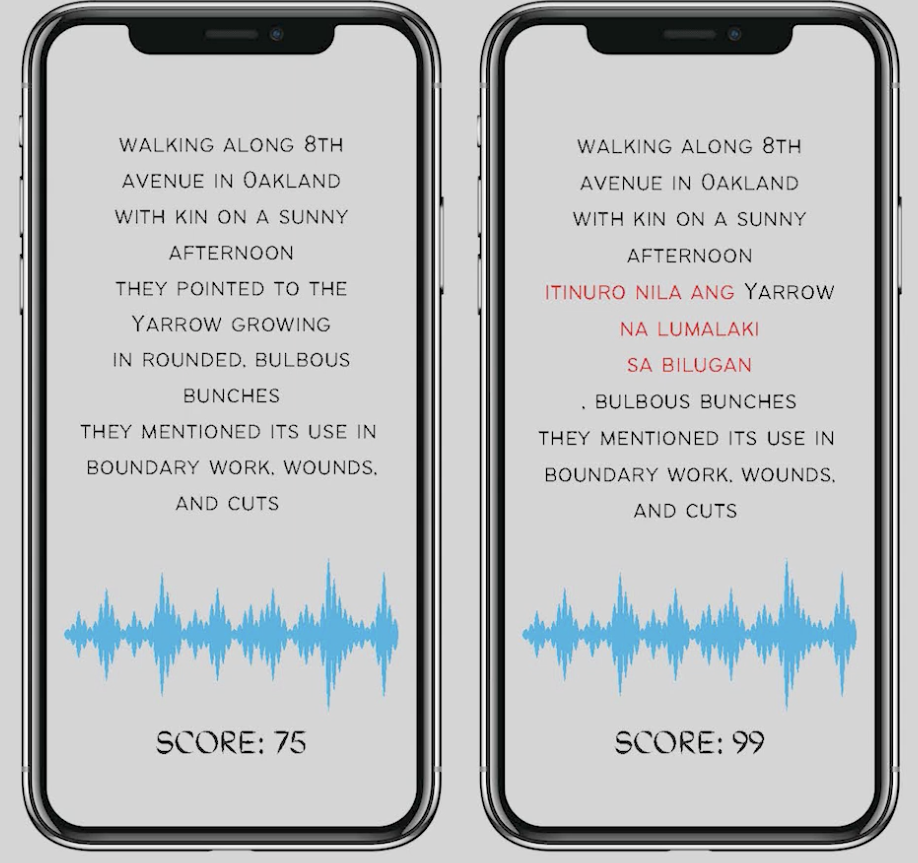





















 (@ukrainestream)


























 REWIND! . . .If you liked this post, you may also dig:





 REWIND! . . .If you liked this post, you may also dig:
 For many, the audiobook is a source of pleasure and distraction, a way to get through the To Read Pile while washing dishes or commuting. Audiobooks have a stealthy way of rendering invisible the labor of creating this aural experience: the writer, the narrator, the producer, the technology…here at Sounding Out! we want to render that labor visible and, moreover, think of the sound as a focus of analysis in itself.






 REWIND! . . .If you liked this post, you may also dig:


 REWIND! . . .If you liked this post, you may also dig:





 REWIND! . . .If you liked this post, you may also dig:
 In his autobiography, Beneath the Underdog, jazz musician Charles Mingus recounts his hatred of being ignored during his bass solos. When it was finally his turn to enter the foreground, suddenly musicians and audience members alike found drinks, food, conversations, and everything else more important. However, this small, and somewhat ironic, anecdote of Mingus’s relationship with the jazz community has now become a foreshadowing of his current status in sound studies–but no longer! This series–featuring myself (Earl Brooks), Brittnay Proctor, Jessica Teague, and Nichole Rustin-Paschal— re/hears, re/sounds and re/mixes the contributions of Mingus for his ingenious approach to jazz performance and composition as well as his far-reaching theorizations of sound in relation to liberation and social equality, all in honor of the 60th anniversary of Mingus’s sublimely idiosyncratic album Mingus Ah Um this month. The final installment of this series presents Nichole Rustin-Paschal and her gripping reflection on jazz, death, and mourning. Her opening line requires no introduction: “There was a time when I believed that Mingus was haunting me.” You can catch up with the full series by clicking


 REWIND! . . .If you liked this post, you may also dig:


 Positioning Mingus within the evolving discussion of sonic studies opens productive inquiry into what it means to center musicians of color in relation to critical historical moments in the American soundscape. Mingus’s concept of “rotary perception,” mentioned in his autobiography

 While most books are confined to the pages held within them,
  The site’s own characteristics mirror the theoretical ambition and methodological innovation of the book itself, which, in simplest terms, considers how Africans heard (and “read”) African-American music in the twentieth century. While the focus on listeners, audiences, and consumers might–in different hands–tend toward a kind of passivity, for Jaji it becomes a rich heuristic for understanding how Africans navigated modern media. By centering Africans as listeners and consumers, Jaji not only challenges the “originary” or “native” status of Africans in the diaspora but moreover uncovers new strategies for understanding the dialogic and intermedial processes through pan-African politics and culture were formed. She does so through a wide range of sources–including recordings, transcriptions, film, literature, websites, and magazines–which become an unprecedented archive of what Jaji terms “stereomodernism,” a “heuristic for analyzing texts and cultural practices that are both political and expressive, activated by black music and operative within the logic of pan-African solidarity” (14). Located largely in Senegal, Ghana, and South Africa, the book thus explores how music in particular helped to define real (and imagined) relationships across the Black diaspora.
 REWIND! . . .If you liked this post, you may also dig:
 Since its inception at the World Soundscape Project in the 1970s, soundwalking has emerged as a critical method for sound studies research and artistic practice. Although “soundwalking” now describes a diversity of activities and purposes, critical discussions and





 . They bring us new ideas, excitement, and new social media accounts, and we entrust them with everything we know about editing and digital publishing. It’s been a blast, and we are so proud they’ve all gone on to do wonderful work in the world.








 Personal Stereo tunes into this frequency and – by virtue of its array of research and skilful marshalling of social and cultural history – offers a compelling map of its coordinates. If, as part of Bloomsbury’s

 REWIND! . . .If you liked this post, you may also dig:
 An open-access scholarly project founded in 2014, The Blues and Jazz Dance Book Club (BJDBC) was the brainchild of Sara Cherny, Damon Stone, Devona Cartier, Brenda Russell, and Kelly Porter (no longer a participating member). This team envisioned a free online space where people could learn about and discuss the history of blues, jazz, and African American dances, enriching both their own knowledge and the knowledge of the blues and jazz groups in which they participated. The Book Club’s current administrator, Chelsea Adams—PhD candidate at the University of Nevada, Las Vegas with a specialty in blues and African American dances in literature—took over operations in 2016.





 If music and memoir sounds appealing to you, check out the








 When times are tough and people are feeling sad, they might need space to be calm, to reflect, and to heal. For example, in the United States following September 11, 2001, Clear Channel (now iHeartMedia)
 Hiromu Nagahara is a historian who has examined how music was used during a transformative era in Japanese history. Nagahara’s book,
 Is literature truly a primarily visual entity? Do we only read books or are we actually actively
  Furlonge, previously chair of the English Department at the Princeston Day School, and new Director of


 But the next day, I tuned in to Shaggy again. And I listened a bit longer when the next show came on. And even longer the day after that. Dallas at that time was wracked by racial strife, some of it focused on the politicized deaths of two police officers, one white and one black, in separate incidents. I had tuned out the duplicity, but KNON gave me reason to reconsider. City council member
 Welcome to Voices Carry. . . a forum meditating on the material production of human voices the social, historical, and political material freighting our voices in various contexts. What are voices? Where do they come from and how are their expressions carried? What information can voices carry? Why, how, and to what end? In today’s post, Alexis Deighton MacIntyre explores society’s interpretations of voicing, sounding and listening. Inspired by Christine Sun Kim and Evelyn Glennie, Alexis advocates for understanding voicing as movement and rhythm instead of strictly articulated sound. – SO! Intern Kaitlyn Liu







 “
“ In “
In “


 REWIND! . . .If you liked this post, you may also dig:



 REWIND!…If you liked this post, you may also dig:






 REWIND! . . .If you liked this post, you may also dig:




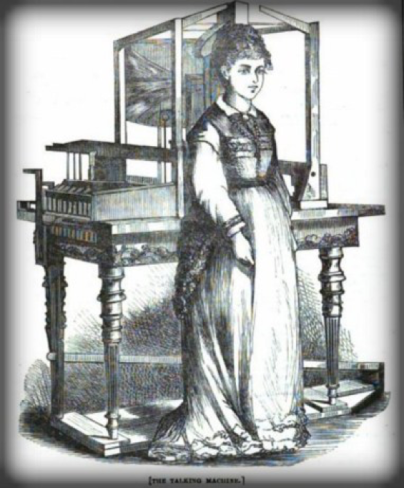


 REWIND!…If you liked this post, you may also dig:


 Inspired by the recent Black Perspectives


 In her 2018 book,


 is certainly limited and insufficient, it can be a helpful gateway for beginners. Poptimism




 Inspired by the recent Black Perspectives







 This is not new to me. Both my artistic work and a number of my scholarly works have been purposely ignored or undermined in previous occasions, perhaps due to my non-white, non-European background and epistemology. During the assessment of my doctoral dissertation in a well-known Scandinavian University, for example, the three-member committee harshly attacked the very foundations of my project because of my claim that case studies in Indian cinema could produce important new knowledge in the field of sound studies, media art and film history. However, Indian cinema, the largest producer of films in the global industry, is equally a part of world cinema as European and American cinemas, and studying its sound production would indeed add dimensions to the field of sound studies. Their resistance towards my object of study implied that choosing European cinema would immediately make my hypotheses acceptable.
 In his essay “


 REWIND! . . .If you liked this post, you may also dig:

 Samantha Ege




 The
The 
 While the
 Flattening history is crucial to that ideological shift. In order to maintain a racial hierarchy that tips in favor of whiteness, past violence and kleptocratic seizures of money, resources, and lives must be removed from the equation so that the kind of multiculturalism that Sexton critiques can proceed as if all who participate do so on a level playing field. Whiteness becomes “something equivalent to the…
 A Quiet Place


 What is immediately striking is the way these different forms of writing are woven together in an accessible, honest, affecting, playful, and queer bilingual prose by someone deeply connected to the communities and activities of Smiths Morrissey fans in Los Angeles. This is an academic page-turner that wears its scholarly rigor as lightly as Morrissey wore gladioli in his back pocket. The book opens with a rush and a push to move beyond the now much reported ‘novelty’ or surprise factor of Irish-English Morrissey from Manchester in the northwest of England having so many Chicana/o fans in Southern California.

 Music For Hi Fi Living is not about sound, per se, but about the role sound may play, or have played, in the past. As a form of material culture, it’s hard to image a better trove from which to uncover the secret life of the white American middle-class. The record covers analyzed here are taken from a single collection, many of them drawn from the 12 Record set on RCA from which the book takes its title, and all of them are bizarrely kitsch.


.jpg#filelinks)



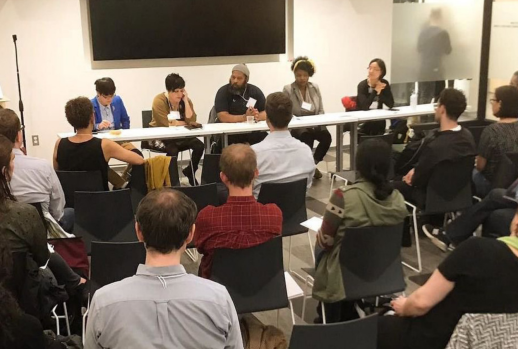
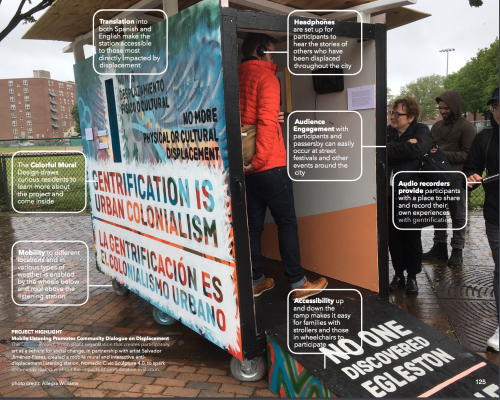









![Annea Lockwood - Piano Garden [1969-70] photo by Chris Ware](https://soundstudies.files.wordpress.com/2018/02/annea-lockwood-piano-garden-1969-70-photo-by-chris-ware.jpg?w=519)
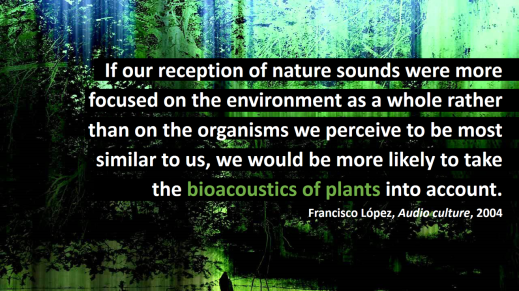

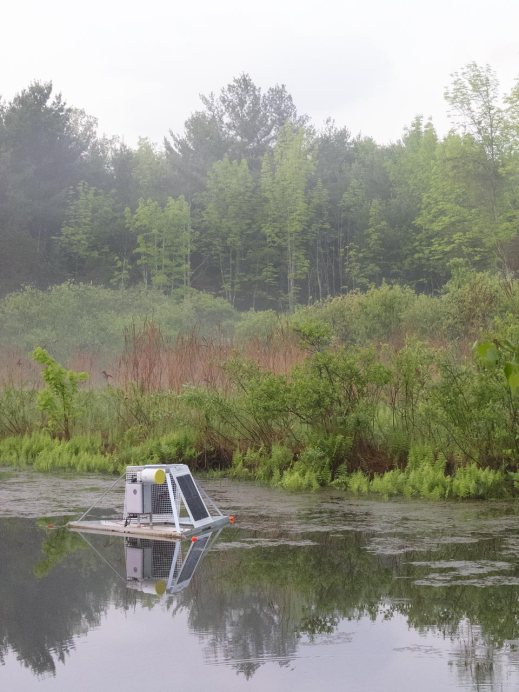




 Our contemporary curiosity about identity—identity being our metonym for “politics” more broadly—extends back at least to the 1990s, when music’s political status was widely debated in terms of it. For example, in a 1991 issue of the queercore zine Outpunk, editor Matt Wobensmith describes what he perceived to be limitations of thinking about music within his scene. He laments what he calls “musical purism,” a simplistic mindset by which “you are what you listen to.” Here, he capitalizes his points of tension:
 That same year, in an interview published in the 1991 issue of the zine Bikini Kill, musicians Kathleen Hanna and Jean Smith addressed a similar binary as Wobensmith, that of content and technique. But they take a different view: in fact, they emphasize the fallacy of this dualism in the first place. “You just can’t separate it out,” said Hanna, questioning the possibility of distinguishing between content—the “music itself”—and technique on audio recordings.


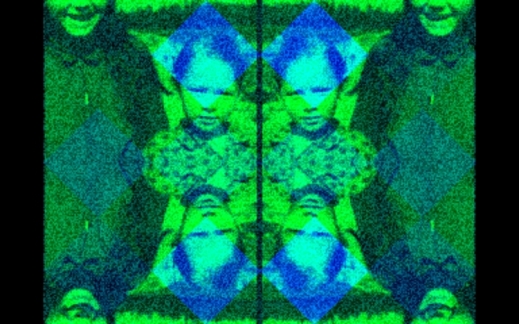










 Pathak’s challenging of conventional gender norms through her appearance and through the fact that she has never been married raises the specter of queerness in public discourse. But even that is difficult to pin down. Popular commentators and fans sometimes suggest that she looks like Kiran Bedi, a high-ranking (retired) police officer who enjoys celebrity status, making it hard to read the masculine details of Pathak’s persona as “gay.” Even as she is a queer icon (


 Still, it’s complicated, to be sure, made even more so by the fact that I come from a strong military family–of all Comanche families, Tahmahkeras rank second in having the most veterans and I’m proud of that, I’m proud of my relatives. Still, there’s something about the blasts hovering through the air and over our homelands. There’s a reminder, of imagined sonic memories of weaponry used against our Comanche ancestors, like “the world’s first repeating pistol, the” “‘Walker Colt’ .44 caliber revolver” that the Comanche Paul Chaat Smith says was “designed for one purpose: to kill Comanches.” As a Comanche elder recently told me in response to Fort Sill’s artillery explosions, “it’s not easily something you can overcome because it brings back the memories of over 150 years ago,” of what happened to the people.

 This podcast focuses on the sonic landscapes of unwelcome which women and femmes of color step into when we walk down the street, take the bus, and navigate public and professional spaces. Women of color must navigate harassment, violent, and sexually abusive language and noise in public space. While walking to the market or bus, a man or many might yell at us, blow us an unwanted kiss, comment on our bodies, describe explicit sexual acts, or call us “bitch.” The way that women and femmes do or do not respond to such unwelcome language can result in retaliation and escalated violence. A type of harm reduction, women often wear headphones and listen to music while in public for the specific purpose of cancelling out the hostile sonic landscape into which we are walking. The way that women and femmes make use of technology and music as a tool of survival in hostile sonic landscapes is a form of femme tech as well as femme defense. What sort of psychological and emotional effect does constant and repeated exposure to abusive noise have on the minds and bodies of women of color?
 The “great” woman singer of the title carries multiple valences for the author. It refers of course to the greatness of these singers but also to the ideological strictures that have dictated the very way these singers were received, written about, and interpreted in a larger public sphere that in the book encompasses the continental landscape. Fiol-Matta argues that to conceive of a singer as both great and a woman creates a central divide that forces our listening of female singers into roles dictated by the nation, record companies, fans, and others. In order to challenge this ideological strait-jacked The Great Woman Singer proposes that these great female singers deployed what she calls the “thinking voice,” a form and theory of vocality that turns to a range of theories, primarily psychoanalysis and philosophy, to read the very cultural history of Puerto Rican music during the greater part of the last century.

 The final chapter returns to Lucecita Benítez and most fully develops the concept of the thinking voice. Listening to Benítez’s powerful performance of “Génesis,” the performance that begins the book and serves as its concluding guide, feels overpowering even with decades standing between its moment and the present. It embodies the thinking voice, “an event that can be apprehended through but is not restricted to music performance. It exceeds notation, musicianship, and fandom, although it partakes of them all. No artist owns the thinking voice; it cannot be marshaled at will or silenced when inconvenient. Its aim is not to dazzle or enthrall, although it may do so” (173).Benítez alongside the other singers in the preceding chapters, doesn’t so much possess this voice as much as she wields it, an encounter between prodigious talent and deep technicality. In the case of Lucecita, perhaps the greatest champion of the Puerto Rican sonic imaginary, the expansiveness of the thinking voice took her from her beginnings as a teen superstar to embrace the seismic political calls toward liberation in the 1960s and 70s, and even sustained her as she became a popular balladeer in the dusk of her career. Fiol-Matta explains, “her deep register was truly wondrous and unique in the constellation of all Latin American and Spanish-speaking singers, not just women” (177). Lucecita did not emerge unscathed, however. As her recordings and performances took on an increasingly defiant tone, aligning herself with the Cuban revolution and Black liberation, she was blacklisted, her career momentarily suspended. As an older figure, her final career incarnation was as a diva never declared such in part because of her butchness. She never turned her back on her political leanings, but adapted to the necessities to continue her career. The chapter’s conclusion is particularly evocative as Fiol-Matta discloses her own disillusionment at this final phase, attending concerts “waiting for the real Lucecita to come back” (224).


