Dispatches from the Quarantine 03: Alex Foti

A dispatch from Alex Foti, writer and activist based in Milan

[This dispatch is part of a series: read the previous ones here.]

Nothing can never be the same. Nothing must never be the same. While the former is often repeated by pundits in these weeks of house arrest, the latter really is the assumption that is prodding radical movements on climate and precarity into action to flesh out a post-covid society. As with every plague, (surviving) labor commands higher market power and is harder to find than capital. The Pikettian imbalance of four decades of rising capital share over income is finally being reverted. The new SARS virus is doing what wars and depressions have done in the history of capitalism: reset the scales and counter the inegalitarian bias built into private accumulation.

While the zooming class adapts to a remote economy, the knowledge class is in fact largely irrelevant in the war against the pandemic, simply because they are not on the ground. As Branko Milanović notes, the health, logistics, food sections of the precariat are those indispensable for the survival of the Motherland, while non-vital manufacturing and services are taking the brunt of the self-induced economic coma. It’s the millions people laid off because of sharply reduced market demand that are feeling the pain and could be a major problem for political stability, just like the insurgent viral precariat that is manning the trenches and strikes not to be reduced to cannon fodder. White collars are irrelevant today, they are paid and acquiescent: it’s pink collars and blue collars that matter for our collective survival, just like virologists and epidemiologists, and unlike CEOs and industrialists.

In Milano and elsewhere, movement activists were the first putting sneakers on the ground in the huge surge of mutualism that is changing the way society looks at anarcho-autonomists and could be the embryo of a post-covid political society; certainly it is going to be form of permanent counterpower. Brigades of Volunteers for the Emergency (this their name) are in fact semi-public social workers that carry masks, food, medicaments to stranded old people and secluded single mothers. With 10,000 dead (and counting) in Lombardy alone, the pandemic here is a tangible reality, just like in Madrid, Paris, New York.

Wildcat strikes have hit Amazon and other chains both in the US and Italy and rest of Europe. Union-buster Jeff Bezos had to rise the wage (he had already gone to 15 bucks an hour before the crisis) to lure precarious workers into working for him as e-commerce has of course exploded. Couriers, riders, drivers, warehouse attendants are indispensable labor, more often than not scantily protected against infection by their employers. In fact, the Bergamo holocaust was partly due to the League’s reluctance to shut down its metalworking industry (same has happened in Brescia). The Milano wave has especially hit senior citizens in nursing homes, where often health workers where prohibited from wearing surgical masks “not to scare our guests”. Wherever Covid took hold due to arrogant stupidity, it was extermination for the eightysomethings in public care.

When we finally emerge from the lockdown in May, what will happen to social conflict? Higher wages for nurses and gig workers are inevitable, as well as the normalization of UBI to counteract Covid’s depressionary effects. As Trump put it: “We’re paying people to stay home; how’s that??”. However in movement’s radios and chats many are arguing that, in order for things not to ever be the same, there’s gotta be social and political revolution, because for the first time since 1917-1919 capitalism could really be overthrown, as it no longer commands the loyalty of most of the population. Increasingly, capital looks like a death cult. The climate crisis as well as FFF and XR mobilizations have made it clear that fossil capitalism is ecologically unsustainable. The Covid crisis has highlighted the basic fact that financial capitalism is hostile to human life. Are the brigades our workers’ councils? You bet 😉 One thing is fairly clear, though. With the socialist illusion of Corbyn and Sanders gone (as we predicted in Theory of the Precariat), what’s left for the left is mutualism, syndicalism and, especially, dual power. The environment is recovering, now it’s time to recover collective agency and seize power.

Dispatches from the Quarantine 02: Alina Lupu

Dispatch from Alina Lupu, Romanian Artist Based in Amsterdam

[This dispatch is part of a series: read the previous one here.]

As a generally resistant person, tending to be first and foremost critical of every situation as well as hard to engage in the first stage, I find it fascinating that this reorientation towards online education in the arts has been so far reaching and so quick. When I entered art school in NL, 7 or so odd years ago, bringing a computer into a fine art environment was considered blasphemy and prompted ridicule. I had one teacher that used to do net art. Yes, net art. In the ´90s. No, as fine artists we work with our hands, we experience the material, and the material tends to be wood, clay, paint, fabric etc. I had no choice in carrying a computer with me since I was videocalling with clients (US, Australia, UK) that needed to have their websites done via some Romanian outsourcing company or another. And here we go, now we´re all digital natives and don´t frown at it. Is this evolution or the death of critical thinking? Or maybe we´re just tired… I can´t quite say at this point.

A letter of dissent started being drafted by the students of the Sandberg Institute, the Master program tied to the Rietveld Academie in Amsterdam. In it, the students, supported by their teachers and by the student unions that popped up over the past couple of years, demanded accountability from the administration of the institution after the closing of the academy and the rushed move of many of their in-person meetings and classes to open source and proprietary online platforms (Zoom is overall popular in these cases). They asked for participation in the handling of the crisis, they asked for a postponement of the academic year and refused to see their graduation show moved online. They asked for refunds of tuition fees in light of lack of access to facilities if that lack of access extended well into the summer vacation. They asked for an empathetic understanding of their condition, affected as it is by the limitations the government of the Netherlands has put on education, public gatherings and various jobs – Horeca (Hotel/Restaurant/Café) is a field in which a large swath of students was employed in order to support themselves, and much of it has been suspended. They asked for understanding in the face of the international character of the academy and the fact that many students have had to leave to their countries of origin to be close to their families during these trying times, and for an understanding of the fact that focus is hard to come by in a crisis triggered by a pandemic. These are not normal working from home conditions. Education should not be rushingly transferred into online mode, pretending to forget what triggered the move and working on the premise of “business as usual”.

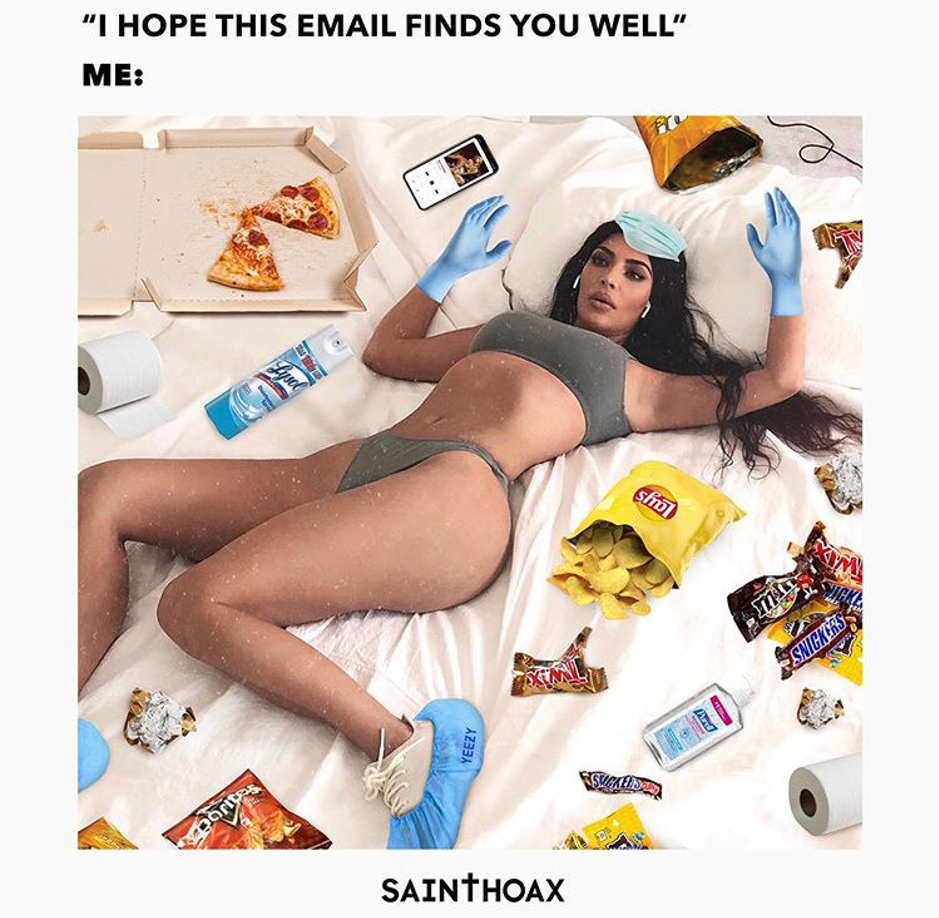
The letter was signed on March 30th, 2020. It reached my inbox by mistake. It slipped through the cracks of a stuffy newsletter, due most likely to the exhaustion of whoever put the newsletter together. It wasn’t meant for public consumption, but the mere fact that it existed signaled some form of solidarity in the face of hopelessness. The letter illustrated a bottom-up change of pace.

On March 31st, the Student Council of the Rietveld Academie and Sandberg Institute went one step further, this time publicly, and took responsibility for providing what was needed during the crisis. It issued a short guide with resources for international students, artists and art workers in the Netherlands. It surprisingly broke a taboo by acknowledging the type of support needed by students in a time of crisis, practical information such as: what is a freelancer? What is a zero-hour contract? What support does the government provide in times of crisis? What should one do if their contract is not being renewed? What is unemployment and how to apply for it? How to get legal assistance? And so on.

Because it´s perfectly well to offer solidarity in the abstract and draft encouraging video speeches, but people have been plunged into the land of terminated contracts, no income, and even homelessness and under these conditions knowledge is absolute power.

But then came April 1st (sly sense of humor maybe?). The timeline that I’m building is idiosyncratic, but it´s worth maybe asking if the administration of these schools had also kept an eye on the student initiatives that went counter to the need to adapt, keep one’s head up and keep up productivity. On April 1st the Sandberg, or rather its press office, sent out a newsletter towards all of its followers, I’m guessing students and teachers included, in which it announced its “Homemade Routines”.

“How do we clean, paint, administrate, chat, prototype, stretch, cook, read, watch and dream during a period of social distancing? A growing accumulation of activities by artists and designers, live-streamed for free on Wednesdays on Sandberg Instituut Instagram, echo a different pace and concentration for our homemade behaviors.” It covered:

  • 08:00 – Cleaning
  • 10:00 – Painting
  • 11:00 – Administrating
  • 13:00 – Chatting
  • 15:00 – Prototyping
  • 16:00 – Stretching
  • 17:00 – Cooking
  • 20:00 – Reading
  • 21:00 – Watching
  • 23:00 – Dreaming
  • 24/7 production.

Despite the crisis, despite the confusion, despite resistance, despite solidarity, it seems the post-autonomous artist cannot catch a break, endlessly fucked as he or she or they are by the neoliberal need to be present, to be flexible, to adapt to precarity with a smile.

Dispatches from the Quarantine 01: Silvio Lorusso and Geert Lovink

by Silvio Lorusso and Geert Lovink

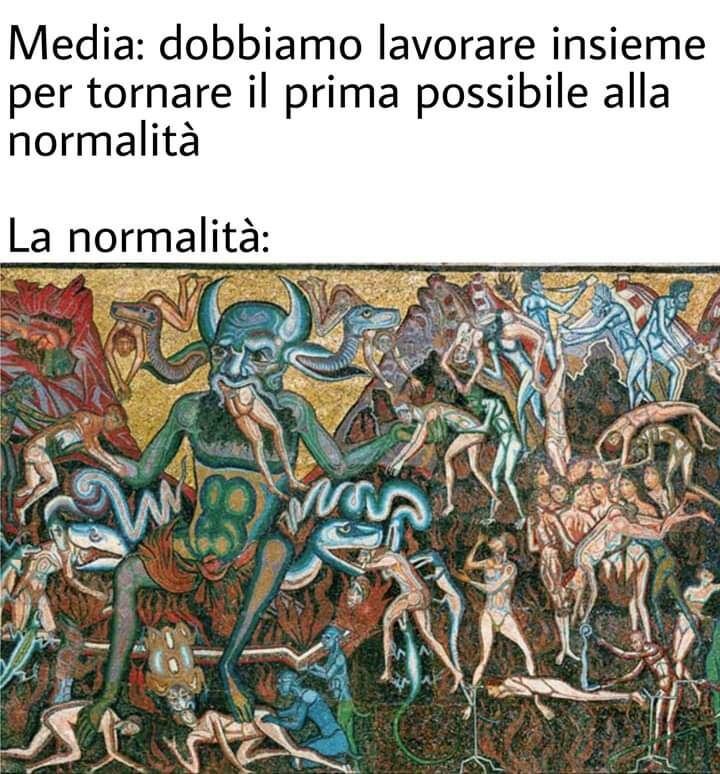
“Media: we must work together to go back as soon as possible to normality. Normality:”

During these long days, thinking is hard. Coronavirus updates come from every milieu: friends, family, work, governments, finance, the economy at large. None of them can be ignored. Remember, we used to complain about information overload. What about now? Now that we’re uninterruptedly tuned to different sources, from apps, radio, TV and newspapers, to Whatsapp chats with people in various countries and timezones. Now that our minds are busy processing the conditions and worries of our relatives and acquaintances, the selective scarcity of close-by supermarkets, the permutations of our shaky working schedules, the proliferation of software to set up. We put effort into changing our embodied automatisms, such as the urge to touch our face. In many ways, we are not ourselves.

This ain’t no time for speculation. “Instatheory” pops up and grows old in the span of a week. Are we locked, not only into our shared rooms, home-studios and apartments, but also into the present moment? Probably. And yet much of this present will be the material for the leading images and motives of the years to come. Trends are crystallizing, counter-trends are emerging. The March-April 2020 shock is a bifurcation moment, a time in which things can take completely different directions, among which there is a also cosmetic recrudescence of the ordinary. We see this in the news: what was yesterday’s “I’m shaking hands” is today’s “stay home”. What can we do then? Here, we attempt to chronicle the present: making sure that apparently minute aspects of this state of exception don’t pass unnoticed: a new habit, a novel social protocol, etc. Change is taking place at various scales, all interrelated. Subtle adjustments of everyday life accumulate. Suddenly, not recognizing this everyday life anymore, we may ask ourselves: how did we get here?

Before this happens we look at the time being to spot new behaviors that we are more or less consciously adopting, to identify social mutations that might be here to stay, to discern which ones should be encouraged or prevented.

First, some considerations. Before Coronavirus was the time of offline romanticism, time to log off, to take a break, to rediscover the fantasized authenticity of meatspace. Now, it is the time of online defaultism. Business as usual can continue thanks to smart work solutions; podcasts and live convos can broadcast conviviality; the tedium of quarantine can be overcome with a good dose of Nintendo Switch and Netflix. And yet, we feel the paucity of this networked double of social life. To be sure, the online is no less real than the offline. And yet, they are not mutually exclusive, they aren’t meant to fully replace one another. More importantly, the conversion from one to the other is not lossless. Following Franco Berardi, the conjunctive exceeds the connective.

Remote work is in many ways as concrete and corporeal than in situ work – if not more: video calls foreground the imperfections of the medium resulting in headaches and a loss of focus. Mediocre wifi disrupts the Skype-human cyborg. Remote work brings the intimacy of the family into the work scene. Remember the journalist whose live interview on BBC was disrupted by the cheerful bustle of his kids, with his wife running to catch ’em? Well, this is everyone with a family now, all the time. The messiness of life penetrates the aseptic virtuality of the digital office. We used to think of the home as a retreat from work, we now realize that work used to function as a refuge from domesticity. We speak from the position of people used to do video calls, to manipulate windows on screen, to cut and paste files, but what about the others? People who suddenly find themselves having to install software, timidly approaching a computer that is not their mobile phone, trying to orient themselves in complex spatial interfaces? Digital literacy acquires a new urgency, novel forms of digital divide emerge. Will we witness a renaissance of the desktop computer?

The lock-down comes with a software lock-in: organizations are leaning towards pre-packaged, centralized solutions. We witness the zoomification of work. Live streaming is taking over the small and busy yet simplistic interfaces of social media based on text, images and icons. Before the Coronavirus, a degree of technical informality survived. Video conferencing, notes, memos, chats… everyone could propose and use the tool or service best suited to their technical needs, ethical principles and personal idiosyncrasies. The state of exception banned this variety and with it the right to refuse certain insidious functions. “Emergency” Whatsapp groups active at every hour of the day, mandatory reports on Slack to keep the whole team updated (which few then actually read), video calls which allow to monitor the level of attention of participants.

All of these solutions have sprung up like mushrooms. It might have taken a few days to create the remote working conditions for the coming years, and they certainly don’t seem favorable. Same goes with our appearance on Zoom sessions. Apart from all the ‘selfie’ concerns of the correct face and posture, we now also have care about sound levels, background, animals and kids that come in to disturb. It is their environment, after all. Were we ever asked to comply with this intrusion of our private space? We’re not sound engineers and have no private TV studio at home. All the anxieties of the emerging Influencer Class have now, overnight, become general concerns. History has thrown us back in 2005 as our work now consists of watching ‘user-generated content’, this time produced by friends, family and fellow professionals that were not quite prepared to become ‘streaming stars’.

Covid-19 became the message so that the medium of pre-existing conditions could stay unchanged. We cried “this shouldn’t be business as usual” during the usual meetings, with the usual schedules, to the usual people. “Stop” was the forbidden word. Cultural organizations, which fundamental role is to perpetuate themselves, demanded resilience, which is to say that their atomized workforces had to implement ingenuity and flexibility. All the while, the same workforces were putting together useful lists of resources, penning open letters and signing petitions to voice their concerns. They were doing this informally, in their own spare time, to the benefit of organizations.

The organizational burden offloaded onto the workers was three-folded: organizing the very content of their work, organizing its remote form as demanded by the organizations, and finally organizing a reaction to this very form. Not even a week was lost. In schools and academies, lectures and classes continued to take place, even when it was farcically clear that a pause was due. Dutch universities lobbied to obtain the status of “vital profession”. Was this a matter of self-esteem, of dreading the idea of being irrelevant in a moment of crisis, after all the “what design can do” and “impact” kind of talk? Cultural workers whose activities weren’t postponed or “suspended” were able to stay alert, improvise, and organize work, but not to stop it. This word, “stop”, crossed the minds of many of them, a few even pronounced it out loud at the risk of appearing antagonistic or even lazy, when everyone else thought that a display of commitment was their civic duty. In this case the bifurcation was clear: stop or continue. We chose to continue.

As one could have expected, political organization in times of the Coronavirus is frantic – and yet on hold. The idea that people, once online, with spare time on their hand, would cause a revolution in cyberspace is still what it is: science-fiction. Why? Because, that very cyberspace is preventing the suspension needed to observe and analyze the situation, the interruption that we call thinking. On the contrary, we simply “adjust” to this alien situation, which means that we look at it through the rear-view mirror of the routine.

Where are the online swarms that block, hack, delete, take-over the virtual resources of the rich and powerful? Are the DDOS hordes just busy with the Italian Institute for Social Security? Is it the problem that they got sucked on Discord, or even on Slack, our rebels without a cause? What are we dreaming of here, anyway? Should we reclaim asynchronicity? Instead, we’re faced with various degrees of desperation and isolation, in which any form of wild and unexpected ‘computer-mediated communication’ is 100% not taking place. Instead, we’re trapped in the 24/7 virtual golden cages of the past, filter bubbles that rarely feel comforting.

Is it the real encounter we desire? How should we, European get there?

In solidarity, against sentimentalism.

Precarious, with worse to come.

Donatella della Ratta | Selfies Under Quarantine: Student Report Back to Rome

By Donatella della Ratta

On March 5, 2020, the Italian government ordered a lockdown for all schools. A few days later, now a month ago (feels like ages ago), on March 9, all Italian cities, and all us human beings, were placed on a strict lockdown due to the coronavirus crisis. No more going out, no more walking, no more outdoor activities, except from shopping for ‘necessary’ reasons.

I’ve found myself having to adapt my professional and personal life to this unprecedented condition. One of the classes I teach at John Cabot University, an American liberal arts college in the heart of Rome, is called ‘Selfies and Beyond: Exploring Networked Identities’. Before the lockdown was issued, the students and I were using the method of auto-ethnography to explore our digital lives. Because of the obliged condition of ‘social distancing’, and since now many of them sit far away in their home towns in the US, on the other side of the Ocean, we came up with the idea of moving their pieces, which were once sent to me as private notes, to a public online platform where all can see, read, and comment on what my students are writing.

For the next weeks to come I will discuss here critical theory that reflects on the status of the networked self and emotional capitalism, from Benjamin, Baudrillard and  Zizek to Illouz. I have asked students to read the theory in light of the current situation, and look at it from the perspective of their networked quarantines and digital daily life.

This series of blog posting on the INC website puts together their reflections and my reflections, their anxieties and my anxiety, the occasional joy or maybe just temporary satisfaction that we encounter in sharing our thoughts and, every now and then, some digital laughter.

For this series I choose to work on a rough, irregular, broken style.

It’s a draft, it’s a rough-cut. It’s the aesthetics of the fragment.

At a time when everything is on hold, I cannot think about anything finished, anything with a polished and clear structure. Our lives are on hold, let our writing be in a permanent draft status.  We are holding our breath, let us then hold our thoughts, as well. Let us freeze permanence, certainty, and release drafts instead. Until the curtain is lifted, at least.

This is an aesthetics of the fragment. It is also an ethics of the fragment. Permanent judgment is suspended, definitive analyses are on hold. Things will flourish in the fragility of the fragment, in the uncertain style of the draft; randomly, just as the grass now growing in the city’s pavement cracks.

Episode 1: BOREDOM, SADNESS, NUMBNES

In collaboration with Danielle, Shaina, Briana, Jackie, Marta, Gabriella, Sydney, Elena and Sophia

This week’s reading: excerpts from Geert Lovink’s ‘Sad by Design’. Watching: Geert Lovink’s talk at John Cabot University. Looking at: Edward Manet’s painting ‘A Bar at the Folies-Bergere’.

We reflected on the following quotes:

“Emotion is a luxury, right? To be angry is a luxury. We don’t have that luxury right now. Let’s just deal with the facts, let’s just get through it.”  Andrew Cuomo, Governor of New York


“There wasn’t any anger involved (I think). I mean, what was I supposed to be angry with? What I was feeling was a fundamental numbness. The numbness your heart automatically activates to lessen the awful pain when you want somebody desperately and they reject you. A kind of emotional morphine.”   Haruki Murakami, Killing Commendatore


“I lean to you, numb as a fossil. Tell me I’m here.”  Sylvia Plath, The Collected Poems


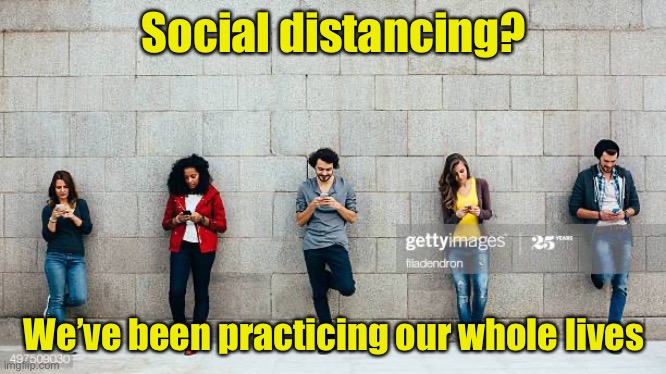
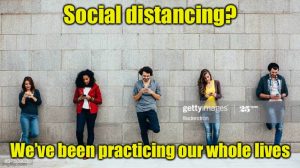
SOCIAL DISTANCING IS THE NEW BLACK

Is social media helping us overcoming the imposed ‘distancing’ of this crazy period; or is it yet another tool to dive us into a deeper sleep, trusting that in the end we will become used to ‘see’, ‘watch’ and, eventually, ‘feel’ the Other throughout the surfaces of our screens?

Marta writes: “Allegedly, this virus has robbed people of their social life due to social distancing, but did it, really? The truth is that social physical interaction was robbed by social media way before Coronavirus even existed. I believe that the lack of social interaction and the intensification of social media use is not a new phenomenon caused by a natural disaster, but a recurring one caused by human kind. The majority of us now use this calamity as an excuse for our excessive social media use. If you think Covid-19 is the reason why you can’t distance yourself from your phone, you are either lying to yourself or you’re in denial.  ‘The thing that scares me the most is the fact that we are adapting to social isolation. It will be harder to leave our phones and easier to stay home even when we are free to go out. Does adapting to social distancing lead us to numbness, or is it numbness related to excessive social media use?”
SYMPHONY FROM THE ACQUARIUM

The simulacra of interaction. Are we left looking at our lives from the acquarium, having to constantly feed and take care of the red fish we watch moving inside which, in the end, is us?

Natalia tells of a dream-like sequence: “After sleeping through the afternoon, I stood up with a slightly lesser headache and got to the other room. After a while, I grabbed my phone. I opened Instagram, only to notice – oh, the magic of happy accidents – that a friend of mine is live on Instagram Stories. Perhaps he’s been broadcasting his piano skills, I might have though yet the time spawn since I saw it until I cliched it was too short for me to think this sentence through in my mind. I clicked. And he was playing the piano. And I listened. He noticed that I joined, and so he played one of my favorite songs. And I listened. And I was happy.  But then it just disappeared. My friend came back to his life, and I was back in my room with a headache and a lack of will or power to act. Just as if our meeting a second ago has never existed, just as if it was a dream, something with no actual impact on reality. But after a dream one sometimes wakes up feeling better, feeling happy. I didn’t dream, neither I woke up, yet I felt sad.  It seems as if our interaction, our sociality, was an innocent delusion, a harmless hallucination.”

I AM NOW (LIKE) EVERYONE ELSE

Does a crisis situation give us validation as humans? Is a crisis a collective moment of unity, shared anxiety and common pain, or is it yet another occasion to shout out loud, ‘hiya world I’m here, I’m alive, look at me!”? And what’s the difference between a machine-generated feeling of boredom, boredom ‘by design’, and boredom IRL?  Do we scream outside the window to get attention IRL and finally find in validation our little escape from boredom?

Sydney admits: ‘There is no longer excitement in quarantine.  There was excitement in only having 3 days to evacuate from Italy, somehow.  It felt like a movie, unscripted, and gave me a purpose. And being home before everyone else had to quarantine also felt like an adventure.  I felt dangerous if I went outside. People constantly checked in one me, wondering how I was feeling. Now it is everyone’s normal schedule. There is no more excitement. The added danger and edge is gone now that my entire community is forced to be confined.  It feels nice every once and awhile to be told that we’re doing our part, but it has become normal. There is no excitement. It is boring. And now that my entire life can be filled with entertainment, it has become sad that I can not receive constant stimulation. I no longer feel like a special American soldier, fighting the coronavirus and escaping Italy. I am just another citizen, scrolling on my phone like everyone, watching the same show as everyone, complaining about the same thing.  Words that once sounded large and important as I was reporting from the ‘front lines of Italy’ on my social media are now muted by everyone else. My voice has gone mute. My body has gone numb’.”

Elena points out: “People post Instagram stories to show they are interesting people with interesting lives. I admit that I am one of those people who’s doing anything to keep my online identity interesting, even during these boring days. I post memes and TikTok videos, and I even tell funny stories of my past to entertain my followers. But, WHY? Who cares? Everyone knows I am bored even if I pretend I am not. Digital boredom is indeed very different from the “real” one: when I am bored IRL I don’t scream outside the window “look at me, I am interesting”.  We are ‘sad by design’ when we don’t receive many likes because we don’t feel appreciated. We are anxious by design when we see everyone on Instagram living a better life than ours and looking better than us. We are happy by design when we receive notifications because we feel desired and important. The design of the media platform decides how we feel, we are powerless.”
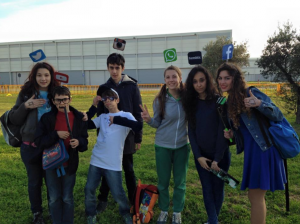
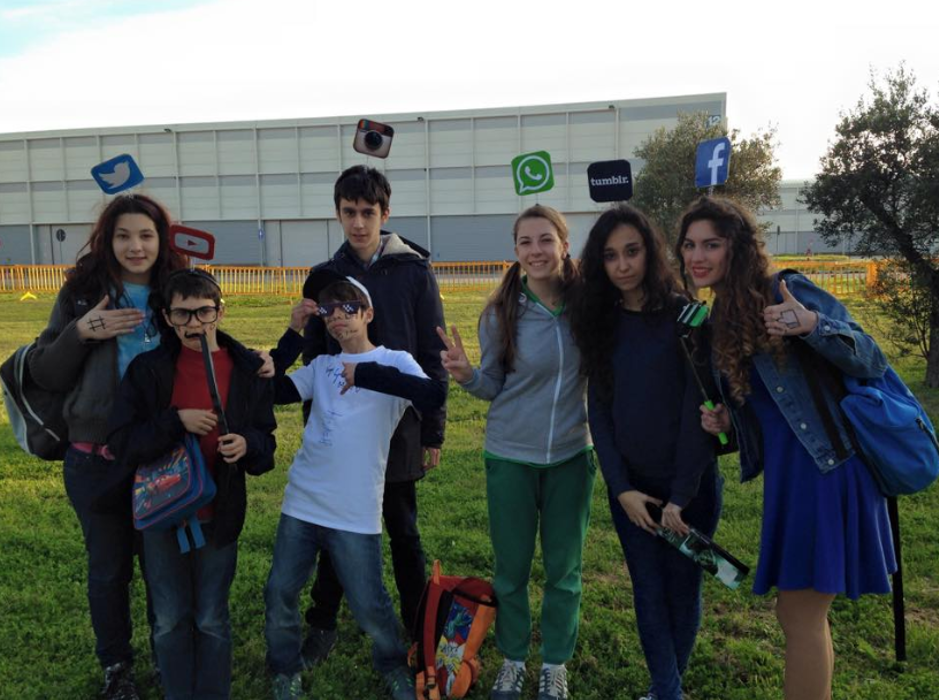
“These are my friends and I at Romics in 2015. We gave to every social media a personality: Tumblr is depressed, Whatsapp is athletic (because it’s very active), facebook is friendly, etc. This picture is ironic since now I know that social media decide what I feel and not vice versa.” Elena

DESPERATELY LOOKING FOR THE ‘ANTI-EXPERIENCE’

Is there a moment in our desperate search for affective intensities that we just long for a flat line, that we just aspire to nothingness, that we just crave for an ‘non-event’?

Gabriella: “…. there is a point in our online experience in which we stop seeking the ‘happy accident’ and we find our selves needing an “anti-experience” that might come from the unfulfilled expectancies we encounter online.”

IS LASAGNA EXCITING?

Is boredom something more revolving around the lack of meaning rather than the lack of eventfulness? Are we trying to recreate meaning each time we go online to escape boredom?

Jackie writes: “I’ve especially found myself missing my wii despite the fact that I have a nice refurbished playstation in its place—why can’t I just be satisfied with this cool thing I already have? Why must we miss happiness from our past? I think this relates a lot to the question on the possibility of recreating meaning when being bored. Like rewatching a horrible show that excited me years ago, whenever we’re bored we often reminisce times we weren’t and think that maybe, just maybe, if we did the same thing we could precent all boredom.  A good example to this is my Monday in which I ignored all remote work and made a three-meat four-cheese lasagna. It was an all day affair and something I had always wanted to do, but all I could think about while doing it was getting it done, was being able to sit down away from the stove and do something mindless on my phone.

Instead of being stimulated or living in an exciting and delicious event, I was merely distracting myself from being bored by either homework or nothing at all. It reminds me of a quote from the first Guardians of the Galaxy that we’re always “in a big hurry to get from something stupid to nothing at all.” And for what? When Lovink talks about this sadness and the boredom it encourages, being “obsessed with waiting” felt like a real big callout, because even when many of us are doing things unrelated to the internet there’s this nagging in our heads that asks why can’t we be there now. Why do I have to be reading this when I could be reading something else? Why am I not satisfying my digital longing right here right now? While he talks a lot about the sadness created by constructs of the internet I thinks there’s incredible validity to discussing the sadness created by the lack of the internet. How elitist of me I guess.

Sophia continues: “I have found that recently in the past week I have become tired of the content which is available to me and have become quite frustrated with this, clicking off of movies and videos before the ending. I think Baudrillards thoughts concerning meaning and the constant flow of information could be applied in this situation as I have access to a vast amount of content, but at this point the amount which I have consumed has caused all of it to become “boring” to me and has lost its meaning’.

BAR AUX FOLIES-BERGERE AND THE WANDERING OF THE SOCIAL MEDIA USER

Here Natalia attempts at reading Manet in the time of our hegemonic social reality (and social frustration).

“Looking back at the female figure, one can proceed to draw conclusions that fit perfectly to the social media reality of today. Let’s take an individual social media user and compare him/her to the woman in Manet’s painting.  Both feel alienated from the social situation they found themselves in. Online, one feels alienated from the sociality of the digital encounter, an outcome of the online situation they entered.

The woman should act to be as entertained as others are, yet her boredom gives away her alimentation. She both chose and didn’t choose to be there. Could the online user choose not to enter this digital social situation? Was that really voluntary? How long can one escape the pressure to act entertained while being both sad and alienated?

It seems that while all the others are having a blast, they (the woman/the user) do not. But the others are the same: alienated, bored, coming to the same ‘place’ over and over again in a search of a trivial thrill of a happy accident, just as a ‘habit,’ or perhaps they do not have a choice?  The woman looks directly at the viewer, just as an individual social media user looks directly at the screen of a phone or computer. This reflection only deepens one’s sadness and alienation. Alienation is about the sense of narcissist individuality, especially in social media. She also feels her alienation and sadness, she lets boredom show on her face as a manifestation of her agency over her individuality. Though who really has agency here?

Look behind her, in the right corner. She is standing in front of the mirror, yet the reflection is twisted so that we can see her from an angle. Suddenly you notice a man. It is not “a man,” however, but a white, heterosexual, Western, healthy, relatively young, perhaps wealthy, man. Who, again, owns Facebook (and Instagram and WhatsApp), Amazon, Google, Twitter…? You guessed.

Just as the woman, a social media user produces exhibitionist labor for the users who are as alienated and sad and she/they are. But, in the end, those who benefit most are privileged white men who control them. The woman’s labor is not her own choice, based on the rules she set, as she is standing behind a bar, being a part of a greater enterprise, which uses and commercializes her body (and soul). Social media users are just like she is: producing labor for a greater enterprise (social media corporation) which sets the rules and commodifies feelings, socially, and physical life.  Instead of prostituting oneself, social media user is only keeping the content circulation flowing by producing, reposting, and reacting to content, and producing data. Though isn’t it prostitution itself?”

SOCIAL CORPSE AKA THE SOCIAL BODY

I wander in the city’s empty streets. Not because of boredom, because of desire.

Desire to reanimate the corpse that lies in front of me, in front of us all.

Formerly known as the ‘social body’, now turned into a social corpse.

Does our newly discovered freedom lie in this transparent structure, in this silent moving around like ghosts, in this not-touching not-sweating not-kissing,

… in this-NOT?

Mouth-to-mouth resuscitation, emergency first aid to the social body

before it grows into a life without organs.

“When you will have made him a body without organs, then you will have delivered him from all his automatic reactions and restored him to his true freedom.” Antonin Artaud (1947)

PROLOGUE. A LOVE LETTER TO FREEDOM

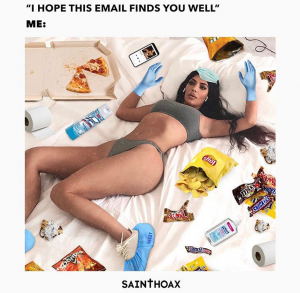
Life without freedom got me like:
We close this first episode with a long fragment, a love letter written by Elena:

“Freedom broke up with me almost a month ago. We were such a nice couple, we have been dating for about 20 years. I still didn’t get over her of course. I miss Freedom a lot, what a beautiful soul she has. I think about her everyday. Freedom was more than a girlfriend, she was my greatest source of happiness. We were in an open relationship with many other people but the way she looked at me…maybe I was jealous that she wasn’t just mine. What if she broke up with me because I was too jealous? No, I know why she did it: I didn’t deserve her. She gave me so much and I took her for granted. I don’t even feel the right to complain because Freedom broke up with a lot of people lately. Is it true that if something terrible happens to many people it hurts less? Is it true that misery loves company? I doubt it.

Fun fact about Freedom? She has two nicknames: those who love her like me called her “Libre”, those who were only attached to her materialistic beauty called her “Gratis”. Ungrateful freaks…Freedom is much more important than a capitalistic commodity but people confuse them. If only I could go back.

I’m stuck in an apparently endless cycle filled with numbness and uncertainties. When is this apathetic rollercoaster going to stop? When will Freedom come back to me? Will she ever come back or is she gone forever?…I don’t even want to think about that possibility. I think about those days when we were still dating and I could go to my friends’ house, to parties, to the cinema, to visit my grandma… good old days. I never thanked her. I used her like an object. Freedom, if you will ever read this…please forgive me. You are and will always be the greatest love of my life. I miss you. I love you like a prisoner loves the first breath of wind outside of jail. I don’t want to be numb anymore. Please come back.”

The End of the World: ten years later

The End of the World: ten years later

By Maria Manuel Lisboa

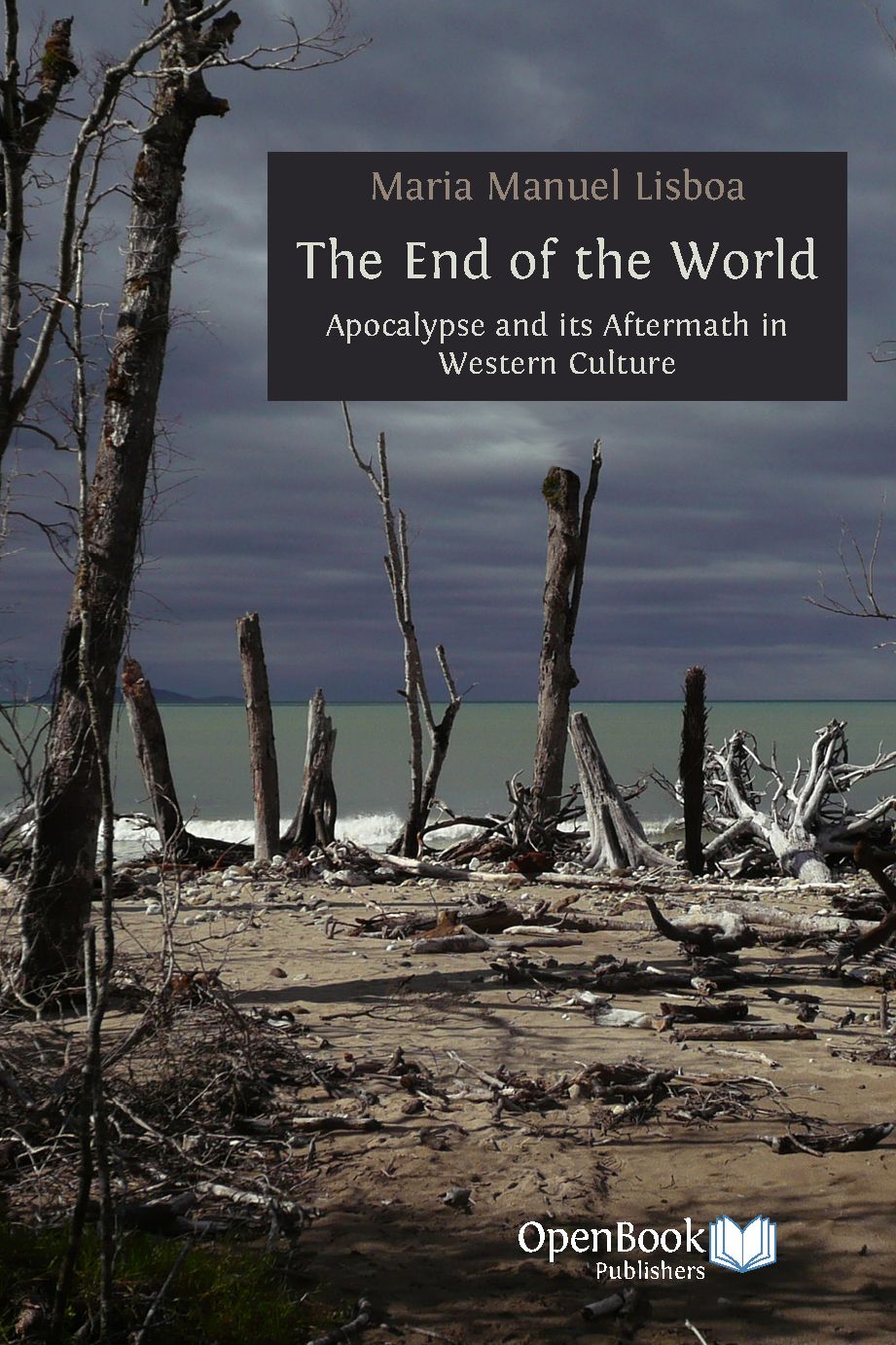
Who would have thought that a book about the end of the world would feel of such relevance some ten years down the line?

The answer to this question is, who wouldn’t? Fear of widespread calamity has been part of the human psyche ever since whatever the human psyche is came into being, through the tortuous pathways of evolution. And the urge to articulate that fear is at the heart of our most ancient narratives, from the Flood in the Old Testament to the squabble between Aesir and Loki in Ragnarok, to the Kali Yuga in Hindu mysticism. Without that fear, would anyone believe in God? In the beginning we were all atheists.

When I published The End of the World: Apocalypse and its Aftermath in Western Culture in 2011, I looked at the many instances in which literature, art and more recently (comparatively speaking) film have returned to the idea and fear of global annihilation. A bit like repeatedly probing a loose tooth with one’s tongue: it doesn’t help and it hurts a bit, but we can’t help ourselves.

In my book I looked at instances of imagined planetary destruction originating from many causes, from human recklessness to environmental calamity to sheer bad luck. The reassurance to be drawn from the fact that, in the original ancient Greek, the term ‘apocalypse’ signals a necessary clearing of the decks before a new beginning is of the cold comfort variety. In the global wipe-out that supposedly opens the way for a better world, most people die. In a nuclear age, in which the power of science in its negative permutations (weapons of mass destruction, biological warfare, etc.) combines with world travel seen as a both a necessity and an entitlement (where would we be without our professional networking and our regular holidays in the sun?), the conditions for triggering calamity are firmly in place.

There are always, of course, two or more sides to every equation: from the point of view of a travel-averse person, I observe the often unnecessary globe-trotting of academics and the obsession with foreign holidays that now crosses social-class boundaries like nothing else, and I purse my lips sanctimoniously at the self-indulgent burning of fossil fuels, environmental harm and the facilitation of pandemics triggered by unnecessary air travel. On the other hand, with any luck, the more we see of the world and get to know others (or Others), the less inclined we might be to destroy it and them, and instead help out if the need arises.

When Pandora’s box was opened, unleashing havoc upon the world, the only thing left inside it was hope. Long may that thought endure.

The End of the World: Apocalypse and its Aftermath in Western Culture by Maria Manuel Lisboa can be read and downloaded freely here.

The End of the World: ten years later

Open books from OBP: A showcase

Open books from OBP: A showcase

The importance of freely available, openly accessible academic books is more evident now than ever. During the current crisis, we have been looking for ways to let people know about the availability of open resources: free to access, with no institutional membership required, now and always.

As part of this effort, we asked our authors to send us a few lines about the Open Access books they have written and published with us. The brief was very wide: authors could write whatever they liked about their book and why a reader might want to (digitally) pick it up. The posts below are their generous responses to this request.

***

Open books from OBP: A showcase

Alessandra Capodacqua

As a professor of photography at NYU Florence, since the late 90s, I have had the privilege to research the Acton Photograph Archive collection housed at the campus, which is a 37-acre estate, with olive groves and gardens, five villas that provide a home to the university and include Villa La Pietra with its house museum, and formal gardens. In more recent years I have become more involved and interested in the rich presence of photographs of women in the above-mentioned Archive, and how these photographs convey not only interesting sub-textual information about the period - the property was acquired by the Acton-Mitchell family in 1907 - but also social, political and cultural contexts: the fashion, lifestyle and influences. This interest lead me to research the Archive in more depth, and this resulted in a lecture and my contribution to the publication Women and Migration.

Women and Migration: Responses in Art and History, ed. by Deborah Willis, Ellyn Toscano and Kalia Brooks Nelson (2019) is free to read and download.


***

Open books from OBP: A showcase

J. David Velleman

As of next month, almost all of my life’s work will be available in open access volumes — two volumes originally published in OA format by Open Book Publishers, and two converted from print to OA by MPublishing at the University of Michigan. I also co-founded and co-edit Philosophers’ Imprint, the first open-access journal in philosophy. Why do I believe in the open-access movement?

The movement has two main aims: (1) to make academic research available to a wider audience and (2) to spare academic institutions from having to pay additional charges for research they have already paid to produce, referee, and edit. Unfortunately, for-profit publishers have succeeded in co-opting the term ‘open access” for online publication that serves the first goal but not the second, because they levy excessive charges on authors — or, more precisely, their funders -- to make their work openly accessible online. In a world where the very existence of higher-education is threatened by lack of funds, this ploy is a direct attack on the academy.

To authors who have not yet switched to publishing in genuinely open-access form, I would point out that my open-access publications have garnered far more readers, from far more countries, than anything I have published in print, and they have done so at minimal or no cost to me or my institution.

J David Velleman's books,Beyond Price: Essays on Birth and Death (2015), and Foundations for Moral Relativism: Second Expanded Edition (2015) are free to read and download.

***

Open books from OBP: A showcase

Robert Kolker

This is a good time (if this time can be called ‘good’) to catch up on films you’ve been wanting to see. The Altering Eye is an excellent guide to the golden age of postwar international cinema from Italian neorealism to Brazilian cinema novo. Many of the films discussed in the book are available for streaming, especially on the Criterion Channel in the U.S.

The Altering Eye: Contemporary International Cinema by Robert Kolker (2009) is free to read and download.


***

Open books from OBP: A showcase

Andrew Fisher

Ethics for A-Level does what it says on the tin. The expense and lumpy quality of introductory books on ethics is astounding. We wanted to give a student/teacher/academic/parent assurance and confidence that all the key material needed to tackle the Ethics A-Level was of the highest quality, in one place, and free. The book is split into discrete sections, includes loads of examples, and so isn't overly demanding. It has useful questions to guide study and links to further resources. If people want to revise, learn, prepare lessons, or are just interested in ethics then we believe this is the best gateway to the debates - and did we mention, it's free?

Ethics for A-Level by Mark Dimmock and Andrew Fisher (2017) is free to read and download.


***

Open books from OBP: A showcase

Maurice Wolfthal

I chose to translate Bernard Weinstein's Di yidishe yunyons in amerike; bleter geshikhte un erinerungn [The Jewish Unions in America: Pages of History and Memories] because labor history has largely vanished from American schools and universities, and it is vitally important to remember the history of those who work for a living, including Jewish workers.

I translated Nokhem Shtif's Pogromen in Ukrayne: did tsayt fun der frayviliger armey [The Pogroms in Ukraine 1918-19: Prelude to the Holocaust] because it sheds light on the vicious antisemitic stereotypes that fueled those atrocities, inspired the rise of Nazism, and are fueling the resurgence of antisemitic violence in Europe and the United States today.

The Jewish Unions in America: Pages of History and Memories by Bernard Weinstein, and The Pogroms in Ukraine 1918-19: Prelude to the Holocaust by Nokhem Shtif, both translated by Maurice Wolfthal (2018 and 2019), are free to read and download.

***

Open books from OBP: A showcase

Agner Fog

This book explores how our collective response to fears and dangers has deep evolutionary roots - and how it has a profound influence on politics. It draws on many different fields of both the social sciences and the natural sciences, and examines issues of war and peace, the rise and fall of empires, the mass media, economic instability, ecological crisis, and much more.

Warlike and Peaceful Societies: The Interaction of Genes and Culture by Agner Fog (2017) is free to read and download.


***

Open books from OBP: A showcase

David Weissman

The coronavirus disrupts and destroys many things. It also inverts ordinary relations. Cooperation is one of those. It usually requires partnerships that satisfy shared interests or needs, in work or friendship. Each partner has a role, all the roles need be satisfied if the task at hand (raising children, driving safely in traffic) is to be accomplished. Managing the virus alters this paradigm. For now, we cooperate by cutting our relations to other people, staying home to avert sickening others or ourselves.

This is autonomy as it enables cooperation. The trees of a copse or wood are an analogue. Each tree is a node; it has effects on the many things dependent on it when living in or under its branches and foliage. Yet each tree depends in turn on the ecosystem established by the array of trees. Do we emphasize individual trees or the system they form when speaking of a copse? An adequate account requires both. So does our isolation imply the greater good of the society we work to preserve.

Agency: Moral Identity and Free Will by David Weissman (2020) is free to read and download.

***

Open books from OBP: A showcase

Ruth Finnegan

“Shall I quote you?

N-no ...

I’d rather YOU quoted ME.

But you’ll only do it with full understanding if you look first at this

and this:

Why Do We Quote? The Culture and History of Quotation by Ruth Finnegan (2011) is free to read and download.”

***

Open books from OBP: A showcase

Catrione Seth and Rotraud von Kulessa

Faced with the current pandemic, borders are being reinforced all over Europe. Rather than thinking of a common strategy to fight the virus which threatens us all in the same manner, countries are retreating behind the banner of national sovereignty; threats are seen as located outside one’s own territory; a post-pandemic return to the Schengen area seems unthinkable at this stage. More than ever it is worth reflecting on the European project as envisaged by Enlightenment thinkers. See for instance ‘Europe without frontiers’ by Masson de Pezay (extract 74 in the book).

Face à la pandémie actuelle, nous pouvons observer le retour aux frontières à l’intérieur de l’Europe. Au lieu de penser à une stratégie commune pour combattre le virus qui nous menace tous de la même manière, chaque pays se retranche derrière la souveraineté nationale; on définit des zones à risques en dehors du propre pays, et un retour à l’espace Schengen semble désormais hors de portée. En ces temps-ci, il nous semble d’autant plus important de rappeler à tous l’importance du projet européen, déjà reconnue par les penseur(e)s du 18e siècle. Article recommandé 74. L’Europe sans frontières (Alexandre-Frédéric- Jacques de Masson de Pezay, Les soirées Helvétiennes, Alsaciennes et Franc-Comtoises, 1771), p. 142.

Angesichts der aktuellen Bedrohung durch die Pandemie lässt sich in Europa eine Rückkehr zu den Grenzen beobachten. Anstatt an einer gemeinsamen Strategie zu arbeiten, um das Virus und seine Folgen zu bekämpfen, bzw. gemeinsame Ausstiegsstrategien aus dem Shutdown zu entwickeln, verschanzen sich die Länder Europas hinter ihrer nationalen Souveränität, und eine Rückkehr zu Schengen scheint erst einmal nicht in Aussicht. Deshalb ist es umso wichtiger an die Bedeutung des europäischen Projektes zu erinnern, wie es nicht zuletzt von den Gelehrten der Aufklärung anerkannt war. S. Artikel 74 : Europa ohne Grenzen.

The Idea of Europe: Enlightenment Perspectives (2017), L’idée de l’Europe au Siècle des Lumières (2017) and Die Europaidee im Zeitalter der Aufklärung (2017), all edited by Catrione Seth and Rotraud von Kulessa, are all free to read and download.


For a list of other platforms and presses that publish Open Access books (and a few resources for journals too) click here.

Coronavirus, inequality and the ‘tipping point’

Coronavirus, inequality and the ‘tipping point’

T.S. Eliot, in his high modernist poem The Wasteland, declared April to be ‘the cruellest month’. In April 2020, as the Covid-19 crisis unfolds across the UK, the cruelty of social inequality is indeed exposed more than ever. Some who are having to self-isolate and quarantine themselves will do so in houses that are a pleasure to reside in, with feelings of security and warmth. Millions however will do so in circumstances that are quite different.

After more than a decade of ‘austerity’ in government spending, and even after it is supposed to have ended as the dominant mode of government fiscal policy, savage inequalities cut deep into British society.

Putting to one side for a moment the threat to life that the coronavirus has brought, we can imagine the quite different experiences of the emergency at either end of the UK’s social spectrum. The already affluent, who have done so well over this last decade, occupy themselves during this pandemic in comfortable homes with baking, gardening, ‘Zoom-socialising’ with friends and family and catching up with reading. However, those who have over this same time struggled to make ends meet and to support their families on low incomes, are pushed into various kinds of family and personal crisis.

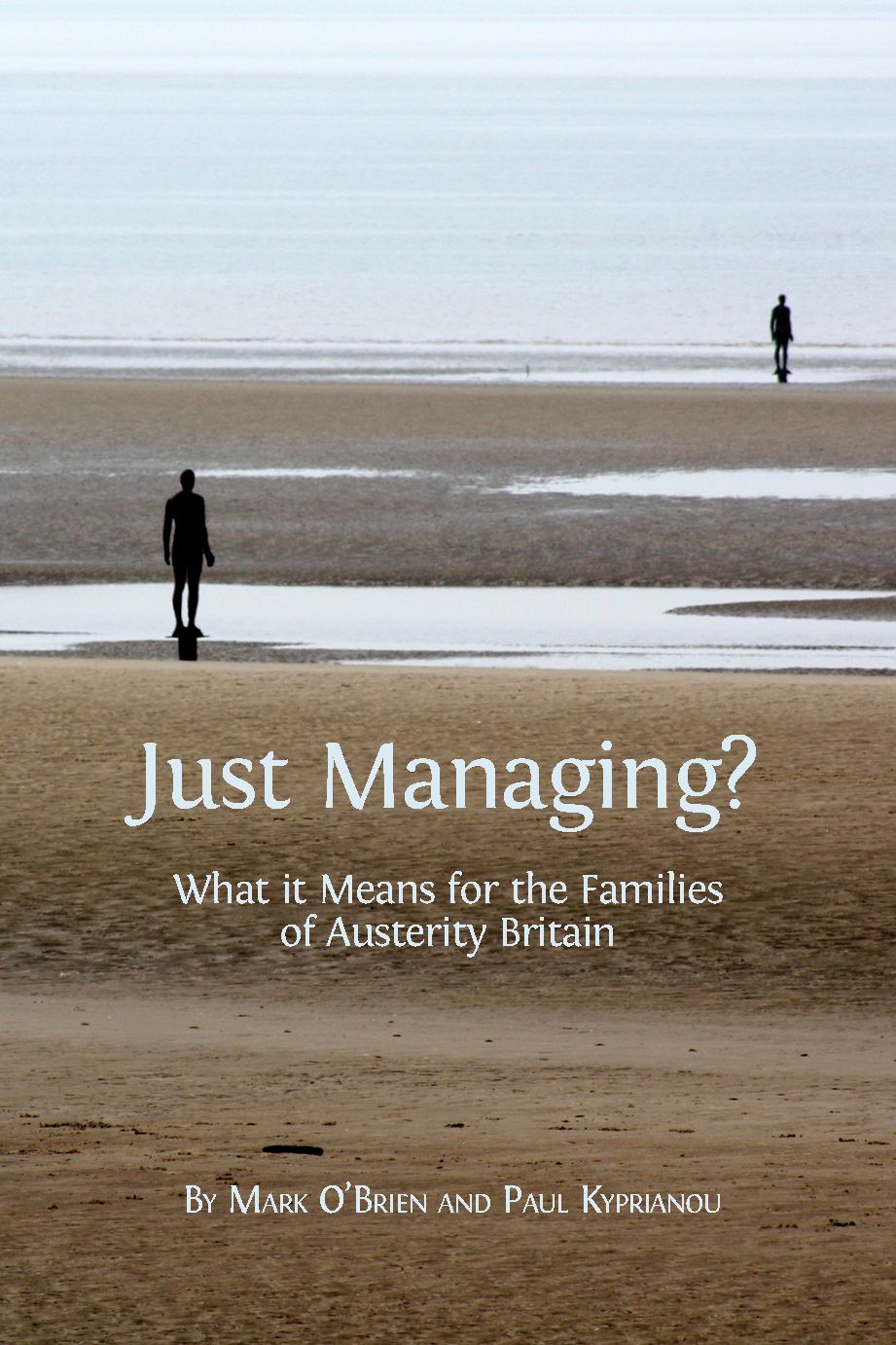
In Just Managing: What it Means for the Families of Austerity Britain, families talked about their sub-standard housing conditions and homes that were cold, damp and otherwise poorly maintained by negligent landlords. They talked about lack of amenities and outlets for their children, and the difficulties caused by overcrowded living spaces. For all of these families, representative of millions in their position, the fact of having to rent in the private sector because of the impossibility of accessing social housing, meant living with constant worries about eviction and homelessness. Now, for these types of families, coronavirus has made already stressful and precarious lives even more stressful and precarious. New languages will not be learnt, classics will not be read and new interests will not be discovered. Rather the struggle to survive will become more intense than ever.

In the context of this public health emergency, ‘survival’ now of course has a direct and literal meaning. Here we do come to the matter of the threat to life, and here we are not ‘all in this together’. For workers on the lowest wages and with the most insecure types of employment, the risks of encountering this deadly virus are inordinately greater than they are for the better-off in society. Many have come under pressure to continue to go to work in workplaces that make proper social-distancing simply impossible, despite being in ‘non-essential’ occupations. They are more likely also to have to use public transport to get to those places of work with long commutes. These working people are school staff, health workers, agency cleaners, transport workers, logistics workers, supermarket workers, postal workers, etc. Amongst the poorest, pre-existing poor health is also more likely to be a concern. This virus was not created by social inequality; however, social inequality is now its ‘sinister aid’, helping it to take lives as it cuts its vicious and deadly path through communities.

Our book ended with these words:

The merchants of austerity should take note. It is not just family stability that can be ‘tipped’. So too can the willingness of those who are just managing to put up with it all.

When we wrote these words, we could not have imagined they would become a matter of life and death for thousands of working people living in the most compromised of circumstances. However, they have become more relevant than ever – and brutally so.

Mark O'Brien and Paul Kyprianou's Just Managing? What it Means for the Families of Austerity Britain can be read and downloaded freely here.

Coronavirus, inequality and the ‘tipping point’

Agency: Moral Identity and Free Will

Agency: Moral Identity and Free Will

by David Weissman

Agency is fundamental to everything we are and do. Thinking, doing, and making—Aristotle’s triad of generic activities—imply it.  Yet two reasons thwart inquiries that would make it the focus of inquiry. One is the difficulty of understanding a condition presupposed by the activity of specifying it: we examine ourselves while considering this fundamental aspect of our being.  Another is a complex of disputes that obscure this elementary issue.

Agency: Free Will and Moral Identity reduces confusion by emphasizing five principal oppositions.  The first—Cartesian subjectivism, or the Aristotelian idea that we live and move amidst other people and things—determines one’s reading of the other four: what are the bases for personal autonomy; how is autonomy constrained by socialization;  do we have free will;  are choice and action  perpetually inhibited by self-appraisal; how is moral identity anchored in free will? Agency’s responses are clarifying:

Are we agents engaged by other people and things, or is consciousness of them the occasion for thinking of ourselves?

Descartes emphasized that nothing is better known to minds than minds inspecting and appraising themselves. Aristotle emphasized the thinking, doing, and making of agents engaging other people and things.  Agency’s perspective is the one of Aristotle and C.S. Peirce.

Do we have autonomy sufficient to determine the manner and trajectory of our actions; or is each of us the creature of his or her social conditions, hence the clone of every person shaped by them?

Autonomy is socialized. We live and act among others while constrained by a common language, practices, loyalties, and laws.  Free will satisfies a discipline: we usually make ourselves responsible for choices that satisfy those limits.

Does each person have free will, or is every choice and action determined by a lineage of causes that reaches back to the origins of time?  There is no responsibility for one’s actions and effects if free choice is illusory because a causal tide has determined one’s every response.

Agency without free will implies that each of us is a vessel for the causal energies and vectors of one’s antecedents.  Arguments for and against this view are hundreds of years old, but they embody a nest of assumptions that are usually unexamined.  Is nature to be construed holistically so everything is related, directly or mediately, to everything else? Assume their independence, then imagine that Jack and Jill surprise one another as each accommodates the other, experimenting as they test one another.  We‘re surprised by situations for which we have no prior experience; we’re altered by information that changes old values or assumptions.  The discussion is often conceptual, though determining variables in the case of free will are Darwinian, empirical, and evolutionary.

Does one sometimes act freely and responsibly because of his or her character, calculations, and aims, or is appraisal a steady brake on action because imagination and choice are perpetually inhibited by the fear of violating personal or social scruples?

Autonomy is situated. Everything we do has constraining norms  and causes sufficient to produce it , but some of norms ae one’s own: we freely satisfy and sometimes violate or exceed them. This isn’t freedom without limits; it is a permission like Mill’s no-harm principle: do as you like and can up to the point of harming others.  There is also this essential corollary:  control yourself when you are close to that line.

Is moral identity founded in the personal evolution of one’s character, sensibility, and choices? Or is it the conceit of people who reliably behave as the privilege of their class or caste enables?

Moral identity is the achievement of agents who acquire a distinctive moral voice while satisfying the opposition that pits autonomy against socialization.

The book’s argument is historical and dialectical.  Emphasizing interiority,  sensibility, and initiative, but also collaborationand duty, it redeems our naïve  impression that freedom is more than an illusion.

Agency: Moral Identity and Free Will is an Open Access title. Click here to read and download this title for free.

‘Models in Microeconomic Theory’

'Models in Microeconomic Theory'

by Martin J. Osborne

As an undergraduate, I was fortunate not to learn microeconomic theory from a textbook. Instead, I was privileged to have two wonderful teachers, Frank Hahn and Partha Dasgupta. Frank taught consumer, producer, and general equilibrium theory (our Chapters 4-6 and 10-12), and Partha, in small group tutorials, covered the new developments in economic theory of the early 1970s (including the material in our Section 13.2 and Chapter 14).  Both of them refrained from drawing sweeping policy conclusions from the simple models, sparing me from one of the sins of many "Intermediate Micro'' textbooks, where the policy conclusions generally follow from the author's political views, not from any model.  They also insisted on precision and rigor in the formulation and analysis of models.  Models in Microeconomic Theory embraces these features; if it matches the rigor of Frank's lecture notes and the freshness and energy of Partha's tutorials, I consider it a success.

Terminology colors readers' interpretations of formal statements.  To take one example, allocations of resources with the property that no other allocation exists in which everyone is better off used to be called "Pareto optimal".  That made it possible for economists to state the result "Every competitive equilibrium is Pareto optimal", which sounds very much like saying that the outcome generated by a market is good as far as human welfare is concerned.  In fact, the formal result that underlies this statement has no such implication.  Frank Hahn recognized that the term "Pareto optimal" is misleading, writing in his book "General Competitive Analysis" (with Kenneth Arrow) that it "conveys more commendation than the concept should bear" (p. 91) because in some "Pareto optimal" allocations some individuals are very badly off.  Indeed, in one Pareto optimal allocation all the resources in the economy are owned by a single individual.  (Only an economist would think that the word "optimal" is appropriate for such an allocation.)  Arrow and Hahn use the term "Pareto efficient".  That is better than "Pareto optimal", but still misleading: the sense in which a competitive equilibrium allocation is "efficient" is very different from the everyday sense of the word.  Instead we use the term "Pareto stable": stable, because the set of all individuals cannot collectively deviate to another allocation in which they are all better off.  "Every competitive equilibrium is Pareto stable" conveys the content of the result much more accurately than "Every competitive equilibrium is Pareto optimal".

I would like to go further.  The model that generates the formal result assumes, importantly, that if the actions of an individual or firm negatively affect someone else then the agent taking the action pays a price for her action, and if the effect is positive then the person on the receiving end of the action pays the perpetrator.  That is, all interactions between individuals are mediated by markets.  That assumption does not of course fit the world.  If you build an ugly house next to mine, you don't pay me for the discomfort it causes me; when a firm pollutes the atmosphere it doesn't compensate consumers for the effects on their health; if I drive on the highway, I don't (generally) compensate you for the delay I add to your trip.  In the absence of markets for such interactions, a competitive equilibrium is generally _not_ Pareto stable.  Thus my preference is to state the main result of general equilibrium theory as "For almost any economy, no competitive equilibrium is Pareto stable".  A subsidiary result is that in the (strange) case of no "external effects", a competitive equilibrium is Pareto stable.  I did not succeed in persuading my coauthor to state the results in this way, but in my view those statements accurately encapsulate the main content of the theory.

No engineer bases the design a vehicle on a model of the world without friction. Economists are sometimes more cavalier about drawing conclusions concerning economic policy from simple models.  The analysis of formal models may help us understand social and economic phenomena, and even suggest policies that might be helpful.  But simple models based on simple assumptions --- like all the models of microeconomic theory --- are far from the real world, and do not support sweeping policy conclusions.  We make no claims about the implications of the theories for policies, sweeping or otherwise.

In the last 50 years, academic publishing has been invaded by for-profit businesses.  Academics donate their research and their refereeing services to these companies, who then lock up the research and sell it back to the academy at prices that are usually high and sometimes stratospheric.  Since 2003 I have opted out of that racket; with one small exception, I have submitted work only to nonprofit publishers and have refereed papers and books only for nonprofit organizations.  (In the single exception --- which was a mistake --- I insisted that I would be able to make the final version of my paper freely available.)  In the mid-2000s I was a member of a group of economic theorists that founded an Open Access journal, Theoretical Economics, and I served as the editor of that journal for several years.  I remain devoted to the principle that academic research should be freely available, and am delighted that Open Book Publishers is publishing Models in Microeconomic Theory.

'Models in Microeconomic Theory ('She' Edition)' is an Open Access title available to read and download for free here. You can also read and download the 'He' Edition at https://www.openbookpublishers.com/product/1159.

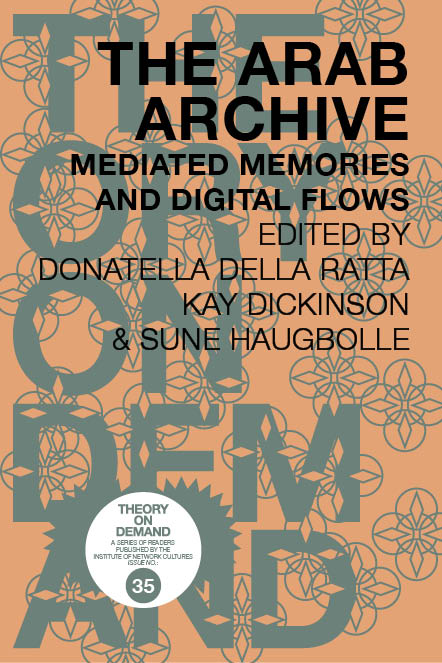
Out now: Tod#35 The Arab Archive: Mediated Memories and Digital Flows

INC is proud to share with you the publication of The Arab Archive, Edited by Donatella Della Ratta, Kay Dickinson, and Sune Haugbolle.

As the revolutions across the Arab world that came to a head in 2011 devolved into civil war and military coup, representation and history acquired a renewed and contested urgency. The capacities of the internet have enabled sharing and archiving in an unprecedented fashion. Yet, at the same time, these facilities institute a globally dispersed reinforcement and recalibration of power, turning memory and knowledge into commodified and copyrighted goods. In The Arab Archive: Mediated Memories and Digital Flows, activists, artists, filmmakers, producers, and scholars examine which images of struggle have been created, bought, sold, repurposed, denounced, and expunged. As a whole, these cultural productions constitute an archive whose formats are as diverse as digital repositories looked after by activists, found footage art documentaries, Facebook archive pages, art exhibits, doctoral research projects, and ‘controversial’ or ‘violent’ protest videos that are abruptly removed from YouTube at the click of a mouse by sub-contracted employees thousands of kilometers from where they were uploaded. The Arab Archive investigates the local, regional, and international forces that determine what materials, and therefore which pasts, we can access and remember, and, conversely, which pasts get erased and forgotten.

Download or order your copy here:

https://networkcultures.org/blog/publication/tod35-the-arab-archive-mediated-memories-and-digital-flows/