Small Apocalypses

Small Apocalypses

By Tricia de Souza

On December 21, 2012, the world as we know it was meant to change forever. According to the Mayan long-count calendar, the day ushered a new period of history similar to the turn of the 21st century. A Reuters global poll in May 2012, however, showed that 10 percent of people worldwide anxiously awaited the day, believing it marked something more sinister: the end of times, which would be caused by either “the hands of God, a natural disaster or a political event.”

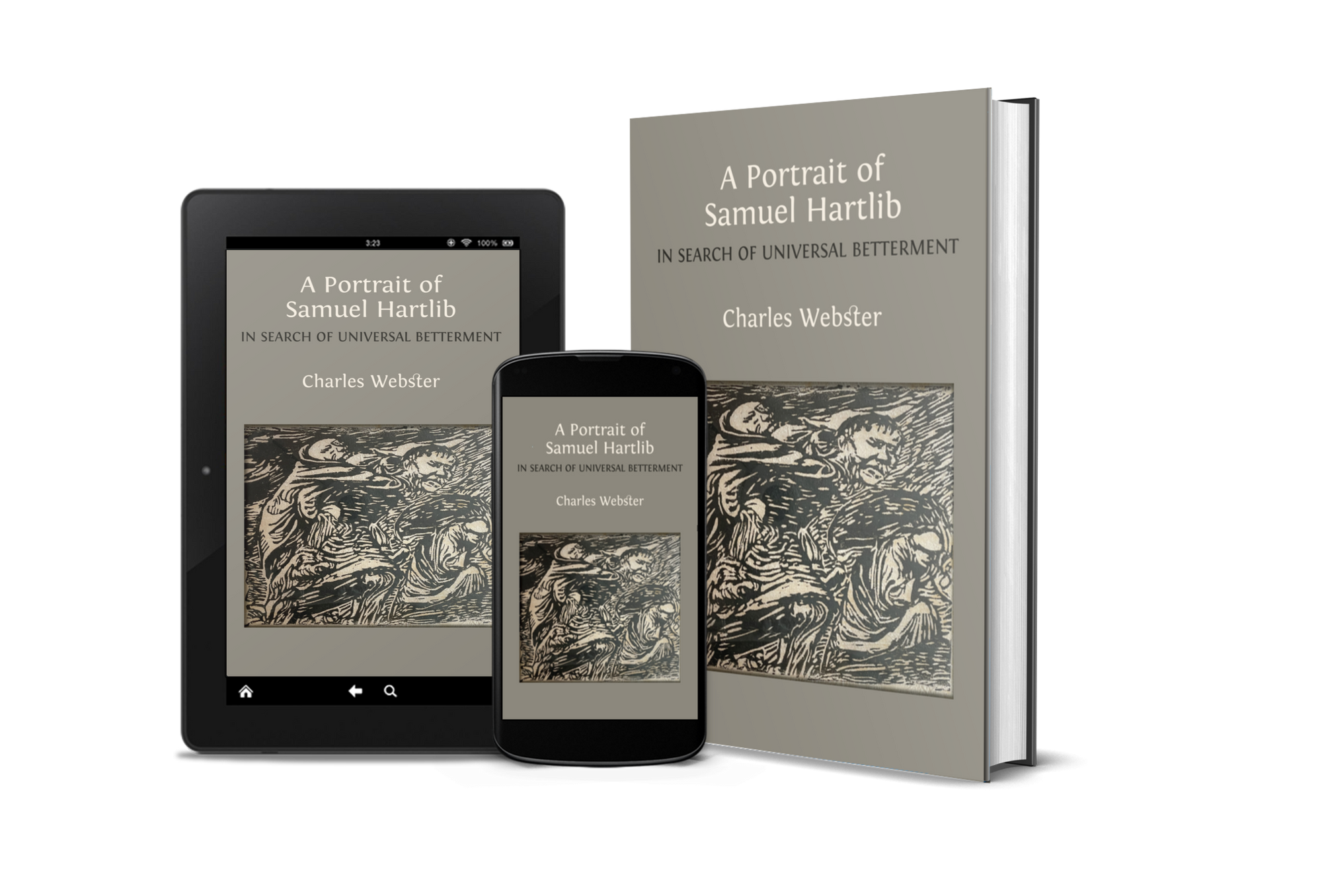
This preoccupation with an impending doomsday is not particular to the twenty-first century, however. Charles Webster’s book A Portrait of Samuel Hartlib: In Search of Universal Betterment chronicles the ventures of Samuel Hartlib, known as “the Great Intelligencer of Europe.” Hartlib lived during the tumultuous decades of the mid-seventeenth century when a growing apocalyptic fervour gripped the masses. As Webster reveals, this broader concern for predicting the end of times also reflected deeper concerns regarding the bleak realities that many were facing during these periods of crisis.

The 17th century saw England grapple with consecutive civil wars between Parliamentarians and Royalists that lasted from 1642 until 1651. In total, it is estimated that upwards of 200,000 people lost their lives as a consequence of these civil wars, be it through direct combat or disease. Among those who died was Charles I, who was accused of treason and was subsequently executed on January 30, 1649, causing the temporary fall of the Stuart line. Fifth Monarchists promoted the millennialist belief that the demise of the head of state would usher in a thousand-year-long reign of Christ.

Religious and political turmoil also impacted Hartlib’s early life. He was born around 1600 to a German-Protestant father who fled various towns in Poland due to mounting persecution against religious minorities during the Counter-Reformation. His father would eventually settle in Elbing, Poland in 1589, with hopes of creating a more stable life among the larger immigrant population of the coastal city. However, these aspirations would also come to a standstill as the plague claimed nearly a third of the city’s population in 1625 and Swedish forces occupied the city a year later until 1635 and then once more from 1655 to 1660.

Following academic opportunity, Hartlib moved to Cambridge in 1625. Beyond occasional trips back to Poland, this move cemented England as his permanent abode. Nevertheless, Hartlib maintained a deep concern for the plight of refugees. He offered help in various forms, be it helping to raise funds for exiled communities or promoting universal education. Even while dealing with financial uncertainties due to inconsistent sponsorships, Hartlib also opened his home to fleeing Protestants.

It is out of this dedication to the Protestant cause that Hartlib, with major contributions from Scottish minister John Dury and tax official Michael Gühler, published one of his most widely circulated texts in February 1651, Clavis apocalyptica—a title that borrowed its name from Joseph Mede’s 1627 study on the eschatological chronology of the Book of Revelations.

In Clavis apocalyptica, Gühler surmised that the world would end in 1655, but instead of apocalyptic figures solely vanquishing the earth, he predicted it would end the strife of the Protestants and that the “oppressed [would] take the possession of their former dignities” (Hartlib 89). While Dury did not pinpoint an exact year unlike Gühler, his preface in the book also related Judgment Day to the dismal condition of Protestants, citing a letter written by Czech theologian John Amos Comenius in which he mentions his son-in-law witnessing only terrors when visiting the Polish cities of Warsaw and Brieg.

Within this 1651 text, the apocalypse unfolds not only as a celestial event. It was intertwined with the earthly dealings of monarchies and their treatment of their subjects, in which Hartlib and his circle were indelibly enmeshed.

A recurring theme within A Portrait of Samuel Hartlib is that the lives of both Hartlib and his confidantes were coloured by financial hardship. Many of Hartlib’s associates migrated to different countries in pursuit of better financial opportunity outside of England. Others were not so fortunate. Hartlib describes how Gabriel Plattes, an English writer of agriculture, fell “downe dead in the street for want of food.” By the time of his own death in 1662, Hartlib wrote extensive letters regarding his worsening state of health and financial distress—about which his friends could only send messages of sympathy.

Thus, while Webster’s book provides an overview of the larger, fiery debates regarding millennialist movements, the Counter-Reformation and political shifts in Europe, A Portrait of Samuel Hartlib also sheds a critical light on the “personal apocalypses” that Hartlib contended with as he transformed from an aspiring student with little professional training to a prominent European interlocutor.

Within Webster’s chapters, Hartlib’s accomplishments become testaments to the enduring value of education, religious freedom and community-building. While Hartlib’s tenacity is certainly a strong point, it was born out of difficulties that many times he had no means to change. Amidst such turmoil, the ability to predict the end times may have provided a sense of control during these periods. More than that, it instilled a sense of hope that, amidst despair, change was just on the horizon.

Hartlib, however, did not look towards the future in hopes of erasing his world. Instead, his continued commitment to universal betterment even as his own life was near its end reminds readers that imagining a different tomorrow does not preclude committing oneself to a different today.

Nearly four centuries later, this still stands true.


'A Portrait of Samuel Hartlib: In Search of Universal Betterment' by Charles Webster is an Open Access title available to read and download for free or to purchase in all available print and ebook formats at the link below.


A Portrait of Samuel Hartlib: In Search of Universal Betterment
The 2013 digitization of the vast Hartlib Papers archive highlighted the pressing need for a comprehensive modern study of Samuel Hartlib (1600–1662), a central figure in seventeenth-century intellectual life. Though educated in Eastern Europe, Hartlib spent his adult life in London, where he became…
Small Apocalypses


A Portrait of Samuel Hartlib

A Portrait of Samuel Hartlib

By Charles Webster

Particularly because the massive Hartlib archive has been available in digitised form since 2013, it is amazing that Hartlib himself has not been the subject of a modern English language monograph. Acceleration in the pace of Hartlib studies is essentially a characteristic of the last few years, during which the ambitious French study on Hartlib by Stéphane Haffemayr, dating from 2018, is the major item of relevance. My Portrait of Samuel Hartlib is an entirely different construction, but it pursues the same objective of confirming Hartlib as a figure of central importance in the British, European and American history of that revolutionary period.

Hartlib’s achievement was all the more remarkable considering the disadvantages stemming from his status as an obscure immigrant, of only indifferent social or professional status, and soon the sufferer of extreme poverty and ever-escalating ill-health. However, his position as an outsider imported various benefits, among these being his education in Silesia, which was cosmopolitan and diverse. Additional strengths were acquired as a private student in Cambridge, which prepared him for an intimate alignment with the developing Puritan ascendancy. He was therefore well prepared for settlement in London, where he remained from 1628 until his death in 1662.

There he proved his utility as a source of a wide variety of intelligence, ranging from international affairs to economic and technical matters. His services were valued by aspiring politicians, the incipient religious leadership and powerful members of the Puritan nobility. Critical among these was John Pym, who soon emerged as a dominant voice among the Parliamentary political leadership.

A particular asset of Hartlib was his association Jan Amos Komenský (Comenius), the Czech exile, whose visit to England in 1641-2 raised hopes for the wholesale adoption of his revolutionary educational programme. This proved to be impracticable. But Hartlib compensated for this through his participation in the remarkable efflorescence of educational initiatives that characterised the interregnum and Cromwellian protectorate.

This period proved to be the highpoint in Hartlib’s career, when he became universally known and enjoyed cordial relations with the evolving political leadership, including Oliver Cromwell. In recognition of his sworn commitment to public service he was awarded a state pension, although this was never sufficient to support the ever-expanding horizons of his ambitions.

The extent of his influence was increased by his emergence as a major publisher in the general field of reform, especially agriculture, which at that date held the key to economic development. This has led this period in agriculture to be labelled as ‘The age of Hartlib.’ Initiatives of this kind reflected the status of natural leadership that Hartlib attained, particularly among the avant-garde of the younger generation. In this context he generated a variety of schemes for the organisation of advanced research, most of which proved to be impracticable. However, these initiatives generated a taste for active cooperation which expressed itself in the emergence of informal working parties that I call the Hartlibian scientific movement. These, I claim, were something of a precursor to more formal organisations such as the Royal Society.

The importance of these informal agencies should not be underestimated. As economic historians now appreciate, among the enduring achievements of the team led by Hartlib were the first policy statements that are now recognised as the basis for what is now known as the ‘Hartlibian Political Economy’. This was not merely an abstract theoretical framework, but was a spur to economic development and the transformation of foreign policy, aiming at nothing less that Britain’s world dominance.

Hartlib participated in this revolutionary intellectual reorientation in further respects such as his active involvement in apocalyptic speculation which, during this period, was a spur to many practical issues such as the consolidation of alliances between the Protestant states. But this body of thinking also reflected the sense of Britain’s special place of leadership in world reformation. The nation came to be regarded as the epitome of the Communion of Saints and the locus of the New Jerusalem. It was these themes that were uppermost in their minds, when Hartlib and his friends exchanged the last of their letters before his painful death in March 1662.


'A Portrait of Samuel Hartlib: In Search of Universal Betterment' by Charles Webster is an Open Access title available to read and download for free or to purchase in all available print and ebook formats at the link below.

A Portrait of Samuel Hartlib: In Search of Universal Betterment
The 2013 digitization of the vast Hartlib Papers archive highlighted the pressing need for a comprehensive modern study of Samuel Hartlib (1600–1662), a central figure in seventeenth-century intellectual life. Though educated in Eastern Europe, Hartlib spent his adult life in London, where he became…
A Portrait of Samuel Hartlib

A Studious Use

A Studious Use. Designing from the Undercommons Giovanni Marmont What if study was not about learning, improvement, accreditation? What if use was not about intentionality, function, ownership? A Studious Use invites readers to reconsider the habitual logics and material priorities at play in practices of both study and use. It examines their potential and actual […]

A Studious Use

A Studious Use. Designing from the Undercommons Giovanni Marmont What if study was not about learning, improvement, accreditation? What if use was not about intentionality, function, ownership? A Studious Use invites readers to reconsider the habitual logics and material priorities at play in practices of both study and use. It examines their potential and actual […]

La financiarisation de la santé au Sénégal (1840-1960)

Un livre de Valéry Ridde

Pour accéder au livre en version html, cliquez ici.
Pour télécharger le PDF, cliquez ici (à venir).

À partir des années 1980, les institutions internationales ont incité les pays africains à recourir à des instruments politiques de financement de la santé inspirés d’une approche libérable. Les patient·e·s ont de plus en plus payé les soins, les formations sanitaires ont été mises en concurrence, des ristournes et des primes ont été données aux soignant·e·s, des mutuelles de santé ont été lancées. Dans cet ouvrage qui s’adresse aux historien·ne·s de la santé et aux personnes intéressées par la santé publique, il s’agit de remonter le temps et de comprendre comment ces outils s’inscrivent dans une continuité historique. À partir du Sénégal et avec une analyse originale des archives coloniales, de la presse et des publications, l’étude montre que les idées libérales de l’organisation et du financement des soins étaient déjà ancrées dans l’administration coloniale française. Elles étaient même présentes à l’échelle de l’Empire et confirment le manque de préoccupation pour l’accès aux soins des populations africaines et des plus pauvres. Les défis actuels de ces approches pour la couverture sanitaire universelle ont donc une histoire ancienne que l’ouvrage met au jour pour réclamer un changement de paradigme.

***

ISBN pour l’impression : 978-2-925128-46-5

ISBN pour le PDF : 978-2-925128-47-2

DOI : à venir

371 pages
Design de la couverture : Kate McDonnell
Date de publication : novembre 2025

***

Table des matières

Préface – Mor NDAO

I – UN BUDGET ET DES HÔPITAUX NE RÉPONDANT PAS AUX BESOINS
III – L’AMI : LA GRATUITÉ D’UNE SANTÉ PUBLIQUE INDIGENTE
IV – LA PRATIQUE PRIVÉE DE LA MÉDECINE
V – DES SOURCES DE LA MUTUALITÉ ET DE SES DÉFIS
VI – UNE FINANCIARISATION COMPARABLE DANS LES AUTRES TERRITOIRES DE L’EMPIRE

Finding Resonance, Finding María Lugones

I am always listening for María: I find her most in the traces of words.

Trained as a literary scholar, I relish in the contours of stories; I savor the nuances found between crevices of language and the shades of implication when those languages are strung together. It is no surprise, then, that since the death of my friend and mentor María Lugones, I have turned to many books, particularly her book, Pilgrimages/Peregrinajes: Theorizing Coalition Against Multiple Oppression,  to feel connected to her. I have struggled, though, to write about her, talk about her, even think about her for many years. It wasn’t until I found a passage about spirits and hauntings in Cuban-American writer and artist Ana Menéndez’s novel The Apartment  that I found language to describe a way through the grief of the last five years.

Menéndez’s novel follows many characters that all, at some point in time, come to live in apartment 2B in Miami Beach. While each person is seemingly disconnected from the next, they all leaves sonic traces of themselves for the next person’s arrival. Each new tenant leaves behind the creak of a dented floorboard, or the rumbling of the air conditioner, the faint melody of a piano, or the swish of spirits looking for a place to sit down. The climax of the novel revolves around Lenin García, a young Cuban migrant who commits suicide in the Miami apartment shortly after arriving. Anna, a journalist who migrated to the US from the Czech Republic during their communist regime, prepares the apartment for rental after the suicide. When looking through Lenin’s belongings she explains that the “Spirits pressed down on her, and again and again she rejects them. Sends them packing, back to the pre-rational past.  Not a haunting, but an echo. The boy’s life a gesture pointing back to her own. A  dream of a thousand iterations” (131). These spirits that surround her, that remind her of her own life’s ghosts, provide a particularly sonic connection; the tethers that connect one migration tragedy to another is an echo of commonality that creates a kin experience.

The three years I learned with and from María are overshadowed by the physical distance the pandemic required of me in her final moments. When I try to write about her, my hair stands on end, my eyes water, my nose drips, and I stretch out my hand toward a presence I feel, just out of reach. I know it’s her, I just can’t seem to touch her. I have described María’s death as a haunting—as something that haunts me. I defined this haunting as a physical presence that I could not see, but I could feel, sense. But what if, like Anna, I am feeling, not a haunting, but an echo; or more accurately, the resonances of María that echo around me constantly? What Menéndez’s passage provides is the necessity of reinterpreting my awareness of María from one of general sensing to one of specific aural attunement. If I am listening for her, how, then do I keep her with me?

Lenin, from The Apartment, provides a potential answer: when meeting with a curandera in Cuba, she tells him “The ancestors speak to you from the home of your inner life. When your inner life is spare, there is nowhere for the ghosts to sit. When you furnish your spirit, the ancestors will once again find rest in you” (143). Echoes become an analytic that provide furnishings ‘in the soul’ for sustained company of those who have passed. The reverberation of echoes—reverberations as a prolonged sense of resonance that stretches the meeting of two energies—can, quite literally, allow a reader to connect back to people across space and time. My tether to María is a resonance that simultaneously locates and disperses spatially and temporally. I hear this connection as  my harmony to her melody. To further the metaphor, that resonance is the strumming of a guitar, where I am the guitar and she is the musician, and that moment where we both hear for each other, even when we do not know the other exists, is the note.

What happens when I use literary methods of analysis to find people in the interstices of sound? To search for María in what she calls the “enclosures and openings of our praxis” as a reader of her text? Now that I had to search the histories of her echo, I turned to her book, Pilgrimages/Peregrinajes.

When María recommends “to women of color in the United States that we learn to love each other by learning to travel to each other’s ‘worlds’,” (78) I imagine our first few encounters; encounters that were strange, difficult, and lessons in learning to listen to her on her terms. I had been invited to her home in Binghamton, New York for a meeting of a political-intellectual group she hosted, and was nervous to meet the woman I had written my Master’s thesis on, and who was the reason I applied to Binghamton for a PhD program. Her voice rang through the room, slow and clear; her mouth pursed a bit as she thought through her next sentence, her finger pointed as she spoke her next idea. In trying to stay out of her way, I became a barrier when she moved backward; she bumped into me and said simply ‘you must be careful not to trip me’ and moved along. I was mortified.

Our next few encounters were similarly odd, and lead me to think that, maybe, María was not the right choice for my mentoring needs. A few months into this first year in graduate school—where tenured male professors were violent toward me, and I was not sure I should stay in academia—I confessed to a friend in the same political-intellectual group that I was not sure María liked me or that I should work with her. Her response changed everything: this friend, who had worked with María many, many years said: “don’t do that. Don’t make her mother you. It’s not who she is. Travel to her, learn her.” I finally understood that traveling to María’s world meant listening to her from her perspective, not my own. That shift in me “from being one person to being a different person” (89) is how I first found María in the haptic world. I learned to listening to her: I learned the catch in her throat meant she wanted tea; I learned the increase in sighs meant she was in more pain that usual; I learned the shuffling of papers probably meant she was looking for her handkerchief to wipe her forehead as she had a hot flash. Each of these sonic gestures, I could respond to—could show up for her.

But with María’s death, this kind of listening is no longer available to me; I could not listen for hem or  hmm or tchps. I had to learn to listen differently. In re-reading Pilgrimages/Peregrinajes I learn that it does not just contain her philosophical interventions for liberatory futures. It is a series of stories; her stories of the echoes that resonate inside of her; stories that she weaves together that  happen to name philosophical practices of relationality. It is through the coerced placement of her by her father in an asylum that she finds other woman who teach her to resist; this resistance is sonic: a woman repeating over and over “I am busy, I am busy” as they electroshock her (i). It is through wanting desperately to love her mother that she finds ways her mother taught her to listen differently in order to name the capacity of ‘world’-traveling. What I had felt when I first read her work over a decade ago was a resonance; a sonic reverberation across space and time that connected my to her before our physical meeting, during our time as friends and mentor/mentee, and now after her physical death.

Connecting to María through echoes feels effortless now that I have the language. I hear now María’s  warning against the dangers in the primacy of the visual. In “Hablando Cara a Cara/Speaking Face to Face: An Exploration of Ethnocentric Racism,” she explains:

I exercise this playful practice. The appreciation of my playfulness and its meaning may be realized when the possibility of becoming playful in this way has been collectively realized, when it has become realized by us. It is here to be appreciated or missed and both the appreciation and the missing are significant. The more fully this playfulness is appreciated, the less broken I am to you, the more dimensional I am to you. But I want to exercise my multidimensionality even if you do not appreciate it. To do otherwise would be to engage in self-mutilation, to come to be just the person that you see. To play in this way is then an act of resistance as well as an act of self- affirmation (41).

What she taught me here is that being herself meant a practice that was more than being seen. To be what others could only see was an act of mutilation to her multidimensionality. That reminder was crucial to becoming her friend during my time at Binghamton, but even more crucial now that she is gone from this world.

Image by Revista Lavaca,  CC BY-SA 4.0

I’ll leave you with the most important story she left behind: she provided a method of learning that was based on the senses and focused primarily on the sonic—what she called “tantear.” This tantear has become instrumental in my own research. It is a fumbling around in the dark, a feeling around tactically that focuses on searching “for meaning, for the limits of possibility; putting our hands to our ears to hear better, to hear the meaning in the enclosures and openings of our praxis” (1). The embodied experience of stumbling, of careful and intense feeling for and with others, requires a capacity of listening deeply. It is listening that undergirds the learning. The language of the sonic provides the understanding of the feelings within the body. Listening becomes a profound practice of relationality; echoes become a mechanism of connection; and resonance becomes the confirmation that I can still be with María.  

Images courtesy of the author, except where noted.

Daimys Ester García is a Latinex writer, artist and educator from Miami. She earned her PhD in Comparative Literature at SUNY Binghamton. She is currently an Assistant Professor in English at the College of Wooster, where her research and teaching is at the intersections of Latinx literatures & studies, Native literatures & studies, women of color feminisms, and decolonial praxis with a focus on coalitional politic. She is working on a  book manuscript, tentatively titled Comfort is Colonialism: Coalitional Commitments for Cuban-American Women Writers, which offers a repertoire of practices to re-connect Cuban-Americans with other histories of resistance in the US.

Thank you to Wanda Alarcón for care in the form of editorial labor.

REWIND!…If you liked this post, you may also dig: 

Faithful Listening:  Notes Toward a Latinx Listening Methodology–Wanda Alarcón, Inés Casillas, Esther Díaz Martín, Sara Veronica Hinojos, and Cloe Gentile Reyes

Enacting Queer Listening, or When Anzaldúa Laughs–Maria Chaves Daza

“Oh how so East L.A.”: The Sound of 80s Flashbacks in Chicana Literature–Wanda Alarcón

Xicanacimiento, Life-giving Sonics of Critical Consciousness–Esther Díaz Martín and Kristian E. Vasquez

Finding Resonance, Finding María Lugones

I am always listening for María: I find her most in the traces of words.

Trained as a literary scholar, I relish in the contours of stories; I savor the nuances found between crevices of language and the shades of implication when those languages are strung together. It is no surprise, then, that since the death of my friend and mentor María Lugones, I have turned to many books, particularly her book, Pilgrimages/Peregrinajes: Theorizing Coalition Against Multiple Oppression,  to feel connected to her. I have struggled, though, to write about her, talk about her, even think about her for many years. It wasn’t until I found a passage about spirits and hauntings in Cuban-American writer and artist Ana Menéndez’s novel The Apartment  that I found language to describe a way through the grief of the last five years.

Menéndez’s novel follows many characters that all, at some point in time, come to live in apartment 2B in Miami Beach. While each person is seemingly disconnected from the next, they all leaves sonic traces of themselves for the next person’s arrival. Each new tenant leaves behind the creak of a dented floorboard, or the rumbling of the air conditioner, the faint melody of a piano, or the swish of spirits looking for a place to sit down. The climax of the novel revolves around Lenin García, a young Cuban migrant who commits suicide in the Miami apartment shortly after arriving. Anna, a journalist who migrated to the US from the Czech Republic during their communist regime, prepares the apartment for rental after the suicide. When looking through Lenin’s belongings she explains that the “Spirits pressed down on her, and again and again she rejects them. Sends them packing, back to the pre-rational past.  Not a haunting, but an echo. The boy’s life a gesture pointing back to her own. A  dream of a thousand iterations” (131). These spirits that surround her, that remind her of her own life’s ghosts, provide a particularly sonic connection; the tethers that connect one migration tragedy to another is an echo of commonality that creates a kin experience.

The three years I learned with and from María are overshadowed by the physical distance the pandemic required of me in her final moments. When I try to write about her, my hair stands on end, my eyes water, my nose drips, and I stretch out my hand toward a presence I feel, just out of reach. I know it’s her, I just can’t seem to touch her. I have described María’s death as a haunting—as something that haunts me. I defined this haunting as a physical presence that I could not see, but I could feel, sense. But what if, like Anna, I am feeling, not a haunting, but an echo; or more accurately, the resonances of María that echo around me constantly? What Menéndez’s passage provides is the necessity of reinterpreting my awareness of María from one of general sensing to one of specific aural attunement. If I am listening for her, how, then do I keep her with me?

Lenin, from The Apartment, provides a potential answer: when meeting with a curandera in Cuba, she tells him “The ancestors speak to you from the home of your inner life. When your inner life is spare, there is nowhere for the ghosts to sit. When you furnish your spirit, the ancestors will once again find rest in you” (143). Echoes become an analytic that provide furnishings ‘in the soul’ for sustained company of those who have passed. The reverberation of echoes—reverberations as a prolonged sense of resonance that stretches the meeting of two energies—can, quite literally, allow a reader to connect back to people across space and time. My tether to María is a resonance that simultaneously locates and disperses spatially and temporally. I hear this connection as  my harmony to her melody. To further the metaphor, that resonance is the strumming of a guitar, where I am the guitar and she is the musician, and that moment where we both hear for each other, even when we do not know the other exists, is the note.

What happens when I use literary methods of analysis to find people in the interstices of sound? To search for María in what she calls the “enclosures and openings of our praxis” as a reader of her text? Now that I had to search the histories of her echo, I turned to her book, Pilgrimages/Peregrinajes.

When María recommends “to women of color in the United States that we learn to love each other by learning to travel to each other’s ‘worlds’,” (78) I imagine our first few encounters; encounters that were strange, difficult, and lessons in learning to listen to her on her terms. I had been invited to her home in Binghamton, New York for a meeting of a political-intellectual group she hosted, and was nervous to meet the woman I had written my Master’s thesis on, and who was the reason I applied to Binghamton for a PhD program. Her voice rang through the room, slow and clear; her mouth pursed a bit as she thought through her next sentence, her finger pointed as she spoke her next idea. In trying to stay out of her way, I became a barrier when she moved backward; she bumped into me and said simply ‘you must be careful not to trip me’ and moved along. I was mortified.

Our next few encounters were similarly odd, and lead me to think that, maybe, María was not the right choice for my mentoring needs. A few months into this first year in graduate school—where tenured male professors were violent toward me, and I was not sure I should stay in academia—I confessed to a friend in the same political-intellectual group that I was not sure María liked me or that I should work with her. Her response changed everything: this friend, who had worked with María many, many years said: “don’t do that. Don’t make her mother you. It’s not who she is. Travel to her, learn her.” I finally understood that traveling to María’s world meant listening to her from her perspective, not my own. That shift in me “from being one person to being a different person” (89) is how I first found María in the haptic world. I learned to listening to her: I learned the catch in her throat meant she wanted tea; I learned the increase in sighs meant she was in more pain that usual; I learned the shuffling of papers probably meant she was looking for her handkerchief to wipe her forehead as she had a hot flash. Each of these sonic gestures, I could respond to—could show up for her.

But with María’s death, this kind of listening is no longer available to me; I could not listen for hem or  hmm or tchps. I had to learn to listen differently. In re-reading Pilgrimages/Peregrinajes I learn that it does not just contain her philosophical interventions for liberatory futures. It is a series of stories; her stories of the echoes that resonate inside of her; stories that she weaves together that  happen to name philosophical practices of relationality. It is through the coerced placement of her by her father in an asylum that she finds other woman who teach her to resist; this resistance is sonic: a woman repeating over and over “I am busy, I am busy” as they electroshock her (i). It is through wanting desperately to love her mother that she finds ways her mother taught her to listen differently in order to name the capacity of ‘world’-traveling. What I had felt when I first read her work over a decade ago was a resonance; a sonic reverberation across space and time that connected my to her before our physical meeting, during our time as friends and mentor/mentee, and now after her physical death.

Connecting to María through echoes feels effortless now that I have the language. I hear now María’s  warning against the dangers in the primacy of the visual. In “Hablando Cara a Cara/Speaking Face to Face: An Exploration of Ethnocentric Racism,” she explains:

I exercise this playful practice. The appreciation of my playfulness and its meaning may be realized when the possibility of becoming playful in this way has been collectively realized, when it has become realized by us. It is here to be appreciated or missed and both the appreciation and the missing are significant. The more fully this playfulness is appreciated, the less broken I am to you, the more dimensional I am to you. But I want to exercise my multidimensionality even if you do not appreciate it. To do otherwise would be to engage in self-mutilation, to come to be just the person that you see. To play in this way is then an act of resistance as well as an act of self- affirmation (41).

What she taught me here is that being herself meant a practice that was more than being seen. To be what others could only see was an act of mutilation to her multidimensionality. That reminder was crucial to becoming her friend during my time at Binghamton, but even more crucial now that she is gone from this world.

Image by Revista Lavaca,  CC BY-SA 4.0

I’ll leave you with the most important story she left behind: she provided a method of learning that was based on the senses and focused primarily on the sonic—what she called “tantear.” This tantear has become instrumental in my own research. It is a fumbling around in the dark, a feeling around tactically that focuses on searching “for meaning, for the limits of possibility; putting our hands to our ears to hear better, to hear the meaning in the enclosures and openings of our praxis” (1). The embodied experience of stumbling, of careful and intense feeling for and with others, requires a capacity of listening deeply. It is listening that undergirds the learning. The language of the sonic provides the understanding of the feelings within the body. Listening becomes a profound practice of relationality; echoes become a mechanism of connection; and resonance becomes the confirmation that I can still be with María.  

Images courtesy of the author, except where noted.

Daimys Ester García is a Latinex writer, artist and educator from Miami. She earned her PhD in Comparative Literature at SUNY Binghamton. She is currently an Assistant Professor in English at the College of Wooster, where her research and teaching is at the intersections of Latinx literatures & studies, Native literatures & studies, women of color feminisms, and decolonial praxis with a focus on coalitional politic. She is working on a  book manuscript, tentatively titled Comfort is Colonialism: Coalitional Commitments for Cuban-American Women Writers, which offers a repertoire of practices to re-connect Cuban-Americans with other histories of resistance in the US.

Thank you to Wanda Alarcón for care in the form of editorial labor.

REWIND!…If you liked this post, you may also dig: 

Faithful Listening:  Notes Toward a Latinx Listening Methodology–Wanda Alarcón, Inés Casillas, Esther Díaz Martín, Sara Veronica Hinojos, and Cloe Gentile Reyes

Enacting Queer Listening, or When Anzaldúa Laughs–Maria Chaves Daza

“Oh how so East L.A.”: The Sound of 80s Flashbacks in Chicana Literature–Wanda Alarcón

Xicanacimiento, Life-giving Sonics of Critical Consciousness–Esther Díaz Martín and Kristian E. Vasquez

that’s not real 𝓽𝓱𝓪𝓽𝓼𝓷𝓸𝓽𝓻𝓮𝓪𝓵 that’s 𝒩♡𝒯 R E A L omg ♥IT♥IS♥REAL♥

I repeat this as a mantra while on the 51 train to my 9-to-5. Frosty af, but at least my shoes are cozy. I take this train like, 4 days a week, and they STILL haven’t fixed the escalator after 3 months. I’m hoping AI takes THAT job, not mine. Mind your steps, fr.

It’s the year 2025 and public transport is like a movie theater, just everyone has their own screen. I like to think about the internet not in terms of information, but in terms of affect. I like to think that all of these people are doing something good and nice, and that they are feeling happy. Chill times and safe travels y’know. But, like, I know that’s cap. I know when I open my phone, I’ll see war crimes in 4k and Trump’s or Netanyahu’s ugly face. Nevertheless, I wonder what’s on all the other little screens and what little songs are those people listening to. At this very moment I am in an unwritten competition with them, to not take my phone out of my pocket. I want to feel d♥i♥f♥f♥e♥r♥e♥n♥t, and I want to justify my inner judgement by being d♥i♥f♥f♥e♥r♥e♥n♥t, seeming d♥i♥f♥f♥e♥r♥e♥n♥t.

I want to be more r♥e♥a♥l, and in the r♥e♥a♥l world.

I see, like, 20 apples and none to grab; your world in your pocket, your world in your hands. We ain’t just looking at 𝐫𝐞𝐚𝐥𝐢𝐭𝐲™, we ARE in it, 𝒷𝓊𝓉 𝓉𝒽𝑒 𝓉𝒽𝒾𝓃𝑔 𝒾𝓈… we all have our own 𝐫𝐞𝐚𝐥𝐢𝐭𝐢𝐞𝐬™, and rn I’m not doing anything, just observing and judging. Judging from afar, giving myself the green light. And people say 𝕺𝖓𝖑𝖞 𝕲𝖔𝖉 𝕮𝖆𝖓 𝕵𝖚𝖉𝖌𝖊 𝕸𝖊, so in a way I’m playing GOD (ʘ‿ʘ)ノ✿, even though it’s not my intention*¸ „„.•~¹°”ˆ˜¨♡ I just can’t help myself•.„¸*. It makes me feel superior, like I know better and my feed is, like, smarter, just like 🎀 𝑀𝓎 𝓇𝑒𝒶𝓁𝒾𝓉𝓎™ 𝒾𝓈 𝒷𝑒𝓉𝓉𝑒𝓇 🎀 » and I know there’s no objective 𝐫𝐞𝐚𝐥𝐢𝐭𝐲™ and all that, RIP. Time and space exists within us. Time is a PRISON. BLA—BLA—BLA—BLA—I feel like I’m losing it. Nothing is true. Everything is permitted. Most times I’m good, but sometimes I’m imagining getting cooked, assaulted, or the whole train getting got. I lost, I took out my phone.

𝐇𝐲𝐩𝐞𝐫𝐯𝐢𝐠𝐢𝐥𝐚𝐧𝐜𝐞.

What is it like to kill a woman? Go to YT, Google’s AI failed, and 200k+ ppl saw AI-generated cruel violence against women before they took it down. Misogyny’s wild. Phone and I’m instantly spinning out. Psychosis unlocked. Our future’s 20 pedo lizard overlords owning everything. Rent’s sky-rocketing, and our socials will be 12k war and hate crimes with the first comment “is this AI?” from a bot. Israeli students chanting “May your village burn”. Tribute dancing. Dying children. What I ate during the day as a Fatty. Famine. Trump Gaza. One year old baby was raped by UAE backed forces in Sudan. Diva it’s ok buy a €6 coffee. $45 milion Google-Israel deal. Justin Bieber Instagram awakening. Russian drones strike kindergartens. Homeland Security Gotta Catch ‘Em All. China’s new ghost logistics centers. Latte. Instagram manifesting matcha fields wide and long enough to supply everyone, it’s like willy wonka factory but MAKE IT 🌸ꗥ~ꗥ🌸 𝐝𝐮𝐛𝐚𝐢🍫 𝐜𝐡𝐨𝐜𝐨𝐥𝐚𝐭𝐞 𝐥𝐚𝐛𝐮𝐛𝐮🐻 𝐛𝐥𝐲𝐭𝐡𝐞 𝐝𝐨𝐥𝐥𝐬🌟 𝐠𝐨𝐫𝐩𝐜𝐨𝐫𝐞🌲 𝐝𝐫𝐚𝐢𝐧 𝐠𝐚𝐧𝐠🎶 𝐟𝐫𝐮𝐭𝐢𝐠𝐞𝐫 𝐚𝐞𝐫𝐨✈ 𝐜𝐨𝐭𝐭𝐚𝐠𝐞 𝐜𝐨𝐫𝐞🏡 𝐦𝐚𝐬𝐡𝐮𝐩🎨 𝐜𝐨𝐦𝐩𝐥𝐢𝐥𝐚𝐭𝐢𝐨𝐧 🌸ꗥ~ꗥ🌸✨✨✨✨✨✨✨✨ Matcha fueled neoliberals. But it’s not hype anymore, bc hype actually makes things happen with belief. It’s not real now, but it COULD be. And when it is, it always was. I AM a leo and the lion is struggling. People say it’s so over, but I like to think that it’s always darkest before the dawn. We may live in the Digital Dark Age but The Enlightenment followed the Dark Ages and I’ve heard history likes repeating itself. But Enlightenment’s also cooked 👻 𝓕𝓤𝓒𝓚 👻  The things we encounter daily on spectacular media are almost always a proxy for some deeper realities we are not always participants of. And yet, now we have another layer to question, whether the things we encounter are participants, whether we are not engaging with nothingness. Psycho-Stretch-Ware. It’s so over but we will be SO BACK. And then we will realize we were never gone. The future is only bright because all of the screens are lit up. ———>

𝐘𝐨𝐮 𝐡𝐚𝐯𝐞 𝐚𝐫𝐫𝐢𝐯𝐞𝐝 𝐨𝐧 𝐃𝐮𝐛𝐚𝐢⃝⃝ ⃝ ⃝ ⃝ ⃝ ⃝ ⃝ 𝐬 𝐟𝐢𝐧𝐞𝐬𝐭 𝐯𝐢𝐫𝐭𝐮𝐚𝐥 𝐫𝐞𝐬𝐭𝐚𝐮𝐫𝐚𝐧𝐭⃝⃝ ⃝ 𝐚𝐥𝐥 𝐨𝐟 𝐓𝐢𝐦𝐞𝐬 𝐒𝐪𝐮𝐚𝐫𝐞 𝐜𝐚𝐧 𝐬𝐞𝐞 𝐲𝐨𝐮⃝⃝ ⃝ 𝐬𝐚𝐲 𝐡𝐞𝐥𝐥𝐨: A large coffee, please.

Consuming basicness is like, our generation’s olympics, fr. Under the fake sky, everything’s just iStock. Often things begin as a fake, inauthentic, artificial, but we get caught into our own game of appearances. That’s the BIGGEST 🄛. True tragedy. Creation is in the eye of the beholder, t=0. I feel like Schrödinger’s cat today. Neither dead or alive until you’ll see me so I post a story on ig, and ▄︻デᗷօօʍ══━一💥💥💥💥💥 🄡🄤🄜🄘🄝🄐🄣🄘🄞🄝 Am I gonna delete this or what? OMG, who SAW that? AAA, if my feed isn’t aesthetic? OMFG, whatever, IDGAF no one does. Try to see the 𝐑𝐞𝐚𝐥™ thing. The actual 𝒜𝒸𝓉𝓊𝒶𝓁𝒾𝓉𝒾𝑒𝓈. I feel on my skin the exorcism of a real as an infant melody of virtuality. We’re all detaching in our caves of hyper individuality and decadence. 𝐑𝐞𝐚𝐥𝐢𝐭𝐲™ has the same structure as ficition. Y2K survivalism<3

Got a notification from Vinted: user00827469 has just uploaded new items: bellissima borsa guess vintage anni 2000 y2k 🎀, Jogger pant juicy couture y2k black velours jogging noir m and more. I’m wearing Jogger pant juicy couture y2k black velours jogging noir m RN, they’re my favorite. I love that they’re so real I can literally touch them, they’re so 𝓈𝑜𝒻𝓉. 𝒥𝓊𝓈𝓉 𝓁𝒾𝓀𝑒 𝓂𝑒. 𝐑𝐞𝐚𝐥𝐢𝐭𝐲™ exists in the POV; we all have our own truths. In the eyes of the pedolizards I’m just a commodity, in yours I might be a 🌸 𝓂𝒶𝓃𝒾𝒸 𝓅𝒾𝓍𝒾𝑒 𝒹𝓇𝑒𝒶𝓂 𝑔𝒾𝓇𝓁 🌸 —・ but I am a 𝐑𝐞𝐚𝐥™ person. It’s not clocking to you that I am a 𝐑𝐞𝐚𝐥™ girl does it? I AM. I swam through the hell of endless discovery and out of humanity’s renaissance of waste I arrived at my omnipresence. Matcha fueled neoliberals and performance and/or ownership based identities. Your identity shapes your 𝐫𝐞𝐚𝐥𝐢𝐭𝐲™, but it can also become a prison. Yass queen, welcome to your little “affordable” monarchy where everyone’s a queen and a king. We all get the queens and kings we deserve ᴠͥɪͣᴘͫ✮⃝ 🦋⃟ᴠͥɪͣᴘͫ𝐐𝐮𝐞𝐞𝐧♔

My anxiety is the last glimmer of 𝐫𝐞𝐚𝐥𝐢𝐭𝐲™ in a world devoted to hyper reality. I’m getting ☘ 𝒫𝒯𝒮𝒟 ☘ from my phone everyday and living in some Stockholm syndrome. I’m either gonna ditch the news or the pedolizards have to chill. They need my therapist; she could fix them, for real. Or IDK, that’s some engineered schizoanalysis type shit. Anyway… Don’t know what’s next. Peace or nuke? Ⓟⓛⓐⓨⓔⓡ Ⓞⓝⓔ ⓒⓗⓞⓢⓔ ⓥⓘⓞⓛⓔⓝⓒⓔ ⓣⓞⓓⓐⓨ⃝⃝ ⃝ ⓢⓞ ⓦⓔ ⓜⓤⓢⓣ ⓐⓛⓛ ⓢⓤⓕⓕⓔⓡ⃝ Depends how far you are, you may chose ignorance. But no matter what, the pain is always real. I’m sad, but at the same time I’m really happy that something could make me feel that sad. It’s like, it makes me feel alive, you know? It makes me feel human. And the only way I could feel this sad now is if I felt somethin’ really good before. I take the bad with the good, the good with the bad and I know for certain we live in a South Park episode. Long ass joke, long ass plot twist. Is woke dead? IDK anymore. Groypers out there – right-winged so hard they only date dudes and trans women. Built a whole ultra-fascist 𝐫𝐞𝐚𝐥𝐢𝐭𝐲™ online that doesn’t even read as fascism anymore. So satirical it’s all just memes. That’s a lot of lore byt ykwim. Original symbol’s gone. ♥ Total chaos. Total madness. ♥ Reality becomes even harder to define in the realm of technology. The 𝐑𝐞𝐚𝐥™ pops from the impossibilities in the Symbolic, and since the Symbolic’s so f’d already, maybe we’re approaching something New Fresh and 𝐑𝐞𝐚𝐥™. The 𝐑𝐞𝐚𝐥™ resist symbolization and happens in silence. Look into yourself and you may find peace. Beautiful minds. Everything’s connected. We might be cooked now but the 𝓉𝓇𝓊𝓉𝒽 is easier than we think. Trust me. Divine intuition. But for now… SCREW YOU GUYS, I’m going home. 𝐁ⓨ𝐄 ✌😂


Memes and Flames: The Aesthetics of the Gen Z Uprising

“The youth of Morocco carries the message of a nation,” reads an open letter from the Gen Z 212 movement to King Mohammed VI of Morocco. “We call for the dissolution of the government for its failure to safeguard the constitutional rights of Moroccans.” The Gen Z 212 movement (after Morocco’s national dialing code, +212) was founded in early September by a group of young Moroccans opposed to the government; currently, it has gathered over two hundred thousand users on the messaging platform Discord, organizing sit-ins and online boycott campaigns.

A few days before the protests in Morocco, Nepalese youth set fire to the Parliament, shortly after the government of Ram Chandra Poudel banned twenty-six social media platforms – including WhatsApp, Facebook, Instagram, YouTube, and X. In a series of videos posted on TikTok, young Nepalese are dancing on the burning ruins of Kathmandu to the sound of the viral song Young Black & Rich by American rapper Melly Mike. “Viral trend done right,” reads the caption of one video, followed by the emoji of a hand with painted fingernails. “Making reels after setting Parliament on fire,” another one reads. In yet another video, the Nepalese finance minister is assaulted by a protester. Similarly, a video montage by Gen Z 212 shows the clashes between Moroccan protesters and the police, set to Kendrick Lamar’s HUMBLE as the soundtrack. The revolution is about to be televised; you picked the right time, but the wrong generation.

What do the youth protests in Morocco from last September have in common with the revolts in Asia, which began in Indonesia in February, followed by Mongolia and, later, Nepal?

After the revolution in Nepal, preceded by years of protests across Asia, in Sri Lanka, Bangladesh, Indonesia, and Mongolia, the Gen Z uprising turned into a global movement. Since Nepal, the uprising of the new generation has now spread to the Philippines, the Maldives, Timor-Leste, Madagascar, and Morocco, all the way up to the Peruvian Andes.

In Peru, Gen Z protests have focused on political corruption and organized crime. Promoted on social media such as TikTok, Instagram, and X, they led to the dismissal of President Dina Boluarte. A little earlier, in Indonesia, the protestors forced the government to rescind a controversial law about digital censorship. In Nepal, the government was dissolved and a new one was proposed after a public vote on Discord. In Madagascar, the head of state Andry Rajoelina was derided on social media after he suggested appointing the new ministers on LinkedIn…

From the Himalayas to the Andes, the latest Gen Z protests in Asia, Africa, and South America share a common language of oppression. The One Piece flag, featuring a skull with a straw hat, has become the symbol of the latest generation’s revolution against government corruption. One Piece, a famous Japanese manga and anime, recently adapted into a Netflix live-action series, tells the story of a group of pirates who fight the injustices of power. As a Filipino protester recently stated in an interview with The Guardian, “Even though we have different languages and cultures, we speak the same language of oppression. We see the flag as a symbol of liberation against oppression.” In Nepal, the One Piece flag was hung at the gates of the government’s main building. The banner was also waved at protests in countries such as the Philippines, Indonesia, Madagascar, and Morocco. In the past, the black flag with the skull and straw hat appeared at marches in solidarity with Palestine and, recently, was even hoisted on the Global Sumud Flotilla on its way to the Gaza Strip.

It is neither the first nor the last time that popular culture has entered the streets. In the anti-extradition demonstrations in Hong Kong, the meme of Pepe the Frog was repurposed as a symbol of freedom and democracy; in Myanmar, the three-fingered greeting inspired by The Hunger Games was used as a sign of protest; elsewhere, Guy Fawkes’ masks from V for Vendetta or clown makeups from Joker have appeared. Even more recently, in Turkey, the image of a protester dressed in a Pikachu costume running from police during the demonstrations has become a viral symbol of resistance. These are not merely political but also aesthetic revolutions. The last generation is giving rise to a new language of protest. Its grammar is very simple: memes and flames.

The aesthetics of the Gen Z uprising have a common feature: they are viral. Within hours, a student in Morocco is watching and sharing a video posted in Nepal with the hashtag #GenZRevolution. A few days earlier, the same thing had happened eight thousand kilometers away, in Peru. If movements like Occupy Wall Street in 2011, the Arab Spring in 2010–2012, or the Umbrella Movement in Hong Kong in 2014 had a regional character, the protests of Gen Z extend from the Himalayas to the Andes. The revolution is no longer local but global. The internet is no longer just a means of communication: it has become a weapon of planetary dissent.

Generation Z is the first generation thrown into the digital world, no longer the analogue one of the past. Yet, the aesthetics of the revolt – albeit its virulence and immediacy – cannot disrupt the medium that reproduces it. From the video montage of the Gen Z 212 group to the viral videos of Nepalese youth, the revolution is digitized without destabilizing the power of the platforms. Unsurprisingly, the relationship between digital technology and power has been at the forefront of several protests by young people in Asia, Africa, and America: against cyber surveillance in Indonesia, against online censorship in the Philippines, against the ban on social media in Nepal, and, lastly, against the lack of internet access in various countries, including Morocco. Technology, of course, is only a small part of the broader issues underpinning the protests, such as unemployment, corruption, and economic and social inequality.

However, as sociologist Zeynep Tufekci noted in her 2017 book Twitter and Tear Gas, the contradiction is that these movements write history with tools that are not their own. Even those who make history must still accept the platform’s terms and conditions. In this regard, it is enough to take a look at Meta’s role (Facebook and Instagram, especially) in the censorship of digital activism in solidarity with Palestine – through the removal of posts, the suspension of accounts, shadow banning, and so on.

And yet, it is only through the use of digital communication that the revolution has spread from the Himalayas to the Andes and will continue to do so, exporting the protest from online to offline. To quote a track by Kendrick Lamar, “Do you really know how to play the game? Then tighten up!”

Special thanks to @girlaccelerated for the early input for this article.

***

This article was originally published in the Italian magazine Machina.

Alessandro Sbordoni (Cagliari, 1995) is the author of  the INC Network Notion Semiotics of the End: On Capitalism and the Apocalypse (2023) and The Shadow of Being: Symbolic / Diabolic (Miskatonic Virtual University Press, 2023). He is an Editor of the British magazine Blue Labyrinths and the Italian magazine Charta Sporca. He works for the Open Access publisher Frontiers.

Utopia in the Factory?

Minor Compositions Podcast Episode 40 Utopia in the Factory? Discussion with Rhiannon Firth & John Preston on their new book Utopia in the Factory. Prefigurative Knowledge Against Cybernetics There’s long been this seductive idea that automation, AI, and robotics might finally deliver us into a kind of post-work utopia. You can find it everywhere, from […]